




Abstract
This research examined the relationships between perceived maternal communication behaviors and daughters’ body image by borrowing from the tenets of three commonly used body image prevention approaches. The sample consisted of 532 adult women who completed an online survey asking them to recall perceptions of their mothers’ communication behaviors as well as perceptions of their own attitudes, behaviors, and body image. Results from structural equation modeling revealed that (a) in accordance with the Social Cognitive Approach, daughters’ recall of mothers modeling healthy behaviors was associated with higher levels of daughters’ adaptive weight-related behaviors, which was in turn associated with daughters’ body image; (b) in accordance with the Non-Specific Vulnerability-Stressor Model, a close mother-daughter relationship was associated with higher levels of daughters’ social competence, which was in turn associated with daughters’ body image; and (c) in accordance with the Feminist-Empowerment-Relational Model, consciousness-raising discussions between mothers and daughters were associated with higher levels of daughters’ feminist ideology, which was in turn associated with daughters’ body image. In addition, (d) when evaluating the three approaches simultaneously, the Social Cognitive Approach was the only model that significantly predicted daughters’ body image.
Mothers communicate to their daughters about body image concerns both directly (e.g., criticism, teasing) and indirectly (e.g., mothers’ dieting and weight management strategies; Abraczinskas, Fisak, & Barnes, 2012; Arroyo, Segrin, & Andersen, 2017). Indeed, mothers and daughters share similar levels of body-related concerns (e.g., body dissatisfaction, drive for thinness, eating pathology symptoms; Cooley, Toray, Wang, & Valdez, 2008) and weight-related communication behaviors (e.g., fat talk; Arroyo & Andersen, 2016). However, just as mothers may contribute to the development of daughters’ negative body image, the mother-daughter relationship offers opportunities for developing a healthy and more positive view of self (Maor & Cwikel, 2016). For instance, a supportive and warm mother-daughter relationship is a protective factor against eating pathology and weight concerns (Al Sabbah et al., 2009). As such, the mother-daughter relationship is a vital context for not only protecting against negative body image but, perhaps more importantly, promoting positive body image as well (e.g., McBride, Kwee, & Buchanan, 2017).
Positive body image has been conceptualized as the appreciation, love, and respect one has of her body (Tylka, 2011). It is not equivalent to low levels of negative body image nor is it a lack of body dissatisfaction (Tylka & Wood-Barcalow, 2015b). Rather, positive body image includes notably different aspects, such as a broad conception of beauty, inner positivity, media literacy, spirituality, and a functional view of the body (Frisén & Holmqvist, 2010). Research indicates that mothers foster the development of their daughters’ positive body image via a number of communication strategies, including discussing strategies for analyzing mainstream body ideals and messages, creating relational safety, and breaking intergenerational silence regarding body image struggles (Maor & Cwikel, 2016; McBride et al., 2017). In an effort to further identify and compare maternal behaviors that promote daughters’ body image, the purpose of the current research is to connect adult women’s recall of their mothers’ communication behaviors to their body image by utilizing the tenets of three commonly used body image prevention approaches (see Levine & Smolak, 2006).
Approaches Toward Body Image Promotion
Prevention efforts not only include protecting one’s current health status and avoiding the development of poor health, but they also include promoting greater well-being (Albee, 1996). In this section, we discuss the Social Cognitive Approach, Non-Specific Vulnerability-Stressor Model, and Feminist-Empowerment-Relational Model, all of which have guided many eating disorders, eating problems, and body image prevention programs, as described in Levine and Smolak’s (2006) seminal book on the prevention of eating disorders and eating problems. A majority of prevention programs target peers, teachers, and schools (Levine & McVey, 2012) and, despite the family being the foundation for women’s body image resilience (Choate, 2005), substantially fewer prevention programs target parents (Hart, Cornell, Damiano, & Paxton, 2015). Therefore, in this section, we also explain how these prevention approaches can be applied to the mother-daughter relationship as a way to identify maternal communication strategies that are thought to promote daughters’ body image.
Social Cognitive Approach
First, body image prevention programs utilizing the Social Cognitive Approach identify risk factors and then intervene in the causal pathways that are thought to contribute to the development of negative body image (e.g., StudentBodies Program: Beintner, Jacobi, & Taylor, 2014). Grounded in social cognitive theory (Bandura, 1977), this prevention approach focuses on how an individual constructs knowledge, expectations, and behaviors based on his or her physical, cultural, and social environment (Taylor, Fitzsimmons-Craft, & Goel, 2018). The process of learning occurs via direct experience, observational learning, and symbolic communication; thus, programs that utilize this approach attempt to change participants’ knowledge, expectations, and behaviors through education and symbolic communication (e.g., teacher presentations, discussions) and through behavioral programming (e.g., self-monitoring, goal-setting, role-playing) (Levine & Smolak, 2006; McVey et al., 2010).
Because observational learning and modeling have a powerful effect on attitude and behavior development, a number of investigations have utilized social cognitive theory to explain the intergenerational transmission of body-related concerns and behaviors (e.g., Abraczinskas et al., 2012). For example, in an investigation of mothers’ and daughters’ self-disparaging communication about their weight, Arroyo and Andersen (2016) found that mothers and daughters model each other’s fat talk, and these behaviors were related to a number of negative body image outcomes including body dissatisfaction and body surveillance. In addition, in a multi-generational study, this same research team found significant associations between grandmothers’, mothers’, and daughters’ disordered eating attitudes through the modeling of maternal behaviors (Arroyo et al., 2017). We contend that, in the same way that daughters observe and learn dysfunctional behaviors and attitudes from their mothers, they can model and learn healthy habits as well. Adaptive weight-related behaviors (e.g., intuitive eating, valuing exercise, valuing eating healthfully) may serve as protective factors because they allow women to value their bodies’ strengths and capabilities beyond their appearance (Choate, 2015). Thus, the Social Cognitive Approach highlights the importance of mothers in communicating about and displaying adaptive weight-related behaviors (e.g., physical activity, healthy eating, positive body talk) for their daughters to observe and model.
Non-Specific Vulnerability-Stressor Model
Next, the Non-Specific Vulnerability-Stressor Model takes a broader approach to prevention (Lerner, Lerner, von Eye, Bowers, & Lewin-Bizan, 2011; Levine & Smolak, 2006). It acknowledges that multiple forms of psychopathology are predicted by a number of similar generic sources of stress and vulnerability (e.g., low self-worth, low social support), and it emphasizes the similar generic factors and skills that predict resilience, which are cultivated by secure attachments within the family (e.g., strong parent-child relationship, social competence; Franko et al., 2005; McVey et al., 2010). Programs guided by this approach are intentionally devoid of body image concerns (e.g., weight, healthy eating, exercising) and instead seek to foster generic life skills and social competences so as to help reduce stressors in one’s life and/or allow one to effectively cope with stress (e.g., Everybody’s Different Program: O’Dea & Abraham, 2000).
Research indicates that poor social skills are associated with poor mental health, including disordered eating (e.g., Arroyo & Segrin, 2013). The family is the primary context in which children develop effective social skills that are necessary for managing the myriad stressors encountered throughout development; thus, family communication is fundamental in the development of children’s social competence (e.g., Ackard, Neumark-Sztainer, Story, & Perry, 2006). The Non-Specific Vulnerability-Stressor Model would suggest that bolstering young women’s social competence may serve as a protective factor against negative body image, particularly for those who already experience interpersonal difficulties resulting from social pressures and expectations (Segrin, McNelis, & Swiatkowski, 2016). If mothers and daughters can nurture a close relationship (via maternal care, social support, and open communication), daughters may develop the skills and relationships necessary to acquire higher levels of social competence (i.e., positive relationships with others, social skills, coping skills), which would allow them to build social relationships, self-efficacy, and a sense of personal effectiveness that would elicit positive reinforcement from others (Segrin, 2001).
Feminist-Empowerment-Relational Model
Finally, the Feminist-Empowerment-Relational Model is centered on the pronounced gender differences in the experience of negative body image (Piran, 2010; Piran, McVey, & Levine, 2014). This model is grounded in feminist theory, which, in part, argues that “women are treated as bodies—and in particular, as bodies that exist for the use and pleasure of others” (i.e., self-objectification; Fredrickson & Roberts, 1997, p. 175); self-objectification can lead to broader mental health issues, including eating disorders, because women often internalize social ideals of femininity and physical beauty. Programs driven by this approach allow participants to be the expert by asking them to generate ideas and explanations based on their lived experiences, encouraging them to assert their own voices through relational dialogue and group discussions, and promoting ecological activism to create a more inclusive and favorable environment (e.g., The Ballet School Study: Piran, 1999).
Consciousness-raising groups were formed by women as a rhetorical strategy to empower women to overcome the social and cultural norms that contributed to women’s oppression (Campbell, 1973). In these small groups, women shared experiences of sexism, normalized vulnerability, and valued experience as knowledge and, in turn, began to see each other and themselves as empowered and capable of changing their own lives as well as society more broadly. We adapt these practices and conceptualize consciousness-raising as a set of communicative practices that mothers use with their daughters about how they have navigated norms of a sexist culture typically perpetuated through the media, established gender roles, and the objectification of women’s bodies. Because consciousness-raising discussions between mothers and daughters may help them develop a view of self and the world in which women deserve to be politically, economically, and socially equal to men (e.g., Ogle, Reddy-Best, & Park, 2017), it is predicted that such discussions may contribute to the development of the daughters’ feminist ideology (i.e., voice, psychological empowerment, feminist identification), wherein a feminist ideology provides a value system that runs counter to mainstream, patriarchal ideals of body image (Murnen & Smolak, 2009). Thus, the Feminist-Empowerment-Relational Model would suggest that consciousness-raising discussions that bolster a feminist identity will help daughters develop a more positive body image and resist a negative one.
The Current Research
Grounded in the tenets of the Social Cognitive Approach, the Non-Specific Vulnerability-Stressor Model, the Feminist-Empowerment Relational model, and the extant family communication and body image literatures, we identified potential verbal and nonverbal maternal communication behaviors (i.e., maternal modeling, nurturing a close mother-daughter relationship, consciousness-raising discussions) that are hypothesized to be associated with daughters’ attitudes and behaviors (i.e., weight-related behaviors, social competence, feminist ideology), which are subsequently predicted to be associated with daughters’ body image (see Figure 1 for the hypothesized theoretical model).
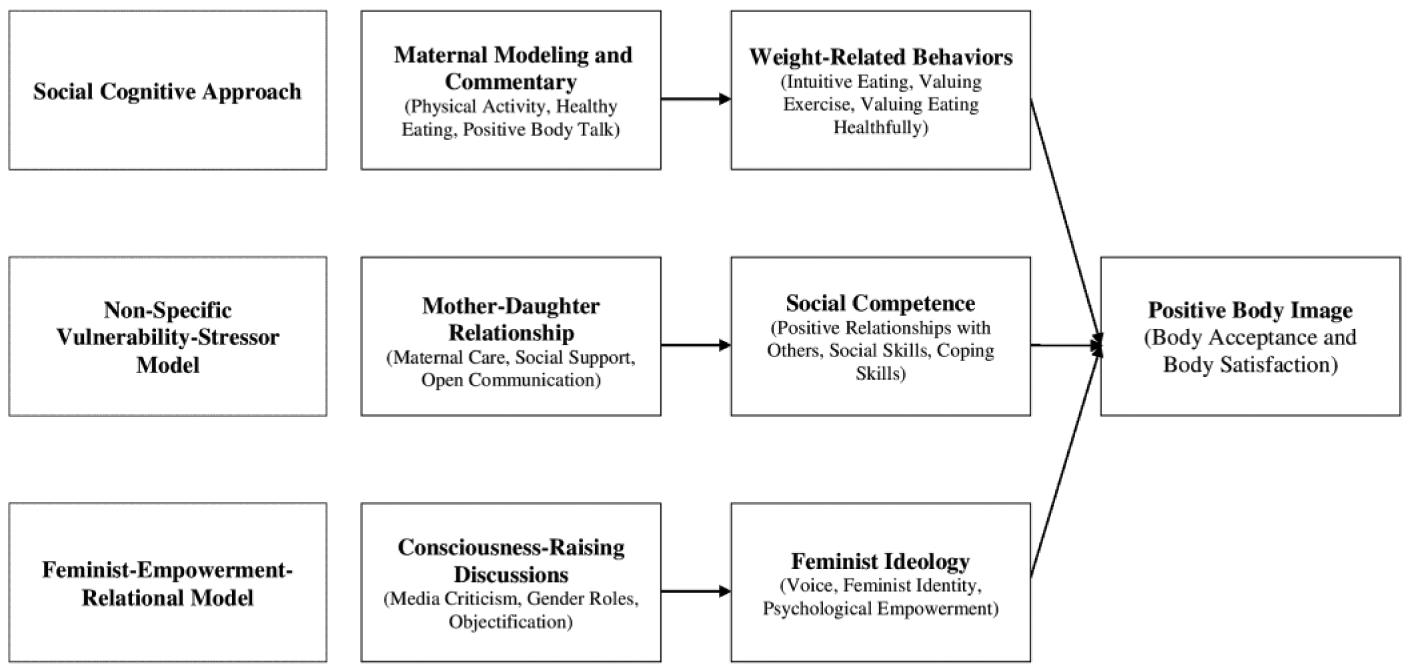
Theoretical model.
Accordingly, the current research has two aims. The first aim is to individually apply the three prevention approaches to the mother-daughter relationship in order to investigate the direct and indirect relationships between perceived maternal communication behaviors and daughters’ attitudes, behaviors, and body image. Specifically, the following hypotheses are predicted:
The second aim of this research is to examine whether any of the prevention approaches is a better predictor of daughters’ body image. Each approach reasonably explains variance in daughters’ body image; therefore, it is also reasonable to question:
Method
Participants
The sample consisted of 532 adult women between the ages of 18 and 77 years old (M = 31.31; SD = 13.04). The average body mass index (BMI) for this sample was 25.86 (SD = 6.94) and, according to the guidelines put forth by the Centers for Disease Control and Prevention (CDC; 2018), a majority of the participants were of normal weight (62.4%; underweight = 4.1%; overweight = 16.9%; obese = 20.7%). A majority of participants were also White/Caucasian (74.6%), followed by Black/African American (10.2%), Asian (6.2%), Multiracial (5.5%), Hispanic/Latina (2.8%), and other responses (0.8%). In addition, 42 of the 52 United States and territories were represented in this sample.
Procedure
Participants were recruited to participate in this study in the spring of 2017 in two ways: They were either recruited from undergraduate classes at a large public university in the Southeast United States and earned course credit or extra credit in their Communication Studies course (n = 197), or they were recruited through Amazon Mechanical Turk (MTurk), which is a crowd-sourcing Internet marketplace for academic researchers and businesses (e.g., Paolacci & Chandler, 2014), and earned US$2.50 for their participation (n = 335). All participants completed an online questionnaire that took roughly 20 minutes, and they all responded to the same questions assessing perceptions of their mothers’ communication behaviors, as well as perceptions of their own attitudes, behaviors, and body image. Participants were specifically instructed to consider their mothers’ behaviors when they were younger and living with their mothers.
Analytical Plan
Structural equation modeling (SEM) was selected to analyze the data for this study because of its ability to estimate latent constructs and to correct for measurement error; latent constructs are theoretical entities created from observable measures, wherein observable measures are directly measured variables that include measurement error (Klein, 2011). A number of a priori latent constructs were hypothesized prior to data collection. Specifically, for each of the prevention approaches, the predictor variables (i.e., maternal modeling, mother-daughter relationship, consciousness-raising discussions) and mediating variables (i.e., weight-related behaviors, social competence, feminist ideology) were latent constructs composed of three observed variables, and the two outcome variables (i.e., body appreciation and body satisfaction) were observed variables.
Measures
The observed measures utilized in this study are standardized measures that were selected based on their representation of the theoretical latent constructs specified by the Social Cognitive Approach, Non-Specific Vulnerability-Stressor Model, and the Feminist-Empowerment-Relational Model. Below, the observed measures are arranged according to their latent construct and corresponding prevention approach in an effort to clearly indicate which observed measures correspond with each latent construct. All items were close-ended and, unless otherwise noted, were rated on a 5-point Likert-type scale (1 = disagree strongly, 5 = agree strongly); items were averaged after negatively valenced items were reverse coded (R), with higher scores indicating higher levels on each of the respective variables. Means, standard deviations, Cronbach’s alphas, and Pearson product–moment correlations for each of the study variables can be found in Table 1, and correlations between the latent and observed constructs can be found in Table 2.
Intracorrelations, Means, Standard Deviations, and Alphas of Study Variables.
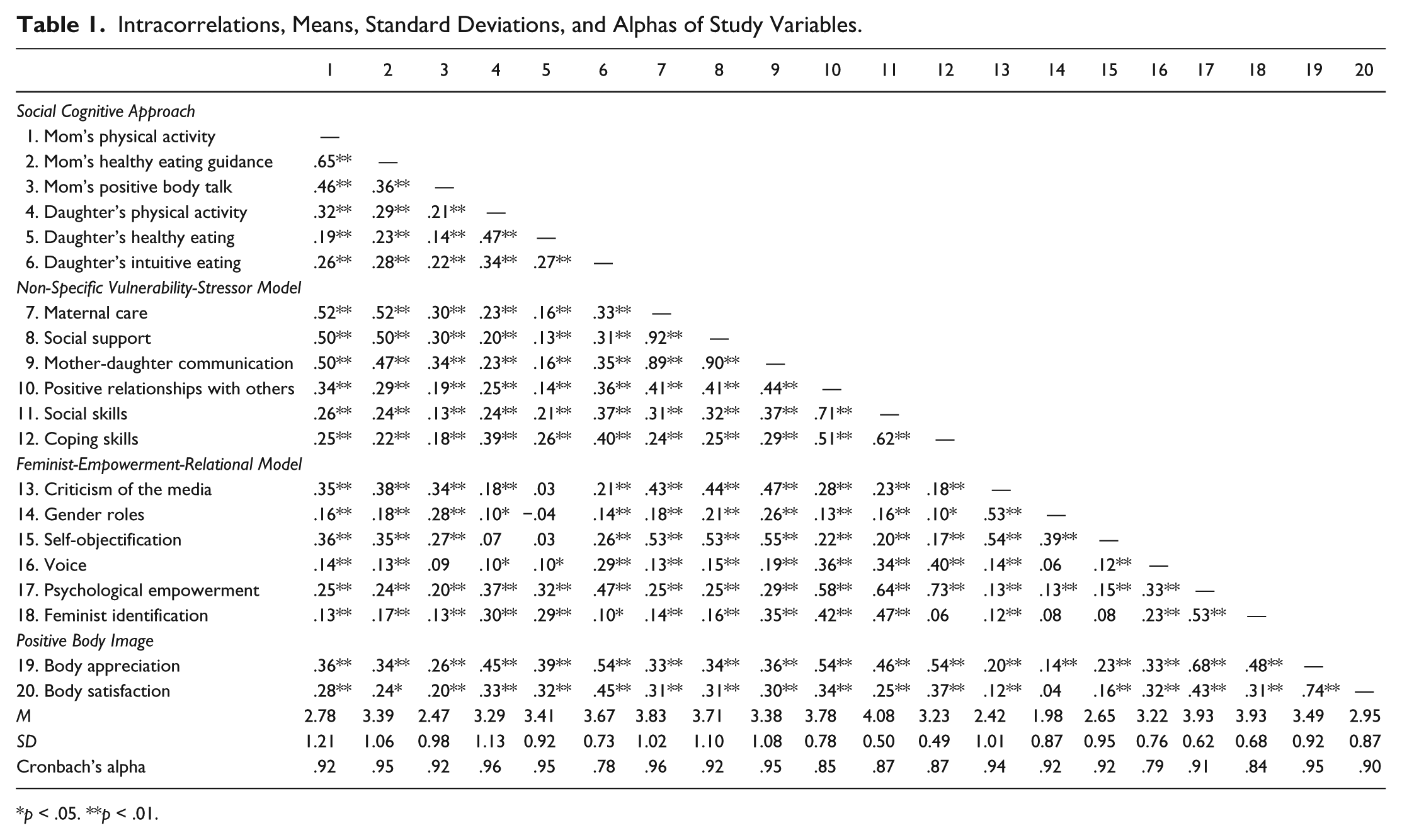
p < .05. **p < .01.
Correlations Between Constructs in Measurement Models.
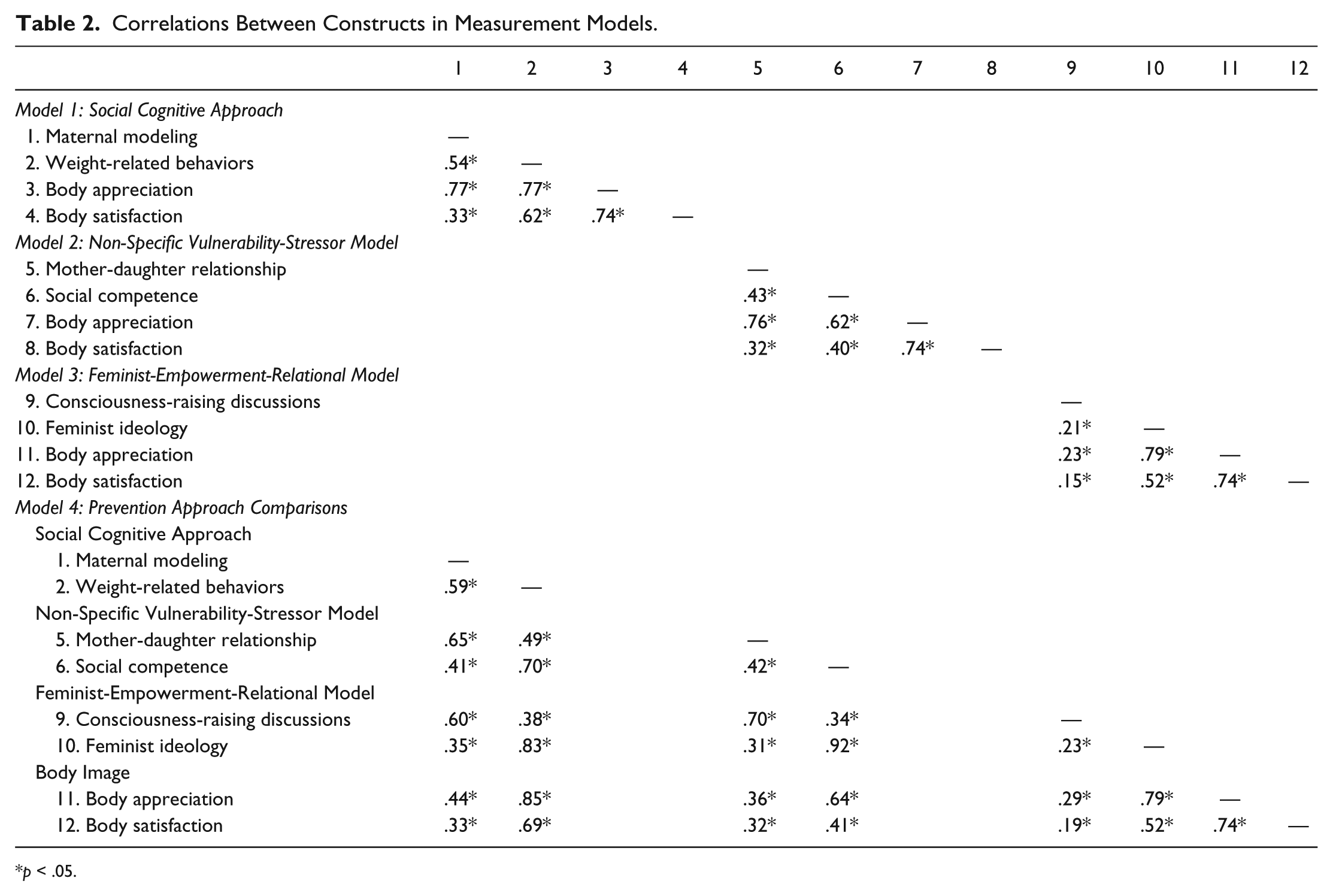
p < .05.
Social Cognitive Approach
Maternal modeling
The latent construct assessing the extent to which daughters recalled observing their mothers enact adaptive and healthy weight-related behaviors was indicated by daughters’ perceptions of the following measures:
Physical activity support, which refers to daughters’ perceptions of the support they received from their mothers specific to physical activity, was measured with Davison’s (2004) four-item Activity Support Scale (e.g., “My mom frequently exercised or did something active with me”). This scale yields significant predictive validity (Davison, Cutting & Birch, 2003).
Healthy eating guidance is defined as the role of mothers’ communication in encouraging daughter’s healthy eating habits. It was measured using 10 items adapted from Haszard, Williams, Dawson, Skidmore, and Taylor’s (2013) Healthy Eating Guidance subscale of the Comprehensive Feeding Practices Questionnaire; the original items assessed mothers’ perceptions of communication with their children, but the items were adapted so that daughters rated perceptions of their mothers’ communication (e.g., “My mom discussed with me why it’s important to eat healthy foods”). The original scale has satisfactory convergent and discriminant validity (Musher-Eizenman, de Lauzon-Guillain, Holub, Leporc, & Charles, 2009).
Positive body talk, which measures daughters’ recall of the frequency in which their mothers engaged in positive body-related comments, was measured using seven items adapted from Greer, Campione-Barr, and Lindell (2015); the original items asked participants to rate their own positive body talk, but we adapted the items so that daughters rated perceptions of their mothers’ positive body talk (e.g., “It was typical for my mom to tell me how attractive she thought she was”). The original measure has satisfactory construct validity and reliability (Greer et al., 2015).
Weight-related behaviors
The latent construct measuring daughters’ own enactment of adaptive and healthy weight-related behaviors was indicated by daughters’ self-reports on the following measures:
Physical activity measured daughters’ self-rated importance of and engagement in physical activity. It was measured using an adapted version of Niermann, Krapf, Renner, Reiner, and Woll’s (2014) five-item Physical Activity subscale of the Family Health Climate Scale; the original items asked participants to rate how important physical activity was to their families, but the items were adapted so that daughters rated the importance of physical activity in their own lives (e.g., “I make a point of being physically active during daily life”). The original subscale has satisfactory construct validity (Niermann et al., 2014).
Healthy eating refers to the extent to which daughters emphasize healthy nutrition in their daily lives. It was measured using four items adapted from Niermann et al.’s (2014) Nutrition subscale of the Family Health Climate Scale; the original items asked participants to rate how important healthy eating was in their families, but the items were adapted so that daughters rated the importance of a healthy eating in their own lives (e.g., “A healthy diet plays an important role in my life”). The original subscale has satisfactory construct validity (Niermann et al., 2014).
Intuitive eating measures daughters’ tendency to trust their bodies’ hunger and satiety cues when deciding when, what, and how much to eat. It was measured using Tylka and Kroon Van Diest’s (2013) 12-item Intuitive Eating Scale–2 (e.g., “I trust my body to tell me when to eat”), which has yielded satisfactory construct, discriminant, and incremental validity.
Non-Specific Vulnerability-Stressor Model
Mother-daughter relationship
The latent construct assessing daughters’ perceptions of a close, open relationship with their mothers was indicated by daughters’ ratings on following measures:
Maternal care, which is defined as daughters’ perceptions of their mothers’ warmth and affection, was measured with 11 items from Parker, Tupling, and Brown’s (1979) Care subscale of the Parental Bonding Instrument (e.g., “My mom spoke to me in a warm and friendly voice”). This commonly used scale has satisfactory predictive validity (e.g., Xu, Morin, Marsh, Richards, & Jones, 2018).
Social support, which refers to daughters’ perceived assistance and support from their mothers, was measured using four items from an adapted version of Zimet, Dahlem, Zimet, and Farley’s (1988) Multidimensional Scale of Perceived Social Support; the original items asked participants to rate the support they received from their families in general, but we adapted the items so that daughters rated the support they received from their mothers specifically (e.g., “My mom really tried to help me”). The original measure has satisfactory construct and factorial validity (Zimet et al., 1988).
Mother-daughter communication measures daughters’ feelings of free expression and understanding in mother-daughter interactions. It was measured using 10 items from Barnes and Olson’s (1985) Openness subscale of the Parent-Adolescent Communication Scale (e.g., “I found it easy to discuss problems with my mom”), which has previously been used to in parent-adolescent child communication in relation to the prevention of risk behavior (e.g., Whitaker, Miller, & Clark, 2000).
Social competence
The latent construct assessing daughters’ ability to achieve personal goals through social interaction while simultaneously maintaining positive relationships with others was indicated by daughters’ self-reports on the following measures:
Positive relationships with others refers to the degree to which daughters perceive that they have warm and trusting interpersonal relationships. It was measured with Ryff’s (1989) seven-item Positive Relationships With Others Scale (e.g., “Most people see me as loving and affectionate”). There is evidence of factorial and face validity for this scale (Dierendonck, 2004).
Social skills, which measures daughters’ self-reported appropriate and effective communication skills, was measured using Cupach and Spitzberg’s (1981) 14-item Self-Rated Competence Questionnaire (e.g., “I give positive feedback”). This scale has satisfactory construct validity (Cupach & Spitzberg, 1983).
Coping skills is defined as the degree to which daughters believe that they are capable of change in a way that results in improvements for themselves and their environment. It was measured using Greenglass, Schwarzer, Jakubiec, Fiksenbaum, and Taubert’s (1999) 14-item Proactive Coping Inventory (e.g., “I turn obstacles into positive experiences”), which has satisfactory factorial validity. These items were rated on a 4-point Likert-type scale (1 = not at all true; 4 = completely true).
Feminist-Empowerment-Relational Model
Consciousness-raising discussions
This latent construct measures the extent to which daughters recalled interactions with their mothers about how to navigate the norms of a sexist culture typically perpetuated through media, established gender roles, and the objectification of women’s bodies. For the following observed variables, we adapted commonly used self-report measures to assess mother-daughter interactions; for example, the Gender Roles measure originally asks participants to rate the extent to which they are aware of sexism in society, but we adapted the items in a way that gauges the extent to which mothers engaged in interactions with their daughters that helped them realize the prevalence of sexism in society. Instructions emphasized that the discussions with their mothers about these topics could take many forms, such as telling stories, sharing personal experiences, and/or sharing humorous anecdotes. The following measures were used:
Critiquing the media, which is defined as the extent to which mothers helped daughters learn to analyze and interpret the media in a way that facilitates independent and informed judgments about its messages, was measured using an adapted version of McLean, Paxton, and Wertheim’s (2016) six-item Critical Thinking About Media Messages Scale (e.g., “Rate how often your mom helped you realize that it is important to consider the things the advertisers do to get your attention when you see ads with very attractive female models”). The original subscale has satisfactory convergent and discriminant validity, and is commonly used to assess media literacy–based interventions (McLean et al., 2016).
Gender roles measures the extent to which mothers helped daughters become aware of traditional general roles. It was measured using an adapted version of Fischer et al.’s (2000) eight-item Feminist Identity Composite (e.g., “Rate how often your mom helped you realize just how sexist society really is”). Fischer et al. (2000) found evidence of convergent, discriminant, and factorial validity of the original scale.
Self-objectification measures the extent to which mothers helped daughters resist the tendency to view their bodies from an outsider’s perspective. It was measured using an eight-item adapted version of the Surveillance subscale from McKinley and Hyde’s (1996) Objectified Body Consciousness Scale (e.g., “Rate how often your mom helped you realize that it is important that you do not worry about how you look to other people”); each of these items was rated on a 5-point Likert-type scale (1 = rarely; 5 = very frequently). The original subscale has satisfactory convergent and discriminant validity (McKinley & Hyde, 1996).
Feminist ideology
The latent construct assessing the daughters’ feminist-related practices and beliefs was indicated by daughters’ self-reports on the following measures:
Voice, which was defined as daughters’ ability to speak their minds and express new insights, resonances, and evidence within their relationships, was measured using Jack and Dill’s (1992) nine-item Silencing the Self Scale (e.g., “I don’t speak my feelings in my close relationships when I know they will cause a disagreement”). This scale has been found to have internal consistency, test–retest reliability, and convergent validity (Jack & Dill, 1992).
Psychological empowerment, or daughters’ beliefs that they can claim control of their lives and rights, was measured using a combination of items from the Self-Esteem/Self-Efficacy subscale (nine items, for example, “I generally accomplish what I set out to do”) and the Optimism and Control Over the Future subscale (four items, for example, “People are limited only by what they think possible”) of Rogers, Chamberlin, Ellison, and Crean’s (1997) Empowerment Scale. Rogers et al. (1997) found evidence of convergent validity in both subscales.
Feminist identity, which was defined as daughters’ belief that women can transcend traditional gender roles and evaluate men individually, was measured using the five-item Synthesis subscale from Fischer et al.’s (2000) Feminist Identity Composite (e.g., “I am proud to be a competent woman”), and this scale has satisfactory convergent, discriminant, and factorial validity.
Body image
Although there is evidence indicating that measures of positive body image (e.g., body appreciation) are empirically distinct from traditional measures of body image (e.g., body satisfaction; Tylka & Wood-Barcalow, 2015b), both measures were utilized in this research to further illustrate that efforts to lower body dissatisfaction likely do not harness aspects of one’s positive body image. Testing these variables as distinct, observed constructs was preferred because of their conceptual differences; however, because they are related constructs (Tylka & Wood-Barcalow, 2015b), the error terms for these variables were correlated in each model.
Body appreciation was measured using Tylka and Wood-Barcalow’s (2015b) 10-item Body Appreciation Scale–2 (e.g., “I take a positive attitude toward my body”); the items were rated on a 5-point Likert-type scale (1 = never; 5 = always). This scale has satisfactory convergent, incremental, and discriminant validity (Tylka & Wood-Barcalow, 2015b).
Body satisfaction was measured with the 10-item Body Satisfaction subscale from Garner’s (2004) Eating Disorder Inventory–3 (e.g., “I think my stomach is too big” (R)). This subscale has been used in studies examining large samples of women with eating disorders and without and has satisfactory convergent, factorial, and discriminant validity (Clausen, Rosenvinge, Friiborg, & Rokkedal, 2011; Cumella, 2006).
Results
Proposed Analyses
The data were analyzed using SEM in AMOS 24 using maximum likelihood estimation, along with a bias-corrected bootstrapping procedure based on 2,000 samples to estimate the standard errors around the indirect effects. A total of four models were tested: As per the first aim of this research, each prevention approach was tested in three separate statistical models (Models 1-3) and, corresponding with the second research aim, the three prevention approaches were then tested simultaneously in the same model in order to evaluate which approach is a better predictor of daughters’ body image (Model 4). For each of the four models tested, a two-step approach was used (Anderson & Gerbing, 1988). First, a measurement model was estimated using confirmatory factor analysis (CFA; see Table 3 for the results of the measurement models); the measurement model examines the relationships between the latent constructs and their observed measures. Next, a test of the structural model was estimated in order to examine the hypothesized relationships between the latent constructs (see Table 4 for the results of the structural models). In all of the models examined, the ratio of chi-square to degrees of freedom (χ2/df), the comparative fit index (CFI), and the root mean square error of approximation (RMSEA) were used to determine the goodness of fit (i.e., how well the observed data matches the values expected by theory; Klein, 2011).
Standardized Coefficients for Measurement Models.
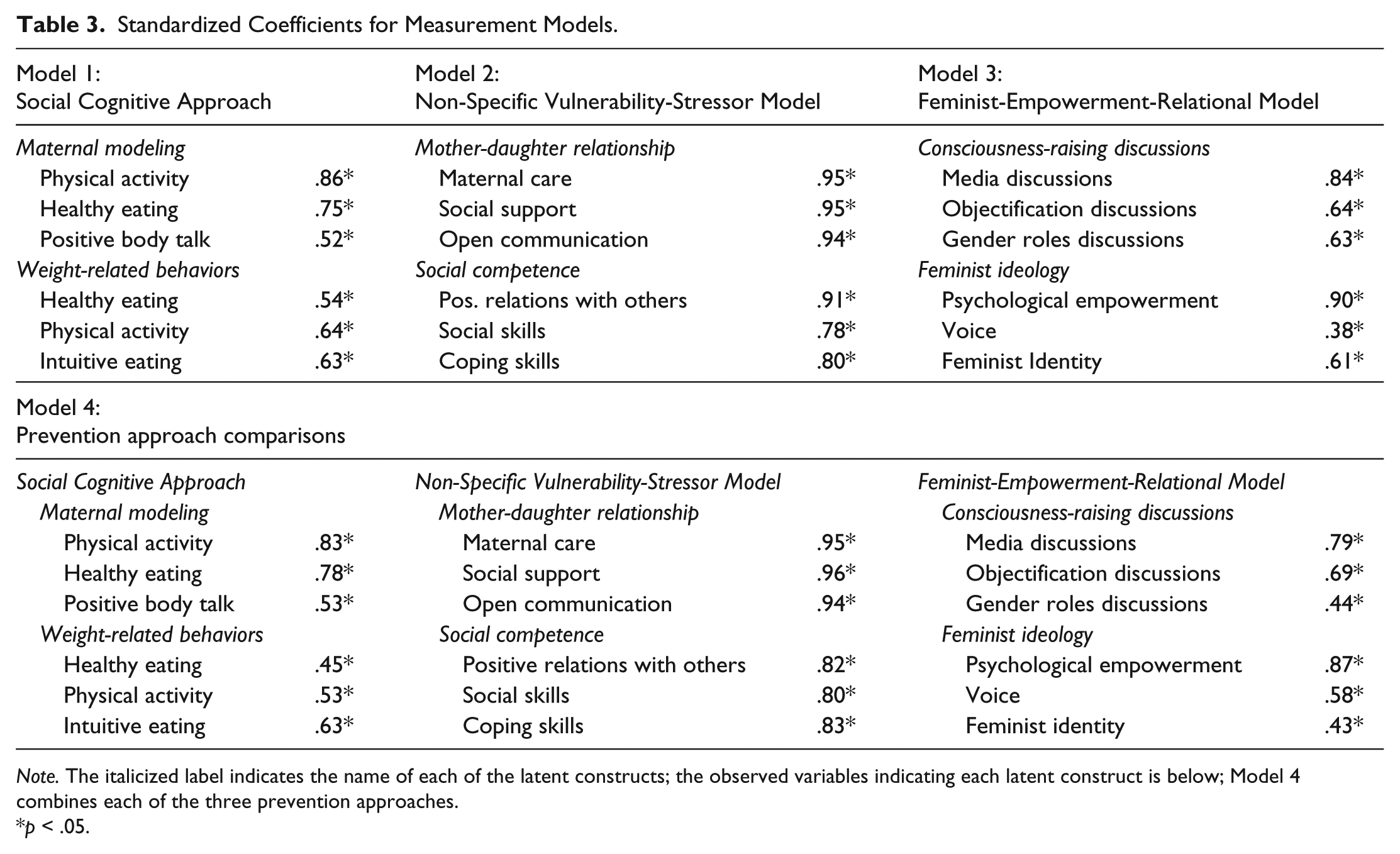
Note. The italicized label indicates the name of each of the latent constructs; the observed variables indicating each latent construct is below; Model 4 combines each of the three prevention approaches.
p < .05.
Standardized Coefficients for Structural Models.

Note. Model 4 combines each of the three prevention approaches and is represented in Figure 1. The correlation between the body satisfaction and body appreciation in Model 4 was .51. M-D = mother-daughter.
p < .05.
A Test of the Social Cognitive Approach
First, the measurement model for the Social Cognitive Approach yielded adequate fit to the sample data, χ2 = 57.04, df = 16, p < .001, χ2/df = 3.57, CFI = .97, RMSEA = .07. When analyzing the structural model, the model provided a good fit to the sample data, χ2 = 57.62, df = 18, p < .001, χ2/df = 3.20, CFI = .97, RMSEA = .06, Akaike information criterion (AIC) = 73.62, Bayesian information criterion (BIC) = 94.24. In accordance with the Social Cognitive Approach, daughters’ perceptions of maternal modeling were positively associated with their weight-related behaviors which, in turn, were positively associated with both their body appreciation and body satisfaction (see Table 4, Model 1). The indirect effects of maternal modeling on body appreciation and body satisfaction through daughters’ weight-related behaviors were also significant. This model explained 61% of the variance in body appreciation and 38% in body satisfaction. Thus, H1 was supported.
A Test of the Non-Specific Vulnerability-Stressor Model
Second, inspection of the measurement model for the Non-Specific Vulnerability-Stressor Model indicated that this model provided a poor fit to the sample data, χ2 = 94.84, df = 16, p < .001, χ2/df = 5.93, CFI = .98, RMSEA = .10. However, by correlating the error terms between coping skills and positive relations with others, the model provided a good fit to the sample data, χ2 = 47.13, df = 15, p < .001, χ2/df = 3.14, CFI = .99, RMSEA = .06. The structural model (with the previous modifications in place) also provided a good fit to the sample data, χ2 = 63.71, df = 17, p < .001, χ2/df = 3.75, CFI = .98, RMSEA = .07, AIC = 101.70, BIC = 102.36. In accordance with the Non-Specific Vulnerability-Stressor Model, daughters’ perceptions of a close mother-daughter relationship were positively related to their social competence, which, in turn, was positively associated with both their body appreciation and body satisfaction (see Table 4, Model 2). The indirect effects of a close mother-daughter relationship on both body appreciation and body satisfaction through social competence were also significant. This model explained 40% of the variance in body appreciation and 17% in body satisfaction. Thus, H2 was supported.
A Test of the Feminist-Empowerment-Relational Model
Third, the measurement model for the Feminist-Empowerment-Relational Model indicated that this model provided a good fit to the sample data, χ2 = 36.53, df = 16, p = .01, χ2/df = 2.28, CFI = .99, RMSEA = .05. When inspecting the structural model, the model also provided a good fit to the sample data, χ2 = 43.65, df = 18, p = .001, χ2/df = 2.43, CFI = .98, RMSEA = .05, AIC = 79.65, BIC = 80.27. In accordance with the Feminist-Empowerment-Relational Model, daughters’ perceptions of consciousness-raising discussions with their mothers were positively related to their feminist ideology, which, in turn, was positively associated with both their body appreciation and body satisfaction (see Table 4, Model 3). The indirect effects of consciousness-raising discussions on body appreciation and body satisfaction through feminist ideology were also significant. This model explained 64% of the variance in body appreciation and 27% in body satisfaction. Thus, H3 was supported.
A Comparison of the Prevention Approaches
Finally, in order to simultaneously estimate, control for, and compare the different prevention approaches, the next model combined the three previous models. In this model, each of the three predictor variables (i.e., maternal modeling, mother-daughter relationship, consciousness-raising discussions) were correlated with one another because of the strong relationships between daughters’ perceptions of their mothers behaviors and the error terms for each of the three mediating variables (i.e., weight-related behaviors, social competence, feminist ideology) were correlated with one another because of the strong relationships between daughters’ attitudes and behaviors. Initial inspection of the measurement model indicated that this model provided a less than adequate fit to the sample data, χ2 = 564.21, df = 144, p < .001, χ2/df = 3.92, CFI = .93, RMSEA = .07. However, by correlating the error terms between coping skills and positive relations with others, physical activity and healthy eating, and conversations about critiquing the media and gender inequality, the model provided a good fit to the sample data, χ2 = 429.31, df = 141, p < .001, χ2/df = 3.04, CFI = .95, RMSEA = .06. Next, the structural model (with the previous modifications in place) also provided an adequate fit to the sample data, χ2 = 479.91, df = 153, p < .001, χ2/df = 3.14, CFI = .95, RMSEA = .06. See Table 4 (Model 4) for the results of this model.
First, following the Social Cognitive Approach, daughters’ perceptions of maternal modeling were positively associated with their weight-related behaviors which, in turn, were positively associated with both their body appreciation and body satisfaction; the indirect effects of maternal modeling on body appreciation and body satisfaction through daughters’ weight-related behaviors were also significant. Next, for Non-Specific Vulnerability-Stressor Model, it was revealed that daughters’ perceptions of a close mother-daughter relationship were positively related to their social competence, but social competence only marginally predicted their body appreciation (p = .08) and was not significantly associated with their body satisfaction; the indirect effects of a close mother-daughter relationship on both body appreciation and body satisfaction through social competence were nonsignificant. Finally, results for the Feminist-Empowerment-Relational Model indicated that daughters’ perceptions of consciousness-raising discussions with their mothers were positively associated with their feminist ideology, but feminist ideology was not associated with their body appreciation and only marginally predicted their body satisfaction (p = .07); the indirect effects of consciousness-raising discussions on body appreciation and body satisfaction through feminist ideology were both nonsignificant. In this model, 69% of the variance in body appreciation was explained and 37% in body satisfaction was explained. Thus, to answer RQ1, the Social Cognitive Approach was the strongest predictor of daughters’ body image when controlling for each of the other approaches.
Discussion
Results from the current research demonstrate the importance of mother-daughter communication in establishing a more positive body image. Specifically, in applying the tenets of three commonly used body image prevention approaches to the mother-daughter relationship, we found that the perception that one’s mother modeled healthy weight behaviors (i.e., Social Cognitive Approach), the perception that one had a close relationship with her mother (i.e., Non-Specific Vulnerability-Stressor Model), and recalling consciousness-raising discussions with one’s mother (i.e., Feminist-Empowerment-Relational Model) were significantly associated with daughters’ body image through daughters’ reports of their own adaptive weight-related behaviors, social competence, and feminist ideology, respectively. Although the Social Cognitive Approach appears to be the strongest of the three approaches, it is encouraging that each model accounted for variance in daughters’ body image because it suggests that mothers can promote daughters’ body image in multiple ways, similar to programs that have utilized aspects of all three approaches (McVey, Tweed, & Blackmore, 2007). The following discusses each approach’s utility in explaining mothers’ impact on their daughters’ body image.
First, the results supporting the Social Cognitive Approach corroborate Neumark-Sztainer’s (2005) work on teaching parents how to help their children navigate eating and exercise pressures. She encourages parents to “talk less, do more,” wherein she suggests that parents model healthy behaviors, provide an environment where healthy choices are possible, focus on behaviors and health instead of weight, and provide a supportive family environment. The emphasis on enacting more healthy behaviors and talking less about the body is appropriate because any form of communication about a woman’s body—verbal or nonverbal, positive or negative—objectifies the body and increases the salience of weight and appearance in comparison with the ideal beauty standard. For this reason, it is beneficial for mothers to be cautious about the language used regarding these topics in order to prevent food restrictions and especially to prevent emphasizing their own or their daughters’ bodies (Maor & Cwikel, 2016). Instead, because observational learning is a powerful way to develop attitudes and behaviors about one’s body, it is important for mothers to model adaptive behaviors to their daughters (e.g., speaking positively about their bodies, promoting and incorporating healthy foods in the home, engaging in enjoyable physical activity) if the goal is to promote daughters’ body image.
Next, compared with the other two approaches, the Non-Specific Vulnerability-Stressor Model explained the least amount of variance in the outcome variables and its indirect effects were the weakest. These results may be a related to the indirect nature of this model: Although a close mother-daughter relationship and social competence provide women with the skills and support necessary to manage demanding social norms and difficult interpersonal interactions, they may not be the tools necessary to cope with difficult weight-related situations that have long-standing effects on individuals’ body image (e.g. teasing; Anderson, Bresnahan, & DeAngelis, 2014) nor are they the necessary tools needed to combat broader, more systemic forces of oppression/sexism (e.g., media; Fredrickson & Roberts, 1997). Nevertheless, the Non-Specific Vulnerability-Stressor Model did significantly explain variance in daughters’ body image, further supporting the intertwined nature of interpersonal relationships, social skills and communication competence, and psychosocial well-being (Segrin, 2001).
Third, because elements of the Social Cognitive Approach (Arroyo et al., 2017) and the Non-Specific Vulnerability-Stressor Model (Arroyo & Segrin, 2013) have previously been applied to the mother-daughter relationship, a novel element to this research was the inclusion of a feminist perspective. The development of a feminist ideology appears vital to women’s body image because it allows them to question traditional feminine roles associated with appearance and it enables them to recognize that weight/appearance ideals contribute to the oppression and objectification of women that should therefore be resisted (Murnen & Smolak, 2009; Piran, 2017). Although feminist scholars have studied how motherhood provides rich resources for women to advocate for the enhanced rights of children, emphasizing the importance of raising children as empowered and authentic individuals (e.g., Bae & Ivashkevich, 2012), the concrete communication behaviors through which mothers effectively empower their daughters has yet to be examined. The current research identified consciousness-raising discussions as a potential way for mothers to help shape their daughters’ body image, likely because such discussions can influence daughters’ sense of agency (Piran, 2017). If mothers adopt consciousness-raising discussion practices, then daughters may come to see that, if they are vulnerable in sharing their experiences with oppression/sexism, their experiences will be valued and that they are individuals, not objects. As a result, daughters may develop the agency to challenge social norms, share unique experiences of encountering body-related sexism, and assert their voices to resist objectification—which could help them generate a sense of the body as a necessary and positive asset to asserting agency.
In addition to discussing these three approaches’ explanatory power, we would be remiss to not situate this research in the literature on positive communication (e.g., see Socha & Pitts, 2012). Positive communication is grounded in positive psychology (e.g., Seligman & Csikszentmihalyi, 2014), which focuses on enhancing individuals’ quality of life rather than just managing pathologies; it is argued that minimizing maladaptive characteristics but not promoting adaptive characteristics will result in “intermediate mental health characterized by a lack of pathology but the absence of vitality” (Tylka, 2011, p. 57). As such, positive communication scholarship investigates positive interpersonal communication behaviors (e.g., listening, humor, support, hope) that generate individuals’ wellness and enhance their well-being (Socha & Pitts, 2012). Wilson and Gettings (2012), for example, discuss the importance of “nurturing children as assets,” which is particularly important within the parent-child relationship. They note that the focus should be on developing assets (i.e., qualities and experiences) that help individuals avoid risks and enable them to thrive; social competencies, positive identity, empowerment, and support are but a few assets mentioned, which were indeed some of the interpersonal processes we explored here. We contend that this investigation falls in line with efforts to identify positive communication mechanisms that would not just allow a woman to manage/reduce body image concerns, but would instead allow her to practice self-care and compassion toward her body and also allow her to experience her body as a source of agency and functionality (Piran, 2017). Because body image disturbance can be detrimental to an individuals’ well-being (American Psychiatric Association, 2013), continuing to find ways that encourage women to appreciate, love, and respect their bodies would ultimately allow them thrive mentally, physically, and emotionally.
Limitations and Future Research
There are several limitations to this research that should be noted. First, due to the cross-sectional nature of this research, causal claims cannot be made; longitudinal and experimental research would be better able to assess which and how maternal communication behaviors affect daughters’ body image. Second, due to the retrospective nature of the measures, recall bias was possible. Third, although daughters’ perceptions of mothers’ behavior are a stronger predictor of daughters’ health outcomes than mothers’ reports of their own behaviors (Cooley et al., 2008), there can be a discrepancy between reported perceptions and observed behavior as well as between mothers’ reports of their own behaviors and daughters’ perceptions of mothers’ behaviors; thus, future research would benefit from including mothers. Fourth, the research presented here focused on women because of the disproportionately high rates of body image disturbance and eating disorders among women (Woodside et al., 2001). Future research should continue to understand the role of communication in promoting positive body image in boys and men, as they too experience body image disturbance (e.g., Grieve & Helmick, 2008). Fifth, because communication patterns within the family are extremely influential on children as they form their own perceptions and communication patterns (Koerner & Fitzpatrick, 2006), future research could examine familial relationships beyond the mother-daughter dyad, such as fathers and daughters, as fathers’ communication and behaviors are associated with their children’s body image (e.g., Berge et al., 2013). Sixth, because there are more body image prevention approaches than what were included in this study (e.g., Cognitive Dissonance Approach: Stice, Marti, Spoor, Presnell, & Shaw, 2008; media literacy: Wilksch & Wade, 2009; mindfulness-based programs: Beccia, Dunlap, Hanes, Courneene, & Zwickey, 2018), future research would benefit from applying and testing additional prevention approaches to the mother-daughter relationship. Finally, because the Feminist-Empowerment-Relational Model was applied to the mother-daughter relationship with promising findings, research using more traditional feminist methodology in addition to the social scientific method would likely help fortify the relationship between mothers, daughters, and positive body image.
Conclusion
Although mother-daughter relationships “are one of the most significant socio-cultural factors” predicting eating disorders and negative body image (Maor & Cwikel, 2016, p. 2), the current research was able to identify potential maternal communication behaviors that may instead help promote daughters’ body image. Positive body image is reciprocal between individuals and their environments, meaning individuals shape and are shaped by positive body image messages (e.g., avoiding fat talk, seeking others who also love themselves; Wood-Barcalow, Tylka, & Augustus-Horvath, 2010), so mothers who help their daughters increase respect and love for their bodies would ultimately raise daughters who contribute positively to and are critical of a culture that does not allow them to think favorably of or be comfortable in their bodies. Thus, continued efforts to examine, isolate, and encourage mothers’ communicative practices targeted toward promoting daughters’ positive body image are necessary, the cumulative effects of which will likely bolster an ecology that enables women and girls to resist objectification of their bodies and to value and love their bodies.
Footnotes
Declaration of Conflicting Interests
The authors declared no potential conflicts of interest with respect to the research, authorship, and/or publication of this article.
Funding
The authors disclosed receipt of the following financial support for the research, authorship, and/or publication of this article: The authors received financial support from the Department of Communication Studies at the University of Georgia for this research.