



Abstract
There is an impressive amount of research indicating that spouses and mates tend be highly similar on a range of characteristics. Much of this literature has examined mate similarity in demographic characteristics, such as age and race, but there is also evidence indicating that mates tend to be similar in terms of their behaviors and personality traits. Criminological research, however, has been slow to examine how, and in what ways, mates might resemble each other for various types of antisocial outcomes. The current study addresses this gap in the literature by analyzing a national sample of mates drawn from the Early Childhood Longitudinal Study, Birth Cohort. The results of the latent factor analyses reveal a high degree of similarity for antisocial behavior and for substance abuse between mates. The implications that these findings have for criminological theory and research are discussed.
The topic of human mate selection has elicited an impressive amount of scrutiny from researchers across a range of disciplines (Buss, 2006; Krueger, Moffitt, Caspi, Bleske, & Silva, 1998; Lykken & Tellegen, 1993; Mare, 1991; Shackelford, Schmitt, & Buss, 2005; Vandenberg, 1972). Psychologists, sociologists, evolutionary psychologists, behavioral geneticists, and anthropologists have devoted considerable time and effort toward addressing the question of who mates with whom (Mare, 1991; Shackelford et al., 2005; Vandenberg, 1972). Findings from this line of research have provided unequivocal evidence that mating couples are remarkably similar to one another for a range of outcomes (Mare, 1991; Rhule-Louie & McMahon, 2007; Vandenberg, 1972). Mating couples, for example, tend to display similar levels of educational attainment and intelligence (Mare, 1991), and they also tend to be similar on factors such as age, race, political affiliation, physical attractiveness, and social status (Vandenberg, 1972). In short, research findings consistently indicate that humans prefer mates who are similar to themselves.
Despite the substantial amount of research on human mate similarity and mate preference, criminologists have generally given short shrift to the topic of mate selection, especially whether mating couples display similar levels of antisocial behavior. The paucity of mate selection research based on criminogenic tendencies is somewhat surprising given the recent findings that suggest that mates correlate significantly for a range of adverse behaviors, including substance abuse, aggression, and violence (Agrawal et al., 2006; Krueger et al., 1998; Moffitt, Caspi, Rutter, & Silva, 2001). Equally important, however, is the fact that there has been even less effort to answer the question of why individuals are attracted to partners with similar antisocial proclivities. The purpose of the current research is to address these gaps in the literature by examining two interrelated issues. First, we examine whether involvement in criminal and antisocial behavior is correlated in mating couples. Second, we build on existing mate similarity research by testing competing perspectives that attempt to explain why mates are similar to each other for antisocial behaviors.
Mate Similarity and Antisocial Behavior
Empirical research has produced a considerable amount of evidence indicating that individuals prefer to mate with partners who share similar demographic characteristics, such as age and race (Burgess & Wallin, 1943; Mare, 1991; Rhule-Louie & McMahon, 2007; Vandenberg, 1972). These firmly established results generated from the mate similarity research have spurred researchers to move beyond demographic variables and examine mate similarity for behavioral outcomes, including antisocial and criminal behaviors (Capaldi, Pears, Kerr, & Owen, 2008; Haynie, Giordano, Manning, & Longmore, 2005; for a review see Rhule-Louie & McMahon, 2007). Rowe and Farrington (1997), for example, analyzed data collected from more than 300 families that participated in the Cambridge Study in Delinquent Development. These researchers found that mate correlations for criminal behavior hovered around r = .55. In another study, Baker, Mack, Moffitt, and Mednick (1989) examined criminal behavior in a birth cohort of more than 6,000 male and 7,000 female Danish adoptees and their biological and adoptive parents. The findings of the study revealed statistically significant correlations (r = .15) within romantic couples for measures of property crime, although the correlations were not nearly as large as those reported in Rowe and Farrington’s study.
Additional evidence of mate similarity has been garnered from studies examining samples of incarcerated and clinical subjects. Cloninger, Rice, and Reich (1979) analyzed spousal resemblance based on a diagnosis of sociopathy. Findings culled from this study revealed that approximately 14% of wives (married to convicted males) and approximately 40% of husbands (married to convicted females) were sociopaths themselves. Additional research has also revealed significant spousal correlations for measures of antisocial personality disorder (Clark, Capel, Goldsmith, & Stewart, 1972; Jacob & Bremer, 1986; Merikangas & Spiker, 1982; Rutter & Quinton, 1984).
The studies mentioned above provide some evidence linking criminal behavior in one individual with similar behaviors in their spouse or mate. With the exception of Rowe and Farrington (1997), however, this line of research is host to at least one major methodological shortcoming: The samples consisted primarily of clinical patients, respondents suffering from personality disorders, or respondents convicted of a crime. As a result, it is unclear whether these results would generalize to a broader, more representative population. Krueger et al. (1998) conducted a study that overcame this limitation by examining mate similarity for antisocial behavior among New Zealand residents in the Dunedin Multidisciplinary Health Study. The results of their analysis revealed that couples demonstrated a substantial degree of similarity for antisocial behavior (r = .54). It is interesting that, as compared to correlations for other individual-level measures, such as negative emotionality, constraint, and attitudes toward crime, the correlations for overt behavioral problems were among the strongest reported in the study.
Research on human mate selection has also examined whether mating couples display similar levels of drug and alcohol consumption (Agrawal et al., 2006; Rhule-Louie & McMahon, 2007). This growing line of inquiry has revealed that alcohol abuse, alcohol dependence, and heavy drinking all correlate within mating couples (Epstein & Guttman, 1984; McLeod, 1993). These findings were largely substantiated by Vanyukov, Neale, Moss, and Tarter’s (1996) review of existing evidence on mate similarity, in which they concluded that mating couples display a marked degree of similarity for drug use and alcoholism (Vanyukov et al., 1996).
Taken together, the extant literature provides evidence to suggest that antisocial and criminogenic behaviors concentrate in certain mating couples. As Krueger and his colleagues (1998) note, “Given a general tendency for ‘like to marry like’ (Ehrman & Parsons, 1981), people may find it easier to find their ‘behavioral likeness’ than their ‘personological likeness’” (p. 175). This line of inquiry, though growing, is far from conclusive, and further research on the topic is warranted. For instance, evidence that can be generalized to residents in the United States is needed. In addition, there is an important question that has yet to be fully addressed—specifically, what mechanisms can account for the similarity in antisocial behavior between mating couples?
Explaining Mate Similarity for Antisocial Behavior
There are two key explanations that are potentially able to account for why mates might resemble each other for antisocial behaviors: assortative mating and behavioral contagion (Agrawal et al., 2006; Rhule-Louie & McMahon, 2007). The assortative mating explanation is grounded in the logic that individuals actively evaluate potential mates based on their traits, behaviors, and other salient characteristics. On the most basic level, assortative mating occurs when mate selection is guided by environmental and social factors such as geographic location and peer group affiliation. Adolescents, for example, are more likely to engage in romantic relationships within their immediate social groups as opposed to searching for mates outside of their familiar social circle (Krueger et al., 1998). Assortative mating, however, can also occur when individuals choose their mates based on desirable characteristics and traits. The ultimate selection of a mate, therefore, is a nonrandom process that results in mates being similar to each other on a suite of phenotypes, including antisocial phenotypes (Vandenberg, 1972).
Rhule-Louie and McMahon (2007) recently completed a thorough review of research that had examined assortative mating for different behavioral outcomes. The results of the review provided consistent evidence that individuals mate assortatively for a range of behavioral phenotypes. In summarizing their results, Rhule-Louie and McMahon (2007) noted that the findings “supported the idea that spousal similarity results from the initial selection of mates, with individuals seeking out and constructing environments and relationships that are supportive and further reinforcing of their own behaviors” (p. 68). What remains less clear, however, is whether assortative mating can explain spousal correlations for criminogenic behaviors or whether another explanation might be more appropriate (Krueger et al., 1998).
Behavioral contagion represents an alternative explanation for why mates resemble each other (Rhule-Louie & McMahon, 2007). The behavioral contagion explanation of mate similarity argues that over time two mates socialize each other, with the end result being that mates gradually resemble one another more closely. Stated another way, behavioral contagion implies that the antisocial behavior of one individual might “infect” the behavior of his or her spouse over time, in much the same way that a virus might be transmitted between individuals. Similar explanations have been employed in criminological research to explain delinquent behavior in adolescent peer groups (Moffitt, 1993; Warr, 2002). Social learning theories, for example, suggest that deviant behavior is learned in groups via the transmission of delinquent attitudes and definitions favorable to committing criminal acts (Akers, Krohn, Lanza-Kaduce, & Radosevich, 1979). It is possible, then, that a similar process is responsible for the similarity observed between mates for measures of criminal behavior.
Evidence of behavioral contagion has been inferred in studies if mating couples are found to grow more similar to one another as the length of their relationship increases. Unlike research on assortative mating, however, behavioral contagion has received only a moderate amount of attention. Moffitt and her colleagues (2001) examined behavioral contagion for antisocial behavior in a sample of couples drawn from the Dunedin Longitudinal Study, and the results offered partial support for a behavioral contagion effect. Specifically, the analyses revealed that over time the antisocial behavior of one partner in the study exacerbated the antisocial behavior of their mate. It is important that results generated from this study also revealed evidence of assortative mating in that antisocial persons were more likely than non-antisocial persons to select antisocial mates in the first place. Moffitt et al.’s study provides some evidence suggesting that it may be possible for assortative mating to facilitate mate selection initially, and then for behavioral contagion to exacerbate problem behavior in couples once the union has been formed.
In another study examining the behavioral contagion perspective, Luo and Klohnen (2005) conducted a longitudinal analysis of 291 married couples drawn from the Iowa Marital Assessment Project. The results revealed a significant degree of mate similarity on a range of attitudinal measures. It is interesting, however, that the findings did not indicate that mating couples became more similar over time, as would be expected if behavioral contagion were responsible for mate resemblance. Agrawal et al. (2006) reported a similar set of results after analyzing a sample of more than 3,000 female twins and their mates drawn from the Australian Twin Registry. These researchers examined measures of regular cigarette smoking, nicotine addiction, regular alcohol consumption, and alcohol dependence. Once mate selection was accounted for, substance abuse by one partner did not significantly influence their mate’s consumption of either nicotine or alcohol. Other longitudinal studies have also failed to offer empirical support for behavioral contagion (Caspi & Herbener, 1993; Yamaguchi & Kandel, 1993, 1997).
More recently, Fleming, White, and Catalano (2010) examined mate similarity for substance use in a sample of approximately 900 romantic couples. Participants in the study were assessed on a range of outcomes including heavy alcohol use, marijuana use, and cigarette smoking across four time points in the years following graduation from high school. It is interesting that the results presented by Fleming et al. provided evidence of positive assortment for adolescent substance abuse. Specifically, cigarette smoking, heavy alcohol consumption, and marijuana use in one individual corresponded to similar behaviors in their romantic partner. It is important, however, that additional analyses revealed that substance abuse by one partner increased the likelihood of substance use in his or her mate, even after controlling for nonrandom assortment. In other words, the findings presented by Fleming et al. offer support for both an assortative mating and a behavioral contagion explanation of partner similarity for substance use.
The Current Study
Given the body of research outlined in the previous sections, the current study has two purposes. First, we seek to determine whether mating couples display similar levels of antisocial behavior and substance abuse. Second, we extend existing research by testing whether mate similarity for antisocial behavior is the result of assortative mating or behavioral contagion. To our knowledge, this is one of the first attempts to directly examine the mechanism or mechanisms responsible for mate similarity on antisocial behavior. Furthermore, this is the first examination of these topics among a large nationally representative cohort of mates residing in the United States.
Method
Data
The data for this study are drawn from the Early Childhood Longitudinal Study, Birth Cohort (ECLS-B). The ECLS-B was designed to be a nationally representative sample of children born in the United States, but data were also collected from biological mothers and fathers of the target children. The sampling process began by consulting with the National Center for Health Statistics to identify all children born in 2001. From this sample frame (i.e., all children born in 2001), eligible participants were identified and interviews were conducted. Interviewing began shortly after birth, with continual follow-ups until the child entered kindergarten (approximately 5 years later). Multiple reporting sources were used in the study including interviews with the biological mothers, the biological fathers, and early care providers. Multiple survey methods, including computer-assisted self-report questionnaires and observational assessments, were used to collect data at each wave (Bethel, Green, Nord, Kalton, & West, 2005). To date, three waves of the study have been collected and are available to researchers.
Wave I data collection began when the children were approximately 9 months old, with the majority of the surveys being completed in the children’s home with their mothers (N ≈ 10,700). The questionnaires incorporated measures related to the child’s health, developmental progress, and temperament. Also included was information regarding the primary caregiver’s parenting techniques and involvement with his or her child. Finally, Wave I contained items asking about both parents’ personal and familial histories regarding substance use and abuse, psychopathology, physical health, and antisocial or criminal behavior.
The second wave of data was collected between the fall of 2003 and the fall of 2004 when the children were approximately 2 years old. The structure of Wave II data collection largely mirrored the procedures used during the first wave. For example, many of the same items included in the Wave I surveys were also included in the Wave II surveys. During Wave II interviews, the mothers completed a computer-assisted personal interview, whereas fathers completed a self-report questionnaire. Mothers and fathers in the study were asked a series of questions concerning their lifestyles, current employment, social status, and overall health and well-being. Finally, Wave III interviews began in the fall of 2005 and ended in the spring of 2006. During the third wave, mothers and fathers were asked about their current employment, involvement with their children, and socioeconomic status.
Measures
Measures were gleaned separately for both mothers and fathers participating in the ECLS-B. Below we describe first the items administered to the biological mothers during Wave I, followed by the measures administered to the biological fathers during the first wave of data collection.
Maternal Measures
Wave I antisocial behavior
In line with prior researchers examining mate similarity (Krueger et al., 1998), we measured maternal antisocial behavior by using self-reports. Four measures designed to tap antisocial behavior were included in the current study. Specifically, during Wave I interviews, mothers were asked (a) “Have you ever been suspended or expelled from school?” (b) “Have you ever spent a night in a mental facility?” (c) “Have you ever been fired from your place of employment?” and (d) “Have you ever been arrested for a crime (other than drunk driving)?” Responses to the items were coded dichotomously so that 0 = no and 1 = yes. As is discussed below, each of these four observable indicators was used to estimate a latent factor tapping maternal antisocial behavior. Table 1 contains the descriptive statistics for all of the items used in the current study
Descriptive Statistics for Selected Early Childhood Longitudinal Study, Birth Cohort Sample Variables
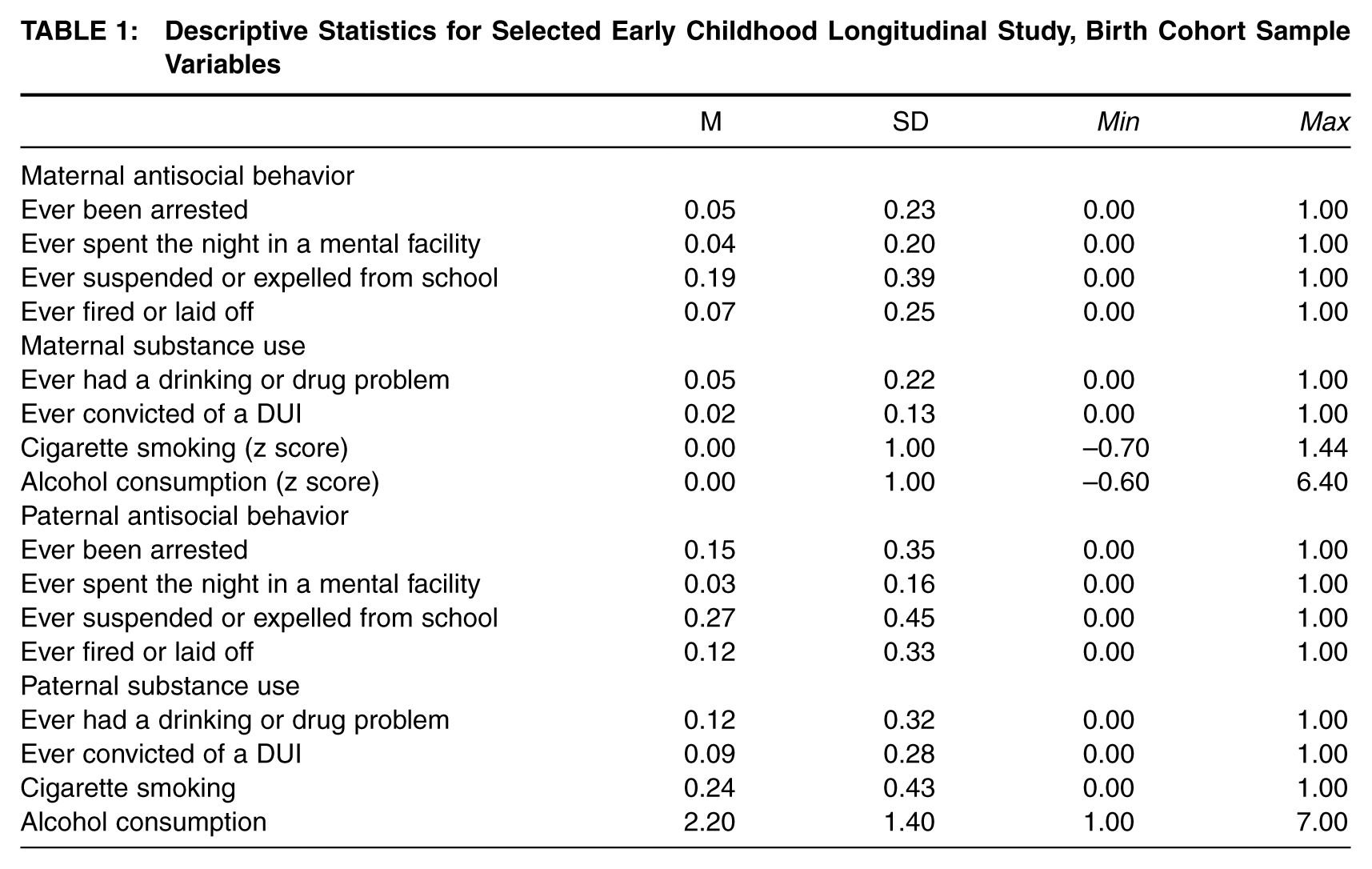
Wave I substance use
To examine mate similarity in substance use, we constructed a measure of substance use by employing items collected from the mothers at Wave I (Rhule-Louie & McMahon, 2007). Specifically, during Wave I interviews, mothers were asked (a) how many drinks that they consumed in a week, (b) whether they had ever been convicted of driving under the influence (DUI), (c) if they had ever been diagnosed with a drinking or drug problem, and (d) if they had smoked at least 100 cigarettes in the past. Other than the item assessing alcohol abuse (which was coded on a 7-point scale), each of the questions was coded dichotomously such that 0 = no and 1 = yes. Similar to the measures of antisocial behavior, each of the observable indicators was used to estimate a latent factor tapping maternal substance abuse.
Paternal Measures
Wave I antisocial behavior
To gauge the level of involvement in antisocial behaviors by fathers, we extracted four items measuring paternal antisocial behavior that were collected at Wave I from all resident fathers participating in the study. As a result, the analyses are restricted to couples that were cohabitating at Wave I. The paternal items were identical to those administered to the mother during the same wave and were similar to a number of items used by previous researchers to assess paternal antisocial behavior (Loukas, Fitzgerald, Zucker, & von Eye, 2001). For example, fathers were asked whether they had ever been arrested and whether they had ever been fired from their place of employment. The respondents were also asked whether they had ever spent the night in a mental facility and if they had ever been expelled or suspended while they were in school. Each of the items was coded dichotomously so that 0 = no and 1 = yes. These four observable indicators were used to estimate a latent factor for paternal antisocial behavior.
Wave I substance use
During Wave I interviews, the fathers in the sample were asked four questions intended to measure their use of nicotine and alcohol. These measures were very similar to those administered to the mothers during the same wave. Respondents were asked how many drinks they consumed in a week with responses ranging from 1 (none) to 7 (20 or more drinks). Fathers were also asked whether they currently smoked cigarettes, whether they had ever been convicted of a DUI, and if they had ever been diagnosed with a drinking or drug problem (0 = no and 1 = yes). Each of the individual items was used to calculate a latent factor for paternal substance abuse.
Length of relationship
During the Wave I maternal surveys, participants were asked to indicate the first year that they began living with their current partner. Responses to the item ranged from 1965 to 2002. Respondents were divided into four groupings based on the length of time they had been cohabitating (i.e., ≤ 2 years, 3–4 years, 5–8 years, and > 9 years).
Analysis
The analysis for the current study proceeded in a series of interrelated steps. First, we created four first-order latent factors: a maternal antisocial behavior factor, a maternal substance use factor, a paternal antisocial behavior factor, and a paternal substance use factor. Each of these latent factors was defined by the observable indicators described above. Then, mate similarity on antisocial behavior and on substance use was estimated by calculating structural equation models. These models correlated the maternal antisocial behavior factor with the paternal antisocial behavior factor and the maternal substance use factor with the paternal substance use factor. The degree of mate similarity was indexed by the correlation between factors.
The next step in the analysis involved estimating the degree of mate similarity on global measures of maternal criminal propensity and paternal criminal propensity. The global measures of criminal propensity were modeled as second-order factors that were defined by the first-order factors of antisocial behavior and substance use. After these second-order factors were constructed, we then tested for mate similarity by estimating a correlation between maternal criminal propensity (i.e., the maternal second-order factor) and paternal criminal propensity (i.e., the paternal second-order factor).
The first- and second-order factors were estimated using the structural equation modeling (SEM) program AMOS. AMOS makes use of a full-information maximum likelihood algorithm to estimate missing values. As a result, the SEMs presented in the current study were based on the full sample of female and male participants. Mathematically, the first-order factors assumed the following form:

Equation 1 describes the first-order factor where η denotes lower-order factors, and the ε term reflects measurement error. The first-order factor loadings of η on γ are reflected in Λy.
Equation 2 describes the second-order factors (ξ) assessing the global constructs of maternal and paternal criminal propensity.

Equations 1 and 2 can be combined to yield Equation 3:

With the addition of some minor modifications, Equation 3 can be adjusted to produce Equation 4, which is presented below.

This fourth and final equation represents the covariation matrix for the second-order confirmatory factors representing criminal propensity (Rindskopf & Rose, 1988).
The final step in the analyses was to examine whether the observed mate similarity for antisocial behavior, substance use, and criminal propensity was more in line with an assortative mating explanation or a behavioral contagion explanation. To test these competing explanations, the couples were divided into groups based on the length of their romantic involvement (see above). We examined the degree of similarity within couples for each of the four groups using the first-order and second-order factors described above. Evidence of behavioral contagion would have emerged if the degree of similarity increased as the length of the relationship increases. If the results diverged from this general pattern, then mate similarity would be partially or fully attributed to assortative mating.
Results
The first step of the analysis was to examine the degree of mate similarity for antisocial behavior. The results of this analysis are presented in Figure 1. The factor loadings presented in Figure 1 indicate that each of the four observable indicators loaded significantly on the latent construct assessing antisocial behavior for mothers and also for fathers. The degree of mate similarity for this first-order factor is presented at the top of the double-headed arrow. The results reveal a significant correlation between spouses for antisocial behavior (r = .51).
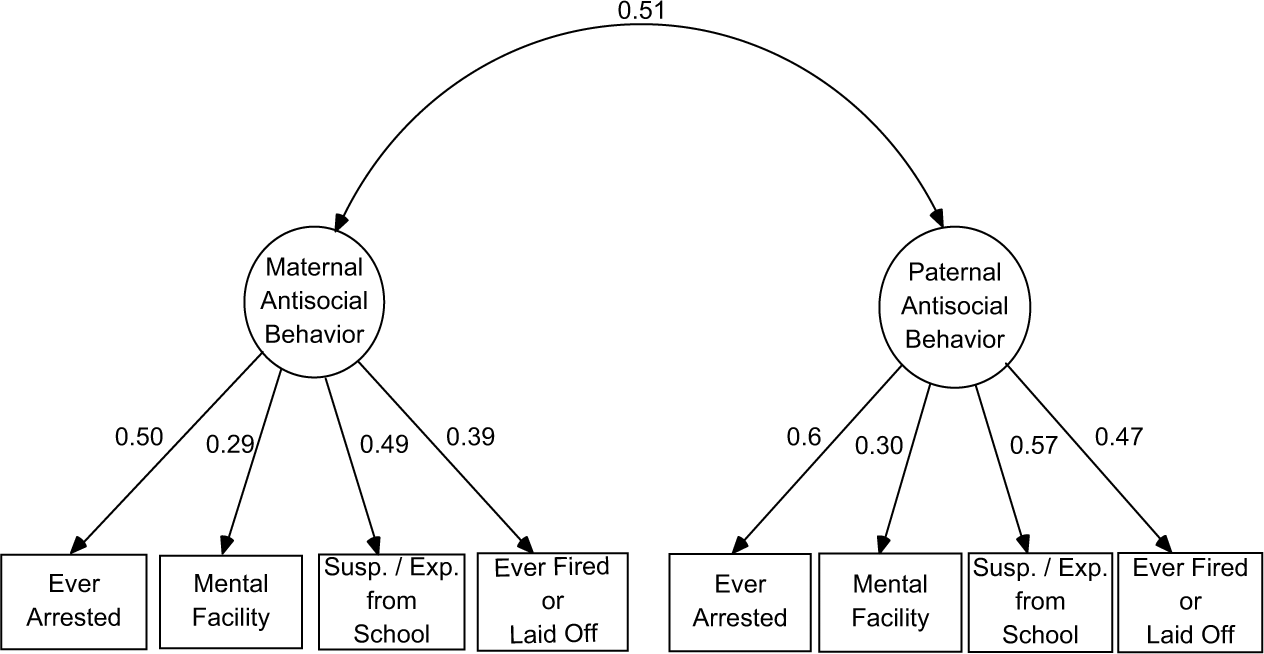
An Empirical Assessment of Mate Similarity for Antisocial Behavior
The next phase in the analysis was to examine the degree of mate similarity for substance use. The results presented in Figure 2 reveal that each of the observable indicators loads significantly on the latent construct of substance use. 1 Of particular importance, however, is the finding that the correlation between mates on substance use is r = .71, meaning that about one half of the variance in substance use in one mate is explainable by knowing his or her mate’s substance use patterns.
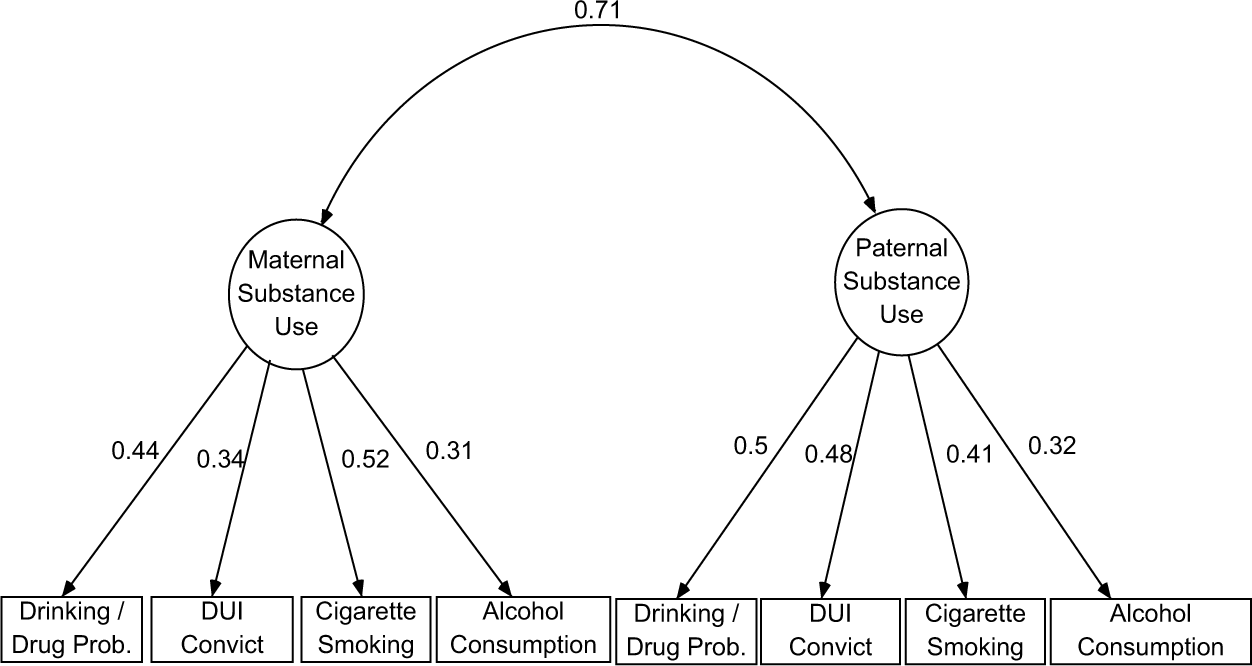
An Empirical Assessment of Mate Similarity for Substance Use
Next, we examined the second-order factors assessing maternal and paternal criminal propensity. Figure 3 presents the factor loadings of the first-order factors on the second- order construct. The results indicate that both of the latent constructs measuring antisocial behavior and substance abuse load significantly on the second-order factor designed to capture male and female criminal propensity. Similar to the results presented in Figures 1 and 2, the correlation between mates for criminal propensity is presented at the top of the double-headed arrow. The results of this model provide further evidence that spouses are similar for measures of criminal propensity, yielding a correlation of .54.
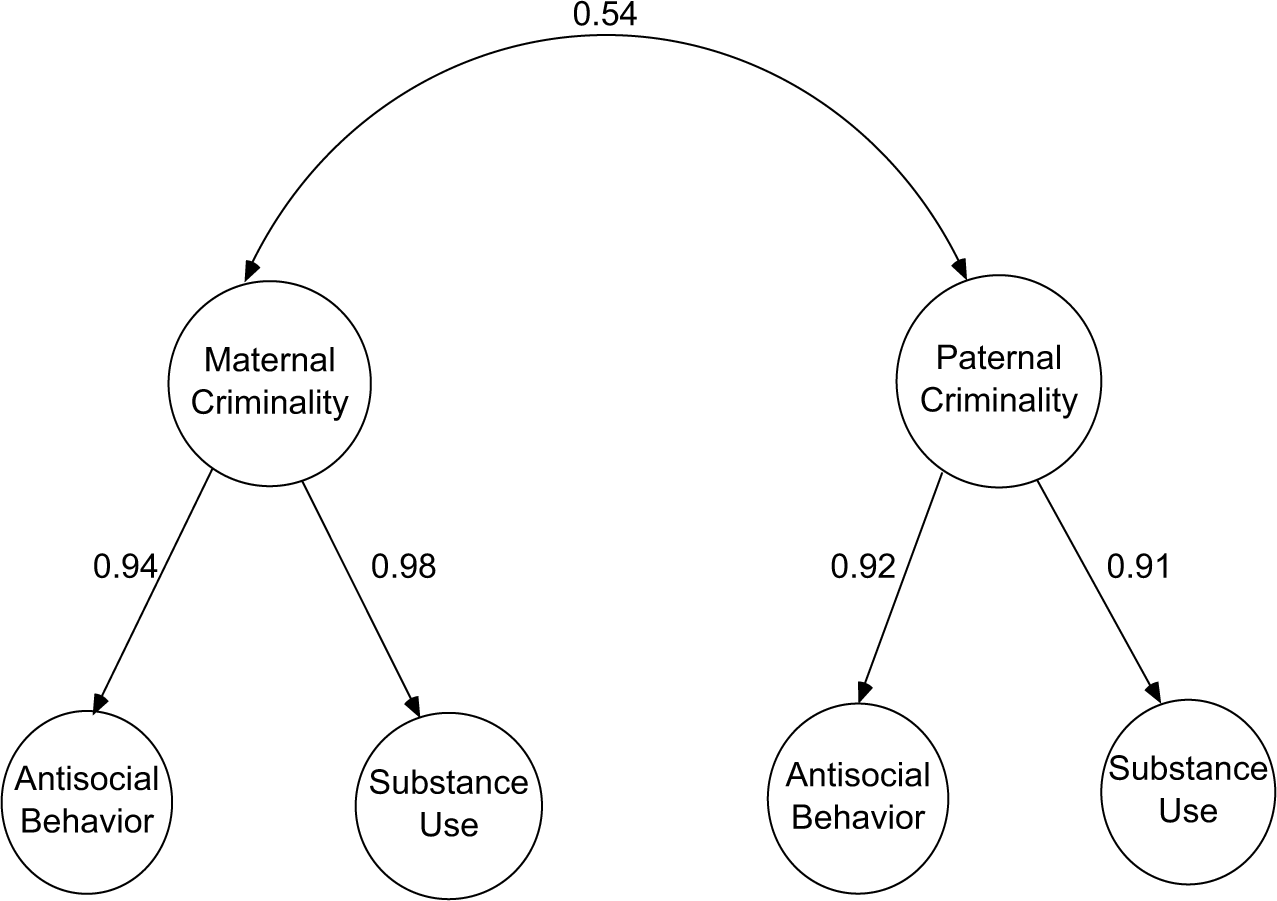
An Empirical Assessment of Mate Similarity for Criminal Propensity
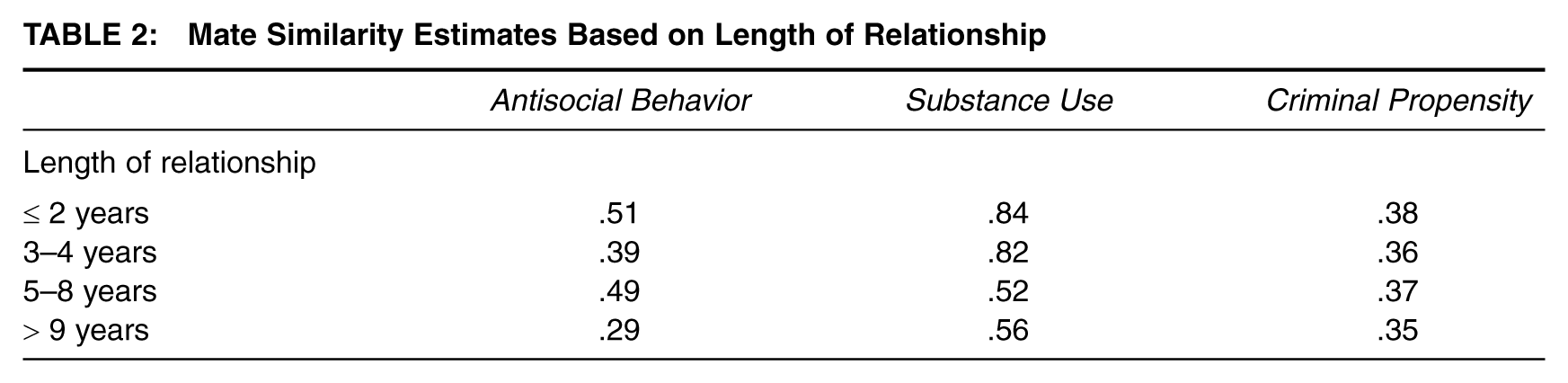
To this point, the findings have consistently revealed that mates resemble one another for antisocial outcomes. To determine whether assortative mating or behavioral contagion is driving mate similarity, participants were divided into four groups based on the length of their relationships. The evidence presented in Table 2 offers tentative support for the contention that couples mate assortatively for antisocial behavior and behavior contagion is unable to explain mate similarity. With the exception of the correlations observed for substance abuse, the degree of similarity between mating couples did not vary significantly based on the length of the relationship. Had the resemblance between mates been solely the result of behavior contagion, the similarity between spouses would have increased monotonically over time. For antisocial behavior and for substance use, the results revealed that mate similarity decreased as the length of the relationship increased. In addition, for criminal propensity, the mate similarity coefficients remained virtually static across the length of relationship categories. Taken together, this pattern of results suggests that assortative mating—not necessarily behavioral contagion—may account for the similarity between mates for antisocial behaviors. 2
Mate Similarity Estimates Based on Length of Relationship
Discussion
There is ample evidence suggesting that mates tend to be very similar to one another on a range of characteristics (Rhule-Louie & McMahon, 2007). The available evidence also tends to suggest that mate similarity is in large part the result of the process of assortative mating, where mates initially pair with others who possess a similar suite of traits and behaviors (Agrawal et al., 2006; Boutwell & Beaver, 2010; Krueger et al., 1998; Rhule-Louie & McMahon, 2007; for dissenting findings see Lykken & Tellegen, 1993). To date, however, there has been almost no evidence generated from within the field of criminology bearing on whether humans actively select mates who engage in similar levels of antisocial behaviors (Boutwell & Beaver, 2010; Simons, Stewart, Gordon, Conger, & Elder, 2002). The current study addressed this gap in the literature by examining a sample of mates drawn from the ECLS-B. Analysis of the ECLS-B revealed a significant amount of mate similarity for antisocial behavior, for substance use, and for global measures of criminal propensity. It is important to note that the degree of mate similarity observed in this study was similar to prior estimates collected from a range of participants composing several different samples (Agrawal et al., 2006; Boutwell & Beaver, 2010; Krueger et al., 1998; Rhule-Louie & McMahon, 2007; Rowe & Farrington, 1997). Given the convergence of findings, mate similarity for overt antisocial behavior appears to be quite consistent.
Instead of focusing only on the degree to which mates resemble each other, the current study was equally concerned with unpacking the underlying mechanisms responsible for producing mate similarity. Two explanations have been advanced in the literature: assortative mating and behavioral contagion. To test these competing hypotheses, we examined the degree of mate similarity within couples who had been cohabitating for various amounts of time. The results indicated that correlations for antisocial behavior, substance use, and criminal propensity remained stable within couples regardless of the length of their relationship. What these findings suggest is that the similarity in mates existed prior to the commencement of their relationship. As the length of their relationship increased, their similarity on antisocial behaviors either remained constant or was attenuated. These findings strongly support the role of assortative mating, not behavioral contagion, in structuring mate similarity for antisocial behaviors.
The findings of the current study can guide and inform at least two interconnected lines of criminological research: life-course research and research examining the intergenerational transmission of crime. First, to describe the relevance of assortative mating for developmental criminology, we rely on one of the most prominent life-course theories, Sampson and Laub’s (1993) age-graded social control theory. Sampson and Laub contend that specific life events, such as getting married, can mark a turning point that deflects a criminal off of an antisocial pathway and on to a more prosocial one (Beaver, Wright, DeLisi, & Vaughn, 2008; King, Massoglia, & MacMillan, 2007; Sampson, Laub, & Wimer, 2006; Simons et al., 2002). According to Sampson and Laub (1993), entering into a high-quality, prosocial marriage is thought to facilitate desistance from crime (Laub, Nagin, & Sampson, 1998). The important point to recognize is that the effect of marriage on desistance hinges on whether the spouse is prosocial.
A number of studies have provided some evidence that marrying a prosocial spouse does help to facilitate desistance in their antisocial partners (Laub & Sampson, 1993; Warr, 1998). As Rhule-Louie & McMahon (2007) point out, however, “Desistance in problem behavior would only seem probable, or at least more likely, should an individual choose a partner with prosocial inclinations, versus a similar inclination towards problem behavior” (p. 91). The findings presented in the current study, along with a growing number of other studies, suggest that antisocial individuals do not seek out prosocial mates (Boutwell & Beaver, 2010; Krueger et al., 1998). Instead, mate selection appears to involve selecting a partner who exhibits similar levels of antisocial behavior. Given the results of the current analysis, the role of marriage in the desistance process may need to be examined more closely.
The second area in criminology that could be informed by assortative mating research concerns studies examining the intergenerational transmission of antisocial behaviors and criminal traits. A range of maladaptive outcomes, including externalizing behavioral problems, mental illness, psychopathology, schizophrenia, and physical aggression, have been found to accumulate in multiple generations of the same family (Hicks, Krueger, Iacono, McGue, & Patrick, 2004; Huesmann, Eron, Lefkowitz, & Walder, 1984). Other studies have revealed that chronic criminal offending also tends to concentrate in a small percentage of families (Farrington, Jolliffe, Loeber, Stouthamer-Loeber, & Kalb, 2001; Hicks et al., 2004; Huesmann et al., 1984; Zoccolillo et al., 2005). Farrington and his colleagues (2001), for example, reported that more than 40% of the individuals who had been arrested for a crime came from only 8% of the families represented in the sample.
To understand the relevance of assortative mating research for the intergenerational transmission of crime, however, it is important to point out that a large body of research has revealed that antisocial behaviors are influenced by both genetic and environmental factors (Ferguson, 2010; Mason & Frick, 1994; Miles & Carey, 1997; Rhee & Waldman, 2002). On average, studies estimating the relative effects of genes and the environment have revealed that genes account for between 40% and 60% of the variance in antisocial behavior (Ferguson, 2010), with the remaining variance being attributable to environmental factors (Rhee & Waldman, 2002). Given that antisocial behaviors are shaped by both genetic and environmental factors, assortative mating for antisocial behaviors would necessarily mean that antisocial parents pass along to their children both a genetic predisposition for crime as well as a criminogenic environment. As a result, it is not surprising that one of the strongest predictors of childhood conduct problems, adolescent violence, and adulthood criminal behavior is having criminal parents (Cairns & Cairns, 1994; Mednick, Gabrielli, & Hutchings, 1984; Murray & Farrington, 2005).
Before concluding it is necessary to point out the primary limitations of the current study. First, the measurement of antisocial behavior and substance abuse was somewhat limited. A majority of the observable indicators included in the analyses were binary measures of delinquent behavior and substance use. As a result, it is possible that the inclusion of different measures, assessed using alternative measurement strategies, might have resulted in substantively different results. We should note, however, that the magnitude of the mate similarity coefficients was similar to those reported in prior research (Krueger et al., 1998).
Second, because the ECLS-B lacked measures of maternal and paternal antisocial behavior and substance use at subsequent waves, we were limited in our ability to examine mate similarity longitudinally. In an effort to circumvent this issue, we examined partner similarity for couples who had been cohabitating for varying lengths of time. Our results suggested that length of relationship had no bearing on the degree to which mates resembled one another. In addition, sensitivity analyses controlling for the age of the respondents did not alter the pattern of findings. Nonetheless, future work employing a longitudinal design will provide more insight into the competing hypotheses of assortative mating and behavioral contagion.
Until recently, the field of criminology has been relatively silent on the issue of assortative mating for antisocial behavior. This is unfortunate because, as Krueger et al. (1998) point out, “positive assortment may be part of the explanation for the concentration of crime within families, and hence, part of the explanation of how individual differences in antisocial behavior develop from both genetic and environmental sources” (p. 184). The promise of assortative mating research for criminologists is that it may be able to provide additional clarity concerning the development of criminal behavior across the life course.
Footnotes
Notes
References
Supplementary Material
Please find the following supplemental material available below.
For Open Access articles published under a Creative Commons License, all supplemental material carries the same license as the article it is associated with.
For non-Open Access articles published, all supplemental material carries a non-exclusive license, and permission requests for re-use of supplemental material or any part of supplemental material shall be sent directly to the copyright owner as specified in the copyright notice associated with the article.
