



Abstract
The current study used crime scene analysis (CSA) to identify the psychological characteristics of child molesters and examined the contribution of these behavioral themes for sexual offender risk assessment. CSA was conducted on a sample of 424 cases of child sexual abuse in Berlin (Germany) using non-metric Multi-Dimensional Scaling. The analysis revealed the behavioral themes of fixation, regression (sexualization), criminality, and (sexualized) aggression, consistent with previous theories and empirical research in child molestation. The construct validity of the four themes was demonstrated through correlational analyses with known sexual offending measures, ratings of offender motivation, and criminal histories. The themes of fixation and (sexualized) aggression were significant predictors of sexual recidivism and added incrementally to the Static-99 for the prediction of sexual recidivism. The results indicate that crime scene information can inform the assessment of child molesters’ risk-relevant propensities and improve the prediction of sexual recidivism.
Assessing the recidivism risk of sexual offenders requires collecting diverse information. Although the value of crime scene analysis (CSA) for risk assessment has been recognized (Beech, Fisher, & Thornton, 2003; Lehmann, Goodwill, Gallasch-Nemitz, Biedermann, & Dahle, 2013; West, 2000), there is little empirical guidance concerning what aspects of crime scene behavior is risk relevant.
A number of specialized risk scales for sexual offenders have been developed based on static and dynamic risk factors (Hanson & Morton-Bourgon, 2009). Static risk factors are characteristics that predict recidivism but are immune to deliberate intervention, such as gender, age, and criminal history. Dynamic risk factors, also called criminogenic needs (Andrews & Bonta, 2010), are characteristics that both predict recidivism and are amenable to change (e.g., attitudes tolerant of crime, negative peer associations). Although the static/dynamic distinction has considerable utility, it describes differences in the indicators, not necessarily differences in the constructs being assessed. Both static and dynamic risk factors predict recidivism because they are markers for the enduring individual propensities that cause reoffending (Mann, Hanson, & Thornton, 2010). Following this conceptualization, we argue that enduring individual offender propensities (e.g., sexualized aggression) may manifest themselves in concrete offense behavior (e.g., offender humiliates the victim, offender injures victim genitals). Consequently, it should be possible to identify these propensities through behavioral CSA.
Meta-analytic reviews of the predictors of sexual recidivism (e.g., Gerhold, Browne, & Beckett, 2007; Hanson & Bussière, 1998; Hanson & Morton-Bourgon, 2005; McCann & Lussier, 2008) have identified a number of crime scene variables as valid predictors of sexual recidivism, such as the victim–offender relationship (e.g., stranger, acquaintance, spouse), victim characteristics (e.g., age, sex), and offense type (e.g., contact or non-contact offense). Recently, Dahle, Biedermann, Lehmann, and Gallasch-Nemitz (in press) used a criterion-keying approach to select crime scene behaviors that predicted sexual recidivism. As far as we are aware, Dahle et al. represent the first attempt to use only CSA variables in the prediction of risk. Based on a sample of 955 male sex offenders, Dahle and colleagues identified seven crime scene characteristics (i.e., offender actively seeking victims, explicit approach, visual–sexual offender stimulation, sexualized language, explicit planning, and no juvenile group offense) to be included in their Crime Scene Behavior Risk (CBR) measure. The CBR showed moderate predictive accuracy for the prediction of future sexual offending (c index = .72). Criterion-keying approaches are, however, inherently devoid of theory (Strauss & Smith, 2009).
In the current study, the aim is to improve on Dahle and colleagues’ (in press) CSA methods by investigating the underlying psychological meaning of crime scene behaviors to infer risk-relevant propensities of child molesters. Establishing construct validity is a process that connects theory to a pattern of evidence (Cronbach & Meehl, 1955). Consequently, our program of research started by developing a precise and detailed conceptualization of the target propensities and their theoretical contexts.
A review of the relevant literature on the crime scene behavior of child sexual abusers (e.g., Bennell, Alison, Stein, Alison, & Canter, 2001) suggested that there are at least four broad behavioral themes, which we call fixation, regression, criminality, and (sexualized) aggression. Although we do not fully endorse all the theoretical implications of the fixated/regressed distinction (e.g., Burgess, Groth, & Holmstrom, 1978), we retained this terminology, because it clearly describes distinct patterns of sexual offenses against children. In more recent terminology, these patterns have been labeled committed, situational, and opportunistic (e.g., Wortley & Smallbone, 2006), and have clear parallels in Ward and Siegert’s (2002) pathways model and Knight and King’s (2012) classification system.
The following section describes the crime scene behaviors and psychological propensities associated with each theme. These descriptions provide specific testable hypotheses that were the focus of the current empirical investigation.
Fixation
Crime Scene Behaviors
This type of child molester has been described as fixated (i.e., preferential; Cohen, Seghorn, & Calmas, 1969; Groth & Birnbaum, 1978), committed (opportunity-maker; Wortley & Smallbone, 2006), as high fixation/low social competence (Knight & King, 2012), or “pure” pedophiles (Pathway 5; Ward & Siegert, 2002). These offenders have a persistent, continual, and compulsive attraction to child victims (Terry & Tallon, 2004). Therefore, crime scene behaviors of fixated offenders would include actively creating opportunities to offend by grooming potential victims with attention, affection, and gifts (e.g., Lanning, 2010) and by actively seek suitable targets (e.g., watch children outside at playground; Lanning, 2010). Furthermore, fixated offenders seem to indoctrinate their victims into sexuality (Burgess et al., 1978) and actively create opportunities to engage sexually with them (Wortley & Smallbone, 2006). In particular, sexual play seems to foremost include “immature forms” of sexual behavior, such as touching, fondling, and caressing the child (Cohen et al., 1969; Lang, Rouget, & Santen, 1988). Typically, such offenses lack physical force (Burgess et al., 1978). Fixated offenders seem to predominately offend against male (see Terry & Tallon, 2004) and stranger victims (e.g., Finkelhor, 1984; Groth & Birnbaum, 1978; Wortley & Smallbone, 2006).
Propensities
We propose that the fixated offender’s motive is primarily sexual in nature, based on, for example, enduring pedophilic interests or dysfunctional implicit theories about children’s sexuality (children as sexual beings; Ward & Keenan, 1999). Furthermore, previous studies showed (e.g., Bennell et al., 2001; Lanning, 2010; Looman, Gauthier, & Boer, 2001; Prentky, Knight, & Lee, 1997) that fixated child molesters are likely to show deviant sexual arousal, to have a large number of victims, to be simultaneously involved with multiple victims, and to commit future sexual offenses. Previous research found that child molesters following the approach-explicit pathway score higher than average on Static-99, an actuarial risk tool (Yates & Kingston, 2006). Consequently, we expected the behavioral theme of fixation to increase the risk of future sexual offending.
Regression (Sexualization)
Crime Scene Behaviors
This type of child molester has been described as regressed (Burgess et al., 1978), situational (Wortley & Smallbone, 2006), or suffering from intimacy deficits (Pathway 1; Ward & Siegert, 2002). Such offenders are not primarily motivated by the physical or psychological characteristics of children, but by non-paraphilic sexual excitation and victim availability. They choose children as an alternative to age-appropriate partners (e.g., Finkelhor, 1984; Ward & Siegert, 2002) and essentially regard the child as a “pseudo-adult” (Ward & Siegert, 2002). Consequently, they engage in “more mature sexual behaviors” (e.g., fellatio), mimicking adult sexual behaviors with the child victim (Lang et al., 1988). Whereas the defining characteristic of this behavioral theme is the sexualization of the child, the main criterion for victim choice is availability. Consequently, they seem to predominately molest their own children (Lanning, 2010) and physical force is rare. Instead, this type of offender uses bribes or exploits natural trust (e.g., Herman, 1981). Consequently, the expected CSA behaviors of a regressed offender should primarily consist of indicators of the sexualization of the child (e.g., victim masturbates offender, offender performs oral sex, and ejaculation). To account for this fact, “sexualization” was added in parentheses to the name of this behavioral theme.
Propensities
Here, the need for sex is transferred to an inappropriate partner (normal sexual scripts), and the primary offender motivation should also be sexual rather than aggressive (Ward & Siegert, 2002). According to previous findings, the theme of regression should be related to the relationship continuing for some length of time (e.g., over 2 years) and including multiple instances of offending (e.g., Tormes, 1969; Wortley & Smallbone, 2006). As the regressed offender is assumed to be a law-abiding citizen in most respects and less likely to persist after detection (i.e., low recidivism risk), there should be no significant relationship with previous or future offending (Wortley & Smallbone, 2006). In addition, because the sexual abuse seems to be committed later in the offender’s life, in family settings, or within close emotional settings (Wortley & Smallbone, 2006), there should be little indication that the offender lacks a history of intimate relationships (i.e., Static-99 item). Instead, it is postulated that the regressed molester has some positive relationship with age-appropriate partners. In consideration of the above theoretical relationships and the fact that intra-familial child molesters often recidivate at a lower rate than extra-familial child molesters (Hanson & Bussière, 1998), the regressive offender theme was not expected to constitute a psychological meaningful risk factor for future sexual offending.
Criminality
Crime Scene Behaviors
The general theme of criminality occurs throughout the clinical literature on child molestation (e.g., Groth & Burgess, 1977). Wortley and Smallbone (2006) describe these offenders as opportunistic (i.e., opportunity-taker), whereas Knight and King (2012) would describe them as high on the externalization dimension. In the Ward and Siegert (2002) pathways model, they are offenders with antisocial cognitions (Pathway 4). All of these conceptualizations describe offenders who abuse children in the context of generalized criminal behavior (Lanning, 2010). Therefore, the criminal offender could use verbal threat(s) or intimidation (e.g., threatens to kill), restraints (e.g., safety precautions), physical strength (e.g., controlling force) or a weapon to overpower the victim and to enforce his demands (Burgess et al., 1978). The main victim-selection criteria for criminal child molesters seem to be vulnerability and opportunity, with no identifiable preferred victim relationship (i.e., stranger and acquaintance victims; Lanning, 2010). The offenses themselves will often only involve instrumental strategic violence (Felson & Krohn, 1990) with the offender having no intention to purposely, or expressively, hurt the victim. Accordingly, Bennell et al. (2001) describe their hypothesized control theme as involving instrumental aggressive behaviors, such as verbal threats and violence only to control the victim for offense completion.
Propensities
Here, the high level of control over the victim may suggest that the offender desires to dominate and overpower the victim (Groth & Burgess, 1977). Criminal offenders are characterized by a history of criminal offending across multiple domains, including property crimes and violent offenses (Canter & Kirby, 1995; Ward & Siegert, 2002; Wortley & Smallbone, 2006). Therefore, this theme should be related to criminal, violent, and previous sexual convictions (i.e., rape). Furthermore, Ward and Siegert (2002) argue that criminal offenders do not sexually abuse children because of a stable sexual predilection (normal sexual scripts). In fact, if they have an opportunity to indulge their sexual urges at little perceived cost, it is highly probable they will do so. Therefore, criminal child molesters seem to adhere to dangerous world and entitlement implicit theories (Ward & Keenan, 1999). Consequently, this theme should be more related to general criminality than to sexual deviance, paraphilia, or sex-crime-specific risk factors. This criminality theme should be indicative of the psychological meaningful risk factor of externalization and therefore the theme should predict non-sexual, rather than sexual, recidivism (Hanson & Morton-Bourgon, 2005).
(Sexualized) Aggression
Crime Scene Behaviors
Based on the clinical literature on child sexual abuse (e.g., Cohen et al., 1969; Groth & Burgess, 1977) and recent theories on child sexual abuse (e.g., Pathway 3—emotional dyregulation; Ward & Siegert, 2002), the current study expected to identify a theme characterized by an overtly aggressive interaction between the victim and the offender. Here, the offender wants to hurt the victim and may perform brutal sexual acts. The assault is characterized by expressive, non-strategic aggression beyond that necessary to commit the offense (Felson & Krohn, 1990). In addition, alcohol may play a role in the offense further disinhibiting the offender (loss of control; Ward & Siegert, 2002) and eliciting substantially greater aggression (Hoaken et al., 2012). Canter, Hughes, and Kirby (1998) as well as Bennell et al. (2001) describe physical force, anal penetration, and the offender not being deterred by adverse victim reaction as key definitional variables of this theme. Cohen et al. (1969) as well as Knight and King (2012) argue that in some offenses sexual and aggressive features can overlap, which means that for a small group of child molesters force becomes eroticized. Here, sexuality becomes an expression of anger and sadism. Therefore, the (sexualized) aggression theme should include specific behaviors found in the Severe Sexual Sadism Scale (SeSaS; Nitschke, Osterheider, & Mokros, 2009).
Propensities
The early literature describes the primary motivation underlying the (sexualized) aggressive child molester as anger (Cohen et al., 1969), and Ward and Siegert (2002) describe offenders who primarily have problems controlling their emotions (e.g., anger). Previous evidence suggests that angry violent offenders are most likely to have a history of prior violent offenses (Canter & Heritage, 1990) and to reoffend with a violent offense (Mann et al., 2010). Therefore, the (sexualized) aggression theme is likely related to a history of previous violent offending. Furthermore, it is expected that crime scene behavioral indicators of sexual sadism should be found within this theme. Accordingly, the theme of (sexualized) aggression is considered to be indicative of both hostility/grievance and sexualized violence. Because grievance/hostility as well as sexualized violence constitute evidence-based risk factors for sexual offending (Mann et al., 2010), this theme is expected to predict future sexual offending.
Purpose of Study
This study aimed to identify the risk-relevant propensities of child molesters from their crime scene behavior. Specifically, offender crime scene data were subjected to multivariate dimensional analysis to determine congruence with the four previously identified propensity themes of fixation, regression (sexualization), criminality, and (sexualized) aggression. Next, the construct validity of the themes was tested by investigating the relationship of the themes with conceptually related (convergent validity) and unrelated (discriminant validity) measures (Campbell & Fiske, 1959). Finally, we examined the relationship of the themes with recidivism and with related risk tools.
Method
Sample
The starting sample contained all sex offenders reported to the Berlin state police during the years 1994 to 2001 for a violent or abusive sexual offense. Offenders were then excluded if they, for example, had insufficient information regarding their behavior at the index offense. Hence, the initial sample consisted of 955 convicted adult, male sex offenders. In 42% of the cases, the victims were children or adolescents, 51% were adults, and 7% of cases victims were children, adolescents, and adults. Due to principles embodied in German jurisdiction, it is possible that offenders can be convicted for both offense types (e.g., if the victim is younger than 14 years old and the offender uses violence to commit the offense the offender will be convicted for child molestation and sexual assault). In the current study, offenders with both offense types were coded as child molesters to use victim age as the central grouping criterion. The final study sample consisted of 424 cases of child sexual abuse where the offenders have been convicted for the index offense of child molestation and had available information on recidivism. Their age at the time of the index offense ranged from 14 to 77 years (M = 38.3; SD = 12.2). Ninety percent were German citizens, and 10% were foreign nationals or had a dual citizenship. The age of the youngest victim ranged from 2 to 14 years (M = 9.5; SD = 2.9). About half (49%) of the sampled offenders had prior charges for sexual offenses, and 28% had prior convictions.
Data
The data were collected as part of a research collaboration between the Institute for Forensic Psychiatry, Berlin, and the State Office of Criminal Investigations in Berlin. Data were extracted from computerized police databases and official paper records. The computerized police databases contained information about the offender, the victim, and the crime. In the majority of the cases, the paper records included verbatim transcripts of police interrogations of the offender and the victim, as well as general records of the investigation. On occasion, these general records also included witness statements, court decisions, and official expert opinion.
Sexual recidivism was measured by any subsequent convictions for a sexual offense during the follow-up period according to the official criminal records taken from the National Conviction Registry (NCR) of Germany. The follow-up started after the sentencing date (e.g., fine or probation sentence) or release date (e.g., prison, forensic hospital), whichever was most recent. The follow-up ranged from 0.2 to 15.9 years, with a median of 8.5 years (SD = 4.0 years). During that time, 25% were reconvicted for a new sexual offense.
Coding
On the basis of theoretical considerations, 39 variables were identified that related to at least one of the four behavioral themes (see the appendix). Only variables used and considered relevant by previous researchers (e.g., Goodwill, Lehmann, Andreei, & Beauregard, 2014) were included (compare Table 1).
Commonality of Current Study Offense Variables Across Child Molestation (Current Study Percentage Frequencies Are in Brackets)
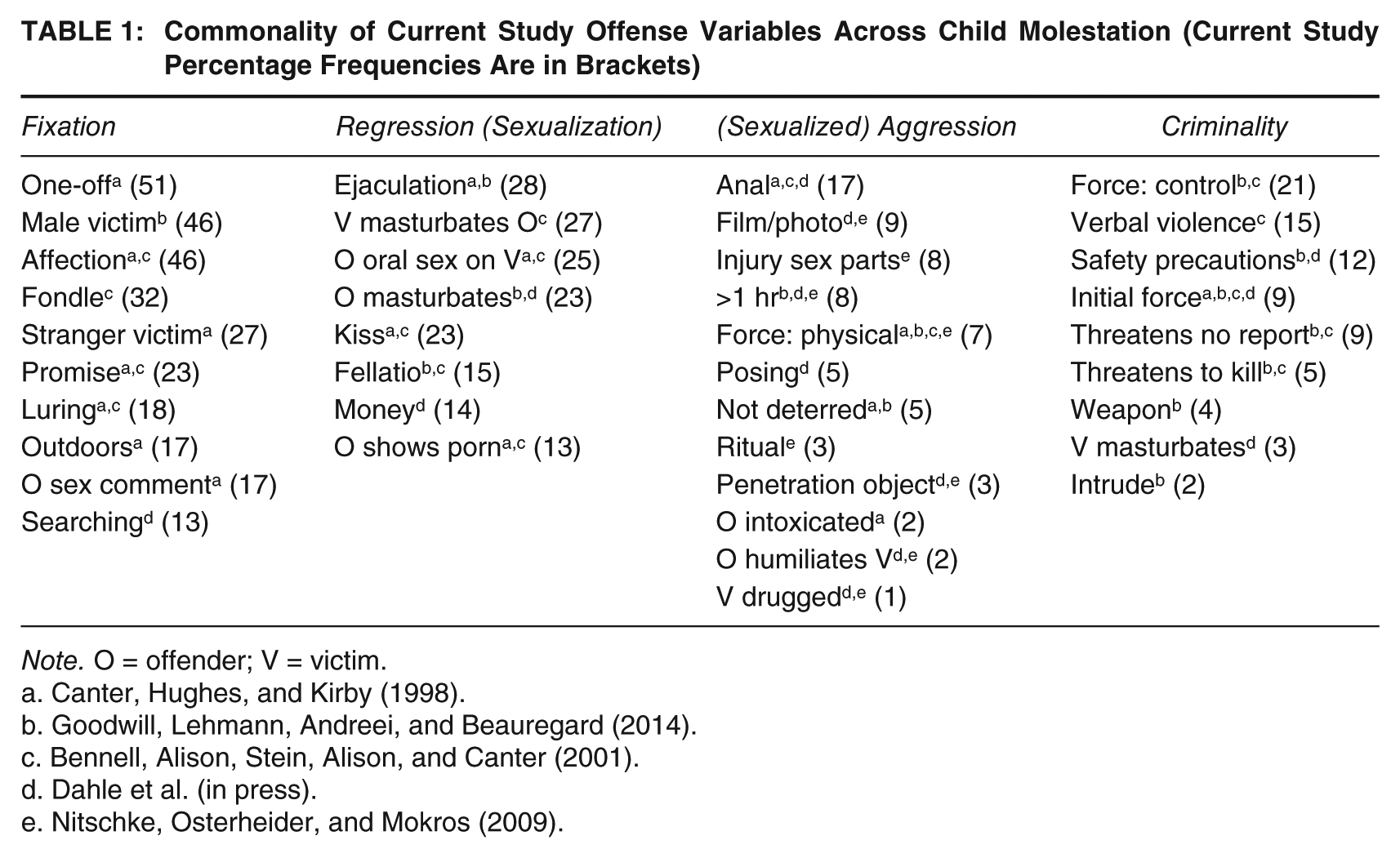
Note. O = offender; V = victim.
To assess the reliability of crime scene variables two research assistants trained to use the coding manual independently coded a random subsample of 42 cases. The percent agreement for the 39 variables ranged from .76 to 1.00, with a median value of .95. For two variables (i.e., victim masturbates, offender drugged victim), Kappa could not be computed due to a lack of variance. For eight variables (searching, offender makes sexual comment, offender shows porn, offender offers money, penetration with object, long duration, offender not deterred, and luring), Kappas were low (<.45; Altman, 1991), but they were included due to the high percent agreement (range = 76%-95%). These items were also retained because they were considered essential for the current hypothesis (i.e., content validity). The Kappa values of the remaining variables ranged from .47 to 1.00 (median of .81).
To assess the inter-rater agreement on the expected groupings of the crime scene variables (see the appendix), two independent raters assigned the crime scene variables to the four themes (fixation, regression, criminality, sexualized aggression). The percent agreement for the assignment of crime scene variables to behavioral themes was 95% (Kappa of .93).
Measures
The actuarial scores were coded by syntax for each offender based on the NCR and police databases adhering to the official manuals (Harris, Phenix, Hanson, & Thornton, 2003; Phenix, Doren, Helmus, Hanson, & Thornton, 2008) as part of the research project. Static-99 and Static-2002 are not recommended for young offenders (those having an age of less than 18 years at time of release). Therefore, six offenders were excluded from the analysis of static risk scores.
The Screening Scale for Pedophilic Interest (SSPI; Seto & Lalumiére, 2001) is a four-item scale designed to identify pedophilic interests from criminal history variables (e.g., number of child victims of sexual offenses).
Static-99 (Hanson & Thornton, 2000) is a 10-item actuarial scale that assesses recidivism risk of adult male sex offenders. Previous studies have found a moderate accuracy in predicting sexual recidivism (Hanson & Morton-Bourgon, 2009). In this data set, the average Static-99 score was 3.79 (SD = 2.23), which was slightly higher than that observed in other routine samples (Hanson, Lloyd, Helmus, & Thornton, 2012).
Static-2002 (Hanson & Thornton, 2003) is a 14-item actuarial measure that assesses recidivism risk of adult male sex offenders. Static-2002 was created with the aim of improving Static-99 by adding new items, standardizing coding rules, and organizing the items into meaningful subscales. Three subscales were used in the current study: Deviant Sexual Interests, Persistence of Sexual Offending, and General Criminality. The Deviant Sexual Interests subscale contains 3 items: non-contact sexual offenses, male victims, and two or more victims less than 12 years of age. The persistence of sexual offending subscale also contains 3 items: prior sentencing for sexual offenses, any arrest for a juvenile sexual offense and an adult conviction for a separate sexual offense, and rate of offending.
The General Criminality subscale contains five items: any prior involvement with the criminal justice system, number of prior sentencing occasions, community supervision violation, prior non-sexual violence, and time since last involvement with the criminal justice system. The Static-2002 and Static-99 provide similar levels of discrimination for the prediction of sexual recidivism (Hanson, Helmus, & Thornton, 2010; Hanson & Morton-Bourgon, 2009).
A global measure of offender motivation (i.e., sexual, power, anger, and sadism) was also coded by the research assistants for 42 cases on a 4-point rating scale (1 = not at all; 4 = completely) based on the definitions in coding manual, which were loosely based on previous clinical definitions (e.g., Groth & Burgess, 1977). The inter-rater reliability was moderate (Fleiss, 1981) ranging from intra-class correlations of .45 to .74. Ratings of offender motivation were available for 156 of the 424 cases, because offender motivation was only included in the second wave of data collection.
Data Analysis
To identify the underlying structure of the crime scene variables, we used a two-dimensional, non-metric Multi-Dimensional Scaling (MDS) analysis using the PROXSCAL module from SPSS for Windows (ver. 19) at an ordinal level of measurement not allowing for ties. MDS analysis represents associations between variables (e.g., crime scene variables) as distances in an n-dimensional space (Borg & Groenen, 1997). The distances between variables in the MDS solution can be interpreted as an approximation of their similarities, the closer they are together the more they can be assumed to relate to the same underlying propensity (e.g., sexualized aggression). To ensure that the mutual non-occurrence (e.g., both items scoring a zero or “absent”) of behaviors did not increase the similarity between two behavioral variables, a Jaccard measure of association (Jaccard, 1908) was used to transform the data into a similarity coefficient matrix. According to Canter, Bennell, Alison, and Reddy (2003), Jaccard’s measure is the most appropriate association to use in “noisy” behavioral data.
Each theme was represented by a continuous score called the Thematic Sum Score (TSS). The TSS score corresponds to the sum of all the offense behaviors that were present (e.g., performed) by that offender across each theme. The ability of the risk scales to discriminate between recidivists and non-recidivists was indexed using hazard ratios from Cox regression survival analysis (e.g., Allison, 1984) and by the area under the curve (AUC) from receiver operating characteristic (ROC) analysis (e.g., Rice & Harris, 1995). In survival analysis, hazard ratios above 1 indicate a positive association with the outcome, whereas hazard ratios below 1 indicate negative associations. Also, AUC was used as an effect size statistic (see Swets, Dawes, & Monahan, 2000), in which AUCs of .56, .64, and .71 were considered small, medium, and large effects, respectively (Rice & Harris, 2005).
Results
Figure 1 shows the two-dimensional MDS solution with a Stress-1 index of 0.25 in 20 iterations (Borg & Groenen, 1997). According to Spence and Ogilvie (1973), good data will yield solutions with stress values well below those expected for random ranking. The expected stress value for random ranking with 39 variables and two dimensions is 0.35, which is substantially bigger than the observed value of 0.25. In Figure 1, each point indicates one of the 39 crime scene variables and they are arranged in such a way that their distances correspond to their similarity. Two points are close together (e.g., verbal violence and controlling force), if they are likely to co-occur in an offense. Conversely, two variables are far apart (e.g., offense is happening outdoors and ritualistic behavior), if they are unlikely to co-occur (Borg & Groenen, 1997).

Two-dimensional MDS solution of 39 crime scene actions in 424 cases of child sexual abuse with regional interpretations (see Table 1 for frequencies).
Themes
As hypothesized, the four themes of fixation, regression (sexualization), criminality, and (sexualized) aggression were identified within the MDS plot. The thematic partition lines were based on a combination of theory, the results of the a priori inter-rater agreement, original intent of the items, and the internal reliability of variables to themes based on Kuder-Richardson 20 (KR-20) coefficients. The mean number of crime scene behaviors per offense was 6.0 (SD = 3.0, range = 1-17, see Table 2). The percent agreement between the partition of the MDS plot and the a priori hypotheses about variable groupings was 92% (Kappa = .90).
Summary of Psychometric Properties of the Four Themes Based on TSS Score
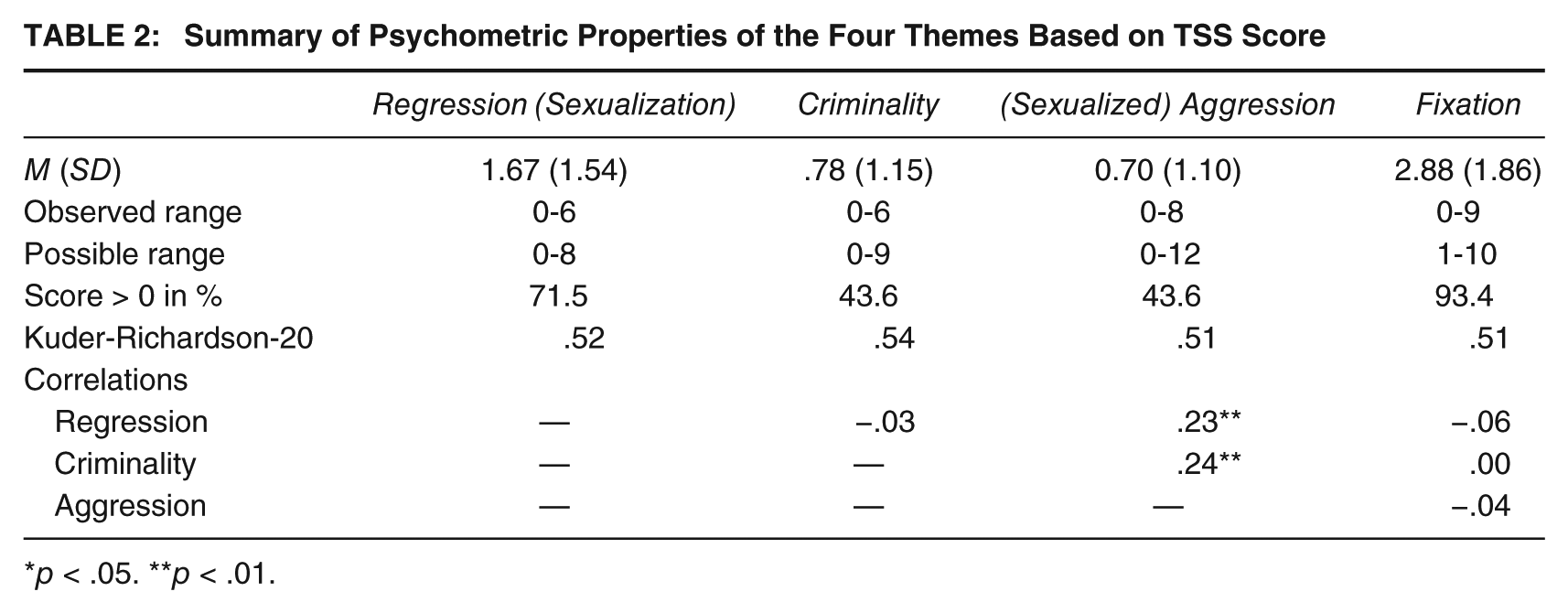
p < .05. **p < .01.
The themes were constructed to represent dimensions, not types. Consequently, an offender may score high (or low) simultaneously on the four TSSs. Small significant correlations were only found between regression (sexualization) and (sexualized) aggression (r = .23), and between criminality and (sexualized) aggression (r = .24), suggesting that these themes were relatively independent.
The empirical fixation TSS included 10 items, 9 of which were those predicted a priori. The KR-20 coefficient for the fixation theme was .51. The regression (sexualization) theme consists almost exclusively of “mature” sexual crime scene behaviors (e.g., offender ejaculates, fellatio). The empirical TSS included 8 items, including 7 of the 8 items originally expected to be clustered in this region. The KR-20 value of the 8 items in the regression TSS was .52. As expected, a behavioral theme indicative of a criminal (-opportunistic) offending was also identified (e.g., Groth & Burgess, 1977), including 9 items, 8 of which were those predicted a priori. The KR-20 coefficient for the nine variables constituting this theme was .54. As predicted, the theme of (sexualized) aggression was characterized by crime scene behaviors indicating physical violence, degrading sexual acts, and offender intoxication. Furthermore, the variables included to account for erotized sadistic aggression (i.e., items of the SeSaS) were found within this theme. It is notable that, for example, indicators of severe sexual intrusiveness (i.e., anal/object penetration) and indicators of visual–sexual offender arousal (i.e., filming/taking photos, victim must pose) were found straddling the MDS partition between sexualization and aggression suggestive of the theoretical fusion of sexual and aggressive behaviors into a single psychological experience (i.e., sexual sadism). The empirical TSS included 12 items, all of which were predicted a priori. The KR-20 coefficient for the 12 (sexualized) aggression variables was .51.
Construct Validity of Action Themes
The construct validity of the four themes was assessed by correlating the TSSs with the number of previous and future charges for criminal (burglary, robbery), sexual (child molestation, rape), and non-sexual violent offending as indicators of previous criminal behavior (Table 3). In addition, the TSSs were correlated with ratings of the offender’s motivation, offense characteristics, Static-2002 subscales (i.e., sexual deviancy, persistence of sexual offending, and general criminality), Static-99, and SSPI total scores (Table 4).
Correlations Between Behavioral Themes, Criminal History (Charges), and Recidivism (Charges)
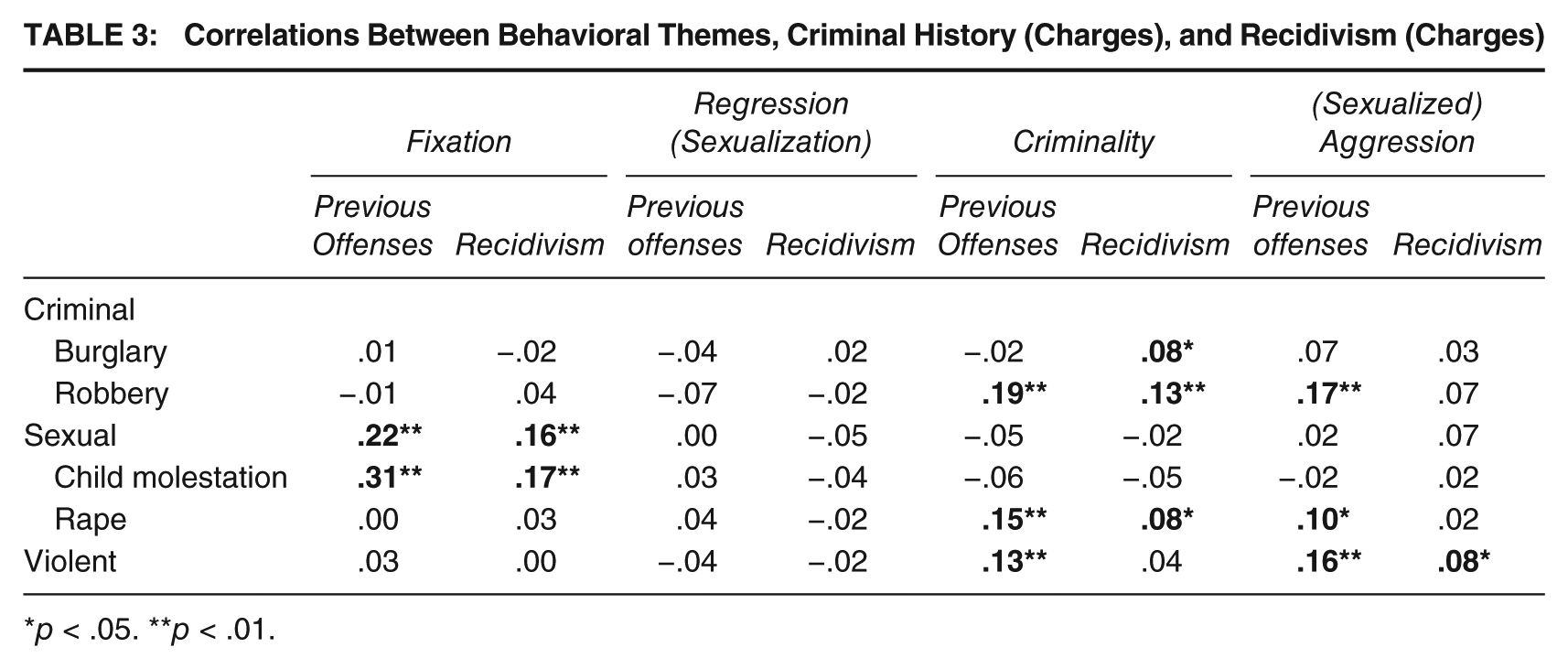
p < .05. **p < .01.
Correlations Between Behavioral Themes and Risk Assessment Instruments, Offender Motivation, and Offense Characteristics
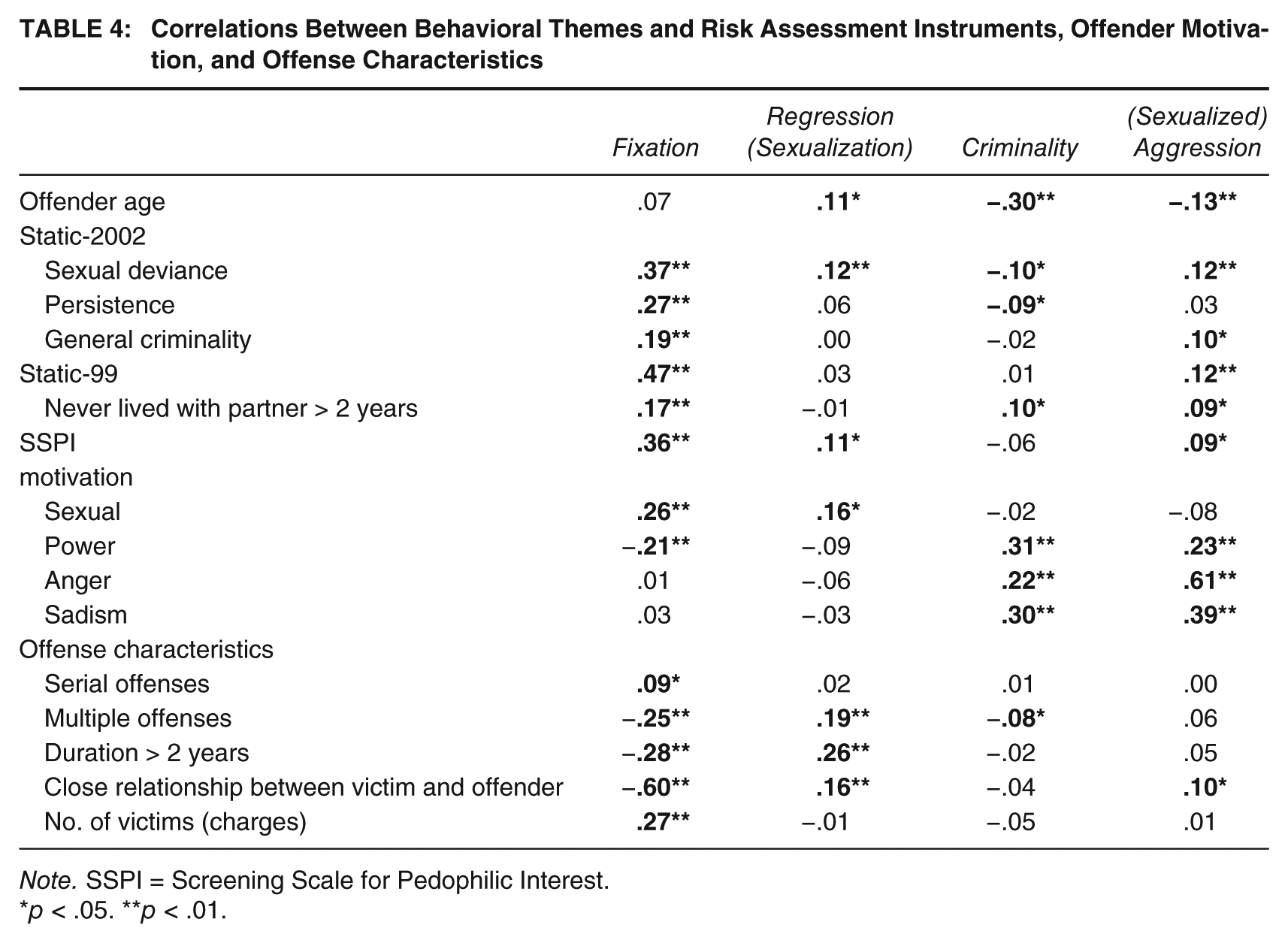
Note. SSPI = Screening Scale for Pedophilic Interest.
p < .05. **p < .01.
As hypothesized, high scores for fixation were related to previous sexual offending as well as sexual recidivism. In particular, the fixation theme was significantly more related to previous and future offending against children. The convergent validity of this theme was further evidenced by significant relationships with the Static-2002 subscales of sexual deviance and persistence of sexual offending as well as a primarily sexual motivation. In addition, this theme showed a positive relationship with the Static-99 and SSPI total scores, indicating a high likelihood of pedophilia. The discriminant validity was evidenced by the theme showing no relationship with violent offending or violent offender motivation (e.g., anger). Furthermore, high scores in the theme of fixation were related to serial sexual offending (i.e., multiple offenses involving different victims), the offender having multiple victims, and historically, not having co-habited with a partner for more than 2 years.
The theme of regression (sexualization) was not related to previous or future violent or criminal offenses. High regression scores had only a small or a non-significant relationship with sexual deviance and persistent sexual offending, respectively. As expected this theme was significantly related to sexual motivation, and unrelated to motivations of power, anger, or sadism. In contrast to fixation scores, regression scores were not related to serial offending, but instead were related to multiple offenses involving the same victim, a long duration of offending, and the environmental or hereditary closeness of the victim to the offender. As well, offenders high on regression were older than those low on regression.
As predicted, the theme of criminality was not associated with a stable sexual predilection (i.e., low fixation). This is indicated by the criminality TSS being negatively related to sexual deviance, persistence of sexual offending, and previous convictions of child molestation (r = −.11, p = .013). In addition, the criminality theme was the only theme found to be positively related to future charges for rape. High criminality TSSs were related to greater previous and future criminal offenses. Contrary to expectation, the posited relationship between the criminality theme and the General Criminality subscale of the Static-2002 was not found. Nonetheless, the criminality theme was found to be strongly related to motivations of power, anger, and sadism and unrelated to sexual motivation. Offenders high on criminality TSS were younger than those with low scores.
The theme of (sexualized) aggression is the only theme significantly related to previous and future violent offending. As predicted, high (sexualized) aggression TSS was associated with future convictions for sexual offending (r = .13, p = .003) as well as sexual deviance. In addition, it was related to the offense motivations of anger and sadism. Furthermore, (sexualized) aggression was correlated with both Static-99 and SSPI total scores, although the correlations were smaller for this theme than for the fixation theme. Interestingly, the (sexualized) aggression theme also showed a small but significant relationship with the closeness of the victim–offender relationship.
Sexual Recidivism
Bivariate analyses revealed that the two themes of fixation (AUC = .65, 95% confidence interval [CI] = [.59, .71]) and (sexualized) aggression (AUC = .59, 95% CI = [.52, .65]) demonstrated positive association with sexual recidivism. Neither the regression (AUC = .48, 95% CI = [.42, .55]) nor the criminality TSS (AUC = .51, 95% CI = [.44, .57]) were significantly associated with this outcome. In comparison, the AUC for a risk tool explicitly designed to predict sexual recidivism (Static-99) was .69 (95% CI = [.63, .75]).
Table 5 presents the multivariate Cox regression analysis used to examine the predictive validity of the four TSSs for sexual recidivism (Model 1). The multivariate analysis showed that the themes of fixation and (sexualized) aggression were significant predictors of sexual recidivism with hazard ratios (eB) of 1.27 (95% CI = [1.16, 1.40]) and 1.34 (95% CI = [1.16, 1.55]), respectively. This indicates, for example, that the hazard ratio (e.g., the probability of recidivating) increases by 1.27 for each unit increase of the fixation TSS after controlling for the other themes.
Prediction of Sexual Recidivism Based on the Behavioral Thematic Model and Static-99 Scores

Note. CI = confidence interval.
p < .05. **p < .01. ***p < .001.
Incremental Validity
Cox regression analyses were used to examine the incremental contribution of each theme’s TSS for the prediction of sexual recidivism beyond the predictive ability of the Static-99. The (sexualized) aggression theme (B = .19, p = .01) as well as the fixation theme (B = .11, p = .0498) added incrementally to the Static-99 whereas the criminality (B = .01, p = .89) and regression (B = –.04, p = .55) themes did not. For example, after controlling for Static-99, the hazard ratio (eB) for (sexualized) aggression was 1.21 (95% CI = [1.05, 1.40]), indicating that each one-score increase on the theme increases the hazard by 21% (Table 5). The results of the analysis of incremental validity were equivalent for Static-99, Static-99R, Static-2002, and Static-2002R total scores (available upon request).
Discussion
The purpose of this study was to identify psychological risk-relevant patterns within crime scene behaviors of child molesters. Patterns within crime scene behaviors from 424 cases of child sexual abuse were analyzed using MDS. The partitioning of the MDS plot into radial thematic regions was guided by theoretical considerations, a priori inter-rater agreement, the original intent of the items, and analyses of internal consistency. We recognize that the audacious task of inferring offender propensities from crime scene behavior must be based on and justified by both theory and evidence.
In line with previous theories on child sexual abuse (e.g., Burgess et al., 1978; Cohen et al., 1969; Groth & Birnbaum, 1978), four themes of fixation, regression (sexualization), criminality, and (sexualized) aggression were identified. The themes of fixation and (sexualized) aggression predicted sexual recidivism and added incremental predictive ability to the Static-99 risk assessment tool.
MDS analysis at the thematic level revealed, as hypothesized, a behavioral theme indicative of a fixated offender committing premeditated offenses. Specifically, this theme seemed to describe the offender’s behavior during the preparatory stage of sexual abuse. Here, the offender attempts to befriend potential (male, stranger) victims and to cultivate a “special friendship,” primarily by giving the child considerable attention (Mcalinden, 2006). Consequently, the offender may introduce sexual themes into the conversation (i.e., offender makes sexual comment) before introducing immature intimate physical contact (i.e., fondling). The offender may actively seek suitable targets, often committing the offense outdoors (e.g., playground). According to Mcalinden (2006), it is not uncommon for (fixated) child molesters to groom several children at once (i.e., serial offenses); therefore, if one victim starts to feel uneasy and breaks off the relationship, other victims are at hand (i.e., multiple victims).
The convergent validity of the theme of fixation was evidenced by the relationship between sexual deviance and persistence of sexual offending. In particular, high fixation scores were shown to have a moderate relationship with a history of child molestation offenses. Importantly, divergent validity was also evidenced by the fact that there was no relationship with either a history of violent offending or a violent offender’s motivation. As this behavioral theme involves conscious, explicit planning in addition to well-crafted strategies for sexually offending (e.g., grooming), future research should investigate the fixated offender with an approach-explicit pathway of sexual offending (Ward & Hudson, 1998). In its most recent version, the structure of the Massachusetts Treatment Center: Child Molester Typology (MTC:CM4; Knight & King, 2012) coincides closely with the actuarial predictors of recidivism in child molesters (e.g., fixation, impulsivity). Interestingly, only the high fixation/low social competence type constitutes an explicit taxon, whereas all other proposed discriminations are dimensional. Also, in a recent study Schmidt, Mokros, and Banse (2013) find pedophilic sexual preference to be a distinct and taxonic clinical construct. Therefore, future research could examine if child molesters differ from one another by a matter of degree or a matter of kind on the theme of fixation.
As expected, a second behavioral thematic region was identified indicating, foremost, the regressed sexualization of the child victim. According to the crime scene variables manifest under the regressed propensity to sexualize the victim, the theme seemingly involves the sexual gratification of the offender through the victim. Distinguishing features of this theme are the increased relationships of the theme with cases involving multiple sexual assaults on the same victim as well as the relatively longer duration over time of the abuse. According to Wortley and Smallbone (2006), regressed offenders rationalize their behavior and over time increasingly justify themselves, which allows them to proceed with their sexual offending. Therefore, future research needs to investigate the relationship between this theme and deviant attitudes (Hanson, Gizzarelli, & Scott, 1994).
Wortley and Smallbone (2006) argue that regressed child sexual abusers offend later in life and in family settings or within close emotional settings. In this regard, high TSS scores in this theme were (a) indicative of closer victim–offender relationships, (b) indicative of older offenders, and (c) not indicative of individuals who never co-habited with a partner over 2 years, which would reflect some level of socialization. Accordingly, the regressed offender is theoretically conceptualized as a law-abiding citizen in most respects (Wortley & Smallbone, 2006), which was supported in this study by finding little relationship with prior or subsequent criminal or violent offending. On a behavioral level, the increased closeness of the offender–victim relationship (e.g., incestuous vs. stranger victimization) may offer the offender a relatively higher level of control over the victim, including relatively more time with the victim, resulting in the greater likelihood the offender will gratify his sexual needs (i.e., ejaculation) on each offense instance compared with other themes. Interestingly, after detection these offenders are less likely to persist (i.e., low recidivism risk) with the theme of regression (sexualization) not being related to persisting sexual offending.
The third theme, criminality, described offenders abusing children as part of a general pattern of antisocial behavior. This is indicated by a relationship with prior and future criminal rather than sexual offenses. Furthermore, the child sexual abuse does not seem to occur due to a stable fixation on child victims (Ward & Siegert, 2002; Wortley & Smallbone, 2006). This is evidenced by a significant negative relationship with prior offenses for child sexual abuse (i.e., convictions) and a positive relationship with prior and subsequent charges for rape involving adult victims. Accordingly, the results indicate a negative relationship with sexual deviance as well as persistence of sexual offending. In respect to the self-regulation model of the relapse process, research identified a relationship between criminality and an approach-automatic pathway (Yates & Kingston, 2006). The approach-automatic pathway may involve planned impulsiveness (Pithers, 1990) in which the offenders act on opportunity (opportunity-taker; Wortley & Smallbone, 2006), but has somewhat preplanned the offense in a rudimentary way (e.g., bringing a weapon). Furthermore, offenders who follow the approach-automatic pathway may be deliberately intimidating and demeaning, indicating a focus on his own needs (Ward & Hudson, 1998). In addition, future research should examine the relationship with the dimension of externalization of the new structural MTC:CM4 model (Knight & King, 2012) as well as with the Factor 2 lifestyle antisociality component of psychopathy (Hare, 2003). For example, Mokros (2007) found a scale indicating criminal crime scene behavior to be related to psychoticism as measured by the Eysenck Personality Questionnaire–Revised (Eysenck, 1991).
A fourth theme, predominantly consisting of behavioral indicators of (sexualized) aggression, was also identified. The aggressive component of the behavioral pattern is evidenced by its consistent relationship with concurrent measures of aggression (e.g., history of violent offending, motivation). This is in line with the research summarized by Knight and King (2012) showing high aggression to be related to high levels of self-reported anger and adult assaultive behavior. In addition, (sexualized) aggression was found to contain all of the variables included to account for SeSaS (Nitschke et al., 2009). Accordingly, the theme was positively related to sexual deviance as well as a sadistic offender motivation.
The TSS of the themes of (sexualized) aggression as well as fixation provided incremental predictive ability of sexual recidivism, after controlling for Static-99 score. This may be explained by the fact that previous studies (e.g., Barbaree, Langton, & Peacock, 2006) have shown that the Static-99 may in fact assess two factors associated with sexual recidivism: sexual criminality (sexual deviance) and general criminality (antisocial personality). Additional measures (i.e., TSSs) may add incrementally by either improving the measurement of domains already included (i.e., sexual deviance, antisocial personality) or by the assessment of new risk-related domains. Even though loosely connected to the construct of sexual deviance, the domain of (sexualized) aggression seems to be sufficiently distinct to add incrementally. Firestone, Nunes, Moulden, Broom, and Bradford (2005) showed that hostility, as measured by the Buss–Durkee Hostility Inventory (BDHI; Buss & Durkee, 1957), contributed uniquely to the prediction of sexual recidivism after controlling for a modified version of the Rapid Risk Assessment for Sex Offence Recidivism (RRASOR; Hanson, 1997). Moreover, the fixation theme seems to improve the assessment of the domain of sexual deviance. Therefore, it is argued that the actuarial prediction of sexual recidivism within child molesters may be enhanced by the additional analysis of crime scene behavioral information beyond what is currently included (Walters, 2011).
Crime Scene Behavioral Derived Propensities as Psychologically Meaningful Risk Factors
Offender risk assessment can be improved by comprehensive assessments of the factors that are associated, theoretically and empirically, with criminal behavior (Andrews & Bonta, 2010). Mann et al. (2010) argue that a comprehensive assessment of a range of psychological meaningful risk factors is necessary for risk assessment to have useful predictive power. It is clear from the current and previous work (e.g., Beech et al., 2003) that crime scene information may provide additional range to a comprehensive assessment. In particular, risk assessments should consider crime scene behaviors when making assessments of the propensity for (sexualized) aggression and fixation (i.e., sexual preference for children). For example, Kingston, Seto, Firestone, and Bradford (2010) find predictive validity (e.g., sexual recidivism) for behavioral indicators of sexual sadism, but not psychiatric diagnosis. Pragmatically, CSA has utility in many practical instances of risk assessment, especially in cases where criminal propensities are less known (e.g., first-time offenders) or understood, where comprehensive actuarial assessment is more problematic. Furthermore, crime scene variables can inform risk assessment for police investigations in cases where the offender has yet to be identified.
Limitations and Future Directions
Even though the crime scene variables were chosen based on previous research to increase content validity, the internal consistency of the theme scores was lower than desirable for applied use (αs around .50). Typically, scale construction is an iterative process involving several periods of item writing, and future research should supplement the number of variables marking each of these behavioral themes. As well, attention to the scaling may improve the interpretation of the scales; in the current study, the items were simply summed, which could give the appearance of different offender profiles based on arbitrary decisions concerning the number of items marking each theme.
Although the empirical results supported the construct validity of the four themes, validation is a process and not an outcome (Strauss & Smith, 2009). Therefore, the results need replication in national samples, including rural areas, as well as other countries. Especially, because the current sample seemed to be slightly at higher risk with the median value of the Static-99 being a point higher than median values observed in routine samples in other settings (Hanson et al., 2012). Also, future research needs to investigate the relationship between offender propensities assessed using crime scene behavior (e.g., criminality) and related constructs assessed by dynamic risk assessment instruments (e.g., antisociality or psychopathy as measured by the Psychopathy Checklist–Revised, Hare, 2003).
In the current study, we provided the theoretical links between the CSA-derived themes and other classification systems for child molesters. Future research is also needed to directly investigate the relationship between the themes identified in the current study and the corresponding constructs in the MTC:CM4 model (Knight & King, 2012), the self-regulation model of the offending process (Ward & Hudson, 1998), and child molesters’ implicit theories (Ward & Keenan, 1999).