



Abstract
Reentry correctional facilities play a critical role in preparing inmates to successfully transition back to the community. Part of this role includes providing a structured program, which allows for gradual transition from prison life to the community through work, education, and counseling programs. Little research reveals how correctional officers (COs) maintain control and promote rule compliance within a reentry environment. Using administrative, survey, and ethnographic data, we examine how COs in a reentry-focused prison manage the inmate population. Correctional officers do not report using misconducts in surveys and observations, but administrative data reveal staff often use formal misconducts even for minor infractions. The number of accumulated misconducts an inmate received, seriousness of the current violation, and officer tenure significantly relate to the severity of present misconduct outcomes. Considering the mission and goals of reentry facilities, this study has significant implications for the reentry process and inmate experience.
The overarching goal of reentry, in my view, is to have returned to our midst an individual who has discharged his legal obligation to society by serving his sentence and has demonstrated an ability to live by society’s rules. (Travis, 2000, p. 2)
With nearly 93% of all prison inmates in the United States eventually released back to communities, attention on release preparation is a top priority for criminal justice organizations concerned with short- and long-term community safety (Petersilia, 2003). Numerous studies suggest that inmates often enter correctional institutions with a host of challenges including substance abuse, medical needs, mental health problems, lack of employment, low educational levels, and family instability (Beck & Maruschak, 2001; Belenko et al., 2003; Hammett, Gaiter, & Crawford, 1998; Marquart, Merianos, Hebert, & Carroll, 1997; Peugh & Belenko, 1999). And, follow-up research on released inmates finds many of these problems still exist upon release. Under the continuum of care reentry model, Travis (2000) and other scholars (Butzin, Martin, & Inciardi, 2005; Taxman, 1998; Taxman & Bouffard, 2000) emphasize that every arm of the criminal justice system should play a role in ensuring successful offender reentry. One criminal justice mechanism for this preparation comes via prerelease or reentry correctional facilities (Bowman & Travis, 2012). These facilities deliver reentry programming and planning prior to release from prison. Inmates housed in reentry facilities typically have less than 2 years left on their sentence and classify as lower risk by the correctional organization, although eligibility varies by jurisdiction. Following Travis’s model, prerelease/reentry facilities should play an important role in moderating the incarceration experience, but scholars know little about how prerelease/reentry correctional facilities and their staff interact with and manage prerelease inmates. Of particular concern is how prerelease facilities discipline, supervise, and handle noncompliance inmates in these final, yet critically important, months of incarceration.
To begin to fill this knowledge gap, the current study uses a mixed method approach to examine three research questions:
The goal of this research is to better understand the nature of discipline and control within reentry environments. We begin by presenting the New Penology framework and the implications for inmate management and reentry. We then explore previous research on inmate management strategies broadly followed by the current state of knowledge on reentry, correctional facilities.
The New Penology and Reentry
Many scholars study the organizational culture and social control within correctional agencies (see, for example, Ekland-Olson, 1986; Feeley & Simon, 1992; Lynch, 2002). In one of these studies, the New Penology, Feeley and Simon (1992) present a framework to help explain the controversies and shifts between rehabilitation and punishment within the correctional system. They argue that criminal justice practice shifted from a focus on reforming individuals to managing quantities of offenders as efficiently as possible. As a result, prisons became warehouses, moving toward a system they call people processing (Feeley & Simon, 1992). In these environments, COs’ role(s) includes the following: “sort and classify, to separate the less from the more dangerous, and to deploy control strategies rationally” (Feeley & Simon, 1992, p. 452). The focus within prisons is then managing, warehousing, and recycling selected risk populations; setting aside the goals of community reintegration; and focusing on the managerial goals of the prison (Feeley & Simon, 1992).
Yet, prison management is complex, influenced by the political, philosophical, and behavioral aspects of administrators, staff, and inmates (Dilulio, 1991; Morris, Carriaga, Diamond, Piquero, & Piquero, 2012). Correctional facilities often have multiple goals and objectives, including maintaining order and safety and security for all inside the prison (staff and inmates; Camp, Gaes, Langan, & Saylor, 2003). Research on prison management and order suggests the prison environment exerts a considerable influence on inmate behavior and misconduct (Bottoms, 1999), with the level of inmate misconducts commonly used to measure the effectiveness of correctional management. Given the self-contained nature of prisons and the complex interrelationship between COs and inmates (Sykes, 1958), offender management strategies can influence the prison culture and inmate behavior (Camp et al., 2003).
Despite the New Penology and its emphasis on the managerial goal of prisons, prison wardens (Cullen, Latessa, Burton, & Lombardo, 1993) and correctional staff (Cheliotis, 2006; Feeley & Rubin, 1998) continue to support prison programming, rehabilitation, and reentry initiatives. Recent research suggests, despite the punitive measures associated with U.S. criminal justice and incarceration practices, prison programming—specifically those related to reentry services—is supported by correctional staff and politicians (Cullen, 2005; Jacobson, 2005; Steen & Bandy, 2007). In addition, Phelps (2011) argues the majority of focus considers changes in the rhetoric of policy makers, sentencing policy, and incarceration rates, but we know little regarding actual changes in U.S. systems of punishment. After examining nationally representative data for U.S. state prisons, Phelps concludes that rather than eliminating prisoner programs (as suggested by the New Penology), prison programming now focuses on reentry-related programming (e.g., how to find a job, controlling anger, improving parenting skills). Prior research on the New Penology and correctional strategies largely considers general prison populations and community corrections. The current study examines offender management within a facility designed to go beyond warehousing offenders to building offender skills and preparing them for successful reentry into the community.
Offender Management and Discretion in Correctional Facilities
Discipline within correctional facilities is a complex and controversial topic. The precarious nature of discipline and the complex decision-making processes COs go through when responding to rule violations spans over 30 years of scholarly research (Crouch, 1980; Hewitt, Poole, & Regoli, 1984; Lombardo, 1981). Maintaining peace and order in correctional facilities is necessary to maintain the safety of both COs and inmates housed within institutions (Cao, Zhao, & Van Dine, 1997). Within correctional environments—reentry or traditional prisons—COs greatly influence the incarceration experience for inmates, as they have the most contact with inmates and oversee inmate movement throughout the day. Primarily responsible for maintaining order within correctional facilities, COs ensure the safety of fellow officers and inmates (Cao et al., 1997). One of the principal tools COs use to achieve these goals is formal disciplinary actions (also referred to as misconducts, tickets, or infractions) against inmates (Flanagan, 1980). Using misconducts as a key offender management strategy helps formally define acceptable and unacceptable behavior for inmates and may operate as a means to help inmates adapt to confinement (Sykes, 1958).
In prisons, COs have discretion to determine whether certain types of inmate behavior warrant a violation (Poole & Regoli, 1980). Correctional officers often do not enforce all of the rules, all of the time, or enforce all rules equally (Hewitt et al., 1984). COs not only decide whether to punish an inmate, they also make decisions between the use of formal or informal sanctions. These decisions contribute to institutional culture (Light, 1990). For example, COs can formally sanction inmates by writing official misconduct reports or sanction inmates informally by yelling at them or taking away recreational time (Light, 1990). The way COs respond to misconducts can negatively affect both the legitimacy of punishment (e.g., yelling at inmates vs. perceived fair sanctions) and future behavior of the inmates within the facility (Franke, Bierie, & Mackenzie, 2010; Kruttschnitt, Gartner, & Miller, 2000; Tyler, 2010).
Despite the regularity of its use, scholars do not fully understand how COs use official misconducts—the most common and often only formal punishment mechanisms available within correctional institutions. Most prior research examines misconducts as a measure of inmate adjustment to prison (Jiang & Fisher-Giorlando, 2002) as many contend that misconducts have meaningful impacts on prison order (Dilulio, 1987; Flanagan, 1980; Wooldredge, 1991). What we do know about CO characteristics and discipline is that the officers’ race/ethnicity and tenure on the job may play an important role in moderating the use of misconducts (Lombardo, 1981). For example, COs with longer job tenure have greater expertise and experience in resolving conflicts with inmates without utilizing formal misconducts and are more likely to maintain inmate control with informal problem-solving skills (Hepburn, 1985). In addition, research finds minority COs may be able to more effectively supervise inmate populations (Britton, 1997; Jacobs & Kraft, 1978), with one study reporting a positive relationship between the ratio of White–Black COs and rates of inmate and staff assaults (McCorkle, Miethe, & Drass, 1995).
Given the discretion COs have regarding rule violations, research suggests COs must be proactive to anticipate and prevent potential discipline problems, striking a balance between enforcing the rules and using discretion for disciplining rule violators (Cressey, 1959). For example, when COs attempt to enforce every rule they risk being perceived as rigid or punitive, yet if they are too lenient, they risk being perceived as incompetent or potentially corrupt (Cressey, 1965; Murton, 1976). Several scholars argue that effective COs can carry out their job without forcefulness (Liebling & Price, 2001). Instead, they use various power bases available while relying on legitimate sources of authority (Sennett, 1980). Demonstration of decision-making rationality and neutrality can increase inmate perceptions of justice and fairness, which fosters compliance with institutional rules (Tyler, 2010). When individuals perceive decision making and associated practices as fair and legitimate, their acceptance of, and compliance to, organizational policies increases (Pfeffer & Salancik, 1977).
Some research suggests bias within offender management strategies in correctional facilities. For example, several researchers have found that Black inmates receive a disproportionate number of misconducts while in prison (Carroll, 1974; Hewitt et al., 1984). Some believe bias occurs toward certain groups within correctional facilities because prison discipline is the least visible of actions of the criminal justice system (Poole & Regoli, 1980). This finding helps explain the lack of research examining CO offender management strategies within institutional facilities. This is a critical area for research though, as misconduct charges against an inmate can influence his or her future behavior and recidivism both within the facility and once released (Langan, Camp, & Saylor, 2004; Maruna & Toch, 2005). This research suggests the importance of better understanding CO decision-making processes and use of offender management strategies, especially formal misconducts.
Besides a lack of knowledge surrounding offender management within correctional facilities generally, there remains a lack of knowledge regarding how COs use and perceive misconducts as an offender management strategy within reentry environments. Reentry facilities theoretically differ from traditional long-term, higher security correctional facilities, as they provide support in building inmate skills to prepare them to handle various situations upon release back into the community. Ideally, as a stepping stone out of prison, research suggests reentry facilities should support a behavior change model similar to those used in therapeutic communities (TCs; Butzin et al., 2005; Knight, Simpson, & Hiller, 1999), utilizing offender management tools such as incentives and graduated sanctions, providing immediate and certain actions against undesirable behaviors (Travis, 2000; Welsh, 2007; Wexler, Melnick, Lowe, & Peters, 1999).
Despite the theoretical underpinnings of correctional reentry facilities, we know little about how these facilities operate and whether the goals of behavior change and support are present. Reentry facilities are the last stop for inmates before returning to the community, warranting further investigation into the behaviors of COs and their offender management strategies in these specific environments. At the reentry stage, these facilities should exemplify an environment focused on rehabilitation and moral performance. Focus groups conducted by Bowman and Travis (2012) with former prisoners and reentry service providers suggest reentry environments may be as unpredictable and inhumane as higher security–level prisons. This finding does not bode well for promoting successful reentry of individuals from prison to the community. At the very least, these facilities should focus on reentry planning (i.e., assisting inmates with detailed planning for resources and needs upon community release) as an essential tool for inmate success (Bowman & Travis, 2012; Travis, 2000). Examining the offender management and disciplinary methods within a reentry facility provides invaluable knowledge to the field regarding the extent to which a general population reentry facility fits the prescribed model of successful reentry.
The current study examines the use of formal responses to inmate behavior through the integration of qualitative and quantitative data analyses. For this article, the formal response to inmate rule violations is referred to as a misconduct, or a formalized mechanism with which written record is made that accuses the inmate of wrongdoing. The use of misconducts by COs makes the rule violation formal and known, as it becomes part of official record. This current study examines discipline strategies within a reentry environment by (a) examining the perceptions and attitudes of COs within a reentry facility toward misconducts through qualitative data, (b) examining the frequency with which COs report using misconducts through survey data, and (c) analyzing administrative data collected on all misconducts written within the reentry facility over the course of 8 months.
Next, we present background information on the study site, processes used to guide data collection, and analytic plan for both the quantitative (survey, administrative) data and qualitative (observation, interview) data. In the “Results” section, we first provide findings from survey and qualitative data to illustrate how COs report they manage inmate behavior and then provide findings from the administrative data to illustrate how COs actually manage inmate behavior. We conclude with a discussion of findings, limitations, and suggestions for future research.
Method
Study Setting
The setting for this research was a state-run male reentry facility in the eastern United States where most inmates had less than 18 months left on their sentence. We refer to this facility as the “reentry facility” (pseudonym). Inmates housed at the reentry facility were eligible for employment within the community, with the majority leaving the facility each day for targeted job search and work. The reentry facility had a 600-bed capacity with approximately 100 correctional staff. Correctional staff (custody) made up approximately 80% of the facility’s staffing, whereas the remaining 20% were noncustodial (e.g., administrators, case management). The programming options within the facility were limited to services such as education (e.g., general education development [GED]), employment readiness, self-help meetings (e.g., Alcoholics Anonymous), peer mentoring, and religious programming. The reentry facility operated as part of the state prison system, under the direct management of a warden and assistant warden, who also oversaw other prison facilities of various security levels. This reentry facility was similar in structure and programming as other prerelease facilities throughout the state’s prison system.
The current research emerges from a larger study examining the processes of organizational change as the state prison system sought to convert all of its minimum-security prerelease facilities into reentry-based facilities. As part of this change process that began in 2007, the state prison system aimed at building correctional staff’s skills to support positive behavior change among the reentering inmates (Lerch, James-Andrews, Eley, & Taxman, 2009; Lerch, Viglione, Eley, James-Andrews, & Taxman, 2011; Rudes, Lerch, & Taxman, 2011). The organization’s vision for correctional staff’s interactions with inmates in the reentry-based facilities emphasized promoting behavior change through communication skills (e.g., reflective listening, problem solving, and affirmations) and conflict management skills (e.g., de-escalating conflict). Correctional staff behavior was prioritized within the reentry facilities, given the frequency of interaction and contact with inmates compared with other facility staff (e.g., counselors, case managers).
Data and Measures
Survey and administrative misconduct data
In January 2011, research staff administered an organizational survey to all staff members at the reentry facility. All staff employed at the facility received invitations to participate in a paper survey; however, data used in this article reflect the responses of correctional staff only (n = 65). Researchers distributed surveys to staff at the beginning of each shift within the facility. Staff returned surveys directly to the researcher on-site, in a prepaid envelope, or in a locked mailbox picked up by a member of the research team. The response rate was 61% for correctional staff.
Administrative data provided information on misconducts written within the facility between January 1, 2011, and August 31, 2011. The research team selected these dates because they encompass the time frame immediately before the primary research activities associated with the larger study taking place in the facility. These data originated from administrative records that provided information including the date, inmate, officer, and type of violations for each misconduct written. All administrative records were hand-coded into an SPSS data set for analysis. During this time frame, 101 correctional officers wrote 785 misconducts.
Survey and administrative measures
Researchers used two research questions and CO demographic data from the survey in this analysis. The first question was, “In the past 30 days, how many tickets have you written?” Staff selected from several ranges of response options for this question. The second question asked participants to select all the job tasks they viewed to be their primary responsibility. Examples of possible options included “conduct searches of returning inmates,” “discipline inmates,” and “serve as a role model for good conduct.” The researchers reported this question using a multiple response frequency. In addition, data included the CO’s race, age, years working in the agency, gender, and education.
From the administrative misconduct data, researchers collected information on the number of misconducts written, the officer who wrote each misconduct, the number and type of violations per misconduct written, and the resulting action for each misconduct. Researchers coded the misconduct outcome variable into one of three categories depending on the result of the misconduct: (a) no sanction given to the inmate with a record of the incident put in the inmate’s file, (b) informal hearing with provision of an internal sanction, or (c) formal hearing held either inside or outside of the facility. Independent variables used in the analyses included the number of misconducts accumulated by an inmate during the time of data collection, the number of violations on the reported misconduct, the level of the most serious infraction on the misconduct (i.e., moderate/high or minor), officer race, and officer tenure for the agency.
Qualitative data
Qualitative data collection took place during July 2011. Each qualitative data collection visit to the facility lasted between 6 and 8 hr, resulting in approximately 180 total hours in the field. To get the fullest picture of what a full day at the facility looked like, fieldwork occurred throughout all three shifts (6:00 a.m.-2:00 p.m., 2:00 p.m.-10:00 p.m., and 10:00 p.m.-6:00 a.m.), often overlapping to catch events such as shift changes and roll calls.
Fieldwork consisted of observations of COs and supervisors as they carried out their daily routines and duties as well as interactions between COs, supervisors, case managers, and inmates (n = 141, of which 73 were observed). Researchers spent time with correctional staff while they engaged in many tasks including manning the control rooms in the housing units, checking the perimeter of the facility, monitoring the yard, and conducting searches of inmate belongings. Researchers made strong effort to spend time with as many correctional staff as possible and observe as many different roles and duties as possible. The amount of time spent with each officer ranged from approximately 20 min to 3 hr.
Researchers utilized both an inductive strategy to guide fieldwork, allowing all possible themes and patterns to emerge while a deductive approach guiding semistructured, informal interviews. Interviews covered several topics such as (a) main responsibilities and duties, (b) their work philosophy, (c) perceptions of inmates, (d) examples of trouble inmates get in, (e) their background and experiences, and (f) how they manage the inmate population. Researchers paid attention to the interactions between staff members and inmates to get a clearer picture of their relationship and how COs handle inmates and offender management. Interest in use of misconducts was not a specific goal of the study, but given the inductive nature of fieldwork, misconducts emerged as an interesting theme.
Study sample
Table 1 provides descriptive statistics for COs included in the study. Approximately 50% of COs were male, and a little more than 80% were Black. Participants were on average 41 years old, many of whom were relatively new to the agency (0-5 years). The majority of the sample had a high school degree or GED equivalent. For the qualitative sample, supervisory COs comprised approximately 29% of the sample, whereas the majority of the sample were nonsupervisory COs (71%). 1
CO Demographic Characteristics

Note. CO = correctional officer; HS = high school; GED = general education development.
The average age of participants was 41 years old across observations, surveys (SD = 9.19), and administrative data (SD = 9.29).
Analytic Plan
Quantitative analysis
Researchers conducted initial descriptive analysis with both the survey and administrative data to examine the way in which COs used misconducts in the reentry facility. Next, the outcomes of these administrative misconducts were further examined using bivariate comparisons and multinomial regressions. Multinomial regression is used when the dependent variable examined consists of two or more nominal categories (Weisburd & Britt, 2007). Researchers ran two regression models—one used the category of no sanction as a reference category and the other used the category of formal hearing as a reference category.
Qualitative analysis
Following established practice in qualitative research, researchers did not take notes or record conversations while in the field (Emerson, 2001; Emerson, Fretz, & Shaw, 1995; Morrill, 1995). Rather, to provide the most thorough and accurate account of observations and interviews, researchers typed detailed field notes as soon as possible after leaving the facility. This strategy allowed participants to be as truthful as possible and feel comfortable about the research team (Emerson, 2001). There were several instances where informants provided particularly interesting and useful quotes, after which researchers excused themselves to the bathroom (for privacy) to jot the quote on a small piece of paper. We linked completed field notes to ATLAS.ti for coding and analysis. An initial “start list” of codes was created from common themes that derived from time spent in the field. This start list included codes such as role perceptions, perceptions of inmates, job responsibilities, interactions with inmates, and demographic information. After creating the start list, researchers coded the data using a line-by-line strategy, which required linking each line of field notes to specific codes (Charmaz, 1995). Throughout the coding process, researchers relied on the constant comparative method by coding the data several times to determine how and if new data fit in with existing codes. This inductive approach allowed researchers to balance each field note file with previously coded files (Glaser & Strauss, 1967). This comprehensive strategy required researchers to refine and develop new codes throughout the coding process while developing a more thorough coding structure.
After initial coding of the data, several themes emerged, including the use of misconducts in the facility and CO perceptions of misconducts. Researchers recoded the data for all information surrounding misconducts, such as CO characteristics and type of violations. When this process was complete, researchers queried the data to look for emergent patterns. Analysis suggests that COs are largely cynical regarding the use of misconducts and COs fit into two distinct categories regarding their beliefs toward the use of misconducts and offender management strategies: problem solvers (COs who attempted to gain compliance through talking through inmate problems/behavior, using misconducts as a last resort) and leveragers (COs who used misconducts as a coercive strategy to threaten inmates to comply). In the following section, we present quantitative data examining the use of misconducts by COs and the associated outcome as well as qualitative data examining CO strategies for offender management.
Results
Correctional Officer Perceived Use of Misconducts
Analysis of qualitative data provided insights into the perceptions COs hold toward offender management in their organization. The overarching theme emerging from qualitative data is that use of misconducts is either not the preferred method of management or is inadequate to control the inmate population largely due to resulting institutional processes and responses. Approximately 44% of the sample argued that writing misconducts served no real purpose in the reentry facility. These COs noted that punishment resulting from a misconduct was often rare, and when it did occur, it took place a significant amount of time after the inciting event. COs often referred to misconducts as “useless” or as a “joke.” In describing what happened if an inmate got caught breaking the rules, one CO explained the reason for these attitudes:
They will get a misconduct, but they do not get in trouble right away because they have hearings . . . so they are caught with contraband, given a ticket and are sent on their way. This was very different from anywhere else she [CO] has been before because in those facilities if inmates were found with contraband they were punished immediately. Here, they are allowed to have hearings and may end up never getting in trouble for something.
In this example, the CO explained the failure of the facility to punish inmates in a swift manner. This was problematic, as COs argued inmates should have received punishment immediately for their actions and believed that inmates needed to be held accountable for their actions. According to COs, this failure to deliver swift punishment resulted in inmates “thinking that when they get written up, it is a joke,” often never receiving punishment for their actions.
Besides the lack of swiftness, COs were cynical toward the use of misconducts due to a perceived lack of supervisor support, as COs argued their supervisors did not support the misconducts they wrote. After a CO wrote a misconduct, a supervisor was to sign off on the misconduct to move to the next stage of the process, the hearing. In the supervisor approval phase, COs argued their supervisors often did not hold up the misconduct or “downgraded the seriousness.” COs argued this influenced inmate perceptions regarding the certainty of punishment, because they knew they either would not get into trouble or that nothing negative would occur if they were given a misconduct. In the following example, two COs discussed how this played out in the reentry facility:
COs Rodriguez
2
and Smith talked about how they are just ignored when it comes to contraband like cell phones. They said that misconducts just get ignored and there is no fear of the inmates that they are going to get moved anywhere because of anything that they do. Rodriguez pointed out that one inmate who was still there has already been caught with a cell phone three times and despite writing misconducts, nothing has happened to him. They both felt that there was a lack of ability for the officers to control the behavior that was happening.
Although survey data reveal that COs prioritized contraband searches as a primary job responsibility, the above example highlights the difficulty COs believed they had in regulating this issue due to the lack of swiftness and certainty in response to misconducts written.
After consideration of CO perceptions of misconducts as a tool for offender management, we utilized iterative thematic analysis to examine how COs reported managing the inmates they supervise. Analysis revealed that COs fit into one of two categories regarding their offender management strategies: (a) talking problems out (problem solvers) or (b) those who used misconducts for leverage purposes (leveragers).
Approximately 28% of the sample reported they typically talked to inmates about a confrontation or problem prior to writing a misconduct. These officers or problem solvers tried to solve the problem through communication strategies rather than writing a misconduct and avoid working through issues or challenges. Problem solvers often mentioned the importance of talking to inmates to “diffuse the situation” rather than perpetuate problems. The following representative excerpt from our field notes highlights this finding:
Officer Rasmas noted that he preferred not to give misconducts or extra work hours, but favored counseling inmates who were acting out or being disrespectful. When an inmate yells or curses at him, he pulls the inmate aside and asks him, man-to-man, about what is bothering him. He suggested that usually the inmate is just frustrated and once he communicates with the inmate, the problem can be solved without any kind of formal punishment.
As highlighted in this example, problem-solver COs often avoided writing misconducts as a means of dealing with problematic situations that arose. They reported use of communication skills to get to the root of the problem as a more effective management strategy compared with simply writing a misconduct for misbehavior. Problem-solver COs often reported using a graduated system before writing a misconduct. In these instances, COs informed inmates about their unacceptable behavior and gave them a chance to talk through and then correct the behavior. One CO discussed a “three step” process he used to manage inmate populations:
When dealing with inmates I use a three-step process. First, I ask the inmate nicely to do something, if the inmate does not comply, I inform them that it is an order rather than a request, and then finally I threaten to give the inmate a misconduct for insubordination.
Although ultimately using a leverage strategy, problem-solver COs gave inmates a chance to correct their behavior before threatening use of and/or writing misconducts. For example, one problem-solver CO discussed trying to communicate positively at first and responding with a threat only when talking through the behavior failed. In these scenarios, COs emphasized communication with the inmate regarding expectations for appropriate and inappropriate behaviors, providing a chance to correct his or her behavior before threatening and ultimately receiving a punishment.
In contrast to the problem solvers, the second type of COs, leveragers, used misconducts primarily as a leverage strategy rather than for punishment (28%). COs in this category threatened the use of misconducts to convince an inmate either to change his behavior or to not do something. Leveragers differed from problem solvers, as they avoided talking through inmate behavior in favor of utilizing coercive strategies to gain inmate compliance. Although both leveragers and problem solvers gave inmates opportunities to correct their behavior, problem solvers did so utilizing communication and problem-solving techniques, whereas leveragers did so utilizing threats and coercion. COs argued leveraging techniques were a useful strategy to reduce the number of misconducts they wrote. For example, one CO explained he threatened to take away visitation rights before writing a misconduct. He argued this was a successful strategy to reduce the number of misconducts he wrote because inmates value their visitation time and did not want it taken away. Similarly, researchers observed the use of misconducts as a threat in several situations, such as the following representative example from field notes:
One inmate walked into the day room without a shirt on. CO Zito told the inmate to put his shirt back on, but the inmate argued back. At this point, CO Zito threatened the inmate with writing him up and told him to go get his ID. The inmate came back with his ID and shirt on.
In this example, the officer used the threat of being written up as a means to get the inmate to follow her orders without having to actually write a misconduct. COs discussed using misconducts as a threat to handle a variety of situations beyond obeying orders and rules, such as trying to stop an inmate from trying to bribe an officer.
Across both the problem solvers and leveragers, analysis suggests COs argued they do not actually write misconducts as a means of offender management, and when they do, they believed they serve no purpose. COs argued that when they did utilize misconducts, they typically wrote them for possession of contraband, even though this was perceived as a petty offense within the reentry facility (compared with violent offenses). One supervisor reiterated this finding, explaining that “Inmates can be given a misconduct for just about anything,” the most common reason officers in our sample reported using misconducts was for contraband. Specific types of contraband COs explained they were most concerned about cell phones, tobacco, and weapons.
Correctional Officer Reported Use of Misconducts
COs most frequently self-reported writing zero misconducts in the past 30 days (47.5%). Approximately 38% reported they had written one to three misconducts in the last 30 days, with nearly 15% reporting more than three misconducts written in that time period. In addition to surveying staff on the reported number of misconducts, COs identified their primary job responsibilities as conducting searches for contraband (75%), searching inmates (62.5%), paperwork (53.1%), and disciplining inmates (51.6%). COs less frequently identified job responsibilities aligned with assisting inmates such as encouraging an inmate to get a job (25%), provide resources (12.5%), and help inmate find work (12.5%). Table 2 displays the multiple response frequency results of the reported primary job responsibilities.
Primary Job Responsibilities as Identified by Correctional Officers
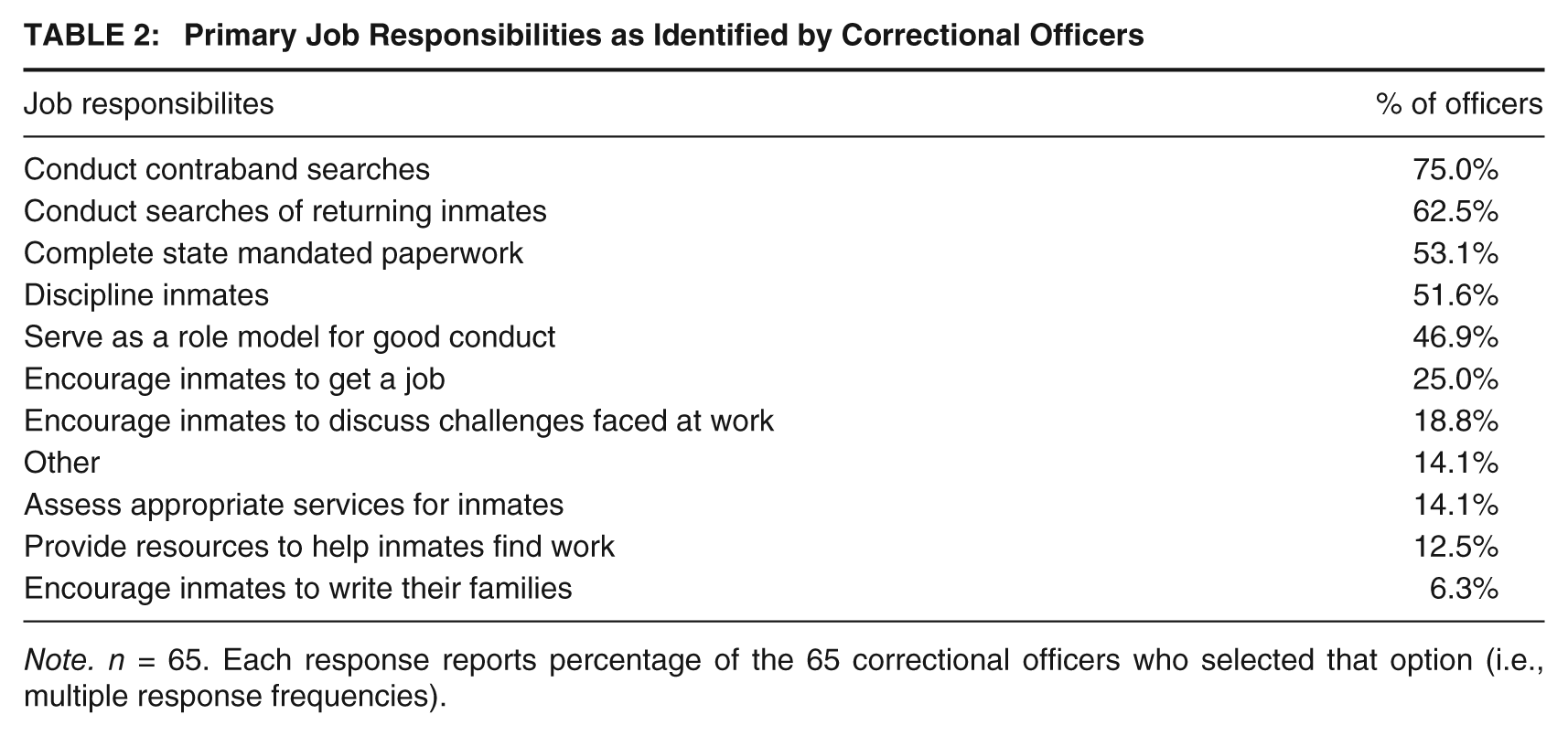
Note. n = 65. Each response reports percentage of the 65 correctional officers who selected that option (i.e., multiple response frequencies).
Administrative data provided the official number of misconducts written by COs in the reentry facility. Over an 8-month time frame, COs wrote 785 misconducts. COs wrote the majority of misconducts in January 2011, with a gradual decline until beginning to rise again in midsummer. Misconducts often contained multiple violations, with an average number of 2.6 (SD = 1.2) recorded per misconduct written. Of the total 2,014 violations charged, the majority cited disobeying staff (60.2%), disorderly behavior (14.9%), and contraband (12.4%) as the most common infractions (see Table 3). When categorizing infractions by seriousness as designated by the organization, COs wrote approximately 75% of misconducts for minor infractions, with major infractions being the least common (10.4%). Minor violations included acts such as not displaying a name badge, horseplay, providing false information, and disobeying staff. Moderate violations included alcohol offenses, bribery, or unauthorized possession of goods, whereas major violations included refusing programming, possession of controlled substances, assault, or escape (see Table 3 for detailed information regarding the violations on written misconducts).
Violations Reported on Misconducts
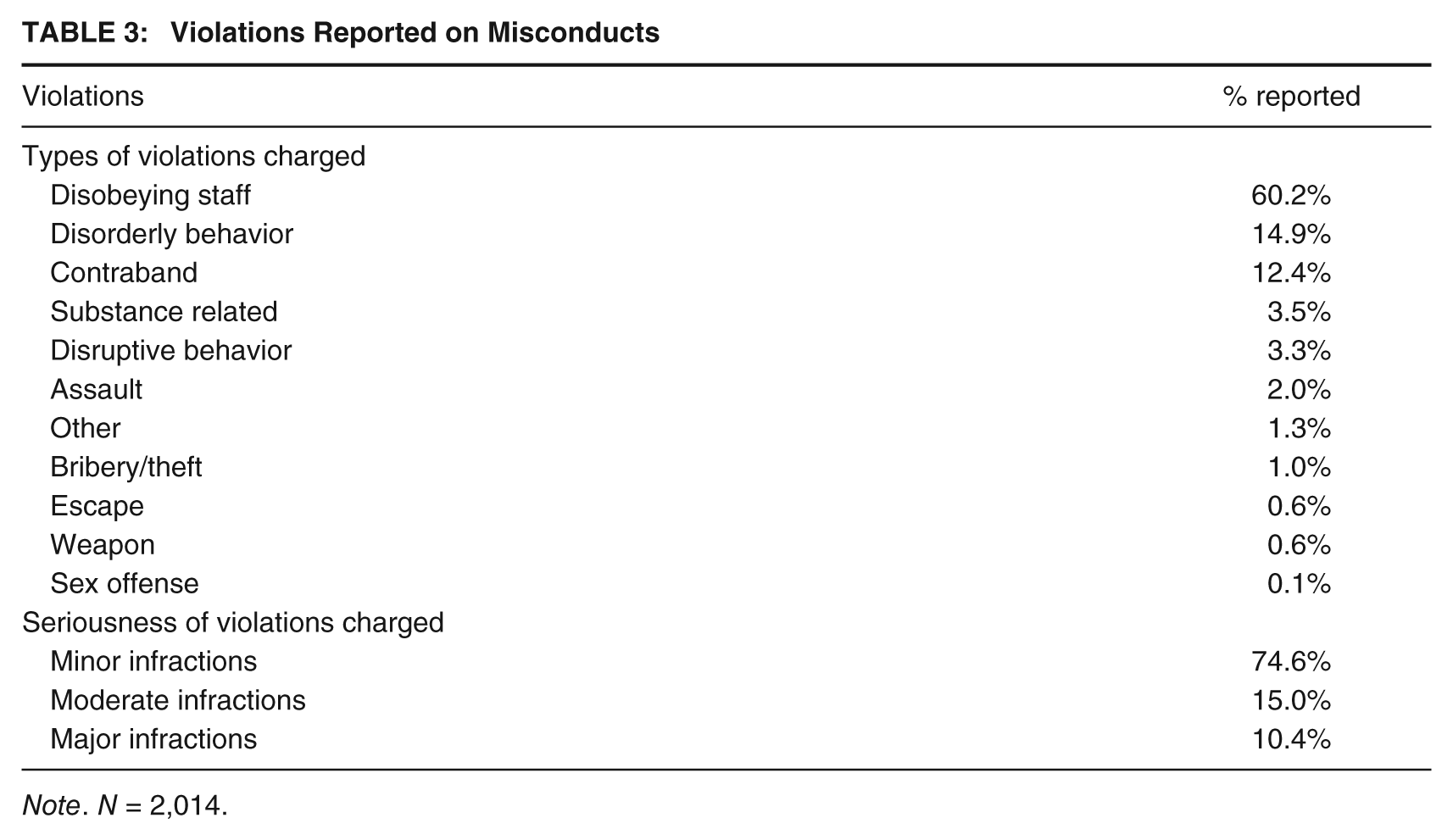
Note. N = 2,014.
Misconducts by inmate
The average number of misconducts received by each inmate was 1.55 (SD = 1.02). Most inmates received only one misconduct within the 8-month period (67.7%), whereas a small percentage received three or more misconducts (12.3%). The maximum number of misconducts written per inmate during the 8-month period was eight, but this was uncommon (0.2%).
Misconducts by officer
The average number of misconducts each officer wrote was 7.77 (SD = 14.69). The majority of COs (57.4%) wrote one to five misconducts during the 8-month period. However, two officers wrote more than 40 misconducts each. Officer Farris wrote the most misconducts in the facility (n = 138), whereas Officer Cohen wrote 40 misconducts. The vast majority of the sample (90.1%) wrote 15 or less misconducts over the 8-month period.
Impact of Misconducts on Inmate Outcomes
In addition to descriptive statistics on the content of the misconducts, administrative data provided the outcome of each written misconduct, with most misconducts resulting in a formal hearing 3 (66.9%). Bivariate analysis with the selected independent variables revealed that number of misconducts accumulated by an inmate, the number of violations on the misconduct, the severity of the most serious infraction on the misconduct, and officer race were significantly associated with the outcome of the current misconduct (see Table 4).
Bivariate Results for Misconduct Outcomes
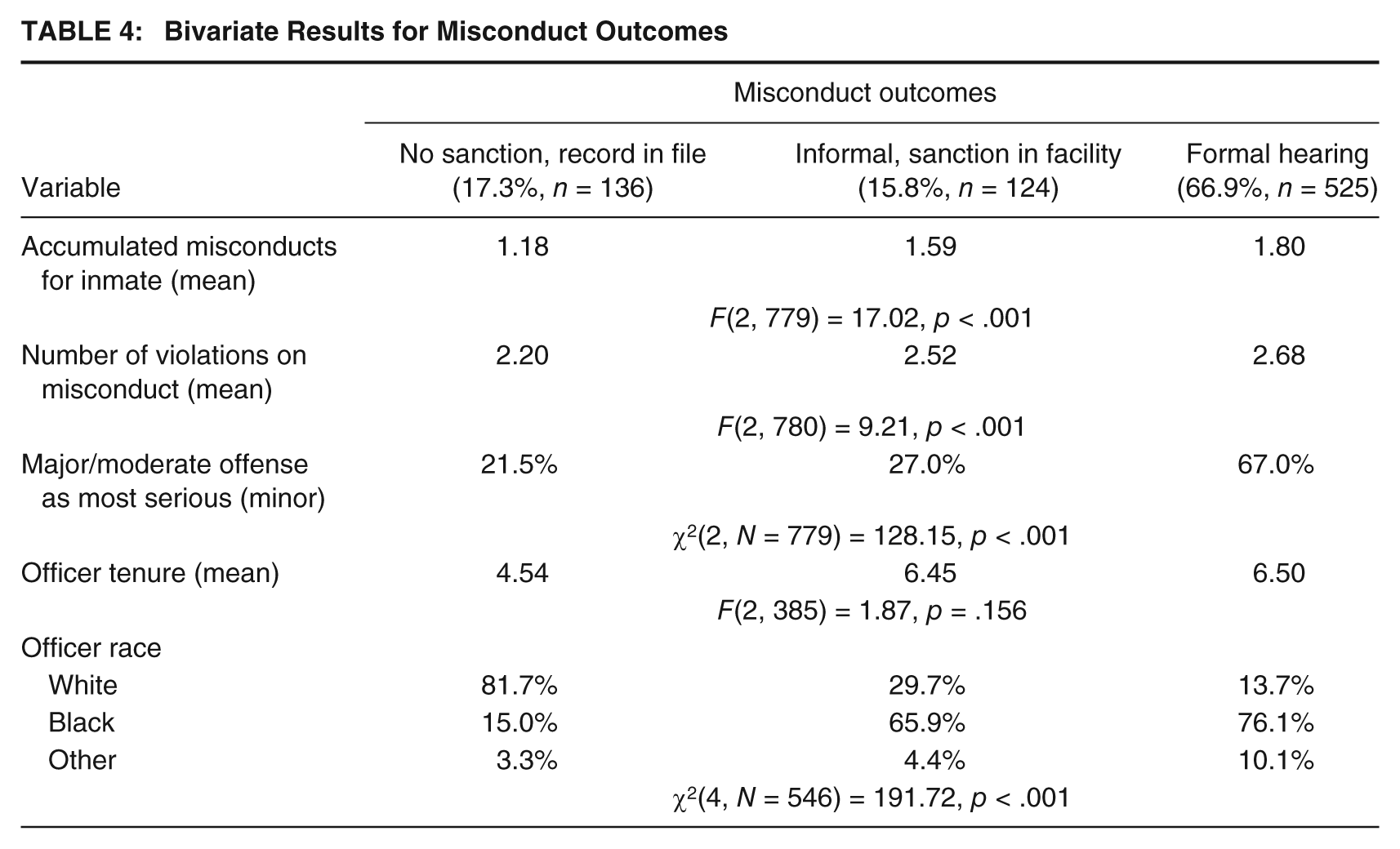
Table 5 displays the results of two multinomial regressions. One regression has no sanction as the reference category, and the second has formal hearing as the reference category. The results suggest an increase in the number of accumulated misconducts received by the inmate was associated with increased odds of receiving either an informal sanction in the facility, Exp(B) = 1.99, p = .041, or a formal hearing, Exp(B) = 1.97, p = .038, relative to no sanction. Thus, the greater number of documented disciplinary problems for an inmate relates to a greater likelihood of a serious outcome for the current misconduct. Increased officer tenure was also associated with increased odds of receiving either an informal sanction in the facility, Exp(B) = 1.16, p = .019, or a formal hearing, Exp(B) = 1.15, p = .016, relative to no sanction. In addition, the odds of receiving a formal hearing versus no sanction decreased if the officer was White compared with the “Other” race category, Exp(B) = 0.14, p = .039. Those with a moderate or major infraction on their misconduct had lower odds of receiving no sanction, Exp(B) = 4.94, p = .003, or an informal sanction, Exp(B) = 0.11, p < .001. This indicated that moderate or major infractions, relative to minor infractions, were significantly more likely to result in a formal sanction. These results also demonstrate that those who received a greater number of violations on a misconduct had increased odds of receiving an informal sanction as compared with a formal hearing, Exp(B) = 1.36, p = .028. These results suggest that misconducts with minor infractions may be written repeatedly for an individual inmate or misconducts may contain multiple violations, both of which increased the likelihood of a less severe misconduct outcome.
Multinomial Logistic Regression of Factors Predictive of Misconduct Outcomes
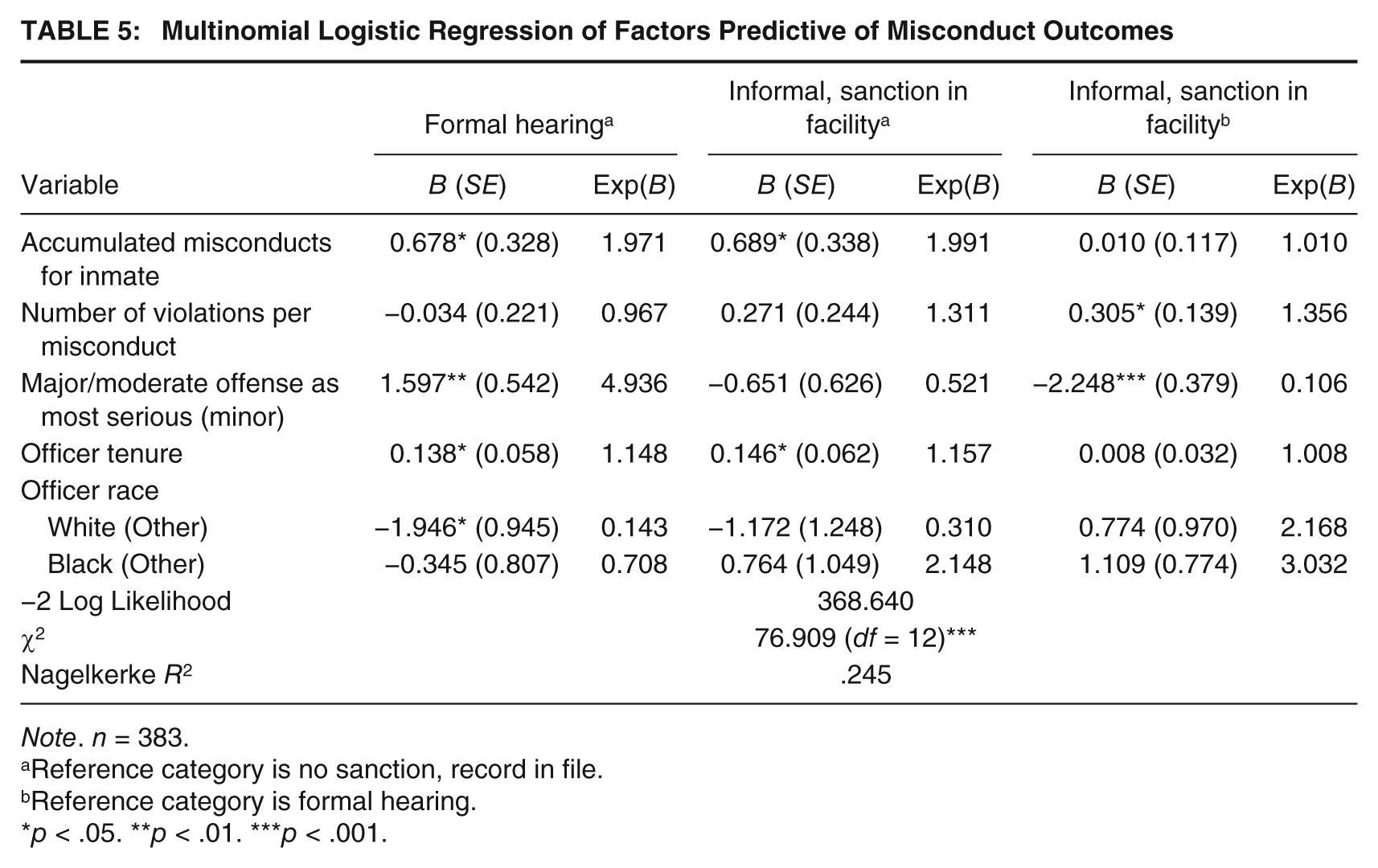
Note. n = 383.
Reference category is no sanction, record in file.
Reference category is formal hearing.
p < .05. **p < .01. ***p < .001.
Discussion
The current analyses examine offender management through the use of misconducts and the associated outcomes at one reentry facility, with a goal to understand both the perception and utilization of misconducts within a reentry environment, and the potential impact of misconduct use on inmate outcomes. Survey and qualitative data reveal that COs prefer not to write misconducts. When they did, they argued they either served no purpose or that their supervisor would not support them. Forty percent of COs in our qualitative sample argued misconducts were an ineffective offender management and control strategy, with 28% preferring to communicate and talk situations out with inmates rather than writing a misconduct. The remaining 28% of COs use the threat of misconducts as a control strategy. Given the majority of our sample argued, they did not write misconducts due to a lack of certainty and swiftness of associated punishment and/or response—Why did COs within this institution write misconducts at all? Surprisingly, administrative data suggest that COs did write misconducts, with 785 misconducts written throughout the 8-month data collection period. The majority of misconducts occur when inmates disobey staff (a minor infraction). Analyses also suggest that increased infraction severity significantly increased the odds of an inmate receiving a formal sanction and that more violations on the misconduct were associated with increased odds of an informal sanction rather than a formal hearing. Furthermore, a greater number of accumulated misconducts and increased officer tenure resulted in increased odds of receiving either a formal or informal sanction. If the officer writing the misconduct was White, there were lower odds the sanction would result in a formal hearing.
The current findings demonstrate while COs say they write misconducts frequently for contraband, administrative data show only 12.4% of violations cited contraband, with the majority of violations written for disobeying staff (60.2%). This finding is interesting, as research from over 40 years ago discusses the problems associated with highly subjective categories of misbehavior that inmates experience within correctional institutions (Flanagan, 1980; Johnson, 1966). Also referred to as “wastebasket categories,” infractions that fall under “disobeying staff” leave wide room for COs to define a variety of inmate behaviors and attitudes as rule violations (Johnson, 1966). This suggests an emphasis on the custodial functions of the reentry facility, supporting the New Penology framework put forth by Feeley and Simon (1992) with regard to risk management within correctional organizations. Under the New Penology, the correctional facility prioritizes management functions, primarily tasked as a mechanism to maintain control and warehouse inmates. That is, rather than trying to make a difference or enact change in inmates, the prison functions as a custodial option (Feeley & Simon, 1992). Furthermore, emphasis on broad categories of disobedient behavior is particularly problematic as few misconducts are dismissed (in the current study, 17.3% resulted in no sanction) and the system of justice within correctional facilities often relies predominantly on CO accounts of violations (Gifis, 1974; Harvard Center for Criminal Justice, 1972). Having vague disciplinary categories contradicts the underlying framework of a reentry environment, which emphasizes the use of clearly articulated rules and certain incentives and sanctioning (Travis, 2000) to prepare inmates for release. Unpredictability of sanctioning (e.g., writing misconducts), at least from the inmates’ perspective, may contribute to an increase in misbehavior rather than accomplishing a supportive environment for successful reentry. In addition, a lack of clear and understandable sanctioning processes can result in decreased inmate perceptions of justice and fairness within the correctional facility, important components of legitimacy and procedural justice. Future work should consider revisiting disciplinary strategies and policies within correctional environments to make rule violations, sanctions, and expectations for inmates more clear. Increasing the perceived rationality and neutrality in decision making within correctional environments can foster compliance with institutional rules (Tyler, 2010).
In addition, disjuncture exists between the outcome of misconducts written and the perceptions of COs regarding misconduct outcomes. Approximately 44 % of the qualitative sample believed that misconducts served no real purpose in the facility, but administrative data revealed that the majority (66.9%) of misconducts result in a formal hearing. It is unclear what explains this disconnect, but it could potentially relate to the punishment process within the facility. Misconducts are written swiftly, but the resulting punishment is not swift or certain. The only power COs have is to actually write the misconduct, but months often go by before an official punishment is decided and the inmate action is sometimes unsanctioned altogether (either by disposition or if the misconduct is not signed off on by a supervisor). Yet, misconducts remain the only formalized control mechanism COs have to punish an inmate within this environment. It may be that COs continue to write misconducts despite their dissatisfaction with the results because of a lack of alternative avenues to discipline inmates for negative behaviors. Writing a misconduct, even when believing it serves no purpose, may provide some sense of control for officers. In this regard, the use of misconducts may have little to do with the outcome and more to do with the process of attempting to maintain control in an environment where control is pivotal.
COs in this facility may be left feeling inadequately equipped to manage the inmates they supervise, with only 28% resorting to talking out a problem as an alternative to sanctioning through misconducts. This is problematic because misconducts are the primary tool for COs to maintain order (Flanagan, 1980) and order is critical for maintaining a safe environment for COs and inmates. The presence of CO cynicism and perceived lack of control suggest the prison culture within this facility may align with a negative, traditional culture (Crewe, Liebling, & Hulley, 2011). This form of prison culture is associated with low levels of safety and fairness, and can contribute to negative perceptions by inmates (Crewe et al., 2011) and staff. With the growing attention on massive prison populations and the ineffectiveness of incarceration, future research should critically examine the underlying causes of negative, traditional prison cultures and the consequences for both COs and inmates, especially when they exist in reentry facilities aimed at improving inmate reentry success and thus public safety.
The current study suggests potential disconnects between CO perceptions of their role and the ultimate goal of the facility to support reentry. As previously discussed, reentry environments, as in this organization, ideally differ from long-term correctional environments and require correctional staff to approach offender management and discipline differently. Even in a facility designed to prepare inmates for reentering their communities, correctional staff regularly reported their primary job responsibilities to include conducting searches for contraband, searching inmates, and disciplining inmates. They less frequently reported their responsibilities in ways that aligned with the organization’s desired reentry framework (e.g., encouraging inmate to get a job, encouraging inmate to discuss challenges at work, assess inmate for services, provide resources, help inmate find work). These reported job responsibilities suggest a misalignment between CO perceptions of their role and the overarching goals of the facility and reentry more generally. This is not surprising, given the majority of correctional staff working within the reentry facility received standard training in the academy and many worked within traditional long-term correctional facilities prior to their tenure at the reentry facility. This suggests a potential need for education and training tailored to working within a reentry environment as opposed to a higher security facility, including training COs to help inmates learn and apply various skills such as conflict management and responsible decision making. Although the current study is limited in that we do not have comparison data from a non-reentry facility to compare rates and types of misconduct, these data suggest correctional officers employed within a reentry framework may need more tools for managing inmates they supervise given existing research on facilitating reentry (Petersilia, 2003; Travis, 2000). Availability of and support for alternative routes for formal discipline and offender management strategies are needed throughout a facility designed to help inmates transition back into the community (such as graduated sanctions and incentives).
Recently, researchers suggested use of evidence-based or evidence-informed guidelines to both assess institutional risk factors for violence and structure professional judgment to reduce institutional violence (Cooke, Wozniak, & Johnstone, 2008; Johnstone & Cooke, 2008). Although these guidelines, Promoting Risk Intervention by Situational Management (PRISM), were designed to address the management of violence in prisons, they may be useful to understanding and improving responses to a range of inmate behavior within other institutional settings such as reentry facilities. PRISM recognizes there are structural, institutional, and environmental factors in addition to individual factors that contribute to prison violence (Cooke et al., 2008). Related to the current findings, PRISM guidelines suggest prison management must address these factors to be effective (Wortley, 2002). The PRISM guidelines shift attention from explaining prison misconduct primarily focusing on inmate behavior to examining the role of external factors related to the institution, environment, and staff. In combination with results from the current study, this body of research highlights potential strategies correctional reentry facilities may use to guide and structure professional judgment and ultimately reduce inmate misconduct.
This study has several limitations worth noting. We did not have access to demographic, criminal history, and programming data for individual inmates who received misconducts. Given potential site, inmate, or officer-related factors that may influence misconduct history, future research should examine inmate criminal history to better understand offender management strategies within reentry facilities. We also did not have access to the outcomes of the formal or informal hearing processes (e.g., dismissed, transferred to a higher security facility, loss of good time credits) or whether cited violations were eventually downgraded. This may explain the disparity between the qualitative and quantitative data, as COs may have originally written tickets for contraband, but then this may have been downgraded to a minor infraction (e.g., disobeying staff orders). This may further serve to perpetuate the cynical views of COs toward the usefulness of misconducts. Future research should explore the full decision-making process, with particular focus on what occurs after an initial misconduct has been written. In addition, we cannot separate the data by supervisory status as this distinction was not made within the administrative data and only a small number of staff identified themselves as a supervisor on the survey and during qualitative fieldwork. Last, data collection covered a short study observation period, both for the qualitative and quantitative data. A longitudinal study of misconduct data is needed to examine long-term uses of misconducts and impacts on both inmate and CO behavior within reentry facilities. We did not have access to misconduct data prior to the reform efforts that began in 2007, which limits our ability to assess the impact of change within the facility. Despite this limitation, current findings highlight challenges associated with inmate management and the use of misconducts within a reentry environment.
Current findings provide important insights into use and perceptions of misconducts within a reentry environment. Further examination of CO behaviors and offender management strategies is critical, particularly in reentry environments, where a major goal is to help individuals successfully transition into the community and remain out of the criminal justice system. Given the current push for evidence-based practices throughout the criminal justice field, now is the time for agencies to work toward an ideal reentry system that reduces recidivism. With growing evidence that punishment and control-oriented correctional systems are ineffective and potentially harmful (Nagin, Cullen, & Jonson, 2009), more attention must be given to the culture and management strategies used within these specific facilities. It is even more critical to examine these important issues considering the recent attention toward the moral performance of prisons (Liebling, 2011) and the moral obligation the criminal justice system has to ensure practices and policies are not harmful to the individuals involved (McCord, 2003).
Footnotes
Acknowledgements
We would like to thank this agency for the ability to do research on a number of subjects and continue to work on understanding organizational factors that affect operations.
This project was funded by an existing research agreement with a mid-Atlantic correctional agency and the senior researcher, Dr. Faye S. Taxman.