



Abstract
This study uses data from male and female adult offenders sentenced in a large urban county in the United States (n = 15,727) to examine the relative impact of jail and probation on recidivism. The study also explores how various risk and need factors moderate the effects of a jail sentence on an individual’s likelihood of rearrest. Gender-specific, multivariate logistic regression and survival analyses were conducted including risk and needs assessment data to control for individual risk for recidivism and examine risk as a moderator of sanction effectiveness. Results indicate that individuals sentenced to jail experienced an increased risk for recidivism relative to similarly situated offenders sentenced to probation. In addition, the criminogenic effect of jail was exacerbated for offenders assessed as high risk for recidivism and those with existing treatment needs. Gender-specific analyses revealed a gender-neutral criminogenic effect of jail, and gender differences in terms of moderators of sanction effects.
Keywords
Introduction
Given the realities of limited state and federal budgets and the high costs of corrections, the need to maximize the recidivism reduction potential of correctional interventions is among the most pressing needs currently facing the criminal justice system. Unfortunately, a considerable knowledge gap exists regarding the effectiveness of various sentencing options for achieving this goal. The current study assesses the differential effectiveness of jail and probation sentences and explores gender-specific moderators of sanction effects to inform efforts to improve the effectiveness of correctional interventions and maximize the return on correctional spending.
The idea that recidivism reduction effects may vary across punishment types is not new. There is a considerable body of research devoted to testing the differential effectiveness of various punishment types. Much of this literature is devoted to comparing custodial (i.e., incarceration) with noncustodial (i.e., alternatives to incarceration) sentences (Villettaz, Gilliéron, & Killias, 2015) or testing possible deterrent effects of imprisonment (Nagin, Cullen, & Jonson, 2009). Despite this rather substantial body of research, there remains a lack of consensus regarding the interpretation of the empirical evidence concerning the differential effectiveness of custodial versus noncustodial sentences (Cullen, Jonson, & Nagin, 2011). Although numerous studies find support for a criminogenic effect of incarceration relative to noncustodial alternatives (Bales & Piquero, 2012; Cid, 2009; Killias, Aebi, & Ribeaud, 2000; Mears, Cochran, & Bales, 2012; Nieuwbeerta, Nagin, & Blokland, 2009; Spohn & Holleran, 2002; Wermink, Blokland, Nieuwbeerta, Nagin, & Tollenaar, 2010), others find no significant differences in recidivism rates between incarcerated and nonincarcerated offenders (Green & Winik, 2010; Killias, Gilliéron, Villard, & Poglia, 2010; Lulham, Weatherburn, & Bartels, 2009). Failure to adequately control for preintervention differences in quasi-experimental studies has been cited as a possible reason for the disparate findings (Villettaz et al., 2015); however, other research indicates that substantive conclusions drawn regarding the criminogenic effects of incarceration are robust across a variety of methodological designs (Bales & Piquero, 2012).
Many pressing questions remain regarding the differential effectiveness of correctional sanctions. For example, few studies have compared the effectiveness of incarceration in jail with community supervision/probation. Given the prevalence of these two sanctions, and their applicability for similarly situated offenders, there is a practical need to better understand their differential impact on recidivism outcomes. There is also a need to better understand how individual characteristics (e.g., gender, age, risk level, employment, social ties) may moderate the effect of custodial versus noncustodial punishments. Although prior research has produced mixed results regarding possible moderators of specific deterrent or criminogenic effects of incarceration (DeJong, 1997; Mears et al., 2012; Spohn, 2007; Spohn & Holleran, 2002), this issue remains relevant, especially as the field of corrections aims to move beyond what works to better understand what works for whom, in what setting, and why.
Recognizing the need to better understand moderators of sanction effects, the current study compares gender-specific recidivism outcomes across jail and probation sentences and examines the possible moderating effects of offender risk and needs within each sentence type. This research has practical applications for informing sentencing decisions and highlights the need for improved access to gender-responsive, evidence-based treatment services in custodial settings.
Custodial Versus Noncustodial Sentences
The debate regarding the effectiveness of custodial versus noncustodial sentences has persisted for decades and has been the subject of frequent empirical assessment. Systematic review and meta-analytic findings provide mixed results regarding the differential effectiveness of incarceration relative to noncustodial alternatives. Based on the systematic review of over 50 empirical studies, Nagin and colleagues (2009) concluded that “compared with noncustodial sanctions, incarceration appears to have a null or mildly criminogenic effect on future criminal behavior” (p. 115). While this conclusion is consistent with more recent meta-analytic findings (Villettaz et al., 2015), Villettaz and colleagues (2015) suggested that findings in favor of improved outcomes for noncustodial sanctions may be an artifact of insufficient control of preexisting differences between incarcerated persons and those sentenced to alternative sanctions. This critique is based on the finding that meta-analytic results, when restricted to studies employing experimental designs, indicated no significant differences in recidivism between custodial and noncustodial sanctions. While noteworthy, the authors were only able to locate four studies that employed experimental designs. A closer look at these four experimental studies reveals several concerns about generalizability. For instance, there is considerable variability in the type of sanctions, sample characteristics, and dosage of intervention. In two of the studies, the custodial condition was characterized by a short-term incarceration of no more than 14 days (Killias et al., 2010; Van der Werff, 1979), and two of the studies utilized samples of juvenile delinquents while the other two relied on adult samples. Based on the limited number of experimental studies available and generalizability concerns, it seems premature to discount all nonexperimental findings as an artifact of insufficient control for preexisting differences. Additional meta-analytic results, restricted to 10 primary studies employing propensity score matching designs, indicated a modest, but significant criminogenic effect for custodial sanctions relative to alternatives to incarceration (Villettaz et al., 2015).
The mixed nature of the meta-analytic findings produced by Villettaz, Killias, and Zoder (2006; Villettaz et al., 2015) highlights the challenges in drawing conclusions from this body of research. This reality was also noted by Nagin and colleagues (2009) in justifying their decision to forgo meta-analysis in favor of a nonstatistical, systematic review to summarizing this literature. Their decision was based on the concern that “this statistical method would obscure important subtleties related to large differences in quality across studies, the types of sanction options being examined, and the characteristics of the offender population” (Nagin et al., 2009, p. 143). This observation highlights the need for continued research to better understand the complex nature of the differential effectiveness of custodial versus noncustodial sanctions across a diverse range of sanctions and types of offenders.
Another ongoing debate concerns the appropriate methodology for comparing across custodial and noncustodial sanctions (Bales & Piquero, 2012; Nagin et al., 2009; Villettaz et al., 2015). The aforementioned reviews conducted by Nagin and colleagues (2009) and Villettaz and colleagues (2015) both identified differences in research design/methodological rigor as a possible reason for the disparate findings across studies. When comparing the utility of various methodological approaches for examining the effectiveness of custodial and noncustodial sanctions, researchers have typically distinguished between randomized experimental designs, precision matching techniques, propensity score matching, and regression-based methodologies (Nagin et al., 2009). The pattern of results generally indicates that larger criminogenic effects of custodial sanctions are observed in regression-based designs, while smaller, but statistically significant criminogenic effects are reported when more rigorous matching designs are employed (Bales & Piquero, 2012; Nagin et al., 2009; Villettaz et al., 2015).
Bales and Piquero (2012) conducted a comparative test of various methodological approaches to assess the impact of incarceration within the same sample. They employed multivariate logistic regression, precision matching, and propensity score matching to examine the impact of incarceration on recidivism in a sample of over 79,000 offenders sentenced to prison and over 65,000 offenders sentenced to a community-based prison diversion program. Their findings revealed similar results across all three methodologies, suggesting that these three quasi-experimental approaches produce similar substantive conclusions. In regard to regression-based designs, Bales and Piquero (2012) found that including additional variables beyond Nagin et al.’s (2009) minimum set (i.e., age, sex, race, current offense, and prior record) reduced the magnitude of the criminogenic effect of incarceration, suggesting the need to control for additional variables when possible to minimize the impact of preexisting group differences. Overall, based on their comparative analyses, Bales and Piquero (2012) concluded that incarceration had a criminogenic effect on reoffending relative to community-based diversion, regardless of which methodologies were employed.
In sum, the debate regarding the differential effectiveness of custodial versus noncustodial sentences remains. While studies employing experimental designs generally find no significant differences in recidivism across custodial and noncustodial settings (Villettaz et al., 2015), they are characterized by extremely limited generalizability. Several studies employing quasi-experimental designs (Bales & Piquero, 2012; Cid, 2009; Killias et al., 2000; Mears et al., 2012; Nieuwbeerta et al., 2009; Spohn & Holleran, 2002; Wermink et al., 2010) have found custodial punishments to be criminogenic; however, these findings are not universal and may be due, at least in part, to preexisting differences between groups. The only study that has tested multiple methods in the same sample (Bales & Piquero, 2012) found that the substantive pattern of results did not vary across tested designs.
Moderators of Sanction Effects
One line of inquiry that responds to the call for a more nuanced understanding of differential sanction effectiveness is a growing body of research that identifies moderators of sanction effectiveness (DeJong, 1997; Mears et al., 2012; Spohn, 2007; Spohn & Holleran, 2002). For instance, DeJong (1997) measured the effect of jail on recidivism for different subgroups of offenders and found that those with fewer bonds to conventional society were more likely to recidivate following incarceration. She interpreted this as evidence that offenders with fewer ties to conventional society are more difficult to deter; however, this may also indicate that incarceration is more criminogenic for those with fewer ties to conventional society.
In a replication and extension of DeJong (1997), Spohn (2007) tested the hypothesis that the deterrent effect of imprisonment is conditioned by an individual’s stake in conformity by comparing prison with probation. Spohn (2007) found that offenders sentenced to prison, relative to probation, experienced significantly higher rates of recidivism and recidivated more quickly even after controlling for background characteristics, criminal record, and predicted probability of incarceration for the instant offense. Furthermore, the magnitude of the criminogenic effect of incarceration was greater for offenders with low or minimal social bonds relative to those with high stakes in conformity (Spohn, 2007). Consistent with DeJong (1997), these findings indicated that incarceration is criminogenic and that this effect may be particularly robust for those with weak, rather than strong, social bonds as predicted by specific deterrence theory.
Two other studies that examined the conditional effects of incarceration on recidivism compared with alternative sanctions are worth noting. Spohn and Holleran (2002) found evidence of a criminogenic effect of imprisonment relative to probation net of relevant controls and, more importantly for the current study, that the criminogenic effect of recidivism was more pronounced for drug offenders relative to other types of offenders. For example, the estimated probability of a new arrest/charge within 48 months for a typical drug offender was 82% when sentenced to prison compared with 43% for a typical drug offender sentenced to probation. This suggests that the criminogenic effects of incarceration may be greater for different types of offenders.
Finally, Mears and colleagues (2012) examined gender differences in the criminogenic effects of imprisonment on subsequent conviction across jail, intensive probation, and standard probation populations. Utilizing a random sample of 10,000 males and all 7,550 females released from Florida prisons between 1994 and 2002, the authors found that imprisonment was associated with an increased probability of property and drug recidivism (i.e., reconvicted of a new felony offense within 3 years of release) relative to both intensive and standard probation. Of particular relevance to the current study, Mears and colleagues (2012) found few significant differences in the probability of a new conviction for individuals incarcerated in jail relative to prison, and only minor variations of the criminogenic effect of incarceration across gender. For males, the criminogenic effect of prison relative to jail was significantly stronger for drug and other recidivism, while for females, the criminogenic effect of imprisonment was strongest for property recidivism. These results suggest that incarceration in general (rather than in prison only) may have a criminogenic effect relative to noncustodial alternative sanctions, and that the criminogenic effect of incarceration is robust across gender.
Taken together, the existing research suggests a nuanced relationship between custodial sanctions and recidivism. Extant findings often indicate a modest, but significant criminogenic effect of incarceration relative to noncustodial alternatives (Bales & Piquero, 2012; Cid, 2009; Killias et al., 2000; Mears et al., 2012; Nieuwbeerta et al., 2009; Spohn, 2007; Spohn & Holleran, 2002; Wermink et al., 2010), while others maintain that these observed effects are methodological artifacts (Villettaz et al., 2015). Additional empirical evidence suggests that the criminogenic effects of incarceration are more salient for individuals with weaker ties to conventional society (DeJong, 1997; Spohn, 2007) and for drug offenders (Spohn & Holleran, 2002), but relatively consistent across gender (Mears et al., 2012).
The Importance of Risk
One critical, insufficiently answered question in the existing literature is how an individual’s risk profile may interact with imposed sanctions to affect the likelihood of recidivism. The risk–need–responsivity (RNR) model (Andrews & Bonta, 2010; Andrews, Bonta, & Hoge, 1990) has emerged as a primary evidence-based framework for moving correctional research into practice (Ogloff & Davis, 2004; Polaschek, 2012; Ward, Melser, & Yates, 2007). Andrews and Bonta’s framework stresses the importance of using actuarial assessments to identify an individual’s risk for recidivism and linking justice-involved individuals to appropriate rehabilitative services to reduce recidivism. Adhering to the risk principle by targeting higher risk offenders and matching the intensity of controls and rehabilitative services to risk levels has been found to improve the effectiveness of correctional interventions (Andrews & Bonta, 2010; Andrews & Dowden, 2006; Dowden & Andrews, 1999; Landenberger & Lipsey, 2005; Lowenkamp & Latessa, 2005; Lowenkamp, Latessa, & Holsinger, 2006). Although assessing risk is an essential component of the RNR model, this step alone does not reduce recidivism (Taxman & Caudy, 2015); reducing recidivism requires identifying dynamic risk factors that are causally related to recidivism (criminogenic needs) and providing correctional interventions that can change these risk factors (Andrews & Bonta, 2010).
Although the utility of the RNR model is well established, questions remain regarding the exhaustiveness and gender-neutrality of the highlighted risk and need factors. Though a complete review is beyond the scope of this study, some key findings are relevant. A considerable body of research has found support for the gender-neutrality of the Level of Service Inventory–Revised (LSI-R) and other risk and needs assessments that include domains reflecting Andrews and Bonta’s Central Eight risk factors (Andrews et al., 2012; Geraghty & Woodhams, 2015; Manchak, Skeem, Douglas, & Siranosian, 2009; Olver, Stockdale, & Wormith, 2014; Rettinger & Andrews, 2010; Smith, Cullen, & Latessa, 2009; van der Knaap, Alberda, Oosterveld, & Born, 2012). However, additional scholarship argues that women offenders experience a mix of gender-neutral and gender-specific needs and therefore are likely to benefit from gender-responsive assessments and programming (Bloom, Owen, & Covington, 2004; Holtfreter & Cupp, 2007; Holtfreter & Morash, 2003; Holtfreter & Wattanaporn, 2014; Scott, Grella, Dennis, & Funk, 2016; Van Voorhis, Wright, Salisbury, & Bauman, 2010; Wright, Van Voorhis, Salisbury, & Bauman, 2012). Taken together, these two bodies of literature suggest that the Central Eight risk factors identified in the RNR framework represent largely gender-neutral predictors of recidivism, yet gender-specific needs warrant attention in risk assessment and correctional programming.
Risk as a Moderator of Sanction Effects
In the context of the current study, it is important to consider the role incarceration may play in exacerbating recidivism risk for both men and women. Although existing studies (DeJong, 1997; Spohn, 2007) have tested the hypothesis that individuals with stronger social bonds to conventional society may be more likely to be deterred by a custodial sanction, few studies have explored the possibility that custodial sentences may be particularly criminogenic for individuals with existing social and behavioral health deficits and treatment needs (Cullen et al., 2011; Spohn & Holleran, 2002) or that the effect of custodial sanctions may differ across gender (Mears et al., 2012). Assessing the interactive effect of risk and incarceration is especially relevant in the context of jail incarceration, as existing research suggests that many jails are ill-equipped to provide effective behavioral health treatment services (Lamb, Weinberger, Marsh, & Gross, 2007; Solomon, Osborne, LoBuglio, Mellow, & Mukamal, 2008; Steadman, Osher, Robbins, Case, & Samuels, 2009). This creates a situation in which offenders most in need of effective treatments may be least likely to receive them. Furthermore, the inclusion of gender-specific analyses is crucial given the reality of gender-specific criminogenic needs and responsivity factors (Bloom et al., 2004; Holtfreter & Morash, 2003; Holtfreter & Wattanaporn, 2014; Scott et al., 2016; Van Voorhis et al., 2010; Wright et al., 2012).
Current Study
The current study contributes to the growing body of research regarding the differential effectiveness of correctional interventions by examining gender-specific models of the relative effects of jail and probation sanctions in a large sample of convicted offenders. In addition, the study explores the possible conditioning effects of risk level and several criminogenic needs on the relationship between incarceration and recidivism across gender. Specifically, the following research questions are explored:
Method
Data
We answer these research questions using data from individuals assessed using the Wisconsin Risk Need Assessment (WRN) and sentenced to jail or probation in a large county in the Southwestern United States between January 2011 and December 2013. Data were retrieved from the agency charged with overseeing the processing of all defendants convicted of misdemeanor and felony charges. Convicted individuals were sentenced to either probation or jail; all probationers remained under the supervision of this agency, while all others were transferred to jail to serve their sentences. These data were merged with arrest data provided by a state-level agency that compiles information on all arrests across the state and information on previous convictions for all individuals in the study. The population of cases was limited to individuals who were at risk for rearrest for a minimum of 90 days during the study period (i.e., released by September 30, 2013). Of the 17,316 cases that met these criteria, 15,727 had valid values on all variables of interest and were included in the analyses. 1
Measures
Recidivism is a dichotomous dependent variable measuring whether the individual was rearrested for a new crime during the study period (January 2011 through December 2013; 0 = no, 1 = yes). Time to failure is a metric variable indicating the number of days that elapsed between sentence completion and first arrest (if there was one). Given variation in the length of time individuals in the study were eligible for rearrest, we include a continuous variable measuring days at risk for recidivism. This variable was constructed by computing the number of days between a subject’s sentence completion date and the final date of the available arrest data (December 31, 2013).
The analyses controlled for a range of demographic and criminal history variables typically correlated with recidivism. Sex is measured using a dichotomous variable indicating whether the subject is male (0 = no, 1 = yes). A series of dichotomous variables (0 = no, 1 = yes) measure race and ethnicity, including White, Black, Hispanic, and Other. Age is a continuous variable measured in years. Prior convictions is a continuous variable measuring the number of prior convictions. Given that the original variable was skewed (minimum = 0, maximum = 49, M = 2.67, SD = 3.25), this variable was logged for the analyses. Pretrial detention measures whether or not the individual was detained prior to trial (0 = no, 1 = yes). A series of dummy variables also control for the current offense type, with the categories of violent/weapon, property, drugs, driving under the influence (DUI)/driving while intoxicated (DWI), and other. 2 With the exception of pretrial detention, these variables represent the minimum set of control variables suggested by Nagin and colleagues (2009) for assessing the differential effectiveness of custodial and noncustodial sentences.
The present study also uses data from the WRN to measure offender risk for recidivism. The WRN is a risk and needs assessment instrument that was originally developed and validated for use in a community corrections setting in Wisconsin (Baird, Heinz, & Bemus, 1979). The assessment includes both static and dynamic risk factors and is normed to provide separate indicators of risk level and dynamic needs. Although the utility of the WRN has been criticized (Henderson & Miller, 2011), the predictive validity of the instrument has been established with correlation coefficients between WRN total score and recidivism ranging from weak to moderate, but statistically significant (Gendreau, Little, & Goggin, 1996; Harris, 1994; Henderson & Miller, 2011).
Offenders were assessed using the WRN during the development of their presentence report. Specifically, risk score is a continuous variable that measures an offender’s risk for recidivism, with higher scores indicating greater risk. The WRN also provides the following risk-level categories based on an individual’s risk score: low risk (0-7), medium risk (8-14), and high risk (15 and above). These categories reflect the cutoff scores utilized in the county where the data were collected and are used in subsequent analyses to examine how the effect of a jail sentence on the likelihood of recidivism may vary by offender risk level. Finally, a series of dummy variables tapping various offender needs as measured by the WRN were created to explore whether a jail sentence interacts with these needs to influence the likelihood of recidivism. Of the 15,727 individuals in the study, 2.89% were unemployed and virtually unemployable, 6.74% had severe financial difficulties, 4.85% were identified as having family stress resulting from marital and/or family relationships that presented major disorganization or stress for the individual, 6.28% had friendship associations that were almost completely negative, 10.50% engaged in frequent drug abuse that resulted in serious disruption of functioning, 15.10% engaged in frequent alcohol abuse that resulted in serious disruption of functioning, 13.45% displayed symptoms of emotional instability that limited or prohibited adequate functioning, and 3.68% displayed mental deficiencies, including those that required some need for assistance and/or severely limited independent functioning.
Results
Table 1 presents the descriptive statistics by gender for the probation and jail subsamples. Approximately 12% of men who received a probation sentence were rearrested during the study period compared with 42% of those with a jail sentence. Among women, 11% of probationers were rearrested, while 31% of women who received a jail sentence were rearrested. The male and female probation and jail subsamples also differed significantly with respect to other study variables. For both genders, the racial and ethnic differences across the subsamples were considerable, with White subjects accounting for a greater proportion of the probation subsample compared with the jail subsample. The male and female jail subsamples were also younger with more prior convictions and higher rates of pretrial detention. With respect to current offense, the modal category for the male and female jail subsamples was a drug offense compared with DUI/DWI for the male and female probation subsamples. Finally, the male and female jail subsamples had significantly higher risk scores relative to the probation samples.
Descriptive Statistics

Note. All t tests and chi-square tests examining differences between the probation and jail subsamples within gender were statistically significant for men and women (p ≤ .01), with the exception of the time to failure variable for women (p = .079). DUI = driving under the influence; DWI = driving while intoxicated; WISC = Wechsler Intelligence Scale for Children.
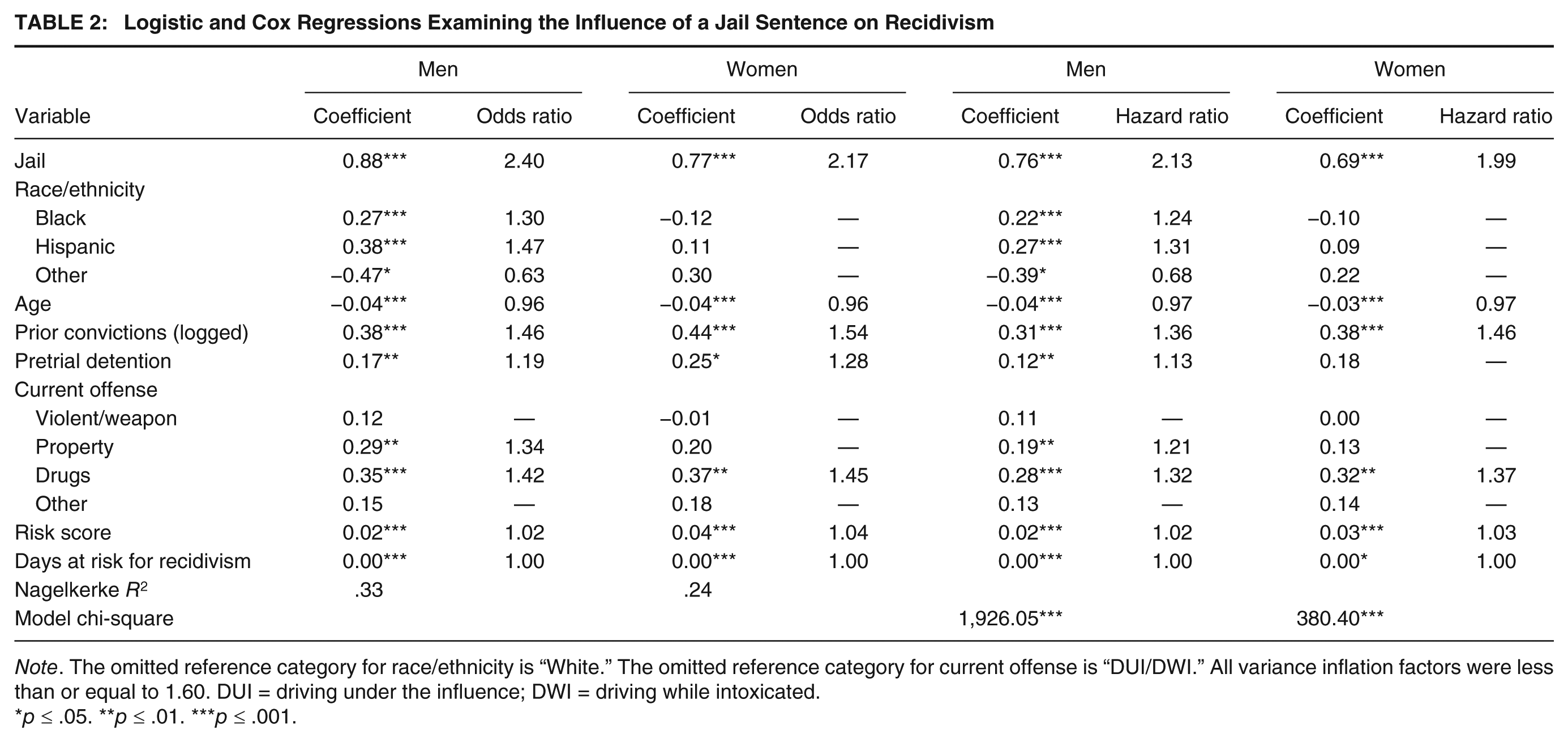
To answer Research Question 1, we estimated logistic and Cox regression models to examine the influence of a jail sentence on recidivism for men and women, net of demographic, criminal history, and offender risk variables (see Table 2). The logistic regression analysis revealed that the odds of rearrest for men sentenced to jail are 2.40 higher than those who received a probation sentence, net of controls. For women sentenced to jail, the odds of rearrest are 2.17 higher relative to those sentenced to probation. The odds of rearrest vary by offender race and ethnicity for men only, with Black and Hispanic males significantly more likely to be rearrested relative to White males. The criminal history variables were significantly related to rearrest for men and women, with the odds of arrest positively associated with prior convictions and pretrial detention. As for the current offense type, relative to DUI/DWI offenses, drug offenses were associated with the highest odds for rearrest for both men and women, and property offenses were significantly related to rearrest for males. Finally, WRN risk score was positively associated with an increase in the odds of recidivism for both men and women.
Logistic and Cox Regressions Examining the Influence of a Jail Sentence on Recidivism
Note. The omitted reference category for race/ethnicity is “White.” The omitted reference category for current offense is “DUI/DWI.” All variance inflation factors were less than or equal to 1.60. DUI = driving under the influence; DWI = driving while intoxicated.
p ≤ .05. **p ≤ .01. ***p ≤ .001.
Table 2 also includes the Cox regression models to estimate the time to event for rearrest. The results revealed a similar pattern of findings, with a significant hazard ratio of 2.13 for men who receive a jail sentence relative to a probation sentence, controlling for other covariates. Women who received a jail sentence relative to a probation sentence have a significant hazard ratio of 1.99. The direction and significance of the other variables are fairly stable across the logistic and Cox regression models, with the exception of the nonsignificance of the pretrial detention variable for women in the Cox regression model (p = .056).
To answer Research Question 2, we estimated the effect of the interaction between a jail sentence and offender risk score on rearrest for men and women using logistic regression analyses (not displayed). These interactions are plotted in Figures 1 and 2 and include all control variables. 3 For both men and women, the slope of the relationship between risk score and recidivism is steeper among those who received a jail sentence. Although the direction of the effect is similar across the gender-specific models, among men the interaction between a jail sentence and offender risk score does not reach statistical significance (B = .013, p = .11); for women, the interaction is significant (B = .039, p = .026). The interactive effects of jail and risk plotted in Figures 1 and 2 reflect risk measured dimensionally as a total score ranging from 0 to 40. To ease interpretation and inform case management decisions, risk is often treated categorically in the corrections system. To reflect this reality, additional analyses were conducted utilizing the three categories of risk used in the study jurisdiction.
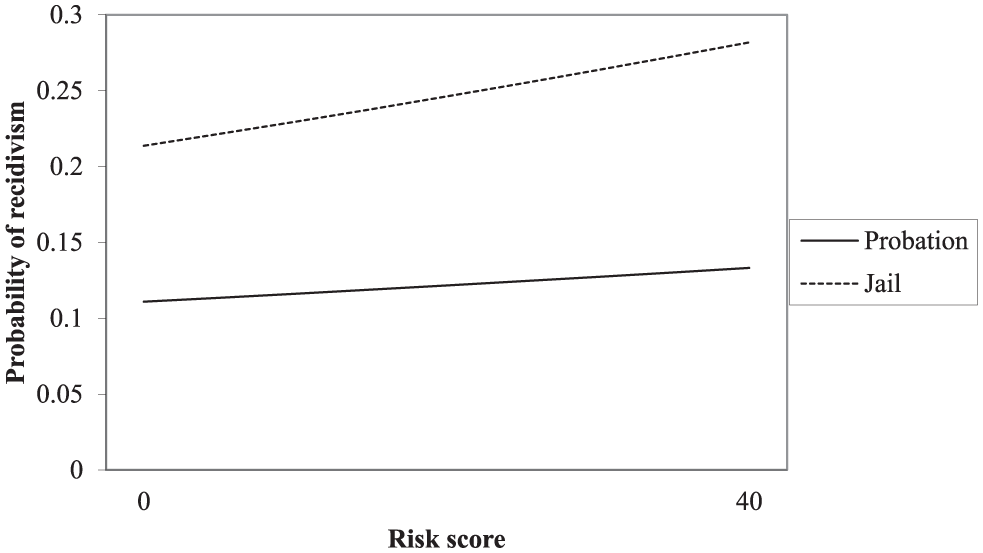
The Interaction of Jail Sentence and Risk Score on Recidivism for Men
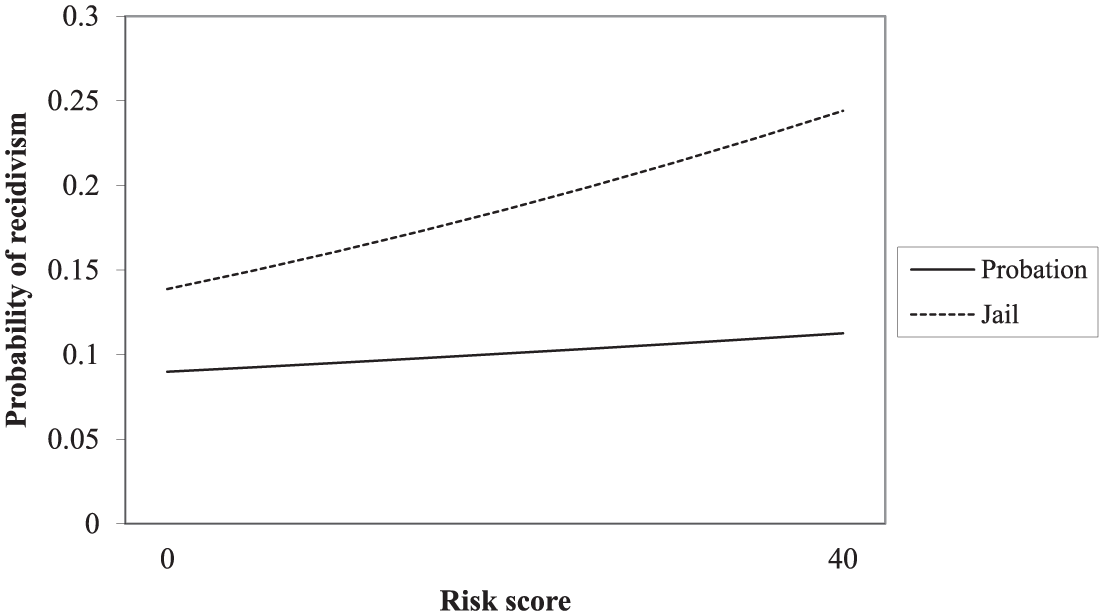
The Interaction of Jail Sentence and Risk Score on Recidivism for Women
Figure 3 presents the odds ratios for recidivism among low-, medium-, and high-risk men and women. The continuous risk score variable was included in these subsample analyses to account for within-group variation in risk. While a jail sentence significantly increased the odds of rearrest for all groups, this increase was highest among men and women categorized as high risk based on their WRN risk score. Specifically, the odds of rearrest were 2.48 times higher for low-risk men sentenced to jail relative to low-risk men on probation. For medium-risk men, the influence of a jail sentence on rearrest was slightly weaker, with an odds ratio of 2.13. For high-risk men, however, the increased odds of rearrest associated with a jail sentence is 3.31. This nonlinear pattern, with a jail sentence being slightly more impactful for low-risk men relative to medium-risk men, likely accounts for the nonsignificance of the interaction term plotted in Figure 1. For women, the odds of rearrest were 2.06 times higher for low-risk women sentenced to jail relative to low-risk women on probation. For medium-risk women, the influence of a jail sentence on rearrest was slightly weaker, with an odds ratio of 1.82. For high-risk women, the increased odds of rearrest associated with a jail sentence is 4.21.
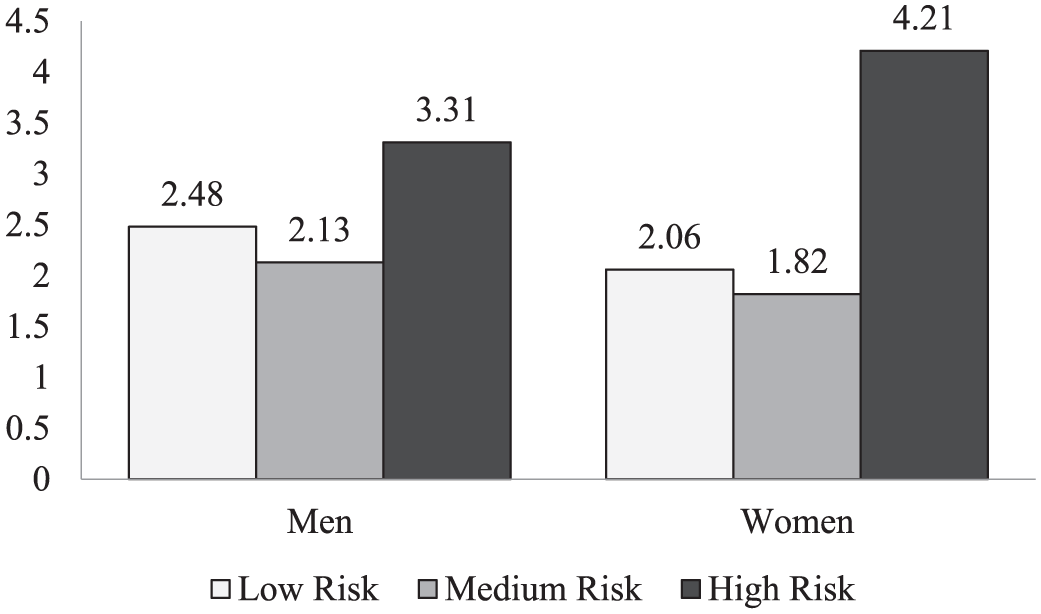
Odds Ratios for the Effect of a Jail Sentence on Recidivism by Risk Level for Men and Women
Difference of coefficients tests comparing the effect of jail on recidivism across low-, medium-, and high-risk men revealed that while a jail sentence increases the likelihood of recidivism across all risk categories, this increase is significantly greater for high-risk men relative to medium-risk (p = .002) and low-risk men (p = .042). The difference in the effect of jail on recidivism for low- and medium-risk men was not statistically significant (p = .136). For women, a jail sentence also increases the likelihood of recidivism across all risk categories. This increase is significantly greater for high-risk relative to medium-risk (p = .003) and low-risk women (p = .018). Similar to men, the difference in the effect of jail on recidivism for low- and medium-risk women was not statistically significant (p = .316).
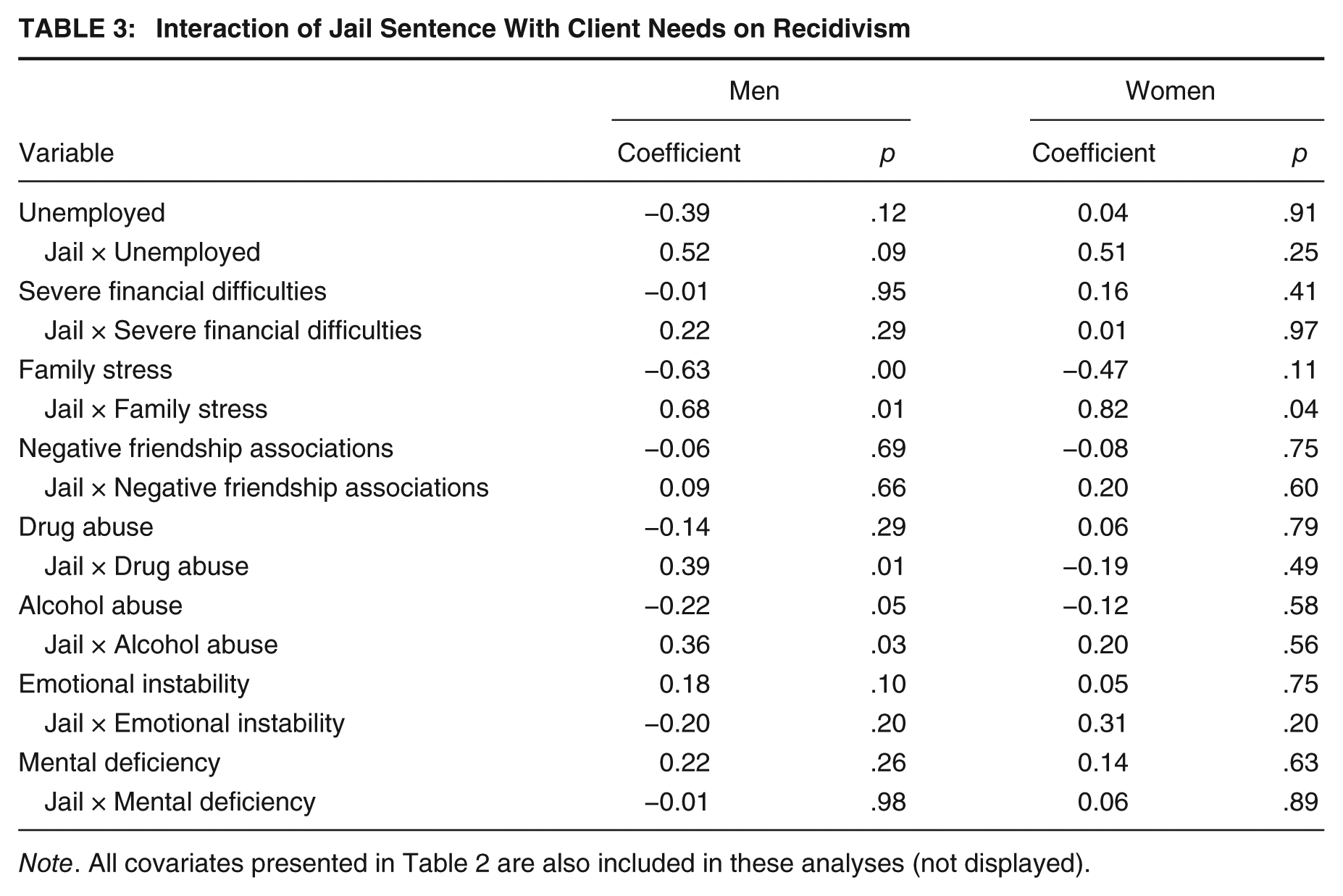
The findings indicate that while a jail sentence was associated with an increased likelihood of rearrest for individuals of all risk levels, this effect was particularly strong among those classified as high risk based on their WRN assessment. Research Question 3 sought to determine whether there are specific offender needs that exacerbate the influence of a jail sentence on recidivism. Supplementary analyses explored the extent to which any of the following needs interacted with a jail sentence to affect the odds of rearrest: unemployment, severe financial difficulties, family stress, negative friendship associations, drug abuse, alcohol abuse, emotional instability, and mental deficiency. Of these, the effect of a jail sentence on recidivism was significantly exacerbated by family stress, drug abuse, and alcohol abuse for men; only family stress significantly interacted with a jail sentence for women (see Table 3). The remainder of the interaction terms were not significant. All covariates presented in Table 2 are also included in these analyses (not displayed).
Interaction of Jail Sentence With Client Needs on Recidivism
Note. All covariates presented in Table 2 are also included in these analyses (not displayed).
Discussion
The current study examined how incarceration in jail influences the likelihood of recidivism compared with receipt of a noncustodial probation sentence for men and women. Four substantive findings emerged from this investigation. First, consistent with existing research (Bales & Piquero, 2012; Cid, 2009; Killias et al., 2000; Mears et al., 2012; Nieuwbeerta et al., 2009; Spohn & Holleran, 2002; Wermink et al., 2010), both men and women sentenced to jail experienced an increased risk for recidivism (measured as a new arrest) relative to similarly situated offenders sentenced to probation. In fact, jail incarceration increased the odds of recidivism for men by 140% relative to probation net of demographics, offense characteristics, criminal history, and risk. For women, jail incarceration increased the odds of recidivism by 117% net of these controls. Men and women sentenced to jail also recidivated more quickly than similarly situated probationers.
Second, the criminogenic effect of jail incarceration was exacerbated for individuals classified as higher risk for recidivism. The criminogenic impact of jail incarceration relative to probation was markedly different for high-risk men and women compared with those identified as medium or low risk (Figure 3). Third, the criminogenic effect of jail incarceration was enhanced for individuals with specific dynamic risk factors or treatment needs. Family stress significantly increased the criminogenic effect of jail incarceration relative to probation for both men and women. For men, drug and alcohol abuse also exacerbated the effects of a jail sentence on recidivism.
Finally, although the overall pattern of findings was largely consistent across genders, some notable differences were observed. For example, the interaction between jail and risk score (Figures 1 and 2) was only significant for women and the size of the criminogenic effect of jail relative to probation for individuals classified as high risk (Figure 3) was larger for women relative to men. This suggests that the criminogenic effects of jail incarceration observed in the full study sample may be particularly salient for women offenders who are classified as high risk. In addition, while family stress significantly moderated the criminogenic effect of jail relative to probation for both men and women, the other needs that emerged as significant moderators of this effect for men (i.e., drug abuse and alcohol abuse) were not significant for women. This suggests that while the effect of jail incarceration relative to probation is criminogenic for both men and women, what explains this criminogenic effect may differ across genders.
Taken together, these findings indicate that being sentenced to jail, relative to probation, is criminogenic, especially for individuals who are assessed as high risk for recidivism and those with existing treatment needs. These findings are consistent with the deprivation model, social experience theory, and the considerable body of empirical research indicating that recidivism rates are higher for individuals sentenced to custodial sanctions relative to noncustodial sanctions (Bales & Piquero, 2012; Cid, 2009; Killias et al., 2000; Mears et al., 2012; Nieuwbeerta et al., 2009; Spohn & Holleran, 2002; Wermink et al., 2010). There are a number of possible explanations that may help contextualize the current study findings. For instance, the deprivation model (Sykes, 1958) argues that the pains of imprisonment may cause incarcerated individuals to act out or behave aggressively. It is plausible that strain experienced during incarceration may carry over into an increased risk for postrelease recidivism. In fact, Listwan, Sullivan, Agnew, Cullen, and Colvin (2013) found support for the hypothesis that exposure to strain during incarceration was significantly related to postrelease recidivism. In addition, social experience theory argues that incarceration increases exposure to criminogenic risk factors (e.g., antisocial peers, antisocial attitudes) and thus increases the probability of recidivism (Cullen et al., 2011). This exposure to criminogenic risk factors may be particularly impactful for individuals who already exhibit higher levels of risk based on their preincarceration experiences and treatment needs. A third possibility is that jails are less equipped than community corrections agencies to provide evidence-based recidivism reduction interventions. Barriers to providing effective interventions in jails include the diverse populations housed in jails, the short length of stay and rapid population turnover, high rates of treatment needs matched with low service provision capacity, and a lack of community-based care upon release (Solomon et al., 2008). Given these barriers, many jail inmates, especially those with preexisting treatment needs, may not receive adequate recidivism reduction services, thus placing them at an increased risk for recidivism compared with probationers. While some researchers, practitioners, and policy makers continue to tout incarceration as an effective deterrent, the current study’s findings add to the growing body of empirical evidence that suggests otherwise. In addition, these findings suggest a need to increase the capacity for rehabilitative service provision in jails to offset the potentially criminogenic nature of the jail experience.
The current study also highlights the need for improved adherence to the risk principle of effective intervention, reduced reliance on jail incarceration, and enhanced capacity to provide effective, gender-responsive programming in jails. Andrews and colleagues’ (1990) risk principle calls for higher levels of service (e.g., supervision, rehabilitative treatment) to be reserved for higher risk cases. Adherence to this principle is expected to enhance the effectiveness and efficiency of correctional interventions. Given the high costs of corrections and resource constraints that challenge most correctional agencies, maximizing the return on investment in correctional interventions is essential. Indeed, our findings suggest that probation may represent a more effective and less costly control alternative to jail, even for offenders assessed as high risk. This illustrates how important it is for criminal justice decision makers to consider not only the assessed level of risk of the offender, but also the capability of the assigned sanction to mitigate, rather than exacerbate, that risk when making sentencing or classification decisions. In light of the current study findings, it is recommended that judges embrace the risk principle by limiting the use of jail incarceration to only the highest risk cases who pose a considerable threat to public safety. Our findings demonstrate that jail incarceration in the study jurisdiction likely has a backfire effect that increases, rather than decreases risk for many offenders.
The findings from our gender-specific analyses also have implications for correctional policy and practice. The growth of women’s incarceration rates over the last four decades has been well documented (Frost, Greene, & Pranis, 2006; Javdani, Sadeh, & Verona, 2011; Mauer, 2013). This growth, coupled with increased attention to the experiences of women in the criminal justice system, has led to increasing calls for improved gender responsiveness in the corrections system (Bloom et al., 2004; Wright et al., 2012). Our findings indicating that the criminogenic effect of jail incarceration, relative to probation, is stronger for women than men suggest the criminogenic environment of jails may be particularly impactful on women offenders. This is also consistent with prior research that finds gender-responsive needs may become risk factors for institutional adjustment problems and reintegration difficulties if not appropriately addressed during incarceration (Wright et al., 2012).
Evidence that major disruption or stress in marital and family relationships significantly interacted with jail incarceration for both men and women indicates that a jail sentence, relative to probation, may be particularly challenging to overcome for offenders who experience high levels of relationship stress prior to sentencing. Among women offenders, traumatic relationships, histories of victimization or abuse, and disruption of parental roles have been identified as gender-responsive needs associated with poor adjustment to incarceration and subsequent negative outcomes (Leverentz, 2006; Salisbury, Van Voorhis, & Spiropoulos, 2009; Van Voorhis et al., 2010; Wright, Salisbury, & Van Voorhis, 2007; Wright et al., 2012). Our findings add to the already robust body of literature that calls for increased access to programming that addresses the unique histories and relationship needs of incarcerated women. Specific policy recommendations for jail administrators interested in limiting the criminogenic effect of incarceration on women offenders include embracing rehabilitative rather than punitive ideals (Covington & Bloom, 2006; Wright et al., 2012), hiring staff who are treatment oriented and display positive interpersonal skills (Koons-Witt, Burrow, Morash, & Bynum, 1997), offering programming (e.g., trauma-informed care, relationship programs) that addresses women’s criminogenic needs (Brennan & Austin, 1997; Farr, 2000; Matthews & Hubbard, 2008; Pollock, 2002), and providing gender-responsive reentry programming that helps prepare women for the unique challenges they face upon release (Holtfreter & Wattanaporn, 2014; Wright et al., 2012).
Our findings also suggest that male jail inmates may benefit from interventions that embrace rehabilitative ideals, address relationship stress, and treat substance abuse needs. Taken together, our findings highlight a need for improved access to evidence-based recidivism reduction interventions that embrace the principles of effective intervention in jails. Unfortunately, as previously noted, many jails are ill-equipped to provide effective treatment services (Lamb et al., 2007; Solomon et al., 2008; Steadman et al., 2009). Given the growing body of literature indicating the potentially criminogenic nature of custodial punishment, jail administrators and local criminal justice decision makers should consider implementing changes to limit the criminogenic influence of jails by improving the conditions of confinement (e.g., reducing overcrowding, preventing violence, facilitating visitation), increasing the capacity of jails to deliver evidence-based treatments, and emphasizing reentry during jail incarceration.
Several limitations of the current study need to be noted. Data were drawn from a single jurisdiction that limits the generalizability of the findings to other jails or probation departments. Notwithstanding this fact, there is no obvious reason to believe that findings from this study do not at least partially apply to other large, metropolitan criminal justice settings. Obviously, testing this claim requires replication at different sites, but given the sample size and length of data collection, these findings appear fairly robust.
Another methodological limitation to be noted is the lack of random assignment or experimental design. As previously mentioned, the debate surrounding the “best” methodology has frequently been discussed in extant research comparing custodial and noncustodial sentences. Given the reliance on secondary data in the current study, random assignment was not possible. To help address this limitation, several additional variables were measured to tap potential preexisting differences between individuals sentenced to jail and probation, which may affect recidivism likelihood (as recommended by Nagin et al., 2009). One relevant control that was not available in the current study data was the length of the jail or probation sentence. Previous research indicates that increased probationary sentence length is associated with an increased risk of probation failure (Morgan, 1994; Sims & Jones, 1997). Inclusion of a sentence length indicator should be considered in future research, especially as a possible moderator of the effect of incarceration on recidivism. While the lack of random assignment represents a relevant threat to validity, Bales and Piquero (2012) suggested that the general pattern of results found in the current study is likely to be replicated even in more rigorous quasi-experimental designs (e.g., propensity score matching).
A final limitation worth noting concerns the measurement of risk and needs. The psychometric properties of the WRN have previously been critiqued and some researchers have advocated for the use of more robust predictors of risk (Henderson & Miller, 2011). Although these existing critiques are justifiable, the WRN demonstrated adequate predictive validity in the current study sample. Furthermore, the current study was focused on understanding the impact of sentencing decisions made based on the information available to judges in the study jurisdiction at the time of sentencing. Any effect of measurement error regarding actual risk would be mitigated by the fact that judges were relying on the exact same information available in this study to make determinations regarding appropriate sanctions (i.e., jail vs. probation).
Despite these limitations, the current study contributes to the growing body of empirical research devoted to testing the differential effectiveness of correctional interventions. Results indicate a criminogenic effect of incarceration in jail, relative to probation, and suggest that the criminogenic effect of incarceration is more pronounced for individuals who are assessed as high risk and for women, relative to men. Study findings also suggest that gender differences exist in terms of the risk and need factors that moderate the strength of this criminogenic effect. Moving forward, continued research is needed to better understand the complex interaction between individual risk and correctional sanctions in producing recidivism outcomes. It is also essential that the gender responsiveness of correctional interventions continues to be explored in future research. This research is essential for informing criminal justice decision making regarding what works best for whom and in what setting. To help offset the criminogenic effects of incarceration, it is vital that jail administrators work to limit the exposure of inmates to disintegrative conditions, improve access to gender-responsive, evidence-based, rehabilitative programming aligned with the principles of effective correctional intervention, and provide reentry services to foster successful reintegration into the community.
Footnotes
Authors’ Note:
The authors would like to acknowledge the contribution of their agency partner and thank them for providing access to data, embracing research, and engaging in an active researcher–practitioner partnership to improve the effectiveness of correctional interventions in their jurisdiction. The agency bears no responsibility for the analyses or conclusions presented here.