



Abstract
In this article, we present the findings of a mixed-methods study of correctional officers’ views on the introduction of body-worn cameras (BWCs) within prisons. Using a statewide survey and in-depth interviews with correctional officers in Queensland, Australia, this study explored officer support for BWCs and the relationship between officer support and several key variables. We found widespread support for the use of BWCs among correctional officers. Female officers and those who held more positive views about the perceived functionality of BWCs and the implementation and training process were most supportive. However, the introduction of BWCs also raises some important considerations for prison management that may impact officer support, including whether to allow officers to access BWC footage for report writing or officer training. Consideration must also be made regarding turn-on policies for BWCs given concerns that more frequent recording has the potential to damage rapport with incarcerated individuals.
Prison presents a challenging environment for both persons in custody and correctional staff to navigate, particularly within a context of growing incarceration rates and issues of overcrowding (Dolovich, 2017; MacDonald, 2018). Statistics indicate that prison violence is on the rise in many countries. A recent investigation of Alabama’s state prisons found a dramatic increase in violence among persons in custody in the past 5 years (Department of Justice, 2019). Between 2006–2007 and 2014–2015, assaults committed by incarcerated individuals against other persons in custody also rose by 93% in Canada’s federal prisons (Scotia, 2016), whereas in England and Wales, 24,138 of these assaults were recorded in 2018—an 18% increase from the previous year (Ministry of Justice, 2019). At the same time, the number of assaults on prison staff by the individuals held in their custody reached a record high, up 29% to 10,085 assaults (Ministry of Justice, 2019). Similar upsurges in prison violence have been documented across several Australian jurisdictions (including Queensland, New South Wales, and Victoria) over the last decade (Queensland Corrective Services [QCS], 2018). The consequences of this violence are nontrivial. For incarcerated individuals, victimization while in custody can cause further trauma, stifle rehabilitation efforts, and reduce cooperation with correctional staff due to damaged perceptions of procedural justice and legitimacy (Beijersbergen et al., 2015; Rocheleau, 2015). For correctional staff, exposure to violence can exacerbate work stress, provide a catalyst for posttraumatic stress disorder, and lead to burnout (Boudoukha et al., 2013).
In response to the significant threat prison violence poses to both those in custody and correctional officers, corrective service agencies in the United States, United Kingdom, Hong Kong, New Zealand, and Australia have recently implemented body-worn camera (BWC) programs (e.g., Beales & Marsh, 2016; Hong Kong Correctional Services, 2018; McLennan, 2019; Ministry of Justice, 2017). To date, the scholarly literature on BWCs has focused almost entirely on the use of this technology by police (for reviews, see Lum et al., 2019; White, 2014; but see Ariel et al., 2019; Ho et al., 2017 for research outside policing), however, it is widely believed that the benefits offered to police by BWCs would apply equally to correctional officers (Crime and Corruption Commission Queensland [CCCQ], 2018). Based on a general theory of deterrence, the use of BWCs by correctional officers is thought to deter undesirable behavior through increased surveillance or awareness of surveillance (e.g., see review in Ariel et al., 2015). In turn, the presence of BWCs is presumed to reduce the likelihood of violence by incarcerated individuals and officer use of force, due to the increased chance of getting caught (Ariel et al., 2016). It is also argued that the evidence collected by BWCs will reduce the number of frivolous and/or vexatious complaints made against correctional officers and, as a result, improve staff perceptions of job security (e.g., as per Ariel et al.’s 2017 findings in the policing context).
In the corrections context, there is little empirical research regarding the impact of BWCs. However, some support for claims of these BWC effects has been found with a New Zealand evaluation reporting a decrease in the frequency and intensity of assaults on prison officers and increased feelings of safety among staff (Beales & Marsh, 2016). In this context, the value of BWCs as an effective de-escalation and training tool was also observed (Beales & Marsh, 2016). However, this evaluation appears to be the first of its kind and is exploratory in nature—thus, much more rigorous research is still needed. Little is known, for example, about whether correctional officers support the use of BWCs or whether a prison environment raises unique challenges for the implementation of this technology.
This study, thus, explores correctional officers’ views on the use of BWCs in prisons, following the recent trial and implementation of a BWC program in Queensland, Australia. Using a mixed-methods approach, we assess correctional officers’ perceptions of BWCs by drawing on a statewide survey of officers from prisons where a BWC program has been introduced (N = 548) and in-depth interviews with officers and other staff involved in the operation of the BWC program (N = 34). From these data, we consider officer support for the use of BWCs within prisons and the relationship between support and several factors, including officer characteristics, frequency of use, and perceptions of BWC functionality. We also highlight some implementation challenges that were encountered during the introduction of a BWC program in Queensland; challenges that provide useful lessons to be learned for other correctional agencies worldwide who are considering the adoption of this technology.
Prior Research
BWCs in Policing
While BWCs are a relatively new technology in corrections, they have been used by policing agencies since the early 2000s (Taylor et al., 2017). Since their introduction, a rapidly growing body of literature has explored their use by policing agencies worldwide, much of which may guide our understanding of BWCs in the corrections context. These policing studies predominantly focus on two key areas: (a) the impact of BWCs on officer behavior and (b) officer attitudes toward the use of this technology (Lum et al., 2019).
The second area of research regarding officer attitudes is of particular relevance to this study. Research in the policing context shows that officers are generally supportive of BWCs, seeing this technology as allowing for improved evidence collection (Gaub et al., 2016; Jennings et al., 2015; Katz et al., 2014) and increased professionalism of police agencies (Makin, 2016). Police officers also view BWCs as useful for improving their report writing (Jennings et al., 2015; Pelfrey & Keener, 2016), training police recruits (Ellis et al., 2015), and decreasing complaints against officers (Jennings et al., 2014). Studies also show that officer support increases once they become more familiar with BWCs or use them more frequently (Ellis et al., 2015; Gaub et al., 2020; Goetschel & Peha, 2017; Katz et al., 2014).
Nonetheless, some concerns remain among police officers about BWCs and how the footage from these cameras might be used. Police officers have expressed worry, for example, that they might forget to activate their camera (leading to suggestions they were deliberately concealing their activities), that BWCs would place an additional burden on them, and that footage would be used for disciplinary “fishing expeditions” (Gaub et al., 2020). Officers also fear that their ability to exercise their discretion will be negatively impacted by BWCs (Goetschel & Peha, 2017; Gramagila & Phillips, 2018) and that BWC footage may not always accurately reflect the dynamics of a particular situation, leading to an officer’s response being called into question (Grossmith et al., 2015). Overall, though, police officers appear to balance these considerations, viewing the benefits of BWCs as outweighing these concerns (Pelfrey & Keener, 2016; White et al., 2018).
BWCs in Corrections
Despite the recent introduction of BWC programs in prisons internationally (Beales & Marsh, 2016; McLennan, 2019; Ministry of Justice, 2017), limited research to date has considered the impact of BWC use in this particular setting or correctional officers’ attitudes toward the introduction of this technology (cf. Beales & Marsh, 2016). This is potentially problematic, because the adoption of BWCs in prisons could lead to unexpected implementation challenges or other unintended consequences for officers and persons in custody alike (Lum et al., 2015). Indeed, evidence from the “what works” literature more broadly shows that even well-intended interventions with a strong theoretical basis, such as BWCs, may not work in practice (Cullen et al., 2011; MacKenzie, 2013).
Furthermore, like many operational reforms, decisions about the introduction of BWCs are made by an organization’s upper levels of management, often with little or no consultation with the officers who are relied upon to implement the technology (Gaub et al., 2016). The commitment or “buy-in” by those using the BWCs is imperative to the effectiveness of such a program, because the benefits of this technology can only be achieved with officer support (Gaub et al., 2016; Miller & Toliver, 2014). Indeed, in the policing literature, it is recognized that officers who hold negative views about BWCs may undermine the implementation of this technology, while officers who support them “can produce an effective implementation that may even enhance the value” of the cameras (Jennings et al., 2014, p. 550).
Given findings from the policing literature, there are several factors that are likely to influence how correctional officers view the use of BWCs within prisons, including the implementation process, administrative policies regarding the use of this technology, and officers’ experiences (either personally or vicariously through colleagues) of using the cameras (Gaub et al., 2016). In addition, officers’ compliance with processes and policies governing the use of BWCs will also likely be related to their attitudes toward BWCs and the benefits they perceive of this technology (Gaub et al., 2016). As a result, it is imperative to the success of a BWC program that corrective service agencies and prison management understand how correctional officers view the use of this technology and their willingness to use BWCs as part of their role (Gaub et al., 2016; Snyder et al., 2019). Better understanding the concerns of officers can also help to “shed light on specific issues that officers may have leading to suggestions for how departments can assuage these issues and eventually lead to an easier transition” (Snyder et al., 2019, p. 4).
The Introduction of BWCs in Queensland Prisons
In 2017, BWCs were introduced across several Queensland prisons on a trial basis to increase the safety of both officers and those in custody (CCCQ, 2018; Queensland Government, 2017). Following a successful trial period, approximately 150 BWCs were put in use across 12 high-security prisons in Queensland (CCCQ, 2018). 1 The use of this technology is governed by the Deputy Commissioner Instruction (DCI) titled “Body Worn Camera, Deployment and Use.” Under the DCI, the general manager of each prison is responsible for deciding which officer posts will use BWCs (CCCQ, 2018). This is an important decision, because there are an insufficient number of cameras to equip every officer who is on duty. Typically, though, BWCs are intended for use by “frontline” correctional officers, being those officers who have the most direct interactions with incarcerated individuals (Queensland Government, 2017). The DCI also states that an officer must activate their BWC to record interactions that occur during, for example, an operational incident, use of force incident, or other circumstance where the officer considers that person’s behavior suggests the interaction ought to be recorded (CCCQ, 2018).
Correctional officers were informed, commonly by e-mail, about the trial and intended rollout of a BWC program to all Queensland prisons. Prison management at each facility were responsible for providing training to officers and other staff on the use of BWCs. From the officers’ perspective, training practices varied, ranging from prisons where no or little formal training was provided (where officers received “word of mouth” instructions from management or other officers) to more structured approaches (where formalized and updated training was provided across several weeks to capture the officers working different shifts).
Study Aims
The aim of this study is to provide an in-depth exploration of correctional officers’ views on the use of BWCs in prisons. It seeks to understand whether correctional officers support the use of BWCs as part of their role and explore the relationship between officer support and other key variables, including officer characteristics. Furthermore, to better inform other correctional agencies who may consider adopting a BWC program, this study also highlights some implementation challenges that might arise from the use of this technology in a correctional setting. Thus, this study answers the following research questions:
Method
Data
This study draws from a mixed-methods study of correctional officers’ perceptions on the use of BWCs in prisons in Queensland, Australia, where a BWC program was recently introduced. In the first phase of this study, a statewide survey of correctional officers was conducted between December 2018 and March 2019. A link to the survey, administered online using Qualtrics, was distributed via e-mail by QCS to all currently employed correctional officers in Queensland (approximately 2,500 officers 2 ). To participate in the survey, officers were asked to confirm that they were currently employed as a correctional officer in Queensland and worked in a prison where BWCs had been introduced. Paper-based surveys were also made available, where practicable, for officers if they preferred this method over the online survey. 3
The survey was designed to take approximately 15 min to complete. Survey questions were derived from those used in prior research on BWCs in the policing context (e.g., Gaub et al., 2016; Smykla et al., 2016; Tankebe & Ariel, 2016) or developed by the research team regarding issues relevant to the corrections context. In addition to collecting demographic information, officers were asked questions relating to, for example, their willingness to use BWCs, the perceived benefits of using BWCs in prisons, any concerns or dissatisfaction regarding wearing a BWC, and their thoughts on the adequacy of training or information provided regarding BWCs.
In total, 548 survey responses were received, representing a response rate of approximately 22%. A breakdown of survey respondent characteristics is provided in Table 1. Most respondents were male (64%) and aged between 35 and 54 years (49%). In terms of education, 49% of respondents had completed an advanced diploma, diploma, or certificate, while 22% had a high school-level education or lower. More than one quarter of survey respondents (27%) said they wore a BWC “sometimes” while on duty, while 21% said they wore a BWC “often” and 15% “always.”
Descriptive Statistics of Survey Participants (N = 548)
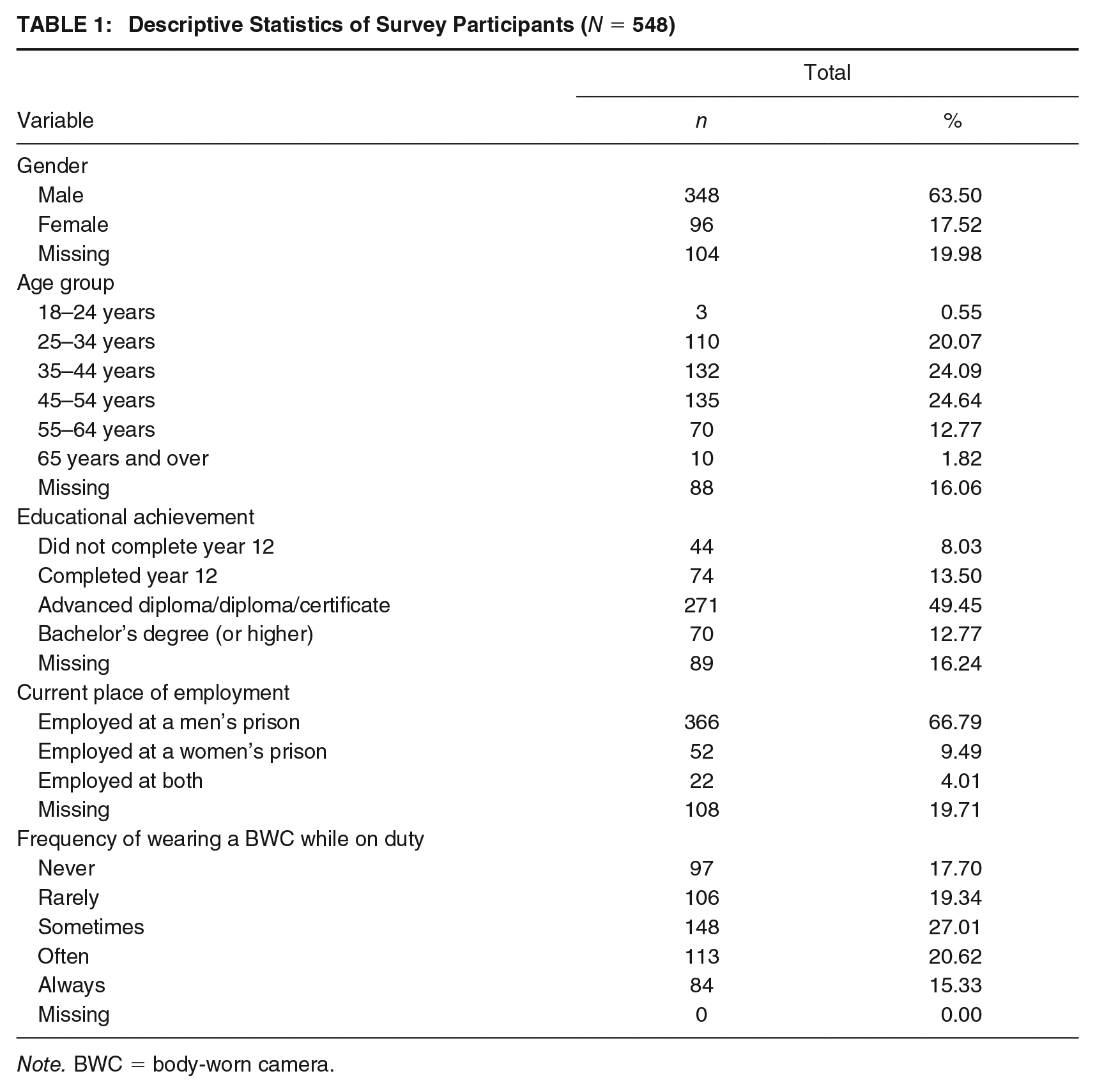
Note. BWC = body-worn camera.
The second phase of research involved follow-up interviews (N = 34) with a sample of correctional officers and other QCS staff involved in the BWC rollout. These interviews were intended to clarify and provide a more comprehensive understanding of the survey results and the BWC implementation process. Interview participants were recruited from the survey respondents who had indicated their interest in being interviewed, as well as through word-of-mouth when the research team visited various prisons. All individuals who expressed a desire to be interviewed were provided that opportunity. This resulted in a sample of 34 interviewees, of which 25 were correctional officers from nine prisons across the state (see Table 2 for an overview of interviewees). The remaining nine interviewees worked as intelligence analysts, in violence prevention, and center or QCS management roles. Interviewees ranged in corrections experience, with the largest proportion (26%) having between 2- and 5-years’ experience. Both male (n = 24) and female (n = 10) staff were interviewed, and most interviewees had experience wearing a BWC (n = 23), while the remaining 11 interviewees were in positions where BWCs were not typically worn. Interviews were conducted in person (n = 27) or by telephone (n = 7), depending upon the interviewee’s availability and preferences. On average, interviews lasted for 35 min. All interviews were audio-recorded (with the permission of interviewees) and transcribed. A thematic analysis of the transcripts was carried out using NVivo to identify key themes (Boyatzis, 1998). The following analyses draw from both phases of this study.
Interviewee Overview (n = 34)
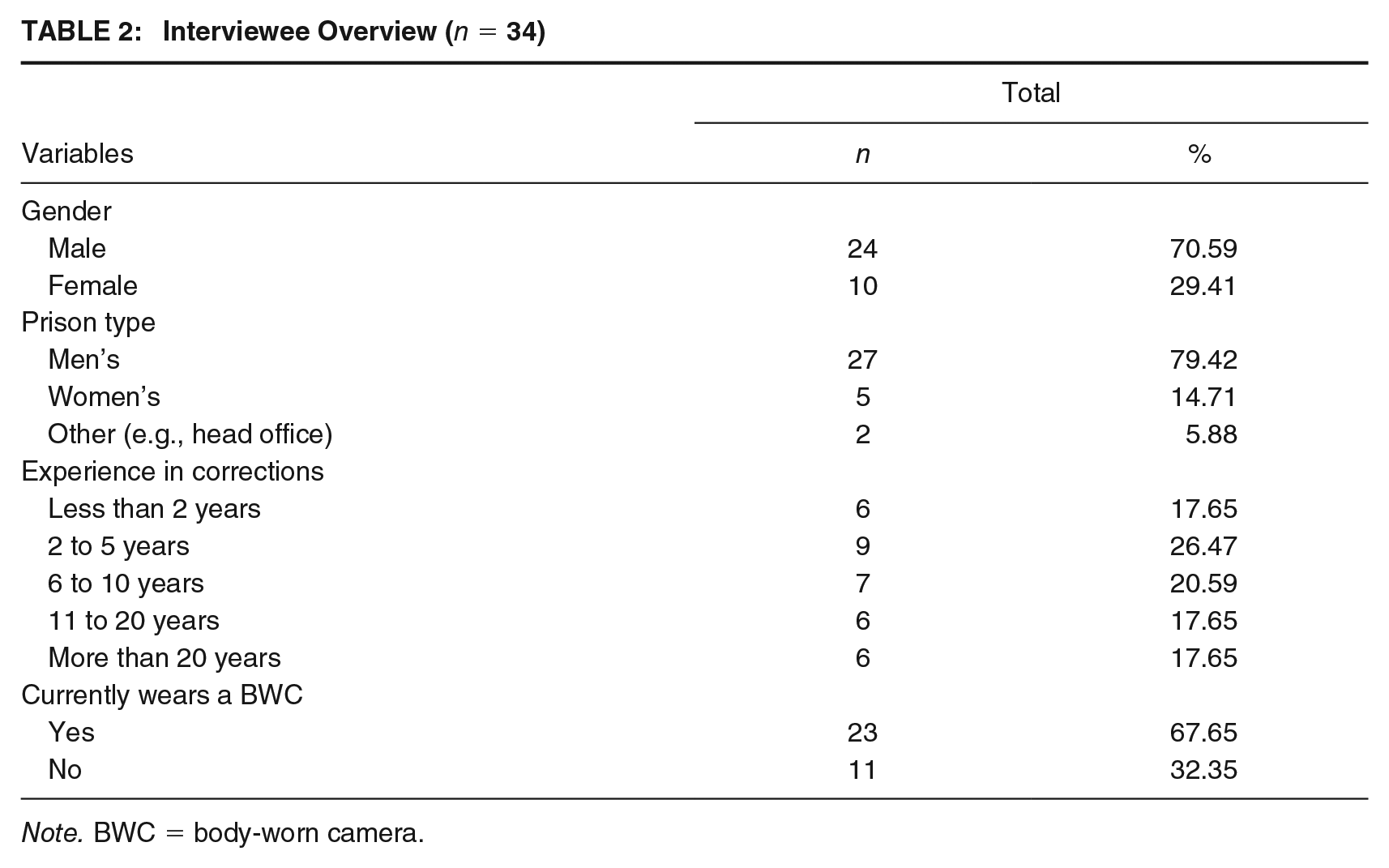
Note. BWC = body-worn camera.
Results
Do Correctional Officers Support the Use of BWCs in Prisons?
In the survey, correctional officers were asked several questions relating to their support of the use of BWCs in prisons. They indicated their level of agreement with these items using a 7-point Likert-type scale, ranging from 1 = strongly disagree to 7 = strongly agree. Survey participants’ mean scores on each variable of interest are provided in Table 3. For the purposes of this analysis, any Likert-type scale average of 3.51 and above is defined to indicate agreement, while anything 3.50 or below indicates disagreement.
Correctional Officer Responses to Survey Items
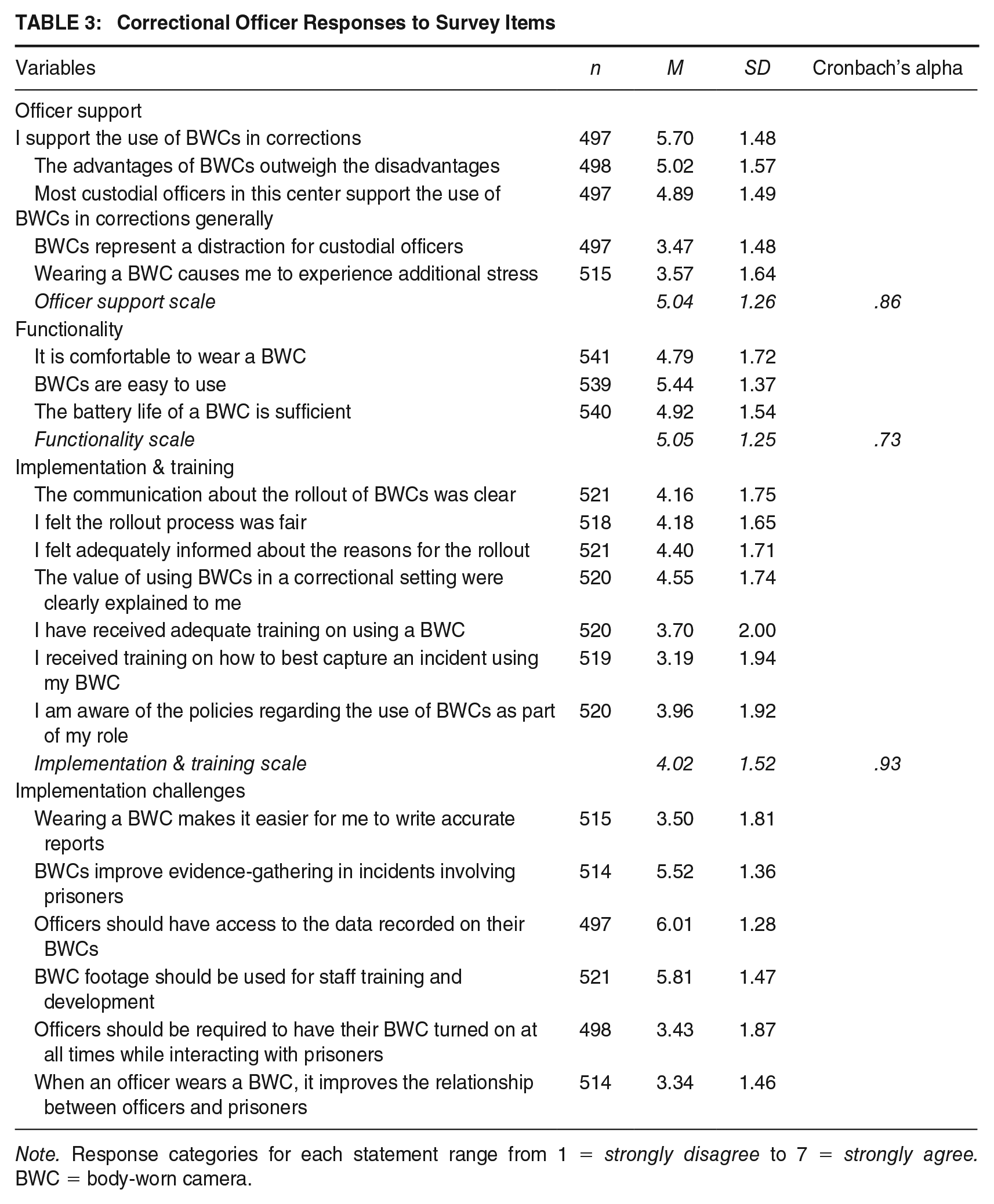
Note. Response categories for each statement range from 1 = strongly disagree to 7 = strongly agree. BWC = body-worn camera.
Officers mostly held favorable views on the use of BWCs in prisons. When asked whether they “support the use of BWCs in corrections,” officers agreed, with a mean score of 5.70 (SD = 1.48). They also agreed that the “advantages of wearing BWCs outweigh the disadvantages” (M = 5.02, SD = 1.57) and perceived high levels of support for BWCs among other correctional officers (M = 4.89, SD = 1.49). In addition, officers disagreed that BWCs represent a distraction for officers (M = 3.47, SD = 1.48), but agreed that this technology caused them to “experience additional stress” (M = 3.57, SD = 1.64).
Similar findings emerged from interviews, with all interviewees asked (n = 33
4
) indicating they thought BWCs were useful for correctional officers. When asked about the most important benefits of BWCs, interviewees most often described the capacity of the camera footage to corroborate an officer’s version of events or to provide evidence of an interaction with an incarcerated individual. Specifically, BWC footage provided them a “sense of peace of mind” (Interview #18 or I18) that their behavior could be reviewed by management if there was a complaint or later scrutiny of the officer’s actions. Others explained that BWCs, more so than the closed-circuit television (CCTV) cameras already widely used in prisons, helped to capture an officer’s perspective of an incident and provided additional context as to why the officer made certain decisions: It gives the person viewing a real sense of what was actually occurring. So, you actually hear and see from a first-person perspective what’s happening, instead of a corner angle with no sound [like CCTV]. And I think in terms of really understanding what was occurring and why those decisions were made by that staff member, I think that’s the most beneficial thing. (I15)
Other interviewees felt that BWC footage would help to justify officers’ use of force against an individual in custody, where force was necessary, if their actions were scrutinized by “outsiders” who did not understand the uniquely stressful environment that officers worked within. Several interviewees also expressed, though, that BWCs were not just a protective tool for officers: It works the same for the prisoner as well. If the prisoner is saying “I said this” and he did say it, it’s recorded . . . It goes [to] their credibility . . . So, it does work both ways in that perspective. It’s not just for our benefit . . . it does work in the prisoners’ benefit in the same way. (I24)
Like police, correctional officers and other staff commonly viewed BWCs as a positive addition to corrective services and another tool at officers’ disposal to assist with their duties (Edmonton Police Service, 2015; Fouche, 2014). Several interviewees said they were familiar with BWCs because of their use by police and believed this technology would be equally beneficial to officers working with incarcerated populations. Furthermore, some felt that the adoption of a BWC program showed that corrective service agencies, like police agencies, were evolving with the emergence of new technologies: If we don’t have body-worn cameras . . . we’re not advancing as an industry and as a correctional agency. We’ve got to move with the times, and we’ve got to improve our performances, and we’ve got to improve our safety and security for our staffing and prisoner groups . . . Police have successfully used [the cameras] for a number of years, and there’s no reason in this contained environment . . . that we shouldn’t be able to use them successfully either. (I03)
Nonetheless, officers identified some concerns relating to the use of BWCs during interviews. Most often, they referred to the potential for human error as a key drawback. As BWCs are an additional piece of equipment in correctional officers’ ever-growing toolkit, some were concerned that if they accidentally turned or left their cameras on in inappropriate situations, or forgot to activate their camera, they may be penalized by management. Many correctional officers (like police) were also concerned that they would be subject to disciplinary action if footage captured them swearing or yelling at the individuals in their custody (Gaub et al., 2020; Guerin et al., 2016). Indeed, several officers noted they were more conscious of the language they used or what they said, and they noticed similar changes in other officers. Some officers described, however, that their concerns had mostly been dispelled once staff saw that prison management were not often disciplining officers over these issues. Other drawbacks related to issues of comfort, battery life, and the number of available cameras.
Finally, in Queensland, legislation provides that a correctional officer may use force, other than lethal force, against a person in custody in several circumstances, including when it is reasonably necessary to compel the person to comply with an order or to restrain a person who is committing or attempting to commit an offense.
5
However, one officer identified that, in their view, the additional scrutiny from having BWCs was leading officers to avoid using force, even in circumstances where it was permitted: People are hesitant to use force [against individuals in custody] when it might be necessary, but they’re hesitant to use it because they’re concerned that they’ll be on camera and it will be, you know, looked at the wrong way. (I02)
Similar concerns have been raised in the policing literature, with some recognition that officer safety may be at risk if officers who are equipped with a BWC are hesitant to use force even in appropriate circumstances, due to the fear of being reprimanded for the inappropriate or excessive use of force (Rowe et al., 2017). This represents a concern if rather than increasing officer safety, BWCs, instead, endanger correctional officers who hesitate to use force against unruly individuals.
Relationship Between BWC Support and Officer Characteristics and Perceptions
Next, we used a multivariate regression analysis to predict BWC support from several officer characteristics and perceptions about BWCs. To measure officer support, a scale (α = .86) was created by combining survey participants’ mean scores for five “Officer Support” questions, including “I support the use of BWCs in corrections” (see Table 3). The following six predictor variables were also used in this analysis: Gender (0 = Male; 1 = Female); Age (1 = 18–24, 2 = 25–34, 3 = 35–44, 4 = 45–54, 5 = 55–64, 6 = 65 and over); Education (1 = Did not complete year 12; 2 = Completed year 12; 3 = Advanced diploma/diploma/certificate; 4 = Bachelor’s degree or higher); Frequency of wearing a BWC (1 = Never, 2 = Rarely, 3 = Sometimes, 4 = Often, 5 = Always); Functionality; and Implementation and Training.
A Functionality scale (α = .73), including the item “BWCs are easy to use,” was created by calculating survey participants’ mean scores across three questions. Similarly, an Implementation and Training scale (α = .93) was created by calculating participants’ mean scores across seven items, including “the value of using BWCs in a correctional setting were clearly explained to me” (see Table 3 for further information on each scale). These scales were created by the research team, combining items often used in the policing literature but adapted for use in a corrections context. 6 The results of the regression analysis are presented in Table 4, using a sample of 439 survey respondents. 7
Regression Model Predicting Officer Support for Body-Worn Cameras (N = 439)

Note. BWC = body-worn camera.
*p < .01. **p < .001.
As Model 1 in Table 4 demonstrates, when only officer characteristics are considered, both an officer’s gender and the frequency with which they wear a BWC are positively related to BWC support. Specifically, female officers (β = .129, p = .005) are more likely to support the use of BWCs in prisons. Similarly, officers who wear a BWC more frequently are more likely to support the use of BWCs in prison (β = .274, p < .001). This latter finding is consistent with prior research in the policing context, where police officer support for BWCs was higher among those officers who had experience using BWCs compared with those who did not (Goetschel & Peha, 2017). However, contrary to policing research, correctional officers’ age and level of general education were not found to be significantly associated with BWC support among correctional officers (Fouche, 2014; Huff et al., 2018).
In Model 2, the Functionality Scale and Implementation and Training Scale were added. Accounting for perceptions of BWC functionality and implementation and training, the relationship between BWC support and gender becomes stronger (β = .144, p < .001). However, the frequency with which officers wear a BWC is no longer statistically significant. Both functionality and implementation were found to be positively and strongly related to BWC support. Put simply, officers who hold positive perceptions of the implementation and training processes are more likely to support the use of BWCs in a correctional environment (β = .182, p < .001). Similarly, officers who perceive the BWCs as comfortable, easy to use, and having a sufficient battery life are more likely to support the use of BWCs in corrections (β = .455, p < .001). In fact, an officer’s perceptions of the functionality of BWCs were the strongest predictor of BWC support of all variables included in the model. Importantly, this shows that the factors that have the strongest effect on increasing support for BWCs among correctional officers are fairly simple considerations that are well within the control of prison management to demonstrate to officers. The results of the regression indicated that the model explained 36% of the variance in officer support for BWCs. 8
Implementation Challenges for Introducing BWCs in Prisons
While this study demonstrates that officers (and other correctional staff) are largely supportive of the introduction of BWCs in corrections, three key implementation challenges were identified through surveys and interviews. Each challenge is detailed below.
Officer access to BWC footage
With the introduction of BWCs, the question was raised regarding whether correctional officers ought to have access to the footage taken by their BWC, including when preparing an incident report. Survey respondents felt strongly about this issue, agreeing that officers should have access to their footage (M = 6.01; SD = 1.28). Officers also agreed that BWCs would improve evidence-gathering in incidents involving incarcerated individuals (M = 5.52; SD = 1.36), however, their views verged on the border of agreement and disagreement that BWCs make it easier for them to write accurate reports (M = 3.50; SD = 1.81). This is likely because at the time of the study, officers in many prisons were unable to access their footage, or the footage was not available before the completion of an incident report. 9
This issue was also raised by many interviewees, with staff having mixed views. Some officers felt strongly that they should not have access to the BWC footage, particularly before they were required to write an incident report. In their view, reports were to be written to the best of the officers’ recollection: . . . you write your report in good faith. So, when you go in and you write your report half an hour after the incident—when the incident’s been stood down, you’ve been medically assessed—and you write your report in good faith, that’s the standard that we should have. (I03)
Other officers, while generally supportive of having access to their BWC footage, recognized the operational difficulties and additional resources needed to allow this. Most officers, nonetheless, felt strongly that they should be permitted to view their footage before preparing an incident report. Some felt this was particularly important for cases that were likely to result in legal proceedings. Officers also commonly described the “tunnel vision” they experienced during serious incidents, which meant that their ability to recall specific details was oftentimes poor. Furthermore, some officers expressed that there would be greater support for BWCs if officers were able to review their footage due to increased transparency and greater trust between prison management and officers.
However, the staff who are responsible for viewing the BWC footage voiced concerns that watching the footage could alter an officer’s perceptions or versions of an event. They also believed the footage offered no real benefit to officers as the purpose of an incident report was simply to obtain an officer’s perceptions and recollections of an event: You can’t describe a feeling or a nuance, or a change in dichotomy. [The BWC footage] doesn’t capture that . . . We can get the facts anywhere. It’s those little bits and pieces [from the officer’s perceptions] that are hard to capture. (I16)
Some officers identified a practice used in some Queensland prisons to overcome these concerns. They explained that officers prepared a report as soon as practicable following an incident. They were then permitted the opportunity to view their BWC footage and, if they wished, prepare an addendum to their initial report. This practice ensured that both an officer’s initial recollection and perceptions were captured, but that they could also include any additional information they recalled or observed while viewing the footage. It was unclear, however, how prison management or the courts would deal with situations where an officer’s addendum report conflicted with their initial report.
Use of BWC footage for officer training
A second implementation challenge relates to the decision whether to use BWC footage for officer training. In the survey, officers agreed (M = 5.81; SD = 1.47) that BWC footage should be used for staff training and development.
10
This issue was also commonly raised by interviewees, with many describing how BWC footage would be a valuable training tool for the professional development of correctional officers: [BWC footage] is one of the best training tools . . . when you go back and review an incident, and you’re reviewing and watching your performance and you’re learning . . . You can see where possibly you could’ve made a better decision or made a different decision, and maybe did something slightly different, what would have improved the outcome. (I03)
Similar sentiments have been observed in the policing literature, where BWC footage is often seen as a useful training tool, because it allows officers the opportunity to identify behavioral cues they may have missed and learn from their perceived or actual mistakes (Makin, 2016), while also providing “teachable moments to other officers” (Goetschel & Peha, 2017, p. 716). There is also evidence to suggest that using BWC footage as a training tool may also encourage resistant officers to use this technology (Owens & Finn, 2018).
While some correctional officers described how BWC footage was already used for training purposes at their prison, it was apparent that practices varied across the state. Many officers saw the value in utilizing BWC footage as a training tool to a much greater extent. Others, though, recognized the potential privacy issues associated with using BWC footage for officer training. The right to privacy, for both officers and incarcerated individuals, is an important consideration for prison management to balance against the benefits offered by using BWC footage for officer training. Not all officers may feel comfortable being shown on BWC footage (Toronto Police Service, 2016). Furthermore, redacting or blurring BWC footage is a time-consuming and expensive task (Feeney, 2015) and as one correctional officer in this study pointed out, blurring the footage may render it useless for training purposes.
Impact on rapport between officers and persons in custody
The final implementation challenge relates to the potential impact on the rapport between officers and persons in custody if officers were required to always have their BWC activated. Although no prisons in Queensland have currently implemented this as a blanket policy, officers working in some higher risk areas of the prisons may be required to have their BWC continually recording. In the survey, officers tended to disagree that they should be required to have their BWC turned on during all interactions with incarcerated individuals (M = 3.43, SD = 1.87). They also disagreed that BWCs improve the relationship between officers and those in custody (M = 3.34, SD = 1.46).
Interviews revealed a mixture of views among staff. Some officers recognized that always having their BWC activated would drain the camera battery and result in an unmanageable amount of footage, while others saw advantages to this practice. As one officer explained, “The idea of having cameras on all the time, I think, gives us the opportunity to identify and highlight really good interactions with prisoners, rather than just the negatives” (I18). Most officers, though, said they would not support a policy that required them to record all interactions. Many officers felt that such a policy would damage the relationship they worked hard to build with those in their custody; a relationship that they often relied upon as a means of ensuring their safety while working with this population: . . . a lot of prison is about interpersonal relationships, and building rapport, and learning how to navigate different relationships and different prisoners. And I don’t know whether integrating that would make them feel threatened or intimidated . . . It’s already us versus them in their heads, and I feel like that would just escalate that even more. (I07)
Officers also felt that such a policy would negatively impact their ability to gather evidence or information from incarcerated individuals because these individuals would be unwilling to speak openly if they were being recorded: Some officers have really good rapport with a lot of prisoners or certain prisoners; you can get a lot of good intel off some of them. If they knew they were being recorded all the time, they wouldn’t tell you anything. (I04)
Discussion
The use of BWCs by agencies other than police is becoming more common, with prisons in several countries recently trying out or implementing BWC programs for use by correctional officers (e.g., Beales & Marsh, 2016; Hong Kong Correctional Services, 2018). BWCs are presumed to offer those working with prison populations similar benefits to those observed for police, including increased accountability, officer safety, and improved evidence collection (CCCQ, 2018). However, it is unclear whether correctional officers support the use of this technology within prisons and, furthermore, whether the introduction of these cameras may raise unique challenges for officers working in a contained environment with dangerous individuals. We considered these issues, with several important findings emerging.
Key Findings
Importantly, this study found widespread support among correctional officers for the use of BWCs. Like police (e.g., Edmonton Police Service, 2015; Fouche, 2014), most officers viewed the cameras as useful and necessary for their position. They recognized the protective benefits of BWC footage at ensuring increased accountability of incarcerated individuals and officers alike and also highlighted several benefits of BWCs over the use of CCTV cameras that are already prevalent in prisons. As the policing literature demonstrates, officer support or “buy-in” is imperative to the success of a BWC program (Gaub et al., 2016), as officers who are resistant to this technology may actively undermine the effective implementation of the cameras, while officers who support their use may enhance their value (Jennings et al., 2014).
Nonetheless, correctional officers had concerns that BWC footage could be used as a tool to monitor their performance. Furthermore, some feared they would be punished by management for forgetting to activate their camera or for using inappropriate language or dark humor to cope with their stressful work environment. While officers’ fears were largely assuaged once they saw that BWC footage was not being used in this way (and, indeed, might protect officers from false complaints), prison management should take additional steps to build trust with officers by providing a transparent BWC policy and educating officers on the intended use of the footage (Goetschel & Peha, 2017). This will help to ensure that correctional officers feel they are able to use coping mechanisms, such as venting or laughing with other officers or incarcerated individuals, to reduce the high level of occupational stress that is inherent in their role (Newell & Greidanus, 2017).
However, whether the introduction of BWCs may cause officers to experience additional stress or increase the likelihood of officer burnout is an issue that must not be taken lightly by corrective services agencies. While little attention has so far been given in the policing literature to the potential effects of BWCs on the officers who wear them, a recent study revealed that the presence of BWCs led to a significant increase in police officer burnout and a decrease in perceived organizational support (Adams & Mastracci, 2019). The current study revealed similar concerns, with surveyed officers agreeing that BWCs cause them to experience additional stress. As in the policing context, the cause of this additional stress may be due to the more intense surveillance of officers through BWCs (Adams & Mastracci, 2019), and the resultant feelings of a lack of support from prison management. This is an important matter for corrective service agencies to consider if adopting a BWC program and one that must be balanced against whether BWCs may reduce officer stress in other ways, including by increasing their feelings of safety while working with those in custody.
This study also revealed there are several factors associated with officer support for the use of BWCs within prisons. Specifically, we found that female officers were more supportive of BWCs than male officers. Yet, in contrast to research in policing (Fouche, 2014; Huff et al., 2018), correctional officers’ age and level of education were not linked to BWC support. Officers who held more positive views of the implementation and training processes were more likely to support BWCs. Furthermore, officers who felt BWCs are comfortable, easy to use, and have a sufficient battery life were more likely to hold supportive views. As the strongest predictor of officer support for BWCs, corrective service agencies who are considering the adoption of a BWC program should focus on demonstrating to staff these three key areas of functionality to maximize officer buy-in to this technology.
This study also revealed some key implementation challenges when introducing a BWC program into a prison environment. Correctional officers, across both phases of this study, felt very strongly that they ought to be able to review their BWC footage before completing an incident report. Officers commonly identified that the stressful nature of prison incidents or violence often meant that they had difficulty recalling specific details or facts. They found this particularly troubling when they felt their version of events may be called into question, either by prison management or through subsequent court proceedings.
The issue of allowing officers to review BWC footage is not unique to their use in prisons, with police agencies also debating the desirability of this practice (Gramagila & Phillips, 2018; Miller & Toliver, 2014). In that context, it is recognized that while a police officer’s administrative workload would increase if reviewing BWC footage became part of their reporting practices, this may be offset by more accurate and detailed reports. From that view, if providing evidence is the primary purpose of BWCs, then officers should be provided the opportunity to review their footage (Edmonton Police Service, 2015). Conversely, Feeney (2015) argues that for incidents involving officer use of force, the lawfulness of the force depends largely on the officer’s perceptions during the incident. Consequently, allowing officers to review the footage prior to them making a statement means “no one will ever know for sure what the officer’s actual recollection of the incident was” (Feeney, 2015, p. 15). As in policing, this is an important decision faced by corrective service agencies who implement a BWC program, and one that should not be made lightly, given its potential to impact officer support for the cameras and to require additional resources to support this practice.
Finally, this study revealed that BWCs may have more serious ramifications for correctional officers than they do for police. Many officers identified that if they were required to record all interactions, this would have a negative impact on their ability to develop a rapport with the individuals in their custody. This rapport was essential, they felt, to improving their personal safety and keeping abreast of important goings-on in the prison. More so than police, this is an important issue for correctional officers, given their “work in environments that demand constant awareness of surroundings in an effort to maintain the safety and wellbeing of other staff and inmates” and their “supervision and management of potentially violent offenders in enclosed spaces” (Butler et al., 2019, p. 84). This represents another important consideration for corrective service agencies contemplating a BWC program, with strategies needed to preserve the unique relationships between correctional officers and the individuals in their care (Miller & Toliver, 2014).
Future Considerations
While this study provides some important answers to questions regarding the use of BWCs in prisons, further research is still needed. To begin, while Beales and Marsh’s (2016) research indicates that BWCs reduce officer assaults and increase officers’ feelings of safety, further and more robust research is required given that issues of safety are a key reason why corrective service agencies may consider adopting a BWC program. Research should also explore whether BWCs meet the other expected aims, including improving evidence collection and reducing the number of complaints made against officers.
Furthermore, while this study focused on officers’ perspectives of BWCs, future research should also consider the views of persons in custody on the use of this technology. As Taylor and Lee (2019, p. 958) recently observed in the policing context, “entirely absent from debates about the desirability and potential impacts of . . . [BWCs] are the views of a significant group on the other side of the lens.” That study of individuals detained within Australian police custody revealed that detainees were largely supportive of the use of BWCs, so long as there were appropriate operational and procedural policies governing their use (Taylor & Lee, 2019). This highlights the importance of also gaining an understanding of incarcerated individuals’ views on the use of BWCs, to ensure we have a well-rounded view on the use of this technology from both parties who are most affected by the introduction of this technology.
However, Taylor and Lee’s (2019) study also raises the issue of the right to privacy for individuals detained in carceral spaces and whether the use of BWCs may unreasonably infringe upon those rights. In that study, many detainees reported feeling uncomfortable with not being informed they were being filmed (Taylor & Lee, 2019). Furthermore, 64% disagreed that police should be able to record them without their permission. Although there has long been disagreement as to the extent of a person in custody’s right to privacy, if such a right is considered to exist at all (Jackson, 1997), it would be remiss of corrective services agencies not to consider the privacy concerns raised by the more intensive surveillance in prisons introduced through BWC technology. Indeed, the failure by police to consider such issues when introducing BWCs was raised recently by Adams and Mastracci (2017, p. 313), who argued the “adoption of surveillance technology often outpaces the laws and regulations that would ensure their appropriate use, and the negative consequences are rarely anticipated, particularly as they relate to privacy concerns.”
Conclusion
In conclusion, like police, corrective services agencies face mounting pressure to protect their staff, increase their transparency and accountability, and to embrace emerging technologies. One means of achieving this is through the introduction of a BWC program. This study demonstrates the potential utility of BWCs within prisons. It also highlights, however, some unique challenges for the implementation of this technology in an environment where officers deal directly with large numbers of dangerous individuals within an enclosed area. Furthermore, full consideration must be given to the privacy and other ethical issues potentially raised by the introduction of this technology within prisons before the adoption of a BWC program. By doing so, the potential of this technology as a tool to safeguard correctional officers will be more fully realized.
Footnotes
Authors’ Note:
The authors would like to acknowledge the assistance of the Queensland Corrective Services Research, Evaluation and Performance group, particularly Sandra Sacre, Jennifer Bell, and Melanie Conway, in facilitating the research. Thanks also goes to Rebecca Taylor for assistance with data coding and report preparation. Finally, we thank the Queensland Corrective Services staff who participated in this study. The views expressed herein are those of the authors and are not necessarily those of Queensland Corrective Services. This project was funded by a 2018 Queensland Corrective Services Research Grant awarded to the authors.
