



Abstract
This exploratory study examined factors potentially associated with graduation for White and Black female Drug Treatment Court participants. Multiple logistic regression models for predicting program graduation were employed using an administrative data set (N = 1,093). Race was significant in a combined model. Age, prior felonies, employment, and negative peer associations predicted graduation for White women, whereas negative peer associations was the only predictor of graduation for Black women. Consideration of other factors that are not typically collected through administrative screenings is needed to better understand the strains typically experienced by Black women in Drug Treatment Court.
Introduction
Black women are the demographic group with the highest incarceration rate for drug offenses (Scott et al., 2011). They have a higher rate of illicit drug use than the national average (6.2% vs. 5.7%) and the rate has been increasing (National Household Survey on Drug Use and Health, 2010). Despite their status in the justice system, researchers have largely overlooked them in research on crime and substance use (Link & Oser, 2018; Piquero & Sealock, 2010), and particularly research pertaining to diversion programs, especially Drug Treatment Courts (DTCs; Brewer & Heitzeg, 2008). A review of research and statistical reports pertaining to DTC outcomes yielded no outcome information for Black women. They are either included in statistics for all Black individuals or for all women. They are a unique group in no small part because of the potential stressors of gender, class, and racial discrimination which can affect everything from the extent they encounter everyday disruptions to life routines (Almeida, 2005) to the presence of poverty, abuse, and violence in their lives (Hatch & Dohrenwend, 2007). The pressures of discrimination may lead to coping through substance use (Stevens-Watkins et al., 2012) and if this discrimination is not addressed in treatment, they may not succeed in finding alternative means to cope (Wolf et al., 2015). Given the cost of substance use and incarceration to individuals, families, and communities, more understanding is needed of factors affecting DTC outcomes for this understudied group. As a first step, this study will examine which factors commonly associated with DTC outcomes in primarily male DTC studies are associated with outcomes in race-specific models for women.
DTC
DTCs are widely used as a diversion from incarceration and have demonstrated effectiveness in reducing reoffending and substance use in a cost-effective manner (Marlowe et al., 2016; Mitchell et al., 2011; Rossman et al., 2011). DTCs are specifically designed to treat individuals with high risks for reoffending and high criminogenic need for treatment, especially of substance use disorders. If participants are not compliant with program requirements involving abstinence, participation in court hearings and treatment services, and cessation of criminal behavior, they are terminated from the program. Those who graduate are less likely to use illegal substances and engage in criminal behavior (Marchand et al., 2006; Rossman et al., 2011).
Women and DTC
Researchers study risk factors associated with DTC outcomes to identify areas for service enhancement for those with needs which must be met to increase the likelihood of graduation and decrease the likelihood of further criminal offending and substance use such as employment supports for those not employed at entry or substance use treatment. A national survey of DTCs found that of the reporting programs, the average graduation rate for women was 39% compared with an overall graduation rate of 58% (Marlowe et al., 2016). Over time, some DTCs have evolved to provide services for specific populations and for individual needs. While many DTC programs still offer an array of services in mixed gender settings, some programs are finding success in offering gender-specific services based on research highlighting differences in the needs of women and men in treatment (Liang & Long, 2013; Messina et al., 2012) and different graduation rates from DTC programs. These findings underscore the logic for a female-specific study.
The rationale for offering gender responsive programming stems from research indicating women have different pathways into crime and substance use than men (Pollock, 2002). Women’s pathway often has a social component. Their substance use often is tied to their relationships with peers (Briggs & Pepperell, 2009), as women tend to be introduced to drugs by intimate partners (Liang & Long, 2013). The association of deviant peers to DTC outcomes has not been explicitly included in previous DTC studies. Living arrangements have been included in multiple studies and could serve as a proxy for peer associations. Gilberson (2013) noted those living with deviant peers may be more susceptible to engage in deviant activities including drug use. Women may have a gender-specific relationship to deviant individuals which should be studied in association with their likelihood of graduating.
Another reason for a study focused on female DTC participants relates to their high prevalence of mental health problems often including life time exposure to traumatic events. In a drug court setting, one study found that most women were part of a heavily trauma exposed population (Sartor et al., 2012). Women who have experienced trauma, but are not treated for it in drug court are more likely to not complete the program (Wolf et al., 2015). Thus, the mental health status of women in DTC may differentiate them from men in understanding outcomes.
Race and DTC Outcomes
While differences in DTC outcomes between men and women are documented and further, the association of female-specific needs and services to outcomes has been shown, differences among women have not been so clearly established. An important distinction among women is race and discrimination. Racism is a source of chronic strain and psychological distress for Black individuals (Brown & Keith, 2003; Landrine & Klonoff, 1996; Piquero & Sealock, 2010). Researchers find that Black women often bear a large burden of strain and trauma stemming from poverty, racism, sexism, and violence (Greer, 2011; Hatch & Dohrenwend, 2007) which distinguishes them from their male counterparts who do not have the added source of discrimination stemming from gender. Scholars have found evidence that the chronic strain of racism leads some to drug use as a coping mechanism (Stevens-Watkins et al., 2012). Living in a resource poor neighborhood may decrease their options for coping with racism and increase their access to illicit substances (Curtis-Boles & Jenkins-Monroe, 2000). Race and discrimination can affect every facet of an individual’s life ranging from opportunities for meaningful employment to how one’s culture affects responsiveness to treatment to how one assesses fairness and respect in the court system and DTC.
Black status is associated with DTC outcomes whether it is through a direct association which may be attributed to bias and discrimination or more indirect means like socioeconomic status (Dannerbeck et al., 2006). A study compiling findings from multiple DTC program evaluations and data on more than 20,000 participants found that only 36% of Black individuals across programs graduated compared with almost 53% of White individuals (Ho et al., 2018). None of these studies reported separate statistics for Black women. Multiple studies have found Black status (for predominantly male samples) is associated with less likelihood of graduating (Hepburn & Harvey, 2007; Marlowe, 2013; Rossman et al., 2011; Shannon et al., 2015). These racial differences in DTC outcomes provide evidence that Black women should be a separate group in studies.
Factors Associated With DTC Outcomes
Certain factors have been consistently associated with DTC outcomes across innumerable studies but, except for a very few exceptions, they have not been examined specifically for Black women, underscoring the need to include them as a separate group because these studies guide what is offered in treatment. The factors associated with less likelihood of graduating (in predominantly male samples) include being younger (Dannerbeck et al., 2006; Gallagher et al., 2014; Gottfredson et al., 2007; Jewell et al., 2016; Shannon et al., 2015), lack of employment experience (Evans et al., 2009; Hickert et al., 2009; Hohman, 2000), greater extent of criminal history (Brown, 2010; Gilberson, 2013; Hickert et al., 2009; Kalich & Evans, 2006; Polenberg, 2015; Shannon et al., 2015), earlier age of beginning substance use, previous unsuccessful treatment attempts, and less serious substance use disorder (De Matteo et al., 2009).
Shannon et al. (2018) found that women who were employed at entry were more likely to graduate. In one of the few studies examining race and gender in DTC (Liang & Long, 2013), minority status and lower levels of employment, when taken together, can be significant predictors of poor DTC outcomes for Black women. Criminal history is also a risk factor with a sharp distinction by race; Black individuals often have a more extensive and serious criminal history (Marlowe, 2013). Female DTC participants tend to have a less extensive criminal history (Garrity et al., 2006). The association of their criminal history with DTC exit status has not been closely examined.
The DTC model is predicated on participants having a substance use disorder (De Matteo et al., 2009). A multisite study of New York drug courts has found female participants face severe addiction problems, as measured by primary drug of choice and previous treatment episodes (Rempel et al., 2003). As already noted, Black women in the justice system have a relatively high rate of substance use. Among this group, the association of a diagnosed substance use disorder with DTC outcomes has not been studied.
Study Aims and Hypotheses
In one Midwestern state, Missouri, Black women have consistently had the lowest graduation rates of any racial and gender group in DTCs. In 2016, Missouri statewide adult drug court statistics indicate 37% of all program exits for Black women were graduates compared with 52% of White females (Missouri Office of State Courts Administrator, 2016). Women of color have unique psychological, physiological, and situational aspects that differentiate their pathways into crime and substance use as well as their outcomes in treatment (Bloom et al., 2003). Part of the uniqueness of their experience derives from the prevalence of racial and gender discrimination in their lives. Unlike previous studies that focused on DTC outcomes for men and White-dominant samples, this study will examine similarities and differences in the factors associated with DTC graduation between Black and White female DTC participants, so that we may better understand and meet the needs of Black women. Most prior research on DTC participants has primarily included men (e.g., Wittouck et al., 2013). The current study aims to address the gap in the literature by comparing relative effects of various factors associated with outcomes on DTC graduation between the two racial groups of women who participated in DTC programs in the state of Missouri, a Midwestern state with a significant population of Black individuals and the presence of DTC programs in most counties of the state. The study uses an administrative data set managed by the state courts which includes variables not typically available for such studies, namely, mental health status, association with deviant peers, and multiple indicators of substance use. Research described above suggests these factors may have different impacts on Black women, when compared with White women. Given that a racial disparity exists in outcomes, the study tests hypotheses regarding the underlying reasons for the disparities.
To examine whether some of the differences in outcomes can be attributed to race per se, the first hypothesis is,
To better understand factors associated with graduation, the second hypothesis states,
Method
Source of Data and Participants
The study participants include all 123 Black and 970 White female participants who were admitted to all 92 Missouri adult DTC programs across the state between 2012 and 2015, and who subsequently exited the programs. All data are secondary and came from the Missouri Judicial Information System. The data are collected by court staff as part of the administration of DTC. Everyone being considered for a DTC program is screened using a validated instrument, the RANT®, Risk and Needs Triage tool. The information used in this study came from responses to the items on this tool. Consistency was ensured through rigorous training of court staff and an interview script they must follow in asking for the information.
DTCs in Missouri
In Missouri, individuals can enter DTC through various tracks including pre- and postplea, as probationers and upon reentering the community from a Department of Corrections institutional facility. The program may be voluntary or it may be ordered as a condition of probation and parole. All individuals are screened for substance use before entry and must be a felony offender. While programs may vary on the pathways for admission, the general program components are consistent and follow the DTC model as outlined in Ten Key Components (National Association of Drug Court Professionals [NADCP], 2004) which include nonadversarial approaches to promote public safety and coordinated community support while ensuring that clients receive drug and alcohol treatment, rehabilitation, health care services, educational services, and drug testing to ensure abstinence. To ensure fidelity to the DTC model, administrative staff at the state level conduct quality assurance visits to the programs on a regular basis. Thus, although local staff and community climate may lead to some variations in how programs function, they generally follow the same procedures.
Measures
The dependent variable is graduation status. Program graduation status is a dichotomous variable: 1 = graduation with successful fulfillment of all program requirements and 0 = other exit statuses for those who did not graduate (e.g., termination—the individual left the program before fulfilling program requirements, transfers to other programs, voluntary withdrawals, administrative discharges).
The literature review guided the selection of independent variables. For race, the response set includes eight possible race/ethnicity categories. All but “White” and “Black or African American” were eliminated because of small sample sizes. Age at the time of the screening, number of months of legal employment over last 12 months, and the ages of onset of regular substance use and of criminal activities were continuous variables. A criminal history indicator of the number of prior felony convictions as well as number of prior substance abuse treatment programs were continuous variables. The amount of interaction with people engaged in criminal activity was coded into three categories (none, sometimes, most of the time). An indicator for substance use disorder was created by combining three items for cravings, binges, and withdrawal symptoms. Each of these questions has a yes (coded as 1) or no (coded as 0), and the responses were added together. Any total score of two or more met the criteria for a Diagnostic and Statistical Manual of Mental Disorders (5th ed.; DSM-5; American Psychiatric Association, 2013) substance use disorder and was coded as 1, whereas the total score of 0 or 1 was coded as 0 (Hasin et al., 2013). Finally, the Axis I DSM-5 mental health diagnosis was coded (yes = 1 or no = 0).
Statistical Analysis
All analyses were conducted using SAS 9.4 (SAS Institute Inc., 2013). Percentages were calculated for all study variables. The chi-square (2 × 2) or Cochran–Mantel–Haenszel tests (2 × 3 or more) were performed to examine the associations between study variables and the two racial groups. Multiple logistic regression models were used to estimate the relative contributions of all independent variables in the prediction of graduating from the program (vs. other exit statuses). There was no problem of multicollinearity in all regression models because all tolerance values exceeded 0.25 (Fox, 1991). Compared with the sample size of White women (n = 970), the sample size of Black women (n = 123) was much smaller. Thus, we conducted a power analysis only for Black females. Based on an anticipated small effect size (f2 = .15), alpha = .05, and number of predictors at 9, the minimum total sample size was calculated at 89 participants with a statistical power of 0.95 (Faul et al., 2007). Thus, our sample size of 123 Black females is satisfactory. In interpreting odds ratios (ORs), we used OR = 1.68, which is equivalent to Cohen’s d = 0.2 (small) as a benchmark (Chen et al., 2010).
Results
Descriptive Information
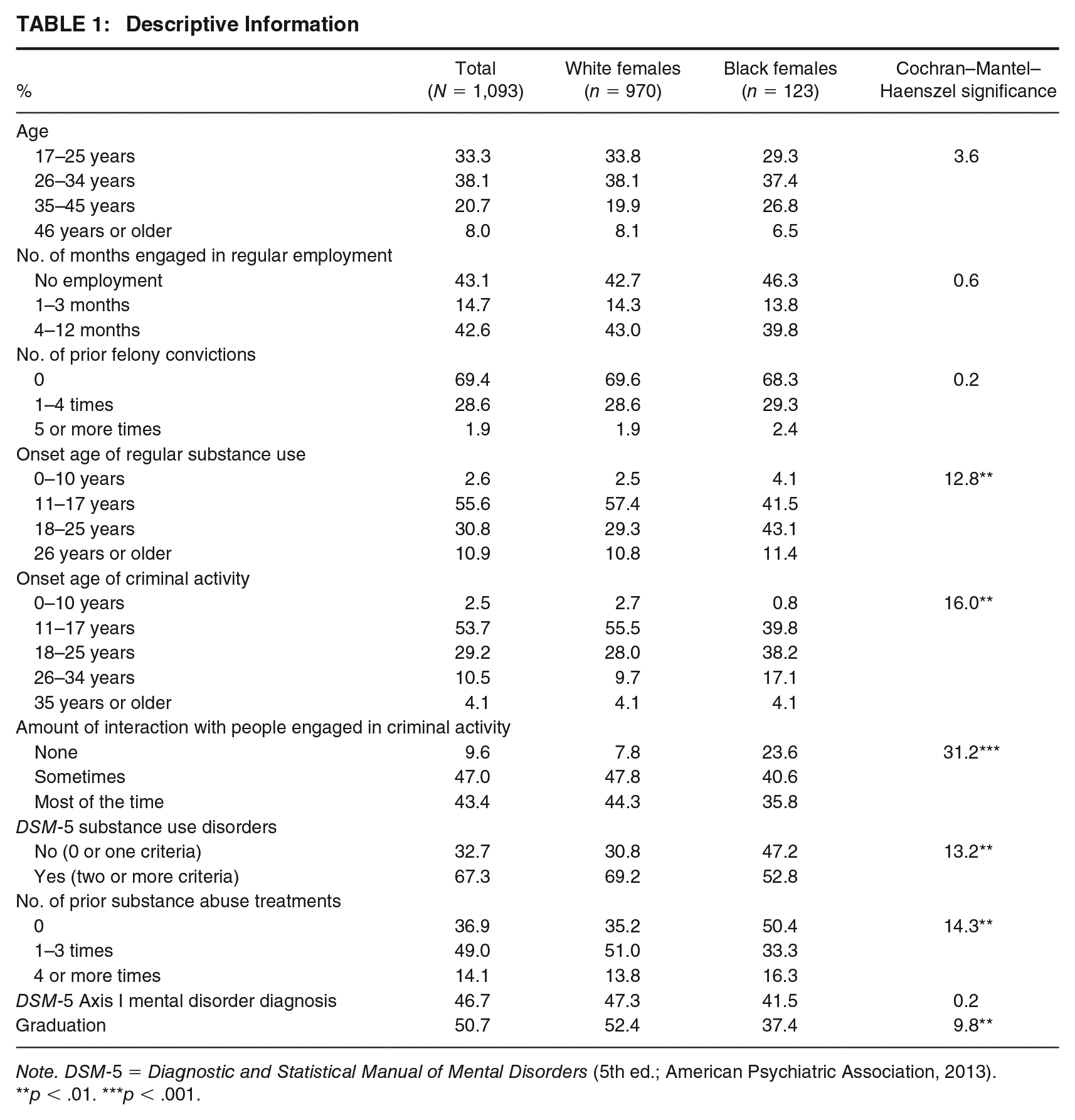
Table 1 presents descriptive information about our study variables for the two racial groups. Slightly more than half (52%) of the White female participants graduated from a DTC program whereas less than 40% (37%) of the Black female participants graduated. The age of the participants ranged from 17 to 69 with an average age of 30.8 (White females: 30.7, Black females: 31.1). More than 70% of the respondents were 34 years old or younger. With respect to regular employment, 42% were engaged in regular employment for more than 20 hr per week for at least 4 of the past 12 months. Approximately one third (30%) of the respondents reported at least one prior felony conviction. More than 60% attended at least one prior substance abuse treatment program. White females had a higher rate of at least one episode compared with Black women (64% vs. 53%). In the past 12 months, more White than Black females interacted with people who were engaged in criminal activity (92% vs. 80%). At the time of the screening, almost half of respondents (47%) met the DSM-5 criteria for Major Axis I psychiatric disorder diagnosis (including a major depressive disorder, bipolar disorder, or psychosis), and approximately half (46%) met the DSM-5 criteria for substance use disorders. More than half (55%) began using alcohol, illicit drugs, or prescription drugs at least weekly between the ages of 11 and 17. In this same age group, 54% reported that they were first arrested, or first engaged in activity that would have resulted in an arrest. Half of the respondents reported successful fulfillment of all program requirements.
Descriptive Information
Note. DSM-5 = Diagnostic and Statistical Manual of Mental Disorders (5th ed.; American Psychiatric Association, 2013).
p < .01. ***p < .001.
Results of bivariate statistics show some significant differences between White and Black women. Compared with Black females, White females were significantly more likely to report interactions with people who were engaged in criminal activity (p < .001), prior substance abuse treatments (p = .007), to meet the criteria for DSM-5 substance use disorders (p < .001), to start using substances early in life (p = .005), and to engage in criminal activity early in life (p = .003). Finally, significantly more White than Black females successfully graduated from a DTC program (p = .002).
Predictors of Graduation From Adult DTC Programs
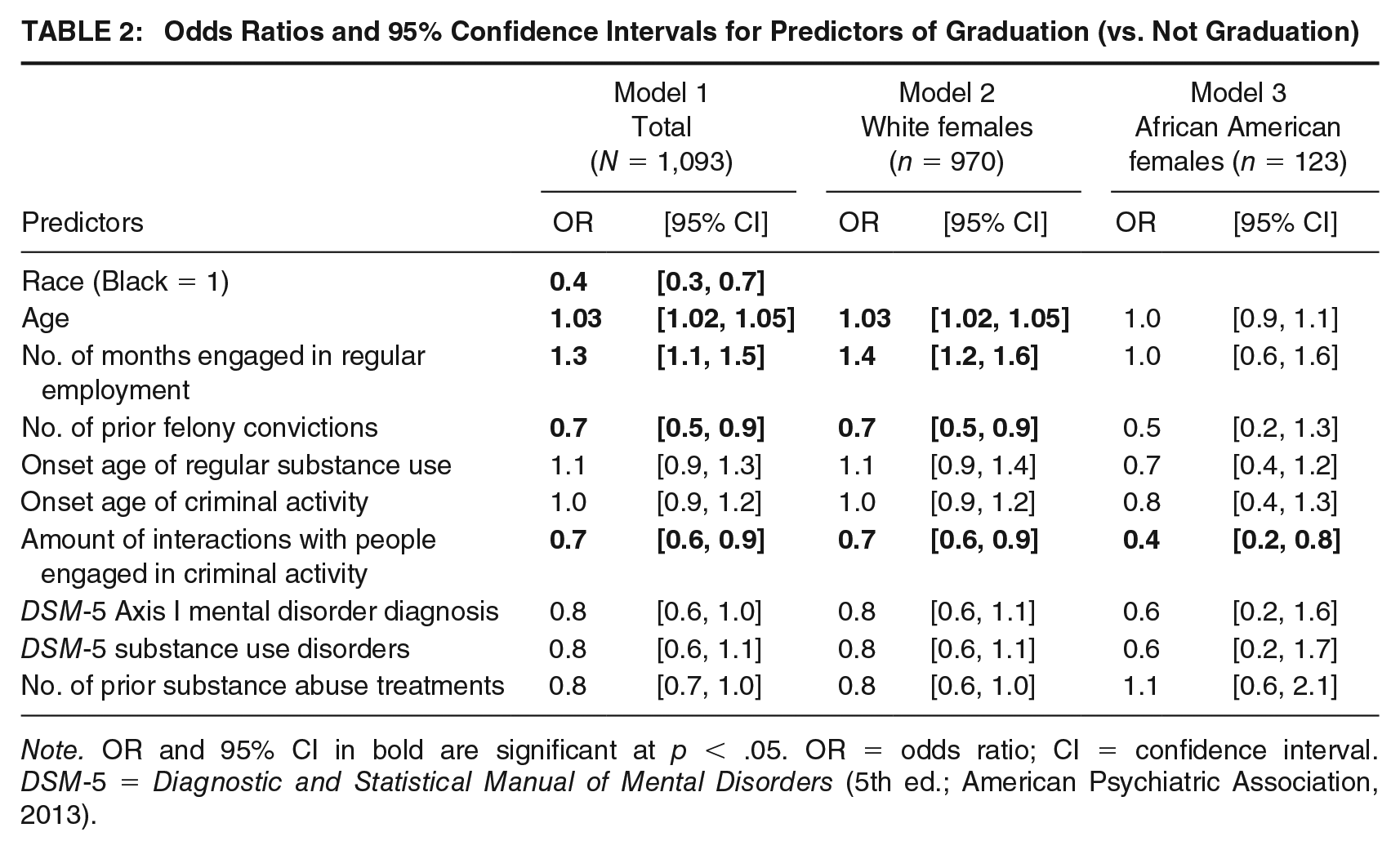
As shown in Table 2, three separate sets of multiple logistic regression models were executed to examine predictors of graduation (vs. other exit statuses). To test the hypothesis, being Black is significantly related to lower likelihood of graduating after controlling for other variables commonly associated with graduation, Model 1 showed that, compared with those females who were not successfully graduated from a DTC program, those females who were successfully graduated were 0.4 times less likely to be a Black female, 1.03 times more likely to be older,; and had 1.3 times more months engaged in regular employment. Those who were graduated had 0.7 times fewer number of prior felony convictions and had 0.7 times fewer interactions with people who were engaged in criminal activity. The model was significant as determined by the likelihood ratio chi-square and its p value, χ2(10, N = 1,093) = 109.3, p < .001.
Odds Ratios and 95% Confidence Intervals for Predictors of Graduation (vs. Not Graduation)
Note. OR and 95% CI in bold are significant at p < .05. OR = odds ratio; CI = confidence interval. DSM-5 = Diagnostic and Statistical Manual of Mental Disorders (5th ed.; American Psychiatric Association, 2013).
The second hypothesis was then tested, differences exist between White and Black women in factors associated with graduation, namely, criminal history, substance use history, employment status, age, deviant peer associations, and mental health. In Model 2, χ2(9, N = 970) = 88.4, p < .001, among White female DTC participants, age and number of months engaged in regular employment increased the odds of graduation whereas number of prior felony convictions and amount of interactions with people engaged in criminal activity decreased the odds of graduation. In Model 3, χ2(9, N = 123) = 20.3, p = .048, among Black female DTC participants, amount of interactions with people engaged in criminal activity was the only significant predictor of a decrease in the odds of graduation. We explored moderation effects, but no significant moderation effects were found.
Discussion
Black women have not received much attention in research related to DTCs. This study first establishes that being a Black woman is associated with a reduced likelihood of successfully completing DTC when controlling for other factors. Then, this exploratory study models them as a distinct group and compares factors predictive of their graduation with factors associated with graduation of White women. Some of the factors, namely age, employment status, and criminal history, are selected based on their consistent associations with outcomes across multiple studies with predominantly male participants. One noteworthy aspect of this study is the availability of several indicators of criminal history, age of onset of criminal activity, and prior felonies. Other factors are selected based on their availability and limited research suggesting an association with either race or gender, namely, associations with deviant peers, mental health status, and substance use measured as age of onset of substance use, prior treatment history, and a three-item indicator of a substance use disorder. The inclusion of these variables allowed us to explore which ones were significant for women in general and in the two racial subgroups.
Support was found for the first hypothesis: Black status is significantly related to a lower likelihood of graduating controlling for other variables. This result replicates previous studies of men and women (Hepburn & Harvey, 2007; Marlowe, 2013; Rossman et al., 2011; Shannon et al., 2015) and women only (Liang & Long, 2013). This result contributes to the limited body of research suggesting Black women are not being well served by many DTCs (Gallagher, Nordberg, Deranek, & Minasian, 2019).
Among factors guided by past research on racial disparities in DTC outcomes using predominantly male samples (Marlowe, 2013), some support was found for the second hypothesis, a significant difference exists in the factors associated with graduation between White and Black women. For White female DTC participants, older age and greater number of months engaged in regular employment increased the odds of graduation whereas greater number of prior felony convictions and more time spent in interactions with people engaged in criminal activity decreased the odds of graduation. These results align with previous DTC outcome studies with predominantly male samples (Brown, 2010; Dannerbeck et al., 2006; DeVall & Lanier, 2012; Gallagher et al., 2014; Gottfredson et al., 2007; Jewell et al., 2016; Shannon et al., 2015).
For Black women, just one variable, more time spent in interactions with people engaged in criminal activity, was associated with reduced likelihood of graduating. This finding is alarming because it suggests that factors commonly examined across DTC outcome studies and used to guide treatment, namely, employment status, age, and criminal history, may be less relevant for Black women. This finding is unique because it is among the first to demonstrate deviant peer associations are relevant to understanding DTC outcomes.
In addition, a couple of findings from the bivariate analysis are worth mentioning because they point to some other possible avenues for further exploration on how the experiences of White and Black women differ in DTC. Significantly higher proportions of White women than Black women had previous treatment attempts. This finding aligns with studies on treatment access which have identified multiple treatment barriers that Black women experience. Barriers to seeking treatment can include lack of financial resources, limited access to providers who understand their needs, mistrust of any type of treatment, and distrust of the medical community (Okeke, 2013), stigma (Thompson-Sanders et al., 2004), fear of losing their children (Bass & Jackson, 1997), and their job or other status (Greenfield et al., 2007). Thus, it may be that a lack of prior treatment does not indicate a lack of need for such treatment. Instead, this finding suggests barriers to treatment for Black women may be the issue.
In line with engaging in treatment is the need for it. DTCs developed as a means to reduce criminal behavior by reducing substance use problems, particularly for those with a diagnosed substance use disorder. In this study, the comparison for the two groups of women indicates a significantly higher proportion of Whites had a substance use disorder. As with all the information used in this study, the substance use disorder indicator was collected at the point of entry into the program. For some of the same reasons cited above concerning treatment access (stigma, mistrust, fear), Black women may be reluctant to share information about their substance use behavior. Thus, the indicator may not be accurate. However, if it is, this finding is noteworthy because other studies have shown that those without such a disorder do not do well in the highly structured environment of DTC (De Matteo et al., 2009; Lowenkamp & Latessa, 2005). While it was not significantly associated with graduation in our study, substance use diagnoses may be worth exploring more in the context of Black women in DTC. If they do not need the treatment, they may view it as unjust to be required to participate or as an added burden on their lives, and the additional strain may lead them to ultimately be terminated.
Implications for Practice
For White women, the model results align with previous research and lead to similar conclusions regarding the need for more supports in certain areas like employment, life skills training for younger women, and more help with coping skills for those with a long criminal history (Brown & Zuelsdorff, 2010). A common finding in both groups of women was association with deviant peers. As noted in research outside DTCs (e.g., Briggs & Pepperell, 2009), women often use substances in the context of relationships. They may use substances to feel connection in relationships or to cope with strain with those relationships. Female DTC participants report that a key factor in their success is being surrounded by people who care and support them (Fischer et al., 2007). Because women place a high value on relationships (Covington, 1998), DTC may need to focus more on helping all women develop relationships with prosocial peers, make more use of peer support specialists, and strengthen positive family relationships.
While women may benefit from general support of positive peer and family relationships, they may also benefit from instrumental support. They may need support for employment (training, child care, reliable transportation) that allows them to balance all their roles in the family and community. This view was supported in a recent qualitative study in which Blacks (both men and women) reported that they could be more successful in DTC if they had more support for gaining and sustaining employment (Gallagher, Nordberg, & Dibley, 2019).
Individuals proceed through a multistep process of screening and assessments to identify those most appropriate for DTC. The social injustices Black women may experience can lead them to cope by being mistrustful of court and clinical staff who conduct the screenings and assessments. More time and attention may need to be placed on developing trust with potential participants before obtaining critical information about their substance use behavior. Programs may need to pay particular attention to using screening and assessment tools which have been validated with their local population, especially for Black women. Programs should have staff who reflect the cultural identity of participants, not only to ease the development of a trusting relationship but also to be attuned to cultural nuances in how questions are worded and how individuals respond.
The professional organization for DTCs published best practice standards including one for addressing the needs of underserved populations through a focus on equity and inclusion (NADCP, 2018). In response, many DTC staff have received training on implicit bias and cultural competency, leading to more awareness of how attitudes and actions affect individuals. However, an approach may be needed to directly address the underlying trauma of discrimination, something not commonly assessed in DTCs. One study measured psychological distress among DTC participants. Black individuals in the study reported higher levels of psychological distress and this distress was associated with their reduced likelihood of completing DTC (McKean & Warren-Gordon, 2011 ). The next step may be to build on treatment modalities addressing trauma by explicitly acknowledging racial and other sources of discrimination.
To support Black women in DTC, staff need to examine sources of psychological distress stemming not just from the multiple sources of discrimination but also present in the program. Such distress could stem from perceptions of the fairness of decision making and continued strain from program demands. Black women may benefit from supports that will help them reduce strain. Such supports could include treatment modalities with a cultural component such as the female version of Habilitation, Empowerment, and Accountability Therapy, a cognitive-behavior therapy program designed for individuals who identify with the culture of young Black men (Marlowe et al., 2018).
Study Limitations
This study is subject to a number of limitations. First, this study demonstrates that reliance on quantitative data has its limits in understanding an underserved population, namely, Black female DTC participants. A few qualitative studies have provided some insights into the perspective of such women (Gallagher, Nordberg, Deranek, & Minasian, 2019). Another limitation of the study is the study group size. In our study, the majority of the women identified as White. About 10% were Black so they may not be as representative of the population as the White women. A third limitation is that other factors influencing graduation (e.g., procedural fairness, racial discrimination, cultural relevance) were unavailable. For example, a recent study found that women who perceived they were treated fairly while going through an in-custody program were less likely to recidivate once released into the community (Liu et al., 2020). However, this study uses an administrative dataset, which does not include information regarding these omitted variables. Finally, the study group was from one state and the findings may not be generalizable to other areas of the country.
Implications for Future Research
To better meet the needs of Black women in DTC, more research is needed to inform practice about their unique needs in a DTC setting. Researchers (outside the DTC literature) find Black women report a high association between daily hassles (struggles to accomplish everyday tasks) and psychological distress (Cooper et al., 2011). To guide DTC studies, researchers need new theoretical perspectives. One theoretical perspective which holds particular merit in understanding the experience of Black women is General Strain Theory (GST). More specifically as it relates to modeling the experience of Black women in DTC, GST posits criminal behavior and substance use are more likely to occur among individuals who experience high levels of stress/strain and who perceive experiences as unjust. If the strains are not moderated through social control mechanisms of connections to employment and schooling or the support of families, substance use and criminal behavior may result. Furthermore, the presence of deviant peers may encourage so-called deviant behavior (Liu et al., 2020). Positive supports may mitigate strains and lower the likelihood of engaging in crime and substance use (Agnew, 2006).
Future research should look at DTC using the lens of GST to identify both sources and moderators of strain. Coming into the program, the effects of discrimination should be assessed as well as factors which may mitigate or aggravate strain such as measures of anger, depression, and self-control as well as the nature and extent of social support. The experience of Black women in the program may lead to more strain as well. The additional strains of being in such an intensive program may discourage some Black women from engaging in treatment. Future research should explore the extent they perceive treatment requirements to be something that aggravates or mitigates strain.
Research should also look at how participants assess the degree of fairness present in decision-making procedures in the DTC program. If individuals do not perceive the procedures are fair, they may experience more strain (Liu et al., 2020), resort to previous coping strategies (such as substance use), and be terminated as a result. Other sources of strain may be experienced while in the program. For instance, Black women may feel the program lacks cultural relevance and thus does not meet their needs or they may feel disrespected based on how program staff treat them, as has been reported by Black men (Gallagher, 2013). Employment is generally a requirement of DTC programs. Future research should examine the potential for participant employment situations to mitigate strain through status and financial resources as well as its potential to aggravate strain through underemployment, discrimination, and harassment.
Conclusion
DTCs are designed to address the needs of individuals with high risk for criminal behavior and a high need for treatment. As a result of numerous studies with predominantly male samples, programs have put more emphasis on employment supports, developing positive social networks, trauma treatment, and gender-specific programming. Despite these refinements to the basic DTC model, Black women continue to experience low graduation rates. This study explored the extent factors commonly associated with DTC outcomes for mainly male samples could be applied to women. For the Black women in the study, only one of those factors, deviant peer associations, was significant. Research from other areas supports a new approach to studying this group of women in DTC. The unaddressed societal pressures of discrimination combined with the demands of DTC suggest the need to reframe the DTC experience for Black women. DTCs have been one of the most successful interventions for individuals in the criminal justice system, but the stories of success have been largely about men. The dialogue needs to expand to include the voices of all women as well.
Footnotes
Acknowledgements
The authors wish to thank staff at the Missouri Office of State Courts Administrator for preparing the data file used in this study. Anne Dannerbeck is now a private consultant.
The authors report no conflict of interest. The authors alone are responsible for the content and writing of this paper.
