



Abstract
Due to the growing concerns of mass incarceration, coupled with the recent global pandemic of COVID-19, parole is in the spotlight as an avenue for early release. At the start of COVID-19, the elderly incarcerated population received attention due to their vulnerabilities. In this article, the likelihood of parole release and the amount of time candidates must wait postdenial are examined by accounting for the COVID-19 period and a parole candidate’s elderly status. Data come from a U.S. state parole board’s written decisions issued between 2017 and 2022 for individuals sentenced to life with the possibility of parole. While logistic regression models showed COVID-19 and elderly status did not influence the likelihood of release, ordinary least squares (OLS) models found that having a hearing after the onset of the pandemic was significantly associated with shorter interval term lengths. The article concludes with implications for replicating similar studies to understand discretionary release outcomes.
Introduction
The parole system provides an opportunity to reduce the prison population by promoting rehabilitation and releasing individuals back into society (Hritz, 2021). While an important mechanism of early release, the institution of parole expands the reach of correctional authorities to the community. In fact, many have claimed that parole inflates the criminal justice system causing a net-widening ethical problem (Cracknell, 2018). A shift in rehabilitation-oriented criminal justice policy combined with a lack of oversight over parole boards have led to inconsistent parole release rates (Cohen, 2023; Laqueur & Copus, 2022). Although parole decisions are based on the consideration of factors indicated in state statutes (E. Ruhland et al., 2017), perceptions of heightened culpability and offense characteristics can weigh heavier than rehabilitation in parole decisions (Aviram, 2020). Minimal explicit guidelines for meeting rehabilitative goals give parole boards immense discretion, permitting practices and outcomes that may not match the intended goals of the parole system (Hritz, 2021; Reitz & Rhine, 2020).
An equally important aspect of the parole board’s discretionary authority is determining the time a candidate must wait before appearing for another hearing after being denied parole. Previous literature has referred to this time between hearings as a deferral period (Friedman & Robinson, 2014) or as an interval term (Kokkalera, 2022). Almost all state parole boards have the authority to fix a particular amount of time, although a range may be provided legislatively. For instance, California’s Marsy’s law, passed in 2008, fixed a maximum deferral period of 15 years for those serving life sentences (Friedman & Robinson, 2014). In other states, the range can extend from a 1-year period to up to 5 or 10 years (Kokkalera, 2022). The lack of empirical attention on these deferral periods or interval terms is surprising given that it is an added layer of discretion exercised by parole boards that determines ultimate sentence length (Friedman & Robinson, 2014; Kokkalera, 2022; Reitz & Rhine, 2020).
When COVID-19 jeopardized the safety and security of incarcerated individuals starting in March 2020, specific policies were implemented to address the increased health risk to people in prisons (Prison Policy Initiative, 2024; Wang, 2022). For example, compassionate and early release policies allowed more vulnerable or elderly incarcerated individuals to be released from prison, consequently reducing prison populations during the pandemic (Prison Policy Initiative, 2024). However, the new COVID-19 policies and their implementation varied across jurisdictions (Haley, 2022), and the effects on parole decisions are not yet fully understood. Some states held fewer parole hearings in 2020, and a reduction in admissions may have been more impactful than compassionate release policies on reducing incarceration (Prison Policy Initiative, 2021). Even without specific policies, however, some states became cognizant of reducing prison populations, largely targeting elderly incarcerated people due to their vulnerabilities (Prison Policy Initiative, 2024). Efforts to extend the home confinement policies initiated by the CARES Act in March 2020 continued through 2022 (U.S. Department of Justice, 2023). The pandemic highlighted the importance of public health and prison partnerships to meet the health and safety needs of incarcerated individuals, especially those who are elderly (Barnert et al., 2021). Therefore, the pandemic in conjunction with the current age of an incarcerated individual might influence parole board decisions as well as interval terms postdenial.
This article fills a gap in the literature by examining the influence of the COVID-19 pandemic on the likelihood of parole release and the length of the interval term for incarcerated individuals serving life sentences, with specific attention to a candidate’s current age. Data from written parole board decisions in a U.S. state were analyzed to explore differences pre- and post-COVID-19 (considered as the time period between March 12, 2020, and December 31, 2022, for the purposes of the analyses) and the role of elderly status at the time of the parole hearing. The article concludes with policy implications and areas for future research.
Parole System
The parole system has been identified as a potential mechanism to reduce prison incarceration in the United States (Hritz, 2021; Laqueur & Copus, 2022). However, the flaws of the parole system can contribute to mass incarceration in prisons, as well as in community supervision (Phelps et al., 2023). In the late 19th century, the U.S. parole system developed with the goals of rehabilitation and reducing overcrowding in prisons (Hritz, 2021). The tough-on-crime era of the late 1990s shifted from the rehabilitative ideals of the parole system, with states curtailing the discretionary authority of parole boards (Rhine, 2012). Still, most states today have some form of early release (Reitz & Rhine, 2020; E. Ruhland et al., 2017).
State parole boards consider various factors to determine the suitability of release. Parole boards have access to a wide range of information, including arrest reports, trial documentation, and institutional files along with hearings with the parole candidate to arrive at their decisions (Young & Pearlman, 2022). Although parole could be an effective avenue for regulating prison populations and an incentive to regulate prison conduct, release rates have oscillated over time. For instance, one study analyzing parole board decisions between 2012 and 2015 in New York concluded that many low-risk, incarcerated individuals who have served the minimum sentence for their crimes are still denied parole (Laqueur & Copus, 2022). Between 2019 and 2020, states like Alabama and Oklahoma saw reductions in parole hearings and releases (Prison Policy Initiative, 2021). Research suggests parole boards emphasize the evaluation of culpability or whether individuals have expressed “insight” about their crime (Hritz, 2021). While the parole system was introduced to provide incarcerated individuals a chance to earn an early release back into society based on good conduct and rehabilitative progress, scholars argue that parole boards operate as resentencing bodies that determine ultimate sentence length of individuals (Bell, 2021; Reitz & Rhine, 2020).
The likelihood of release is contingent on a range of statutorily stipulated factors (E. L. Ruhland, 2020; E. Ruhland et al., 2017). Written parole decisions provide the means to understand how release decisions are justified (Conley & Zimmerman, 1982). These factors include the nature of the offense, the parole candidate’s conduct in prison, and support or opposition to release (Bernhardt et al., 2012). Prior research has almost exclusively evaluated how these factors influence the decision to release individuals. However, even when denying release, parole boards apply what Reitz and Rhine (2020) term “prison-sentencing discretion.” The interval or deferral term, that is, the time that a candidate must wait after a denial decision, reflects the parole board’s ability to operate as a resentencing authority by articulating the eventual sentence that an individual will serve beyond their minimum term (Friedman & Robinson, 2014). In some instances, the parole-eligible life sentence may end up as life without any parole. Lengthier terms between hearings have institutional implications in terms of incarcerated population numbers. The ultimate sentence length is crucial in states where the indeterminacy of sentences is under the control of parole boards (Gaes & Laskorunsky, 2022; Laskorunsky & Reitz, 2022). The precarious nature of parole decision-making can be especially daunting for candidates who have experienced prior denials of parole (Austen, 2023). Researchers have pointed out that denials of parole can play a critical role in recidivism outcomes (Houser et al., 2019) and have disastrous effects on the physical and mental health of the parole candidate (Rivera, 2020).
COVID-19 and Release
While specific factors such as offense characteristics and rehabilitative progress are considered in parole decisions, COVID-19 too may have affected parole board outcomes. The coronavirus pandemic shocked the United States in early 2020 initiating lockdowns for the public and drawing more attention to the overcrowding problems in jails and prisons. Consequently, several mitigating policies were developed, including early release orders, to minimize the spread of the virus within correctional facilities. The pandemic sparked an opportunity to increase the application of compassionate release policies across all states and was viewed as a step toward reducing the prison population (Wang, 2022). Although COVID-19 opened the door to initiate early releases, studies suggest the policies encouraged and enacted during the pandemic did not make a significant impact on mass incarceration problems in many states (Prison Policy Initiative, 2021).
According to the Prison Policy Initiative (2021), a modest decrease in jail and prison populations following the COVID-19 criminal justice orders could be the result of a decrease in admissions rather than an increase in releases; however, some states made more changes and initiated more releases than others. Thousands of incarcerated individuals who were serving sentences for nonviolent crimes or elderly were sent home to complete their sentences during the national emergency (Prison Policy Initiative, 2021). States moved parole hearings up, worked with parole boards to increase releases, or released those held for technical violations (Prison Policy Initiative, 2021). Although many COVID-19 early release policies applied to incarcerated individuals serving time for nonviolent offenses, others did not have this stipulation. While states enacted policies to reduce their jail or prison populations during the COVID-19 pandemic through different release opportunities, many individuals who remained incarcerated suffered from collateral consequences of abrupt COVID-19 policy changes in jails and prisons such as the reduction of visitation or delays in court proceedings (Charles et al., 2022).
Vulnerable incarcerated individuals were not receiving the necessary protections against COVID-19, suggesting an Eighth Amendment violation justification should have provided them with humanitarian release, especially those who were elderly or had medical conditions that made them more susceptible to contracting the virus (Clark, 2021). Furthermore, some scholars noted the negative outcomes experienced by people released into the community. One study found those on community supervision during COVID-19 experienced medical, mental health, economic, and social challenges, and about 28% of community supervision participants in a study were reincarcerated during COVID-19 (LeMasters et al., 2023). Another study examining community supervision found that the number of individuals on parole had declined before COVID-19 but increased briefly after the start and returned to previous numbers, which could have been an effect of the efforts to release incarcerated people when COVID started (Rydberg et al., 2022). In addition, compassionate release decisions were made dependent on judicial discretion and geographic location of the courts which resulted in disparities across who was granted release (Haley, 2022). Scholars identified a need to improve release decision methods to make outcomes more equitable and argued for strategic use of compassionate releases during COVID-19 (Clark, 2021; Haley, 2022).
However, less is known about how the COVID-19 pandemic affected parole hearing decisions, especially for incarcerated individuals serving life sentences. Because some of the COVID-19 early release policies specifically targeted elderly incarcerated individuals, age may have been a factor in release decisions during this time. In addition, for the elderly incarcerated population, delaying release through lengthier interval terms implies a longer time of waiting before their release. The extended length of incarceration has deleterious effects on their physical and mental health as well as for maintaining ties with their outside community.
The Incarcerated Elderly
Age undoubtedly plays a role in an individual’s process of desistance from crime as well as in their potential for rehabilitation, which suggests that current age should be a factor considered in parole board decision-making. Based on life course and developmental theories of crime, people typically age out of crime (Sampson & Laub, 1993), and as such, older individuals may be considered lower risk, and, theoretically, should be perceived more favorably by parole boards (Berg & Huebner, 2011). Specifically, empirical works suggest that most people “age out of crime” and tend to engage in criminal behavior less frequently as they grow older (Hirschi & Gottfredson, 1983). Furthermore, older individuals recidivate at a lower level when compared with their younger counterparts (Maruschak & Minton, 2020).
Most elderly incarcerated individuals are serving time for a serious offense committed during their youth, rather than an act committed during their elderly years. Roque and colleagues (2015) highlight that while individuals aged 50 to 64 years old comprise about 20% of the U.S. population, they account for less than 10% of all arrests. In comparison, the rate of murder, nonnegligible manslaughter, and rape is higher among elderly populations sentenced when they were young relative to any other incarcerated age group (Bureau of Justice Statistics, 2016).
Although elderly status is defined differently across states, most within the field of criminal justice acknowledge that individuals aged 55 years or older are elderly when in prison (Marques et al., 2022). While in the free world agencies identify the elderly as those over 65 years of age, as they are likely to be eligible to receive a full pension and other social security benefits (Maschi et al., 2012), in prison, individuals above age 55 are considered elderly due to the adverse impact of the conditions of confinement on their physical and psychological health (Maschi et al., 2012). Incarcerated individuals enter the prison system after living a high-risk lifestyle, often involving substance abuse and are further affected by a lack of access to health care services (Marquart et al., 2000). Age, therefore, is defined by bio-, socio-, and psychological factors (Marques et al., 2022). Health care emergencies, such as the COVID-19 pandemic, further exacerbate the detrimental impact of confinement on the lives of elderly incarcerated individuals. Improper use of masks or safe distance procedures combined with an unsanitary environment increase the likelihood of the spread of any respiratory viruses. In fact, infection rates were 150% higher in prison than within the general population (Jefferson-Bullock, 2020).
Previous works have explored the role of older age in justice decision-making processes (e.g., Mueller-Johnson & Mandeep, 2009). Sentencing scholars highlight that older individuals are given lesser sentences or are less likely to be imprisoned following conviction (Doerner & Demuth, 2010), indicating a possible “age-leniency hypothesis.” In the realm of parole, scholars noted that older candidates at the time of the hearing were more likely to be granted parole due to a perceived lower risk of recidivism (Young et al., 2016; Young & Pearlman, 2022).
In addition, factors that influence decision-making in terms of the possibility of release and the length of the deferral or interval term postdenial might differ by elderly status. Wronski and Kokkalera’s (2023) study noted that some factors mattered more for elderly lifer candidates such as placement in a disciplinary segregation unit, but this did not hold true for nonelderly parole candidates. For the latter, rehabilitation in the form of participation in programs, educational progress, and employment was related to higher odds of release. However, the study did not account for pre- and post-COVID-19 hearings or look at the influence of the same variables on the time that parole candidates must wait postdenial.
The centering of a lifer candidate’s elderly status is relevant for several reasons. First, elderly candidates have specific reentry needs relative to nonelderly parole-seeking individuals (Clarke, 2017; Marques et al., 2022). Second, while discretionary release practices such as medical parole and geriatric release are becoming popular, a vast majority of states continue to rely on parole boards to decide release for elderly individuals especially those who were sentenced to life prior to legislative changes related to mandatory sentencing (Rhine, 2012). Finally, while studies have begun to explore the effects of COVID-19 on the criminal justice system, less focus has been placed on how COVID-19 may have influenced parole outcomes. Policies were implemented in response to COVID-19 to reduce incarceration with a focus on releasing vulnerable elderly who pose a minimal risk to society. However, it is unclear whether COVID-19 affected the likelihood of release for incarcerated individuals serving life sentences and specifically the elderly incarcerated population.
Current Study
The current study aimed to explore parole decision-making during an unprecedented global health crisis. It is unclear how the need to address the implications of the pandemic could have affected incarcerated people serving life sentences. Thus, parole outcomes of individuals sentenced to life with the possibility of parole were analyzed to explore whether the timing of a parole decision (pre- or post-COVID-19 lockdowns considered as March 12, 2020) affected parole board decisions. In addition, age at the time of the parole hearing was categorized in terms of the individual’s status as elderly or nonelderly to explore whether the parole board was more lenient toward elderly parole candidates due to their higher likelihood of contracting the virus, suffering from severe symptoms, and spreading the disease to others.
Although the study’s sample consists of parole board decisions for people serving life sentences, the timing of the hearing (after the official declaration of requiring lockdowns) could have influenced parole decision-making by increasing the likelihood of release or shortening the time an incarcerated person would have to wait for another opportunity for parole. In addition, there could be differences in the factors that predict release and influence the length of the interval terms for hearings that took place in the identified pre- and post-COVID-19 periods.
Method
Data
Data utilized in this project came from publicly available records of parole decisions for individuals sentenced to life with the possibility of parole in one state. The written decisions were reviewed and coded by the authors using a developed codebook to ensure consistent and accurate coding. Line-by-line coding was used to extract the parole decision information to include age at the time of the crime and age at the hearing; offense characteristics; individual biopsychosocial factors that may influence culpability; institutional behavior including rehabilitative programs, education, and employment involvement in prison; hearing factors; and the outcome of the hearing (release vs. denial), as well as the interval period following a denial (between 1 and 5 years). In this state, an individual is required to serve at least 15 years of their life sentence before becoming eligible for parole; however, some may have appeared early due to reduction in sentences or commutations. The coding produced a data set of 757 unique parole board decisions issued between 2017 and 2022, which is presumably the full population of hearings that took place during that time period. For 22 decisions, there was incomplete information on key variables such as the current age of the individual, and these were excluded from the analyses, producing a final sample size of 734 decisions.
Variables
Dependent Variables
Whether the parole board decided to grant or deny release was dichotomized with the reference category of denial. The interval term was coded for hearings resulting in a denial of parole (N = 437) as a continuous variable (range = 1–5 years). The Shapiro–Wilk test confirmed the normality of the distribution of the interval term variable (W = 0.993, V = 1.86, p = .067).
Independent Variables
Time of decision was measured using COVID-19 policies as a reference point. Pre-COVID-19 lockdown included decisions starting from January 1, 2017, to March 12, 2020, and after COVID-19 included decisions from March 13, 2020, to December 31, 2022. This was a dichotomous measure for decision dates before and after March 12, 2020, when states first began to implement lockdown policies in the United States (see Jacobsen & Jacobsen, 2020). COVID-19 policy implementation varied across the states, but the U.S. Department of Health and Human Services (2023) considered COVID-19 a public health emergency through 2022 and began preparations to end the emergency in early 2023. This measure does not reflect when the hearing took place, but rather when the board arrived at a decision to grant or deny early release.
A dichotomous variable was created for elderly status to capture individuals aged 55 or older at the time of the hearing. Research suggests that the constraints of confinement exert tremendous pressure on one’s physical and psychological condition, accelerating the aging process by 10 to 15 years (Chiu, 2010), therefore allowing researchers to consider individuals aged 50 or above elderly within the prison system (Lemieux et al., 2002). Nonetheless, a more conservative measure of elderly status in accordance with the guidelines of the National Institute of Corrections and the U.S. Department of Justice is used.
Control Variables
Time served in prison was calculated in years and excluded any time that a candidate was out on parole. The severity of the crime was captured by an index measure of the total count of offenses (including murder, life offenses, and other nonlife offenses). Several variables for rehabilitative efforts in prison were included. First, participation in rehabilitation programs (such as group treatment or violence reduction programs, and in individual therapy) were included as a rehabilitation index (range = 0–2). Second, a variable for employment was measured by any employment in prison plus any participation in vocational programs (range = 0–2). Third, the education variable included general educational development (GED) or college credit work (range = 0–2). Institutional maladjustment was captured through two dichotomous variables. First, whether a candidate was moved to a higher custody setting in the 5 years prior to the hearing, and next, whether a candidate was placed in a disciplinary segregation unit at any point of their incarceration.
The number of prior hearings controlled for the candidate’s total previous appearances before the parole board. The number of opposers and supporters present at the hearing were also included. Dichotomous measures captured the presence of a prosecutor at the hearing and an attorney for the parole candidate. The type of hearing was categorized as initial (i.e., the first appearance before board), review hearing (postdenial) as the reference category, and revocation review hearing (i.e., appearing before the board after violating supervision conditions). More than one appearance during the study period was also accounted for as a dichotomous variable.
Analytic Plan
First, descriptive statistics are presented to show the distribution of data across all variables utilized in the quantitative analyses. To test whether the likelihood of parole release was associated with COVID-19 policies and an individual’s age, logistic regression models were employed using release decision as the dependent variable of interest. To explore whether the length of interval terms was associated with COVID-19 policies and an individual’s age, ordinary least squares (OLS) regression models were employed as this dependent variable was normally distributed per the results of the Shapiro–Wilk test. Employing an OLS regression is an appropriate method of analysis given the sample size (Li et al., 2012). Multicollinearity between variables was ruled out using variance inflation factor (VIF) tests. Interaction terms were also included to examine how the interaction of current elderly status with status of the hearing taking place after the COVID-19 lockdown affected parole outcomes. Separate models were then run by subsamples based on the time period centering the influence of elderly status.
Results
Table 1 presents descriptive information for the sample. About 38% of parole decisions resulted in release, and for denials, the average interval term period was about 3.3 years (range = 1–5 years). About 46% of the sample hearings were individuals categorized as elderly at the time of the hearing (aged 55 and older). For rehabilitation efforts, most parole candidates had participated in some type of rehabilitation program, while the majority were employed at some point in prison. About 63% of the hearings were review hearings, while 23% were initial hearings and 14% were revocation review hearings where candidates appeared before the Board because they had violated supervision conditions.
Descriptive Statistics

To better understand the relationship between the dependent and independent variables, the distribution of release decisions was analyzed by whether the hearing took place pre- or post-COVID-19 and by elderly status. The results (Table 2) show there was a greater proportion of hearings that resulted in parole grants in the post-COVID-19 period. However, the distribution of grants was consistent for parole candidates who were and were not elderly before and after COVID-19. A chi-square test supported a statistically significant relationship between whether a hearing took place post-COVID-19 and the decision outcome (Pearson χ2 = 23.58, p < .001). However, the chi-square test did not support that there was a significant association between elderly status and the decision outcome (Pearson χ2 = 0.20, p = .652).
Percent of Decisions Resulting in Release
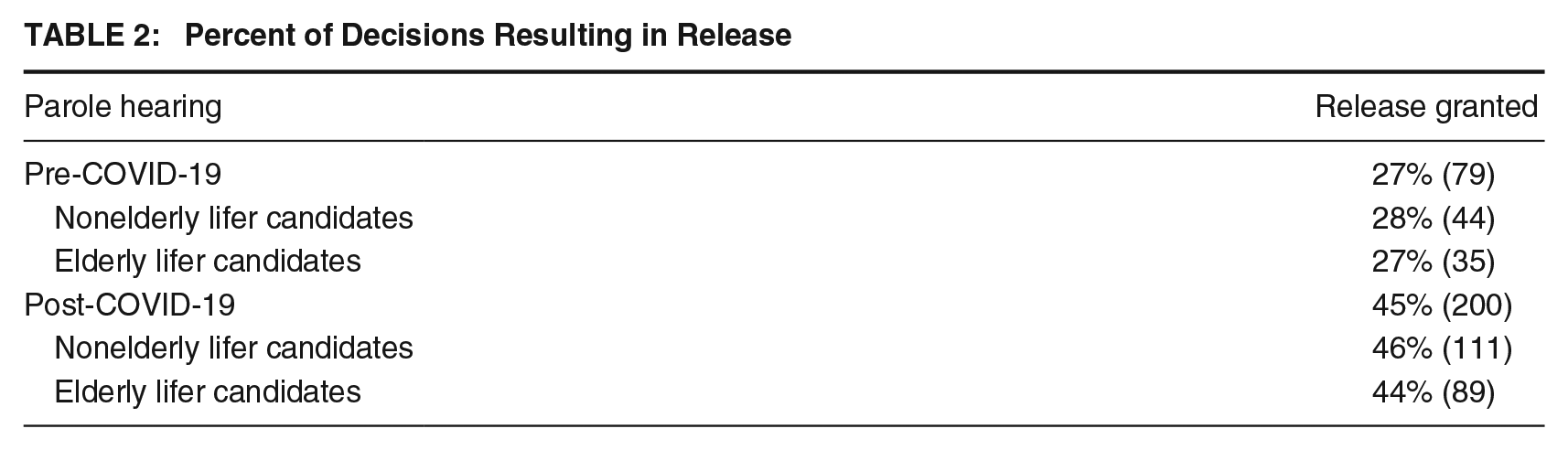
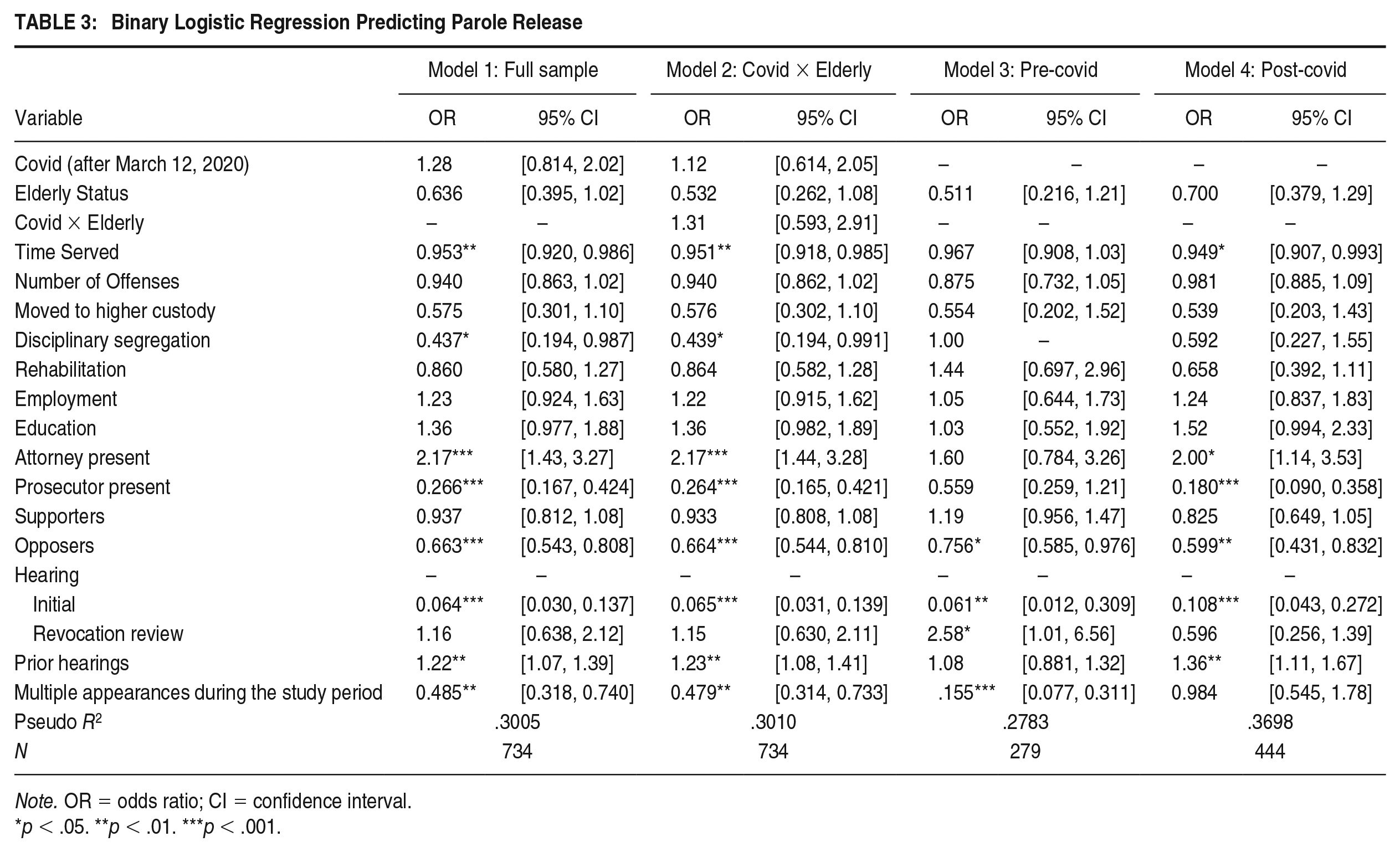
Table 3 presents the results from the series of logistic regressions. Across all models, an initial hearing was associated with decreased odds of release compared with a review hearing, as were in-person objections from victim representatives. Having more than one appearance before parole board during the study period was also related to lower odds of release for the full sample and for hearings in the pre-COVID-19 period.
Binary Logistic Regression Predicting Parole Release
Note. OR = odds ratio; CI = confidence interval.
p < .05. **p < .01. ***p < .001.
Model 1 accounts for the influence of the time period and age, where neither having a hearing in the post COVID-19 period nor being elderly predicted the likelihood of release. Attorney presence (odds ratio [OR] = 2.17, p < .001) and the number of prior hearings during a candidate’s lifetime (OR = 1.22, p = .003) were associated with increased odds of release. Alternatively, having the prosecutor (OR = 0.266, p < .001) or opposers (OR = 0.663, p < .001) present at the hearing was associated with a decreased likelihood of release as well as a longer time served until the hearings (OR = 0.953, p = .006), having multiple appearances in the study period (OR = 0.485, p = .001), and placement in disciplinary segregation (OR = 0.437, p = .047).
In Model 2, the interaction between elderly status and COVID-19 was not significant. Again, having an attorney (OR = 2.17, p < .001), prosecutor objections (OR = 0.264, p < .001), and opposition presence (OR = 0.664, p < .001) predicted the likelihood of release in the expected direction as well as prior hearings (OR = 1.23, p = .002), multiple appearances in the study period (OR = 0.479, p = .001), and placement in disciplinary segregation (OR = 0.439, p = .048).
Model 3 includes the subsample of decisions for hearings that took place between January 1, 2017, and March 11, 2020 (i.e., the pre-COVID-19 period). Apart from the influence of in-person testimony from victim representatives, having multiple appearances in the study period too was associated with a lower likelihood of release (OR = 0.155, p < .001). If the lifer candidate was appearing for a revocation review hearing (i.e., appearance postreturn to prison following suspension of parole supervision), they were 2 times more likely to be granted parole (OR = 2.58, p = .047). No other variables related to the sentencing offense or the candidate’s prison adjustment were significantly associated with release.
Model 4 includes the subsample of post-COVID-19 hearings (after March 12, 2020, until December 31, 2022). Once again, elderly status did not influence the likelihood of release for hearings in this time period. Unlike in Model 3, time served was associated with a lower likelihood of release (OR = 0.949, p = .025). A lifer candidate with legal representation was 2 times more likely to be granted parole if their hearing took place in the post-COVID-19 period. Having appeared more than once during the lifetime was also related to a greater likelihood of parole release for this subsample of hearings (OR = 1.36, p = .003). However, similar to the results in the full sample, prosecutorial objections (OR = 0.180, p < .001), victim opposition (OR = 0.599, p = .002), and an initial hearing (OR = 0.108, p < .001) were associated with lower odds of release.
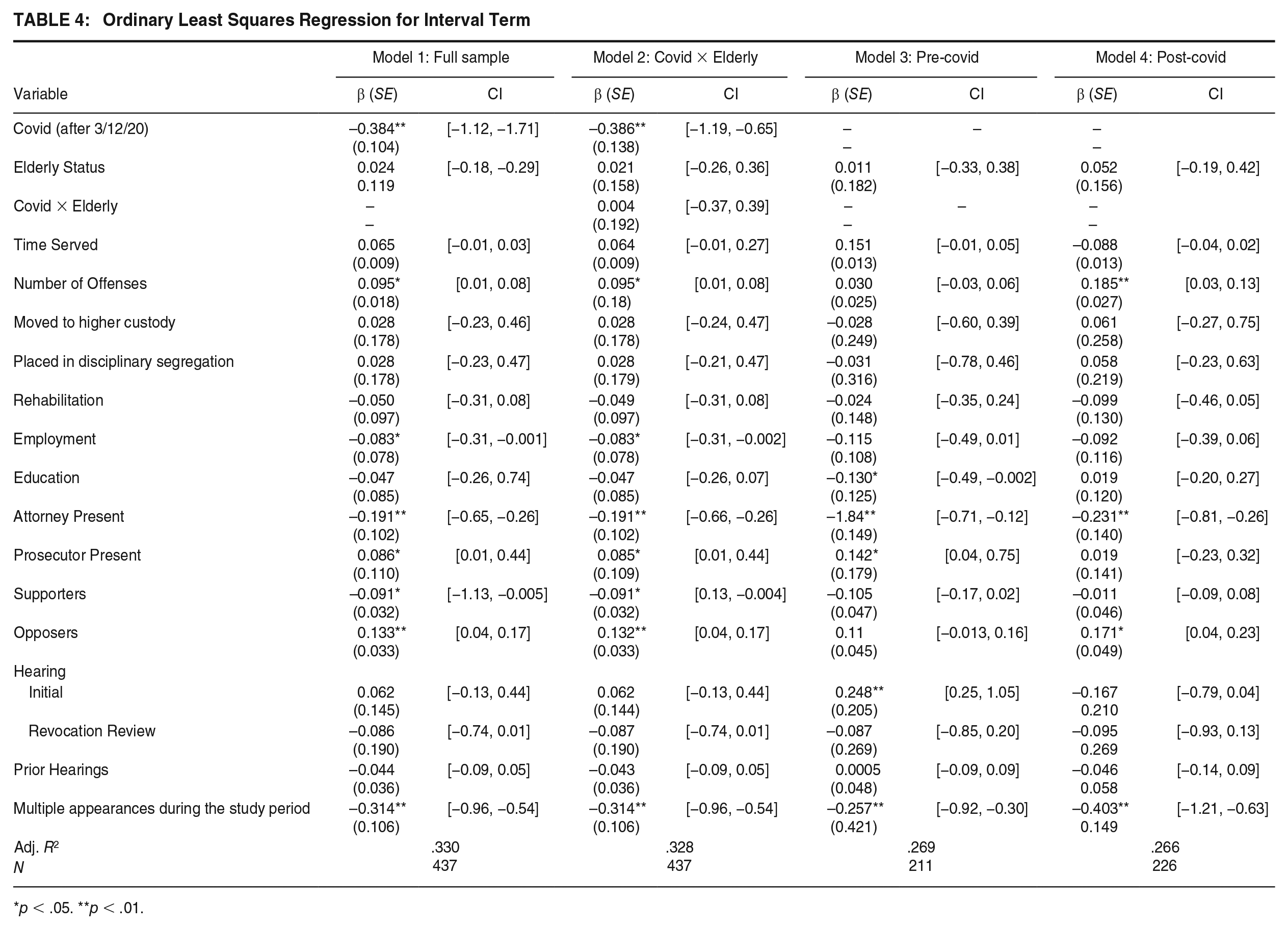
Table 4 presents the results of a series of OLS regression models that examined which factors influence the length of the interval term, that is, the time a candidate has to wait before they can appear for a hearing following a denial of parole. Model 1 explained about 33% of the variation, and results showed that having a hearing taking place in the post-COVID-19 period was negatively associated with interval terms (β = −0.384, p < .001). In addition, an attorney being present (β = −0.191, p < .001), engaging in employment in prison (β = −0.083, p = .049), having more supporters (β = −0.091, p = .036), and multiple appearances before the board (β = −0.314, p < .001) were statistically significant factors that influenced shorter interval terms. However, being convicted of a greater number of offenses (β = 0.095, p = .022), prosecutor presence (β = 0.086, p = .043), and a greater number of opposers (β = 0.133, p = .002) was positively associated with interval terms.
Ordinary Least Squares Regression for Interval Term
p < .05. **p < .01.
The interaction term of COVID-19 × elderly status in Model 2 was not statistically significant. Similar to Model 1, the influence of a hearing post-COVID-19 was significantly correlated with a shorter interval term, and the same variables were statistically significant.
Model 3 looked at the subsample of pre-COVID-19 hearings where elderly status did not influence the interval term length. Instead, whether a lifer candidate engaged in education activities in prison (β = −0.130, p = .048), had legal representation (β = −0.184, p = .005), and had multiple appearances during the study period (β = −0.257, p < .001) predicted shorter interval terms post-denials. Like previous models, in-person prosecutorial objections (β = 0.142, p = .028) and if the hearing was an initial one were related to longer interval terms (β = 0.248, p = .002).
In Model 4, being sentenced for a greater number of offenses was related to longer interval terms (β = 0.186, p = .003) for post-COVID-19 hearings. Similar to the prior models, having an attorney present at the hearing (β = −0.231, p < .001) and having multiple appearances before the parole board within the study period predicted shorter interval terms (β = −0.403, p < .001). Unlike in the prior model, a greater number of opposers at the hearings was related to a longer interval term postdenial (β = 0.170, p = .007).
Discussion
This study analyzed the likelihood of release and length of interval terms postdenial for lifer candidates by accounting for the pre- and post-COVID-19 time period while centering elderly status. Although research has begun to explore the effects of the COVID-19 pandemic on criminal justice decisions (e.g., Lockwood et al., 2021), this article sheds light on the discretionary release practices of parole boards by examining whether COVID-19 and an individual’s elderly status separately and jointly affected parole decision-making.
In the current study, whether a hearing took place before or during COVID-19 did not predict the likelihood of release. This result is not entirely surprising as the sample of parole hearings consisted of incarcerated individuals serving life sentences for mainly violent crimes such as murder or rape. While the logistic regression results did not find that COVID-19 significantly influenced the likelihood of release for parole candidates serving life sentences, the proportion of parole hearings resulting in a grant of parole was higher after the start of the COVID-19 pandemic. Indeed, COVID-19 could have influenced parole decisions in a way not observed within the scope of this study. For instance, the pandemic could have added pressure to reduce the incarcerated population through other means particularly for prisons dealing with staff shortages (LeMasters et al., 2022).
Prior research is mixed on whether parole boards consider elderly status in deciding release. On one hand, parole boards may not be considering the lower risk of recidivism evident in the incarcerated elderly population (Maruschak & Minton, 2020). Wronski and Kokkalera (2023) too did not find a significant relationship between a parole candidate’s elderly status and the likelihood of release but noted that some variables mattered more for elderly candidates (i.e., evidence of rehabilitation and disciplinary conduct in prison). On the other hand, older individuals were more likely to be granted parole based on a sample of hearings from California (Young et al., 2016; Young & Pearlman, 2022). The difference in outcomes warrants further inquiry into whether and how elderly status matters for different state parole boards.
The parole decisions examined included candidates serving life sentences, but most of the COVID-19 early release policies focused on individuals incarcerated for nonviolent crimes. It is, therefore, possible that COVID-19 had less of an effect on parole release decisions for people serving lengthier sentences for more severe crimes. A global pandemic notwithstanding, parole board decisions may be more attuned to the fear of releasing an individual who committed a violent offense, even if research suggests recidivism is low for homicide crimes (Nellis, 2021) and for the elderly (Rakes et al., 2018). Prior research has also shown that individuals who pose a low risk to offend are often denied parole because of the severity of their original offense, although individuals previously convicted of serious crimes like murder have lower rearrest rates (Laqueur & Copus, 2022). In addition, the salience placed on the fact that a candidate is appearing for an initial hearing suggests that parole boards may be operating with an imagined amount of time that must be served prior to release (see also Aviram, 2020), irrespective of other confinement issues. Having appeared for multiple hearings before the parole board also increased the odds of release, suggesting that more appearances allow the candidate to show that they have changed, and that may be influential enough for the parole board to justify release.
However, none of the rehabilitation-related variables mattered pre- or post-COVID-19 which is contrary to prior research that has found engagement in rehabilitative activities positively influences release for a variety of populations (Bell, 2019; Bowman & Ely, 2017; Wronski & Kokkalera, 2023). The fact that rehabilitative activities were categorized into rehabilitation, employment, and education in this study may explain the lack of significance for each separate type of rehabilitative activity. However, if all rehabilitative activities were combined as one rehabilitation index variable, a significant relationship may have been observed in line with prior studies (e.g., Bell, 2019).
In terms of variables related to parties appearing before the parole board, having an attorney present at the hearing was related to a higher likelihood of release generally, and specifically for lifer candidates who appeared for hearings in the post-COVID-19 period. This finding corroborates the need for attorney presence in highly discretionary release contexts especially when this right is not fully guaranteed across states (Thomas & Reingold, 2017). The presence of opposers was related to lower odds of release, which reflects how victim opposition can serve as a proxy for offense seriousness and a justification to deny parole (Aviram, 2020).
However, whether a hearing took place in the pre- or post-COVID-19 period mattered in the context of interval terms (ranging from 1 to 5 years) postdenial of parole. Specifically, having a hearing in the post-COVID-19 period was significantly negatively associated with interval term lengths. This suggests that while the parole board may be hesitant to release an individual sentenced to life despite the challenges of COVID-19, the shorter interval terms would presumably allow candidates to get ready for eventual release. Other factors seem to matter too for shorter interval terms such as the presence of an attorney and if the lifer candidate had appeared before the parole board more than once during the study period. The influence of legal assistance not only matters to support release but could also conceivably reduce the eventual sentence length of a lifer candidate (Kokkalera, 2022).
For hearings in the pre-COVID-19 period, only one factor related to the candidate was significantly associated with the length of the interval term which was educational attainment in prison. The salience of education may be an artifact of the distribution of the study’s sample or a function of the parole board’s composition. If the latter, prior research has noted how parole board members can find common ground in determining which factors are salient to decision-making (E. L. Ruhland, 2020). In addition, engagement in educational activities could signal that a candidate is taking active steps to rehabilitate themselves and prepare for eventual release, allowing for the parole board to justify a shorter interval term (Harlow, 2003). Unlike in the other models, having an initial hearing in the pre-COVID-19 period was related to higher interval terms, suggesting that parole boards are cognizant of ultimate sentence length when denying parole (see also Kokkalera, 2022).
In the post-COVID-19 period, factors related to offense severity appear to matter more in terms of determining interval terms. Having a greater number of offenses on the record was statistically significant in influencing longer interval terms unlike in the pre-COVID-19 period. This may suggest that parole boards could be drawing on offense severity to justify denial of release with a longer time to wait for the next hearing especially in the midst of a global pandemic. In addition, offense severity can also operate through victim opposition at the hearing which was related to longer interval terms for this subsample of hearings.
Limitations and Future Research
This study provided an initial exploration of the influence of elderly status and COVID-19 on parole decisions for candidates serving life sentences. Although the findings add insight into parole decisions before and after the COVID-19 lockdown in the United States, there were some data limitations. First, the data came from one state’s parole board written decisions. There could be variation across states in parole policies and practices. Also, only information from the written decisions was included in the data. One variable missing from the data was the race/ethnicity of the parole candidate, which could have offered additional insight into potential racial disparities.
This study provided preliminary insight into differences in significant factors that may influence parole decisions for elderly and nonelderly parole candidates before and after the start of the COVID-19 lockdown. However, to further examine the effect of COVID-19 on parole decisions, future research could also explore how COVID-19 influenced the time it took to arrive at a parole decision. Although COVID-19 may not have had a direct effect on parole decision outcomes, it could have more of an administrative influence affecting the timing of decisions.
Conclusion
Parole hearings determine how long people remain incarcerated. Examining the factors that influence parole decision outcomes and trends in parole decisions can provide insight into how these decisions are made. Individual, crime, and hearing factors are often weighed in parole decisions, but the weight of these factors may vary across a parole candidate’s age. A global pandemic could conceivably influence a range of administrative decision-making. As found in this study, the state parole board seems to be concerned about COVID-19 in deciding interval terms which are a crucial component of determining ultimate sentence length. Parole boards in other states may be similarly attuned to reducing the time spent incarcerated in the post-COVID-19 era for lifer populations. Due to the aging prison population and the health consequences during the pandemic, improving partnerships between public health and prison officials could facilitate decarceration efforts that focus on meeting the health needs of the incarcerated elderly to prepare for any future crises (Barnert et al., 2021).
To further research the role of age in parole decisions, researchers can replicate this study in other states with similar administrative parole data. However, it is incumbent on state agencies to make parole board decision data more accessible to examine parole practices (Hritz, 2021). As rehabilitation is an intended goal of the criminal justice system, research should further examine which programs parole boards are considering crucial to justify release or shorter interval terms. In addition, exploring any disconnects between parole board practices and the written requirements and goals would provide additional insight. Parole boards require transparency and accountability to help incarcerated individuals understand what they can do to return to society and why they were denied release (Cohen, 2023). Repeated denials without providing adequate recommendations can lead to severe mental health outcomes (Rivera, 2020). There may also be a requirement to train parole board members and revise decision-making guidelines to recognize the unique vulnerabilities of the elderly incarcerated populations. With the aging prison population, it is important to understand the factors that affect elderly parole outcomes to articulate age-specific release policies (Wronski & Kokkalera, 2023).
Finally, it is important to unpack state variation in the differences in the factors that are salient in parole decision-making by drawing on theoretical frameworks that are unique to the parole process. Much of the research has focused on applying what is known in sentencing studies even though parole decision-making is highly discretionary and operates within a larger nexus of the criminal justice system. Therefore, more research is necessary to elucidate which factors are important to parole decision-making, which may not be explained entirely by research on sentencing hearings (see also Hritz, 2021).
Footnotes
Authors’ Note:
An earlier version of this article was presented at the American Society of Criminology annual meeting in Philadelphia, PA, in 2023. In addition, data coding and analyses were supported by the 2023 Larry Hoover Summer Research Fellowship, funding provided to selected Sam Houston State University criminal justice graduate students.
