




Abstract
Having access to a person who encourages prosocial behavior and discourages antisocial behavior for justice-involved individuals is a key factor in the reentry process. The gender-responsive literature suggests that social support is an especially salient factor for justice-involved women. However, limited research has examined positive support person’s willingness to become involved in the reentry process. Using a sample of 179 justice-involved men and women enrolled in a reentry program designed to train support persons in rehabilitative skills, the current study aims to examine the willingness of support persons of justice-involved individuals to attend a reentry program. The findings demonstrated that less than half of justice-involved individuals had support persons participate in the program. Furthermore, women were significantly less likely to have support persons attend the reentry program than men. The implications of these findings for reentry and the gender-responsive framework are discussed.
Justice-involved individuals (i.e., individuals formally convicted of a crime) reentering society from the correctional system face numerous challenges that can restrict them from successfully reintegrating (Mears & Cochran, 2015; Travis & Visher, 2005). One factor that has emerged as vital in the process of reentry is the availability and quality of an individual’s social support. Upon returning to society from the correctional system, access to positive social support can help individuals overcome the financial, material, and psychological barriers that may inhibit them from desisting from crime (Fontaine et al., 2012; Hochstetler et al., 2010). In this study, positive social support is defined as persons in the lives of justice-involved individuals who encourage prosocial behavior and discourage antisocial behavior (Pettus et al., 2011, 2018). Notably, prior research has shown that justice-involved individuals have differing levels of positive social support (Kjellstrand et al., 2023; Pettus-Davis et al., 2018; Western, 2018). Without social support, overcoming reentry barriers and reintegrating into society can be a near-impossible task (Pettus-Davis et al., 2018; Western, 2018). Therefore, access to positive social support is a key mechanism in the process of reentry, while the lack of social support, or access to negative social support (i.e., persons who encourage antisocial behavior), can inhibit successful reentry (Bui & Morash, 2010; Liu & Visher, 2021; Schroeder et al., 2007).
Another way social support may impact the reentry process is by positive support persons becoming actively involved in the rehabilitation process. Specifically, prior research has identified that training support persons in various rehabilitative skills can significantly reduce justice-involved individuals’ odds of relapse (Dowden & Andrews, 2003; Dowden et al., 2003; Fontaine et al., 2012). Rehabilitative skills generally refer to cognitive behavioral techniques, problem-solving skills, and social learning skills (e.g., self-control; Bonta & Andrews, 2017; Smith et al., 2012). When trained in rehabilitative skills, support persons can assist justice-involved individuals navigate the challenges they face during reentry by helping them utilize skills and techniques that have been demonstrated to effectively reduce the odds of recidivism and other antisocial behaviors (e.g., substance use; Bonta & Andrews, 2017)
Access to social support is likely a salient factor for all individuals returning to society from the correctional system; however, from a gender-responsive perspective, it is possible that social support may be especially crucial for women (Liu & Visher, 2021; Pettus-Davis et al., 2018; Salisbury & Van Voorhis, 2009). The gender-responsive perspective focuses on recognizing and explaining the importance of the unique situations that women experience, in comparison to men, that may cause them to end up involved in the criminal justice system (Salisbury & Van Voorhis, 2009). One of the mechanisms a gendered-responsive perspective focuses on is the importance of relationships. Women may rely on and assign greater value to the relationships in their lives than men (Daly, 1992; Holtfreter & Wattanaporn, 2014; Salisbury & Van Voorhis, 2009). As such, while social support may be key for both justice-involved men and women, it may be a more critical factor in contributing to women’s desistance from, or continuation of, antisocial behavior (Clone & DeHart, 2014; Cobbina et al., 2012; Heidemann et al., 2014; Visher & O’Connell, 2012).
The extant literature on social support and reentry has suggested that justice-involved individuals’ access to social support is a key mechanism in the reentry process, training support persons in rehabilitative skills may be a key factor in reducing the odds of relapse, and the prevalence and importance of support persons may differ between justice-involved men and women. However, research is yet to examine positive support persons’ willingness or ability to become involved in the rehabilitative process of justice-involved individuals. Nor has research examined whether differences exist between justice-involved men and women.
The current study aims to fill these gaps in research by examining the willingness and ability of social support persons to become involved in the rehabilitation process of justice-involved men and women. This goal will be accomplished by examining a reentry program delivered in a community-based residential facility aimed at identifying and training justice-involved individuals positive support networks in rehabilitative skills. Examining this program will allow us to (a) examine support persons willingness or ability to become involved in the rehabilitation process of justice-involved individuals and (b) determine whether significant differences exist in the willingness and ability of social support persons to become involved in the rehabilitation process of justice-involved men and women upon reentry.
Social Support and Reentry
Reentry is a complex process as policies, practices, and social conditions create numerous barriers for individuals as they attempt to reintegrate into society from the correctional system (Mears & Cochran, 2015). Recent estimates suggest that more than 80% of formerly incarcerated individuals will be re-arrested within 9 years (Alper & Durose, 2018). Beyond continued criminal behavior, justice-involved individuals must overcome restricted employment and housing opportunities (LeBel, 2017; Sheppard & Ricciardelli, 2020), high levels of mental and physical health problems (Fazel et al., 2016), high levels of substance use disorders (Fazel et al., 2017), limited treatment opportunities (Hamilton & Belenko, 2019), and social stigmatization (Western, 2018). On their own, it is unlikely that justice-involved individuals will have the resources to overcome these issues (Western, 2018). To successfully navigate these challenges, justice-involved individuals will likely rely on their support network.
Social support is a broad term that relates to the perceived and actual support (e.g., material, emotional, and financial) available to an individual (Gottlieb & Bergen, 2010). Social support can be either formal or informal. Formal social support refers to resources provided by formal institutions (e.g., community services), while informal social support refers to support provided by non-paid individuals (e.g., family or friends; Gottlieb & Bergen, 2010). Social support can be positive (e.g., encourage desistance from criminal behavior) or negative (e.g., encourage continued criminal behavior; Liu & Visher, 2021; Pettus-Davis et al., 2018). Furthermore, it is important to note that social support is reciprocal. That is, the availability and quality of social support in a person’s life will be impacted by whether they are willing to accept support and/or whether they provide any return support to the people in their lives (Ingersoll-Dayton & Antonucci, 1988; Xu et al., 2022). If a person resists support or is unwilling to return support, then it is likely the quality and availability of social support in their lives will suffer (Bahr et al., 2010). Overall, the presence and quality of social support in reentering individuals’ lives may be a key determinant in whether they successfully reenter society.
The Importance of Social Support
Research has consistently found that strong social support during the reentry process can help individuals adjust to post-incarceration life (Jiang & Winfree, 2006; Kjellstrand et al., 2023; Pettus-Davis et al., 2011). In fact, research has demonstrated that increased levels of social support are associated with positive reentry outcomes (Barrick et al., 2014; Berg & Huebner, 2011; Cochran, 2014; Western, 2018).
The helpfulness of social support can begin while individuals are still incarcerated (Barrick et al., 2014; Cochran, 2014; Pasma et al., 2023) and continue after release (Berg & Huebner, 2011; Western, 2018). For example, Cochran (2014) found incarcerated individuals who receive visitors earlier in their sentence, and more often, are less likely to recidivate upon release. This likely occurs because support during incarceration may help individuals sustain prosocial relationships and reduce the stress and uncertainty of life during and after incarceration (Barrick et al., 2014). Furthermore, research on the impact of involving social support networks in the reentry process has indicated that training significant others in rehabilitative models can significantly reduce the chances of relapse during reentry (Dowden & Andrews, 2003; Dowden et al., 2003; Fontaine et al., 2012). For example, in a meta-analysis of relapse prevention programs, Dowden and colleagues (2003) found that training significant others in relapse prevention strategies emerged as the most effective element in relapse prevention programs.
After release, social support is paramount for individuals to remain crime-free and overcome the barriers of reentry (Bahr et al., 2010; Hochstetler et al., 2010; Pleggenkuhle et al., 2016). Interviews with recently released incarcerated individuals have highlighted how the reentry experience changes drastically for those who have access to support from family in comparison to those who do not have this support (Bahr et al., 2010; Pleggenkuhle et al., 2016; Western, 2018). These interviews have uncovered that consistent social support helps justice-involved individuals access stable housing, find employment, receive adequate health care, and ease financial burdens. Without consistent support, interviewees often reported living in marginal housing, continuing substance use, suffering from untreated mental or physical health problems, and experiencing persistent unemployment and financial issues (Bahr et al., 2010; Pleggenkuhle et al., 2016; Western, 2018). Furthermore, justice-involved individuals who reported being unable to return support to family members (e.g., being unable to help with financial needs) or struggled to accept support from family also reported residential instability and drug relapses (Bahr et al., 2010; Pleggenkuhle et al., 2016). Overall, when discussing the importance of family for recently released individuals, Western (2018) stated that formerly incarcerated individuals “well-being currently depends crucially on their families. Without family support, there is no clear alternative to prison and jails for these men and women” (Western, 2018, p. 100).
Quantitative research has also uncovered the importance of social support. Access to positive social support has been shown to reduce recidivism (Barrick et al., 2014; Berg & Huebner, 2011; Cobbina et al., 2012; Taylor, 2015), influence physical health (Fahmy & Wallace, 2019), improve employment prospects (Pasma et al., 2023), reduce substance use (Mowen et al., 2020), and improve prosocial attitudes (Hochstetler et al., 2010). As such, social support can reduce the likelihood of future criminal behavior and reduce the effect of factors that are known correlates of recidivism (e.g., hostility; Hochstetler et al., 2010).
Although positive social support can be a key factor in assisting justice-involved individuals in overcoming some of the barriers to reentry, it is important to recognize that some industry and legal barriers cannot be overcome. Specifically, the presence of a criminal record can result in an individual being unable to obtain specific housing or employment opportunities (e.g., child care jobs) due to legal restrictions (Uggen & Stewart, 2014). Furthermore, in some states, individuals with criminal records may be restricted from various civil liberties (e.g., voting, serving on a jury; Uggen et al., 2022; Uggen & Stewart, 2014) or from accessing various federal assistance opportunities (e.g., Temporary Assistance to Need Families; Mauer & McCalmont, 2015). Although these barriers cannot be completely overcome, in some instances, positive support people can mitigate these barriers.
The extant research on social support and reentry demonstrates that it is an important mechanism for successful reintegration into society. However, this does not mean that all support will uniformly help individuals. In fact, the presence of negative social support will likely decrease the chance of successful reentry (Bui & Morash, 2010; Liu & Visher, 2021). The presence of negative support may increase stress, mental health issues, drug use, and antisocial behavior (Mowen et al., 2019). Thus, it is not only about whether an individual has access to social support during reentry but also the quality of social support. While the presence and quality of social support are important to both justice-involved men and women, some scholars have argued that it may be especially important for women (Clone & DeHart, 2014; Salisbury & Van Voorhis, 2009).
Gender-Responsiveness and Social Support
One theoretical framework that provides an explanation as to why social support may have a differential impact on justice-involved women compared with men is the gender-responsive perspective. Gender-responsive researchers argue that the pathways women take to criminal behavior, the offenses women commit, and the needs of justice-involved women are often different than those of men (Salisbury & Van Voorhis, 2009; Van Voorhis et al., 2010). Factors that emerge as especially important for justice-involved women include mental health issues, drug abuse, poverty, parental issues, abuse and trauma, low self-concept, and relationship problems (Van Voorhis et al., 2010). While factors that emerge as more important for men include antisocial peers, antisocial personality factors (e.g., risk-taking and impulsivity), employment, and a history of antisocial behavior (Van Voorhis et al., 2010).
The gender-responsive literature uses psychotherapy models to highlight why relationships are especially important for women. Psychotherapy models indicate that the quality of relationships with others shapes women’s identities, sense of worth, and empowerment (Miller & Stiver, 1997; Van Voorhis et al., 2010). This line of research suggests that the presence of negative relationships in a woman’s life may push them toward antisocial behavior (Koons et al., 1997; Liu & Visher, 2021; Salisbury & Van Voorhis, 2009; Van Voorhis et al., 2010). However, positive relationships may lead women to avoid or desist from antisocial behavior to prevent harm to their relationships (Liu & Visher, 2021; Salisbury & Van Voorhis, 2009).
Findings have reinforced the idea that the presence and quality of relationships for justice-involved women are vitally important during reentry. Qualitative interviews with women have found that women report their primary concern during incarceration and reentry as reuniting and reestablishing relationships with their children and family (Kruttschnitt et al., 2000; Western, 2018). The importance of reestablishing these relationships provides motivation for women to avoid future crime (Kruttschnitt et al., 2000). Furthermore, research has identified the perceived presence of positive social support during the reentry process can increase women’s overall well-being and behavior (Clone & DeHart, 2014; Cobbina et al., 2012; Heidemann et al., 2014; Visher & O’Connell, 2012). Perceived negative social support, on the contrary, can decrease women’s overall well-being during the reentry process (Cobbina et al., 2012; Liu & Visher, 2021; Visher & O’Connell, 2012). Given the high rate of mental health, substance abuse, and trauma issues that women involved in the justice system have in comparison to men (Daly, 1992), the type of social support available to women can mitigate or aggravate these issues (Liu & Visher, 2021; Pettus-Davis et al., 2018).
Gender Differences in Social Support
Prior research has examined the presence and effect of social support in justice-involved men’s and women’s lives. This research has consistently found gender differences both in the prevalence of social support and the effect of social support on reentry outcomes exist between men and women (Cobbina et al., 2012; Jiang & Winfree, 2006; Kjellstrand et al., 2023; Pettus-Davis et al., 2018). Generally, prior research has found that justice-involved women report receiving more support, and more positive support, than justice-involved men. One study conducted by Pettus-Davis and colleagues (2018) examined the prevalence of positive, negative, and mixed (both positive and negative) social support as perceived by justice-involved individuals nearing release from prison. Women reported significantly higher rates of both positive (41%) and mixed (41%) support than men (38% positive, 31% mixed), while men reported higher rates of negative support than women (29% vs. 16%). Importantly, this study identified that more than half of the social support reported by both men and women was identified as either negative support or mixed (Pettus-Davis et al., 2018). This highlights the reality that many justice-involved individuals may be surrounded by minimal positive social support in comparison to negative social support (Mowen et al., 2019).
Other research has identified that women may be more reliant on support in prison and during reentry than men (Clone & DeHart, 2014). During prison and reentry, women rely on family and others for child care, financial resources, and emotional support (Clone & DeHart, 2014). In addition, Cobbina et al. (2012) found that women are more motivated to reconnect with family upon reentry than men (Cobbina et al., 2012).
Research has also demonstrated that the presence of social support may impact men and women differently (Cobbina et al., 2012; Liu & Visher, 2021; Mitchell et al., 2016; Taylor, 2015). The type of support and the person providing support can differentially influence outcomes for men and women. For example, Mitchell and colleagues (2016) found that prison visitation reduced recidivism for men but not women, while Taylor (2015) found that social support around instrumental needs (e.g., transportation) after release from prison reduced recidivism for women but increased recidivism for men. Furthermore, positive parental support appears to reduce recidivism, while negative support increases recidivism, for both men and women (Cobbina et al., 2012; Visher & O’Connell, 2012), but support from intimate partners appears to only impact recidivism for women (Cobbina et al., 2012). A study by Liu and Visher (2021) found that positive support from family reduces recidivism and strained support from family increases drug use for both men and women. However, the effect of strained family support on drug use was nearly two times as strong for women as it was for men. Thus, while social support appears to matter for both men and women, the presence and impact of social support is not equal for justice-involved men and women.
The Current Study
Although past research has examined the presence and differences of social support in justice-involved individuals lives during reentry (Kjellstrand et al., 2023; Pettus-Davis et al., 2018), prior research has not captured whether the support in justice-involved individuals’ lives is able and willing to support them during the reentry process. The current study provides an opportunity to fill this gap in research by examining whether justice-involved individuals have support persons in their lives willing and able to attend a rehabilitative program. This study will use data from men and women supervised in community-based correctional facilities as they prepare to reenter society. In these correctional facilities, a correctional program titled Effective Practices in Community Support for Influencers (EPICS-I) was implemented to identify and train positive individuals in each justice-involved individual’s life in various rehabilitative strategies. The EPICS-I program is an 8-hr training that teaches support networks cognitive behavioral, problem-solving, and behavioral management skills and techniques. Trained facilitators work with the support persons to teach them how to use these skills with the justice-involved individuals. The goal of the program is to provide support persons with the skills needed to have planned and unplanned conversations with justice-involved individuals to assist them in using rehabilitative techniques that have been empirically found to consistently reduce recidivism.
The justice-involved individuals in this dataset were asked to identify positive individuals in their lives to participate in EPICS-I. However, not everyone was able to identify positive individuals who were willing and able to attend this program. The current study extends prior research on the prevalence of social support by identifying the rate at which justice-involved individuals have prosocial individuals in their lives who are willing and able to attend support sessions aimed at helping the individuals adjust to life after supervision. In addition, this study will be able to compare the prevalence of positive social support in justice-involved men versus women. The current study aims to answer the following two research questions:
Method
Data and Sample
Data for the current study was taken from agency records from one male and one female community-based correctional facility in a large mid-western county. The agency data provided information on justice-involved individuals’ demographics, risk assessment results, and information on their social support’s involvement in the EPICS-I program. The EPICS-I program consisted of four 2-hr sessions. Individuals in the current sample included all justice-involved individuals housed at these two correctional facilities that met the following criteria. First, the individual must have been housed in either facility between March 1, 2018, and March 10, 2020. Second, the individual must have been identified as moderate or high risk by the Ohio Risk Assessment System (ORAS). Third, the individual must have consented to participate in the EPICS-I program and to the data collection aspect of the project. The final sample consisted of 179 justice-involved individuals—men and 77 women. The average age of the sample was just older than 35 years, with the majority (67%) identifying as White. Finally, 20.11% of the sample were scored as high risk on the ORAS and 38% of the sample were employed during the course of this study.
Measures
Dependent Variables
Attended EPICS-I Program
The first dependent variable was a binary variable to indicate whether a justice-involved individual had at least one support person attend at least one EPICS-I session. To identify a positive support person, each participant provided a list of family, friends, or acquaintances 18 years or older to facility staff that they believed was a positive influence in their life. The halfway house staff then reached out to the individual(s) to explain the program and determine whether the person(s) was a positive influence and whether they would be willing and able to participate in the program. If the halfway house staff knew, or suspected, the person was not a positive influence (e.g., the person was an antisocial associate and had a recent criminal record) then they would not be invited to attend the program. Upon attending each session, support persons signed attendance sheets and identified the justice-involved individual they were there to support. The variable was coded as 0 = no support person attended an EPICS-I session; 1 = at least one support person attended an EPICS-I session.
Number of Sessions Attended
The second dependent variable is the number of EPICS-I sessions attended by a support person. EPICS-I consisted of four 2-hr sessions. The more sessions attended represent another manner in which individuals may display their support. This variable ranged from 1 to 4 based on the number of sessions a support person attended. The decision was made to exclude cases in which a justice-involved individual had no support person attend the EPICS-I program to examine whether there was a difference in the amount of support received between men and women for those who did receive support.
Independent Variables
Gender
The main independent variable of the current study is each justice-involved individuals’ gender. This variable was coded by identifying which correctional facility the justice-involved individual was supervised under (0 = women and 1 = men).
Race and Age
The other two demographic variables included in this study were each justice-involved individuals’ race and age. Race was a self-report measure captured by the facility upon the individual’s admission to the agency and was coded as 0 = racial/ethnic minority; 1 = White. Age was the age of the individual upon admission to the agency.
Employment
Each justice-involved individual’s employment status was included to account for the established relationship between social support and employment (Calvo-Armengol & Jackson, 2004). An individual was considered employed if at entry to the program or during his or her supervision in the program they had obtained any form of legal employment (full-time or part-time). The variable was coded as 0 = unemployed and 1 = employed.
Risk Level
Each justice-involved individual had their risk level assessed upon entry into the correctional facility. Risk levels were measured by the ORAS. This tool is a validated risk assessment that evaluates the likelihood of recidivism based on an individuals’ criminogenic risk and needs from seven various domains (Latessa et al., 2010). The ORAS identifies individuals as low, moderate, or high risk to recidivate. The current study does not include any low-risk individuals; thus, the variable was coded as 0 = moderate risk and 1 = high risk.
Statistical Analysis
The analysis of the current study took place in a four-step process. First, the descriptive statistics were examined to identify the prevalence of social support across the entire sample. Second, bivariate analyses compared the prevalence of social support between justice-involved men and women. A chi-square analysis was used to observe the difference in the binary dependent variable of whether each justice-involved individual had a support person attend any EPICS-I session. Furthermore, a phi measure for the strength of association was used to compare the magnitude of this difference (Weisburd & Britt, 2014). An independent sample t-test was conducted to compare the differences in the number of support sessions attended by support persons. Cohen’s d identified the effect size of this difference (Fritz et al., 2012).
Third, a logistic regression model predicting whether a justice-involved individual had a support person attend an EPICS-I session was conducted to determine whether the gender of the justice-involved individual was a significant predictor of social support after controlling for other independent variables. Examination of various data diagnostics (e.g., collinearity, outliers, and goodness of fit) were examined and no violations of the assumptions were detected (Fox, 2016). Finally, a Poisson regression model was estimated with a number of support sessions attended acting as the dependent variable to determine whether gender significantly predicted the number of sessions attended while controlling for other independent variables. The Poisson regression model only included individuals who had at least one support person attend a support session (N = 65). While the small sample size provided initial concern over the stability of the model, various data diagnostics were examined for the model (e.g., over-dispersion, zero-inflation, goodness-of-fit, and outliers), and no substantive violations of the assumptions were identified (Cameron & Trivedi, 1998). In addition, robust standard errors were included in the analyses to account for any minor violations of the model assumptions (Cameron & Trivedi, 2009).
Results
Univariate and Bivariate Analyses
Table 1 displays the descriptive statistics of the entire sample. Looking at the prevalence of social support, 36.31% of the sample had at least one support person attend at least one support session. Among support persons who attended at least one session, the average number of sessions attended was 2.88, with the possibility of attending up to four sessions.
Descriptive Statistics (N = 179)
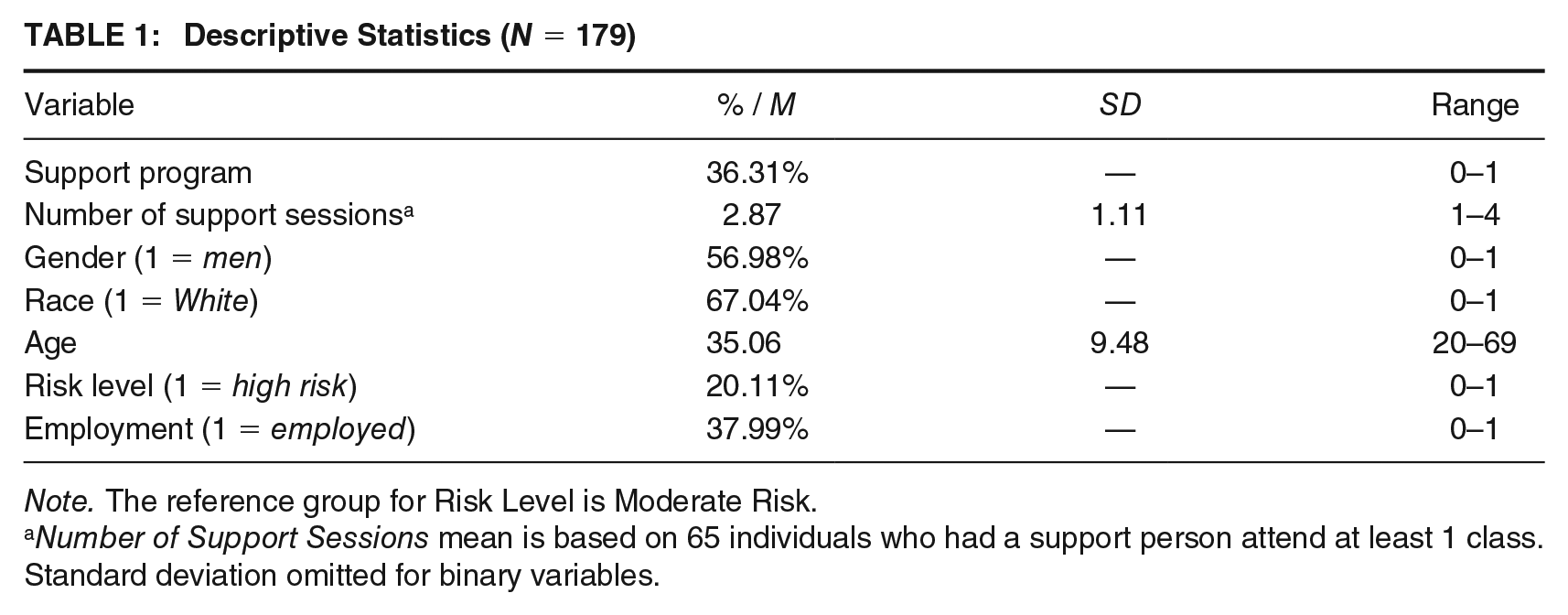
Note. The reference group for Risk Level is Moderate Risk.
Number of Support Sessions mean is based on 65 individuals who had a support person attend at least 1 class.
Standard deviation omitted for binary variables.
Table 2 displays the bivariate analyses examining differences in social support for men and women. The first row displays the chi-square analysis comparing the percent of justice-involved men who had a support person attend support sessions versus justice-involved women. The results indicate that 42.16% of justice-involved men had a support person attend a session versus 28.57% of women. This difference was statistically significant (χ2 = 3.51; p = .044), indicating that social support appears to vary by gender. The strength of association measure indicates that the strength of this association was weak to moderate (phi = .15; Weisburd & Britt, 2014). The second row of Table 2 displays the t-test to examine the mean difference between the number of support sessions attended by support persons for justice-involved men versus justice-involved women. The results indicated that support individuals attended significantly (t = −3.08; p = .003) more sessions for justice-involved men (m = 3.16) than justice-involved women (m = 2.32), indicating that the number of support sessions attended by support individuals appeared to differ between men and women. Furthermore, Cohen’s d test for the effect size of this difference indicated a large effect size (Cohen’s d = .81; Fritz et al., 2012).
Bivariate Relationships Between Gender and Social Support Variables
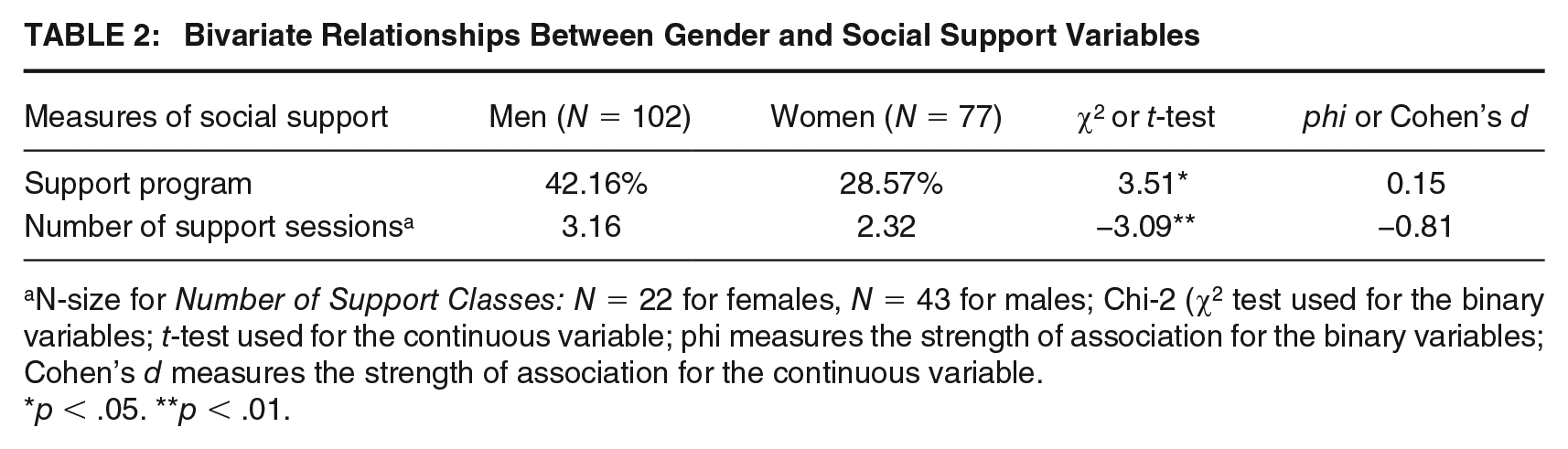
N-size for Number of Support Classes: N = 22 for females, N = 43 for males; Chi-2 (χ2 test used for the binary variables; t-test used for the continuous variable; phi measures the strength of association for the binary variables; Cohen’s d measures the strength of association for the continuous variable.
p < .05. **p < .01.
Multivariable Analyses
Table 3 presents the logistic regression results predicting whether justice-involved individuals had a support person attend an EPICS-I session. The results indicate that men were significantly more likely to have a support person attend a support class than women (OR = 2.14; p = .031), while controlling for all other independent variables.
Logistic Regression Predicting Social Support Attending Program (N = 177)
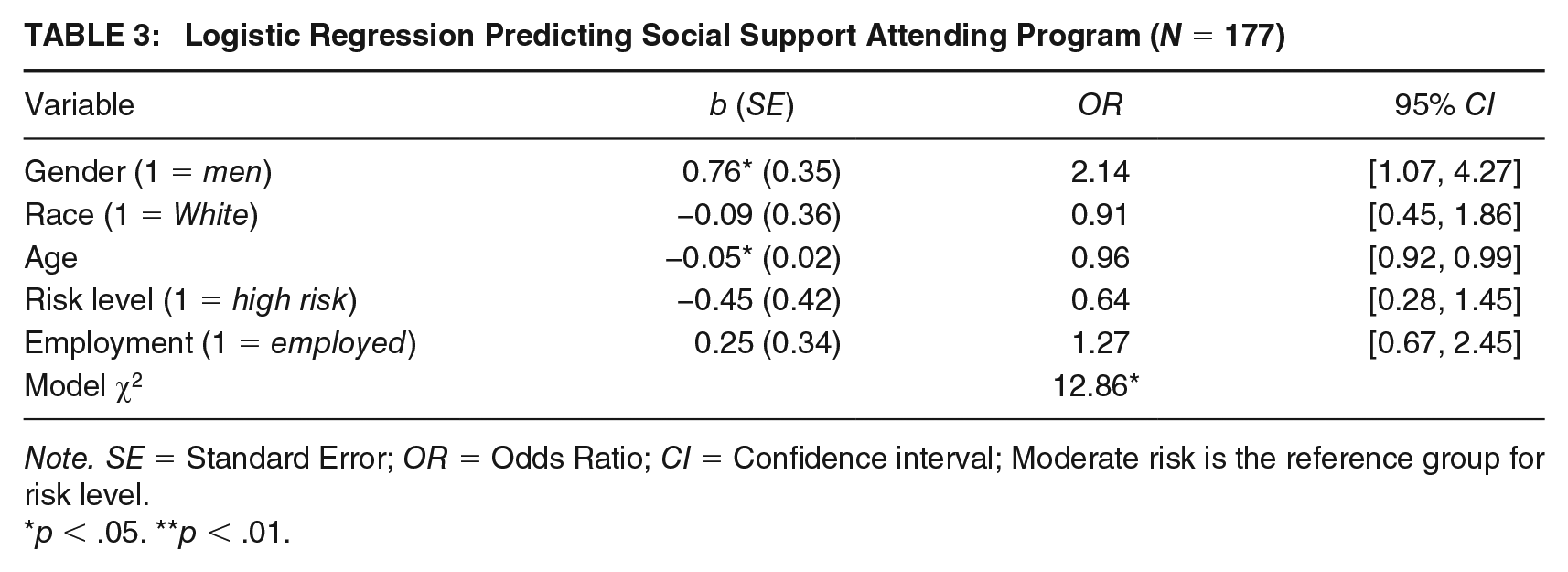
Note. SE = Standard Error; OR = Odds Ratio; CI = Confidence interval; Moderate risk is the reference group for risk level.
p < .05. **p < .01.
Table 4 presents the Poisson regression model predicting the number of sessions attended by support individuals. The results indicate that support persons for justice-involved men attended significantly more sessions than support persons for justice-involved women (IRR = 1.40; p = .003). Specifically, the incidence rate ratio (IRR) represents the rate ratio for men compared with women while holding other variables constant. Thus, men are expected to have a rate 1.40 times greater than women for the number of support sessions attended by support persons while controlling for all other independent variables.
Poisson Regression Predicting Number of Support Sessions Attended (N = 65)
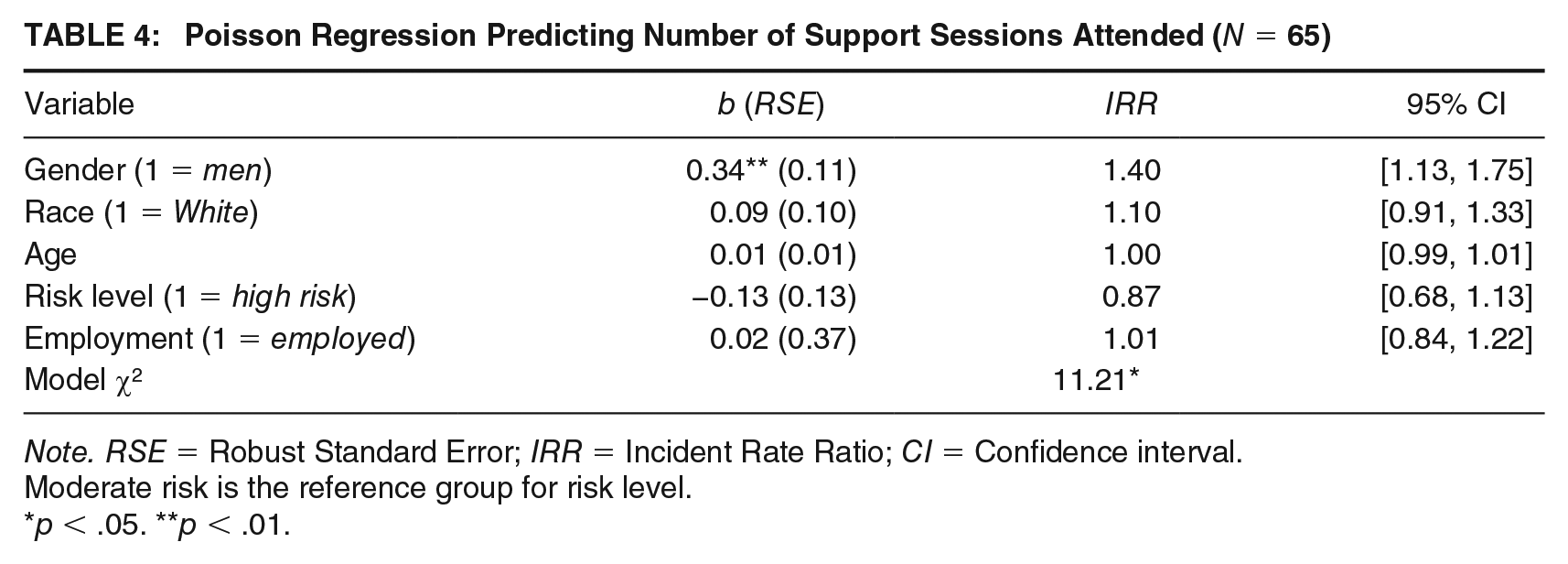
Note. RSE = Robust Standard Error; IRR = Incident Rate Ratio; CI = Confidence interval.
Moderate risk is the reference group for risk level.
p < .05. **p < .01.
Discussion
An essential factor in the ability of justice-involved individuals to successfully reenter society is the presence of positive social support (Barrick et al., 2014; Berg & Huebner, 2011; Pasma et al., 2023; Western, 2018). While positive social support is likely a salient component of the reentry process for all individuals, the gender-responsive literature indicates that it may be especially crucial for women (Daly, 1992; Liu & Visher, 2021; Van Voorhis et al., 2010). Justice-involved women may rely on social support more than men to achieve behavioral change, suggesting that the presence of positive social support during reentry may be more beneficial for women, while the presence of negative social support, or the absence of it, may be particularly detrimental to women in comparison to men (Pettus-Davis et al., 2018; Van Voorhis et al., 2010). The present study sought to add to the literature examining justice-involved individuals’ access to social support in two ways. First, we examined whether justice-involved individuals were able to find positive social support persons willing and able to become involved in their reentry and rehabilitation process. Second, gender differences in the willingness and ability of positive social support persons attending rehabilitative classes during the reentry process were examined.
The results of the current study provided two important findings. First, it may be difficult for justice-involved individuals to identify positive social support in their lives and have those support persons attend a program aimed at helping them reenter society. This was apparent as only 36.31% of the sample had a support person attend a session of the rehabilitative program. Less than half of both justice-involved men (42.16%) and women (28.57%) had a support person attend a session. These low percentages align with prior research and highlight the reality that justice-involved individuals may have limited positive support persons in their lives (Kjellstrand et al., 2023; Pettus-Davis et al., 2018), and suggest that it is difficult to garner support person involvement in the rehabilitation and reentry process (e.g., Dowden et al., 2003). Furthermore, it is possible that a reason for the low prevalence rates of support persons attending the EPICS-I classes could be related to the reality that social support is a reciprocal relationship (Ingersoll-Dayton & Antonucci, 1988; Xu et al., 2022). That is, it is possible that many of these individuals did have people in their lives who would be willing to attend the classes; however, the justice-involved person either did not ask them or told them not to attend the classes.
Second, justice-involved men were significantly more likely to have positive social support persons involved in the reentry program than justice-involved women. Furthermore, when individuals did have a justice-involved person attend the support program, the support individuals attended more sessions on average for justice-involved men than justice-involved women. This finding went against prior research, as most research has found that justice-involved women report having more social support than men (Cobbina et al., 2012; Jiang & Winfree, 2006; Kjellstrand et al., 2023; Pettus-Davis et al., 2018). There are three potential reasons that the results of the current study may differ from past research. First, the gender-responsive literature highlights that women are reliant on their relationships and often get involved in criminal activity because of their significant others and family members (Koons et al., 1997; Taylor, 2015). This reliance may cause justice-involved women to perceive certain support in their lives as positive, when in fact, that support is negative. Therefore, when it comes to getting involved in the reentry and rehabilitation process for justice-involved women, the support persons in the woman’s life may not be willing to be part of this prosocial process. Second, prior research suggests that women are more likely to internalize their behavior and problems than men (Maschi et al., 2008; Rose & Rudolph, 2006). This may result in women being less likely to reach out to their support networks for help during the reentry process than men. The women in this sample may have had low rates of social support because they were unwilling to further burden their support persons by asking them to attend the EPICS-I program. Third, it is possible that the current study is simply measuring a different type of positive social support than prior research. Specifically, this study examined whether justice-involved individuals had positive support persons willing and able to attend a rehabilitation class. While this type of social support may be vitally important for the reentry process (Dowden et al., 2003), it is not the only type of positive social support a person can offer. It may be that women have less support persons willing and able to attend a rehabilitation class, but more support persons willing to help in other ways (e.g., child care). More research is needed to explore this possibility.
The findings that women appear to experience less positive social support as it relates to support persons actively participating a rehabilitation program than men provide some theoretical implications for the gender-responsive literature. This literature indicates that women’s self-worth and identity may form around their relationships (Miller & Stiver, 1997; Van Voorhis et al., 2010) and this in turn shapes their behavior (Koons et al., 1997; Taylor, 2015). If justice-involved women lack positive social support during the reentry process, it is possible that this will inhibit their ability to overcome the many barriers to reentry. Without individuals in their lives willing to push them toward behavioral change, the issues in a woman’s life (e.g., substance abuse and mental health) may be too difficult for them to overcome, eventually leading them back into a life of crime (Van Voorhis et al., 2010). In addition, the lack of prosocial social support may allow for negative social support to impact the decisions of justice-involved women, quickly reverting them to their criminal past (Liu & Visher, 2021).
Policy Implications
The results of the current study highlight five potential policy implications. First, the findings of the current study could suggest that it is difficult for justice-involved individuals to find people in their lives willing to be involved in the rehabilitative and reentry process. Given this, researchers, program developers, and practitioners may consider exploring reentry programs that are designed to intentionally engage justice-involved persons with prosocial individuals in the community that can support them through the reentry process (Liu & Visher, 2021; Pasma et al., 2023). These individuals could include community mentors, religious figures, or others from community organizations (e.g., volunteers; Pettus-Davis, 2021). As part of the program, careful attention should be given to identifying, addressing, and removing barriers to reentry.
Second, although less than half of the sample in the current study had an individual in their life that was able and willing to attend the support sessions when support persons did attend, they attended between two and three sessions on average. This may suggest that when justice-involved individuals do have support persons in their lives, those individuals are willing to become involved in the rehabilitation process. When possible, agencies should be open to and encourage involving prosocial friends and family in the rehabilitation process.
Third, beyond connecting justice-involved individuals with prosocial support persons, programs could be developed to train these individuals in rehabilitative techniques (Dowden & Andrews, 2003). This could mean the implementation of a rehabilitative program where prosocial family and friends or other supports are involved in the reentry process and potentially trained in rehabilitative techniques (Pettus-Davis, 2021). Or, this could be done more informally, where prosocial support people sit in on case management sessions or home visits (when appropriate) to learn rehabilitative skills alongside the justice-involved individual. This would give the justice-involved person an individual in their life who understands the skills, techniques, and challenges they are facing as they transition back into society.
Fourth, aligning with the gender-responsive perspective, the results of the current study highlight the challenge that justice-involved women face during reentry. The results may suggest that women may have less individuals in their lives willing and able to become involved in the rehabilitation process during reentry. It may be imperative to adopt gender-responsive programs that are multimodal and holistic. This includes programs designed to target criminogenic needs (Bonta & Andrews, 2017) but also programs that consider and help women learn techniques to address mental health, trauma, victimization, and relationships. These types of programs can include cognitive behavioral and skill-building techniques but should also be trauma-informed and include relational and emotional elements (Van Dieten, 2022).
Fifth, and finally, as policies and practices are established to support both returning men and women, investments should be made to better understand the reentry process and in particular, the availability and role support networks play in the process. For example, exploring why individuals are less willing to engage in support sessions for women could help agencies create policies and procedures to increase engagement.
Limitations, Future Research, and Conclusion
The results of the current study should be considered alongside five limitations. First, additional data was not available on the support persons involved in the EPICS-I program. As such, data on the type of relationship between the justice-involved individual and their support person (e.g., parent), the gender of the support person, or the quality of the relationship between the support person and the justice-involved individual could not be examined. Future research is needed to further explore how various factors related to the social support person (e.g., quality of relationship) influence the likelihood of a justice-involved individual having a support person in their life willing and able to become involved in the rehabilitation and reentry process.
Second, we were unable to capture the reasons why a support person was unable to attend the support classes. Justice-involved individuals and their families often come from disadvantaged communities (Clear et al., 2003). It is possible that some justice-involved individuals did have support persons in their lives, but the support persons were facing their own barriers (e.g., child care and employment) that prevented them from attending the classes. However, it should be noted that while these barriers are legitimate reasons for a support person to be unable to attend the EPICS-I classes, the problem remains. That is, most of the justice-involved individuals in the current study were unable to find support persons in their lives able to attend the classes. Future research is needed to explore why support persons are unable to attend programs aimed at supporting justice-involved individuals’ reentry and rehabilitation process.
Third, the sample size of the current study is relatively limited. With that in mind, there is limited current research on support programs in the reentry process. We view the current study as an early examination of the feasibility of support programs and hope future research can examine these issues on a larger scale. Fourth, data on additional covariates (e.g., offense type) and recidivism were unavailable in the current study. Future research should explore whether and how additional factors, such as the type of offense an individual was convicted of, influence the likelihood of social support persons attending reentry programs. Furthermore, future research should unpack whether positive support persons attending rehabilitative programs explain recidivism differences between men and women. Finally, the current study was limited to the examination of justice-involved individuals in two correctional facilities from one large mid-western county. The findings of the current study may not be generalizable to other jurisdictions.
The findings from the current study further highlight the challenges that justice-involved individuals may face during the reentry process. Many justice-involved individuals find it challenging to have support persons in their lives who are both prosocial and willing and able to be involved in the rehabilitation process. Although this may be a challenge for both men and women reentering society, it may be especially impactful for women given the importance of relationships for their chances of success during reentry (Daly, 1992; Holtfreter & Wattanaporn, 2014). More work is needed to develop programs and practices that can help justice-involved individuals identify and garner prosocial support persons.
Footnotes
Author’s Note
This work was supported by the Bureau of Justice Assistance (Encouraging Innovation: Field-Initiated Programs FY 2016 BJA-2016-9383: Category 2) and by correctional facilities in a Midwestern State. All conclusions or opinions are those of the authors and not of the Bureau of Justice Assistance or the correctional facilities. The authors would also like to thank Jennifer Pealer PhD for her assistance with this project.
