




Abstract

The Society for the Teaching of Psychology (Division 2) celebrated the 34th year of its annual Teaching Awards Program at the August convention of the American Psychological Association in Honolulu, Hawaii. Each 2013 winner received a plaque and a check for US$1,500. The Society for the Teaching of Psychology recognized outstanding teaching in six categories: (a) Robert S. Daniel Teaching Excellence Award (4-year college or university), (b) Wayne Weiten Teaching Excellence Award (2-year college), (c) Mary Margaret Moffett Memorial Teaching Excellence Award (high school), (d) Wilbert J. McKeachie Teaching Excellence Award (graduate student), (e) Jane S. Halonen Teaching Excellence Award (first 7 years of full-time teaching at any level), and (f) the Adjunct Faculty Teaching Excellence Award.
Robert S. Daniel Teaching Excellence Award
The 2013 winner of the Robert S. Daniel Teaching Excellence Award for outstanding teaching at a 4-year college or university is Andrew N. Christopher of Albion College in Albion, Michigan. Dr. Christopher received his BBA in Economics and Finance from Stetson University, an MBA from Southern Methodist University, and an MS and PhD, both focusing on social psychology, from the University of Florida. He is currently department chair and a professor of psychological science at Albion College.
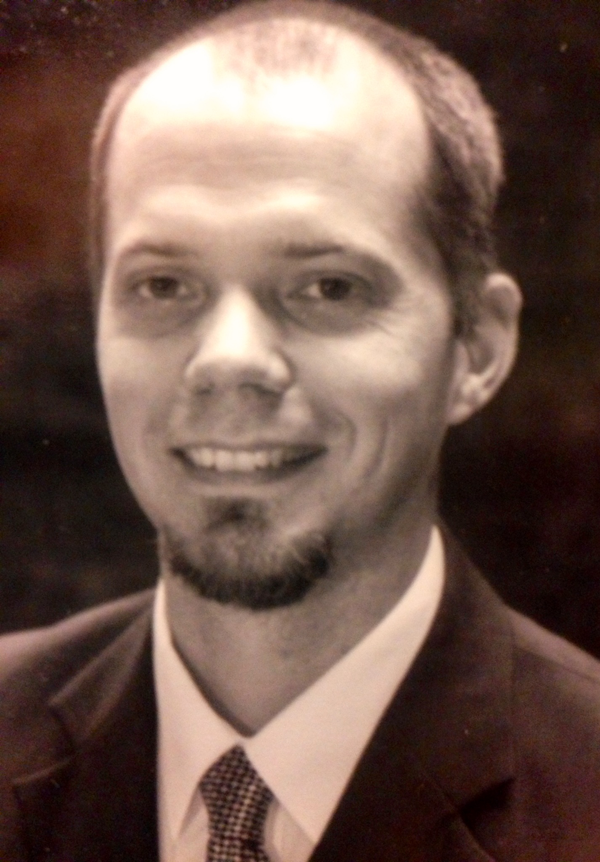
Dr. Christopher has worked at Albion College for most of his career. He has taught at least 11 different courses at Albion, ranging from Introduction to Psychology to Senior Seminar. His background in economics is applied to his current passion for psychology in courses such as Black Swans and Everyday Life, which explores rare events in history and how they influence economics and other historical events. More than half of the courses he teaches focus on research and quantitative considerations, and his enthusiasm for mentoring student research is consistently recognized as a strength by his students and peers. Current Auburn University graduate student and former Albion College undergraduate Vicki Brown noted that Dr. Christopher “created a graduate school environment at a liberal arts institution (being on a first-name basis, having an open-door policy, focusing on research quality, encouraging critical thinking, providing exposure to original scholarly research).” In addition to a full course load and serving as department chair, Dr. Christopher is active with Albion’s Foundation for Undergraduate Research, Scholarship, and Creative Activity and has mentored more than 15 student summer research projects. He has organized the Michigan Undergraduate Psychology Research Conference twice in the past decade. He is a prolific researcher in his own right, with more than 50 scholarly publications to his credit. Many of these papers were written in collaboration with current or former students at Albion, showcasing his dedication to helping his students share their work with their peers. If his work with students on his own campus is not evidence enough of his enthusiasm for research, he is also the current editor for Teaching of Psychology, and he has served as an ad hoc reviewer for at least 21 peer-reviewed journals. Pam Marek, PhD, professor of psychology at Kennesaw State University, noted that “beyond the classroom, Drew’s capability to maintain and involve students in an active research program while simultaneously handling multiple class preparations in a single semester is… amazing.”
Dr. Christopher is, according to Albion College president Donna Randall, “unquestionably one of the best teachers on campus.” He believes his duty as a teacher is to prepare students for the “one constant in life, change.” He hopes that in preparing them for change, he will equip his students with the ability to learn. He makes sure his students see connections among concepts they are learning, and he uses a variety of teaching tools and references to daily life to provide concrete applications of psychological science. Even though Dr. Christopher says that he is comfortable with “silence in the classroom” that will provide an environment conducive for student-led discussion, his colleagues refer to the loud talking and laughing that come from his classes, and he is often seen leaving class engaged in lively discussions with his students. As former student Mark Wojda, a current psychology graduate, student at Cleveland State University, recalled, “Not once did Drew turn me away when I truly needed to talk to him.” Yet, despite his obvious success at engaging his students during class, he is responsive to student feedback for improvement. He cited a comment from 2003 when a student advised him to “kick the caffeine and other stimulants [he] may be taking” and not race through course content. Dr. Christopher embraced this comment and began to sit back and allow students to delve deeper into the content, truly developing the ability to learn, which, according to Dr. Charles L. Brewer, is the hallmark of excellent teaching.
Dr. Christopher’s influence on his students does not end once they graduate from Albion. Jordan Troisi, PhD, visiting assistant professor at Widener University, cited Dr. Christopher as a primary influence on his current life as a teacher and researcher. “There is no doubt that working with Drew these past nine years has been crucial to shaping me into the productive scholar and teacher than I am today,” he affirms. His numerous publications and presentations with former students highlight his continued commitment to the professional growth of his students beyond their undergraduate years. Former student Ross O’Hara, PhD, a postdoc at the University of Connecticut, shared that “the most unique and important aspect to Drew’s mentoring is that it has not waned since [he] graduated from Albion College… Drew exemplifies what it means to be a mentor—someone who helps you along even when all formal ties are severed.” Dr. Christopher seems to build long-lasting relationships with his students, hoping not only to help their growth as professionals but also to become a better teacher and researcher along with them.
Dr. Christopher influences teaching and learning at Albion, in Michigan, and around the world. He is a two-time recipient of the Phi Beta Kappa Scholar of the Year award for Albion College, an honor bestowed by his peers. He was also named the Arthur Anderson New Teacher of the Year award from Albion in 2003. He has been invited to teach in the college’s honors program, and he earned a Japan Study Grant to travel to various parts of Japan to meet with academic and business leaders. He was named a runner-up for the most creative poster presentation at the 2006 National Institute on the Teaching of Psychology. He is the editor of Teaching of Psychology, and he serves as a table leader for the Advanced Placement (AP) psychology reading. These two roles demonstrate that his fellow psychology educators recognize his leadership as a teacher and researcher. Even beyond the Teaching of Psychology, his influence is positive and nurturing. Dr. Christopher serves as a program evaluator for a W.K. Kellogg Foundation Grant for Marshall Alternative High School in the city of Albion. This program engages academically at-risk high school students in dual-enrollment courses to increase their college readiness. The principal of the school, Robert W. Vaught, describes Dr. Christopher’s involvement in the grant as an “integral part of our school family.” He not only analyzes data to measure program effectiveness, but he suggests improvements and builds trust with the students. Principal Vaught credits Dr. Christopher’s recommendations for improvements as a main reason why almost all of their students not only graduated from high school but also applied to college.
Dr. Christopher is dedicated to teaching, researching, and mentoring students at Albion College and beyond. Even though he is accomplished and enthusiastic about his field, he is humble when reflecting on his career. In his teaching philosophy, he observes, “I realize I can never be a perfect teacher. However, being dedicated to perpetual development as a teacher will allow me to approach excellence in teaching.” His students and colleagues recognize Dr. Christopher as a role model, mentor, and consummate professional. In recognition of his exceptional accomplishments as a teacher, mentor, and scholar of psychology, the Society for the Teaching of Psychology is pleased to honor Dr. Andrew N. Christopher with the 2013 Robert S. Daniel Teaching Excellence Award for outstanding teaching in a 4-year college or university.
Wayne Weiten Teaching Excellence Award
The 2013 winner of the Wayne Weiten Teaching Excellence Award for outstanding teaching at a 2-year college is Vincent J. Granito, Jr., of Lorain County Community College (LCCC) in Elyria, Ohio. Dr. Granito earned his BS in psychology at John Carroll University, his MA in consulting psychology from John F. Kennedy University, and his PhD from Saybrook University. He is currently an associate professor of psychology at LCCC.
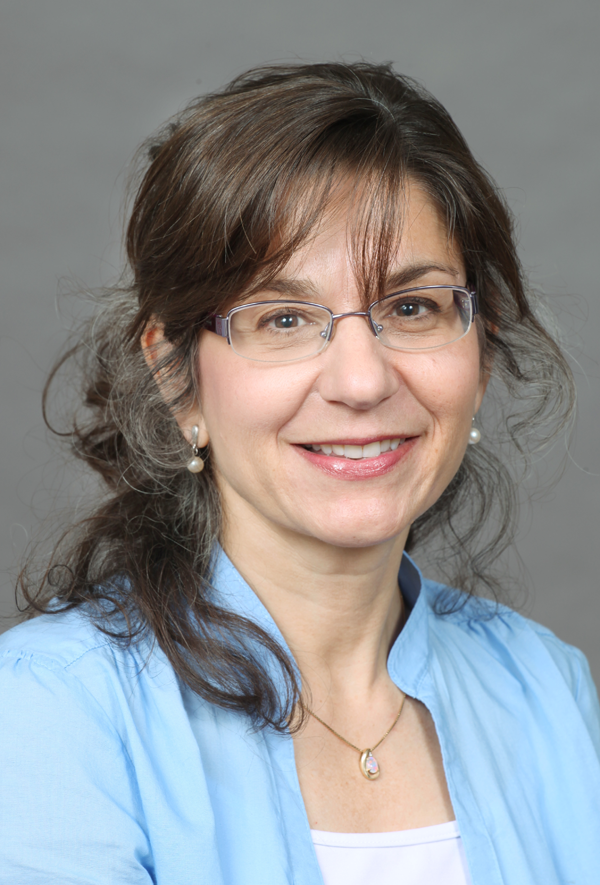
Dr. Granito teaches a wide variety of classes at LCCC, from Introduction to Psychology to Social Psychology to Industrial/Organizational Psychology. His interests in classroom design and technology sets him apart from other professors on campus. He has designed his classroom as a learning studio to maximize student interaction and minimize the attention that is focused on the teacher. In the learning studio, students face each other and sit around tables that can be moved around for multiple purposes. Multiple screens are set up with the information being taught, and students often use computers as they learn. The instructor’s podium serves as the main control station for delivering the instruction via technology. Dr. Granito uses this classroom environment to teach students in person and via videoconference to students who are meeting at satellite campuses.
A typical class day begins with a short lecture followed by group work and an interactive social game. The class concludes with a full-class participation to ensure that all students are learning the material. In addition, Dr. Granito utilizes the “flipping the classroom” concept and has created several short video segments students can watch at home when they need extra instruction. Student responses to the learning studio format have been positive. Students find the interaction stimulates conversation (i.e., “It was easier for people to talk in this class compared to other classes”), and students appreciate the innovative and technological design (i.e., “I love this room—it feels like I’m in the matrix”). The learning studio concept has proven so successful that LCCC chose the design and its principles as the basis for retrofitting the classrooms in its Multipurpose Building. Dr. Granito’s effective use of innovative and psychologically based classroom design has made a significant impact on his own teaching and his campus environment.
Dr. Granito’s interest in innovative learning environments and technology stem from his deep commitment to his students in community college. In his teaching philosophy, Dr. Granito notes that his inspiration for teaching comes from his desire to “awaken joy” for knowledge in his students. He notes, “I’ve had several people suggest that I move into more administrative roles, but I believe this takes me out of my strength, which is in the classroom interacting with students.” He is aware of the particular needs of community college students, and he focuses all of his efforts to engage them so they can be better students after taking his class. He observes that his students come from all walks of life, and his class is structured so that they can learn responsibility and communication as they learn psychology. With his learning studio design, the teacher is not the focal point of the class, but actually a facilitator for student learning. Students must engage with the content, instructor, and each other to take responsibility for learning and communicate when they do not understand the material. He appreciates that the reward of teaching comes when students are inspired: “When students, who I had semesters earlier, come up to me and say they decided to major in psychology because of the class they took with me, then I know that I have taken the correct path in life.” He serves his students outside the classroom by sponsoring the psychology club, advises for Psi Beta, organizes and presents an annual award to outstanding students in psychology, and sponsors award-winning student presentations at conferences.
Dr. Granito’s service to his profession is extensive. He serves as a chair of the Center for Teaching Excellence at Lorain County, where he has presented to the faculty and chaired roundtable discussions on innovative practices, published newsletters, and participated in site visits for other institutions. He has served on numerous committees at Lorain County, from search committees for new faculty to committees tasked with curriculum review, program review, and institutional ethics in research. He leads a faculty learning community about the use of third-generation iPads in the classroom, and he conducts five once-a-week classes with 4th- and 5th-grade students at a local elementary school on basic concepts in biopsychology. He is the president of the Ohio Association of Two-Year Colleges, and because of his interest in innovative classroom design, the annual conference theme for the association focused on creative spaces for classroom engagement. He has also served as chair for Psychology Teachers at Community Colleges, cochair for the Intercollegiate Social Science and Humanities Association, and secretary/treasurer for Division 47 (Sport and Exercise Psychology) of the American Psychological Association. As his nominator Diane L. Finley, PhD, of Prince George’s Community College, noted, “His pace of service makes me tired!” Dr. Granito goes the extra mile for this students and his profession.
Dr. Granito has earned awards for teaching at his institution and beyond. He has earned the Outstanding Faculty Award (2011) and the Foundation Faculty Excellence Award (2010) from LCCC. He was a finalist for the Ohio Board of Regent and University System of Ohio’s Faculty Innovator Award (2008), and he was named Alumnus of the Year (2005) for the John F. Kennedy University Graduate School of Professional Psychology. Dr. Granito most recently earned the National Institute for Staff and Organizational Development Teaching Excellence Award (2011). In addition to teaching awards, Dr. Granito has earned grants to develop curriculum and redesign his courses to use more technology and be more interactive.
The ultimate reward, though, comes when students recognize his commitment to their learning. As one student offered on an evaluation, “It looks like you’re having fun talking about the topics and showing a great deal of enthusiasm for what you’re teaching.” His colleagues also recognize his dedication to teaching and learning. Marilyn J. Valentino, Professor Emerita at LCCC, noted, “He represents the best in all of us.” Dr. Granito demonstrates his love for teaching and psychology in all he has accomplished. In recognition of his dedication to innovative teaching practices, student engagement, and tireless service to his students and the profession, the Society for the Teaching of Psychology is pleased to present Dr. Vincent J. Granito, Jr., with the 2013 Wayne Weiten Teaching Excellence Award for outstanding teaching at a 2-year college.
Mary Margaret Moffett Memorial Teaching Excellence Award
The 2013 winner of the Mary Margaret Moffett Memorial Teaching Excellence Award for outstanding high school teaching is Jeanne A. Blakeslee, MA, of St. Paul’s School for Girls in Brooklandville, Maryland. She earned her bachelor’s degree in psychology from Trinity College in Washington, DC. She earned her master’s degree in liberal education from St. John’s College in Maryland, where she was a National Endowment for the Humanities Fellow. She earned a second master’s degree in clinical psychology with a focus on developmental psychology and research methods from Loyola College in Maryland. She obtained a graduate certificate in independent school leadership from Johns Hopkins University in 2006. Ms. Blakeslee is currently the director of Diversity and Leadership Education at St. Paul’s School for Girls, where she teaches AP psychology and introduction to psychology.

Ms. Blakeslee has held several positions of leadership at her school and in psychology. At St. Paul’s, she has served as the director of the E.E. Ford Leadership Institute, the Curriculum Mapping Coordinator, the chair of two school accreditation committees, Dean of Students, and Director of Student Services. She served as an AP psychology exam reader for 4 years before being appointed as a table leader in 2005. In that capacity, she has twice been a member of the advance team of educators that develops and refines the rubrics for the free-response questions that are graded during the reading. Ms. Blakeslee is also a consultant for the College Board in psychology, presenting workshops and serving as a mentor to AP teachers in her region of the country and across the nation. Her reputation as a teacher and student advocate is so strong that when the College Board held a national faculty colloquium to provide information to university faculty about the AP Psychology program, Jeanne was selected to present about the program. As Dr. Kenneth D. Keith, former chief reader for the AP Psychology Reading, noted, “Anyone with the misapprehension that a high school psychology teacher cannot be as effective as a university professor has not met Jeanne.” In addition to her AP Psychology leadership and advocacy, she was recently chair of Teachers of Psychology in Secondary Schools (TOPSS), the high school teacher affiliate group of the American Psychological Association. Prior to serving as chair, she was the regional coordinator for the Middle States region.
Ms. Blakeslee’s colleagues and students consistently praised her for being a lifelong learner who uses teachable moments to apply psychological concepts. Lila Lohr, Head of School for St. Paul’s School for Girls, described Blakeslee as a “true lifelong learner,” and Janet Wolfe, Associate Head of Academics at St. Paul’s, observed, “At the heart of her work, Jeanne is passionate about teaching girls to be advocates for themselves and others.” Former students confirm this passion for teaching girls about psychology and life. They remember how Ms. Blakeslee helped girls build confidence while learning about reinforcement and consequences. Often, girls will apologize before they speak out in class, and Ms. Blakeslee does not tolerate such behavior. Ms. Blakeslee makes the students pause and either leave the room and return or stand and turn around a couple of times before repeating their request without apologizing. As Nikita Chaudhry, member of the St. Paul’s Class of 2012, remarked, “This not only taught us about psychological reinforcement, but also taught us the importance of being confident in ourselves.” Former student and current colleague Melissa Coffey, English Department Chair at St. Paul’s School for Girls, appreciates that the lessons about psychology and life she learned are still being taught to current students: “She doesn’t just create innovative teaching tools; to her, every moment is a way to teach psych.” Ms. Blakeslee’s ability to teach psychology through life experiences makes her lessons relevant to students.
Ms. Blakeslee’s lessons often combine psychology with history and social issues. She has developed lessons in psychology around such historical events at the Nuremberg Laws, which helps students see the interconnectedness of the content. Ms. Blakeslee has also worked with students and faculty on diversity and human rights issues through her work as Director of Diversity and Leadership Education and through work with the American Psychological Association. She has lead a schoolwide initiative to move toward a more multicultural curriculum at St. Paul’s, which includes leading a team that created, implemented, evaluated, and redesigned the middle school diversity curriculum. She initiates and monitors all schoolwide programs for equity and inclusion, including leading professional development for faculty and staff and planning a Difficult Conversation Series with students and staff. She leads workshops in her region and nationally on diversity issues, often helping other schools with developing their programs to foster greater participation from minority and lesbian, gay, bisexual, transgender, and queer students. She is a coauthor of the American Psychological Association (APA)’s unit plan on sexual orientation, and she is a sponsor of her school’s Gay–Straight Alliance.
Helping students understand and apply psychology is a passion for Ms. Blakeslee. “Jeanne empowers and motivates students to act for the greater social good through her AP Psychology lessons,” notes Janet Wolfe. She admits any student into her AP Psychology who is willing to work, and her students are very successful on the AP Psychology Exam. Ms. Blakeslee extends students’ experiences in psychology with her annual high school psychology conference. This conference, which has been held for the past 13 years, includes more than 50 student presentations and posters on topics related to the conference theme. The conference not only features student work from St. Paul’s School for Girls but also from roughly half a dozen other schools from around the region. Projects such as this showcase Ms. Blakeslee’s dedication to teaching students the science of psychology.
Ms. Blakeslee never tires in her enthusiasm for teaching and psychology. Melissa Coffey remembers Ms. Blakeslee’s joy for teaching, noting that she remembers every moment from her AP Psychology class, even though she took the class more 10 years ago. Coffey recalled, “From the moment I stepped into Ms. Blakeslee’s classroom for AP Psychology class, the net of her enthusiasm entrapped me.” In her teaching philosophy, Ms. Blakeslee remarked, “After all my years of teaching, there is never a lesson I have taught that I couldn’t figure out a better way to teach it the next time.” Her enthusiasm for psychology and passion for lifelong learning inspire her students, as Nikita Chaudhry reflected, “Not only did she help me cultivate and expand my passion in human rights, but her class also confirmed my decision to double major in psychology, and realize its relevance to everything in life.” She is generous with her time and energy, sharing newly gained knowledge or interesting information with students and faculty alike. “I noticed how many students gravitated to her and how many faculty wanted to engage her in conversation and projects,” observed Lila Lohr. The highest praise comes from her students who appreciate her willingness to guide them through psychology and life. “I never felt lost in the dark or without direction,” reflected Nikita Chaudhry. Melissa Coffey remembers that “every day was like magic.” Ms. Blakeslee clearly nurtures an attitude of inquiry and fosters an open perspective in her students and colleagues.
Jeanne Blakeslee demonstrates excellence in teaching high school psychology. She has been previously honored for her teaching by St. Paul’s School for Girls with the Linda L. King Excellence in Teaching Award and by TOPSS with its Excellence in Teaching Award. Ken Keith wrote, “Jeanne…embodies the best of what teaching has to offer: integrity, kindness, and generosity in the classroom, in her dealings with colleagues, and in her life.” In recognition of her enthusiasm and passion as a high school teacher of psychology and of her influence on students who learn to appreciate psychology and advocate for social issues, the Society for the Teaching of Psychology is pleased to present Jeanne A. Blakeslee with the 2013 Mary Margaret Moffett Memorial Teaching Excellence Award for outstanding high school teaching.
Wilbert J. McKeachie Teaching Excellence Award
The 2013 winner of the Wilbert J. Teaching Excellence Award for outstanding teaching as a graduate student is Robert Bubb from the Auburn University in Auburn, Alabama. Mr. Bubb earned an associate’s degree in general education from American River College. He earned his bachelor’s degree in psychology and master’s degree in applied social psychology from Brigham Young University. He will complete his PhD in industrial/organizatio-nal psychology from Auburn in 2013. His dissertation focuses on amygdala activation in people with disabilities in response to visual stimuli.
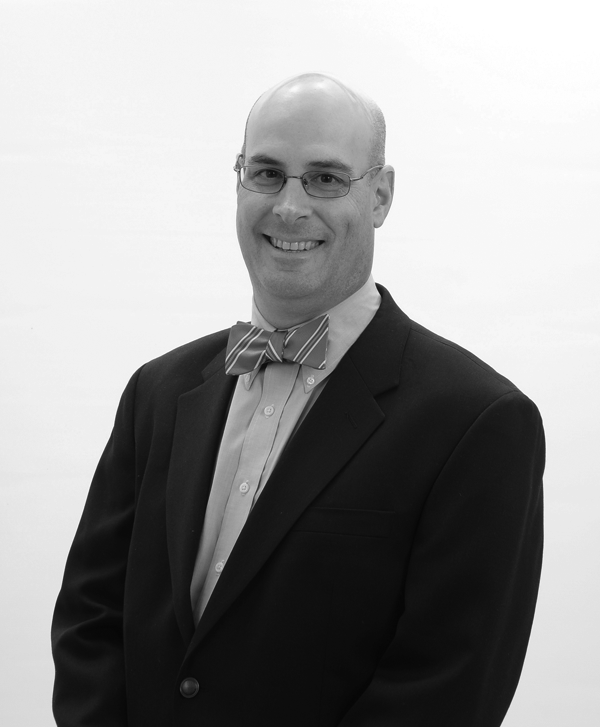
Mr. Bubb, according to Dr. Bill Buskist of Auburn University, “is truly a student of the art and science of teaching.” When Buskist first met Mr. Bubb at Auburn, he saw a young man with his head buried in a ragged copy of Wilbert McKeachie’s Teaching Tips. When Buskist commented on his choice of reading, Mr. Bubb informed him that it was his ninth reading of the book. Mr. Bubb credits the book for influencing his teaching. It was the first book he read on improving teaching, and he believes McKeachie’s “admonishment to reduce your students’ feelings of anonymity” has been the most influential teaching he learned from the book. Mr. Bubb also believes learning is an interdependent experience, and he finds inspiration for this philosophy from the Renaissance painting The School of Athens by Raphael. Mr. Bubb described the painting as one where there are “no desks facing a single person or focal point that might be seen in today’s classroom. Rather, individuals interact with each other and share ideas and knowledge in a less hierarchical structure.” Mr. Bubb’s active and engaging teaching style reflect these influences from McKeachie and Raphael. Mr. Bubb’s students attest to his engaging style. His student Sarah Hagendorn wrote that she took two often-dreaded courses from Mr. Bubb—statistics and research methods—but Mr. Bubb made the courses not only accessible, but enjoyable. For another course, he describes a favorite lesson that he found on a website that teaches neuroscience to children. He adapted the activity called synaptic tag for the college classroom where he assigns students to act out different parts of the neuron communication process. Even though the activity was originally designed for children, Mr. Bubb’s adaptation worked, and he counts it among his most successful and enjoyable lessons.
Mr. Bubb’s teaching and research interests cover a wide range of topics. He teaches courses in industrial/organizational psychology, social psychology, statistics, and research methods, in addition to introduction to psychology. He focuses his research on training and instruction, employee and student development, measurement, evaluation, statistics, and methodology. He is often called upon to write for publications that offer advice and instruction for people interested in teaching on the college level. Mr. Bubb’s own teaching and research interests, however, are only part of his contributions to teaching and learning at the institutions he has attended. His graduate advisor at Brigham Young, Dr. Hal Miller, described several projects that thrived under Mr. Bubb’s leadership. He was a graduate coordinator of Psych Central, the psychology department’s resource and peer-tutoring center for its introductory course. He organized the availability of 20 undergraduate teaching assistants, so they could work with students who needed assistance. He also organized the group into teams that presented each week on topics for upcoming quizzes and exams. Mr. Bubb worked in the Office of the Undergraduate Coordinator. In this role, he advised approximately 80 psychology majors who were struggling in school. He developed a system for the students to report about their struggles and worked with them to set specific goals for getting back into good academic standing. This more formal reporting system inspired him to create a research group with undergraduate students to conduct a longitudinal study of the success of the program. The results showed that students in the program had wonderful success, with a less than 10% rate of recidivism and nearly a point increase in grade point average. Mr. Bubb did not stop there. He worked with a fellow student (who was a first-generation college student and who was Hispanic) to create a semester-long seminar for minority psychology majors that focused on preparation for graduate school. He also developed a senior seminar for majors interested in being peer advisors for students needing academic help. As Hal Miller noted, “The reporting system and seminar have continued to the present day,” and the minority student graduate school preparation program has been adopted for use throughout the college, highlighting the need for and success of these programs that Mr. Bubb spearheaded.
At Auburn, Mr. Bubb continues his teaching and advocacy work with students preparing for graduate school. He has obtained ongoing grant work with McGraw-Hill to research exam questions and digital learning systems, and he engages undergraduate students through this work. His students report that he makes often boring tasks fun, and he is constantly pushing and encouraging them to prepare materials and participate in projects or conferences that will help their entry into graduate school. Evan Guerdon, a student working with him on the McGraw-Hill projects, appreciated Mr. Bubb’s dedication to his students: “He has been as dedicated to his research assistants as he has been to his family, providing support emotionally and mentally if you were having a stressful week.” Sarah Hagendorn agreed. She reported that she approached Mr. Bubb with her interests in undergraduate research, and he “graciously invited [her] to join him in a project over the summer, even though he was extremely busy with his own deadlines at the time.” She expected simply to be added to a research project as an assistant, but Mr. Bubb allowed her to take the lead on a project of her own that she ultimately was able to present at a national conference. Throughout his career, Mr. Bubb has demonstrated a commitment to students and their future success.
Mr. Bubb has worked tirelessly throughout his undergraduate and graduate school career to hone his craft of teaching and encourage students to pursue further study in psychology. Bill Buskist reflected that “of all the Head GTAs that I’ve had for the introductory course in the 29 years of teaching at Auburn, Robb was far and above the best one I’ve ever had.” His student evaluations of his teaching concur. Students have written consistently that Mr. Bubb is “easily the best teacher I have ever had.” One student commented that she has “fallen in love with psychology. This is because you have helped me to appreciate and understand this material.” Throughout his nomination materials, it was evident that Mr. Bubb embodies the teachings of Wilbert McKeachie in all his interactions with students, in the classroom, and in the lab. Hal Miller noted that “he comes early and stays late. He is a quick study and holds his work to a high standard of quality.” That quality is demonstrated by the fact that programs and work that he has started remain active to this day. In recognition of his dedication to quality teaching and learning, his encouragement and advocacy for his students as they prepare for graduate school, and his skill at developing programs that meet critical needs for struggling students, the Society for the Teaching of Psychology is pleased to present Mr. Robert Bubb with the 2013 Wilbert J. McKeachie Teaching Excellence Award for outstanding teaching by a graduate student.
Jane S. Halonen Teaching Excellence Award
The 2013 winner of the Jane S. Halonen Teaching Excellence Award for the first 7 years of teaching at any level is Stephanie E. Afful of Fontbonne University in Clayton, Missouri. She earned her BA in psychology and sociology from Drury University in Missouri. Before getting her master’s degree in social psychology from Saint Louis University, she earned a certificate in university teaching skills from the Reinhart Center for Teaching Excellence at Saint Louis University. Her PhD, also earned from Saint Louis University, was in social psychology, and her dissertation focused on racial attitudes. She is currently an assistant professor of psychology in the Department of Behavioral Sciences at Fontbonne University. She is also an adjunct professor at Washington University in St. Louis, teaching introduction to psychology and positive psychology.

Because Fontbonne University is a small liberal arts institution, Dr. Afful has the opportunity to teach a wide variety of courses, from Introduction to Psychology to Positive Psychology to undergraduate research courses. Dr. Afful uses a student-centered teaching style, preferring activities, discussions, and frequent formative assessments to lecturing. As Dr. Suzanne Stoetling, assistant professor of sociology and director of the Center of Excellence in Teaching and Learning at Fontbonne, noted it is “obvious that student learning is her number one goal and that she is willing to go the extra mile to make sure this goal is accomplished.” Dr. Afful’s preference for student-centered learning and smaller institutional settings stems from her own experience as an undergraduate at Drury University. She found the personalized education she received at a small, liberal arts institution allowed her to develop relationships with her instructors who inspired her to pursue a teaching career. In a recent interview with Fontbonne’s alumni newsletter, she recalled an experience at Drury that was particularly inspirational. For the first day of a particular class, she was the only student of the 15 who showed up for the first day. Expecting the professor to cancel class, she was surprised when he taught the entire lesson only to her. At the next class meeting, the professor had her teach the material to the rest of the students. She remembers feeling that experience as “a light bulb moment” when she realized teaching would be a good career choice. Student Cameron Braun wrote that “spending time with Dr. Afful makes my decision of coming to Fontbonne well worth the 2000 mile plane ride home.” Her students and colleagues agree that she made a good choice of career. In 2011, she was awarded the Joan Goostree Stevens Award for Excellence in Teaching from Fontbonne after being nominated by her students and colleagues. Joyce Starr Johnson, PhD, Interim Associate Academic Dean and Director of Graduate Programs at Fontbonne, noted that the award typically is given to more experienced faculty, but the distinction only “reinforced what many of us had known for some time: that Dr. Afful is indeed a remarkable teacher.” Additional evidence of her excellence in teaching includes the Emerson Excellence in Teaching Award, from Fontbonne.
Her passion for teaching extends to her desire to advance the profession. Rebecca Foushee, PhD, assistant professor of psychology and department chair at Fontbonne, observed that Dr. Afful “is among the brightest and most promising young teacher-scholars in the discipline.” She regularly collects assessment and opinion data from her students to make sure her teaching is effective and to share the results with other teacher–scholars. She assesses the students’ learning both formally and informally. She created an end-of-year assessment that asks students how class policies influenced their retention of course material, and she often assesses students’ perceptions of the strengths and weaknesses of the course as she teaches. She is active in bringing the scholarship of teaching and learning to Fontbonne through her participation in workshops and conferences on the subject. She further serves the profession by being active in the Society for the Teaching of Psychology’s Early Career Psychologists Council, for which she serves as chair. Dr. Regan A. R. Gurung, who was chair of the Society for the Teaching of Psychology during part of Dr. Afful’s service on the council, praised her for her passion and joy during meetings of the council. He cited her work as integral to helping the Society maintain and even increase its membership in recent years, despite slow or backward membership growth in other APA divisions. She has published teaching-oriented articles in peer-reviewed journals, judged student posters at the Society for Personality and Social Psychology annual conference, and reviewed submissions for the APA annual conference. In addition, she served as a teaching fellow at Fontbonne’s Center for Excellence in Teaching and Learning in 2010.
Dr. Afful takes the time to nurture student growth and interest in service to psychology and the university. She maintains working relationships with colleagues at other local universities, so her students can benefit from collaborative research projects. She played an integral role in establishing Fontbonne’s chapter of Psi Chi, submitting the necessary paperwork and serving as a faculty advisor. She has recommended students for service to their university through the Student Senate, helping two students get elected by their peers and instructors. Dr. Afful has been elected to her university’s Appeals Committee on Academic Affairs, the Undergraduate Academic Standards and Review Committee, on which she served as chair, the Institutional Review Board Committee, and the Undergraduate Curriculum Committee. She is the current secretary for Fontbonne’s Phi Kappa Phi chapter, and she works with students through the Jack Kent Cooke Graduate Scholarship Program as faculty representative.
In addition to her membership in the Society for the Teaching of Psychology, Dr. Afful is a member of the Society for Personality and Social Psychology (APA Division 8) and the Society for Women in Psychology (APA Division 35). She is a member of the Midwest Psychological Association, the Association for Psychological Science, Psi Chi, and Phi Kappa Phi. Her significant professional involvement and enthusiastic teaching approaches demonstrate her love of the pedagogy and practice of teaching psychology. Dr. Foushee praised her as a “wonderful young psychologist who is wise beyond her years and truly understands what it takes to excel as a professor of psychology.” In recognition of her passion for teaching, her dedication to promoting students’ love of psychology, and her service to the profession, the Society for the Teaching of Psychology is pleased to present Dr. Stephanie E. Afful with the 2013 Jane S. Halonen Teaching Excellence Award for the first 7 years of full-time teaching at any level.
Adjunct Faculty Teaching Excellence Award
The 2013 winner of the Adjunct Faculty Teaching Excellence Award from the Society for the Teaching of Psychology is Joan T. Bihun, PhD, of the University of Colorado Denver (UCD). Dr. Bihun earned her BA from the University of Michigan–Dearborn. She earned her master’s and doctoral degrees from Wayne State University in Detroit, Michigan. Her research for both degrees focused on developmental psychology with an emphasis on infant coping and information processing. She completed postdoctoral research in behavioral genetics at the University of Wisconsin–Madison. She has taught at several institutions throughout her career, holding her current position as an adjunct instructor at the UCD since 1999 and teaching several courses in introductory and developmental psychology.
Dr. Bihun teaches many courses at the university, more than a typical adjunct instructor. Mitchell Handelsman, PhD, professor of psychology at the UCD, noted that Dr. Bihun teaches a wide range of classes and “thus, she accounts for a significant percentage of our student credit hours. In a department with an outstanding reputation for excellence, Dr. Bihun accounts for a high percentage of the variance!” He continued, “In my role as major advisor I routinely ask students about their favorite professors. Dr. Bihun’s name comes up with amazing regularity and frequency, even accounting for her high teaching load. And the positive comments come from her Statistics students as well as her Child Psychology students!” Dr. Bihun’s students routinely describe her assignments as “challenging” and her expectations as “high,” but their appreciation for her enthusiasm and her concern for their well-being makes her one of the departments most valued teachers. Student Josh Perrin observes that “She still believes that the acquisition of a university level education should require hard work and a command of the course material by all students.” Dr. Handelsman recounted that he took a group of PhD students from a course entitled Teaching Skills Workshop on only one “field trip” to observe classroom teaching and that trip was to Dr. Bihun’s classroom. While there, the students witnessed her using the “fishbowl” technique, of which Dr. Bihun says she is “especially fond.” With this technique, students discuss and prepare material in an inner group, while an outer group observes and remarks on what they see. She also lectures frequently, but her students and colleagues report that her lectures are more akin to quality storytelling than dry recitation of facts and principles. Kellie Martens, a recent former student, recalled that “Dr. Bihun speaks to her students as though she is sharing an exciting discovery, with a passion that makes it easy to forget she has most likely taught the same material many times before.” She is constantly moving about the classroom during her lectures, engaging students in discussions and using their contributions as teachable moments. She believes that she gained many positive traits from her own educational experiences—conscientiousness, preparation, passion, and perspective taking—and she hopes her classroom helps students develop those same traits. Josh Perrin credits Dr. Bihun with his decision to change majors and study psychology: “I came into her course with zero cross pollination of knowledge in the field of psychology, married with a low to negligible interest in the field. Dr. Bihun’s course has triggered a strong desire for me to continue some of my studies in the field of psychology.” Her ability to connect with her students is remarkable.

Dr. Bihun also serves her students and university above and beyond what is expected of a typical adjunct instructor. She advises the university’s Psi Chi chapter and sponsors a community service organization called Active Minds, a group committed to reducing stigma associated with mental illness and increasing awareness of psychological services available in the community. Through this organization, Dr. Bihun coordinates student service projects to feed the homeless and volunteer with the Ronald McDonald House charities. On a regular basis, Dr. Bihun is available for her students for advising or extra help. “She is accessible to her students and always willing to spend time with them no matter what their major, background, or level of understanding,” notes Dr. Handelsman. He observed that “most of the time, when I offer to review a student’s vita or personal statement, I hear that Dr. Bihun is doing the same thing for them (even as a part-timer who receives no compensation for such “extra” activities).” Dr. Bihun feels this accessibility is part of the joy of teaching. “How can one turn away a student at the door with a question, or a concern? I am privileged that they seek my help or advice and I try hard not to disappoint them by avoiding, rushing or discounting their concerns and questions,” she shares in her teaching philosophy. She is so committed to being accessible that she has earned a reputation, “Any student who has had me knows that if I don’t return and email within 24 hours, something’s happened to me.” Dr. Bihun even seeks to reach students beyond the confines of her institution. She has served as a reader for the AP Psychology Reading for the last 5 years. When her institution hosted students from the International College of Beijing, she taught several of the students in her introductory psychology course. Interested in helping those students succeed in her class, she contacted her school’s program office for more information about the program. She quickly volunteered to travel to Beijing to teach her introductory course during the winter term in December 2011. In addition to her availability and her taking on new challenges, she accompanies students to state and regional psychological association conferences, supervises independent research projects, and serves on thesis committees for undergraduates.
The UCD has previously recognized Dr. Bihun’s teaching excellence when she was given two different awards for teaching by nontenure-track faculty. She was awarded the 2012 College of Liberal Arts and Sciences Excellence in Teaching Award. The second award, the 2012 Campus-wide Excellence in Teaching Award, was earned after a peer review of her portfolio by colleagues from across the university. Dr. Peter Kaplan, chair of the psychology department at UCD, posed the question, “What accounts for this unusual level of success? Take a well-trained and very knowledgeable behavioral scientist, add a talent for teaching and communication, hours of preparation and organization, throw in a lot of energy and passion, and round it off with thoughtfulness and caring about the students’ experience, and that will be a start.” Dr. Bihun believes the “guiding force behind [her] teaching is to make it clear to students that psychology is something worth studying, both for its scientific value, and for increasing their understanding of human behavior.” Dr. Bihun is clearly beloved on her own campus, and her influence on students there is remarkable.
Mitchell Handelsman believes she is one of the top professors in the department, regardless of her status as an adjunct: “She has flat out taught more of our students, and taught them better, than any of our full-time tenure-track faculty members, let alone other instructors. She embodies the highest ideals of teaching in her innovation, accessibility, high standards, compassion, and preparation.” In recognition of Dr. Bihun’s commitment to excellence in the classroom, her willingness to go above and beyond in her service to students and her teaching load, and her passion for the practice of teaching, the Society for the Teaching of Psychology is pleased to present Dr. Joan T. Bihun with the 2013 Adjunct Faculty Teaching Excellence Award for outstanding teaching by an adjunct faculty member.
Nomination Review Panels. Award subcommittee members who reviewed the 2013 nominations included: Robert S. Daniel Award: Marianne Miserandino (Chair), Mark Costanzo, Eric Amsel; Wayne Weiten Award: Kari L. Tucker (Chair), Robyn Kondrad, Kristen Whitlock; Mary Margaret Moffett Memorial Award: David B. Daniel (Chair), Nancy Diehl, Amy Fineburg; Wilbert J. McKeachie Award: Virginia Wickline (Chair), Lynne Kennette, Debra Park; Jane S. Halonen Award: Karen Z. Naufel (Chair), Scott Bates, Aaron S. Richmond; Adjunct Faculty Award: Wendy Hart (Chair), Jeremy A. Houska, and Hillary Steiner. The Society for the Teaching of Psychology sincerely appreciates the efforts of these subcommittee members.
Amy C. Fineburg and Eric Amsel served as chair and associate chair, respectively, of the 2013 Teaching Awards Committee. Award criteria and other information regarding the 2014 Teaching Excellence Awards Program are available at http://teachpsych.org/members/awards/eta.php or from the chair of the Teaching Awards Committee, Amy Fineburg (e-mail: