



Abstract
The education sector in India was among the most affected sectors during the COVID-19 pandemic. While considerable attention has been paid to informal workers' return or reverse migration to their home communities, not much has been reported about the challenges faced by migrant students. Using a mixed-method approach, the current study presents an overview of internal student migration in India prior to the COVID-19 pandemic using data from the 2001 and 2011 Census of India and the 2007–2008 National Sample Survey Organization, and discusses challenges faced by selected migrant learners during the COVID-19 pandemic based on primary research. Based on the census data, nearly 3.3 million migrants in India move for study reasons with 2.9 million migrating within the state (with the duration of residence less than five years) from their last residence within India. The pattern of female student migration suggests an increasingly localized interdistrict migration. Findings from the qualitative data indicate that during the pandemic, students had compromised learning and placement experience, inadequate digital resources and pressure to repay loans. Student migrants experienced varying degrees of the impact of the COVID-19 pandemic based on their destination and migration stream.
Introduction
Migration as a phenomenon holds different rationalities for different categories of migrants; some choose to move voluntarily while others may be forced to move. Studies in the Indian context have largely focused on the economic motivations of migration, mostly centering on the search for better employment and livelihood opportunities (Bhagat, 2016; Mahapatro, 2012; Srivastava, 2012). However, over the years, undertaking migration to pursue higher and better education has risen significantly. These movements are a stark reminder of the persisting, although narrowing, regional disparities observed in other low-and-middle-income countries (Heaton and Throsby, 1998; Lowell et al., 2004). Two broad strands of existing literature deal with student migration: One strand emphasizes ascertaining the factors that influence students’ decision to attend an institution at a place other than their place of origin (Chandrasekhar and Sharma, 2014; Rajan and Sumeetha, 2019), and the other strand focuses on the post-migration experiences of the students (Gillan et al., 2003; Rutten and Verstappen, 2014). Further, most of the studies on student migration in the developing countries are about international migration (Khadria, 2001; Khadria et al., 2008; Li et al., 2019). In India, there are only a handful of studies that shed light on dynamics of student migration within the country.
The growing significance of students has been a subject of discussion among academics and policymakers. This interest is linked to the need and the demand for investment in human capital, the lack of which result in students moving to destinations where educational institutions are available. Asian countries reportedly show distinct patterns of student migration, which is partially explained by changing factors of attraction and retention in the places of origin and destination. According to He et al. (2016) and Liu et al. (2017), employment opportunities and geographical variations in labor market returns in China and Japan have been the key factors influencing student domestic mobility. Malamassam (2022) showed that education-specific migration is an age dependent process where much of the movement is noted among the tertiary educated migrants. In their study, Muhidin (2018) and Malamassam (2022) found that the lack of higher education facilities at the sub-provincial level in Indonesia forces students to study in interisland provinces such as Jakarta, Bandung and urban Central Java due to the clustering of reputable universities in these regions. Likewise, in the Indian setting, the latest report by the National University of Educational Planning and Administration (NUEPA) (2012) confirmed that lack of access to higher education is concentrated in a few states, which helps explain student migration to more developed destinations with better educational facilities.
The internal migration of students in India has not been as widely examined as the Indian students who migrate to pursue their studies overseas. During the pandemic, reports on the disruptions caused by the pandemic on student migration were mainly about international student migrants. For instance, a study on the implications of COVID-19 on Indian students who plan to study in Germany noted difficulties in obtaining visas and planning travels dues to intermittent lockdowns. These constraints were anticipated to lead to a decline in student outmigration flows in 2020–2021. For Indian students in Germany, due to disruptions in their learning experience, they were uncertain about job prospects for international students upon graduation. (Jayadeva, 2020). The paucity of data on the nature and pattern of internal student migration and the impact of COVID-19 on the conditions of domestic student migrants are knowledge gaps which this article tried to address. Using quantitative data, this article aims to provide an overview of the nature and pattern of internal student migration before the pandemic and using data from an online survey and follow-up interviews, the article provides insights on the challenges faced by student migrants during the COVID-19 pandemic.
Theoretical framework
The theoretical and empirical frameworks on student migration advanced in the earlier studies usually explain it from the investment-consumption perspective as put forward by the human capital theory. Alternatively, the prospective student’s decision to move over geographic space incorporating distance into the migration framework is explained using gravity model. The other theories relevant to student migration are the push-pull theory of migration and the neoclassical model of migration. The former examines the factors driving or attracting student mobility in the places of origin and destination while in the latter, the education students acquire enable them to access better job market opportunities and better returns at the destination than at the place of origin (Kaushal and Lanati, 2019; Rosenzweig et al., 2006).
From a human capital perspective, migration is considered as an investment and the decision to move is a way to improve future earnings and employment opportunities (Blau and Duncun, 1967; Mixon Jr and Hsing, 1994; Sa et al., 2004). Tuckman (1970) initiated the study of interstate migration of college students in the United States and found that an increase in per capita income and average price charged at colleges within the state increases out-migration, while a rise in the number of public colleges (which serve as proxy for travel distance and cost) reduces out-migration. Becker (1975) validated human capital theory by analyzing college education and vocational training as major investments in human capital. In India, Jha and Kumar (2017) suggested that students from deprived regions are forced to migrate in search of better higher education opportunities mainly in professional and technical streams. Anand (2015) found the lack of quality education facilities as the major reason for out-migration of students from Bihar. Findings from recent studies on migration from Northeast India to Delhi suggest that the main drivers are dearth of educational infrastructure, escalating unemployment issues, and social and political unrest (Marchang, 2011; Remesh, 2012; Sachdeva, 2018; Usha and Shimray, 2010). The centrality of spatial aspects in determining student mobility was considered in various studies looking at interstate and intrastate levels (Agasisti and Dal Bianco, 2007; Alm and Winters, 2009; Beine et al., 2014).
In the new economics of labor migration (NELM) perspective, migration is one of household strategies to manage risks and migration decisions are not made by individual actors but rather by families and households (Stark 1991; Stark and Bloom, 1985). The NELM views families as not only drivers but also as beneficiaries of student migration (Raghuram, 2013; Waters, 2006). The theory is also relevant and applicable to student migration, where the family or household plays a central role in decision-making. Additionally, the decision to migrate to obtain a degree also comes with an opportunity cost and may be equated as foregone income for the families. Cost-benefit and distance considerations have been examined in the analysis of student migration (Baryla and Dotterweich, 2001; Heaton and Throsby, 1998; Gillan et al., 2003).
Data and methods
A mixed-method approach was adopted in this study to conduct a situational assessment of student migrants and how they were affected by COVID-19.
The first source of migration data employed by the study is a quantitative analysis of the Census of India and National Sample Survey (NSS), Schedule 10.2. The census defines a migrant as someone who has a change in usual place of residence (UPR). This can be determined by comparing data on place of birth (POB) and place of last residence (POLR). Both data sources provide a basis for estimating migration in India. The NSS is a large-scale survey which has covered migration in three different rounds of the survey. The 2011 Census and the 2007–2008 NSS round on migration are most recently available. The 2021 Census and the fourth round of migration survey were postponed due to the COVID-19 pandemic.
The second source of data came from an online survey of 210 internal migrant students. From this sample, 40 students participated in a follow-up telephone interview to inquire into their experiences with learning and the job market during the pandemic. A structured questionnaire (having both close and open-ended questions) was developed using Microsoft form. The online survey and the telephone interviews were done between March and June 2021. The form was circulated among the students in various universities, colleges and institutes across India’s 21 major states. A diverse sample of respondents who were majoring in different fields of study and who came from different socio-economic groups participated in the online survey. The questionnaire was circulated on social media platforms, including Facebook college group pages, WhatsApp and Telegram’s college student groups. Additionally, the research team reached out to teachers and professors from reputable universities and institutions through their institutional email addresses. We requested them to forward the questionnaire to the students. We received 210 responses from migrant students. To capture the whole spectrum of the issues and challenges faced by migrant students in India; hence we also conducted case studies from 20 percent of the students from the total sample. These 20 percent samples were randomly selected from the list of all 210 students. A total of 42 migrant students who also filled out the online questionnaire were randomly selected and contacted through telephone to seek their agreement on participating in the qualitative survey. We received consensus from 40 respondents for participating in the qualitative survey. Consequently, 40 in-depth telephone interviews were conducted to understand students' viewpoints and challenges concerning learning mode, employment opportunity, career development and prospects of student migrants. Informed consent was obtained from the respondents while collecting the narrations for research purposes. Participation in the survey was voluntary for the students, and the participants' confidentiality was maintained throughout the study.
For both secondary and primary analysis, we have selected students in the age range of 15–34 years, as nearly 95 percent of migration for study reasons occurs before reaching the age of 35. Also, to analyze recent changes in migration patterns, this study considered duration of stay at present place of residence as less than five years.
Student migration in India before COVID-19: Evidence from the census
Scale of student migration and major origin and destination states
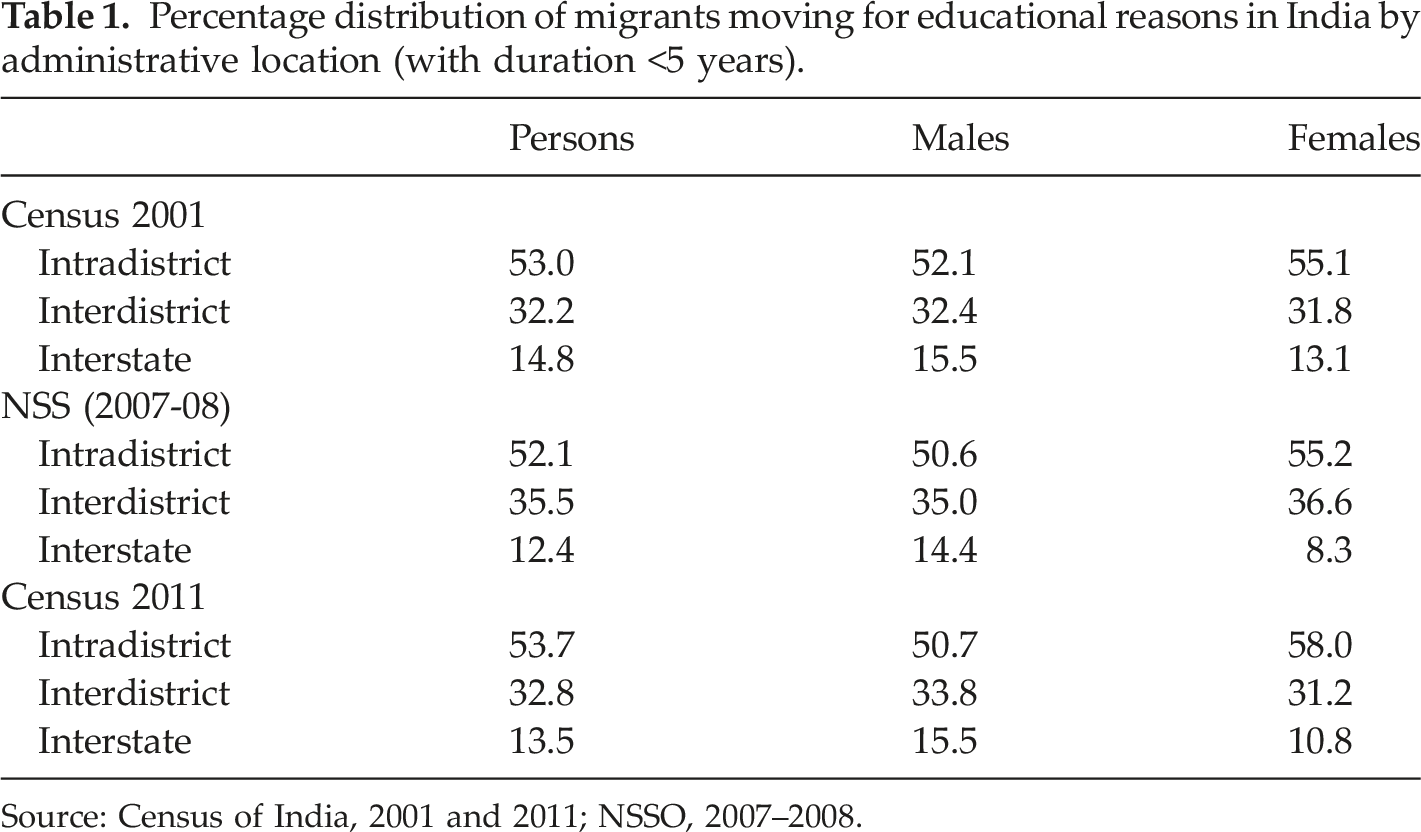
Internal migrants accounted for 450 million people as per the 2011 Census, of which 5.4 million people (including those in the unclassifiable category) cited the pursuit of education as the main reason for migration (1.2 percent). Interestingly, the total population migrating for education from their last residence within India with duration of residence of less than five years was around 3.3 million comprising of two million males and 1.3 million females. Of the total student migrants, 2.9 million (86.5 percent) moved within the state, and 0.45 million (13.5 percent) moved to other states. The unbalanced development across regions is the main reason for migration from rural to urban areas at both intrastate and interstate levels; potential migrants view urban areas as more developed in terms of providing facilities and opportunities for a better life (Chandrasekhar and Sharma, 2014; Mahapatro, 2012). The urban labor market, in particular, has shifted in favor of migrants with better skills, education and other characteristics (Srivastava, 2012). For young people, the aspiration to acquire higher education and better skills drive their migration to distant places (Rajan and Sumeetha, 2019).
The less urbanized states of Uttar Pradesh and Bihar have traditionally been the main source regions of migrants who are moving for education purposes with 15.6 percent of the migrants each, followed by Kerala (10 percent) while the major receiving states of migrant students are Karnataka, Maharashtra, Tamil Nadu and Delhi (Figure 1). The data reveal that Kerala (30 percent) and Uttar Pradesh (21 percent) are the major origin states of student migrants to Karnataka and Maharashtra. From the standpoint of origin states, the data show that the majority of migration from Uttar Pradesh is directed to the National Capital Territory (NCT) Delhi and Maharashtra, whereas for migrants from Bihar, the major destination states are NCT Delhi and the neighboring state of Uttar Pradesh. The primary reason behind the increase in student migration within India is the inequitable and disparate distribution of resources that push student migrants to seek high-quality education outside their places of residence (Chandrasekhar and Sharma, 2014). Poor infrastructure, shortage of qualified teachers, outdated curriculum and the disconnect with industry characterize state of colleges and universities in many less developed states in India (Datta, 2018; Sinha and Srivastava, 2008). Such conditions compel better-resourced students to migrate to urban centers within the states (at intradistrict and interdistrict) or to the more developed states that offer a better quality of education. Circos Diagrams showing the flow of domestic student migration (duration less than five years) using Census 2011. Note: JK-Jammu and Kashmir, HP-Himachal Pradesh, PB-Punjab, CH-Chandigarh, UK-Uttarakhand, HR- Haryana, DL-NCT of Delhi, RJ-Rajasthan, UP-Uttar Pradesh, BI-Bihar, SI-Sikkim, ARP-Arunachal Pradesh, NG-Nagaland, MI-Manipur, MZ-Mizoram, TR-Tripura, MG-Meghalaya, AS-Assam, WB-West Bengal, JH-Jharkhand, OR-Odisha, CHT-Chhattisgarh, MP-Madhya Pradesh, GJ-Gujarat, DD-Daman and Diu, DNH-Dadra and Nagar Haveli, MH-Maharashtra, AP-Andhra Pradesh, KR-Karnataka, GO-Goa, LD-Lakshadweep, KL-Kerala, TN-Tamil Nadu, PC-Puducherry, ANI-Andaman and Nicobar Islands. Source: Constructed using Census 2011.
Spatial dimension of student migration
Percentage distribution of migrants moving for educational reasons in India by administrative location (with duration <5 years).
Source: Census of India, 2001 and 2011; NSSO, 2007–2008.
Migration for education by stream and administrative location (with duration <5 years) (in percentage).

Note: R-R, rural‐to-rural; R-U, rural-to-urban; U-R, urban-to-rural; U-U, urban-to-urban.
Source: Census of India, 2001 and 2011, Table D3; NSSO, 2007-2008.
Student migrants in the 15–34 age group by stream (with duration <5 years) (in percentage).

Note: R-R, rural-to-rural; R-U, rural-to-urban; U-R, urban-to-rural; U-U, urban-to-urban.
Source: Census 2011, Table D5; NSSO, 2007–2008.
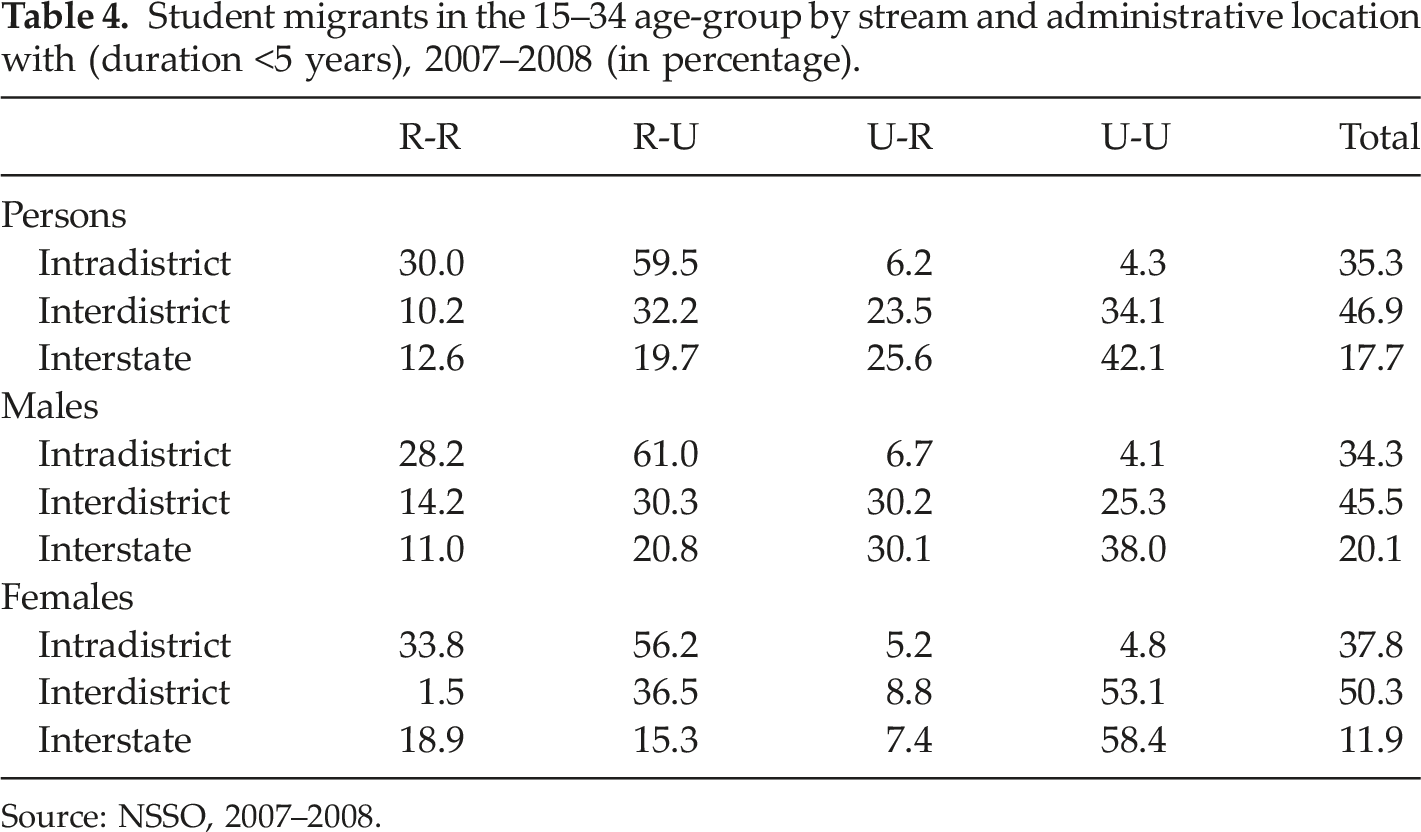
Student migrants in the 15–34 age-group by stream and administrative location with (duration <5 years), 2007–2008 (in percentage).
Source: NSSO, 2007–2008.
The section above provides a very comprehensive view of the students’ migration trends and patterns in India and at state level. It is important to note that census and NSS estimates are based on decade-old datasets, as they adequately reflect the overall domestic migration flow at various disaggregated levels. However, both the datasets are insufficient to reflect the aspirations, expectations and experiences of student migration and challenges faced by student migrants, particularly during the time of COVID-19.
COVID-19 and student migration: Findings from primary data
Online survey and in-depth interviews
Profile of online respondents.

Profile of participants in in-depth interviews.

COVID-19 and student mobility within India: Experiences and perceptions
The study examined the challenges faced by students in terms of four broad dimensions, namely, implications on learning comparing migrant and non-migrant students, their perceptions of and experience in the labor market, debt concerns, and migration prospects of migration for educational purposes in the near future.
The profile of online respondents shows that nearly two-fifth of the respondents migrated across districts within the same state for educational purposes while 36 percent and 24 percent reported interstate and intradistrict movement, respectively. The mean age of student migrants was 22 years. Sixty-four percent were females, and the remaining 36 percent were males. About two-third of the respondents reported being currently enrolled in a central university, around 19 percent in private institutions and 16 percent in state universities. 1 Most of the respondents were graduate students—57 percent were pursuing post-graduate studies (nearly 40 percent pursuing masters and 17 percent were in doctoral studies); 37 percent were undergraduate students, and the remaining six percent were in other programs (Table 5).
Low-quality learning experience
More than four-fifth of online respondents cited the institution’s reputation among one of the reasons for migrating to the destination area to pursue higher studies, followed by what can be considered as a push factor, that is, the lack of quality education and academic programs offered by educational institutions in their hometown. However, their actual experiences in the university did not meet their expectations. Those who had completed less than two years of their degree mentioned missing the “university experience” that they had been eagerly waiting for. The respondents mentioned missing the opportunity to learn from renowned professors, to engage with them in a dialogue, to network with professors and peers, and to enjoy student life and a new city. Further, respondents shared difficulty in coping with online learning, especially when the subjects involved lab work or practical.
Figure 2 presents student migrants’ responses to the question on the adverse implications of COVID-19 on learning. Sixty-eight percent responded that teaching and learning quality had been adversely impacted, 31 percent expressed their concerns on the digital divide and the lack of infrastructure to access smooth online education, and 47 percent reported the lack of teacher training and teacher absenteeism as key negative aspects of online classes. Three-fourth of the respondents expressed dismay over missing out on the university experience with others and personal development. Heatmap showing student migrants’ views on the adverse implications of COVID-19 on learning.
Eighty-two percent of respondents noted that digital learning reduced the learning process to “sitting in a box and in front of a box and be a part of monologue.” This type of learning raises questions on how they will be perceived by prospective employers. Who does not know that our training has been less rigorous vis-à-vis our seniors and super-seniors,
2
who does not know in the market that we are an open-book corona batch, and this takes away our bargaining power in the job market… we are not only missing on real learning but also on practical real-time experiences and pressures that prepare us for the job market. (A student from Mumbai, 24 years, male)
To move or not to move: COVID-19 and prospects for migration for education
Having experienced a year of online classes. Ninety-four percent of student migrants stated that the experience of online classes may significantly affect their mobility decisions for higher education within India. Interviews with migrant learners further shed light on this issue. A few of them reported that they generally access informal social media university admission pages which are consulted by many students ahead of the admission cycle to understand more about the institution. Due to the COVID-19 situation, these pages receive numerous queries and serve as platforms for exchanges on their educational experiences during the pandemic. Among the topics discussed by the “corona batch” whether it was worth to spend in lakhs to “pursue a degree from home” that may not give them the “real experience” of university life which motivated their migration. They had such discussions with prospective students who were reconsidering their plans, despite securing a place in the university of their choice.
Job market prospects and financial concerns
Around 43 percent of the respondents (90 of 210) reported some anxiety on missed placement opportunities in the final years of their degree as the campus job placement offices had a difficult time in attracting companies, despite their reputation of being a premier institution. By academic program, 52 percent of students in the Science/Technical field had concerns about job prospects; followed by those majoring in Management (48 percent), the Social Sciences (39 percent) and other fields (27 percent). Forty percent of the respondents were not certain whether the pandemic had negative implications on campus placements because they did not actively follow the placement activities while 17 percent did not have any adverse experiences in attracting good companies for placements. Interlocutors who participated in interviews and had graduated in 2021 related having difficulty in seeking employment. Some interviewees said they received replies that the hiring process may be delayed due to the pandemic. Others were perturbed to learn about hiring freezes in many companies. Compared to non-migrants, student migrants did not have good networks which made off-campus placements more difficult for migrant students. Student migrants also aired financial concerns. About 14 percent of the respondents reported having taken a loan to pursue higher education, many of whom were Management students. They were anxious on whether they can obtain a decent job that would enable them to repay their loans. Due to the uncertainty, they questioned their decision to take on loans to study in leading institutions in anticipation of better job prospects, which they were no longer confident about.
Some of the excerpts from the telephone interviews highlight such disquieting views and experiences of student migrants: I have a loan of INR 14,00,000 and my family took it happily because I am a first-generation student who was entering the finest educational institution of our country.... I left my state to build a better future …. not only for myself but for my entire family… but here I am…. in search of a good job in the past 10 months. I don’t see this happening soon and this makes each day in this city ever more difficult….” (A student from Bengaluru, 23 years, male) The pandemic has come as a trauma… I migrated four years back to this place to pursue a degree from an institution of eminence. I lost my father to COVID-19 and he was the sole earner in the family. Fortunately, we are from financially well-off family, and I do not have a loan sitting on my head… but finding a job now is not optional for me, it means survival for me and my mother… I have made more than 90 applications in the last two months; I have appeared for…. nearly 14 interviews, but all jobs have gone to people with networks in the city and somehow these networks belong to students who are born and brought up here… (A student from Delhi, 22 years, female) The irony today is I am a female… a migrant female with the same degree as my male non-migrant batchmate and he gets paid higher for the same position while my package has been downgraded amidst pandemic… I have to pay for food, and lodging each month despite leaving the city and work from home while my classmate has no such costs and yet gets paid highly… is this not unfair? (A student from Uttar Pradesh, 27 years, female) COVID-19 has increased the inequalities we face in our daily lives. I have struggled hard to convince my parents to let me migrate to a different city for pursuing my degree, I thought… I thought I would have better placement opportunities here. Here I am today, soon packing my bags forever to be in the same town from where I had eagerly run to make a dream career. It was neither easy to convince my parents back then nor easy to convince myself today that I could not fetch a decent job for myself. Campus placements did not happen with the same rigor as before… companies had a distinct preference for males as most of our campus hires have been males…. companies today are looking for less heads and more working hours as their businesses have been affected and here, we stand at a losing end… a female, from a different city and with familial obligations. This crisis is taking away our opportunities. (A student from Uttar Pradesh, 33 years, female) Like many students, I didn’t know what to do when my institution asked to go make my travel arrangement back home amid the outbreak of COVID-19. I was clueless on how am I going to manage my journey back home. No food was being served in the hostels due to COVID-19 positive cases. Also, like many students, I haven’t received my scholarship for the past four months as offices were closed during the COVID-19 period. This has elevated student’s tension both in terms of uncertainty about traveling plan and subsistence. (A student from Maharashtra, 32 years, male)
The survey revealed that the transition from face-to-face learning to online learning has not been easy for many learners, some of them continue to struggle to adapt and adjust to the new mode of knowledge dissemination. The digital divide within India has deprived many students of accessing quality education during the pandemic. For instance, a recent online survey by Learning Spiral, one of India’s leading online examination solution providers, found that more than 50 percent of Indian students in both urban and rural areas do not have access to the internet for online studies (India Today, 2021). While higher education has suffered a heavy brunt during the pandemic because of the lockdowns, greater emphasis has been paid to learning in the early years. For example, a joint report by UNICEF and the International Telecommunication Union (ITU) stated that, an estimated 1.3 billion children between the ages of three and 17 do not have internet connection in their homes. The report also found a similar lack of access among youths and young adults, with 63 percent of all 15 to 24-year-olds not connected to internet at home (New Indian Express, 2020). These startling figures manifest the detrimental impact of the pandemic on online learners. Unequivocally, the pandemic has jeopardized the future of thousands of migrant students.
Discussion and conclusion
Pursuing tertiary education is one of the factors contributing to the migration of young people in India. Compared to migrating internationally to study, the financial concerns, the solace of having family within reach and the acquisition of quality education drives student migration within India each year. International migration from India in general, and international student migration in particular, received research attention. What remains relatively less discussed is the massive brain drain even at the subnational level, which in the long-run, may render some states as winners and several others as losers in the growth and development trajectory. Investment in human capital is imperative, not only at the household level but also at the national level. Concerted efforts have been made to improve the country’s educational infrastructure and the quality of teaching but as highlighted in the study’s findings, domestic students’ movement across states and within states exhibit much unevenness in the academic landscape.
The present study is situated within the framework of the human capital theory and the new economics of migration theory. It advances two important findings: First, the students from relatively less developed areas migrate to another city within the state or to urban centers of other states (Rajan et al., 2019) in search of better quality-education and to increase the returns on their productive skills. Understandably, students relocate to metropolitan cities in order to enhance their quality of life, achieve upward social mobility and career development, and lead fulfilled lives (Prafula and Jadhav, 2016). However, a deeper analysis suggests that between 2001–2011, student migration narrowed within the state, both in the form of interdistrict and intradistrict migration, which can be linked to the gradual rise in the number of educational institutions in the states.
Second, in the last decade, the migration of female students has shifted from interstate to intrastate movements. It is noteworthy to mention that the proportion of young women enrolling in educational institutions in India is rising (Kapsos et al., 2014), which can be attributed to the increased equity, more access to education and increased economic potential of families. However, with the establishment of new institutions within states, female migration has become more localized. Probing across different streams of migration further strengthens this observation. This may be attributed to the family’s strategic role in influencing women’s decisions not to travel long distances in pursuit of educational opportunities, which is ingrained in the patriarchal structure and largely restricts their mobility. A few female respondents also described their struggles during telephone interviews; the challenges they have faced in leaving their hometowns to pursue higher education even in nearby institutions, and how COVID-19 has discounted their efforts over the past few months. They had low quality learning and placement experience, despite facing all the hurdles ranging from breaking the social and gender norms, financing high tuition costs and adjusting in an unknown place. As documented by other studies, distant migratory moves for female students are still a rare occurrence and have a multitude of discriminatory facets (Rajan 2015; Stalford et al., 2009). In the past two decades, the growth of institutions and the rise in female education went hand-in-hand, indicating a positive association between the rise in infrastructure and immobility among the female students. Due to data limitations, the present study cannot fully analyze the patriarchal element of female student mobility in India. The association between patriarchal structures and norms and female student mobility in India is a question that can be taken by future research. Additionally, a statistical analysis of underlying socioeconomic variables is also necessary to comprehend the significance of emerging migration patterns among female students.
The analysis of student migration in India based on Census 2011 migration tables (which were released in 2018–2019) and the NSS 64th round show that the student internal migration pattern in India is identical to that of other Asian countries such as China, Japan and Indonesia, where the majority of students move to developed regions where reputable educational facilities are located. The findings from the Census and the online survey reveal the prevalence of short-distance migration. It is crucial to note that the COVID-19 pandemic has jeopardized several of India’s hard-won economic and socio-economic successes. During the time of the COVID-19 pandemic, universities closed and students returning to their home states faced challenges because of the lockdown protocols which restricted all kinds of mobility nationwide. The migrant students also expressed their dismay and discontent over the learning crisis that has ensued due to the pandemic.
Among the major concerns shared by student migrants were the loss of “real” learning, inadequate digital resources, teacher’s absenteeism, financial constraints and uncertain employment prospects. They expressed dismay over significant delays in the campus placement process. The contraction of the job market, fewer benefits and the drop in the return on human capital investment generated extreme anxiety among student migrants. They felt more vulnerable vis-à-vis their non-migrant counterparts because of their experiences of being displaced when the campuses shut down, transportation was limited, limited internet connectivity in their hometowns, and above all, they continued to pay the same fees despite not being able to use many university facilities. Students who were working on campus before the pandemic were struggling with loss of income when the campuses were closed. Since they had to vacate their campus housing, the hostels became their “new homes.” They had to vacate in a hurry, forcing the students to find new accommodation plans on short notice.
Based on the outcomes of this study, two critical questions need to be addressed to guide policies concerning upgrading educational institutions at the grass-roots level. First, how many students would continue their education locally as opposed to the percentage of students who will migrate to pursue their studies elsewhere? Second, greater budgetary allocations, both by the central government as well as the states, are vital for the establishment of new and better-quality learning institutions to provide education locally and limit the massive outmigration of students. This is especially important for students coming from marginal backgrounds. During the pandemic, policymakers were expected to put a cap on the fees charged by private institutions. With no hostel benefits, no mess and lab access, no utilization of facilities, the fees collected by private educational institutions were barely slashed. The havoc created by the first and second wave of the pandemic on many families calls for the need to develop social security schemes for students in India to protect their families from falling into the poverty trap.
Footnotes
Declaration of conflicting interests
The author(s) declared no potential conflicts of interest with respect to the research, authorship, and/or publication of this article. This paper represents the views and findings of the authors, not the organization they represent.
Funding
The author(s) received no financial support for the research, authorship, and/or publication of this article.
