




Abstract
Why are social networks necessary at the place of destination? What roles do they play as a form of “social capital” for newly arrived migrants in urban centers? These are some relevant questions that scholars in migration studies have explored, especially in the context of international migration, but significant gaps exist in the case of internal migration. Using the migration history of the head of 400 households living in eight slum areas of Delhi, the present study attempts to differentiate the social networks available to the head of the households at their first arrival in Delhi based on the strong and weak ties and the caste-based network. The study also disentangles the role played by these social networks in providing social protection to household heads at their first arrival. The results show that social networks, especially strong family/kinship-based and caste-based networks, play an essential role in providing social protection by assisting newly arrived migrants with housing, food and information about employment.
Background
The search for a better life has fueled human migration. In contemporary times, employment related rural-urban migration is a pervasive phenomenon. This decision is influenced by several factors ranging from push factors in areas of origin, such as poverty and landlessness, to pull factors, such as better employment opportunities and wages, better living conditions and other life-cycle considerations in areas of destination (Blumenstock et al., 2022; Simpson, 2022). In the process of migration, social networks play a crucial role at every stage. They act as “migration capital” both at the destination as well as the origin (Taylor, 1986, 1987). The centrality of social networks in the process of migration has been recognized by numerous scholars in their studies (Ritchey, 1976; Banerjee, 1983; Boyd, 1989; Massey et al., 2005; Edelman and Mitra, 2006; Liu, 2013; Blumenstock et al., 2022; Sha, 2021). Social networks were first labeled as “social capital” in the work of Massey and España (1987). Massey et al. (2005: 42) define social networks as “sets of interpersonal ties that connect migrants, former migrants and non-migrants in origin and destination areas through ties of kinship, friendship and shared community origin.”
The availability of social networks, such as family members, relatives, friends, neighbors and co-villagers, in destination areas encourages and facilitates the process of migration and therefore acts as a pull factor (Heering et al., 2004; Haug, 2008; Asad and Garip, 2019). They influence the decision to migrate by disseminating information about employment opportunities and better living conditions at destinations and therefore act as information capital 1 (Jedlicka, 1978; Borjas, 1992; Munshi, 2003; Neetha, 2004; Haug, 2008; Ryan and Mulholland, 2014; Toma, 2016; Dustmann et al., 2016; Ryan, 2022). Social networks in the destinations also reduce the psychological cost of migration by providing emotional support and new social ties during the migrants adjustment period in urban centers (Choldin, 1973; Ritchey, 1976; Banerjee, 1983; Boyd, 1989; De Haas, 2010; Somerville, 2011; Simpson, 2022). At the initial stage, social networks reduce the monetary costs of migrants in destinations areas by providing food, shelter and assistance in the job search and other economic capital, and therefore, act as “safety nets” (Banerjee, 1983; Carrington et al., 1996; Munshi, 2003, 2014; Neetha, 2004; Comola and Mendola, 2015; Long et al., 2017; Simpson, 2022). Each episode of migration further increases the size of migrants’ social network and creates a network structure at the destination. The migrant network hypothesis suggests the greater likelihood of migrating to a destination where potential migrants have a larger network (Greenwood, 1969; Granovetter, 1973; Munshi, 2003; Patel and Vella, 2012; Mahajan and Yang, 2017; Giulietti et al., 2018).
Region, religion, caste and kinship play an important role in the formation of social networks. Migrants from the same region, religion, caste and kinship hold better ties at their destination and play crucial roles in providing social protection to urban migrants (Neetha, 2004; Thieme, 2006; Vanneman et al., 2006; Munshi, 2003, 2014; Munshi and Rosenzweig 2006; Vartak, 2021). The migration literature (Granovetter, 1973; Coleman, 1988; Ryan, 2011; Liu, 2013; Giulietti et al., 2018) distinguishes social networks based on the “strength of ties.” Strong ties refer to social networks with whom migrants share close relationships and frequent interactions with, such as family members and relatives. On the other hand, weak ties refer to persons with whom migrants have distant relationships and infrequent interactions with. This include non-family interpersonal networks such as friends, neighbors, co-villagers and contractors. 2
There are many studies about social networks and migrants in the context of international migration (Massey and España, 1987; Munshi, 2003; Thieme, 2006; Liu, 2013; Meeteren and Pereira, 2013). However, there is a significant gap in the literature which covers the role of social networks in internal migration, i.e., migration within a country, especially in the context of India. The present study attempts to fill this gap based on a primary survey conducted in eight different slums in the National Capital Territory (NCT) of Delhi in October 2014 to January 2015. The central research question probed by this study is: What is the nature and role of social networks in providing social protection to urban migrants at the time of their first arrival to the city?
Social protection includes different types of strategies and measures taken by formal and informal actors to prevent and protect individuals, households and communities against risks, vulnerabilities and deprivations. The narrow definition of social protection encompasses only “formal social protection” measures. This includes state-led public interventions to reduce risks and vulnerabilities and to enhance the capability of individuals, households and communities through policies, programs and legislations including social assistance, social insurance and labor market measures. International donors and aid agencies often include only “formal social protection” measures in their agenda of social protection (Holzmann and Jorgensen, 1999; Norton et al., 2001; Ortiz, 2001; Garcia and Gruat, 2003). In a broader framework, social protection includes a range of interventions provided by public, private or voluntary institutions including informal networks to support individuals, households and communities to prevent, manage and overcome various risks and vulnerabilities (Conway et al., 2000; Shepherd et al., 2004; Mumtaz, 2021). Interpersonal social networks are often discussed in migration literature as a source of informal social protection (see Bilecen and Barglowski, 2015; Bilecen and Sienkiewicz, 2015). These studies have highlighted the importance of social networks acting as agents of informal social protection for migrants, especially in cases where the state fails to provide formal social protection or state-led interventions do not exist (Bilecen and Sienkiewicz, 2015).
The present study adopts the broader framework of social protection to examine whether social networks play an important role in providing (informal) social protection to newly arrived migrants and if yes, then to what extent. To answer this question, the study first examines the different types of social networks available to migrants at the time of their first arrival to the destination and breaks down their social networks based on strong and weak social networks and caste-based networks. The study also disentangles the role played by these social networks in providing social protection to migrant households.
Following the background of the study, the second section of the article discusses the sampling design, survey areas and socio-economic background characteristics of the head of the households. The third section of the article presents the empirical findings on available social networks in Delhi at the time of arrival of household heads, type of social networks—whether strong or weak ties and caste-based networks—and type of social protection provided by the social networks. The final section concludes with the main findings of the study.
Data and methodology
The different studies (Chuang and Schechter, 2015; Srivastava, 2020a) show that collecting migration data, especially in developing countries is a challenging task and collecting network data along with migration history is even more difficult (Chuang and Schechter, 2015). In India, the Census and National Sample Surveys (NSS) are the two major data sources on migration. The Census of India uses the place of birth (PoB) and place of last residence (PoLR) to identify migrants. If the PoB or PoLR of a person is different from the place of enumeration, then the person is considered as a migrant. The NSS uses only PoLR to enumerate migrants (Srivastava, 2020a). Both the Census and NSS do not cover information on social networks and their role in the process of migration, and therefore, the current study relies on a primary survey conducted in eight different slums in Delhi.
The rationale for selecting Delhi is that it is one of the major metropolitan cities of India and is home to the highest number of migrants (seven million as per the 2011 Census). Further, the majority of poor migrants live in slum pockets of the city, locally known as jhuggi-jhopri clusters 3 (Dupont, 2008; Bhan, 2013), without adequate access to a formal social protection system. There have been sparse attempts in the academic discourse (Banerjee, 1983; Neetha, 2004; Mitra and Tsujita, 2006; Edelman and Mitra, 2006) to engage with the role played by social networks at different stages of the migration journey undertaken by migrants living in the slums of Delhi. In this study, the migrants in the slums are identified based on the PoB criterion of the census. Prior to the survey, a house listing was done for all the households to identify migrant households based on the PoB of the head of the household (HoH), who is also the principal earner of the family. This study used the PoB criterion of the HoHs because often, the other members of the family, especially the younger ones, were born in Delhi and are no longer migrants.
Sampling design
Stratified random sampling was used to identify the sample households of the present study. During 2001–2011, the four peripheral districts of Delhi- South, Southwest, Northeast and Northwest experienced the highest urban growth during the decade, 4 and one of the reasons for this urban growth was the large-scale displacement of migrants from the core areas to the peripheries. 5 The latter is reflected in the positive decadal urban growth in peripheral districts (South, Southwest, Northeast and Northwest) and negative decadal urban growth in core districts (Central Delhi and New Delhi) during this period. Therefore, the four peripheral districts have been selected in the first strata of sampling based on the assumption that the positive decadal urban growth is mainly due to the contribution of migration to the decadal urban growth of these districts.
Land prices are very high in the metropolitan cities of India (Nijman, 2000; Chakravorty, 2013) and there is a mismatch in the demand and supply of housing in India (Tiwari and Rao, 2016). The genesis of any slum in India can be traced to these two factors. The resettlement and eviction of the slum dwellers depend on the nature of land (tenable/non-tenable) and the agencies which own that land. Often, the slum dwellers who settle on the land owned by certain public agencies, such as Indian Railways, are vulnerable and prone to eviction (Somvanshi, 2015). In the second stage of sampling, two slums were selected from each district based on the number of slum settlements settled on government-owned land. As per the Delhi Urban Shelter Improvement Board (DUSIB),
6
the highest percentage of slums in Delhi are settled on the lands of the Delhi Development Authority (DDA) followed by DUSIB, Indian Railways and Municipal Corporation of Delhi (MCD). Those who live in the slums which are settled on the land of DDA have better chances of resettlement as compared to slums which are settled on the land of other agencies. Therefore, from each of the four sample districts, two slums were selected: One which is settled on the land of DDA (less vulnerable in terms of tenure security) and another which is settled on the land of DUSIB/Railway/MCD (more vulnerable in terms of tenure security). Initially, the researcher randomly selected the sample slums from the list of DUSIB based on the aforementioned criteria. However, during the pilot survey for the testing of the questionnaire, it was observed that some of the slums selected from the list of DUSIB were very small in size and had a smaller number of migrants. Therefore, the following eight slum locations were selected after the pilot survey. The selected areas cover more than 400 households and have a significant number of migrant communities. These JJ-Clusters originated in the 1970s and 1980s. The number assigned to each JJ-Cluster is as per their location in Delhi (see Figure 1): A. South Delhi 1- Indira Kalyan Vihar, Okhla Industrial Area, Phase-I, Okhla (DDA) 2- V P Singh Camp, Tuglakabad (Indian Railways) B. Southwest Delhi 3- Dalit Ekta Camp, Vasant Kunj (DDA) 4- Sonia Gandhi Camp, Samalkha, Kapashera (MCD) C. Northeast Delhi 5- Dr Ambedkar Camp, Jhilmil Industrial Area, Raj Nagar (DDA) 6- JJ-Cluster, CPJ Block, New Seelampur (DUSIB) D. Northwest Delhi 7- JJ-Cluster, B-Block, Meera Bagh, Near NG Drain, Paschim Vihar (DDA) 8- JJ-Cluster, B-Block, Near Samshan Ghat, Wazirpur (DUSIB) Sampling areas. Note: The numbers shown on the map refer to the respective JJ clusters.

The Indira Kalyan Vihar, Okhla Industrial Area, Phase-I, Okhla (South Delhi), Dr Ambedkar Camp, Jhilmil Industrial Area, Raj Nagar (Northeast Delhi) and JJ-Cluster, B-Block, Near Samshan Ghat, Wazirpur (Northwest Delhi) are in the industrial areas. During pilot survey, information about the origin and characteristics of these slums was collected. The genesis of the slums is linked with the development of the industries in these areas. The slum dwellers started arriving when industries were being established and there was demand for labor. Many still work in the industries located in these areas as casual/regular salaried workers. The rest of the slums are in residential areas. The origin and development of these slums are linked with the development of the nearby residential areas. Most of the slum dwellers migrated as construction workers to build residential colonies in these areas. They started living on vacant public land. Over time, more households joined them facilitated by their social networks which led to the formation and expansion of these slums. Once the construction work was over, these migrants started exploring casual work available in any part of the city. Some of them opened their own shops and became self-employed.
After the selection of the sample slums, in the third and final strata of sampling, house listing was done based on the electoral voter list available with local leaders also known as pradhans. 7 The migrant and non-migrant households were identified from the list by collecting the PoB information of the heads of households i.e., whether they were born in Delhi or outside Delhi from the pradhans. From the list of migrant households in each slum, 50 random households were selected based on systematic random sampling which include households that claimed 8 ownership of jhuggi (house) and house rental. A total of 400 households were surveyed in eight slums of four districts of Delhi. The survey was carried out from October 2014 to January 2015.
Research design
The present study used a mixed-method research design. For the survey, a structured questionnaire was used to collect information on the socio-economic characteristics of the heads of households’ availability of social networks, type of social networks (strong/weak ties), caste of social networks and the help received from social networks. The above information is further substantiated with qualitative research including the narrative research method. This method is used to capture the migration history of the heads of households including their experiences at the time of their first arrival in Delhi and the help/assistance received from their social networks. The informed consent of the respondents was obtained prior to the interviews. Their names have been changed to maintain their confidentiality.
Socio-economic characteristics of the household heads
Background characteristics of HOHs/principal earners.
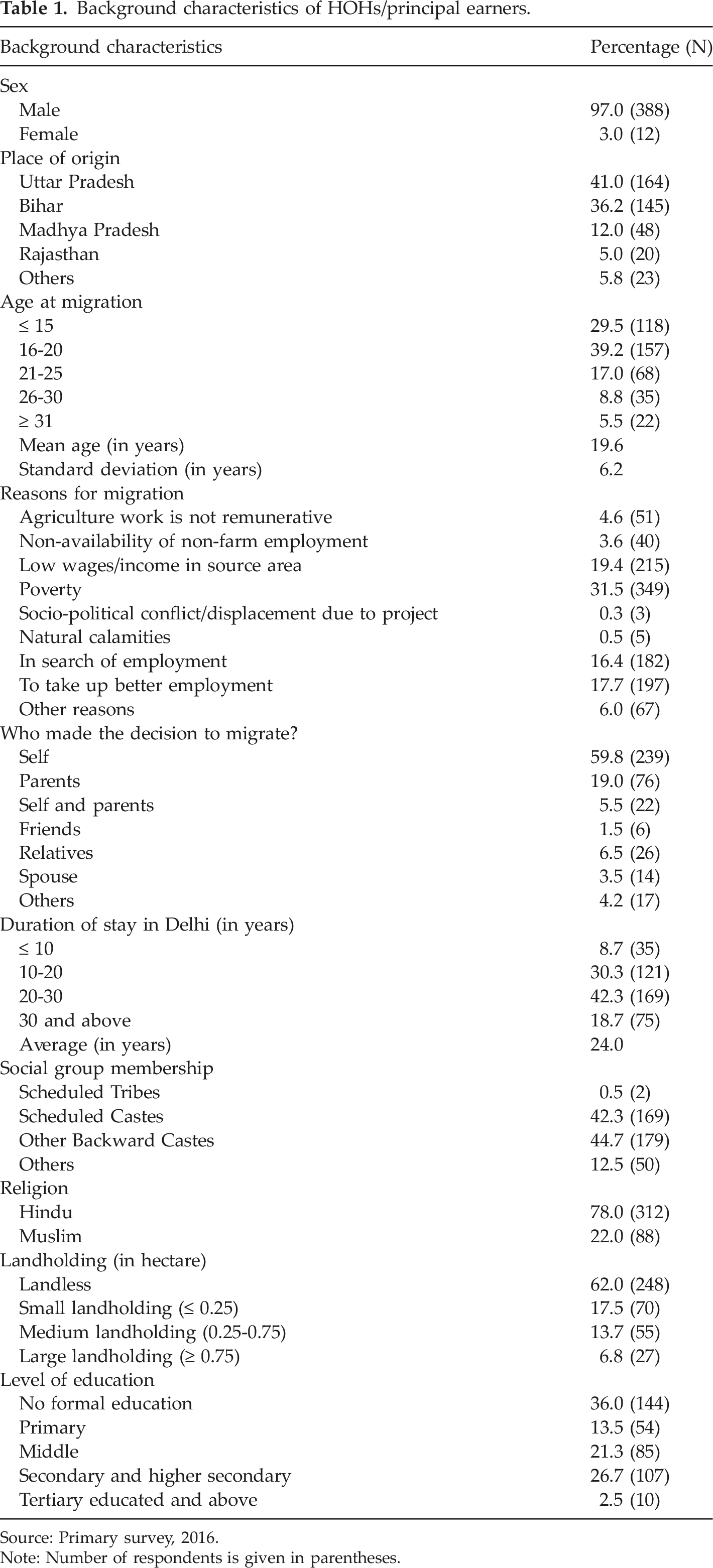
Source: Primary survey, 2016.
Note: Number of respondents is given in parentheses.
Findings
The survey asked about the migration history of the HoHs to examine the role of social networks in providing social protection at the time of their first arrival in Delhi. The questions included the knowledge and availability of social networks at the time of migration, the type of social networks (strong and weak ties), the nature of their relationship with social networks, including caste-based social networks, and the types of help provided by these social networks. This section of the paper provides a detailed discussion on these aspects.
Knowledge and availability of social networks at the time of migration
The literature on rural-urban migration in India largely focuses on regional patterns of migration, reasons for migration, gender and caste group-wise differences and issues faced by migrants at destination and origin (Kundu, 1986; Kundu and Gupta, 1996; Kundu and Sarangi, 2007; Bhagat and Mohanty, 2009; Kundu and Saraswati, 2012; Srivastava, 2012; Pandey, 2014; Parida and Madheswaran, 2015; Bhagat and Keshri, 2020). However, the dynamics of rural-urban migration are incomplete without the discussion of social networks. Once the early connections are established between origin and destination by pioneer migrants, the migrant aspirants from the same region often follow the same footprints and eventually, the availability of social networks becomes the sole reason for the selection of destination (Dekker and Engbersen, 2012). The fundamental assumption of network theory is that prior knowledge and availability of social networks at destination play an important role in migration decision-making and the organization of the journey. Social networks disseminate information about employment opportunities and living conditions at the destination, which helps aspiring migrants to assess and minimize the risk factors involved in migration (Dustmann et al., 2016; Reja and Das, 2019; Ryan, 2022).
As Figure 2 shows, 92 percent of the HoHs reported that they had prior knowledge of the social networks available in Delhi at the time of their migration. There is not much variation across slums, as more than 90 percent of the HoHs in Southwest Delhi, Northeast Delhi and Northwest Delhi reported to have prior knowledge and availability of social networks at the time of their first-time migration to Delhi. The lowest percentage share is found in the slums of South Delhi. Half of the HoHs across districts also reported that they did not know the different types of vulnerabilities faced by the rural-urban migrants before their first arrival in Delhi. Under such conditions, prior knowledge of available social networks made them hopeful, optimistic and confident of being able to cope in the new ecosystem of the city. The narrative from one of the respondents shows how prior knowledge and availability of social networks at the time of migration helped him to take the decision to migrate: At the age of 17, I decided to migrate after failing my ninth-class examination. My maternal uncle worked in a factory in Okhla Industrial Area. In those days, we did not have mobile phones, and therefore, I did not have any idea, whether jobs are available or not. However, the presence of my maternal uncle gave me confidence. I took some money from my friends and bought a train ticket in the general compartment. That was my first train journey. My maternal uncle was the only source of contact I had at the time of my arrival in Delhi. He arranged a job for me within a week. I acquired some skills over time and started working as a “tailor” in a textile company. Now, I have my own two floors jhuggi (Mohan, male, age 45, Indira Kalyan Vihar, Okhla Industrial Area, South Delhi) HoHs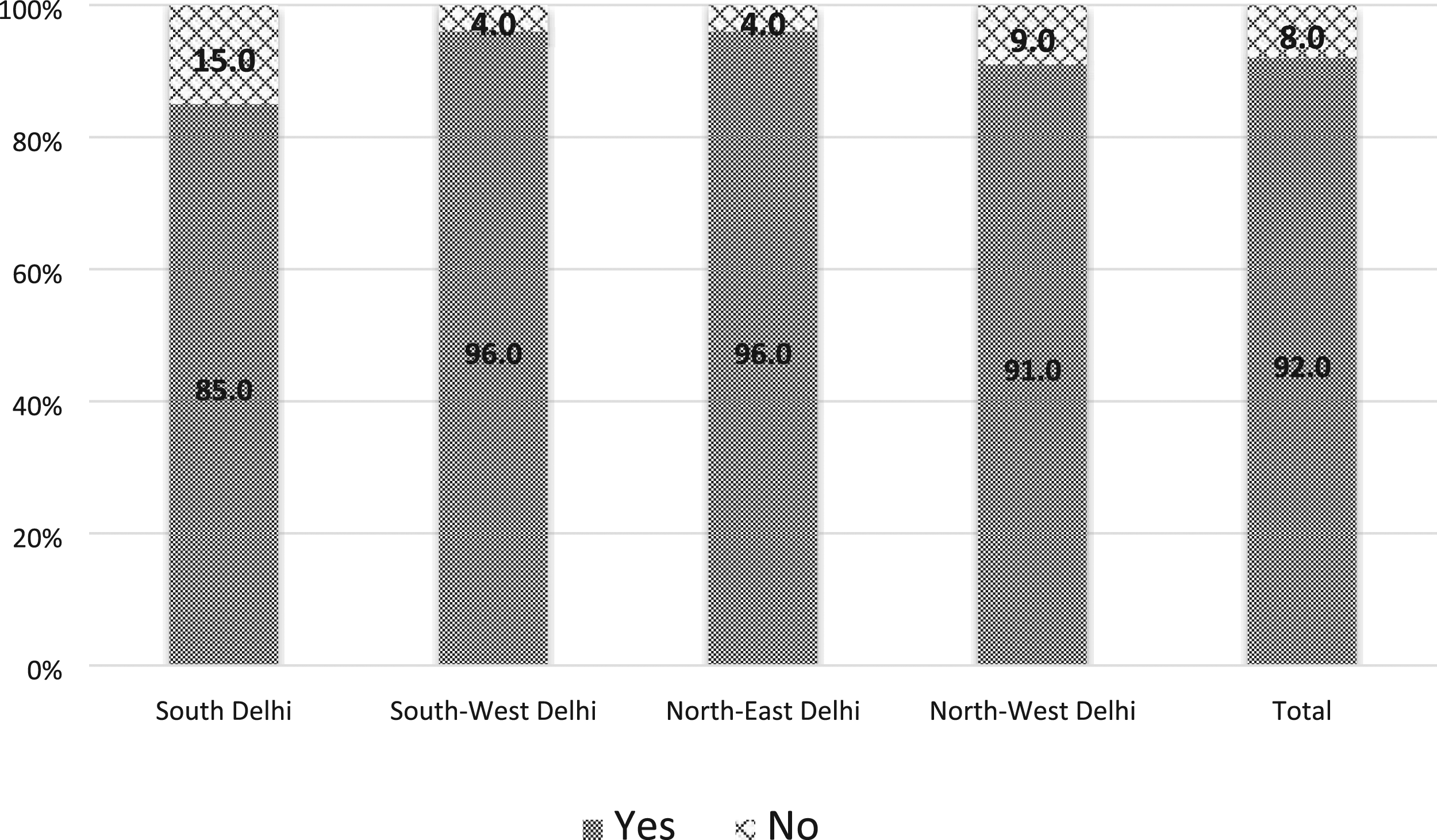
Strength of social networks: Strong and weak ties
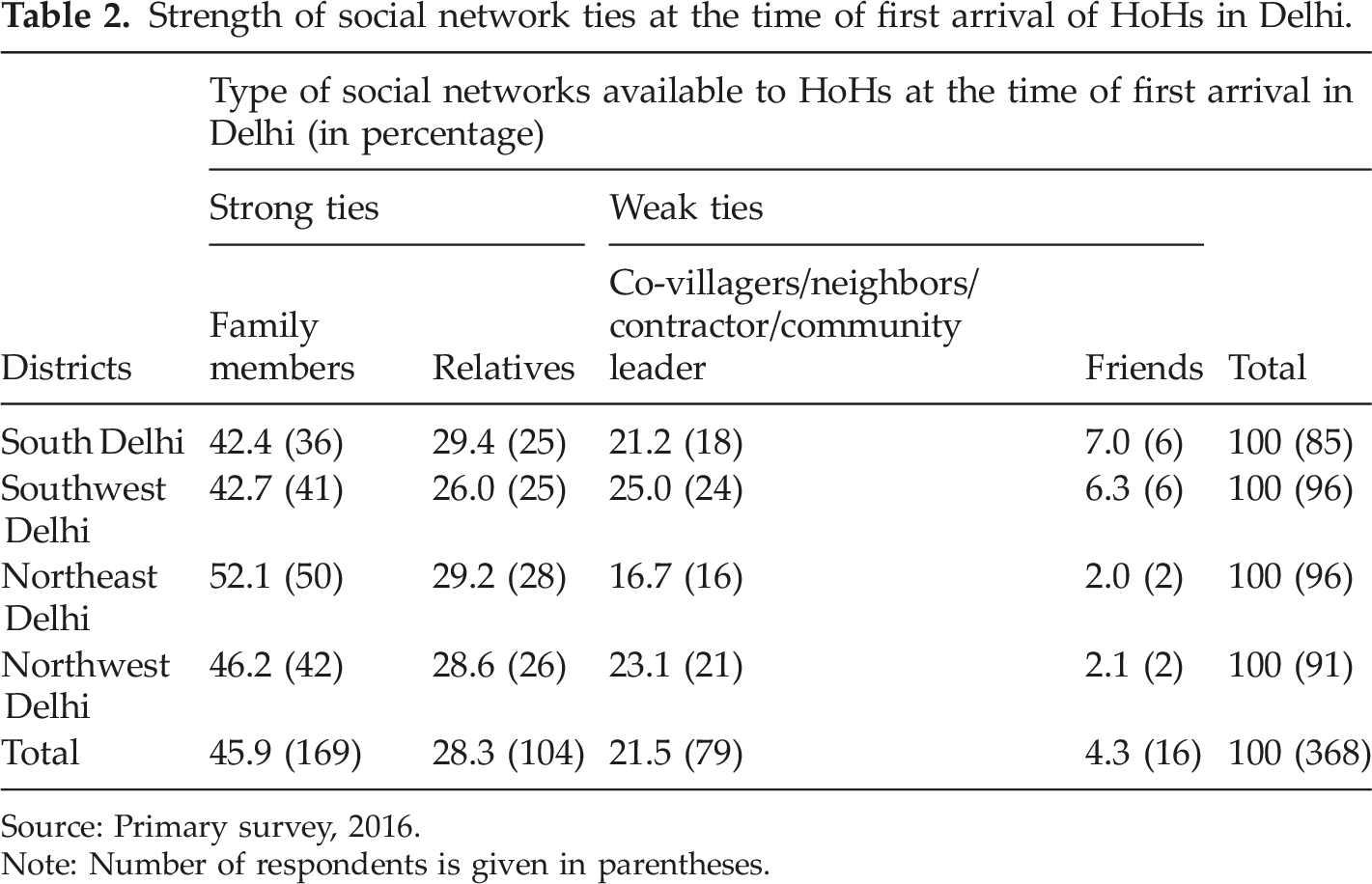
The absence of robust large-scale data sets on social networks has led to a lack of a comprehensive empirical framework. Therefore, ambiguity persists in assessing the importance of strong and weak social networks in the process of migration. Some studies (Lin et al., 1981; Banerjee, 1983; Coleman, 1988; Espinosa and Massey, 1999; Garip, 2008; Giulietti et al., 2018) give more importance to strong ties and argue that there are strong and consistent effects of strong migration ties and variable effects of weak ties. The alternative view (Granovetter, 1973; Burt, 1995; Liu, 2013; Liu and Yeo, 2018; Wang and Uzzi, 2022) suggests that the presence of several weak ties is as influential as strong ties at the destination. In this study, the respondents were asked about the type of social networks available to HoHs at the time of their arrival in Delhi. About 74 percent of the HoHs indicated that they had strong ties with family members and relatives at the time of their arrival in Delhi (Table 2). Family relationships are more frequent in strong ties as about 46 percent of HoHs had family members in Delhi at the time of their first-time arrival while 28.3 percent reported that they had relatives.
Strength of social network ties at the time of first arrival of HoHs in Delhi.
Source: Primary survey, 2016.
Note: Number of respondents is given in parentheses.
As discussed in earlier studies that in rural-urban migration, non-family interpersonal relationships such as co-villagers, neighbors, contractors, community leaders and friends also play a significant role (Granovetter, 1973; Banerjee, 1983; Burt, 1995; Liu, 2013). In the present study, 21.5 percent of the HoHs reported that they had co-villagers/neighbors/contractors/community leaders at the time of their first arrival in Delhi. The results indicate that among the weak ties, these types of social networks are more prominent than friends as only 4.3 percent of the HoHs reported that they had friends at the time of their first arrival in Delhi. One explanation for the small number of friends at the time of first arrival of HoHs in Delhi could be the age of the HoHs at the time of migration. A majority of the HoHs migrated in their early adulthood and the possibility of having friends from the same age groups living and working in Delhi is relatively weaker. The presence of co-villagers, neighbors, contractors and community leaders at the time of arrival of HoHs in Delhi was highest in Southwest Delhi (25 percent) followed by Northwest Delhi (23 percent). The presence of friends in Delhi at the time of arrival of the HoHs was slightly higher in South Delhi (seven percent) and Southwest Delhi (6.3 percent) as compared to Northwest (2.1 percent) and Northeast Delhi (two percent). The results of the present study corroborate the findings of earlier studies (Banerjee, 1983; Espinosa and Massey, 1999; Garip, 2008; Giulietti et al., 2018) which show that the newly arrived migrants in a city tend to have more strong social ties than weak social ties. Migrants, thus, rely more on strong social ties to receive any form of help/assistance.
However, this simple classification of strong and weak ties does not furnish the necessary details to examine the nature of relationships. Indian society has a very complex system of kinship and therefore, further decomposition of social networks, especially strong ties, is essential to examine the exact nature of the relationship of migrants with their social network.
Nature of relationship with social networks
The kinship system is patrilateral in rural society, especially in North India. Men in Indian society often form their most intimate and long-lasting ties with male agnates and this bonding continues even after the partition of their extended family (Banerjee, 1983). In genealogical relationships, people have certain customary rights, special privileges and obligations and according to their status in the relationship, they have certain rights and duties. For example, in an uncle-nephew relationship, helping the nephew in every stage of migration- from providing information about employment opportunities to providing food, shelter, assistance in job search and other monetary assistance at the initial stage of migration becomes a social obligation and duty for the uncle even after partition of the joint family. Over time, the strength of these social ties is weakening; however, the traditional norms and social values are still adhered to by the people in genealogical relationships. The tendency of newly arrived migrants to not seek help from weak social ties is more prevalent if strong social ties are present. Another important aspect of the kinship system in India is that after marriage, the conjugal family becomes the “primary family” for women and although they retain ties with their own paternal family, it becomes “secondary.” Therefore, the primary obligation of a woman is expected to be more towards her conjugal family and not the paternal family side. This kind of genealogical relationship is not reciprocal (Banerjee, 1983). As per prevailing traditional norms and social values in Indian society, it is the moral duty of the father to help his daughter and her family, but they are socially forbidden to take any form of help from their daughter or her family. To a certain extent, this is true for the older brother as well.
As the previous discussion suggests, the nature of relationships in Indian society is rather complex. To determine whether the migrants in the present study adhere to traditional norms and social values or not, their interactions with their social networks were explored further.
The survey data corroborates the patrilateral nature of the kinship system in India as brother, father and uncle were the main social networks available at the first arrival of the HoHs to Delhi. They supported the HoHs in providing shelter, food, searching for jobs and providing monetary assistance (Table 3). The results show the primacy of male agnates (brother, father, uncle). The other family members available at the time of the first arrival of the HoHs to Delhi were also male. This can be attributed to the fact that the sample of HoHs in the present study predominantly belonged to the North Indian families which are underpinned by a patrilineal mode of descent. Often, the newly arrived migrants in cities belong to the same rural households from which the “urban-based social network” originated. The narrative of a migrant during the field survey shows how migrants from rural India adhere to traditional norms and social values: I migrated to Delhi with my friends at the age of 14. I committed a petty crime, not very serious, but my father was very strict, and due to intense fear, I decided to leave the village without informing my family. Some of my relatives and my uncle lived in Delhi. When I came to Delhi, initially I lived with my friends on a construction site for two days, following which, my uncle got to know that I had fled to Delhi without informing the family. He came to the worksite and scolded me. He said that “I am not dead yet that you are living on a construction site like an orphan.” I had tears in my eyes. I collected my bag. I vividly remember that when we reached my uncle’s jhuggi, my aunty was already waiting for me with the dishes which I liked the most. Now, my aunty is no more, but I still remember her love and affection towards me during my initial days in the city. (Ramesh, Male, Age 48, V P Singh Camp, Tuglakabad) Social networks (strong and weak) available at first arrival of HoHs in Delhi by nature of relationship (in percentage). Source: Primary survey, 2016. Note: The number of respondents is given in parentheses.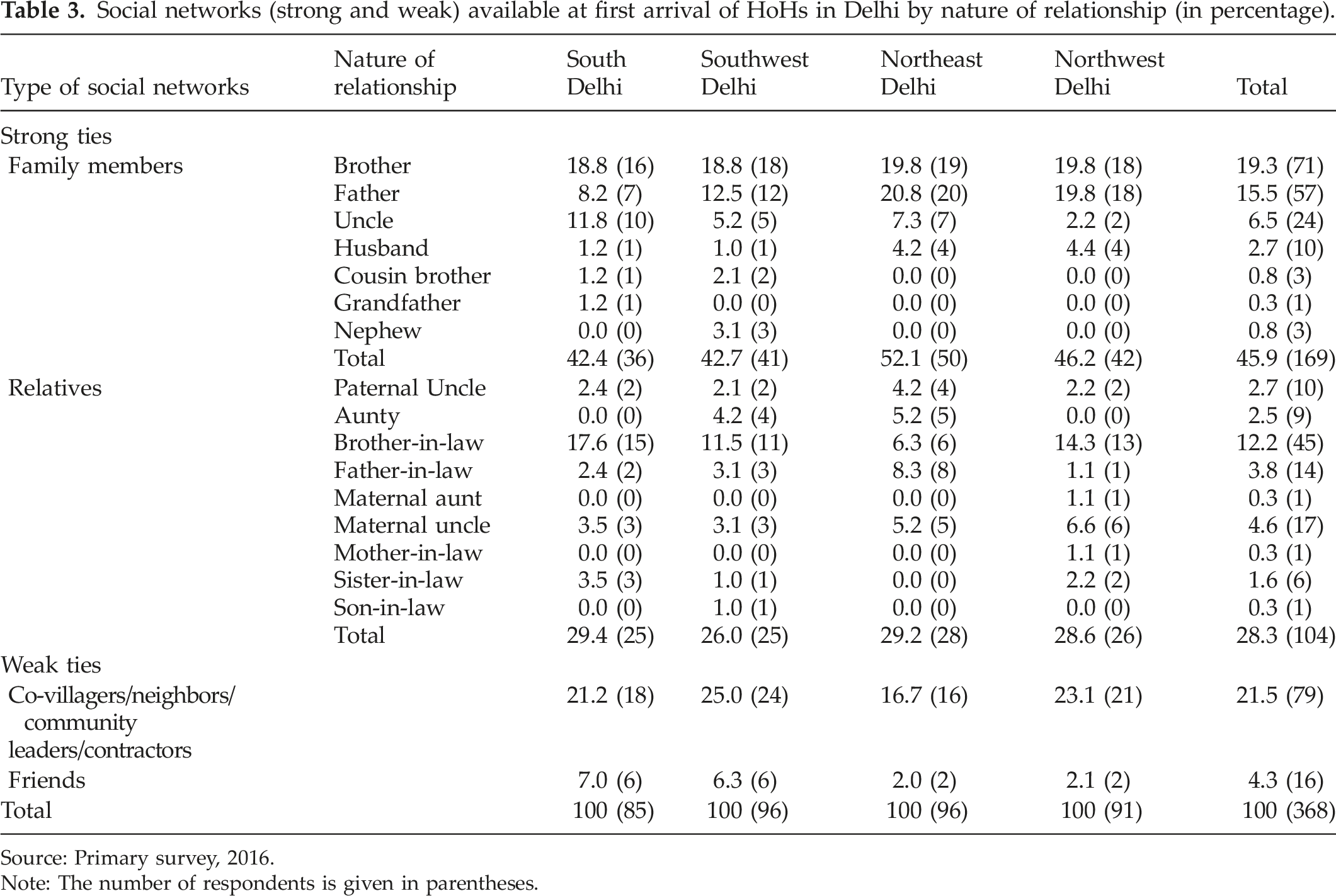
Apart from blood relationships, extended family relationships in the form of “relatives” also play an important role in the process of migration as strong social networks. The survey data shows that brothers-in-law followed by maternal uncles, fathers-in-law and paternal uncles (fufa) 10 were the main social networks available to a significant percentage of the HoHs who reported that they had relatives on their first arrival in Delhi. These social networks provided shelter, food, assistance with the job search and other monetary assistance at the initial stage. Taking help from the brother-in-law generally violates traditional norms and social values. However, this is true only in the case of elder brothers. The younger brother can receive help from his brother-in-law, sister and her extended family members. The higher reporting of the brother-in-law as a social network among relatives is mainly because of the age of the HoHs at the time of migration. The majority of the HoHs migrated to Delhi in their early adulthood and therefore, they received help from their brothers-in-law (Table 3). The migration of these HoHs is known as “delayed family migration” as they followed the same migration path which was developed by their strong social networks (family members and relatives) (Banerjee, 1983; Haug, 2008; Sagynbekova, 2016). Among weak social ties, co-villagers/neighbors/community leaders/contractors were the main social networks available to approximately one-fifth of the sample HoHs. The least percentage of HoHs reported that they had friends in Delhi as social networks at the time of migration.
Caste and social networks
Social network by caste (in percentage).

Source: Primary survey, 2016.
Note: Number of respondents is given in parentheses.
Even in the case of weak social network ties, the percentage share of the same caste social networks is high, indicating that newly arrived migrants in cities are likely to adhere to the caste-based bonding which they developed in their native places. They continue to extend this network even after their settlement in cities. It shows that the impact of urban environments in breaking caste consciousness is not very profound. The only exceptions showing significant percentage of newly arrived migrants having friends from other caste was observed in South Delhi. This was also rooted in the inter-caste friendships developed in villages. However, the few observations in this category do not allow to draw any conclusive statistical inference.
Social protection support received from social networks
It has been discussed earlier that social networks act as “safety nets” and provide different types of assistance in the form of social protection to the newly arrived migrants in cities which include food, shelter, assistance in job search and other forms of economic capital (Banerjee, 1983; Carrington et al., 1996; Munshi, 2003, 2014; Neetha, 2004; Comola and Mendola, 2015). They also reduce the psychological cost of migration by providing emotional support to newly arrived migrants during their adjustment period (Choldin, 1973; Ritchey, 1976; Banerjee, 1983; Boyd, 1989; Reja and Das, 2019). The strength of social ties between social networks and the newly migrated person gets cemented further with their longer duration of stay in the city. They extend social protection to each other in the form of monetary and social support. The survey collected information about the different kinds and forms of social protection extended by migrants’ social networks at the first time arrival of HOH in Delhi. The respondents gave multiple responses which can be broadly classified as follows: (1) accommodations and food, (2) assistance in searching for jobs/connecting with first employer, (3) assistance in acquiring different types of identity cards such as voter ID, 11 ration card, 12 Aadhar 13 etc., and (4) monetary assistance.
Type of social protection/support received by HoHs from social networks (in percentage).

Source: Primary survey, 2016.
Note: The number of responses per type of social protection is given in parentheses, except in the district column which indicates the number of respondents.
aTwo respondents in Indira Kalyan Vihar, Okhla (South Delhi) reported that although social networks were available at the time of their first arrival, they did not receive any social protection.
Only a few respondents reported receiving assistance in acquiring different types of identity cards (voter IDs, ration cards, Aadhar cards), mainly because of the complexity involved in this process. These identity cards are not only proofs of residence for migrants living in slums but also, most of these cards are linked to social protection schemes. Studies indicate that acquiring these identity cards is a difficult task, especially for newly arrived migrants, because most of them work as casual laborers and they cannot provide proof of residence and income (Srivastava, 2012, 2020b).
Conclusion
The importance of social networks is well established in the context of international migration. They not only play a significant role in the decision-making process of migration but also provide social protection in the form of monetary, social and psychological support to the newly arrived migrants at their destination. The studies based on experiences of international migration classify social networks into strong and weak social ties. However, literature has largely neglected the role of social networks in internal migration, especially rural-urban migration. One important reason for this limitation is the lack of systematic data to disentangle the complexities of the role of social networks in internal migration. A survey conducted in eight different slums of Delhi was used to examine the role of social networks as sources of social protection for newly arrived migrants in Delhi.
Findings from the present study show the importance of social networks in rural-urban migration in India. Knowledge of and having social networks in Delhi not only boosted the confidence of prospective migrants but also encouraged them to make the decision to migrate. The present study shows that newly arrived migrants tend to rely more on family relationships (strong ties) than non-personal relationships (weak ties) because these bonds are developed within the context of a strong family system in India. However, in the absence of strong ties, migrants receive assistance from their network of weak ties including co-villagers, neighbors, contractors and community leaders. Family relationships in India create a strong bond between individuals. In this system, based on the nature of the relationship, individuals enjoy certain customary rights, privileges and obligations. Based on their age, the senior members, such as fathers, brothers and uncles have to perform certain duties towards the younger members of the family. At the time of their first arrival in the city, most of the migrants approach their network of strong ties and receive assistance in the form of food, shelter, information about jobs and monetary assistance. Even when the joint family decides to establish separate households, the older members continue to perform their obligations and duties towards younger members. The caste-based social network is another important dimension in rural-urban migration in India. The caste-based weak ties, such as co-villagers, neighbors, community leaders and contractors, play an important role in the initial stage of the newly arrived migrants’ life in the city. Migrants from a particular caste group prefer to seek help from members of the same caste. The traditional norms and social values in Indian villages forbid them to form strong bonds with the other castes. This is true, especially in the case of SCs and STs. Therefore, the newly arrived migrants from these castes rely more on the same caste-based network. Both strong and weak social networks get cemented over time because they not only act as safety nets in the adjustment period of the newly arrived migrants, but also provide long-term support during their stay in the city, especially in the form of monetary assistance.
Overall, the findings draw attention to the significance of social networks, their multiple configurations and their impact in the adaptation of migrants in internal migration, especially rural-urban migration. The informal social protection provided by social networks not only protects newly arrived migrants in the city against risks and vulnerabilities but also facilitated their access to the formal social protection provided by the state. India is the only country in South Asia which has a law, the Interstate Migrant Workmen’s Act 1979, which promotes the protection of migrant workers. The Government of India and state governments have also initiated the portability of the benefits from different social protection schemes, which migrant workers can access at the place of destination. However, the existing laws, policies and programs in urban areas—such as Smart City Mission, the Pradhan Mantri Awas Yojana (housing scheme), Atal Mission for Rejuvenation and Urban Transformation (AMRUT)—do not sufficiently address the needs of migrants living in slums and informal settlements, and consequently, there are no significant changes in the lives of migrants living in these areas. Findings from recent studies (Rajan and Cherian, 2021; Raju et al., 2021; Rajan et al., 2021) highlight the “invisibility” of migrants in Indian cities. The lack of support to migrants during the COVID-19 pandemic confirms this invisibility. In this context, the informal social protection provided by social networks is a lifeline to migrants living in slums.
Footnotes
Acknowledgments
This article is a part of the doctoral work of Dr Arvind Pandey. The authors are grateful to Prof. Ravi Srivastava, Director, Centre for Employment Studies, IHD, New Delhi for his insightful comments and suggestions and Dr Khushboo Srivastava, Assistant Professor, Tata Institute of Social Sciences, Hyderabad for her inputs.
Declaration of conflicting interests
The author(s) declared no potential conflicts of interest with respect to the research, authorship, and/or publication of this article.
Funding
The author(s) received no financial support for the research, authorship, and/or publication of this article.
