



Abstract
China’s education reforms might affect students’ academic emotions (and hence their motivation and learning outcomes). This study examines Chinese adolescents’ academic emotions across time via a cross-temporal meta-analysis of 96 studies published between 2004 and 2017. Our results indicate that in later years, adolescents’ positive high-arousal and positive low-arousal emotions were higher, while negative low-arousal emotions were lower. Compared to 2004, positive high-arousal and positive low-arousal emotions in 2017 were both over half a standard deviation higher, while negative low-arousal emotions were over half a standard deviation lower. Positive high-arousal and positive low-arousal emotions were higher in later years in Eastern China but not in Central China and Western China. In later years, negative low-arousal emotions were lower in Eastern and Western China than in Central China. Gender differences were not significant. These results are consistent with both control-value theory and the claim that curriculum and instruction reform helped improve students’ academic emotions in China.
Introduction
Aiming to cultivate students’ creativity, initiative, collaborative skills, and practical skills, China reformed its education system in the mid-2000s to early 2010s to include more explorative and group activities (Zhou, 2004), which might improve students’ enjoyment of school activities, their motivations to learn, and ultimately, learning outcomes. If successful, this curriculum reform should yield more instances of positive academic emotions and fewer negative academic emotions. This cross-temporal meta-analysis of 96 studies of adolescents in China addresses this issue by determining whether students reported (a) more positive academic emotions, (b) fewer negative academic emotions in more recent years, and (c) accounting for regional and gender differences.
Academic emotions
Academic emotion refers to a mood that a student experiences during teaching and learning processes (Pekrun & Perry, 2014). These emotions differ in their valence (positive vs. negative) and arousal (high vs. low intensity). Academic emotions can be positive (joy, enthusiasm, relief, gratitude, etc.) or negative (anger, contempt, boredom, disappointment, etc.; Pekrun, 2006). People who often experience positive academic emotions are less likely to experience negative academic emotions (Xie et al., 2012). Meanwhile, arousal indicates the intensity of the academic emotion (Pekrun, 2006). High arousal emotions include joy, enthusiasm, anger, and contempt, while low arousal ones include relief, gratitude, boredom, and disappointment (Pekrun & Perry, 2014). Combinations of valence and arousal yield four categories of academic emotions: positive high-arousal (PHA), positive low-arousal (PLA), negative low-arousal (NLA), and negative high-arousal (NHA).
Positive academic emotions can support learning processes and outcomes, whereas negative academic emotions can hinder them (Pekrun, 2006). Students with positive academic emotions are often motivated to learn and persist for longer periods of time (Pekrun et al., 2002). Furthermore, students with greater positive academic emotions, when compared to other students, have higher dopamine levels in their brain, which supports creative problem-solving, working memory, and long-term memory (Ashby & Isen, 1999). By contrast, students with greater negative academic emotions, when compared to other students, have less motivation to study and more often use less effective mechanical study tactics such as memorization (Pekrun et al., 2002). Consequently, students with greater positive academic emotions than others show superior learning outcomes, while students with greater negative academic emotions than others show worse learning outcomes (see meta-analysis by Lei & Cui, 2016).
China’s education reform
China’s Cross Century Quality Education Project (suzhi jiaoyu) reformed its curriculum and instruction to focus on students’ “Emotions, Attitudes, and Values” (Zhong, 2011), which helps cultivate their creativity, initiative, collaborative skills, and practical skills (Cheng, 1999; Cui et al., 2018). Rather than traditional lectures and rote learning for exams, China trained its teachers to foster student learning via explorative and group activities (Cheng, 1999). This reform included reduction of student workloads and less traditional focus on exams (Yu, 2003; Yuan, 2018). For example, the government ordered limited school hours and mandated 12 weeks of holidays (Kipnis, 2006). China began implementing this curriculum in their 2003–2007 Action Plan for Invigorating Education (Zhou, 2004) and implementation continued over the next decade.
According to control-value theory, students’ degree of control during their academic tasks and the extent to which they value them influence their academic emotions (Pekrun et al., 2002). Students often enjoy school activities in which they have more control (e.g., exploring a rock or role playing a parent) or value (e.g., social interactions such as group activities with classmates; Pekrun, 2006). As students likely enjoy exploratory activities and group activities much more than lectures or rote learning (Pekrun & Perry, 2014), this education reform (He & Chen, 2008; Yin & Ding, 2008) is expected to increase their positive academic emotions and reduce their negative academic emotions. As China has gradually implemented this new curriculum in increasingly more schools from 2004 onward (Wen & Yang, 2005), its increasing pervasiveness and effectiveness might increase students’ positive academic emotions and decrease their negative emotions over time. Following the introduction of the education reform, some studies showed that junior high students had many positive academic emotions, few negative academic emotions, and high academic achievement (e.g., Wei et al., 2015).
However, early critics note that teachers did not receive adequate training, and that the new curriculum increased the workloads of both teachers and students. As the training often consisted of theory-based lectures with few practical lessons (Marton, 2006), many teachers did not attend the training (Tao, 2016). As teachers perceived greater demands, greater workload, and greater stress, they reported dedicating less time to supporting their students (Tao, 2016), which can reduce students’ positive academic emotions and raise their negative ones. Furthermore, teachers assigned more work to their students (Dong, 2007), which may reduce students’ energy and autonomy, reduce students’ positive academic emotions, and increase their negative ones. Some studies have documented fewer positive academic emotions and more negative academic emotions among students in China during its education reform (Sang & Deng, 2010; Wang, 2010).
Regional and gender differences
The mixed results of past studies examining the impact of the education reform on students might be explained by regional differences in China. While schools’ available educational resources differ across regions, China provided substantial educational resources and teacher training to schools in all regions (Lin & Zhang, 2006). One possibility is that wealthier regions of China toward the east implemented curriculum reform more successfully than poorer regions (regional wealth in China: Eastern > Central > Western; Li et al., 2016), thereby yielding more positive academic emotions and fewer negative academic emotions. Indeed, 81% of county education bureau officials perceived a major gap between available educational resources and curriculum reform requirements (Yu et al., 2005). On the other hand, poorer regions toward the west with fewer resources might benefit more (when compared to the East) from the influx of additional educational resources (diminishing marginal returns, Chiu, 2015), which might yield more positive academic emotions and fewer negative academic emotions. The impact of differences in resources across regions on curriculum reform and academic emotions remains understudied and largely unknown.
Past studies of differences in academic emotions across gender have shown mixed results in both China and in other countries. Some early studies in China showed that male students often have more positive academic emotions and fewer negative academic emotions than female students do (Dong & Yu, 2007; Lu, 2008; Peng, 2010). However, other later studies have shown no significant gender differences (e.g., Xu et al., 2013).
Studies in other countries also show mixed results for gender differences in academic emotions. Studies in Germany and Argentina have shown that male students often have more positive academic emotions and fewer negative academic emotions than female students (Frenzel et al., 2007; Rosas, 2015). However, a study in the Netherlands showed no gender differences (Ahmed et al., 2010). By contrast, a study in Saudi Arabia showed that female students often have more positive academic emotions and fewer negative academic emotions than male students do (Ismail, 2015). Whether these results are specific to the populations of each study or reflect cultural differences remains an open question.
Many past studies of academic emotions only used cross-sectional data or data from only two time points, neglecting variations between groups and over periods of time. To address this issue, we conducted a cross-temporal meta-analysis to investigate differences in academic emotions over time. Cross-temporal meta-analysis is a meta-analysis with a cross-sectional “design” to also investigate differences across time (Twenge, 2000; Twenge & Im, 2007). Twenge (2000) used this method to study psychological and behavioral changes in the United States. Chinese researchers also used cross-temporal meta-analysis to investigate trends of self-esteem, anxiety, and depression in Chinese adolescents after China’s reform policies (Xin, Niu et al., 2012; Xin, Zhang, et al., 2012). In this study, we apply a cross-temporal meta-analysis to 96 studies to investigate possible differences in the four categories of academic emotions (PHA, PLA, NHA, NLA) of adolescent students in China across time, across regions, and across gender.
Materials and methods
Participants
Adolescents’ emotions can vary widely (Sang & Deng, 2015), and many adolescents have emotional disorders (Yuan et al., 2014). During this tumultuous time, adolescents’ academic emotions might also vary widely (Casey et al., 2010), which facilitates detection of academic emotion differences during education reform in China. Hence, this study focuses on possible time differences in the academic emotions of adolescents (rather than younger students) in China during education reform. According to statistics from the 2015 National Education and Business Development Statistics Bulletin, Chinese adolescents aged 12–18 years comprise a population of 83,496,900 (Ministry of Education of the People’s Republic of China, 2017).
Adolescents’ Academic Emotions Questionnaire
Pekrun et al. (2002) created the Adolescents’ Academic Emotions Questionnaire (AAEQ) to measure academic emotions. This questionnaire comprises 72 items, with four separate subscales: PHA, PLA, NHA, and NLA. The survey uses a 5-point Likert scale to score each item, with higher scores reflecting higher levels of academic emotions. Cronbach alpha values are 0.785, 0.815, 0.833, and 0.915 for PHA, PLA, HNA, and NLA, respectively (Dong & Yu, 2007). More recently, a confirmatory factor analysis testing a general factor revealed appropriate fit indices among PHA, PLA, HNA, and NLA as follow: χ2/df = 3.334, RMSEA = .069, and CFI = .875; χ2/df = 1.884, RMSEA = .038, and CFI = .963; χ2/df = 2.026, RMSEA = .059, and CFI = .875; χ2/df = 2.412, RMSEA = .064, and CFI = .880 (Chen et al., 2014).
The AAEQ was introduced to China in 2004 (Dong & Yu, 2006) and shown to be reliable for Chinese adolescents (Chen et al., 2014). Subsequently, researchers have conducted many studies with the AAEQ on junior high and high school students in China. To enhance comparability of results across studies, we only use studies that employed the AAEQ in our cross-temporal meta-analysis.
Literature search
We used the following keywords in our database searches: “adolescent,” “junior high school students,” “high school students,” “emotions,” and “academic emotions”. Using these keywords, we found relevant studies published during January 2006 to December 2019 in six databases: PubMed, PsycINFO, Google Scholar, China National Knowledge Internet, Wanfang, and Chongqing VIP Information.
The temporal classification of studies was based on data collection dates provided by the respective authors. If the author(s) of a study did not specify the year of data collection, we followed the procedure of past cross-temporal analyses: subtracting two years from the year of publication to estimate the year of actual data collection (Twenge & Im, 2007; Xin, Zhang et al., 2012). The years of data collection in this data set ranged from 2004 to 2017.
Assessment of study quality
Based on Asbridge et al.’s (2012) procedure, two trained reviewers evaluated the quality of each study with a variation of the Newcastle-Ottawa scale (Peterson et al., 2011). Each reviewer scored each study for these characteristics: adequate definition and representativeness of the data (4 points), comparability of the data (2 points), and instruction consistency and survey response rates (3 points), a total of 9 points. The reviewers had the same ratings on 94 of the 96 studies (97.9%) and discussed the remaining 2 studies to reach consensus ratings. The assessment criteria of literature in NOS are as follows: 7–9 points are high quality, indicating low risk of bias; 4–6 points medium quality, indicating possible risk of bias; 0–3 points low quality, indicating high risk of bias (Lo et al., 2014). As almost all of the studies used convenience samples, the quality of the studies were relatively medium, with a mean of 5.7 (SD = 0.7; range = 5.7). Hence, the quality of the studies was acceptable, but the results must be interpreted cautiously.
Study selection process and inclusion criteria
Inclusion criteria for this study were: (1) the study used the AAEQ; (2) the study participants were junior high and high school students in China aged 12–18 years; (3) the study reported sample size, means, and standard deviations (for studies with incomplete information, we emailed the authors for further information; if they did not respond, we did not use their data); (4) if multiple studies using the same dataset, only one study was included; and (5) studies were published between January 2006 and December 2019. The studies included in the meta-analysis fulfilled all the above criteria; otherwise they were excluded.
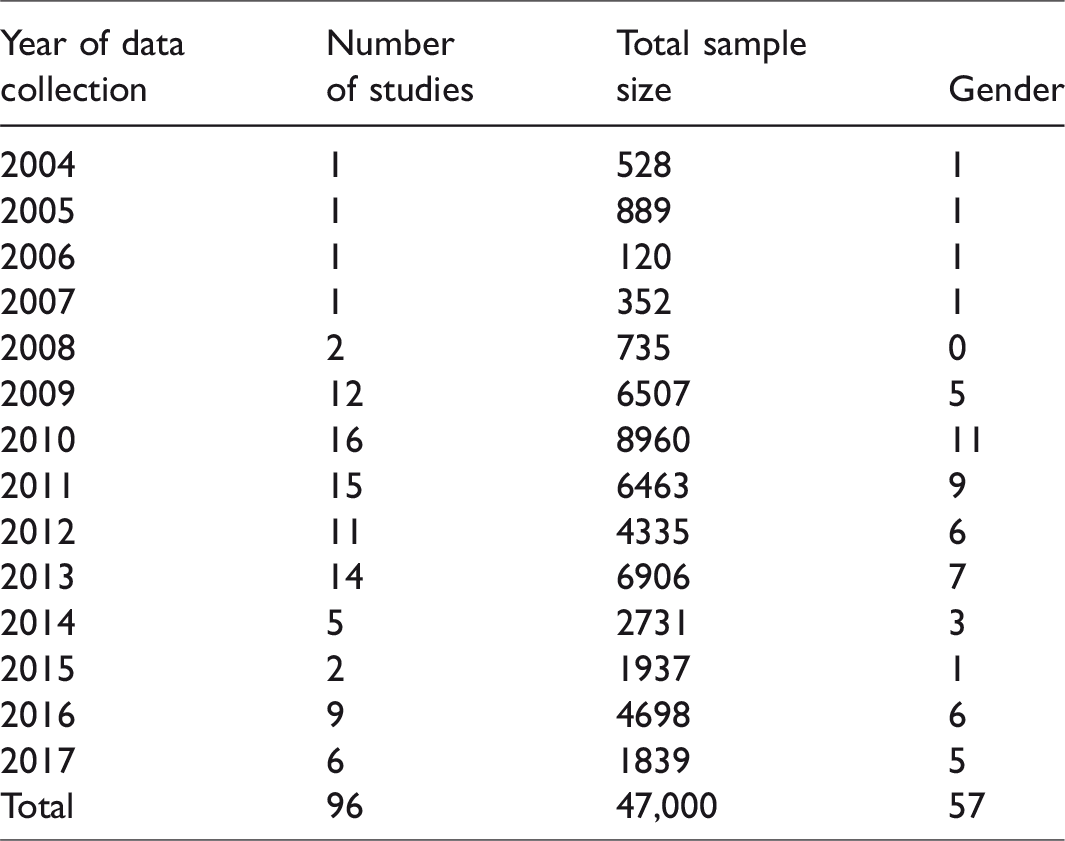
The specific literature search and selection strategies are presented in a PRISMA flow diagram (Figure 1; Moher et al., 2009). As shown in the diagram, we initially obtained 1109 articles, removed 610 duplicates, and removed 403 articles that failed any inclusion criterion, leaving 96 to be used in our meta-analysis. See Table 1 for the distribution of the number of studies and their sample sizes by year of data collection.

PRISMA diagram of the search strategies and inclusion.
Distribution of study samples between 2004 and 2017.
Variable coding and data processing
The 96 selected studies were coded and entered into a database. For articles that only provided research data without complete study results, the following formulae were used to produce weighted statistics from the provided data (x, sT, ni, xi, and si represent the combined average, combined standard deviation, study sample size, average, and standard deviation, respectively)


All 96 studies had region information, and 57 of these studies included gender information.
To calculate the effect sizes of gender-based differences in each of the four types of academic emotions, we classified male adolescents as the experimental group and female adolescents as the control group (see equations (4) to (6)). In equation (3), SD is the combined standard deviation for the male and female adolescent groups, ne and nc are the respective sample sizes of the experimental and control groups, and se and sc, respectively are the standard deviations for the experimental and control groups. In equation (4), Mfemale and Mmale respectively are the average scores of the control and experimental groups, and d is the effect size of each study. In equation (5), Wi is the relative weight of each study, Ni is the number of subjects in each study (sum of both genders), and di is the effect size of study i. In equation (6), 



Results
Differences in academic emotions across years
We produced scatterplots for the four types of academic emotions (PHA, PLA, NHA, NLA) according to the year of data collection (Figures 2 to 5). The scatterplots show a slight positive trend for PHA, a substantial positive trend for PLA, a negligible negative trend for NHA, and substantial negative trend for NLA.

Change in PHA emotions among Chinese adolescents.
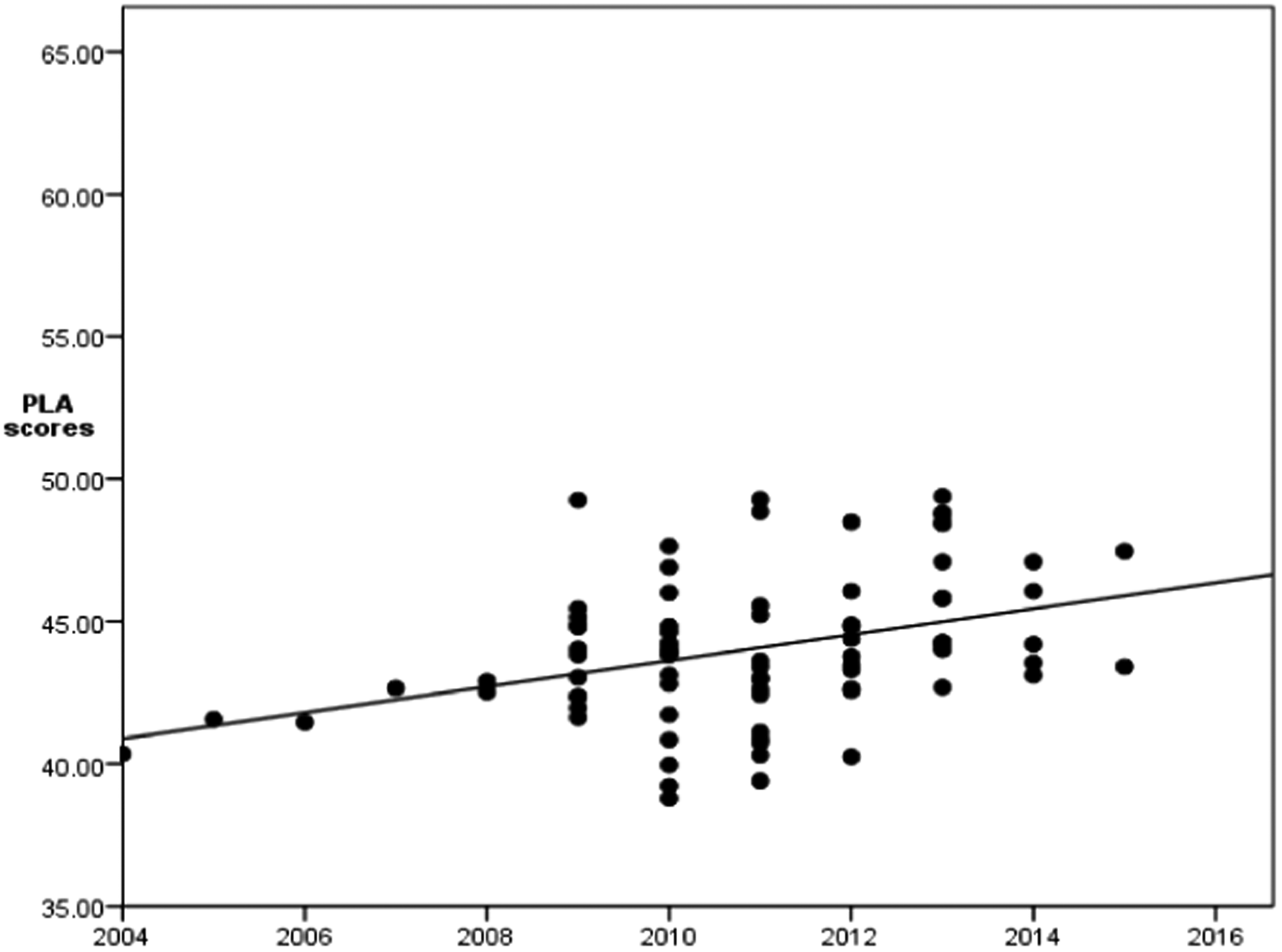
Change in PLA emotions among Chinese adolescents.
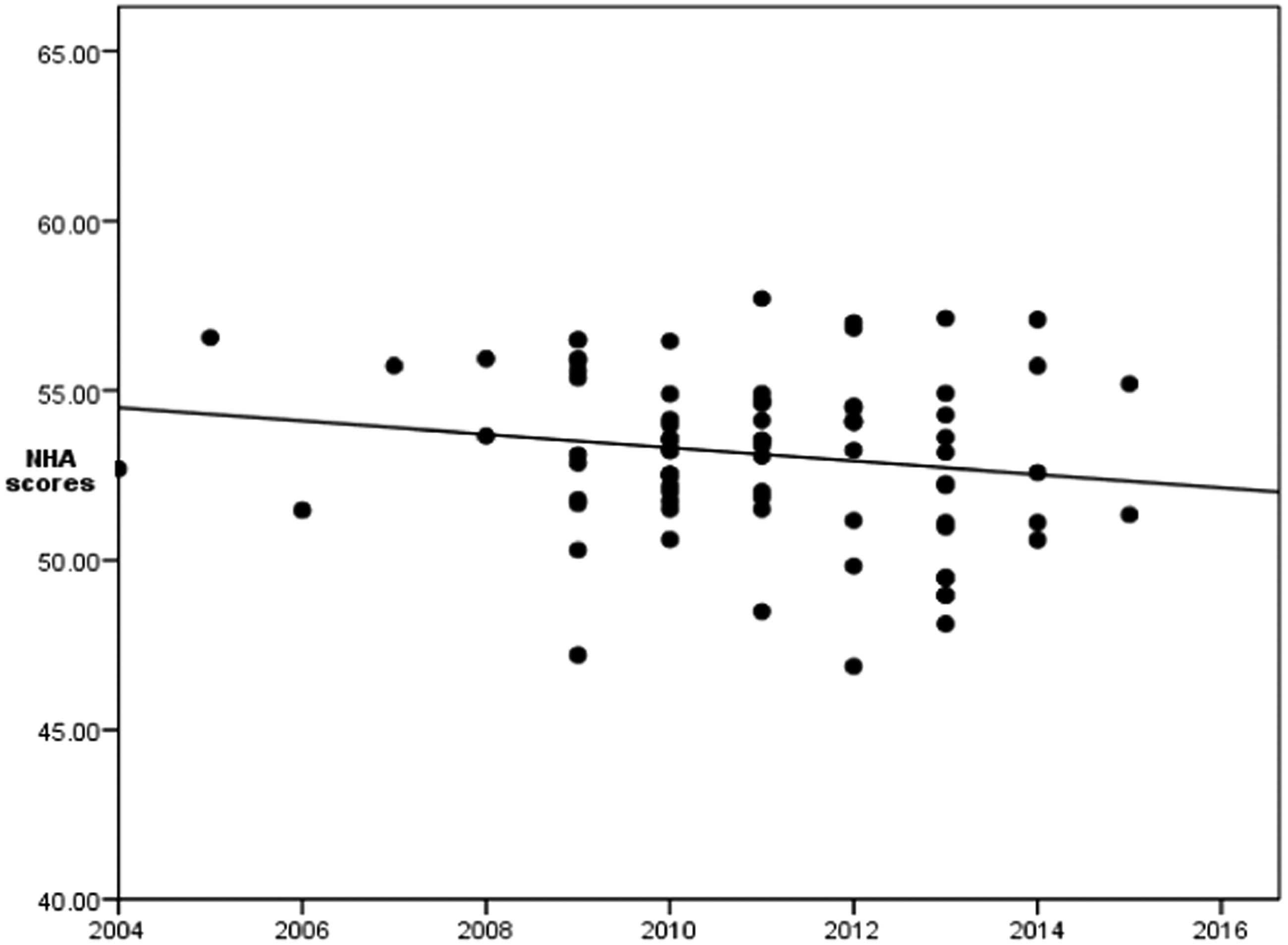
Change in NLA emotions among Chinese adolescents.
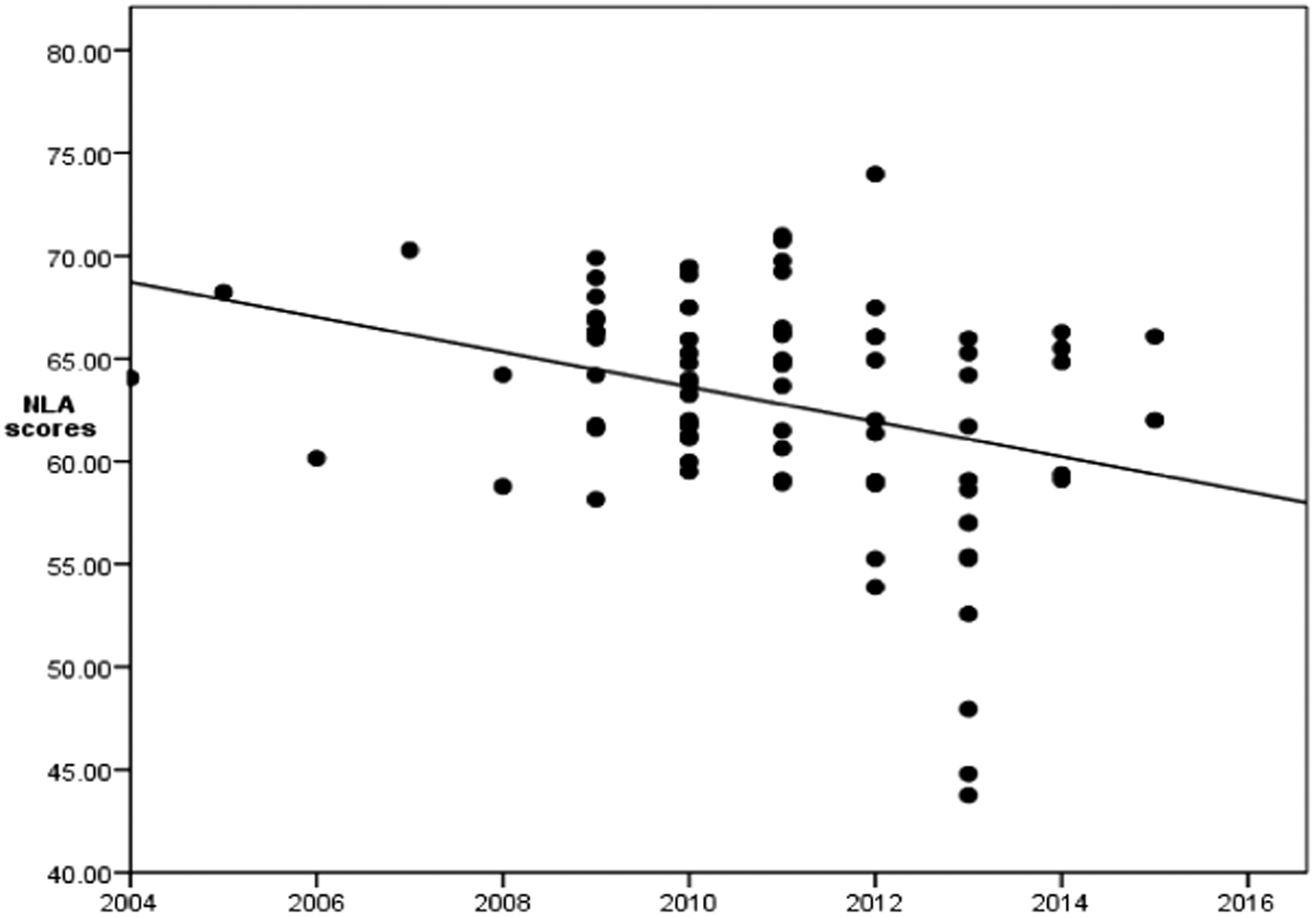
Change in NHA emotions among Chinese adolescents.
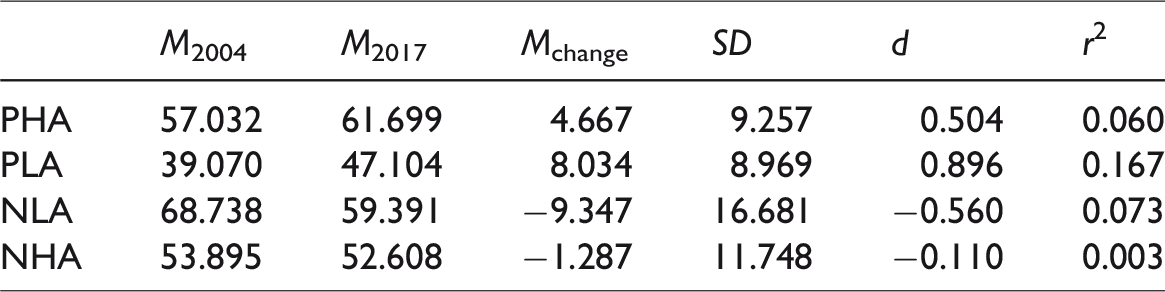
Regression analysis yielded similar results with a small regression coefficient of year of data collection for PHA (β = 0.312**, R2 = 0.097, ** indicates p < .01), a moderate positive one for PLA (β = 0.520**, R2 = 0.271), a small negative one for NLA (β = −0.325**, R2 = 0.106), and a non-significant one for NHA (β = −0.018, R2 = 0.000). Using weighted sample sizes also yielded similar results, with a small positive regression coefficient of year of data collection for PHA (β = 0.314**, R2 = 0.099), a moderate positive one for PLA (β = 0.537**, R2 = 0.289), a small negative for NLA (β = −0.362**, R2 = 0.131), and non-significant one for NHA. Using weighted samples and average scores for each year likewise yielded similar regression equations (PHA = 0.359[year] − 662; PLA = 0.618[year] − 1199; NLA = −0.719[year] + 1510; NHA was not significant). Separately entering 2004 and 2017 into our equations yields the average values for the four types of academic emotions for the two years (M2004 and M2017). We then calculated the arithmetic mean of all standard deviations (SD) and the effect size d (equation (7))


Compared to 2004, the PHA of Chinese adolescents in 2017 was 4.667 higher (d = .504, R2 = .06), their PLA was 8.034 higher (effect size d = .896, R2 = .17), their NLA was −9.347 (lower; d = .560, R2 = .07), and their NHA was not significantly different (see Table 2).
Differences in four types of academic emotions between 2004 and 2017.
Regional and gender differences
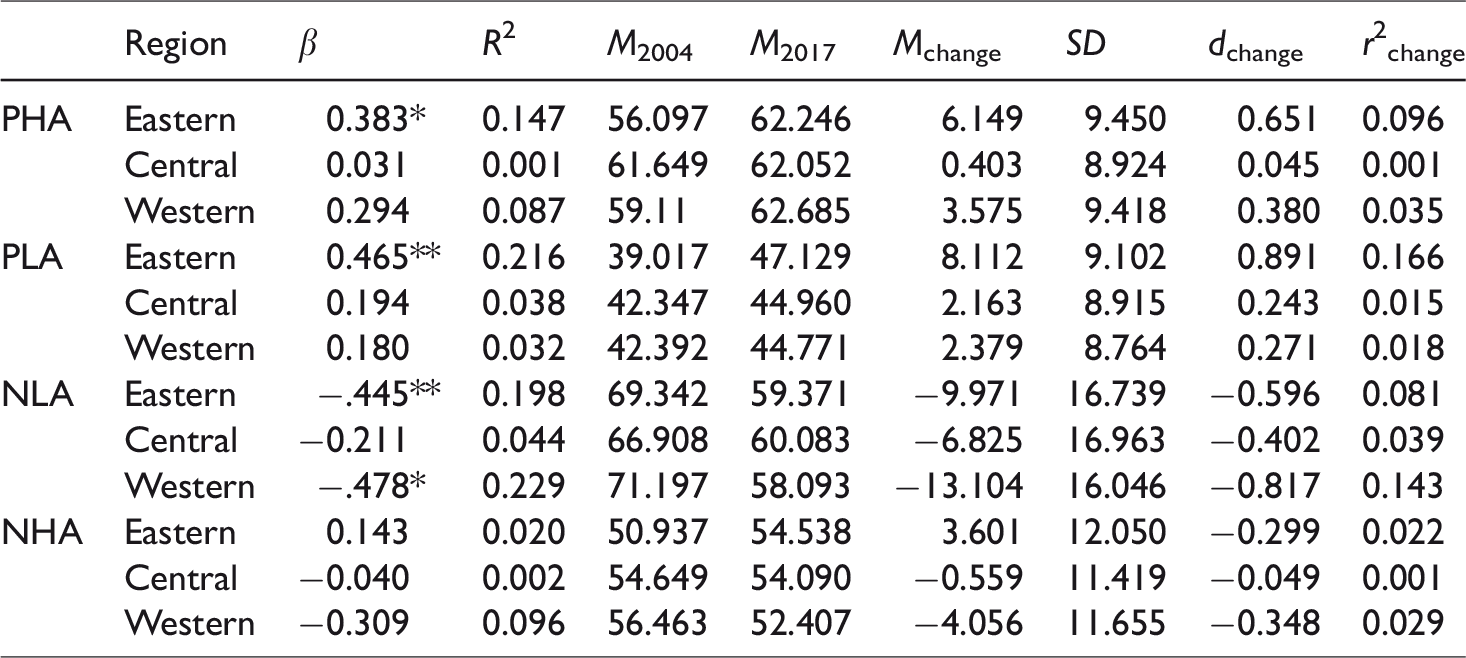
The results differed significantly across regions of China (East, Central, West; see Table 3). In Eastern China, later years showed higher PHA among adolescents (β = 0.383*, Mchange = 6.149, R2 = 0.147, d = 0.651; * indicates p < .05), higher PLA (β = 0.465**, Mchange = 8.112, R2 = 0.216, d = 0.891), lower NLA (β = −0.445**, Mchange = 9.971, R2 = 0.198, d = −0.594) and not significantly different NHA. By contrast, adolescents living in Central China showed no significant differences in any of the four types of academic emotions across time. Lastly, adolescents living in Western China only showed less NLA in later years (β = 0.478*, Mchange = 13.104, R2 = 0.183, d = −0.817); all other academic emotions showed no significant differences across time.
Academic emotions among adolescents in different regions.
Academic emotions of male and female adolescents.
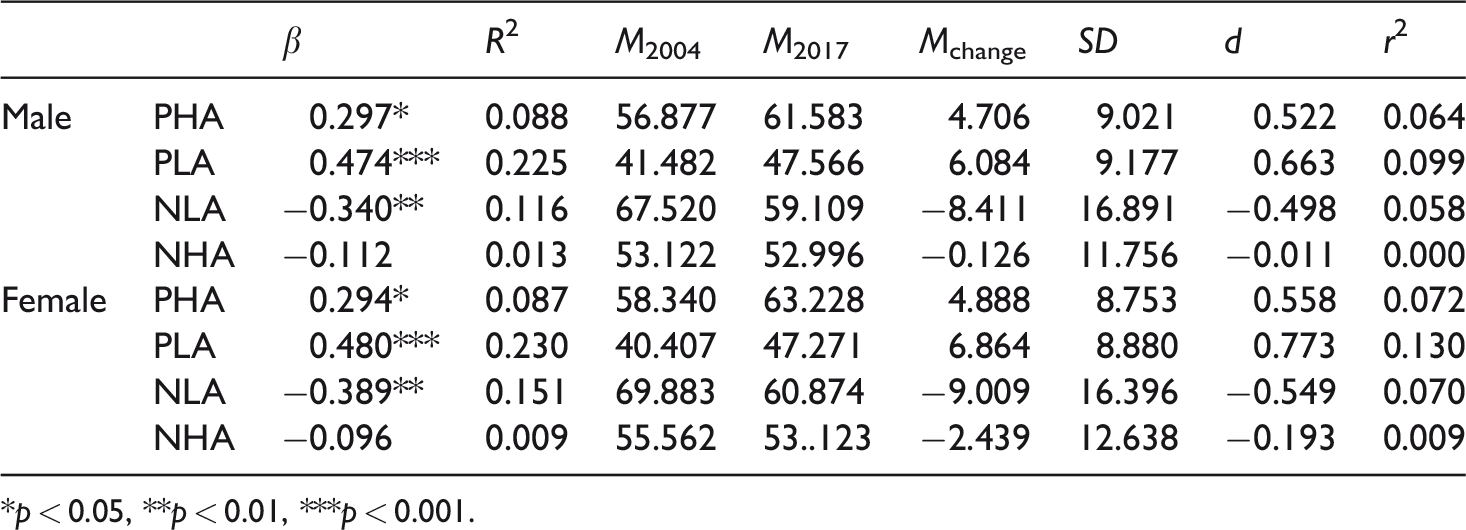
*p < 0.05, **p < 0.01, ***p < 0.001.
For the 57 studies with gender information, both male and female adolescents showed somewhat higher PHA in later years (male vs. female: β = 0.297* vs. 0.294*; Mchange = 4.706 vs. 4.888; R2 = 0.088 vs. 0.087; d = 0.522 vs. 0.558). Both showed moderately higher PLA in later years (β = 0.474*** vs. 0.480***; Mchange = 6.084 vs. 6.864, R2 = 0.225 vs. 0.230; d = 0.663 vs. 0.773; see Table 3). Both genders showed somewhat lower NLA in later years (β = −0.340** vs. −0.389**; Mchange = −8.411 vs. −9.009; R2 = 0.116 vs. 0.151; d = −0.498 vs. −0.549). All results showed no significant gender differences (see Table 4).
Treating male and female adolescents as control and experimental groups respectively, the differences in levels of academic emotions were
A forest plot of gender differences (see Figure 6) indicated no significant difference in PHA between male and female students (OR = 0.964, 95% CI = (0.924, 1.005), p = 0.086). Likewise, the meta-analysis revealed no significant difference in PLA (OR = 0.987, 95% CI = (1.074, 1.361), p = 0.174), NHA (OR = 0.963, 95% CI = (0.916, 1.012), p = 0.135), and NLA (OR = 0.998, 95% CI = (0.918, 0.998), p = 0.099) between male and female students (OR = 0.964, 95% CI = (0.924, 1.005), p = 0.086).

Forest plot of gender differences.
Publication bias
To examine whether the results were biased due to effect sizes from various sources, we drew a funnel plot (Figure 7). This plot showed that the effect sizes of PHA were symmetrically distributed on both sides of the average effect size, and an Egger’s regression (Egger et al., 1997) revealed no significant bias (tPHA(55) = 1.206, p = 0.233).
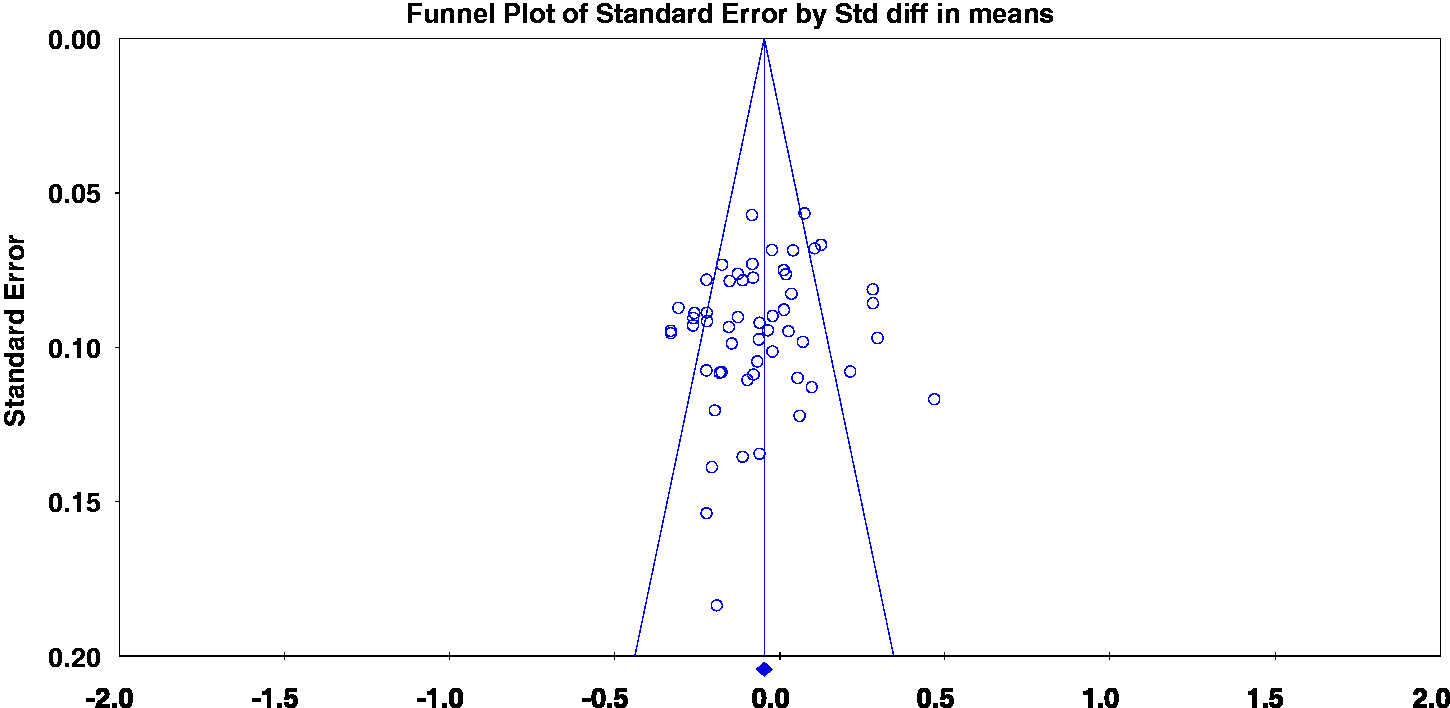
Funnel plot of effect sizes of PHA.
In addition, we conducted Egger’s regression analysis on PLA, NHA, and NLA. The results also showed no publication bias (tPLA(55) = 0.268, p = 0.789; tNHA(55) = 1.332, p = 0.316; tNLA(55) = 0.740, p = 0.463). Together, these results indicated stability in the overall effect sizes in this study.
Discussion
In this study of academic emotions of adolescents in China during education reforms between 2004 and 2017, PHA and PLA emotions were higher in later years, NLA emotions were lower, and NHA emotions did not differ significantly. These differences in these three types of academic emotions across time were largely shown among adolescents in Eastern China. Adolescents in Central China showed no significant difference across time for any types of academic emotions. In Western China, adolescents showed fewer NLA emotions in later years; the other three types of academic emotions showed no significant differences across time. Lastly, the academic emotions of adolescents in this study did not differ significantly across gender, both within the same year and across years.
Differences in academic emotions across years
The positive PHA and PLA findings and the negative NLA findings are consistent with both control-value theory and a positive assessment of curriculum and instruction reform. According to control-value theory, students enjoy activities over which they have greater control (e.g. exploratory activities; role play) or value (e.g., group activities with classmates). As a result of China’s education reform, mainland Chinese teachers used more such activities and fewer lectures or rote learning activities (He & Chen, 2008; Yin & Ding, 2008), so students might have enjoyed them more, showing more positive academic emotions and fewer negative academic emotions. This view is generally consistent with the low arousal academic emotion results, which indicate higher PLA and lower NLA in later years. This result is weaker for the high arousal emotion results; PHA is somewhat higher in later years, and NHA is not significant. Hence, these results are consistent with the claim of effective education reform (with more exploratory or group activities to enhance students’ control and valuation). After education reform, adolescents showed more positive and less negative low arousal academic emotions, and somewhat more positive high arousal academic emotions (with no difference in negative high arousal academic emotions). If further, detailed studies confirm these results, they would suggest that educators can use exploratory or group activities to influence some types of academic emotions of adolescent students.
By contrast, other earlier studies showed some negative consequences of China’s education reform: unprepared teachers and greater teacher and student workloads (Tao, 2016; Dong, 2007). Two earlier studies showed that these reforms were linked to its students’ fewer positive academic emotions and more negative academic emotions (Sang & Deng, 2010; Wang, 2010). Our findings suggest that these problems decreased in the years after these early studies or were not large enough or widespread enough to offset the benefits of education reform on students’ academic emotions.
Additionally, greater positive academic emotions and less negative academic emotions in later years are consistent with greater motivation to learn and superior learning outcomes in later years. For example, students in reformed classrooms outperformed students in traditional classrooms in mathematics in China, showing greater interest in learning mathematics, greater calculation accuracy, and superior complex problem solving (Ni et al., 2011).
Regional and gender differences
The results showed regional differences but no gender differences. Time differences in the academic emotions of adolescents largely occurred in the richest region, Eastern China. This finding suggests that additional local educational resources (Li et al., 2016) beyond those supplied by the central government might have enhanced the positive academic emotions of adolescent students and reduced their negative ones (Yu et al., 2005). These results suggest further study of the schooling of adolescent students in Eastern China vs. Western China—and especially Central China—to determine whether inadequate educational resources or other factors account for these regional differences. If such studies determine that regional differences in educational resources largely drive these findings, then future studies can explore whether increasing educational resources in Central China and Western China might enhance the academic emotions of their adolescent students.
The possibility that the influx of educational resources from the central government especially benefits poorer regions is partially supported by the lower NLA emotions in later years among adolescents in Western China. These results reinforce the need for future research to examine whether increasing educational resources in Western China might enhance the academic emotions of their adolescent students.
All four types of academic emotions (PHA, PLA, NHA, NLA) showed no gender differences both within the same year and across years. While this finding conflicts with those from earlier cross-sectional studies (Dong & Yu, 2007; Lu, 2008; Peng, 2010), it is consistent with those in later cross-sectional studies (e.g., Xu et al., 2013). As our meta-analysis includes many more students across regions and time, the current results are likely more representative and reliable.
Limitations
The limitations of this study include its measurement tool, participant diversity, explanatory variables, and convenience data. First, this meta-analysis only included studies that used the AAEQ (Dong & Yu, 2007). Future meta-analyses can also include studies that use other measurement tools (e.g., Academic Emotions Survey; Govaerts & Gregoire, 2008) and test for differences between their results. Second, our sample only included adolescents, not older students. Future studies can also include undergraduates and graduate students and test for age differences. Lastly, this study only examined academic emotion differences across time, region, and gender. If future studies of academic emotions include more explanatory variables (e.g., socio-economic status, past achievement, school demographics, etc.), then future meta-analyses can test explanatory models of greater complexity. Lastly, this meta-analysis’s source studies nearly all used convenience data instead of collecting data via a controlled experimental design, so we cannot make definitive conclusions regarding the effects of curriculum reform on students’ academic emotions. Hence, such experimental studies can provide more rigorous evidence in future studies.
Footnotes
Acknowledgements
All authors read and approved the manuscript.
Declaration of conflicting interests
The author(s) declared no potential conflicts of interest with respect to the research, authorship, and/or publication of this article.
Ethical approval
All procedures involving human participants in this study were performed in accordance with the ethical standards of the institutional and/or national research committee and with the 1964 Helsinki declaration and its later amendments or comparable ethical standards.
Funding
The author(s) disclosed receipt of the following financial support for the research, authorship, and/or publication of this article: This research was supported by the National Social Science Foundation for Education of China (CFA180249).
Informed consent
Informed consent was obtained from all individual participants included in the study.
