



Abstract
The transition toward renewable energy systems is necessary for climate change mitigation, improving energy security, and achieving sustainability objectives. This review offers a critical evaluation of the new eco-energy technologies that contribute to low-carbon and circular energy technologies as a whole. The current review analyses recent developments in renewable electricity production, sustainable fuels production, energy storage systems, battery recycling, perovskite solar cells (PSCs), bioenergy systems, and waste-to-electricity technology. Special emphasis is made on novel approaches to seawater-to-fuels conversion, carbon dioxide usage, next-generation rechargeable batteries, environment-friendly lithium-ion battery recycling, and microbial fuel cells. Besides providing an overview of recent innovations in the field, this review evaluates the degree of technical maturity, efficiency, scaleability, environmental impacts, and commercialization issues of the considered technologies. An integrated approach is used to show the possibility of synergy between renewable energy production, resource recovery, sustainable fuels and circular economy solutions in order to promote carbon-neutral energy systems. This review explores some of the advancements made in renewable electricity generation, seawater to fuel processes, CO2 conversion methods, next-generation batteries, battery recycling, PSCs, bioenergy, and waste-to-electricity processes as these contribute to the transition toward carbon-neutral and circular energy systems.
Keywords
Introduction
However, rising impacts of climate change, environmental degradation, and growing global energy demand have necessitated the development of sustainable energy systems and low-carbon energy systems.1,2 The continued reliance on fossil fuels has continued to be the main cause of greenhouse gas emissions, air pollution, and exhaustion of natural resources. Therefore, the adoption of renewable and sustainable energy systems has been the main global effort toward attaining carbon neutrality and environmental sustainability. Despite the potential benefits of renewable energy technologies, which include solar, wind, hydropower, and biomass among others, there are several hurdles that affect the adoption of renewable energy technologies.
The recent developments in the field of renewable energy are more than just focused on energy production because these innovations also concentrate on comprehensive approaches integrating energy production and storage, carbon utilization, resource recovery, and circular economy concepts. 3 The use of renewable energy sources can not only generate energy sustainably but also help to restore the environment and manage resources efficiently. 4 For instance, new low-cost catalytic technologies aimed at converting seawater into fuel 5 and producing solar fuel via CO2 utilization 6 can help to reduce the reliance on nonrenewable fossil fuels and tackle greenhouse gas emissions at the same time.
Innovative energy storage is vital to improve the stability and adaptability of renewable energy systems. Much development has been made regarding next-generation rechargeable batteries, 7 and new recycling technologies, for example, recycling of lithium-ion battery (LIB) materials with biomass materials like fruit peels, emphasize the significance of circular-economy technologies in sustainable energy systems. In addition, the perovskite solar cells (PSCs) have received much attention due to fast progress in their power conversion efficiency and low-cost fabrication. 8 Bioenergy fuels 9 and biomass chemical looping 10 also contribute to the pool of renewable energy technologies that can enable carbon-neutral energy pathways.
Novel technologies converting waste to electricity offer yet another chance to deal with the problems of waste management and energy production. One of those technologies, microbial and waste-based fuel cells have been shown to generate electricity while decreasing pollution from organic wastes. 11 Moreover, photocatalytic and electrocatalytic technologies still attract much attention in carbon dioxide (CO2) conversion, water splitting, fuel production, and environmental cleanup. 12 Nevertheless, many of these technologies still face several limitations in efficiency, catalyst lifetime, availability of materials, cost, and scale-up.13,14
To tackle these issues, a holistic approach is required that combines renewables generation, sustainable fuels production, innovative energy storage, waste valorization, and resource recovery. In the current review, eco-energy system denotes this type of integration in which renewable energy technologies cooperate with circular economy and carbon management principles to ensure maximum efficiency and sustainability with minimum resource usage and emission of harmful substances. In contrast to numerous reviews of renewable energy technologies in isolation, this paper discusses the connections between renewables generation, fuel production, advanced batteries, battery recycling, bioenergy, and waste-to-energy (WTE) conversion.
The novelty of this review can be found in its attempt to integrate various aspects of the development of eco-energy systems in terms of emerging eco-energy technologies. This includes not only the discussion of the latest advancements in these technologies but also the evaluation of technological readiness, sustainability of innovations, scalability of innovations, obstacles on the way of commercialization, and further directions of research. Special attention will be paid to finding out connections between renewables generation, carbon utilization technologies, battery recycling, bioenergy, and WTE.
Systematic review methodology
This review was conducted using a PRISMA-based systematic literature review approach to ensure transparency, reproducibility, and scientific rigor. A systematic literature review methodology was adopted to identify relevant studies related to renewable energy systems, sustainable fuels, advanced energy storage technologies, battery recycling, and low-carbon energy pathways. Literature was collected from Scopus, Web of Science, ScienceDirect, IEEE Xplore, and Google Scholar databases using combinations of keywords such as “renewable energy,” “solar fuels,” “seawater electrolysis,” “perovskite solar cells,” “battery recycling,” “bioenergy,” “microbial fuel cells (MFCs),” and “low-carbon technologies.”
Firstly, peer-reviewed articles published within the time span of 2015 to 2026 have been included to make sure that new discoveries and technological advances are also covered by the literature review. Furthermore, some milestone studies have also been included which were published before 2015 because of their important contributions scientifically in the field. Conference papers, non-English language papers, duplicated and inadequate research work have been excluded from the literature review process. Initially, 632 articles were obtained from databases. Upon excluding duplicated and irrelevant articles, 262 articles were shortlisted using the title and abstract screening technique. Finally, 88 quality articles were selected for review.
Role of renewable energy in environmental remediation
Greenhouse gas emissions, especially those involving carbon CO2, have kept causing climate changes and environmental degradation around the world. 15 The growing amount of greenhouse gases in the atmosphere has been responsible for temperature increases, adverse weather conditions, rises in sea level, losses in biological diversity, and ecosystem disturbance. Among all industries, electric power production is one of those that produce the highest volume of greenhouse gases because it still largely relies on the use of coal, oil, and natural gas. The use of these fuels causes emission of CO2, SO2, NOx, PM, and other compounds that have negative effects on the environment and human health. 16
However, renewable energy technology serves as a means for overcoming these adverse effects by offering more environmentally friendly energy sources than fossil fuel-based ones. 17 Solar, wind, hydro, biomass, geothermal, tidal, and wave energy sources help produce electricity with significantly lower lifecycle greenhouse gas emissions than those emitted when using fossil fuels, and they also cause fewer air pollution problems. 18 Besides, renewables contribute not only to the reduction of emissions but also to increased energy security, decreased public health costs, and economic development.
The environmental advantages of renewable energy sources go far beyond power generation. The renewable energy technologies are increasingly being combined with carbon utilization, sustainable fuels production, waste management, and circular economy practices. For instance, renewable energy sources like solar energy are used for fuel production and hydrogen production which is one of the promising ways for the substitution of fossil fuel energy in transport and industrial sectors. 19 It is possible to use the photoelectrochemical and photocatalytic systems that can produce hydrogen and carbon-neutral fuels through solar-driven water splitting and CO2 conversion reactions without emission of greenhouse gases. Such technologies are an integral part of future eco-energy systems, which will consist of renewable energy generation and sustainable fuels and carbon utilization.
New developments in the field of renewable electricity generation have promoted the emergence of hydrogen technology. There are different hydrogen production technologies and water-splitting with the help of solar energy has gained popularity since it allows producing hydrogen directly from solar energy and storing it in chemical form. 20 The produced hydrogen can be used for fuel cells, industrial processes, energy storage, and transportation with water as the main product of utilization. At present, the main source of fuel for transportation, electricity generation, and various other industries continues to be coal, petroleum, and natural gas. However, another viable source of renewable energy for the future would be the production of fuels, both liquids and gases, through solar energy as depicted in Figure 1.

A schematic illustrating the generation of liquid and gaseous fuels using solar energy.
As per the Indian Central Electricity Authority, about 34.5 terawatt-hour (TWh) of renewable energy was produced by India in the months of February and March 2025, which included 14.2 TWh of solar energy (41.16%), 11.8 TWh of wind energy (34.2%), 7.3 TWh of hydro energy (21.16%), and 1.2 TWh of bioenergy (3.48%). 21 This is an indication of the continuing predominance of solar and wind energy in India's renewable energy portfolio. On a global basis, figures by International Energy Agency indicate that the generation of renewable energy was approximately 1200 TWh in the above-mentioned period. In this context, hydropower has been predominant accounting for 48% (∼576 TWh) of total production, followed by wind energy at 28% (∼336 TWh), solar photovoltaic (PV) at 21% (∼252 TWh), and others, including bioenergy and geothermal energy, at 3% (∼36 TWh), as illustrated in Figure 2. 22

Comparing renewable power generation for February–March 2025 (based on informed CEA and IEA) in India and the world.
While there have been great advancements in this field, several problems prevent the wide application of renewable fuels. For instance, in the case of solar hydrogen, catalyst degradation, unstable materials, and efficiency reductions due to long-term operation have become an area of concern. 23 Besides, there are certain problems related to upscaling lab-scale systems into industrial ones with respect to the design of reactors, mass transport, and cost effectiveness. 24 Therefore, the key problem that should be addressed to promote the commercialization is developing durable and inexpensive catalysts from earth-abundant materials. 25
Therefore, the transition to the use of renewable energy sources is not only about shifting from fossil fuels to renewable electricity generation. The transition will imply coupling renewable energy generation with the production of renewable fuels, carbon utilization processes, resource recovery and circular economy methods. 26 This approach allows decreasing greenhouse gas emissions, improving energy security, increasing resource efficiency and even environmental rehabilitation goals. Thus, renewable energy technologies represent the basis of future eco-energy systems.
Industrial-scale seawater-to-fuel conversion using advanced catalysts
Seawater-derived fuels represent an innovative approach to reducing greenhouse gas emissions in transport, industry, and ship traffic. Contrary to the fossil fuels’ approaches, seawater fuels take advantage of available marine materials and energy and can synthesize hydrogen and liquid hydrocarbons with a lower lifecycle greenhouse gas emission intensity. As a result, such solutions receive more and more consideration as integral parts of the future energy systems that will be based on the principles of the circular economy and low carbon emissions.
One of the most significant breakthroughs in this area was made by Juneau et al., 27 who described the first commercial-grade catalyst system for producing fuels from seawater. It used molybdenum carbide (Mo2C) as a catalyst. The technology was analyzed at the level of molecular mechanisms, lab-scale and pilot-scale experiments. The study showed that carbon conversion efficiency in the catalytic reactions of CO2 and hydrogen to liquid hydrocarbons was about 92%. 28
The basic conversion mechanism includes two stages. In the first stage, CO2 reacts to form carbon monoxide using the reverse water gas shift reaction. In the second stage, carbon monoxide undergoes transformation into liquid hydrocarbons by Fischer–Tropsch synthesis. Even though the process has been known for some time, there have been several disadvantages associated with the traditional catalysts that use noble metals for the reverse water–gas shift reaction and tend to deactivate due to long-term exposure to the environment. 29
The catalyst lifetime is still an essential condition for its practical use. Mo2C-based catalysts demonstrate catalytic activity similar to and even higher than those of platinum-containing catalysts in hydroprocessing applications. Research proves that Mo2C/SAPO-31 catalysts are able to yield diesel range hydrocarbons in high selectivity mode being resistant to sulfur poisoning which is a usual drawback of noble metals-containing catalysts. 30 Hydroisomerization tests show stability for more than 100 h without significant deactivation of the catalyst. Besides, Mo2C catalysts show better activity in water gas shift reactions and inhibit unwanted methanation reaction in comparison with traditional Cu-Zn-Al catalysts. A stable long-term bio-oil upgrading process more than 60 h without activity loss is another example of successful catalyst usage. 31
New advancements in seawater electrolysis have introduced new catalytic materials for sustainable fuels production. Currently, ruthenium-containing MXene catalysts appear to be among the most efficient electrocatalytic systems used for seawater splitting. Specifically, RuO2-Ti3C2, supported on nickel foam, revealed an overpotential of 156 millivolt (mV) for hydrogen evolution reaction (HER) and 378 mV for oxygen evolution reaction (OER) at 100 mA cm−2 and showed relatively stable operation for 25 h. 32 The application of boron-doped Ti3C2 MXenes lowered the HER overpotential to 62.9 mV 33 while ensuring long-term electrochemical stability. Moreover, iron-co-based MXene catalysts were developed as lower-cost and less rare alternatives with high catalytic efficiency. 34
However, despite the new advancements, there are still some technical limitations impeding further implementation of such technologies. The degradation of catalysts, corrosion of electrodes, chlorine evolution during seawater electrolysis, and material stability are the major issues. Additionally, the high price and scarcity of some critical elements, such as ruthenium, used in efficient catalysts can be a limiting factor in implementing the technology. Though the use of nonnoble metal catalysts appears to be more sustainable, their performance is usually inferior compared to that of noble metal catalysts.
The economic feasibility of this technology presents yet another key challenge. The development of seawater-to-fuel systems demands significant capital investments in catalytic materials, electrolysis, power generation, and fuel production technologies. As in the case of hydrogen fuel cell technologies at their early stages, commercialization is expected to be driven by continuous technical advancements, scaling effects, and policy support frameworks.35,36 There exist a number of possible methods to decrease the cost of such systems: system integration, modular reactors, hybrid energy systems, and scaling up of production. 37 Yet, complete technoeconomic evaluations are scarce and further analysis is necessary.
In terms of sustainability, seawater-to-fuels technologies present some distinct benefits. Renewable hydrogen and fuels produced from seawater and CO2 can help to lower greenhouse gas emissions in industries which are hard to electrify: shipping, aviation, and heavy industries. 38 Coastal areas rich in renewable energy resources might also see increased energy security and reduced dependency on imported fuels.
Seawater to fuel conversion is considered to be one of the most promising approaches for renewable fuel production. Despite the low technological maturity compared to other renewable power generation systems, the development in the fields of catalyst design, seawater electrolysis, and carbon utilization processes increases efficiency, durability, and scalability continuously. The future research will concentrate on the design of earth-abundant catalytic materials, long-term stability, lowering the cost, and performing life cycle assessment. Comparison of representative catalyst systems for seawater-to-fuel technologies is presented in Table 1.
Comparison of representative catalyst systems for seawater-to-fuel technologies.

RWGS: reverse water–gas shift; HER: hydrogen evolution reaction; OER: oxygen evolution reaction; TRL: technology readiness level.
Emerging solar fuels derived from CO2 conversion
The use of CO2 in the production of solar fuels has gained recognition as one of the most promising ways to solve the problems associated with the storage of renewable energy and greenhouse gas reduction. In contrast to renewable electricity which cannot be stored easily, solar fuels allow for storing energy chemically and transporting it via traditional fuel infrastructure. 39
In particular, methane and methanol are currently studied quite actively due to their high energy density, developed distribution systems, and compatibility with current infrastructure. The production of solar methane includes such integrated technologies as the generation of renewable electricity, water splitting, CO2 capture and catalytic methanation. The described technologies allow for converting renewable energy into synthetic natural gas and closing the carbon cycle. 40 Recent evaluations showed that overall efficiencies of solar-to-methane conversion are not very high (around 10–13%) and depend mainly on the efficiency of CO2 capture, water splitting, and methanation technologies. 41 Recent advancements in solar methanation processes have been depicted in Figure 3 and include the process of artificial photosynthesis, photobiorefinery designs, and hybrid combinations that include biological and electrochemical processes for increased efficiency. Catalysts and different reactors are enhancing the efficiency of these methods. More studies are required for improvement in efficiency. Solar fuels can be useful for reducing emissions and increasing security.
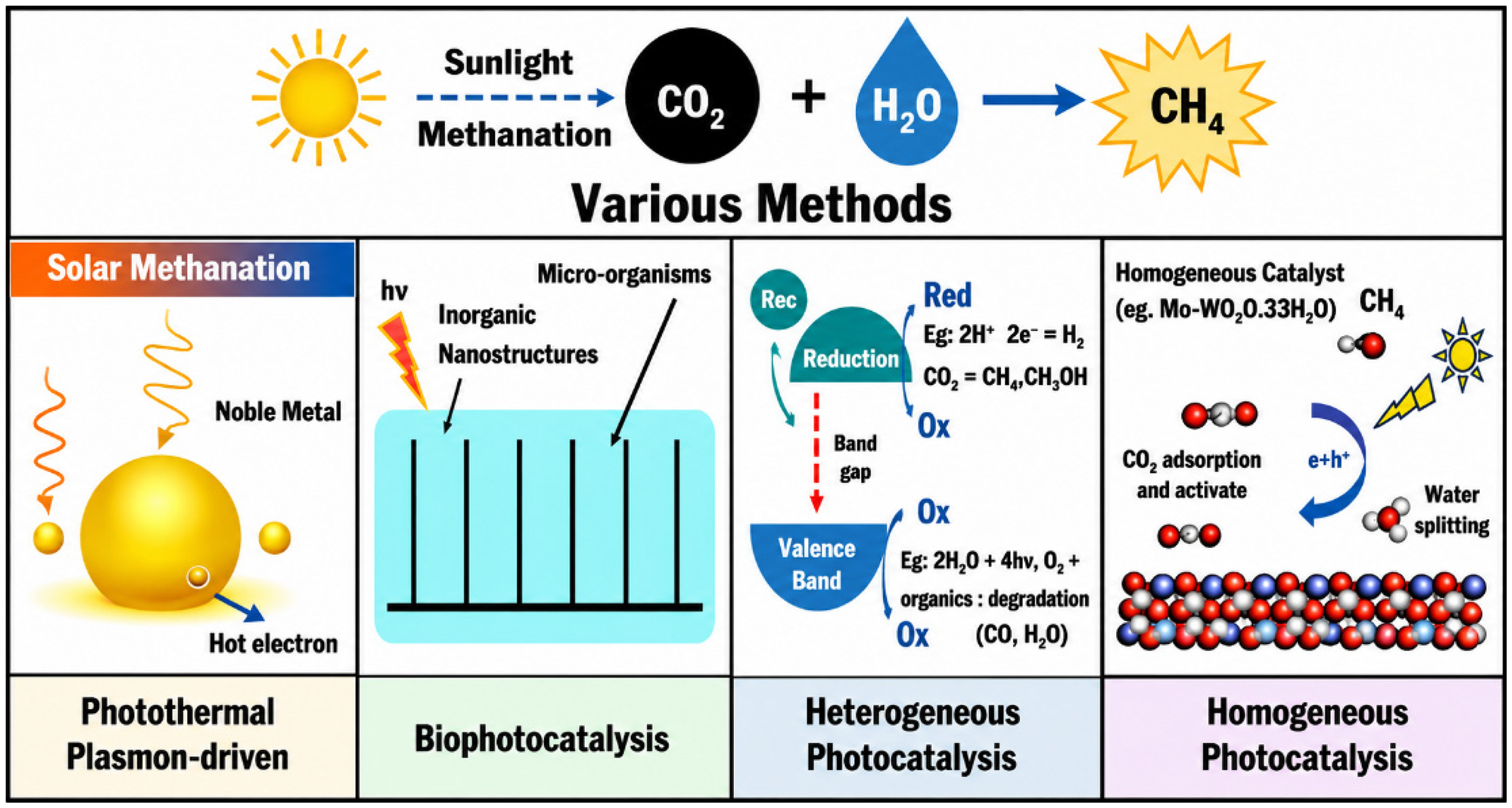
Recent progress in solar methanation strategies.
The recent advancements have been mainly in terms of improving process integration and energy efficiency. Sorption-enhanced methanation processes along with renewable hydrogen generation have been found to have energy efficiencies higher than 80% on the basis of lower heating values. 42 Biological methanation as well as photo-electrochemical methods have shown promise since these could operate at milder conditions and could adapt to renewable electricity variability. 43
Despite much progress being made in the area, there are still some challenges that are preventing CO2-derived solar fuels from becoming a widespread reality. Carbon capture processes consume a lot of energy and could even increase the environmental load if not optimized properly. 44 In addition to that, production of hydrogen via electrolysis consumes the most energy among all CO2 conversion schemes and therefore plays a crucial role in determining the environmental performance of solar fuels. 45 There are other issues too such as process inefficiencies and material needs and lifecycle environmental impacts in case of large-scale operation. 46 Therefore, it is important to perform the lifecycle assessment and techno-economic evaluation in order to judge the sustainability of solar fuels.
The use of methane as a solar fuel is beneficial due to its ability to be transported and stored through the current infrastructure used for natural gas, which lowers capital investments and accelerates market penetration. 47 At the same time, methanol is another promising fuel due to its liquid state under normal conditions, high energy content, and applicability for use within the existing infrastructure. 48 Methanol does not need to be stored under high pressure, and it can be used not only as fuel but also as a source material for chemical synthesis. At the same time, the efficiency of solar-to-methanol conversion is lower than that of hydrogen conversion in most cases, and recently obtained results show approximately 12–13% efficiency for the optimal combination of processes and catalysts.
The efficiency of conversion of CO2 to a product is further increased by recent developments in catalyst engineering. Specifically, the method of electric field-assisted methanation using Ru/CeO2 catalysts provides high methane selectivity and low operating temperature. The above methods may provide additional benefits in lowering required reaction temperatures, efficient catalyst use, and overall higher process efficiency. However, the usage of noble metal ruthenium can significantly raise costs.
In terms of sustainability, one of the main advantages of solar fuels is the possibility of addressing the needs of hard-to-electrify industries, such as air travel, maritime transport, and some industrial activities, and closing the gap between renewable power and these segments. The availability to rely on existing fuel infrastructure also increases their practical value. But currently, the technology readiness level is moderate, and commercial implementation is limited due to high expenses related to CO2 capture, renewable hydrogen production, catalytic reactors, and process integration. 49
In general, the use of CO2-based solar fuels can be considered as a viable option for sustainable renewable energy storage and carbon utilization. Improvements in the field of catalyst design, reactor development, renewable hydrogen production, and CO2 capture will increase efficiency and reduce expenses. It is necessary to focus future studies on the system integration, sustainability, and techno-economic evaluation. Comparative assessment of major CO2-derived solar fuels is tabulated in Table 2.
Comparative assessment of major CO2-derived solar fuels.

TRL: technology readiness level.
Sustainable LIB recycling through fruit waste utilization
The fast emergence of electric vehicles, portable electronic devices, and energy storage systems for renewable energy has resulted in the largest consumption of LIBs. The recycling of used batteries is an increasing concern with regard to environmental impact and sustainable use of resources. Traditional recycling techniques like pyrometallurgy and hydrometallurgy could recycle valuable metals, namely lithium, cobalt, nickel, and manganese; however, they involve high energy consumption, dangerous chemicals, and substantial impact on the environment. Thus, the design of environmentally friendly and resource-saving recycling techniques has become one of the research priorities. 50
Wu et al. 50 have introduced an interesting technique of recycling valuable battery metals through fruit waste-derived reagents, especially orange peel (OP). It implies the usage of natural organic acids and bioactive compounds of fruit peels to extract metals from the used LIBs. In contrast to traditional hydrometallurgical techniques relying on aggressive inorganic acids and oxidation, this technique uses environmentally friendly materials and produces much lesser impacts on the environment. According to the lab data, the efficiency of recovery of cobalt, lithium, nickel, and manganese reached 90%.
Environmental significance of the process is not limited to battery recycling. At the same time, using both food processing waste and electronics waste for this purpose reflects the main ideas of the circular economy and resource recovery. The recovered metals could be reused in the battery production, which will result in a decrease in need in primary mining operations and their associated environmental impact. 51 Integrated waste recovery techniques are especially attractive since they deal with two rapidly increasing sources of global waste – food waste and e-waste.
Fruit waste-assisted recycling procedure is environmentally more friendly compared to traditional recycling techniques. Pyrometallurgical process usually requires higher temperature than 1000°C and entails significant energy and green-house gas emissions. Even though hydrometallurgical techniques are known for very high metal recovery efficiency, they require high volumes of concentrated acids and entail formation of waste-water effluents, which have to be further treated.
Nevertheless, several issues still need to be solved in order for the industrial implementation of this approach to take place. First, the composition of fruit peels depends on the type of fruit, its geographical origin, as well as environmental and seasonal conditions, 52 which could affect the efficiency of the extraction process and its repeatability. Moreover, an effective collection system of raw material, as well as pre-processing infrastructure, will be needed for the application of such a method at a larger scale. Also, the cost-efficiency of transportation, drying, storage, and further processing of large amounts of fruit wastes should be analyzed. 53
Furthermore, the quality of the reclaimed materials should be taken into account. Recent studies have shown that the materials collected from recycled batteries using fruit-based method can be effectively used for the fabrication of LIB electrodes with similar properties to the commercial ones. 54
Fruit-waste-based battery recycling technologies, from a sustainability point of view, constitute an encouraging alternative to other battery recycling technologies that are more carbon intensive. However, the current technology readiness level of fruit-waste-assisted battery recycling is still relatively low compared with industrial recycling technologies. Further research should thus concentrate on process optimization, techno-economic evaluation, lifecycle assessment, demonstrations at a larger scale, and use of different biomass sources in order to enhance efficiency and reliability. 55 In summary, fruit waste-based recycling of LIBs shows how circular-economy concepts can be used to improve advanced energy technologies. This is made possible through conversion of agricultural waste to recyclable material. Comparison of LIB recycling technologies is presented in Table 3.
Comparison of lithium-ion battery recycling technologies.

TRL: technology readiness level.
Fruit-waste-assisted recycling offers several advantages over conventional pyrometallurgical and hydrometallurgical processes. The use of naturally derived organic acids and biomass-based reducing agents significantly lowers chemical consumption and reduces the generation of hazardous wastewater. In addition, the process operates under relatively mild conditions, thereby decreasing overall energy requirements compared with high-temperature pyrometallurgical routes. Laboratory studies have demonstrated metal recovery efficiencies approaching 90%, which are comparable to those achieved by established recycling technologies. However, large-scale implementation remains challenging because of feedstock variability, collection logistics, preprocessing requirements, and the need for standardized operating conditions. From an environmental perspective, the simultaneous utilization of food waste and spent batteries supports circular-economy objectives and reduces the environmental burden associated with both waste streams. Future work should focus on lifecycle assessment, techno-economic analysis, and pilot-scale demonstrations to determine the commercial viability of this emerging recycling approach relative to conventional industrial methods.
Progress in advanced rechargeable battery technologies
The expansion of renewable energy systems as well as electrification of transport has led to an increased requirement for the development of new energy storage technologies. Energy storage is crucial for compensating for fluctuations in the generation of renewable energy, stability of power grids, and transition to a lower carbon footprint energy system. For this reason, there have been numerous scientific advancements aimed at improving energy storage. 56
LIBs prevail in the global market of rechargeable batteries due to the high level of energy density and long-life cycles, as well as availability of established production systems. 57 Improvements of materials and components of electrodes, electrolytes, and systems of battery management have resulted in performance enhancement and decreased costs. Specifically, the use of nanotechnologies in LIBs has improved lithium storage, charge transfer, and stability.
While LIBs have proven successful, issues related to resource availability, price volatility, and supply chain security have led to exploration into other battery systems. Among these include sodium-ion and potassium-ion batteries, which are considered favorable due to greater resource availability and reduced prices. These battery types are able to be produced using manufacturing techniques similar to LIB production techniques, which could lead to successful commercialization on a large scale. Energy density and long-term cycle life of both are typically inferior to LIBs currently available, indicating the need for new materials.
Metal-air batteries have become popular due to their extremely high energy density and low cost of energy storage. The recent advancements in bifunctional electrocatalysts have allowed improving the efficiency of oxygen reduction and OER, increasing the performance of metal–air batteries. However, there are still problems that prevent the application of these batteries on a practical level such as catalyst degradation, electrolyte instability, limited cycle life, and production difficulties.
Modern advances in battery materials design have proven that optimization of the nanostructural characteristics of battery elements allows for a significant increase in electrochemical activity. The advanced structure of the electrodes, the controlled morphology of crystals, and the optimized transportation of substances have resulted in increased capacity retention and cycling ability. 58 But the implementation of these developments on an industrial scale is complicated by technical difficulties, financial aspects, and durability concerns.
One more area of intensive investigations concerns the extension of the life time of batteries and fast charging. Intelligent battery management systems, artificial intelligence control technologies, and advanced heat management methods have a huge potential in increasing the efficiency of operations and decreasing degradation. 59 Fast charging can substantially shorten the charging period; still, problems with lithium plating, the risk of thermal runaway, and increased degradation rates do not allow wide implementation of this technology yet.
In terms of sustainability issues, future battery development needs to be concerned not only with performance issues but also with the environmental and resource management aspects. Rising demands for critical raw materials, like lithium, cobalt, and nickel, result in risks associated with the availability and geopolitical dependencies of resources, along with negative environmental consequences related to mining and the extraction of the resources. Therefore, sustainable materials and processes, battery recycling, resource recovery, and circular economy approaches become a topic of great interest nowadays.
On the whole, advanced rechargeable batteries are crucially important for the successful development of renewable energy systems and low-carbon energy systems. LIB technology can stay prevalent in the nearest future; however, other battery types, like sodium-ion, potassium-ion, and metal–air batteries, have a lot of potential as well. In order to promote new energy storage technologies commercially, future studies should pay attention to the energy density, safety, charging rate, lifetime, sustainability, and production scalability issues. Comparative assessment of advanced rechargeable battery technologies is tabulated in Table 4.
Comparative assessment of advanced rechargeable battery technologies.

Critical barriers in PSC development
The PSCs have proved to be among the most promising solar cell technologies of the next generation on account of their high efficiencies, low-temperature fabrication process, and potential for cheap manufacturing. Remarkable improvements were made in the last decade, during which the efficiencies increased from less than 15% to more than 26%, 60 thus approaching the efficiency of the well-established silicon technology. In addition to the high efficiency, PSCs exhibit some other characteristics, which include tunable bandgap, lightness, flexibility, and Building-Integrated PVs capability. 61
Nevertheless, several issues, which should be addressed before PSC technology can become a reality, still exist. First and foremost, the problem of PSC stability is crucial. Perovskite materials are very sensitive to moisture, oxygen, UV radiation, and elevated temperature, leading to degradation of these materials and, accordingly, to deterioration of solar cells’ performance under long-term outdoor conditions. 62 Although encapsulation techniques, interface engineering, and improved charge transport layers have enhanced the stability of solar cells, the lifetime of PSCs is still significantly shorter than that of traditional silicon PV modules.
Recent studies have explored the possibility of increasing the lifespan of solar cells through material innovation, surface passivation, and proper device structures. Protective layers, superior encapsulation methods, and better formulations of perovskite have shown greater durability against environmental hazards and thermal stress. 52 In addition, machine learning-assisted materials innovation and accelerated degradation studies have further helped identify degradation modes and increase device reliability. However, field verification of performance under actual conditions is lacking, thus leading to doubts about long-term performance and increased risks. 63
Environmental sustainability is yet another issue facing perovskites. Most high-efficiency PSCs rely on perovskite compounds containing lead, which is toxic and may cause environmental pollution during disposal. 64 Though nontoxic versions have been developed, they lack efficiency and stability compared to lead-containing perovskites. Thus, proper measures for containment and recycling need to be developed.
Scalability issues in manufacturing also pose considerable challenges. Although lab-scale devices can be produced using the spin coating technique, commercially viable production of perovskites requires scalable deposition techniques like blade coating, slot-die coating, and vapor-assisted manufacturing techniques. 65 Uniformity of the quality of the film, process reproducibility, and yield during manufacturing on a large scale continue to be challenging from a technical perspective. Moreover, further encapsulation and durability improvements will contribute to the LCOE and undermine the economic benefit provided by inexpensive manufacturing. 66
The sustainability and recyclability of resources are becoming increasingly relevant for PSCs’ commercialization. Development of closed-loop systems that would allow recycling of lead and other valuable substances is necessary to reduce environmental impact and enhance resource efficiency. 67 Also, sustainable material choice, environmentally friendly manufacturing methods, and lifecycle assessment-based designs could be helpful in decreasing the environmental impact of PSC technology. 68
In general, there is great potential for PSCs to be used as part of future low-carbon energy systems based on their high efficiency and flexible manufacturing methods. Yet the commercialization of PSCs would require solving the issues associated with stability, environmental impact, scalability of production, and recycling. The focus of future studies should be on the development of stable perovskite materials, ways of minimizing the use of toxic materials, and scaling up production. Comparative assessment of key barriers to PSC commercialization is presented in Table 5.
Comparative assessment of key barriers to PSC commercialization.

PSC: perovskite solar cell.
Sustainable bio-energy fuels
Bioenergy sources are considered an essential part of future energy systems due to their provision of alternative fuels for transport and industry. Vegetable oils, animal fat, agricultural residues, food waste, and algae can be used as feedstocks for biodiesel, bioethanol, and other biofuels, which reduces dependence on fossil feedstocks and facilitates waste valorization strategies. 69 Biofuels not only help to reduce greenhouse gas emissions but can also provide such benefits as increasing energy security and promoting rural economies. 70
Biodiesel is of particular interest among biofuels due to its ability to operate in existing diesel engines and fueling stations. Reductions in emissions of particulates, carbon monoxide, and hydrocarbons compared with regular diesel were observed; however, increases in emissions of nitrogen oxides are possible under specific operating conditions. 71 Even though biodiesel has environmental advantages, its widespread use is hindered by such factors as limited feedstock availability, variable quality of fuel, land usage issues, and competitiveness.
In addition to traditional biofuel production techniques, new biomass chemical looping processes (CLPs) have been developed as effective solutions for sustainable production of fuels and hydrogen.72,73 CLPs allow for highly effective gasification, combustion, and reforming of biomass, while also separating CO2. Chemical looping techniques offer greater hydrogen production, better syngas production, and decreased greenhouse gas emissions in contrast to traditional methods of biomass utilization. 74 Moreover, if carbon capture and storage methods are incorporated into biomass conversion systems, negative emissions will be achieved through bioenergy with carbon capture and storage (BECCS).
Yet, a number of obstacles still restrict their wide deployment. Variability in the feedstock composition, decay of the looping material, process complexity, and infrastructure constraints are some key technical barriers. 75 Moreover, biomass cultivation and BECCS deployment on a larger scale might result in tradeoffs in terms of environmental impacts such as changes in land use, loss of biodiversity, water resources depletion, and competition with agriculture. 76 Thus, it is critical to carry out a lifecycle assessment and manage feedstocks in an environmentally friendly manner.
In general, sustainable bioenergy fuels have great potential to support decarbonization through substituting fossil energy carriers in hard-to-abate sectors of the economy. Further work should be aimed at increasing conversion efficiency, making looping materials more robust, better integrating carbon capture technologies, and setting up sustainable supply chains of biomass. Comparative assessment of sustainable bioenergy pathways is presented in Table 6.
Comparative assessment of sustainable bioenergy pathways.

TRL: technology readiness level; CLP: chemical looping process; BECCS: bioenergy with carbon capture and storage.
Innovative waste-to-electricity fuel cell systems
The economic benefits of food waste management through AD include the fact that the electricity generated is cheaper than that from wind and solar power. The WTE system involves the utilization of organic solid waste through incineration, gasification, and anaerobic digestion (AD), as depicted in Figure 4. These methods involve converting waste to energy, reducing the amount of waste sent to landfills, and generating clean energy.
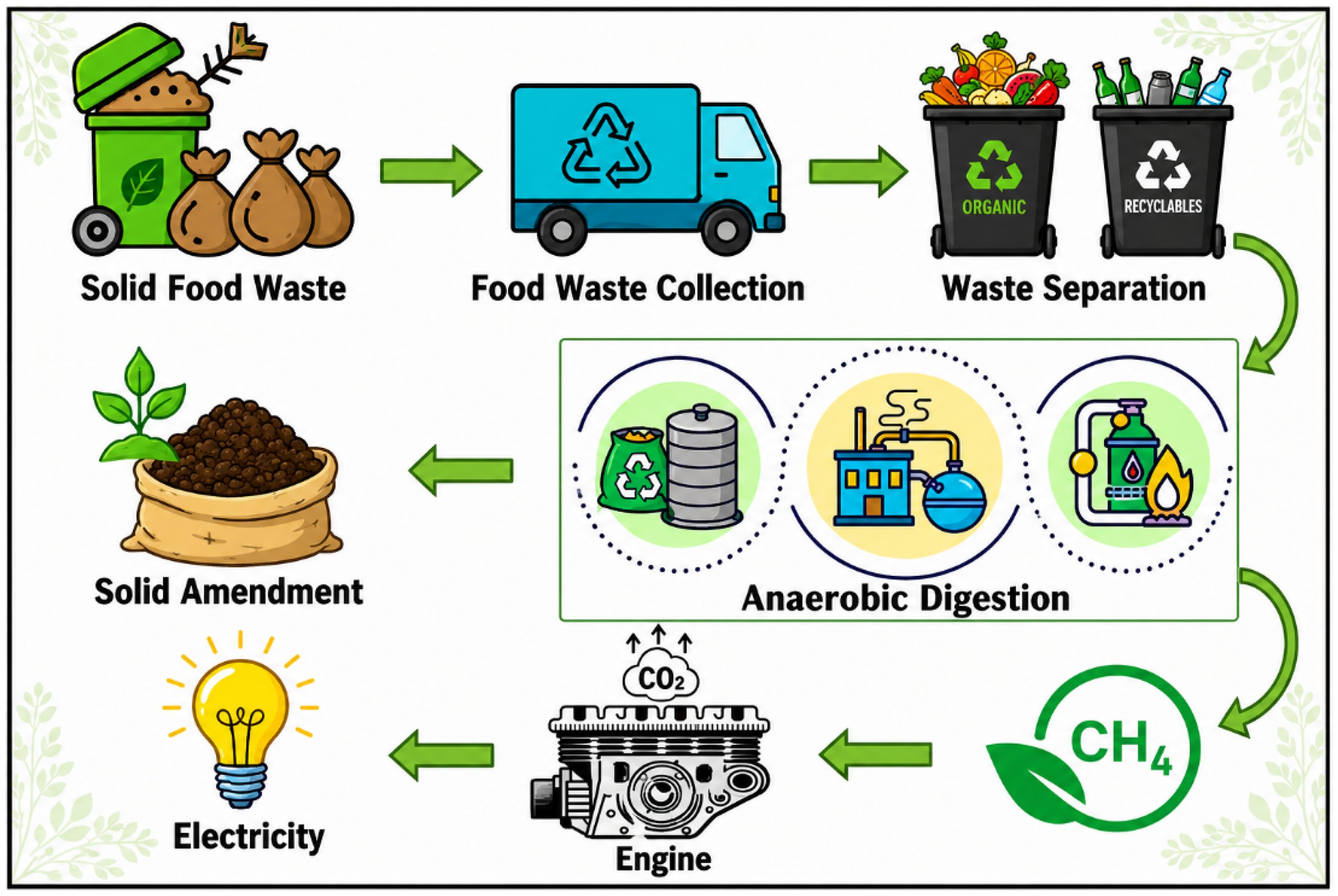
Schematic illustration of an energy generation plant from solid food waste.
Technologies that convert waste to electricity have been considered promising options to deal with waste problems and generate renewable energy sources. Food waste, agricultural by-products, and other organic waste streams are valuable materials that can be used for generating electricity while minimizing their landfilling and subsequent greenhouse gas emissions. 77 Among several different technologies MFC and AD-based systems have been widely studied because they allow not only waste management but also energy production.
Electricity is produced in MFCs through microbial oxidation of organic substances, allowing direct waste conversion to energy. Experiments have shown the possibility of successful electricity generation using food waste and spent animal bedding with the power density greater than 1 mW cm−2 and total organic carbon (TOC) removal efficiency greater than 90%. Oxidation of volatile fatty acids obtained during anaerobic fermentation is important for the process of electricity generation. Besides energy production, these technologies are involved in water treatment due to high TOC and chemical oxygen demand (COD) removal efficiency.
Among biological WTE technologies, AD is considered the most developed one. The technology allows not only converting waste into biogas but also decreasing waste mass and pollutant loads. Decreases in volatile solids and COD indicate the effectiveness of AD technologies in waste treatment and energy recovery. 78 Additionally, nutrient recovery and utilization of digestates are beneficial factors for enhancing process sustainability.
Nevertheless, there are some drawbacks restricting the wide implementation of these systems. Low power density, high internal resistance, as well as difficulties connected with reactors scaling and their long-term operation, are the problems of MFCs. 79 In terms of AD, optimization is needed to preserve the activity of microorganisms, increase methane yields, and maintain process stability with different compositions of feedstock. 80
The current research is devoted to the development of new electron transfer mechanisms, reactor designs, and integration of MFCs with other waste treatment technologies. The combination of AD, MFC, and resources recovery in hybrid WTE systems could be considered as an attractive alternative allowing for increasing the effectiveness of energy generation. 81
From the sustainability point of view, the waste-to-electricity approach supports circular economy goals by using organic waste for the production of useful energy sources, while mitigating the formation of methane from landfills. It has been found through lifecycle assessment studies that waste valorization systems can provide much better environmental performance in comparison with traditional approaches to waste management. 82 Nevertheless, future work should be concentrated on increasing power production capacity, decreasing costs, ensuring scalability, and developing standards for the evaluation of efficiency of such systems.
In general, waste-to-electricity systems for fuel cells are prospective carbon-neutral technologies which combine energy production and sustainable waste management solutions. Comparative assessment of WTE technologies is presented in Table 7.
Comparative assessment of waste-to-energy technologies.

TRL: technology readiness level; MFC: microbial fuel cell.
Integrated low-carbon implementation pathways
The shift toward net-zero energy systems goes beyond the developments in individual technology innovations. The realization of a sustainable and low-carbon future necessitates the adoption of renewable energy generation, energy efficiency, energy storage, carbon neutral fuels, resource recovery, and circular economy approaches as an integrated concept. The integrated approach to the low/zero-carbon implementation in terms of the combination of renewable energy generation, energy storage, sustainable fuel generation, carbon utilization, and waste recovery technologies is important.
In relation to recent research into low/zero-carbon buildings, it has been shown that reduction in energy demand is the cheapest decarbonization solution. 83 Energy-saving retrofit materials, such as energy-saving plasters, contribute to the reduction in energy use and reduction in carbon emissions. Additionally, glazing and energy generation through the use of heat-insulating PV glass make it possible to develop net-zero energy buildings by enhancing the thermal insulation and generating renewable energy at the same time. 84 These technologies have already proved to be applicable and scalable with relatively low risks for the environment.85,86
Renewable energy generation provides the core of future low-carbon energy systems. Solar PVs, wind energy, and hybrid renewable energy systems show great promise in generating clean energy for households, commercial use, campuses, and industries. 87 The hybrid systems comprising solar, wind, and energy storage systems have proved to provide reliability and reduced intermittency along with improved resilience of the systems. Nevertheless, large-scale implementation necessitates effective storage systems to cope with fluctuations in the supply of renewable energy.
Energy storage is thus an important enabling technology. LIBs prevail in commercial applications due to their efficiency and technical maturity. Sodium-ion, potassium-ion, metal–air batteries, and hybrid storage systems represent new promising storage technologies that could help mitigate reliance on critical elements. In addition, there exist battery recycling technologies, which include biomass-assisted recycling technologies that can mitigate resource depletion and achieve circular economy targets. Thermal energy storage systems that involve advanced phase-change materials, such as the solar salt enhanced with carbon nanotubes, open additional possibilities to improve renewable energy efficiency in concentrated solar power and industrial heating applications. 88
For industries that are not easy to electrify, such as aviation, maritime, and some industrial processes, renewable fuels will play a crucial role in the future. Examples of renewable fuels include solar fuels from CO2 conversion, renewable hydrogen, seawater-to-fuels techniques, and bio-based fuels. While these technologies are less developed compared to conventional renewable electricity, they offer a means of storing energy over long durations, carbon utilization, and sector coupling. Among these, renewable hydrogen and green methanol have the best commercial prospects in the medium term while seawater-to-fuel systems and artificial photosynthesis are still developing.
PSCs are another area where the future of renewable energy generation looks bright. These cells are highly efficient and relatively inexpensive to manufacture. However, for commercial applications, issues relating to their stability and toxicity should be addressed.
The use of waste valorization technologies also helps in enhancing low-carbon implementation approaches as it helps in combining energy generation with resource recovery processes. Technologies such as waste-to-electricity fuel cells, anaerobic digesters, and biomass chemical looping can help in reducing waste loads, recovering resources and generating renewable energy. Biomass systems combined with carbon capture and storage systems may become net-negative in emission terms through BECCS.
A comparison of the discussed technologies shows that they vary in terms of technological maturity, scale-up abilities, lifecycle performance and deployment capabilities. Technologies such as PVs, wind energy, LIBs, biodiesel, and AD have high technology readiness levels and are ready for immediate large-scale deployment. Sodium-ion batteries, biomass chemical looping, advanced recycling and renewable hydrogen production can be considered mid-term opportunities needing some optimization and industrial demonstration. The long-term technologies include seawater-to-fuel transformation, MFCs, solar fuels produced from CO2 and artificial photosynthesis.
However, in general, the most realistic way forward to achieve net-zero energy systems would be through the incorporation of energy-efficient buildings, renewable electricity generation, energy storage, sustainable fuels, carbon utilization processes, and circular resource management. This kind of systems approach will help in achieving the maximum environmental gains while boosting energy security and improving resource efficiency. The comparative assessment of integrated low-carbon technologies is presented in Table 8.
Key findings
From this review, it is clear that for sustainable low-carbon energy systems, there must be an integration of renewable electricity generation, energy storage, sustainable fuel production, resource recovery, and a circular economy approach. Although many successes have been recorded in various technological fields, the levels of technological maturity and market readiness vary greatly from one technology to another.
Near-term implementation technologies (technology readiness level (TRL) 8–9) are solar PV, wind energy systems, LIBs, AD, biodiesel production, and conventional WTE systems. These technologies have been playing an important role in decarbonization, which can still be expanded.
The technologies at medium-term range (TRL 5–8) are sodium-ion batteries, biomass gasification, chemical looping, battery recycling technologies, and hydrogen production from renewables. The technologies are technically promising; however, further refinement, economic evaluation, and implementation are still required.
The long-term emerging technologies (TRL 3–6) are seawater fuel conversion systems, solar fuels via CO2 conversion, MFCs, metal–air batteries, and PSCs. Despite their promising role in decarbonization, the challenges with regard to efficiency, stability, scalability, cost, and sustainability are yet to be solved.
Some common threads can be drawn from the existing literature reviewed above. First, catalyst development, material engineering, and system integration are being utilized to increase efficiency in renewable fuel production and energy conversion. Second, circular economy principles such as battery recycling and WTE conversion are becoming increasingly important as a means of minimizing environmental impact and resource dependencies. Third, lifecycle assessment, resource availability, and environmental sustainability should all be taken into consideration in addition to performance.
Overall, the transition toward new-generation eco-energy systems will involve not just technological innovation but also comprehensive deployment strategies that would integrate renewable energy production, energy storage, carbon management, resource recovery, and policy frameworks. Future research efforts should focus on increasing technology scalability, reducing costs, ensuring lifecycle sustainability, and enabling commercialization. Comparative assessment of emerging eco-energy technologies is presented in Table 9.
Comparative assessment of integrated low-carbon technologies.

PV: photovoltaic; PCM: phase change material; BECCS: bioenergy with carbon capture and storage.
Comparative assessment of emerging eco-energy technologies.

Concluding remarks
The shift toward lower-carbon energy systems would necessitate the simultaneous development of renewable energy technologies, energy storage methods, sustainable fuel technologies, carbon utilization, and resource recovery. The following is a review of emerging eco-energy technologies that can help with decarbonization and provide energy security, resource efficiency, and circular economy benefits.
Out of all the discussed technologies, solar power, wind power, LIBs, biodiesel, and AD would be considered the most mature technologies and will likely play an important role in future decarbonization efforts. Battery recycling technologies, sodium-ion batteries, biomass chemical looping, and renewable hydrogen are on track for scaling up and have a lot of potential in the medium term. At the same time, seawater fuel synthesis, solar fuels based on CO2, MFCs, and novel perovskite solar panels have not reached their maturity yet but show great potential in the long run.
However, there are still some obstacles preventing large-scale applications. The most important obstacles include increasing the efficiency of technologies, improving the lifetime of materials, reducing the costs of production, making available resources, decreasing the impact on the environment, and developing ways of scalable manufacturing and recycling. It will be necessary to conduct a lifecycle sustainability assessment and evaluate the technoeconomy to facilitate technology development and deployment in the future.
The main conclusion that can be drawn from this review is that only an integrated system of eco-energy including renewable energy production, advanced energy storage, carbon utilization, sustainable fuel use, and resource cycle can lead us to the sustainable future. Innovation, favorable political regulation, and industrial demonstration projects will be required for the successful commercialization of technologies.
Footnotes

Author contributions
Bappa Mondal contributed to the conception design, and first draft preparation. Sukumar Pati and Alemu Workie Kebede contributed to the interpretation of the outcomes and commented on previous versions of the manuscript. All authors read and approved the final manuscript.
Funding
The authors received no financial support for the research, authorship, and/or publication of this article.
Declaration of conflicting interests
The authors declared no potential conflicts of interest with respect to the research, authorship, and/or publication of this article.
AI usage
The authors used AI tools for language refinement and presentation. All scientific content and analysis were developed and verified by the authors, who take full responsibility for the work.
Nomenclature