



Abstract
This study examines the features and benefits of a collaborative online-course template designed for and used by the department of public administration program at a mid-Atlantic university in the USA. Drawing on a multi-informant original survey addressed to students and faculty the study aims to answer the question: to what extent are online-course templates beneficial to student learning and instructor teaching experiences? Findings suggest that, overall, both students and faculty had positive perceptions of the template’s consistency in terms of format and access, but students found the template to be more beneficial to their learning than did faculty to their teaching.
Introduction
Institutions of higher learning are currently using online-course templates which provide standardization for students in online course navigation (Ley and Gannon-Cook, 2014) and foster early student engagement (Borgemenke et al., 2013), comfort (Dykman and Davis, 2008) and success (Miller, 2012) in online learning. In an effort to assess the benefits of such templates, this study examines student and instructor perceptions about the collaborative Blackboard course design template that was jointly created by the public administration department and the office of academic technology at a mid-Atlantic university in the USA. This university has been creating and offering online courses since 1998, with their department of public administration delivering online classes for more than a decade. During that time, faculty learned and developed many best practices for maximizing impact, engaging students and assessing the learning of online courses.
With the evolution of learning management systems and the explosion of social media and mobile apps, there are many options available to course developers. These options can be overwhelming for faculty and staff and confusing for students who try to navigate different courses using varied course template approaches. As a result of such challenges, the department of public administration voluntarily developed a consistent online-course template in conjunction with the office of academic technology during the spring 2015 semester. The design follows the principles of Quality Matters, an external review rubric that contains eight general and 43 specific standards for online course quality assessment (Quality Matters, 2014). These principles have provided a framework for the university community to design a consistent way to better engage students with course content, their peers and their faculty. This online-course template design was intended to facilitate student learning through consistency of access to course materials and effective and efficient instructor utilization of Blackboard throughout the public administration department.
In trying to answer the question “To what extent are online-course templates beneficial to student access and learning and instructor teaching experiences?” this study assesses the benefits of the university’s Master of Public Administration (MPA) online template through a multi-informant survey addressed to both students and instructors in the department of public administration. The study is motivated, in part, by student course evaluation feedback that identified a need for better consistency across courses, and by challenges expressed by students in identifying course materials as instructors structured their courses differently. Additionally, the core MPA faculty believed a consistent online template would help instructors (especially junior and adjunct faculty) with their online teaching experience by allowing them to focus on teaching rather than on developing online course shells.
This study begins to fill a gap in the course design and delivery research of MPA programs, which neglects online-course templates. Findings of this study aim to inform the decision to evaluate and refine this template and its continuing use. Based on our research, we will share lessons learned about student and instructor perceptions of course design, and how we navigated a collaborative process to create a consistent approach for all courses in the program. It is anticipated that the MPA online template has the potential to facilitate student learning, to enhance instructors’ teaching experience and to improve productivity of course designers.
Background
The university’s MPA program has been serving the New York metropolitan area since 1979. Since then, more than 1200 students have graduated from the program across its three major course tracks of government, healthcare administration and nonprofit management. This track diversity has contributed to the program’s desire to offer stability and consistency throughout the courses taken by students each year. Currently the department of public administration offers a MPA degree with tracks in government, healthcare administration and nonprofit management, and certificate programs in healthcare policy and management, and nonprofit management. With the growth of online programming, students began requesting online course delivery and the program responded with its earliest online offerings in 1998. Responding to this demand, its earliest beginnings 20 years ago began with one online-course offering each semester and by the 2013–2014 academic year the MPA program offered 11 online courses and 57 face-to-face courses. Today, the program offers all of its winter intercession and summer classes fully online and nearly a third of all fall and spring semester classes are offered in an online or a blended format.
Working with the office of academic technology, the MPA program determined to explore ways to promote consistency and quality for all courses offered in the program, regardless of delivery modality or instructor. Consequently, the public administration department came together with the office of academic technology in 2015 to review its approach to online course development and worked for a year to create a consistent template within Blackboard’s Learning Management System that would work for all courses in the department and, thus, make it easier for students to learn and for faculty to teach. This project consisted of regular meetings, an analysis of prior courses and an agreement among full-time faculty and the department chair that consistency was a priority. The department considered a variety of factors including the population of students taking the courses, the varied modes of course delivery (online, face-to-face and blended) as well as the course learning outcomes. One of the challenges in creating a consistent template for the department was the issue of academic freedom. Faculty had different opinions about the terminology and placement of each navigational button but the faculty felt strongly about the need for consistency, so they willingly compromised on their individual preferences. The faculty recognized the importance of usability and accessibility as more critical than personal preference over style and location of content areas.
The final template consists of a banner with images representing both campuses of the university under study and course navigational buttons grouped in three sections to emphasize the differences between introductory content, the weekly course work and the course tools. The first section of navigational buttons includes the following: announcements for the daily communication, a home page for a digest of all course related materials, instructor information for contact information and office hours, and syllabus for the course requirements and calendar. The second section of buttons contains the detailed course calendar with key dates and timelines, course work and course documents including all the lecture notes and course materials, discussion board for the course conversations and external links for website links and resources for the course. Finally, the third section of buttons contains the general available course tools, links to course email, groups and the help button.
Before this template was created, faculty received a basic university-wide default template but made changes to the language, layout and colors to personalize each course. While some faculty liked the ability to customize, it created confusion and a lack of consistency from course to course. For new full-time and part-time faculty, this lack of consistency contributed to confusion in course preparation and management. The newly designed template creates the consistency needed for students and faculty so that each course feels familiar and accessible and it relieves the burden of customization from the faculty.
The public administration department started using the online template in the summer 2015 semester for fully online, blended and web-assisted courses. Although the template has been preloaded into all classes since its implementation, its use by instructors is voluntary. The office of academic technology consistently assists the department of public administration with the supply of course shells containing the MPA online template. Since the adoption of the online template, the department of public administration hired two additional full-time faculty with the initial three full-time faculty who adopted the template onboard. While the newly designed template incorporates the views and preferences of self-selected faculty members and representatives of academic technology, the faculty who initially worked on the template in conjunction with the head of academic technology decided to assess the utility and effectiveness of the online template and conducted a multi-informant survey addressed to students and current full-time and part-time faculty. This study, therefore, serves to inform the department of public administration, the greater university community and public administration departments around the world that offer degree and non-degree programs in disciplines related to public administration, on online-course template best practices.
Literature review
Around the world, instruction is increasingly delivered asynchronously online, with educators facing new challenges and searching for ways to maintain rigor and quality content. As online education has emerged across mainstream higher education, an increasing number of MPA programs are offering online courses, hybrid courses and entire degree programs online (Naylor and Wilson, 2009; Powell, 2007). Today, even face-to-face courses commonly have an online component where readings are posted, assignments are submitted and information is shared.
Institutions of higher learning now frequently rely on department-wide or university-wide templates for their online courses to provide a common navigation for students (Ley and Gannon-Cook, 2014). Online instruction adds another level of cognitive loading if a student must relearn how to access course components as they move through their program of study. This load may be lightened when course components are presented consistently and designed with clarity (Borgemenke et al., 2013). Such universal course shell templates may benefit learners and instructors in a number of ways. First, course templates facilitate early student engagement with course content because students do not need to relearn the format of the digital interface (Borgemenke et al., 2013). Second, course templates can improve student learning and satisfaction because they allow the online environment to be well organized and simple to navigate, which, in turn, helps students stay organized (Jackson and Helms, 2008) and improves student engagement, completion and success (Miller, 2012). Third, to increase the comfort level further, when all courses in a program or department have a similar look and feel, it improves student and instructor satisfaction (Dykman and Davis, 2008). An online-course template that balances the technological skills of instructors and students has the potential to lead to high student satisfaction and performance (Shea et al., 2016). Furthermore, a consistent homepage of a course shell can provide orientation to the course: a good orientation plays a critical role, and a deliberately designed homepage helps students become familiar with the instructional tools and resources (Chen, 2007). Finally, course templates may contribute to the creation of communities of online learning where a consistent course structure can establish expectations and a familiar space for exchanging ideas between students and instructors (Shea et al., 2016).
Decisions about online-course design are adopted with the intent of addressing various issues in higher education including access, cost and effectiveness of learning and teaching (Shearer, 2013). As detailed next, consistency in online-course design has been documented to be easily embraced if three conditions are being met: (a) the transactional distance between the teacher and the learner is minimized through increased engagement; (b) the course template is the result of a collaborative effort; and (c) consistency in online learning is unlikely to infringe upon academic freedom.
Transactional distance and engagement
A core difference between traditional face-to-face and online courses is the physical separation between the teacher and learner, which can create what is known as transactional distance: teacher–learner relationships separated by space and/or time. Higher levels of transactional distance are found to lead to lower student satisfaction (Shea et al., 2016). The three variables found to influence transactional distance are (a) instructional dialogue, (b) program structure and (c) the autonomy of the learner (Moore, 1993).
In order for online education to be successful transactional distance should be minimized. Moore (1993) suggested that transactional distance decreased when both the institution and the instructor offered opportunities for dialogue between the instructor and the student and between students, as well as when course materials were appropriately structured. These materials and the course structure must be created with a keen awareness of the characteristics of the student population, and systematic organization and deployment: “in distance education teaching is hardly ever an individual act, but a collaborative process joining together the expertise of a number of specialists in design teams and delivery networks” (Moore, 1993: 28). Existing studies found that teaching presence in the form of course design and organization, facilitation and instruction (Akyol and Garrison, 2008), and presence of communities of inquiry can reduce transactional distance in an online and/or blended environment (Tolu and Evans, 2013). Creating and sustaining online learning communities leads to “a shift from an environment characterized by novelty and uncertainty (due to technology) to one of belonging and familiarity” (Gigliotti, 2016: 409). When designing an online template to be used across a program, transactional distance is minimized by creating a sense of familiarity in each course so that the learner feels as comfortable in an online environment as he/she would in a face-to-face classroom. A course template makes the rules of engagement clear from the beginning and through this process, the student feels welcome to participate and engage from the first day on, rather than struggling to understand how the course will proceed. A consistent course template reduces isolation for students and promotes engagement through familiarity of approach and design.
Collaborative process
Online-course development is complex, and instructors cannot develop high caliber online courses alone (Caplan, 2004). Institutions of higher education now encourage collaboration of faculty and staff to develop online programs and courses, a process which has been found to have several important characteristics including flexibility, process ownership and communication among team members (Hixon, 2008).
Xu and Morris (2007) studied the roles and decisions of a course development team, which consisted of faculty members, a project coordinator and an online instructional designer. Their findings included confirmation that the four involved faculty members found the collaborative experience highly positive, despite some issues that arose during the process such as increased workload and conflicts about course materials. By collaborating to create an online-course template, the courses developed can be richer, more effective and more likely to help students succeed because they fit together. Students and faculty benefit from the courses being developed collaboratively rather than independently because they reflect input from different viewpoints. Through a collaborative course-design process, courses in a program feel more like different chapters of a book rather than entirely different texts with no connection.
Academic freedom
In a traditional classroom setting, a professor has the academic freedom to adjust communication with students immediately and continually, exercising their judgement to guide the student–professor engagement (Smith and Mitry, 2008). Especially in a recorded online distance education format, instructors are unable to adapt in this way. In some cases, faculty members find online instruction threatening to their academic freedom by prescribing the way of teaching (Oh and Park, 2009). The potential exists for faculty to perceive efforts to create structure and consistency in course design as an extension of this threat.
However, an online-course design template can create a consistent course structure and support faculty and students. With templates, faculty are able to focus on course content and engagement with students, while students benefit from less anxiety and isolation as online learners (Burgess et al., 2008). In 2012, Gillingham and Molinari noted that quality of online learning and student satisfaction were dependent upon instructional design. Notably missing from their study was consideration for the course-design template, in other words, how course components were offered across the program. This study is trying to fill in this research gap by examining how an MPA online-course template impacts learner and instructor access and satisfaction. Rather than restricting academic freedom, course templates can free an instructor to focus on content delivery and themes rather than focusing on the physical course structure or layout.
Data and method
In trying to answer the question “to what extent are online-course templates beneficial to student access and learning, and instructor teaching experiences?,” this study uses two original multi-informant online surveys of graduate MPA students and full and part-time faculty. The surveys were designed to be anonymous and posed no risk to either group. The sampling frame for student participants consisted of 123 graduate students enrolled in the MPA program during the spring and summer semesters of the 2016–2017 academic year. First-semester students were excluded from the study as they had not yet completed a course in the MPA program. The faculty sampling frame consisted of three full-time and 11 part-time faculty. The other three full-time faculty within the department are the authors of this study and could not participate in the survey. All adjunct faculty who have been actively teaching at the university at least once a year were included in the study.
Before being administered, the surveys were pilot tested on 10 individuals who were knowledgeable on the subject. The surveys were administered during the months of September and October 2017 as online surveys and data were collected in two waves and two follow-ups with individual participants. The survey response rate was 41% for students and 71% for faculty.
The surveys contained similar questions that were tailored to students and instructors, both of whom held different roles when interacting with the online template. They covered topics related to the familiarity and usability of the online template, its consistency and standardization, its impact on learning and/or teaching experiences, and recommendations for useful features not currently present in the online template.
The student survey participants are differentiated by several individual and demographic characteristics. These are: student status, campus affiliation, MPA track, gender and race. A summary of the frequencies for all these individual indicators are shown in Table 1. More than half of the student survey participants are part-time students (57%); 63% of the participants identified themselves as campus 1 students, less than a third (31.5%) as campus 2 students and the rest (5.5%) as fully online students. Furthermore, student respondents are fairly spread across the three tracks of the MPA degree with a slightly higher percentage of students pursuing the government track (37%) when compared to the healthcare and nonprofit tracks (31.5% for each). An overwhelming majority of student respondents are females (71%) as compared to males (29%). This gender trend is consistent with the MPA student population.
Individual characteristics of student participants.
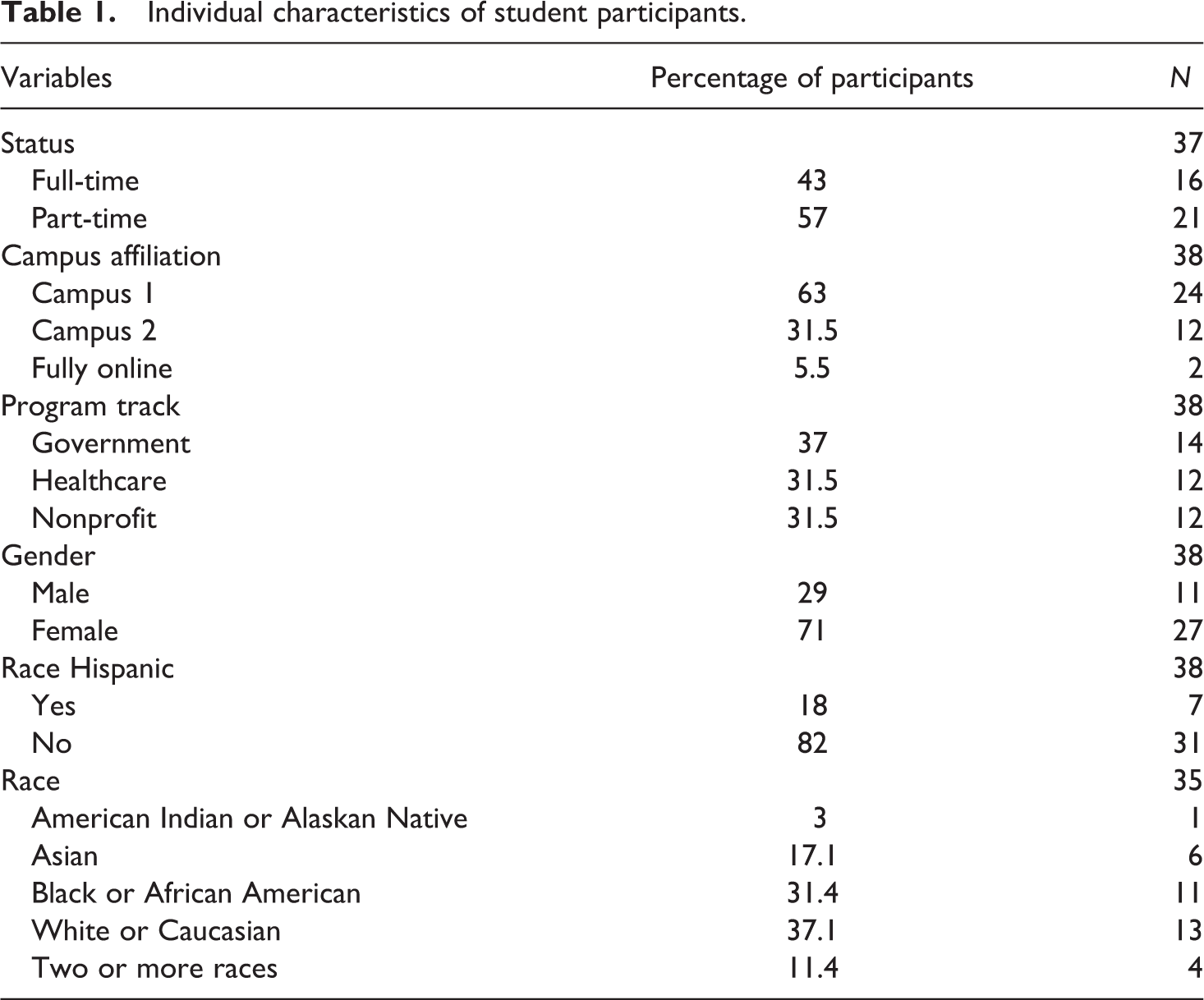
In terms of race, 82% of students identified themselves as non-Hispanic while 18% indicated they were of Hispanic origin. When further broken down, the student respondents seem to be diverse: 37% are White, 31% of them are African-American, 17.1% are Asian, 11.4% identified themselves as representing two or more races, and the remaining 3% as American Indian or Alaskan native.
Individual characteristics of faculty-survey participants are presented in Table 2. Two thirds of faculty respondents are part-time faculty as compared to one third who are full-time. Furthermore, two thirds of faculty identified themselves as campus 2 faculty, 22% as campus 1 faculty and the remaining 11% as fully online faculty. In terms of MPA tracks, there are more faculty respondents representing the government and healthcare tracks than the nonprofit management track. An overwhelming majority of faculty respondents were male (77.8%).
Individual characteristics of faculty participants.
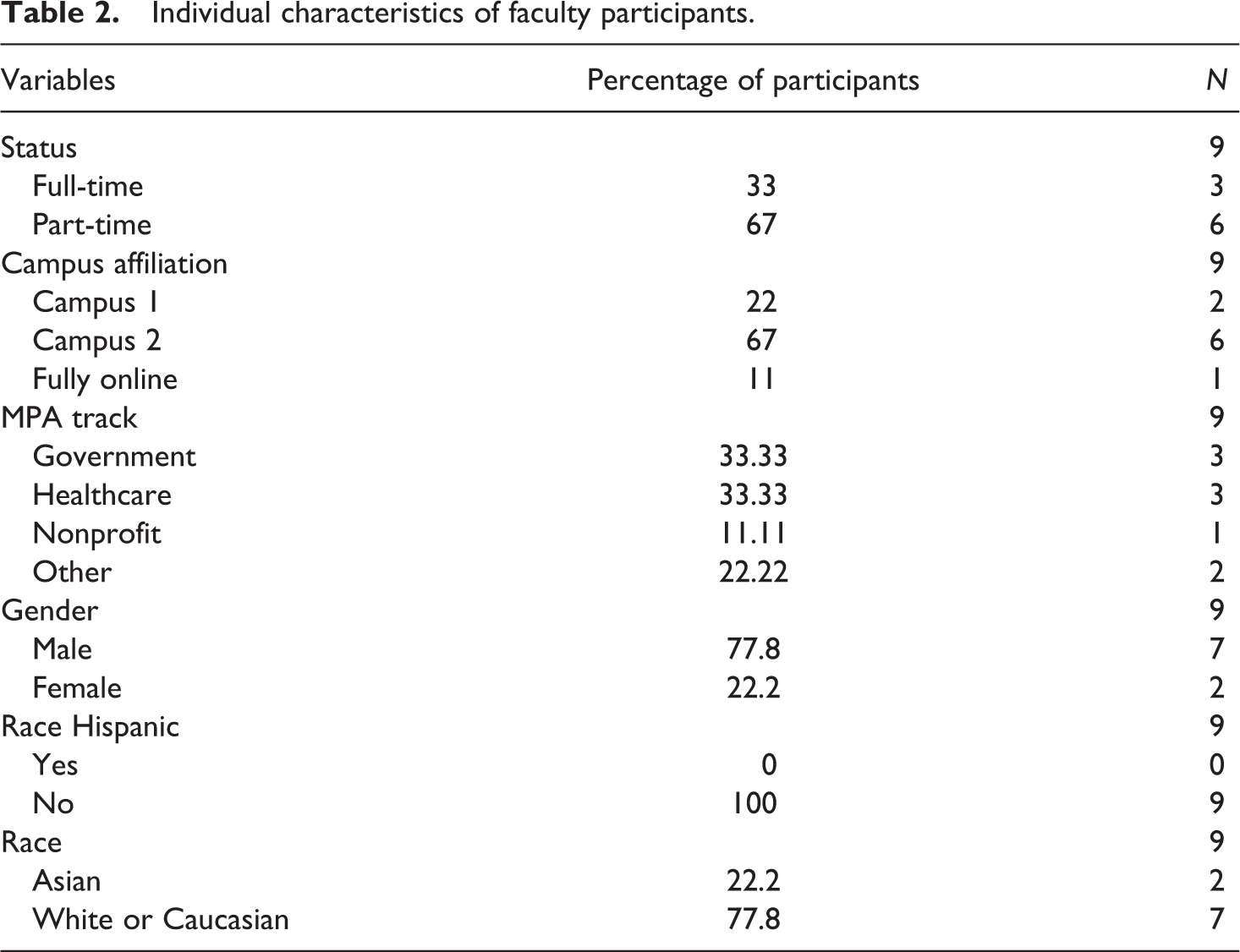
Finally, all faculty respondents identified themselves as non-Hispanic. When race was broken down by specific categories, faculty respondents classified themselves as White (77.8%) and Asian (22.2%). The sample of faculty-survey participants is not truly representative of our faculty body but it is the best representation we could maintain considering that three of the department’s full-time faculty, all female, designed and administered the survey and therefore could not participate.
Although the authors made every effort to ensure reliability and validity of findings, there are two limitations to be mentioned. The study has low external validity because its findings cannot be generalized beyond the scope of this study, but they can inform the larger university community and other institutions of higher learning about online template best practices that can be adopted elsewhere. Second, the sample under-represents female faculty compared to the overall faculty population.
Findings
Results are presented in two main sections. The first section presents findings from the student survey while the second section presents findings from the instructor survey.
Student survey findings
Student survey participants seem to be a good representative sample of the MPA student body and very familiar with online learning. Of the students who completed the survey, approximately one third had been in the program for over two years. Findings indicate that 87% of the students had taken online courses but even for those who had not taken online courses, all students had experience with using a Learning Management System (Blackboard) as a supplement to a face-to-face course.
Moreover, 72% of the students reported that they first enrolled in the MPA program during or after the summer 2015 semester, the semester when the new MPA template had been widely adopted by the public administration department. When asked about whether they were familiar or not with the MPA online template, just under half of the students (48%) were aware of the new MPA online-course template, and of those who said they were aware, 85% were able to correctly identify the template when shown samples. Results of the student survey further indicate that 33% of the students who completed the survey have been enrolled in a class that did not use the current Blackboard MPA template while 77% have not. Those classes are pre-core and core classes in the MPA program as well as on the nonprofit track, or undergraduate classes in a different program. Finally, 24% of the surveyed students said that they were enrolled in a face-to-face or blended learning class that did not use Blackboard at all. The majority of these classes were part of the nonprofit track, one was part of the MPA core and one was an elective class.
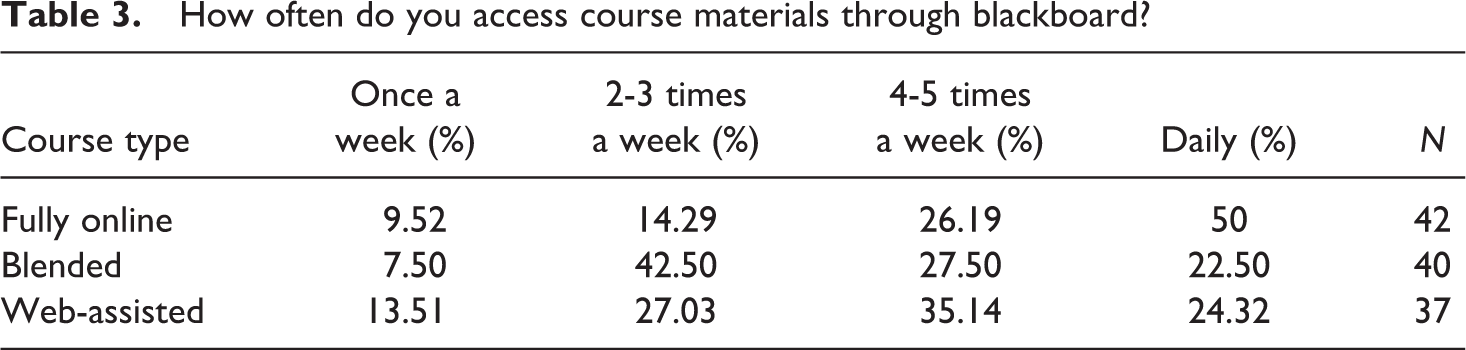
Results describing how often students use Blackboard to access class materials are described in Table 3. Of the students who are enrolled in fully online classes, half of them access Blackboard on a daily basis, 26% access Blackboard four to five times a week, 14% use it two to three times a week and almost 10% access materials through Blackboard once a week. For blended classes (where 25–50% of classes are taught online and the rest face-to-face), 22.5% of students access course materials on a daily basis, 27% four to five times a week, 42.5% of students use Blackboard two to three times a week and the rest (7.5%) use it once a week. Finally, for web-assisted courses (classes are taught face-to-face and Blackboard is used as an aid) 24% of students access Blackboard daily, 35% four to five times a week, 27% two to three times a week and almost 14% once a week.
How often do you access course materials through blackboard?
Results describing student perceptions of the MPA template features are presented in Table 4. When asked detailed questions about the template features relating to consistency of entry and navigation, 79% and 85% of students strongly agreed and somewhat agreed that the template was helpful. This trend continued for questions relating to ease of use for instructional materials, ease of identifying faculty information and locating foundation information such as the syllabus. Moreover, 72% of student respondents strongly or somewhat agreed that the layout of instructional materials was consistent and 75% of them strongly agreed and somewhat agreed that the navigation panel was clear. Overall, there was a high level of agreement (between 72 and 85% of student respondents strongly and somewhat agreed) that the MPA online template has a consistent format and is clear and easy to access.
Student perceptions of the online template.
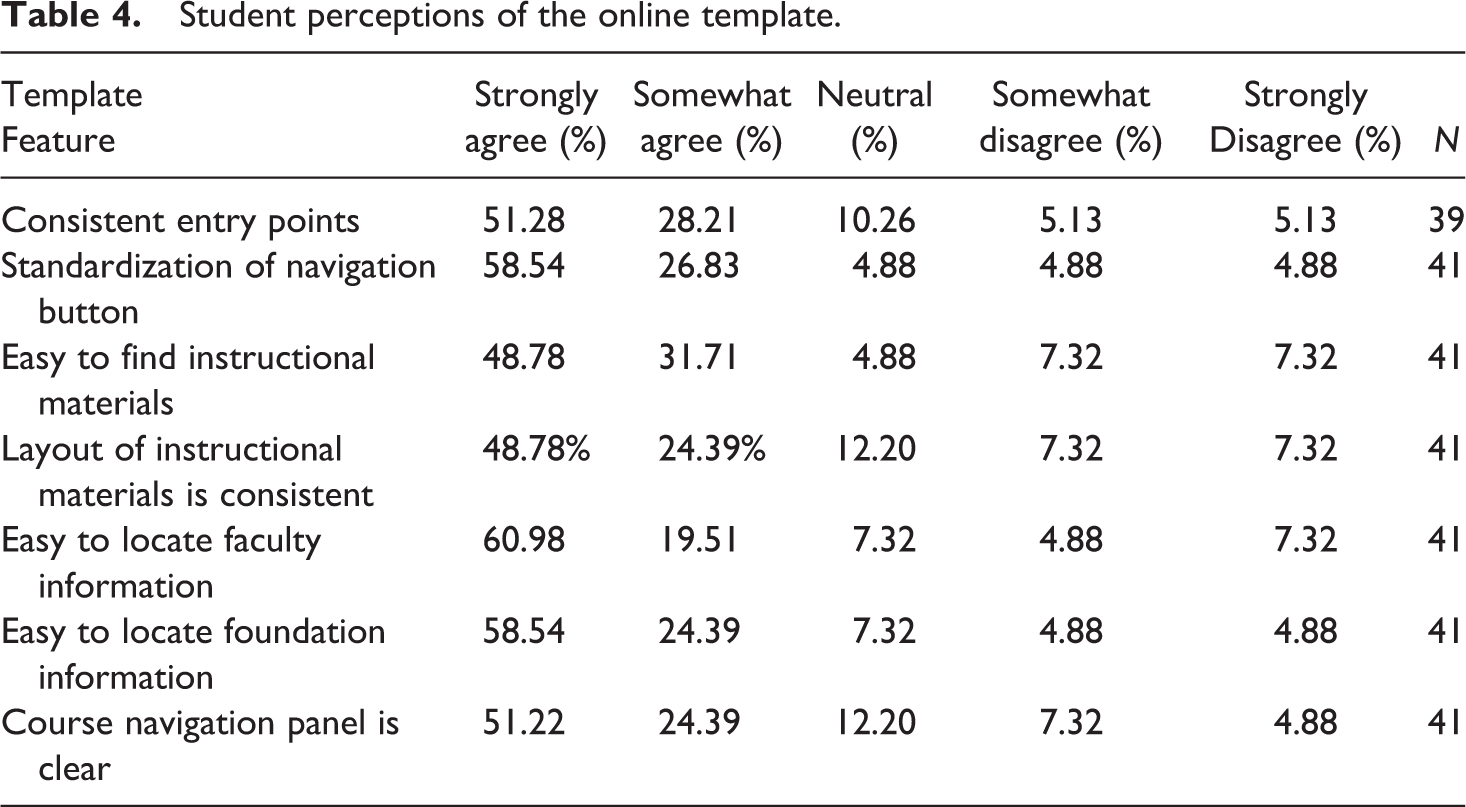
There were some differences in the way individual characteristics of student respondents impacted the perception of MPA online template features. Women had a significantly higher level of agreement than men that the template provided standardization of navigation buttons, and ease in locating foundation information. Also, non-Hispanic student respondents had a significantly higher level of agreement that the MPA template provided standardization of navigation buttons, layout consistency, ease in locating faculty information and foundation information, and that the course navigation panel was clear. Student status, campus affiliation and MPA track showed no differences in the way students perceived the MPA online template features.
The survey asked students for suggestions about other features that are not included in the template but would be helpful to add in the future: 23% of student respondents considered that there are other features that may be adopted in the future. Their suggestions focused on four topics: discussion forums, notifications, mobile access and Turnitin, which is a web-based plagiarism detection software contracted by the university. First, student respondents suggested a need for a more interactive discussion board and the ability of students to edit their posts. Second, student respondents recommended additional notifications and reminders to signal upcoming deadlines for class assignments, when course materials are being uploaded in the course, and when there is activity in the discussion board. Third, student responders recommended functional and reliable mobile access to online classes. Lastly, one final recommendation refers to student use of Turnitin as an editing tool to assist them with their writing assignments.
Some existing features of the MPA online template were considered not particularly helpful by 6% of student respondents. One particular student suggested that the Blackboard template looked outdated and not as interactive as other apps.
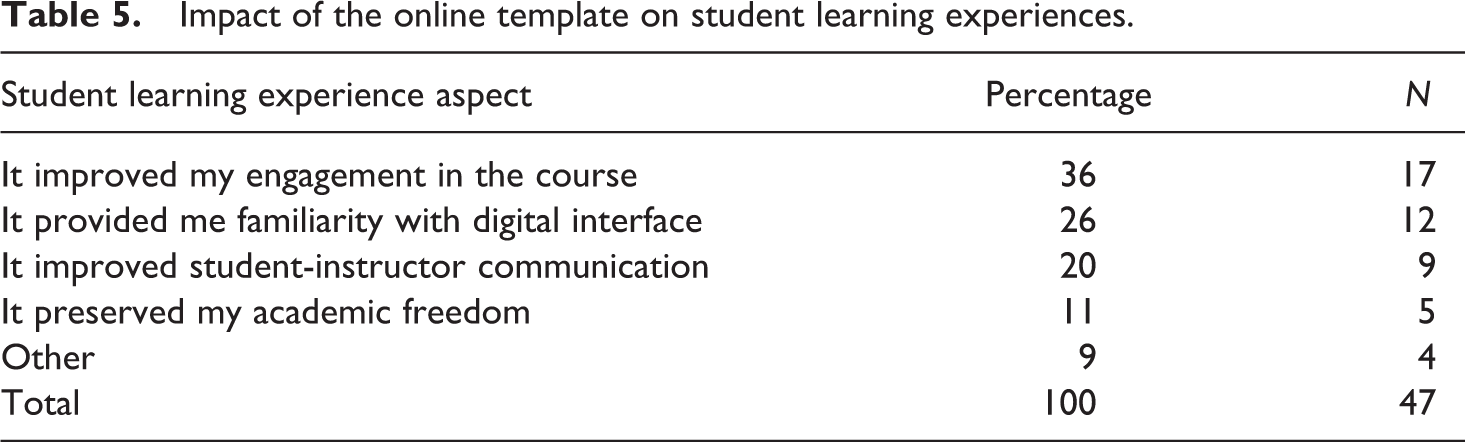
Results describing student perceptions of how the MPA online template impacted their learning experience are presented in Table 5. When asked if the online-course template has enriched their learning experience, 71% of the students responded “yes” and 29% responded “no.” Students prioritized the ways they perceived the template had enriched their learning experience as follows: 36% of them considered that the template improved their engagement in the course; 26% considered that the template improved their familiarity with digital interface; 20% of students considered the template improved student–instructor communication; 11% considered the template preserved their academic freedom; and 9% of the students considered the template had other impacts on their learning (such as access to Panopto recordings).
Impact of the online template on student learning experiences.
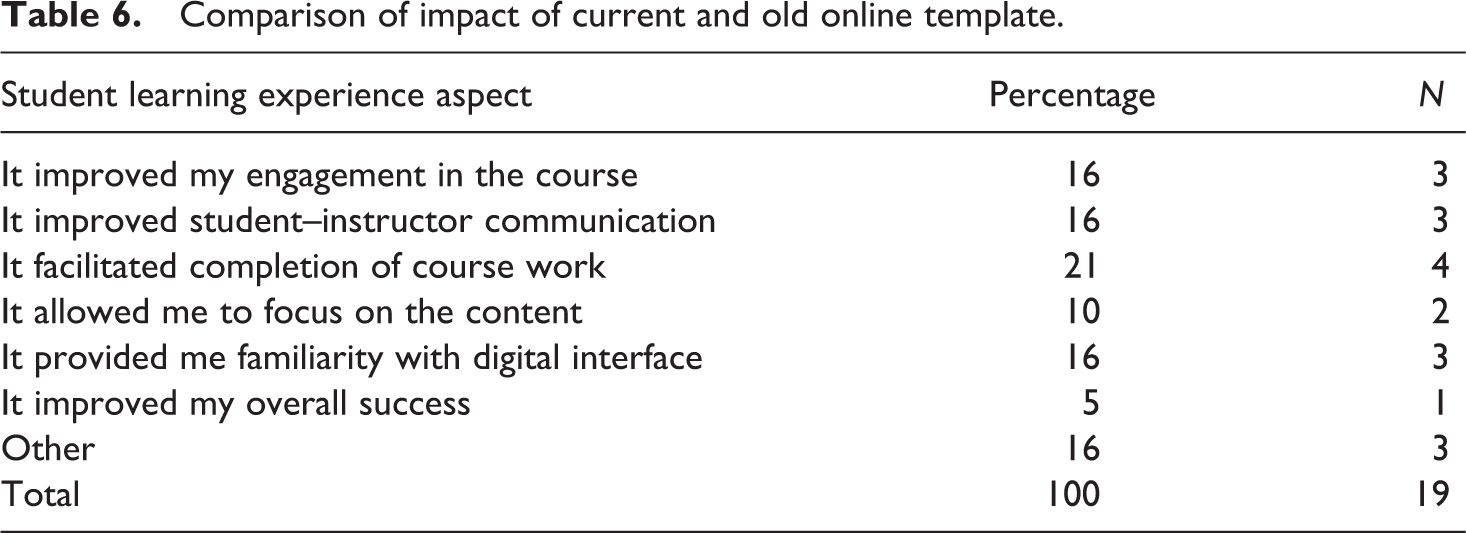
Of the students who enrolled in classes prior to the departmental-wide use of the MPA online template, 37.5% strongly and somehow agreed that the template was better than the old one, 62.5% were neutral and nobody disagreed that the new template was better than the previous version. When asked how the current template was better than the previous one, students prioritized their choices (see Table 6): 21% of student respondents considered the new template facilitated completion of course work; 16% considered the new template improved student–instructor communication; 16% considered the new template provided student familiarity with digital interface; another 16% considered the new template improved student engagement in the course; 10% considered the new template allowed students to focus on the content of the course; 5% considered the new template improved student overall success; and 16% perceived the new template had other impacts on student learning (among which easier access to materials posted by the instructor was mentioned).
Comparison of impact of current and old online template.
Students provided some comments regarding the MPA online template. Those comments that are relevant to our study refer mainly to how instructors are inconsistent in using the template in terms of labels and number of tabs, and the variety of ways through which class materials and resources are linked to the course work. Additionally, students mentioned that providing an interface that is more user friendly would be helpful.
Faculty-survey findings
Faculty-survey respondents are the best representative sample we could have obtained given this study’s circumstances. Of the faculty who completed the survey, an overwhelming majority of 89% taught online classes. All faculty who taught online classes also used Blackboard as an aid in the face-to-face classes they taught. Additionally, 55.6% of the faculty reported that they first taught in the MPA program before the summer 2015 semester when the online template had been widely adopted by the public administration department compared to 44.4% of faculty who started teaching during and/or after the template adoption.
When asked about their familiarity with the MPA online template the overwhelming majority of faculty (89%) were aware of the new MPA online-course template. Of those who said they were aware, all faculty members were able to correctly identify the template when shown samples.
The survey asked faculty members to specify the percentage of course materials that they post through Blackboard. Results show that for fully online classes faculty post all their materials via Blackboard; for blended courses (where at least 25% of material is expected to be taught online) faculty post on average 93.6% of course materials in Blackboard. Two out of the nine faculty respondents indicated that they did not teach blended classes. Finally, an average of 83.9% of faculty responded that they posted materials for face-to-face classes on Blackboard.
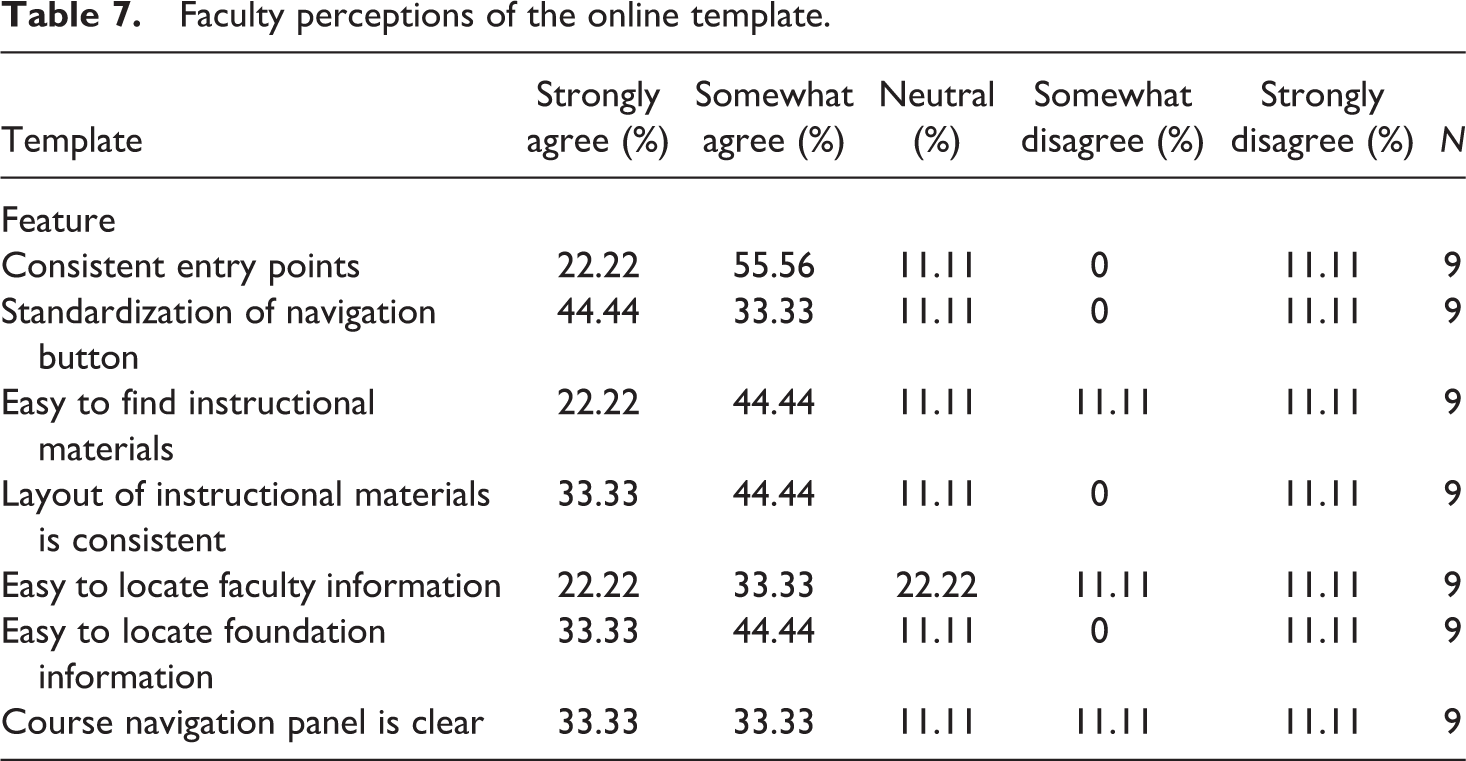
Table 7 presents faculty perceptions related to the MPA template. Overall, faculty have positive perceptions on the benefits of the template. Approximately 78% of them strongly and somewhat agreed that the template was helpful in terms of entry point consistency, standardization, layout and ease to locate foundation information. Of faculty respondents, 67% strongly and somewhat agreed that the template was helpful in terms of ease to identify materials and being clear; and 56% of them considered the template provided ease in identifying faculty information.
Faculty perceptions of the online template.
The survey further asked faculty for suggestions about other features that were not included in the template but would be helpful to add in the future: 33% of faculty respondents considered that there are other features that could be adopted in the future. Their suggestions focused on the following: making the discussion section more interactive and more measurable, and providing separate buttons for assignments, assessments and course documents rather than trying to fit everything in course work. One faculty member considered the online template non-functional on mobile devices and suggested that it might infringe on academic freedom.
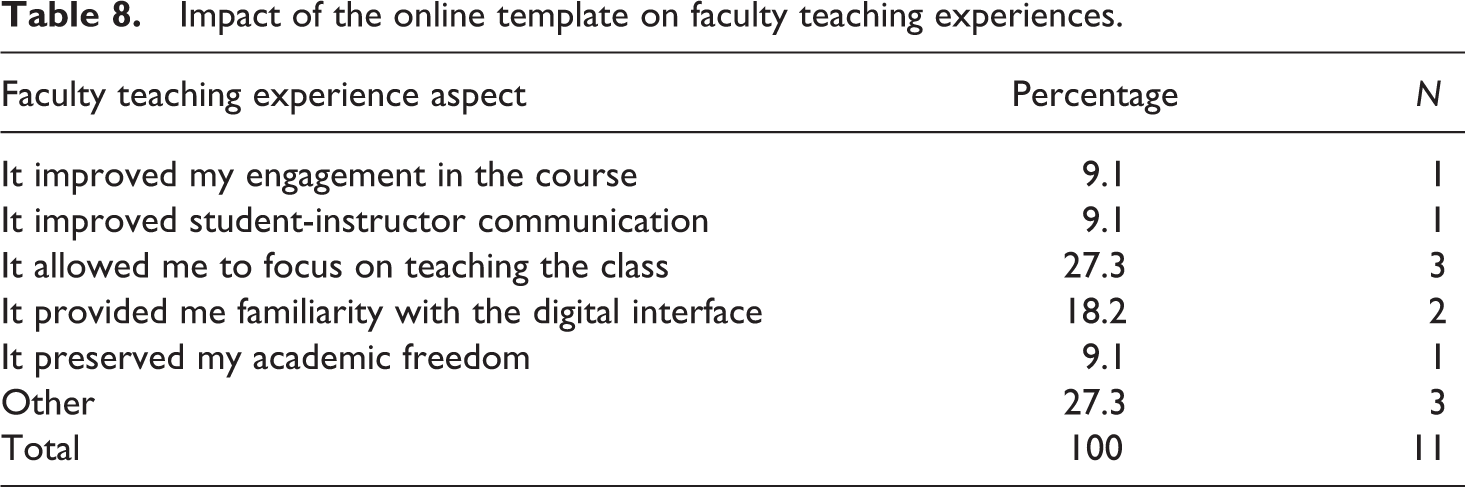
Finally, results describing faculty perceptions of how the MPA online template impacted their teaching experience are presented in Table 8. When asked if the online-course template has enriched their teaching experience, 33.33% of faculty somewhat agreed, 55.56% of them were neutral and 11.11% strongly disagreed. Faculty prioritized their perception of the template’s impact on their teaching experience as follows: 27.3% of them believed the template allowed them to focus on teaching the class; 18.2% felt the template provided familiarity with the digital interface; 9.1% believed the template improved their engagement in the course; another 9.1% thought the template improved student–instructor communication; and another 9.1% felt that the template preserved their academic freedom. Finally, 27.3% of faculty indicated that they cannot assess how the new template impacted their teaching experience or that the template had no impact on their teaching experience as they did not use the old or any other online template.
Impact of the online template on faculty teaching experiences.
Faculty respondents provided favorable comments and recommendations in terms of the MPA online template such as expressing their appreciation for its consistency and making several recommendations for improvement: providing separate menu items for assignments, assessments and course documents; pre-populating the contact info section with common contacts such as the MPA administrative office, office for students with disabilities, office of student assistance; and integrating third party tools such as Course Networking into Blackboard.
Discussion and implications
In responding to the research question “to what extent are online-course templates beneficial to student access and learning and instructor teaching experiences?,” this study has learned that consistent online-course templates are beneficial to both students and instructors. In an effort to offer solutions about developing effective online and blended courses across a department, this study examined the extent to which online-course templates were beneficial to student access and learning and instructor teaching experiences through the perceptions of students and faculty at a mid-Atlantic university in the USA. Findings indicated that, overall, both students and faculty had positive perceptions of the online template’s consistency in terms of format and access. However, faculty had fewer positive perceptions than students about the template’s consistency, especially in terms of ease of locating faculty information.
In terms of the impact of the online template, student respondents were more likely to perceive the template as beneficial than were faculty respondents. Students considered the online template enriched their learning experience because it improved their engagement in the course, it improved familiarity with the digital interface and it improved student–instructor communication. Those students who had the opportunity to take classes before the template was implemented, also felt the online template allowed them to focus on the content of the course and improved their overall success.
Similar with previously-expressed views, this study found that consistency in online-course templates improves student engagement (Miller, 2012), lessens the transactional distance and, therefore, increases teaching presence by improving student familiarity with the digital interface (Borgemenke et al., 2013; Gigliotti, 2016), and improves communication between student and instructor (Akyol and Garrison, 2008).
This study found that faculty respondents ranked the benefits of the online template differently than student respondents. The former placed a high value on the fact that the template allowed them to focus on teaching the content of the course and it provided familiarity with the digital interface. A medium value was placed on the template increasing faculty engagement with students, improving student–instructor communication, and preserving academic freedom.
Unlike previous studies that focused only on student perceptions, this study assessed online learning consistency through the lenses of both students and faculty, and found that faculty were appreciative of the online-course template facilitating familiarity with technology and, to a lesser extent, engagement and communication with students.
Why did students and faculty differ in the way they perceived the benefits of the template? One explanation resides in the fact that three full-time faculty were not involved in designing the template as they joined the department at a later time. Similar to previous studies (Xu and Morris, 2007) the results reported herein suggest that, in order for success, all full-time faculty need to be involved in designing and evaluating an online template. Thus, it is recommended that future studies should continue to include faculty perceptions of online learning.
Both students and instructors made recommendations about how the template could be improved. While most of the recommendations differed between students and faculty, there was one commonality: the suggestion to make discussion forums more interactive and more measurable. How did student and faculty recommendations differ? Students suggested the template become more mobile friendly and requested additional notifications and more editing tools be made available. Faculty were focused on suggesting re-formatting on the labels and content of template buttons. These findings show that while students expect “mobile first,” faculty prefer to design online courses on computers. Learning management systems such as Blackboard may not be as mobile friendly as students would prefer, hence institutions of higher learning need to work to find a common ground to better meet student and faculty expectations.
This study is among the first to consider perceptions of both students and faculty when assessing course online templates. Notably, it makes three major contributions to the online learning literature. First, this study suggests that online-course templates may be drivers of online learning communities with the potential to reduce transactional distance in online learning (Gigliotti, 2016). Second, the study notes that online-course templates may serve as online tutorials for first-time student users and may help students successfully navigate learning management systems, course structure and instructional design, a need that has previously been identified in the literature (Naylor et al., 2016). As universities move toward more online classes, course templates have the ability to contribute to lower online student drop-out rates (Naylor et al., 2016). Finally, this study suggests that academic freedom in an online learning environment is not a clearly-defined concept and there is a need for further research on this topic.
The findings of this study raise three important questions that can help assist higher education institutions in developing and using online templates: how should universities bridge student and faculty needs and preferences at a time when technology is rapidly evolving and the new generation of students possess advanced technological skills and expectations while faculty may not? What role could course design play in balancing student learning and faculty teaching preferences? How best should online-course template consistency be managed without unduly infringing upon academic freedom?
As reported in this study, there is no doubt that consistency has benefits for online learning. Future plans for the current online-course template include the following: building a common syllabus for the department; adopting some of the other elements of Quality Matters such as standardized discussion forum rubrics since pre-structured discussion threads were found to actively engage students (Brooks and Jeong, 2006: 371); undergoing a re-assessment of the online template every three years; evaluating faculty on how they use the template; and continual faculty development in terms of online training. As suggested by Shea et al. (2015) one challenge for graduate programs, in particular, is to create a consistent and navigable online template that can accommodate various learning styles (p. 541).
Conclusion
Online templates can have significant benefits to students and instructors and their success depends largely on the way they are designed, implemented and evaluated. While some institutions of higher learning are taking a top-down approach to institutionalizing templates or rubrics (i.e. Quality Matters), the department in this study chose to pursue this process in a highly collaborative bottom-up approach, engaging faculty and academic technology specialists. This, in turn, yielded a high level of satisfaction. The template is now preloaded into every course three months prior to the start of the semester, making it easier for faculty to build courses and easier for students to engage and learn since the courses all follow the same format.
This study found that consistent online-course templates have the potential to minimize transactional distance between students and instructors by increasing teaching presence and student engagement through familiarity with digital interface. Ultimately, this study suggests that technological changes such as consistent online-course templates are beneficial to student learning and faculty teaching experiences, and their success depends on how well graduate programs can balance student and instructor technological preferences and skills.
Footnotes
Acknowledgements
We would like to thank Dr. Joseph Ryan who initiated and participated in the design of the MPA online template and to John Blackwell who facilitated and offered his guidance throughout the design process.
Declaration of conflicting interests
The author(s) declared no potential conflicts of interest with respect to the research, authorship, and/or publication of this article.
Funding
The author(s) received no financial support for the research, authorship, and/or publication of this article.
