



Abstract
In four studies, we test the hypothesis that people, asked to envisage interactions between an ingroup and an outgroup, tend to spatially represent the ingroup where writing starts (e.g., left in Italian) and as acting along script direction. Using soccer as a highly competitive intergroup setting, in Study 1 (N = 100) Italian soccer fans were found to envisage their team on the left side of a horizontal soccer field, hence playing rightward. Studies 2a and 2b (N = 219 Italian and N = 200 English speakers) replicate this finding, regardless of whether the own team was stronger or weaker than the rival team. Study 3 (N = 67 Italian and N = 67 Arabic speakers) illustrates the cultural underpinnings of the Spatial Intergroup Bias, showing a rightward ingroup bias for Italian speakers and a leftward ingroup bias for Arabic speakers. Findings are discussed in relation to how space is deployed to symbolically express ingroup favoritism (Spatial Ingroup Bias) versus shared stereotypes (Spatial Agency Bias).
Keywords
Spatial asymmetries have traditionally been investigated in the field of cognitive science, focusing on attentional processes (Hubbard, 2014), aesthetic preferences (Chokron & De Agostini, 2000), envisaging of numbers and time (Fischer & Shaki, 2014; Santiago et al., 2007), and neurological functioning (Chatterjee, 2011). Relatively recently, a new line of studies has focused on social-cognitive processes, specifically exploring the role of spatial asymmetries in stereotyping (Spatial Agency Bias [SAB]; Suitner & Maass, 2016). In this article, we take this argument one step further by postulating that asymmetrical spatial representations may not only serve to represent socially shared stereotypes but also to promote one’s ingroup.
Several models have explained the process driving the association between space and (social) cognitive processes. For instance, our knowledge of spatially grounded abstract concepts is strictly linked to metaphorical language: spatial coordinates such as “up” and “down” conflate with the concept of power, thus yielding a conceptual blending where “up” is associated with more power and “down” with less power (Schubert, 2005). This, in turn, extends to additional abstract concepts such as social status (von Hecker et al., 2013). Recent evidence also suggests a conceptual blend of gender, power, and space such that male targets, especially when powerful, are represented higher up in space than female targets (Lamer & Weisbuch, 2019; Zarzeczna et al., 2020).
By the same token, writing systems exert a systematic influence on cognition through the repeated performance of asymmetrical visuo-motor actions. According to an embodied perspective, the bodily experience of writing and reading (either from left to right or from right to left) influences, among others, mental representations of time, such that the arrangement of event sequences follows the habitual writing and reading direction (Fuhrman & Boroditsky, 2010).
According to the SAB (Suitner & Maass, 2016), stereotypes related to agency map onto spatial coordinates in mental imagery. For instance, people in left-to-right writing cultures envisage agentic individuals and groups to the left of less agentic ones, acting in a rightward direction. The SAB is based on the idea that agency mentally maps onto writing direction. Script direction of horizontally written languages may either go from left to right (e.g., English) or from right to left (e.g., Arabic), determining where writing starts and in which direction it evolves. Thus, writing and reading are intrinsically asymmetrical activities that imply a motion, whose directionality then generalizes to a multitude of tasks unrelated to writing or reading. For instance, people accustomed to European language systems tend to arrange books from left to right on shelves, to imagine action preferentially as evolving from left to right, and to remember objects better if positioned to the left (for an overview, see Suitner & Maass, 2016). Thus, script direction not only determines where attention is directed initially, but it also imposes an implicit movement, with action flowing from left to right (right to left).
In line with this reasoning, stereotypically agentic groups such as men (vs. women) and young (vs. old) people tend to be drawn to the left, acting rightward (Maass et al., 2009) by Western participants. As such stereotypes tend to be shared, this bias has been shown in both men and women. By the same token, stereotypes that associate women with a lack of agency can be “unlearned” through repeated exposure to visual representations where women appear in the agentic position (Suitner et al., 2017). This suggests a subtle and non-obvious, yet pervasive connection between space and stereotyping.
The Spatial Ingroup Bias
Here, we extend this argument to intergroup contexts, focusing on ingroup bias rather than on expectancies based on stereotype contents. Stereotypes are widely shared in society, independent of the group respondents belong to; for instance, both males and females consider males as more agentic (Abele, 2003), and Black, White, and Asian participants all agree that Black men are stronger and Asian men are weaker than White men (Johnson & Wilson, 2019). Differently, ingroup bias is linked to the perceiver’s specific group membership, resulting in distinct perceptions among those belonging to one or the other group, with each group putting their own group in a favorable position. We argue that social categorization will make people likely to envisage interactions between ingroup and outgroup in spatial positions that advantage their ingroup. Writers/readers of rightward (leftward) directed languages will position their own group in the more agentic position, that is, to the left (right), and the outgroup in the less agentic position, that is, to the right (left). Following a syllogistic reasoning, given that agency is a desirable characteristic attributed mostly to the self—and by extension to the ingroup—and given that agentic features are conveyed by spatially placing social targets on the side where the writing starts, one may easily imagine that this location is the proper location to place the ingroup. In other terms, spatial positioning appears to rest on the assumption that abstract ideas and space might be connected by the habitual-directed movement activities involved during reading and writing, suggesting that mental representation of team placement might derive from a conceptual blending between agency, positivity, and left (right) position. Thus, ingroup might be preferably placed where writing and reading starts because left (right) position is blended with agency, which is a positive feature for the self, and for the ingroup. For example, soccer fans envisaging a game between their own team and a rival team are expected to favor their own group by positioning it in the position that “comes first” (left if writing starts on the left) and that implies greater agency and strength of the ingroup. In fact, soccer goals are perceived as more powerful and beautiful when watched from a perspective that makes it congruent with script direction (Maass et al., 2007).
Conceptually, Spatial Agency Bias (henceforth SAB) and Spatial Ingroup Bias (henceforth SIB) are quite distinct processes. The SAB is driven by shared expectancies resulting in the left-positioning of any groups (and their members) that are stereotypically perceived as relatively more agentic or as stronger (e.g., men, young people). The SIB is based on an ingroup-favoring process in which group members position their own group in the most advantageous position. This latter process is likely to emerge in the absence of stereotypic expectancies and in situations in which people are motivated to promote or protect their ingroup (e.g., competitive sports; for an analogous difference between stereotype based and ingroup protective processes, see the Linguistic Expectancy Bias vs. Linguistic Intergroup Bias, Maass, 1999).
Why should people be expected to display this SIB? We hypothesize that three processes may potentially contribute to this bias, namely the biased assumption that the own group is more agentic, the desire to establish a positive distinctiveness, and the greater accessibility of the ingroup. First, in the absence of contradicting evidence, people may assume that their own group is more agentic than relevant comparison groups and hence place their ingroup in the spatial position that reflects this assumption. The overestimation of the ingroup’s strength and impact, shown in different intergroup settings (e.g., Zaromb et al., 2018), is in line with Abele and Wojciszke’s (2007, 2014; Wojciszke & Abele, 2008) argument that agency is considered particularly valuable for the self and, by extension, for others associated with the self. In general, communal traits (e.g., agreeableness) are more important, more accessible, and more valued than agentic traits (e.g., assertiveness), with one crucial exception, namely the self and those close to the self. 1 According to Abele and Wojciszke, this differential value of Agency and Communion reflects a self-serving strategy. Whereas communal traits in others are valuable because they allow smooth interpersonal and intergroup relations, agency is valuable for the self as it facilitates the attainment of one’s own goals. Confirming this idea, people describe ingroups (but not outgroups) predominantly by verbs, a grammatical category that signals agency (Formanowicz, 2020). The “agency over communion reversal” (Wojciszke & Abele, 2008) is believed to emerge primarily in situations in which personal or ingroup goals are at stake, such as when striving for professional or athletic excellence in competitive environments. Unless they encounter information arguing against the presumed superiority of the ingroup, people in these situations are likely to attribute greater agency to their own group and, as a consequence, also position it in the more agentic spatial position (for instance, left in languages like English and Italian; Suitner & Maass, 2016).
Second, the SIB may be driven by the desire to distinguish one’s ingroup positively from relevant outgroups. Decades of research on social identity and intergroup bias have shown that people are motivated to create and maintain a positive distinctiveness of the groups to which they belong and with which they identify (Brewer, 1999; Brown, 2000; Castelli & Carraro, 2010; Hornsey, 2008; Schubert & Otten, 2002; Tajfel, 2010). Ingroup-favoring attitudes and behaviors have been observed across a wide range of domains, including causal attributions, language use, and the allocation of resources. Placing the ingroup in the more agentic and more powerful spatial position may be yet another way to positively distinguish the own group from the outgroup. If this argument is correct, then the SIB should be particularly pronounced among those who identify strongly with their ingroup, especially in competitive or ingroup-threatening situations (e.g., Voci, 2006).
The third and possibly most parsimonious mechanism refers to the ease with which ingroup and outgroup come to mind. If the ingroup is more salient in people’s mind and if the most salient object is placed “at the beginning,” where writing starts, then people would place their own group to the left of other groups in left-to-right writing cultures. Both linguistic and social psychological researches have shown that ingroups tend to be mentioned first. For instance, binomials tend to follow the me-first or ingroup-first rule (Cooper & Ross, 1975), as in “cowboys and Indians” (rather than “Indians and cowboys”) in mainstream US movie business. Similarly, the 1963 Friendship treaty between France and Germany is known as French-German Friendship in France, but as the German-French Friendship in Germany. At a more general level, groups and individuals psychologically close (liked, relevant to current needs, or close to the self) tend to be mentioned first (Hegarty et al., 2011; McGuire & McGuire, 1992; Mollin, 2012). Thus, research focusing on temporal word order provides evidence for the idea that close others (including ingroups) are more accessible and are mentioned first. Although this work focuses temporal order, it is also telling about spatial ordering, given that time and space are naturally confounded in writing and reading.
An analogous ingroup primacy effect has also been found at the spatial level. In this case, physically or psychologically close objects, individuals, or groups are positioned at the side where writing starts. For instance, Vaid et al. (2011) observed that participants in rightward-writing cultures positioned near objects to the left of far objects, whereas an opposite tendency was observed in leftward-writing cultures.
Similar patterns have been documented in studies focusing on direction rather than position. Western painters, such as Rembrandt, tend to depict themselves and those close to them in the agentic rightward direction, but distant others in the non-agentic leftward direction (Humphrey & McManus, 1973; McManus, 2005). More representative evidence for an ingroup-favoring portrayal of sitters comes from a study by Suitner and Maass (2007; Study 1) comparing a large number of male and female artists: sitters were mainly portrayed with a leftward orientation corresponding to their passive role. However, this sitters’ leftward orientation was less pronounced among male painters’ artworks portraying male sitters and among female painters’ artworks portraying female sitters. The above archival studies suggest that physically or psychologically close people tend to be placed in the more agentic position and trajectory. Together, the SIB may be driven by at least three, not mutually exclusive, mechanisms namely (a) the a priori assumption that the ingroup is more agentic than the outgroup, (b) the desire to positively distinguish the ingroup from the outgroup and to create advantages for the ingroup, and (c) the fact that ingroups come to mind easier and earlier compared with outgroups.
Aims and Hypotheses
Building on previous findings, we predicted that people in cultures with rightward scripts place their ingroup to the left, hence acting rightward (tested in all studies), whereas an opposite tendency was expected for cultures with leftward scripts (tested in Study 3). Based on cited literature, the SIB was expected to take place in the presence of a clear-cut intergroup setting. To meet this condition, we chose a highly competitive context (i.e., sports), which has been shown to produce many ingroup-favoring and identity-bolstering behaviors (including labeling, clothing, and rituals; Giles & Stohl, 2016). Important for our aims, sports also provide a situation in which both teams pursue the same goal: winning the game. To avoid a priori shared expectancies that one of the groups would outperform the other, we selected soccer teams of approximately equal strength in all studies but one (Study 2b) and compared how their fans envisaged the two teams on the field. Our main dependent variable, employed in a pilot study and in four studies, was the placement of own versus outgroup teams at kick-off. In all studies, participants were asked to position the two teams on an empty soccer field, by drawing the position of each player/team (Study 1, Study 2a), by choosing between two layouts the one that best represented their own mental representation of the teams (Study 2b), or by representing the teams with a flag (Study 3). Additional tasks will be explained in each method section. Across studies, our primary hypothesis was that participants would position their own team where writing starts: to the left in Italian or English (all studies), to the right in Arabic (Study 3).
A secondary aim was to tentatively explore the processes that may drive the SIB. If the SIB reflects the fact that both groups perceive their own team as more agentic, then the SIB should be reduced or eliminated when this belief is proven wrong (for instance, when playing against a much stronger team), a hypothesis tested in Studies 2a and b. If the SIB is driven by the desire to establish a positive distinctiveness with respect to relevant, then the spatial bias can be expected to increase as identification with the ingroup increases, especially given the competitive nature of the setting (e.g., Castano et al., 2002; Mummendey et al., 2001; Voci, 2006). In all of our studies, we therefore included a measure of ingroup identification. Finally, if the SIB derives from the fact that the ingroup comes to mind first, then this should also be reflected in the temporal order in which people envisage or draw scenes relevant to the ingroup (vs. outgroup). Temporal order as a proxy of primacy was explored in Study 1.
Pilot Study: Italian-Speakers Positioning Ingroup and Outgroup Teams
We first conducted a pilot study to investigate how Italian participants would spontaneously position their favorite team and its primary opponent. We expected participants to predominantly choose a horizontal rather than vertical representation of the soccer field and, in this case, to position the ingroup primarily to the left.
The pilot study was conducted on 180 Italian participants (84 men, Mage = 24.96, SD = 7.62). Participants were recruited by six students, who personally contacted potential participants in public spaces (e.g., libraries, university) and asked to complete a pencil-and-paper questionnaire. Participants indicated whether they self-identify as soccer fans or not, and define their involvement in soccer on a two-item, 7-point scale. Participants first indicated their most and their least favorite soccer team and then drew the two teams on a soccer field as they appeared either right before the start of the game (still) or during the game when in movement. Participants were provided with empty square pages to allow them to draw the scene either horizontally or vertically.
The majority of participants drew the soccer field in a horizontal (68%) rather than vertical fashion (32%), which differed from chance, binomial: p < .001, h = 0.37, confidence interval (CI) = [60%, 75%]. Of those who drew the field horizontally (N = 122), the majority (58%) positioned the ingroup (favorite team) to the left of the opposing team, binomial: p < .085, h = 0.16, CI = [49%, 67%]. Whether or not they identified themselves as soccer fans did not affect their spatial bias, χ2(1) = 0.27, p = .60, CI = [−0.12, 0.22], nor did their degree of interest in soccer, Spearman ρ = −.08, p = .37, CI = [−0.27, 0.10]. Whether participants imaged the team still (at kick-off) or in movement did not affect spatial bias, χ2(1) = 0.27, p = .60, CI = [−0.98, 0.46]. This pilot study provides first evidence that people envisage soccer games mainly horizontally (the layout subsequently adopted in our main studies) and that they show a preference for placing the ingroup to the left of the outgroup.
Study 1: Italian Soccer Fans Drawing Ingroup and Outgroup Teams
For our first study, we involved soccer fans of two popular teams in Italy, namely Milan and Inter. Milan and Inter are long-standing rivals, and during the soccer season preceding the data collection Milan was ranked first and Inter second in the national league. Different from the pilot study, participants were asked to draw the two teams on an empty, horizontally oriented soccer field, in two moments during the game: at kick-off and during a penalty kick. As for kick-off, we expected soccer fans to draw their own team to the left more frequently than would be expected by chance (Hypothesis 1). When drawing penalty kicks, we expected participants to draw the penalty kick of their own team first, suggesting that the ingroup team had priority in the minds of our participants (Hypothesis 2a). We also expected rightward (vs. leftward) directed penalty kicks to be more common for own team penalty kicks and, vice versa, leftward (vs. rightward) directed kicks to be more common for the opposing team (Hypothesis 2b).
Method
Participants
One hundred soccer fans (84 males; age ranging from 18 to 72 years) were directly recruited by one of the authors either in private or public spaces and asked to complete a pencil-and-paper questionnaire. Exactly half of the participants (N = 50) cheered for Inter and half (N = 50) for Milan. They were very engaged in soccer, with 96% stating that they watched at least one game involving their team each month on TV, and 82% were in possession of at least one gadget of their team.
As the SIB was investigated for the first time in this research, we based our sample size on a previous study on the SAB (Maass et al., 2014) in which participants were involved in a drawing task, anchoring our sample size to N = 60. The result of a post hoc sensitivity power analysis with N = 100 and 1 − β = .80 showed that the minimum effect detectable was h = 0.28 for binomial tests, and ρ = .28 for correlations.
Procedure and dependent variables
Soccer fans were personally recruited by the fourth author in places in which they tend to gather (e.g., clubs). Potential participants were told that the study investigated interest in soccer. They were invited “to think in particular of two teams, Milan and Inter, because most of the questionnaire will focus on Inter and Milan.” Thus, the order in which the two teams were mentioned was counterbalanced both within each questionnaire and across questionnaire versions. Such counterbalancing of order was important to avoid that people (a) simply applied the same order to their drawings or (b) envisaged the first-mentioned team as the host of the match.
Drawing of formation at kick-off
The first task consisted in the positioning of ingroup and outgroup at the beginning of the match. Participants were provided with a horizontally oriented empty soccer field (Figure 1) and asked to draw the two formations, one in each half of the field, as you would place them at the beginning of a match. You may enter the names of the players, otherwise it is sufficient to draw dots, specifying which team is positioned on each half field.
Note that the names of the two teams were never mentioned in the instructions to avoid order effects. Also, spatial coordinates (e.g., right/left) were not mentioned. In their drawings, many participants went through great lengths by specifying each player in his exact position, attesting to their personal involvement in the study.

Empty soccer field on which participants drew the kick-off or penalty kicks (all studies except Study 2b).
Soccer knowledge
The second task was a soccer knowledge test with nine items, each followed by four response alternatives (e.g., How many teams are currently playing in the Italian B league? Which of the following teams has never been champion? Which is the only team ever to have achieved a “triplet”?). The sum of the correct responses constituted the soccer knowledge variable.
Interest in soccer
Interest in soccer was assessed with three items on 4-point scale, referring to the frequency of relevant behaviors (e.g., How often do you go to the stadium each year to watch a game of your team? On average, how many soccer games do you watch on TV every month?, α = .68).
Identification with own team
Participants’ identification with their favorite team and their reactions to hypothetical victories or defeats was assessed with 10 items (e.g., How proud are you of your team? To what degree does a defeat of your team affect your mood? How important is it for you to let other people know your soccer allegiance?, α = .89). Responses provided on a 7-point scale (from 1 = not at all to 7 = very much).
An additional item assessed how many gadgets of their favorite team the participants owned (4-point scale). Participants also provided their opinion about (a) the three players who best symbolized their team in recent years, (b) the best trainer of their team in the last 10 years, and (c) the most exciting game of the last few years. The fact that most possessed at least one gadget and that none of the participants encountered difficulties in responding confirmed our assumption that they were all active soccer fans.
Drawing of penalty kick
Participants were presented, on two consecutive pages, with the image of the horizontally oriented soccer field (Figure 1). They were asked to imagine that “one of the two teams is about to kick a penalty” and to reproduce in the field what may have been the deployment of the two teams in this situation using different symbols (o and x) to indicate the position of the players of the two teams. They then performed the same task for the other team. Again, the names of the teams were never mentioned in the instructions to avoid order effects. After completing each drawing, participants were asked to write down the name of the player who was kicking the penalty and to indicate with an arrow the direction of the ball. This procedure allowed us to derive two measures: the order in which the two penalty kicks were drawn and the direction in which the penalty kick evolved for ingroup and outgroup. The order measure allowed us to assess temporal order independent of spatial order.
Identification of original photo
Participants were shown two mirror images of six interactions between an Inter and a Milan player and asked to guess which was the original photo. No results 2 emerged for this variable, so no further mention will be made.
Demographics
Participants indicated their age, gender, and the date on which they had completed the questionnaire.
Results
Preliminary analyses
The supporters of Inter (M = 7.18, SD = 1.72) and those of Milan (M = 6.90, SD = 1.69) did not differ in their soccer knowledge, t(98) = 0.89, p = .41 d = 0.18, CI = [−0.40, 0.96] (both showing excellent knowledge, given that 9 represented the highest possible score) and in their interest in soccer (Inter fans: M = 2.49, SD = 0.67; Milan fans: M = 2.28, SD = 0.67), t(98) = 1.57, p = .12, d = 0.31, CI = [−0.06, 0.48]. However, Inter fans (M = 4.53, SD = 1.89) were more strongly identified with their team than Milan fans (M = 3.57, SD = 1.27), t(98) = 3.91, p < .001, d = 0.78, CI = [0.32, 1.6], and they also possessed a larger number of gadgets (M = 2.46, SD = 0.95) than Milan fans (M = 2.00, SD = 0.83), t(98) = 2.57, p = .012, d = 0.51, CI = [0.11, 0.81].
Drawing of formation at kick-off
In confirmation of Hypothesis 1, 79% of the participants drew their own team on the left half of the field, such that it would attack in a rightward fashion, and the rival team on the right half of the field, so that it would attack leftwards. This spatial display is clearly non-random, binomial p < .001, h = 0.62, CI = [70%, 87%]. This positioning bias did not interact with type of fan (Milan vs. Inter), logit (odds ratio [OR]) = 0.61, p = .22, CI = [−0.36, 1.63], nor was it associated with ingroup identification, Spearman ρ = .15, p = .14, or with interest in soccer, Spearman ρ = .14, p = .15, CI = [−0.05, 0.34]. The only significant, although theoretically less relevant, predictor variable was knowledge, which was positively related to the ingroup positioning bias, Spearman correlation = .30, p = .002, CI = [0.14, 0.50].
Drawing of penalty kick
Confirming Hypothesis 2a, the overwhelming majority of participants (97%) represented first the penalty kick of their own team, binomial p < .001, h = 1.22, CI = [91%, 99%]. In addition, there was an unpredicted overall preference for drawing the penalty kick in the left half of the field (65%), resulting in a leftward movement of ball and player, binomial p < .001, h = 0.30, CI = [54%, 74%]. More interesting for the aims of the present research is the fact that this bias was, as a non-significant tendency, unevenly distributed across ingroup and outgroup players, χ2(1) = 2.995, p = .084. There was no marked spatial bias in penalty kicks for ingroup members (leftward: 59%, rightward: 41%, binomial, p = .09, h = 0.18, CI = [49, 0.69]), whereas outgroup members were less likely to be shown in the agentic rightward (30%) than in the leftward direction (70%), binomial, p < .001, h = 0.41, CI = [21%, 40%]. Thus, although there was an unpredicted general leftward bias, this was stronger for the outgroup than for the ingroup team, providing partial support for Hypothesis 2b. However, this difference should not be overinterpreted given the non-significant interaction. Degree of identification, interest, and knowledge were unrelated to both the order in which the drawings were produced and the direction in which ingroup and outgroup were drawn (all Spearman ρ <|.14|, all p’s >.17).
Discussion
Study 1 shows that soccer fans tend to envisage their own team on the left side of the field at kick-off, meaning that it will attack the opposing team toward the right. In terms of spatial agency, soccer fans of both teams seem to create an implicit advantage for their own team. A conceptually similar tendency was found for the hypothetical penalty kick. Although, unexpectedly, people drew this scene mainly with a (less agentic) leftward trajectory, this was mainly due to the fact that penalty kicks of the opponent were shown leftward whereas no bias was shown for the ingroup. Media portrayals often show penalty kicks from the back of player toward the goal keeper and this perspective possibly makes the rightward trajectory less salient or pertinent to the action.
We also explored whether the SIB was more pronounced among individuals who have a strong interest in soccer and/or strongly identify with their team, finding no support for this potential mechanism. One may argue that the overall high identification and interest of our participants may not have left enough variance to discover an association with SIB. What argues against this interpretation is that (a) neither variable shows a clear ceiling effect, as both differ from the scale endpoint (both p<.001) and (b) no association was found in the pilot study, where the sample included both self-declared soccer fans and people with little interest in soccer. Thus, it appears that having a favorite team is sufficient for the SIB to emerge and that degree of interest and identification will no further increase the bias. The only variable that was predictive of SIB was soccer knowledge. The more knowledgeable people were about soccer, the more they favored their own team in spatial terms in the kick-off (but not in the penalty kick drawing). Why knowledge rather than identification or interest affected the SIB remains to be investigated in future research.
Whereas the role of ingroup identification was not confirmed, this study provides preliminary evidence for the “ingroup-first” principle. Practically, all participants (97%) drew the ingroup penalty kick first, suggesting that the ingroup has precedence over the outgroup in the minds of our participants. However, Study 1 remains silent as to the third potential mechanism, namely the possibility that people hold the (illusory) belief that their own team is more agentic. It is possible that people attributed greater agency to their favorite team and/or envisaged a game in which their own team was stronger and more agentic. Would people position their own team to the left even while imagining a game in which it was defeated? If the SIB is driven by the motivation to distinguish the ingroup favorably from the outgroup, then one would expect a reliable SIB also in cases of defeat. However, if the SIB reflects the belief that the own team is stronger and more agentic than the rival team, then the bias should be less likely to emerge in defeat situations. To compare these two interpretations, in Studies 2a and 2b, we experimentally varied the relative agency of ingroup and outgroup. Specifically, in Study 2a, we assigned half of the participants to a defeat situation in which the ingroup lost to the rival team and where it would be difficult to argue that the ingroup was the stronger team in this specific game. In Study 2b, we asked participants to imagine a match against the strongest (vs. weakest) team of the championship.
Study 2a: Italian Speakers Envisaging a Hypothetical Future Game
To disentangle the before mentioned mechanisms, Italian participants in Study 2a were asked to imagine a hypothetical future game between Italy and France in which Italy either won or lost. If the SIB is driven by ingroup protective motivation, then spatial bias in favor of one’s own team should be present regardless of both game outcome and the relative strength of the two teams. If anything, people should be more motivated to favor their own team in the case of a defeat (vs. victory) given that ingroup threatening circumstances generally trigger protective motivation. For instance, according to Stephan and Stephan’s (2017) intergroup threat theory, cognitive and behavioral biases against the outgroup are expected to increase whenever “members of one group perceive that another group is in a position to cause them harm.” In contrast, if the SIB observed in Study 1 simply reflects the objective or subjective superiority of one’s own team, then the SIB should be attenuated after learning that the own team was defeated.
The method was similar to that of Study 1, but streamlined by including only our main dependent variable (kick-off). Lay people without specific interest in soccer cannot be expected to be familiar with the function and rules of penalty kicks and with the spatial organization of the penalty area. Also, participants were not encouraged to indicate the name of each player at kick-off, reducing the response time considerably.
Method
Participants
The survey was completed by 229 participants during the Fall 2019. After exclusion of five non-Italian participants, and five participants who placed both teams on the same side of the soccer field, the final sample consisted of 219 participants (87 males, age ranging from 18 to 61, 10% left-handed). Participants were recruited by the authors and provided with a link to an online platform (Qualtrics) where the conditions of the study were automatically randomized. The minimum effect detectable for binomial tests on the basis of a post hoc sensitivity analysis with 1 − β = .80 was h = 0.19 for N = 219, h = 0.26 for N = 114, and h = 0.27 for N = 105, and, for correlations, ρ = .19.
Procedure and materials
Participants were invited to volunteer for a study concerning soccer and, in particular, how people imagine and place soccer teams on the field.
Experimental manipulation: Victory versus defeat
Participants were presented with a brief but involving description of a hypothetical final game of the European championship in 2020, between the Italian and the French national teams. Although the text remained otherwise identical, in one version the winner was the Italian (N = 105), in the other the French team (N = 114). Also, the order in which the two teams were mentioned in the text (e.g., Italy and France vs. France and Italy) was counterbalanced across participants within each experimental condition.
Manipulation check: Reaction to the hypothetical game
Participants were asked How would you feel if a situation like the one described above really occurred? (from 1 = extremely disappointed to 5 = extremely happy).
Drawing of formation at kick-off
To create this task, we used the Heat-Map question on Qualtrics. We provided participants with the image of a soccer field and asked them to click on the field to position each team. Heat-Map option allows to identify different regions corresponding to the experimental areas of interests. We designed two regions, left and right, corresponding exactly to the two halves of the field. Participants were asked to “click with the mouse on the half of the field on which they imagine Italy [France] team was arranged at the kick-off” and right after, to “click with the mouse on the half of the field on which you imagine France [Italy] team was arranged at the kick-off.” The order in which National teams were mentioned was counterbalanced.
Identification with Italian national team
Two items assessed participants’ identification with the national team (Do you feel proud of the Italian national team in general? When Italy wins, do you feel greater pride to be Italian?; from 1 = definitely not to 5 = definitely yes), r(219) = .31, p < .001.
Interest in soccer
One item assessed the subjective importance of soccer (Does soccer, in general, play an important role in your life?; from 1 = definitely not to 5 = definitely yes).
Identification with Italy
Four items assessed participants’ identification with Italy in general (In general, regardless soccer, Do you feel proud of being Italian? To what extent do you identify with your country? To what degree is it important to you being Italian? Do you feel strong link with your compatriots?; from 1 = definitely not to 5 = definitely yes, α = .86)
Demographics
Participants provided their gender, age, dominant hand, nationality, native language, and knowledge of foreign languages.
Results
Manipulation check
Unsurprisingly, emotional reactions to the game outcome were much more positive in the condition in which Italy won against France (M = 4.24, SD = 0.90) than when France won against Italy (M = 2.08, SD = 0.93), t(217) = −17.37, p < .001, Cohen’s d = 2.36, CI = [1.92, 2.40].
Drawing of formation at kick-off
The deployment of the two teams at the hypothetical kick-off showed a clear asymmetry, with Italy being positioned predominantly to the left and France to the right of the soccer field (58%), binomial, p = .021, h = 0.16, CI = [0.51, 0.65]. This bias did not interact with the victory versus defeat manipulation, logit (OR) = 0.07, p = .8, CI = [−0.47, 0.60].
Effect of manipulation on identification with Italian national team, interest in soccer, and identification with Italy
None of the three variables was affected by the experimental manipulation (t’s between .14 and 1.32, p’s between .18 and .89), thus they can be used as independent predictors.
Identification with Italian national team, interest in soccer, and identification with Italy as predictors of spatial bias
The SIB was unrelated to the participants’ self-reported reaction to victory or defeat (manipulation check), to their identification with Italy or with the Italian soccer team (all Spearman correlations <|.06|, all p’s above .4). The only variable that was associated with the spatial bias was Interest in Soccer, Spearman ρ (219) = .16, p = .015, CI = [0.04, 0.30]. Those reporting no interest at all in soccer (n = 125) showed a complete absence of spatial bias at all, placing the Italian team 50% of the time to the left. In contrast, those showing at least some interest in soccer (n = 94) showed a strong and reliable bias, placing the Italian team 69% of the times to the left, binomial p < .001, h = 0.39, CI = [53%, 73%].
Discussion
In Study 2a, we manipulated the relative agency of ingroup and outgroup teams by providing victory or defeat scenarios in a specific hypothetical game. We asked half of the participants to imagine a situation in which the own team had been defeated and in which it was difficult to argue that the own team was the stronger one. The fact that soccer fans envisaged their own team in the agentic position even in a game in which it was defeated suggests that the SIB is not simply a function of the fact that people perceive their team to be stronger. However, before rejecting the idea that the SIB may be driven by a biased perception of the ingroup as more agentic, we investigated the role of agency in a different way in Study 2b. In this study, involving an English-speaking sample, we experimentally manipulated the relative agency of the outgroup team, described as either the strongest or the weakest team of the championship.
Study 2b: English Speakers Envisaging a Hypothetical Future Game
English speakers in Study 2b were asked to imagine a hypothetical future match in which their favorite team plays against the most (least) powerful team of the championship. As in Study 2a, we predicted that if the SIB is driven by ingroup protective motivation, then spatial bias in favor of one’s own team should be present regardless of the relative agency of the two teams. However, if perceived agency drives the SIB, then the bias should be greatly reduced, if not eliminated, when the own team is objectively much weaker than the rival team.
Slightly different from Study 2a, participants were asked to imagine a match of their own favorite sport (e.g., soccer, basketball, volleyball) and asked to choose between two spatial layouts, in which the rival team was positioned to the left (vs. to the right) of the own team on a multi-sport field. We also further investigated the involvement with the team by experimentally manipulating the possibility of explicitly displaying their identification with their own team. Specifically, participants in the experimental condition were asked to choose, from a list of seven team-branded gadgets (e.g., scarf, t-shirt), the ones they would like to bring to the match. If degree of identification were to play a role, then participants in the experimental (vs. control) condition should display a stronger SIB, given that they had actively engaged in an identity-expressive action.
Method
Participants
The survey was completed by 200 participants. After exclusion of three non-native English speakers, and eight participants who reported to know right-to-left languages, the final sample consisted of 189 participants (82 males, age ranging from 18 to 71, 11% left-handed). Participants were recruited on Prolific Academic and provided with a link to an online platform (Qualtrics) where the conditions of the study were automatically randomized. Importantly, we preselected Prolific participants who reported “team sport” among their hobbies. The minimum effect detectable for binomial tests on the basis of a post hoc sensitivity analysis with 1 − β = .80 was h = 0.20, χ(3) test was w = .24 for logit (OR) = 0.31 and, for correlations, ρ = .20 for N = 189 .
Procedure and materials
Participants were invited for a study concerning team sports and, in particular, how people imagine two teams to be deployed while playing a match. The entire study took about 2 min to be completed and participants were paid US$0.50 for their contribution. Before being provided with all the instructions for the experimental task, participants were asked to think about their favorite team sport, and specifically, about the team with which they identified the most.
Experimental manipulation: High versus low agency of rival team
Participants were asked to imagine a match between their own team and either the most powerful (high agency) or the least powerful (low agency) team of the championship.
Experimental manipulation: High versus low identification
Half of participants were also asked to choose which team-branded gadget(s) they would like to bring to the match to be a proper supporter (high identification condition). They were provided with seven different gadgets (e.g., T-shirt, Cap, Scarf) and also two different options including “all of the gadgets” and “none of the gadgets.” In the control condition participants were simply informed that they would find instructions about their task on the following page.
Manipulation checks of agency manipulation
Two items (forecast of match outcome and perceived strength of rival team) assessed the effectiveness of the agency manipulation. Participants were asked to indicate how they felt about the upcoming match, on a scale from 1 = We will definitely loose the match to 7 = We will definitely win the match. They were also asked to indicate the perceived strength of the rival team on a scale from 1 = Definitely weak to 7 = Definitely powerful.
Choosing the team deployment at kick-off
We asked participants to imagine how the two teams could be deployed at the beginning of the match without mentioning the teams or providing any spatial information. We provided participants with two images representing the ingroup team either on the left or on the right of the rival team (see Figure 2). The order in which the two images appeared was counterbalanced across participants. Participants’ task simply consisted in selecting the image that matched how they imagined the deployment of the two teams.
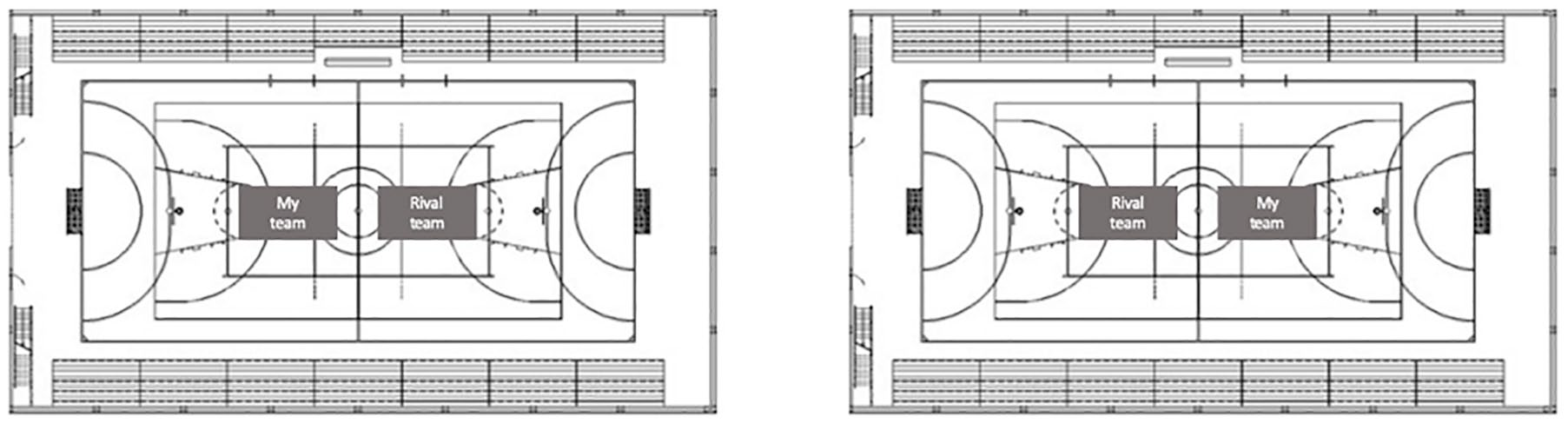
Example of team deployment choice used in Study 2b.
Identification with ingroup team
Four items assessed participants’ identification with their own team (I identify with my team; I’m proud of my team; I’ve been cheering for my team for long time; If my team loses a match I get very upset; from 1 = Definitely Not to 5 = Definitely Yes, α = .71).
Demographics
Participants provided their gender, age, dominant hand, nationality, native language, and knowledge of foreign languages.
Results
Manipulation checks
Participants were more optimistic about the game outcome when their team played against the least powerful (M = 5.43, SD = 1.16) versus the most powerful team of the championship (M = 4.94, SD = 1.18), t(187) = −2.75, p = .006, Cohen’s d = 0.40, CI = [0.11, 0.69]. Also, participants perceived the rival team as stronger in the most powerful (M = 5.24, SD = 1.25) than in the least powerful team condition (M = 3.15, SD = 1.4), t(187) = 10.82, p < .001, Cohen’s d = 1.57, CI = [−1.90, −1.25]. Thus, participants correctly understood the agency manipulation and perceived the relative strength of the teams and the likely game outcome accordingly.
Choice of image of team deployment at beginning of the match
The choice of the image representing the deployment of the two teams at the beginning of the match showed a clear asymmetry. Specifically participants chose predominantly the image representing the ingroup to the left of the rival team (61%), binomial, p = .002, h = 0.22, CI = [0.54, 0.68]. This bias was not modified by the high versus low agency of rival team, logit (OR) = 0.26, p = .38, CI = [−0.32, 0.85] nor by the high versus low identification manipulation, logit (OR) = 0.06, p = .84, CI = [−0.53, 0.65].
Identification with ingroup team
The degree of identification with the ingroup team was not affected by either the identification or the agency manipulation or their interaction, F’s < .87, p’s > .35, thus it can be used as independent predictor of spatial bias. As in our previous studies, the SIB was unrelated to the participants’ self-reported identification with the team, Spearman ρ(219) = −.076, p = .298, CI = [−0.22, 0.07].
Discussion
In Study 2b, we manipulated both the relative agency of the outgroup team and the degree of identification with the ingroup. In the first manipulation, we asked participants to imagine a hypothetical match against the most (least) powerful team of the championship, a manipulation that proved to be effective (see manipulation checks). As in Study 2a, the fact that participants chose the image representing their own team in the agentic position even when it was playing against the most powerful team of the championship suggests—and reconfirms– that the SIB is not simply a function of the fact that people perceive their team to be stronger.
In the second manipulation, we asked half of the participants to select which team-branded gadget(s) they would like to bring to the hypothetical game to cheer for their own team. The manipulation, however, failed, given that participants in the experimental condition reported identification levels similar to the control condition. Congruently with both Study 1 and 2a, degree of identification did not affect the strength of the SIB.
Together Studies 1, 2a, and 2b provide independent evidence for the SIB in soccer and in other sport contexts, with different methodologies and with participants speaking different languages with left-to-right scripts (Italian and English). Yet, none of the above studies provides direct evidence for the assumed distal cause, namely script direction. If the ingroup team is envisaged in the position where writing starts and as playing in line with script direction, then opposite positioning biases should be expected in rightward versus leftward written languages. This issue was investigated in Study 3.
Study 3: Arabic-Italian Comparison
The above three studies (plus the pilot study) consistently show that left-to-right language speakers (Italian and English) draw their ingroup to the left of the outgroup, presumably because they follow an ingroup-first principle. To test whether the SIB is indeed guided by script direction, in our last study we compared Italian and Arabic speakers, predicting that Italian speakers would position their ingroup to the left, Arabic speakers to the right.
Method
Participants
Sixty-seven Italian speakers (28 males, age ranging from 19 to 58) and 71 Arabic speakers (26 males, age ranging from 18 to 63) volunteered for this study. Arabic speakers were Tunisian (N = 12) or Moroccan (N = 59) citizens. For all participants, the first language they learned to speak and write was, respectively, Italian or Arabic. All (but one) Italian participant knew at least one other language (mainly English, French, or Spanish), but none of them knew any language written from right to left. With the exception of one participant, Arabic-speaking participants knew between 1 and 5 foreign languages (mainly French, Berber, Italian, English, Russian, Spanish), and all but 2 knew at least one language written from left to right. The majority (79%) of the Arabic participants (but none of the Italian participants) had spent at least 3 months in a country with an opposite writing direction. Also, all of our Italian participants reported that they read and write only or mainly from left to right in their daily lives. In contrast, only 56% of Arabic participants reported that they read and write only or mainly from right to left, whereas 38% used both writing directions to approximately equal degrees and 6% reported that they read and write mainly from left to right. The four Arabic speakers who mainly used a left-to-right script in their daily lives were excluded from all subsequent analyses, resulting in a final sample of 67 Italian and 67 Arabic speakers.
We collected as many Arabic participants as we could in the time frame of 3 months, corresponding to the time the research assistant was hired. The Italian sample was collected in parallel to have a similar sample size. Post hoc sensitivity analyses showed that the minimum detectable effect for binomial tests was h = 0.34 for N = 67 and 1 − β = .80, h = 0.24 with N = 134 and 1 − β = .80. For chi-square tests, the minimum detectable effect was w = .23. Finally, for correlations the minimum detectable effect was ρ = .24.
Procedure and materials
The entire study (both in Italian and Arabic) was run on a Java code containing three different tasks on spatial bias (memory for objects, comparison between objects, and placement of soccer teams). Here, we will limit our report to the task concerning the spatial representation of soccer. 3
Italian participants were provided with a link allowing the access to an online platform that automatically randomized conditions. The link was distributed by the experimenters through different kinds of online channels (e.g., e-mails, Facebook). Arabic participants were recruited by a research assistant with a Tunisian background and several contacts with Tunisian and Moroccan communities in Italy. She personally met all the participants and asked them to take part in our study through the use of a laptop. Consent form and instructions of each task were in Arabic language. Once Italian and Arabic participants accessed the platform, they were asked to read the consent form and to accept taking part in the research.
Placement of national ingroup versus outgroup teams
Ingroup was defined as the national soccer team of each participant’s nation (e.g., the Tunisian national soccer team for Tunisian participants). As the outgroup team, we selected teams generally known as relevant competitors: the German national team for Italian participants, and the Egyptian national team for Moroccan and Tunisian participants as Egypt was the leading team among the African Nation Championship at the time of data collection.
In all tasks described below, participants were asked to place the national flags of the two teams (ingroup and outgroup) on the side of the field where they imagined the teams to play. The two flags appeared centrally, one above, the other below the empty soccer field (the position of was counterbalanced across participants). We also systematically varied the order in which the name of the two teams were cited in the instructions (e.g., “Tunisia and Egypt” or “Egypt and Tunisia”). Participants had to position both flags on the soccer field, using the mouse or trackpad. Participants were informed that they were to place the flags on the soccer field in three different situations (not necessarily three situations within the same game). In the first task, participants were asked “to position the flags on the field at the start of the match” (flag placement at kick-off). In the second task, “to position the flags on the field when your team is playing in attack” (flag placement during attack). In the third task, “to position the flags on the field when your team is in defense” (flag placement during defense).
Interest in soccer
Two items assessed how important soccer was to the participants (How much does soccer count in your life in general? How often do you watch soccer games in TV and/or in the stadium?), r(134) = .80, p < .001, both assessed on 5-point scales (from not at all to very much). The two items were averaged.
Identification with the national team
Two additional items assessed participants’ identification with the national team (How strongly do you identify with the national soccer team? How important is it for you that your national team wins the championship?), r(134) = .59, p < .001, using a 5-point scale (from not at all to very much). The two items were averaged.
Language knowledge and use
Participants were asked to indicate the first language they both had learned and had learned to write, which other languages they knew, and whether they had spent extended time periods (>3 months) abroad and where. Participants also indicated how often in their daily lives they used a language written from right-to-left compared with languages written from left-to-right (5-point scale with 3 indicating an equal use of both writing directions).
Demographics
Participants were asked to report their gender, age, nationality, and handedness.
Results
Flag placement at kick-off
In this first task, 61% of Italian speakers placed the ingroup in the left half and the outgroup in the right half of the soccer field, whereas 57% of Arabic speakers placed the ingroup in the right half and the outgroup in the left side of the soccer field. The association between the two variables (Italian vs. Arabic speakers and left vs. right placement of ingroup) was statistically significant, χ2(1) = 4.31, p = .038, w = .19. Thus, in both languages, the ingroup is placed in the more agentic position, in line with the direction of script direction.
Flag placement during attack
Again, the majority of Italian speakers (60%) placed the ingroup to the left of the outgroup, whereas the majority of Arabic speakers (57%) placed the ingroup to the right of the outgroup. A chi-square test revealed a statistically significant association between the two variables, χ2(1) = 6.52, p = .011, w = .20.
Flag placement during defense
Again, Arabic and Italian speakers showed different placements of ingroup versus outgroup, χ2(1) = 5.56, p = .018, w = .22, with 61% of Italian speakers placing their own team to the left of the rival team, whereas 57% of Arabic speakers placed their own team to the right of the rival team. Thus, the relative placement of ingroup and outgroup showed a very coherent pattern across dependent variables (kick-off, attack, defense).
Ingroup-favoring flag placement
A different way to look at these data is to score flag placement so that it either favors the ingroup (own team left for Italian, right for Arabic speakers) or the outgroup. In this case, we find a statistically significant spatial bias for all three situations (binomial: kick-off: p = .047, attack: p = .013, defense: p = .023), which is not modified by language (Italian vs. Arabic), all χ2(1) < 0.28, all p’s > .59. In all three situations, the majority of participants placed the ingroup flag in the spatially advantageous position (kick-off: 59%, h = 0.18, CI = [50%, 67%]; attack: 61%, h = 0.22, CI = [52%, 0.69%]; defense: 60%, h = 0.20, CI = [51%, 68%). With BH correction method (Benjamini & Hochberg, 1995), the adjusted p-values of the binomial tests for positioning during kick-off, attack, and defense are p = .049, p = .032, and p = .032.
Interest in soccer and identification with the national team
To test whether the SIB varies as a function of interest of soccer and identification with the national team, we correlated both measures with the sum of ingroup-favoring flag placements (at kick-off, attack, and defense, with values ranging from 0 = ingroup never placed in the ingroup-favoring position to 3 = ingroup always placed in the ingroup-favoring position). The sum of ingroup-favoring flag placement showed a small but significant correlation with interest in soccer, Spearman ρ(132) = .17, p = .045, CI = [0.01, 0.34]. The correlation with identification failed to reach conventional levels of significance, Spearman ρ(132) = .145, p = .097, CI = [−0.06, 0.29].
Discussion
The spatial positioning of ingroup and outgroup teams revealed a consistent pattern across the three tasks. Italian participants positioned their team to the left of the midline at kick-off, hence attacking the opponents in a rightward fashion. In line with this representation, they also imagined the ingroup attack to take place on the right side of the field toward the outgroup goal. In a complementary fashion, the ingroup defended their goal on the left side of the field. Thus, across different stages of the game, the ingroup was consistently imagined as occupying the left goal. Arabic participants showed the exact same pattern but flipped by 180°: their own team occupied the right goal (in line with the Arabic writing/reading starting point). Hence, our last study provided support for the cultural underpinning of the SIB, showing that script direction influences where the ingroup is placed and in which direction it acts.
However, the spatial bias was slightly (but not statistically) weaker among Arabic participants, possibly due to the fact that data were collected in a country (Italy) in which Arabic speakers are not exclusively exposed to right-to-left languages. The spatial asymmetry may be stronger if data were collected in countries in which both the exposure to and the use of right-to-left languages is higher (e.g., Tunisia or Morocco; Maass & Russo, 2003).
Meta-Analysis
In all previous studies, participants placed their ingroup team according to the direction of their native language. However, the results of the post hoc sensitivity analysis showed that some effects are not easily detectable assuming conventional power (1 − β = .80). Thus, to further test whether our studies collectively (and with an increased power) support the SIB, we conducted a meta-analysis of the main effect of the SIB across the Pilot Study and Studies 1, 2a, 2b, and 3, during the kick-off positioning task, using the statistical package metafor (Viechtbauer, 2010). Consistent with our hypothesis, the meta-analysis revealed that, across the five studies, the proportion of participants that placed the ingroup team to the side where writing starts (left for Italian and English speakers and right for Arabic speakers) was significantly different from a random choice of p = .5 (Estimate = .65, SE = .04; CI = [0.58, 0.73], p < .05, Figure 3).

Forest plot of SIB’s effects (meta-analysis).
Moreover, we conducted a meta-analysis for the moderation effect of identification with the ingroup and attributed importance of soccer. The meta-analysis did not show a statistically significant increase of likelihood of putting the ingroup team to the left when participants are more identified with it (Estimate = .05, SE = 0.04, CI = [−0.03, 3.63], p = .012, Figure 4), and when they are more interested in soccer (Estimate = .0802, SE = 0.05, CI = [−0.037, 0.1248], p = .13, Figure 5).
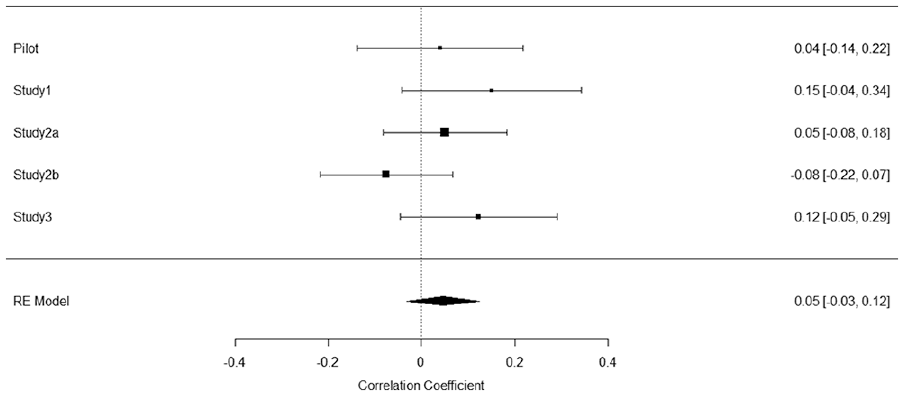
Forest plot of ingroup identification moderation (meta-analysis).

Forest plot of interest moderation (meta-analysis).
General Discussion
Prior research on the SAB had repeatedly shown that agency maps onto script direction (Suitner & Maass, 2016). Here, we have investigated a complementary bias that is based on ingroup favoritism rather than on shared stereotypes. In line with predictions, our studies show that, among left-to-right language speakers, the ingroup is predominantly envisaged to the left of the outgroup. Across different stages of soccer games, across different sports, across different rightward-writing nationalities, and across different tasks (drawing, layout choice, spatial positioning), we find that the ingroup is over-proportionally envisaged to the left, hence acting rightward, and the outgroup to the right, hence acting leftward. The only group that showed a reliable reversal was Arabic speakers in Study 3, thereby supporting the idea that the SIB follows culturally defined script direction. Thus, sport fans consistently assign the more agentic spatial position to their favorite team; and they do so in a culture-specific way, in line with their habitual script direction. Furthermore, the single-paper meta-analysis showed a consistent effect of the SIB across all five studies.
Without claiming exhaustiveness, we also tentatively explored three possible processes that may drive the SIB. Our studies allowed us to discard two of them. First, we argued that if members of both teams endorse the (biased) belief that the ingroup is stronger or more agentic than the outgroup, then both should quite logically position their team in the more agentic position (to the left in Italian and English, to the right in Arabic), resulting in a reliable SIB. Both Studies 2a (varying the game outcome) and 2b (varying the strength of the rival team) clearly argue against this interpretation given that people collocate their ingroup in the advantageous position to the left even when they are well aware that their team is weaker and unlikely to win. Thus, the SIB does not seem to reflect the assumption that the ingroup is more agentic.
The second potential explanation was derived from social identity theory and postulates ingroup-enhancing motivation as the driving force of the SIB. By placing the ingroup in the more agentic position, people establish a positive distinctiveness and symbolically enhance the ingroup’s agency (and hence the likelihood of winning). If ingroup enhancement is the underlying mechanism, then more strongly identified participants would be expected to show a stronger SIB (Castano et al., 2002; Mummendey et al., 2001; Voci, 2006), whereas those with no identification and/or no interest in soccer should show a greatly reduced spatial bias because neither the group nor the comparison dimension are relevant to them (Roccas & Schwartz, 1993). However, none of our studies revealed a correlation between degree of identification and spatial bias and only in one case (Study 3) did we find a small but reliable correlation between interest and spatial bias. More importantly, the meta-analysis (pilot study and four main studies) revealed no role of identification or interest in the SIB. Moreover, the ingroup-threatening defeat situations in Study 2a and Study 2b did not significantly increase the SIB, hence providing no support for the idea that the bias increases under ingroup threat.
Different reasons may be offered for this result pattern, including (a) the co-presence of multiple social identity motives (Thomas et al., 2017); (b) the different nature of the two measures, with spatial positioning being implicit and probably grounded in associative processes and self-reported ingroup identification being explicit and probably relying on controlled processes (Gawronski & LeBel, 2008); or (c) more likely, the possibility that the SIB is driven by processes unrelated to the desire for positive distinctiveness. A third and, we believe, most likely interpretation can be offered on the basis of the
Together, the current research provides coherent evidence for the hypothesized SIB, showing that people place and imagine their ingroup in the more agentic spatial position, whereas additional research is needed to disentangle the processes that, singly or jointly, are driving the SIB.
Limits and Future Directions
Although the SIB emerged consistently across four studies and a pilot study, various questions necessarily remain open for future inquiry. First of all, it remains to be seen whether the SIB generalizes to intergroup settings other than sports. According to our data, the SIB emerges in the presence of a clear-cut intergroup setting, where two or more groups enter in direct competition in a task that requires agency. One can easily imagine other socially relevant intergroup settings that share these characteristics, such as clashes between police and demonstrators, or military conflicts. The latter is illustrated by the following historical example. The Ministry of Propaganda in Nazi Germany ordered military reporters to consistently show German soldiers and combat vehicles with a left-to-right trajectory (Buchmann, 2006). Although the reasons for this imposition are open to different interpretations, it would be in line with the SIB. Another socially relevant intergroup setting concerns gender. Studies on vertical spatial bias have already shown that men and women are allocated spatial positions that either reflect shared stereotypes (Lamer & Weisbuch, 2019; Zarzeczna et al., 2020) or ingroup bias (Lamer et al., 2020). Whether the same holds true for horizontal bias remains to be explored. It is up to future research to isolate the two processes, SAB and SIB, in socially relevant intergroup settings and to investigate their relative weight in situations that differ in the degree of inter-gender competition.
Second, the consequences deriving from ingroup-favoring spatial bias should be explored further. Besides communicating greater agency, the subtle spatial bias observed here may accrue additional advantages to the ingroup, given that the first position (under a temporal or spatial perspective) attracts greater attention (Carreiras et al., 1995), exerts an over-proportional influence on subsequent information processing (Asch, 1964; Hamilton & Sherman, 1996), serves as the starting point for comparisons (Hegarty et al., 2011; MacWhinney, 1977), is remembered better (Bettinsoli et al., 2018) and is attributed greater power (Benor & Levy, 2006) and causal role (Bettinsoli et al., 2015), and may, in a very general sense, be considered “best” (Casasanto, 2009). Although we have not investigated any of these additional advantages in the context of the SIB, this may be a promising task for future studies.
Conclusion
In combination with prior work on the SAB, the current studies suggest that the spatial positioning of social groups is driven by two distinct processes, one related to stereotypic expectancies and the other to ingroup-favoring bias. In the presence of shared stereotypes, people allocate script-coherent positions to agentic (vs. communal) social categories. In competitive intergroup settings such as the one investigated here, people use spatial coordinates in an ingroup-serving way, even when their own group is objectively and subjectively weaker than the opponent (see Studies 2a and 2b). Thus, independent of the actual strength, they assign to their own group the spatial position that conveys greater agency. Thus, similar to other phenomena (such as the Linguistic Intergroup Bias, Maass, 1999), stereotype-based and ingroup-favoring processes seem to operate jointly in the spatial representation of social groups.
Supplemental Material
sj-docx-1-psp-10.1177_0146167220984297 – Supplemental material for The Spatial Ingroup Bias: Ingroup Teams Are Positioned Where Writing Starts
Supplemental material, sj-docx-1-psp-10.1177_0146167220984297 for The Spatial Ingroup Bias: Ingroup Teams Are Positioned Where Writing Starts by Maria Laura Bettinsoli, Caterina Suitner, Anne Maass, Luigi Finco, Steven J. Sherman and Bruno Gabriel Salvador Casara in Personality and Social Psychology Bulletin
Footnotes
Acknowledgements
We are thankful to Stefano Andriolo for developing and programming the software of Study 3. We also thank Marina Cignacchi, Barbara De Marco, Marta Gozzi, Rosanna Margheriti, Simone Pernigo, and Antonio Veronese for collecting the data of the pilot study.
Authors’ Note
Authors confirm that the manuscript adheres to ethical guidelines specified in the APA Code of Conduct as well as authors’ national ethics guidelines. The entire research has been conducted ethically, results are reported honestly, the submitted work is original and not (self-)plagiarized, and authorship reflects individuals’ contributions. All data files can be accessed to this link:  .
.
Declaration of Conflicting Interests
The author(s) declared no potential conflicts of interest with respect to the research, authorship, and/or publication of this article.
Funding
The author(s) disclosed receipt of the following financial support for the research, authorship, and/or publication of this article: This research was funded by the PRIN Grant from the Italian Ministry of Research and Education (Title: Embodiment and social cognition: The role of sensory-motor processes in the perception of individuals and groups).
Supplemental Material
Supplemental material is available online with this article.
Notes
References
Supplementary Material
Please find the following supplemental material available below.
For Open Access articles published under a Creative Commons License, all supplemental material carries the same license as the article it is associated with.
For non-Open Access articles published, all supplemental material carries a non-exclusive license, and permission requests for re-use of supplemental material or any part of supplemental material shall be sent directly to the copyright owner as specified in the copyright notice associated with the article.
