



Abstract
How can work be accomplished while sustaining the human capital that enables it? To date, research on this question has been piecemeal and indirect with different literatures and paradigms offering important but not integrated insights. In this meta-synthesis, we reviewed 368 meta-analyses and review articles published this millennium, sampled from the vast body of research relevant to employee health and well-being. We organize our review using dynamic energy budget theory (DEB), a life-sciences framework that describes how nonhuman animals achieve biological sustainability by balancing maintenance, growth, and generativity. After identifying the ways this research fits within DEB, we develop restricted employee sustainability theory (REST), which describes the ways in which human sustainability goes beyond the fundamental biological necessities outlined in DEB and encompasses the functions (maintenance, growth, generativity) that enable humans to sustain their physical, psychological, and social health. Organization of this vast literature allows us to identify synergies and dynamic balances among the life functions; understand how humans recover after a dramatic crash in health; and articulate the distinctions among subsisting, surviving, and thriving at work. We conclude this meta-synthesis and theory development by offering a roadmap to advance research on human sustainability at work as a unified area of study, guided by our new framework—restricted employee sustainability theory (REST).
Keywords
Look at the stonecutter hammering away at his rock perhaps a hundred times without as much as a crack showing in it. Yet at the hundred and first blow it will split in two, and I know it was not that blow that did it—but all that had gone before. —Jacob Riis
A primary thrust of twentieth-century management scholarship was to maximize employees’ efforts toward organizational objectives (for a review see Latham & Pinder, 2005), often at the employees’ expense (see Taylor, 1911). By the twenty-first century, key scholars (Pfeffer, 2018; Spreitzer, Porath, & Gibson, 2012) and communities (e.g., positive organizational scholarship [POS]) recognized that organizations perform best when managing for long-term human sustainability, and empirical consideration shifted to achieving high levels of performance without destroying the human capital that enables it (Barnes, Jiang, & Lepak, 2016; Pfeffer, 2010). Research examining human sustainability has explored how employees can contribute to their organizations without subverting their health or well-being (Pfeffer, 2010). Over the past two decades, diverse literatures have enriched our understanding of the interplay of work and employee wellness, ranging from research on physiological (Barnes, Lucianetti, Bhave, & Christian, 2015; Bono, Glomb, Shen, Kim, & Koch, 2013) and psychological health (Kudesia, 2019), to models of workplace stress (Podsakoff, LePine, & LePine, 2007), burnout (Maslach, Schaufeli, & Leiter, 2001), and recovery (Sonnentag, Binnewies, & Mojza, 2010).
To date, however, the field of management continues to lack a unified strategy for the study of human sustainability, which we define as an employee's ongoing ability to maintain health (psychological, social, and physical) without subverting growth (the investment of resources into expanding the self beyond its current state) or generativity (the investment of resources into expansion outside or beyond the self). Because human sustainability resides at the intersection of diverse topic areas, organizational science offers, at best, a piecemeal understanding of human sustainability. Such a lack of integration has been decried by prominent scholars (e.g., Pfeffer, 2010) and flies in the face of trends outside of academia such as the United Nations’ push for global sustainability goals that comprehensively address people's thriving (United Nations, 2015).
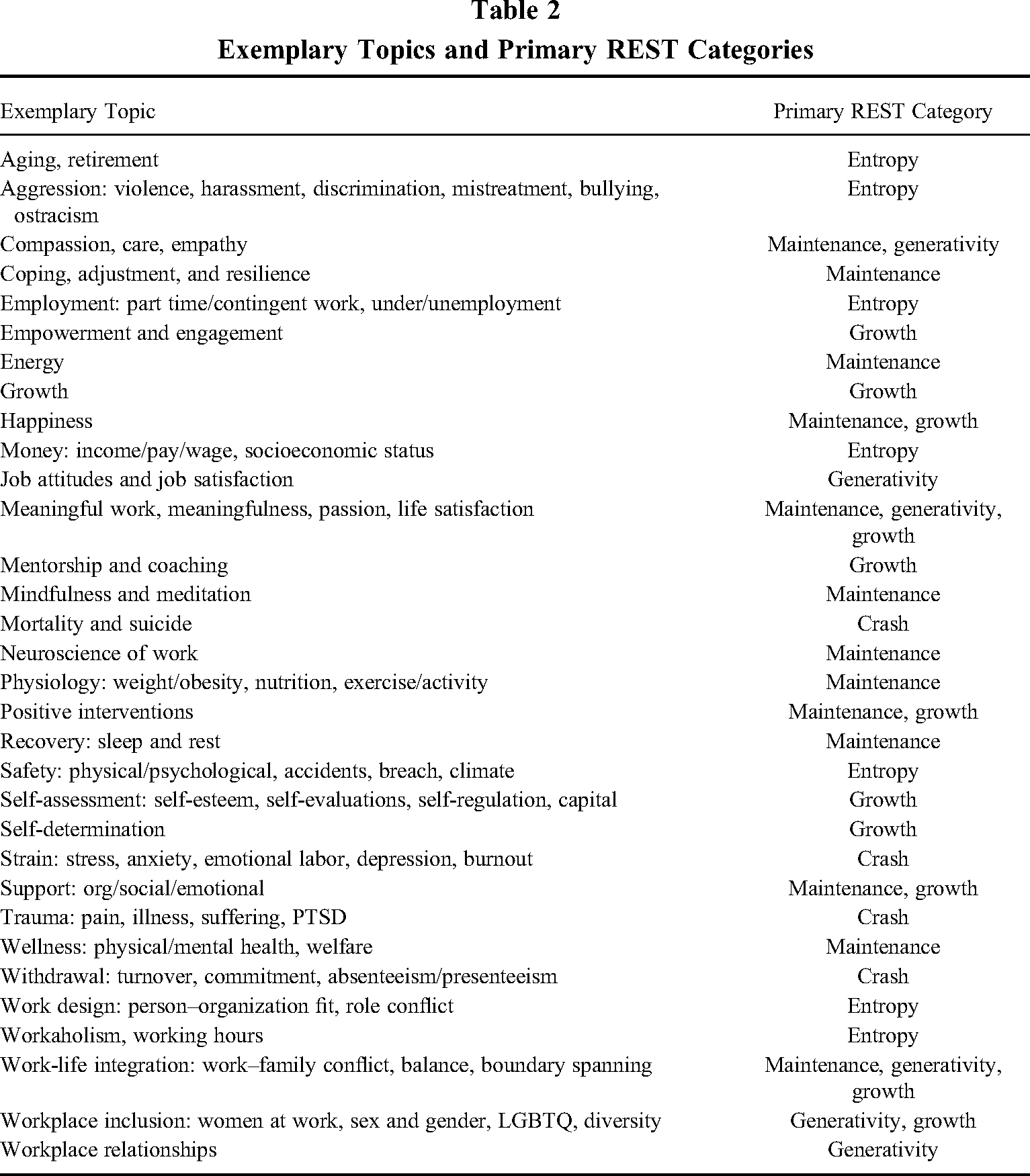
Because the topic of human sustainability has been touched upon in an extremely broad set of organizational topics but does not constitute a clearly delineated body of literature, we conducted a meta-synthesis (Parmigiani & King, 2019). Beyond merely summarizing this literature, our aim is to theoretically synthesize insights into an overarching framework. As our conceptual anchor we leverage dynamic energy budget theory (DEB; Jusup et al., 2017), a natural sciences framework that identifies core life functions (maintenance, growth, reproduction) and basic homeostasis and trade-off principles that regulate animal life. Our application of DEB is twofold: (1) to define human sustainability in the context of work as an employee's ongoing ability to maintain health (psychological, social, and physical) without subverting growth or generativity, and (2) to apply the DEB framework as an inductive coding schema to organize extant knowledge relevant to a sustainable employee experience at work.
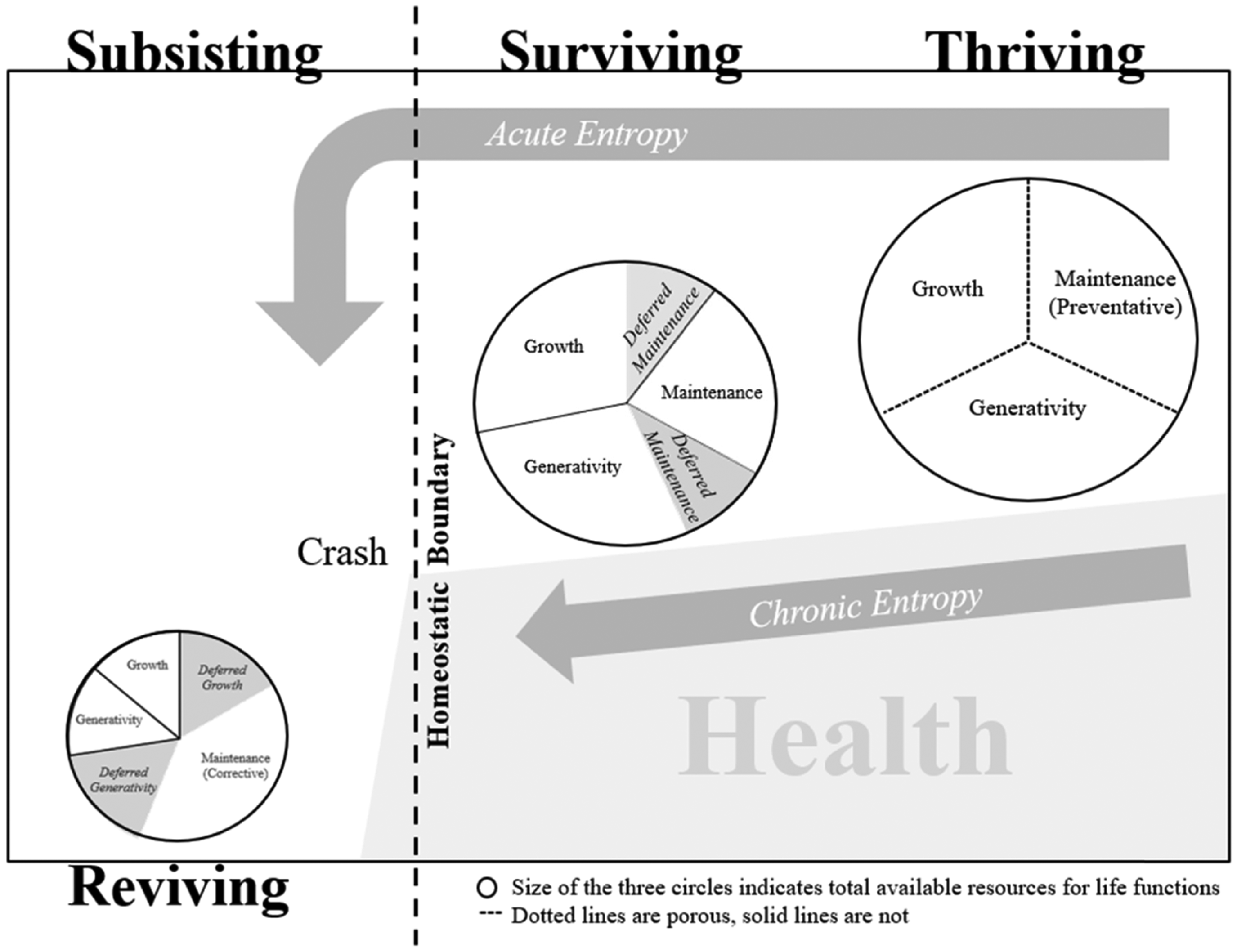
From our meta-synthesis, we develop restricted employee sustainability theory (REST; see Figure 1), a dynamic yet parsimonious model of tradeoffs and synergies relevant to human sustainability, which offers researchers a road map to advance as a unified area of study. We also hope to provide for practitioners and stakeholders outside academia a guidebook to foster practices that ensure multifaceted employee wellness. In short, our meta-synthesis builds on disparate but rich empirical evidence in the organizational canon to develop an integrated framework (REST) that answers our guiding research question: what makes work sustainable? Thus, the objectives of this paper are to: (1) briefly describe DEB, (2) discuss how DEB is relevant to human sustainability, (3) review and organize the literature on human sustainability from a DEB perspective, (4) discuss how DEB falls short of being sufficient as a full framework for human sustainability, and (5) discuss how DEB can still serve as a starting point to build a richer framework for human sustainability that we label as REST.
Restricted Employee Sustainability Theory
Existing Theoretical Landscape
Ours is by no means the first effort to uncover a unifying framework relevant to human sustainability. Maslow (1943) indicated that people have needs, and that their physiological needs must be met before higher cognitive, emotional, and social needs can be met. Alderfer (1969) revised these predictions, suggesting that the frustration of the higher-order pursuits would lead to a redoubling of efforts in the lower pursuits. Self-determination theory discusses specific needs for competence, autonomy, and relatedness and that meeting these needs promotes wellness (Deci, Olafsen, & Ryan, 2017). Although not explicitly framed as a need-based theory, the effort-reward imbalance model suggests that people have a need to have rewards that are commensurate with invested efforts, otherwise health problems result (Siegrist, Siegrist, & Weber, 1986; van Vegchel, de Jonge, Bosma, & Schaufeli, 2005). These various need-based theories are useful in noting that unmet needs undermine wellness. However, they do not discuss how employees make choices among needs and the dynamic implications of these choices over time. Needs-based theories assume that an employee can simultaneously meet all needs, without competition among needs. Moreover, needs-based theories are deficient in articulating temporal dynamics. Self-regulation theory indicates that employees face choices among competing goals and considers temporal dynamics in doing so (Lord, Diefendorff, Schmidt, & Hall, 2010). However, self-regulation theory is deficient in discussing how work demands may not be sustainable, with the exception of salutogenic offshoot theories that are more focused on demands and stress.
The job demands resources model (Demerouti, Bakker, Nachreiner, & Schaufeli, 2001) and conservation of resources theory (Halbesleben, 2006; Hobfoll, Halbesleben, Neveu, & Westman, 2018a) both indicate that when employee resources are overextended, they suffer poor wellness outcomes. Similarly, the allostatic load model (Guidi, Lucente, Sonino, & Fava, 2021) indicates that when stressors exceed an employee's ability to cope, it leads to physiological strain and poor health. These salutogenic theories are helpful in noting that employees have limited resources and that work can overwhelm these resources to ultimately undermine employee health. However, they ignore the choices that employees may need to make in how to allocate resources across potentially competing needs and goals, and how these choices may dynamically unfold over time. Thus, salutogenic theories focus on the amount of resources, but not how those resources are allocated.
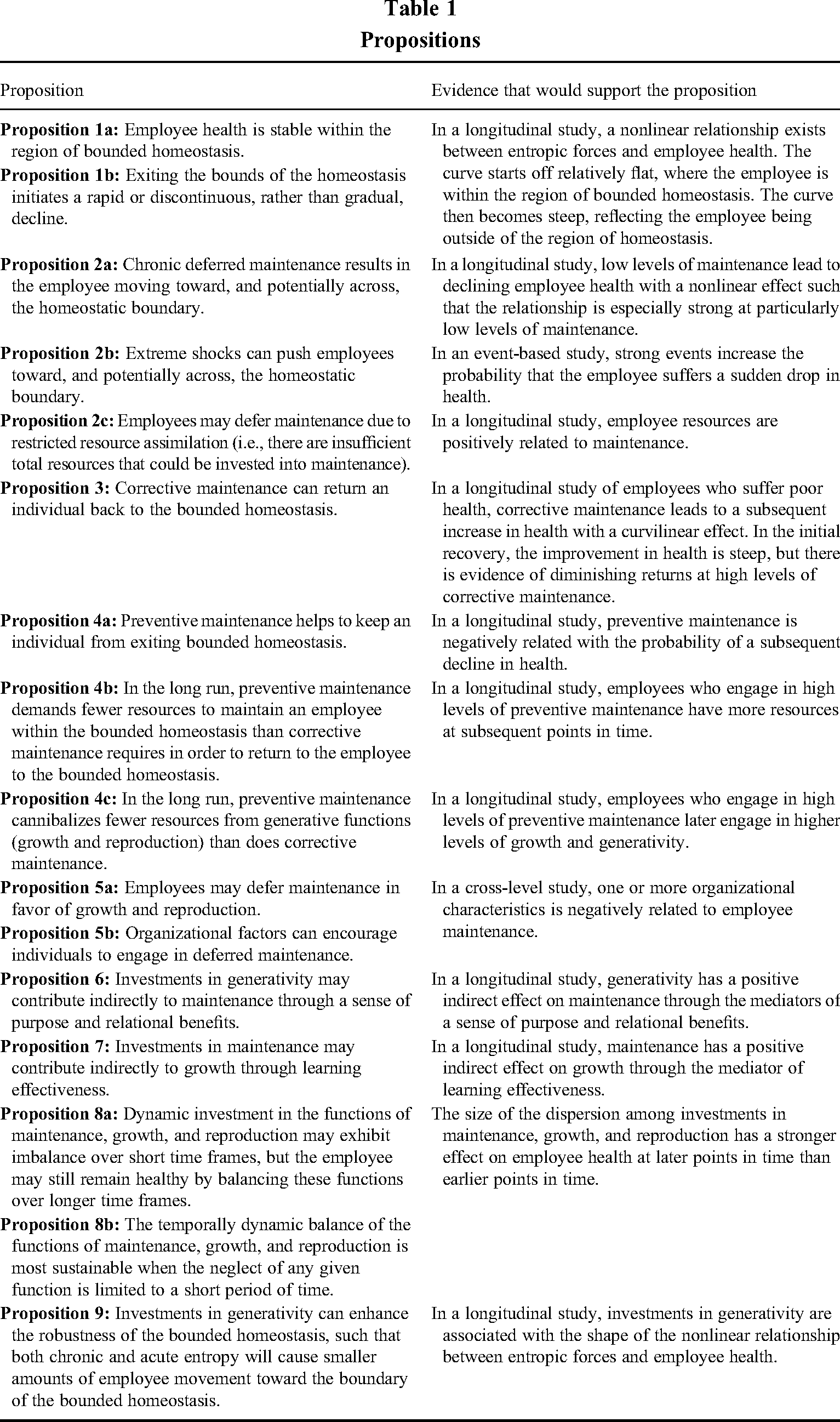
As we will discuss in greater detail, DEB is a useful foundation to build a model of human sustainability at work. In the next section, we outline our review process. Following that, we summarize the principles of DEB. We then expand from those principles to develop a theory of human sustainability that goes beyond the physiologically based starting point of DEB. In so doing, we develop testable propositions for REST (see Table 1).
Propositions
Review Scope and Process
For this review, we conducted a meta-synthesis. Meta-syntheses are useful for surveying across several topics within a literature. They allow researchers to evaluate strengths and limitations of discrete contributions within a research domain, as well integrate these contributions in a broader manner than is possible within a more specifically targeted review (Paterson, Thorne, Canam, & Jillings, 2001). Meta-syntheses are rare in management, but they do exist (Parmigiani & King, 2019; Parmigiani & Rivera-Santos, 2011). For example, Parmigiani and Rivera-Santos (2011) synthesized previous separate reviews examining different forms of interorganizational relationships. This allowed for a bigger picture and more parsimonious view of interorganizational relationships. 1
Similar to these meta-syntheses, we seek to take a big-picture perspective across multiple literatures. Like Johnson, Scott-Sheldon, and Carey (2010), we seek to examine across different outcomes. Like Buckman and colleagues, we seek to find where the edges of evidence lie across separate but related literatures in order to help future researchers prioritize how to allocate their attention.
Exemplary Topics and Primary REST Categories
According to DEB, all living organisms are open systems that assimilate resources from their environment (e.g., biomass; Sousa et al., 2010) to fuel three functions core to survival and perpetuating life: maintenance, growth, and reproduction (Jager, Martin, & Zimmer, 2013; Jusup et al., 2017). Maintenance plays the central role in DEB. Acute (e.g., attacks by viruses or parasites) and chronic (e.g., physiological degradation through wear and tear) entropic forces are a constant drag on the survival chances of an organism; they lead to declines in health and ultimately death if not counteracted by maintenance functions. Maintenance encapsulates the processes that keep the organism alive and healthy, including biological functions (e.g., cell repair, tissue replacement) and regulatory functions (e.g., sleep, temperature regulation). Growth (also sometimes labeled maturation) refers to the organisms’ own development and maturation across life stages (e.g., shedding skin during molting). The neglect of growth limits the ability of the organism to assimilate resources in the future. Finally, reproduction captures activities that produce and support the next generation (e.g., procuring a mate, brooding). The neglect of reproduction leaves the organism out of the future gene pool of the species. The three life functions are in constant competition for limited resources, with maintenance typically taking primacy over growth and reproduction except in very rare circumstances (e.g., suicide reproduction in salmon).
Adapting these concepts to the experience of employees, 2 we define maintenance as the process of investing resources to uphold the present state of health, including not only physical health but also psychological and social health. We define growth as the investment of resources into expanding the self beyond its current state; we drop the synonym maturation to indicate that in humans there need not be a finite endpoint to growth. Finally, we relabel reproduction as generativity to signal a concept more expansive than literal, biological reproduction. We define generativity as the investment of resources into expansion outside or beyond the self. From these concepts, we define employee sustainability as the ongoing ability to maintain health without subverting growth or generativity.
We randomly selected five articles for all four authors to code according to a detailed coding scheme that captured whether and how each article supported or contradicted the DEB life functions, entropy, or their dynamic interplay (e.g., health crash). We also took detailed memos for each article to compare important insights. After detailed discussion we repeated this process with five more articles to ensure that all authors concurred with each other's coding. After this training period, we randomly allocated the remaining articles among the author team.
Literature Review
Our review reveals many ways in which organizational scholarship fundamentally supports DEB principles thus far considered only in nonhuman animals. In this first section, we highlight these insights, outlining what our literatures have to say about the core life functions (maintenance, growth, and generativity) and their trade-offs in the context of entropic forces that threaten these functions and health homeostasis. We note again that, as a meta-synthesis, all insights presented herein represent the most robust considerations from a substantial body of evidence; every citation will direct the reader to a relevant review or meta-analysis.
Entropic Forces
DEB (Jager et al., 2013; Jusup et al., 2017) postulates that entropic forces (threats to well-being) are a constant drag on the survival chances of the organism, leading to declines in health and ultimately to death. Our review highlights the obvious point that this is as true for animals in the Savannah (van Leeuwen, Vera, & Wolkenhauer, 2010) or the ocean (Ren, Ragg, Cummings, & Zhang, 2020) as it is for the modern employee. Moreover, just as DEB distinguishes between chronic and acute entropy, we see similar categories in organizations. Entropy may be acute in that it occurs from a given event or within a short period of time, such as workplace accidents and trauma (Maitlis, 2020). Such singular life events can have long-term ramifications in the forms of post-traumatic stress disorder (Dalgleish, 2004; McNally, 2003; Ozer, Best, Lipsey, & Weiss, 2003), and accompanying harmful psychological and physiological effects (Pole, 2007). Chronic entropy entails lower levels of exposure to harmful forces over extended periods of time (Miller, Chen, & Zhou, 2007) and at varying intensity. Chronic entropy is no less harmful and is predictive of such physiological effects as poor heart rate and increased cardiovascular reactivity (Chida & Hamer, 2008).
We have long known that job characteristics are powerful determinants of employee psychological health and physical health (Grant & Parker, 2009). The challenge-hindrance stress model remains a popular framework that distinguishes between workplace challenges that have the potential to lead to strain and burnout and hindrances that are especially powerful in doing so (Lepine, Podsakoff, & Lepine, 2005; Mazzola & Disselhorst, 2019). Job demands that require extended physical or mental effort (Crawford, LePine, & Rich, 2010) can undermine employee health. Again we see the distinction between acute and chronic entropy in play with the former being particularly risky in physically dangerous work contexts (Nahrgang, Morgeson, & Hofmann, 2011), whereas the latter is associated with high workload (Cole, Walter, Bedeian, & O’Boyle, 2012). In short, job demands broadly are associated with burnout and other health problems (Bakker, Demerouti, & Isabel Sanz-Vergel, 2014; Crawford et al., 2010). More subtly, entropy comes in the form of deprivation, such as low control in dealing with job demands (Maslach et al., 2001) or a lack of meaningfulness (Lysova, Allan, Dik, Duffy, & Steger, 2019).
We wish to round out our review of entropy at work with a summary of the entropic factors at work that have dominated our literature (i.e., standing out in our meta-synthesis)—and the Zeitgeist—in the last two decades. We note that these reflect the changing nature of work in the twenty-first century in developed nations. These include emotional demands, interpersonal demands, interpersonal mistreatment, work schedules, and employment/financial insecurity. Emotional demands have been identified as a dominant form of entropy. The experience of negative emotions can lead to inflammation, prolonged infections, and delays in wound healing (Kiecolt-Glaser, McGuire, Robles, & Glaser, 2002). Moreover, the regulation of any emotions because of emotional display rules (Zapf, Kern, Tschan, Holman, & Semmer, 2021) can lead to burnout (Grandey & Melloy, 2017).
In collaborative contexts, coworkers can also function as entropic threats. Experiencing mistreatment at work in general is associated with strain (Yang, Caughlin, Gazica, Truxillo, & Spector, 2014); intentional bullying or harassment is associated with workplace accidents, mental strain, and burnout (Bowling & Beehr, 2006; Samsudin, Isahak, & Rampal, 2018). Mistreatment can be subtle as in the case of ostracism, which leads to distress and depression (Williams, 2007). Indeed, pain from social exclusion has considerable neurological overlap with physical pain (MacDonald & Leary, 2005). Similarly, sexual harassment relates to decrements in physical and mental health (Willness, Steel, & Lee, 2007).
One form of coworker mistreatment that stands out for its increasing recognition by practitioners and academics alike is discrimination, typically based on demographic characteristics. Both overt and subtle discrimination are harmful to the psychological and physical health of those who are targeted (Jones, Peddie, Gilrane, King, & Gray, 2016a). This includes poor cardiovascular health, low self-esteem, depression, anxiety, psychological distress, and low life satisfaction (Jones, Woods, & Guillaume, 2016b; Schmitt, Branscombe, Postmes, & Garcia, 2014). This general trend is seen across several specific forms of discrimination, including gender discrimination (Grandey, Gabriel, & King, 2020; Triana, Jayasinghe, Pieper, Delgado, & Li, 2019), racial discrimination (Mays, Cochran, & Barnes, 2007; Triana, Jayasinghe, & Pieper, 2015), and discrimination based on sexual preference (Meyer, 2003; Murphy, Thomas, Cobb, & Hartman, 2021). Those who are overweight are subject to similar forms of discrimination (Rudolph, Wells, Weller, & Baltes, 2009), although the health-based outcomes are not as well established for weight-based discrimination.
The temporal properties of work can also be a chronic form of entropy. We have long known that a high number of hours worked over time is associated with stress and strain (Ng & Feldman, 2008). Less obvious are working nonstandard hours, rotating shifts, and other shiftwork characteristics, which are associated with stress, burnout, and health problems (Bolino, Kelemen, & Matthews, 2021). “Wasting” time on the commute to work is associated with strain (Calderwood & Mitropoulos, 2021). Work–nonwork conflict, when work schedules and family demands conflict with each other, leads to stress, poor well-being, and burnout (Amstad, Meier, Fasel, Elfering, & Semmer, 2011; Byron, 2005; Erdogan, Bauer, Truxillo, & Mansfield, 2012).
Thus far we have highlighted the ways that work characteristics and demands generate entropy. Ironically, threats to employment also pose potentially powerful entropic forces. Job insecurity threatens an employee's identity and social connections (Shoss, 2017). Potential job loss promotes cognitive ruminations, as well as dysfunctional affective experience such as fear (Keim, Landis, Pierce, & Earnest, 2014), emotional exhaustion, and burnout, thereby undermining health and well-being (Lee, Huang, & Ashford, 2018; Shoss, 2017). Actual job loss has similar effects, leading to depression, anxiety, and poor mental and physical health (McKee-Ryan, Song, Wanberg, & Kinicki, 2005; Paul & Moser, 2006, 2009), with the harmful effects fading only after the employee regains full employment (McKee-Ryan & Harvey, 2011). For some this never occurs, because unemployment is also predictive of suicide (Wanberg, 2012).
Even when employment is secure, low financial compensation is a chronic source of entropy with far-reaching repercussions. When employees make less than is required to meet very basic financial needs (i.e., less than a living wage), they tend to suffer poor mental health, lower well-being, poor overall health, and ultimately an increased risk of death (Searle & McWha-Hermann, 2021). Employees may seek to counteract such insecurity by holding multiple jobs. Not surprisingly, multiplying the experience of job demands across different jobs is also associated with strain (Campion, Caza, & Moss, 2020).
Maintenance
Our literature has well documented the many forms of acute and chronic entropy experienced by employees. According to DEB, maintenance constitutes all activities to counteract entropy. Our meta-synthesis reveals that organizational scholarship already considers maintenance behaviors that originate at individual, social, and organization levels. We also note, however, that maintenance is commonly characterized as happening away from work—as after-work recovery activities that contribute to employee well-being via psychological detachment (Bennett, Bakker, & Field, 2018). However, there are other recovery behaviors that may occur in the workplace or throughout the workday. Herein we outline the most widely studied forms of maintenance.
Maintenance is often characterized as passive rest (i.e., the absence of activity), active recovery activities, or both, that generally occurs away from work. Sleep represents a quintessential form of respite. Sleep serves as a daily reset button, as when we sleep our brains consolidate important information gained during the day and smooth emotional content from the day's interactions (Walker & van der Helm, 2009). The human immune system is responsive to sleep; blood levels of cortisol, epinephrine, norepinephrine are impacted by sleep, such that optimal levels of sleep (7–8 h) decrease the body's inflammatory responses linked to cardiovascular, cancer, and depressive disorders (Irwin, 2015).
Physical exercise is an active form of recovery that increases energy and lowers fatigue (Puetz, O’Connor, & Dishman, 2006), generates physical and affective resources (Calderwood et al., 2021), and improves cognitive functioning (Prakash, Voss, Erickson, & Kramer, 2015). This cognitive impact is particularly important for aging individuals who would otherwise experience cognitive decline (Prakash et al., 2015).
Other activities can also provide respite and recovery. Our review highlights growing recent academic interest in the study and implementation of mindfulness practices. Mindfulness facilitates recovery by increasing connectivity in brain regions that regulate top-down stress regulation and decreasing functional connectivity in neural regions linked to fight-or-flight responses (Creswell, 2017). In essence, mindfulness stymies the automatic reaction to stimuli that often elicits counterproductive physiological and psychological reactions to stressors (Good et al., 2016), resulting in reduced stress and anxiety among its adherents (Bartlett et al., 2019; Sutcliffe, Vogus, & Dane, 2016), and increasing well-being and resilience (Donaldson-Feilder, Lewis, & Yarker, 2019).
Nonetheless, our review reveals maintenance activities that often occur at and through work that counteract such entropic forces. Our literature calls these “coping” behaviors. This body of work continues to study self-reliant strategies to cope with the entropic forces such as information seeking, support seeking, delegation, isolation, accommodation, negotiation, submission, and opposition (Skinner, Edge, Altman, & Sherwood, 2003). Indeed, in the wake of unemployment, coping resources, cognitive appraisals, and coping strategies are critical for mental health (McKee-Ryan et al., 2005).
Our literature stresses how employees may combat entropic forces at work by making one-time structural changes that have enduring influence on their health and do not require moment-by-moment decisions or initiated behaviors. For instance, Elsbach and Pratt (2007) review how workers personalize their office space or curate their work environment to serve aesthetic, symbolic, or instrumental functions that improve mood and reduce stress. Another example of structural change, which deals with the transition to and from work, comes from employees changing their residence as a means to alter the nature of their commute. This impacts recovery because daily commutes offer potential for recovery from work, with positive spillover effects to commuting safely the following morning, whereas excessively demanding commutes may exacerbate strain from a demanding work day (Calderwood & Mitropoulos, 2021). Because work and workplace experience have a sizable impact on employee health, one of the most impactful such structural changes would involve switching the very job in which an individual works. The very action of quitting one job and starting another represents a meaningful maintenance behavior that can create a less entropic future (McGregor, Sharma, Magee, Caputi, & Iverson, 2018). As our review of entropic forces illustrates, much of the entropy that workers experience originates at the organization or collective level, yet maintenance behaviors largely originate at the individual level (Maslach et al., 2001).
Moving now beyond self-reliant efforts, maintenance can involve others at work. Although the preceding section highlighted how colleagues can be a source of entropy, reviews also reveal they are important sources of maintenance. Social support is an avenue for responding to job demands and stressors (Jolly, Kong, & Kim, 2021), and receiving work-based social support negatively relates to the three dimensions of burnout (Halbesleben, 2011).
Organizations are capable of facilitating a range of maintenance activities designed to protect or bolster employee health. Organizations, for instance, are ideally suited to limit the acute entropy associated with injuries from physical dangers. Organizations that develop a strong safety climate tend to have workers who engage in higher levels of safety behaviors (Christian, Bradley, Wallace, & Burke, 2009; Clarke, 2006; Lee, Huang, Cheung, Chen, & Shaw, 2019), thereby preventing catastrophic crashes to employee health. Likewise, an organization that counteracts chronic entropy by providing a supportive employee environment (Masterson, Sugiyama, & Ladge, 2021; Nahrgang et al., 2011), effectively designing work (Humphrey, Nahrgang, & Morgeson, 2007), and providing employees with the resources to succeed (Crawford et al., 2010; Richardson & Rothstein, 2008) will increase the degree to which employees are able to maintain health. They may do so by indirectly providing support, as through employee assistance programs, often utilized by employees who have reached a breaking point (Joseph, Walker, & Fuller-Tyszkiewicz, 2018). Organizations can attenuate the harm caused by compressed schedules, night work, and lengthy shifts (e.g., stress, burnout, hypertension, accidents) by building in time for napping, adequate work breaks, and days off from work. Adding flexibility to schedules helps workers use their hours most effectively and facilitates time for maintenance (Bolino et al., 2021).
Finally, the literature disproportionately emphasizes individual employees’ responsibility to conduct their own maintenance, yet the effects of perceived organizational support are especially strong when employees view the support as a discretionary choice by leaders (Eisenberger, Shanock, & Wen, 2020). Such efforts are likewise effective when employees feel empowered by their leaders, enabling them to more adeptly handle stress and strain and be more satisfied and committed to their jobs (Maynard, Gilson, & Mathieu, 2012).
A key tenet of DEB is that maintenance does not represent the only life function. Before outlining the tradeoff between these life functions, let us highlight how each has been considered in the context of working adults.
Growth
Growth refers to the investment of resources into expanding the self beyond its current state. The extant literature has gone to great lengths to outline how people achieve growth at work; elements such as resilience and work meaningfulness are examples of how growth can make work sustainable. Of note, whereas the natural sciences are very much concerned with physical growth (i.e., getting bigger or stronger), this has received relatively little attention in the organizational sciences even though many forms of labor benefit from employees who exhibit such traits (i.e., who are big, strong, or fit). We consider employee growth in the context of expanding one's socio-emotional state, such as in gaining status (Matthews & Gallo, 2011) or building self-esteem (Pierce & Gardner, 2004) from work and organizational experiences. Reviews suggest that an emphasis on growth can become a positive gain spiral. For example, we know that while self-esteem fluctuates in the life span of an employee (Orth, Erol, & Luciano, 2018), employees with already higher self-esteem strive more in the workplace (Crocker & Nuer, 2004).
Resilience is broadly defined as “the ability to become strong, healthy, or successful again after something bad happens” (Webster, 2015), suggesting getting back to a previous state. In the management literature, resilience emerged as one of the core dimensions of psychological capital (Youssef & Luthans, 2007), a versatile attribute that predicts employees’ ability to cope with work demands without subverting their well-being. Fostering resilience (Berg & Upchurch, 2007; Ng & Feldman, 2012) can promote growth in the face of entropic forces as it involves the ability for employees to draw inward to conserve resources. When organizations empower their employees (for example by matching high-demand jobs with high resources), they are better able to engage in their work-related and non-work-related activities that allow them to perform and grow (Bakker et al., 2014; Cole et al., 2012; Knight et al., 2019). Finally, it is noteworthy that reviews indicate how initiatives such as mindfulness interventions and meditation interventions can improve aspects of individuals’ well-being, resilience, and leadership capability (Donaldson-Feilder et al., 2019). This points to resilience not being only a trait but also a capacity that can be enhanced or grown as a way to make the experience of work more sustainable.
More recently, our literature has begun to consider the personal or spiritual growth of employees via the study of meaningful work. Meaningful work emerges when work is experienced as particularly significant and holding more positive meaning for individuals (Lysova et al., 2019). Meaningfulness is achieved at work when employees feel like they are part of something bigger (community, culture) and in work, arising from one's work roles (Pollack, Ho, O’Boyle, & Kirkman, 2020). Meaningfulness not only infuses a sense of growth (eudaemonic, psychological growth) but also facilitates growth at work in the form of career development (Erdogan et al., 2012; Lysova et al., 2019; Pollack et al., 2020).
Generativity
Generativity refers to employees’ ability to expand resources into growth outside or beyond the self. The natural sciences are almost exclusively concerned with reproduction of offspring. Family does matter to many working adults, and the study of work–life interface notes that a fulfilling family life can enrich one's work life (Greenhaus & Kossek, 2014; Rothbard, Beetz, & Harari, 2021). Earning a decent living to support one's self and family is therefore an important aspect of generativity in humans (Searle & McWha-Hermann, 2021). We have previously noted that a lack to earn a living wage can result in compensatory actions such as multiple-job holding (Campion et al., 2020).
However, the most frequently examined forms of generativity among working adults is support offered to others. Mentoring is the development of a high-quality relationship between a mentor who draws on influence, guidance, or direction to help a mentee navigate an organization or profession (Kram, 1985). Mentoring is a primary avenue for employees to engage in generativity in the work context and has been implicated in a plethora of theoretical perspectives that include attachment theory, interdependence theory, and self-expansion theory (Eby & Robertson, 2020).
More recently, less instrumental manifestations of generativity have been considered. Individuals can be generative by demonstrating compassion, empathy, and care for others at work—that is, by attending to their human needs (Dutton, Workman, & Hardin, 2014; Goetz, Keltner, & Simon-Thomas, 2010). Leaders, in particular, have the ability to provide support to help employees as they tackle work demands (i.e., entropy; Mathieu, Eschleman, & Cheng, 2019).
It is worth noting that our section on generativity is the shortest of the three DEB functions, which reflects the fact that generativity has received less coverage in the research literature than the other functions. In addition to the other future directions for research that we note later, the topic of human sustainability would benefit from more research on generativity.
Health Homeostasis
A key tenet of DEB is that the three life functions are in competition for resources and supporting one will hurt another (Jusup et al., 2017). Decisions about how to allocate time, attention, effort, and the like appear to invariably pit the competing goals against one another. Such tradeoffs have also been well-documented in the organizational sciences. Declining a social invitation or forgoing sleep (maintenance) in order to iterate through the night on a nascent strategic proposal is one example (e.g., Barnes, Wagner, & Ghumman, 2012).
In nonhuman animals, DEB depicts maintenance as always placed as the highest priority function, such that it is (almost) never neglected in service of the other functions—a rare exception would be suicide reproduction (Hendry & Berg, 1999). In our first departure from the theory, we note that in the organizational scholarship the opposite dominates. Most commonly, employees may prioritize generativity and growth at the expense of maintenance. Compassion, for example, functions as a form of generativity. Supporting clients, patients, or colleagues who are grieving from a personal tragedy or struggling to manage high levels of stress (Dutton et al., 2014) can itself become a source of strain and redirect time and energy that individuals may have otherwise prioritized for their own maintenance needs (Dutton et al., 2014). Similarly, investing in growth at work (e.g., spending more hours, energy, self) can result in harmful outcomes for generativity and maintenance. An imbalance in the work–life interface has a sizeable impact on burnout and stress. Moreover, because it increases psychological strain, health problems, and life satisfaction, work–life imbalance impedes employees’ ability to attend to nonwork activities such as raising children (Amstad et al., 2011).
Such tradeoffs point to the fact that employee health exists within a bounded homeostasis. As employees sacrifice maintenance for other life functions, entropic forces accumulate, and with sufficient accumulation, or with one sudden acute entopic push, the employee exits this bounded homeostasis. When these unaddressed entropic effects overwhelm the employee's ability to cope, and the employee exits the bounds of homeostasis, the employee crashes from a state of thriving or survival to one of subsistence (see Figure 1) like the stonecutter's rock in our epitaph.
Crash Into Subsistence
Our review suggests that a sizeable body of organizational research concerns what happens when an individual leaves the bounds of homeostasis. Burnout is one such phenomenon (Guthier, Dormann, & Voelkle, 2020; Maslach et al., 2001) in which the individual is emotionally exhausted and in an extreme state of poor mental health. Post-traumatic stress disorder is another extreme form of poor mental health that can be debilitating (Dalgleish, 2004; McNally, 2003; Ozer et al., 2003). Employees may suffer a sudden accidental injury or even death through either workplace accidents (Christian et al., 2009; Lee et al., 2019; Nahrgang et al., 2011) or violence (Monteiro, Pinto, & Roberto, 2016). Pathogens that are normally held at bay in the process of maintaining health can overwhelm immune systems (Kiecolt-Glaser et al., 2002), which is especially problematic given that stress can suppress the effectiveness of immune systems (Segerstrom & Miller, 2004). At the extreme, sometimes employees reach such a poor state of physical or mental health that they decide to end their own lives (Fox et al., 2020; Meyer, 2003; Taylor, Gooding, Wood, & Tarrier, 2011). However, with the exception of death, an employee who has left homeostasis may be able to return to it. This ties in to the content on corrective maintenance, which we discuss in a subsequent section.
Restricted Employee Sustainability Theory
We started with DEB as a seeding framework and reviewed the literature relevant to human sustainability. This review makes it clear that our literature provides much support for the core principles of DEB, including the core life functions (maintenance, growth, generativity). We also highlighted how organizational scholarship supports predictions about their tradeoffs and the potential of crash when entropic forces are not counteracted with maintenance.
However, DEB is a theory that was developed to describe thermodynamics across all species of life, which does not solely emphasize psychological and social experiences of humans. Yet these experiences are critical to an understanding of human sustainability. Thus, starting from DEB and including its core principles, we extend to a more human-centered model that we label restricted employee sustainability theory (REST) (see Figure 1). In this section, we outline the key principles underlying REST.
Synergies Among the Life Functions
DEB depicts straightforward zero-sum relationships among the core life functions. Our meta-synthesis, however, highlights extensive research suggesting that this is not always the case. Instead, there are contexts in which maintenance, growth, and generativity may actually aid each other. It is well worth highlighting some of this nascent research to account for the possibility of synergies among maintenance, growth, and generativity.
Our meta-synthesis highlighted ways in which professional growth benefits maintenance. Economists and organizational psychologists alike have consistently demonstrated how employees with higher wages tend to perform better, with positive outcomes on their health and their family life (Searle & McWha-Hermann, 2021). For instance, higher status employees experience more subjective well-being (Howell & Howell, 2008) and better physical health (Matthews & Gallo, 2011) than those of lower status.
Growth in the work domain also has elevating effects in a different life domain (i.e., maintenance), as suggested by the literature on work–life enrichment (Lapierre et al., 2018). This cross-domain spillover effect highlights how work can be less sustainable by some forms of growth, but potentially more sustainable by other forms of growth. Employees may engage in collateral maintenance by pursuing innate growth-related desires to engage in work that is meaningful, holds special significance for a particular individual, or provides a sense of positive purpose (Rosso, Dekas, & Wrzesniewski, 2010). When a worker dedicates their energy to a profession or even a task that provides positive meaning, not only will they grow in their continued pursuit of the profession and the skills needed in that pursuit, but they will also experience ancillary emotional and cognitive benefits from their efforts. Hence, investing in growth at the workplace may not only give rise to increased employee knowledge, skills, and abilities, but also may provide potent psychological investment into employee maintenance.
Maintenance can also be in harmony with generativity through socially directed efforts. Prosocial and meaningful behaviors are often enhanced by contact with beneficiaries of the work (Grant et al., 2007) in a way that bolsters the employee's identity. Efforts directed toward coworkers or protégés, as when engaged in organizational citizenship behaviors and mentoring, represent direct investment in generativity, but these efforts can likewise improve psychological and social well-being in a manner consistent with maintenance (Glomb, Bhave, Miner, & Wall, 2011; Lin, Savani, & Ilies, 2019; Sonnentag & Grant, 2012; Wilson, Sin, & Conlon, 2010). Relatedly, although we have previously suggested that compassion to others can exacerbate strain, giving social support also benefits individuals. Behaving prosocially distracts help givers from their own troubles and stress (Hui, Ng, Berzaghi, Cunningham-Amos, & Kogan, 2020), and acting compassionately can make employees feel a greater sense of satisfaction and engagement (Dutton et al., 2014; Goetz et al., 2010). Moreover, prosocial behaviors can fortify relational needs in the wake of acute ostracism (Williams, 2007).
As previously noted, mentoring is clearly implicated in the literature on well-being as it is associated with positive health-related outcomes (substance abuse, stress and strain, self-perception), although the effect size is fairly small (Allen, Eby, Poteet, Lentz, & Lima, 2004). More importantly, mentoring has been linked to protégé career development and growth (conceptualized as job performance and career success) as well as protégé well-being (Ghosh & Reio, 2013; Underhill, 2006). Nevertheless, mentoring is reciprocal and collaborative and not only benefits protégés—who report higher compensation and career satisfaction—but also mentors (Allen et al., 2004; Eby, Allen, Evans, Ng, & DuBois, 2008; Eby & Robertson, 2020; Haggard, Dougherty, Turban, & Wilbanks, 2011; Underhill, 2006). Workplace coaching benefits the coaches (both internal and external to the organization; Bozer & Jones, 2018; Jones et al., 2016b). To sum, investments into generativity often satisfy the maintenance function because such connections tend to enhance individuals’ physical and psychological health (e.g., decreasing heart disease; reducing likelihood of stroke; preventing cognitive decline; maintaining cellular function; Holt-Lunstad & Smith, 2016; Holt-Lunstad, Smith, & Layton, 2010; Cohen, 2004).
Scholarship also supports that maintenance can have beneficial indirect effects on growth. Although investments in maintenance may seem to preclude investments in growth, some of these investments may have ancillary effects that bolster employee growth. Take the example of sleep; sleep is largely an activity during which maintenance occurs. Management research illustrates that getting a full night of sleep generally means spending fewer hours devoted to work (Barnes et al., 2012). However, sleep is also crucial for encoding new information into memory centers of the brain and migrating that information to long-term storage (Walker & van der Helm, 2009). Sleep facilitates the process of memory consolidation (Walker & Stickgold, 2006), which is necessary to capture the benefits of learning and crucial to the process of employee growth. Similarly, mindfulness exercises occupy time that could otherwise be spent on activities that enhance work goals, yet mindfulness can lead people to gain greater agency in how they deal with a wide range of situations (Kudesia, 2019). This can represent a useful form of psychological growth.
Finally, we also propose that the distinction between growth and generativity is likely fuzzier for humans than for other species, because investing in growth can aid generativity, and vice versa. Consistent with the logic of DEB, humans are similar to other species in that there are some pure forms of generativity that are clearly separate from growth, and for such activities, growth and generativity compete for resources. However, work includes activities that can potentially propel both growth and generativity. For example, supporting others goes hand in hand with professional growth (Eby, Casper, Lockwood, Bordeaux, & Brinley, 2005). The compassion literature, for example, ties compassionate actions to leadership emergence (Dutton et al., 2014).
Homeostasis: Thriving Versus Surviving
DEB proposes that as long as an organism stays within the homeostatic range, its health will be relatively stable, but does not distinguish between qualitatively different experiences of homeostasis. Our literature's insight that the core life functions must not be in conflict but can bolster each other suggests that such a distinction would be fruitful. Consequently, we distinguish between employee states that we label as surviving and thriving (see Figure 1). Of note, employees in both states are relatively similar in health in the short term, but those who are surviving are closer to the precarious edge of homeostasis and thus at higher risk for a crash.
Extending beyond DEB, the same logic applies to the other functions. Employees can temporarily forgo growth opportunities in order to focus on maintenance (e.g., taking sick or mental health days) and generativity (e.g., going on parental leave). However, the longer the employee neglects growth, the greater the accumulated opportunity costs. The employee may miss out on training to gain knowledge, skills, and abilities that could lead to exciting new assignments or promotions. Moreover, as DEB indicates, growth typically enhances the ability to assimilate more resources, which means that missing growth opportunities represents a relative reduction in the ability to accrue and allocate resources across all three functions. Add to this the indefinite nature of many opportunities, as well as the potential negative social and reputational signals that may accrue from repeatedly turning down or missing growth opportunities, and it becomes even more apparent that neglecting growth becomes increasingly costly over time.
Similarly, employees can temporarily forgo generativity opportunities in order to focus on comparatively self-focused maintenance and growth. Indeed, mentees can be coached such that they do not require active direction at every moment in time (Hackman & Wageman, 2005). However, the longer a focal employee neglects such generativity, the more likely that mentees and other colleagues end up facing challenging and potentially overwhelming demands without the guidance of their mentor. Not only may this jeopardize the ability of mentees and other colleagues to reciprocate resources to the focal employee (Blau, 1964), but as the focal employee neglects mentees and colleagues in their times of need, this could lead to resentment, broken trust, reputational damage, and, ultimately, the breakdown of the relationship. The longer the neglect of generativity, the more likely these negative outcomes.
It is worth emphasizing here that a long-term balance across investments in maintenance, growth, and generativity will tend to lead to better outcomes for the employee than either chronic neglect of any function or dramatic cycles of investment and neglect across the functions. However, our model does indicate that short-term overinvestment in a given function during a high-leverage opportunity, even when it temporarily comes at the cost of neglecting another function, can promote long-term employee sustainability. Indeed, rather than being shaped exclusively by entopic forces, employees’ circumstances are often shaped by dynamic opportunities during which they can make tremendous progress for a given function in a short period of time, such as rapid growth during a high-profile developmental assignment that may mean sacrificing both maintenance and reproduction. Of course, employees risk going wrong with this strategy by perpetuating the imbalance for dangerously long periods of time, because in the long run all three functions are essential. Thus, we posit that the key to dynamically balancing the functions in a sustainable manner is to (a) allocate resources to high value investment opportunities, even if it means temporarily cannibalizing resources from the other functions, and (b) keep the neglect of a given function to short periods of time.
This leads to the conclusion that rather than all three functions requiring complete balance at every given moment, the functions can exhibit intertemporally dynamic, yet ultimately balanced, relationships over longer periods of time. This dynamism is most clear with regard to the maintenance function. REST indicates that maintenance can be deferred without drastic declines in health, so long as the employee does not breach the bounds of homeostasis. However, as we have previously noted, the more maintenance is deferred, the greater the likelihood of exiting the bounded homeostasis, suffering a dramatic decline in health, and incurring the heavy costs of corrective maintenance. Thus, the potential cost of deferred maintenance escalates over time, becoming especially dire after exiting the bounded homeostasis.
We end this subsection on one crucial note: our definition of employee sustainability calls for the ability to maintain health without undermining growth or reproduction. This definition suggests a temporal component, with maintenance targeting present demands, and growth and reproduction looking into the future. Hence, long-term sustainability requires investing in all three functions of maintenance, growth, and reproduction, and dynamically balancing these functions over time. This is a core feature of REST. Despite the preeminence of maintenance in DEB (Jusup et al., 2017), focusing exclusively on maintenance to the detriment of generativity is unsustainable over the long run precisely because such an approach sacrifices the future in order to maintain a stable present.
Recovery After Crash
All living organisms are at risk of going over the precarious edge of the bounds of homeostasis. In nonhuman animals, such a crash may be irreversible (Hendry & Berg, 1999). In employees, barring the extreme outcome of the individuals’ death or other permanent inability to recover (Taylor et al., 2011), we posit corrective maintenance as the path for returning to the restricted bounds of homeostasis. Corrective maintenance entails repairing damage after there has been a system failure and results in acute recovery. Rather than a relatively mild maintenance activity such as reading a book for pleasure after work for an hour (which may work well for preventive maintenance), corrective maintenance requires a much larger investment of resources into the health of the employee. This may entail a stay in a hospital, intensive psychological therapy (Mitte, 2005), a sabbatical or leave of absence, or another form of a major health reset (Haslam, Haslam, Jetten, Cruwys, & Steffens, 2021). This requires reallocating resources away from growth and generativity and toward corrective maintenance. With sufficient investment in corrective maintenance, the employee can move from subsisting back to surviving, which is a process we refer to as “reviving.”
It is important to note that this drop in health associated with a crash does not simply incur a corrective maintenance resource investment equal to the sum total of the forgone preventive maintenance that the employee deferred. Instead, deferred maintenance that facilitates a dramatic departure from the bounds of homeostasis ultimately requires an oversized investment to reestablish the previous levels of health. For example, corrective maintenance may require the utilization of resources that are highly costly to attain in terms of financial capital (e.g., expensive new medical technologies), social capital (e.g., calling in favors from social networks), energetic capital (e.g., energy previously spent reviewing dossiers must now be spent relearning how to speak, write, or walk), or all three. Although the precise efficiency ratios for maintenance of physiological, psychological, and social systems are not specified, research in other fields of study estimate that preventive maintenance is four to ten times more efficient than corrective maintenance (Baladi, Svasdisant, Van, Buch, & Chatti, 2002). This suggests a poor long-term return on investment for excessive short-term decisions to neglect maintenance. This also means that, compared to corrective maintenance engaged in after an exit from the bounded homeostasis, preventive maintenance requires less cannibalization of resources from the generative functions of growth and generativity. In short, recovery through corrective maintenance requires employees to invest resources that far outweigh those that would have been associated with adequate preventive maintenance.
Discussion
Previously existing models relevant to employee sustainability can give us deep understanding of specific relationships in particular settings, yet what they offer in depth they lack in breadth. The value in articulating a generalizable theory of employee sustainability is the integration of these focal and ancillary, specified and unintended, effects that are so important to employee well-being and effectiveness. Our theory serves as a broader conceptual foundation for employee sustainability that looks beyond these separate effects to consider interrelations among maintenance, growth, and generativity. Having developed an integrative theory of employee sustainability, we can now examine how our theory should influence the manner in which organizational scholars examine other influential models relevant to our topic.
Consistent with need-based theories such as hierarchy of needs (Maslow, 1943), ERG theory (Alderfer, 1969), and self-determination theory (Deci et al., 2017), REST indicates that employees have multiple functions that they must manage. However, REST diverges in important ways. First, based on empirical evidence from the natural sciences, REST discusses how the core functions of maintenance, growth, and generativity are often in competition with each other. Second, REST discusses how human sustainability is subverted, highlighting the role of the homeostatic boundary and the catastrophic decline that results from crossing it by virtue of deferred maintenance or acute shocks.
A second lens to which there are clear ties is conservation of resources theory (COR; Hobfoll, 1989), credited to be the most highly cited theory of stress in all of organizational behavior (Hobfoll, Halbesleben, Neveu, & Westman, 2018b). According to COR, individuals want to protect, maintain, and acquire resources (Gorgievski, Halbesleben, & Bakker, 2011), defined as anything they perceive as beneficial to attaining their goals (Halbesleben, Neveu, Paustian-Underdahl, & Westman, 2014). COR is fundamentally strategic: individuals decide whether to protect, replenish, and/or acquire resources (Gorgievski et al., 2011) and must invest resources to gain further resources (Halbesleben et al., 2014) setting them up for potential gain or loss spirals as each decision results in a better or worse position (Hobfoll, 2001).
REST extends beyond COR in several ways. First, whereas COR focuses on how employees gather and protect resources, our model specifies that the value of resources lies in their allocation to the imperatives of maintenance, growth, and generativity. Indeed, Hobfoll expressed in his early writings, and reiterated more recently (Hobfoll, 1989; Hobfoll et al., 2018b), that the resources of greatest interest are those instrumental to goal attainment for a wide collection of individuals, but that understanding the specific manner in which resources operate in any particular context requires the integration of additional theory. REST takes the baton and advances an understanding of how individuals allocate resources, once assimilated, across specific areas of fundamental human behaviors. Second, COR is typically applied in a linear fashion, suggesting that employee well-being and effectiveness scale more or less linearly with resources (i.e., through gain or loss spirals), yet does not fully account for the dramatic decreases in viability that are explained by an individual's deviation beyond the bounds of homeostasis. REST advances this concept by describing the manner in which incremental allocations can accumulate until they trigger stepwise shifts in the core human functions. Such a nonlinear model avoids the pitfalls of a proposed linear relationship between work and resource acquisition that could culminate in an unsustainable model of work that advises individuals to work as many hours as possible to maximize resource acquisition.
Agenda for Future Research
We set out to synthesize research on human sustainability at work. In doing so, we hope to have made great strides toward firmly establishing the concept of employee sustainability. We are eager about the promise for pursuing this line of research, and sound the call for scholars to join us in advancing the study of employee sustainability. The cost of conducting such an expansive review is that our meta-synthetic approach relies upon well-established concepts that have a sizable enough body of research to merit a review or meta-analysis. This necessarily means that we did not include nascent research topics under the umbrella of our review. Going forward, scholars can situate within REST these novel studies, thereby elaborating upon, revising, or reinforcing the theory.
Our conceptualization of REST suggests that there are ways in which core life functions may conflict with or influence one another. We arrived at these conceptions after inferring conflicts that are likely to arise from various phenomena summarized in the discrete review papers. Notably, these ancillary and unanticipated effects receive sparse attention at the primary study level, and hence we were not able to explore them thoroughly in our meta-synthesis. As research takes a holistic approach to understanding health and employee sustainability, the field will gain greater precision in the estimates of how, for instance, growth and maintenance, or generativity and growth, are interrelated. Such studies will take us beyond siloed effects of positive practices in the workplace to a more sophisticated portrayal of the tradeoffs and hidden benefits of organizational and individual actions.
A sizable next step toward establishing restricted employee sustainability theory as a cohesive framework for organizational research is to design studies that concurrently address the key functions—maintenance, growth, generativity—and the essential elements of the theory, including entropy and health. As our meta-synthesis has shown, there is considerable value in addressing narrow elements of employees’ lives and drawing conceptual linkages among them. Even greater insight can arise from deliberately designed studies that concurrently consider the ways in which the various functions within the theory interact, mutually influence, and support or subvert one another. A comprehensive study of employee health, as through REST, can uncover potentially unseen costs, or possibly exciting windfalls, that will help to contextualize the findings of any particular study. As scholars organize around these efforts, we may find that we can move the needle toward a coherent understanding of human sustainability and the manner in which employees ensure sustainable engagement in their organizations and within the bounds of their present capabilities and broadly construed health (i.e., homeostatic range).
Our discussion calls out some of the conceptual spaces that must be explored for us to establish a more secure understanding of employee sustainability than we presently enjoy. As highlighted in some of the previous questions, research methods that consider temporal dynamics offer promise for the study of employee sustainability. These may include studies that follow specific individuals over weeks and months, thereby allowing researchers to understand how tradeoffs made in one moment might unlock or alternatively undermine later levels of employee health. Such methods may also be important to gain an understanding of how employee growth occurs over different temporal frames.
This may require mixing different time frames. A research design that captures in situ health and daily maintenance behaviors, but also examines investments in growth (e.g., skill development, challenging assignments) over several months may help us understand how tradeoffs among maintenance, growth, and generativity ultimately dictate long-term employee sustainability. Taking a narrower yet nonetheless dynamic view, experience sampling methodologies (ESM) could allow researchers to understand sustainability over smaller slices of time, such as days or weeks. Hybrid approaches may consider how trajectories (e.g., in health, or in growth) may predict longer-lasting outcomes. Examining different time frames may require the development of new research designs and analytical approaches.
Organizational scholars are well versed in psychometric methods, drawing survey responses from respondents. Likewise, other report or social network measures often find their way into published research. Physiological sources of data are often applauded, yet are only utilized in a small minority of organizational research. As new technological advances become available, human sustainability researchers should find ways to apply them for new biologically and socially based approaches to advancing this literature.
Our umbrella approach to employee sustainability speaks to and encourages further research into the burgeoning research on sustainable careers (Greenhaus & Kossek, 2014). Such work should consider not only recent trends in workplace characteristics—for example, precarity (Kalleberg, 2009), eroding benefits, job, and economic security—but also how these interrelate. Moreover, REST invites the study of how periods of investment in a particular function (e.g., focused intellectual growth) incur costs to maintenance or generativity, or conversely propels these functions. As the nature of work moves toward the perpetual horizon at which people will work less, and machines will carry the load, questions of careers and employee sustainability may take on a different meaning. In what ways will employees grow or generate a legacy if their direct impact on work or organizations is minimal? If organizational influence and organizational value are controlled by a select number of individuals who control the capital (i.e., machinery), what sort of growth might other individuals experience through their work? To what extent will financial resources be necessary to growth or to maintenance, and who will allocate such resources?
This also opens the question of how employee sustainability shifts over time. As our review outlines, this millennium has seen a host of innovations that have addressed acute employee and organizational needs (e.g., innovations in work motivation; mindfulness practice). Ironically, the increasing pace of information and organizational activity may have facilitated some of these advancements, and yet it is this increasing pace and pressure that may have created some of the challenges to employee health (e.g., workload, time pressure). These shifts in the workplace and the nature of work raise intriguing questions. For example, how have changes to the pacing of work, or the speed of information creation and dissemination, impacted employee health? Which entropic influences have these changes fostered and which organizational innovations have emerged that might contribute to employee growth or maintenance? What is the sum impact of these developments on employee health? In addition to shifts in the pace of change or development, the nature of changes to the workplace has also varied over time.
A final set of research questions to consider focuses on tradeoffs between individual and organizational goals surrounding human sustainability in the short versus long term. Organizations may have goals of maximizing short-term performance, which may entail encouraging employees to neglect maintenance. Employees may have their own goals of maintaining good health over a long period of time. These goals may be in conflict, and organizations may put pressure on employees to sacrifice their own goals for the sake of the organization. Alternatively, some organizations may have a goal of maintaining employee health, but an employee believes that sacrificing maintenance may improve the probability of making an important promotion. These tensions among competing goals may prove to be important grounds for interesting and impactful research.
Practical considerations of REST should include an organizational imperative to design better workplaces. Localizing efforts closer to the root cause of entropic factors is a sensible and powerful way to support human sustainability. Aligning organizational incentives with these changes stands as a way to motivate such improvements. This may require extending the time horizons of existing metrics used to evaluate managers, or potentially developing new metrics directly tied to human sustainability.
Other practical avenues for applying REST principles would include organizations more actively supporting employees in making sustainable choices. For instance, structural nudges, such as providing modestly-sized plates at company-provided lunches, or requiring opt-out rather than opt-in inclusion for retirement savings plans or health engagement models (Chalmers et al., 2022a, b; Madrian & Shea, 2001). We encourage researchers to examine, and practitioners to implement, these human sustainability-based nudges for effective yet underutilized forms of physical, social, and psychological maintenance (e.g., physical therapy; massage; physical and mental health checkups).
A broad review such as ours must be necessarily brief on any given topic, but we reiterate the importance of considering not only the impact of diverse workplaces but of the inclusivity of those workplaces. Although diversity is an important gate, or determinant of who gains entry to organizations, inclusion deals with the pathway that brings employees to and through organizations (Chugh, 2018). Organizations in which jobs are well designed, yet in which only a subset of employees feel valued, seen, or appreciated, is bound to undermine the health of its workforce. Thus, human sustainability efforts will often fit well with efforts to improve diversity, equity, and inclusion and to enhance feelings of belonging. Pairing such efforts together will likely yield more powerful results than addressing those issues separately.
Conclusion
In this meta-synthesis, we tackled a question central to the management literature since the turn of this century: what makes work sustainable? We drew from DEB theory to provide an organizing framework to reconcile the siloed approach of the management literature to this question. From this emerged REST, identifying sustainable work as the balancing act between maintenance, growth, and generativity. We hope that future research adopts this framework to expand our understanding of workplace human sustainability: fostering employee's ability to maintain health (psychological, social, and physical) without subverting growth or generativity.
