




Abstract
The psychometric qualities of the six- and eight-item implicit theories of intelligence scales that Dweck suggested were compared using a confirmatory factor analysis with data from 239 gifted students (100 students in Grades 5–7, 139 students in Grades 8–11). The results indicate that the six-item scale fits the data better than the eight-item scale. The factor reliabilities of data from the six-item scale were .853 for the entity theory and .878 for the incremental theory. We found evidence for measurement invariance across age and gender using measurement and structural invariance tests. Using the scale to investigate the beliefs about intelligence of gifted students and the association between their beliefs about intelligence and goal orientations, we found that the higher the incremental theory held by gifted students, the higher the learning goals they tend to pursue. Older students had a greater tendency to hold an entity theory than younger students.
According to Dweck’s motivation model (Dweck & Leggett, 1988), an incremental theory of intelligence is defined as a belief that intelligence is malleable and can be developed through effort. An entity theory of intelligence signifies a belief that intelligence is an unchangeable and fixed entity. In educational settings, Dweck’s theory has received considerable attention because of the noted relationship between the views students hold about the malleability of intelligence and their learning orientations and subsequent achievement (Blackwell, Trzesniewski, & Dweck, 2007; Dweck, 2000; Yeager & Dweck, 2012).
However, some theorists have assumed that the gifted label might lead gifted students to accept an entity theory of intelligence (Dweck, 2012; Mueller & Dweck, 1998). Also, Clinkenbeard (2012) stated that as a consequence of focusing on their ability (i.e., because of the assignment of the gifted label), gifted students may develop achievement motivation that is more focused on performance than learning. These assertions led Callahan (2012) to note the importance of further researching the implicit theories of intelligence of gifted students to evaluate their validity. To be confident in assessment of the degree to which gifted students hold an entity view of intelligence, researchers must first have measures of implicit theories of intelligence that yield valid and reliable data for assessing the gifted population.
Dweck (2000) has offered two different measures of implicit theories of intelligence: a six-item scale and an eight-item scale. Furthermore, she has recommended the six-item scale for use with student populations and the eight-item scale for use with adult populations. However, the extant literature does not provide sufficient validity evidence for the structure of the six-item scale (or the eight-item scale) in younger students in general or for the gifted population in particular. If one intends to use the measures of the construct in research, or if one intends to use data from the measures to make decisions about a possible need for intervention, it is crucial to validly and reliably measure a student’s implicit theory of intelligence.
Achievement goals are one of the key components in the implicit theory of intelligence model, and Dweck and her colleagues applied learning goals and performance goals to the model (Dweck & Leggett, 1988). However, research on achievement goals suggests that performance goals are separated into performance-approach and performance-avoidance goals (e.g., Elliot & McGregor, 2001), and that performance-approach goals are sometimes related to positive outcomes and sometimes to negative outcomes (e.g., Pintrich, 2000). Thus, it would be necessary to examine more specifically the relationship between gifted students’ implicit theories of intelligence and goal orientations by separating performance goals into two types: performance-approach and performance-avoidance.
Hence, the first purpose of this study was to compare the psychometric properties of the six-item and the eight-item scales developed by Dweck, when the scales are used to assess gifted students to confirm the most psychometrically defensible scale for use with that population. The second purpose was to explore the relationship between the implicit theories of intelligence and goal orientations (learning, performance-approach, and performance-avoidance goals) among gifted students using the scale with the best evidence of reliability and validity.
Dweck’s Implicit Theories of Intelligence
As noted above, Dweck’s model of motivation (Dweck & Elliott, 1983; Dweck & Leggett, 1988) posits that believing a particular implicit theory orients an individual toward specific goals, and the different types of goals are related to different behavioral responses in the face of challenge (Dweck & Leggett, 1988). People adopting an incremental theory (incremental theorists) believe that their intelligence is malleable and can be developed through effort, whereas those who accept an entity theory (entity theorists) believe their intelligence is fixed. Incremental theorists tend to pursue learning goals that orient them toward challenging tasks, and they exert effort to overcome difficulty, whereas entity theorists tend to pursue performance goals leading them to avoid challenges, which limits their growth (Burnette, O’Boyle, VanEpps, Pollack, & Finkel, 2013; Yeager & Dweck, 2012). In other words, incremental theorists exhibit a mastery-oriented response to difficult tasks, and entity theorists display a helpless response in those situations. Notably, students in these studies showing the helpless response in the face of difficulty were equal in ability to those seeking challenges and showing persistence, indicating that behavioral responses, either helpless or mastery-oriented behaviors, do not reflect weak skills or histories of failure (Blackwell et al., 2007; Dweck, 2008).
Measurement of Dweck’s Implicit Theories of Intelligence
Based on the conceptual model of implicit theories of intelligence, Dweck and her colleagues (Dweck, Chiu, & Hong, 1995) developed a scale to measure implicit theories of intelligence. This initial implicit theory of intelligence scale was composed of three items on a 6-point Likert-type scale ranging from strongly agree to strongly disagree, with each item representing a statement of an entity theory of intelligence (Dweck et al., 1995). Dweck et al. (1995) reported that the scores on the scale were high on measures of internal consistency (αs ranged from .94 to .98 on samples ranging from N = 62 to 184 across six validation studies) and test–retest reliability (.80). Factor analysis indicated that the items represented three statistically independent implicit theory scales (intelligence, morality, and world). As evidence of discriminant validity, Dweck et al. (1995) also showed that the scale was statistically unrelated to measures of cognitive ability, self-esteem, optimism, or confidence in other people.
Levy, Stroessner, and Dweck (1998), however, raised concerns related to the validity of the implicit theory scales. The first concern was whether disagreement with the three items can be regarded as agreement with the incremental theory even though Chiu, Hong, and Dweck (1997) demonstrated that for people who disagreed with the items of the entity theory, there was a strong tendency to endorse items of the incremental theory. Levy et al. also raised the question of whether agreement with the entity items may represent an acquiescence set, indicating a tendency for informants to agree with statements regardless of content. This concern was raised because the three items included in the scale depict only the entity theory.
In response, Levy and Dweck (1997) developed an eight-item scale that included items representing both incremental and entity theories. In 1999, Y. Y. Hong, Chiu, Dweck, Lin, and Wan offered validity data for the newly developed eight-item scale based on 96 college students. Their claims for validity rested on the negative correlations between responses to the entity items and to the incremental items (r = −.81 to −.85). Subsequently, Dweck (2000) suggested that a six-item scale (all items taken from the eight-item scale) should be used with students older than 10 instead of an eight-item scale. No further validity evidence has been presented for the use of the six-item scale for older students or for younger students.
A further limitation of the existing research is the lack of data on the generalizability of the scale to specific populations, considered an important aspect of construct validity (Onwuegbuzie et al., 2007). The gifted population has been highlighted in recent educational literature because some educators have assumed that labeling students as gifted might lead to their adoption of entity beliefs (Mueller & Dweck, 1998). Further research is necessary to confirm those assertions. To have confidence in the findings of such research, we need evidence of the reliability and validity of scores from the scales across age, gender, ability level, and educational background (Miller, Linn, & Gronlund, 2011).
Assessment of the Implicit Theories of Intelligence in Gifted Populations
In past studies, there have been attempts to measure the implicit theories of intelligence of gifted individuals. Ablard and Mills (1996) investigated beliefs about the stability of intelligence using data from academically talented students in Grades 3 to 11 by asking them to describe the stability of intelligence on a 6-point rating scale (from stays the same to changes a lot). Findings indicated that students’ views of the stability of intelligence were normally distributed, with almost one half having borderline views. High school students in the sample believed intelligence was more stable than elementary students.
Dai and Feldhusen (1996) studied goal orientations of gifted students and used the view of intelligence adapted from a scale developed by Dweck and Henderson (1988) that includes only entity theory statements. The gifted students (9–17 years old) in their sample tended to hold an incremental theory of intelligence. Although no gender difference on beliefs about ability was found, there was a difference across age in beliefs about intelligence. Age Group 3 (ages 15–17) tended to accept significantly a higher entity theory than Age Group 1 (ages 9–11). Notably, the entity theory statements in their instrument differ from the entity theory items in the Implicit Theories of Intelligence Scale suggested by Dweck (2000). In a second study, Feldhusen and Dai (1997) used six items, including both entity and incremental theory statements, to measure student perception of the malleability of ability (e.g., “Reading, thinking, discussion, [sic] increase my ability” and “My abilities are fixed and will not change much”). They found that gifted students tend to accept an incremental view of ability, but no age and gender differences were found. Again, the items that they used are different from the items in the Implicit Theories of Intelligence Scale suggested by Dweck (2000). Hsueh (1997) also found that gifted students tend to hold an incremental view of their abilities by measuring it with the three entity statements from Dweck and Henderson (1988).
E. Hong and Aqui (2004) measured views about ability of high school students with students identified as academically gifted in math, creatively talented in math, and not identified as gifted using the five items from the Self-Assessment Questionnaire (SAQ; E. Hong, 2004). They found students’ beliefs about ability (intelligence) were similar across gender and across the two types of giftedness and the not identified sample. Students in this study were neither particularly entity theorists nor incremental theorists. Recently, other researchers (Siegle, Rubenstein, Pollard, & Romey, 2010; Snyder, Barger, Wormington, Schwartz-Bloom, & Linnenbrink-Garcia, 2013) have used Dweck’s (2000) eight-item scale to measure the implicit theories of intelligence among high-ability college students. Siegle et al. (2010) revealed that male students attributed their success to ability, whereas female students attributed their success to effort. They suggested that attributing success to ability implies adopting an entity theory of intelligence, and attributing success to effort implies endorsing an incremental theory of intelligence. In addition, Snyder et al. (2013) found that timing of identification was not associated with implicit beliefs, but level of academic ability was a significant predictor of implicit beliefs. Higher ability students who had been previously identified as gifted at any point in time tended to endorse implicit entity beliefs more than relatively lower ability students who had also been identified.
In previous studies regarding the implicit theories of intelligence of gifted students, the scales used for gifted students varied considerably, perhaps contributing to the heterogeneity of findings. Also, age differences in the implicit theories of intelligence were found in some studies (Ablard & Mills, 1996; Dai & Feldhusen, 1996), but not others (Feldhusen & Dai, 1997). In addition, most of the studies with elementary through high school students (Ablard & Mills, 1996; Dai & Feldhusen, 1996; Feldhusen & Dai, 1997; E. Hong & Aqui, 2004) did not find gender differences in implicit theories of intelligence, whereas Siegle et al. (2010) reported gender differences with college students.
Implicit Theories of Intelligence and Goal Orientations
In Dweck’s model of motivation (Blackwell et al., 2007; Dweck & Leggett, 1988), goal orientations play important roles as mediators linking implicit theories of intelligence to academic achievement. Research on goal orientations indicates that there is a significant correlation between students’ goal orientations and their academic performance (e.g., Barron & Harackiewicz, 2001; Dupeyrat & Mariné, 2005; Dweck & Leggett, 1988; Elliot & Church, 1997; Grant & Dweck, 2003). Some researchers categorize goal orientations in three ways: dichotomous, trichotomous, and 2 × 2 (e.g., Elliot & McGregor, 2001), but Dweck and her colleagues have applied a dichotomous approach applying learning goal and performance goal orientations to the model of motivation. Students pursuing a learning goal orientation tend to seek to increase competency, focus on mastery-oriented learning, and accept challenging tasks (Dweck, 1986; Elliott & Dweck, 1988). However, students pursuing a performance goal orientation tend to complete tasks to seek favorable social recognition, show less cognitive engagement, and avoid challenging tasks to avoid any demonstration of lack of ability (Elliott & Dweck, 1988; Meece, Blumenfeld, & Hoyle, 1988).
However, according to researchers who apply a trichotomous approach, a performance goal orientation sometimes is related to positive outcomes and sometimes to negative outcomes (e.g., Pintrich, 2000). Those researchers conceptualize performance goals in terms of either performance-approach or performance-avoidance goals (e.g., Elliot & McGregor, 2001). Performance-approach goals describe the objective of demonstrating ability to receive positive judgmental feedback; performance-avoidance goals indicate one’s aim of avoiding the demonstration of lack of ability (Midgley, Kaplan, Middleton, & Maehr, 1998). Although some researchers stated the positive effects of performance-approach goals on students’ academic performance, according to Midgley, Kaplan, and Middleton (2001), students pursuing performance-approach goals would be vulnerable to an attack of learned helplessness and could shift to performance-avoidance goals when they face failure.
The Current Study
The six-item scale for measuring implicit theories of intelligence for students differs in two items from the eight-item scale, with the six-item scale a subset of the eight-item scale. The two scales were examined to determine their comparative psychometric suitability for measuring implicit theories of intelligence. Furthermore, to provide evidence of generalizability to a specific subpopulation, we compared the psychometric properties of the six-item and eight-item implicit theories of intelligence scales with gifted students. Specifically, we investigated two sets of research questions. First, what are the psychometric properties of the recommended six-item scale for measuring the implicit theories of intelligence when used with gifted students? (a) Does the six-item scale fit the data from gifted students better than the eight-item scale? (b) What is the estimated reliability of scores on the scale that emerges as the “best fit” in confirmatory factor analysis (CFA) of scores of gifted students? (c) Do scores on the scales exhibit measurement invariance across gender and age?
The second set of research questions reflects examination of the relationship between views of implicit theories of intelligence and goal orientations in gifted students. (a) Among gifted students, are beliefs about intelligence related to goal orientations? Is a more incremental theory of intelligence associated with a tendency toward a learning goal orientation? (b) Among gifted students, is there a difference in the theories of intelligence and goal orientations across age? Do males and females differ in their theories of intelligence and goal orientations?
Method
Participants
Participants were recruited from gifted students (entering Grades 5–11 1 ) in a 2-week residential summer enrichment program in the state of Virginia. The initial screening for participation came from the solicitation of applications for this program to students already identified as gifted and participating in gifted and talented programs in their home schools. Students were then further screened with acceptance to the program based on the average of two ratings of applications by two independent raters. The application is comprised of (a) student responses to a two-part writing prompt designed to assess critical and creative thinking abilities on a problem-solving task (students are charged with gathering data and then responding to the issue), (b) teacher ratings of the students on 10 items selected from Scales for Rating the Behavioral Characteristics of Superior Students (SRBCSS; Renzulli, Hartman, & Callahan, 1971), and (c) teacher responses to four open-ended questions eliciting specific examples of student behaviors that are indicative of giftedness. The problem-solving task is rated on a rubric comprised of four factors describing creative products derived from Besemer (1998). Approximately two thirds of applicants are accepted to the program.
The 239 participants in the study were recruited using email solicitations and by meeting with parents at registration. Consent forms were collected from parents of the participants. One hundred younger students (rising into Grades 5–7, 47 females), and 139 older students (rising into Grades 8–11, 85 females) participated in the study. Slightly less than 58% of the students self-identified as Caucasian American. African Americans comprised 7% of the sample, Asian Americans made up 20.6% of the sample, Latino or Hispanic was the ethnicity reported by 2.2%, and the remaining students chose “Other” or did not self-identify (12.7%). The participants were from the total 864 students accepted to the program. All but 57 students in the program paid full tuition; the remaining students received partial scholarships based on need.
Instruments
Theories of intelligence
Implicit theories of intelligence were measured by the Implicit Theories of Intelligence Scale (Dweck, 2000). The six-item scale recommended for adolescents is a subset of the items on the eight-item scale that consists of four entity theory statements (e.g., You have a certain amount of intelligence, and you can’t really do much to change it) and four incremental theory statements (e.g., No matter who you are, you can significantly change your intelligence level). To examine the validity of use of the six-item rather than the eight-item scale per Dweck’s (2000) suggestion that the six-item scale was more acceptable for adolescents, the eight-item scale was administered and the psychometric properties of the full eight-item scale were compared with those of the embedded six-item scale. In this study, to apply structural equation modeling to the hypothesized model in Figure 1, we reverse-scored items in the incremental theory factor, so that a high score (6) of the Implicit Theories of Intelligence Scale means a strong agreement with an incremental theory and a low score (1) represents an entity theory as in Blackwell et al. (2007).
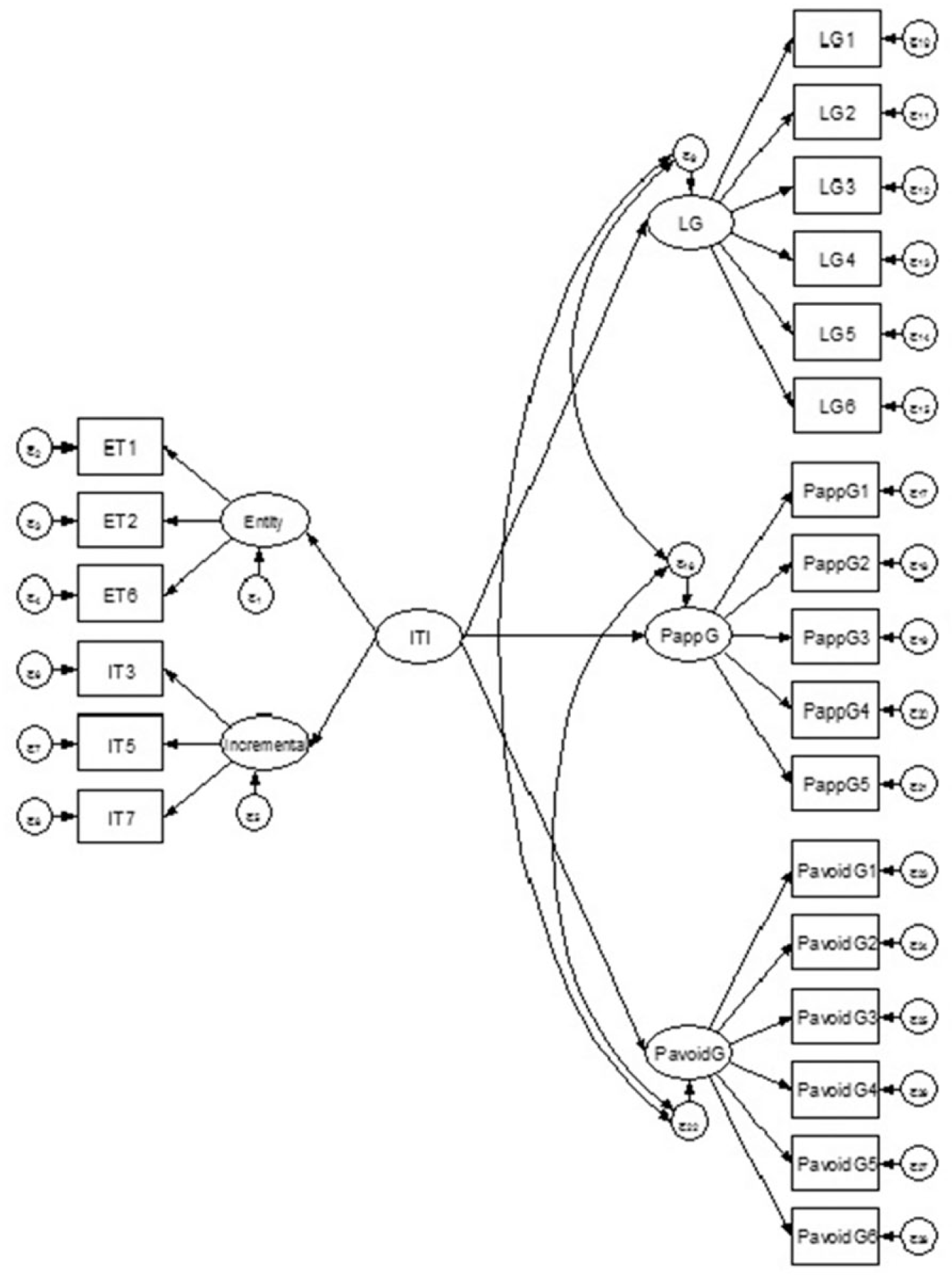
Associations between the implicit theories of intelligence and the goal orientations: Hypothesized model.
Learning, performance-approach, and performance-avoidance goals
Items relating to a learning goal orientation, a performance-approach goal orientation, and a performance-avoidance goal orientation were selected from the Patterns of Adaptive Leaning Survey (PALS; Midgley et al., 1998). Midgley et al. (1998) provided evidence of internal consistency (between .73 and .81 for task goals, between .62 and .84 for ability-approach goals, and .84 for ability-avoid goals) as well as convergent and divergent validity of this scale with samples of elementary and middle school students. All items were scored with the high end (6) representing high learning goals (e.g., I like schoolwork that I’ll learn from, even if I make a lot of mistakes), high performance-approach goals (e.g., I would feel really good if I were the only one who could answer the teachers’ questions in class), and high performance-avoidance goals (e.g., It’s very important to me that I don’t look stupid in my classes). We calculated the scale reliability estimate developed by Raykov (2001, 2004) for the factor reliability estimate reconciling issues with Cronbach’s coefficients within CFA (Brown, 2006). The factor reliabilities of the three goal subscales with the current sample was .891 for the learning goal orientation (a task goal orientation), .845 for the performance-approach goal orientation (an ability-approach goal orientation), and .859 for the performance-avoidance goal orientation (an ability-avoid goal orientation).
Data Analysis
For the first set of research questions, we ran two CFAs: one with the six-item scale and the other with the eight-item scale; we also tested measurement and structural invariances. To determine the scale with the best fit using the CFAs, we compared approximate fit indices including root mean square error of approximation (RMSEA), comparative fit index (CFI), and standardized root mean square residual (SRMR). The criteria for acceptable model fit are less than .08 for both RMSEA and SRMR, and greater than .90 for CFI (Bentler, 1990; Browne & Cudeck, 1993; Hu & Bentler, 1999). To investigate whether the instrument performs similarly across age (younger group: students in Grades 5–7; older group: students in Grades 8–11) and gender groups, measurement invariance was tested based on the following four steps:
Step 1: Configural invariance,
Step 2: Weak (metric) invariance,
Step 3: Strong (intercept) invariance, and
Step 4: Strict factorial invariance.
Structural invariance was tested using three steps:
Step 5: Test the equality of factor variances over the weak (metric) invariance,
Step 6: Test the equality of factor covariance over the weak (metric) invariance, and
Step 7: Test the latent mean difference over the intercept invariance (Brown, 2006).
To confirm the level of invariance described below, we applied the criterion suggested by Cheung and Rensvold (2002) to retain invariance when the difference of CFI is less than .01.
The reliabilities of factors were examined using the factor rho coefficient (Raykov, 1997, 2004), which is a ratio of explained variance to total variance from CFA parameters. In CFA, factor loadings, error variances, and error covariances are estimated, which influence true and total variance. Thus, to measure scale reliability within CFA model, factor reliability facilitating the CFA estimates is more proper than Cronbach’s alpha computed by using unrefined composite score for the scale (Brown, 2006).
For the second set of research questions, we calculated descriptive statistics on the implicit theories of intelligence and the goal orientations of the sample, calculated correlations between variables, and applied structural equation modeling to the hypothesized model in Figure 1. We used Grades 5 to 11 instead of grouping grades (younger vs. older) to investigate the effect of age on the implicit theories of intelligence and goal orientations and found the relationship between age (grades) and outcome variables to be linear. Due to the high correlation, −.824, between the entity factor and the incremental factor, we applied a second-order measurement model for the incremental theory consistent with the measurement model for incremental theory used in Blackwell et al. (2007). The hypothesized model was modified by considering the residual correlations in the measurement model for the goal orientations. Of 17 items for goal orientations, seven items have only one missing data point, and one item has two missing data points. There were no other missing data points. Because missing data are missing at random (Rubin, 1976), the missing data were handled by applying full information maximum likelihood estimate (Enders & Bandalos, 2001) in analyses. All of analyses were done using Mplus software (1998–2012).
Results
Psychometric Properties of the Implicit Theories of Intelligence Scale
CFA
CFA of the data from the six-item and eight-item scales were used to judge whether the six-item scale fits the data from gifted students better than the eight-item scale. To compare the two scales, we examined fit indices for the two scales. All of the fit indices of the six-item scale (
Standardized Estimates of CFA.

Note. CFA = confirmatory factor analysis; RV = residual variance; V = variance; ET = entity theory of intelligence; IT = incremental theory of intelligence; CFI = comparative fit index; SRMR = standardized root mean square residual; RMSEA = root mean square error of approximation; CI = confidence interval.
Reliabilities of the factors
In the six-item scale, the factor reliability for the entity factor is .853; for the incremental factor it is .878. In the eight-item scale, the factor reliability for the entity factor is .885 and for the incremental factor it is .898.
Multigroup analysis
To determine whether measurement and structural invariances hold between age groups on the proposed six-item scale, participants were divided into two age groups based on grade: younger students (students entering Grades 5–7) and older students (students entering Grades 8–11). The younger group was established based on typical age range in those grades being 10 to 12 (preadolescent) and the typical age range of rising eighth through 11th graders being 13 to 16 (adolescent). As noted earlier, model invariance is tested by first fitting the model to each group and then constraining model parameters to equality between groups. At each step of the process, an additional set of parameters is constrained to equality in addition to the constraint(s) in the previous model. This results in a series of nested models that can be evaluated by the differences in CFIs. Cheung and Rensvold (2002) recommended the criterion of a difference in CFI of less than .01 as an indicator of invariance.
By specifying the six-item scale as a two-factor model fixing the first items’ loadings as 1 and factor means as 0 for identification in each group, we estimated the configural model. As shown in Table 2, the configural model indicates a good fit (RMSEA = .059, CFI = .993, and SRMR = .026). Thus, we can test the weak invariance model, the second step of measurement invariance tests. In the weak invariance model, we fixed the factor variances in the younger group as 1 but freely estimated them in the older group so that the estimates of factor loadings are not distorted by the fixed variance in the older group. The factor means were fixed to 0 in both groups. All loadings were constrained to be equal across groups, but all intercepts and error variances were still freely estimated. The weak invariance model fit well and did not differ from the configural model (ΔCFI = −.001, p < .01), which allows us to test the strong invariance model. In the strong invariance test, we fixed factor variances and means as 1 and 0, respectively, in the younger group but freely estimated those in the older group because we wished to compare the intercept differences that are not affected by the difference of factor means. Now, all factor loadings and item intercepts were constrained to be equal across groups but all error variances were freely estimated to differ across groups. The strong invariance model fit well and did not differ from the weak model (ΔCFI = .003, p < .01). Furthermore, the strict invariance model was examined by fixing the factor variance and mean as 1 and 0, respectively, in the younger group but estimating those in the older group. In addition, all residual variances were constrained to be equal across groups. The strict invariance model did not fit well in terms of RMSEA = .1 and SRMR = .085, and the model degraded fit from the strong invariance model (ΔCFI = .031, p > .01). Although the strict invariance model did not fit well, we can consider the six-item scale is measurement invariant because strong invariance was achieved.
Measurement Invariance Tests Across Age and Gender With Gifted Adolescents.

Note. Bold fonts indicate that the invariance is achieved at the level. Strong measurement invariance across age and gender was achieved. Factor covariance structural invariance across age and factor mean structural invariance across gender were achieved. LRT = maximum likelihood ratio test; RMSEA = root mean square error of approximation; CFI = comparative fit index; SRMR = standardized root mean square residual.
Based on the full measurement invariance, structural invariance was then tested with three additional models: the factor equal variance model, the factor equal covariance model, and the factor mean model. The first two models were sequentially tested from the weak invariance model because the comparison of factor variances and covariances are valid when the measurement holds up to weak invariance. However, the factor mean model constructed from the strong invariance was compared with the factor covariance model because the comparison of factor means across groups is valid under the strong measurement invariance (Brown, 2006). The factor variance in the older group was constrained to 1, resulting in no difference from the weak invariance (ΔCFI = .005, p < .01). The factor covariance model constraining the covariance between the entity and incremental factors in the older group did not differ from the factor covariance model in the younger group when constraining the covariance between the entity and incremental factors in that group (ΔCFI = .002, p < .01). Thus, we conclude that the factor variances and covariances are equal across younger and older groups. However, the factor mean model constraining the factor means as 0 in the older group degrades fit from the factor covariance model (ΔCFI = .017, p > .01), which indicates that the factor scores in the younger group are different from those in the older group. That is, when we fixed the entity and incremental means as 0 in the younger group, the entity and incremental means in the older group were −.369 and .544, respectively. These mean differences across the age group are substantial.
In the full gender group, the full measurement invariance (the strong invariance) was achieved. Furthermore, the factor mean model did not differ from the factor covariance model, indicating that the factor mean of the male group does not differ from the factor mean of the female group. That is, both the male and female groups showed both measurement and structural invariance. The results are summarized in Table 2.
Implicit Theories of Intelligence and Goal Orientations of Gifted Students
Association between implicit theory of intelligence and goal orientation
The hypothesized model (see Figure 1) was modified with residual correlations on the measurement models of goal orientation. Based on the modification indices, five residual correlations were added to improve the overall model fitting: Items 5 and 6 (actual item numbers: Items 15 and 21) in the learning goal orientation, 2 Items 2 and 3 (actual item numbers: Items 6 and 10) and Items 4 and 5 (Items 12 and 18) in the performance-approach goal orientation, 3 and Items 1 and 6 (Items 3 and 20) and Items 2 and 3 (Items 7 and 9) in the performance-avoidance goal orientation. 4
The modification indices reflect the association among items. The correlated residuals likely resulted from the similar wording or content overlap of items designed to measure each latent construct. For example, Items 5 and 6 on the learning goal orientation factor include similar content reflecting “interested and enjoy” implying a level of engagement; no other items on that factor contain wording related to engagement. In terms of the performance-approach goal orientation factor, Items 2, 3, 4, and 5 contain “smarter or better” implying a sense of comparison with others whereas the other (Item 1) did not. Also, it seems that Items 2 and 3 include a reference such as “teachers or schools” as a frame to show how smart I am, whereas Items 4 and 5 do not. When it comes to the performance-avoidance goal orientation factor, Items 1 and 6 include a reference such as “teachers or classes” as a frame to reflect “foolish,” whereas Items 2 and 3 do not have any such conceptual reference. To account for the high correlation between incremental theory and entity theory factors, we considered a second-order factor model that included the second-order factor as the implicit theories of intelligence (ITI). The high correlation (r = .824) between the two constructs did not support the discriminant validity on the six-item scale because the factor correlation is slightly higher than the benchmark (i.e., above .8 or .85 as suggested by Brown, 2006). In this situation, it is a common research strategy to respecify the model by collapsing the dimensions into a single factor. However, the single factor model (1 unidimensional model) provides an unacceptable fit index (RMSEA = .183), although CFI = .920 and SRMR = .046 were acceptable. As another respecification, Brown (2006) suggested a second-order factor model to account for the high correlation. The second-order factor model was tested because it is appealing and consistent with the literature of the implicit theories of intelligence; that is, the existence of the incremental theory and the entity theory. The three goal orientations (learning goal, performance-approach goal, and performance-avoidance goal orientations) were treated as latent variables (Midgley et al., 1998). The model fit well (
As shown in Tables 3 and 4, the ITI factor (second-order factor of the entity and incremental factors in the measurement models) positively predicts the learning goal orientation (unstandardized regression coefficient = .273, p < .001, d = .377) but negatively predicts the performance-avoidance goal orientation (unstandardized regression coefficient = −.160, p = .047, d = −.154). This means that a 1-unit increase on the incremental theory of intelligence predicts a 0.273-point increase on the learning goal orientation and a 0.160-point decrease on the performance-avoidance goal. Following Cohen’s guidelines (d = .20, .50, and .80 for small, medium, and large effect, respectively) in Brown (2015), the effect size of the ITI difference for the learning goal orientation is between small and medium, and the effect size of the ITI difference for the performance-avoidance goal orientation is small. However, the performance-approach goal orientation was not significantly predicted by the ITI factor (unstandardized regression coefficient = −.023, p = .726). The model of the association between the ITI and goal orientations is shown in Figure 2.
Parameters Estimates of Factor Loadings and Residuals for the Model of the Implicit Theories of Intelligences and Goal Orientations.

Note. ET = entity theory of intelligence; IT = incremental theory of intelligence; ITI = implicit theories of intelligence; PAPPG = performance-approach goal orientation; PAVOIDG = performance-avoidance goal orientation; LG = learning goal orientation.
Parameters Estimates of Structural Regression, Factor Variances, Factor Covariances, and Error Covariances for the Model of the Implicit Theories of Intelligences and Goal Orientations.
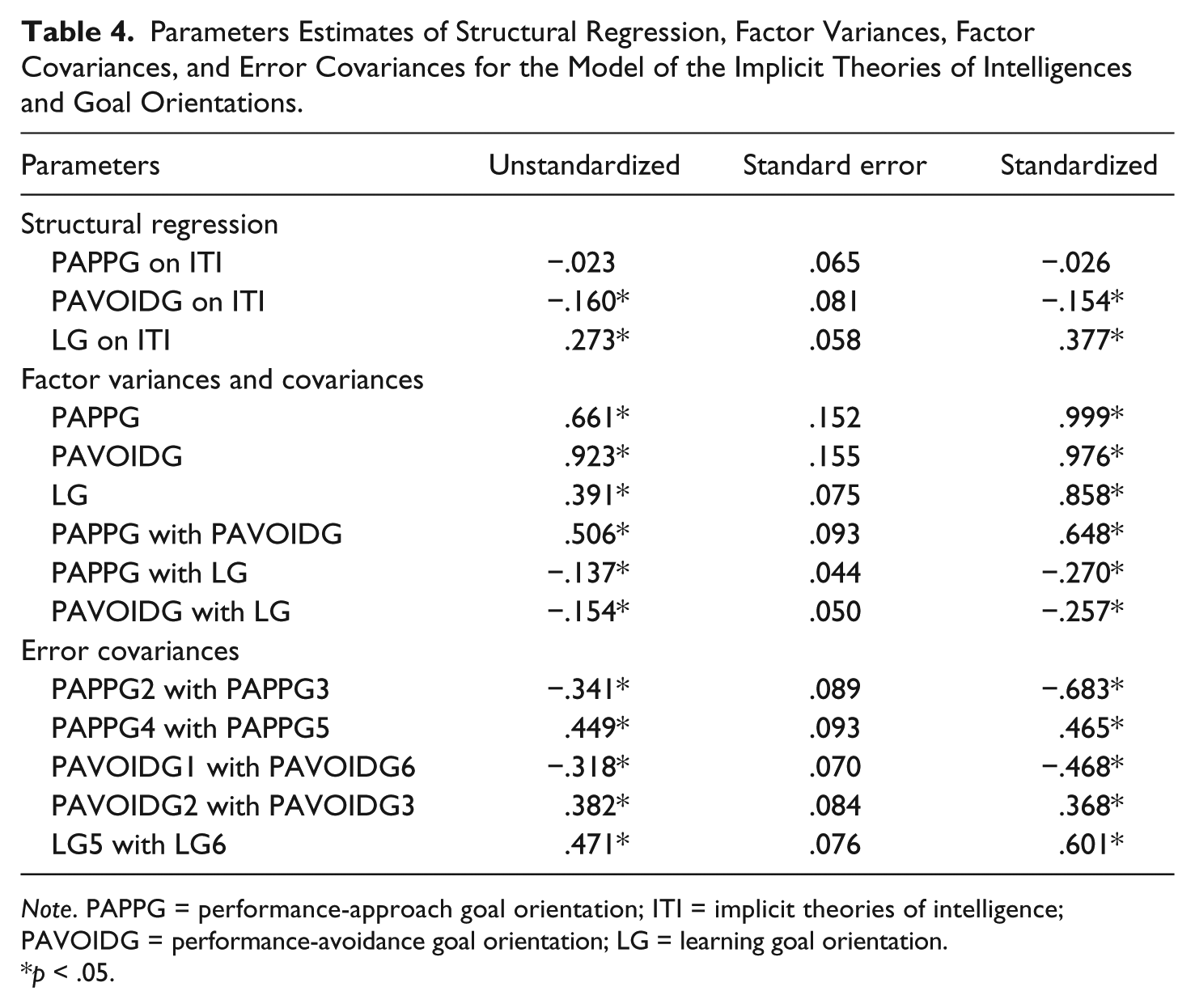
Note. PAPPG = performance-approach goal orientation; ITI = implicit theories of intelligence; PAVOIDG = performance-avoidance goal orientation; LG = learning goal orientation.
p < .05.
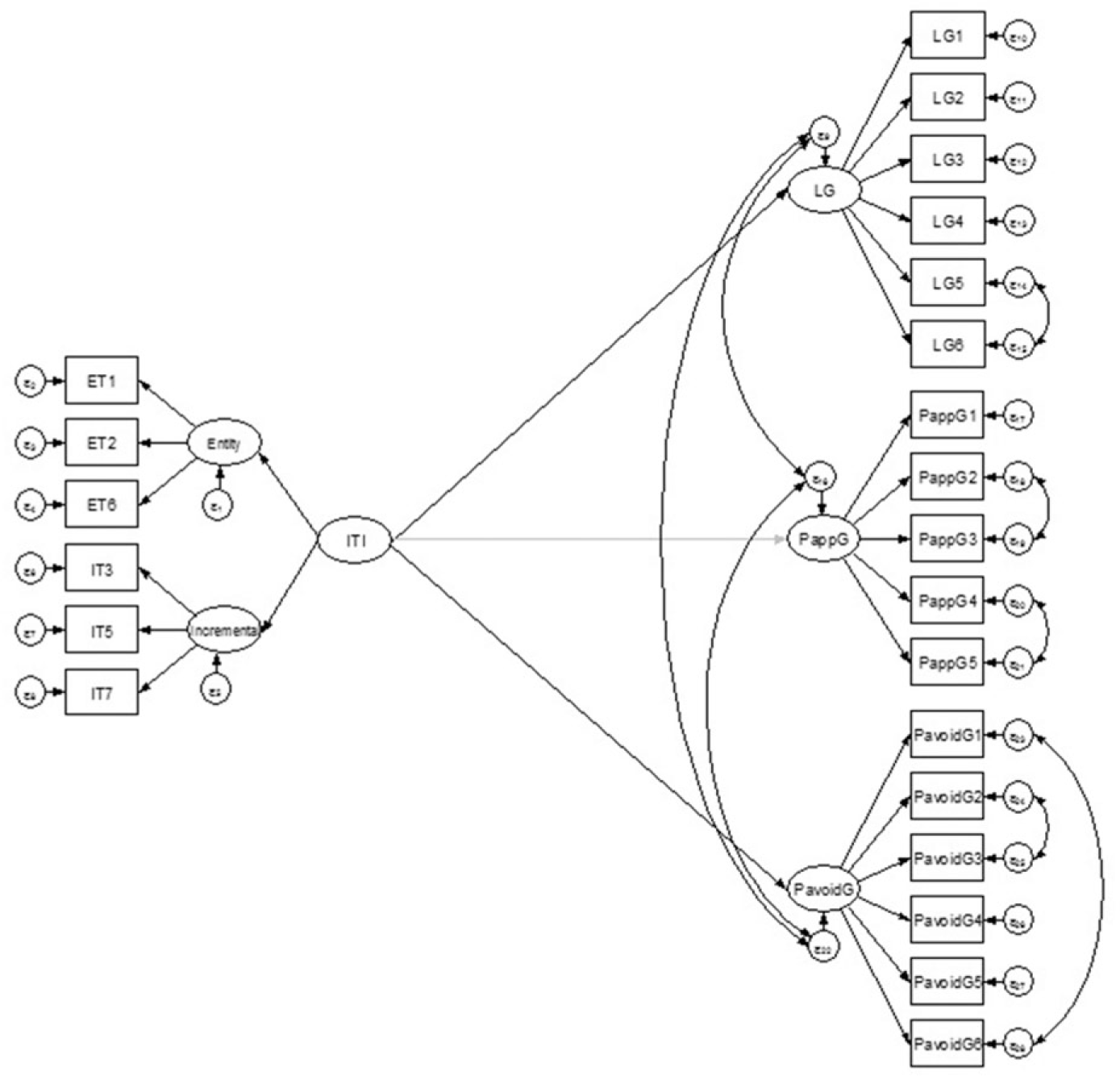
Associations between the implicit theories of intelligence and the goal orientations.
Differences by age (grade) and gender
To examine the effect of the covariates of age and gender, we fit the model with covariates in Figure 3. The model fit well (
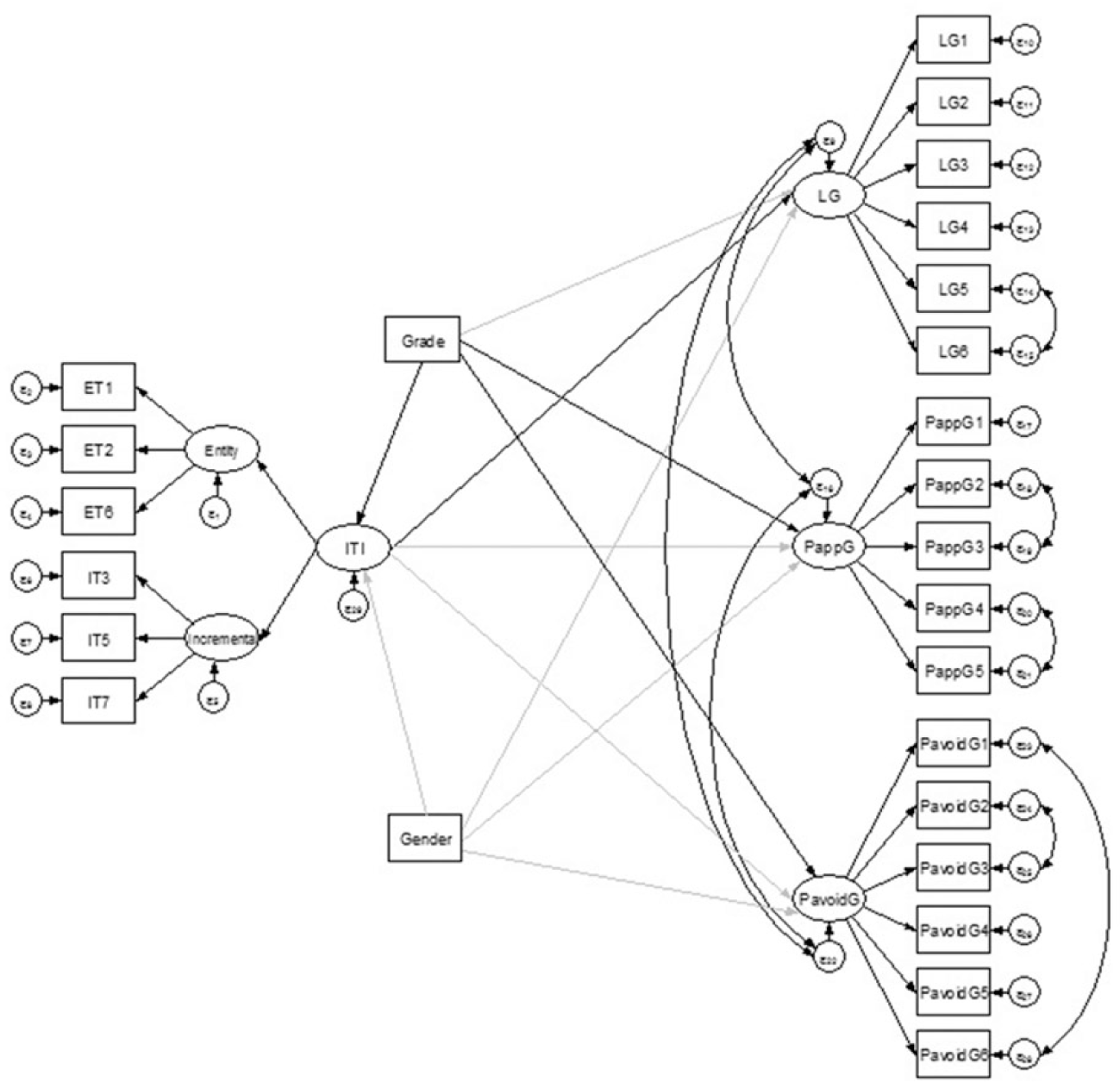
Differences of variables by age and gender groups.
Parameters Estimates of Factor Loadings and Residuals for the Model of the Implicit Theories of Intelligences and Goal Orientations With Age and Gender.
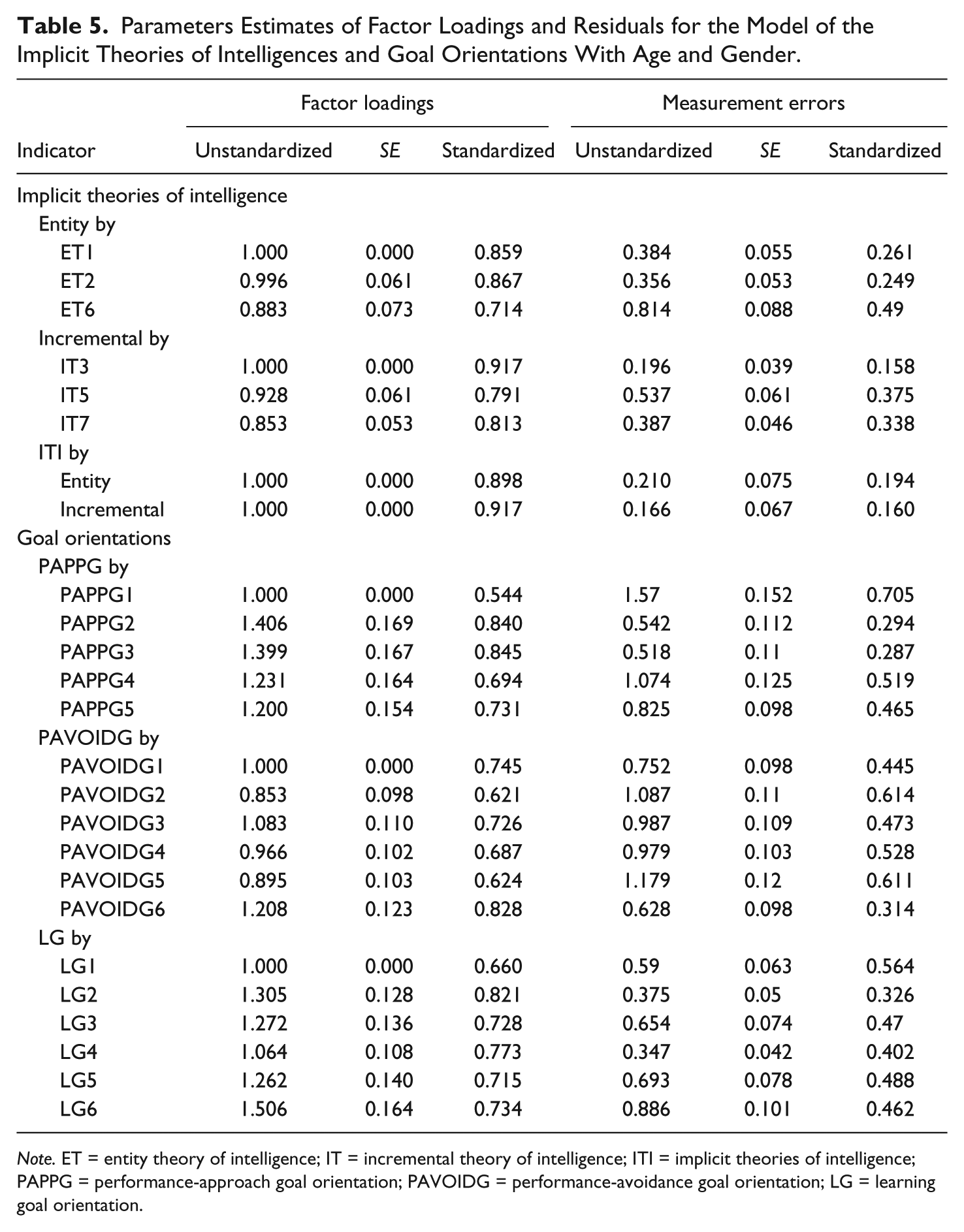
Note. ET = entity theory of intelligence; IT = incremental theory of intelligence; ITI = implicit theories of intelligence; PAPPG = performance-approach goal orientation; PAVOIDG = performance-avoidance goal orientation; LG = learning goal orientation.
Parameters Estimates of Structural Regression, Factor Variances, Factor Covariances, and Error Covariances for the Model of the Implicit Theories of Intelligences and Goal Orientations With Age and Gender.

Note. ITI = implicit theories of intelligence; PAVOIDG = performance-avoidance goal orientation; PAPPG = performance-approach goal orientation; LG = learning goal orientation.
p < .05.
Discussion
Dweck’s six-item scale is a better fit for the data from our sample of gifted students than the eight-item scale, and the factor reliability estimates of scores from both entity and incremental factors of the six-item scale were sufficiently high to warrant use of the scale for research purposes—even higher than the internal reliability and the test–retest reliability estimates that Blackwell et al. (2007) reported in their assessment of students from the general education population. Furthermore, the results suggest that the six-item scale is measurement invariant across age and gender groups in this sample of gifted students. The six-item scale did not show a statistically significant difference on tests of equal factor loadings, equal indicator intercept, or equal factor variances across both age and gender groups. All things considered, the psychometric properties of the six-item scale indicate that researchers can use the six-item scale to measure the implicit theories of intelligence of gifted students.
Also, the results from the current study suggest that gifted students who adopt a stronger incremental theory of intelligence tend to pursue a learning goal orientation. In other words, gifted students (Grades 5–11) who believed their intelligence is malleable and changeable tended to consider achievement situations as opportunities to improve their competence, and thus, set up goals to acquire new knowledge or skills and seek challenges. This finding also indicates that gifted students with a higher incremental theory of intelligence tend to believe working hard and making effort are necessary to extend their mastery. This result supports the motivation model of the implicit theories of intelligence (Dweck, 2000; Dweck & Leggett, 1988) and is consistent with the empirical findings from studies with general education populations (Blackwell et al., 2007; Chen & Pajares, 2010; Dweck, 2000; Jones, Wilkins, Long, & Wang, 2012) and studies with gifted populations (Dai & Feldhusen, 1996; Feldhusen & Dai, 1997; Hsueh, 1997).
When it comes to performance-approach and performance-avoidance goals, our data suggest that as gifted students adopt a higher incremental theory of intelligence, they pursue lower performance-avoidance goals. Gifted students who think that their intelligence can be developed through effort tend not to set goals that reflect avoiding tasks that might result in the demonstration of their lack of ability. In turn, gifted students who believe that their intelligence is fixed tend to select goals to avoid negative judgments of competence. They are more likely to regard achievement situations as measures of their competence. This finding suggests that gifted students with an entity theory also might exhibit a helpless behavioral pattern—avoiding challenging tasks so they will not to be judged incompetent much as other data have suggested in the case with students in the general education population 5 (Blackwell et al., 2007; Chen & Pajares, 2010; Dweck, 2000; Jones et al., 2012). Because the negative association between an incremental theory of intelligence and performance-approach goals was not statistically significant with gifted students, we can only affirm one aspect of the hypothesized relationship between the two distinct types of performance goals. This finding supports the Chen and Pajares (2010) study with general education students. In their study, an entity theory of intelligence was positively related to a performance-avoidance goal, and a performance-avoidance goal was indirectly negatively associated with students’ final grades. To further understand whether gifted students’ implicit theories of intelligence are associated with academic achievement through mediating factors such as goal orientations, studies of the mechanisms through which an incremental theory of intelligence is related to gifted students’ academic achievement are needed. Although the data do not extend to the influence on achievement outcomes, these findings suggest that exhortations to influence gifted students into adopting a malleable, incremental view of intelligence may, indeed, be warranted.
In addition, in the structural equation modeling, some residuals of indicators in goal orientation factors were correlated based on the modification indices and similar wordings or content overlap of items used to measure each of the latent constructs, and the modified model fitting led to the improvement of the overall model fit. Chen and Pajares (2010) calculated and used a composite score for each goal orientation in the path model to examine relationships between epistemological beliefs, beliefs about intelligence, three goal orientations, self-efficacy, self-regulation, and final grades. Thus, in future studies, researchers should further examine the psychometric properties of the goal orientation instrument.
Furthermore, we found substantial factor mean scores differences between the preadolescent and adolescent age groups with adolescents tending to believe more in an entity theory of intelligence than preadolescents and preadolescents tending to adopt more of an incremental theory than adolescents. The results of the structural equation modeling also suggest that older gifted students have a greater tendency to hold an entity theory and pursue higher performance-approach and performance-avoidance goals. That is, older gifted students are more likely to hold the belief that their intelligence is fixed and are more likely to set goals that lead to a high likelihood of receiving positive judgment and to avoid being judged as incompetent. Unfortunately, this may lead them to avoid challenging tasks.
Gender was neither significantly associated with an incremental theory of intelligence nor related to any of the goal orientations. This result is consonant with the findings from E. Hong and Aqui (2004) that gender differences were not found on students’ beliefs about either general intellectual ability or math ability. However, this is not consistent with findings from Siegle et al. (2010), who found that male students tend to hold higher entity beliefs about ability and female students tend to hold higher incremental beliefs about ability. These findings also differ from those of Chen and Pajares (2010), who reported that boys held slightly higher incremental views of ability than did girls. The inconsistent results may stem from the differing samples and/or the domains on which researchers focused. Further study is necessary to examine differences across gender and diverse ages and domains and the potential interactions across these variables.
Limitations
The first limitation of the study is the convenience sample of gifted students. Although the students in the program are selected from a large applicant pool based on characteristics of gifted students and following recommendations in the literature that multiple indicators of giftedness be used to identify gifted students, the lack of aptitude test scores makes generalizability to students identified using test scores as the primary criteria for defining giftedness difficult. Hence, in future studies, researchers should conduct the measurement invariance tests using samples drawn from samples of gifted students who meet other criteria for giftedness. The group from which this population was sampled was tuition-paying students attending a summer program for gifted students. Although some attendees are on partial scholarship, we did not collect socioeconomic status data on our sample, so we could neither test for differences by that variable nor generalize to populations not similar in terms of this demographic.
Second, we did not assess the students on two separate versions of the instrument: the six-item scale and the eight-items scale. We felt that because the eight-item scale includes the six-item scale, the students may have found taking two apparently very similar assessments to be redundant and confusing. However, it is possible that the inclusion of the two additional items could have influenced responses on the six embedded items. Third, the data provide only cross-sectional findings that suggest differences between preadolescents and adolescents; a longitudinal study would allow for examination of how and when the theories of intelligence change in the population.
Last, in the structural equation modeling used to examine the relationship between the implicit theories of intelligence and goal orientations, the regression coefficients of the path from ITI to learning goals and the path from ITI to performance-avoidance goals are not large, even though the parameters are statistically significant. In other studies, the regression coefficients of the path from ITI to goals were varied: The parameters of the path from an incremental theory to learning goals were .59 in Blackwell et al. (2007) and .54 in Jones et al. (2012); the parameter of the path from an incremental view of intelligence to performance goal orientation was −.18 in Dai and Feldhusen (1996). A similar parameter was found in Chen and Pajares’s (2010) study (the regression coefficient of the path from an incremental theory to learning goals was .286). It appears that regression coefficients differ according to differently specified models and scales used to measure the implicit theories of intelligence in each study. The examination of such variations was beyond the scope of this current study.
Conclusion
As the notions of malleability of intelligence gain greater attention and credence in the general education literature and practice and as such notions are adopted in the field of gifted education, the need for sound research using sound measures grows. Based on the data from this study, researchers in the gifted education field can feel confident in using the six-item Implicit Theories of Intelligence Scale to conduct research on implicit theories of intelligence of gifted student populations (Grades 5–11).
The data on this sample suggest differences in age groups in beliefs about the malleability of intelligence and also about the relationship between those beliefs and goal setting. These findings are preliminary but warrant future study in conjunction with how the beliefs and goal setting relate to academic achievement. Also, the relationship between genders in the gifted student populations and their implicit theories of intelligence should be investigated by subject domains more specifically.
Findings based on this sample imply that gifted students with an entity theory also might exhibit maladaptive behavioral patterns such as avoiding challenging tasks, particularly as they become older. Thus, it would be important for practitioners to bear in mind that some gifted students may accept an entity theory that might deter them from challenging themselves, and thus, might pass up opportunities to develop their competence in the domain of their talents. To prevent gifted students from adopting an entity theory of intelligence, it would be beneficial for gifted students that practitioners continuously guide gifted students to adopt an incremental view of intelligence.
Footnotes
Declaration of Conflicting Interests
The authors declared no potential conflicts of interest with respect to the research, authorship, and/or publication of this article.
Funding
The authors received no financial support for the research and/or authorship of this article.