



Abstract
This article examines the case of the Forgotten Australians as an opportunity to examine the role of the internet in the presentation of testimony. ‘Forgotten Australians’ are a group who suffered abuse and neglect after being removed from their parents – either in Australia or in the UK – and placed in Church- and State-run institutions in Australia between 1930 and 1970. The campaign by this profoundly marginalized group coincided with the decade in which the opportunities of Web 2.0 were seen to be diffusing throughout different social groups, and were considered a tool for social inclusion. We outline a conceptual framework that positions the role of the internet as an environment in which the difficult relationships between painful past experiences and contemporary injunctions to remember them, are negotiated. We then apply this framework to the analysis of case examples of posts and interaction on websites with web 2.0 functionality: YouTube and the National Museum of Australia. The analysis points to commonalities and differences in the agency of the internet in these two contexts, arguing that in both cases the websites provided support for the development of a testimony-like narrative and the claiming, sharing and acknowledgement of loss.
Introduction
Our contemporary public sphere has seen the ‘emergence of new political rituals, which are concerned with the stains of the past, with self-disclosure, and with ways of remembering once taboo and traumatic events’ (Misztal, 2005). A recent case of this phenomenon occurred in Australia in 2009, and the UK in 2010, with the apologies to the ‘Forgotten Australians’ (in Australia) and the ‘Child Migrants’ (in the UK): groups who suffered abuse and neglect after being removed from their parents – either in Australia or in the UK – and placed in Church- and State-run institutions in Australia between 1930 and 1970. A central feature of the campaign leading up to and following the apologies was the involvement of mass media in facilitating various speaker – audience relationships, which are theoretically proposed to contribute to the ongoing sense of identity of the group (Alexander, 2004), and, particularly in the case of television, facilitate a broader social identification with their experiences (Olick, 2007). In addition to these media, particular websites functioned as environments for communicating these experiences. The campaign for recognition of the Forgotten Australians coincided with the decade in which the opportunities of Web 2.0 were seen to be diffusing throughout different social groups, and considered a tool for social inclusion. In particular, Web 2.0 has been identified as an important resource in communicating for people who have experienced trauma, potentially catering to the difficult ‘memory work’ involved in testimony, the provision of arenas for sharing and support (Arthur, 2009), and the potential for enabling more open forms of testimony (Kelly, 2008). The Forgotten Australians campaign, both before and after the apology, has had a significant presence on the internet, featuring on diverse sites such as YouTube, The Australian Government, websites of key advocacy groups, as well as those of the National Museum and National Library of Australia. This article examines the case of the Forgotten Australians as an opportunity to analyse the role of specific online environments in supporting and resourcing the testimonies that constituted the corpus of memories shared by individuals who had suffered. The article first provides a background to the issue and campaign, identifying the public dialogue on which the apologies focused as a context for the posting of stories on websites. Second, we review scholarship on trauma, testimony and the internet in order to identify the nature of the relationships that may be at stake in the provision of testimony online, and to raise questions regarding the role of online environments as contexts for the provision of testimony. Third, we provide an analysis of postings by Forgotten Australians on two websites with Web 2.0 functionality: YouTube and the National Museum of Australia, identifying the role of these websites in relationships required for the presentation of testimony.
Background: the Forgotten Australians campaign and the apologies
Through the communication of their experiences the ‘Forgotten Australians’ came to constitute a common symbol for a demographically diverse group of an estimated 500,000 children who were removed from their families, or were orphaned or child migrants from the United Kingdom and who were placed in institutions between 1930 and 1970. Reasons for placement in institutions included ‘family poverty, orphanhood, being born to a single mother, physical or mental illness of a parent (particularly a mother), or family breakdown’ (Bessell, 2011: 11; Commonwealth of Australia Senate Committee Report, 2004). In this respect, institutionalization of children was in part a reflection of a view that ‘poverty was a moral weakness and this was particularly the case when the family was headed by a single woman’ compounded by the absence of government assistance for families, particularly prior to world war two (Bessell, 2011: 11).
Children’s experiences in these institutions reveal many residential contexts characterized by ‘systematic harassment, physical violence and sexual and psychological abuse emotional deprivations and physical abuse’ (Bessell, 2011: 11). The term ‘Forgotten Australians’ refers to children who ‘were for many reasons hidden in institutions and forgotten by society when they were placed in care and again when they were released into the ‘outside world’ (Commonwealth of Australia Senate Committee Report, 2004: 6). In addition to this lack of recognition, many of them were given little or no information about their identities and their families and were often deprived of family communications. This profoundly affected indigenous, non-indigenous and ‘child migrant’ children, requiring large scale provision of trauma-informed counselling. Penglase cites this story provided by a man who had been placed in care as a baby:
The thing that hurt me most of all was that I didn’t know who I was. No one ever told me where I came from or what. I was just an individual person that knew no one. I never ever knew how old I was. I never knew my birthday… (Penglase, 2005: 300)
The emergence of the Forgotten Australians as a publicly acknowledged collectivity occurred in the context of a political, cultural and institutional environment that had already experienced a long standing campaign involving claims of harm due to the placement of children in out-of-home care. The apology to the Forgotten Australians was preceded by the public apology to the Stolen Generation (Indigenous children who were forcibly removed from their families between 1909 and 1969) in 2008. Both the apologies were the result of Senate inquiries and many years of activism by community groups and individuals. The campaign that kept the stories of the Forgotten Australians in the public sphere was in reality an assemblage of strategies on the part of institutions such as advocacy and other interest groups, the bureaucratic field, the political field and institutions of public memory (libraries and museums), that displayed different versions of ‘the will to memory’ such as asserting collective identities, coming to terms with the past or settling accounts (Eyal, 2004).
The ‘Forgotten Australians’ and ‘Child Migrants’ apologies in 2009 and 2010 by the Australian and British Prime Ministers brought the stories of those who had been institutionalized into public dialogue, both apologies scripted, at least in part, as a response to experiences told by Forgotten Australians or ‘child migrants’. The following extract of Kevin Rudd’s speech clearly illustrates the construction of these stories as part of the dialogue of the apology:
And for countless thousands and tens of thousands besides, this apology is important. Important because it does not seek to hide that which they experienced. An apology that acknowledges the very personal pain that has been caused. An apology which, it is hoped, will bring some healing balm to wounded souls. And not just to the handful that I have been so honoured to meet. But to all those whose cases are reflected in the Senate reports over many, many years. And to those also whose stories will remain forever untold. There are tens of thousands, perhaps hundreds of thousands of these stories, each as important as the other, each with its own hurts, its own humiliations its own traumas – and each united by the experience of a childhood without love, of childhood alone. (Rudd, 2009)
Similarly, the apology by the then UK Prime Minister, Gordon Brown, to the ‘child migrants’ that had been sent to Australia, among other countries, until the late 1960s to be placed in the same institutions, sources the basis of the apology on what he has heard from the victims of the practice:
Mr Speaker, the former child migrants say they feel that this practice was less transportation and more deportation: a deportation of the innocents. And when they arrived overseas, Mr Speaker – all alone in the world – many of our most vulnerable children endured harsh conditions, neglect and abuse in the often cold and brutal institutions which received them. (Brown, 2010)
In both texts, the Prime Ministers construct their apologies in the context of their recipiency of stories recounted by members of the groups. For Andrieu (2009), such features of apology are central to attempts to restore ‘civic trust’. However, if the role of apologies is to acknowledge the pain that was caused and to respond to the stories and testimonies, what are the contexts and interactions through which these stories come to be shared publicly? Under the surface of the records that constitute the public memory of these experiences lie the challenges – inherent in what, for some, was a traumatic experience – of communicating about these experiences in the form of testimony. This, in turn, raises questions regarding the qualities of online environments as an emerging source of the stories of those that have suffered, in this communication. The following section turns to a review of the concepts of trauma and testimony in order to identify the properties of these environments in the presentation of testimony.
Trauma, testimony and Web 2.0
When considering the role of online environments in the production of testimony, it is essential to consider the challenge inherent in storytelling when trauma has been experienced in order to understand what may be at stake in this activity for testifiers. There are some key points regarding trauma on which most scholarship on trauma and testimony converge. Trauma is not an inherent property of an event. It is more appropriately seen as a particular relationship between a person and an event, ‘in which the response to the event occurs in the often delayed and uncontrolled repetitive occurrence of hallucinations and other intrusive phenomena’ (Caruth, 1996: 11). For Pierre Janet, this can entail an ongoing experience of trauma where ‘the individual unconsciously repeats the past (flashbacks or other ways of being unable to treat the past as history)’; this is distinct from narrative memory, ‘where the individual narrates the past as the past (it has become a memory)’, and it is the ‘goal of therapy to convert traumatic memory into narrative memory’ (Hunt and McHale, 2007: 42–43). In this sense, trauma is seen as pertaining to unassimilated events, and, as such, can take the form of re-enactments where the traumatic experience is still present in the present, rather than given a place in the context of a broader biography. Narrative memory, on the other hand, may be achieved after the event as a more mediated, distanced account (Van Alphen 2002; Van der Volk and Van der Hart, 1991).
A full review of the specialized and rich debates and scholarship pertaining to trauma is beyond the scope of this article. However, the analytical distinction between traumatic and narrative memory continues to be relevant in this multidisciplinary scholarship and, for the purposes of this article, serves to point to a key space of ‘memory work’ in the provision of testimony on the part of those who have experienced trauma. The distinction can sensitize inquiry to problematize the self-evidence or ‘naturalness’ of the narrative qualities of testimony and raise questions about the processes that enable utterances to take on declarative features associated with testimony. From the literature on trauma, it is also clear that this work has crucial implications for the provision of testimony which bears specific relationships to memory and to audience.
Testimony itself is understood as entailing a narrative of a past event that is autobiographically certified. This involves the co-presence of particular linguistic qualities: the first person singular, the past tense of the verb and a relationship between there (when/where the event/s happened) to here (the context of telling). Further, the narrative tends to display characteristics that attest to the believability of the story, implying the orientation of the utterance to an audience (Ricoeur, 2006: 164). In the context of the present inquiry, the testimony of Forgotten Australians most commonly involves specific memories committed to language involving a particular kind of first person authorship where the testifier is also animated as one or more ‘figures’ in a story (Goffman, 1981). Ricoeur observes that this work of commitment of memory to language is itself a difficult process where traumatic experience has occurred, where ‘authorship’, in the first instance, may require support by analysts or others who ‘authorise’ the teller to remember. Here, authorship is only made possible through processes involving an ‘effort to reconstruct a comprehensible mnemonic chain, acceptable to him or to her’ (Ricoeur, 2006: 129). Further, even where one can successfully produce a narrative regarding pain or harm, the memory can wound in its recall (Ross, 2007: 109). Surrounding and interacting with efforts to produce a narrative following trauma in these circumstances are other key features of context. The production of testimony not only refers to traumatic experience, it is also shaped by that experience. The work of memory must be carried on in the context of often enduring social consequences, involving loss of trust in the self, family, community and government (Cubilie and Good, 2003; Erikson, 1991).
In addition to the personal experiences, struggles and investments involved in memory work, testimony is also crucially framed by public discourses. Occasions of testimony are attended by pre-constructed assumptions and constraints, where the subject positions from which testifiers speak may be shaped by conventions that anticipate certain linguistic bearings (Ross, 2007). For Eyal, the production of testimony can also entail engagement with pre-constructed wills to memory: ‘discourses and practices within which memory is entrusted with a certain goal and function, and is invested, routinely, as an institutional matter, with certain hopes and fears as to what it can do’ (Eyal, 2004: 6–7).The potential teller can confront a setting in which certain discourses surrounding the injunction to remember are available or prioritized – for example, to redress ‘forgetting’ at a social level, and/or internal repression at the level of the individual. Further, particular social emphases can shape the mnemonic substance and operation, conveying a sense of ‘which part of the past is deemed of consequence for the present and hence must be remembered’ and also prioritizing various techniques of memory work (Eyal, 2004: 10). These relationships thus point to the context in which the testifier asks to be believed, and to this extent, form part of the dialogic context of the testimony. These considerations raise questions regarding the way online environments might function as settings in where these relationships are negotiated.
In their critical discussion regarding the nature and properties of Web 2.0, Harrison and Barthel cite Tim Berners-Lees’ characterization of this environment as focusing on an architecture of participation ‘whose applications invite, facilitate, encourage or make it possible for users to interact, share knowledge and information with each other and construct content’ (Harrison and Bartel, 2009: 159). Compared to earlier online environments it is said to provide ‘a new degree of agency in constructing their engagement with resources and other users’ (Hardey, 2007), providing opportunities for active media audiences for individual and collaborative expression (Harrison and Barthel, 2009). These qualities that enable the amplification of personal narratives are consistent with Castell’s vision for the possibilities of network power which involves ‘the re-programming of communications networks, so becoming able to convey messages that introduce new values to the minds of people and inspire hope for political change’ (Castells, 2009: 8).
Researchers have begun to document the role of these environments in the memory work entailed in producing testimony on the part of those who have experienced trauma. For Paul Arthur, the value of environments with web 2.0 functionality for the posting and sharing of commemorative materials lies in the potential to provide psychological benefits of group sharing that have already been documented in clinical settings. In terms of the website as an environment, Arthur points to qualities that potentially serve the specific challenges of producing testimony, providing platforms that allow the sharing of relevant materials, and offering a ‘nonlinear, distributed format which can contain narrative but is not itself narrative’. In this process, the environments potentially can offer an element of control over testimony narratives – ‘to conceal and disclose at one’s own discretion, and at one’s own pace, and, most important, to leave the pieces of the story scattered and unresolved’ (Arthur, 2009: 69). From the interests of human rights perspectives to broaden the tendency for testimonies to focus on experience from a particular point in time, Kelly proposes the potential of digital environments to offer possibilities of more open forms of testimony where the capacity for reflection and updating in these environments can support more evolving and open ended narration (Kelly, 2008). This research thus points to such environments as spaces for exercising a level of agency in the work of memory involving choices of what material is recounted, the way text might combine with images and other accompanying resources, the capacity for commentary, reflection, updating, dialogue and new connections. For the purposes of this study, the analysis of these environments provides an opportunity to describe the modalities through which agency is exercised and the kinds of testimonies that eventuate.
Testimony on YouTube and the National Museum of Australia websites
For the purposes of our examination of the role of the internet in testimony we present analyses of two types of online environments: YouTube and The National Museum of Australia. The two websites selected for the study display some aspects of web 2.0 functionality that have potential to support narrative and testimony. They share the capacity to co-locate the posting of textual, visual and other material with interaction, and the capacity to explore and access further material on the topic through hyperlinks. Interaction on each of the sites has been selected to enable comparison of the ways in which they support different forms and styles of testimony. The analysis applies the principles of the ‘interaction order’ to identifying relationships between interactions and context. Following the perspective and approaches of Goffman, Garfinkel and Sacks, these principles focus on participants’ methods for organizing their representations and interactions, and their ongoing relationship to the context or situation (Rawls, 1989). In the analysis of interaction on the websites, this perspective enables a focus on the relationships between the nature of the environments and the nature of the narrative presented, and, in particular, the memory relationships evident in the posts. For example, the work of Anita Pomerantz, following Sacks’s approach to conversation analysis (Sacks, 1995), provides very detailed analyses of linguistic processes that are central to declarative and evaluative aspects of testimony, documenting the way people evaluate states of affairs through assessments (Pomerantz, 1984a) and support them through demonstrations of access to the matter being assessed (Pomerantz, 1984b). Erving Goffman’s work on ‘footing’ (Goffman, 1981) complements the analysis of the organization of assessments and their basis in experience, in his deconstruction of the notions of speaker and hearer into a set of analytical terms that focus on participation roles in talk. For example, relationships of authorship on the part of the ‘speaker’ draw attention to the way the author ‘animates’ particular ‘figures’ in the story, including, of course, the author him or herself. This is closely related to the identity to which the utterance attests or the ‘principal’:
Sometimes one has in mind that a ‘principal’ (in the legalistic sense) is involved, that is, someone whose position is established by the words that are spoken, someone whose beliefs have been told, someone who is committed to what the words say. (Goffman, 1981: 144)
This dimension of speaking is used to identify the implied social position or basis for the declarative features in the utterance. These aspects of the analysis converge in extant sociolinguistic studies of evidence, such as those reviewed by Fox (2001) in her study of evidential marking which is used to identify the relationships of the authors to the evidence they provide. The article now turns to an analysis of posts and interaction on the websites.
YouTube
Hildebrand (2007) identifies the role of YouTube as a site for the intersection of personal experience, popular culture and historical narratives, and, as such, a vehicle for cultural memory ‘allow(ing) users to seek out the media texts that have shaped them and that would otherwise be forgotten in “objective histories”’ (Hildebrand, 2007: 50). He suggests that the site invites this use through its ‘aesthetics of access’, with uploaded material bearing all the marks of mediated memory material, and the capacity for people to share this access without the use of a lot of text by embedding hyperlinks in emails and on websites. For Malin (2011), sites such as YouTube play a particular role in the ‘economics of attention’. While users tend to search for videos that are already getting time in the mainstream media or that reference well-known media products, they serve a purpose on that site in line with the ‘publicity of openness’, promoting the flow of information through word mouth, the sharing of links, or searching (Malin, 2011). It is thus no accident that many of the YouTube videos focusing on the Forgotten Australians were posted around the time of the apology when coverage by the mainstream media peaked.
YouTube videos relevant to the Forgotten Australians ranged from locally made stories and documentation, news items and presentations recorded by major organizations, but uploaded by individuals, and also those posted by these institutions themselves. A notable feature of many contributions is their role in the representation of witnesses’ stories. In the case of reports from major news organizations, the stories, particularly those posted around the time of the apology, frequently involved brief interviews with survivors. Some of these stories were then followed by ‘comments’ by supporters, and sometimes by people identifying as Forgotten Australians. The other kind of post took the form of presentations prepared specifically by survivors.
The following analysis is a case of one specific mode of authorship: first hand testimony by one of the Forgotten Australians about the privations at a boys’ home. The video is authored by a person whose name is hyperlinked to his channel where he describes himself as a ‘System Survivor’. The video is then introduced as follows:
A video snippet of child abuse history sanctioned & perpetrated by the [government department]. Until the mid-1980s, the Department operated various gulag grade boys’ institutions…. The so called ‘welfare staff’ managing these institutions were slyly known as ‘Group Workers’. The cells housing the children were known as ‘cabins’.
This is followed by a lengthy elaboration of these boys’ homes, what occurred there, and the names of the workers that were seen as responsible for abuse and ill treatment. While there is no explicit autobiographical component to the testimony in terms of the involvement of the first person, it is nevertheless clear that the introductory description is related to the experience of the author, who has described himself on his channel as a system survivor, and who enjoins addressees of the description and video to ‘Never Forget! Never Forgive!’ This ending anchors the testimony of past events as having direct implications as well as profound consequences in the present. The video consists of a slideshow which contains detailed information of children’s homes, and the practices engaged in by staff members in relation to children. The information is interspersed with an image of a child alone in a room, and photographs of the institutions themselves: stark prison-like buildings that constituted the built form of the children’s home such as the one depicted in Figure 1.
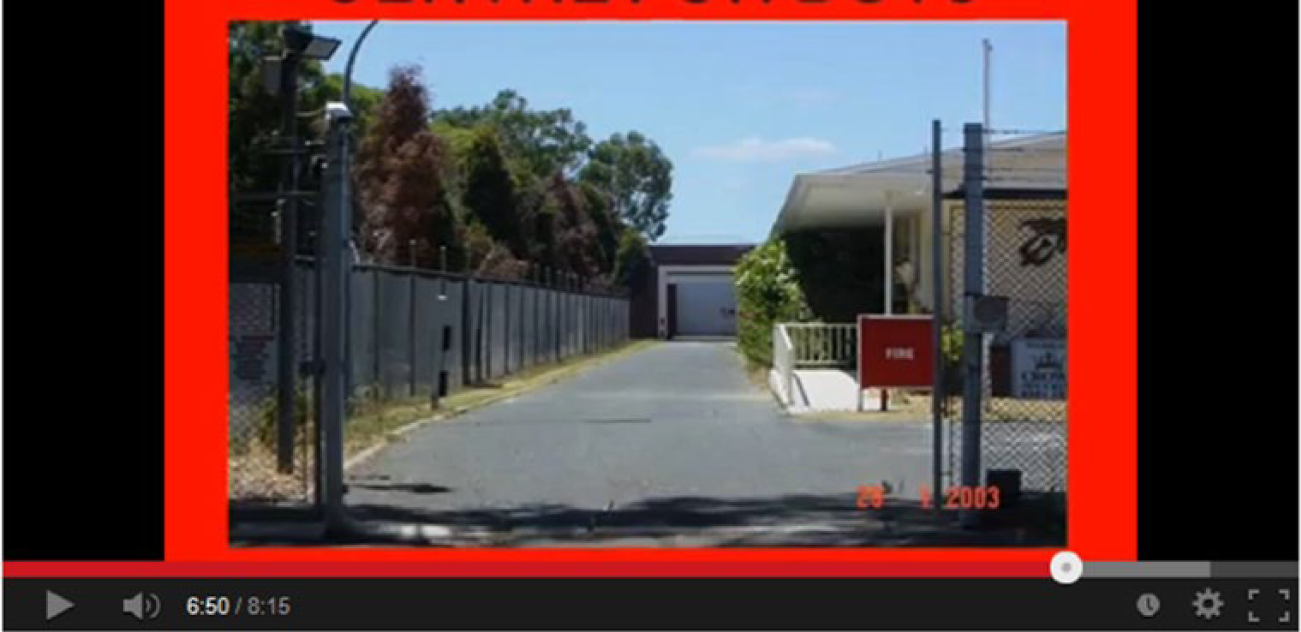
Screenshot of an image of one of the institutions included in the video.
The relationship between narrative and images such as that in Figure 1 in the YouTube environment enables the author to manage autobiographical certification of the testimony without explicit involvement of the first person. The author’s positioning as the source of evaluations of the experience of the children’s homes implies an identity grounded in the experience of suffering in this context. Positioning the basis of evidence (Pomerantz, 1984b), and the activity in terms of ‘remembering’, functions as an evidential marker of how the teller has ‘come to know the proposition expressed by an utterance’ (Fox, 2001: 167). This is followed by two slides that identify the author as a ‘Forgotten Australian who does not forget’ and then an image of a child standing on a rock with the caption: ‘still standing, still waiting’, implying that the suffering in the past belonged to the teller and has ongoing issues in the present. The inference regarding ownership of the knowledge to which the video attests without significant integration of direct ‘first person’ descriptions was enabled by the digital nature of the video through the interspersing of textual material with images of the children’s homes, and poignant images of children alone. This combination of digital objects functioned to translate the experience through virtual ‘materials’ (Van Doorn, 2011) that convey a sense of experience in place. This enabled it to function as both an evidentiary and evocative form of testimony. As Ricoeur observes:
‘Things’ remembered are intrinsically associated with places … [I]t is not by chance that we say of what has occurred that it took place. It is indeed at this primordial level that the phenomenon of ‘memory place’ is constituted … offering … a support for failing memory, a struggle in the war against forgetting. (Ricoeur 2006: 194)
The experiences thus depicted are personalized through implications of the teller’s direct access to the experience of the homes through relationships of ‘remembering’, and his identification as a ‘Forgotten Australian’.
The commentary positioned under the video further functioned to support the assessments and evaluations in the video. Two of the key responses both attested to having also experienced this or similar homes as children as follows:
I spent three years in these places between 1970 and 1972. I recall [xxx] was a piece of work. Supt [yyy] seemed ok … don’t remember the rest. [Name of children’s home] was a dawdle. [Another children’s home] quite harsh.
well done, I wish I could remember names but I can only remember the ill treatment.
While these utterances appear as partial recountings of the experiences in the homes in the provision of limited detail, they nevertheless provide support and lend authority to the evaluations in the video. They function as ‘second stories’ (Sacks, 1995) both of which show commonality with the ‘first story’ material in the video and text, and, most importantly, the basis of this commonality in experience of these boys’ homes. According to Sacks, second stories are an important feature of maintaining and developing a world known in common for participants. They are related to first stories by their role in showing understanding’, ‘searching experience’, and ‘seeing the point’. (Sacks, 1995). Testimony in the first story is thus supported interpersonally and substantively through second stories offered as affiliative testimony.
The National Museum of Australia
Recent research on the role of museums in the public sphere (Barrett, 2010) identifies the importance of questioning the relationships between museums and their various publics, and particularly the ways in which the internet provides for new relationships between museums and these publics (Müller, 2002). In the case of the Forgotten Australians, both state and national museums presented exhibits and collections in the context of the apology. The National Museum of Australia presented an exhibition entitled ‘Inside: Life in Children’s Homes and Institutions’ (Chynowyth, 2012). This exhibition was accompanied by an online space dedicated to the collection and representation of contributions from ‘those who were placed in children’s homes’. The home page of this section of the website contains the following invitation:
Join in!
The National Museum of Australia is putting together an exhibition based on personal histories of those who were placed in Children’s Homes – a voice for those who were inside and a chance for others to understand. Here we are sharing stories, photos, artwork, poems, songs and articles. Feel free to comment. Or contact us if you want to contribute.
There are many categories of things that have been shared for the visitor to explore: memories, artworks, photographs, events, documents and so on. These have been uploaded and displayed on web pages all of which have the facility for commentary.
The example selected from the National Museum website for in-depth analysis is a post of an ‘object’, accompanied by a story submitted by the object’s owner. Under the heading of ‘Objects’, a photograph of the Blick Bear appears (see Figure 2).
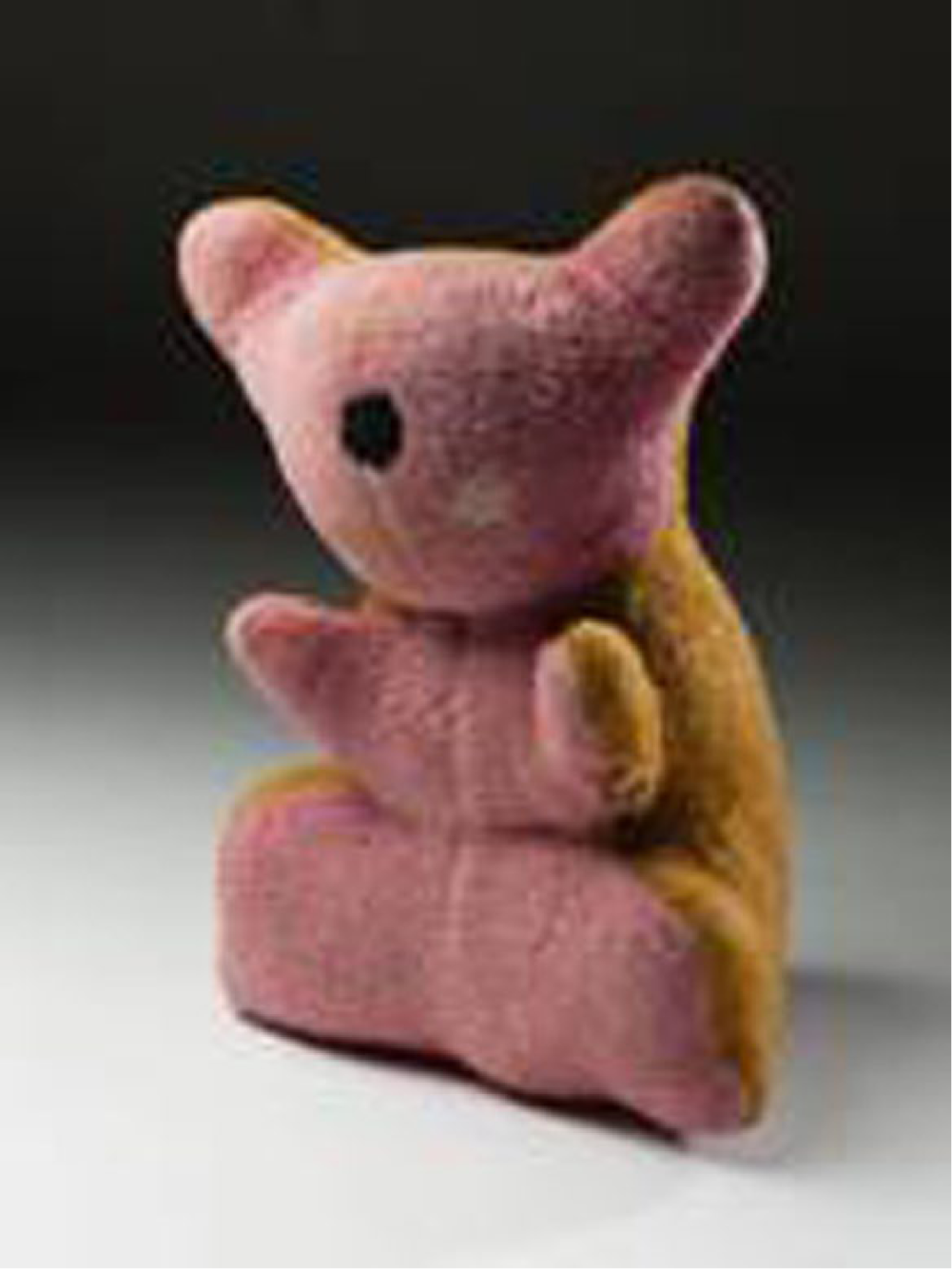
Blick Bear image from the National Museum of Australia.
Under the Teddy Bear image is an introduction by the curator of the website: ‘The teddy bear was given to Jeanette circa 1962. She recalls receiving the gift.’ In terms of the footing of the utterance, the curator has ‘animated’ Jeanette’s story, displaying both access to the story and deference to Jeanette as its legitimate source (Goffman, 1981). She hands the authorship to Jeanette. This is followed by Jeanette’s story.
I can remember receiving the teddy one Christmas as I did not have a family to go to for the holidays, so I had to remain in Orana over Christmas. Christmas day, I remember finding the teddy on the bottom of my bed. I did not know where it had come from as it was not wrapped and there was no tag/card on it. I took it to the cottage mother and told her someone had left this on my bed and she said it was for me. She also told me that the prisoners in Pentridge Gaol had made the teddy. I think I cried most of the day. This was the first gift I had received in years. In the New Year a family came and took me for the rest of the holidays. I left the teddy on my bed as I was instructed to do (I wanted to take it with me but was not allowed) and when I came back it was gone. I never saw it again until I opened my suitcase when I arrived in Cobram at my mother’s house. Someone must have put it in the case with the toothbrush, pyjamas and knickers that were there as well. I do not know who had done this or why.
This story shares certain characteristics with the YouTube video. Both describe specific incidents, support and contextualize the description with images and objects, convey autobiographical certification and depict relationships between past events and the present. However, the nature of the stories, and the way autobiographic certification is managed, also vary significantly.
While the testimony on YouTube was invoked in support of assessments and evaluations of the experience, based on empirical ‘proof’ of past events, there is no such explicit assessment in the story of the Blick Bear, even though the inferences regarding the emotional deprivations can clearly be drawn from the story. The incidents described in the narrative are not organized as discrete facts and items of evidence, but rather together form the basis of an inference about the nature of the experiences in the children’s home and their ongoing effects in the present. Further, the story in this case is explicitly autobiographical. However the ‘certification’ is not oriented to supporting the veracity of particular incidents that occurred in the past, but rather lies in the story’s demonstration of the effects of the deprivations and their ongoing relevance in the present
The bear is central to the relationships of footing (Goffman, 1981) in the story. As the source of the material, Jeanette’s focus on the bear creates an identity (or ‘principal’) which is clearly based in – but not reducible to – her role as a victim in the past, typically understood in terms of the oppressive daily rhythms of chores, punishment and loneliness, and the spatial confines of the children’s home. The bear is part of a common thread, a duration, that links the series of events related in the narrative from the events in her childhood to her perplexity in the present. In this respect it stands as a trace of experiences throughout Jeanette’s life linking otherwise disparate events and experiences: the finding of the teddy bear at the bottom of her bed, the absence of a tag or card, the puzzle as to where it had come from, her having to leave it behind when she left for holidays with ‘a family’, its disappearance on her return, and her finding it years later in a suitcase once she left the orphanage. At each of these points of the story, whether the figure in the story is the little girl, or the adult recalling the experience, there is a sense of both sadness and perplexity as to why these events had occurred.
In terms of the certification of this testimony, the bear is not presented as ‘hard evidence’. Indeed, in terms of evidential marking (Fox, 2001), the story is narrated as a distant remembering, and the distance in time is underpinned by an occasional haziness about the details such as ‘I think I cried most of the day’. The power and authority in the story lies in the sheer duration of time through which the suffering and perplexity has endured, connected through the presence of the bear as a symbol of the nature of Jeanette’s experiences.
The relationship between the bear and the narrative and their role in testimony comes into clearer focus if we consider the theoretical and empirical work in anthropology on the ‘materiality of loss’, which documents the importance of objects that are repurposed as everyday mementoes of loss, entwined with everyday social life, such that they constitute a living history (Hastrup, 2010). In the case of Jeanette’s story, the co-presence of the bear as an ‘object’ provides a resource that enables a loss to be claimed, and, potentially, acknowledged, serving as a symbol of loss and of the ongoing questions about why the events occurred.
Under Jeanette’s story, the following responses were posted:
Hello aunty Jeanette, I am horrified you and your siblings have been through that. Please contact me.
Aunty Jeanette – You and Aunty Pat give us all strength by not only surviving what you have been through but also being brave enough to face it and bring it into the light for all to see – stay strong!
The responses were from family members acknowledging ‘what she has been through’, demonstrating concern, and appreciation of bravery. However, they also provide a ‘hearing’ of the story as primarily concerned with the claiming of loss, producing empathetic assessment of her courage in the face of her experiences (A) and of the ‘horrified’ response it evoked (B). Again, the will to memory implied here is associated with underlining the continuity between past deprivations and experiences in the present: a particular duration chosen and crafted by the author.
Other posts of objects, photos, stories and artworks on the National Museum website attracted varying responses from fellow forgotten Australians. Some comments were posted by friends or acquaintances and others by strangers who connected to the post through affiliating with the content of the story or artwork. Like the YouTube posts, these also involved second stories but in many cases their orientation to the first story was also characterized by displays of deep empathy, recognition, acknowledgement and sometimes advice.
Conclusion: the internet as an environment for testimony
The analytical distinction between traumatic experience and narrative memory, when applied to the challenges of producing testimony under these circumstances, draws attention to the processes at stake in establishing sufficient distance for survivors in constructing public narratives in the context of campaigns for public apology. This distinction, in conjunction with sociolinguistic tools of analysis, focused attention on the possibilities for online environments to support and resource relationships of authorship and agency in the provision of testimony. The differences between the two examples drew attention to the plurality of ways in which the central requirement for autobiographical certification can be managed in the context of potential difficulties in achieving the ‘distance’ required in the production of a first person narrative. In the case of the slide show and narrative on YouTube, the identity or principal implied in the presentation was clearly that of a survivor drawing on aspects of his own experience and enduring ongoing consequences of past events in the present. However, this is managed through the juxtaposition of moving images and text that bypasses the kind of distancing involved in an overtly first person recounting of painful experiences. While the video and narrative imply that the testimony ‘belongs’ to the author, this is accomplished without the need to reconstruct particular incidents at the center of his experiences in the institutions.
In contrast to the YouTube story, the Blick Bear post exhibits clear qualities of a first-person telling with elements of autobiographic certification. The story comprises a chain of incidents that, through the placement of the author as figure in the events, provides an explicit source or basis for how she knows what happened. However, through the focus on the bear as an object, legitimated through the focus of the website itself, the certification is a demonstration of the enduring consequences of the experiences at the children’s home and the questions and perplexity that still surround them. In this respect, the certification is oriented to the claiming of loss that is not reducible to individual experiences in the past.
While the posts reveal differences in the relationships of authorship that can manage autobiographic certification, there are also central commonalities in the capacity of the environments to support testimony. First, they provide for the expression of ‘wills to memory’ consistent with the communication of the tellers’ experiences. The video and narrative on YouTube displays a will to memory which is not necessarily consistent with some discourses surrounding the apology to the Forgotten Australians that emphasize the importance of ‘moving on’, of drawing a line under that part of Australian history. In contrast, the teller exercises agency in this environment to decide when, or if, there is any closure associated with what he has experienced, presenting his story in the service of another purpose of memory – the injunction to ‘never forget’. Further, the inclusion of factual material in the provision of details of the staff and practices associated with the children’s home suggests an additional will to memory that at least in part is oriented to ‘setting the record straight’, consistent with Hildebrand’s characterization of YouTube as a medium for asserting versions of history that may not be emphasized in official accounts. Like the YouTube story, the Blick Bear post resists the capacity for the stories to be framed in the service of ‘moving on’ or ‘settling accounts’. The framing of Jeanette’s story on the website, the nature of the story and its relationship to the image of the bear, managed the communication of an experience that was not consigned to the past but rather served to underline the ongoing perplexity as to why such emotional deprivations occurred.
Second, both websites facilitate a particular framing of the stories with respect to the relationships between the utterances, their addressees and ‘over hearers’. The stories are framed on the websites as not solely concerned with conveying personal experience. While features of the local context in which experiences occurred are evident, either implicitly or explicitly, both posts also orient to a broader injunction to remember where the narrative stands as an example of a ‘public issue’ (Mills, 1959). In the case of the National Museum of Australia website, the stories are introduced as part of an online museum ‘exhibition’ pertaining to the experiences of Forgotten Australians. The YouTube post is linked visually to the side of the webpage where thumbnail shots of similar stories are located.
It is beyond the scope of this article to make claims regarding a distinctive role for the internet in testimony. Online environments are only one of a number of contexts including biographies and recorded oral histories, in which the testimonies of Forgotten Australians were presented. However, the examples discussed above have enabled identification of features of online environments that could be important in supporting the difficult work of producing testimony where traumatic experience has occurred. They have identified interrelationships between images, text and commentary that support different ways of managing declarative aspects of testimony, and particularly autobiographical features of these. Further, the websites were environments where different wills to memory may be accommodated. Previous scholarship has documented the tendency for specific wills to memory to be prioritized in public campaigns, and the possibility that testimony environments carry with them ‘pre-constructed’ relationships that can shape the nature and processes of testimony. The examples documented the quite different nature and purposes of testimony that were produced on YouTube and the National Museum of Australia websites, from the injunction to ‘Never Forgive, Never Forget’ and the presentation of the ‘facts’ of events in the children’s homes, to the production of a story that symbolized the ongoing experience of loss associated with events experienced in the course of growing up. This raises further questions regarding the relationships between websites – their design and management – and the way they may accommodate testimony that reflects the motivations and circumstances of survivors. Finally, while public apologies assert the importance of listening and acknowledgement, it is important to be mindful of the temporality of these online stories and raise the question of what happens in the following years once the important dramas and rituals associated with apology have occurred. The examples explored in this article, four years after these apologies, raise the question of the potential for ongoing recording and updating of experiences, traversing the terrain between personal experience and public issues and supporting the assertion of their ongoing relevance in the present.
Footnotes
Acknowledgements
The authors would like to thank anonymous reviewers and Professor Helen Klaebe, QUT, for comments and advice on drafts of this article.
Funding
This research received no specific grant from any funding agency in the public, commercial, or not-for-profit sectors.