



Abstract
This study aims to identify factors effecting personal information management (PIM) in digital environment. The Preferred Reporting Items for the Systematic Review and Meta-analysis (PRISMA) guideline was used to conduct a systematic literature review. The search was conducted by using defined keywords and select inclusion and exclusion criteria. Initially, 2,367 studies were retrieved from Scopus, Google Scholar, LISTA, and four journals relevant to information management. Twenty five studies were selected as relevant to the objectives of the study. Through the examination of data extracted from chosen studies, we identified four factors: personal, technological, psychological, and information-related factor that effect personal information management practices in the digital environment. The relationship of these factors with PIM was explored. The majority of variables in technological and information-related factors to PIM variables were significant. However, the majority of variables in personal factors to PIM were non-significant. To the best of our knowledge, there has been no systematic review carried out on the factors influencing PIM. Hence, this study fills the research gap and also provides a holistic picture of the extant literature on factors that effect PIM in the digital environment. It also provides guidance for decision-makers to take into account technological and information-related factors when formulating programs for information literacy.
Introduction
The flood of information in digital format made it essential to manage it properly, especially personal information, for future retrieval. People used different devices for the management of personal information, including desktop devices such as computers, laptops, and portable devices that included tablets or smartphones. Studies described smartphone usage (Ali & Warraich, 2022), computers (Blau et al., 2013; Sinn et al., 2017; Yasmeen et al., 2019; Massey et al., 2014), and multiple devices that included computers and smartphones/cell phones, etc. (Molazadeh et al., 2017; Otopah & Dadzie, 2013) for different activities of PIM. Due to “whenever and wherever” principle, mobile phone usage has become popular for PIM (Zhang, 2016). These smart devices (tablets or smartphones) are called ubiquitous devices owing to their portability. As Gupta (2011) described that “mobile phones are ubiquitous today” (p. 32). Barnes et al. (2019) used the term “mobile ubiquity.” Ali & Warraich (2022) used the term ubiquitous device for the smartphone. Jones and Teevan (2007) described the PIM as the practices of acquiring, organizing, maintaining, retrieving, using, and distributing of information to fulfill different roles.
However, different factors effect the management of personal information activities on desktop and ubiquitous devices. These factors included: technological factor such as device type (Bergman & Yanai, 2018); factors related to cognitive science, such as mobile self-efficacy (Ali & Warraich, 2022), demographic or personal factors such as gender (Donkor & Nwagwu, 2019; Molazadeh et al., 2017), and age (Donkor & Nwagwu, 2019). Jones & Teevan (2007) described PIM relationship with human-computer interaction, human information interaction, and personal knowledge management. Dinneen and Julien (2020) also discussed file management relation with information behavior and information seeking, personal archiving, knowledge organizing, information systems, library services, cultural heritage institutions, psychology and philosophy, and computer science. Previous literature tested the relationship or impact of variables from different fields on PIM variables such as the relationship between mobile self-efficacy and PIM (Ali & Warraich, 2022); personal factors and personal information activities (Donkor & Nwagwu, 2019); device type (personal computer and smartphone) on retrieval time, search percentage, and retrieval failure (Bergman & Yanai, 2018).
A systematic review was also conducted about mobile self-efficacy and PIM relationship (Ali & Warraich, 2021a). In an exploratory study, Bergman (2013) identified and mapped different variables regarding PIM behavior. Dinneen and Julien (2020) enlisted individual differences and external factors through a literature review to determine file management behavior. Literature review-based studies also carried out that included PIM as caring (Cushing, 2023), and personal archives (Kaye et al., 2006), death and information management (Dinneen et al., 2024) Alon & Nachmias (2020a) conducted a study on actual and ideal PIM behavior. Alon and Nachmias (2023) also carried out a study regarding the role of feelings in PIM behavior.
Although few studies have identified and listed variables and factors related to file management and personal information management, no comprehensive research has been carried out yet to point out the variables from different domains that effect PIM variables. Literature also lacks studies that provide a comprehensive picture of the effect of various variables on PIM.
The main objective of the ongoing study was to provide a detailed overview (systematic review) of factors effecting PIM in the digital environment, along with variables and its effect on PIM in the digital environment.
The present study is a valuable addition that provides a comprehensive picture of different disciplines that effect PIM in a digital environment. It would be helpful for software designers to consider technological variables that effect PIM while designing PIM-related programs and applications. It would also assist decision-makers for considering personal factors, psychological factors, and information-related factors for devising information literacy instruction programs. The current study also opens new horizons for researchers to develop new theories and models in the PIM domain by considering technological, psychological, personal, and information-related factors.
Objectives
The current study formulated three objectives: To enlist the factors that effect PIM in digital environment using desktop and mobile devices; To identify variables that effect personal information management in digital environment using desktop and mobile devices; and To ascertain whether variables exert a significant or insignificant influence on PIM in a digital environment using desktop and mobile devices.
Methodology
The current study used Preferred Reporting Items for the Systematic Review and Meta-analysis (PRISMA) guideline (Liberati et al., 2009; Moher et al., 2015; Shamseer et al., 2015) for conducting this research and achieving the objects of the study. PRISMA guideline has been used in extant literature related to information management (Ali & Warraich, 2021, 2022) and other fields (Ali & Warraich, 2018; Ali et al., 2023).
Search Strategy
For the selection of studies for systematic review, a detailed searching plan was formulated. Both researchers independently conducted a search according to defined criteria. LISTA, Scopus, and Google Scholar were used for searching relevant studies. Relevant major journals of the information science domain were also selected. To reduce the risk of overlooking any pertinent research for this review, manual search and searching through backward/forward citation techniques were also utilized. For manual searching “related articles” option in Google Scholar was utilized. The references of chosen research were examined to carry out the backward citation technique, and “cited by” option available in Google Scholar was used for the forward citation technique. The following keywords were formulated for searching relevant studies. For formulating the keyword, researchers searched relevant literature first and selected the keywords used in these studies. Researchers also added keywords based on the definitions of PIM and the topic of the research. Maximum relevant keywords were added in the search query that were combined with OR, AND, NOT operators.
(“Personal Information Management” OR “Personal Information Finding” OR “Personal Information Re-finding” OR “Personal Information retrieving” OR “Personal Information Keeping” OR “Personal Information Organizing” OR “Personal Information Maintaining” OR “Personal Information Archiving”)
(“Personal Information Management” OR “Personal Information Finding” OR “Personal Information Re-finding” OR “Personal Information retrieving” OR “Personal Information Keeping” OR “Personal Information Organizing” OR “Personal Information Maintaining” OR “Personal Information Archiving”) AND (practice* OR factor*)
Inclusion and Exclusion Criteria
For selecting relevant studies, an inclusion and exclusion criteria were defined as follows.
Inclusion Criteria
Following inclusion criteria was defined for selecting relevant studies. 1. Studies published from 2007 to 2021 (fifteen years). 2. Studies published only in the English language. 3. Published articles, conference papers, and posters. 4. Published studies only in electronic format. 5. Studies fulfilled the objectives. 6. Only quantitative studies were included.
Exclusion Criteria
Following exclusion criteria was defined for selecting relevant studies. 1. Studies published before 2007. 2. Studies published other than English. 3. Published material other than research articles, conference papers, and posters. 4. Studies not published online. 5. Those studies were excluded that did not meet the objectives of the present research. 6. Qualitative studies were not included.
Studies Selection Extraction of Data
An extensive and thorough search was carried out in nominated databases. A total number of 2367 studies were retrieved. There were duplication in studies, and after removing this duplication 670 studies remained. At the next stage, 540 more studies were excluded because these studies did not meet the inclusion criteria. After the title, abstract, and full-text scanning of potentially selected studies, 25 studies were finally considered for carrying out this research (Figure 1). Process of Selection of Relevant Studies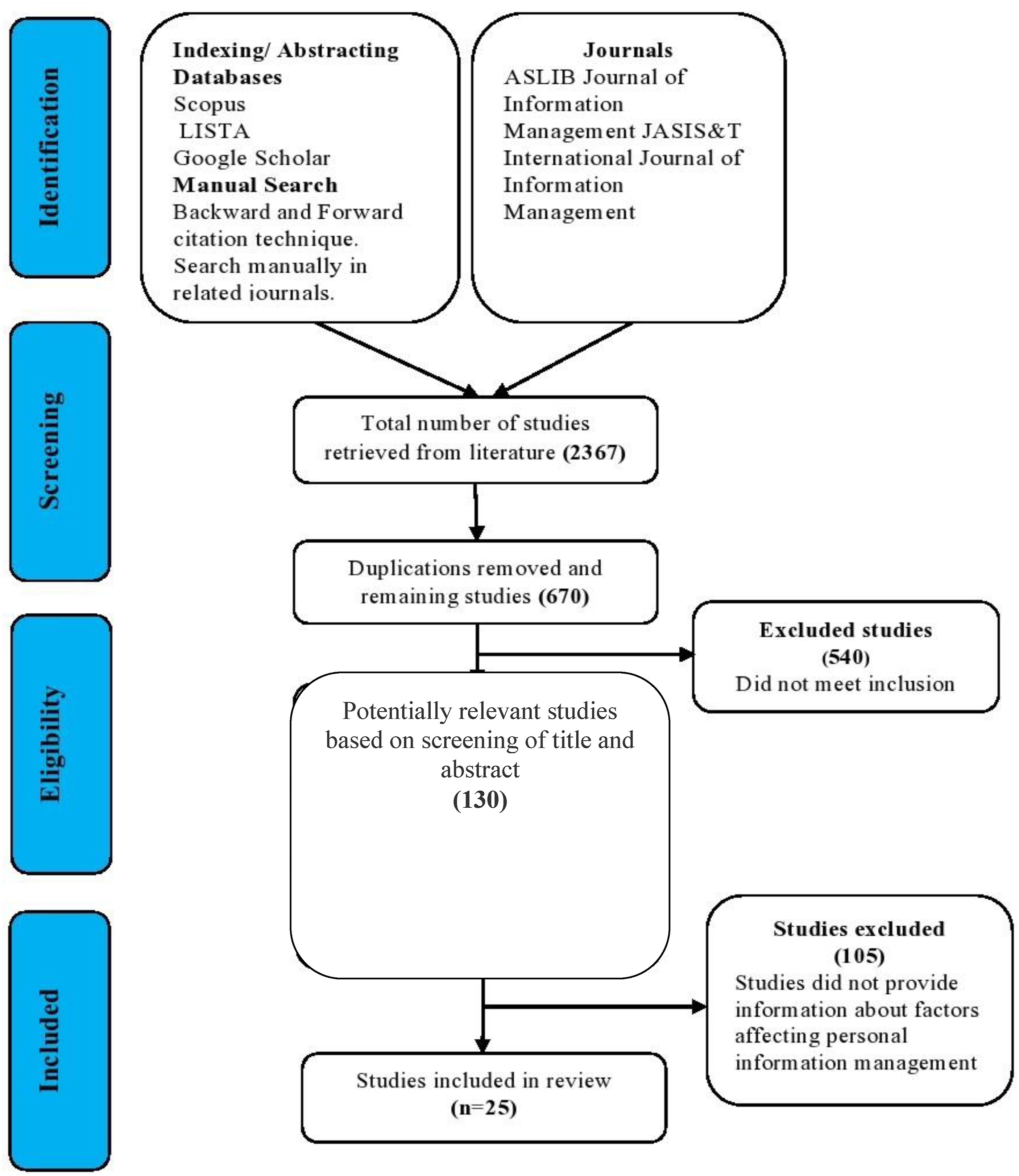
Data Analysis
Data was analyzed using a thematic analysis technique that consisted of main categories and sub-categories (Figure 4).
Results and Findings
Year Wise Distribution of Studies
The timeline and quantity of selected studies were presented in Figure 2. Most of the studies were published during the year 2020. The graph showed that there was a steady increase in publications that investigated the factors that effect PIM. However, during recent year (2021) only one study was published. Distribution of Selected Studies Based on Years (Published Year of Selected Studies)
Devices Used for PIM
Data extracted from selected studies revealed that the respondents of these studies were using both ubiquitous and desktop devices (Figure 3). One study was conducted on only smartphone users. The users of eight studies were using both ubiquitous and desktop devices, while users of nine studies were using only desktop devices. Seven studies did not report clearly which device the respondents were using. Devices/Tools Used for PIM in Selected Studies
Factors Affecting PIM
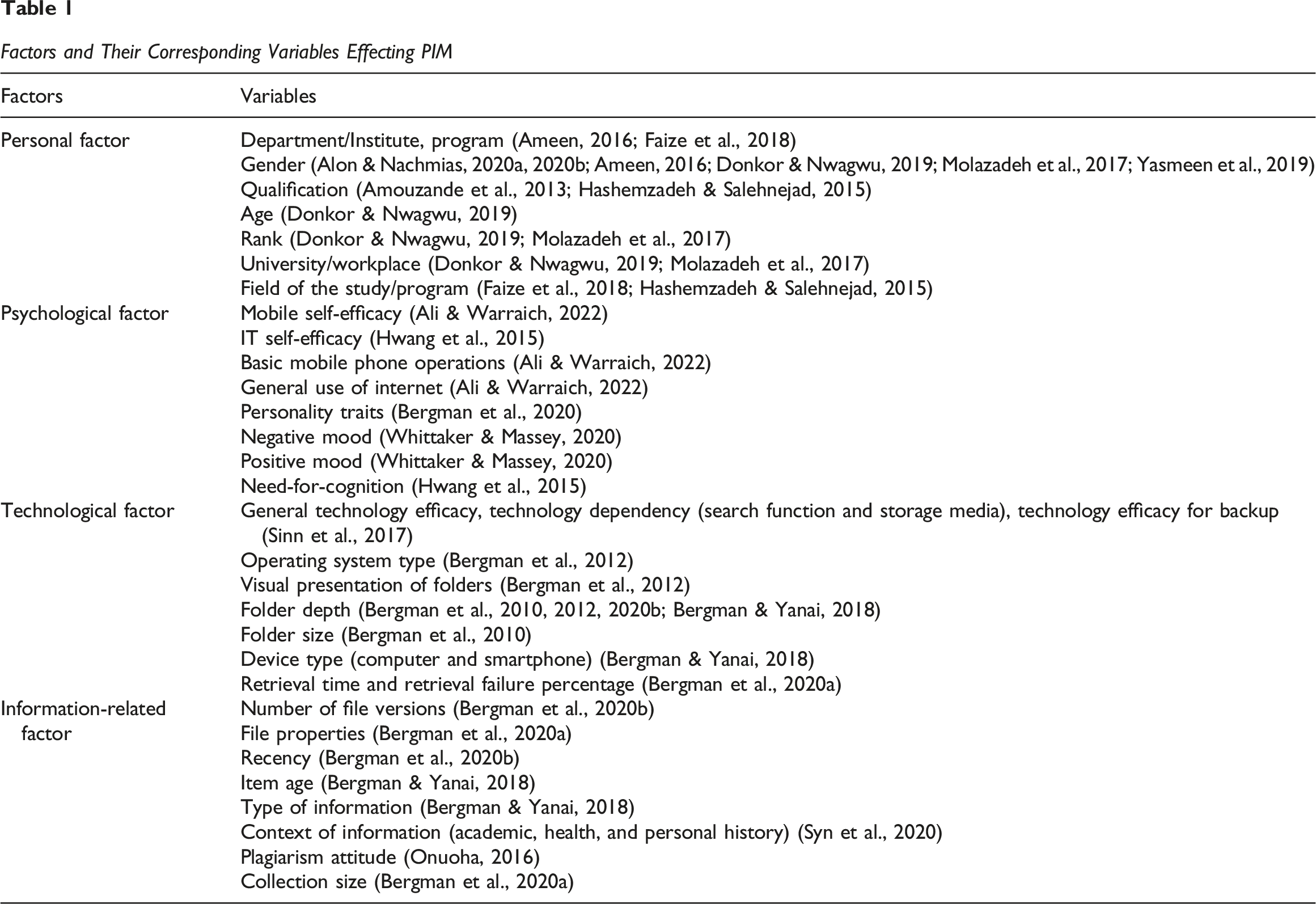
After data extraction, it was analyzed using thematic analysis. The study enlisted the following four factors as major themes: personal factor, psychological factor, technological factor, and information-related factor that effect the personal information management.
The variables related to these factors were identified as categories of these themes (Figure 4). Detailed analysis of these four factors and their corresponding variables follows. Flow Chart (Process) of Data Analysis (Thematic Analysis)
Variables of Personal Factor
Factors and Their Corresponding Variables Effecting PIM
Variables of Psychological Factor
The second category of variables that effect PIM was related to psychological factor (Table 1). Data showed that studies/literature explored the relationship between mobile self-efficacy and PIM, checked the relationship of basic mobile phone operations with personal information finding/re-finding, keeping and organizing information, and investigated the relationship between general use of the internet with personal information finding/re-finding, keeping and organizing information (Ali & Warraich, 2022). Few studies explored the effect of personality traits on retrieval success and retrieval efficacy (Bergman et al., 2020); the difference between positive and negative mood of respondents in terms of information filling behavior, and time taken for organizing information (Whittaker & Massey, 2020). In a related study, Hwang et al. (2015) examined how IT self-efficacy and need-for-cognition influence PIMM.
Variables Related to Technological Factor
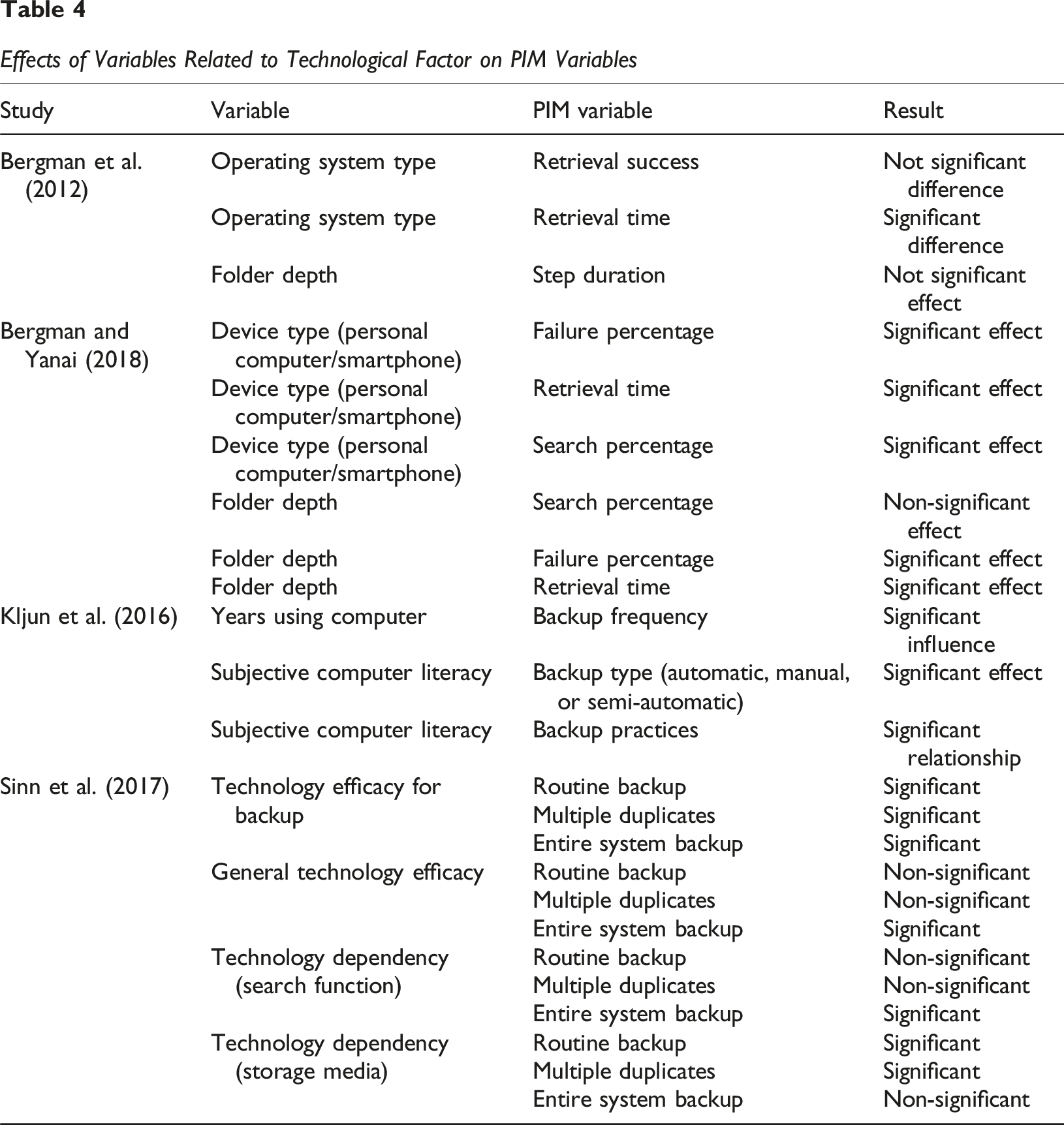
Table 1 provides the relationship of technological variables with PIM. These included the difference between operating system type in terms of retrieval success and time; the effect of visual presentation of folders on retrieval time; and effect of folder depth on step duration (Bergman et al., 2012). A study explored the relationship between folder depth and retrieval time, folder size and retrieval time, and folder size and step duration (Bergman et al., 2010). A study also investigated the effect of device type on percentage retrieval failure, retrieval time, and search percentage, the effect of folder depth on search percentage, failure percentage, and retrieval time (Bergman & Yanai, 2018). A recent study also examined the retrieval time and retrieval failure percentage for PIM and Group Information Management (GIM) (Bergman et al., 2020a). The effect of general technology efficacy, technology dependency (search function and storage media), and technology efficacy for backup was also measured on personal digital archiving (Sinn et al., 2017).
Variables Related to Information Factor
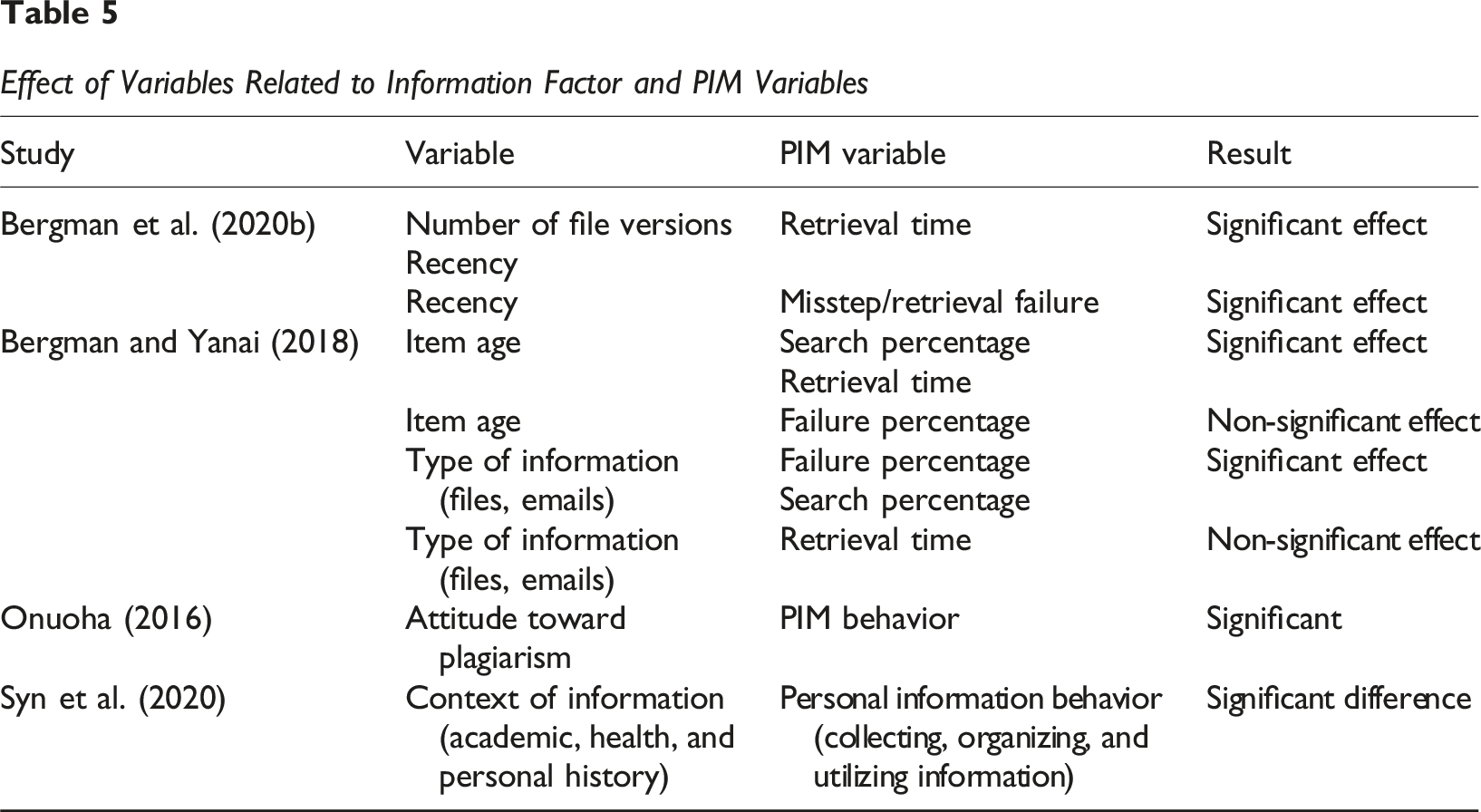
Variables related to the information factor that effect PIM were explored in selected studies (Table 1). Studies investigated the effect of file version and recency of information on retrieval time; the effect of recency on retrieval failure (Bergman et al., 2020b); the effect of item age and information type on search percentage, failure percentage, and retrieval time (Bergman & Yanai, 2018). The difference between the context of personal information (academic, health, and personal history) regarding personal information behavior in terms of collecting, organizing, and utilizing information (Syn et al., 2020) was also explored. Collection size and file properties were also used regarding the retrieval of PIM and GIM (Bergman et al., 2020a).
Effect of Personal Factor’s Variables on PIM Variables
Relationship of Personal Factor Variables and PIM Variables
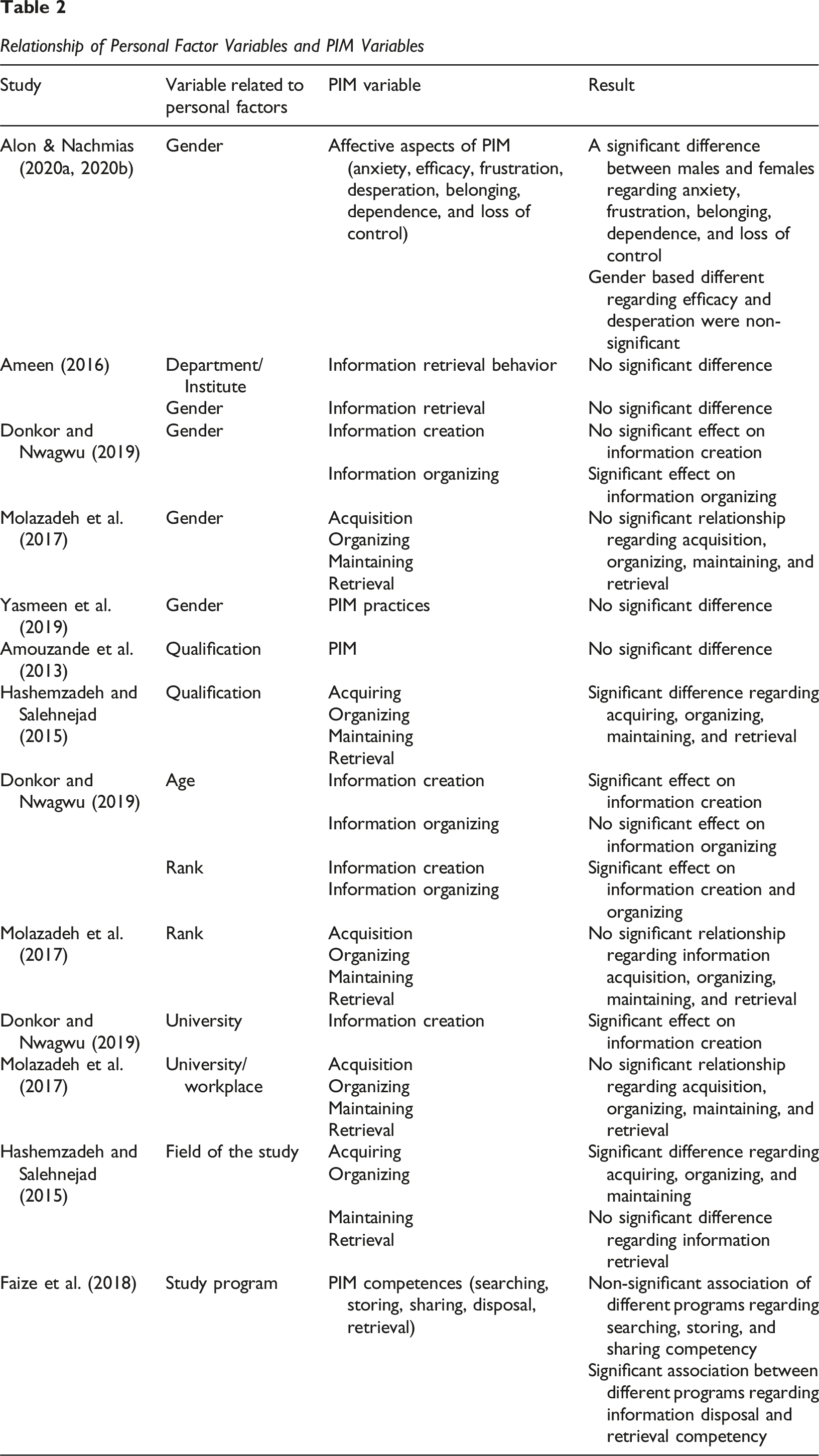
Researchers reported a non-significant effect of age on information creation and organizing (Donkor & Nwagwu, 2019). Two studies explored the effect and difference of the academic rank of respondents in terms of PIM. It was found that rank significantly affects personal information creation (Donkor & Nwagwu, 2019). However, another study identified an insignificant difference in rank regarding the acquisition of information (Molazadeh et al., 2017). Rank has also an insignificant difference in terms of information organizing, maintaining, and retrieval (Molazadeh et al., 2017).
The effect, associations, and differences of respondents of different university departments and programs were found in three studies (Ameen, 2016; Donkor & Nwagwu, 2019; Faize et al., 2018; Molazadeh et al., 2017). The respondents of different universities have a significant effect on personal information creation (Donkor & Nwagwu, 2019). However, another study described a non-significant difference based on the university regarding information acquisition (Hashemzadeh & Salehnejad, 2015). An insignificant difference between universities regarding organizing, maintaining (Hashemzadeh & Salehnejad, 2015), and retrieval (Ameen, 2016; Hashemzadeh & Salehnejad, 2015) was also identified. A significant association was found among respondents of different programs regarding information disposal and retrieval competency. However, a non-significant association appeared in personal information searching, storing, and sharing competency based on the study programs of respondents (Faize et al., 2018).
Effect of Psychological Factor’s Variables on PIM Variables
Effect of Variables Related to Psychological Factor on PIM Variables

Effect of Technological Factor’s Variables on PIM
Effects of Variables Related to Technological Factor on PIM Variables
Effect of Information-Related Factors on PIM Variables
Effect of Variables Related to Information Factor and PIM Variables
Discussion and Conclusion
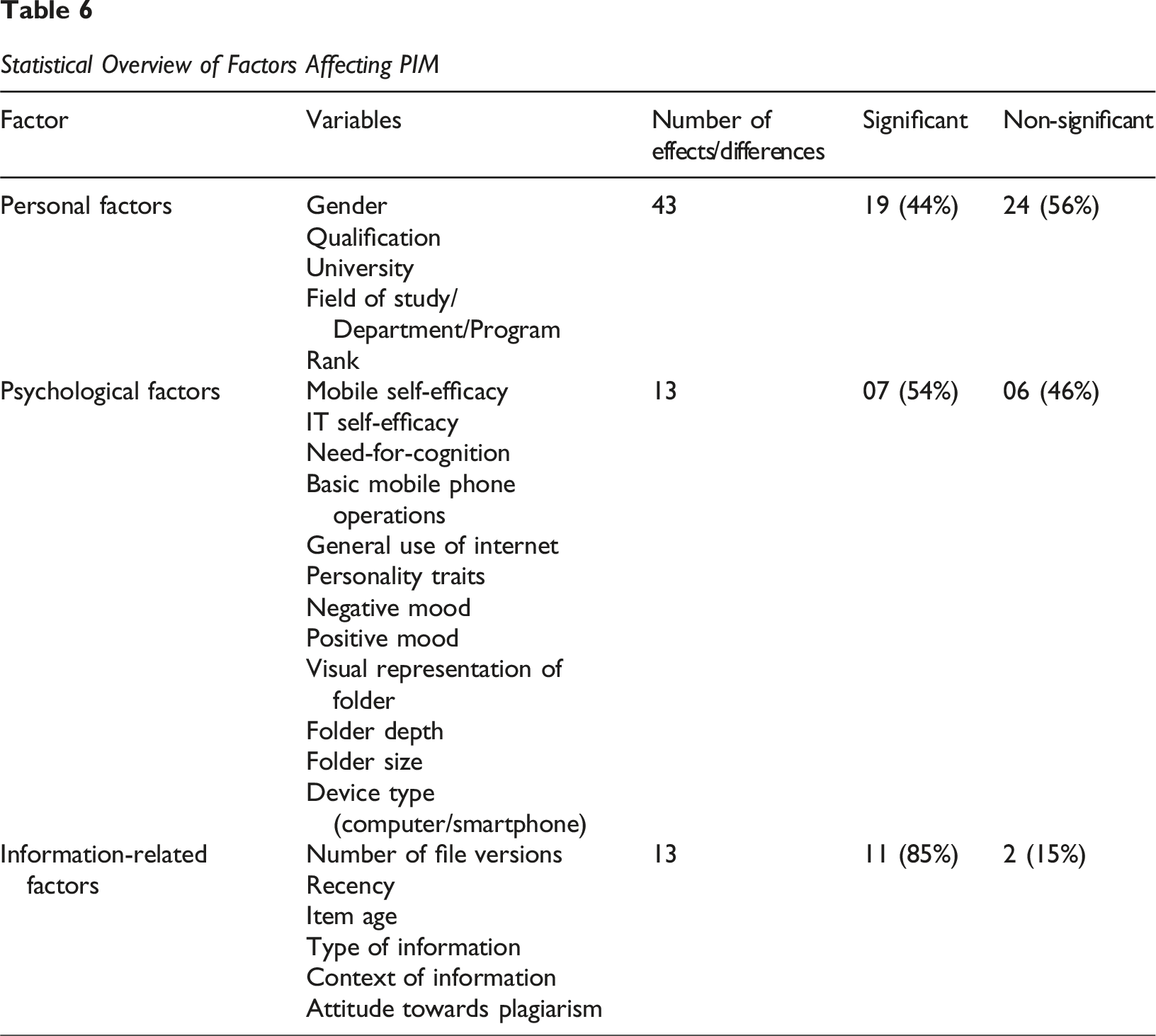
The main purpose of present study was to identify the factors that effect PIM. The current study categorized the following four major factors: personal, psychological, technological, and information-related factor. Personal factor included those variables which are related to persons, such as gender, age, qualification, department, rank, university, and field of study or study programs of respondents. The variables such as mobile self-efficacy, IT self-efficacy, general use of the internet, personality traits, and negative and positive mood were related to psychological factors. The current study enlisted the variables belonging to the technological factor as operating system type, visual representation of folder, folder depth, folder size, and device type (computer/smartphone). There were also information-related variables that included the number of file versions, recency, item age, type of information, context of information, and attitude towards plagiarism (Figure 5). Overview of Personal, Psychological, Technological, Information Related, and PIM Variables
Personal information management-related variables (affected by personal, psychological, technological, and information-related factor) were categorized as finding/re-finding information, organizing, and maintaining/archiving information. The variables enlisted in finding/re-finding were information retrieval, information creation, information acquisition/collecting, and acquiring. Selected studies used information retrieval variables as retrieval success, retrieval efficacy, retrieval time, retrieval failure, search percentage, and failure percentage.
Information maintaining and archival variables used in selected studies were listed as backup practices, backup frequency, backup type (automatic, semi-automatic, and manual), routine backup, multiple backups, and entire system backup. The information organizing category has variables such as information organizing, time spent on information organizing, and filling behavior. There were also some other variables, such as personal information management, motivation and PIM competencies (Figure 5).
Statistical Overview of Factors Affecting PIM
Research Limitations and Future Directions
The current study identified that few studies have investigated the effect of personal factors on the PIM variable. More studies should be conducted to investigate the impact of personal factors on PIM variables to enrich this area. Memory is an important variable, and few studies have explored the impact of memory on PIM variables, especially information retrieval. Previous research also identified memory as a variable in PIM research (Bergman, 2013). A comprehensive study should be carried out to identify the relationship between memory and information retrieval. Studies regarding the impact of factors related to ubiquitous devices (smartphones, tablets) on PIM variables are lacking in the extant literature. Smartphone usage experience, smartphone brand, screen size, device type (smartphone/tablet), and operating systems (Android/iOS) should be considered in future research. Application of technology-related models with PIM variables is lacking in previous literature. The relationship of technology-related models, such as Technology Acceptance Model (TAM) should be explored with PIM variables. Further, studies related to mobile phone and smartphone-based PIM, and factors affecting PIM in the smartphone environment is lacking in extant literature. A gap exists in this area of PIM research, and future studies should be conducted regarding factors that effect PIM in the smartphone environment.
Theoretical and Practical Implications
The current study has different theoretical and practical implications. To the best of our knowledge, no systematic review has been conducted regarding the factors affecting PIM. Hence, the present research fills the research gap. The current study also provides a holistic picture of extant literature regarding factors that effect PIM in the digital environment and also enlisted variables related to these factors. In practical terms, the present study offers valuable insights for decision-makers, guiding them to incorporate technological and information-related factors when formulating information literacy instruction programs. This study provides pathways and directions for researchers by highlighting neglected areas regarding factors affecting PIM in extant literature. The current study is helpful for software designers to consider technological variables that effect PIM while designing PIM-related software.
Footnotes
Funding
The authors received no financial support for the research, authorship, and/or publication of this article.
Declaration of Conflicting Interests
The authors declared no potential conflicts of interest with respect to the research, authorship, and/or publication of this article.