



Abstract
Over the last two decades, international research collaborations have been growing significantly; however, it is unclear whether scientists in developing countries engage in collaboration with the same expectation as their counterparts in more developed countries. Using survey data of the USAID Partnership for Enhanced Engagement in Research (PEER) Program, this study found that North–South collaboration is a very productive experience for both types of scientists; however, scientists in developing countries perceive positive impact and benefits significantly more than their North partners. There are also significant differences in collaboration motivations, research environment, collaborative network development, and use of research results.
Keywords
Introduction
Compared to decades past, scientists today engage in more diverse and broader networks, including collaborators in foreign countries. Past research indicates international collaboration might be more important for scientists in developing countries than for those in developed countries (Wagner et al., 2001). This may be due, in part, to scientists from developing countries having greater expectations from their international collaboration, given their limited access to technology, advanced laboratory equipment, and research capacity (National Research Council, 2011). However, there are limited studies on North–South (N–S) research collaboration between scientists from developed countries (North) and developing countries (South).
International research collaboration is formed in one of the three different patterns: between scientists in developed countries (North–North collaboration), between scientists in developed and developing countries (N–S collaboration), and between scientists in developing countries (South–South collaboration). The literature shows most international research collaborations, especially when measured by co-authored publication data, have been North–North (Chinchilla-Rodriguez et al., 2012), since scientists in developed countries are more likely to collaborate with those in other similar developed nations (Wagner et al., 2001). Despite the seemingly more prevalent international partnerships among developed countries, developing countries’ overall proportion of internationally co-authored publications among their national total publications is, in fact, significantly higher than that of developed countries. For example, Glänzel (2001) found international co-authored publications accounted for 64.2% of Thailand’s national publication output in 1995/96, compared to 18.1% in the United States and 27.2% in the United Kingdom in the same years. Similarly, De Fanelli (2016) found an increase in Argentina’s international collaboration from 34.1% to 42.3% between 2000 and 2010. In Africa, the increase in international collaboration is even more noticeable. According to Pouris and Ho (2014), scientific papers produced by African academics in collaboration with international partners grew dramatically by 66% over a 5-year period between 2007 and 2011. These African countries generally exhibit substantially higher collaboration patterns than other countries in the world, with 29 countries publishing more than 90% of their articles in international collaboration (Pouris & Ho, 2014). With scientific challenges and discourses having increasingly global implications, it is most likely international collaborations will continue to grow.
Despite the growing importance of international scientific collaboration, few empirical studies have examined scientists’ views and behavior regarding N–S collaborations, including their motivations, expectations, participation patterns, partner interaction, satisfaction, outcome, and impact. This study aims to contribute to addressing this gap by examining differences between scientists engaging in N–S collaborations and exploring their expectations and outcomes on scientific productivity. The study also seeks to challenge the implicit assumption that both sides benefit equally from research collaboration and contributes evidence to scholars, funding organizations, and policymakers who are seeking to promote N–S collaborations for local capacity building, international scientific cooperation, or knowledge sharing.
Research collaborations are widely believed to have a positive impact on research productivity, according to the classic view in the collaboration literature (Lee & Bozeman, 2005), which is shared by science policymakers who see collaboration as a dominant force in promoting scientific, technological, and innovation advancement (Boekholt et al., 2009; Sharma & Thomas, 2008; Wang et al., 2014). The potential value of this study lies in providing empirical evidence to inform policies and strategies for promoting N–S collaborations that can drive technological capacity building, spur innovation and contribute to scientific cooperation and knowledge sharing on an international scale.
Literature Review and Hypotheses
The study proposes a holistic approach to the analysis of the N–S international scientific collaboration that focuses on the three phases of scientific collaboration: the initiation phase, process phase, and outcome phase. Prior work done to study research partnerships has typically focused on one phase/stage in the collaboration process, either on motivations/attributes (D’Este & Perkmann, 2011) or on outcome/productivity (Lee & Bozeman, 2005). Our study, to ensure we capture as many of effects and characteristics of the scientific partnership, looks across the whole collaboration process. We define the initiation phase when scientists form or join a collaborative network/team with a certain expectation and motivation. During this phase, the partners envision and identify their respective roles. In the process phase, we state the partners work collaboratively through interactions, to achieve the expected goals. They deal with their institutional environment, particularly barriers to implementing their collaborative goals. Finally, the scientific partnership produces various outputs and outcomes such as new products, publications, improved capacity/human capital, professional recognition, and new network. We define this as the outcome phase. Overall, collaborators’ attributes, organizational environment, and other external factors (e.g., government policies, funding conditions) affect the entire process of collaboration directly and indirectly.
Using such a holistic approach, we investigate three major questions by reviewing the partnership model in scientific collaboration. The three-phased model provides insight on the partnership functions across the collaboration period.
Initiation phase: Do motivations for collaboration and roles in collaborative activities differ between North and South scientists?
Process phase: While engaging in N–S collaborations, are North and South partners equally satisfied with their collaboration? How differently do they view their institutional environment, support, and resources?
Outcomes phase: How do N–S scientists differently perceive the impact of their N–S collaborations and use the results of N–S collaborations?
Initiation Phase: Motivations and Roles in N–S Collaborations
Researchers seem to enter scientific collaboration for various reasons with differing expectations. For example, Bozeman and Corley (2004) identified six factors that summarize motives and strategies such as taskmaster, nationalist, mentor, follower, buddy, and tactician. Their data show that foreign-born scientists tend to lean more toward “nationalist” in forming a collaborative partnership. In a more general study of collaboration, Katz and Martin (1997) identified 10 types of motivation for collaboration. Some of these motives included increasing costs of conducting research, increased complexity in research requiring diverse teams, increasing need for specialization, and changes in government policies promoting collaboration. When academic scientists collaborate with industry counterparts, D’Este and Perkmann (2011) found four main motivations: commercialization, learning, access to funding, and access to in-kind resources.
Although those studies aptly describe most types of motivations in collaboration, few studies have investigated whether developing country researchers have the same types of motivation to collaborate. Duque et al. (2005) suggested that different research value systems, agendas, and local needs in developing countries create different expectations from collaboration outcomes. To align with the local needs and environment, scientists in developing countries would often have different motivations in engaging in research collaboration with counterparts in developed countries (Hwang, 2008). The UN Conference on Science and Technology for Development identified problem-solving and capacity building as the main goal for collaboration in developing countries (Gaillard, 1994). In a recent study, Hwang (2008) identified that South partners seem to be more motivated to expand their collaborative network to access advanced technology/equipment by responding to urgent societal needs, whilst North partners tend to stick to a traditional role focusing on knowledge or product-focused goal. Thus, we hypothesize:
H1: South partners are more motivated to build new relationships and immediate community solutions compared to North partners who are more interested in developing a new product (publications and technology) through international collaboration.
Given the importance of the division of labor in scientific collaboration (Haeussler & Sauermann, 2016), what role do scientists from developing countries usually take in collaboration with counterparts from developed countries? Gaillard (1994) found that scientists in developing countries might be more involved with the execution tasks (e.g., data collection and field experiment), whereas their North partners tended to be more responsible for the conception tasks. Such a division may be due to different technological capacity and access to cutting-edge laboratory equipment (Veken et al., 2017). Like Gaillard’s finding (1994), Boshoff (2009) identified that N–S collaboration takes place in a format with the South partners primarily assisting in fieldwork and data collection. In other words, the developed countries’ researchers seek collaboration to access data and conditions available in the developing countries (Pouris & Ho, 2014).
Not just the difference in technical advancement between two sides but also the cultural factors appear to affect their roles. For example, language skill (especially English as a common language) often affects internationalization of research (Bagshaw et al., 2007; Boekholt et al., 2009) and pattern of international scientific collaboration (Luukkonen et al., 1992; Tijssen & Kraemer-Mbula, 2018). Therefore, this study hypothesizes:
H2: Due to the inequality in technical capacity and the cultural difference, North partners are more likely to take responsibility for technical writing and applications than the South partners, in scientific partnership.
N–S collaboration is often called asymmetrical, meaning the parties have unequal capacity, incompatibility, and different priorities (Ishengoma, 2016; OECD, 2011). Acknowledging the inequalities are often the source of many implementation problems (KFPE, 1998). Another view of the asymmetrical relationship is stated by Wagner et al. (2001); she describes the partnership between N–S partners as a donor–host relationship. North partners are often perceived to be the donor party who provides funding, resources, and technological leadership. As the host partner, the South researcher is seen as the soliciting party. The North partner often expects the South partner to identify the local problem of interest. The South partner often requires support from the North partner to carry out the research.
Since scientists in advanced countries prefer to collaborate with each other, rather than scientists in developing countries (Wagner et al., 2001), there might be fewer collaboration opportunities for the latter. Thus, scientists in developing countries often pursue different collaborative opportunities and strategies than their counterparts in developed countries. Sabharwal and Varma (2015) suggested South scientists often rely on their existing network from their graduate schools for collaborative opportunities, specifically their former advisors and colleagues. North partners usually have larger networks that go beyond their PhD experience because they are often within a much larger pool of research funding and opportunities.
Due to the asymmetrical research environment and limited collaboration opportunities, South scientists might be more satisfied with N–S collaboration, when compared to North partners. This may result in South partners having higher frequency for repeating collaboration with their current partners from developed countries. Thus, we hypothesize:
H3: South partners tend to be more satisfied with their partnership in North–South collaboration, when compared to their North partners. H4: South partners are more likely to state a desire to continue the current collaboration when compared to North partners.
The institutional environment, including policies, culture, funding, and resources, significantly affects the process of collaboration (Bozeman & Gaughan, 2007). While lack of resources is a common barrier regardless of the scientist’s origin, South researchers may face different barriers arising from distinct institutional cultures, policies, and traditions (Ynalvez & Shrum, 2011).
An extensive review by Fox et al. (2017) found that among women engineering professionals in Europe and outside Europe and the United States, the highest ranked barriers to collaboration were funding and finding collaborators, followed by work and time commitments, with family and communications being the least significant. Focusing only on South-led research, Veken et al. (2017) identified a lack of time, limited resources and research skills, and limited control by the South partner over the selection of the research topic as major barriers.
Some barriers seem to be more severe for scientists in developing countries. For example, limited resources and skills are widely perceived among South scientists as obstacles to scientific productivity. In examining the research environment in Africa, Tijssen and Kraemer-Mbula (2018) also identified similar challenges such as insufficient funding, poor research infrastructure and equipment, heavy teaching loads, lack of incentives for research, lack of human resources, poor access to top-rated journals, weak collaboration networks, inadequate legislation, and lack of administrative support for researchers.
Most barriers in developing countries appear to be related to poor infrastructure and limited resources. South scientists often lack the basic building blocks to create an equal partnership with other scientists/labs, such as hardware, which is the first requirement for a productive scientific collaboration. In contrast, North scientists may have already met their hardware needs and face software challenges such as interpersonal relationships, work/life commitments, and institutional environments. Both types of scientists face obstacles when engaging in international research collaboration. This study hopes to identify the types of barriers found in N–S collaborations with limited empirical evidence. Thus, we hypothesize:
H5: South partners are more likely to perceive their institutional environment is less advantageous, when compared to their North partners. H6: South partners perceive the lack of infrastructure and resources as a major barrier, whereas North partners identify other obstacles to North–South collaboration.
The asymmetrical research environment between North and South scientists and limited collaboration opportunities for South scientists can influence their views on collaboration outcomes and impacts. The technological gap between North and South can also lead to differences in perceptions of the benefits of research partnerships. South partners may place a higher value on access to new technology, which is often rare in their countries, and thus perceive even small changes or innovations resulting from the collaboration as significant. On the other hand, North partners may place a high value on access to new networks, data, and communities but still perceive it as less significant compared to the benefits perceived by South partners. This could lead to North partners feeling that they benefit less from an N–S collaboration, as has been observed in North–North collaborations (Gaillard, 1994). Thus, we hypothesize:
H7: When compared to the North partners, South partners perceive more positive collaboration outcomes and impact.
Collaborations provide scientists with opportunities to expand their scientific network. Previous research has shown that South scientists are more motivated to expand their network through international collaboration, while N–S collaboration is not seen as an important opportunity for North scientists. In contrast, North scientists seek to expand their connections to other scientists through North–North collaborations.
Studies based on bibliometric data from North–North collaborations have suggested that international collaboration can enhance a scientist’s reputation and increase their citation impact (Narin et al., 1991). Given the limited opportunities for South scientists to collaborate with scientists from other countries or developed nations (Wagner et al., 2001), they are more willing to maximize collaborations with North scientists to expand their collaboration pool. This would enhance South scientists’ collaboration opportunities, not only within their institutions but also beyond, increasing their reputation. Thus, we hypothesize:
H8: South partners are more likely to perceive that N–S collaborations strengthen their relationship with scientists both within and outside their institution more than their North counterparts.
In developing countries, limited resources are often directed toward national priorities such as public health and economic development. As a result, scientists supported by the government tend to have more directed research aligned with government policies. Bhagavan (1992) advocates that research priorities of developing countries should determine the scientific content and direction of cooperation. In this context, scientists are expected to share their research results with the community and government to address pressing issues, sometimes under the direct guidance of donor agencies. Even when engaging in the same research project, South partners are more likely to prioritize solving immediate local issues, while producing basic scientific knowledge is a primary motivation for North partners. Kok et al. (2017) found that demand-driven and locally led research in the South provides an effective approach to N–S collaboration that strengthens local capacities and institutions while producing results that are used. As a result, South partners may face greater community and government influence in disseminating their scientific research results compared to North partners. Thus, we hypothesize:
H9: South partners are more likely to use their research results to improve decision-making by their government and guide their community compared to North partners.
Data and Methods
Our study uses data from an evaluation survey of the USAID Partnerships for Enhanced Engagement in Research (PEER) Program. The PEER program, implemented by NAS and funded by USAID, was developed to support collaborative research projects between United States Government (USG)-funded scientists and local researchers from developing countries. With a funding ceiling of $100 million, PEER operated over a period of performance of 10 years (2011–2021). Between 2011 and 2016, PEER supported 250 grants in 50 countries worldwide through core and mission buy-in funding, primarily from USAID missions, and with some USG partners, like the National Cancer Institute and Office of Naval Research to sponsor-specific PEER awards (Benschoter et al., 2017). The target sectors include biodiversity, health, agriculture, environment, water, disaster mitigation, climate, education, food security, and energy. These can change based on participating USG agencies and USAID funding priorities. USG Partner organizations (NASA, NIH, NOAA, NSF, USDA, USGS, and Smithsonian Institute) support awards to US partner scientists who serve as mentors to PEER researchers (Benschoter et al., 2017). In a PEER grant, there are two partners: (a) the North or US scientist—this researcher has already been awarded a grant for their research activity by a PEER participating USG agency; and (b) developing country researcher/PEER partner or South scientist—this partner receives their funding from the PEER program. PEER creates open calls for developing country researchers to find an already funded USG partner and jointly design, write, and implement a collaborative research activity.
This study uses the survey data from the PEER midterm evaluation collected in the summer of 2016 as part of a USAID performance evaluation of PEER. The sample included all PIs and Co-PIs, including the US partner. The survey was sent to 426 individuals out of which 229 were PIs/Co-PIs and 197 were US-partner scientists. A total of 315 surveys were returned for a response rate of 83% (190) for PIs and Co-PIs and 63% (125) for US partner scientists. Of the 190 PI/Co-PI surveys, 12 of these were blank and 178 completed in full. Of the 125 survey respondents from the various USG partner scientists participating in PEER, 9 were blank surveys and 116 were completed. Most of the surveys were from partners with projects from NSF (74), NIH (10), and NASA (10). The other survey responses were from USDA, USGS, and other agencies.
The survey was sent using Survey Monkey and pre-tested with a small sub-sample of PEER PIs, USAID staff, and NAS staff. The survey was sent electronically to all PEER PIs, Co-PIs, and their USG partners in a three-wave process (three times over the course of 5 weeks multiple times only to those who had not responded). The survey questions were quite extensive requiring a long period (30–60 minutes) to complete potentially leading to fatigue and non-response. The evaluation team created two survey instruments: one for the PEER PIs/Co-PIs comprising the foreign scientists who had won PEER awards in the various funding cycles and the other was for the USG scientists who were partners on the PEER grants. The two surveys were almost identical except some questions were uniquely created for each partner type around specific relevant issues to each group. Among the 294 valid responses, 82 (27.9%) were female scientists, 212 (72.1%) were male scientists. The average age was between 41 and 50 years old. The non-US scientists were from 47 different countries. Among them, 33 scientists were in Indonesia and 22 scientists in Kenya. Other countries tended to have between 1 and 2 scientists per country.
Since this study intends to examine the research activities in N–S collaborations by using a holistic model of the collaboration phases, the study does not go into a cause and effect. We did not rely on one key-dependent variable nor only on one collaboration phase. Rather, this study describes empirically the characteristics of the partnerships, views by the partners, and stated benefits by respondents. The data does present some limitations as the survey was designed to evaluate the performance of the grants. Although the evaluation did try to capture outcomes of the partnerships, causality (e.g., the impact of PEER funding on research products) was not directly testable due to limited pre-grant information of the participants.
Findings
The study hypothesized (H1) South and North partners might have different expectations and motivations as they engage in international research collaboration. The survey asked respondents, PEER partners, and their collaborators (USG scientists), about their expectations from the PEER collaboration. As shown in Table 1, South partners are highly interested in developing a relationship either to “build new relationships with other scientists” (84.8%) and/or to “grow existing relationships with other scientists (75.1%),” whereas the North counterparts had different expectations focused on helping others such as “help scientists build capacity” (85.6%) and “help scientists improve/increase their scientific productivity” (65.8%). Especially South and North partners show a significant difference in the expectations of “build new relationships with other scientists” (84.8% vs. 59.5%) and “Grow existing relationships with other scientists” (75.1% vs. 55.9%).
Scientists’ Expectations in International Research Collaboration.
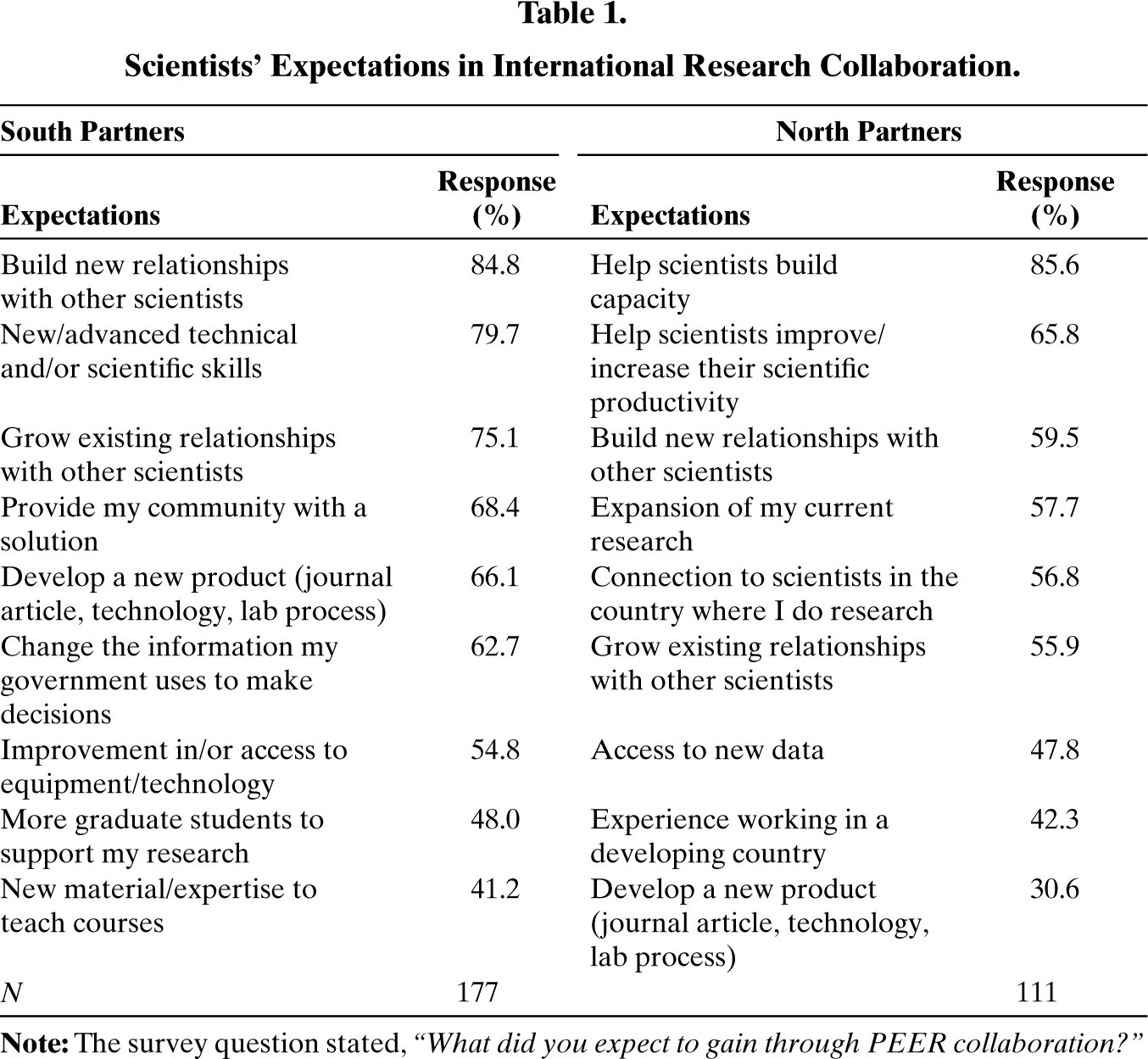
Another notable difference is found in South partners’ immediate needs for technical capacity such as “new/advanced technical and/or scientific skills” (79.7%), “provide my community with a solution” (68.4%), and “change the information for my government uses to make decisions” (62.7%). On the other hand, North partners show moderate interest in “expansion of their current research” (57.7%) and “access to new data” (47.8%). One of the interesting differences is that South partners have a significantly higher expectation of “developing a new product (journal article, technology, or lab process)” than North partners (66.1% vs. 30.6%). Such a difference in scientists’ expectations on international research collaboration suggests North partners—in an N–S collaboration—are more likely to engage in collaboration under a help mode, whereas South partners aim more for building network (relationships) and accessing to new skills to solve immediate needs. Based on the nature of PEER, the result might be true since the participating US scientists intended to help their counterparts in developing countries rather than pursue the traditional research goal such as a publication and new product. The data appear to match the hypothesized expectations of South partners but to differ with those of North partners in H1.
Regarding partnership roles and the division of labor, specifically in co-authoring the proposal, the data suggests both sides shared most tasks rather than allocating specific roles for each partner for the various proposal sections. For the technical writing section, both sides contributed at a similar ratio (Table 2). These results do not support H2, which states North partners are expected to take a leading role in preparing the technical section. Similarly, there is no difference in writing the budget section. However, 51.9% of North partners stated they put equal effort into writing the proposal, compared to 41.6% of South partners. South partners reported they wrote a significantly larger portion than their counterpart by a ratio of 36.9% versus 25.3%. Also, in writing the background/context section, South partners (17.4%) seem to contribute significantly more than North partners (13.9%). Another interesting difference is found in the role item of “no support, I created the proposal”: for this response, North partners (19%) were significantly higher than South partners (10.1%) to say they were the sole authors of the proposal. The data seem to indicate that the members in most teams worked together for their proposals but in some teams, North partners played a more important role in preparing the proposals.
Type of Supports Received from the Partners in Preparing the PEER Proposal.
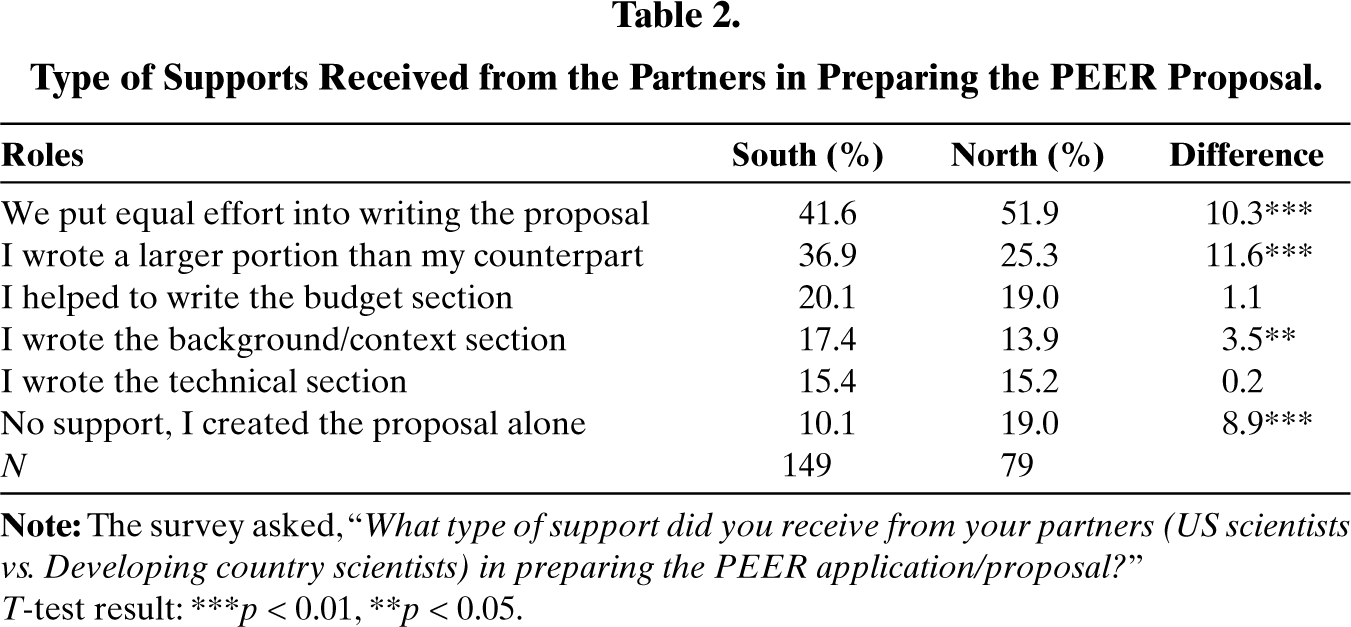
T-test result: ***p < 0.01, **p < 0.05.
Scientists’ Satisfaction and Willingness to Collaboration Again.
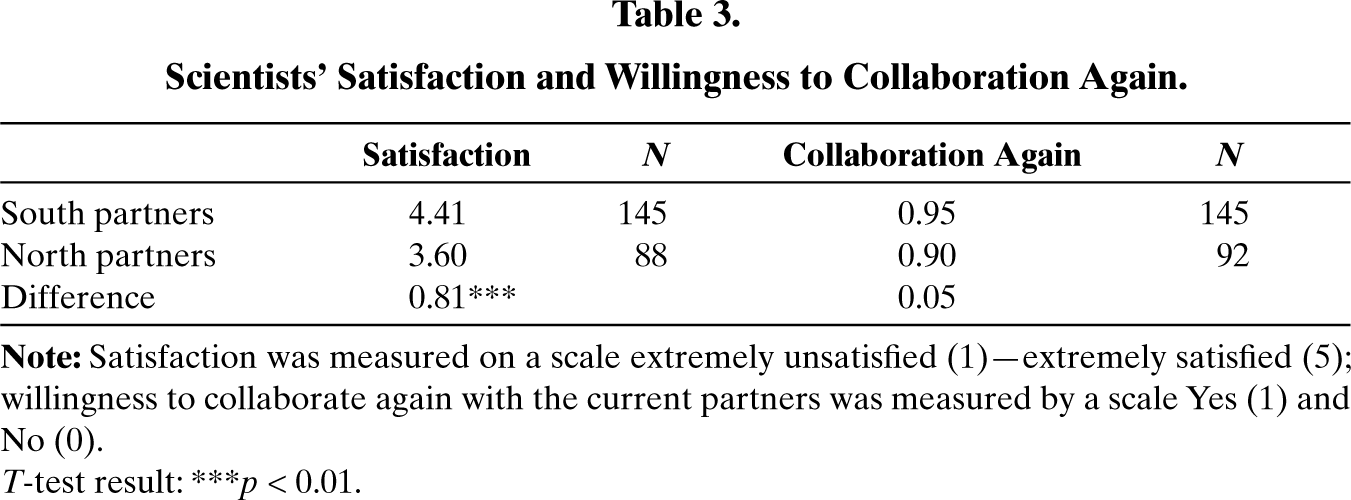
T-test result: ***p < 0.01.
The findings appear to support H3 showing a statistically significant different between North and South satisfaction levels. Satisfaction was measured by a Likert scale from 1 to 5 with 1 being “extremely unsatisfied” to 5 being “extremely satisfied.” As shown in Table 3, the survey data found South scientists (4.41) are significantly more satisfied than their North partners (3.60), with a T-test result (p < 0.01). However, in terms of willingness to collaborate again (H4), both sides stated interest and willingness to repeat the current partnership, with South scientists slightly higher in their response albeit not significant (Table 3).
The study measured institutional environment by using five criteria: collaborative (there is a cooperative climate where people easily work together and work toward a common goal), competitive (environment is competitive and rivalrous), supportive (institution provides support or helps to achieve goals, being helpful), friendly (institution is kindly amicable and helpful, encourages positive interactions between people), and divisive/hostile (unfriendly, abusive, and/or allows harassment causing the employee to feel alone, uncomfortable or scared). Each criterion was measured by a Likert scale of 1–5 with 1 being “not at all” to 5 being “very” cooperative/competitive/supportive/friendly/hostile.
As presented in Table 4, North and South partners did not appear to differ in their perceptions of their institutional environment. US scientists and their PEER country partners both had similar rankings for each institutional criterion as if the two sides are isomorphic. Both partners stated their environment to be relatively collaborative, competitive, supportive, friendly, and rarely divisive/hostile. This finding diverges from the study’s hypothesis (H5) where the expected result would be that N and S partners would have very different perceptions of their institutional environments/condition.
Perception of Institutional Environment.
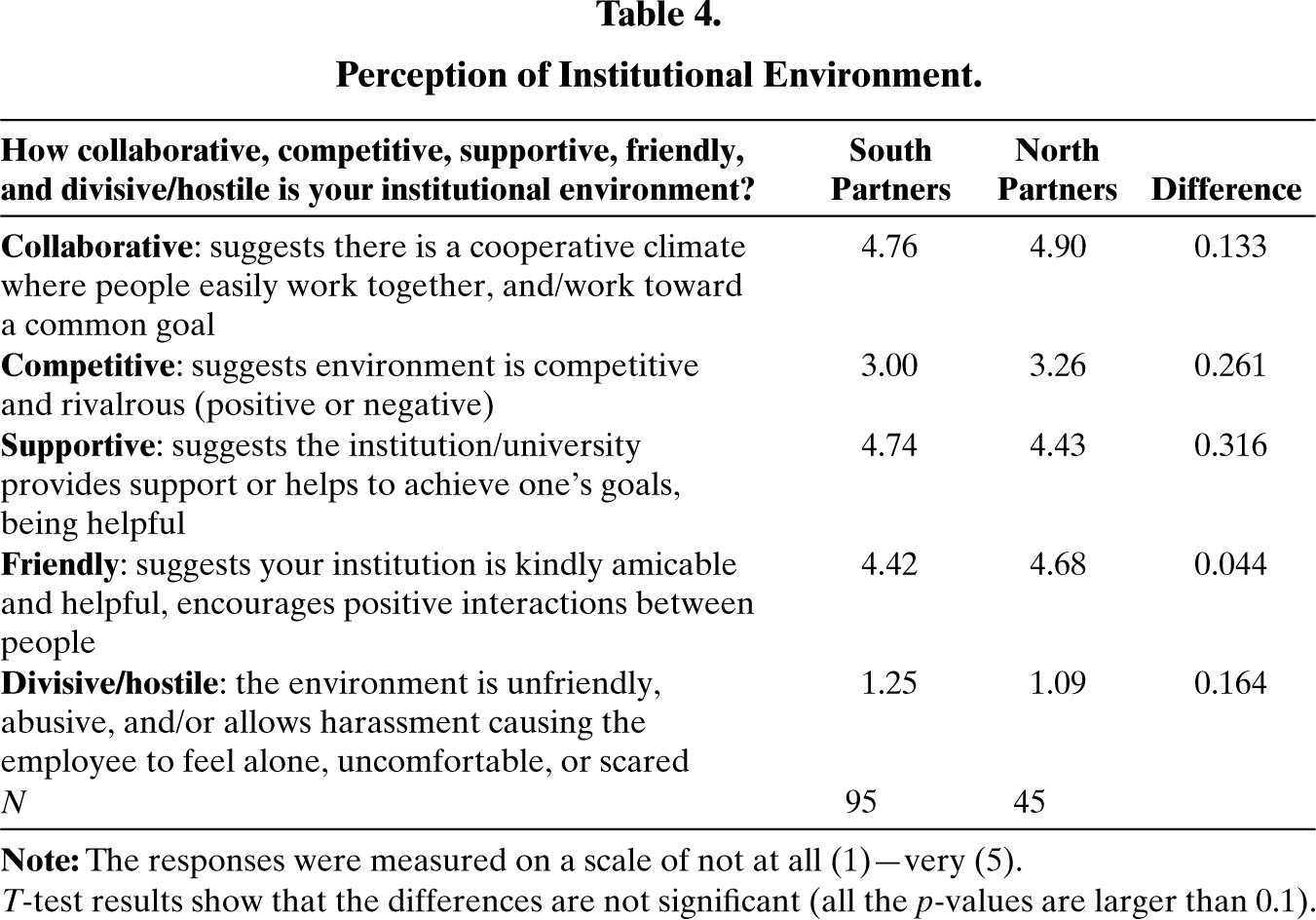
T-test results show that the differences are not significant (all the p-values are larger than 0.1).
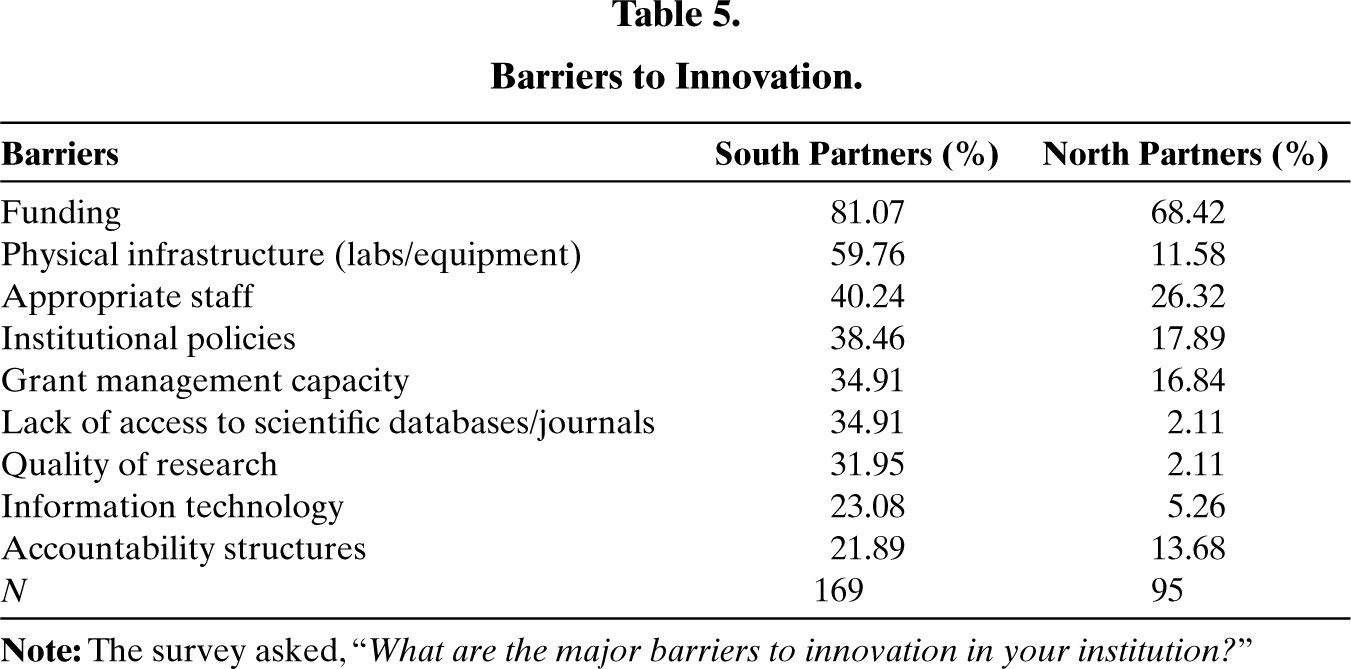
In terms of barriers in research, overall, South partners reported a significantly higher rate in each of the barrier criteria, compared to their North partners (Table 5). As expected, funding was the greatest barrier for both sides, but a significantly larger barrier for South scientists (South 81% vs. North 68%). This might not be a surprising outcome, considering developing countries’ lack of research funding and the universal demand of scientific funding in any country. However, when comparing North and South scientists across other barriers, the two sides were far more different. Physical infrastructure—often affects scientist’s ability to collaborate—was the single largest difference between South (60%) and North (12%). This barrier was South partners’ second highest rated obstacle to collaboration. For North partners, their second biggest barrier to N–S collaboration was the lack of appropriate staff (26%), which is third biggest barrier for South partners (40%). Partners also differed drastically in their views about whether access to databases/journal, quality of research, and information technology were research barriers. The North partners rated these as extremely low barriers for them to partner with other scientists from other countries. North scientists do not appear to have issues accessing literature, journal, technical information, nor quality research. To summarize, the data found South partners stated having more types of barriers to collaboration and higher rates of response in each obstacle category. Especially North and South partners show a different type/order/severity of barriers, aligning with our sixth hypothesis (H6).
Barriers to Innovation.
When comparing the differences between how each partner perceived the impact of their collaboration, the scientists differed significantly across all impact categories (Table 6). The study hypothesized South partners would have different perceptions of their collaboration impact compared to North partners (H7). Overall, South partners had a more positive view of the collaboration impact. South partners tended to perceive the collaboration led to much higher levels of impact on their technical skills and capacity, frequency/quality of communication, and access to skilled students. The biggest differences between the two sides were related to project timeline and size of project budget. South partners perceive that the amount provided in the project for collaboration was sufficient, whereas North partners seem to have the opposite view. Similarly, South partners felt the size of the budget was sufficient to implement the project, whereas North partners significantly differed (Table 6). These results align with prior research and suggest N–S collaborations are often designed to assist the needs of South partners (Kok et al., 2017).
Perception of Collaboration Impact.

Scale: Negative impact (–1), no change (0), and positive impact (1), T-test results: ***p < .01, **p < .05.
Scientific network expansion and relationship-building is regarded as an important motivation for scientists in international collaboration; this is often because of the benefits of larger networks increasing opportunities for resources, research, and capacity (Adams, 2012). As reported in Table 7, when compared to their North partners, South partners stated to have developed significantly stronger relationships—both inside and outside their institutions—through the PEER program. In terms of relationship-building inside their institutions, most South partners reported that their relationship development has been either strengthened (45%) or greatly strengthened (37%), whereas 65% of North partners reported that there has been no change in the strength of their internal relationships (i.e., within their institution). Regarding external collaboration (i.e., outside their institutions), South partners reported significant increase in the strength of their partnerships due to the PEER grant versus their North partners. In addition, South partners showed significantly more new relationships due to the PEER collaboration, than their North partners. This shows a strong indication of a disproportionate benefit in relationship development for South compared to North scientists when they engage in international collaboration. The result supports H8.
Relationship Development Due to International Research Collaboration.

Concerning the use/distribution of research results (Table 8), both South and North scientists suggested “improving evidence in their field of research” as the most important use, while there are significant differences between them. As hypothesized (H9), South partners are significantly more likely to use their research results to change/improve government policies and programs, to assist community needs and to build needed technologies, compared to their North partners. Existing literature supports this result in which the content and priorities of scientific research (in developing countries) are more likely to be directed by the needs of government and community (Bhagavan, 1992). Overall, South partners reported that they used the results more than their North counterparts.
Use/Distribution of Collaboration Research Results.

Conclusion
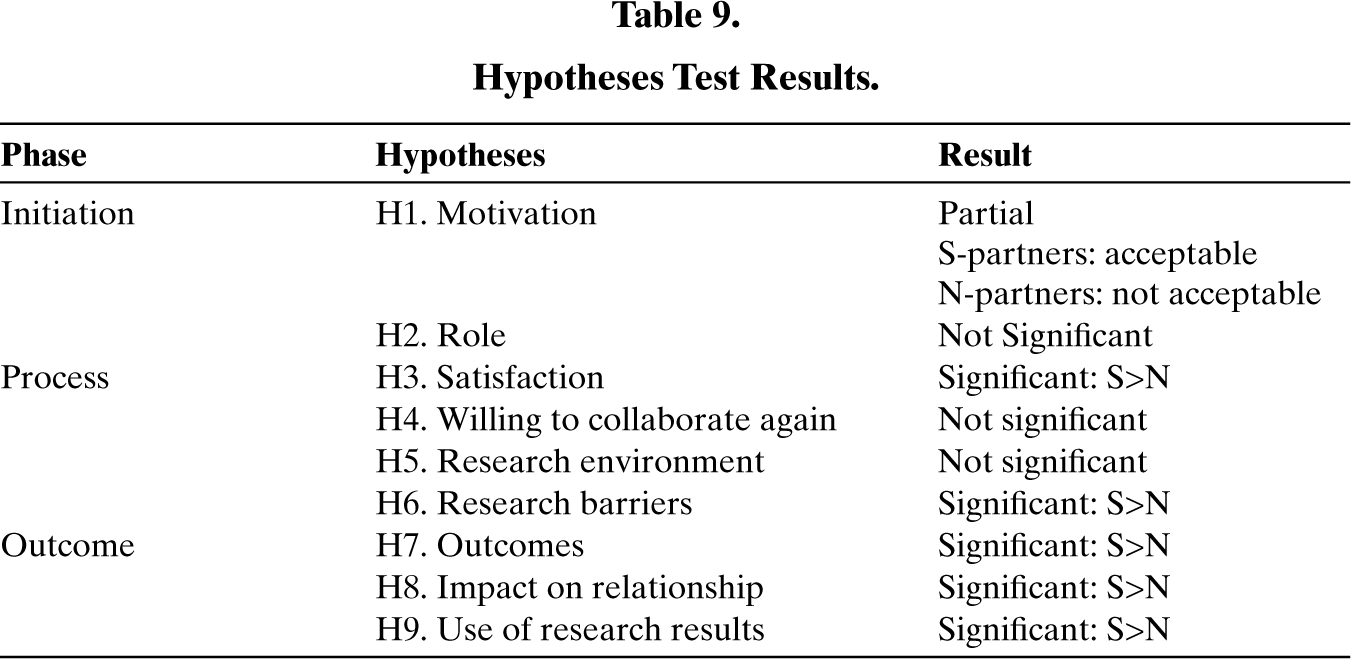
This study aimed to explore and contribute to the limited empirical work about N–S research collaboration. As summarized in Table 9, this study finds evidence in support of most of the hypothesized differences. The results indicate an N–S research collaboration can be a productive experience for both types of scientists, while scientists in developing countries are generally more satisfied with the outcome. These results have significant policy implications too: While N–S collaboration has been criticized politically as “scientific colonialism” (Volmink & Dare, 2005), it can strengthen research capacity in less privileged countries (Lansang & Dennis, 2004; Volmink & Dare, 2005). Collaborating with the North can be advantageous for the South, focusing on rapid capacity enhancement in specific niche areas (Maharajh & Kraemer-Mbula, 2010). Coevolution of human capital formation and research capacity building through active international collaboration can also foster absorptive capacity, promoting economic, and social development (Heitor et al., 2013).
Hypotheses Test Results.
The primary challenge lies in developing and expanding collaboration opportunities and networks. Although addressing this issue may require increased governmental support in both developed and developing countries, further discussion is necessary. Future programs supporting N–S scientific collaboration should consider offering different resources at various partnership stages and tailored support for each partner.
A scientific collaboration’s temporal dimension, including maturity, opportunity costs, and evolving issues, is often overlooked in funding opportunities. Additionally, young faculty, scientists, and researchers may face greater needs and barriers, necessitating separate support systems to encourage N–S partnership entry and ensure long-term success.
While this article did not directly address gender, PEER data identified unique aspects for female South partners. Future research should investigate potential gender differences in N–S collaborations and how these differences might influence programmatic design in funding.
This study made significant contributions to the international research collaboration literature, but future advances must address its limitations. First, the PEER program’s unique features may have restricted the external validity for general N–S collaboration, as these partnerships are not entirely random. Consequently, the findings might not apply to all N–S partnerships. Furthermore, the data revealed a high incidence of partners with prior collaborations, making the findings more pertinent to such collaborations, potentially differing from other research partnerships.
Second, the study could not establish causality or control for key attributes like discipline, nationality, grant size, gender, and age when analyzing data. The focus was solely on describing differences. This limitation partly stemmed from the diverse sample, including scientists from over 40 countries, some with just one project or partnership.
Third, we were unable to perform a pair-wise analysis to preserve anonymity and protect participants’ rights. N–S matched data was unavailable, limiting direct comparisons and deeper insights into N–S collaboration.
Finally, this study utilized a holistic approach, covering all stages of international research collaboration, enabling exploration of lesser-known issues on a broader scale. However, the prior phase wasn’t treated as a cause for later phases in the model, and the limited data prevented testing of causal models. Additionally, collaborators’ attributes and external environments weren’t fully linked to each factor.
Footnotes
Declaration of Conflicting Interests
The authors declared no potential conflicts of interest with respect to the research, authorship, and/or publication of this article.
Funding
The authors received no financial support for the research, authorship, and/or publication of this article.