



Abstract
Dramatic social changes have restructured virtually all aspects of Vietnam society. Although the economic consequences of these changes are well documented, little is known about how family roles and relationships have been affected. Because social and cultural contexts powerfully shape conceptions of parenting, the accelerated rate of social change in Vietnam may have reconfigured notions of fatherhood and fathering. Through increased globalization, Western notions of the modern, involved father and these more egalitarian views of household relationships may indicate a more involved father in Vietnam today. However, Vietnam’s strong Confucian heritage, its kinship structure, and its unique history could limit the adoption of fathers as equal co-parents. This article examines changes over time in attitudes toward the father role and the extent of father involvement.
Introduction
Socioeconomic, demographic, and historical contexts exert powerful influences on family life, and the structure and functioning of families are constantly in flux with social changes (Jayakody, Thornton, & Axinn, 2008). Vietnam is a country characterized by dramatic social changes that have restructured virtually all aspects of society. Vietnam’s experiences in the 20th century include prolonged periods of war, socialist collectivization, political reunification, a shift from a centrally planned to a market-based economy, and an extensive opening to the outside world. During the first decade of the 21st century, Vietnam has experienced dramatic economic growth, substantial improvements in living standards, and even greater global integration. The economic consequences of these changes are well documented: poverty has declined dramatically, living standards have improved, and economic growth remains strong. How these changes have affected the family, however, is less clear. Although it is widely recognized that social changes reconfigure family roles and relationships, little research has focused on this issue.
Social and cultural contexts powerfully shape conceptions of parenting (Cabrera, Tamis-LaMonda, Bradley, Hofferth, & Lamb, 2000), and the accelerated pace of social change in Vietnam may have reconfigured notions of fatherhood and the fathering role. For example, research in the United States highlights the evolution of the father role from the distant breadwinner to the involved father as co-parent (Pleck & Pleck, 1997), in part resulting from dramatic increases in women’s labor force participation. Through increased globalization and mass media expansion, Western notions of the modern, involved father permeate Vietnamese culture. These more egalitarian views of household relationships and images of increased father involvement may influence the father role in Vietnam. Additionally, major policy initiatives designed to affect basic aspects of Vietnamese family life, especially gender and intergenerational relationships, have also been adopted (Jayakody & Huy, 2008) and may change the division of labor in the household and increase fathers’ involvement with their children. However, Vietnam’s strong Confucian heritage, its kinship structure, and its unique history could limit the adoption of fathers as equal co-parents. This article examines attitudes toward the father role and the extent of father involvement and whether these are characterized by change or continuity. Given that social and historical contexts can dramatically shape parenting, Vietnam’s extensive social changes may substantially affect the father role and father involvement.
Background: Vietnam and the Fathering Role
Although research on fathers in Western countries has grown dramatically, fatherhood research in Vietnam, and in most developing countries, is quite limited. A movement in the mid-1990s, led by agencies such as UNICEF, the Ford Foundation, and the Population Council, attempted to increase fatherhood research through conferences, publications, and program initiatives to include men. As a UNICEF report concluded, “If UNICEF is going to continue to contribute to development goals . . . there will have to be greater efforts to involve men” (Richardson, 1995, p. 6). The Cairo Conference on Population and Development also highlighted men’s roles and targeted their involvement in reproductive health decisions and programs. Despite these efforts, the role of men in families and their involvement in children’s lives continue to receive little research or programmatic attention, in part because these efforts are often perceived as threatening by groups that have long struggled to bring women’s issues to the forefront. Additionally, research examining the impact of men’s earnings increases on child welfare outcomes, such as children’s nutritional and health status, showed disappointing results. Instead, studies have found that women are more likely to use their income for child well-being than men (Jackson, 1996), leading to dramatic expansions in income-generating programs for women (e.g., micro-credit programs). We believe that focusing on fathers is important, because child development is best maximized through contributions from both mothers and fathers, and examining fathers does not diminish the important role of mothers in families or in children’s lives.
Different historical periods and social and economic circumstances can substantially influence the roles that individuals play in families. Vietnam is a country that has experienced dramatic and rapid social changes, but it is unclear whether the father role in Vietnam is one of continuity or change. We review what is known about fathers in Vietnam through various historical periods to set the stage for examining the extent of change or continuity in attitudes toward fathers and their roles in families. Literature available on fathers in Vietnam can be divided into three distinct periods: (a) the early years leading up to and through French colonization, (b) the mid–20th century during Vietnam’s quest for independence, and (c) the recent years from the country’s reunification to the present.
The Early Years
Views of the traditional father role in Vietnam are dominated by Confucian principles. Although geographically part of Southeast Asia, many argue that Vietnam is closer to East Asia, with its Confucian culture and kinship system similar to China, Taiwan, and South Korea (Belanger, Oanh, Jianye, Thuy, & Thank, 2003). The resemblance of Vietnamese kinship to China is not surprising, given China’s 10-century domination of Vietnam (Krowolski, 2002). Compared with China, however, Confucianism is more varied in Vietnam, due, in part, to its geographic proximity to Southeast Asia and its late adoption of Confucianism. Buddhism, Taoism, and its own indigenous cultural systems have also influenced Vietnamese culture, and a notable feature is the relatively high status of women. Even during the colonial period, French observers wrote eloquently about the strong position of Vietnamese women when compared with Chinese women (Belanger et al., 2003; Insun, 1994).
Despite this diversity, Vietnamese society has been dominated by Confucian ideology with the patriarchal family structure as one of its clearest principles. Information on precolonial Vietnamese kinship patterns comes from the Le Code, which operated during the Le Dynasty from 1498 through 1788. This Code shows clear evidence of patriliny in Vietnam for over 500 years, although it is unclear whether this kinship system is something indigenous to Vietnam or a remnant of Chinese rule (Haines, 1984). The extent of Confucian influence in Vietnam is still debated, but it appears that the influence in Vietnam was less than in China (Woodside, 1971). The majority opinion is that the patriarchal family served as the basic social institution, with Confucianism framing social norms in terms of duties and obligations of family members (Belanger & Khuat, 1996; Jamieson, 1986; Krowolski, 2002; Liljestrom & Lai, 1991).
Special reverence was given to the family’s ancestors and the belief that after death the spirits of the departed continued to influence the living. If the ancestors received proper spiritual nourishment then the family would receive their ancestor’s protection and good wishes. Lack of veneration may result in disfavor and the lack of protection. The line of ancestor worship passed through males, resulting in a strong son preference. The continuity of the family line passed through the first son, and the inequality of daughters relative to sons is illustrated by the adage “Having a single son means that you have descent, while having ten daughters does not” (Mai, 1991).
Evidence indicates that these traditional Vietnamese family patterns were maintained until the August Revolution in 1945 (Nguyen, 1995). Therefore, historically it appears that the father role was heavily influenced by Confucian doctrines establishing his authority position and giving fathers responsibility for rules and discipline, whereas women were attached to domestic chores including child care. Children under 8 years of age were generally taken care of by their mother and stayed in their mother’s corner “in the humid and dark places” (Thi, 1975). Fathers were seen as symbols of power, and there was quite a gap between fathers and children, especially daughters. Mothers were needed to bridge this gap, and children most often expressed their ideas to their fathers via their mothers. After this age, sons were educated with fathers, whereas daughters remained with their mothers. The mass mobilization of men also significantly affected the father’s role. Large construction projects conducted at the government level throughout Vietnam’s history, to dig rivers, build palaces, and construct dykes, required large numbers of men to leave their families for extended periods. Families during this period were characterized as “female constancy and male absence” (Tai, 2001).
The Mid–20th Century
The independence movement that ended French occupation began in the 1920s, and under the rule of Ho Chi Minh, the Democratic Republic of Vietnam declared independence from France in 1945. The Geneva Accord, signed in 1954, called for a temporary division of the country, with the southern half being governed with heavy U.S. support and the northern half led by Ho Chi Minh from Hanoi. Ho Chi Minh believed that for the country to modernize, Vietnamese families needed to abandon feudal vestiges, including Confucian principles. In fact, from the time of Ho Chi Minh to the present, the government has continued to focus on family behavior as a crucial component of Vietnam’s modernizing efforts. Through decrees, laws, and propaganda, the government’s goals for family behavior have been clearly specified. The important role that women had in society, and the equality of men and women, was a central feature. The following example from the 1959 Law of Marriage and the Family in the north illustrates the ideas held about families:
The socialist family is one in which the husband and wife are equal, take care and help each other to progress, and are actively involved in the construction of socialism and the defense of the country, and together raise their children as useful citizens of society. . . . Individuals should strive to develop good customs and habits of our nation, wipe out backward practices and vestiges of feudal marriage and family regimes, and oppose influence of bourgeois marriage and family patterns. (Vu, 1991)
Subsequent policies, notably the 1988 and 1996 Marriage and Family Law and the Strategy for Family until 2010, further specified the equal role of men and women in families. Despite this emphasis on gender equality, the father role in the 20th century continued to be heavily influenced by extended absences. Military mobilization, first against France and then the United States, kept men separated from their children. Many families were effectively single-mother families, and the image of fathers was very vague in children’s memory. Moreover, the resulting high mortality associated with wars left many children fatherless (Mai, 2003). In addition to the traditional gap between fathers and children, this physical gap further eroded father–child relationships (Mai, 2003).
Decades of military mobilization and a socialist revolution that emphasized gender egalitarian work force participation led to high rates of women’s labor force participation in Vietnam. Working outside the home has long been considered an appropriate role for women, and the Vietnamese communist party strongly supported women’s economic mobilization (Korinek, 2004).
In contrast to the principles of gender equality emphasized in the north, and then throughout Vietnam after reunification, the southern government sought to reinforce Confucian principles and maintain gender and generational hierarchies. The southern government’s 1959 Marriage and Family Law also emphasized Confucian principles and the primacy of men in families (Jayakody & Huy, 2008).
The Recent Years
The escalation of war between the United States and the North Vietnamese communist units began in 1963, officially ending in 1975, and resulted in the country’s reunification into the Socialist Republic of Vietnam. The economy faced substantial problems during this post–unification period, including poor infrastructure, insufficient capital, excessive bureaucratic controls, high inflation, and massive foreign debt. Reunification was followed by a decade of economic crisis. The country’s economic growth rate in the latter half of the 1970s was an unimpressive 0.4%. In the early 1980s, Vietnam was one of the poorest countries in the world, with 7 out of 10 Vietnamese living in poverty. State industrial control and land collectivization resulted in low production, and the country relied heavily on aid from socialist allies.
Responding to this economic crisis, the Communist Party introduced its policy of doi moi (renovation) in 1986. In contrast to reform systems undertaken by the former Soviet Union and Eastern European states, which centered on political reform, Asian socialist countries have concentrated on economic liberalization and growth (Norlund, Gates, & Dam, 1995). Doi moi involved extensive restructuring in three interrelated areas: (a) transforming the administratively planned economy into a market economy; (b) establishing international economic relations, particularly with non-Soviet countries; and (c) mounting bureaucratic reforms aimed at eliminating corruption, increasing efficiency, and establishing law-based governance. Similar to efforts in China and the former Soviet Union, agricultural decollectivization and free-market reforms were the centerpiece of reform efforts. Vietnam’s development since the passage of economic renovation policies has been described as “one of the more dramatic turnarounds in economic history” (Dollar & Litvack, 1998, p. 1). The gross domestic product grew by nearly 9% annually; inflation fell from 400% in 1987 to 17% by 1994; Vietnam went from being a rice importer to the second largest rice exporting country in the world; and there were substantial poverty and living standards improvements (Haughton, Haughton, & Phong, 2001; Lamb, 2002). This economic success is well illustrated by the dramatic drop in the share of the population living on less than $1 per day—although in 1981 58% of Vietnam’s population lived on less than $1 per day, by 2001 this had declined to only 3%. Vietnam continues to have a high rate of female labor force participation, one of the highest rates in the world, at 72.3% (General Statistics Office, 2011).
Gender Equality and Father Involvement
There has been substantial emphasis on gender equality in both home and society starting as early as 1945 in the north. Following reunification in 1975, the equal role of men and women was also emphasized for the south. Despite this, there is much evidence that the division of labor within the household continues along traditional gender lines. Although fully integrated into the formal economy, Vietnamese women continue to be primarily responsible for housework and child care. For example, a survey conducted among factory workers in Ho Chi Minh City (formerly Saigon) found that 60% of men and 70% of women said a woman must bear most of the responsibility for home affairs (household chores and taking care of family members), even if she is working outside the home (Matsuda, 1997). Although Article 10 of the Marriage and Family Law states that “husbands and wives shall share equal rights and duties with respect to all family members,” another general provision states that “the State, society, and families have the duty to protect women and children, and help mothers fulfill their lofty motherhood functions” (Social Republic of Vietnam, 1993). No mention is made of wives providing assistance to husbands in performing their fatherly functions.
Results from the Survey on the Family in Vietnam, a nationwide survey of 9,300 randomly selected households conducted in 2006, provides further indication of father’s limited involvement in daily tasks (Ministry of Culture, 2008). Although nearly 28% of mothers said they spent at least 3 hours daily caring for children aged 15 years and younger, 30% of fathers reported spending less than an hour daily with them. These survey results also make it clear that in societies such as Vietnam, the father role must be viewed in the context of a network of family relationships. Although nuclear family households predominate in Vietnam, other relatives, particularly grandmothers, are an important source of child care. That is, traditional views on the gender division of labor may not be the only factor explaining the limited time that many fathers spend with their children. Another important explanation is that fathers are “freed” from daily child care tasks because of the help and support from other family members.
Despite the persistence of these traditional fatherhood views, there is also some evidence that the role fathers play in families is changing. Many agree that fathers are now more involved in domestic chores and in child care (Mai, 2003; Vu & Carr, 2000). Although the time spent with children is still greater for mothers than fathers, fathers are much more present in children’s lives, and the traditional gap that existed between fathers and children appears to be diminishing. Dramatic demographic changes in Vietnam, in particular, remarkable fertility reductions, may also influence fathering. Although the total fertility rate was 6.81 in 1964, it had dropped to 2.08 by 2008. In urban areas, fertility is currently below replacement level at 1.8 (Central Population and Housing Census Steering Committee, 2009). In addition, the transition to fatherhood is happening at later ages than in the past, with 25.6 years being the current mean age at marriage for men (Tran, 2009). Becoming a father at a later age and having fewer children to parent could affect the father role.
Data
To examine the impact of social changes on the fathering role, we use a unique data source specifically designed to assess how Vietnam’s recent social changes have affected families. The Vietnam Family Survey (VFS) was developed as a collaboration between the Population Studies Center at the University of Michigan and the Institute of Sociology in Hanoi, Vietnam, and was carried out in 2003-2004. Vietnam’s dramatic demographic and economic changes have most frequently been attributed to economic renovation policies passed in 1986. Unfortunately, longitudinal data are very rare in Vietnam, and empirical data that can specifically evaluate the extent of change or continuity are nonexistent. The VFS was designed to fill this void by measuring changes over time and the influence of historical time on family attitudes and behaviors. To assess changes over time, a marriage cohort design was selected with three purposively chosen marriage cohorts targeted for interviews. Each cohort corresponds to an important historical period in Vietnam’s recent history:
The War Cohort married between 1963 and 1971, the period just prior to and during Vietnam’s war for reunification when the country was still divided into two governments. For the north, this period was characterized by aggressive collectivization efforts and mass mobilization. For the south, the U.S.-backed government was in power.
The Reunification Cohort married between 1977 and 1985, the early post–unification period when economic hardship and social upheaval were most severe and when a centrally planned economy was pervasive. Economic growth was stagnant during this period and food shortages were common.
The Renovation Cohort married between 1992 and 2000, the years when economic reforms and the opening of Vietnam to global influences were well underway. Even though economic renovation policies were passed in 1986, it was not until the early 1990s that these reform efforts were put into place and noticeable change was evident.
The survey contains extensive information about family attitudes and behaviors and includes factors that could exert an influence on these attitudes and behaviors, including level of education, region of residence (north vs. south), and whether the area the respondent grew up in was rural or urban, and demographic characteristics. The sample was selected using a stratified multistage cluster sampling approach based on currently married respondents. The 2,592 respondents were evenly divided between the three marital cohorts. Half of the respondents were male, half were female, 50% resided in the north, 50% resided in the south, and 50% were urban and 50% were rural residents. To reduce the inclusion of couples who were involuntarily childless, the sample was limited to married women who were under the age of 40 years at the time of marriage and married men whose wives were under 40 years of age at the time of marriage. In any given household, either a man or a woman was interviewed, but not both. Therefore, the husbands and wives who were interviewed were not married to each other.
Questions concerning many aspects of the family, including activities performed with children, were framed retrospectively during the early years of marriage and childbearing. This design allows us to explore trends over time by comparing the situation of each cohort during the same point of time in family building—during the early child rearing years. The design therefore allows us to compare whether fathers who raised young children during the war years (late 1960s and early 1970s) were more or less involved in daily child care tasks than fathers who raised children during the late 1980s and early 1990s or during the late 1990s and early 2000s. Although asking retrospective questions about past behaviors may produce recall problems and risks bias, the complete lack of data on family change over time in Vietnam meant that this was the only option available to assess change over time in the country. Respondents in all three cohorts were asked to report experiences at a similar period in the life course, in this case during the early years of childbearing.
Individuals are categorized according to their marriage cohort, with cohort serving as the historical marker. Differences in experiences across the marriage cohorts are attributed to historical change. Although this approach can separate historical effects from age effects, we cannot distinguish historical change as being due to period effects or cohort effects. That is, when we use marriage cohort as our historical marker, each successive marriage cohort is also associated with a different period, so that period and cohort are confounded. Most important, for current discussions on changes experienced by the Vietnamese family, this design and the choice of particular cohorts enable us to assess whether any observed changes predate economic renovation policies or whether change is initiated only after economic renovation policies are passed.
We begin by examining the extent of change and continuity in attitudes toward men’s roles in families using the statement: “Most important decisions in the life of a family should be made by a man.” Respondents were asked to indicate the extent of their agreement or disagreement with this statement, with response options of “strongly disagree,” “somewhat disagree,” “somewhat agree,” and “strongly agree.” Next, we examine attitudes toward housework and father’s participation in housework using the following statement: “If a husband and wife both work, they should share housework tasks equally.” The same response options were available. Finally, we examine how frequently fathers participated in caretaking activities with their children when their child was between 2 and 5 years of age. The specific question asked was, “How often did you do the following household tasks when your first child was 2-5 years old?” The tasks examined included looking after the child, feeding the child, and bathing the child. Response options available were “frequently,” “sometimes,” and “rarely or never.” Both male and female respondents were asked each question. However, for the last question assessing the extent of involvement fathers had with their young children, we use the responses of men only. There are no cases of missing data for these variables.
Results
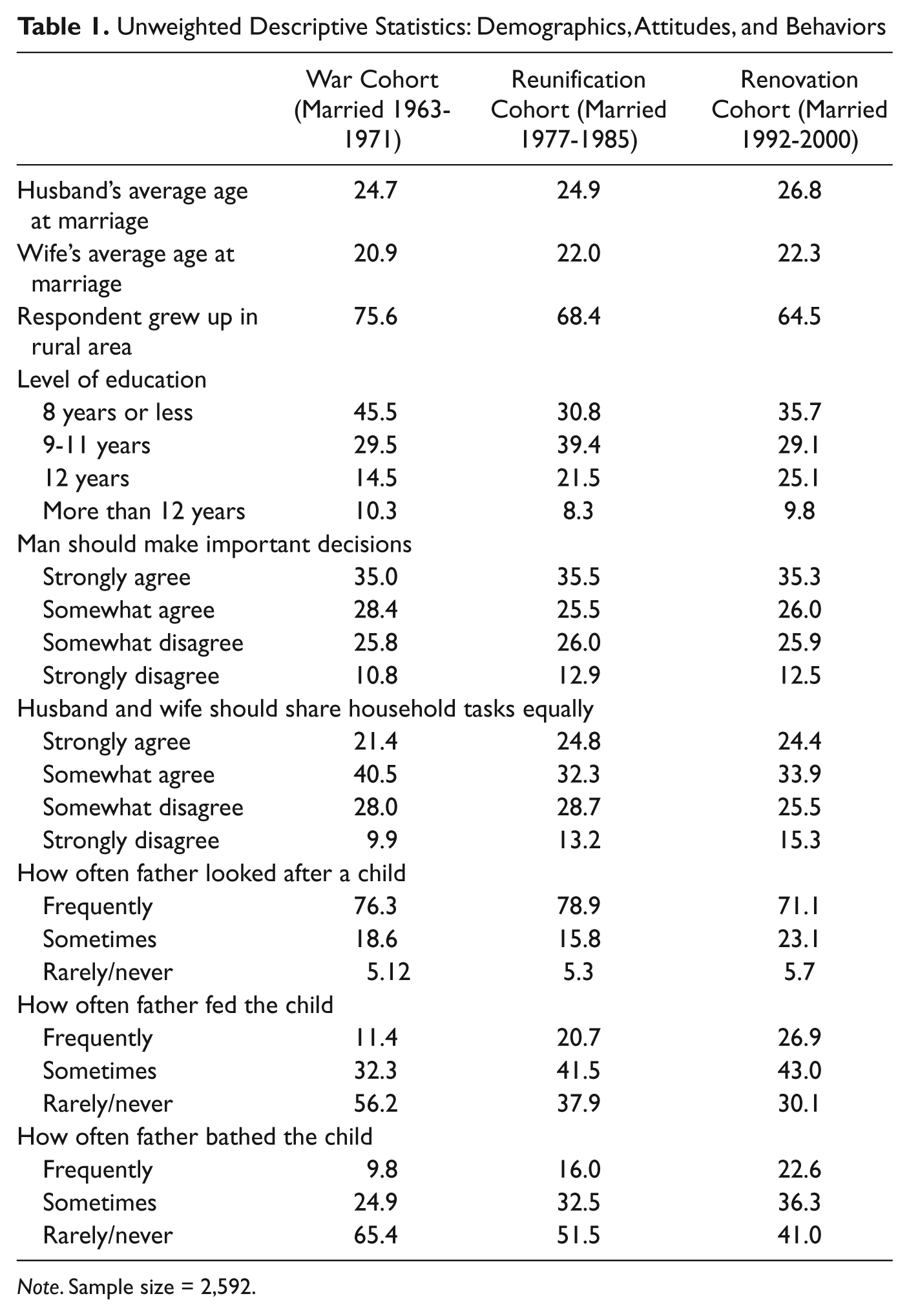
Despite emphasizing gender equality and clear laws stating the equality of men and women in families, the idea that the man should make the important decisions in the family remains strong and shows little change over time (see Figure 1 and Table 1).
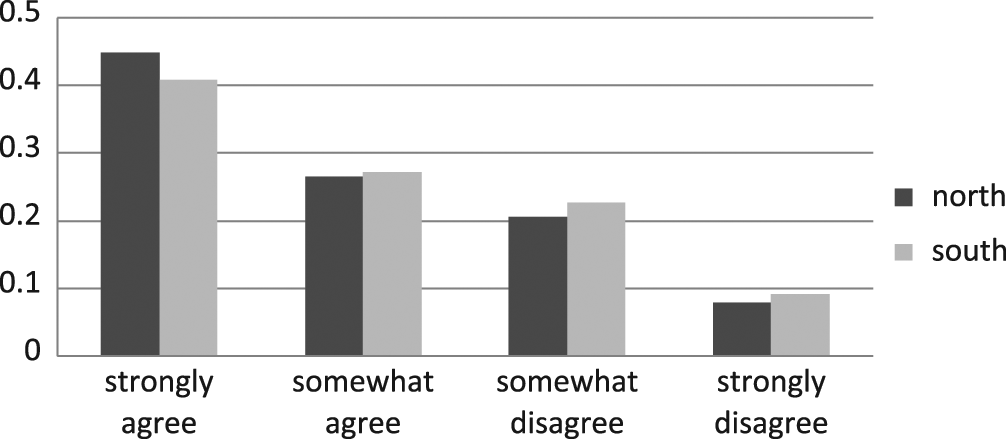
Strength of agreement or disagreement with the statement, “Most important decisions in the family should be made by a man”: Regional differences
Unweighted Descriptive Statistics: Demographics, Attitudes, and Behaviors
Note. Sample size = 2,592.
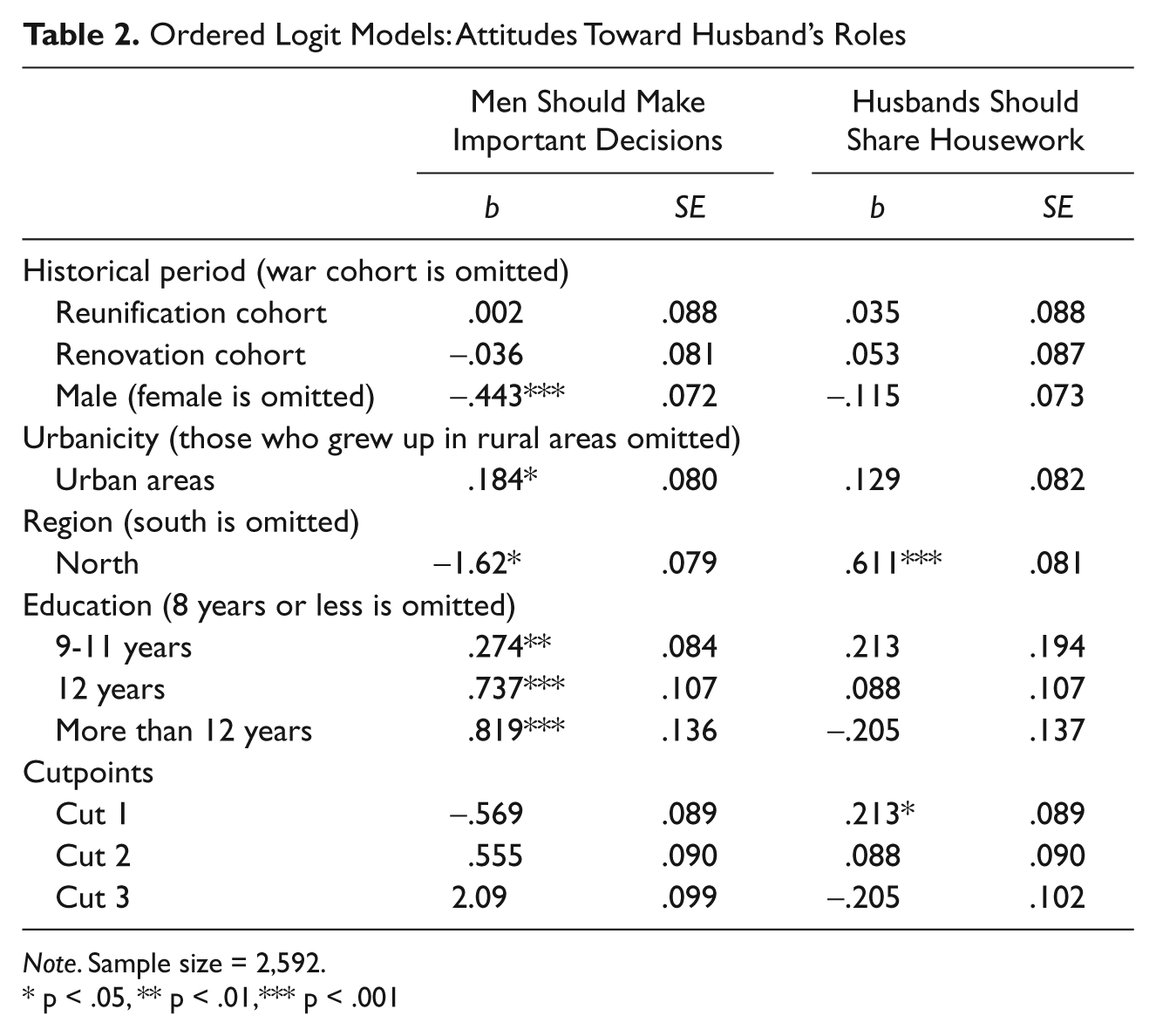
Regardless of the marital cohort, about 35% of respondents strongly agree that men should make important decisions in the family. Although the univariate results indicate little difference by marriage cohort, attitudinal differences may arise from other characteristics, such as gender, educational attainment, urbanicity, and region. Due to the ordered nature of the dependent variable, we use an ordered logit model to examine the relationships between these variables and attitudes on whether the man should make important decisions in the household (see Table 2).
Ordered Logit Models: Attitudes Toward Husband’s Roles
Note. Sample size = 2,592.
p < .05, ** p < .01,*** p < .001
Because of the difficulty in interpreting logit coefficients, and the added difficulty of interpreting coefficients from an ordered logit model, we highlight the significant differences by calculating predicted probabilities based on the ordered logit results. As indicated in the model, no significant differences in attitudes that men should make the important decisions in the family by marriage cohort were evident, indicating little change over time. There are significant differences between the north and the south, between growing up in an area that is rural rather than urban, and by education level. The predicted probabilities are calculated for those who married during the renovation cohort, for those who grew up in rural areas, for men, and for those with 9 to 11 years of schooling. We begin by displaying the predicted probabilities from the ordered logit model that highlight the regional difference in findings. Compared with the south, those in the north have a higher probability of strongly agreeing that men should make important decisions in the family. Conversely, those in the south are more likely to somewhat and strongly disagree with this statement. In addition to the significant regional differences shown in Table 2, there is also a significant gender difference in the model examining how strongly the respondent agrees with the statement that men should make important decisions in the family. Regardless of cohort, men are more likely than women to agree with this statement. In analyses not shown, we examined whether this gender difference has grown or has narrowed across the three cohorts and no differences were found.
Next, we present the predicted probabilities to illustrate the educational and urban/rural differences.
As Figure 2 illustrates, the probability of strongly agreeing that a man should make important decisions in the family declines with education; those with 8 years of education or less are more likely to strongly agree than those with additional years of education. Individuals with some college education are the least likely to agree with the statement. Regardless of the level of education, individuals who grew up in rural areas are more likely to agree than those who grew up in urban areas.
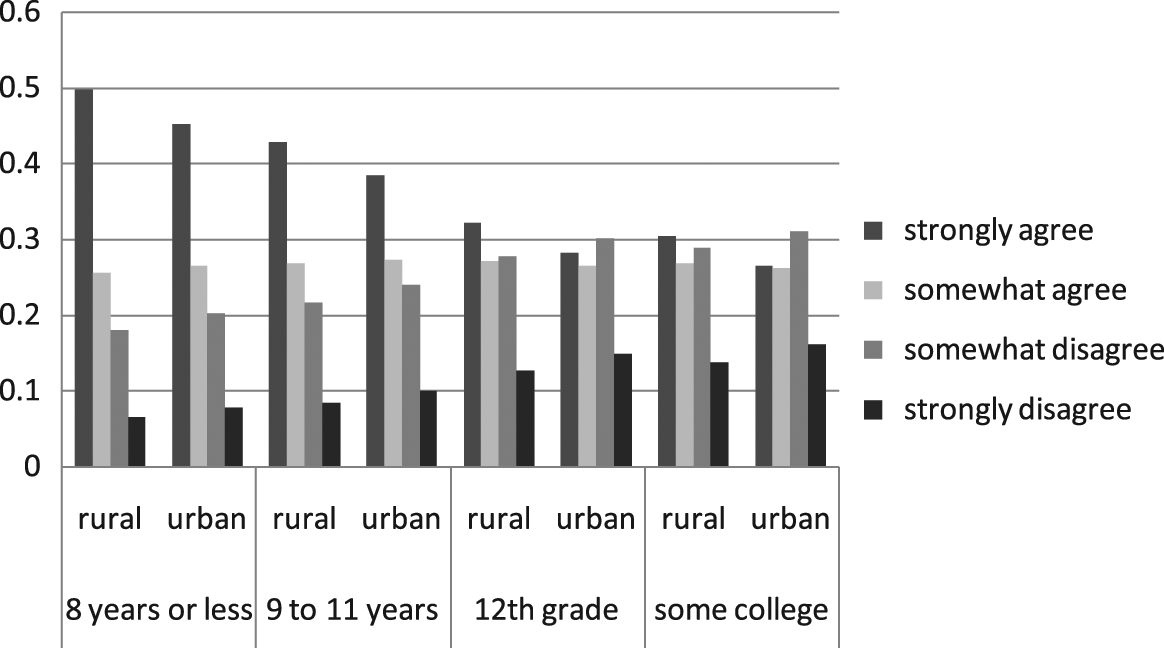
Strength of agreement or disagreement with the statement, “Most important decisions in the family should be made by a man”: Rural/urban and education differences
Vietnam continues to have one of the highest rates of female labor force participation in the world, and given these high rates, we could expect to see egalitarian attitudes toward husband’s role in housework. We examine this by using the question, “When a husband and wife both work, they should share household tasks equally.” The response categories ranged from “strongly agree” to “strongly disagree.” The ordered logit results are presented in the second panel of Table 2. Only the region variable is significant. Again, the marital cohort is unrelated to attitudes on whether husbands and wives should share housework equally when they both work. The predicted probabilities are calculated for the renovation marriage cohort, for male respondents, and for those who grew up in rural areas. Despite the substantially longer and stronger emphasis on gender equality in the north, individuals in the north are less likely to endorse husbands and wives sharing housework equally than respondents in the south.
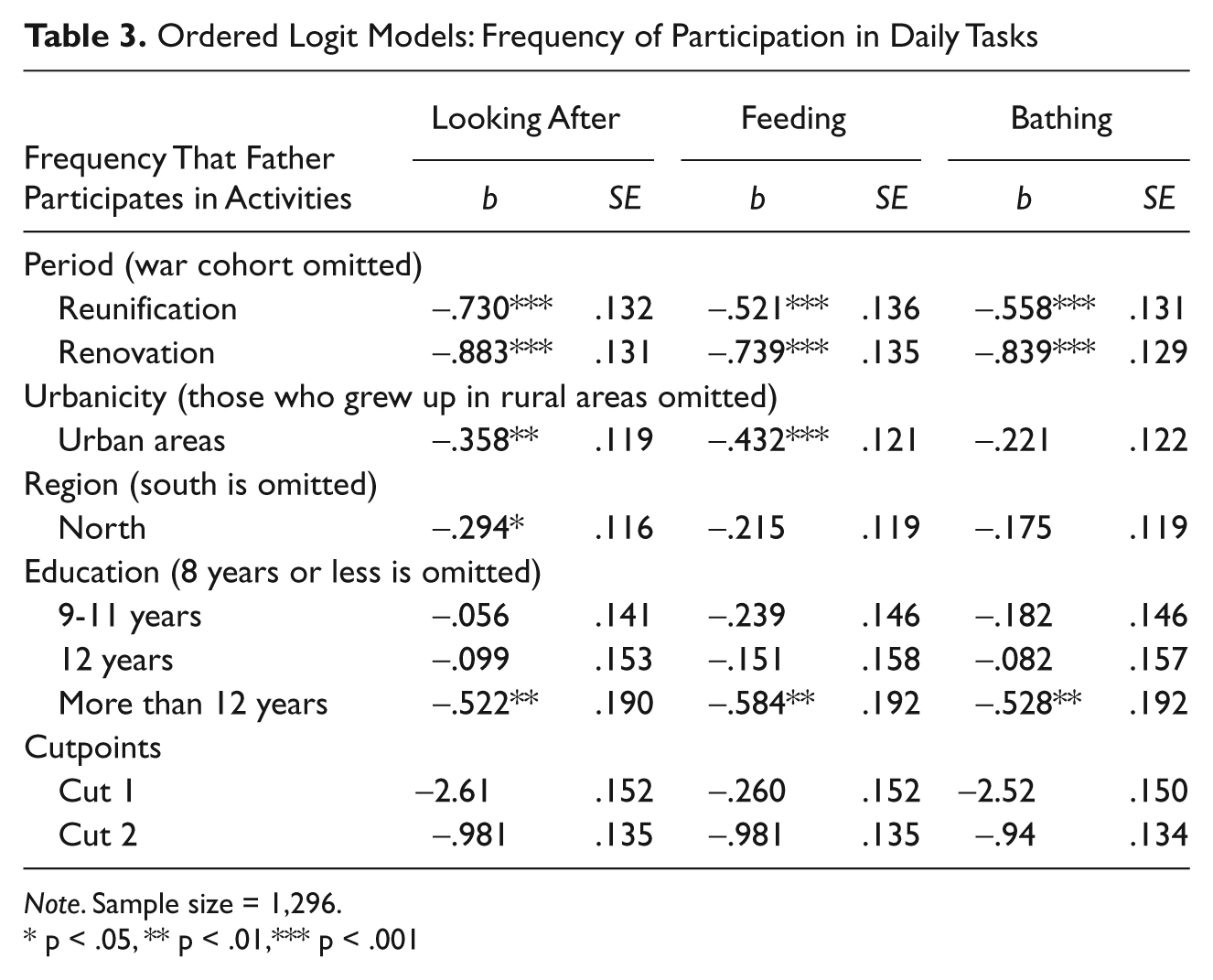
Although the previous two models examine attitudes, the next three models focus specifically on behaviors. In particular, we examine fathers’ self-reports on the frequency in which they participated in daily care activities with their young child when he or she was between the ages of 2 and 5 years. The tasks examined include looking after the child, bathing the child, and feeding the child. The response categories are “frequently,” “sometimes,” and “rarely or never.” The ordered logit model for each task is presented in Figure 3 and Table 3.
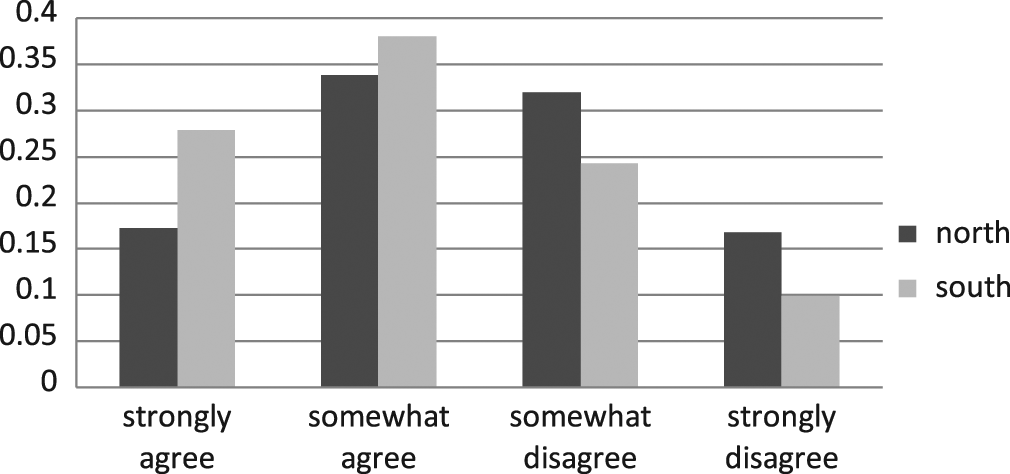
Strength of agreement or disagreement with the statement, “If a husband and wife both work, they should share household tasks equally”: Regional differences
Ordered Logit Models: Frequency of Participation in Daily Tasks
Note. Sample size = 1,296.
p < .05, ** p < .01,*** p < .001
Although no significant differences by marital cohort are evident when attitudes are examined (whether the man should make important household decisions and whether a husband should share housework equally), there are clear cohort differences when examining how frequently fathers performed various tasks when their child was 2 to 5 years of age (see Table 3). The predicted probabilities for the model examining how often the father looked after the child are presented in Figure 4.
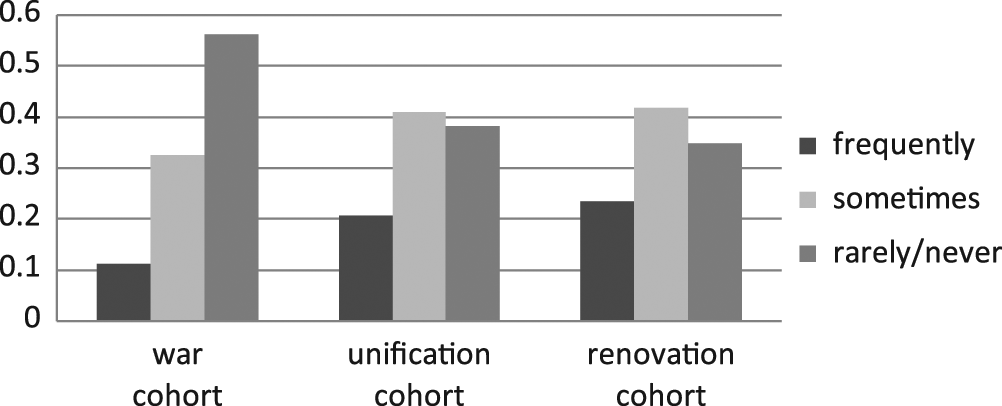
Cohort differences in the frequency that husbands looked after their child
Although only about 11% of fathers in the war cohort said that they frequently looked after their 2- to 5-year-old child, this increased to 20% for fathers in the reunification cohort and to 23% for fathers in the renovation cohort. The lack of father’s presence due to military mobilization during the war may explain much of this difference. Interestingly, the major change was from the war to reunification cohort, not from the reunification to the renovation cohort. The impact of marriage cohort on the frequency of feeding and bathing the child are similar and are not shown due to space limitations.
Consistent differences across all three tasks are also found by fathers’ education level. Although there are no significant differences between fathers with less than 9 years of education and those with 9 to 11 years or 12 years of education, fathers with some college education are significantly more likely to have frequently performed tasks with their young child (see Figure 5).
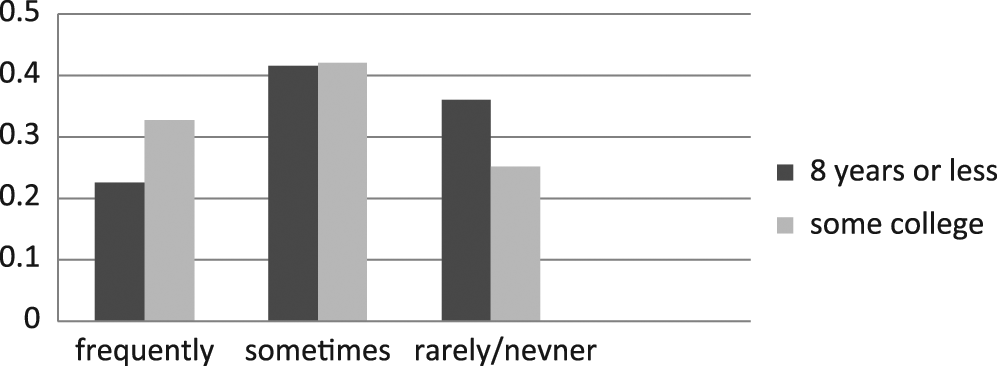
Education differences in the frequency that husbands looked after their child
This finding is consistent with research on father’s involvement in the West that has also found higher levels of father involvement when the father’s education level is higher (Yeung, Sandberg, Davis-Kean, & Hofferth, 2001).
Conclusion
Many hypothesize that economic renovation policies passed in 1986 have resulted in dramatic changes in Vietnam, not only economically but also socially. Although the economic impacts of renovation policies are clear, little is known about the impacts that these social and economic changes have had on individual and family attitudes and behaviors. Increased access to Western media, in particular, is thought to have had a significant influence. As a result, some expect more egalitarian gender role attitudes and greater participation of men in child care and housework among more recent cohorts. Unfortunately, the lack of longitudinal data on family attitudes and behaviors in Vietnam means that previously it has not been possible to assess the extent of change or continuity in attitudes toward the father role or in fathers’ participation in daily child care tasks. This analysis provides the first empirical assessment of how attitudes and behaviors have changed in Vietnam’s recent history. Although the cohort design of the data prevents a specific examination of the mechanisms associated with gender role attitudes or father’s participation over time, we are able to examine change and continuity by controlling for major demographic factors known to be associated with father’s roles and participation. Data from the VFS, specifically designed to assess the extent of changes in family roles, attitudes, and behaviors, show remarkable consistency in attitudes. Despite hypotheses on how recent social changes may have changed notions of family roles, our results show no significant differences (the man should make important decisions in the household, and husbands should share housework equally when their wives work) between the war cohort, the reunification cohort, and the renovation cohort. These persistent attitudes toward women’s unequal role in families may provide evidence of the enduring strength of Confucian doctrine.
Although there are no significant attitudinal differences by marriage cohort, regional differences are apparent. Those in the north tend to “strongly agree” that men should make important decisions in the family, whereas those in the south tend to “strongly agree” that when wives work, husbands should share equal housework. This regional difference is surprising given that communist ideology on gender equality was propagated for much longer in the north than in the south, and specific policies and laws on gender equality have a longer history in the north. In fact, the 1946 Constitution in the north called for the abolition of parentally arranged marriage, largely arguing that this practice hindered women’s equality.
Although there are no significant marriage cohort differences in attitudes, changes from the war to reunification to renovation cohort are evident in behaviors, as measured by the frequency of activities that fathers performed when their children were 2 to 5 years old. Fathers in the war cohort less frequently participated in looking after, feeding, and bathing their children than did fathers in the reunification or the renovation cohort. We should be cautious, however, in interpreting these cohort differences as evidence that Vietnamese fathers have become more active caregivers. It is important to recognize that the largest change in the frequency of participation occurred between the war and reunification cohorts, not between the reunification and renovation cohorts. The less frequent participation of fathers in the war cohort likely results from their absence due to mass mobilization. Despite the pace and nature of change after renovation policies were passed, the increased frequency of fathers’ participation in daily activities with their children was relatively small among the reunification and renovation cohorts. Additionally, although it is true that the most recent cohort of fathers reported higher levels of participation in daily child care tasks, these levels are still quite low. Regardless of the task, the probability of a husband frequently performing a task is only .20. Given the very high labor force participation rate of Vietnamese women, and their continuous labor force participation even when their children are young (Pham, 2008), the lack of fathers’ participation is notable. Fatherhood research in the West highlights the rapidly increasing rates of mother’s labor force participation during the 20th century as critically connected to growing levels of father involvement. Women’s labor force participation in Vietnam has been high for much of the 20th century, and currently the rate is one of the highest in the world. These high rates, however, have not corresponded to increased father involvement. In examining these differences between Vietnam and the West, it is important to consider the role played by the very different family systems. Attitudes toward father involvement and the extent of father involvement must be viewed in the context of the entire family system. The nuclear family system has been predominant in the United States so that the division of household labor must be done by either the husband or the wife.
In contrast, Vietnam continues to rely on an extended family system. Multiple generations continue to live together in Vietnam, and it is also very common to find older parents living close by, if not under the same roof. Grandmothers and other older relatives have long played an important role in child care and this pattern remains common in Vietnam today. Data from the 1997 and 2002 Vietnam Demographic Health Survey (DHS; National Committee for Population, Family, and Children, 2002) provide information on the sources of preschool child care for families when the mother works full-time. The 1997 data indicate that when the mother was working full-time, the primary source of child care for preschool children were other relatives, grandparents in particular. Other relatives were the primary source of care in 43% of working mother families with preschool children. This figure remained unchanged in the 2002 data. Further evidence of the importance of other family members providing care is seen in the high percentage of older siblings who care for their preschool aged brothers and sisters. In 1997, older siblings were the main source of child care for 25% of families with working mothers (fathers were the main source of care in 3.5% of families).
However, as other family members become less available to care for young children, father participation may increase as fathers are required to step in and fill this void. Greater educational demands may reduce availability of older siblings to provide care. In fact, the 2002 DHS data show that older siblings as the primary source of preschool-aged child care had declined by more than half to 11%. Proposed increases in the retirement age (currently 55 years of age for women and 60 years for men) may limit the availability of grandparents to help with young children in the future. Grandparents may also be less available to help with household tasks and child care because of increasing rates of rural to urban migration. Increasingly, grandparents remain in rural areas, whereas the younger generations move to the city. With less family support available, and high rates of maternal labor force participation, necessity may force fathers to increase their participation. On the other hand, father participation may not increase if external institutions are used to fill the void. The DHS data also show that the major change between 1997 and 2002 was in the extent of institutional care (child care centers). Although institutional child care was the main source of care for 12% of families when the mothers worked full-time in 1997, by 2002 this had increased to 22%.
Despite years of communist doctrine, specific policies on gender equality, and increased globalization and media access, attitudes toward fathers’ roles and their participation in daily child care tasks remains low in Vietnam. However, given trends in education and migration, we are likely to see some change in the future. Similar to the findings from other countries, education is positively related to more egalitarian views on the division of household labor among both husbands and wives. Educational attainment continues to increase in Vietnam and more and more men and women are graduating from high school. Rates of college attendance have also grown. In addition to education, residents in urban areas tend to have more egalitarian views about the division of household labor than do rural residents. Vietnam continues to experience high rates of rural-to-urban migration, and the proportion of the population participating in agricultural occupations is declining. Although communist doctrine seems to have had little impact, rapidly changing demographic factors may mean that Vietnamese fathers will become more active in their children’s daily lives in the near future.
Footnotes
Declaration of Conflicting Interests
The author(s) declared no potential conflicts of interest with respect to the research, authorship, and/or publication of this article.
Funding
The author(s) received no financial support for the research, authorship, and/or publication of this article.