




Abstract
Racial discrimination has been negatively linked to mental health in African Americans, but less is known about how it may affect parents’ academic efficacy. This study examined the direct and indirect relationships between racial discrimination, depressive symptomatology, and academic efficacy in African American mothers. Seventy-six African American mothers were surveyed just before their children began first grade and again during the spring of first grade. Mothers reported on their experiences with racial discrimination, depressive symptomatology, and academic efficacy. Academic efficacy was operationalized in three different ways: the mother’s efficacy to help with homework, efficacy to help the child succeed in school, and her belief in her child’s efficacy to complete homework. Hierarchical regressions were conducted to investigate these relationships. Findings show that maternal depressive symptomatology mediates the relationship between racial discrimination and parental academic efficacy. The implications for assessing discrimination and depression as it relates to academic efficacy are discussed.
African American parents may feel less capable of helping their children to succeed in school than parents of other ethnic backgrounds for a number of reasons. First, African American parents tend to be less well educated than parents of other ethnicities (U.S. Census Bureau, 2011). Second, although the prevalence rates of depression are lower for African Americans compared with other ethnic groups (Riolo, Nguyen, Grenden, & King, 2005), African American parents may be more hampered by mental health issues, such as depression, as they may have fewer resources for coping with these experiences (U.S. Surgeon General, 2001). Finally, as with all parents, African American parents’ sense of their own efficacy and that of their child may be both directly and indirectly shaped by experiences with racial discrimination. However, minority parents face unique challenges while living in a racist environment (Frabutt, Walker, & MacKinnon-Lewis, 2002). It is also important to note that many of these parenting challenges may be influenced by socioeconomic status (SES), such as educational attainment (Owens, 2010) and mental health issues, such as depression (Brody et al., 2008). These distinct contexts make it necessary to understand familial processes in African American families.
In the current study, we examined African American mothers’ experiences with racial discrimination, specifically daily racial hassles. Daily racial hassles or racial microaggressions can be defined as brief verbal or behavioral acts that can convey negative slights toward people of color (Sue et al., 2007). Moreover, we examined whether these experiences may lead African American parents to feel less efficacious about their ability to help their children and like their children are less efficacious academically. The study extends the literature showing that depression negatively affects parent self-efficacy (Bors & Sanders, 2004; Haslam, Pakenham, & Smith, 2006; Teti & Gelfand, 1991) in several ways. First, we add to the relatively small literature on the effects of depression among African American parents. Second, we consider whether depression relates to parents’ academic efficacy in addition to more general types of parenting efficacy. Third, we examine whether parental depression relates to the ways in which parents view their children’s efficacy. That is, we ask whether parents with more depressive symptoms tend to believe that their children are less capable.
Conceptual and Theoretical Framework
Building on the self-efficacy framework proposed by Bandura (1995), this article investigates the role of perceived discrimination and depression on parental academic efficacy. We expect perceived discrimination to operate on parental self-efficacy in ways similar to depressive symptoms. Experiences of racial discrimination will likely affect two of Bandura’s (1995) four hypothesized mechanisms for building self-efficacy—social persuasion and physiological/emotional states. Almost by definition, racial discrimination conveys a sense of inadequacy, powerlessness, and low social status. External messages about one’s capabilities shape one’s sense of competence (Bandura, 1995) and messages from others that suggest low competence can be especially damaging. In addition, experiences of discrimination have been shown to affect physiological and emotional states (Banks, Kohn-Wood, & Spencer, 2006; Pascoe & Smart Richman, 2009). Negative mood and depressive symptoms might impair individuals’ judgments about their abilities (Bandura, 1995). Therefore, we expect that mothers’ experiences of racial discrimination would be negatively associated with their own parenting self-efficacy. In addition, we hypothesized that mothers’ experiences with racial discrimination would negatively affect their beliefs about their children’s competence (see Figure 1).
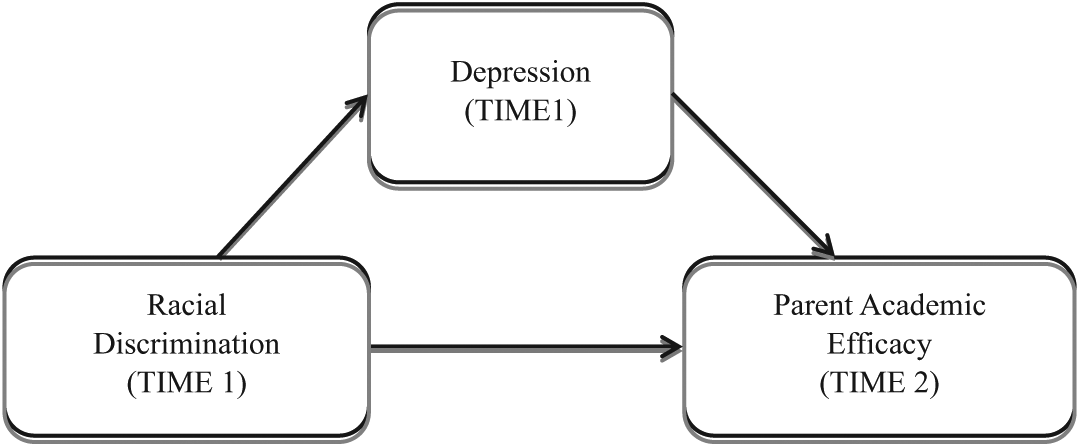
Conceptual Model.
Perceptions of Self-Efficacy
Perceived self-efficacy is “the belief in one’s capabilities to organize and execute the courses of action required to produce given attainments” (Bandura, 1997, p. 3). Perceived parental self-efficacy consists of beliefs a parent has about his or her ability to promote positive development in their children (Ardelt & Eccles, 2001). Parental efficacy can be thought of in a general sense—the parent’s beliefs about her/his ability to be a good parent broadly speaking; or in terms of specific domains—the parent’s sense that they can achieve positive outcomes for their children in academic, behavioral, or social domains. The current study focused on parent academic efficacy, which can also be defined in a general sense—the parent’s ability to help his or her child achieve academic success, or more domain-specific, such as the parent’s belief about her or his ability to help with homework or in a particular academic subject.
For the purposes of the present study, we focused on homework and general academic efficacy. We defined homework efficacy as mother’s perception of her ability to help her children with homework (i.e., parent homework efficacy). We defined academic efficacy as a mother’s perception that she can effectively support her child succeeding in school. Parental efficacy has far-reaching implications for academic outcomes. Parental efficacy has been directly related to children’s self-efficacy, academic ability, and social competence (Ardelt & Eccles, 2001; Bandura, 1997; Bandura, Barbanelli, Caprara, & Pastorelli, 2001; Coleman & Karraker, 1997; Teti, O’Connell, & Reiner, 1996). Additionally, Bandura (1997) suggests that domain-specific measures of efficacy should be most closely tied to the behavior. Sanders and Woolley (2005) further underscore the importance of assessing parents’ sense of efficacy in dealing with the specific everyday tasks that are most central to parenting, such as homework, rather than more global feelings. Although homework frequency and intensity tends to escalate in secondary school, most young children have homework (Cooper, Robinson, & Patall, 2006)
It is likely that parental efficacy affects children’s outcomes via improved parenting processes that are strongly related to children’s achievement outcomes including parenting stress (Jackson, 2000), maladaptive parenting (Sanders & Woolley, 2005), involvement and monitoring (Shumow & Lomax, 2002), and satisfaction in parenting (Coleman & Karraker, 2000; Jackson, 2000). Studies that isolate parents’ academic self-efficacy are less common. Bandura et al. (2001) suggest that parents’ academic self-efficacy beliefs lead them to shape the environment in ways that promote academic success. When parents believe that they can help their children to become good students, they are more likely to engage in activities that support that achievement. Bandura et al. (2001) found that children’s occupational aspirations were largely shaped by parents’ academic efficacy and expectations. Hoover-Dempsey and colleagues (Hoover-Dempsey & Sandler, 1995, 1997; Hoover-Dempsey, Walker, & Sandler, 2005) suggest that examining parents’ academic self-efficacy is important because it may be a precursor to their decisions about whether and how to get involved in their children’s schooling as well as an indirect factor in children’s efforts. Given the relative importance of parent efficacy to child development and the lack of research on parent academic efficacy, we felt it important to determine key predictors of parent academic efficacy.
Racial Discrimination and Mental Health in African Americans
African Americans tend to report more racial discrimination or differential treatment based on one’s racial group membership, than other racial or ethnic groups (Sellers & Shelton, 2003; Sue et al., 2007). Moreover, social stratification mechanisms (e.g., racism, discrimination) can affect the types of social, emotional, and physical resources available to African American parents (Garcia Coll et al., 1996). Research has consistently found relationships between racial discrimination and mental health (i.e., depression, anxiety) in African American youth (Neblett et al., 2008; Sellers, Copeland-Linder, Martin, & Lewis; 2006; Tynes, Umaña-Taylor, Rose, Lin, & Anderson, 2012) and in adults (Banks & Kohn-Wood, 2007; Banks et al., 2006; Paradies, 2006; Pascoe & Smart Richman, 2009; Williams, Neighbors, & Jackson, 2003). In particular, perceived everyday discrimination was directly related to anxiety and depression in a sample of African American adults (Banks et al., 2006). Additionally, in a cross-sectional national survey conducted on African American men, Hammond (2012) showed that everyday racial discrimination was associated with more depressive symptoms across all age groups. Similarly, Ertel et al. (2012) found that experiences of discrimination were linked to more symptoms of depression in a sample of African American and Black women. These studies underscore that experiences of racial discrimination are associated with poorer psychological well-being for African Americans. Given the extant research, we expect that in our study of African American mothers, experiences of everyday discrimination will be directly related to symptoms of depression.
Maternal Depressive Symptomatology and Academic Efficacy
As noted, depressive symptoms may distort self-views leading to lower self-efficacy. Indeed, maternal depression has been linked with lower parental self-efficacy (Bors & Sanders, 2004; Haslam et al., 2006; Weaver, Shaw, Dishion, & Wilson, 2008; Zayas, Jankowski, & Mckee, 2005). In a meta-analysis of studies with predominantly White samples, Lovejoy, Graczyk, O’Hare, and Neuman (2000) found that mothers who are depressed tend to feel less competent as parents (i.e., they view parenting as more difficult). In addition to acting on parents’ beliefs about their own abilities to support their children, parental depression might also relate to how efficacious parents think that their children are. Studies of parents with young children indicate that depressed parents have more negative views of their children (Lovejoy et al., 2000). They tend to see their children as more difficult behaviorally and tend to have more negative attributions for their behavior (McLoyd, 1990). Furthermore, parents’ sense of their own efficacy has been related to their expectations for their children’s academic potential (Bandura, Pastorelli, Barbanelli, & Caprara, 1999). Thus, we expect that parental depression will be negatively related to both mothers’ views of their own parent academic self-efficacy and to their views of their children’s academic self-efficacy.
The Link Between Racial Discrimination, Maternal Depression, and Academic Efficacy
Despite considerable evidence that racial discrimination affects the mental health of African Americans generally and parenting more specifically, there is little literature that considers the connection between racial discrimination and self-efficacy. Previous research has shown that African American mothers who reported high levels of perceived racial discrimination reported increased stressful life events, financial setbacks, psychological distress, and depression (Murry, Brown, Brody, Cutrona, & Simons, 2001; Odom & Vernon-Feagans, 2010). In addition, there is growing evidence that experiences of discrimination have implications for parenting among African American parents (Brody et al., 2008; Odom & Vernon-Feagans, 2010; Siefert, Finlayson, Williams, Delva, & Ismail, 2007). We suggest discrimination experiences would inhibit the mothers’ sense of control over their children’s educational futures and may indirectly affect their sense of emotional resources available to them for helping their child academically. We also believe that racial discrimination will be related to mothers’ beliefs about their children’s self-efficacy. Just as discrimination likely undermines parents’ sense of their own ability to contribute to their children’s academic achievement, it might also alter their perceptions of their children’s ability to shape their own academic performance.
The Present Study
Three research questions guided this study. First, are mothers’ perceptions of discrimination linked to their depressive symptomatology? We predicted that similar to previous findings (Odom & Vernon-Feagans, 2010), the more discriminatory experiences mothers report, the greater the amount of depressive symptomatology will be reported. Second, are mothers’ perceptions of discrimination associated with their perceptions of academic efficacy and with their perceptions of their children’s academic efficacy? We predicted mothers who perceive a greater number of discriminatory experiences will report lower levels of academic efficacy. Finally, does maternal depressive symptomatology mediate the relationship between racial discrimination and academic efficacy? Given that previous research has demonstrated the predictive power of racial discrimination on depression and efficacy and the influence of depression on efficacy, we predict that maternal depressive symptomatology will fully mediate the relationship between racial discrimination and perceptions of academic efficacy. That is, we predict that once depression is included in the model, the path between racial discrimination and parent academic efficacy will no longer be significant. We believe that depression will explain the relationship between racial discrimination and parent academic efficacy.
Method
Sample
The sample was recruited from two ethnically and socioeconomically diverse cities located in the Midwest. Seventy-six African American mothers were interviewed prior to their children’s entrance into first grade. Reports of participants’ age ranged from 21 to 52 years of age (Mage = 34 years, SD = 6.67 years). Approximately 45% of the participants were first-time parents. Forty-four percent of the target children were male while 56% were female. On average, mothers reported having two children, with the range reported as one to six children residing in the home. Within this sample, 53% of the parent sample was married, while 47% were single (e.g., never married or divorced). Mothers tended to be from lower middle class families with the reported average monthly income being $3,369 (reported monthly incomes ranged from $235 to $10,000, with a SD = $2,128.41). Participants had a wide range of educational backgrounds, from high school graduates to doctoral degree holders. The average level of education for this sample was an associate’s degree.
Procedure
The present study is part of a larger longitudinal study, the Families and Schools Project, which received institutional review board approval from the University of Michigan. This study examined the educational attitudes, beliefs, and opinions of African American mothers who had children entering first grade. Inclusion criteria for this study were individuals had to identify as African American with a child entering first grade. Participants were recruited for this study from 2001 to 2003. Initially, participants were recruited via letters that were sent home from their child’s kindergarten school. This letter included information about the study, the interview format, compensation information, and informed the participants that their participation was voluntary and confidential. Individuals who were eligible to participate were given more information about the study and an interview time and location was set up. Reminder phone calls were made to participants 1 to 2 days prior to the initial interview.
In the summer prior to their children’s entrance into first grade, mothers completed an initial interview that was comprised of a series of questionnaires regarding their psychological well-being as well as their views of education (Time 1). Mothers were interviewed either at home, the research laboratory, or a location chosen by the participant (i.e., library). The majority of interviews (80%) were conducted at the participant’s home. Follow-up interviews (Time 2) were conducted during the spring and summer of the child’s first-grade year. Majority of these interviews were completed over the phone, although some participants sent back surveys through the mail to reduce attrition. Attrition (17% of the sample) from the fall to the spring did occur within this sample due to mobility issues or changes in contact information. Participants responded to a number of questionnaires on their opinions and views concerning their academic efficacy as well as their children’s academic efficacy, experiences with discrimination, and symptoms of depression.
Measures
Parental Education Level
Participants were asked to choose their highest level of education on a 10-point rating scale. The response scale ranged from 1 = less than high school” to 10 = doctoral degree. Participants ranged from obtaining a high school diploma (6%) to a doctoral degree (4%). The average education level for this sample was a junior college degree. Parental education was used as a covariate within the analyses.
Depression
The Center for Epidemiological Studies Depression Scale (CES-D) was developed by Radloff (1977) and measures the range of depressive symptomatology an individual may experience in an average week. The scale ranged from 1 = rarely or none of the time, 2 = some of the time (1-2 days), 3 = occasionally (3-4 days), and 4 = most of the time (5-7 days). Sample questions included, “I am easily bothered by things.” The CES-D measure was administered during the initial interview prior to the child’s entrance of 1st grade (Time 1). This scale demonstrated good internal consistency with an alpha of .85. The average of the 20 items was used as the total score for this measure. Higher scores indicated more depressive symptomatology. For the current sample, the average CES-D score was 1.48 (SD = 0.35), indicating that this sample had fairly low reports of depressive symptomatology.
Perceived Discrimination
Perceived discrimination was measured using the Daily Life Experience subscale of the Racism and Life Experience scales developed by Harrell (1994). The measure assesses commonly occurring events that the participant attributes to race. The scale was administered to parents during the initial interview prior to their child’s entrance in first grade (Time 1). The scale has 15 items (e.g., “your ideas or opinions being minimized, ignored or devalued”). Mothers indicated how often they experienced the events because of their race in the past year using a 5-point scale (0 = never to 4 = frequently, about once per week). The average of the 15 items was calculated to create the total score.
Parent’s Perceptions of Child’s Homework Efficacy
The Thinking About Helping My Child With Homework measure was developed by Hoover-Dempsey, Reed, Jones, Walker, and Barreno (1999) to assess parents’ and children’s homework efficacy. This measure was administered during the spring follow up of the child’s 1st grade year (Time 2). Participants indicated how often they felt each statement was true regarding their child’s ability to do their homework and their own ability to help. The scale ranged from 1 = Never to 4 = Always. This 6-item child homework efficacy subscale assessed mothers’ perceptions of their children’s ability to effectively complete their homework and to do well in school. Sample questions included, “Homework is easy for him/her” and “She/he tries hard to do well in school.” The average of the six items comprised the total score for this subscale and had an alpha of .77.
Parent Homework Efficacy
The 4-item parent homework efficacy subscale was a part of the Thinking About Helping My Child With Homework measure (Hoover-Dempsey et al., 1999). This scale assessed mothers’ perceptions of their ability to help their children with homework. Participants were asked to rate their responses from 1 = Never to 4 = Always. Sample questions included, “I know how to help him/her with his/her homework” and “I know what kind of help she/he needs.” This measure was administered during the spring of the child’s 1st grade year (Time 2). This score for this measure was calculated by taking the average of the four items and had an alpha of .76.
Parent Academic Efficacy
This was measured using the Parent Efficacy for Helping the Child Succeed in School measure (α = .85). The measure was developed by Hoover-Dempsey, Bassler, and Brissie (1992) and assesses mothers’ perceptions regarding their sense that they can effectively support their child succeeding in school. This measure was administered during the spring of the child’s 1st grade year (Time 2). Seven items comprised this measure and sample questions include, “I feel successful about my efforts to help my child learn” and “I make a significant difference in my child’s school performance.” The average of the seven items created the score for each individual. Participants rated their agreement with the statements on a 5-point Likert-type scale that ranged from 1 = Strongly disagree to 5 = Strongly agree. This scale will be known as “Parent Academic Efficacy.”
Results
Preliminary Analyses
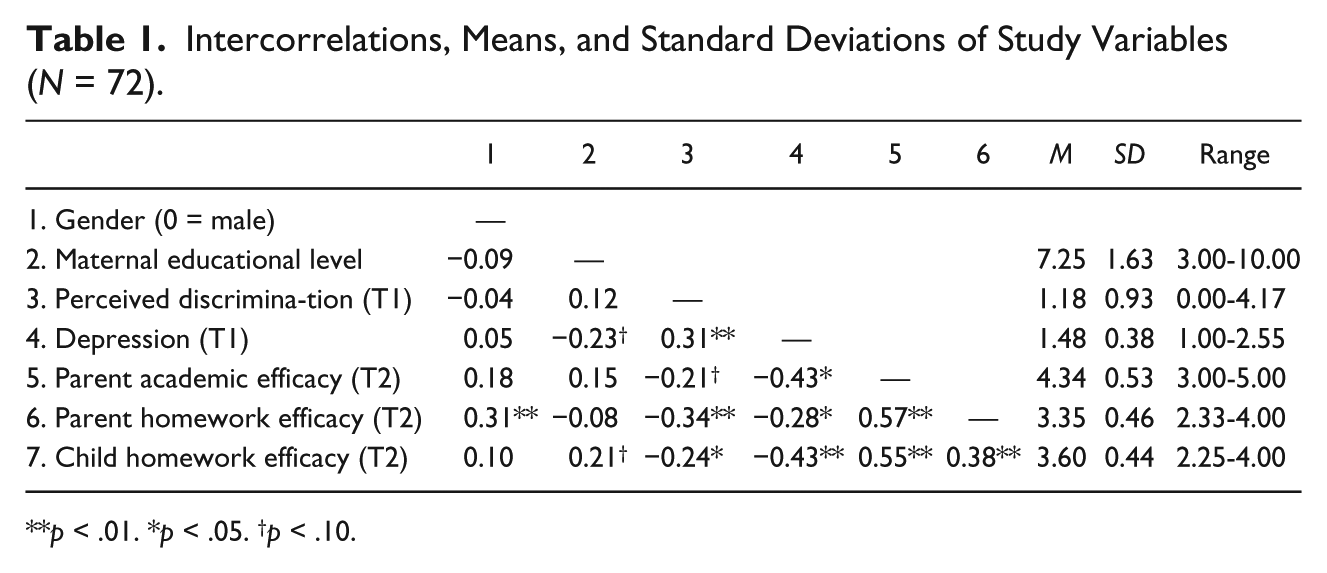
Descriptive statistics for the study variables are presented in Table 1. On average, participants reported feeling efficacious in their abilities to support their child’s school success (M = 4.34, SD = 0.53). Mothers also rated themselves as very capable of helping their children with their homework (M = 3.60, SD = 0.44) and their children as capable of completing their homework effectively (M = 3.35, SD = 0.46). Additionally, on average, participants reported low levels of depressive symptoms (M = 1.48, SD = 0.38). Furthermore, although participants ranged on their reports of experiences with discrimination (i.e., none to frequently, once per week), on average, their reports of discrimination were low (M = 1.18, SD = 0.93).
Intercorrelations, Means, and Standard Deviations of Study Variables (N = 72).
p < .01. *p < .05. †p < .10.
Intercorrelations were calculated for the study variables (see Table 1). Child’s gender was positively related to parents’ perceptions of their children’s efficacy, suggesting that parents of girls viewed their children as more efficacious compared with parents of boys. Indicators of parental efficacy were moderately correlated. In particular, parent academic efficacy was positively associated with parent homework efficacy (r = .57, p < .01). Moreover, child homework efficacy was positively related to parent academic efficacy (r = .55, p < .01) and parent homework efficacy (r = .38, p < .01). Maternal education was only marginally related to symptoms of depression (r = −.23, p < .10) and child homework efficacy (r = .21, p < .10).
Regressions
Data Analysis Plan
Because of the longitudinal nature of this study, approximately 17% (n = 12) of the cases of data were missing due to sample attrition. Specifically, 17% of the participants who were in the sample at Time 1 did not participate in the project during Time 2, due to issues of mobility. Therefore, using an estimation maximization algorithm, missing data imputations were conducted to deal with the missing cases (Enders, 2001). Initially, to investigate whether cases were missing at random, a Little’s MCAR test was conducted. The MCAR test was found to be nonsignificant (χ2 = 4.07; df = 9, p = .907), indicating that the cases were missing completely at random. Thus, multiple imputation analyses as suggested by Enders (2010) were executed to handle the missing data.
Hierarchical Regressions
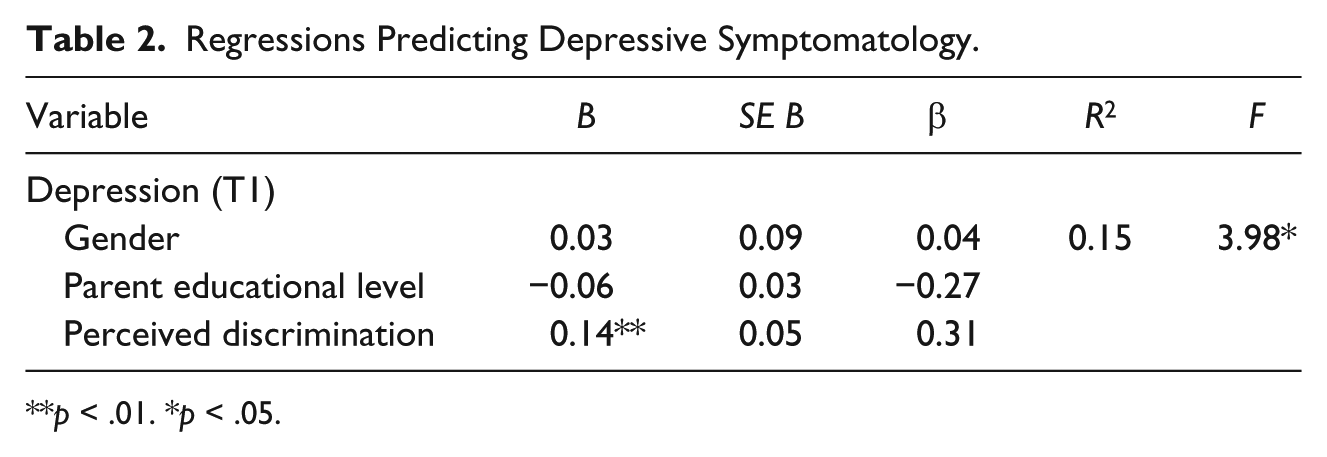
A hierarchical regression was conducted to analyze the first hypothesis that parental perceptions with discrimination would be positively related to maternal depressive symptomatology (see Table 2). Children’s gender and parental education level were designated as covariates. Perceived discrimination was the independent variable. The findings supported the hypothesis that maternal perceptions of discrimination in the past year are positively linked to reports of depressive symptomatology at Time 1 (b = .14, p < .01). Mothers who perceived frequent occurrences of racial discrimination also reported greater symptoms of depression.
Regressions Predicting Depressive Symptomatology.
p < .01. *p < .05.
Mediation Analyses
To test the second hypothesis, which investigated the direct relationship between perceived discrimination and parenting efficacy variables and the third hypothesis examining maternal depressive symptomatology mediating the association between racial discrimination and academic efficacy, a meditational pathway analysis was conducted. Because of the smaller sample size, the MEDIATE macro for SPSS created by Hayes and Preacher (2014) was used for these analyses. We used the MEDIATE macro because it estimates the total, direct, and indirect effects of the independent variable on the outcome via a mediating variable using a bootstrapping mechanism (Hayes & Preacher, 2014). Child’s gender and maternal education were identified as covariates in these analyses; racial discrimination was the independent variable and maternal depressive symptomatology was identified as the mediating variable. Three separate analyses were conducted for each outcome: parent homework efficacy, parents’ perceptions of child’s homework efficacy, and parent academic self-efficacy.
The second hypothesis examined the relationship between perceived discrimination at Time 1 and academic efficacy at Time 2. Hierarchical regression results showed that perceived discrimination at Time 1 was negatively associated with mothers’ perceptions of academic efficacy at Time 2. Perceptions of racial discrimination were negatively associated with mothers’ perceptions of their child’s homework efficacy at Time 2 (b = −.15, p < .01). As mothers perceived more discrimination, they felt less efficacious about their abilities to help their children and viewed their children as less efficacious over time (see Tables 3 and 4). Interestingly, perceived discrimination was not related to mothers’ general academic self-efficacy (see Table 5).
Maternal Depressive Symptomatology as Mediator between Racial Discrimination and Parent Homework Efficacy.
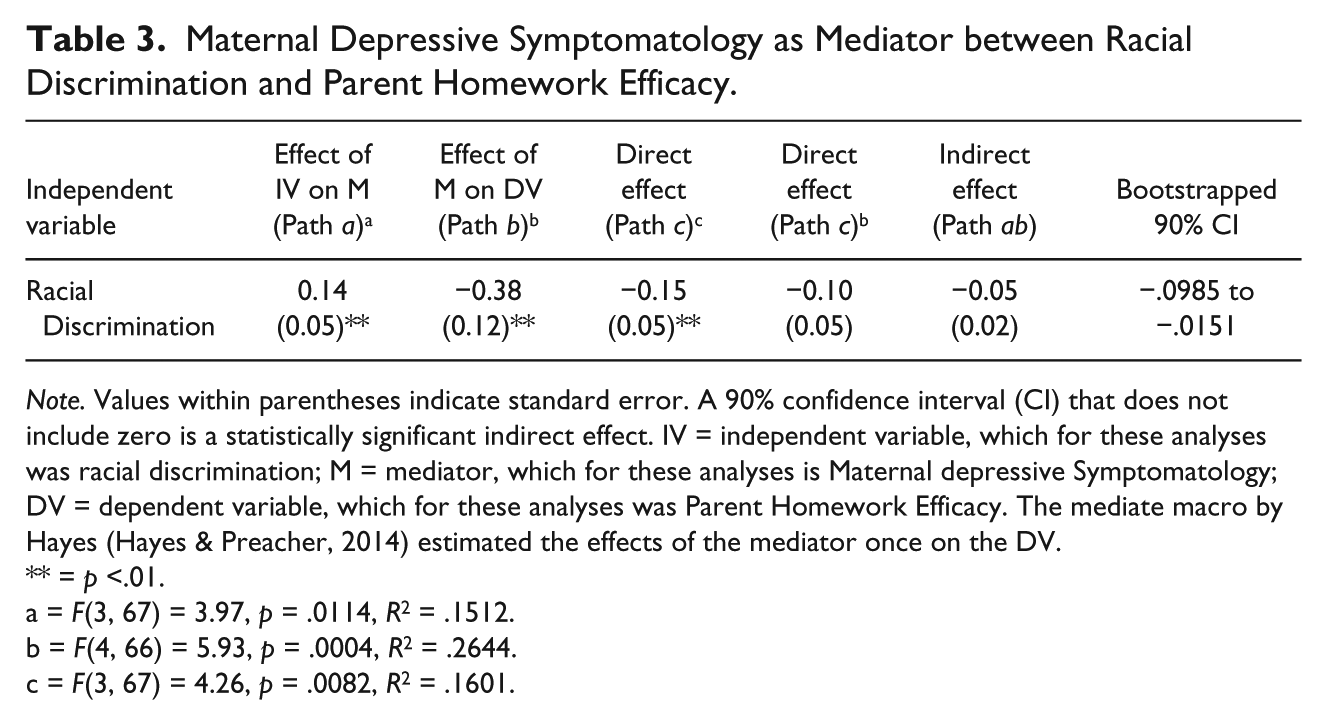
Note. Values within parentheses indicate standard error. A 90% confidence interval (CI) that does not include zero is a statistically significant indirect effect. IV = independent variable, which for these analyses was racial discrimination; M = mediator, which for these analyses is Maternal depressive Symptomatology; DV = dependent variable, which for these analyses was Parent Homework Efficacy. The mediate macro by Hayes (Hayes & Preacher, 2014) estimated the effects of the mediator once on the DV.
= p <.01.
= F(3, 67) = 3.97, p = .0114, R2 = .1512.
= F(4, 66) = 5.93, p = .0004, R2 = .2644.
= F(3, 67) = 4.26, p = .0082, R2 = .1601.
Maternal Depressive Symptomatology as Mediator Between Racial Discrimination and Perceptions of Child’s Homework Efficacy.
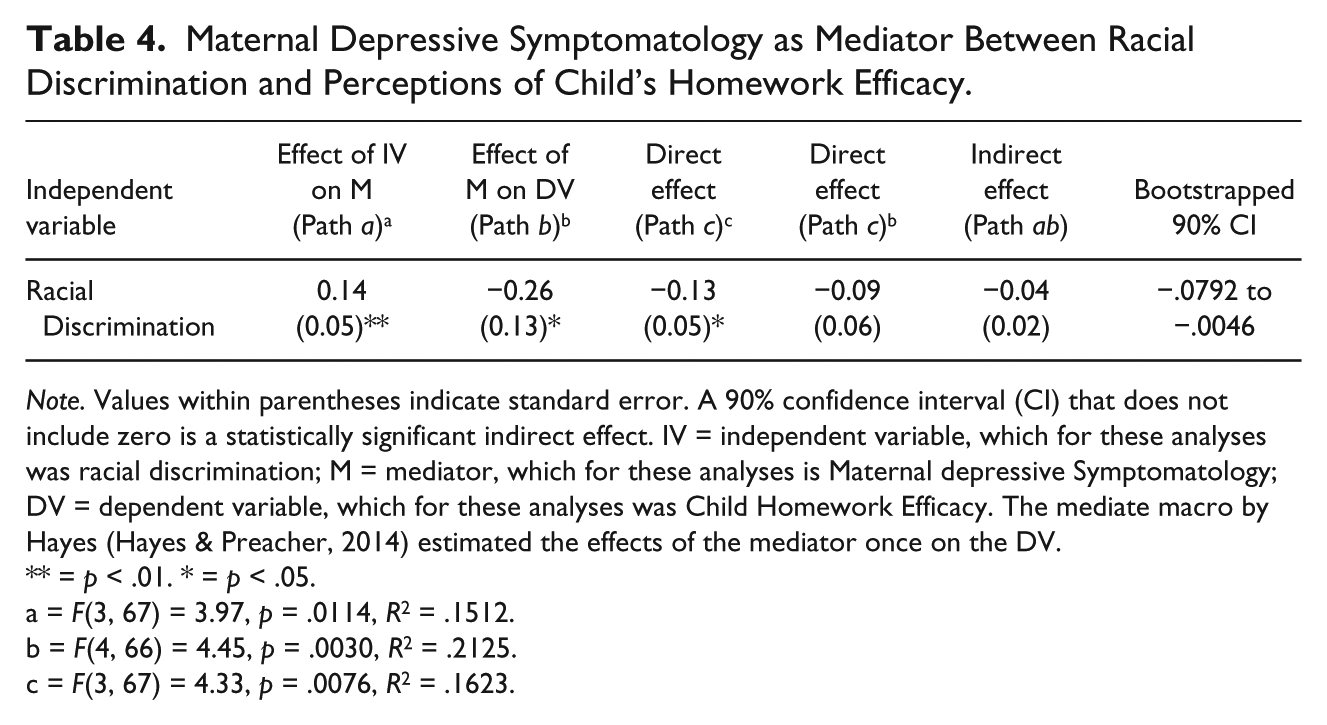
Note. Values within parentheses indicate standard error. A 90% confidence interval (CI) that does not include zero is a statistically significant indirect effect. IV = independent variable, which for these analyses was racial discrimination; M = mediator, which for these analyses is Maternal depressive Symptomatology; DV = dependent variable, which for these analyses was Child Homework Efficacy. The mediate macro by Hayes (Hayes & Preacher, 2014) estimated the effects of the mediator once on the DV.
= p < .01. * = p < .05.
= F(3, 67) = 3.97, p = .0114, R2 = .1512.
= F(4, 66) = 4.45, p = .0030, R2 = .2125.
= F(3, 67) = 4.33, p = .0076, R2 = .1623.
Maternal Depressive Symptomatology as Mediator between Racial Discrimination and Academic Efficacy.
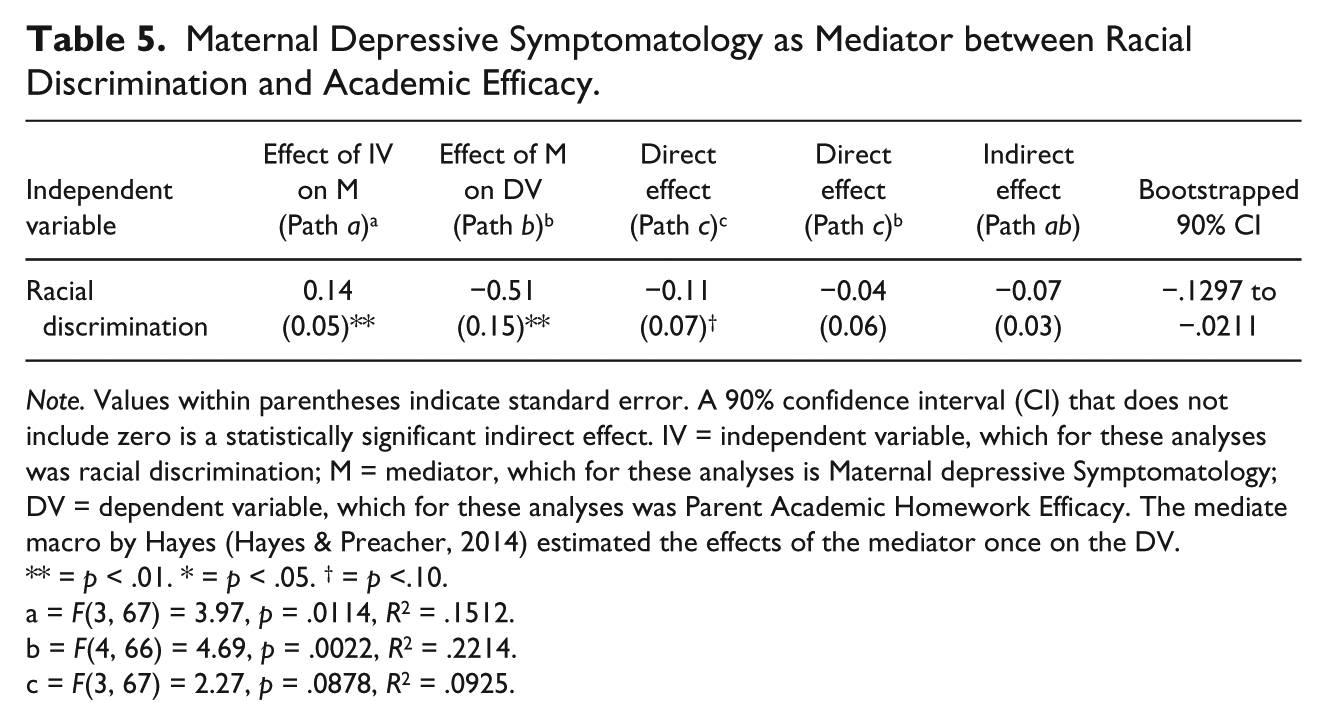
Note. Values within parentheses indicate standard error. A 90% confidence interval (CI) that does not include zero is a statistically significant indirect effect. IV = independent variable, which for these analyses was racial discrimination; M = mediator, which for these analyses is Maternal depressive Symptomatology; DV = dependent variable, which for these analyses was Parent Academic Homework Efficacy. The mediate macro by Hayes (Hayes & Preacher, 2014) estimated the effects of the mediator once on the DV.
= p < .01. * = p < .05. † = p <.10.
= F(3, 67) = 3.97, p = .0114, R2 = .1512.
= F(4, 66) = 4.69, p = .0022, R2 = .2214.
= F(3, 67) = 2.27, p = .0878, R2 = .0925.
The final analysis investigated whether maternal depressive symptomatology mediated the relationship between racial discrimination and academic efficacy. Regressions using the MEDIATE macro (Hayes & Preacher, 2014) assessed the effects of mediation for three separate analyses. The analyses showed that maternal depressive symptomatology fully mediated the relationship between racial discrimination and maternal reports of parent homework efficacy (Table 3), maternal reports of child homework efficacy (Table 4), and parental academic efficacy (Table 5). The decline in strength of the direct path values (c path) when maternal depressive symptomatology was included in the model indicated that symptoms of depression mediated the relationship between racial discrimination and academic efficacy (see Figures 2-4).
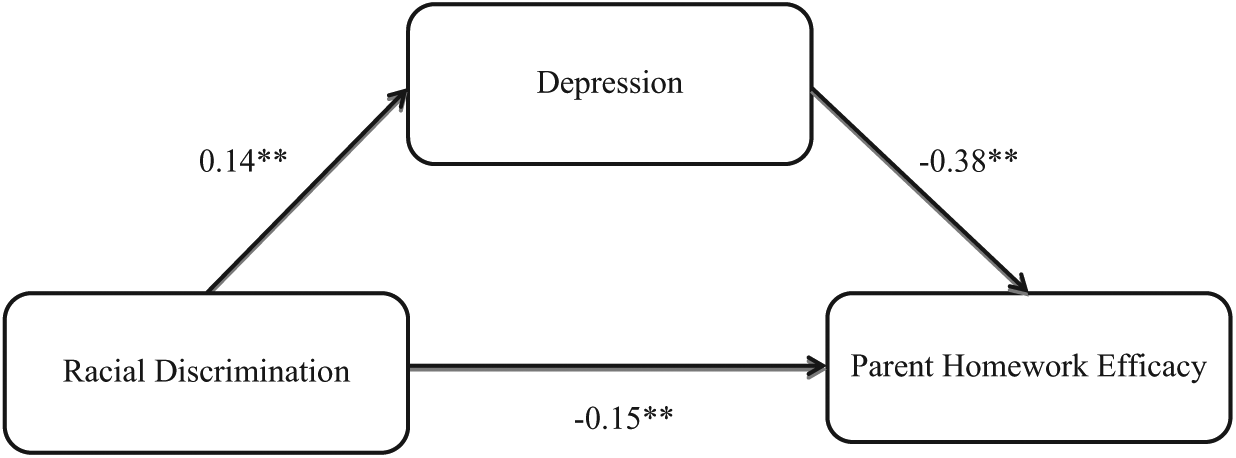
Maternal depression mediating racial discrimination and maternal perceptions of child homework efficacy.

Maternal depression mediating racial discrimination and maternal perceptions of child homework efficacy.
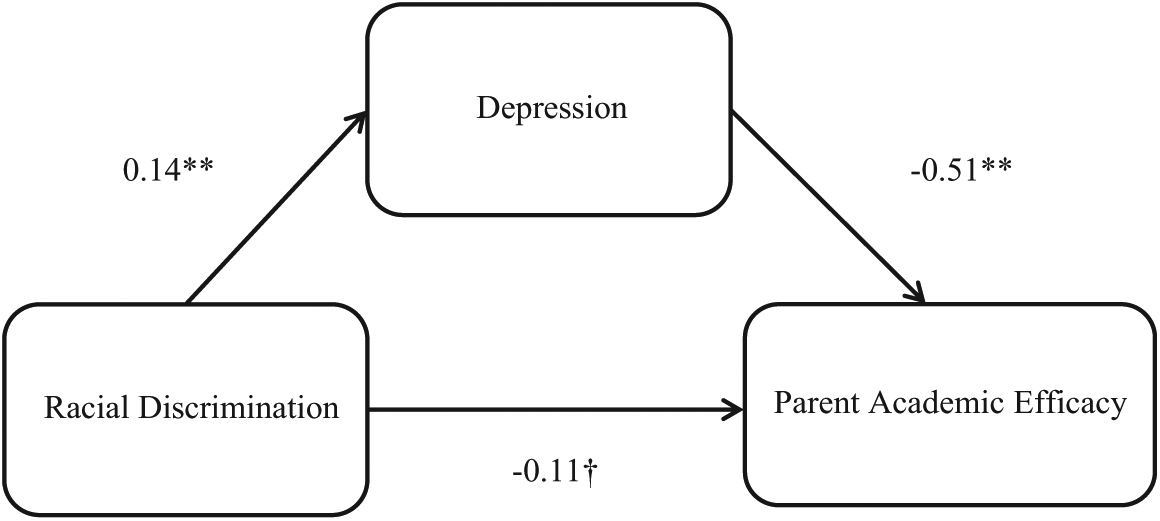
Maternal depression mediating racial discrimination and parent academic efficacy.
Discussion
The goal of this study was to examine the connection between perceived discrimination and parental academic efficacy in a sample of African American mothers. We proposed that perceived discrimination operates via increased depressive symptoms. We found that perceived discrimination was associated with depressive symptomatology contemporaneously and that both predicted parental efficacy about 6 to 9 months later. Moreover, this relationship was attenuated when depressive symptoms were included.
Our findings add to a growing body of literature on the relationship between racial discrimination and psychological outcomes in African Americans (Banks et al., 2006; Banks, Singleton, & Kohn-Wood, 2008). The current study found that parental perceived discrimination significantly predicted reports of depressive symptomatology. Parents who perceive experiencing more occurrences of racial discrimination also report more depressive symptomatology. Banks et al. (2006, 2008) found similar relationships in two separate samples of college-aged students and young adults. Additionally, the findings from this study existed even when controlling for parental education levels, suggesting that racial discrimination is related to depressive symptomatology despite differences in socioeconomic status. Furthermore, by assessing racial discrimination via daily racial hassles, we capture parents’ experiences with the more frequent ambiguous acts related to race. This form of discrimination requires the individual who experiences it to interpret the nature of the act. It may be that in assessing racial discrimination via a phenomenological approach, we see how these interpretations are detrimental to an individual’s psychological well-being.
This study also indicated that perceptions of racial discrimination were negatively associated with mothers’ perceptions of homework-related academic efficacy. Results showed that maternal perceptions of academic efficacy, specifically mothers’ perceptions of their own abilities to help children with homework and perceptions of their children’s homework abilities were negatively related to racial discrimination. These findings suggest that racial discrimination is not just damaging to one’s psychological well-being as previous findings indicate, but can also hamper a parent’s sense of their abilities and in turn may reduce their beliefs about their efforts to parent their children. Additionally, this study shows the deleterious effects of racial discrimination on parent’s perceptions of their children’s abilities to do well. If a parent has faced greater levels of racial discrimination and believes their child is less apt to do well, these feelings may transfer to the child who may then feel that they are not as capable academically. Interestingly, the reported averages of both racial discrimination and depressive symptoms were fairly low for this sample. However, the effect of racial discrimination and depression on mothers’ academic efficacy and feelings related to homework are notable. This result suggests that experiencing discrimination alters parents’ beliefs about their children in important ways. Previous research on depression established that depression can impair parents’ views of their children (Lovejoy et al., 2000), but no research to date has suggested that experiences of discrimination may play a similar function. Going forward, research should consider other ways in which discrimination might lead to a dampening of parents’ expectations for their children.
Our final hypothesis examined whether maternal depressive symptomatology mediated the association between academic efficacy and racial discrimination. We found that maternal depressive symptomatology fully mediated all three reports of academic efficacy, suggesting that depressive symptoms are one mechanism by which racial discrimination results in lower academic efficacy in African American parents. This finding further confirms the negative effects of racial discrimination and highlights the possibility of how these influences can affect the family environment.
This study indicates that racial discrimination impedes one of Bandura’s (1995) mechanisms for building positive self-efficacy: social persuasion. Bandura (1995) suggested that external factors such as positive messages from other sources are related to competence, which can build positive ratings of self-efficacy. Conversely, negative messages from other sources may lead to lower competence and self-efficacy. Harrell’s (1994) measure of daily racial hassles taps into individuals’ perceptions of small ubiquitous behavioral or verbal acts and its relation to race. Individuals who receive frequent implicit and explicit negative cues about race may feel less efficacious in all domains of their lives. Furthermore, racial discrimination was found to be associated with more depressive symptomatology and poorer perceptions of academic efficacy. These findings also support Bandura’s (1995) work that emotional states, in this case negative mood or depressive symptomatology, can hamper an individual’s perceptions of their actual abilities. Within the current study, mothers’ reports of depressive symptomatology was related to lower academic efficacy even after controlling for reports of racial discrimination, indicating that emotional states do impact perceptions of self-efficacy in individuals.
Limitations
The results of this study suggest that parenting is yet another domain affected by racial discrimination for African Americans. We demonstrated this in middle-class African American parents, who tend to be understudied. Although the socioeconomic diversity of the sample is a strength of the study, the sample size is fairly small and non-random. Our sample was drawn from a racially diverse suburban location. It is likely that the parents who opted to participate were more tuned in to academic issues given that they volunteered to participate in a study on academic achievement.
Furthermore, it is important to note that the data collected for this study is maternal self-report. This is appropriate in that we were arguing that racial discrimination affects self-perceptions and perceptions of others. However, data from multiple raters (e.g., child, teacher, and parent) would have allowed us to test whether maternal discrimination and depression might result in actual decrements in children’s self-efficacy through other mechanisms, such as poor-quality parenting. Future studies should examine the linkages between these variables and include multiple sources.
Implications
The results from this study add to a growing body of literature that has found a negative relationship between maternal depressive symptomatology and parenting efficacy.
Although previous research has examined the impact of depressive symptomatology on parenting efficacy (Bors & Sanders, 2004; Haslam et al., 2006; Teti & Gelfand, 1991), majority of these studies have focused on general parental self-efficacy rather than domain specific efficacy, such as academics. With regard to the current study, by concentrating our efforts in the academic realm, we begin to develop a deeper understanding of how both racial discrimination and maternal depression is linked to parents’ beliefs about their academic abilities. Moreover, this study has shown that maternal depression can inhibit mothers’ sense of academic efficacy, which may reduce their involvement in their children’s schooling or even diminish their perceptions of the role they play in their children’s education. In particular, mothers who experience higher levels of depressive symptoms may feel less apt to help their children with their homework or have discussion with their children about school. This can be detrimental for children, as there is empirical evidence that parental involvement is related to better academic achievement in children (Fan & Chen, 2001). Thus, family-level interventions should be developed to mitigate the effects of depression on parents’ sense of efficacy. This can include workshops that provide coping strategies to deal with discrimination or messages highlighting positive sense of self.
Furthermore, although we are just at the beginning to understand the relationship of these factors longitudinally, this study only examined these relationships over the span of a school year. Future studies are necessary to shed light on how depressive symptoms can influence areas of parenting that are related to children’s academic achievement and parent educational involvement. Moreover, the literature on racial discrimination has not studied its relationship to academic efficacy. The present study provides evidence that both racial discrimination and maternal depressive symptomatology negatively predict perceptions of academic efficacy in a sample of African American mothers. In this study, racial discrimination was related to parents’ perceptions of academic efficacy specific to children’s homework abilities. In addition, it was maternal reports of depressive symptomatology that predicted academic efficacy supporting previous research that has examined the effects of depression on different areas of efficacy.
Our study indicated that when parenting factors such as perceptions of racial discrimination and symptoms of maternal depression are present, they can truly affect perceptions of academic efficacy. This study suggests that it is important to investigate not just the relation between maternal depression and general self-efficacy, but also those factors related to domain specific efficacy (i.e., parenting, academics). The detrimental effects of both racial discrimination and maternal depression are associated with mothers feeling less able to help their children in school. Moreover, when racial discrimination and maternal depression are present, mothers reported perceiving their children as less efficacious in their schoolwork. As such, future studies should investigate factors such as school-based discrimination and public racial discrimination and its relationship to academic efficacy as well as the relationship to child-level variables. Additionally, it would be beneficial to study the links between discrimination, self-efficacy, and other parenting factors (i.e., parent–child relationship, parental monitoring, school involvement), to see if similar trends are also present in other aspects of parenting. In conclusion, our findings demonstrate the importance of understanding how racial discrimination, depressive symptomatology, and academic efficacy work together, which may lead to creating prevention and intervention programs to support parents’ engagement in their child’s schooling and learning.
Footnotes
Declaration of Conflicting Interests
The author(s) declared no potential conflicts of interest with respect to the research, authorship, and/or publication of this article.
Funding
The author(s) received no financial support for the research, authorship, and/or publication of this article.