



Abstract
Family structure has long been a consideration in research focused on adolescent outcomes. The current study uses data derived from the Mobile Youth Survey to examine how parental warmth differs over time for male and female adolescents reporting biological parents and other parental figures (e.g., grandparents, aunts, and siblings). Using estimation of random and fixed growth effects, significant differences were noted for parental type and for adolescent gender. Paternal warmth trajectories decreased across time for biological fathers, while maternal warmth remained stable for biological mothers. Conversely, maternal and paternal warmth trajectories increased from ages 11 to 18 for other parental figures. Implications for adolescent–parent relations are discussed, with an emphasis on family structure and the contributions of other parental figures on adolescent outcomes in Black American families.
Keywords
Family structure has long been a consideration in research on adolescent outcomes. Many—if not most—adolescents live in intact, blended, divorced, or never-married families (Falci, 2006). Family structure is often measured from the perspective of a parent by the marital status of the parent and relationship of that parent to another biological parent (see McConley et al., 2011). This operationalization of family structure, however, may be too simple. According to Gerth and Mills’s (1953) characterization of social institutions, those that “imprint their stamps upon the individual modifying his external conduct as well as his inner life” (p. 173), family structure as a construct may go beyond marital status and relationship to another biological parent.
Defining “healthy family structure” is not simple. For example, Cherlin (1978) refers to those parents who divorce and remarry to be part of an incomplete institution or family. This identification of incomplete has evolved over time to complex, although Cherlin (1978) might argue those terms to be different and that in many cases a complex family is still incomplete. Manning, Brown, and Stykes (2014) and Wallace, Hooper, and Persad (2014) argue that measuring family structure only by the parents and their relationship to children is incomplete and rather, the measurement of family structure should also consider siblings. Manning et al. (2014) also suggest that family structure influences family life, a related but distinct construct. Finally, family structure may be influenced by or related to who composes the family system (e.g., one parent, two parents, siblings, and multiple generations), family climate (e.g., communication, cohesion, and adaptability), parent–child relations, and family culture.
Family structure, as an institution, has a direct impact on youth outcomes. For example, father involvement mediates a number of negative outcomes in adolescents (Carlson, 2006), including depression and self-rated health. Adolescents from mother–father families experienced fewer symptoms of depression when compared with those from single-parent families or stepparent families (Barrett & Turner, 2005), and self-rated health is higher in young adulthood for those who lived in a mother–father family during adolescence (Heard, Gorman, & Kapinus, 2008). While it is widely accepted that family structure plays a critical role in shaping outcomes for youth, the interpersonal dynamics influencing these outcomes still remain unclear. Some have suggested that family structure and parent–child relations are linked and may account for negative outcomes during adolescence (Amato & Keith, 1991; Astone & McLanahan, 1991; Erel & Burman, 1995). Consequently, it is not clear if shifts in family structure or households without two biological parents lead to a decline in parent–child relationship quality and youth outcomes.
Parent–child relational quality is an important predictor of child adjustment and positive developmental outcomes (Cox & Harter, 2003). As children begin to transition into adolescence, distinct, normative changes in the parent–child relationship occur (Collins, 1990; McGue, Elkins, Walden, & Iacono, 2005). Decreased parent–child relational quality as perceived by the adolescent is associated with a higher risk for emotional and behavioral problems (Ackard, Neumark-Sztainer, Story, & Perry, 2006). For example, family structural changes may present challenges to parent–child relationships, as in the case of divorce. The dissolution of the parent–child boundary and potential parentification, or role reversal between parent and child (Hooper, 2012), places the adolescent at risk for mental illness in adulthood (Hooper, DeCoster, White-Chapman, & Voltz, 2011). However, the implications of parentification may differ for Black and White Americans, both individually (Hooper, Wallace, Doehler, & Dantzler, 2012) and for families (Townsend & Lanphier, 2007). For example, in an older adolescent or emerging adult sample, Hooper et al. (2012) found that items that measure parentification differed based on race; Black Americans were more likely to endorse emotionally focused parentification roles and responsibilities and White Americans were more likely to endorse instrumentally focused parentification roles and responsibilities. In addition, Black American participants reported more parentified like behaviors with parents and White Americans reported more parentified like behaviors with siblings.
Finally, defining and understanding family structure may be more complex when considering cultural factors and context (Boyd-Franklin, 1989). The structure of Black American families often includes fictive kin and extended family members (cf. Chatters, Taylor, & Jayakody, 1994), individuals not usually considered part of majority family households (Stewart, 2007). In addition, the structure of Black American families is often organized in close networks within and among families that may not be biology related (Dilworth-Anderson, 2001). It appears that this cultural-specific structure often evidenced in Black American families serves as a benefit to the family psychology and individual and family functioning. Importantly, race and ethnicity may interact with other demographic and cultural factors (e.g., gender and socioeconomic status) that relate to outcomes for family members. Parent–child relationships are further complicated by gender differences, because fathers and mothers respond differently to daughters and sons (Jaggers et al., 2015; Raley & Bianchi, 2006).
While not part of the definition of family structure, parental warmth has been described as the “expression of interest in children’s activities and friends, involvement in children’s activities, expression of enthusiasm and praise for children’s accomplishments, and demonstration of affection and love” (Amato, 1990, p. 614). Child-perceived parental warmth is higher in families that have not experienced divorce when compared with stepfamilies or never-married families (Vandewater & Lansford, 1998). Similarly, child well-being in stepfamilies is positively associated with parental warmth, although biological parents more often perceived themselves as having higher quality relationships with their children than stepparents (Dunn, O’Connor, & Cheng, 2005; Fine, Voydanoff, & Donnelly, 1993). Parental warmth seems to be affected by family structure, though the child’s relationship with the biological parent(s) appears to be stronger than that of other parental figures.
Parental warmth reduces emotional distress among adolescents (Operario, Tschann, Flores, & Bridges, 2006), reduces the likelihood of adolescent alcohol use (Nash, McQueen, & Bray, 2005), and strengthens psychosocial development (Steinberg, 2001). While the role of parental warmth is clear, gender-specific differences are less obvious. For example, Operario et al. (2006) found emotionally distressed males to be more strongly affected by parental warmth than females, while Davidov and Grusec (2006) found distressed males to be responsive to maternal warmth only. The complex nature of gender-diverse parents socializing gender-diverse children to strict social norms on gender (Witt, 1997) may be one reason for the lack of a consensus on gender effects (if any) for parental warmth. Similarly, the racial, ethnic, and cultural diversity found among family systems may contribute to the current findings on gender and parental warmth. More specifically, parental warmth may serve as a buffer between ecological and familial factors (family financial hardships, high-risk neighborhoods and communities, and negative life experiences) and individual outcomes (negative adolescent outcomes; see Kim et al., 2003), although some studies have found that parental warmth may function differently based on the racial background of the family (Lau, Litrownik, Newton, Black, & Everson, 2006). In Lau et al.’s (2006) study of younger adolescents, they found that parental warmth served as a protective factor in White American families, but an exacerbative factor in Black American families.
Understanding how children and parents relate to one another is an important consideration in differentiating family structure, in terms of culture, organization, and development. Fictive kin is a common occurrence among Black American families (Chatters et al., 1994; Stewart, 2007), yet there is little evidence that this family structure is supportive of youth. Contextualizing the differences attributable to parental type may help predict adolescent outcomes in cases where youth reside in low-income neighborhoods or have fictive kin networks.
The Present Study
There is robust empirical support demonstrating the impact of parental warmth, both in cases of actual parental warmth and warmth exhibited by other parental figures on adolescent outcomes. However, the differences in parental warmth as perceived by adolescents in different family structures are uncertain. In the current study, we use longitudinal data from the Mobile Youth Survey (MYS) to examine differences in parental warmth among biological parents and other reported parental figures in a sample of adolescent males and females. Specifically, we address two research questions:
Method
Sample
The data used in this study are derived from the MYS, a multiple cohort longitudinal study of poverty and adolescent risk conducted in several of the poorest neighborhoods in Mobile and Prichard, Alabama annually from 1998 through 2011 (median income approximately $5,000, based on the 1990 census). Specifically, these data were collected in the summer in the communities where the participants lived. Over 12,000 adolescents between the ages of 9.75 and 19.25 years participated at least once. Adolescents were encouraged to participate until they aged out (i.e., turned 19 years), and were actively sought by recruiters. As long as an adolescent lived in one of the selected neighborhoods, was in the designated age range, and had parental consent, he or she was eligible for participation in the MYS. For more information about the sampling procedures used in the MYS, see K. A. Bolland et al. (2013). While relatively homogeneous in terms of key demographics (93.5% identified as Black American and 90% qualified for free or reduced-cost lunch at least once during participation in the MYS), analysis of the sample with respect to key demographics showed the sample was representative of the population of interest (A. C. Bolland, 2012). In the full MYS sample, a total of 2.4% of the participants said they do not have a maternal figure in their life, 73.7% of the participants reported their biological mother as their maternal figure, and 23.9% identified another maternal figure (e.g., grandmother, sister, and aunt). Additionally, in the full MYS sample, 13.5% reported not having a paternal figure in their life, 47.3% identified their biological father as the paternal figure in their life, while 39.2% reported another paternal figure (e.g., grandfather, brother, and uncle).
Two subsamples were created for the current analysis. To be included in either of the subsamples, adolescents were required to have data at a minimum of two time points to aid in the estimation of the longitudinal models. Furthermore, all data points of adolescents younger than 11 and older than 18 years were excluded due to a low prevalence of observations.
The first subsample was created for the analysis of maternal warmth. Adolescents who did not identify a maternal figure in their life, whether a biological or another maternal figure (e.g., grandmother, sister, and aunt), were omitted from the first subsample (n = 760) with additional exclusions made for single data points. This exclusion criterion was necessary as those adolescents who did not report a maternal figure will not have a measure of maternal warmth. The resulting maternal subsample consisted of 5,982 participants between the ages of 11 and 18 years, who had two or more data points between the years 1998 and 2011. Equal frequencies of genders were reported (males, 50%; females, 50%). The maternal subsample self-identified as 96.3% (n = 5,761) Black American, 3.5% (n = 209) mixed race, and 0.2% (n = 12) White American.
The second subsample was created for the analysis of paternal warmth. Adolescents who did not report a paternal figure in their life, whether a biological or another paternal figure (e.g., grandfather, brother, and uncle), were excluded from this second subsample (n = 3,218) with additional exclusions made for single data points. A majority of these adolescents were also excluded in the first subsample due to the presence of only one data point, hence the similar sample size in the two subsamples. This exclusion criterion was again necessary as those adolescents who did not report a paternal figure will not have a measure of paternal warmth. The resulting sample for the paternal subsample consisted of 5,983 participants, aged between 11 and 18 years, who had two or more data points between the years 1998 and 2011. The genders were equivalent; males comprised 50% of the sample while females comprised the other 50%. The paternal subsample self-identified as 96.2% (n = 5,756) Black American, 3.6% (n = 215) mixed race, and 0.2% (n = 12) White American.
To note, 5,818 participants report having both a mother and father figure. A total of 78% of the observations included in this analysis indicate that when reporting the presence of a maternal figure it was their biological mother, which is only slightly higher than the overall MYS sample (75.5%). A total of 54% of the observations included in this analysis indicate that when reporting the presence of a paternal figure it was their biological father, which has approximately the same frequencies as the total MYS sample (54.6%). The presence of a biological father and another paternal figure were allowed to vary in the study at each data point. That is, a participant in one wave of the MYS might have identified his biological mother as his mother figure, while in his next year of participation, he might have identified his grandmother as his mother figure. Therefore, for this variable, observation counts for parental figures are listed rather than participants.
A Note About Terminology
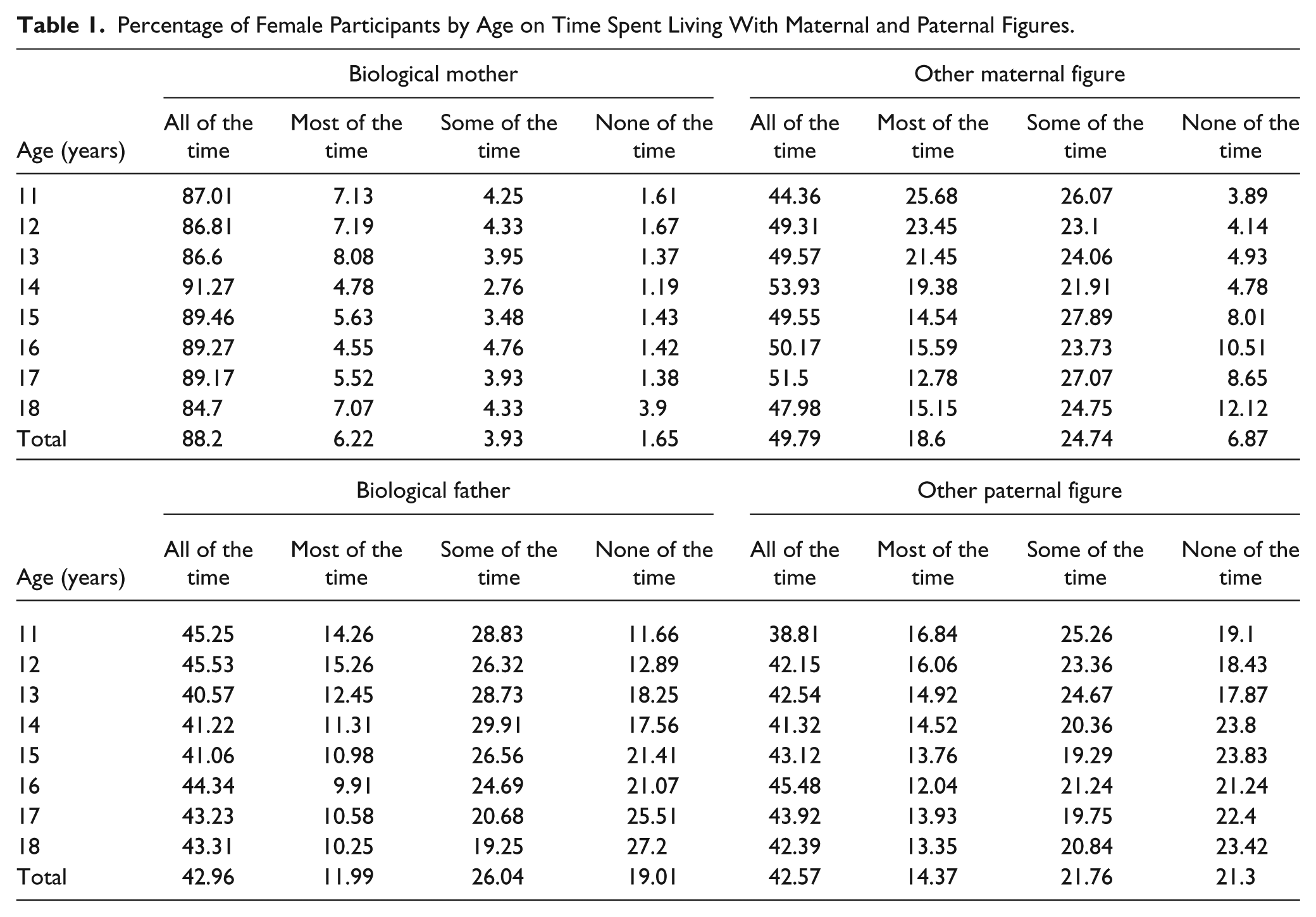
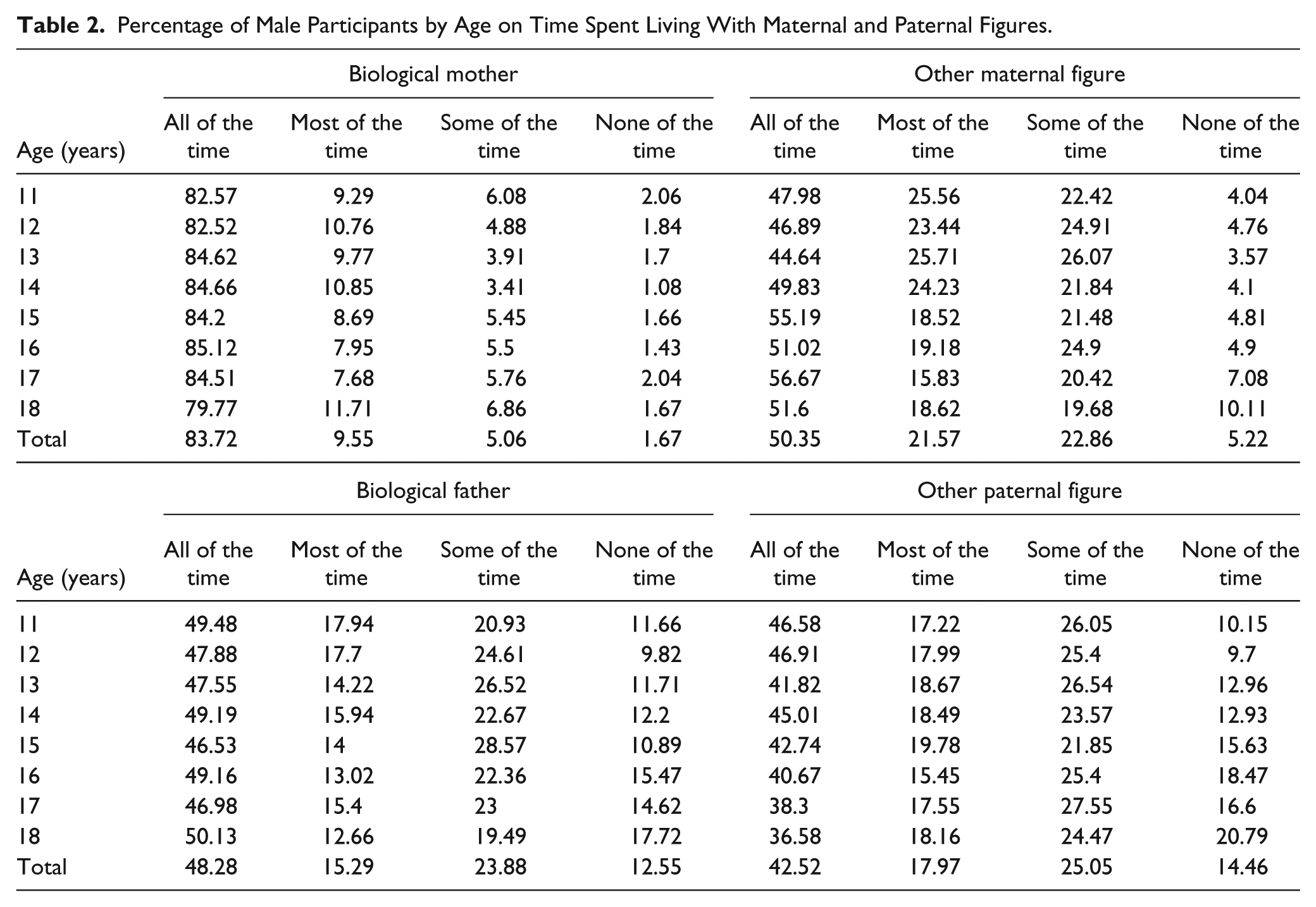
The current study contrasts two parent groups: biological parents versus alternative parental figures. These two groups consist of different parental types as identified by the adolescents in the MYS. However, the study does not differentiate between adoptive parents and biological parents. Adolescents in the current study identify the person “most like a mother/father.” When identifying a mother/father, we did not ascertain blood or adoptive relationship status. For clarity and consistency, we have used the term “biological parent” throughout to indicate the mother/father. Another maternal/paternal figure is used to indicate parent-like figures who are not the mother/father, though he or she may be related, as is the case when the adolescent identifies a grandparent. These terms do not guarantee the residency status of these adolescent–parent dyads. Although many participants did live with their self-reported parent figure, the identified individual, whether biological or not, may not reside with the adolescent and residency status may change over time. Tables 1 and 2 reflect preliminary data on residency and parental figure, though this is not explored in depth in the current study.
Percentage of Female Participants by Age on Time Spent Living With Maternal and Paternal Figures.
Percentage of Male Participants by Age on Time Spent Living With Maternal and Paternal Figures.
Measures
This analysis included reported parental figure, gender, and two measures of parental warmth: maternal and paternal warmth. All measures are derived from the adolescents’ self-reports on the MYS.
Reported Parental Figure
The reported parental figure factor is derived from two self-reported items: “Who is most like a mother to you?” and “Who is most like a father to you?” For each item, participants were given nine response options from which to select. For the current analysis, we dichotomized the coding of parental figure. Hence, for maternal figure (mother), biological mothers were coded as 1, with other reported mother figures coded as 0. For paternal figure (father), biological fathers were coded as 1 and other reported father figures coded as 0.
Demographics
Gender was a self-reported dichotomous variable with male coded as 0 and female coded as 1. Age is self-reported in years by the adolescents on the MYS and was centered at age 11 for ease of interpretation of parameter estimates in the models.
Parental Warmth
The parental warmth construct consists of two individual subscales: maternal warmth and paternal warmth. Both maternal warmth and paternal warmth were adapted from surveys developed by Lamborn, Mounts, Steinberg, and Dornbusch (1991) and Kerns, Aspelmeier, Gentzler, and Grabill (2001).
For maternal warmth, participants were asked to respond to the items while keeping in mind the person who they considered to be a mother figure (previously asked). Examples of these items include “I can usually count on her to help me out if I have some kind of problem” and “we do fun things together.” Participants were asked to agree or disagree to six items, coded as 0 and 1. A summative scale was created resulting in possible values ranging from 0 to 6, where higher numbers indicate more maternal warmth. Internal reliability for the adapted scale was adequate (α = .66).
Similarly, for paternal warmth, participants were given the same items with the same response options as they were to the questions about their mother figure, yet they were asked about the person who they considered to be their father figure. An identical summative scale was created for the six questions about their father figure, resulting in a scale with possible values between 0 and 6. Internal reliability for the adapted scale was good (α = .83).
Data Analysis
Two sets of analyses were considered to address Research Questions 1 and 2. For both sets of analyses, Singer and Willett’s (2003) suggestions for estimating random and fixed growth effects in longitudinal data were followed. First, the unconditional growth model (Model 1) was estimated for both dependent variables maternal and paternal warmth. This model is parameterized as follows:
Level 1:

Model 1—Level 2:


Age was centered at 11 years to aid in the interpretation of the parameters. Next, a full conditional growth model was created for both the dependent variables (maternal warmth and paternal warmth) separately. In this growth model, dichotomized parental figure was added to the Level 1 portion of the model as a time-varying covariate as both a main effect and an interaction with centered age. Additionally, random effects were estimated for the main effect. Dichotomized gender was then added to each of the Level 2 models. The parameterization of the full conditional growth model for the two dependent variables (Model 2) is as follows.
Level 1:

Level 2:

Model 2:



In both analyses of the conditional growth models, the full model was estimated and nonsignificant parameter estimates were removed one at a time through backward elimination (nonsignificant variables removed one at a time based on the lowest F statistic). For both dependent variables, the unconditional growth model and the full growth model with only significant parameters will be displayed. All the analyses were conducted using SAS PROC MIXED (version 9.3). In each model, the covariance matrix was allowed to be unstructured. To facilitate comparison of model fit, we used full information maximum likelihood.
While missing data are present in most longitudinal data, longitudinal growth models are preferred as their estimation is robust to missing data (Singer & Willett, 2003). Available data are utilized to estimate the aggregate parameters in the model at each age. Missing data points will affect the individual trajectories of the subject rather than the aggregate parameters that are reported in the results.
Results
Maternal Warmth
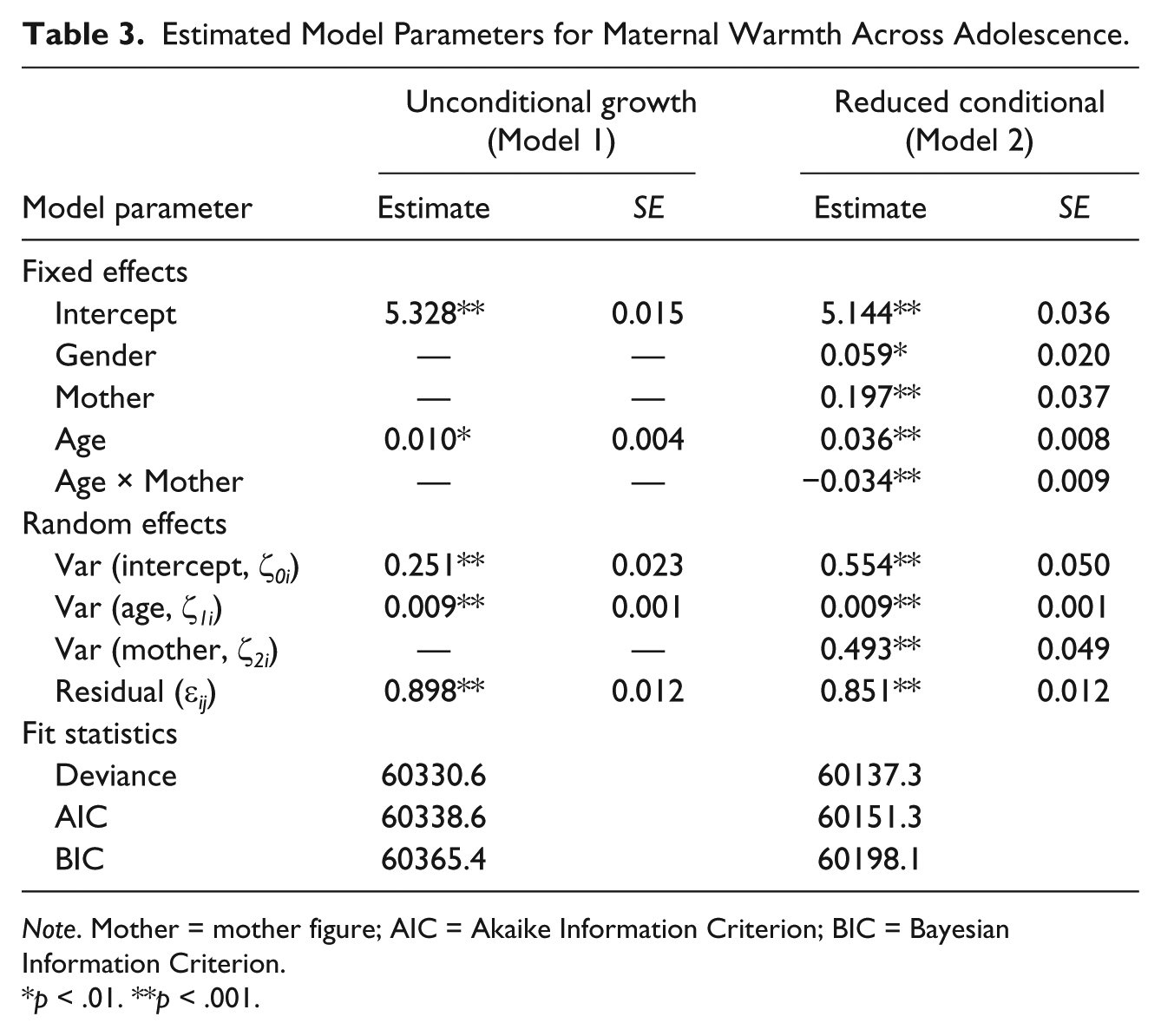
The unconditional growth model for maternal warmth over time was estimated first. Parameter estimates are shown in Table 3. Maternal warmth was significantly different from 0 at age 11, γ = 5.33, t(5981) = 355.04, p < .001. Additionally, there was a significant increase in maternal warmth over time, γ = 0.01, t(5791) = 2.71, p = .007. In this sample, the average maternal warmth was 5 (on a 6-point scale) at age 11, with significant increases as the adolescent ages.
Estimated Model Parameters for Maternal Warmth Across Adolescence.
Note. Mother = mother figure; AIC = Akaike Information Criterion; BIC = Bayesian Information Criterion.
p < .01. **p < .001.
Next, both gender and mother figure were added to the unconditional growth model, with nonsignificant parameter estimates removed through backward elimination. Significant parameter estimates are displayed in Table 3. The final model was a significantly better fit to the data compared with the unconditional growth model χ2(3) = 193.3, p < .001. The level of maternal warmth for males who did not report a biological mother at age 11 was significantly greater than 0, γ = 5.14, t(5981) = 144.02, p < .001. Overall, females with another maternal figure reported significantly higher levels of maternal warmth than males at age 11, γ = 0.06, t(7231) = 3.01, p = .003, and this effect did not change over time.
Levels of maternal warmth were significantly higher at age 11 for adolescents reporting a biological mother, γ = 0.20, t(1273) = 5.26, p < .001. The level of maternal warmth was relatively stable over time for those reporting a biological mother, γ = −0.03, t(7131) = −3.67, p < .001. Adolescents reporting another maternal figure reported lower levels of maternal warmth at age 11, yet the level of maternal warmth increased significantly throughout adolescence, γ = 0.04, t(5790) = 7.39, p < .001. This effect did not differ between the two genders.
To better visualize the estimates, trajectories are plotted in Figure 1. Adolescents who reported having a biological mother have higher maternal warmth at age 11 than those with another maternal figure, with the level of maternal warmth remaining stable over time. Adolescents who report having another maternal figure have lower maternal warmth at age 11; however, their maternal warmth increases over time. By age 18, those who indicate that they have a biological mother figure report similar levels of maternal warmth as those with another maternal figure. Females overall have higher levels of maternal warmth as compared with their male counterparts, with this effect remaining stable over time.
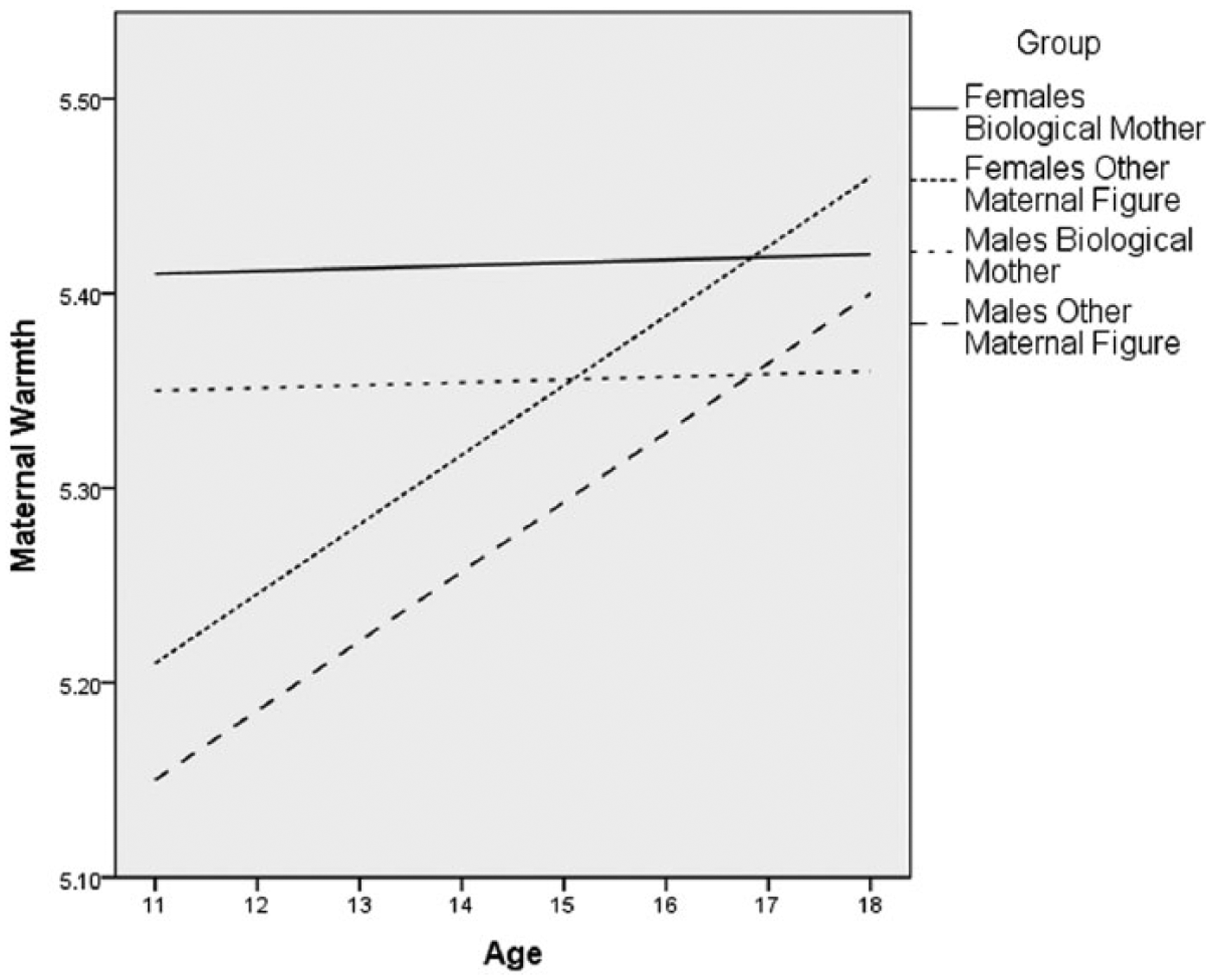
Trajectories of maternal warmth over time.
Paternal Warmth
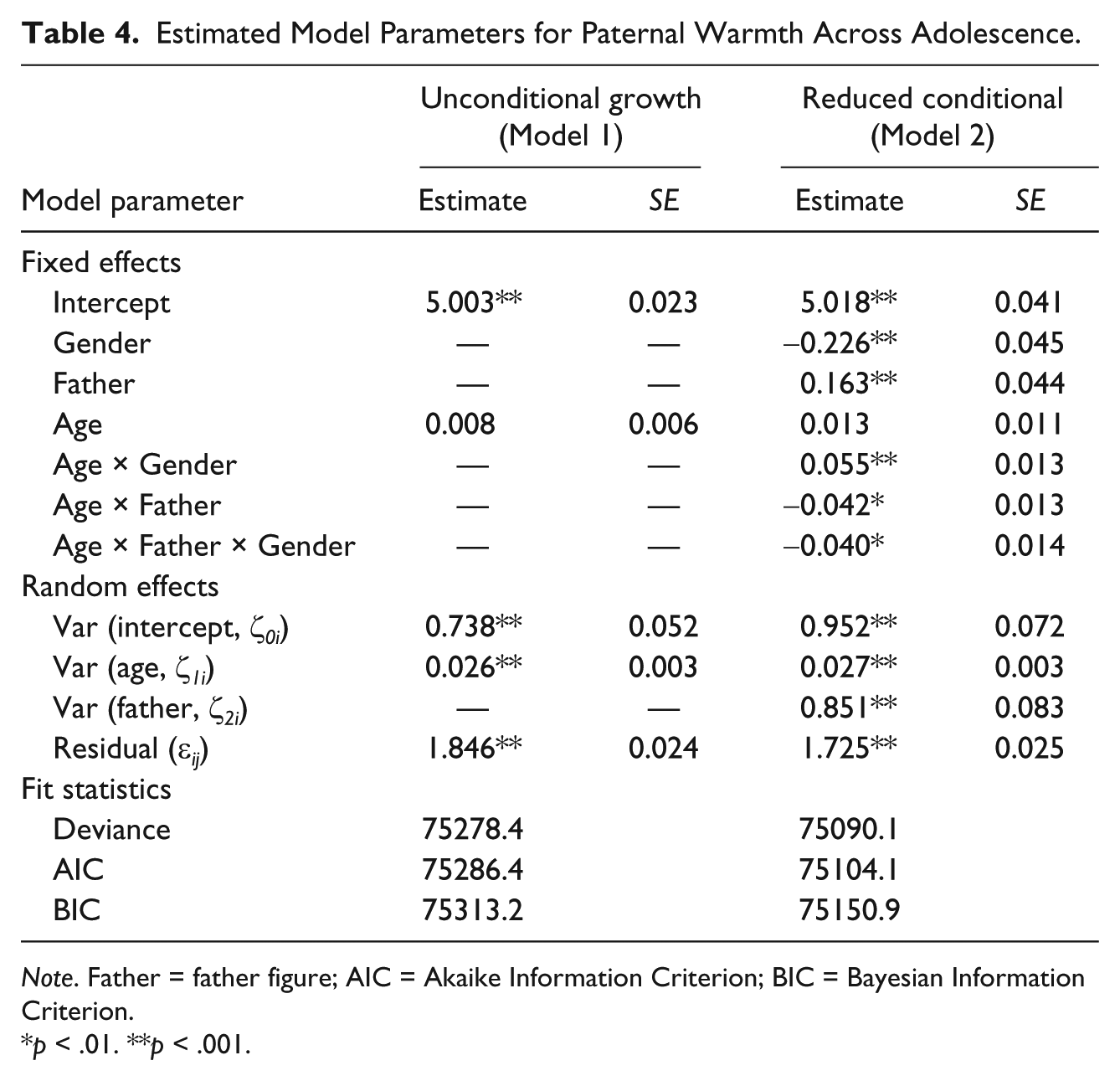
The unconditional growth model for paternal warmth over time was estimated first. Parameter estimates are shown in Table 4. Paternal warmth was significantly different from 0 at age 11, γ = 5.02, t(5982) = 220.74, p < .001. There were no significance changes in paternal warmth over time, γ = 0.01, t(5794) = 1.41, p = .160. In this sample, the average paternal warmth was 5 (on a 6-point scale) at age 11.
Estimated Model Parameters for Paternal Warmth Across Adolescence.
Note. Father = father figure; AIC = Akaike Information Criterion; BIC = Bayesian Information Criterion.
p < .01. **p < .001.
Next, both gender and father figure were added to the unconditional growth model, with nonsignificant parameter estimates removed through backward elimination. Significant parameter estimates are displayed in Table 4. The final model was a significantly better fit to the data compared with the unconditional growth model χ2(5) = 188.3, p < .001. The level of paternal warmth for males not reporting a biological father at age 11 was significantly greater than 0, γ = 5.02, t(5981) = 122.36, p < .001. Females with another paternal figure had significantly lower levels of paternal warmth than males at age 11, γ = −0.23, t(6870) = −4.99, p < .001. Levels of paternal warmth at age 11 were significantly higher for adolescents of both genders with a biological father, γ = 0.16, t(1590) = 3.72, p < .001.
In looking at change over time, there is not a significant change in paternal warmth over time for male adolescents with another paternal figure, γ = 0.01, t(5794) = 1.24, p = .216. Females with another paternal figure do show a significant increase in paternal warmth over time, γ = 0.06, t(6870) = 4.22, p < .001. Males with a biological father show a significant decrease in paternal warmth over time, γ = −0.04, t(6870) = −3.23, p = .001, while females with a biological father had a very slight decrease in paternal warmth over time, γ = −0.04, t(6870) = −2.93, p = .003.
To better visualize the estimates, trajectories are plotted in Figure 2. Both males and females with a biological father had higher paternal warmth at age 11 as compared with those with another paternal figure; however, the changes over time for these groups are significantly different. Females with a biological father had higher paternal warmth at age 11, yet showed a slight decrease over time. In contrast, females with another paternal figure had lower paternal warmth at age 11, yet exhibited a significant increase over time. Females with another paternal figure had higher paternal warmth at age 18. Males with a biological father had higher paternal warmth at age 11 and showed a slight decrease over time. Males with another paternal figure had lower paternal warmth at age 11, yet there was a significant increase in paternal warmth over time, leading to higher levels of paternal warmth by age 18.
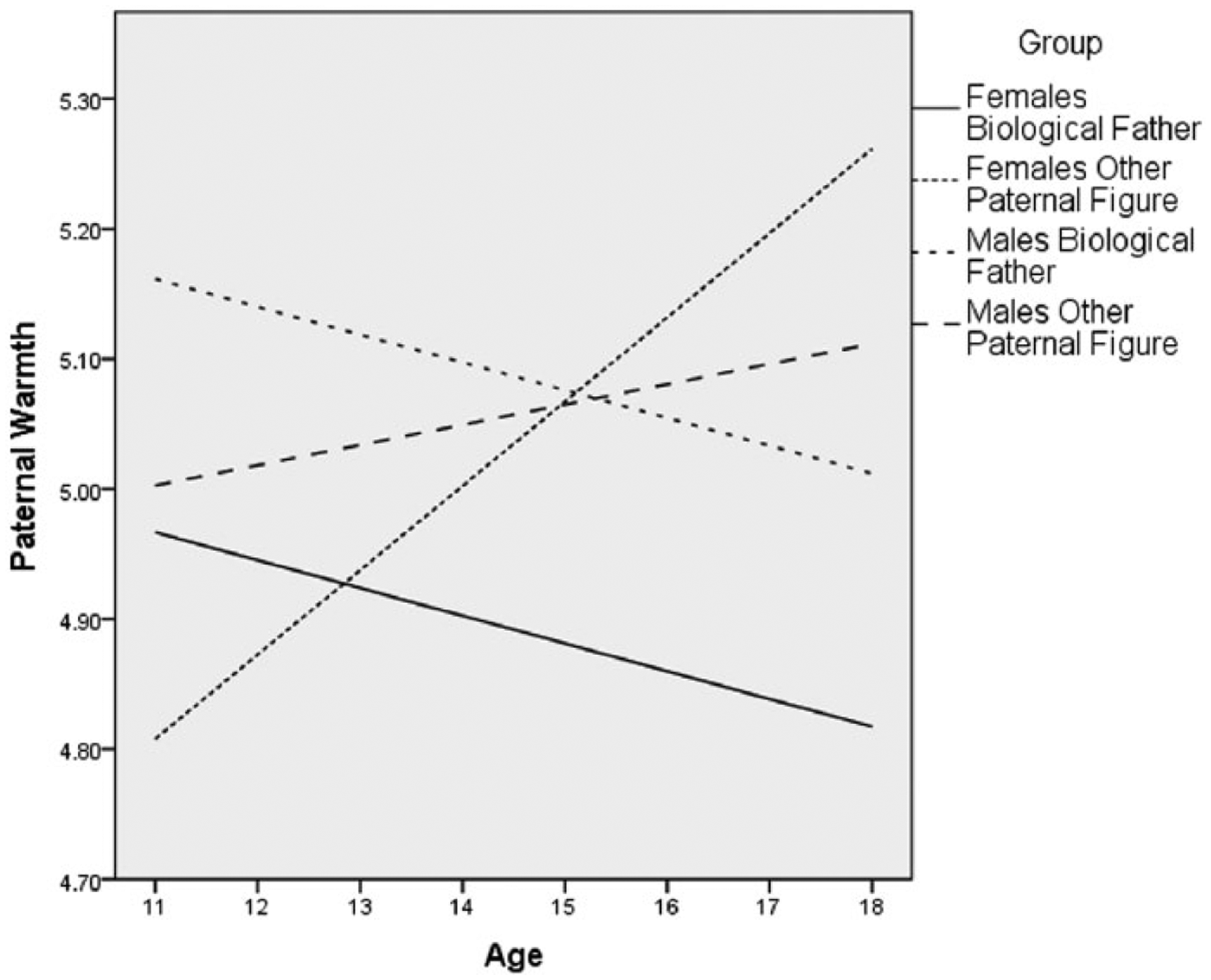
Trajectories of paternal warmth over time.
Discussion
The purpose of the current study was to examine differences in parental warmth among biological parents and other parental figures in a sample of adolescent Black American males and females. As expected, there were differences in parental warmth among adolescents’ biological parents and other parental figures. At younger ages, adolescents appear to perceive other parental figures less warmly than those who reported biological parents. These perceptions, however, become more favorable as the adolescent ages. That is, both maternal and paternal warmth are lower during early adolescence (ages 11-14), yet are significantly higher by age 18 for parental figures not identified as “mother” or “father.” Longitudinally, the association between parental warmth with biological mother figures and biological father figures was less consistent. Among male and female youth, maternal warmth was stable across time for biological mother figures, changing very little between ages 11 and 18. Conversely, male and female adolescents who related more closely to biological fathers perceived decreases in warmth between early adolescence and age 18.
Most youth in the current study already had high levels of parental warmth by age 11, and the emotional investment by both parental subsamples, regardless of relation, may serve to intervene, prevent, or at least mitigate risky behaviors at different times during adolescence. Those who identified a biological mother figure reported little change in expressions of maternal warmth over time. With the threshold of supportive—nonsupportive maternal warmth unknown, those youth not receiving “enough” warmth were not likely to see increases over time. Nevertheless, prior studies have demonstrated that economic pressures, such as the high poverty seen in the MYS sample, could strain the parent–child relationship (Barnett, 2008; Conger et al., 2002). Given these high economic pressures, biological mothers should be commended for maintaining high levels of maternal warmth across time. Other maternal figures likely experienced the same pressures, and maternal warmth actually increased pointing to the strength and resiliency, of Black American mothers and mother figures living in poverty.
The decline in paternal warmth among biological father figures when compared with other paternal figures is intriguing, and may be representative of a larger trend of absentee fatherhood—often but not always—seen in poor communities (Cheadle, Amato, & King, 2010). Still paternal warmth when fathers are present is an important predictor of positive outcomes (Veneziano, 2003). A decrease in paternal warmth is not necessarily indicative of negative adolescent outcomes, though prior evidence does demonstrate that greater warmth is associated with more positive outcomes (Operario et al., 2006; Steinberg, 2001). Because paternal warmth decreased in child–biological father dyads over time, there may well be a similar increase in negative outcomes for adolescents over time. Any negative effects may, however, be offset by the relationship established between the adolescent and biological father in early adolescence when paternal warmth was higher.
While parent–child relationship quality is lower in stepfamilies (Dunn et al., 2005; Fine et al., 1993), extending those findings to cases where adolescents have embraced another parental figure may be premature. Warmth among other maternal and paternal figures increased over time when compared with biological parents. Moreover, MYS youths reported a good deal of male involvement in their lives, which is counter to previous reports of limited father contact in poor black neighborhoods (Amato, Meyers, & Emery, 2009; Cheadle et al., 2010). This may represent greater family effort to raise youth in these neighborhoods (Jarrett, Jefferson, & Kelly, 2010; Miller-Cribbs & Farber, 2008), even though parents have limited economic resources (Cain & Combs-Orme, 2005).
Significant gender differences were found among paternal warmth for males and females with another paternal figure. While females reported lower levels of warmth than males during early adolescence, there were rapid increases in paternal warmth for females compared with a more gradual increase among males. By age 15, females perceived greater levels of paternal warmth than their male counterparts. Perhaps, as females mature, these father figures begin to play a larger role in their upbringing. It is also possible that paternal figures related more easily to their daughters in later adolescence. Males tend to engage in delinquent behaviors at an earlier age than females and continue engaging in such behaviors longer than females (Church et al., 2012). Thus, father figures may also be engaged with male children early in an active attempt to reduce risky behaviors and later engaging with female children when the risk of similar behaviors is greater.
Limitations and Strengths of the Study
This study has several limitations worth noting. The reliability score of the maternal warmth scale for the selected sample is lower than what is commonly accepted. One reason for the lower reliability is most likely due to the dichotomous nature of the response options for the items measuring parental warmth. The sample was composed of primarily Black American youths (93.5%). Although this is a limitation with respect to generalizability, the homogeneity is also a strength in terms of the internal validity of the conclusions. Only 54% of the observations included in this analysis indicate that their father figure is their biological father, compared with 78% indicating their mother figure is their biological mother. This may be emblematic of a larger trend of absent and limited contact in fatherhood (Cheadle et al., 2010), and may also be representative of a larger sampling bias. On the other hand, in the current study, there were a greater number of male parent figures (biological or otherwise) than female parent figures. As previously mentioned, this is a study of the adolescents’ perceived parental figure, but does not account for the residence of the identified mother or father figure. Therefore, it is possible that adolescents in the study identified a mother or father figure who was not their primary, residential caregiver. Finally, the mean parental warmth scores are consistently high throughout participation in the study, limiting the potential range. In asking children to think about the person who most fulfills a mother (or father) role in their life, children likely think about the persons they have the most positive relationship with, resulting in limited range and high mean warmth scores.
Beyond the strength of the methodology used, many other strengths are worth noting. First, this study is unique in its examination of parental warmth among both biological and other reported parental figures. With its exclusive focus on the parent–child relationship across time, this study adds to what is known about the importance of parent–child relational quality and family structure. The population from which the sample is derived is unique in that the participants are predominantly Black American and live well below the poverty line in low-income housing areas. This homogeneity of the sample gives greater insight into the parent–child dynamics of families living under these conditions.
Implications
The quality of parent–adolescent relationships is clearly important. A large number of impoverished youth often reside with other parental figures like grandparents or other adults rather than their parents (Bachner, 2011; Joslin & Brouard, 1995; Pinson-Millburn, Fabian, Schlossberg, & Pyle, 1996). While some youth inevitably live with other caregivers due to negative family structures, contexts, or adversity (e.g., divorce, abuse, neglect, or changes in family situation), youth may identify adults as parental figures for any number of reasons. This study indicates that youth who identify with another parental figure are likely to experience lower parental warmth in early adolescence. Further research is needed to ascertain how adolescents form relationships with other parental caregivers, and why some tend to exhibit more warmth overtime.
It is unclear if decreasing levels of paternal warmth among biological fathers resulted from a lack of emotional investment by the parent or because of some specific characteristic unique to the adolescents. More research is needed to understand how the timing of parental warmth shapes adolescent outcomes. Differing warmth trajectories suggest the potential for different adolescent outcomes, especially in the case of male caregivers. How these types of parental figures each affect adolescent outcomes is uncertain, but it is clear that they affect youth at different points in the life span. Parent–child relationship quality is associated with youth outcomes (Cox & Harter, 2003), and professionals working with youth from poor communities should be cognizant of potential changes in parent–child relationships. Adolescents with a biological father may require different services and at different points in time than adolescents with another father figure. For example, adolescents with another paternal figure may require family reunification or putative father services, mentoring (i.e., big brothers, big sisters), or psychosocial and/or therapeutic supports. Results of this study also found maternal figures maintained or increased warmth across time. While we postulate this may be due to resilience among low-income maternal figures, there is little research on resilience and parenting behaviors of low-income mothers. Given the socioeconomic strains experienced by this population, this is an important area of further consideration.
This study is not an endorsement of gendered parenting per se (cf. Biblarz & Stacey, 2010), but an examination of differences that exist when male and female youth report an alternate or secondary parental figure. Clearly, differences exist when adolescents embrace another parental figure when compared with a biological parent. Additionally, gender differences can be seen in growth trajectories among paternal warmth for biological fathers. While the circumstances that differentiate these two groups are yet unknown, we contend—preliminarily—that biology appears to matter.
Footnotes
Declaration of Conflicting Interests
The author(s) declared no potential conflicts of interest with respect to the research, authorship, and/or publication of this article.
Funding
The author(s) received no financial support for the research, authorship, and/or publication of this article.