



Abstract
Using data from the Household, Income, and Labour Dynamics in Australia (HILDA) Survey, we examine whether living in jobless families where parents devote more time to household work shields children against their own joblessness in the future. We draw on a representative sample of young adults who were aged between 4 and 17 years in 2001 and lived with both parents through to 2007 (N = 1,852). A series of mixed-effect regression models suggest that dual-parent joblessness is associated with an increase in families’ overall household production. The extra household work of fathers has a moderating role on young people’s later joblessness in young adulthood; young adults raised in households in which fathers increase their household work time during jobless periods are less likely to themselves become jobless as adults. This effect is not found if mothers increase their household work time.
Parental employment is a key predictor of children’s later life achievements. Children who live with one parent, either unemployed or on welfare, are likely to have lower educational attainment, drop out of school, become unemployed, and have low earnings as adults (e.g., Brand & Simon Thomas, 2014; Kalil & Ziol-Guest, 2008; Mooi-Reci & Bakker, 2015; Oreopoulos, Page, & Stevens, 2008). The traditional approach in the literature has been to focus on the unemployment or joblessness experiences of just one parent and investigate the ensued socioeconomic outcomes of their children. In more contemporary work, a small number of studies have focused on the joint contribution of parents’ joblessness, suggesting that children raised in households in which neither parent is employed, as distinct from just the father or the mother, are far more likely to attain lower levels of education and experience increased poverty as adults (Curry, Mooi-Reci, & Wooden, 2019; Macmillan, Gregg, Jerrim, & Shure, 2018; Schoon, 2014). Findings from this latter group of studies are particularly relevant in an era with a more modern emphasis on dual earners where both parents are more likely to be exposed to overlapping periods of joblessness than in the past.
Yet surprisingly, the intergenerational relationship between whole-of-household joblessness (as distinct from the joblessness of just one parent) and the future employment prospects of children is still in its infancy despite the increasing use of household joblessness as an indicator of extreme childhood disadvantage (e.g., Bradshaw & Main, 2016; de Graaf-Zijl & Nolan, 2011). Furthermore, relatively little is known about factors that might moderate the link between jobless parents and their children. Particularly useful would be identifying within-household factors that perform a protective function and reduce the association between parents’ joblessness and that of their children. One such moderator could be living in jobless families where parents devote more time to household work. Seeing their parents engage more in household work may mean children develop more positive attitudes about productive labor. Household work could also mitigate financial stress (for example by substituting homegrown vegetables for market purchases) and shield children from more extreme deprivation. More parental household labor could reflect self-reliance and initiative, and thus model to children attributes likely useful in later seeking employment. Thus, higher parental household work in jobless households could lessen children’s probability of themselves becoming jobless as adults. In this paper, we test this possibility for the first time and ask three interrelated central questions: (a) To what extent does joint parental joblessness influence the amount of time that parents devote to household work? (b) Does joint parental joblessness lead to adjustments in the type of household activities performed by mothers and fathers? (c) Are children who live in jobless households in which fathers and/or mothers are more engaged in household work better protected against their own joblessness in the future?
We make three major contributions to current literature. First, we test whether parents’ household work plays a moderating role on the joblessness of their children as young adults, using a measure that captures the proportion of time during which both parents were jobless during children’s key developmental years. This allows us to capture the intensity of dual-parent joblessness more precisely than previous studies that measure the duration of parents’ joblessness at a single point in time and usually at some fixed age of the child (e.g., Macmillan et al., 2018; Schoon, 2014). Note, we use the terms young adults, respondents and children interchangeably in this study. Second, we advance extant theories about household work. Most of these theories rest on assumptions about how spouses’ paid work shapes their division of household labor. Here we directly focus on the gendered division of labor in the context of dual-parent joblessness, that is, where neither spouse does paid work. This allows us to provide new insights on how parents allocate their time in periods when neither is employed. Third, the small literature on the link between unemployment and the gendered division of labor has solely investigated households with unemployed spouses, focusing primarily on female-typed tasks (Gough & Killewald, 2011; Strom, 2002). So, if jobless fathers concentrate on male-typed tasks, this previous research very likely underestimates the amount of time that they devote to household work. We address this research gap by measuring a broad spectrum of household activities, encompassing the total time that parents devote to household errands, caring for their children, and in outdoor and maintenance tasks, in addition to housework tasks related to cleaning, ironing or preparing meals. We, therefore, refer to “household work” and “household production” (interchangeably) throughout this paper, rather than use the narrower term “housework”. The encompassing definition provides a more balanced view of parents’ household engagement, allowing us to determine more accurately than prior research how the domestic input of each gender is affected by dual joblessness.
Household Work in the Context of Joblessness
Theories on Household Work Division and Parental Joblessness
Women still generally do a much larger share of household work than men (Bianchi & Milkie, 2010; Monna & Gauthier, 2008; Sullivan & Gershuny, 2018). Most explanations for why there are gender divisions in domestic work relate directly or indirectly to the labor market. Becker’s (1981) influential economic theory of the family posited that overall household utility was maximized by gender specialization, with men having a comparative advantage in doing paid work and women a comparative advantage in doing unpaid work. The gender division of labor was also thought to be a “rational” response to differences in men’s and women’s time availability outside paid work hours (Becker, 1981). That is, if men work longer paid work hours than women, they have less time to devote to household duties (Aassve, Fuochi, & Mencarini, 2014; Bianchi & Milkie, 2010; Shelton, 1992). Second, the relative resources approach argued that if one partner (historically more usually the man) has higher earnings or more education than the other partner, they would also have more bargaining power to avoid domestic chores (Blau, Ferber, & Winkler, 1998; Parkman, 2004).
These theories failed to explain why the higher education and increased labor market participation of women over recent decades were not matched by equivalent growth in men’s domestic work within households (Aassve et al., 2014; England, 2003; Folbre, 2004; Nelson, 2006; Sayer, 2016). Over time, the body of research on divisions of labor has confirmed that rather than workforce participation or other characteristics, the most consistent and powerful predictor of housework time is gender (see overviews by Bianchi & Milkie, 2010; Lachance-Grzela & Bouchard, 2010; Monna & Gauthier, 2008). Research exploring how this comes about showed that gender ideology and socialization are relevant (Connell, 2006; England, 2010), and the “doing gender” approach further argued that gender is constructed, recreated, and reinforced through everyday interaction (West & Zimmerman, 1987, 2009). How men and women “do” or “undo” gender is underpinned by the accountability they feel for behaving in ways consistent with prevailing cultural beliefs about masculinity and femininity (Connell, 2009; Ridgeway & Correll, 2004; West & Zimmerman, 2009). This suggests women do more housework and childcare because they feel accountable for these tasks as a wife and mother, whereas the tasks are not central to men’s self-conception as a good husband and father (Baxter, 2002; Bianchi & Milkie, 2010). This approach implies that men and women may perform gender-stereotyped tasks as a form of display, with some research suggesting that those in households with nontraditional paid work arrangements (such as women out-earning their partners) neutralize the “gender deviance” of male economic dependency by being even more traditionally masculine or feminine in their unpaid work time (Bittman, England, Sayer, Folbre, & Matheson, 2003; Brines, 1994; Greenstein, 2000).
Deviance neutralization in relation to earnings does not occur consistently (see, e.g., Gupta, 2007; Kan, 2008), but it could be particularly relevant when men are unemployed. In this view, an unemployed wife may pour additional time into housework because performing it is normative for women, whereas an unemployed husband may avoid housework, because it would deepen his deviation from the socially normative male role of breadwinner (Brines, 1994; Greenstein, 2000). This may be particularly in relation to female-typed tasks, such as washing, cleaning, or ironing, which are most likely to threaten masculine self-conception (Baxter, 2002). Deviance neutralization raises the possibility that gender differences in housework time would be especially wide in jobless households. Housework divisions in the context of joblessness have received little attention in the literature, but there are some exceptions. Gough and Killewald (2011) found that unemployed husbands whose wives were in the workforce did more housework than those whose wives were not employed. Sara Strom (2002) similarly found that non-employed men and women with employed partners were significantly more active domestically. However, Strom also found that if both partners were not employed, men did no more unpaid work than their full-time employed counterparts, whereas women did (Strom, 2002). Thus, taken together the research suggests that both men and women will do more housework if they are economically dependent on the others’ earnings, but that in jobless households more traditional gender patterns prevail.
Gough and Killewald (2011) made a further relevant argument. They contended that seeing unemployment in terms of how it might change the gender division of housework in relative terms misses the crucial point that unemployment of either spouse likely means more household labor will be performed overall. They note that unemployment reduces both the opportunity cost of housework and the ability to pay for housework substitutes (p. 1098). This alerts us not only to the ability of jobless families to increase their total time in household production but also to the possibility that doing so may mitigate the negative impacts of being unemployed. There are multiple ways this mitigation of negative outcomes could occur. Unemployed people have more time available than those who are working, and therefore less constraint upon devoting it to household labor. Lack of paid work would relax scheduling constraint and allow more time for household production, which has been shown at population level to rise in times of economic downturn (Aguiar, Hurst, & Karabarbounis, 2013; Burda, Hamermesh, & Stewart, 2012). Within households, more household labor could compensate for some of the material and social deprivations associated with joblessness. For example, to cut down on food costs, families could cook meals from scratch or do home baking and preserving, and if fortunate enough to have access to a garden, grow their own vegetables (Burda et al., 2012). They could spend time to source cheaper goods, or to exchange services such as babysitting, gardening, or lawn mowing with neighbors (Aguiar et al., 2013; Folbre, 2001). Doing more household work could also generate psychological benefits for parents. Unemployment is associated with lower mental and physical health and higher emotional distress (Parkman, 2004; Waters & Moore, 2002), and domestic work could enhance feelings of efficacy and self-worth. For men, this may be particularly so if they spend more time in male-typed tasks such as home repair, carpentry, painting, or gardening, as in contrast to indoor housework these activities are likely to be compatible with their sense of masculinity (Baxter, 2002). Thus, some forms of domestic participation could allow jobless fathers to (re)gain self-confidence and a sense of usefulness, with likely associated benefits for whole-of-family functioning.
More home production could also include higher time investment in childcare, which many believe directly enhances children’s well-being and social and intellectual development (Craig, Powell, & Smyth, 2014; Lareau, 2003; Sayer, 2005). Children benefit from both mother and father involvement (Biddulph, 1988; Doucet, 2004; Lamb, 2008). Parental engagement shapes children’s later life outcomes, including mental health, social connectedness and educational attainment, with research suggesting fathers’ input is particularly important, perhaps because it is more contingent than mothers’ (Flouri, 2005; Flouri & Buchanan, 2002; Sarkadi, Kristiansson, Oberklaid, & Bremberg, 2007). Parents directing more effort into household work could also generate long-term benefits for children by modeling greater self-sufficiency and domestic enterprise, and thus instilling habits and attitudes that mitigate the likelihood their children will themselves be unemployed as young adults. In line with the research above, it may be that such positive role modeling would be more effective if done by men, because they usually enjoy more domestic power (Connell, 2009; McMahon, 1999), and their domestic involvement is rarer than women’s (Bianchi & Milkie, 2010; Monna & Gauthier, 2008). Witnessing their non-employed fathers do household work may influence children more profoundly than domestic labor performed by women, precisely because it is less normative. In general, girls and boys echo the domestic labor patterns of their same-sex parents (Cunningham, 2001; Evertsson, 2006), so there is a possibility that sons may be more influenced by fathers and daughters by mothers. However, father involvement has been found to improve later life outcomes for children of both genders (Flouri & Buchanan, 2002), so their higher domestic contribution could also similarly affect both sons and daughters.
Social Context around Parental Joblessness in Australia
Gender role attitudes and social supports for unemployment vary cross-nationally, so research into joblessness and household labor should be situated in context. This paper draws on information from Australia, which is usually classified as a “liberal” welfare state, with a residual social safety net, particularly in relation to unemployment. Australia has experienced low economic growth since 2008, and although headline unemployment is not low, there is widespread underemployment, with an average of 8.5% working fewer hours than they would prefer (ABS, 2016). Wage growth has stagnated (ABS, 2017) and is currently at the lowest share of GDP since data were first collected in 1959 (Stanford, 2017).
Australian gender patterns in paid work and household labor are fairly traditional. There has been growth in female employment and educational attainment, yet the incidence of female part-time work is high, and average female working hours are low in world terms (Craig, Mullan, & Blaxland, 2010; Gornick & Meyers, 2003; OECD, 2016). A high normative value is placed on family care of children, and the gender division of labor in male breadwinner and dual earner families is wider than in comparable countries (Craig & Mullan, 2010; OECD, 2016). Studies investigating gender deviance neutralization in relation to spouses’ relative earnings have found more support for the theory in Australia (Baxter & Hewitt, 2013; Bittman et al., 2003) than elsewhere (Gupta, 2007; Kan, 2008; Sullivan, 2011). Housing is very costly, especially in the major cities, and homelessness is a growing social problem, including for families with children. Families that are jobless are likely to be under very considerable financial strain, with payments for Newstart, the government unemployment benefit, extremely low at $538.00 per fortnight. Recipients are subject to strict job seeking requirements. OECD data, 1 for example, shows that the average net replacement rate over a 60-month period for a married couple with two children that does not qualify for cash housing assistance or social assistance “top ups” dropped from 73% in 2001 to 66.9% in 2015.
Expectations
Overall, in the Australian context, jobless households would have strong financial incentives to supplement their income or avoid expenses by increasing household production, so our first expectation is that dual parental joblessness will increase the amount of household work. To investigate this, we combine all household activities in our measure of overall household work. We expect both jobless fathers and mothers to increase their household work, but given that on average Australian views and practices in relation to domestic roles remain traditional, our second expectation is that women in jobless families will do more female-typed tasks, such as childcare, cleaning, cooking, and laundry, and men in jobless families will do more male-typed tasks, such as carpentry, car repair, or ground maintenance. We, therefore, also investigate the link between dual-parent joblessness and hours spent in each of four specific types of household activities separately (i.e., indoor and routine housework; household errands; outdoor tasks; childcare). Our third expectation is that in those jobless families in which parents do perform more household work, children will be less likely to become unemployed in later life. We expect this moderating influence to be particularly the case if fathers do more household production, because household labor is more normative for women than for men. For this reason, we expect that the domestic participation of jobless fathers will influence the later employment of their children more than the domestic participation of jobless mothers will. We investigate whether any associations differ by the gender of the children.
Method
Data and Sample
Data for this study come from the Household, Income, and Labour Dynamics in Australia (HILDA) Survey (see Watson & Wooden, 2012), which is a nationally representative household panel study that surveys over 17,000 adult individuals (at the age of 15 and beyond) living in households across Australia on a range of topics including education, labor market histories, and family dynamics. The HILDA Survey’s household panel design across 15 waves allows us to measure couple parents’ employment contemporaneously during our respondents’ childhoods, as opposed to asking young adults retrospectively about their parents’ prior employment.
Our analytic sample consists of all young adults born between 1984 and 1997. Because we are interested in examining the effects of dual-parent joblessness during childhood and adolescence in dual-parent households, we first match the adult children we select as respondents to both their biological, adoptive, or stepparent(s) interviewed in one of the waves over the period 2001–2007 in the HILDA Survey. Next, we measure joblessness for those young adults that reported a valid labor force status during 2008 through to 2015, were at least 18 years old during this period, and were not in full-time education. This leaves us with 1,852 observations at the person-year level, spread across 577 pairs of mothers and fathers, and 835 young adults with on average 2.2 employment observations over the period 2008 to 2015 (range between 1 and 7 observations).
Measures
Household work
The key outcome variable of interest for our first set of models is the average number of hours that mothers and fathers engaged separately in a set of four household tasks when co-residing with their children over the period 2001 to 2007. Both parents were asked at the time of the interview: “How many hours would you spend on each of the following activities in a typical week?” (a) “doing household errands (such as shopping, banking, paying bills, and keeping financial records (but do not include driving children to school and to other activities)”; (b) “playing with your children per week (helping them with personal care, teaching, coaching or actively supervising them, or getting them to childcare, school and other activities)” (hereafter called “childcare”); (c) “outdoor tasks per week (including home maintenance repairs, improvements, painting, etc., car maintenance or repairs, and gardening)”; (d) “housework per week (such as preparing meals, washing dishes, cleaning house, washing clothes, ironing, and sewing)”. Each parent provided estimates of hours spent on each of the four tasks. Next, we averaged the responses over the four separate items and created an index for household work that reflects the weekly average hours devoted to each household task per week for mothers and fathers separately. In the second set of models, these two separate indices will be interacted with the proportion of parental joblessness to predict the moderating role of parents’ household engagement on their young adult children’s joblessness.
Young adult joblessness
The key outcome variable for the second set of analyses is young adults’ joblessness, which includes spells of both unemployment and inactivity. This is a dichotomous measure that takes a value of 1 if the respondent ever experienced a spell of joblessness during the survey period 2008–2015 and 0 if otherwise (recall that we excluded those in full-time education). Reasons for unemployment can be redundancy, abolition of a position, plant/firm or business closure, slack work, and/or poor work performance. Inactivity is more likely related to personal reasons including (spouse) relocations, short-term disability or injury, and/or childcare. As shown in Table 1, averaged over the period 2008–2015, about 19% of young adults in the sample experienced a spell of either unemployment or inactivity during the observation window 2008–2015. This proportion may be considered high given cross-sectional data showing that jobless-population ratios for young people (15–29 year old) during our study period 2008–2015 were 11.8% in Australia (OECD, 2018). However, our dependent variable also measures recurring jobless spells. In our sample of young adults, for example, 5.9% of respondents between the ages of 18 and 26 years experienced two or more jobless spells during the study period.
Descriptive Statistics: Means and Standard Deviations (SD).
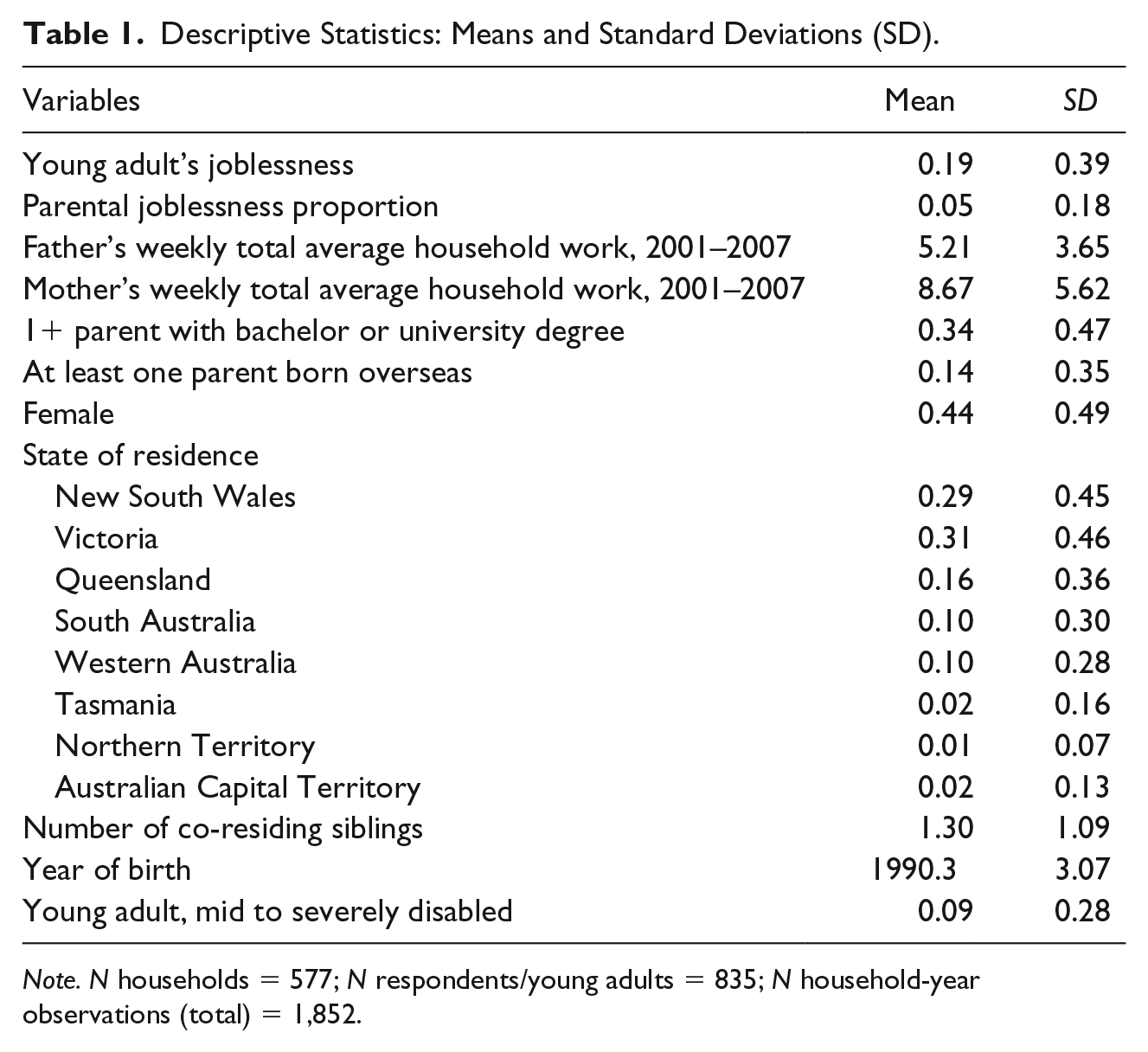
Note. N households = 577; N respondents/young adults = 835; N household-year observations (total) = 1,852.
Proportion of dual-parent joblessness
To create this principal explanatory variable, we use the HILDA Survey’s “calendar data”, which has information on the employment history of respondents’ parents. Again, as for the measure for young adult’s own joblessness, we make no distinction between parents’ unemployment or inactivity spells, as we wish to highlight the adverse effects of growing up in households where co-resident parents are both jobless irrespective of parents’ reasons for not being employed. Out of all the time that parents’ employment status was observed over the period 2001–2007, we measure the proportion during which both parents were jobless at the same time, when the respondent was between 4 and 17 years old. In doing so, we count only the fraction of time in which either parent was jobless. This results in a proportion variable ranging from zero to one, with reference-category households having at least one employed parent between 2001 and 2007. This reference category includes families in which the father is employed and the mother is a homemaker. Of all the families included in the reference category, 48.8% are dual earner, 41.1% are “male breadwinner” families, and 10.15% of the families show a nontraditional pattern with the mother employed and the father taking care of the household.
The proportion of respondents that grew up in families where there was always at least one employed parent was 82%. This, in turn, means that 18% of the young adults (respondents) in our sample were exposed to some level of dual-parent joblessness during their pre-adult life over the period 2001–2007. However, the extent of exposure to cumulative parental joblessness is very different among this group. Figure 1 shows that most young adults (59%) were exposed to dual-parent joblessness for 12 months or less, but that a considerable share (16.5%) experienced very long exposure of 4 years or more.
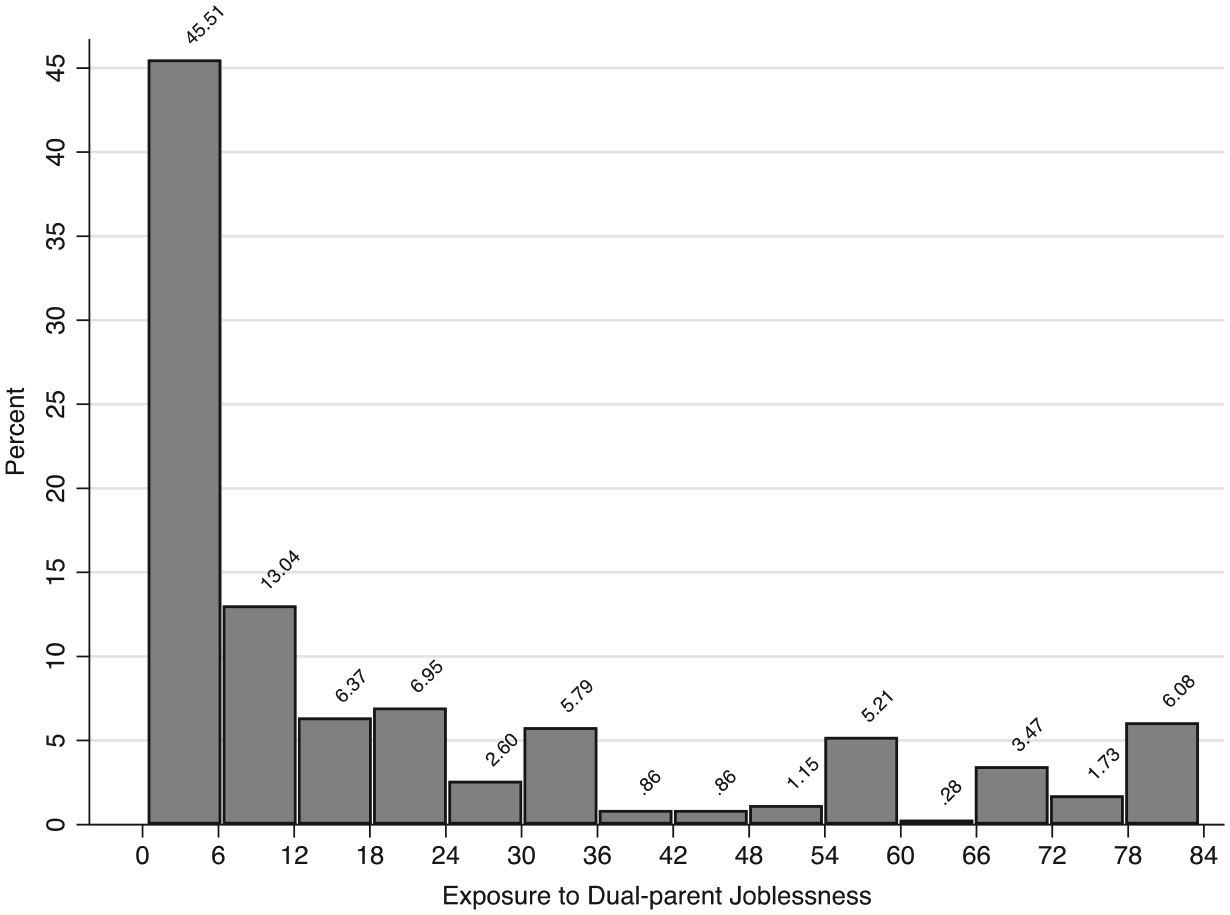
Level of exposure to dual-parent joblessness, Australia, 2001–2007.
To capture parents’ socio-economic standing, we include their highest attained education levels by means of a set of dummy variables that vary between lower than 11 years of education; secondary school; certificate III and IV, and bachelor or university degree. We also include parents’ nativity (1 = at least one parent was born overseas; 0 = Australia) to account for cultural differences that influence the household division of labor. Other variables included are gender of the young adult respondent (1 = female; 0 = male); eight dummies indicating the state in which the respondent grew up (New South Wales; Victoria; Queensland; South Australia; West Australia; Tasmania; Northern Territories; ACT), respondent’s year of birth (range from 1984 to 1997); the number of co-residing siblings (range from 0 to 5 or more), respondent’s nativity (1 = born overseas; 0 = Australia), reported health status of respondent (1 = “fair or poor”; 0 = “excellent, very good”), and the survey year (range between 2008 and 2015). Note that we do not control for variables that are likely to be endogenous with parental joblessness such as parental occupation or family income. In so doing, we estimate the total average effects of parental joblessness rather than the residual effect that remains after controlling for these other possible pathways. A similar analytic strategy was followed by Gough and Killewald (2011). Table 1 contains the descriptive statistics.
Analytical Strategy
The behavior of different household members is not independent. To account for this interdependency among parents and their co-residing children, we apply a series of mixed effects regression models, also known as multilevel models. Essentially, mixed effects models combine the intercepts of each family member into a single-family intercept, which is unique for each family and has a different starting point (i.e., a random intercept). The random intercept represents omitted variables at the level of the family (e.g., community, school, neighborhood effects) that make some children more prone to future joblessness than others. The slopes control for other factors that are expected to influence young adults’ joblessness probabilities and are fixed. In doing so, the model captures individual specific deviations from the grand family-specific mean.
Results
Figure 2 shows fathers’ (left) and mothers’ (right) amount of household work over the different proportions of dual-parent joblessness. As expected, mothers, whether jobless or not, spend on average more hours in home production than fathers. For example, in households in which both parents are employed, mothers spend on average 8 hours on a household task per week. Fathers in equivalent households spend on average about 5 hours on a household task per week. The amount of time that mothers spend in household work increases exponentially with the proportion of dual-parent joblessness. That is, the higher the proportion of time between 2001 and 2007 that the household experiences dual-parent joblessness, the higher the average number of weekly hours that mothers engage in household work. Mothers’ increased housework time is higher among households where parental joblessness is more sustained (>50%). Additionally, Figure 3 demonstrates a positive link between the household work time of jobless fathers and the proportion of dual-parent joblessness. Interestingly, and unlike mothers, fathers’ increasing housework time flattens amongst the households with more severe dual-jobless spells (i.e., where dual-parent joblessness is >50%). This translates into a wider overall gap in the housework time between mothers and fathers among the households that are jobless longest than other households, including those in which at least one parent is employed.

Average weekly household work hours over the proportion of dual-parent joblessness, by fathers and mothers.
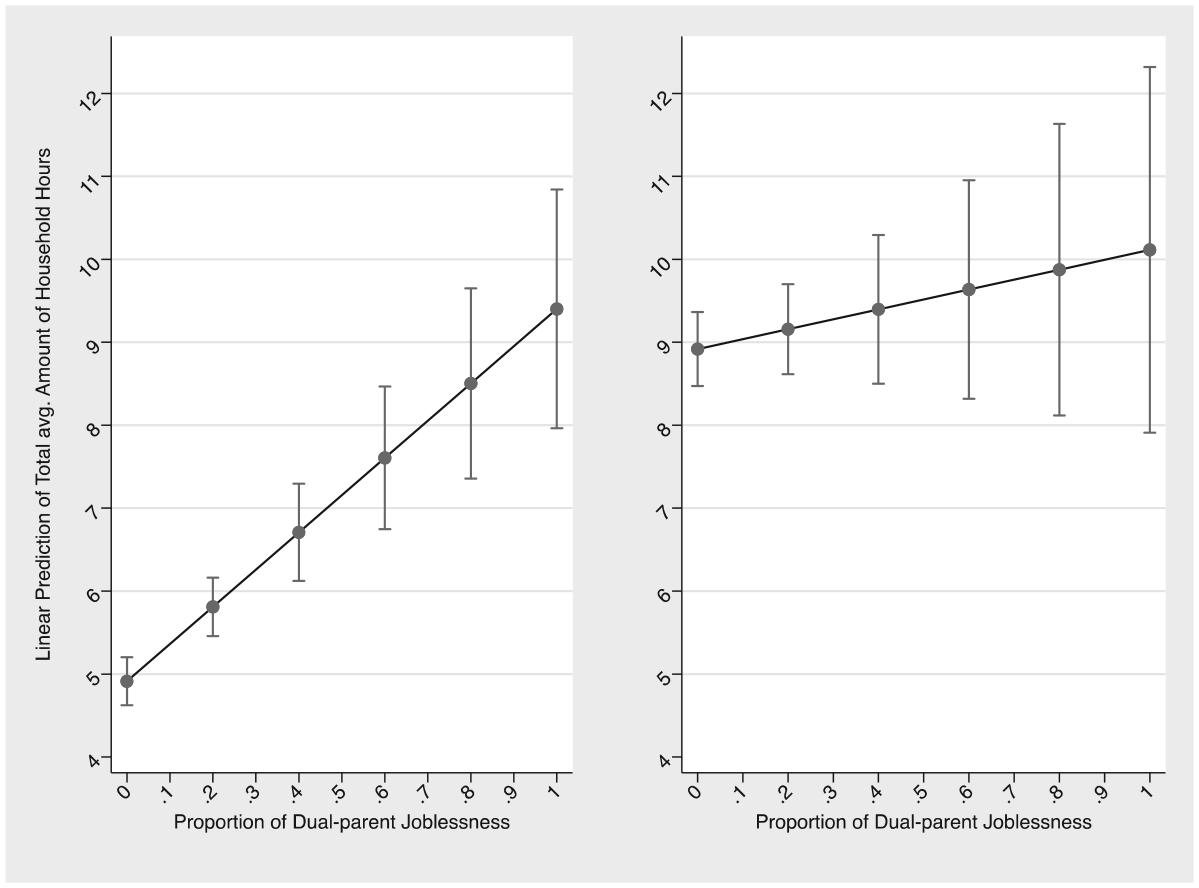
Conditional marginal effects predicting the increase in the total amount of household work at different proportions of dual-parent joblessness, by fathers (left) and mothers (right).
Parental Joblessness and Household Work
Table 2 addresses two specific questions: (a) To what extent does joint parental joblessness influence the amount of time that parents devote to household work? In addition, (b) does joint parental joblessness lead to adjustments in the type of household activities performed by mothers and fathers? Controlled for the household work of their partners, Model 1 responds to question (a), and indicates that, all else equal, fathers increase the total average number of their household work with an average 4.48 hours (b = 4.48; p < 0.001) per week (above and beyond mothers’ housework) when they were jointly jobless with their wives as opposed to fathers in nondual-jobless households. Model 2 for mothers’ household work also indicates an increase in the total number of their household work by an average 1.20 hours when jobless, though this increase is not statistically significant compared with mothers in nondual-jobless households (b = 1.20; p > 0.10). Marginal predictions underlying Models 1 and 2 are shown in Figure 3 and provide two further insights. First, dual-parent joblessness is associated with an increase in the overall amount of jobless fathers’ and mothers’ household work. Second, as previously indicated, fathers’ average increase in household work is steeper than that of jobless mothers. However, despite this increase, jobless mothers’ average engagement in household work is significantly higher than that of jobless fathers where dual-parent joblessness is below 60%. Above this threshold, differences in the average amount of household work do not differ significantly between jobless mothers and fathers. Interestingly, independent of the level of parental joblessness, mothers cohabiting with fathers that engage more in household work spent on average 0.19 minutes (b = 0.19; p < 0.001) per week more in housework than those living with fathers who did not increase their housework. The same applies to fathers, who spent on average 10 minutes (b = 0.10; p < 0.001) more time in household work per week when co-residing with mothers who increased their time in household work. Overall, consistent with our first expectation, we find that dual-parent joblessness increases the total average time of household work of both fathers and mothers.
Mixed Model Regression Estimates Predicting the Link between Parental Joblessness and Overall Household Work, by Fathers and Mothers.
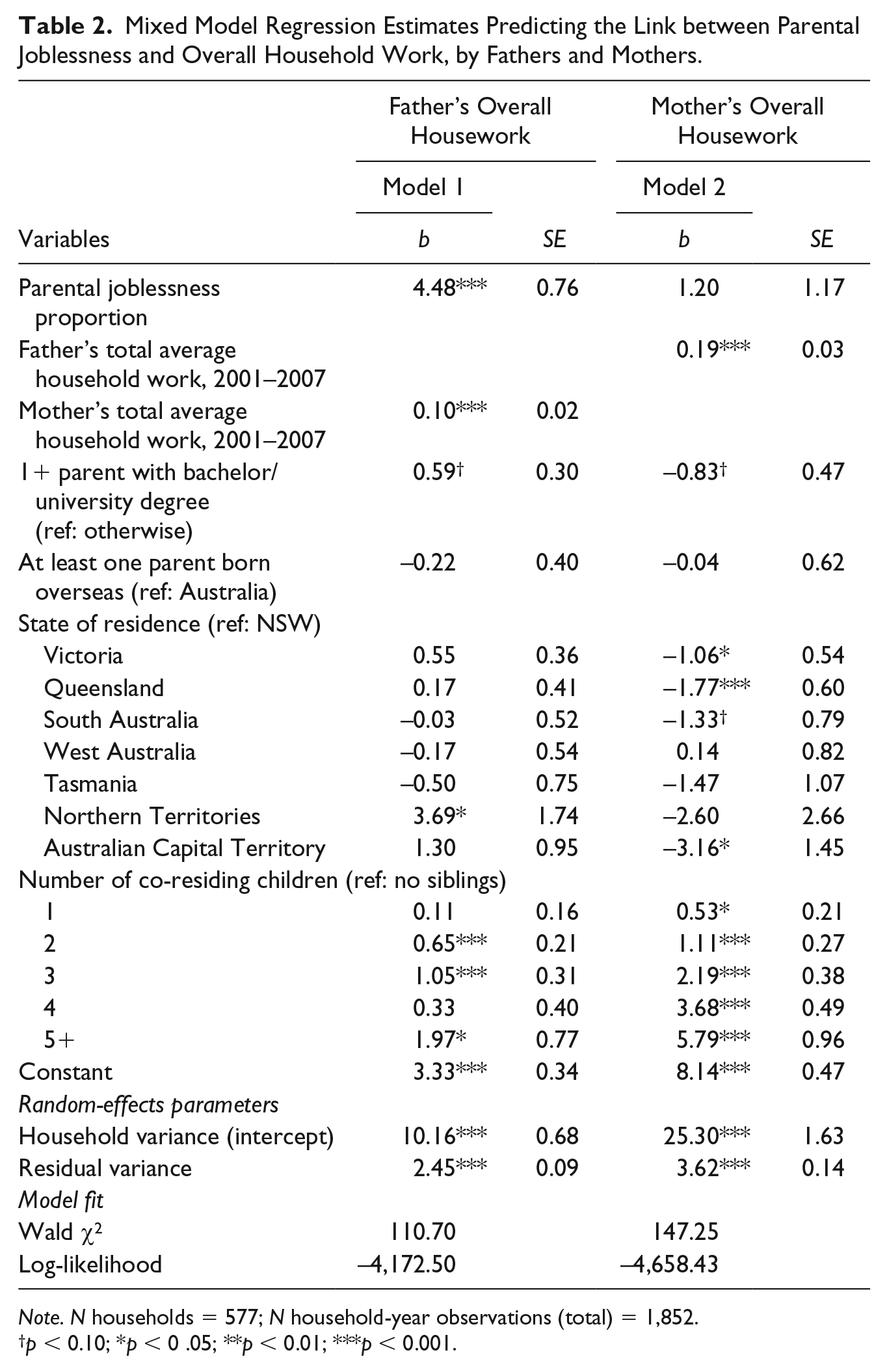
Note. N households = 577; N household-year observations (total) = 1,852.
p < 0.10; *p < 0 .05; **p < 0.01; ***p < 0.001.
Next, Table 3A (Model 1 to Model 4) addresses question (b) and presents selected coefficient estimates from a series of mixed effect regression models on the four separate types of household task: (a) housework, (b) childcare, (c) outdoor tasks, and (d) household errands, using the same covariates as in Table 2. In Table 3B (Model 1 to Model 4), we repeat the same mixed effect regression models for mothers. We do so to identify what specific types of household tasks fathers and mothers engage in more/less during periods of dual joblessness. A key finding is that women engage more only in female-type tasks, while the equivalent gender specialization is not evident among jobless fathers. Rather, Model 1 to Model 4 in Table 3A reveal that (compared to fathers in households in which at least one parent works), dual-parent joblessness is associated with fathers spending more time in household production in all four types of household activities. This includes activities that are more female-typed. In contrast, compared to mothers in households in which at least one parent works, results in Model 2 of Table 3B reveal that mothers in jobless households increase the time of childcare with 4.25 hours per week (b = 4.25; p < 0.05).
Selected Coefficients of Mixed Model Regressions Predicting the Link between Parental Joblessness and Housework Time in Specific Activities by Fathers.
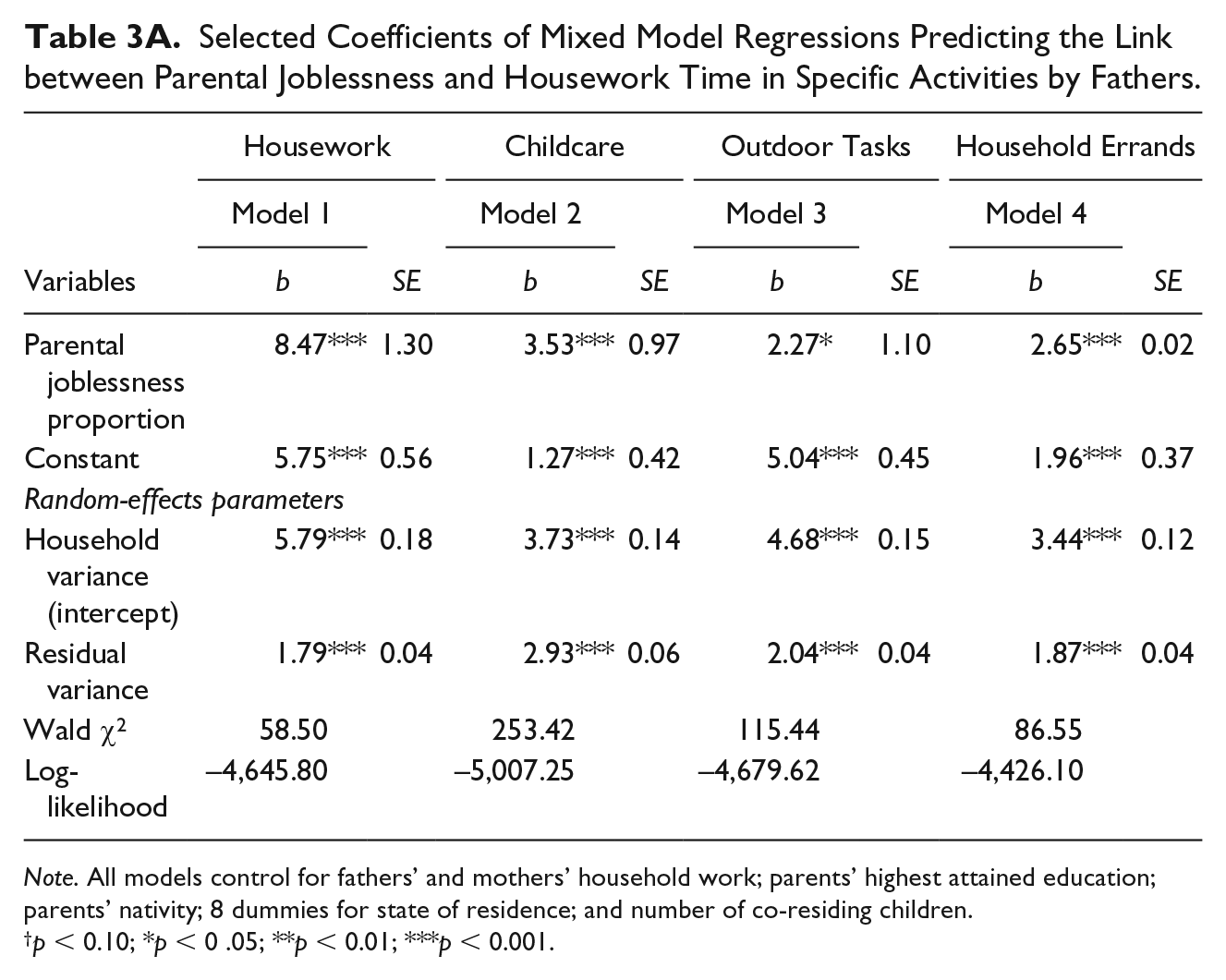
Note. All models control for fathers’ and mothers’ household work; parents’ highest attained education; parents’ nativity; 8 dummies for state of residence; and number of co-residing children.
p < 0.10; *p < 0 .05; **p < 0.01; ***p < 0.001.
(Selected) Coefficients of Mixed Model Regressions Predicting the Link between Parental Joblessness and Housework Time in Specific Activities by Mothers.
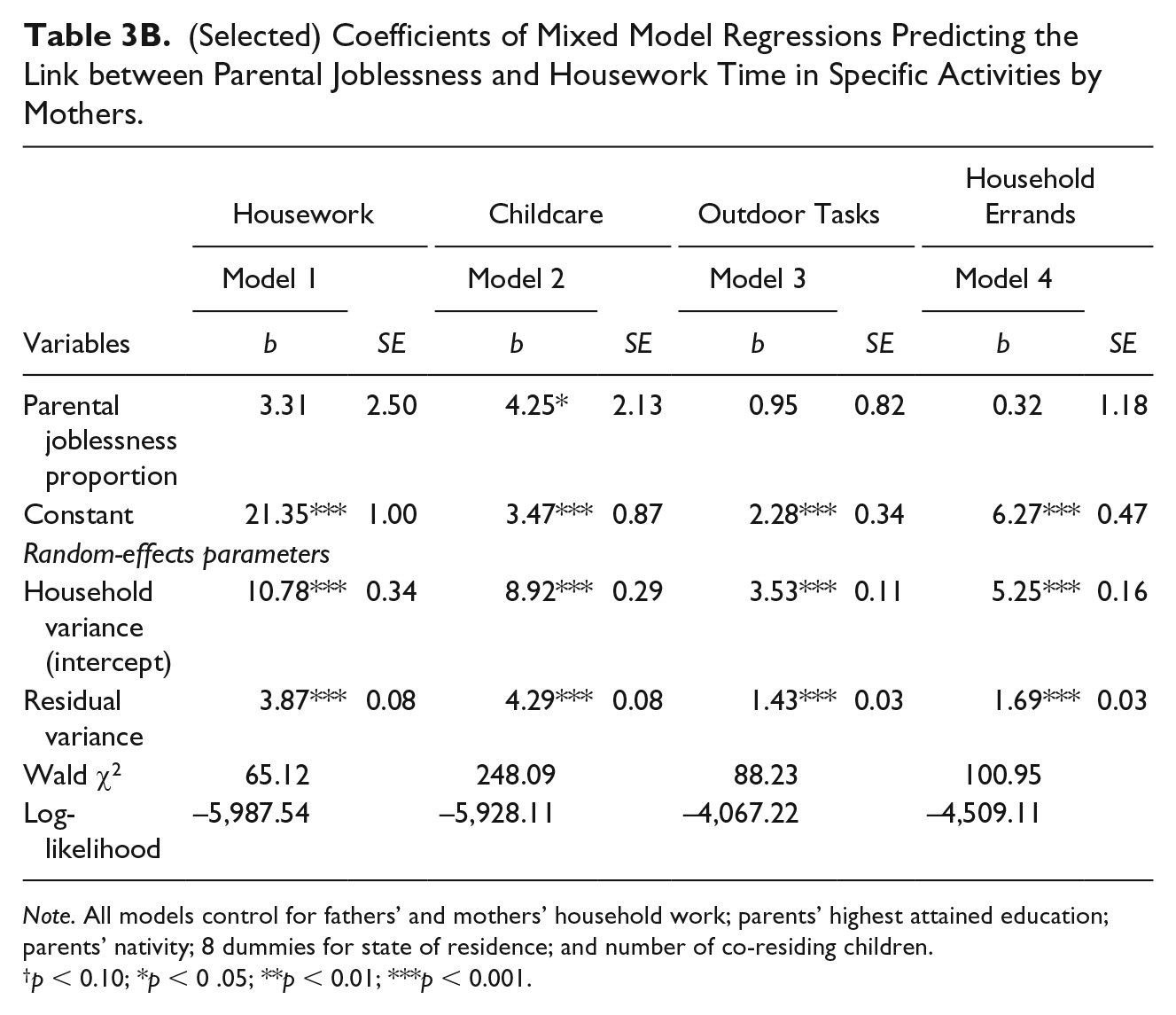
Note. All models control for fathers’ and mothers’ household work; parents’ highest attained education; parents’ nativity; 8 dummies for state of residence; and number of co-residing children.
p < 0.10; *p < 0 .05; **p < 0.01; ***p < 0.001.
Further, results in Model 1 of Table 3B show a substantial intercept in the hours that mothers spent doing household work. That is, their domestic contribution is already high at baseline, which might explain why a higher level of dual-parent joblessness does not necessarily lead to a significant increase in the time they spend in household work (b = 3.31; p > 0.10). They do not commit more time to male-typed tasks (Model 3 and Model 4 in Table 3B). These results offer partial support to our second expectation such that a gendered division of labor is particularly followed by jobless mothers, but not by fathers.
The Buffering Role of Parents’ Household Work on Young Adults’ Joblessness
Table 4 addresses our final research question: (c) Are children who live in jobless households in which fathers and/or mothers are more engaged in household work better protected against joblessness in the future? To do so, Model 1 includes two interaction terms between the proportion of parental joblessness and the total average time devoted to household work separately by fathers and mothers. It reports conditional marginal effects (dy/dx), which are derivatives of the estimated slopes which depict the change in young adults’ chances of joblessness for each unit (i.e., percentage) increase in the fraction of time that they lived in jobless households over the period 2001–2007. The strong and sizeable main effect for parental joblessness (dy/dx = 3.59; p < 0.001) indicates that children raised by jobless fathers who did not engage in household work were more likely to become jobless as young adults. The key variable of interest is the interaction term, which is sizeable and significant just below the 95% confidence interval. This indicates that young adults who lived with fathers who increased their housework time during periods of dual-parent joblessness were less likely to experience joblessness as young adults (dy/dx = −0.23; p < 0.10) compared to young adults in jobless households whose fathers did not spend more time in housework. We find an opposite interaction effect for mothers’ household work suggesting that young adults who lived with mothers who increased their time in household work during periods of dual joblessness have a higher chance of experiencing joblessness as adults than children of mothers in jobless households who did not increase their housework time. However, this result was not statistically significant (dy/dx = 0.12; p > 0.1). We re-estimate the same model by introducing a three-way interaction term between the proportion of dual-parent joblessness, the total average time devoted to household work (separately by fathers and mothers) and the gender of the respondent (analyses not shown but available upon request), and find that same patterns apply to both young men and young women. This suggests that in households in which fathers increased their housework time the adverse effects of dual joblessness on their children’s later employment prospects are mitigated irrespective of the children’s gender.
Coefficient Estimates from Mixed Effects Logistic Regression Predicting the Moderating Role of Parents’ Household Work on Young Adults’ Joblessness.

Note. N households = 577; N respondents/young adults = 835; N respondents/young adults-year observations (total) = 1,852.
p < 0.10; *p < 0 .05; **p < 0.01; ***p < 0.001.
Sensitivity Analyses
It could be argued that our key measures of housework and parental joblessness were measured at different scales which could bias estimates especially among parents that change their labor force status frequently. Additional sensitivity tests: (a) including a dummy controlling for the deviation between parents’ observed and joint modal employment status during 2001–2007, and (b) excluding parents who deviate from their joint modal employment were re-estimated to test for the robustness of Models 1 and 2 of Table 2. Results confirm the pattern found in Table 2: Parental joblessness is positively associated with fathers’ household work engagement, while we find no significant associations for mothers. Next, it could be argued that the moderating role of parents’ household work presented in Table 4 could be confounded by parents’ health status. That is, parents’ poor health could influence both the likelihood of their joblessness, the time they spend doing household work, and their children’s joblessness, omission of which could bias our estimates. We tested for this omitted variable bias by re-estimating Model 1 in Table 4 including two dummy variables for mother’s and father’s self-assessed health status (1 = “fair or poor”; 0 = “excellent, very good”) over the period 2001–2007, in addition to child’s self-reported health status. We find no significant relationship between parents’ health status and children’s joblessness. Next, we also traced if the reason for any parents’ joblessness during 2001–2007 was related to “ill health”, “disability”, or “injury”. Using this information, we created a dummy variable (1 = ill health; 0 = otherwise) and re-estimated Model 1 of Table 4 controlling for any parents’ ill health. Again, estimates indicated no significant relationship between parents’ ill health and their children’s joblessness. Finally, we tested if our research conclusions related to Table 4 were confounded by other factors influencing the likelihood of parental joblessness including parents’ income support history and their English proficiency. Controlling for these additional factors, results indicated a slightly larger and stronger interaction term between parental joblessness and fathers’ household work. Thus, controlling for major reasons of parental joblessness, in jobless households where fathers increase their household work, they lower significantly their children’s likelihood of joblessness. All these sensitivity analyses are available upon request. Overall, the different sensitivity checks indicated that our research conclusions are robust to different specifications and subsamples.
Discussion
This study used longitudinal data from the HILDA Survey to examine three questions: (a) To what extent does joint parental joblessness influence the amount of time that parents devote to household work? (b) Does joint parental joblessness lead to adjustments in the type of household activities performed by mothers and fathers? (c) Are children who live in jobless households in which fathers and/or mothers are more engaged in household work better protected against joblessness in the future? A series of mixed effect regression models yielded three central findings.
First, we found that in dual-parent jobless households both fathers and mothers spend significantly more time in household work than those in households in which at least one parent works. Thus, our findings suggest that parents adjust their domestic behavior during periods of dual joblessness. This was in line with previous research (Gough & Killewald, 2011; Strom, 2002), but our detailed measures showed a more nuanced picture. We had expected that jobless fathers would increase particularly their time in male-typed tasks such as gardening and maintenance because these are consistent with masculine behavior norms (Baxter, 2002). Instead, we found that, compared to fathers where at least one parent works, they did more household work overall, including in the female-typed tasks of indoor housework and childcare. Conversely, mothers in dual-jobless households spent more time in female-typed tasks and particularly in childcare. This could mean that in relation to task allocation, dual-joblessness did not engender gender deviance neutralization behavior from men, but that it did from women. More time in childcare could result from mothers wishing to give their children greater attention to compensate for the material disadvantages arising from dual-parent joblessness.
Second, we extended earlier research by investigating associations between parents’ household work and the proportion of dual-parent joblessness over the study period; a measure which combines the occurrence, duration, and frequency of dual-parent joblessness when respondent was growing up. As the proportion of dual-joblessness rose beyond 0.5%, women’s time in household work (which we now know was largely comprised of female tasks including childcare) steadily increased, whereas men’s time in household work flatlined. Thus, the gender gap in household labor was at its widest in the households which were jobless the longest. This could support the interpretation that the women were neutralizing the gender deviance of their husbands being unemployed, consistent with the arguments of Brines (1994) and Greenstein (2000). However, it is also possible that the finding reflects that the men who were unemployed the longest had forms of incapacity that our models do not capture. Illness, depression, or lethargy could have precluded them from domestic participation as well as from employment and meant in turn that their wives had to take on an even more disproportionate amount of household work.
Third, and most importantly, we find gender asymmetry in the moderating role of household work in jobless households. Specifically, young adults raised in dual-parent families in which fathers spend more time in housework during dual-jobless periods are less likely to become jobless as adults. We find an opposite, albeit statistically not significant, effect if mothers increased their housework time. In this case, the chance of joblessness among young adults was higher. This finding links to that above because if women are doing more household work particularly in households that are jobless longest, and in which men are least able (or willing) to assist, this could go together with higher stress, poor relationship quality, and marital discord. It should also be noted that the time increases for women are from a much higher baseline than for men, so their overall amount of time in household work may be very demanding. Having to do more household work than before their husband became unemployed may accompany increased emotional distress and frustration for mothers. This could further threaten family functioning and create a compounding adverse effect on their children, which is later apparent in their worse employment outcomes.
Conversely, if jobless fathers (are able to) respond productively during periods of joblessness, it is likely to accompany better marital relationships, minimize maternal distress, and also demonstrate better work habits to children. Witnessing their father and mother pull together in tough times may reduce the emotional stress that children experience and lower their chances of joblessness later in life, compared to those in families where the father remains less involved. While our results are likely influenced by fathers’ capacity, they underscore prior research that has found father engagement is beneficial for children (Flouri & Buchanan, 2002; Yeung, Hill, & Duncan, 2000). The findings may arise because male domestic participation models behavior that instills positive values among their children regarding the importance of work, cooperation, and respect, which partially shields children from becoming jobless themselves. It could be a more powerful message to children if jobless fathers substitute household production for paid work, than if mothers do, because mothers are more expected to be domestically active in the absence of paid work. Additionally, the finding that jobless fathers (alongside mothers) do spend more time in childcare suggests that some take the opportunity to teach children to stay out of trouble and excel at school, potentially improving the employment outcomes of their children through this mechanism also.
Our research should be interpreted with caution. Specifically, we are unable to identify whether the estimated effects are causal. Some intergenerational studies have used natural experiments to assert causality (e.g., Oreopoulos et al., 2008). Unfortunately, we cannot use such designs due to data constraints. A second data limitation relates to the mismatch in the framing of our key measures of parental joblessness and household work. We undertook various checks to assert whether this mismatch biases our research conclusions. We found no evidence of a bias, but future research should consider using calendar data for both parental joblessness and housework. The broad implication of this research is that engaging men domestically could mitigate intergenerational disadvantage. As the workforce changes (Bergstrom & Storrie, 2003; Standing, 2011; Watson, 2017), it will be important for policymakers to recognize that encouraging fathers to be involved in families can have productive outcomes and generate important social benefits. A narrow policy concentration on work tests and job-seeking requirements may be counterproductive in an era of job scarcity, and compound not only family stress and dysfunction but also economic exclusion. A broader conceptualization of useful activity that includes household work may allow families dealing with joblessness to assist their children do better emotionally, socially, and economically over the longer term.
Footnotes
Declaration of Conflicting Interest
The authors declared no potential conflicts of interest with respect to the research, authorship, and/or publication of this article.
Funding
The authors disclosed receipt of the following financial support for the research, authorship, and/or publication of this article: This paper was supported by funding from the Australian Research Council (DP160101063). It uses unit record data from the Household, Income and Labour Dynamics in Australia (HILDA) Survey. The HILDA Survey Project was initiated and is funded by the Australian Government Department of Social Services (DSS) and is managed by the Melbourne Institute of Applied Economic and Social Research (Melbourne Institute). The findings and views reported in this paper, however, are those of the authors and should not be attributed to either DSS or the Melbourne Institute.
