




Abstract
It has been widely acknowledged that empathy plays an important role in school education, but empathy as a part of school organizational culture has not been extensively studied in the Indian context. This study explores empathy as the driver for school organizational culture and strives to create a platform for school organizational designs with empathy as the core construct. The study was conducted with two main objectives: (a) to establish and validate a model of empathy-driven school organizational culture and (b) to develop a valid and reliable instrument to measure organizational empathy in Indian schools. A random sample of 441 students participated in the study. The empathy-driven model was validated through exploratory and confirmatory factor analysis. A part of the questionnaire used for the first part of the study was used for the second part as an independent instrument and validated through confirmatory factor analysis. The instrument was further validated for convergent, discriminant and concurrent validity. Thus, a model for empathy-driven school organizations was validated and a reliable and valid instrument for measuring empathy-driven cultures in schools was developed.
Keywords
Introduction
Empathy is a vastly ignored concept within the result-driven, competitive and unforgiving world of modern times. Nowhere is empathy more relevant today as an organizational construct than within the precincts of schools, where unthinking competition coupled with the pressure to perform and excel has the potential to ruin many young lives. The importance of empathy in schools and classrooms has been emphasized by numerous researchers and experts (Jones et al., 2018; Owen, 2015; Sornson, 2015). Hay (2018) posited that empathy-driven schools encourage adaptability, creativity and innovation among students. Empathy leads to stronger teacher–student trust, augments safety and promotes a collaborative atmosphere in schools. Further, empathy within school precincts leads to augmentation of social intelligence among the students (Hay, 2018).
In the specific context of school organizations, Shafer (2018) had posited that ‘organizational culture is a key element of school success.’ Further, Shafer (2018) declared that ‘Once principals understand what constitutes culture—once they learn to see it not as a hazy mass of intangibles, but as something that can be pinpointed and designed—they can start to execute a cultural vision.’ Since schools are essentially mechanistic organizations, organizational empathy or the lack of it can be traced to the organizational culture that the school promotes. Hence, it is imperative that a psychometric tool be developed to measure the specific items which represent empathic-driven school organizational culture that is encouraged within the organization. This study attempts to fulfil this need for Indian schools.
The study explores two vital constructs of modern organizations, namely organizational culture and organizational empathy, and relates them to the context of school organizations. Organizational culture can be described as the environment and behaviour prevalent in an organization as a function of organizational rules, objectives and values that the organization represents. The concept of organizational culture was first introduced by the Canadian psychoanalyst Dr Elliot Jaques in his 1951 book The Changing Culture of a Factory: A Study of Authority and Participation in an Industrial Setting (Jaques, 1951). Elliot had described the culture of an organization as its ‘customary and traditional way of thinking and doing things, which is shared to a greater or lesser degree by all its members’. While Jaques’ definition of organizational culture could be held to be functionally correct, his approach to the concept did, however, project a stagnant view of the construct. The words ‘customary and traditional’ may be interpreted to describe iterative behaviour which encourages status quo and denounces change. This interpretation of Jacques’ view of organizational culture found substance within Jaque’s own writings wherein he praised organizational hierarchy as the ‘most efficient, the hardiest’ arrangement of organizational structure (Jaques, 1990). Acerbic though it may be, Jaques’ definition of organizational culture describes school organizational cultures with remarkable accuracy. Schools, especially old schools, pride themselves in following traditions and cultures that often date back to centuries ago. While these traditions and cultures may provide a source of great pride for the school management, many of those traditions find their root within the control dominated hierarchical structures (which Jaques extolled) that did not include the concept of empathy within its realms of importance.
Stephen Robbins had posited that the theory of organizational culture finds its basis in the assumption that organizations develop to assume life-like characteristics of their own which are often different from the individual characteristics of its members (Robbins, 1996). Robbins enumerated seven characteristics that represent organizational culture: innovation and risk-taking, attention to detail, outcome orientation, people orientation, team orientation, aggressiveness and stability. Later, Robbins et al. (2009) posited that organizations can be rigid or flexible, unfriendly or supportive, innovative or conservative. Organizational culture is most often carefully designed to perform some specific functions. It defines an organizational boundary and helps to distinguish one organization from another, thus creating a sense of identity. Organizational culture enhances organizational stability and augments commitment to organizational goals. Robbins (1996) had also proposed that corporate culture can act as a barrier to change and diversity. Robbins’ discourse on organizational culture described the construct in specific functional terms. Robbins further specified the dimensions within which the members of organizations worked. These dimensions thus affected their workplace behaviour. Robbins did not mention ‘tradition’; thus, it could be assumed that in contrast to Jaques, Robbins’ viewed organizational culture as fluid and malleable to the needs of specific situations. Among the multiple dimensions that were introduced by Robbins, the people orientation characteristic of his construct is of utmost relevance when studying the empathic nature of school organizational cultures.
Schein (2010) had presented a model of organizational culture wherein he had posited that there are three levels of organizational culture. At the surface, he proposed a level that he termed ‘artefacts’. This was basically all that a person would experience (see, hear and feel) when a person encountered a new group which espoused a culture that was not familiar to the person. These included all visible products of the group such as dress and language. Underneath the shallow artefacts lie the espoused values which are essentially the core values by which the organizations conduct business, and beyond the layer of espoused values lie basic underlying assumptions on which organizational culture is based. The underlying assumptions are not tangible or visible; thus, they have to be felt. Thus, Schein presented a model wherein core belief–driven constructs led to organizational values, which in turn manifested as superficial behaviour such as dress, language and rituals. Schein’s model is eminently witnessed in the context of schools where the core underlying values and beliefs form the basis of superficial artefacts such as school dress, language of communication, morning assembly prayers, salutation of teachers or principals and even empathy for students or the lack of it.
Coleman (2013) had enumerated six components that constitute organizational culture: vision, values, practices, people, narrative and place. In the opinion of the researcher, these components are linear and organizational vision leads to the accumulation of values and consequently the design of practices based on those values. The practices of an organization further lead the organization to recruit, train and develop its people around those practices. Over a period of time, the first four components lead to the creation of an organizational narrative, and physical spaces are designed to complement and augment that narrative. Note that these components are of particular relevance when they are juxtaposed in the context of schools. Coleman’s construct introduces a functional flowchart for organizational culture which traces back to the origins of such cultures. However, the construct as presented echoes the concept of ‘tradition’ as espoused by Jaques. Vision is fairly constant, and the other variables merge as dependent on the core variable of vision. Thus, Coleman’s model of culture also purports to depict culture as fairly constant and rigid, In the case of schools, since values are decided ex ante and the institution is built around the values, the rigid cultural model is most often witnessed.
Deal and Kennedy (1982) had proposed a set of six interconnected cultural elements: history, values and beliefs, ritual and ceremonies, stories, heroic figures and cultural network. Schermerhorn et al. (2002) posited that organizations have two aspects of culture: external integration, which is the way in which they interact with the outside world such as customers or in the case of schools and parents, and internal integration, which is the way that internal entities function, interact and work together, which in the case of schools would mean the interaction between students, teachers and management. Schermerhorn et al. (2002) also proposed three levels of organizational culture: observable culture, which consists of rituals, ceremonies and stories (particularly common among schools); shared values, which are put forth to members of the organization and are shared regardless of individual belief; and at the core of organizational culture lies the ‘taken for granted truths’ which most often is the result of shared and collective memories from shared experiences. Cameron and Quinn (1999) developed the competing value framework (VF), which is very highly regarded and influential as a concept. The framework takes into perspective four competing cultures or values: internal focus and integration versus external focus and differentiation as also flexibility and discretion versus stability and control. These four competing values or organizational cultures create a framework of four distinct cultural types. Clan is a culture of mentoring and nurturing, more like a family. Adhocracy is a dynamic, risk-taking culture which encourages innovation. Hierarchy is based on structure, control, efficiency and market which is result oriented and competitive and values achievement. On the basis of this framework, Cameron and Quinn had developed the Organizational Culture Assessment Instrument (OCAI), which is used in 12,000 companies worldwide.
The present study finds substantial inspiration within the studies of the Dutch social psychologist Dr Gerard Hendrik Hofstede. Dr Hofstede, through his studies among IBM employees, had proposed four dimensions of culture: individualism versus collectivism, uncertainty avoidance, power distance and masculinity–femininity (Hofstede, 1980). Later, two more dimensions were added to the original four through further studies: long-term orientation (Hofstede & Bond, 1988) and indulgence versus self-restraint (Hofstede et al., 2010). Hofstede’s study was originally meant for studying national cultures but there have been numerous studies on organizational cultures which are based on Hofstede’s dimensions (Hofstede et al., 1990; Hofstede, 1991). Hofstede himself had conducted a study of organizational culture based on his cultural dimensions among 20 units from 10 different organizations in Denmark and the Netherlands (Hofstede et al., 1990; Hofstede, 1991). While Hofstede’s dimensions may not have specifically adhered to the measurement of empathy, they did, however, provide a basic framework for further studies in organizational culture with particular reference to organizational empathy. The particular dimensions of power distance and individualism–collectivism present an opportunity for discussions on organizational empathy. Moreover, Hofstede’s dimensions were meant to study the collective aggregation within cultures like that of nations or organizations. These fundamental reasons encouraged the researcher to use Hofstede’s dimensions as the ideational basis for this study. Moreover, Hofstede’s dimensions have previously formed the basis of studies in empathic culture; in one such exercise, Chopik et al. (2016), in their study among 104,365 adults in 63 countries, found that the countries which exhibit higher empathy have higher levels of collectivism among other behavioural indicators.
Hofsdete’s dimensions have been studied repeatedly within the context of school organizations in many forms. Schools are diverse social organizations with strict rules: hierarchy and an overwhelming organizational culture which affects human behaviour. Thus, a model that was primarily meant to explore national cultures finds relevance in the context. However, this study approaches the construct of school cultures through the prism of empathy. Hence, the dimensions and items presented in Hofstede’s dimensions were suitably modified to fit into the objectives of the present study.
The other significant concept that constitutes a substantial part of this study is empathy. Empathy can be defined as the ability of a person to feel and understand another person’s emotions and situations in life. Numerous articulations of empathy exist in the literature. Oberman and Ramachandran (2007) defined empathy as ‘a function of one individual’s experiencing the same feelings as another individual through an appreciation of similarity’. Experts such as Daniel Goleman (2007) describe three types of empathy: cognitive empathy, which is the ability to know and understand what the other person is feeling or thinking; emotional or affective empathy, which can be described as the sharing of the other person’s feeling; and compassionate empathy, wherein the person not only passively understands and shares the other person’s emotions but also acts spontaneously to help. Physiologically, it is assumed that a set of neurons known as mirror neurons play a role in empathy. This phenomenon is particularly observed during situations when some people exhibit contiguous physical reactions in sync with another person’s actions. For example, if one person is crying, the person in front may exhibit a sad face without conscious effort.
Kraus (2019) defines organizational empathy as ‘a company commitment to developing a deeper understanding of their customers’ needs, and using that knowledge to serve those needs better’. In the same vein, organizational empathy can be described as the conscious effort and dedication on the part of organizations to understand and help individuals who are the ultimate beneficiaries of the organization’s activities. In the case of schools, the beneficiaries would be students. Organizational empathy is a relatively unexplored concept. Within the realm of organizational empathy, the whole is greater than the sum of its parts. Thus, empathic behaviour exhibited by a group of teachers in a school always bears greater potential to impact students over individual acts of empathy by the same teachers. The ‘whole’ in the case of organizations is influenced by organizational culture; hence, the concept of empathy-driven organizational culture derives greater importance.
Organizational empathy can influence a multitude of managerial and operational functions. The design of school processes, allocation of resources and facilities as well as the recruitment of teachers have their bases within the empathic thoughts of the school management. The choice of school leaders and their core values, design of rules and regulations as well as the plans for the implementation of those rules find their influence within the empathic nature of school managements. Moreover, the empathic nature of school management bears influence on the culture that is promoted among the employees, especially the teachers, as well as the methods of assessments, support and remedial. Schools are complex systems (Blount, 2006; Fidan & Balcı, 2017) wherein the linearity of hard work + intelligence = success presents an oversimplification of the teaching–learning process. Learning is most often a collaborative exchange between hosts of participants (Mennin, 2010). This exchange depends on a psychologically safe environment bereft of the fear of emotional persecution arising from judgemental interventions from authorities. Empathy for students helps in the creation of such a positive learning atmosphere. However, as Zaki (2019) had posited, if organizational ideals present with a disconnect with the behaviour of its members, it leads to culture clashes and resultant dysfunctionalities. Hence, Zaki (2019) had proposed that since empathy presents as a contagious phenomenon, it needs to be inculcated as a part of the organizational culture as its primary driver.
In a world where profit and wealth maximization drive business models, empathy can be perceived to be evolutionarily unstable. The scenario in school organizations should be drastically different and empathy should be the key driver of organizational culture in schools. However, the control oriented, hierarchical, mechanistic and proficiency-based system of school education followed in many parts of the world, especially in post-colonial societies such as India, oftentimes ignores empathy altogether. It is, therefore, imperative to study school organizational cultures with a focus on empathy as the key driver, and this study strives to do that.
Study of Related Literature
The study of the related literature covered three major aspects of the present study: organizational culture and its constructs in general, empathy and its role in organizations and studies related to the roles and relevance of organizational culture and empathy with regard to school organizations.
In order to explore organizational culture, it is important that the impact of organizational culture on the performance outcome of the organization is studied in detail. Kotter and Heskett (1992) had studied the corporate cultures of 20 companies and related it to the company’s long-term economic performance. They found that cultures which are flexible to changes and adaptations produce better financial results than those which are rigid. These corporates empower employees to change and adapt to new circumstances and thus value their stakeholders. Akta et al. (2011) studied the effect of organizational culture on organizational efficiency. They had selected the healthcare sector for their study and collected data with the help of a questionnaire from respondents who were in the top-level management of 40 of these organizations. They found that the relationship between organizational culture and organizational efficiency is mediated by the organizational environment and the values that the CEO presents, such as self-direction (freedom, creativity and independence) and stimulation (open to changes and acceptance of diversity). Ostroff and Schmitt (1993) found that organizational efficiency and efficacy were influenced by organizational culture. Organizations which encouraged participative decision-making and had high perceptions of a ‘favourable climate’ among employees were very effective but not efficient. The study posited that effective school organizations had low levels of efficiency. Organizations which had structured goals and strict rules were efficient but not very effective. In another similar study, Juechter et al. (1998) found that organizational culture was an important factor for high organizational performance. Nazarian et al. (2017) studied the influence of national culture and balanced organizational culture on the performance of the hotel industry. They studied data collected from 96 hotels in London. A structural equation modelling analysis showed that the national culture of the hotel employees influences balanced organizational culture, which in turn influences organizational performance. Denison and Mishra (1995) studied the relationship between organizational culture and effectiveness based on four traits of organizational cultures: involvement, consistency, adaptability and mission. They found that the four traits were strong predictors of those criteria of efficacy which were subjective in nature, such as employee satisfaction and quality, but not strong predictors of those criteria of efficacy which were objective in nature, such as return of assets or sales growth. The works of organizational experts like Denison (1990) and Deal and Kennedy (1982) emphasized on the importance of a strong, clearly defined organizational culture for better organizational performance. However, there are critics to this theory and experts like Saffold (1988) have posited that models which emphasize that strong cultures lead to better performance tend to oversimplify relationships.
There have been numerous influential studies which specifically focused on school organizational culture. Hongboontri and Keawkhong (2014) conducted a study to explore school culture among 62 English as foreign language (EFL) teachers. They found strong correlations among eight social organizational variables of school culture: teacher certainty, cohesiveness, collaboration, complaints evaluation, goal setting, student behaviour management and learning opportunities. Stoll and Fink (1996) had proposed a typology of school cultures. They proposed four types of school cultures: moving, where students progressed and developed; cruising, where pupils achieve but are not prepared for the changing world scenario; strolling, which is neither effective nor ineffective; and meandering, which is essentially ineffective and leads to sinking failing blame and shame. In the same paper, the researchers had proposed ten norms for an effective school culture: shared goals, responsibility for success, collegiality, continuous improvement, lifelong learning, risk-taking, support, mutual respect, openness celebration and humour. Later, Stoll (1998) had further proposed a set of four types of teaching cultures in schools: individualism, collaboration, contrived collegiality (interventional compulsory collaborative relationships) and Balkanization (small collaborative groups). Yeboah (2015) had studied the implication of school culture on the pupils of a junior school in Ghana. She conducted the study among pupils, teachers, non-teaching staff, parents, guardians and headmistress. She found that the pupil’s education was influenced by the school culture both positively and negatively. The positive influences included an inclusive school management culture, while the negative influences included external interference and apathy towards infrastructure and facilities. In a study conducted among Serbian schools, Glusac et al. (2015) studied the impact of school culture on the teaching–learning process in Serbia. They interestingly defined a good school as a school with a ‘good’ organizational culture. The study concluded that school culture is a significant predictor of the various dimensions of the teaching–learning process and consequently the teaching quality in schools. Yin Cheong Cheng (1993) studied how organizational variables such as principal’s leadership, teachers’ job attitudes and school effectiveness are influenced by school organizational culture. The study involved 588 teachers and 54 secondary schools from Hong Kong and. The study intended to explore how effective schools displaying strong culture were different from ineffective schools displaying weak culture. The findings suggested that the differences in were present in three overt levels: (a) at the organizational level: this was explicit in variables like principal’s leadership, organizational formalization and teachers’ social norms; (b) within teachers’ attitudes to organizational commitment, job satisfaction (both intrinsic and at the social level); (c) in terms of school effectiveness as perceived by overall organizational effectiveness and academic achievements. Saphier and King (1985) identified 12 norms of school culture: collegiality, experimentation, high expectations, trust and confidence, tangible support, reaching out to the knowledge base, appreciation and recognition, caring, celebration and humour, involvement in decision-making, protection of what is important, traditions, and honest, open communication. These norms form the part of the School Culture Survey, which is an instrument to study school organizational cultures. Edwards et al. (1996) conducted a study on the school culture survey among 27 school principals and 425 teachers. Rasch and factor analysis on the collected data among the items of the instrument brought forth three subscales:
Teachers’ professionalism and goal setting Administrator’s professional treatment of teachers Teachers’ collaboration
A number of studies have explored school culture through the light of Hofstede’s dimensions. Yoo (2014) conducted an experience-based qualitative research on the effect of Hofstede’s cultural dimensions on teacher–student relationships in Korea. Yoo’s study mainly focused on the power-distance dimension that Hofstede had proposed. Korea is a collectivist society, whereas the researcher was a Canadian citizen who was teaching in Korea. Canada has an individualist culture, in stark contrast to Korea, and thus the experience was new for the researcher. The researcher experienced long power distance among the older students who were very respectful and avoided friendly informality. The younger students, especially those in kindergarten, were more forthcoming in terms of being communicative. This was due to the fact that the younger children were not yet conditioned to the power-distance culture. The study brought forth how long power distance in some cultural settings can affect teacher–student relationships. Cortina et al. (2017) studied the effect of individualism and power distance on the students’ sense of school belongingness. They used data on 15-year-old students from 31 countries. The study concluded that power distance is a better predictor of school belongingness than individualism/collectivism. Students living in high power-distance cultures showed less sense of belongingness to schools than those which had low power-distance cultures. Atkins (2000) studied the effect of uncertainty avoidance (one of Hofstede’s dimensions of culture) on classroom interactions. His study was conducted among Japanese students with high uncertainty avoidance culture. Atkins posited that if instructions given in the classroom are vague and uncertain or if the instructions are presented in a language other than the student’s mother tongue (as in the case of English medium schools in India), it will lead to negative effects among the student groups in strong uncertainty avoidance culture. However, students from low uncertainty avoidance cultures will be comfortable in such learning environments. Atkins suggested that teachers’ instructional methods should be adapted according to the culture of the student group.
The concept of empathy formed the core of this study. Numerous studies on empathy have been conducted worldwide and with varied results. While some studies have posited that empathy is an essential positive requirement for growth and achievement others have declared that empathy is not as positive as it is made to out to be. Pavlovich and Krahnke (2011) studied the effect of empathy and connectedness within the organizational perspective. They claimed that empathy leads to better connectedness by unconscious sharing of neural pathways. This helps to eliminate the barriers between one’s own self and the other. They also claimed that empathy enhances joy through altruism and that empathy helps in coherence and sharing. Lilius et al. (2008) studied the contours and consequences of workplace compassion. They conducted two complimentary studies on workplace compassion and collated the results. The first study was conducted among the workers of a hospital where 2,400 questionnaires were given out to employees who had to respond to the given questions on a five point Likert-type scale. Two hundred and thirty-nine responses were received. This first part of the study explored whether experienced compassion was related to positive emotions and affective commitment. The results showed that experienced compassion was related to positive emotion, and both experienced compassion and positive emotion were related to affective commitment. The second part of the study involved stories related to the experiences of workplace compassion as described by the same respondents as in the first part. The results from the second part of the study showed that workplace compassion was mainly provided in three forms: (a) emotional support, (b) material goods and (c) time and flexibility.
Numerous instruments reported in the literature are used to measure empathy. While some of these instruments are unidimensional and measure empathy as a single construct, others are multidimensional and measure empathy within multiple components. While most of these instruments measure empathy at individual levels, there are a few which approach empathy at professional and organizational levels. There are two types of measurement instruments for measuring empathy: self-report measures and observation measures. Since the researcher plans to design an instrument which will entail self-reporting, those categories of instruments were given priority for the study of literature.
The Toronto Empathy Questionnaire was developed by Spreng et al. (2009) through three separate studies. It is a widely used instrument to study and measure individual empathy. The instrument consists of 16 items which elicit responses on a five-point Likert-type scale ranging from 0 (never) to 4 (always). The questionnaire is an undimensional instrument which measures empathy as a single construct. Batchelder et al. (2017) developed the Empathy Components Questionnaire. This is an instrument designed to measure the cognitive and affective components of empathy. This instrument consists of a 27-item multidimensional scale comprising of five components which are cognitive drive, cognitive ability, affective drive, affective ability and affective reactivity.
One of the most widely used scale to measure workplace and professional empathy is the Jefferson scale of empathy (Hojat et al., 2001). This instrument has been specially designed to measure empathy among medical professionals and students of medicine. The scale has been used in 54 countries worldwide (Hojat et al., 2011). The Jefferson scale of empathy consists of 20 Likert-type items, and subsequent factor analyses on the items have resulted in the extraction of three factors: compassionate care, perspective taking and standing in the patient’s shoes (Blanco et al., 2018).
The importance of organizational empathy is evident in the development of the empathy index for organizations (Parmar, 2016). The empathy index categorizes organizational empathy into ethics, leadership, company culture, brand perception, public messaging through social media and carbon metrics. The empathy index is important to understand why companies have better empathic cultures over others.
A study of the related literature revealed that while there is an extensive body of literature on studies related to the concepts of organizational culture as well as empathy, there are limited studies on organizational empathy and its relation to organizational culture. Moreover, there are not many scales which measure organizational empathy as a concept related to organizational culture. Most importantly, the researcher could find no studies on organizational culture and empathy with special focus on schools in India. It is this gap in literature that this study hopes and strives to bridge.
The Method
Objectives
This study was conducted with two objectives around which the research design was developed. The first objective was to design a valid and reliable model for school organizational culture with empathy as its core construct. The second objective was to develop a valid and reliable scale to measure empathy-driven organizational culture among schools in Ifdia.
Sampling
The present study approaches the construct of school organizational empathy from the perspective of the students. A school organization should have the benefit of students as its core organizational value. A student-centric school organization finds an overt manifestation in the form of an empathy-driven school culture. The primary beneficiary of such cultures are the students; hence, their perspective on this important construct of empathy should form the sole basis of any objective study which purports to measure this important dimension of school organizational culture.
As a consequence, the population chosen for this study consisted of high school students between the ages of 14–18, studying in schools all over India. The questionnaire was critical in nature, and the researcher felt that a certain degree of maturity was required to comprehend and answer the questions without confusion or frivolity; hence, the high school students were chosen as the population. A random sample of 567 students was administered the questionnaires. Some questionnaires were administered personally by the researcher while others were sent through e-mail. A total of 441 valid responses were received by the researcher while some others were partially or improperly filled. The responses were kept confidential, and the respondents were requested not to write their name or identification on the responses. Thus, a sample of 441 participants was used for the study.
Instrument Design
The instrument design for the study took place in three stages. At the first stage, a set of three focus group discussions was conducted among a set of seven students each. The students were chosen from schools in North Bengal through convenient sampling. These focus group discussions yielded important insights into the factors and variables that lead students to perceive whether their school authorities understand their problems through their points of view and go out of their way to help them. At the second stage of the instrument design, the set of variables obtained from the focus group discussions was collated with the various items and dimensions that were proposed by Dr Hofstede in his study. The items were then formalized into a questionnaire. The three main aspects of empathy are functionally described as understand (cognitive), feel (emotional) and do (compassion). The researcher opines that within school organizations, the most important construct of empathy is compassion (do). However, compassion is dependent on cognitive empathy. A teacher should first understand the problems of a child and act towards the elimination of the problem so that the child’s predicament improves. In this context, feelings for the child should not be taken as a prerequisite for action. Sometimes a teacher might feel but still not act positively towards the solution of the problem from the child’s perspective. Thus, the optimal flow of empathic actions should override individual thoughts or subjective feelings and encourage actions to mitigate the problems of a child. This element of empathic flow is often a manifestation of the school organizational culture. Hence, it was decided by the researcher that the two important and overt dimensions of organizational empathy—cognition and compassion—would form the basis of the measures of empathy for this study.
The instrument measuring empathy-driven organizational culture finds its inspiration within Hofstede’s dimensions. The items of Hofstede’s dimensions, however, have been suitably altered to reflect the objectives of the instrument. The items derived from the focus group discussions among the students have been included within the dimensions. The instrument measures the cognitive and compassion aspects of empathy in conjunction with each other. The items do not separate the two aspects in order to measure them as separate constructs. The individual versus collective dimension of Hofstede’s dimension has been included in the instrument while the other dimensions find their place through related but essentially different dimensions which are designed to address the fundamentally important construct of an empathy-driven organizational culture. Hence, flexibility versus rigidity finds echoes within the uncertainty avoidance dimension of Hofstede’s culture. Similarly, liberalism versus conservatism can be traced to power distance and benevolence versus malevolence finds a relation to masculinity versus femininity. While nurture versus hinder finds a basis within the dimension of long-term versus short-term orientation. The five dimensions posit that a liberal, nurturing, flexible, benevolent organizational culture which promotes individualism among its members is empathic by nature.
The version of the instrument used for the main study consisted of two sections. Section A consisted of two questions which were to measure the two dimensions of empathy, namely cognition and compassion. Section B consisted of 19 items which represented different specific operational aspects of organizational culture. The variables for the study are presented in Table 1. At the third stage, a follow-up study was conducted among a sample of 118 respondents to further test the instrument for convergent, discriminant and concurrent validity. The respondents were chosen for the follow-up study through convenience sampling.
Items for the Present Study
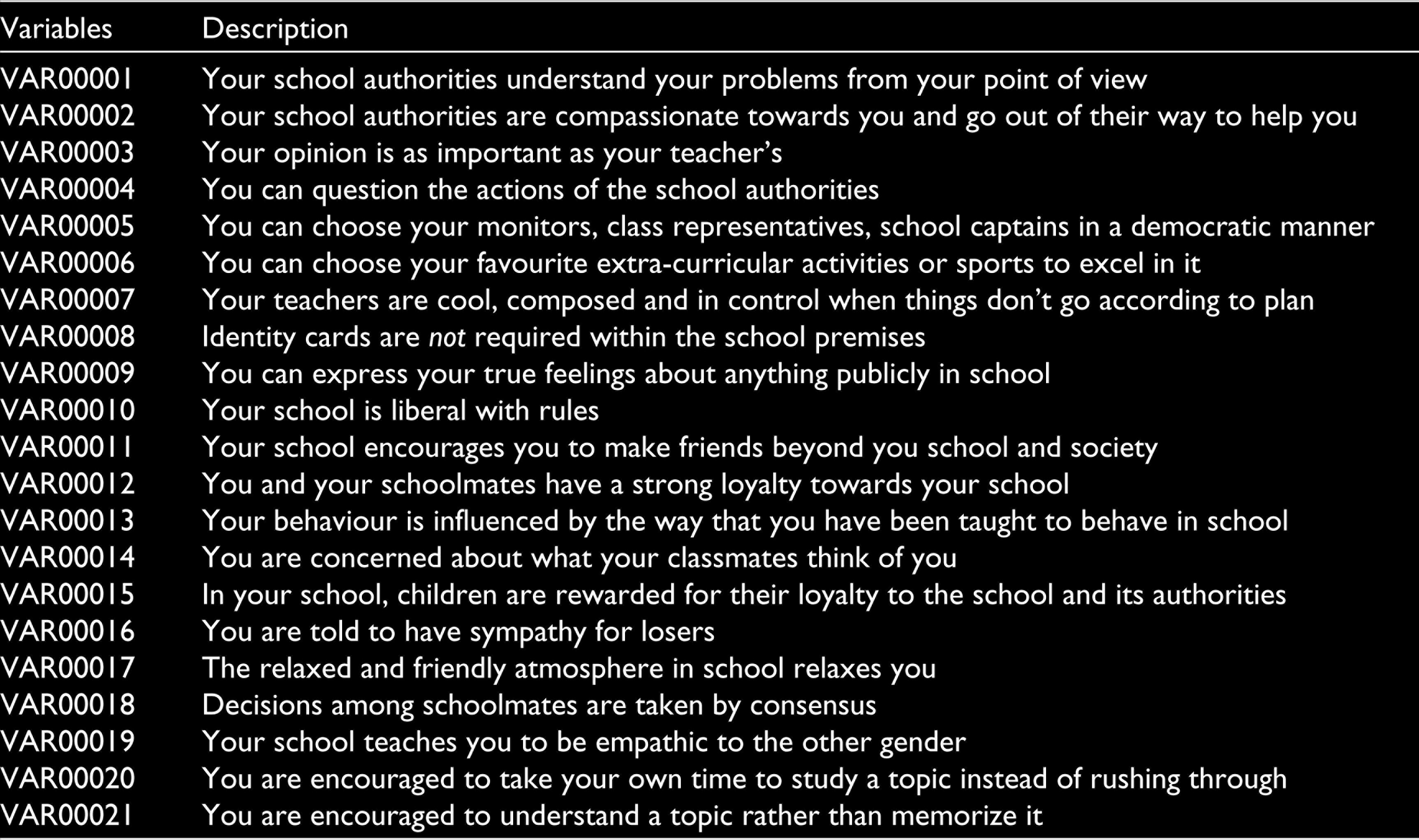
Data Analysis
The data from the study were primarily analysed for reliability and validity. The face validity for the instrument was established through the interview sessions with the students, a thorough study of literature and a collation of items with Hofstede’s cultural dimensions. The reliability was tested using Cronbach’s alpha. The Cronbach’s alpha for section A was 0.841 and the Cronbach’s alpha for section B was 0.941. The results of the tests of reliability were within the acceptable range, so the reliability of both sections of the instrument was established.
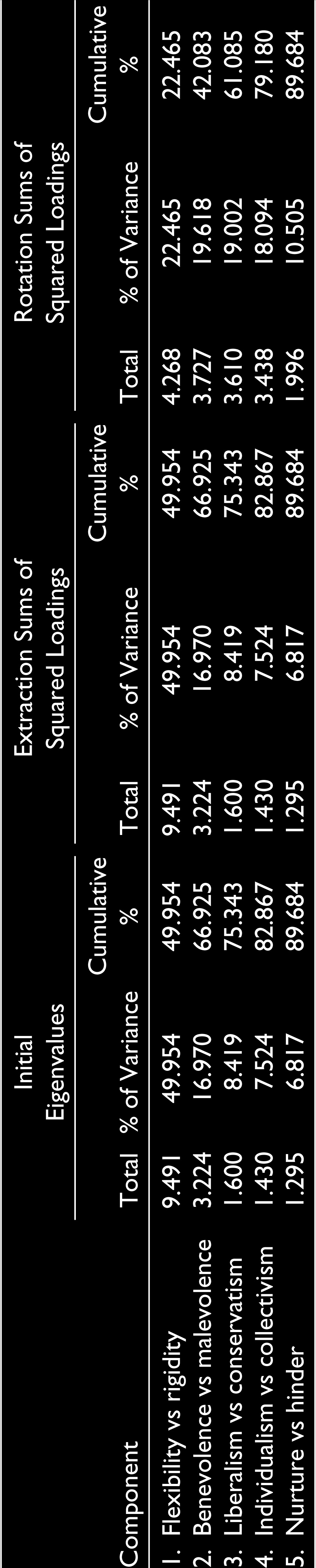
A principal component analysis was conducted on the data. The Kaiser-Meyer-Olkin (KMO) measure of sampling adequacy was 0.894 and chi-square was found to be 15,370.039. The KMO and Bartlett’s test was significant and thus showed that the factor analysis was justified. The principal component analysis with orthogonal varimax rotation extracted five factors. Items 7, 8, 9, 10 and 11 loaded on factor 1, and items 16, 17, 18 and 19 loaded on factor 2. The items 3, 4, 5 and 6 loaded on factor 3, whereas items 12, 13, 14 and 15 loaded on factor 4 and items 20 and 21 loaded on factor 5. The five factors were termed liberalism (vs conservatism), flexibility (vs rigidity), individualism (vs collectivism), benevolence (vs malevolence) and nurture (vs hinder). The results and outputs of the principal component analysis are given in Tables 2–7 and Figure 1.
KMO and Bartlett’s Test

Total Variance Explained
Rotated Component Matrixa

aRotation converged in seven iterations. The bold values signifies highest loadings of the particular component.
Factor–Item Loadings
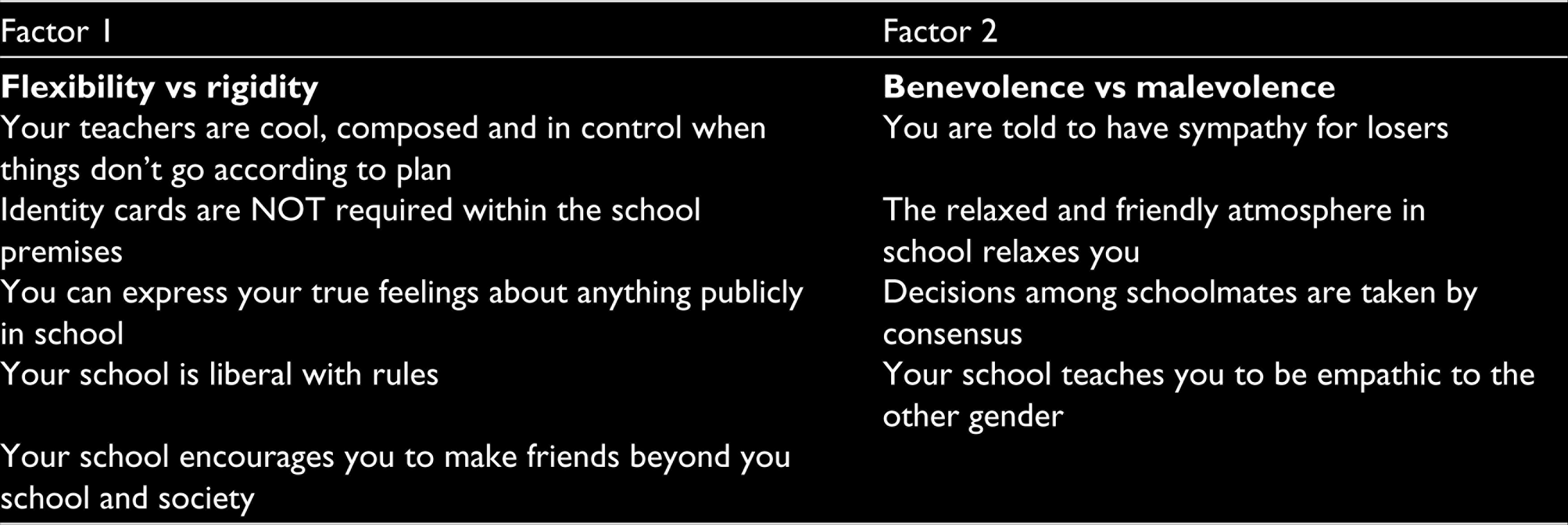
Factor–Item Loadings
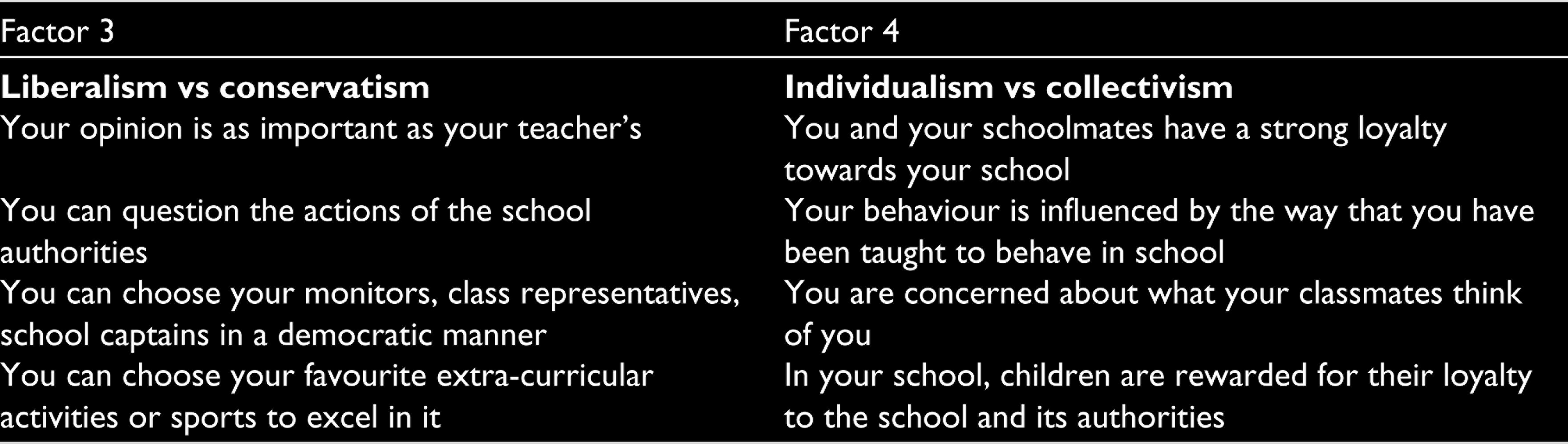
Factor–Item Loadings

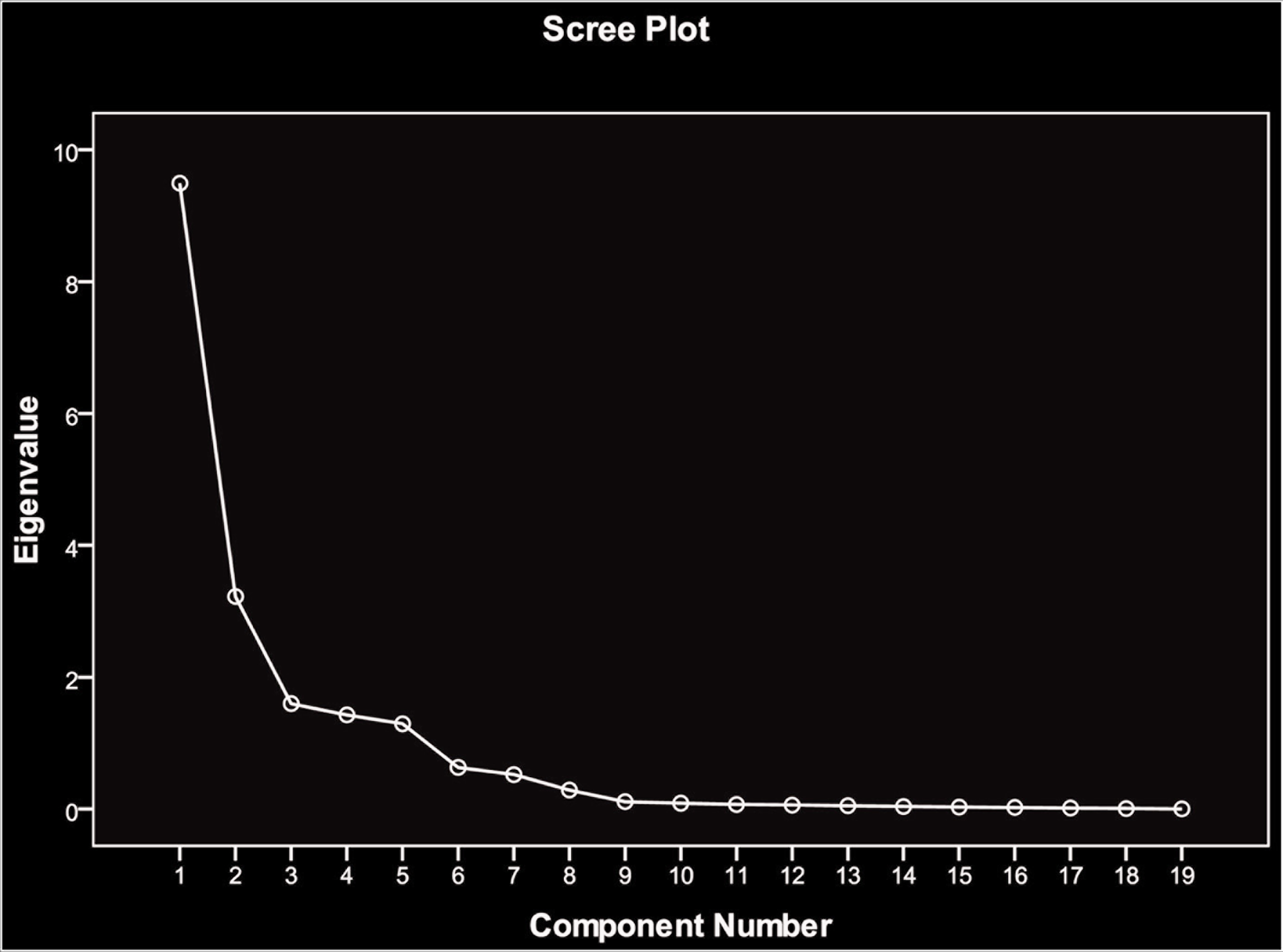
Following the principal component analysis, a path analysis was conducted. The goodness-of-fit statistics showed that the Chi-square Mean/Degree of Freedom (CMIN/DF) ratio was 5.241, NFI is 0.94 and comparative fit index (CFI) was 0.954. The RMSEA was less than 0.1. Hence, the model fit statistics were acceptable. Thus, the model for empathy-driven organizational culture for schools was validated through the exploratory factor analysis and the consequent path analysis. Tables 8–10 illustrate the goodness-of-fit statistics for this part of the study. Figures 2 and 3 illustrate the path analysis outcome of the empathy-driven organizational culture model. F0 in the figure represents empathy-driven organizational culture. F1, F2, F3, F4 and F5 represent the various components as extracted by the principal component analysis.


Goodness-of-Fit Statistics

Goodness-of-Fit Statistics

Goodness-of-Fit Statistics

Once the model for the empathy-driven organizational culture for schools was validated, the first objective of the study was fulfilled. The second objective was to design an instrument which would measure empathy-driven organizational culture among schools in India. This was done by taking only the 19-item section B of the questionnaire that was used for the study. These 19 items had already been subjected to exploratory principal component analysis which resulted in the extraction of five components. The next step was to conduct a confirmatory factor analysis of the 19-item scales. The results of the analysis indicated an acceptable model fit (CMIN/DF = 4.228, CFI = 0.969, NFI = 0.960, RMSEA = 0.086). All the important indices of fit showed good fit except RMSEA, which reported marginally higher values than the desired. However, social science literature reports that RMSEA values > 0.1 are moderately acceptable, while values greater than 0.1 report bad fit. Viewed in totality the fit indices do report acceptable fit. Tables 11–13 illustrate the goodness-of-fit outputs. Figures 4 and 5 illustrate the path analysis outcome for the confirmatory factor analysis to validate the scales for the measurement of the empathy-driven organizational culture for schools in India.
Goodness-of-Fit Statistics

Goodness-of-Fit Statistics

Goodness-of-Fit Statistics



Fornell and Larcker Criterion (Main Study)

The principal component analysis and the confirmatory factor analysis had established the factorial validity of the instrument. In order to examine the construct validity of the instrument, the data were tested for convergence validity and discriminant validity. The average variance extracted for all the five factors was greater than the accepted threshold of 0.5. Thus, convergent validity of the instrument was established. Discriminant validity of the instrument was tested through the Fornell and Larcker criterion analysis. The Fornell and Larcker criterion states that the square root of the average variance extracted should be greater than the component correlation coefficients (Fornell & Larcker, 1981). Table 14 illustrates that the Fornell and Larcker criterion was fulfilled; hence, discriminant validity was established for the instrument.
Following the tests for construct validity, the instrument was tested for criterion validity. Criterion validity is tested through predictive and concurrent validity. Predictive validity validates a test’s correlation with concrete outcomes. This is done through a comparative study (most often a correlation analysis) of the test results with concrete criterion data or the results of some gold-standard test which measures the same construct. However, in the instance of this study, there is an abject absence of criterion data since concrete behavioural outcomes of school organizational empathy are not clear. There are no gold-standard tests for the measurement of the construct either. So a comparative study with a specific external outcome or secondary test is ruled out. Moreover, predictive validity is established through longitudinal studies when and as tests for the specific constructs are developed and studied comparatively.
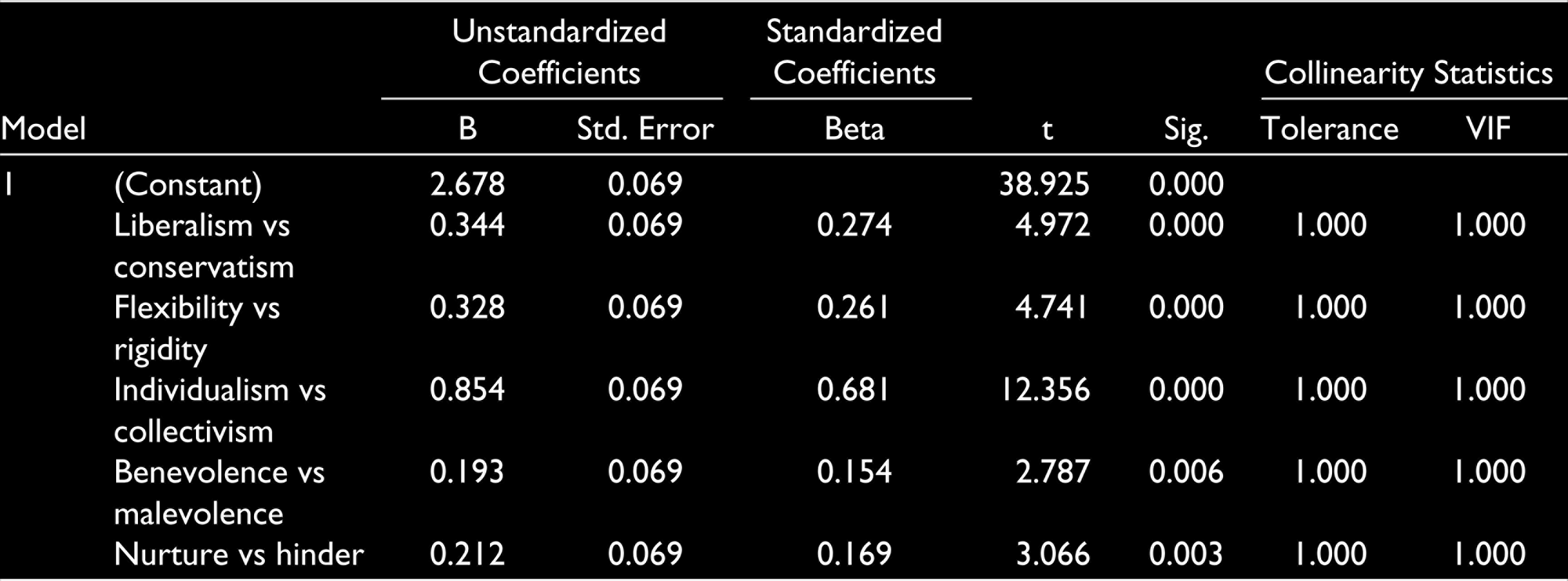
Thus, the researcher decided to test concurrent validity for instrument. Concurrent validity measures the same attribute as predictive validity but instead of a time lag, the measurement is conducted along with the test. Hence, criterion validity in this case was tested through the test of concurrent validity. Item 1 in the model questionnaire (Your school authorities understand your problems from your point of view) was taken as the predicted variable representing the students’ perceptions of the empathic nature of the school, and the factor scores of the five components extracted through the principal component analysis were taken as the predictor variables. A multiple regression analysis was conducted with this model. The results of the multiple regression analysis are given Tables 15–17. The principal component regression brought forth a significant model (F5,435 = 646.436, P < 0.0005, R2 = 0.881). Durbin–Watson statistics was within the acceptable range; thus, there was no significant autocorrelation among the residuals. Collinearity diagnostics illustrated that there was no multicollinearity present among the variables. Figure 6 establishes that the residuals were approximately normally distributed. The B-values for all the five components were significant (P < 0.05). Thus, the concurrent validity of the instrument with the first variable was established.
Model Summarya (Multiple Regression)

bPredictors: (constant), REGR factor score 5 for analysis 1, REGR factor score 4 for analysis 1, REGR factor score 3 for analysis 1, REGR factor score 2 for analysis 1, REGR factor score 1 for analysis 1.
ANOVAa

bPredictors: (constant), REGR factor score 5 for analysis 1, REGR factor score 4 for analysis 1, REGR factor score 3 for analysis 1, REGR factor score 2 for analysis 1, REGR factor score 1 for analysis 1.
Coefficientsa

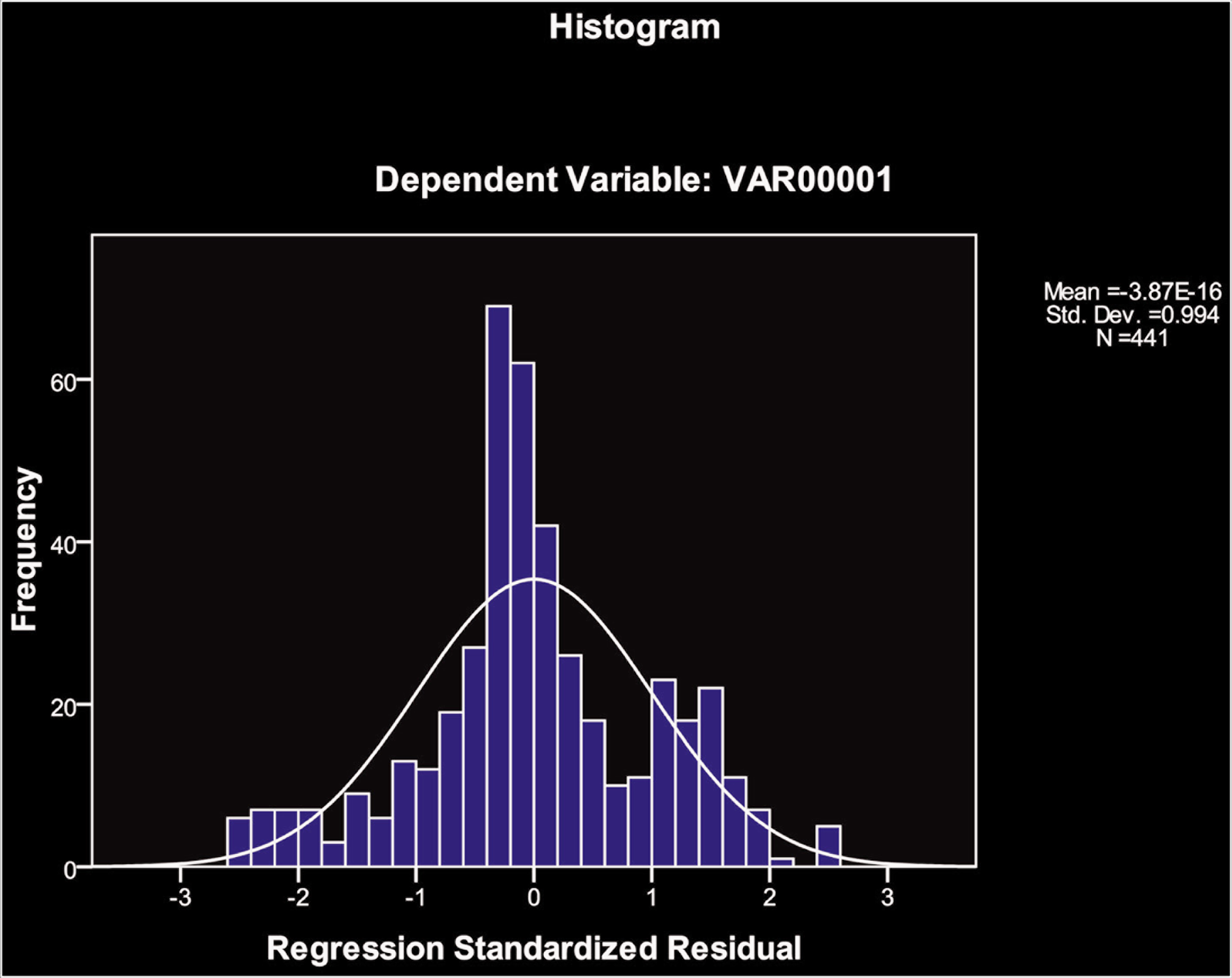
In order to test the concurrent validity of the instrument with the second variable (Your school authorities are compassionate towards you and go out of their way to help you), a multiple regression analysis was conducted with the second variable as the predicted variable and the factor scores of the five extracted components as the predictor variables. The results of the multiple regression analysis are given in Tables 18–20. The principal component regression brought forth a significant model (F5,435 = 107.363, P < 0.0005, R2 = 0.552). Durbin–Watson statistics was within the acceptable range; thus, there was no significant autocorrelation among the residuals. Collinearity diagnostics illustrated that there was no multicollinearity present among the variables. Figure 7 establishes that the residuals were approximately normally distributed. The B-values for four components were significant (P < 0.05); however, the fifth component (nurture vs hinder) was not found to be a significant predictor of the compassion component of empathic organizational culture. This component was, however, found to be a significant predictor of the cognitive component of organizational culture. Thus, the two constructs of empathic organizational culture for schools, viz. cognition and compassion, were found to be significantly predicted by the instrument; thus, concurrent validity of the instrument with the second variable was established.
Model Summarya

bPredictors: (constant), REGR factor score 5 for analysis 1, REGR factor score 4 for analysis 1, REGR factor score 3 for analysis 1, REGR factor score 2 for analysis 1, REGR factor score 1 for analysis 1.
ANOVAa

bPredictors: (constant), REGR factor score 5 for analysis 1, REGR factor score 4 for analysis 1, REGR factor score 3 for analysis 1, REGR factor score 2 for analysis 1, REGR factor score 1 for analysis 1.
Coefficientsa


Subsequent to the main study, a follow-up study with 118 respondents (high school students) was conducted to further test the construct validity and the criterion validity of the instrument. The construct validity was tested through convergent and discriminant validity. The average variance extracted for all the components was greater than 0.5. Thus, convergent validity was established for the instrument. The Fornell and Larcker criterion analysis showed that the square root of the average variance extracted were greater than the component correlations; this is illustrated in Table 21. Thus, discriminant validity was established for the instrument.
Fornell and Larcker Criterion (Follow-up Study)

In order to test the concurrent validity of the instrument, a single item was tested as the predicted variable for the follow-up study. This item elicited response of the students on their perception of the school’s empathic culture. Since the item formed a part of the instrument and required an immediate response, it could be used to test concurrent validity. This item was inserted as: Your school encourages an empathetic culture towards the students (1 = always, 2 = sometimes, 3 = often, 4 = mostly, 5 = always).
The researcher is of the opinion that empathic school cultures have a direct effect on the students’ perception of their school’s culture with regard to that construct. If school promotes an empathic school culture, the students’ perception of their school will reflect that. Thus, an instrument to measure empathic school culture should be able to predict the student’s perception of the school culture. It is with this rationale that the researcher conducted a principal component regression using the component scores of the second study as predictors and the responses to the student’s perception of the empathic school culture promoted by their school as the predicted variable to test the predictive validity of the instrument.
The results of the principal component regression are presented in Tables 22–24 along with Figure 8. The principal component regression brought forth a significant model (F5,112 = 43.405, P < 0.0005, R2 = 0.660). Durbin–Watson statistics was within the acceptable range; thus, there was no significant autocorrelation among the residuals. Collinearity diagnostics illustrated that there was no multicollinearity present among the variables. Figure 8 showed that the residuals are approximately normally distributed. The B-values for all the five components were significant (P < 0.05). Thus, the concurrent validity of the instrument was established.
Model Summarya

aPredictors: (constant), REGR factor score 5 for analysis 1, REGR factor score 4 for analysis 1, REGR factor score 3 for analysis 1, REGR factor score 2 for analysis 1, REGR factor score 1 for analysis 1.
ANOVAb

bPredictors: (constant), REGR factor score 5 for analysis 1, REGR factor score 4 for analysis 1, REGR factor score 3 for analysis 1, REGR factor score 2 for analysis 1, REGR factor score 1 for analysis 1.
Coefficientsa

Summary and Conclusions
The study recognized the importance of an empathy-driven organizational culture in schools. The first part of the study established a validated model that explained how cognitive and compassionate aspects of empathy determine an empathy-driven culture. The second part of the study focused on the development of a reliable and valid instrument which could measure organizational empathy in schools. A part of the questionnaire used for the first part of the study was used as the instrument and a confirmatory factor analysis validated the instrument. Further, a follow-up study re-established the factorial, convergent and discriminant validity of the instrument to measure empathy-driven organizational culture in schools. Concurrent validity of the instrument was tested and established against its efficacy to predict student’s perceptions of their school’s empathic organizational culture.
This study will help to establish the importance of empathy as a significant influence in school organizational culture and present schools, professionals and even government bodies with an instrument which will help to monitor how empathic organizational cultures are as perceived by their students. This will help to bring forth a new dimension in alleviating the standards of school education in India and lead to better teaching–learning outcomes.
Footnotes
Declaration of Conflicting Interests
The author declared no potential conflicts of interest with respect to the research, authorship and/or publication of this article.
Funding
The author received no financial support for the research, authorship and/or publication of this article.