



Abstract
Gig economy is being increasingly popular globally across the sectors, positions and types of jobs. Despite the growing awareness of the benefits and challenges associated with gig jobs, little is known about what drives the younger generation to take up gig careers. The present study attempts to address this gap and better explain gig work intentions through extended TPB theory. The study rests on the premise that job seekers’ attitude towards gig jobs, belief in self-efficacy and the prevailing social norms influences the decision to make a gig career choice. Apart from these basic constructs of TPB model, impact of two additional factors (gig personality traits and gig work environment consisting of gig job demands and gig job resources based on JD-R model) on gig job intentions was measured to get a deeper understanding on predictors of gig jobs choices. Based on analysis of 471 responses from business management students studying in NIRF listed business schools in India, the study empirically reveals that all three basic constructs-gig job attitude, gig self-efficacy and social norms significantly influence management student’s gig job intentions. Gig job demands had a significant negative whereas gig job resources had a positive relationship with gig job intentions. The three personality traits did not have any direct significant relationship with gig job intentions. But the mediating role of gig job attitude between gig personality traits was also confirmed. The findings of the study contribute to literature on factors driving choice of gig jobs. It has huge implications for policy makers, organizations, business schools as well as society in general.
Introduction
‘Gig economy’ is an increasingly popular concept, especially in developed countries like the US and Europe, owing to its immense contribution to a nation’s GDP in terms of employment generation, job satisfaction and revenues (Garbutt, 2019). With 56% of new employment being generated by the gig economy, it is being seen as the forerunner of future work trends by many companies and professionals in developing countries (Banik, 2020). A gig economy tests the traditional economy which comprises full-time workers who focus on long term careers without changing career paths (Prassl, 2018). By and large, ‘gig work’ is basically an alternative work arrangement that may include but is not limited to temporary work, contingent work, part-time work, contract work and freelance work (Spreitzer et al., 2017) which may or may not be underpinned by digital platforms (World Economic Forum, 2020; Rani et al., 2021). Gig workers are those who have non-permanent fixed hours of work, which they do individually, being paid for each work/assignment separately (Ashford et al., 2018; CIPD, 2017).
The drivers behind the growth of the gig economy may be categorized broadly into technological factors like better internet connectivity and psychological factors like a shift in the job seeker’s mindset (Gandini, 2016; Livemint, 2019; Scully-Russ & Torraco, 2020). Scholars in the past have attempted to further explore the gig economy by examining the characteristics of gig jobs, its impact on employment, labour productivity and corporate strategies (Banik & Padalkar, 2021). Organizations as well as job seekers gradually started realizing the enormous benefits gig jobs have to offer and this fuelled research in the domain of the gig economy in order to further explore the drivers, motivations and challenges of gig jobs. Notably, several studies in the past have already discussed the benefits, challenges and regulations in the gig economy as well as motivations to take up gig jobs (Gandhi et al., 2018; Heeks, 2017; Keith et al., 2020; Patre & Roy, 2018). Scholars have also highlighted the fact that gig jobs can lead to the commodification of jobs. They represent the deteriorating quality of working conditions and job standards globally (Wood et al., 2019) as well as risk the transfer from employer to gig worker (Bieber & Moggia, 2021). Past studies have also highlighted the setbacks in the terms of employment law (Gandhi et al., 2018) and the complications in understanding diversity in gigs (Spreitzer et al., 2017). Others have focused on the wellbeing of gig workers in high income countries as well as mid and lower income ones (Berg, 2016; Wood et al., 2019), the health effects of a gig economy (Freni-Sterrantino & Salerno, 2021), the link between employer characteristics and attracting talented gig workers (Bode & Singh, 2018), the role of philanthropic activities to strengthen the employer–gig worker relationship (Burbano, 2021), the value of experienced gig workers in traditional job markets (Adermon & Hensvik, 2022), factors that drive the retention of online gig workers and ways to minimize the dropouts (Cram et al., 2020).
Bracha and Burke (2021) found a way to measure how big a gig economy is by measuring the total number of hours gig workers collectively worked. On the basis of how important the gig economy could be in the current context, it is imperative to understand the role of educational institutes in extending their support to the gig economy. Hence, several studies in recent times have focused on introducing micro-credentials in higher education systems to support the gig economy (Wheelahan & Moodie, 2021). The increasing prevalence of the gig economy has sweeping implications in every sector, particularly in the sector of business management education which plays a vital role in shaping the sense of self of students (Caza, 2020).
Although some scholars studied the impact of the gig economy on students, faculty and management institutes (Caza, 2020), there has been no research on identifying the predictors of gig job intentions, especially among management students who comprise a larger part of the white collared workforce. Hence, there is an urgent need to understand their intention to gig. While some studies did explore gig worker intentions for blue collared jobs, none investigated those seeking white collared gig jobs (Gandhi et al., 2018). The present study attempts to address this research gap. The study provides empirical evidence of the antecedents used to determine the willingness of management students to participate in a gig economy as they are the aspiring entrepreneurs and business leaders who, in future, will fuel the growth of the nation. Specifically, this study attempts to find the predictors of gig job intentions by using an extended theory of planned behaviour (TPB) model. Understanding motivation and promoting gig worker behaviour in the younger generation is critical in the present context, especially to academicians, policymakers and the nation as a whole. At present, business schools, especially in India, are not equipped with the resources necessary to groom their students to take up gig careers. With no insight on the inclination of business students towards gig jobs, policymakers would be myopic in their actions. Additionally, organizations designing and offering white-collared gig jobs have no clue about the factors that could be motivators or challenges within the gig work environment. In summary, the study intends to investigate a few questions on the present research.
RQ1: How are gig job attitude (GJA) and gig self-efficacy (GSE) associated with gig job intentions (GJI)?
RQ2: Do gig job dynamics like gig job demands (GJD) and gig job resources (GJR) affect the intention to take up gig jobs?
RQ3: Do individual personality traits like the need for achievement (NFA), locus of control (LOC) and risk taking ability (RT) drive their intentions for gig jobs?
RQ4: Does gig job attitude effectively mediate gig personality traits and gig job intentions?
Data from 471 management students was gathered in order to measure their intentions for gig jobs to validate the proposed framework of research. The findings suggest that all three basic constructs, that is, gig job attitude, gig self-efficacy and social norms significantly influence their gig job intentions. Furthermore, gig job demands have a negative effect while gig job resources have a positive relationship with gig job intentions. Apart from locus of control, all the three gig personality traits studied did not have any direct and significant relationship with gig job intentions. Additionally, the mediating role of gig job attitude and the three gig personality traits was also confirmed. Furthermore, need for achievement, risk taking and locus of control do have a significant indirect effect on gig job intention. Thus, this study makes a few novel contributions; it is possibly the first to use an extended TPB theory to measure gig job intentions of Indian management students. Second, it focuses on gig jobs which hitherto have been under-explored in developing countries like India. Third, it uses the JD-R model as an additional construct to measure gig job demands and resources. within the purview of the TPB model. Overall, this study offers a comprehensive understanding of gig job intentions and thereby contributes theoretically to managerial decision-making and curriculum planning of educational institutes.
Background Literature
The present study attempts to apply the TPB theory and the JD-R model to design the research framework.
TPB Theory
The systematic process of an individual’s reason for a specific intention is revealed by the TPB. It comprises four basic elements that include attitude (ATT), subjective norm (SN), perceived behavioural control (PBC) and behavioural intention (Ajzen, 1991). TPB has been empirically known to identify and predict determinants that influence an individual’s intention. An individual’s tendency to be inclined towards a favourable or unfavourable appraisal of behaviour in any situation is ATT. The perceived social force to perform or not perform the behaviour in question is SN while the perceived ease or difficulty of performing the behaviour is PBC. PBC has been compared to Bandura’s self-efficacy model (Bandura, 1997). ATT, SN and PBC together, directly determine the ‘intention’ and hence, they are the basic constructs that have been incorporated in our theoretical framework. Notably, TPB has been used in numerous studies like the literature on information systems, internet purchasing and entrepreneurial intentions (Pavlou, 2002; Suh & Han, 2003).
JD-R Model
The job involvement of employees is managed through the JD-R model by most managers. The JD-R model is known to be applied to various occupational settings across countries and professions regardless of any demands and resources involved (Demerouti et al., 2001). Although specific job-related factors may vary, it is basically categorized into two factors: job demands and job resources. While job demands are a part of an unfavourable physical environment like workload, job resources are favourable as they are those factors that help in achieving goals like autonomy or task/skill variety (Bakker & Demerouti, 2007).
The present study integrates the JD-R model with TPB for the first time, in order to better understand the demands and challenges of gig jobs, and hence, measure the intent of management students to be a part of the gig workforce.
Relationship Between Entrepreneurship and Gig Jobs
Research on the gig economy in developing countries is limited. Researchers need to deep-dive to explore this emerging field. There are many similarities between an entrepreneur and a gig worker as both of them fall under the category of the self-employed. Just as an entrepreneur makes money by directly selling products and services to their target audience, the gig worker conducts their work in a similar manner (Sitarz, 2018). The most relevant research in the gig domain, namely gig job intentions is probably the study of entrepreneurial intention which has been extensively studied (Şahin, 2019; Tomy & Pardede, 2020). Some studies in the past have suggested the possibility of transferring entrepreneurial theories to the gig domain, especially those that relate to the similarities of roles when perceived from the angle of ‘self-employment’ (Karlsson & & Wranne, 2018). Extant research also shows that a gig economy may facilitate as well as reduce entrepreneurial activity (Cho & Cho, 2020). Hence, this study uses adapted entrepreneurial scales to measure the intentions and attitude of gig workers and gig work-related self-efficacy.
Theoretical Framework and Development of Research Hypothesis
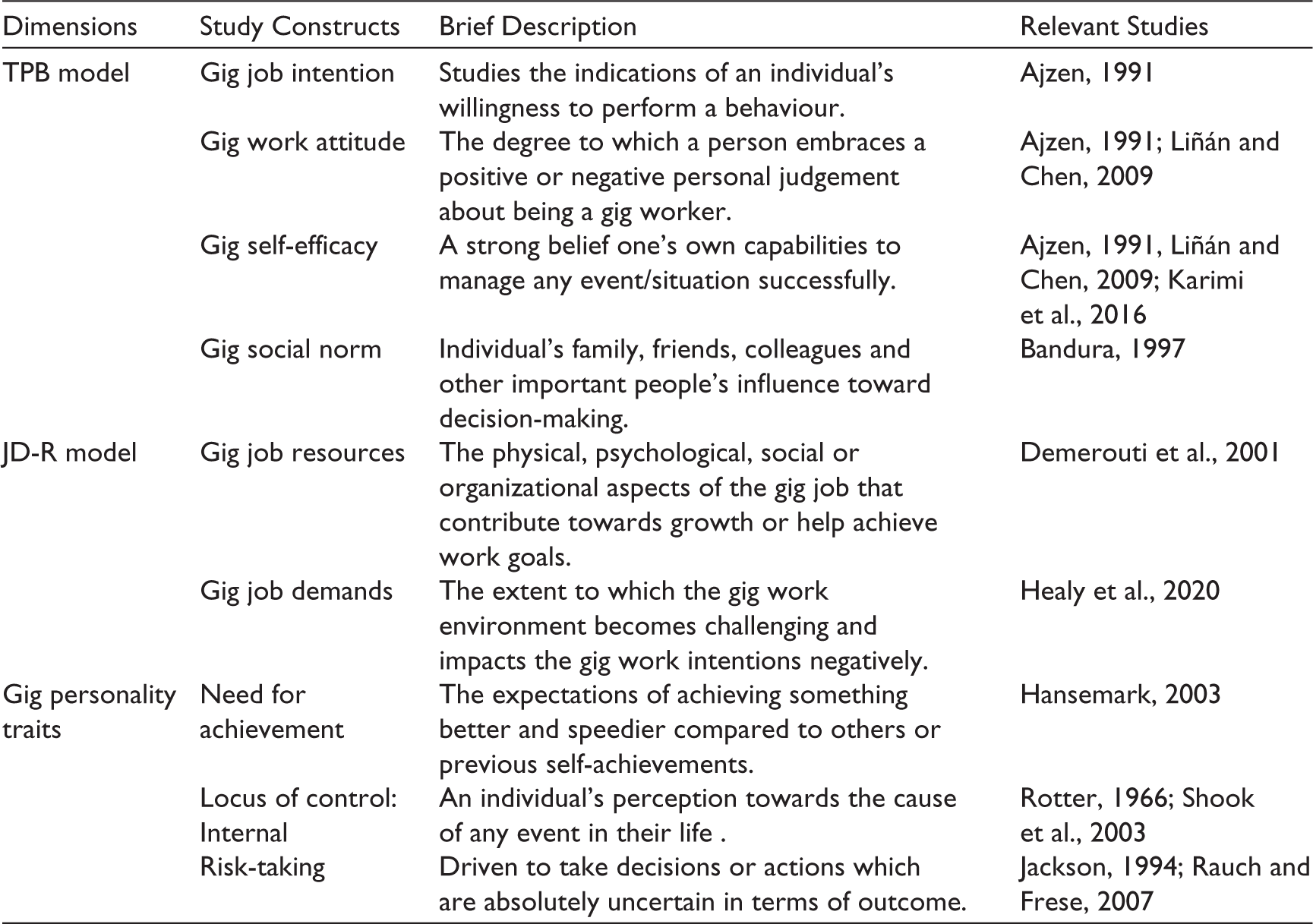
Intentions are known to be the single best indicator of actual behaviour (Ajzen, 1991). Thus, they are vital to understand the inclination of management students who opt for a gig career. This study conceptualizes a research framework by adapting the extended TPB theory against the background of a gig economy (Ajzen, 2011; Riebl et al., 2015; Wahid & Ahmed, 2011). Further, apart from the basic constructs of the TPB model (i.e., attitude, self-efficacy and subjective norms), two additional constructs were incorporated: gig personality traits (i.e., the need for achievement, locus of control and subjective norms) and gig work environment (i.e., gig job demands and gig job resources using the JD-R model). Extant literature has highlighted that work environment, consisting of job motivation (resources) and challenges (demands) impacts the overall well-being of an individual (Bakker & Demerouti, 2007). This influences the individual’s intentions to choose a particular job. Moreover, according to the theory of career choice, the presence of certain personality traits predicts the choice the individual makes (Holland, 1997). Table 1 gives the description of study constructs in brief.
Brief Description of Study Constructs
Basic Constructs of the TPB Model: Gig Job Attitudes, Gig Self-efficacy and Social Norms
Entrepreneurial research defines gig attitude as ‘the degree to which an individual holds a positive or negative personal valuation about being a gig worker’ (Liñán & Chen, 2009). Several studies have claimed/illustrated that attitude is a strong predictor of intention (Karimi et al., 2016; Vamvaka et al., 2020) and can strongly influence the career choice of students (Al-Mamary et al., 2020). Hence, we presume that the attitude of management students towards gig jobs will be a strong predictor in their choice of a gig career. Thus, we posit:
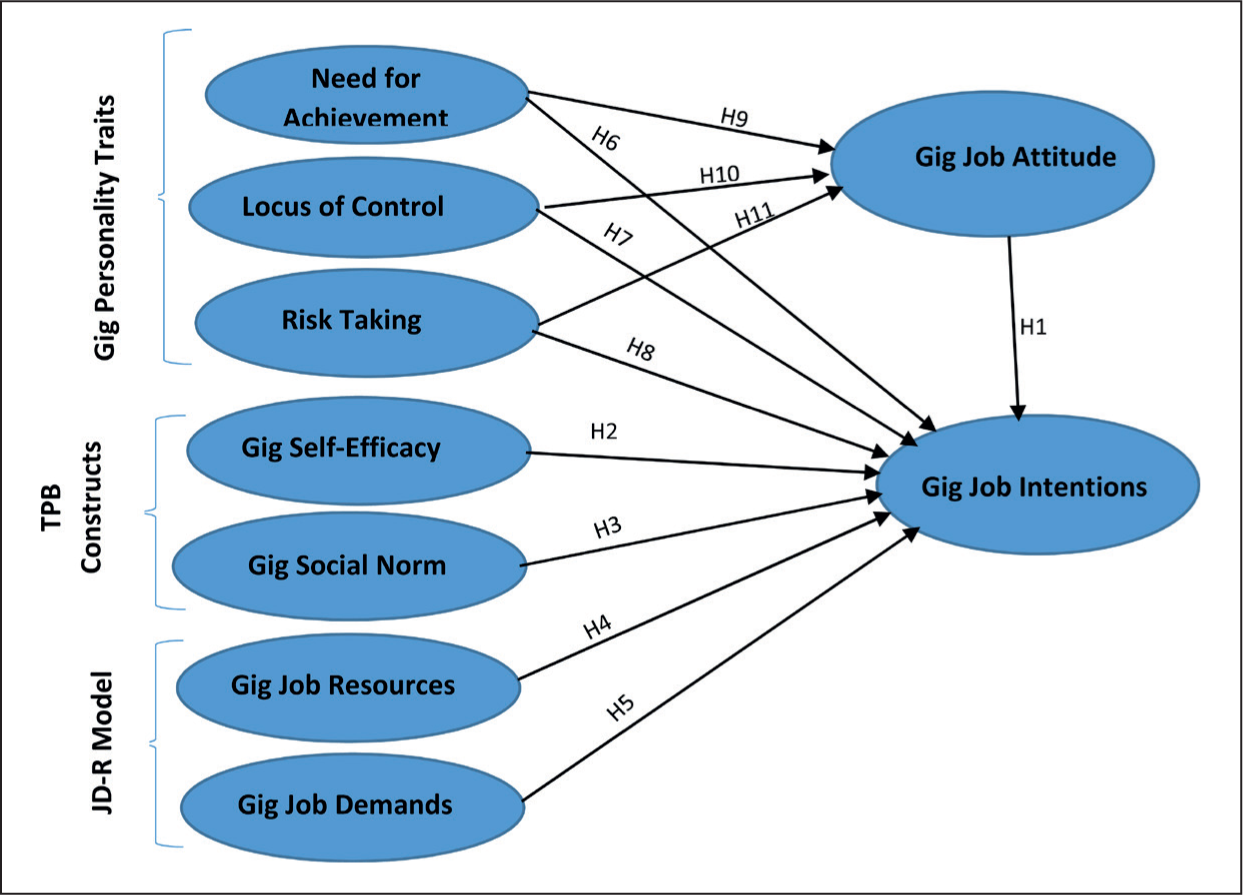
H1: Management students’ attitude towards gig jobs (GJA) will influence their intent to choose gig jobs (GJI).
Past studies have asserted that self-efficacy is a strong predictor of intention (Ajzen, 1991; Karimi et al., 2016). It has been shown that a person with a strong belief in one’s capabilities is willing to take the entrepreneurial risks involved to become an entrepreneur. Past studies have confirmed that students with high self-efficacy have high intentions of becoming entrepreneurs (Al-Jubari, 2019; Al-Mamary et al., 2020). Extending the same understanding to the gig context, it may be presumed that if management students have high confidence in their ability to tackle gig jobs along with its related risks and challenges, they will have a positive inclination towards gig careers. Therefore, this study attempts to find the relation between gig self-efficacy and gig job intention. Based on the same, we posit:
H2: Management students’ self-efficacy towards gig jobs will influence their intent to choose gig jobs (GJI).
Several studies in the past have shown a significant relationship between SN and intention (Karimi et al., 2016; Siu & Lo, 2011). Students seek advice from friends, relatives and family before making important career choices. Studies have confirmed that these people may strongly influence their decisions to take up any career (Al-Jubari, 2019; Al-Mamary et al., 2020). This study, thereby, argues that SN does have a significant influence on the intent of management students to be a gig worker. Hence, we posit:
H3: Social norms (SN) will influence management students’ intent to choose gig jobs (GJI).
Incorporating Additional Constructs in the TPB Model: Gig Job Resources and Gig Job Demands
Although attitude, self-efficacy and social norms primarily regulate behavioural intention, scholars have incorporated new constructs to the basic TPB model in order to find strong predictors for intention (Carr & Sequeira, 2007; Obschonka et al., 2010). It is important for policymakers to know which other strong predictors for gig job intention exist apart from the basic TPB constructs. Hence, based on past literature and to get a more comprehensive understanding, the present study incorporates three additional constructs (Munir et al., 2019) as antecedents to gig job intention. These additional constructs are gig personality traits, gig job resources (GJR) and gig job demands (GJD).
Gig Work Factors: JD-R Model
As motivation also affects an individual’s intention (Ryan & Deci, 2000), several studies in the past have studied motivation as a predictor for entrepreneurial intention (Wibowo et al., 2019). Extensive research has been done on the JD-R model to establish how job resources and job demands impact an individual’s stress and wellbeing. Knowledge about high gig job demands may lead to stress and discourage people from taking up gig careers. Alternatively, high job resources may compensate for job demands and lead to motivation, thus encouraging people to take up gig jobs (Bakker & Demerouti, 2007). The present study is possibly a first that focuses on studying the gig work environment which includes gig job demands and resources within the JD-R model framework. The study helps researchers deep-dive and understand both, the resources as well as the demands of gig work, which in turn, may influence the gig work intention of management students. We thereby define, at first, the resource for the gig work environment as the extent to which it can possibly impact gig work intention positively. Past studies on gig work have shown that there are many reasons for motivation to take up gig jobs. Factors that drive worker satisfaction like choice, autonomy, flexibility and control are integral to the gig economy which a ‘full-time employee’ usually lacks (Heeks, 2017; Keith et al., 2020). Notably, job characteristics that are particularly salient to the gig context include skill variety, task identity, task significance, feedback and autonomy (job characteristics model) (Cappelli & Keller, 2013; Keith et al., 2019). Based on the same, we posit:
H4: Motivation through gig job resources (GJR) will positively influence the intention of management students to choose gig jobs (GJI).
We define the demands of the gig work environment as the extent to which it becomes challenging and impacts gig work intention negatively. Studies on gig work have exhibited that the job characteristics of gig work are very different to those of salaried jobs. For instance, gig workers face high levels of uncertainty, risks, financial instability, no retirement benefits and the job stress of continuously enriching their personal networking skills (Heeks, 2017; Keith et al., 2020). Hence, it is possible that after understanding these demands and challenges, management students might get discouraged to take up a gig career. Based on the same, we posit:
H5: Demands of gig jobs (GJD) will negatively influence the intention of management students to choose gig jobs (GJI).
Gig Personality Traits
Personality traits play a significant role in determining an individual’s behaviour (Korflesch & Tran, 2016). They provide a suitable basis for studying regular behaviour and performance across a wide range of domains (de Feyter et al., 2012). Herein, we reconnect with the theory of career choice which states that an individual’s choice of career is simply an expression of their personality (Holland, 1997). A few studies have dealt with the characteristics of gig workers (Lepanjuuri et al., 2018) but there has been no systematic research on the association between gig personality traits and gig work intention. Hence, our understanding from literature on entrepreneurial research, specifically entrepreneurial motivation, is that a gig worker has a great need for achievement, an internal locus of control, a desire for independence and high self-efficacy (Gurel et al., 2010).
The ‘need for achievement seems to entail expectations of doing something better or faster than anybody else or better than the person’s earlier accomplishments’ (Hansemark, 2003). Individuals who have a high need for achievement tend to be hard working, determined and competitive; they endeavour to augment their social position while looking to achieve newer heights (McClelland, 1961). It can be said that those management students who, in general, have a high need for achievement, will be ready to try harder to be content, know exactly what they want out of life and take up any challenge to pursue a gig career. Hence, we posit:
H6: A high need for achievement (NFA) in management students will positively influence their intention to choose gig jobs (GJI).
Locus of control is an individual’s conceptualization of events in their life. The internal locus of control assumes that an individual has the power over the happenings in their life whereas the belief that the events of one’s life are under the power of external factors are reflected by the external locus of control (Shook et al., 2003). People with an internal LOC, who are more inclined to take the risks of initiating a new business, are the ones having an internal locus of control (Mueller & Thomas, 2001). Hence, successful entrepreneurs predominantly have an internal locus of control (Beugelsdijk & Noorderhaven, 2005). Gig workers constantly face financial instability and job insecurity among other challenges. To thrive in the career of a gig worker, it is important to have the confidence to control the consequences arising from such challenges. All those management students who have an internal locus of control can hence be confident of achieving what they want and can thus cope with gig job demands. Hence, we hypothesize that:
H7: Strong internal locus of control (LoC) in management students will positively influence their intention to choose gig jobs (GJI).
An individual who has a high risk-taking appetite is more inclined toward taking decisions that are uncertain despite the chances of failure (Rauch & Frese, 2007). Gig professionals do not have any continuity in their jobs; therefore, they have to continuously enrich their network and keep tapping the same for newer opportunities (Heeks, 2017; Keith et al., 2020). This implies that the propensity to take risks is high in them. Management students who are willing to take higher risks for higher returns without being concerned about continuity in earnings, fearlessly take up new initiatives and find gig careers to be lucrative. We thereby hypothesize that:
H8: Strong risk-taking propensity (RT) in management students will positively influence their intention to choose gig jobs (GJI).
The Mediating Role of Gig Job Attitude
Our personality reflects our thoughts and actions, thereby impacting our attitude to a large extent. Researchers have linked attitude with personality traits like internal locus of control (LOC), need for achievement (NFA) and risk taking (RT) (Lüthje & Franke, 2003; Robinson et al., 1991). The tendency to take risks and locus of control have been reported to show an indirect influence on a person’s intention through Attitude (Farrukh et al., 2018; Lüthje & Franke, 2003). It is reasonable to claim that management students who have a strong personality are confident of their capabilities and develop a positive attitude towards gig jobs, which, in turn, will influence their intention to take up gig jobs. Based on these postulations, we posit that GJA has a mediating role in the relation between gig personality traits and GJI. An enhanced risk-taking tendency, the desire for achievement and an internal locus of control indicates a rise in positive GJA and GWI. Thus, we posit:
H9: The attitude of management students towards gig jobs (GJA) will mediate the relationship between GJI and NFA. H10: The attitude of management students towards gig jobs (GJA) will mediate the relationship between GJI and RT. H11: The attitude of management students towards gig jobs (GJA) will mediate the relationship between GJI and LoC.
The hypothesized relationships are shown in Figure 1 which are further discussed in detail.
Research Methodology
The next section summarizes the sampling, the data collection process and the analysis, using structural equation modelling (SEM).
Sample and Management of Survey
Responses were collected from students studying in NIRF-2020 ranked management institutes like IIM Raipur, IIM-Kozhikode, SIBM-Hyderabad, ISB, XLRI, IIM-Ranchi and IIM-Bangalore among others. The questionnaire was circulated through online modes to maximize the reach during the pandemic. Convenience sampling technique was used and emails were sent to more than a 1000 students of which 552 responses were received. After data cleaning, the final responses considered for analysis were 471.
Survey Instrument Measures
A structured questionnaire was used to collect the primary data. The questionnaire consisted of two sections: the demographic profile and the research items used for study constructs. These items were derived and adapted from multiple sources; for instance, gig job intentions were derived from Liñán and Chen (2009), gig job attitudes from Healy et al. (2020), social norm from Krueger Jr et al. (2000), gig self-efficacy from Wilson et al. (2007), gig personality traits and risk-taking from Chye Koh (1996), locus of control from Levenson (1974), need for achievement from Frs and Knox (1972), gig job resources from Richard Heeks (2017) and Keith et al. (2019), and gig job demands from (Keith et al., 2020; Tolbert, 1996). A five-point Likert scale was used to measure each variable.
Data Analysis and Results
The respondents ranged in the age group of 21–28 years, the mean age being 24.1 years (SD = 4.74 years); 268 (57.1%, n = 471) were men and 202 (42.9%) were women; 307 (65.1%) had some work experience, while 164 (34.9%) had no work experience; 82 students (17.5%) belonged to business families, while 389 (82.5%) belonged to either the service or agriculture related domain.
Confirmatory factor analysis (CFA) was used to confirm both, the reliability and the validity of the measures. The structural paths of the conceptual model were examined using SEM.
Validity and Reliability Analysis
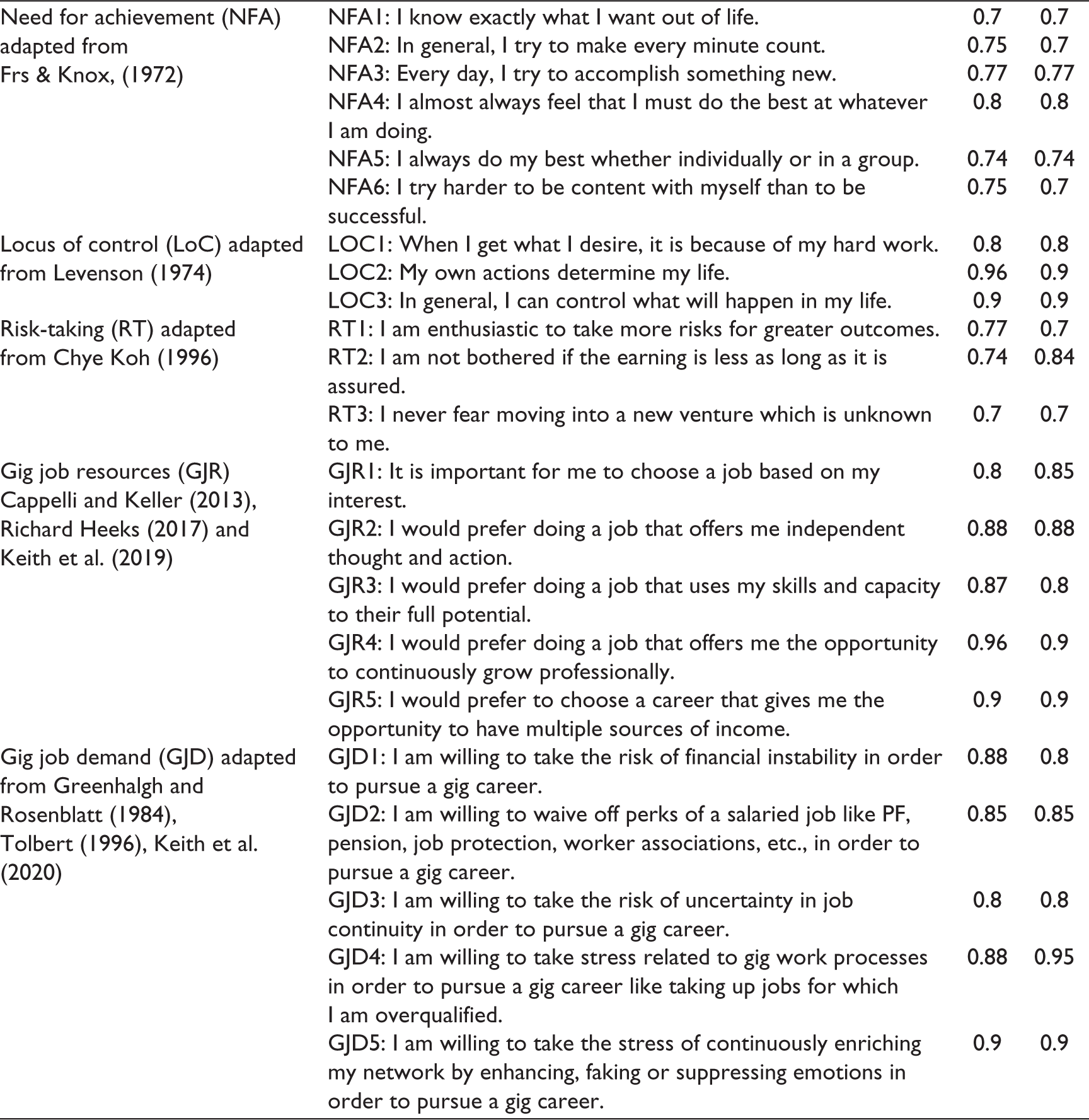
Both, the validity and the reliability of the constructs were examined through CFA; moreover, the reliability of each construct was examined by calculating the Cronbach’s alpha values, wherein all exceeded the cut-off value of 0.7, ranging from 0.74 to 0.82 (Fornell & Larcker, 1981). The factor loadings (Table 2) were also above 0.7, thus confirming that the items used were good measures for the study construct (based on the cut-off of 0.40 recommended by Hair et al., 2010). Furthermore, the path analysis results indicated a good model fit (χ2 /df = 2.69, goodness of fit index (GFI) = 0.91, Tucker Lewis index (TLI) = 0.90, comparative fit index (CFI) = 0.92 and root mean square error of approximation (RMSEA) = 0.5. All other indices were well above the criteria recommended. However, there was 56% variance in terms of ‘gig job intentions’ which has been explained through the study constructs. The adjusted R-square was found to be 0.69, that is, 69%, suggesting that the proposed model does have a fairly good explanatory power in measuring the intention of Indian management students to take up gig jobs.
Variables Under Study, Items and Factor Loadings

Hypothesis Testing
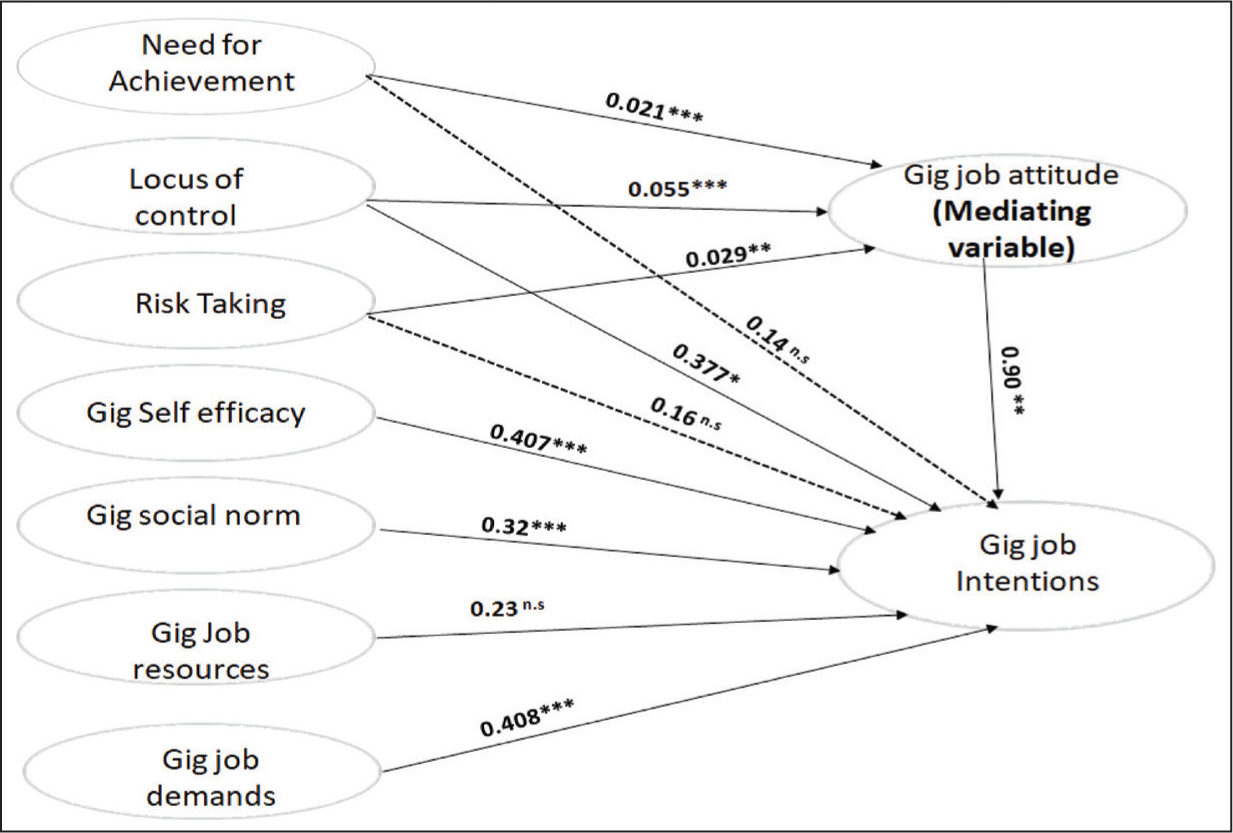
The hypotheses stated in the research model were tested using standardized regression coefficients (β values) and p-values of the structural model. As shown in Table 3, the findings show that all the three TPB predictors of intention were significant; however, interestingly, each of them varied in strength. GJA (H1: β = 0.90, p≤ 0.05) had the highest impact followed by GSE (H2: β = 0.40, p ≤ 0.05) and SN (H3: β = 0.32, p≤ 0.05), significantly influencing the intention to take up gig jobs. Further, GJD (H4: β = 0.40, p≤ 0.05) was found to have a negative significant impact on GJI, whereas GJR (H5: β = 0.23, p>0.05) had a positive but insignificant impact on GJI. More importantly, the findings rejected hypothesis H4 but supported H5.
Hypothesis Testing

Additionally, it was found that, of the three gig personality traits studied, only locus of control (β = 0.377, p≤ 0.05) significantly impacted gig job intentions. This is in line with earlier findings which mention that individuals with high internal LoC are attracted to domains like entrepreneurship where they are able to have an immediate impact on results (Kerr et al., 2018). In fact, recent research has also found a predictive impact of internal locus of control on entrepreneurial attitude and self-employment intention (Baluku et al., 2018). We can extend the findings to the gig context, too. If management students are confident of their capabilities, they will be more likely to confidently tackle gig job demands and hence have a higher GJI.
Risk-taking (β = 0.162, p>0.05) and the need for achievement (H6: β = 0.145, p>0.05) had an insignificant influence on GJI, thereby supporting H7 while rejecting H6 and H8. Interestingly, this opposes prior entrepreneurial research which found that students inclined towards entrepreneurship possess a higher NFA and risk-taking propensity to start their own venture (Orman, 2009). It is possible that the cultural background of students can impact this finding (Zahra, 2005).
Mediation Analysis
Next, the mediation effects were studied. Initially, the pre-conditions for the existence of mediation effects were analysed. Notably, these pre-conditions for mediation are fulfilled when there is a significant relationship between the predictor and the mediator and also between the mediator and the outcome variable (Schneider et al., 2005).
In our study, the indirect effect of each of the gig personality traits under consideration was examined on GJI through GJA; the results showed that all three traits, NFA (0.021, p<0.05), LOC (0.05, p<0.05) and RT (0.029, p<0.05) did have a positive significant influence on GJA. Furthermore, GJA, in turn, had a strong significant impact on GJI (0.90, p<0.05). As GJA was hypothesized to play a mediation role between the three gig personality traits, NFA, LOC & RT and GJI, it did satisfy Hypotheses H9, H10 & H11. This supports earlier findings of extant literature. Infact, the results showed a full mediation effect of GJA between NFA with GJI and RT with GJI, while a partial mediation of GJA between LOC and GJI was also noted. Hence, H9, H10 and H11 were accepted. More importantly, this particular finding is in line with previous studies on entrepreneurship (Farrukh et al., 2018; Wilkinson & Abraham, 2004). The summary of the mediation effect is shown in Table 4. The significance of indirect effects was found using the bootstrapping method (Byrne, 2012). The result of this test is also shown in Table 4.
Summary of Mediation Effects

Abbreviations: Need for achievement = NFA, Locus of control = LOC, Risk taking = RT, Gig job attitude = GJA, Gig job intention = GJI.
The relationship between the study constructs as derived empirically from the study is shown in Figure 2.
Discussion
The main aim of this study was to investigate what drives management students to take up gig jobs. Existing literature on the theory of TPB application and knowledge in the area of the gig economy was expanded to arrive at outcomes. Two new constructs were instrumentalized in the base TPB model. They were gig personality traits and gig work environment which further includes gig job resources and gig job demands (JD-R model). Our findings highlight the relation between the different constructs which contribute to the intention of management students to take up gig jobs. The results indicated that Indian management students do have an understanding of the present job market and have a positive inclination towards taking up gig jobs. The findings herein suggest that, among the three basic predictors of intentions, the attitude towards gig jobs had the most significant relationship with their intentions for gig jobs, followed by GSE and finally SN. Notably, this is in tune with the findings of past research done to measure intention in general in different areas (Almobaireek et al., 2016; Marques et al., 2012). Further, it can also be said that the positive association of GJA with GJI enhances an individual’s ability to recognize opportunity, increase their expression, build ability to respond to the highly demanding gig work environment effectively, tolerate high levels of gig job stress and align with the gig work mindset. Job flexibility is what the young generation seek the most and this may have strongly impacted their intention towards gig jobs (Healy et al., 2020). Regarding self-efficacy, the students possibly feel that high self-efficacy might lead to better decision-making required to choose the right gig job. In fact, this would also help them enhance their network which is vital to have an effective gig career. Such feelings or beliefs that management students possess positively impact their intention to take up gig jobs while confidently tackling gig related challenges.
The study also highlighted that family, friends and relatives play an influencing role in decision-making in the life and career of a management student. For professionals, this allows them to be entrepreneurial while taking away most of the risks and administrative costs that come with pursuing an independent or freelance career. Moreover, today part-time jobs are viewed as being reputable and thus socially approved and this helps the trend gain momentum (Calif, 2020). Among the first set of extension variables taken from the JD-R model, gig job resources seem to have a positive influence on GJI, although not to a very significant extent. Although management students do value flexibility, autonomy and learning opportunities associated with gig jobs (Berger, 2016; Keith et al., 2019), it is a comparatively novel concept in India and hence some amount of resistance to take up gig jobs due to their unstructured nature can be seen. Some management students may be more hesitant to take up certain types of gig jobs based on their limited knowledge and understanding of the different kinds of jobs available in the gig economy. There may also be the possibility that too much flexibility and autonomy may not be perceived positively by them as these students are accustomed to a strict disciplinary academic environment, thus failing to connect to the pros of a gig environment. Interestingly, gig job demands were found to have a significant negative impact on GJI (Jiang et al., 2017). This effectively alludes to the fact that Indian management students possibly still have strong reservations in terms of the challenges of gig jobs; for instance, financial instability, job insecurity and underemployment, all of which impact their willingness to take up gig jobs (Keith et al., 2020). This may also be a result of the typical Indian mentality which majorly supports only those careers which offer security. Furthermore, the two gig personality traits, need for achievement and risk-taking, did not have a direct significant relationship with GJI although Locus of Control did. In the case of Indian management students, it may be said that their high need for achievement may not necessarily co-relate to the acceptance of the challenges associated with gig jobs. It can be said that inspite of having a high need for achievement, management students would prefer to be dabblers who would take up gig jobs for non-economic reasons (Dunn, 2020). However, on the other hand, a positive significant relationship was found between Locus of Control and GJI. This finding is in line with previous research in the same area. Herein, it may be added that Indian management students who have a strong belief in their own capabilities tend to have the right intention to take up gig jobs; in fact, their own actions tend to determine their lives. The third gig personality trait, risk-taking, was found to have an insignificant relationship with GJI. Herein, it may be said that the presence of a high risk-taking capability does not necessarily motivate Indian management students to take up gig jobs. They may prefer to be an entrepreneur than a gig professional. There can be other factors like societal pressure and differences in perception towards risks which may discourage them from taking up such challenges. By using GJA as a mediating variable between gig personality traits like NFA, LOC and RT with GJI has indeed enriched the literature on gig jobs. The present study shows that the relationship between gig personality traits and GJI can be better understood through the link of GJA. Independently, two out of three gig personality traits (NFA and RT) but not LOC, showed an insignificant relationship with GJI. The study thus demonstrates the enhanced role of GJA as a super facilitator in the relationship between the three gig personality traits studied along with GJI. It can also be said that the presence of these gig personality traits in management students does not directly influence their intention to take up gig jobs, rather influence GJA, which, in turn, strongly impacts GJI. Hence, it is important to develop a strong positive attitude towards gig jobs which could influence one’s decision to choose a gig career. The overall results confirm the incorporation of three added constructs-gig job resources, gig job demands and gig personality traits within the original TPB model, thus highlighting these to be important antecedents to the intentions of management students to take up gig careers.
Research Implications
This study does have very strong theoretical as well as managerial implications. It makes a vital contribution to the gig culture, TPB as well as JD-R theory.
Theoretical Implications
The present study is one of its kinds in this domain, offering four vital theoretical implications. First, it is possibly the first empirical attempt to comprehend gig job intentions among job seekers. Online and offline gig jobs are continually becoming available worldwide; in fact, it has gained considerable momentum in the past few years in India, too. Although it was more popular for blue-collared jobs, lately, white-collared jobs are being focused on as well. As this context has been under-explored in the context of job seekers, especially management students in a developing country like India, we thus augment extant literature by meaningfully expanding the scope of empirical study within this area.
Second, the present research adds to the theoretical progression of work by applying the extended TPB theory to examine the intention of management students to take up gig jobs. Further, it uses gig work resources & demands using the JD-R model, along with gig personality traits like need for achievement, risk-taking and locus of control as external constructs to the basic TPB model. In doing so, the study proposes a novel association between these constructs.
Third, although gig jobs have been studied within the JD-R framework by some researchers in order to understand the gig environment better (Watson et al., 2021), the present study integrates the JD-R model with TPB for the first time to investigate the factors that drive the intention of management students to take up a gig career. It also thoroughly explored the literature on gig to identify the factors that contribute to gig job demands and resources.
Fourth, till date, no study has applied the TPB theory in the gig context. It enlarges the applicability of the TPB theory by extending it to a new variable, that is, gig jobs, and that too among management students in India. Further, it adds to applying the extended TPB model to measure gig work intentions among Indian Management students. Thus, it has implications for corporates, policymakers as well as management institutes to fuel up the gig economy by encouraging students to take up gig jobs in their own unique ways.
Managerial Implications
The findings offer vital implications for corporates, policymakers, business schools as well as white collared job seekers and society as a whole. First, the study gives important insights on the overall intention of management students in choosing an alternate career in the form of gig work. It measures the important predictors for gig work intention among management students, which, in turn, could help business schools understand the predictors of gig job motivation. Business schools play a major role in driving corporate productivity and millennial engagement both in their professional and personal careers, by developing and updating their work literacies. Most management graduates are deemed unemployable as they lack the requisite skill for professional success; this, in turn, affects organizational productivity and thereby leads to disengagement of the millennial workforce. Business schools could possibly use those motivators to promote gig jobs and equip their students such that student placement numbers would rise. Moreover, the study gives important insights by revealing the significant impact of personality traits on gig job intention through the mediating variable of GJA. This would possibly help business schools get an understanding of important personality traits that need to be present in students to ensure their success in gig careers; in fact, this would help them develop programs to equip the students accordingly. Additionally, this would eventually build their confidence and sense of self-efficacy in taking up gig careers. Furthermore, b-schools could incorporate subjects related to gig careers in their syllabus to enhance the knowledge of gig among students. Developing a positive attitude towards gig jobs among students can be done by inviting corporates and successful gig professionals to share their stories with students. Studies in the past have focused on disciplining educational institutes in terms of supporting the gig economy by introducing gig oriented micro-credentials which can enhance employment outcomes (Wheelahan & Moodie, 2021). Micro-credentials are made of smaller components which include micro-certifications. These can be online, blended or offline. Institutes can use these micro-credentials towards labour requirement in the gig market. Also, to make students ready for the gig economy, business schools can focus more on integrated projects, enhancement of presentation skills, regular feedback and just-in-time personalized learnings.
Second, the study gives insights to policymakers who can accordingly design lucrative policies to attract management graduates to take up gig careers contributing to the gig economy, which promises to be the new normal. This, in turn, would help in increasing employment levels in the country, thereby impacting the GDP positively.
Third, the insights from this study would help corporates understand the demand for white-collared gig jobs. They could design more of these for aspiring gig professionals in every sector. Additionally, they could also promote gig jobs and its benefits, especially when they visit the campus for placements or summer internships. All of this would help corporates reap the benefits of gig work like higher margins by lowering overall costs.
Fourth, the study would help society understand the younger generation’s choice for an alternate career apart from traditional ones. This would lead to more acceptance of contract workers by society, which, in turn, could possibly lead to viewing a gig professional’s reputation positively. Holistically speaking, the findings would help bring a paradigm shift in the societal mindset towards both, gig jobs and a gig career.
Limitations and Future Scope
While this research has offered some novel insights on gig job intention among management students, it does have a few limitations. First, due to limited literature available on the topic, a few scales to measure variables in the extended TPB model were adapted from the literature on entrepreneurship. With respect to the JD-R model, too, the scales could be reworked. Hence, a new scale to measure the attitude of management students towards gig jobs, social norms and self-efficacy can be designed.
Second, the gig job intention of management students can be affected by various other factors beyond gig personality traits and gig job resources-demands. Hence, it is suggested that future studies should look to incorporate multiple external constructs to the existing TPB model. Further, these intentions may be measured by adding various other constructs to the TPB model, excluding those used in this research. Moreover, other dimensions of gig personalities may be studied and co-related to attitude and self-efficacy, and thereby gig intention.
Third, the study can also be conducted for management students of other countries as well as students pursuing other professional courses.
Finally, a mixed method, both qualitative and quantitative, can be worked upon. The model offered and the literature reviewed is preliminary. There are several other potential environmental characteristics that include job and personal characteristics which have not been considered in the current model. With the rising inclination of the younger generation towards gig jobs, several organizational practices may get affected by gig work. Hence, future studies can focus on identifying the implications of the gig economy on placement centres, internship programs as well as foreign study and work service programs. It would be interesting to know if organizations can effectively leverage existing programs to improve the gig economy or would they have to be altered to gauge the requirement of students.
Conclusion
The white-collared gig economy is booming globally. Hence, the intention of students to become gig workers is an exciting proposition. The present study seeks to find the predictors of gig job intentions among Indian management students. The gig economy has already made a major impact on India’s economy and on society, especially during the COVID-19 pandemic. Indian policy makers and corporates have made headway in this direction. However, it is important to measure whether white-collared job seekers are willing to take up gig careers. Hence, the present study focuses on measuring the intention for gig jobs. It lends empirical evidence stating that the attitude of students, the belief in their capabilities and social norms will influence their intent to gig. Additionally, it was also found that their perception towards the challenges and benefits associated with gig jobs will play a major role in their decision. All those with a strong internal locus of control will be confident of controlling any consequence associated with gig job precarity and hence will have a positive attitude towards gig careers, thus influencing their intent to gig. This conclusion draws the focus of policy makers and strategy makers of organizations, academic institutes and the government towards the measures to be undertaken in order to strengthen the gig economy and support gig job seekers. To be more responsive towards industry demands, especially during the post pandemic new normal it is important that educational institutes offer the micro-credentials required for a gig economy (Wheelahan & Moodie, 2021). Especially in the aftermath of the pandemic, the present workforce is bound to look for alternate career options for generating more income.
Future studies could use behaviour besides intention to identify the implications of a rising gig economy on the overall functioning of educational institutions.
Footnotes
Declaration of Conflicting Interests
The author declared no potential conflicts of interest with respect to the research, authorship and/or publication of this article.
Funding
The author received no financial support for the research, authorship and/or publication of this article.