



Abstract
The purpose of the present case study was to conduct a detailed analysis of the developmental characteristics of a gifted child. WISC-R intelligence test was administered to a 7-year-old participant. The test result was 140 IQ. The early developmental characteristics of the participant were evaluated using parent-recorded videos over a 3-year period, from birth to 3 years of age. First, all video recordings were transcribed by the research team, then the accuracy and completeness of the transcriptions were verified. The results showed that the participant displayed early gifted developmental characteristics in fine motor skills, cognitive, language, social, and personal developmental domains.
Gifted children have unique cognitive, socio-emotional, and psychomotor characteristics that set them apart from their peers (Callahan, 2011; Gross, 2006; Navas-Sánchez et al., 2016; Vaivre-Douret, 2011; Walsh et al., 2010; Wright & Ford, 2017). Social and emotional characteristics such as advanced sense of humor, sensitivity, social maturity, ability to establish empathy, and advanced play behaviors are frequently apparent in young gifted children (Clark, 2013; Harrison, 2003). Further, cognitive characteristics such as rapid learning, advanced memory, ability to comprehend complex concepts, and strong observational skills are observable starting from early ages (Bildiren, 2018; Clark, 2002; Harrison, 2003; Kuo et al., 2010; McGee & Hughes, 2011; Robinson, 2008; Wright & Ford, 2017). Despite these distinctive characteristics, problems may arise regarding early identification of gifted children due to both intelligence tests and young age (Bildiren & Kargın, 2019; Hodge & Kemp, 2000; Robinson & Robinson, 1992). Norm-referenced general ability or aptitude tests such as IQ tests assess components thought to be pertinent to later performance or achievement (Goodwin & Goodwin, 1982). There are IQ tests for young children, yet their scores are unreliable for those aged below six (Goodwin & Goodwin, 1982; Tannenbaum, 1992; Willerman & Fiedler, 1977). For example, although the reliability coefficients in the numerical and copying subtests in the Binet test are high for later ages, Özgüven (2007) found that it was 0.28 and 0.40 for those aged between 5 and 8. Similarly, the average reliability coefficient for the National Non-verbal Cognitive Ability Test (BNV) for 4–13 age group was 0.92, it was between 0.70 and 0.83 for the 4–6 age group (Bildiren et al., 2021). However, identifying gifted children and early implementation of suitable intervention programs based on individual characteristics (Robinson et al., 2002) contributes to achieving their potentials (Bildiren & Kargın, 2019; Kuo et al., 2010; Wellisch, 2021). Is it possible to identify these children in early fperiods such as infancy? Previous longitudinal studies showed that cognitive development before the age of 2 was a rather weak predictor of later cognitive skills (Breeman et al., 2015; Petrill et al., 2004). However, Peyre et al. (2017) found that some cognitive skills (e.g., language, attention, memory, socialization, etc.) could predict giftedness before the age of 1 and the children identified as gifted showed advanced cognitive development during their first year of life (Gottfried et al., 1994). In the current study, the researchers examined the psychomotor, language, and social and personal characteristics of a gifted child starting from infancy. The next section outlines the characteristics of gifted children, especially during the early periods of life.
Early developmental characteristics of gifted children
Gifted children think and behave differently than their typically developing peers, which can be observed during the early developmental stages (Gross, 2003). However their development may also be asynchronous (Morelock, 1992). In fact, while they may show faster cognitive development (Walsh et al., 2010), they can fall behind their peers in psychomotor development (Alsop, 2003). Gifted children may generally display social and emotional maturity during early childhood, as well as advanced early language skills such as talking and reading. In fact, these children may progress faster than their peers in some developmental domains, while they may follow a similar or slow development in other domains (Dağlıoğlu, 2018). Moreover, each early ability has a significant impact on the other developmental domains, which impacts the child as a whole (Cukierkorn et al., 2008).
Gifted children may display such characteristics as speaking in long and complex sentences, giving quick responses, reading and writing independently, rhythmic counting, adding and subtracting two-digit numbers, telling time, displaying a good understanding of time, memorizing five or six numbers concepts, and focusing on a certain object or an activity for a long time (Bildiren, 2018; Davis & Rimm, 2004; Gross, 1999; Kuo et al., 2010; Manning, 2006; Renzulli et al., 2002; Stainthorp & Hughes, 2004). In literature, these are reported as the signs of giftedness. Some studies also highlight the emergence of some inborn abilities. As an example, a longitudinal study by Vaivre-Douret (2004) indicated that a certain maturity in neuromotor and neurosensory systems leads to early emergence of hand-eye coordination and language acquisition. Similarly, Vaivre-Douret (2011) found that the sensory, locomotor, neuropsychological, and language skills in gifted children start to develop earlier than expected. Morrissey and Brown (2009) video-recorded play sessions of 21 children aged 8–17 months and assessed children’s IQ with Stanford-Binet IV intelligence test when they turned 5. Mutual play was analyzed using the conceptual frameworks of scaffolding and Vygotsky’s Zone of Proximal Development (ZPD). The researchers found that toddlers with higher IQs demonstrated more rapid acquisition of pretend play and took on responsibilities earlier (Morrissey & Brown, 2009). Bildiren (2018) interviewed the parents of 112 gifted children with an average IQ of 137.48 and investigated their distinctive characteristics during the ages of 0–2, 2–4, and 4–6 years. The families remarked that their child used a wide variety of words more accurately, had a wider vocabulary, understood speech, and did what was asked when they were between 0 and 2 compared to their non-gifted peers. It was reported that the gifted children of that age tended to walk and speak early, display rapid perception and strong memory, draw, and show curiosity. Moreover, the children also displayed rapid perception as well as drawing, strong memory, mathematics, abstract thinking, and early reading-writing abilities during the ages of 2–4. Raine et al. (2002) reported that 3-year-old curious children achieved higher academic and IQ scores at 11. Another longitudinal study revealed that children identified as gifted at the age of 8 had displayed advanced cognitive development during their first year of life (Gottfried et al., 1994). Taken together, these findings clearly show that gifted children display advanced early developmental characteristics.
The identification of giftedness during preschool is a controversial subject. A review study of 64 different authorities in the field of gifted children indicated that there is no consensus on diagnostic approaches in preschool and identification in this period remains problematic (Pfeiffer, 2003). Due to the lack of clarity in diagnostic approaches, it is important to use multiple selection criteria for giftedness (Lohman et al., 2008). It is suggested to use both formal (e.g., standardized tests) and informal (e.g., teacher opinion) tools (National Association for Gifted Children [NAGC], 2015). In fact, intelligence tests in formal tools play a key role in identifying general intellectual ability. General intellectual ability that is included in Renzulli’s theory sets an important criterion both in traditional understanding of intelligence and in giftedness theories. Therefore, it dominates most of the current giftedness theories as a determining factor (Sak, 2017). Heller and Hany (2004) argues that logical, analytical and abstract thinking, ability to learn, power of combining, and broad knowledge capacity, in other words, general intellectual skill, must be included as a criterion in the identification of gifted children as a determining factor. Many studies have demonstrated that this criterion is clearly observed in gifted children whose characteristics (e.g., questioning, abstract thinking, curiosity, large information capacity, sophisticated thinking skills, and memory) are diagnosed between 0–6 years of life (Bildiren, 2018; Kuo et al., 2010). Thus, it can be assumed that intelligence tests are still used as a criterion for the identification of giftedness.
The studies on the infancy development of gifted children defined giftedness during infancy and toddlerhood as advanced cognitive and language development as well as high intellectual motivation and sensibility (Dalzell, 1998; Harrison, 2004; Perleth et al., 1993; Robinson, 1993). However, there are only a handful of studies particularly focusing on infant development of these children. Thus, there is still a need for further research on giftedness in infancy as the indicators of giftedness in that period may provide parents and experts with significant information. According to Gottfried et al. (1994), families may discern the potential of their children prior to their identification in primary school. Hence, early developmental characteristics of gifted children may contribute to both early identification and suitable interventions. However, reluctance among teachers is highlighted in the literature in identifying high abilities during early childhood. Sankar-DeLeeuw (2002) suggests that this could be due to beliefs that these children may be labeled or experience difficulties. However, such beliefs may prevent gifted children from receiving early intervention as well as meeting their needs. Furthermore, studies underline the importance of identifying and improving gifted children’s abilities (Bildiren & Kargın, 2019; Kaplan & Hertzog, 2016; Karadağ & Yıldız Demirtaş, 2017; Kettler et al., 2017; Kuo et al., 2010; Peterson, 2006). Literature suggests that gifted children will achieve academic success if their potential is enhanced through training and education tailored on the basis of their needs (Reis & Renzulli, 2010; Subotnik et al., 2011). For this reason, gifted children should be supported throughout developmental stages to achieve their full potential (Subotnik & Rickoff, 2010; VanTassel-Baska et al., 2009). It is important to raise awareness among families who play an important role in supporting gifted children during early childhood. There is a growing consensus in literature that a detailed analysis is needed for the development of a gifted child in infancy as determining the early developmental characteristics of gifted children may contribute to the relevant literature. Therefore, the purpose of the current study was to conduct a detailed analysis of the developmental characteristics of a gifted child. For this purpose, analysis was carried out of the psychomotor, cognitive, language, social, and personal characteristics of a gifted child over a 3-year period, from birth to 3 years of age.
Method
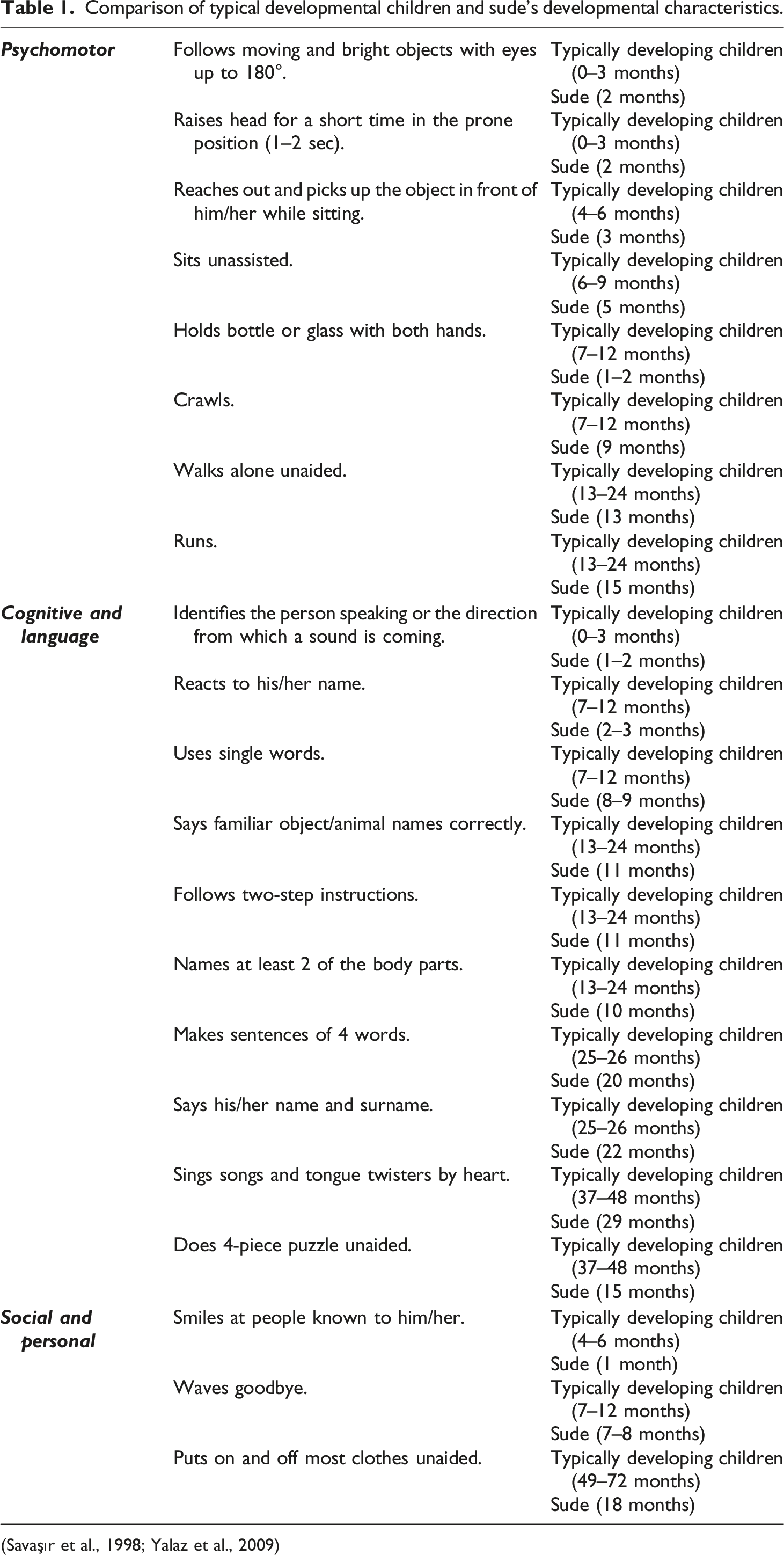
Comparison of typical developmental children and sude’s developmental characteristics.
Participant
10 families of children showing above 130 IQ were interviewed in the Child Psychiatry Department at Ege university. 6 families had a video archive of their child between 0-3 years of age. However, only one family gave their permission to the use their videos for analysis. The family approved the use of the child’s own name or a pseudonym in the research. Next, the researchers interviewed the child who also consented to participate. The child, Sude, is currently 15 years old. She was born by natural birth. At birth, she weighed 3500 g and was 49 cm long. Her early developmental characteristics attracted the attention of her parents and the people around them from the time of her birth. Sude’s IQ was assessed with a Wechsler Intelligence Scale for Children—Revised (WISC-R) test at the age of 7 at Ege University Pediatric Psychiatry Department and she was identified as gifted. Based on the intelligence test scores, Verbal, Performance, and Total IQ scores were 132, 140, and 140 respectively. Sude demonstrated high academic performance in secondary school. She had no wrong answers in the nationwide mock exam and ranked first in Turkey. In high school, she managed to be among the top 50,000 out of the 1,472,088 test-takers in a nationwide mock exam, thereby ranking in the top 3 percentile.
Data collection and instruments
Video recordings
A total of 71 videos recorded by the parents were analyzed spanning the period from Sude’s birth to age 3. The shortest video recording was 22 sec, while the longest was 20 min 26 sec. A total of 203 min 5 sec of video recordings were analyzed. The researchers focused on Sude’s psychomotor, language, cognitive, personal, and social early developmental characteristics during video analyses. Two of the researchers of this study has been an associate professor in the field of special education and one of the researchers of this study has been an expert in child development. They have studies on the identification of gifted children. They also asked the parents to check and validate early developmental characteristics examined in the recordings during the interviews. A semi-structured interview form has been used to describe parental opinions. The parents watched the related videos and provided their opinions. The researchers also vide recorded the sessions while the family was providing their opinions.
Semi-structured interview form
In addition to the video recordings, a semi-structured interview form that included three open-ended questions was used for Sude’s early developmental characteristics. The parents were asked to describe Sude’s psychomotor, cognitive, language, social, and personal characteristics that they observed in their child across the ages from 0 to 3. There were also sub-questions related to each developmental domain. In the psychomotor domain, there were 20 questions on behaviors such as choosing the long line, building a tower using eight cubes, grasping the grape with the thumb and other fingers, passing the cubes from one hand to the other, and copying the vertical line. In the cognitive and language domain, a total of 35 questions were addressed for the behaviors such as defining two words, speaking clearly, showing the body parts of the doll, understanding three or more terms indicating location, recognizing letters and sounds, sorting cubes according to color and size, sequencing a picture story, and remembering the new concept taught recently. The social and personal domain included 20 questions as dressing without help, expressing needs without crying, helping other family members with simple tasks at home, and introducing her and the family members.
Procedure
An example of the analysis of sude’s early developmental characteristics in the psychomotor domain.

Results
Psychomotor
Video analysis findings on developmental characteristics in the psychomotor domain (Vaivre-Douret, 2011; Walsh et al., 2010; Wright & Ford, 2017) indicated that Sude displayed fine motor skills and could raise her head better than expected but otherwise followed similar development to her age peers in gross motor skills (e.g., crawling and walking). Figure 1 presents the early development themes identified in the psychomotor domain. Sude’s psychomotor early developmental characteristics.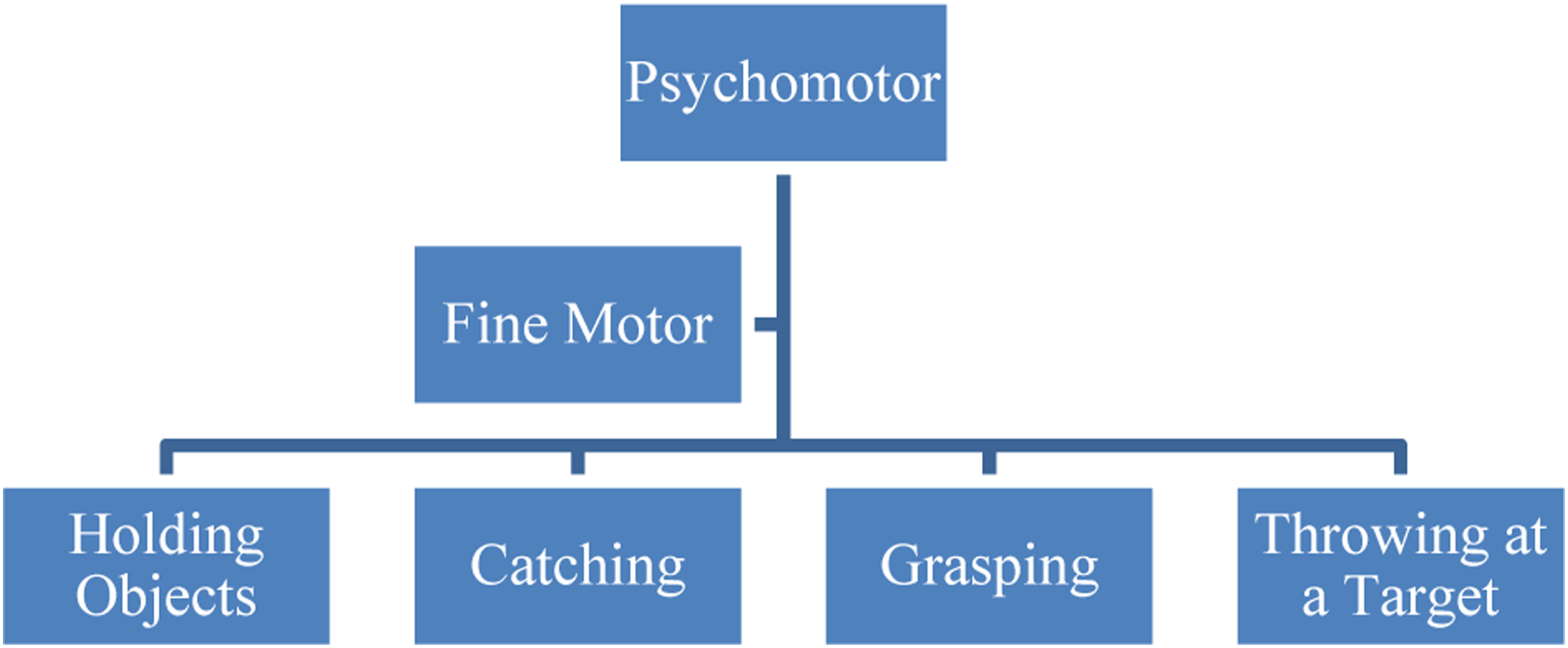
The findings showed that Sude raised her head and kept it up at 1 month, held her own bottle at 1–2 months (see Figure 2), raised her head 90° at 2 months, tracked the moving object up to 180° at 2 months, and reached towards objects at 3 months. She was able to sit unaided at 5 months (see Figure 3) and she was interested in people and events around her after the 7th month. Sude could grasp an object extended towards her, switch it from one hand to the other, turn it upside down and direct attention at the object. Starting from the 9th month, she could pick up small objects using her thumb and index finger and looked in the right direction for the object if dropped. Sude was able to crawl at 9 months, cruise around at 11 months, walk at 13 months, and run at 15 months. She was able to throw a ball at a target at 10–11 months and put 4 different boxes in order. She could build a tower at 14 months with 8 concentric pieces. Sude holds her own bottle at 1–2 months. Sude sits unaided at 5 months.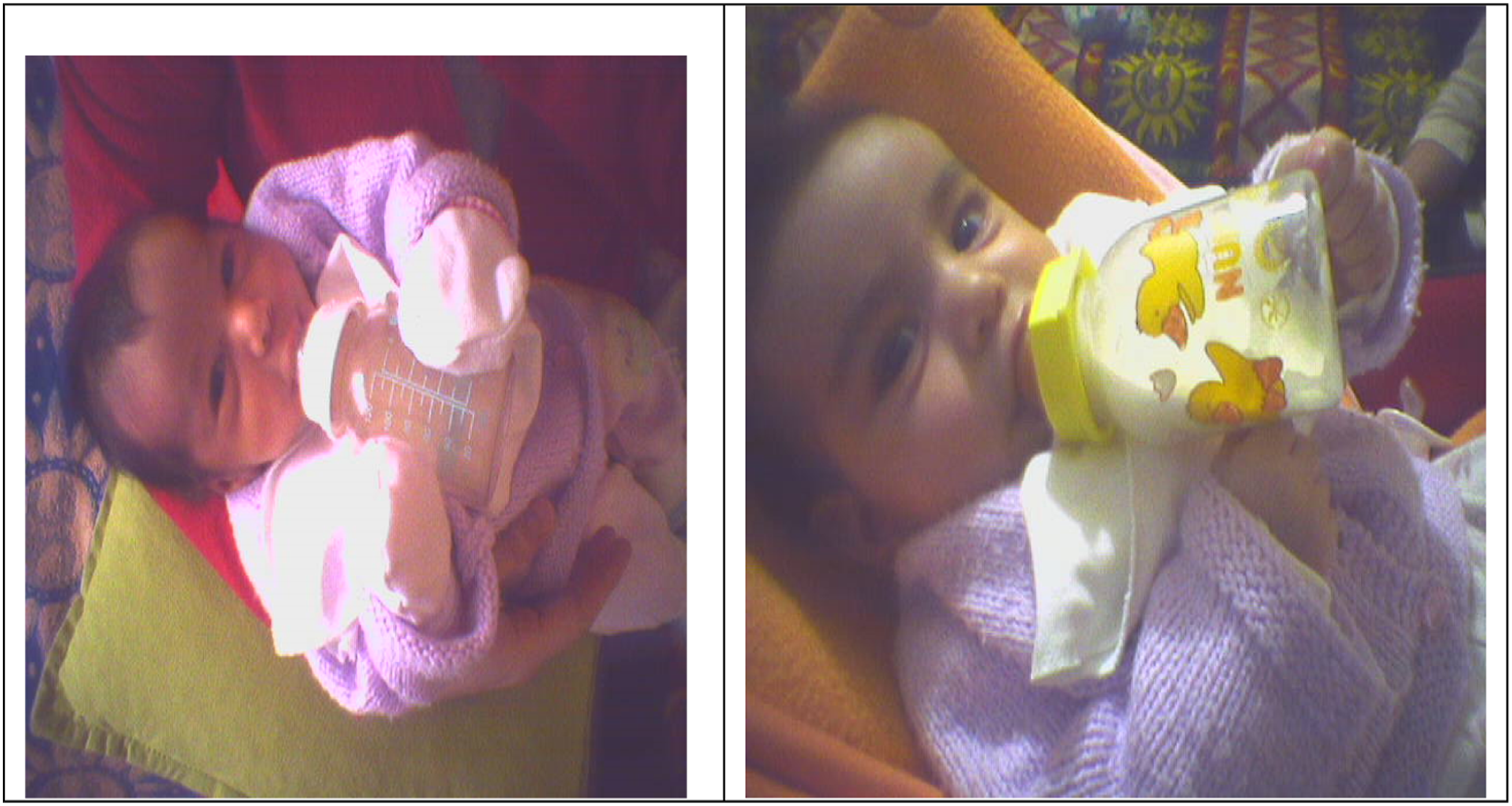

Cognitive and language
Video analyses revealed that Sude displayed superior cognitive and language performance compared to her age peers (see Figure 4). She was a fast learner and could remember many of the objects she encountered for the first time. She named colors, numbers, and letters at a very early age and she was able to solve problems rapidly. Similarly, when these concepts were more complex (e.g., sorting from largest to smallest, sorting by color), it was apparent that Sude responded correctly in the second implementation conducted right after the first. Early cognitive and language developmental characteristics of Sude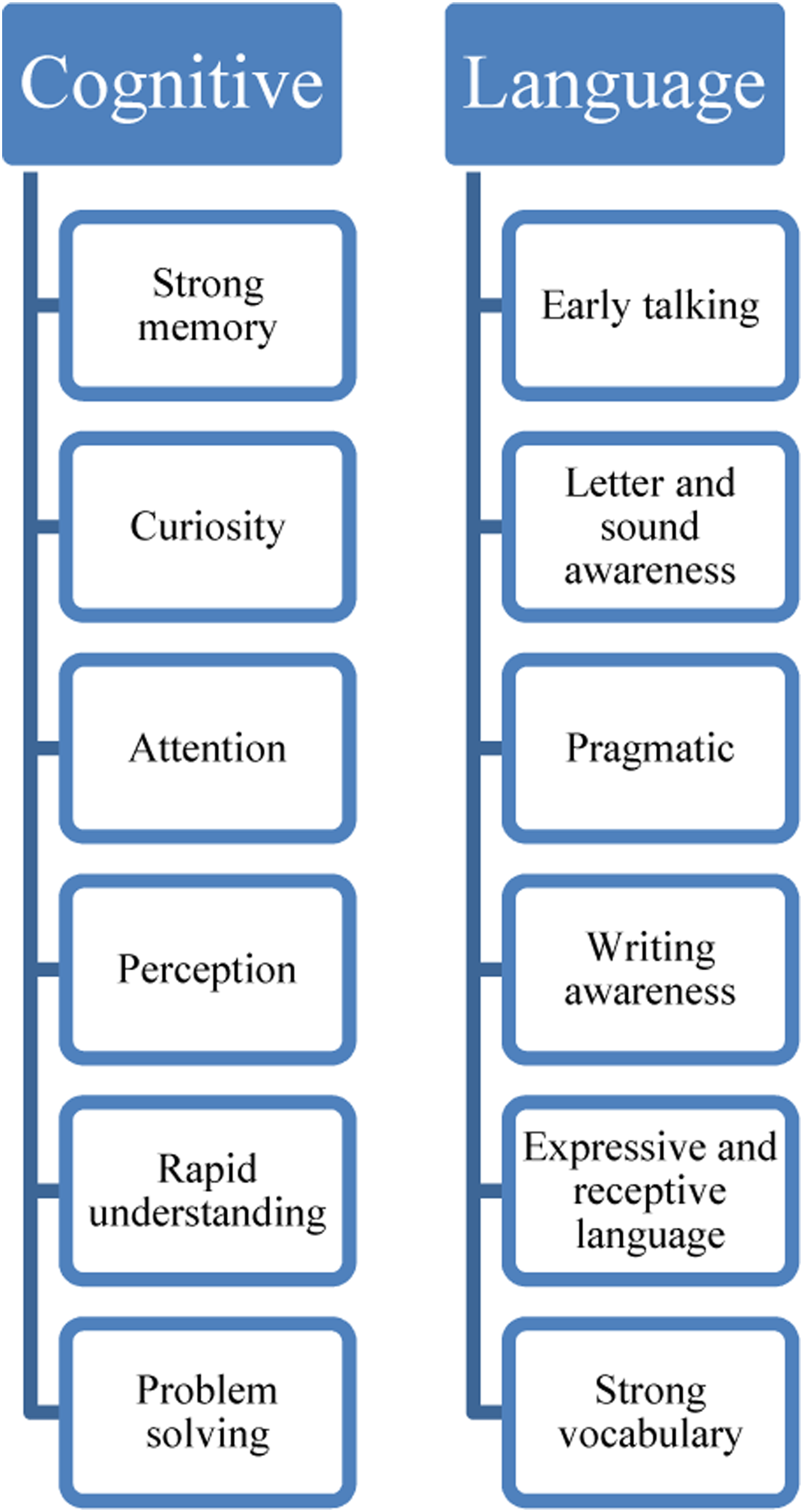
As to cognitive and language domain, Sude looked at her parents’ faces and searched for the source from which a sound was coming from the first week after birth. She also reacted when called by her name at 2–3 months, spoke single words at 11 months, pointed the pictures when asked, followed two-step instructions, and correctly put the cube, square and triangular shapes into a shape sorter at 11 months (see Figure 5). An analysis of a recording showed that Sude could say some words at 8–9 months. The mother remarked that Sude pointed to a rooftop billboard on an 8-floor apartment simultaneously shouting “ava, ava” in her stroller at 8–9 months. The mother, a few days later, realized that Sude was referring to a credit card ad, Avantaj Kart (En: Advantage Card), that she watched on TV. She also noticed that Sude emitted the same sounds when the “Avantajın varsa avantajın var (En: If you have an advantage card, you have an advantage)” song in the ad was playing on TV. Again, Sude pointed to the credit card logo on the billboard and shouted “ava, ava” when they were passing by the apartment 1 day later. Sude puts the cube, square and the triangular cubes in the correct location in a shape sorter.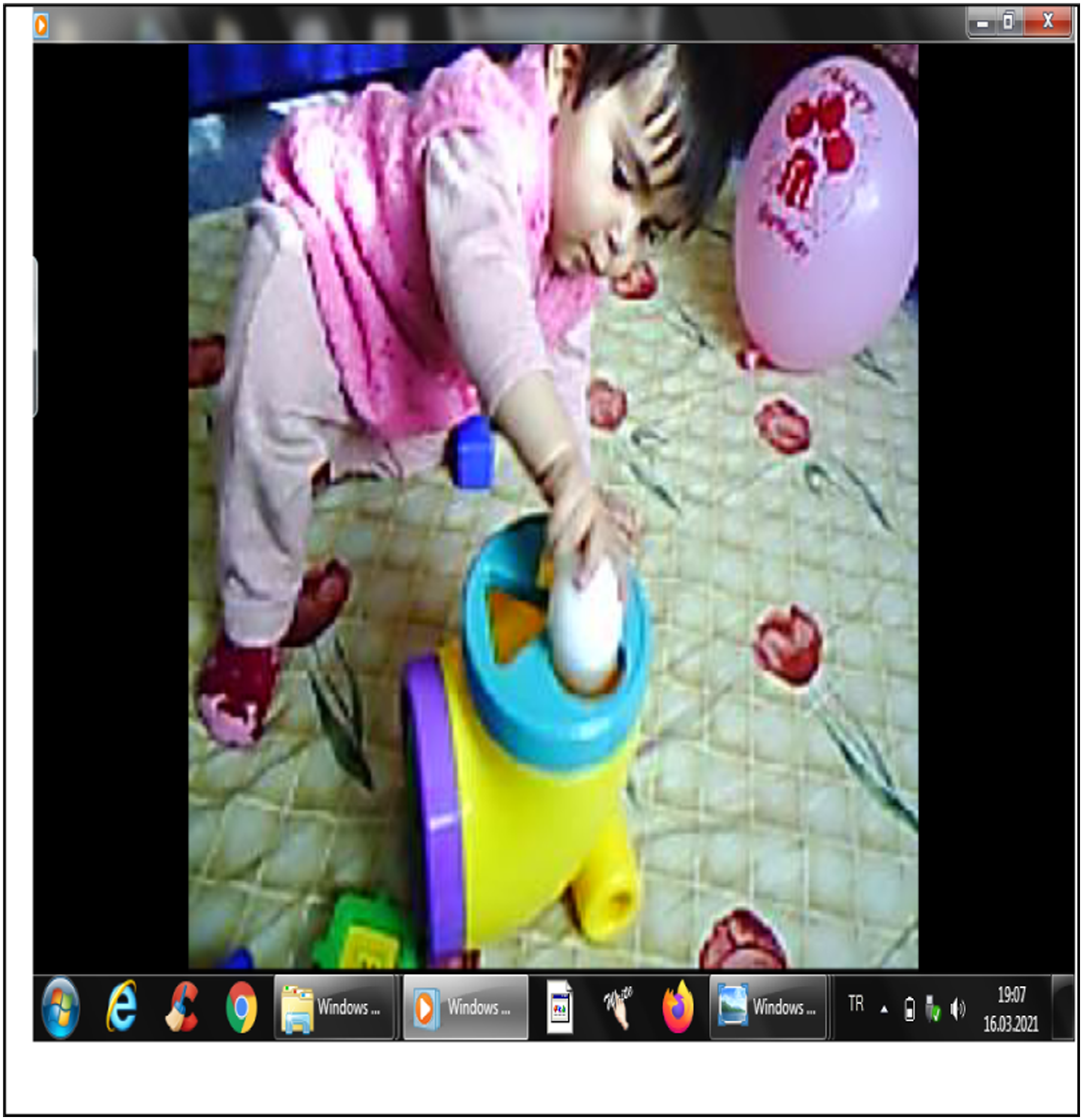
Sude was able to point to her ears, eyes, mouth, and nose when asked at 10 months, and order a concentric toy based on color and size at 16 months. She could distinguish between a triangle, circle, square, and rectangle at 22 months, emit 3- to 4-word sentences at 20 months, tell her full name at 22 months, recite the Turkish national anthem from memory at 29 months, and tell the months in order and various tongue twisters at 30 months. In addition, she acquired print awareness during this period. She could identify the letters asked by her father and associate them with a person or an object (e.g., N for Necla). A more interesting finding was the exemplification of the letter M. She indicated her grandmother for that letter because her grandmother’s name was Mesude. Sude was able to tell the names of the cities where she resided, where she was born, and where her relatives lived at 30 months. Moreover, she was able to count to 100 in Turkish and at 10 in English.
Social and personal
Sude was able to adapt to new and different situations rather fast, display a sense of responsibility, and show patience for activities during the 0–3 age period (see Table 1). She was able to cope with difficult situations, express herself easily, as well as demonstrate curiosity. She comfortably expressed her emotions for the time she started speaking (see Figure 6). Sude’s social and personal early developmental characteristics.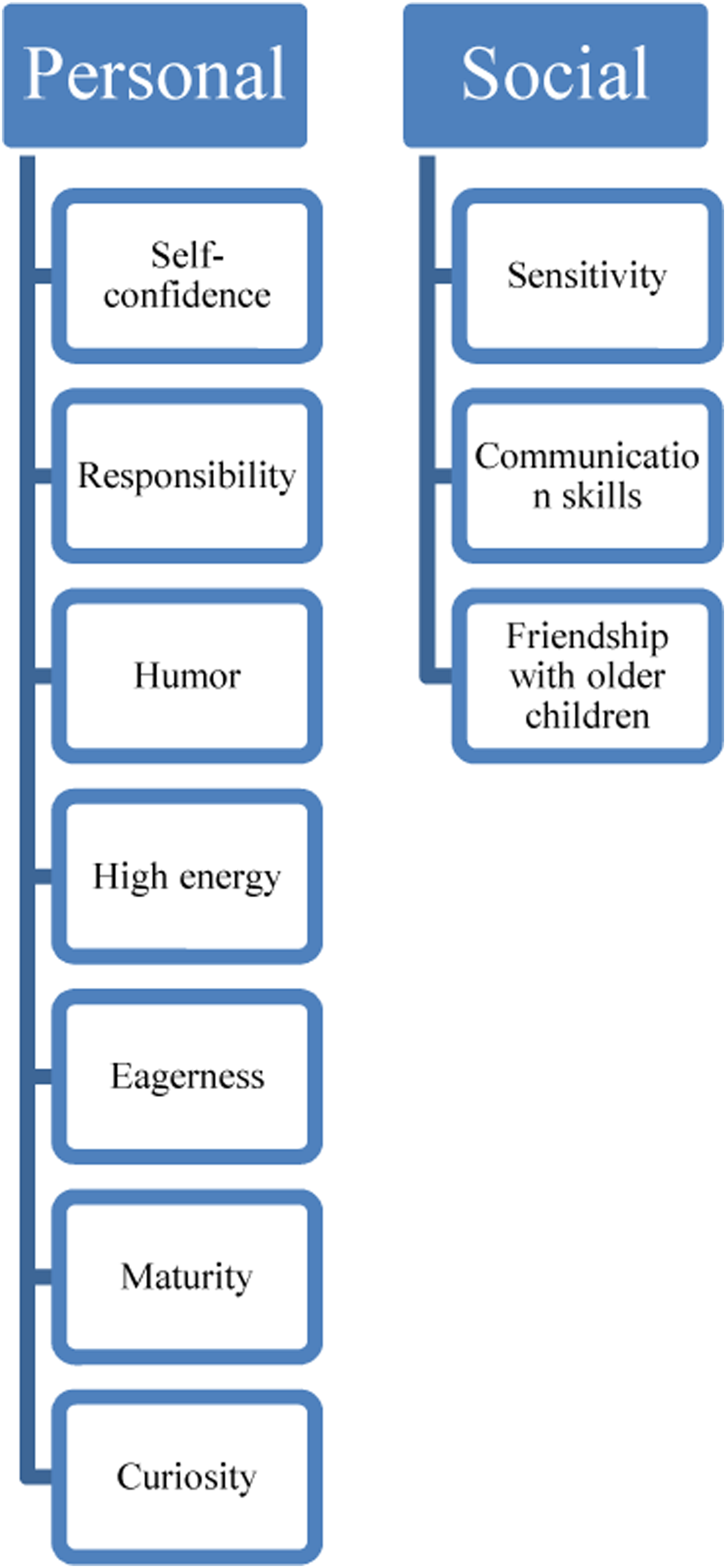
The findings indicated that she was looking at faces and smiling from 1st month and she reacted to object sounds. She started laughing at 2 months, clapping and waving goodbye at 7–8 months, dancing to music at 14 months, solving 5- to 6-piece puzzles at 15 months, and dressing at 18 months. Sude rhythmically sang a total of two four-verse songs by heart at 22 months and put her clothes in her own wardrobe at 24 months. Holiday video recordings showed that she played games with older children at 24 months. In addition, the family stated that she started introducing herself to foreign children at 24 months.
Discussion
Evaluating the parental observations is of significance for identifying giftedness due to the difficulties in evaluating infancy- or preschool-aged gifted children through quantitative measures for the age below 6 (Goodwin & Goodwin, 1982; Tannenbaum, 1992; Willerman & Fiedler, 1977). In literature, it is still controversial to identify giftedness at an early age. One reason for this is the concerns regarding the reliability of parental observations of their gifted child during the nomination process (Walsh et al., 2010). However, the video analysis validated the observations of Sude by her parents indicating that certain early developmental characteristics are likely to provide clues for early identification.
It is notable that Sude’s performance especially in fine motor skills was remarkable. She was able to hold her bottle at 1–2 months, throw a ball at a target, and arrange 4 different boxes in order at 10–11 months. Campos et al. (2000) emphasized the importance of locomotor movement for social development and the association between motor and cognitive development domains. Similarly, Alkan and Mutlu (2020) found a correlation between physical competence and cognitive performance. The correlation between motor and cognitive development domains has been supported by fundamental child development theories. According to Piaget’s Cognitive Development Theory, motor and cognitive developmental domains are associated with “thinking with physical activities” (Veldman et al., 2019). In fact, Sude’s fine motor skills could well be related to her cognitive performance. Van der Fels et al. (2015) conducted a systematic review study to determine the relationship between motor skills and cognitive skills of children aged between 4–16 years and found that fine motor skills had the strongest correlation with cognitive ability. According to Adolph and Berger (2006), adjusting motor behaviors to body and environment requires perception, planning, decision-making, learning, as well as new strategies. Similarly, understanding how to hold a bottle, throwing balls at a target, and ordering boxes demonstrate the association between cognitive performance and fine motor skills. This can be explained the first motor skill group (i.e., fine motor skills, bilateral coordination, and the time-based performance of movement) having higher cognitive demands (Van der Fels et al., 2015). Motor skills that display stronger relations with cognitive skills can be interpreted as complex motor skills and may require advanced cognitive skills.
Gross (1993) monitored 40 gifted children longitudinally and identified that a gifted baby generally started crawling earlier and sit unaided at 6 months, 1 or 2 months before typically developing babies, based on parental observations. Similarly, we found that Sude started sitting unaided from the 5th month onwards. Contrary to fine motor skills, Sude’s gross motor skill development (e.g., walking, crawling) was at the level of her age peers (Yalaz et al., 2009), which indicates that her psychomotor development speed rate was different. Previous research indicated the varying speed rate in developmental domains among gifted children and those with typical development (Neihart et al., 2021). Although cognitive development in gifted children is faster than that of typically developing children (Walsh et al., 2010), the development in psychomotor domain may remain slower (Alsop, 2003). However, Sude’s psychomotor development was more advanced than her age peers.
We found that Sude’s characteristics were mainly strong memory, curiosity, attention, and perception in the cognitive domain, which is consistent with the findings in previous studies on giftedness (Bildiren, 2018; Callahan, 2011; Clark, 2013; Davis & Rimm, 2004; Gross, 1999, 2006; Harrison, 2003; Kuo et al., 2010; McGee & Hughes, 2011; Navas-Sánchez et al., 2016; Robinson, 2008; Vaivre-Douret, 2011; Walsh et al., 2010; Wright & Ford, 2017). The characteristics in the cognitive domain were obtained through video analyses, while the themes related to early developmental characteristics were based on the video recording dates. The behaviors in the cognitive domain may be the indicators of early developmental characteristics of Sude’s 140 IQ as measured at the age of 7. Furthermore, significant differences may appear between Verbal IQ and performance IQ in gifted children (Bessou et al., 2005; Hollinger & Kosek, 1986). However, according to Vaivre-Douret (2002, 2004), this should not be counted as a difference specific to gifted children. A significant difference in favor of verbal IQ may emerge in gifted children if they have difficulties with performance tests (Vaivre-Douret, 2011). Sude’s performance IQ score, however, was higher than her verbal IQ score. She displayed high performance especially in block design, object assembly, and the coding subtests. Parental attention may have had a positive impact on her performance. It was evident in video recordings that Sude and her parents frequently played games together. In these videos, Sude and her parents played classification, similarity, matching, puzzles, and memory games, which may have supported her cognitive development. Indeed, Morrissey (2011) found that mothers of children with high IQs provided their children with more quality play experiences starting from an early age.
Gifted children display strong language development earlier than typically developing children. Gross (1993) identified that gifted children say their first words when they are 9 months old on average. In addition, the average decreased to 8.6 months when two outliner siblings who spoke at 18 and 20 months were excluded from the study group. The researcher also found that gifted children spoke fluently using complex sentences and tended to make up word games thanks to their advanced language development and early cognitive skills. In addition to early language development, Clark (2002) suggests that a sense of humor is apparent in these children because of their high interest in word games. Hoh (2005) conducted a study on the language development of a bilingual gifted child from birth to 7 years of age. She found that the child displayed early language developmental characteristics. In the current study, we also observed early language development in Sude’s language performance. Early language developmental characteristics may predict the future IQ results of a gifted child, which was validated in a previous study. Peyre et al. (2017) investigated whether developmental milestones at 4, 8, 12, and 24 months predicted IQ during 5 and 6 years of age. They found that early language skills predicted later IQ more reliably than the other cognitive domains. Before Sude’s age peers, she says her name and surname, makes sentences of 4 words, sings songs and tongue twisters by heart etc. (see Table 1) shows that she has gained her language skills early.
Many previous studies suggest that social and emotional characteristics of gifted children show similarity or superiority compared to their age peers (Eklund et al., 2015; Francis et al., 2016; França-Freitas et al., 2014; Kroesbergen et al., 2016; Vialle et al., 2007; Çitil & Özkubat, 2020). In the current study, Sude displayed strong social and personal characteristics, which may be due to Dabrowski’s (1972) overexcitability. Dabrowski’s (1972) Theory of Positive Disintegration suggests that the characteristics of overexcitability can be observed in advanced personality development (Daniels & Piechowski, 2009; Tillier, 2002; Çitil, 2020). Individuals with overexcitability generally live with intensity (Daniels & Piechowski, 2009). Intellectual overexcitability is defined as excessive sensibility, intensive knowledge, inquiry-based thinking, critical thinking, and effective problem solving (Ackerman, 2009; Daniels & Piechowski, 2009; Çitil, 2020). Individuals with intellectual overexcitability have a strong desire for novel knowledge and they enjoy solving complex problems (Ackerman, 2009; Daniels & Piechowski, 2009). They display a significant ability to focus on difficult tasks for long periods (Ackerman, 2009; Daniels & Piechowski, 2009). Hafenstein and &Tucker (1995) examined the characteristics of Dabrowski’s overexcitability theory to assess behavioral characteristics of young gifted children. They found that gifted children display behaviors reflective of overexcitability. Singh and Kaur (2012) found that gifted children had higher scores in emotion, motivation, empathy, and relationship management than non-gifted children. Furthermore, Riaz et al. (2013) found that gifted children had high level of psychological adaptation. Given that higher intellectual capacity can be related to high levels of psychological adaptation, gifted individuals can display such social and personal characteristics at early ages (Riaz et al., 2013). Social and emotional development in gifted children is faster than their non-gifted peers (Plucker & Callahan, 2008). Before Sude’s age peers, she started laughing, clapping, waving, dressing, dancing to music, etc shows that social and emotional development is faster than their age peers.
Conclusions
It has been argued that gifted children display advanced developmental characteristics during the ages of 0–3 years. These characteristics may contribute to early identification of giftedness through parental observations, and parent nomination of giftedness is more than those of teachers as they are more aware of their children’s continuous development (Gross, 1999). While parents can provide evidence through portfolios teachers have little or no knowledge about children’s previous development and abilities (Matthews & Rhodes, 2020). The results of the current study (i.e., early developmental characteristics of giftedness) can be taken as a basis by the parents, having demonstrated that the observations of early gifted characteristics can contribute to the identification of giftedness.
Limitations and implications
The purpose of the current study was to conduct a detailed analysis of the developmental characteristics of a gifted child from birth to 3 years. The nature of the single case is the most important limitation of the study. There is a need for further studies with larger populations of gifted children. This study was also limited to the parent-recorded videos during the child’s first 3 years of life. Furthermore, it should be noted that Sude might have started exhibiting identified behaviors before the exact date of the recordings. Thus, natural observations and the use of various tools during this period could provide reliable data regarding the early developmental characteristics.
Footnotes
Declaration of Conflicting Interests
The author(s) declared no potential conflicts of interest with respect to the research, authorship, and/or publication of this article.
Funding
The author(s) received no financial support for the research, authorship, and/or publication of this article.
