




Abstract
Women frequently turn to other women for support to cope with stressors. The support they receive, however, is often not what they need or even expect from a friend. Based upon differences in racial backgrounds, this study tests whether the racial composition of female friendship dyads influences the experience of support gaps, or discrepancies among the types and amount of support women need, expect, and receive, as well as the outcomes associated with those gaps. Black and White women (N = 312) recalled a supportive conversation with either a Black or White female friend about an identity-threatening stressor. The results show that women needed, expected, and received more of several types of support from friends of their same race and that several support gaps were more pronounced from friends of a different race. The racial composition of a dyad moderated the influence of support gaps on women’s perceptions of supportiveness, reappraisal, and affect improvement.
Women affiliate with and seek support from other women when they encounter personal problems (Taylor, 2006). Supportive interactions involving female providers can be helpful experiences that ameliorate women’s stress, especially for identity-threatening stressors (Holmstrom, Burleson, & Jones, 2005; Taylor, 2006). Receiving support, though, is not always a positive experience and can sometimes produce negative outcomes (e.g., Bodie, Burleson, & Jones, 2012; Holmstrom et al., 2005; McLaren & High, 2015) or otherwise elicit costs for recipients (Bolger, Zuckerman, & Kessler, 2000). The varied outcomes from supportive interactions necessitate that scholars reconsider how the support people receive impacts the outcomes they experience.
Support gaps describe discrepancies among recipients’ perspectives on supportive interactions, including what they need, expect, and receive, across various types of support. A discrepancy determines whether a support gap exists, and the greater the magnitude of a gap, the greater its influence on outcomes (Brock & Lawrence, 2009). Research on support gaps is growing (Brock & Lawrence, 2009; High & Crowley, 2016; High & Steuber, 2014; McLaren & High, 2015; Xu & Burleson, 2001), yet few studies investigate what factors influence the existence or outcomes of these gaps. Source characteristics are one factor that affect the way recipients evaluate messages (Burleson, 2009; Tajfel & Turner, 1979), and women frequently appreciate support from other women (Taylor, 2006). Race is another source characteristic that encompasses interactants’ personal, social, and political experiences and shapes the connection they perceive within a relationship (Omi & Winant, 2014). Prior research demonstrates that a shared racial identity reflects a high level of safety, trust, and empathy (e.g., Davis, 2015; DeFrancisco & Chatham-Carpenter, 2000). Receiving support from a racial outsider, 1 in contrast, might complicate supportive interactions due to discrepant perceptions of effective support and sustained tension between racial groups in the U.S.
This study extends research on support gaps in three ways. First, we focus on context by examining gaps across five types of support that might help women cope with identity-threatening stressors. Second, research on support gaps typically contrasts people’s desires for support against what they receive; however, this study extends the range of gaps people experience by considering discrepancies in the support women need, expect, and receive. Lastly, we explore the extent to which the racial composition of a dyad (same race vs. different race) influences the existence and outcomes of support gaps. Research on supportive communication has examined several source characteristics, but a consideration of how race influences these interactions is conspicuously absent. To accomplish these goals, this article examines support gaps and their corresponding outcomes among women coping with identity-threatening stress.
Identity, stress, and support gaps among women
Women experience personal, social, and structural hardships that threaten their self-concept (Thoits, 2013). For example, women are vulnerable to systemic gender discrimination in the U.S. and have to manage stress associated with lower social status (Rosenfield & Mouzon, 2013). Compared to men, women receive lower wages, experience more sexual assault, and are pressured to fulfill duties in both the workplace and the home (Hochschild & Machung, 1990). Women often internalize these problems and consider them to be personal shortcomings, which further exacerbates emotional stress (Thoits, 2013). The obscured line melding women’s identity with the stress they experience emphasizes their need for satisfying supportive interactions to facilitate coping with stress (Rosenfield & Mouzon, 2013).
Research on support gaps has largely focused on the support people desire and receive; however, this study extends support gaps by considering the support people need and expect alongside what they receive. Scholars have defined supportive communication as the conveyance of messages intended to meet others’ needs (MacGeorge, Feng, & Burleson, 2011), which we define as the resources that people believe are essential for overcoming a stressor. Thoits (1995) stated that, “A match between an individual’s needs and proffered support may indeed be important” (p. 67). The support people expect from a given encounter, in contrast, is based on a history of interactions with a partner (White, 2015). The more people engage in supportive exchanges with others, the more they develop expectations for the support they will encounter in the future (Pierce, Sarason, & Sarason, 1991). Lastly, received support describes the resources that people accrue from supportive interactions. Although received support is a perception of the support people believe they acquired, we use the term received support to be consistent with prior research on support gaps (Brock & Lawrence, 2009; High & Crowley, 2016; High & Steuber, 2014; Matsunaga, 2011; McLaren & High, 2015). Perceived support, in contrast, normally describes a psychological notion that assesses people’s beliefs that support is available should they need it (see Priem & Solomon, 2015; Uchino, 2009). The support people need, expect, and receive are all perceptions of interactions; however, received support specifically focuses on the resources individuals believe they gain via messages from others.
Support gaps according to the racial composition of a dyad
Race and gender are salient source characteristics that shape the way people engage in interpersonal interactions (e.g., Kunkel & Burleson, 1999; Omi & Winant, 2014). Generally, people affiliate with, trust, and favor people who share similar identities (Tajfel & Turner, 1979). According to the social identity/self-categorization model of stress (Haslam, 2004), when people cope with threats to their identity, members of their in-group are valued support providers. Race, in particular, is a central cue for perceptions about others, and it affects the level of empathy, comfort, and trust between friends (Omi & Winant, 2014). Historically oppressed racial groups tend to seek support from confidants of their same race because these relationships help mitigate feelings that accompany identity-related stress, such as isolation, invalidation, and marginalization. For example, DeFrancisco and Chatham-Carpenter (2000) found that Black women value other Black women as sources of support because they have the cultural capital to address stress related to gendered racism. Interactants of the same race may also attach familiar meanings to communication behavior and uphold similar beliefs, customs, and traditions (Hecht, Jackson, & Ribeau, 2003). Consequently, Black women feel more comfortable disclosing their troubles to other Black women because they can convey their true, racialized selves and receive validation for doing so (Davis, 2015).
Prior research on intergroup contact has suggested that cross-racial friendships can be positive experiences (Davies, Trop, Aron, Pettigrew, & Wright, 2011); however, there are several barriers that can impede successful interactions. Heightened miscommunication and misunderstanding may exacerbate preexisting feelings of anxiety or uncertainty about another race and make people hesitant to engage in cross-racial communication (Stephan & Stephan, 1985). Interactions between people from different racial groups are sometimes accompanied by anxiety, tension, and distress and can lead to negative outcomes (Stephan & Stephan, 1985). Playfulness, directness, and dominance are important features of interactions between Black peers (Hecht et al., 2003); however, they are often judged to be inappropriate and unintelligent by White Americans (Popp, Donovan, Crawford, Marsh, & Peele, 2003). Racial differences also increase the likelihood that people inaccurately perceive how friends feel during an interaction (Holoien, Bergsieker, Shelton, & Alegre, 2015), and people from different racial groups even hold discrepant perceptions of the same supportive messages (Samter, Morse, & Whaley, 2013). Strained race relations in the U.S. can also make racial differences salient, even between friends, and implicit racial biases (unconscious attitudes or stereotypes associated with someone of a different race) correspond with interpersonal discrimination and lower relational quality (e.g., McConnell & Leibold, 2001), thereby impeding successful interactions in cross-racial friendships. Well-intentioned women may unknowingly discriminate against a friend of another race because deep-seated biases are constant and powerful determinants of behavior across the history of a friendship (Dovidio, Gaertner, Kawakami, & Hudson, 2002).
Overall, similar others commonly make the best support providers (Thoits, 1995), and women often approach other women as sources of support (Kunkel & Burleson, 1999). Given the tension, uncertainty, and lack of success that can accompany interactions across racial lines, we expect that women gravitate toward members of their own race for support because these individuals best understand their plight and circumstances (Davis, 2015; Hecht et al., 2003). This might translate to people feeling that they need, expect, and receive more support from those who are similar to them. With this in mind, we propose the first hypothesis:
Researchers traditionally assume that supportive communication benefits recipients. Receiving support, however, can make people feel weak, stigmatized, or incompetent (DePaulo, 1982), and it can increase anxiety (Bolger et al., 2000). Optimal matching theory posits that receiving support yields the greatest benefits when it matches the demands of a stressor (Cutrona & Russell, 1990); however, matching models have been criticized because they conceptualize support recipients as passive beings whose needs are dictated by their problems (MacGeorge et al., 2011). Rather than matching the demands of a stressor or assuming that more support is always better, the best outcomes may result when received support matches a person’s needs. Along these lines, Xu and Burleson (2001) suggested, “perceptions of inadequate support may not stem directly from what one actually receives, but rather from the discrepancy between what one wants and what one sees oneself getting” (p. 540). Linden and Vodermaier (2012) noted that receiving little support is not problematic if greater amounts of support are not desired. Just as some people require more sleep than others, and sleeping too much or too little can impede daily performance, different people need different amounts of support. Previous research, however, documents discrepancies between the support people need and receive in several contexts from several sources (High & Steuber, 2014; Xu & Burleson, 2001).
Although prior research suggests that any support gap is detrimental (High & Steuber, 2014; Matsunaga, 2011), other researchers argue that different gaps produce distinct outcomes (Brock & Lawrence, 2009). As previously stated, we are interested in examining gaps among the support women need, expect, and receive, which produces four specific gaps that might correspond with the outcomes people experience. The four gaps that are of most interest to us are deficits, surpluses, unmet expectations, and exceeded expectations. Previous research describes deficits in support when people need more support than they receive. Conversely, a surplus in support occurs when people receive more support than they need (High & Crowley, 2016; Priem, Buehler, & Bailey, 2014). Along the same lines, we reason that people can receive more or less support than they expect. Unmet expectations exist when people expect more support than they receive. In contrast, exceeded expectations occur when people receive more support than they expect during an interaction. We focus on deficits, surpluses, unmet expectations, and exceeded expectations because they hinge on received support and therefore are most likely to correspond with the outcomes people experience.
Several studies have found that deficits in support are more common than surpluses, especially for women (Brock & Lawrence, 2009; High & Steuber, 2014; Xu & Burleson, 2001). Accordingly, we anticipate that women will need more support than they receive when coping with identity-related distress. Recurrent patterns of behavior can also produce expectations for the future (Liang, Krause, & Bennett, 2001). Based on the commonality of receiving less support than they need, we predict that women will come to expect less support than they need. This is one of the first studies to integrate expectations for support, especially in the context of support gaps; therefore, we have less of a foundation from which to hypothesize whether women receive more or less support than they expect when coping with identity-related stress. That is, we do not know whether people experience unmet or exceeded expectations. Based on the current knowledge about support gaps and efforts to integrate expectations for support, we propose the following hypothesis and research question:
Supportive interactions can involve several types of support, and research on support gaps considers types of support that are relevant to the issue at hand (High & Crowley, 2016; High & Steuber, 2014). Accordingly, this study considers five types of support that are relevant to identity-threatening stressors—emotional, informational, esteem, identity, and social presence. Emotional support encompasses expressions of love and concern or the management of others’ feelings. Informational support is the communication of facts or advice. Esteem support emphasizes a person’s attributes, accomplishments, or abilities (Xu & Burleson, 2001). Women are orientated toward expressive and emotion-focused support, and they expect their female friends to provide affectionate comfort that affirms their self-concept (Holmstrom et al., 2005). Despite the importance of sensitive comfort, people often default to providing informational support (Barker & Lemle, 1984). In fact, advice might be the most common type of support people encounter (MacGeorge, 2009). Emotional, esteem, and informational support have received significant research attention (MacGeorge et al., 2011) and are germane to this context.
Identity and social presence support have received less research attention, but they are relevant to identity stress. Identity support accepts and affirms someone’s identity, even as part of a social group that has been challenged or threatened. Affirming their identity enhances women’s sense of belonging with others who share similar life experiences and social standings (Weisz & Wood, 2005). High and Crowley (2016) observed that people strongly desire social presence support, which emphasizes solidarity, approachability, and a willingness to talk. People value friends “being there” when they experience a problem, especially when they feel alone or isolated, and communicating a sense of togetherness is one of the most important messages support providers can convey (Jones & Guerrero, 2001; Lehman, Ellard, & Wortman, 1986). Although prior research on support gaps considers several types of support, identity and social presence support have received less research attention. Based on evidence that different types of support produce distinct outcomes, Matsunaga (2011) encouraged researchers to investigate different types of support when researching support gaps. To do so in the context of the aforementioned gaps, we propose the following research question:
The previously reviewed literature summarized the uncertainty and tension that accompany interracial interactions. These tensions are likely to magnify the existence of support gaps. People of a different race often lack the necessary cultural resources to meet a woman’s expectations and have a history of miscommunication during supportive encounters (e.g., Holoien et al., 2015; Stephan & Stephan, 1985). People from difference races also approach supportive interactions differently (Samter et al., 2013), and White Americans’ attempts to validate Black Americans can actually demean their Black racial identity (Sue et al., 2007). Over time, women may use these experiences to develop negative expectations of what will occur in future interactions with friends of a different race. These differences along racial lines lead us to assert that women are more critical of support gaps from providers of a different race than providers of the same race. Hence:
Support gaps, race, and outcomes
When considering outcomes of support gaps, we focus on deficits, surpluses, unmet expectations, and exceeded expectations because these gaps all involve the support people receive and are therefore most likely to correspond with the outcomes they experience. Deficits in support are fairly common, and they can contribute to stress, depression, and decreased relational quality (Brock & Lawrence, 2009). More specifically, deficits in emotional and esteem support are associated with increased hurt feelings and decreased esteem improvement (McLaren & High, 2015). In terms of expectations, communicators assess deviations from what they expect during an interaction, and under certain conditions these violations lead to negative outcomes. For example, Kelly and Burgoon (1991) documented that unmet expectations for intimacy in married couples correspond with reduced satisfaction. Along these lines, we contend that unmet expectations for support also lead to detrimental outcomes.
The effects associated with surpluses in support are more complex. For example, surpluses in informational support correspond with increased hurt and negative relational consequences (Brock & Lawrence, 2009; McLaren & High, 2015). In contrast, surpluses in other types of support decrease distress (Liang et al., 2001). For example, surpluses in emotional support decrease hurt and negative relational consequences and improve recipients’ esteem (McLaren & High, 2015). Similarly, some violations of expectations are positively valenced and produce benefits, including increased attraction, credibility, and perceived rewards (Burgoon & LePoire, 1993). Thus, we reason that surpluses and exceeded expectations correspond with positive outcomes, except when informational support is communicated.
Although no research, to our knowledge, has studied how race influences the outcomes of support gaps, the social identity perspective postulates that people undermine outsiders and display in-group biases (Hogg, Abrams, Otten, & Hinkle, 2004). People accentuate positive attributes of their in-group and negative characteristics associated with outsiders, especially when their identity is threatened (Branscombe & Wann, 1994). They also perceive support more positively when it is provided by fellow in-group members (Haslam, Jetten, O’Brien, & Jacobs, 2004). Deficits and unmet expectations in support generally lead to negative outcomes, and recipients might especially devalue these support gaps from racial outsiders. Conversely, surpluses and exceeded expectations, except for informational support, are expected to lead to positive outcomes, and these benefits might be enhanced when women interact with friends of the same race because recipients idealize the positive behavior of in-group members. Informational support that surpasses receivers’ needs and expectations corresponds with negative outcomes, perhaps especially when it comes from providers of a different race.
A final goal of this study is to examine the consequences of support gaps for dyads composed of friends of the same or a different race. Research on supportive communication typically assesses people’s perceptions of interactions, including their supportiveness (Priem & Solomon, 2015), and the outcomes of those interactions, such as affect improvement and cognitive reappraisal (High & Crowley, 2016; Jones & Wirtz, 2006). To examine how support gaps and the racial composition of a dyad interact to influence outcomes, we propose our final three hypotheses:
Method
Participants
Participants in this study were a community sample of 312 women from across the U.S., with slightly more women identifying as White (n = 182) than Black (n = 130). To participate, the women had to identify as Black/African American or White/European American and be between 18 and 65 years old. The average age of our sample was 29.87 years (range: 18–65, SD = 13.61), and most of our sample had attended college or completed a degree (74.4%).
Procedures
Participants were recruited using announcements in university listservs at southern, western, and midwestern institutions. Individuals who met the participation requirements were linked to a consent form and were invited to complete the rest of the survey. All advertisements targeted women because the study focuses on racial differences in female friendships. A prompt in the online survey defined an identity-threatening stressor as “something that challenges who you are as a person/challenges an identity that represents you.” The most commonly identified stressors were relational infidelity, financial hardship, health diagnosis, and family dysfunction. On average, the women reported that the events were both important (range 0–100; M = 81.3, SD = 20.97) and stressful (range 0–100, M = 79.6, SD = 20.89). Participants were randomly assigned to recall a supportive conversation with a friend of their same race (Black participant–Black friend, White participant–White friend) or different race (Black participant–White friend, White participant–Black friend) focusing on the stressor they described. Participants were asked to choose friends who typically provide support for them, and women referenced their specified friend for all survey measures. Most women were able to recall such a conversation; however, some people (n = 31) were unable to participate because they could not identify a friend of the assigned race.
Measures
Supportive communication
All variables used to assess support were measured using 5-point Likert-type scales (1 = Didn’t need/expect/receive at all; 5 = Needed/expected/received a great deal). We employed Xu and Burleson’s (2001) scale to assess the extent to which participants needed, expected, and received emotional (e.g., “Express sorrow or regret for your situation”), informational (e.g., “Provide detailed information about your situation or about skills needed to deal with the situation”), and esteem support (e.g., “Assure that you are a worthwhile person”). Because the stressor was identity-related, participants completed Weisz and Wood’s (2005) identity support scale (e.g., “Support you in being the kind of person you want to be”). Identity-threatening stressors might cause people to feel alone, lost, or isolated; therefore, we also measured social presence support, which communicates availability and solidarity. We used 5 items developed by High and Crowley (2016) to measure social presence support (“Assure you that she will be there if you want to talk”). The survey listed definitions of needed, expected, and received support before women responded. Each scale (i.e., need, expect, receive for each type of support) was reliable, α > .75.
Supportiveness
A measure of supportiveness used by Holmstrom, Burleson, and Jones (2005) was adapted for use in this study. Four 7-point semantic-differential items were used to assess supportiveness (e.g., supportive–unsupportive). Higher scores indicate greater supportiveness (M = 5.09, SD = 1.09, α = .92).
Affective improvement
A scale used by Jones (2004) assessed improvement in people’s affect (e.g., “My conversational partner made me feel better about myself”). These 5 items were measured with 7-point Likert-type scales (1 =Very strongly disagree; 7 = Very strongly agree). Higher scores signify greater affect improvement (M = 5.26, SD = 1.19, α = .71).
Reappraisal
Participants’ reappraisal of their stressor was measured with five Likert-type items (e.g., “I really see the problem in a different light after the conversation”) used by Jones and Wirtz (2006). Responses ranged from 1 (Very strongly disagree) to 7 (Very strongly agree), and higher scores indicate greater reappraisal (M = 4.79, SD = .96, α = .89).
Relational satisfaction
Prior research notes that people’s experiences of and outcomes from supportive interactions are contingent upon the relationship between a provider and recipient (MacGeorge et al., 2011); therefore, relational satisfaction was included as a covariate in the analyses predicting outcomes from support gaps. Furthermore, Brock and Lawrence (2009) specifically linked support gaps with relational satisfaction. Participants completed 6 items with 7-point semantic differential scales (e.g., 1 = Completely dissatisfied; 7 = Completely satisfied) to indicate their satisfaction with the friend they identified (Huston, McHale, & Crouter, 1986). Items were averaged, and higher scores indicate more satisfying relationships (M = 5.99, SD = 1.03, α = .93). In accordance with the theorizing that underlies our hypotheses, participants reported more satisfying relationships with friends of their same race (M = 6.25, SD = .85) than friends of a different race (M = 5.62, SD = 1.17), t(206.87) = 5.10, p < .001.
Results
The three perspectives on supportive interactions indicated the amount of support women needed, expected, and actually received about their identity-threatening stressor. The five types of support were informational, emotional, esteem, identity, and social presence. A variable signifying interactions with a provider of the same or different race was included as a between-subjects factor (0 = same race, 1 = different race). In a within-subjects or repeated-measures analysis of variance (ANOVA), Mauchly’s test of sphericity was significant, indicating that the assumption of sphericity had been violated. Therefore, the Greenhouse–Geisser correction was applied.
Differences in amounts of support between dyads
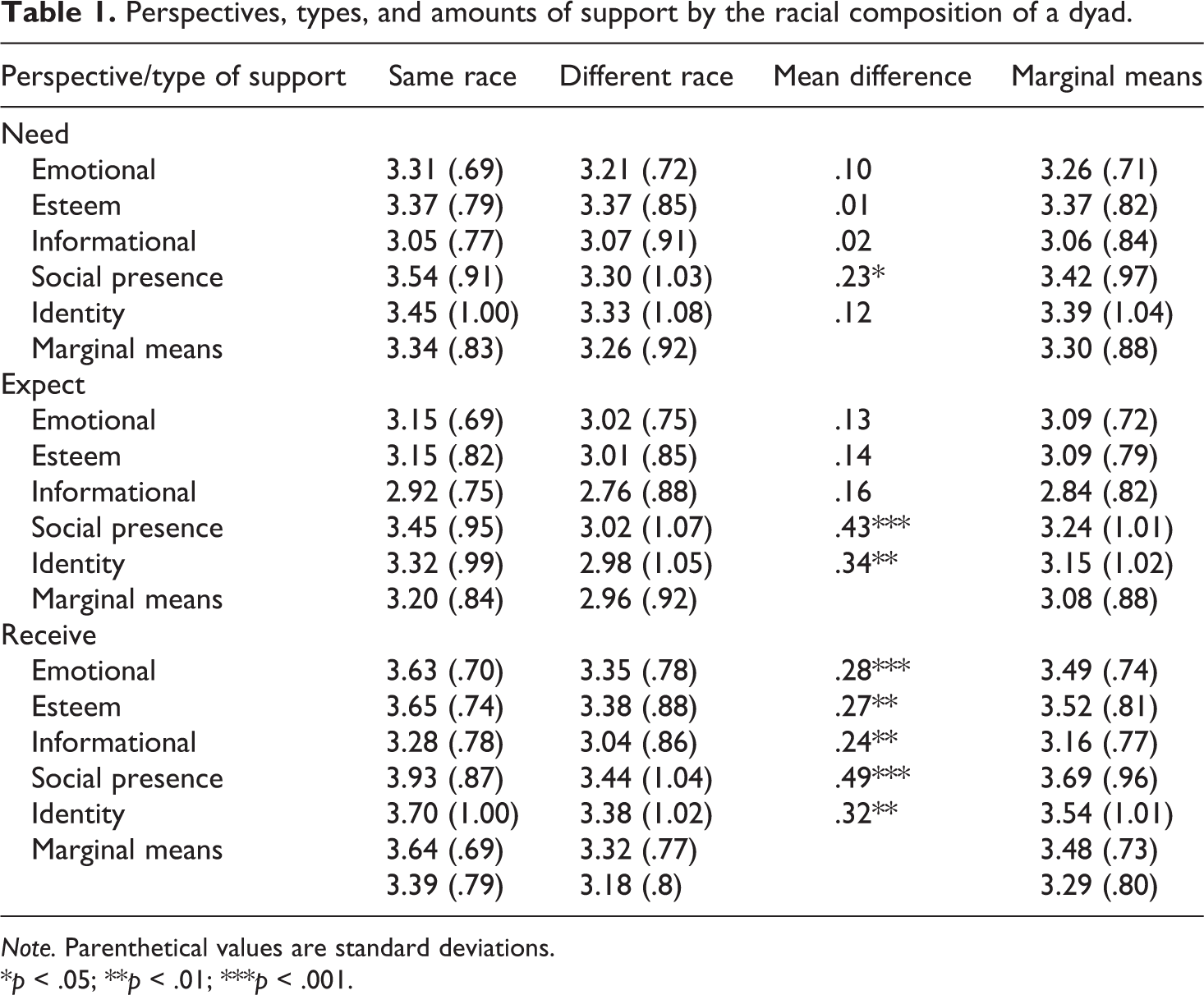
H1 predicted that women need, expect, and receive more support from friends of their same race than friends of a different race. To assess this hypothesis, we used t-tests to examine differences in each type of support women needed, expected, and received from friends of their same or a different race (see Table 1). There was one difference in the support women needed, such that participants needed more social presence support from friends of their same race than friends of a different race. Women expected more social presence and identity support from friends of their same race than friends of a different race. In terms of what they received, women reported receiving more of each type of support from friends of their same race than friends of a different race. H1 received little support in terms of what women needed and partial support in terms of what they expected, but it was fully supported regarding the support women received.
Perspectives, types, and amounts of support by the racial composition of a dyad.
Note. Parenthetical values are standard deviations.
*p < .05; **p < .01; ***p < .001.
Differences in support gaps between dyads
H2 posited that women (a) experience deficits in support and (b) expect less support than they need. RQ1 questioned whether people are more likely to experience unmet or exceeded expectations in support. To test H2 and RQ1, we conducted an ANOVA to examine the main effect of perspective on the interactions (i.e., need, expect, and receive), which was significant, F (1.59, 468.36) = 80.88, p = .001, η2 = .22. In contrast to the predictions of H2a, women received (M = 3.47, SE = .04) more support than they needed (M = 3.30, SE = .04). That is, they experienced surpluses in support. In accordance with H2b, however, women expected (M = 3.07, SE = .04) significantly less support than they needed. To answer RQ2, we observed that people generally experienced exceeded expectations because they received significantly more support than they expected.
RQ2 questioned whether the support gaps proposed in H2 and RQ1 varied across types of support. To address this research question, we used the within-subjects ANOVA to examine the interaction between perspectives and types of support, which was significant, F(6.73, 1985.29) = 3.41, p = .001, η2 = .03. As previously stated, people did not experience deficits in support. Instead, they experienced surpluses, and pairwise comparisons indicated that women received significantly more of all types of support than they needed. H2b proposed that people expect less support than they need, and this prediction held across all types of support. People expected significantly less of every type of support than they needed. RQ1 questioned whether people receive more or less support than they expect, and we again observed a consistent pattern across all types of support. People received more support than they expected across all five types of support. These mean differences are displayed in Table 1, and all pairwise comparisons are significant at p ≤ .02.
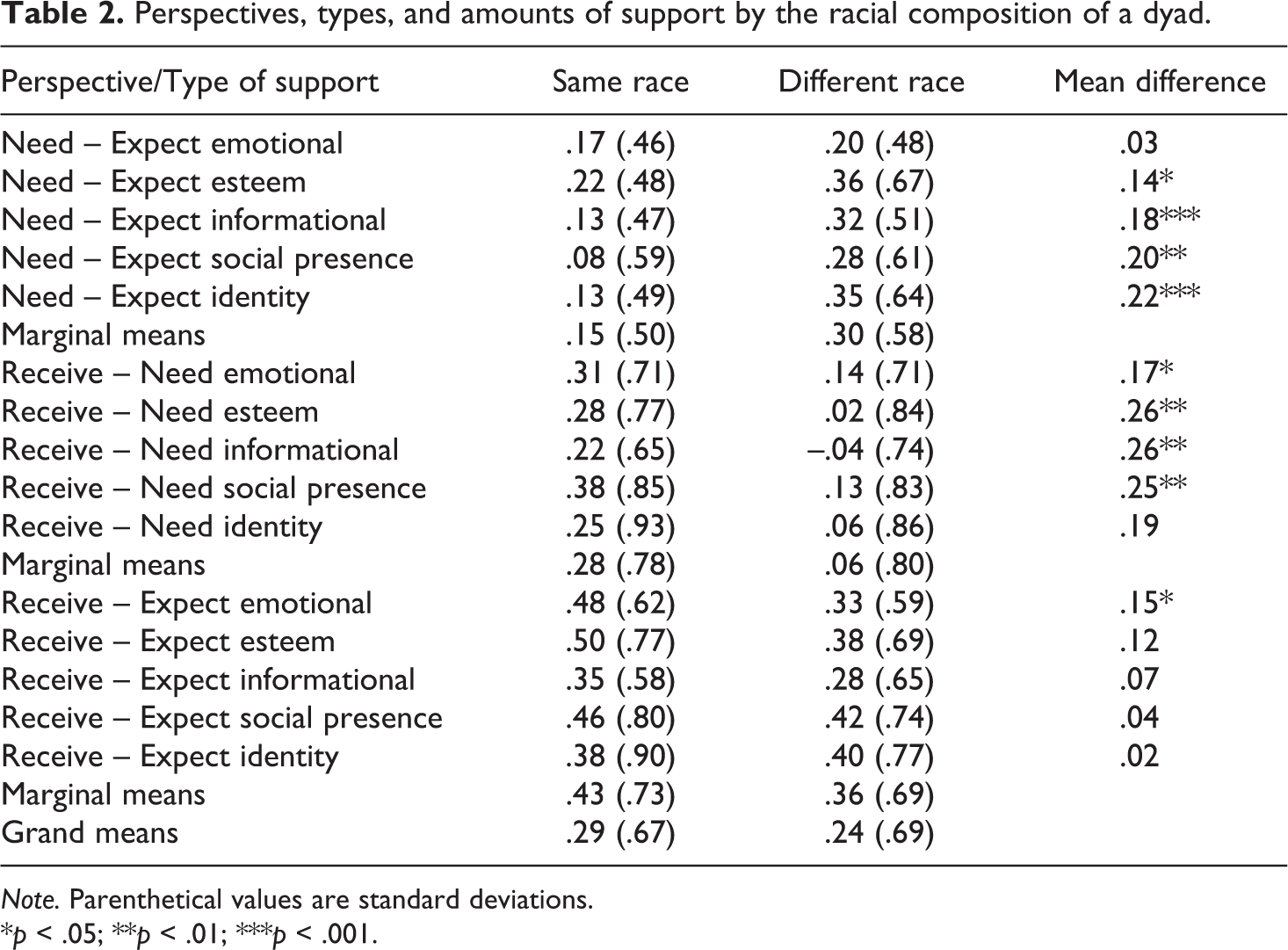
H3 and RQ3 focused on whether the support gaps we proposed were larger for friends of the same or a different race. To address this hypothesis and research question, we first created discrepancy scores between the amounts of each type of support women needed and expected, the amounts they received and needed, and the amounts they received and expected. We then conducted t-tests to investigate how the magnitude of these support gaps differed according to the racial pairing of a dyad. As displayed in Table 2, and in contrast to the predictions of H3, women generally received more support than they needed, and the magnitude of the discrepancies in emotional, esteem, informational, and social presence support was larger in dyads composed of friends from the same racial group than different racial groups. In other words, people experienced surpluses in support, and consistent with the logic underlying H3, these surpluses were larger from friends of their same race. In accordance with H3, however, women expected less esteem, informational, social presence, and identity support than they needed, and the magnitude of these gaps was larger for dyads composed of people from different racial groups than the same racial group. Overall, and consistent with H3, women expected less support than they needed, and these gaps were larger for friends of a different race than friends of their same race.
Perspectives, types, and amounts of support by the racial composition of a dyad.
Note. Parenthetical values are standard deviations.
*p < .05; **p < .01; ***p < .001.
Regarding RQ3, women generally received more support than they expected, and the size of that gap for emotional support was larger for friends of their same race than friends from a different race. That is, women experienced greater exceeded expectations in emotional support from friends of their same race than friends from a different race. We can answer RQ3 by stating that exceeded expectations in emotional support were larger when participants recalled interactions with friends of their same race than friends from a different race.
Outcomes of support gaps
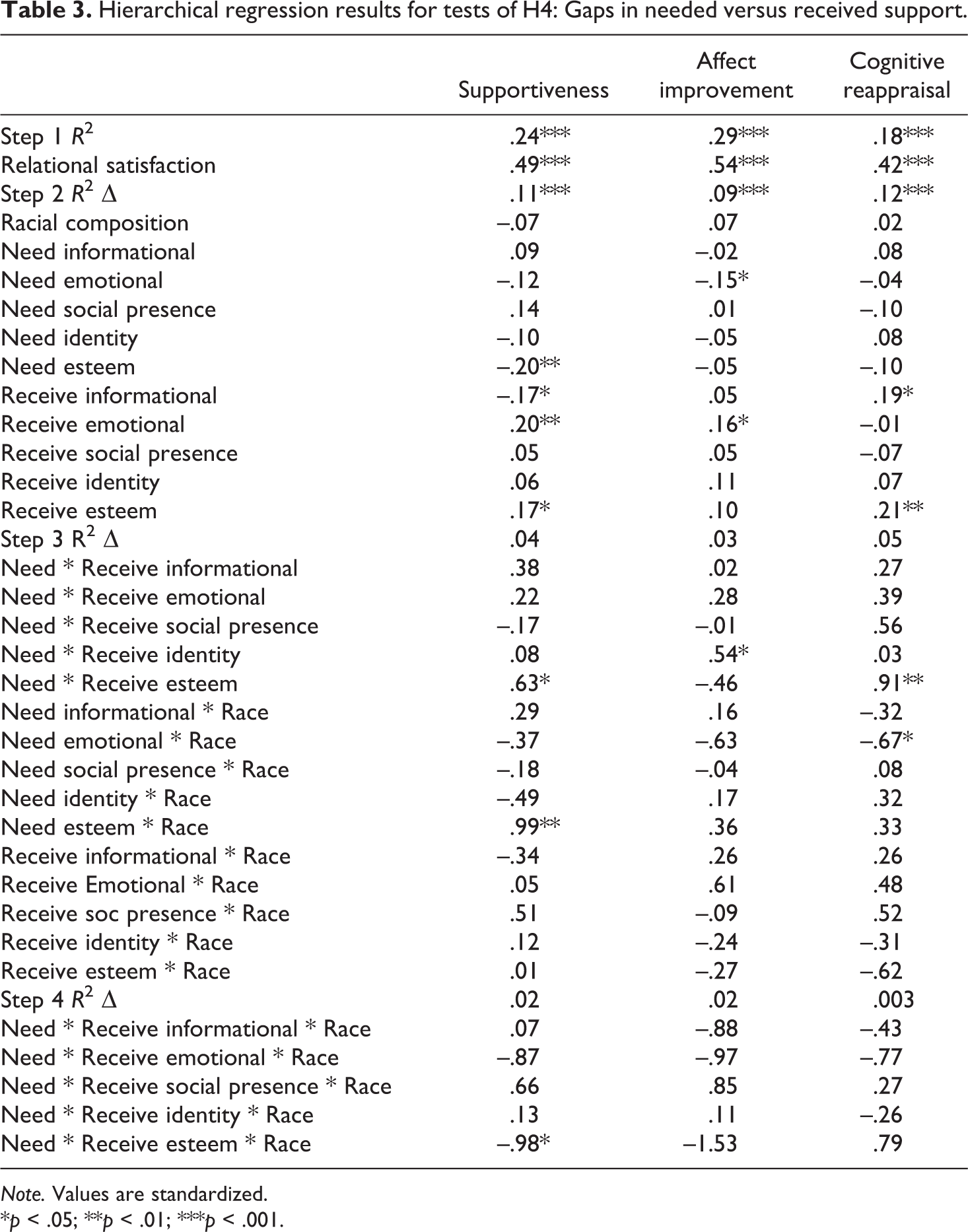
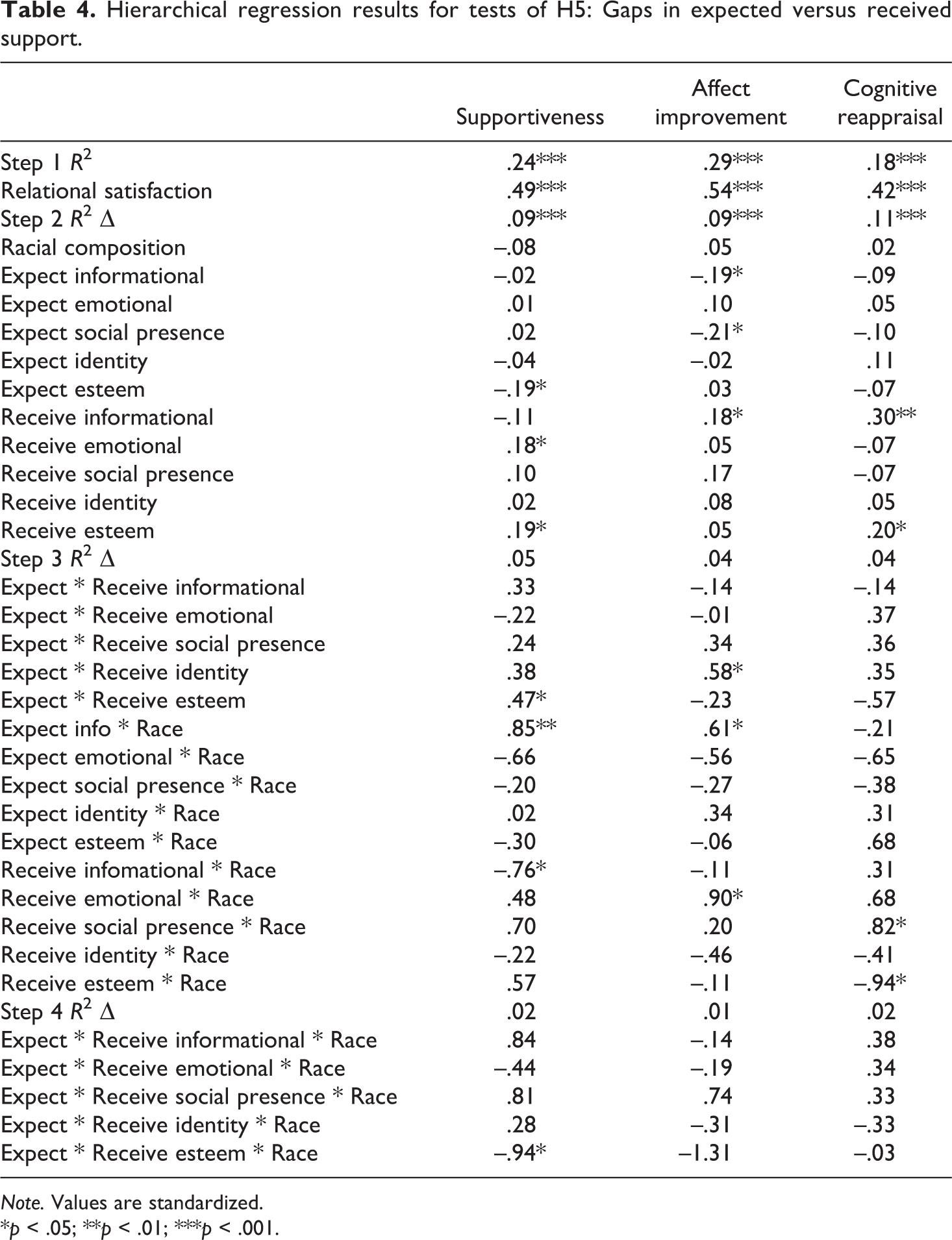
H4 posited that deficits and unmet expectations in all types of support are negatively associated with participants’ outcomes, especially when they interacted with friends of a different race. H5 asserted that surpluses and exceeded expectations in all types of support besides informational are positively associated with the outcomes women experience, especially when interacting with friends of their same race. Lastly, H6 contended that surpluses and exceeded expectations in informational support correspond with poorer outcomes for women coping with identity-related stress, especially when they interact with friends from a different race. These hypotheses were investigated using hierarchical regression analyses. We first created models that included all three perspectives on the interactions, all five types of support, and all relevant interactions; however, multicollinearity was a problem, which reduced the stability and replicability of any obtained results. Accordingly, we worked to balance the richness of our data with the number of models we ran. Because previous research underscores the importance of testing different types of support (Matsunaga, 2011), we included the terms for all types of support people needed and received in one set of models and the support they expected and received in separate models. Multicollinearity was not a problem in these models (e.g., all VIF < 5, all condition index < 30). The first step of the regression models included relational satisfaction, which served as a covariate. The second step added main effects for the racial composition of a dyad and either needed or expected support along with received support. The third step contained interactions between received and needed/expected support and between the racial composition of a dyad and the support variables. The fourth and final step of the regression analyses added three-way interactions among the racial composition of a dyad, the amount of each type of support people received, and the amount of the corresponding type of support people needed or expected. All variables were mean-centered prior to analysis; however, the unadjusted scores are reported for clarity (see Tables 3 and 4). Each regression model was run with supportiveness, affect improvement, and reappraisal as dependent variables.
Hierarchical regression results for tests of H4: Gaps in needed versus received support.
Note. Values are standardized.
*p < .05; **p < .01; ***p < .001.
Hierarchical regression results for tests of H5: Gaps in expected versus received support.
Note. Values are standardized.
*p < .05; **p < .01; ***p < .001.
The results showed that when people needed emotional and esteem support, they experienced lower affect improvement and perceptions of supportiveness, respectively. In contrast, the amount of emotional support people received corresponded with enhanced supportiveness and affect improvement. Similarly, receiving esteem support boosted people’s perceptions of supportiveness and cognitive reappraisal. The results for receiving informational support uncovered a more complex pattern of results, such that receiving informational support decreased people’s perceptions of supportiveness but increased cognitive reappraisal. Participants’ expectations for informational and social presence support corresponded with decreased affect improvement, and their expectations for esteem support were associated with decreased perceptions of supportiveness.
To examine the influence of support gaps in H4–H6, we examined interactions between the support people needed or expected and what they received. We observed a significant interaction between the identity support women needed and received on their perceptions of affect improvement. To better understand how affect improvement is associated with this support gap, we plotted affect improvement and low (1 SD below the mean), average, and high (1 SD above the mean) levels of needed and received support. As displayed in Figure 1, when people needed high levels of identity support but received low levels, they experienced particularly low levels of affect improvement. In accordance with H4a, this pattern of effects demonstrates the negative outcomes associated with deficits in identity support. People experienced the highest scores on affect improvement when they needed little but received high levels of identity support. This finding highlights the benefits of surpluses in support, as hypothesized by H5a.
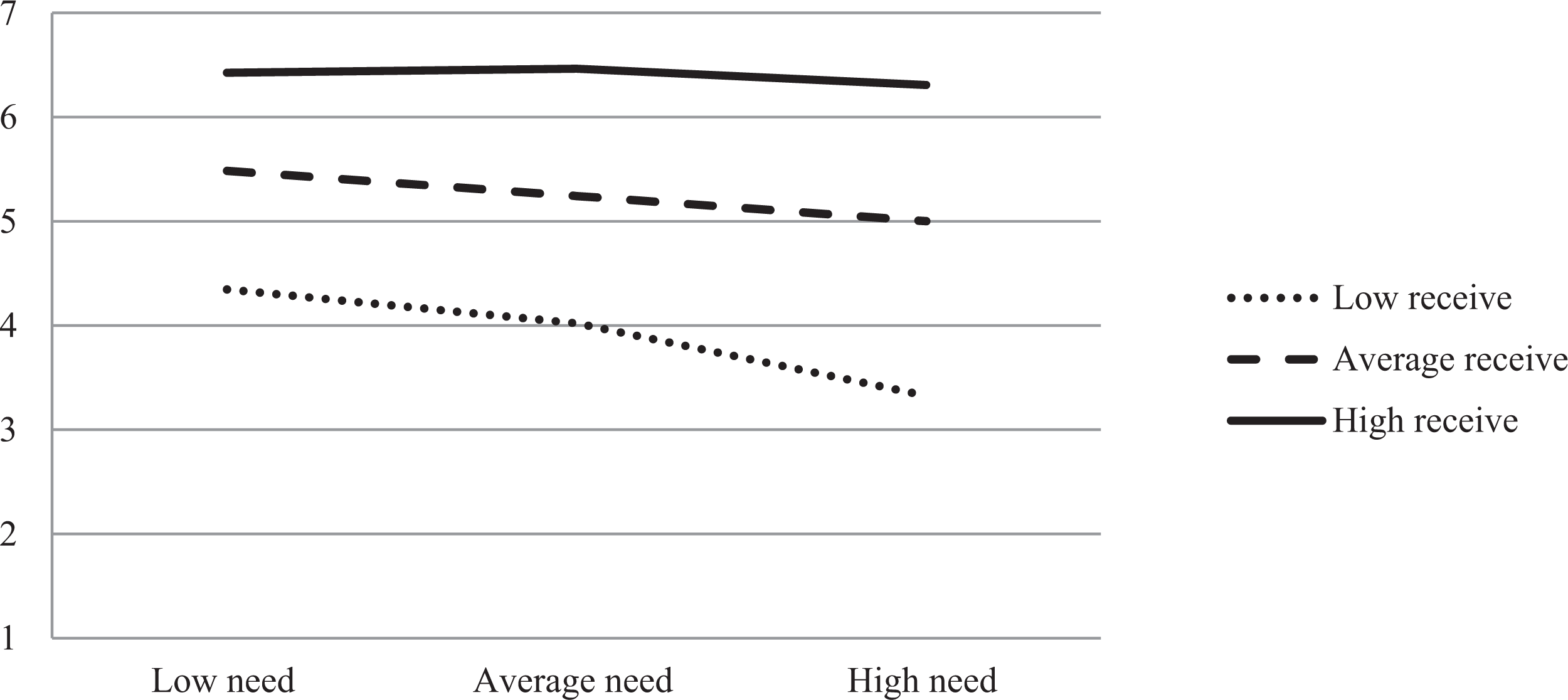
Participants’ scores on affect improvement at low, average, and high levels of needed and received identity support.
We also found a significant interaction between the identity support women expected and received on their affect improvement. A graph of this interaction is plotted in Figure 2. In accordance with H4b, respondents reported the lowest levels of affect improvement when they experienced unmet expectations in identity support. That is, they experienced the worst improvement in their feelings when they expected high levels of identity support but received low amounts. People experienced the greatest affect improvement when they expected low levels of identity support but received high levels. In other words, their affect improvement was greatest when they had exceeded expectations for identity support, which provides support for H5b.
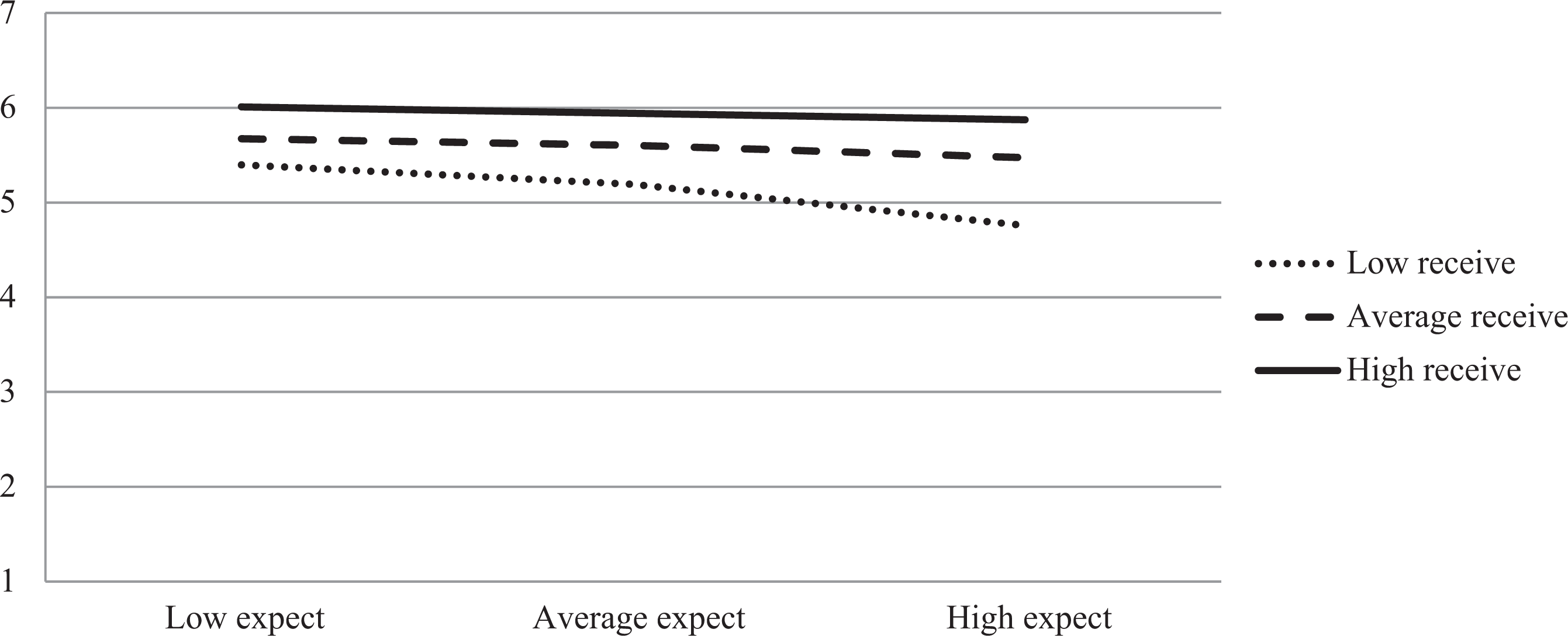
Participants’ scores on affect improvement at low, average, and high levels of expected and received identity support.
We next observed interactions between the amount of esteem support people needed and received on their perceptions of supportiveness and cognitive reappraisal. As pictured in Figures 3 and 4, people experienced the lowest levels of supportiveness and cognitive reappraisal when they needed high levels of esteem support but received low levels. This provides support for H4a and demonstrates the negative consequences of deficits in esteem support. In support of H5a, participants also reported the highest scores for supportiveness and cognitive reappraisal when they needed low levels of esteem support but received high levels. These findings exemplify the benefits of surpluses in esteem support.

Participants’ scores on supportiveness at low, average, and high levels of needed and esteem identity support.
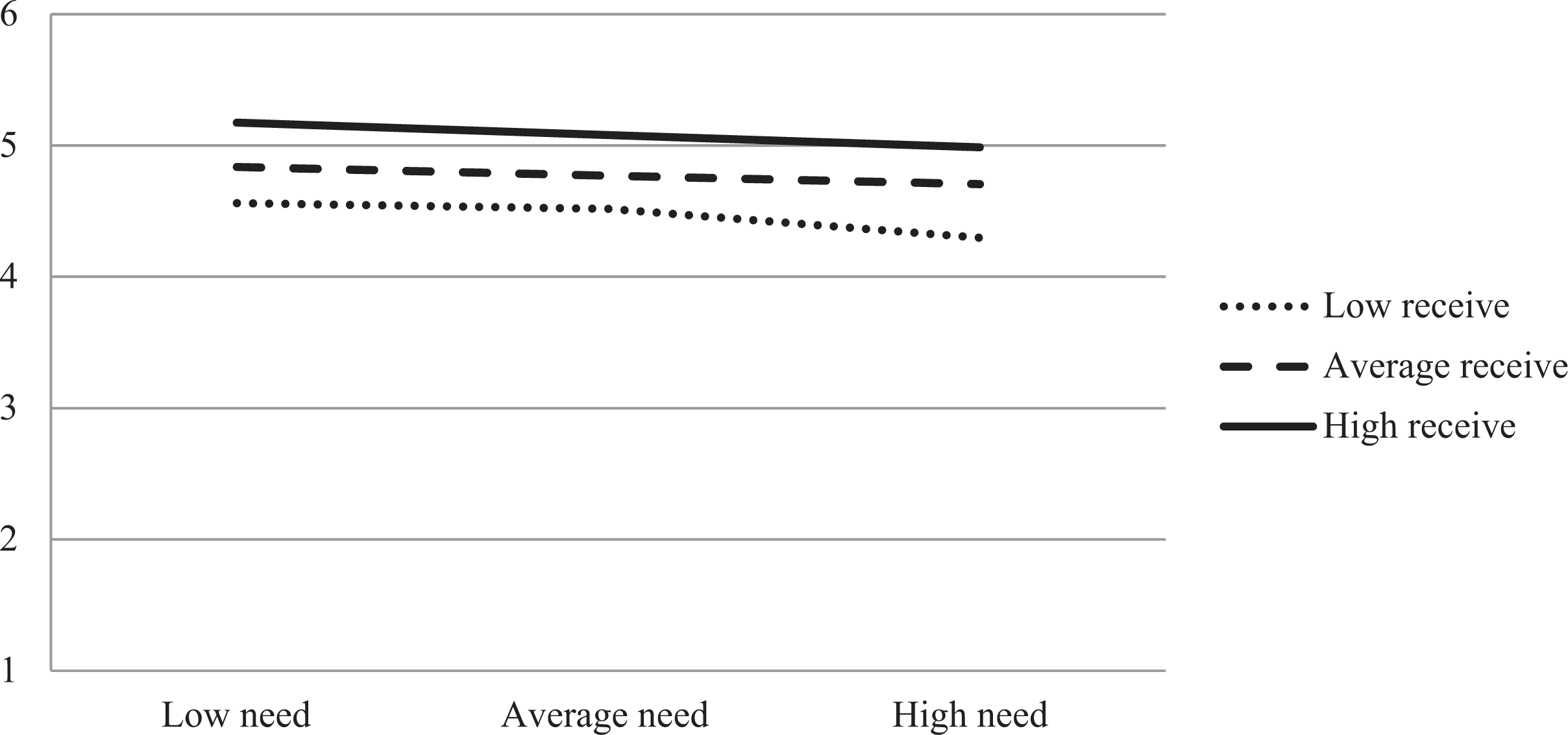
Participants’ scores on cognitive reappraisal at low, average, and high levels of needed and received esteem support.
Our regression analyses also produced a significant interaction between the esteem support people expected and received on their perceptions of supportiveness. These results, which are plotted in Figure 5, demonstrate the benefits of exceeded expectations and the consequences of unmet expectations. Whereas women reported the highest scores for supportiveness when they expected low levels of esteem support but received high levels, they indicated the worst perceptions of supportiveness when they expected high levels of esteem support but received low levels. This interaction provides support for H4b and H5b.
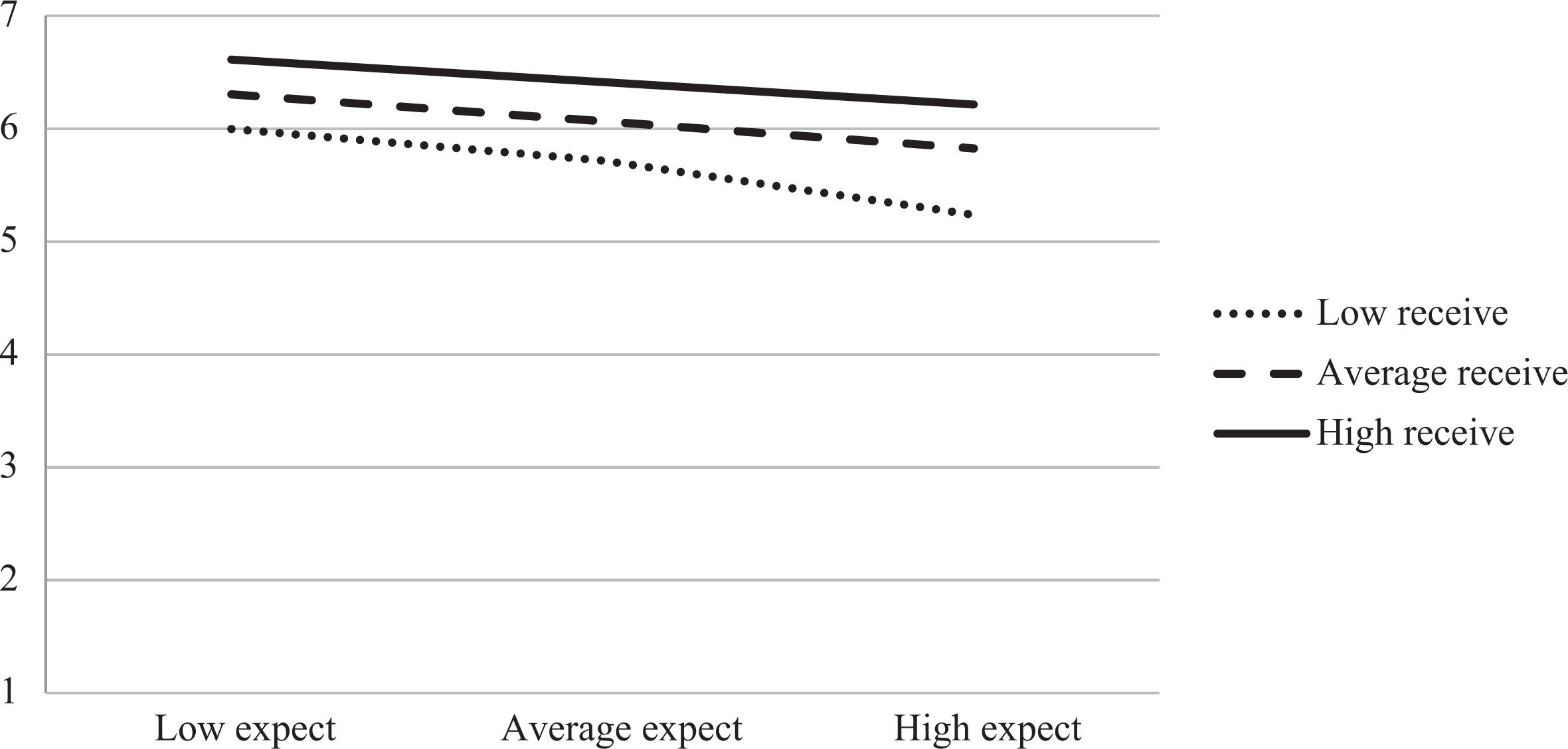
Participants’ scores on supportiveness at low, average, and high levels of expected and received esteem support.
H4c, H5c, and H6c all focused on the influence of support gaps when people interacted with friends from their same or a different race. We observed an interaction among the esteem support women needed, what they received, and the racial composition of their dyad on perceptions of supportiveness. Unpacking this three-way interaction revealed a similar pattern of results across both racial groups. Women experienced the highest supportiveness when they experienced surpluses in esteem support. They also reported the lowest supportiveness when they experienced deficits in esteem support; however, contrary to the predictions of H4c, deficits in esteem support corresponded with lower perceptions of supportiveness when people recalled interactions with friends of their same race, not friends of a different race (see Figure 6).
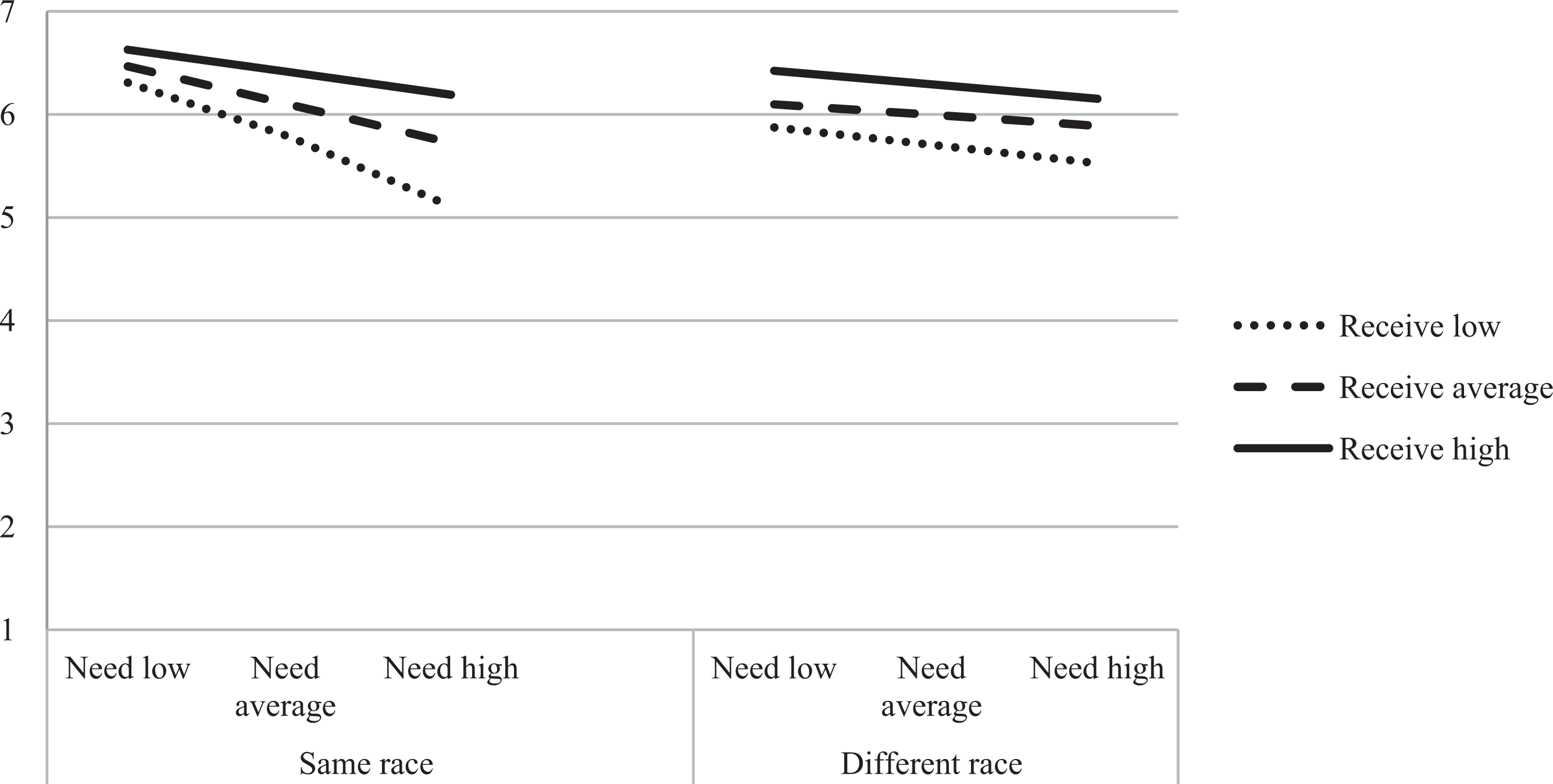
Participants’ scores on supportiveness at low, average, and high levels of needed and received esteem support for women who recalled interactions with someone of their same race or a different race.
We observed a similar three-way interaction among the esteem support our participants expected and received combined with the racial composition of their dyad. In contrast to H5c, women reported the greatest supportiveness when they experienced exceeded expectations in esteem support from a friend of a different race (see Figure 7). For friends of their same race, there was no difference in perceptions of supportiveness when women expected low levels of esteem support, regardless of whether they received low, average, or high levels of esteem support. Women experienced the lowest levels of supportiveness when they experienced unmet expectations in esteem support, and especially so when they recalled an interaction with a friend of a different race. This latter result supports H4c. Overall, women experienced the greatest perceptions of supportiveness when friends of a different race exceeded their expectations and the lowest perceptions of supportiveness when friends of a different race did not meet their expectations.
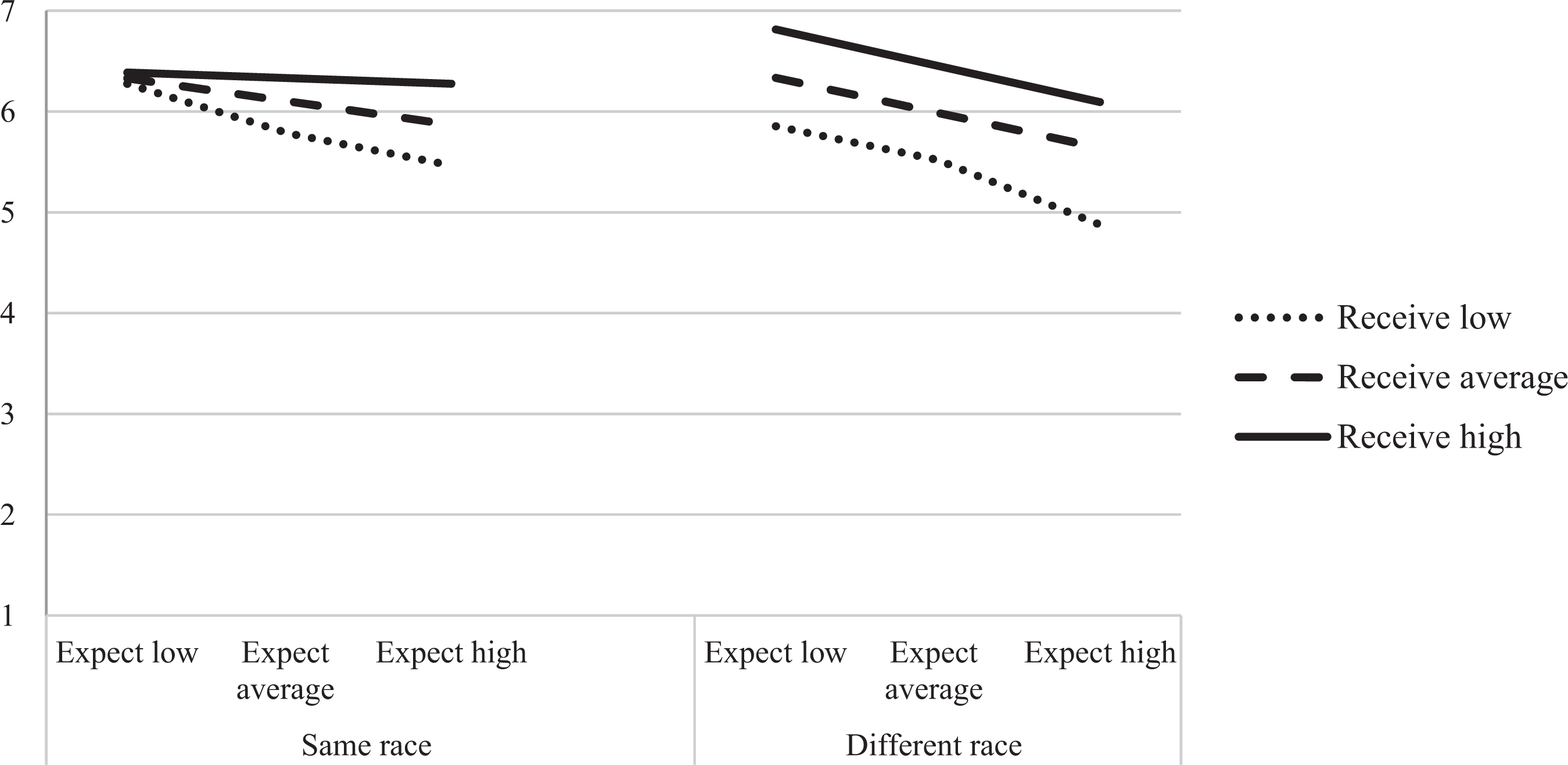
Participants’ scores on supportiveness at low, average, and high levels of expected and received esteem support for women who recalled interactions with someone of their same race or a different race.
H6, which focused on the outcomes associated with surpluses and exceeded expectations in informational support, received no support in this study because we observed no interactions between the amount of informational support women needed or expected and what they received.
We also observed several interactions that were not hypothesized between the support women needed, expected, or received and the racial composition of their dyad (see Tables 3 and 4). Details of these interactions are available from the authors.
Discussion
Prior research has established that supportive interactions between women help ameliorate stress and enhance affect (Taylor, 2006). Supportive communication, however, is not consistently advantageous for recipients, and the existence of support gaps can explain the varying outcomes of supportive interactions. We extended this line of research by examining gaps in the support women need, expect, and receive in the context of an identity-threatening stressor, and we sought to understand how the existence and outcomes of support gaps are contingent upon the racial composition of a dyad.
Summary of findings
People expected and received more of several types of support from friends of their same race than friends of a different race. These differences in support between racial groups also contributed to support gaps. In particular, people generally expected less support than they needed. This gap existed for all five types of support we considered and was more pronounced when participants recalled interactions with friends of a different race. People also indicated that their expectations for all types of support were exceeded, and this gap was more pronounced when people recalled interactions with friends of their same race. Similarly, people only experienced surpluses in support (i.e., received more support than they needed) from friends of their same race. These findings reveal that race shaped gaps across all five types of support and that people held particularly critical expectations of the support provided by friends of a different race. In contrast, participants held more charitable perceptions of support gaps from friends of their same race, such that they received more support than they needed and expected from those friends.
When the outcomes of support gaps were considered, people reported negative consequences due to unmet expectations in support. Regardless of the racial composition of a dyad, when friends did not meet people’s expectations for identity and esteem support, participants experienced reduced affect improvement and perceptions of supportiveness, respectively. Deficits in support also yielded negative outcomes. More specifically, deficits in identity support contributed to lower affect improvement and deficits in esteem support corresponded with reduced supportiveness. We then considered the racial composition of the dyad to gain a better understanding of the outcomes of support gaps. As predicted, unmet expectations in esteem support yielded negative outcomes when women received support from friends of a different race. Contrary to our predictions, however, exceeded expectations in esteem support were more beneficial when women received support from friends of a different race. Deficits in esteem support also yielded more negative outcomes from friends of the same race. These findings reveal that identity and esteem support were especially consequential for the women in our study and that our participants evaluated these types of support according to the racial background of their friends. It is important to note that all of these outcomes existed after controlling for people’s satisfaction in their friendships.
Implications
Prior research has established that features of the relationship between a support provider and receiver influence the evaluation of messages (Burleson, 2009; Feng & MacGeorge, 2010). Recipients are generally more responsive to support when it comes from someone they like, view as similar, or perceive to be credible (Burleson, 2009). We extend this research by recognizing that supportive interactions are situated within a context of race. Our findings demonstrate that the racial composition of a dyad influences the type and amount of support women need, expect, and receive. For example, people expected and received more support from friends of their same race than friends of a different race. The outcomes of support gaps were also contingent upon the racial matching of the interactants. In the U.S., a shared racial identity represents a common racial and historical legacy, particularly for people of color whose past is ridden with oppression and disenfranchisement (Omi & Winant, 2014). People trust racial insiders because they view the surrounding sociopolitical environment from a similar vantage point (Tajfel & Turner, 1979). For example, people have more positive evaluations of support when it is provided by someone from their same racial group (Haslam et al., 2004). Recipients might believe that friends of the same race are capable of relating to their identity-related stress, or providers might make better judgments about the types and amounts of resources that will assist a friend in need based on shared cultural frameworks and social experiences.
Although prior research on support gaps documents that people often experience deficits in support (Brock & Lawrence, 2009; High & Steuber, 2014; McLaren & High, 2015; Xu & Burleson, 2001), our respondents reported surpluses across all five types of support. We assessed people’s needs for support instead of their desires; therefore, this unexpected finding might be due to examining a different comparison point. Our sample of women might identify as self-sufficient and underestimate their needs for support. Women are often asked to attend to the needs of others before themselves (Thoits, 2013). Their caregiving responsibilities are burdensome and often come at the expense of their own mental health and self-care (e.g., Beauboeuf-Lafontant, 2008). Future research can compare women’s needs and desires for support and determine whether they set low standards for support that friends from any racial group can surpass.
We desired to integrate the notion of expectations into this study by examining the impact of not meeting or exceeding people’s expectations for support. Our results indicate that gaps based upon people’s expectations for support are consequential, and we found evidence of both positive and negative expectancy violations. Exceeding people’s expectations improved their perceptions and outcomes of supportive interactions, whereas not meeting people’s expectations corresponded with poor evaluations of support. Researchers have devoted attention to understanding people’s expectations for interpersonal (Burgoon & Le Poire, 1993; White, 2015) and even supportive interactions (Pierce et al., 1991); however, this is the first study to examine the effects of support gaps based on those expectations. Similar to how prior research differentiates positive from negative expectancy violations, we compared exceeded and unmet expectations. Whereas exceeded expectations often enhanced outcomes, unmet expectations generally worsened outcomes. These effects were consistent for any racial composition of a dyad, and people’s expectations for support should be considered in future research.
We assessed several types of support that are relevant to identity-threatening stressors, and we observed different results for distinct types of support. Informational support, for example, had a complex role in this study. Although we observed no significant effects for support gaps containing informational support, simply receiving informational support decreased people’s perceptions of supportiveness yet enhanced their cognitive reappraisal. Most outcomes in research on supportive communication can be divided into recipients’ evaluations of messages or the outcomes produced by those messages (Bodie et al., 2012; High & Solomon, 2016). Message evaluations are more proximal considerations than message outcomes, and that might explain the different effects for informational support we observed. Although some informational support might be burdensome to receive, thereby producing decreased evaluations of supportiveness, it can ultimately facilitate reappraisal of a stressor. Informational support might be a source of tough love that is initially difficult to receive yet ultimately beneficial for recipients (Zhang & Stafford, 2009). Support receivers commonly evaluate information to be an effective type of support when support providers have some level of expertise on a topic (Cutrona & Suhr, 1992). Along these lines, supplemental analyses revealed that receiving informational support was positively associated with perceptions of supportiveness when people received support from someone of their own race but not someone from a different race. The participants in our study appreciated informational support only when it came from a valued or trusted member of their racial in-group.
Emotional and esteem support are often considered to be the most effective types of support (MacGeorge et al., 2011), but research on support gaps demonstrates that these nurturing types of support can produce negative outcomes when the needs or desires of a recipient are not met (High & Steuber, 2014; McLaren & High, 2015). Our results extend this research by demonstrating that outcomes vary according to the racial composition of a dyad. For example, unmet expectations for esteem support were especially detrimental when produced by friends of a different race. Recipients might have evaluated unmet expectations of support more harshly because they considered the racial background of the provider to be a negative characteristic or they might have otherwise undermined support attempts from racial outsiders (Hogg et al., 2004). According to expectancy violations theory, negative impressions of a communicator can damage people’s evaluations of their behavior (White, 2015), and social identity theory suggests that people criticize interactions involving out-group members (Tajfel & Turner, 1979). Participants also reported negative evaluations of support when they experienced deficits in esteem support from friends of their same race. Prior research documents that female support recipients are critical of ineffective support from other females, in part because they share a similar gender role orientation (Holmstrom et al., 2005). In the case of deficits in esteem support from friends of the same race, support providers violated the norms for their shared gender orientation and racial background. When female providers fail to meet recipients’ needs or expectations, particularly when the friend is from the same racial group, recipients evaluate the interactions more harshly. On the other hand, participants experienced positive outcomes when friends of a different race exceeded their needs and expectations for esteem support. These instances might represent positive expectancy violations. Future research can integrate recipients’ perceptions of expectancy violations in the explanatory calculus of support gaps.
This study also extends research on the consequences of support gaps by examining both perceptions (i.e., supportiveness) and outcomes (i.e., affect improvement, reappraisal) of interactions. Our results demonstrate that support gaps are stronger predictors of women’s perceptions of supportiveness than affect improvement or cognitive reappraisal. As previously stated, people’s evaluations of supportive interactions are more proximal effects than the outcomes produced by those interactions. In fact, some research indicates that supportive interactions produce outcomes based on recipients’ immediate evaluations of them (Bodie et al., 2012; High & Solomon, 2016). Our results suggest that support gaps are associated with a range of outcomes involving people’s impressions of and cognitive reactions to interactions; however, their evaluations of interactions might be more malleable based on the influence of support gaps. Future research could explore the long-term effects of support gaps on other important variables, such as mental and physical health and the quality of the relationship between interactants.
Limitations and conclusions
The findings from this study must be considered within their limitations, one of which is our reliance on self-reports of previous interactions. People’s recollections of conversations are not entirely accurate (Benoit, Benoit, & Wilkie, 1996), and our participants might have imprecisely recalled the content or their evaluation and outcomes of prior interactions. Other research on support gaps has used recall methods; however, future research could observe the messages actually communicated during an interaction. We also tested new perspectives on supportive interactions (i.e., needs and expectations), support types (i.e., identity and social presence), and source characteristics (i.e., race) within a specific context (i.e., women coping with identity-threatening stress). It is unclear whether individuals can accurately gauge their needs for support following a stressor, even though they reliably answered our survey items. Future research can compare how accurately people’s needs for support match the assistance they seek. The nuance among these perspectives might be most salient to communication researchers; however, our participants perceived differences among these perspectives and types of support, and these discrepancies influenced the outcomes they recalled. Asking participants to recall a conversation with a friend of a specific race may have created demand characteristics, perhaps causing respondents to identify effective providers from satisfying relationships. Nonetheless, we assigned people to conditions to ensure that the two comparison groups were equitable. Lastly, the sample was restricted to White and Black women because these two racial groups have notably different styles of communication. Unfortunately, this decision excluded many other racial groups and variations in the expression of racial identity. It would be interesting to include women from different marginalized groups to understand which combinations of minority identity influence the existence or outcomes of support gaps.
This study extends work on supportive communication by situating support gaps in relation to different perspectives on supportive interactions, unique types of support, and the racial composition of a dyad. Our participants experienced several gaps among the support they needed, expected, and received when coping with an identity-threatening stressor, and these gaps were consequential. Recipients expected and received more of several types of support from friends of the same race than friends from a different race. Several gaps women experienced corresponded with outcomes and were contingent upon the racial matching of support providers and receivers. Thus, the racial composition of a dyad can augment the experience of support gaps and should be considered in future research. Invoking issues of race in studies on close relationships allows scholars to investigate the complexities of supportive interactions in new and socially relevant ways.
Footnotes
Funding
The author(s) received no financial support for the research, authorship, and/or publication of this article.
Note
References
Supplementary Material
Please find the following supplemental material available below.
For Open Access articles published under a Creative Commons License, all supplemental material carries the same license as the article it is associated with.
For non-Open Access articles published, all supplemental material carries a non-exclusive license, and permission requests for re-use of supplemental material or any part of supplemental material shall be sent directly to the copyright owner as specified in the copyright notice associated with the article.
