



Abstract
During times of stress, supportive communication can buffer individuals from experiencing negative outcomes. However, the COVID-19 pandemic has substantially altered the interactions people rely on for support, which may influence the supportive messages they desire and receive. When people receive quantities of support that differ from what they desire, they experience support gaps, which are often associated with negative outcomes. The present study examines: (a) support gaps in close relationships under shelter-in-place orders issued in response to the pandemic; (b) how support gaps may be moderated by recipient and provider sex; and (c) relationships between support gaps and loneliness, stress, and relational satisfaction. Data were collected in Spring 2020 from community members across the United States and students at a large Midwestern university (N = 273). Participants reported on five types of support desired and received from their closest relational partner. Unexpectedly, participants generally reported receiving more support than desired, though this finding was qualified by their biological sex and the biological sex of their partner. As expected, support deficits were primarily associated with negative outcomes. Surplus esteem support was positively associated with relational satisfaction and negatively associated with perceived stress. Results are discussed in terms of theoretical implications for support gaps research and theory as well as pragmatic implications for individuals experiencing a global, shared stressor.
The COVID-19 pandemic has created enormous stress for individuals worldwide (e.g., Masiero et al., 2020). People typically depend on their closest relational partners for supportive messages (i.e., verbal and nonverbal behaviors intended to provide assistance) to aid in navigating crises (e.g., Burleson, 2003). Research conducted early in the pandemic indicates that individuals experiencing increased isolation, stress, and uncertainty due to the COVID-19 pandemic have benefited when they received support from close others (e.g., Szkody et al., 2020). However, disruption to routines due to the pandemic has been associated with negative outcomes in close relationships, such as increased conflict and decreased relational closeness and satisfaction (e.g., Luetke et al., 2020; Russell et al., 2020), which may impact the support people exchange.
People enter supportive interactions with desires regarding the type and quantity of support they want to receive (e.g., Crowley & High, 2020; Pederson et al., 2020). However, people do not always receive the support they desire, resulting in support gaps (Xu & Burleson, 2001). Support gaps, whether they represent receiving more (over-benefit, OB) or less (under-benefit, UB) support than desired, are theorized to be associated with negative personal and relational outcomes (Crowley & High, 2020; Pederson et al., 2020).
The present study extends previous support gap research by focusing on: (a) recipient, provider, and provider-by-recipient sex interactions as moderators of support desired and received and (b) outcomes associated with gaps in five dimensions of supportive communication, in the context of a pandemic that constitutes a unique globally-shared stressor. Previous research regarding sex differences in support gaps tends to focus on the influence of recipient sex (e.g., Brock & Lawrence, 2009; Faw et al., 2018; Xu & Burleson, 2001). We extend such work by also examining the influence of provider sex and the interaction between provider and recipient sex on support desired, received, UB, and OB. Then, we assess the effects of gaps across five types of supportive communication in one’s closest relationship on perceptions of loneliness, stress, and relational satisfaction during early shelter-in-place (SIP) orders. COVID-19 is a unique stressor to support gap research, as it has been a source of individual, relational, and collective trauma worldwide (Masiero et al., 2020). Thus, the present study is important pragmatically because the support people desire and receive, as well as the psychological and relational health risks associated with support gaps (Brock & Lawrence, 2009; Dehle et al., 2001), may be unique during a globally stressful situation such as the COVID-19 pandemic.
The COVID-19 Pandemic and Supportive Communication
The COVID-19 pandemic has been a significant source of strain, change, and uncertainty (e.g., Goodboy et al., 2021), particularly in the early months of SIP orders in the United States (U.S.) when the present study was conducted. Uncertainty about the pandemic’s impact on health, relationships, and finances left people with high levels of stress (e.g., Saltzman et al., 2020). One resource shown to benefit individuals during past pandemics (e.g., SARS) is support from others (see review by Chew et al., 2020).
Supportive communication is particularly important in individuals’ closest relationships as it often enhances positive personal and relational outcomes for recipients (MacGeorge et al., 2011). Accordingly, research indicates that the amount of support received from close relational partners during the COVID-19 pandemic is positively associated with psychological well-being, particularly the longer a person is isolated (Szkody et al., 2020). However, sometimes supportive messages are associated with negative outcomes for recipients, such as diminished self-esteem, increased emotional distress, and relational hurt (e.g., Coyne et al., 1988; Holmstrom, 2012).
One explanation for these discrepant outcomes is the support gap hypothesis (SGH; Belle, 1982). The SGH posits that when levels of desired support do not match perceptions of received support, individuals experience support gaps (see Xu & Burleson, 2001). The SGH, as well as an emerging theory of support gaps (Crowley & High, 2020; Pederson et al., 2020), posit that a match between support desired and received will result in the most optimal outcomes for recipients. Accordingly, UB or OB of support can lead to a variety of negative personal and relational consequences, though outcomes of support gaps vary across studies (see Crowley & High, 2020; McLaren & High, 2019; Pederson et al., 2020; Priem & Solomon, 2015). We next review research on support gap types as well as sex differences in support gaps.
Supportive Communication Types and Support Gaps
Supportive communication is theorized to take different forms. Cutrona and Suhr (1992) developed a typology of social support consisting of emotional (e.g., expressions of care and comfort); esteem (e.g., validation or compliments); informational (e.g., guidance and advice); network (e.g., connections to others with similar interests); and tangible (e.g., provision of resources) support. Previous support gap research has examined each of these support types, sometimes grouping them into the categories of nurturant (emotional, esteem, and network) and action-facilitating (informational and tangible) support. Nurturant support focuses on coping with the stressor emotionally or cognitively, whereas action-facilitating support focuses on solving the problem directly through action.
Researchers have typically found that support deficits are more common than surpluses, with people reporting more UB in nurturant support types (High & Steuber, 2014; Joseph et al., 2016) and more OB in informational support (Brock & Lawrence, 2009; High & Crowley, 2018). Because of this consistency in findings, one tenet of a developing theory of support gaps is that UB is generally predominant (Crowley & High, 2020; Pederson et al., 2020). However, most previous research examines general support gap patterns in relationships, non-specific to a stressor (e.g., Xu & Burleson, 2001); support gaps in response to individual stressors (e.g., Davis & High, 2019); or support gaps in relation to dyadic stressors (e.g., Crowley et al., 2019). The extent to which the general pattern of UB will replicate during early SIP orders is unknown, given that the COVID-19 pandemic is a unique global, external, and uncontrollable stressor. Thus, we ask the following research question:
Provider and recipient sex as moderators of support gaps
Research examining sex differences in support gaps has focused primarily on effects of recipient sex, finding that women typically desire more support than men, though which types varies across studies. Xu and Burleson (2001) report that women desired more of each of the five types of support than men in the context of American and Chinese individuals’ early marriage experiences, but a replication of that study found this difference only with respect to tangible support (Faw et al., 2018), as did a study of young adults experiencing an unintended pregnancy (Crowley et al., 2019). Regarding received support, most research indicates that women receive more support than men, though which types vary across studies.
Several studies of heterosexual couples in early marriage have indicated that wives experience more UB than husbands in emotional (Brock & Lawrence, 2009; Faw et al., 2018; Xu & Burleson, 2001), esteem (Brock & Lawrence, 2009), and tangible (Brock & Lawrence, 2009; Xu & Burleson, 2001) support but not informational or network support. Some research indicates that husbands and wives do not differ in OB (e.g., Brock & Lawrence, 2009), but in other studies, husbands were more likely than wives to experience OB (Faw et al., 2018; Xu & Burleson, 2001).
Though a pattern has emerged such that women tend to desire and receive more support than men, and women are more likely to experience UB and less likely to experience OB, this varies across studies. Furthermore, past research on relationships between recipient sex and support gaps has largely focused on heterosexual couples’ general experiences of support in early marriage. Our study concerns individuals’ experiences with their closest relational partner, whose biological sex and relational role (e.g., friend, family member, or romantic partner) differ across the sample. Thus, we offer the following research question to examine effects of recipient sex on support desired and received from one’s closest relational partner during early SIP orders:
Previous research has not explicitly examined differences in UB or OB due to support provider sex, though research on support gaps in heterosexual marriages indicates that women report more UB and men report more OB of some types of support (Xu & Burleson, 2001), suggesting that provider sex may play a role. However, the extent to which these findings are due to men’s lesser desires for support and/or women’s receipt of less support is unclear, given mixed results regarding the effects of recipient sex on support gaps. Additionally, the extent to which these findings are due to sex of provider versus relational role (i.e., husband/wife) is unknown. Outside the support gap literature, research indicates that women typically provide a higher quantity of nurturant forms of support (e.g., Trobst et al., 1994) and more quality nurturant support than do men (MacGeorge et al., 2003; Shebib et al., 2020). This research suggests a main effect for provider sex on support received, such that people with female partners may receive more nurturant support than those with male partners. Thus, we forward the following hypothesis:
Research does not consistently indicate sex differences due to provider sex in action-facilitating support, such as advice (see MacGeorge et al., 2004). Thus, we ask the following research question:
Regarding support desired, people generally expect that women will be more supportive than men (e.g., Bodie & Burleson, 2008; Holmstrom et al., 2005) but the extent to which they desire less support from men is unknown, as is the extent to which provider sex may moderate experiences of UB and OB. Thus, we pose the following research question:
Only one known study has examined interactions between recipient and provider sex on support gaps (Wang, 2019). In a study of parent–child dyads, a post hoc analysis indicated that congruence between parent and child sex did not moderate relationships between support gaps and outcomes. However, research outside the domain of support gaps indicates that interactions between provider and recipient sex do impact supportive interactions; for example, Burleson et al. (2005) report that men provide lower-quality support to other men than to women, and women expect higher-quality support from their female friends than from their male friends (Holmstrom et al., 2005). These findings may have implications for support desired and received; for example, men with male support providers may receive less support than other pairs, or women with female providers may desire more support than other pairs. Our study extends research on sex differences in support gaps by exploring how sex of provider and recipient may interact with respect to support desired and received as well as UB and OB, within the context of a global pandemic. We ask:
Outcomes Associated with Support Gaps
Prior support gap research suggests that outcomes differ based on support type (e.g., emotional and informational) and whether the gap represents UB or OB (e.g., Crowley & High, 2020; Crowley et al., 2019; Davis & High, 2019; High & Crowley, 2018). However, previous research concerning the effects of support gaps has yielded inconsistencies. These discrepancies likely derive from multiple sources, including study design (e.g., experiment, retrospective reports, and third-party observation); outcomes measured (e.g., stress and relational satisfaction); context (e.g., romantic transgressions and unexpected pregnancy); and type of relationship examined (e.g., friendship, marriage, and parent–child). The following review will highlight some key findings concerning outcomes of support gaps.
Consistent with the typically positive outcomes associated with nurturant support (Barbee & Cunningham, 1995), it is unsurprising that UB in nurturant support has been connected to detrimental outcomes such as lower relational quality and increased stress (Crowley & High, 2020; Dehle et al., 2001; McLaren & High, 2019). Less research has investigated the impact of UB in action-facilitating support. However, the existing research has found that UB in informational support is negatively related to cognitive reappraisal (High & Crowley, 2018), and UB in tangible support is associated with negative relational outcomes (McLaren & High, 2019; Wang, 2019), suggesting that UB in action-facilitating support is also detrimental.
Contrary to the SGH, which predicts the best outcomes for matches between desired and received support, some scholars have found that OB in nurturant support is associated with outcomes including improved self-esteem, relational satisfaction, and cognitive reappraisal (Davis & High, 2019; High & Crowley, 2018; McLaren & High, 2019; Wang, 2019), potentially due to nurturant support’s ability to communicate care and empathy (e.g., Barbee & Cunningham, 1995). However, other research has identified detrimental effects of a surplus in nurturant support, like poorer affect improvement (Crowley & High, 2020; Crowley et al., 2019) and greater perceived stress (Wang, 2019). These discrepant findings could be due to outcomes assessed; for example, studies that found positive effects of nurturant support OB included outcomes such as cognitive reappraisal (Davis & High, 2019; High & Crowley, 2018) or esteem improvement (McLaren & High, 2019), whereas outcomes such as affect improvement were negatively associated with nurturant support OB (Crowley & High, 2020; Crowley et al., 2019). These studies differed in other ways as well, such as the stressor at hand; for example, Davis and High (2019) focused on women’s identity-relevant stressors, whereas Crowley et al. (2019) focused on men and women coping with an unintended pregnancy.
In terms of OB in action-facilitating support types, research demonstrates that surpluses in informational support are related to negative outcomes (e.g., Brock & Lawrence, 2009; Crowley & High, 2020). OB in tangible support has been associated with both negative (e.g., Brock & Lawrence, 2009) and positive outcomes (McLaren & High, 2019; Wang, 2019). Again, studies differ in numerous ways that may affect results. For example, Wang focuses on support emerging adults receive from their parents, a context in which an imbalance of power and resources may make OB in tangible support more normative than in the marital relationships observed by Brock and Lawrence.
The present study focuses on associations between desired and received support, UB, and OB and the outcomes of (a) loneliness, (b) perceived stress, and (c) relational satisfaction. These outcomes were chosen because they are related to stressors unique to the pandemic, and because they represent previously identified outcomes of supportive communication in close relationships. Below, we briefly review pertinent research findings related to these outcomes.
Loneliness
Loneliness is a discrepancy between desired and perceived social contact (Peplau et al., 1979). A study administered to a nationally representative sample of U.S. residents in April 2020 (when the present study was conducted) found that loneliness had increased during the pandemic and was associated with greater depression and suicidal ideation (Kilgore et al., 2020). Though no known research examines loneliness as an outcome of support gaps, receiving social support in general has been associated with reduced loneliness (e.g., Kong & You, 2013) suggesting that UB may increase loneliness.
Perceived stress
Since the outbreak of the COVID-19 pandemic, many have reported more stress due to factors such as increased caretaking, financial distress, and decreased face-to-face interaction with support networks (e.g., Birditt et al., 2020; Pietromonaco & Overall, 2020; Prime et al., 2020). Social support serves as a buffer to perceived stress (Cohen & Wills, 1985). Perceived stress has also been associated with support gaps; for example, UB and OB in both action-facilitating and nurturant support were associated with greater perceived stress in Wang’s (2019) study of support gaps in parent–child relationships.
Relational satisfaction
Relational satisfaction refers to a subjective assessment of fulfillment in one’s relationship (Hendrick, 1988). The present study focuses on support gaps in participants’ closest relationship, early in the pandemic when SIP orders were in place for the majority of the U.S. Research shows that the stress of the pandemic caused spillover onto satisfaction in relationships (Birditt et al., 2020; Enestrom & Lydon, 2021), but perceived support during the pandemic was linked to increased relational satisfaction (e.g., Enestrom & Lydon, 2021). Furthermore, previous research connects support gaps to relational satisfaction. For example, Wang (2019) found that UB of nurturant support predicted relational dissatisfaction, whereas OB of nurturant support was associated with increased relationship satisfaction. Thus, it seems plausible that support gaps may be associated with relational satisfaction during SIP orders.
Our next set of hypotheses and research questions concerns relationships between support gaps and our three outcomes of interest. To begin, we consider relationships between UB and outcomes. Research indicates that UB in both action-facilitating and nurturant support is generally associated with negative outcomes (Crowley & High, 2020; McLaren & High, 2019). Accordingly, we pose the following hypotheses:
Next, we consider OB of nurturant and action-facilitating support types. The SGH posits that OB is undesirable. However, research is mixed on the outcomes of OB for both action-facilitating and nurturant support (e.g., Crowley & High, 2020; Wang, 2019). Thus, we ask:
Methods
Data were collected between mid-April and mid-May 2020 from community members across the U.S. (n = 79) and students at Michigan State University in East Lansing, MI, U.S. (n = 194). Community members were recruited via snowball sampling on social media, and students were recruited from an online participant pool. Participants (N = 273) reported on five types of support desired and received from the individual they identified as their closest relational partner. They then completed measures of the dependent variables and demographic questions.
Participants
Participants’ average age was 25.25 years old (SD = 11.74, median = 21; range = 18–84). The majority reported their biological sex as female (54.9%), 44.3% as male, and 0.7% indicated non-binary. The majority identified as White/Caucasian (79.5%), followed by Black or African American (8.4%), Asian/Pacific Islander (5.5%), mixed or multiple races (1.5%), and other or prefer not to answer (2.6%). In terms of ethnic identity, 1.8% identified as Hispanic or Latino. All community member participants resided in the U.S., as did most of the student sample (97.4%). Of the community sample, the highest level of educational attainment included a bachelor’s degree (34.2%), some college (24.1%), a master’s, PhD, or professional degree (21.5%), an associate degree (6.3%), a high school degree (5.1%), some post-college education (5.1%), or less than a high school degree (1.3%); 2.5% did not indicate their level of educational attainment.
Measurements
Unless otherwise noted, all items were measured on 7-point Likert-type scales (1 = strongly disagree, 7 = strongly agree). Higher scores indicate a greater degree of the construct of interest, unless otherwise noted. Items in each scale were adapted to be specific to COVID-19 by asking participants to focus on the period in which they were SIP.
Support desired and received
Support desired and received was operationalized using Xu and Burleson’s (2001) scale of support types. Participants rated each item twice: once for the extent to which they desired that support and once for the extent to which they received that support. Importantly, they were asked to reflect on support desired and received in their closest relationship since the time they began SIP. Items were rated on a 5-point scale (1 = didn’t [desire/receive] at all, 5 = [desired/received] a great deal). Seven items were used to assess each subscale (first reported alpha is for desired, second is for received): emotional (α = .85, α = .82); esteem (both αs = .88); informational (α = .87, α = .89); network (α = .86, α = .87); and tangible (α = .85, α = .87).
Loneliness
Loneliness was operationalized using Gierveld and Tilburg’s (2006) six-item loneliness scale (α = .73, M = 3.64, SD = .97).
Perceived stress
Perceived stress was operationalized using Cohen and colleagues’ (1983) 10-item perceived stress scale (α = .85, M = 2.09, SD = .68).
Relational satisfaction
Relational satisfaction was operationalized using Hendrick’s (1988) 7-item relationship assessment scale (α = .85, M = 5.95, SD = .92).
Potential Covariates
Relational closeness
Relational closeness during SIP orders was operationalized using a single item, “Please indicate how close you are with this person.” This item ranged from 1 = not at all close to 5 = extremely close.
Type of relationship
Participants indicated the type of relationship they had with their closest relationship partner: friend, romantic partner, family member, or other.
Residential status
Participants responded to a binary item (yes/no) asking whether they currently resided with their relational partner.
Communication frequency
Participants indicated how frequently they communicated with this relational partner during SIP orders on a 6-point scale ranging from “once a month” to “multiple times a day” (M = 3.56, SD = 1.61; mode = “multiple times per week”).
Unemployment due to COVID
One binary item (yes/no) assessed whether participants had become unemployed due to COVID-19.
Results
Participants reported that their relationship partner was a friend (50.9%), followed by family member (24.5%), romantic partner/spouse (24.2%), or other/did not report relationship type (0.4%). Most (74.4%) did not reside with their partner. Approximately, a third of the sample (36.5%) had become unemployed due to COVID-19.
Descriptive statistics for types of support and support gaps.
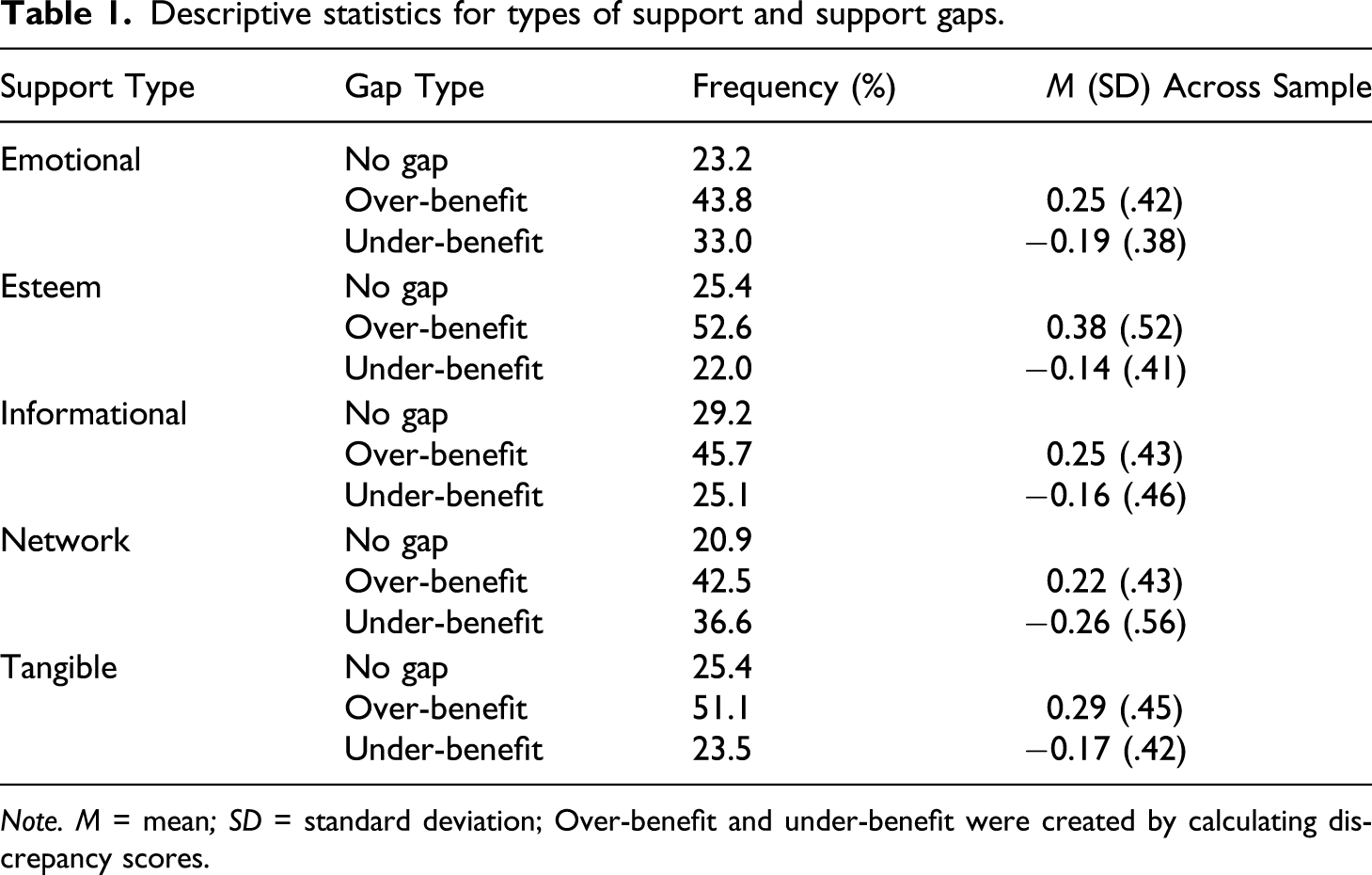
Note. M = mean; SD = standard deviation; Over-benefit and under-benefit were created by calculating discrepancy scores.
Experiences of Support Gaps During SIP and Moderation by Sex
Descriptive statistics for provider and recipient sex on support desired and received.
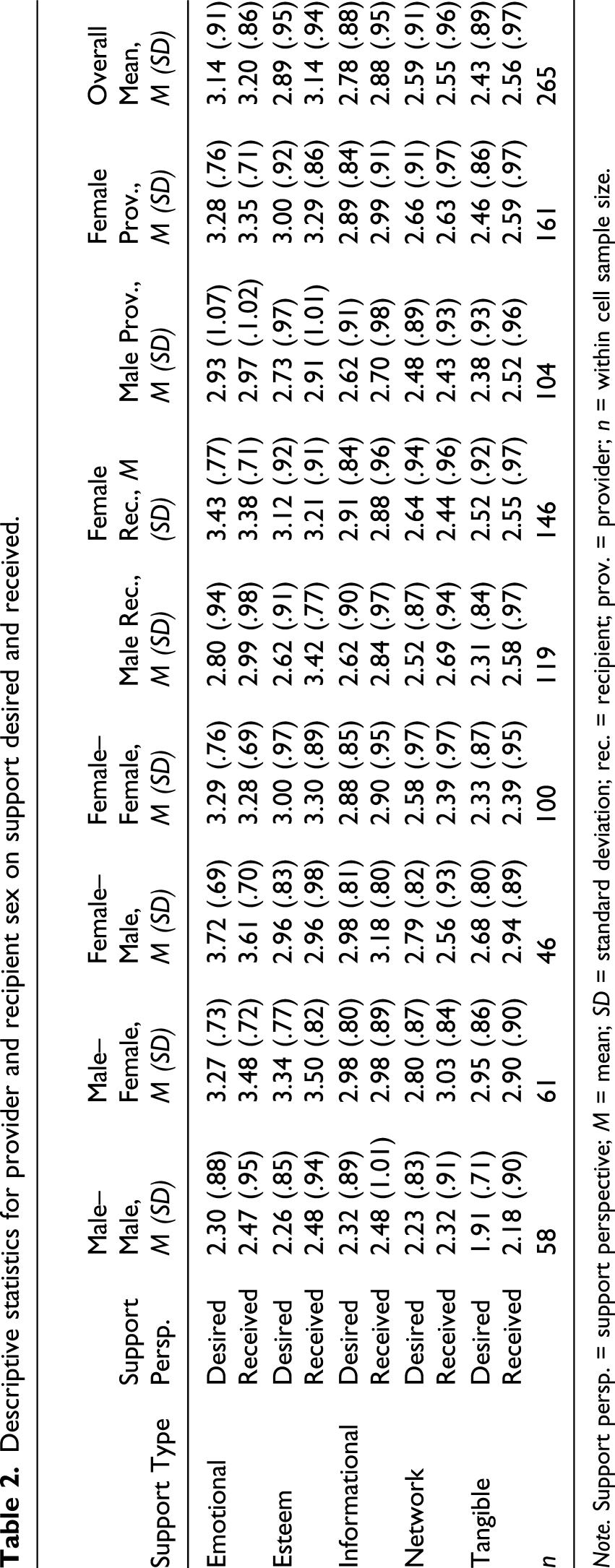
Note. Support persp. = support perspective; M = mean; SD = standard deviation; rec. = recipient; prov. = provider; n = within cell sample size.
RQ1 asked whether people report UB or OB of the five support types. Overall, participants reported significantly more received than desired esteem, informational, and tangible support (OB); there was no significant difference between received and desired support for network or emotional support. These findings were moderated by provider and recipient sex, as well as the interaction between provider and recipient sex. RQ2 inquired about differences between female and male support recipients (i.e., our participants). Women desired significantly more emotional, esteem, informational, and tangible support than men, but there were no recipient sex differences in desired network support (RQ2a). Women reported receiving significantly more emotional and esteem support than men; no differences between men and women were observed for received informational, network, or tangible support (RQ2b). Women were UB in tangible support (RQ2c), and men were OB with respect to four of the five support types: emotional, tangible, informational, and network support (RQ2d).
H1 and RQ3-4 inquired about differences due to provider sex. Participants with female providers desired significantly more emotional and informational support (RQ4a). H1 predicted that people with female providers would receive more nurturant support than those with male providers; this was supported for all nurturant support types (esteem, emotional, and network). RQ3 inquired whether provider sex would moderate reception of action-facilitating support; those with female providers reported significantly more informational support than those with male providers, but no differences emerged for tangible support. No significant differences due to provider sex were observed regarding UB (RQ4b) or OB (RQ4c).
Finally, RQ5 inquired about potential interactions between provider and recipient sex. Provider and recipient sex interacted for four of five types of desired support (RQ5a). Men with male providers desired significantly less emotional, esteem, informational, and tangible support than the other three combinations of provider and recipient sex. Provider and recipient sex also interacted significantly for all five types of received (RQ5b) support. Men with male providers reported receiving less emotional and esteem support than the other three combinations of provider and recipient sex, and they also reported receiving significantly less tangible support than women with male providers or men with female providers and significantly less informational support than men with female providers. Men with female providers reported receiving significantly more network support than men with male providers or women with female providers. No significant interactions were observed for UB (RQ5c) or OB (RQ5d).
Associations between Support Gaps and Outcomes
H2-3 and RQ6-7 concern relationships between support gaps and perceptions of loneliness, stress, and relational satisfaction. To test these hypotheses and research questions, two regression analyses were conducted for each outcome: one with the five forms of support UB as predictors and one with the five forms of support OB as predictors.
Prior to conducting main analyses, several variables were examined for covariation with the independent and dependent variables: sample (community member vs. college student); participant age; unemployment due to COVID-19; degree of closeness to partner; relationship type; residence with partner; and communication frequency with partner during the pandemic. Variables that correlated significantly with the independent and/or dependent variables were included in their corresponding models as controls. Beta weights are reported in corresponding tables.
Loneliness
Beta weights for under-benefit of each support type on loneliness.
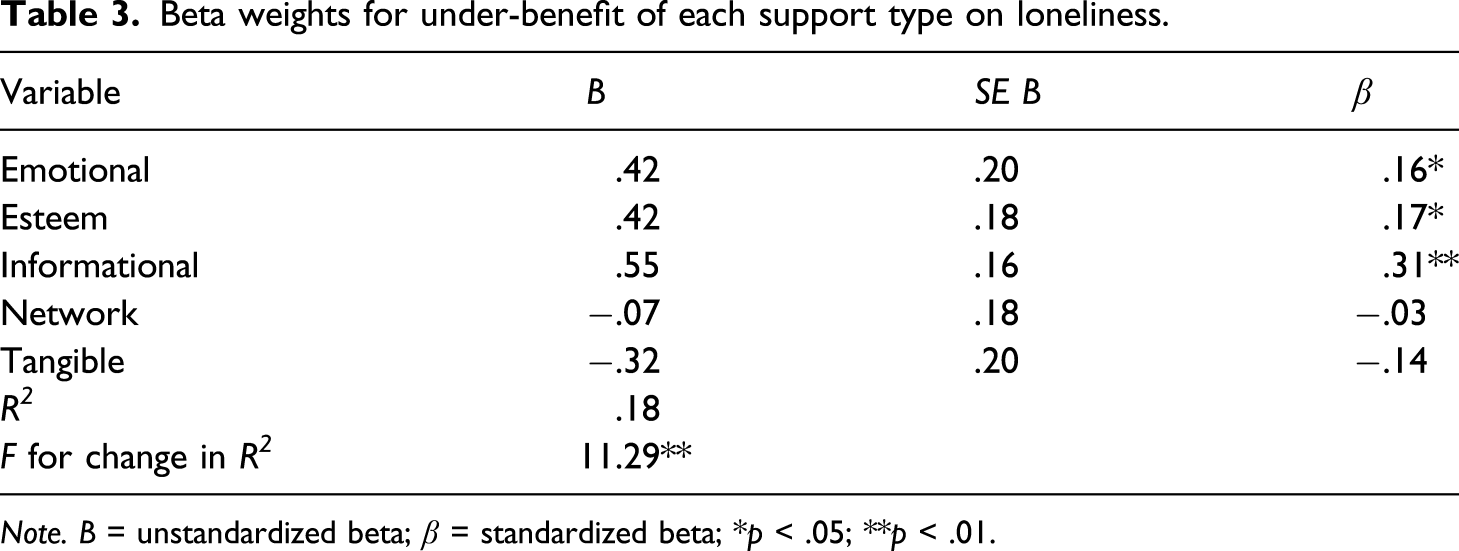
Note. B = unstandardized beta; β = standardized beta; *p < .05; **p < .01.
Beta weights for over-benefit of each support type on loneliness.
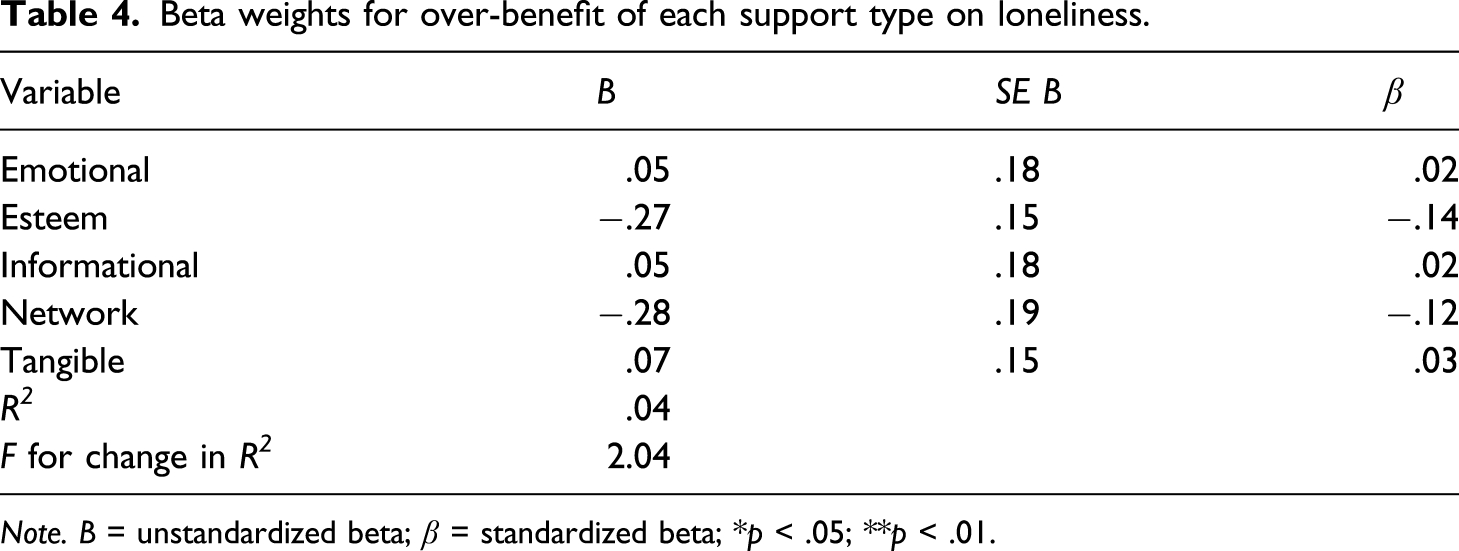
Note. B = unstandardized beta; β = standardized beta; *p < .05; **p < .01.
Perceived stress
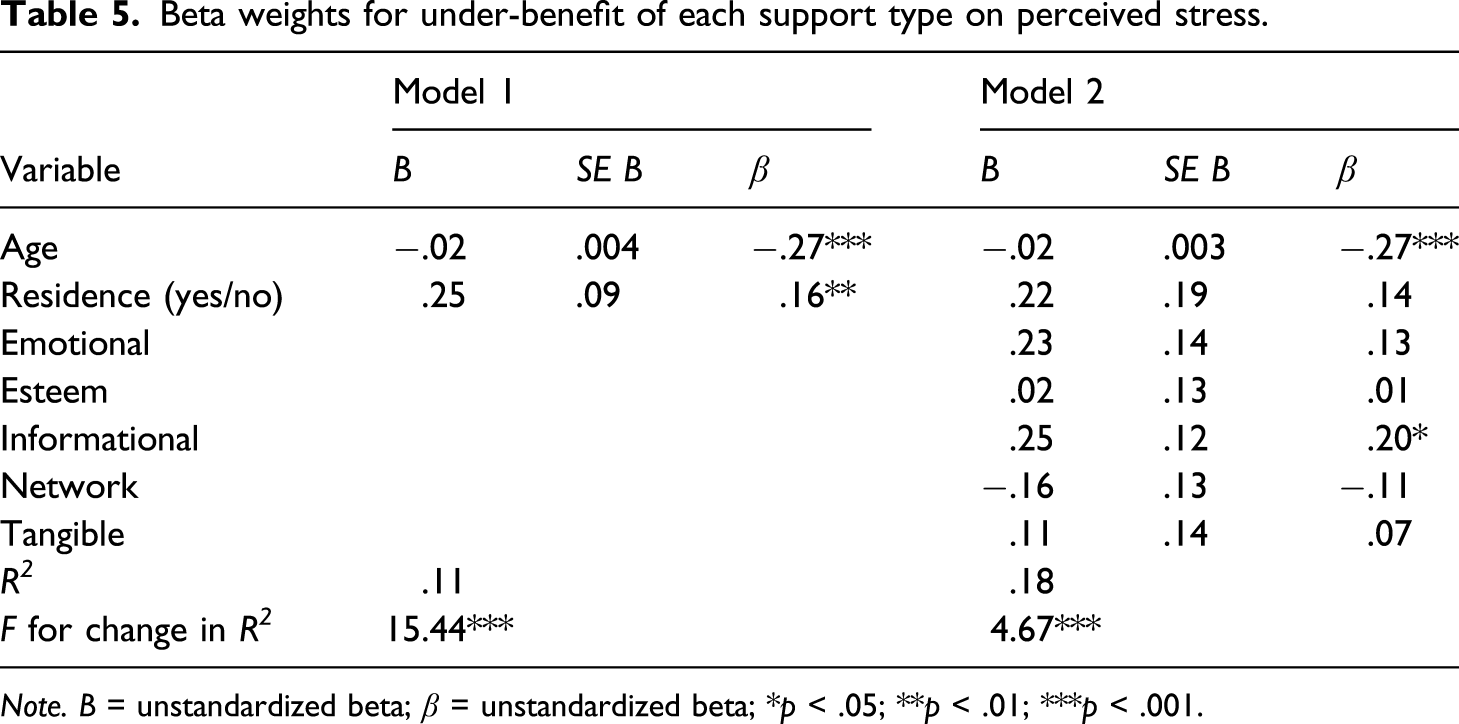
Beta weights for under-benefit of each support type on perceived stress.
Note. B = unstandardized beta; β = unstandardized beta; *p < .05; **p < .01; ***p < .001.
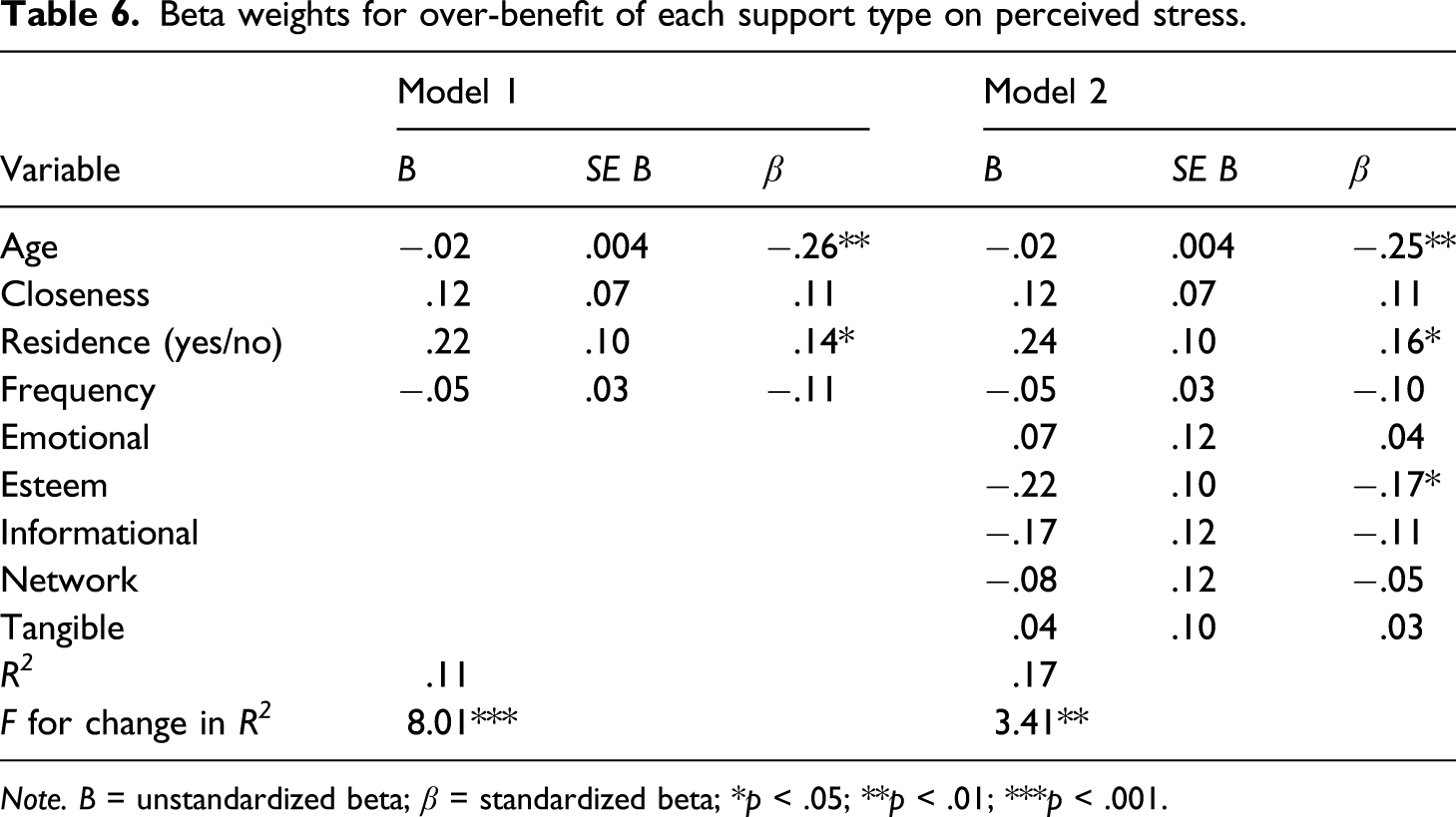
Beta weights for over-benefit of each support type on perceived stress.
Note. B = unstandardized beta; β = standardized beta; *p < .05; **p < .01; ***p < .001.
Relational satisfaction
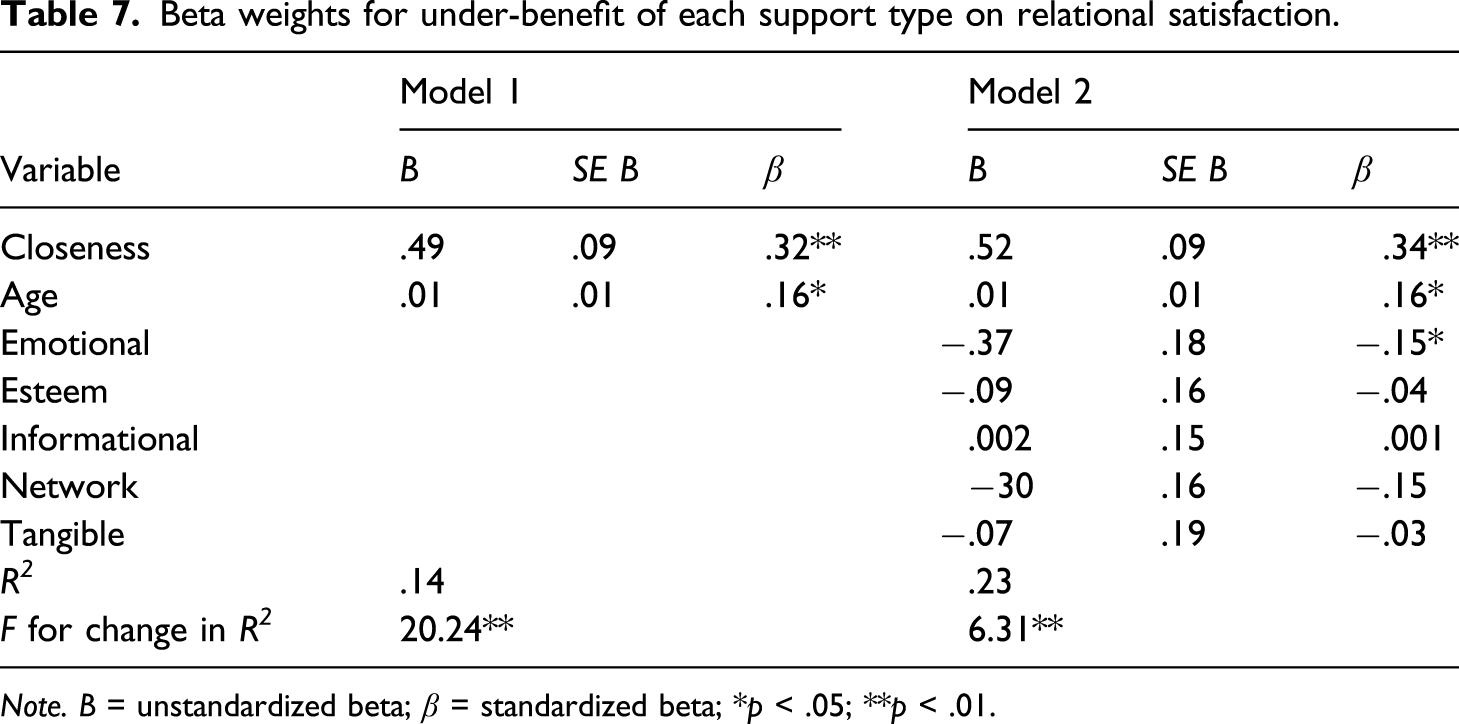
Beta weights for under-benefit of each support type on relational satisfaction.
Note. B = unstandardized beta; β = standardized beta; *p < .05; **p < .01.
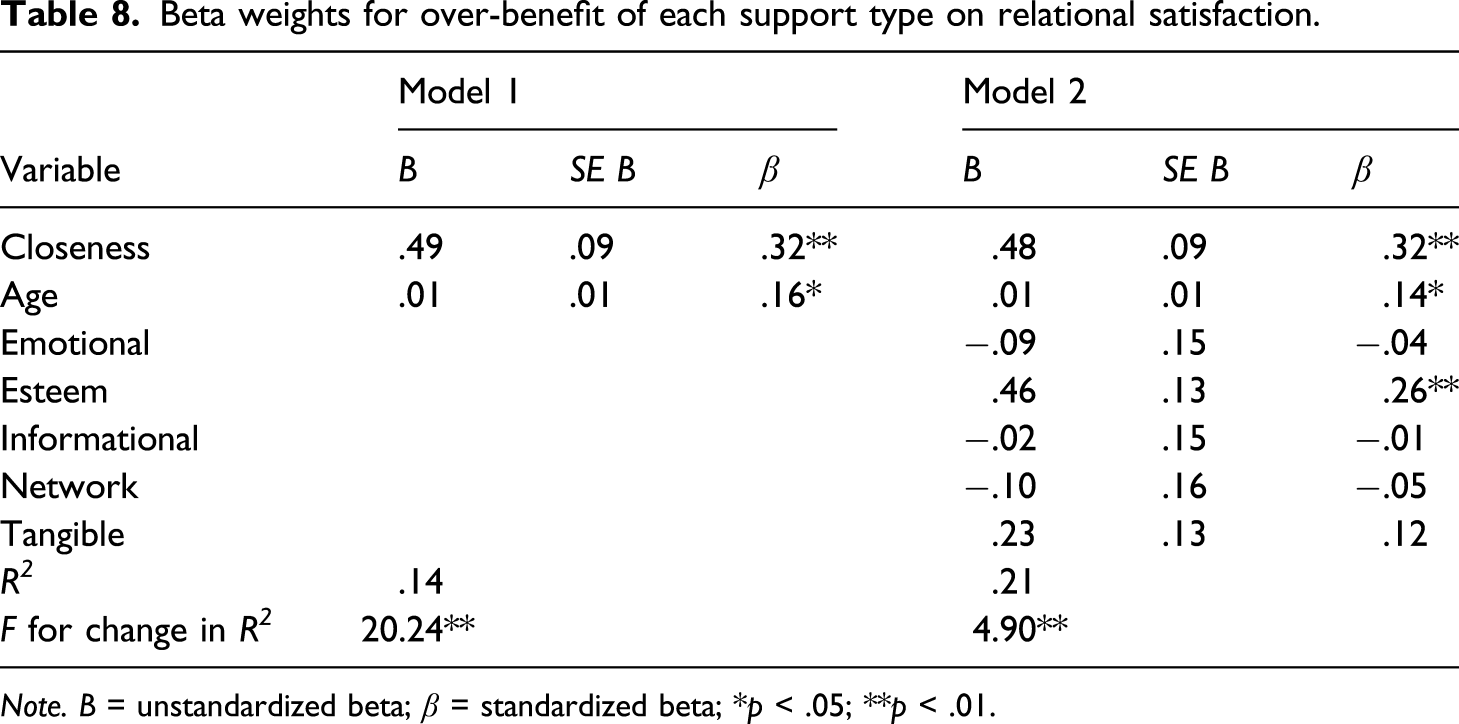
Beta weights for over-benefit of each support type on relational satisfaction.
Note. B = unstandardized beta; β = standardized beta; *p < .05; **p < .01.
Summary of outcome analyses
H2 predicted that UB in nurturant support would positively predict (a) loneliness and (b) perceived stress and negatively predict (c) relational satisfaction. Data were consistent with H2a for emotional and esteem support; inconsistent with H2b for any nurturant support type; and only consistent with H2c for emotional support. H3 predicted that UB in action-facilitating support would positively predict (a) loneliness and (b) perceived stress and negatively predict (c) relational satisfaction. Data were consistent with H3a and H3b for informational support only, while the data were inconsistent with H3c.
RQ6 asked if OB in nurturant support types would be associated with (a) loneliness, (b) perceived stress, and/or (c) relational satisfaction. There was a significant, negative relationship between esteem support OB and perceived stress and a significant, positive association between esteem support OB and relational satisfaction. Finally, RQ7 asked if OB in action-facilitating support would be associated with the outcomes; no significant associations emerged.
Discussion
We examined associations between support gaps and personal and relational outcomes under early SIP orders issued in response to the COVID-19 pandemic in the U.S. Overall, more support was received than desired, but gaps were moderated by provider and recipient sex. As predicted, UB was negatively associated with beneficial outcomes, though not for every support type or outcome. Most forms of OB were unassociated with outcomes, except for esteem support OB. Below, we discuss theoretical implications of our work, highlighting areas that may contribute to a developing theory of support gaps (e.g., Crowley & High, 2020; Pederson et al., 2020). We also discuss pragmatic implications of our findings, along with limitations and directions for future research.
Theoretical and Pragmatic Implications
Overall gaps and sex differences
One tenet of an emerging theory of support gaps is that people generally receive less support than they desire (Crowley & High, 2020; Pederson et al., 2020). However, across our sample, participants reported OB of esteem, informational, and tangible support. Pederson et al. also suggest that gaps can exist within conversations and over time, and gaps assessed at different times may yield different outcomes. The present study was conducted relatively early in the pandemic when individuals had not yet been confined to their homes for months on end. A follow-up study months later may reveal effects of support burnout (e.g., Gillis & Roskam, 2019) and the increased toll of chronic stress (e.g., McEwen, 2017), with more people reporting that they experienced UB in their relationships.
Pederson et al. (2020) also indicate that support gaps may exist across an entire network. Extant support gap research has tended to focus on personal stressors (e.g., identity threat; Crowley & High, 2020), general support patterns in relationships (e.g., Xu & Burleson, 2001), or dyadic stressors internal to the relationship (e.g., unintended pregnancy; Crowley et al., 2019). As such, the relative OB observed in the present study could be related to the particular nature of the stressor. Because COVID-19 is a global stressor, external to the relationship, participants may have desired less support from their relational partner and more support from those outside the relationship (e.g., coworkers and medical professionals), leading to OB in their closest relationship. Conversely, it is possible that support desires remained the same, but because everyone was experiencing the same stressor, partners provided more support than usual.
Men and women did not experience support gaps equally. Though the specifics of which types of support are involved vary across studies, research to this point has consistently identified that women desire more support than men: a pattern replicated in our study for all types except network support (e.g., Faw et al., 2018; Xu & Burleson, 2001). SIP orders may have led both men and women to want connection when their ability to see others was limited, resulting in no sex difference in desired network support. Regarding received support, prior research typically indicates that women receive more support than men, but this finding has thus far been observed only for tangible, informational, and network support. By contrast, we observed that women reported receiving more emotional and esteem support than men. This finding appears to be driven by an interaction between provider and recipient sex, such that men with male providers receive less support than other pairs, a result which will be discussed in a subsequent section.
Extant research indicates that women are, in general, more likely to experience UB and less likely to experience OB than men (Brock & Lawrence, 2009; Faw et al., 2018; Xu & Burleson, 2001). Consistent with past research, women in the present study reported more UB of tangible support than men. However, UB in tangible support was unassociated with outcomes, suggesting that women in our study may not face negative consequences for being UB in this support form. Men reported more OB of emotional, tangible, informational, and network support. There were no significant differences due to recipient sex regarding esteem support OB, which was the only form of OB associated with outcomes. Given that OB in esteem support was associated with positive effects, it appears that both men and women benefited from receiving more esteem support than they desired.
Provider sex
This study was the first to examine provider sex as a moderator of support gaps. Those with female providers desired significantly more emotional support than those with male providers, which may stem from the perception that women provide more, better emotional support than men (e.g., Eagly, 1987)—a perception that has received empirical support (e.g., Samter, 2002). However, it is less clear why our participants desired more informational support from female providers. We also found that women were perceived to provide more informational support than male providers. This finding is inconsistent with past research indicating that when sex differences in informational support do exist, women are less likely than men to provide it (see MacGeorge et al., 2004).
A greater desire for informational support may be due to uncertainty associated with the pandemic (e.g., Bryce et al., 2020), or because people may want more support from women than men when the stressor involves illness and interruption to social interaction. Perhaps, participants simply view women as more supportive overall (e.g., Eagly, 1987), leading them to want more informational support from women than from men. In turn, people with female providers reported receiving more informational support than those with male providers. Participants also reported receiving significantly more esteem, emotional, and network support from women than from men. This finding is in accordance with previous research, which indicates that women tend to provide more, higher-quality nurturant support than men (e.g., Shebib et al., 2020; Trobst et al., 1994).
UB and OB did not differ by provider sex, likely because people generally desired and received more support from female providers. This pattern may be problematic in the context of COVID-19 because of the burden it places on women at a time when many were already stressed due to increased caretaking responsibilities, which disproportionally fell on women and had negative implications for their well-being and career trajectories (Birditt et al., 2020; Power, 2020). As such, having others look to them for more support may have only increased pandemic fatigue and burnout for women.
Interaction of provider and recipient sex
Our study extends previous support gap research by examining interactions between provider and recipient sex during a global pandemic. Provider and recipient sex interacted for desired support of all types except network support and receipt of all five support types. We observed that men with male providers desired the least emotional, esteem, informational, and tangible support and received significantly less support than most other combinations of provider and recipient sex across support types. Research indicates that men feel more comfortable receiving emotional support from women than they do from other men (Burleson et al., 2005); our results suggest that this finding may extend beyond emotional support to other forms of nurturant support as well as action-facilitating support.
Although provider and recipient sex interacted with respect to support desired and received, there were no significant interactions for either UB or OB, consistent with the null results reported by Wang (2019) in the context of parent–child dyads. Interestingly, our results suggest that even in relationships with two men, there is unlikely to be greater UB than in dyads with at least one woman. Future research should probe this finding and its implications further. It is possible that this result is specific to the pandemic; in other contexts, men’s desire for and receipt of support from male providers may differ. However, if the finding that men with male partners desire and receive less support generalizes beyond the context of the pandemic, more questions are raised. For example, are men who report on male providers getting their support needs met in other relationships? Or do they simply have lower support needs than men whose closest relational partner is a woman? If their needs are met, are there consequences for these men experiencing lower desired and received support?
Outcomes of support gaps
The present study has important implications for supportive communication research, with unique contributions associated with the COVID-19 pandemic. An emerging theory of support gaps posits that gaps have negative implications for well-being, and support matches produce the most optimal outcomes (e.g., Crowley & High, 2020; Pederson et al., 2020). However, in the present study, OB in esteem support predicted greater relational satisfaction and lower perceived stress. Esteem support assures the recipient of their inherent worth and capabilities and is associated with numerous positive outcomes for recipients, including enhanced self-esteem, self-efficacy, and relational well-being (e.g., Holmstrom, 2012; Holmstrom & Burleson, 2011). Experiencing individual and collective trauma from the stressors of the pandemic can lower self-efficacy and self-esteem (Masiero et al., 2020). Therefore, receiving OB of esteem support from a close relational partner may be particularly beneficial in this context. Importantly, other research has indicated positive effects of esteem support OB (Davis & High, 2019; Faw et al., 2018), suggesting its benefits may extend beyond the context of the pandemic.
OB in other support forms was not significantly associated with any outcomes, suggesting that too much support in this context is neither helpful nor unhelpful. This is contrary to past research which has indicated both positive and negative outcomes for OB of support types beyond esteem support (e.g., Crowley & High, 2020; McLaren & High, 2019). Experiencing a common and uncontrollable stressor may explain why OB in other support forms was not related to the outcomes. Those undergoing individual and communal trauma (Masiero et al., 2020) may give their partners leeway to provide more support than desired, believing that their partners’ intentions are good (e.g., Burleson, 2003). Furthermore, due to the general encouragement given to the public to support one another during the pandemic (e.g., Watson, 2020), it could be that OB became normalized in close relationships.
As expected, UB in several nurturant support types (i.e., esteem and emotional) was associated with worse outcomes. This finding is consistent with previous research indicating negative effects of receiving less nurturant support than desired (e.g., Crowley & High, 2020; McLaren & High, 2019). Interestingly, UB in informational support was associated with greater loneliness and was the only support type positively associated with perceived stress. Though the SGH posits that UB of any support type is undesirable, scholars have suggested that UB in action-facilitating support may not be as detrimental because of potential threats to autonomy posed by informational and tangible support. However, scholars developing an emerging theory of support gaps note that certain gaps might “call into question the nature of a relationship between people when one of them needs support” (Crowley & High, 2020, p. 47). Perhaps, the unique nature of the pandemic may account for the negative implications of informational support UB that we observed. Unlike other stressors investigated in support gap research, such as identity threats (Crowley & High, 2020) and coping with transgressions (Pederson et al., 2020), the COVID-19 pandemic represents a more universal stressor. This shared stressor created high levels of uncertainty across many life domains (e.g., health, finances, work, school, and relationships; Bryce et al., 2020), perhaps increasing the importance of informational support for many individuals. Those experiencing UB of informational support may have felt a loss of connection and increased stress when the person they often turn to for clarity and direction in times of uncertainty had little information to offer.
Limitations and Future Directions for Research
The present research sheds light on supportive communication and the support gaps people experienced during the beginning of the COVID-19 pandemic. However, it is important to acknowledge limitations and to highlight future directions for research. First, the cross-sectional study design limits our ability to make causal inferences. For example, past research suggests that relational satisfaction influences the amount and quality of emotional support provided to others (Iida et al., 2008). Therefore, it is likely that observed relationships between support gaps and outcomes are bidirectional (Joseph et al., 2016). To better understand the continuing impact of support gaps during the COVID-19 pandemic and in other contexts, longitudinal research is warranted. Similarly, the lack of dyadic data is a limitation. The extent to which perceptions are shared between the relational dyad, and the degree to which reports of UB and OB are moderated by our participants’ own support provision in the relationship, are unknown and merit attention in future research.
The study sample was largely White, educated, and based in the U.S. Their experiences during the pandemic likely differed from other populations around the world (e.g., McNeely et al., 2020) in ways that may have impacted their experiences of support gaps and their effects. In addition, we did not collect information on important individual differences that may influence support gaps and their effects, such as gender identity, sexual orientation, or disability status. Future research should continue to examine support gaps in diverse populations, attending to a greater variety of individual differences.
Examining the influence of psychological gender on support gaps, in addition to biological sex, may prove particularly fruitful. Psychological gender refers to one’s beliefs about their femininity and masculinity and may or may not correspond with biological sex (Canary & Dindia, 1998). It has been shown to moderate outcomes in supportive interactions, oftentimes more so than biological sex (Burleson et al., 2005; Shebib et al., 2020). Thus, future research could examine both biological sex and psychological gender for a more nuanced understanding of how support gaps may influence relational and personal well-being. Finally, though the pandemic and resulting SIP orders provided a unique context in which to examine support gaps, the relationships observed in this study should be researched in response to stressors beyond the COVID-19 pandemic.
Like extant support gap research, the present study focused on perceptions of support receipt. An implication of this choice is that reports of greater received support from female providers may be related to cultural stereotypes that women are more supportive, rather than (or in addition to) objective differences between male and female providers (e.g., Eagly, 1987). Both the perception of support and actual support communicated are critical factors in predicting individuals’ personal and relational well-being (e.g., Cohen & Wills, 1985; MacGeorge et al., 2011). Thus, future research should examine the questions set forward in the present study during actual supportive interactions.
Though the present study is not without its limitations, it also has notable strengths and contributions. For example, the present study did not focus on a single type of relationship (e.g., family or friendship), allowing us to increase generalizability. Collecting data at the emergence of the COVID-19 pandemic in the U.S. allowed us to examine the early impact of the pandemic and SIP orders on personal and relational well-being. Importantly, our results speak to an emerging theory of support gaps, confirming some tenets and suggesting nuance in others.
Supplemental Material
sj-pdf-1-spr-10.1177_02654075211041539 – Supplemental Material for Support gaps during the COVID-19 pandemic: Sex differences and effects on well-being
Supplemental Material, sj-pdf-1-spr-10.1177_02654075211041539 for Support gaps during the COVID-19 pandemic: Sex differences and effects on well-being by Amanda J. Holmstrom, Samantha J. Shebib, Josephine K. Boumis, Amanda Allard, Adam J. Mason and Jong In Lim in Journal of Social and Personal Relationships
Footnotes
Funding
The author(s) received no financial support for the research, authorship, and/or publication of this article.
Open research statement
As a part of IARR's encouragement of open research practices, the authors have provided the following information: This research was not pre-registered. The data used in the research are available upon reasonable request by emailing:

Supplemental Material
Supplemental material for this article is available online.
References
Supplementary Material
Please find the following supplemental material available below.
For Open Access articles published under a Creative Commons License, all supplemental material carries the same license as the article it is associated with.
For non-Open Access articles published, all supplemental material carries a non-exclusive license, and permission requests for re-use of supplemental material or any part of supplemental material shall be sent directly to the copyright owner as specified in the copyright notice associated with the article.
