



Abstract
Humans are motivated to expand their actual self toward an ideal self. Known as the Michelangelo phenomenon, movement toward the ideal self can be facilitated through an affirming romantic partner and is linked to positive life outcomes. Yet, research on the Michelangelo phenomenon has primarily focused on young adult samples, and it remains unknown whether the framework generalizes across the adult life span. The authors addressed this shortcoming by examining the Michelangelo phenomenon in a three-generation sample of 505 adults aged 18–90 years (M = 47.2 years). Multilevel analyses revealed one age effect on the framework, showing that being seen by the partner in a manner congruent with one’s ideal self (i.e., partner perceptual affirmation) becomes more important for relationship satisfaction with increasing age. Otherwise, age did not affect the Michelangelo phenomenon, suggesting life-span generalizability of the framework. By highlighting personal growth processes that continue across the life span, the present findings add to theories of successful aging.
Keywords
The best love is the one that makes you a better person, without changing you into someone other than yourself.
Every life phase holds its particular developmental challenges and tasks (Staudinger & Bluck, 2001). Given that most research on the Michelangelo phenomenon has been undertaken with samples of young adults, it is not yet known if the Michelangelo phenomenon occurs as a general principle in romantic relationships across the life span. Research on developmental and personality psychology and in particular on emerging adulthood suggests that age-related priorities, developmental tasks, and changing social roles affect the processes of maturation, personality change, and personal growth (e.g., Arnett, 2000; Erikson, 1959; Havighurst, 1972; Hogan & Roberts, 2004; McAdams, 2015) and may affect the Michelangelo phenomenon.
The Michelangelo phenomenon
Studied for decades in the field of psychology, personal growth has had many names, including ego ideal (Freud, 1923), self-actualization (Maslow, 1962; Rogers, 1961), and self-determination (Deci & Ryan, 2000). The underlying theories are based on the assumption that growth striving is a primary human motive (Deci & Ryan, 2000) that leads people to have a conception of their future self, expressed as a life goal or ideal self (Higgins, 1987; Markus & Nurius, 1986). Life goals and ideal selves represent characteristic adaptations (McAdams & Pals, 2006) that are context dependent, embedded in a certain life stage, and somewhat malleable to change. Romantic relationship contexts, in particular, are a breeding ground for moving toward the ideal self and offer an environment that provides manifold opportunities for growth (Kelley & Thibaut, 1978; Rusbult & Van Lange, 2003). Analogous to the sculptural process of the artist Michelangelo Buonarroti—who allegedly said that he was revealing the ideal figures already within the marble, rather than creating the figures himself—the Michelangelo phenomenon conceives romantic partners as the sculptors of each other’s self (Rusbult et al., 1999).
Key components characterize the framework of the Michelangelo phenomenon. First, partner perceptual affirmation describes the extent to which a partner perceives the other partner (i.e., the target) in a way that is congruent with the target’s ideal self (Rusbult, Kumashiro, Kubacka, & Finkel, 2009). For instance, Tom sees Julia as a caring and generative person, which corresponds to Julia’s representation of her ideal self. Tom’s perception may be conscious (e.g., through previous conversation and observation) or unconscious (e.g., based on congruent personal values; Drigotas et al., 1999). Partners not only develop these beliefs about the other’s strengths and limitations, but they also tend to act accordingly (Rusbult et al., 2005). Consequently, partner perceptual affirmation fuels partner behavioral affirmation, that is, the extent to which the partner draws out the best in the other person and elicits a subset of possible behaviors reinforcing the target’s ideal–congruent qualities (Drigotas et al., 1999; Rusbult et al., 2005; Rusbult, Kumashiro, et al., 2009). For instance, Tom may praise Julia for her caring behavior with their children or encourage her to continue her volunteer work in community development. Finally, through repeated interactions with a perceptually and behaviorally affirming partner, the target comes to behave in a way that is close to the partner’s perceptions and expectations (Drigotas et al., 1999) and experiences movement toward the ideal self (Rusbult, Kumashiro, et al., 2009). For instance, Tom’s support of Julia’s values and interests gives Julia the opportunity to further develop these values and to move toward her ideal self as a caring and generative person. However, she might also move further away from her ideal self or remain in a stagnant position if Tom provides no affirmation or even disaffirms her ideal self (Drigotas et al., 1999). Finally, moving toward the ideal self is linked to positive personal and interpersonal outcomes (Drigotas, 2002; Rusbult et al., 2005).
Overall, the Michelangelo phenomenon suggests that romantic partners and their relationships are most likely to thrive when ideal selves are nurtured (Rusbult et al., 2005). The main associations in the framework are summarized in Figure 1: Partner perceptual affirmation facilitates partner behavioral affirmation (partner-affirmation hypothesis), partner behavioral affirmation promotes movement toward the ideal self (movement-toward-ideal hypothesis), and movement toward the ideal self is associated with enhanced relationship and life satisfaction (well-being hypothesis).
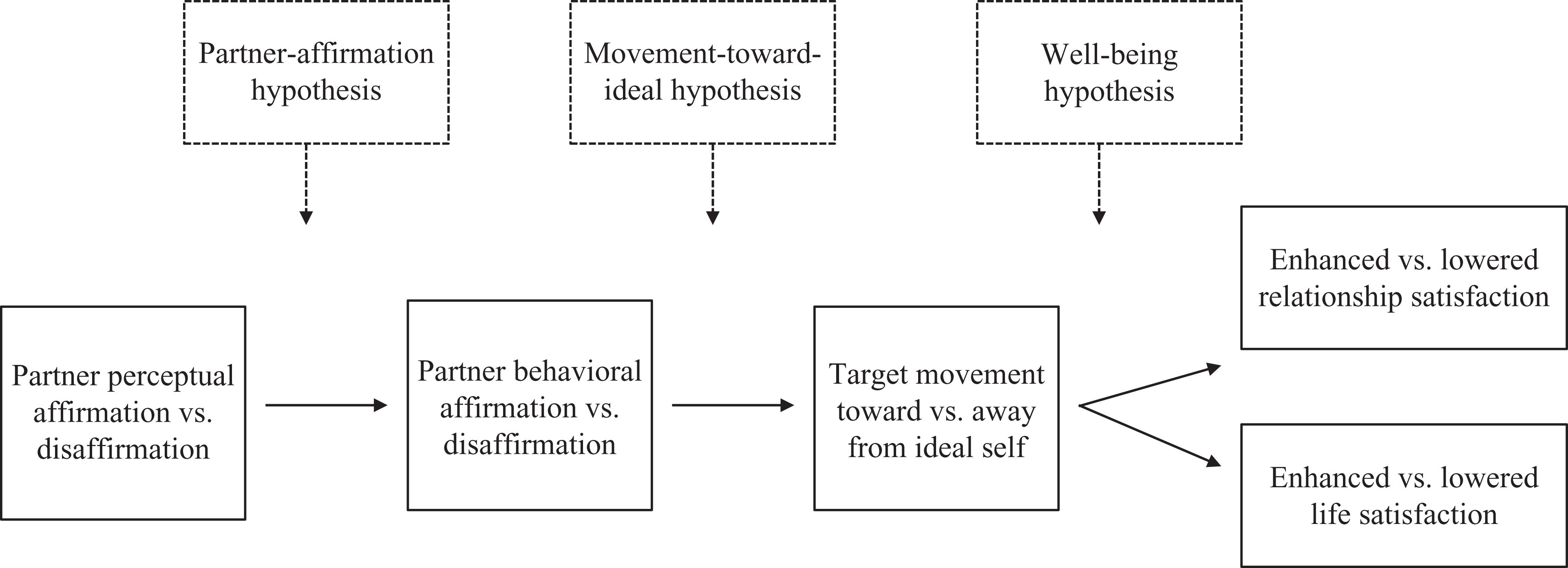
The Michelangelo phenomenon; based on Drigotas, 2002; Drigotas, Rusbult, Wieselquist, & Whitton, 1999; Rusbult, Finkel, & Kumashiro, 2009.
The framework corresponds to other models positing that changes in the self can happen as a function or result of a relationship. For instance, the circle of security in adulthood (Feeney, 2004) describes how partners promote each other’s growth by supporting exploratory opportunities for goal pursuit. Furthermore, the self-expansion model (Aron & Aron, 1986) highlights that people are motivated to form and maintain romantic relationships that add desirable aspects to their sense of self (see also Mattingly & Lewandowski, 2014). For instance, by including the other in the self, partners become more closely intertwined and cognitively linked to each other (Agnew, Van Lange, Rusbult, & Langston, 1998; Aron, Aron, & Smollan, 1992). Whereas the circle of security in adulthood and the self-expansion model describe intrapersonal and interpersonal benefits that are comparable to the outcomes of the Michelangelo phenomenon (e.g., Brunstein, Dangelmayer, & Schultheiss, 1996; Feeney, 2004; Molden, Lucas, Finkel, Kumashiro, & Rusbult, 2009), the latter emphasizes that it is not self-expansion or self–other merging per se but expansion toward the ideal self (Drigotas et al., 1999; Rusbult et al., 2005) that promotes positive outcomes.
Personal growth across the adult life span
Research on the Michelangelo phenomenon has led to a number of important findings, yet most studies have been conducted among college students in the U.S. (e.g., Drigotas et al., 1999; Rusbult, Kumashiro, et al., 2009), a demographic that typically adheres to a philosophy of personal growth and self-expansion (Arnett, 2000) and is in a life stage characterized by identity exploration and change (Drigotas et al., 1999). From these findings, it can be assumed that the core of the Michelangelo phenomenon—movement toward the ideal self—is a characteristic of young adults and important to their well-being; it needs to be tested whether the framework generalizes to middle-aged and older adults.
Several theoretical frameworks suggest that age may affect personal growth processes. Most prominently, Erikson’s (1959, 1963) theory of psychosocial development and Havighurst’s (1972) developmental tasks theory suggest that each life stage includes responsibilities and challenges that place a person on the path to a desired change (Hutteman, Hennecke, Orth, Reitz, & Specht, 2014). In a period where a full panoply of choices and life paths exists, young adults (roughly ages 18–35 years) are concerned with understanding who they are and who they want to be (McAdams, 2015), are growth oriented, and seek to gain new information (Carstensen, Pasupathi, Mayr, & Nesselroade, 2000; Heckhausen, Dixon, & Baltes, 1989). Furthermore, young adults need to make far-reaching occupational decisions and have to take their first steps in the job market (Lüdtke, Roberts, Trautwein, & Nagy, 2011). Besides themes of identity, young adults deal with intimacy as they build their first long-term relationships (Erikson, 1959, 1963). To harmonize the two desires of identity and intimacy, young adults seek out those relationships that fulfill their need for personal growth (Lerner, Theokas, & Jelicic, 2005). They tend to promote their own development in these relationships and consider personal growth crucial for their well-being (Lerner et al., 2005). Finally, it is in young adulthood that individuals are in the process of acquiring new skills and seeking to reach their full potential (e.g., Arnett, 2000; Carstensen et al., 2000; Ebner, Freund, & Baltes, 2006; Havighurst, 1972). Middle-aged adults (roughly ages 36–59 years), in contrast, are more concerned with maintaining and securing the gains and relationships they have already established (Havighurst, 1972). Their orientation is directed toward the next generation, expressed in aspirations of raising children, prosocial engagement, passing on traditions, and in themes of generativity (Freund & Riediger, 2006; McAdams, 2015). Finally, older adults (roughly age 60 years and older) center on maintaining functional abilities and avoiding losses, expressed in valuing health and pursuing leisure activities (Ebner et al., 2006; Heckhausen et al., 1989; Heckhausen, Schulz, & Wrosch, 1998; Ogilvie, Rose, & Heppen, 2001). Older adults seek to connect their life experiences to larger life themes, described as aspiring wisdom (Bluck & Glück, 2004; Erikson, 1959; Sternberg, 1990). Whereas personal growth was argued to be a topic of outstanding importance in young adulthood, personal growth tends to decrease in late adulthood (Ryff, 1995).
Taken together, life stages with their normative expectations and structural opportunities suggest developmental tasks that lay the ground for specific ideal-self contents in the respective life stages (Hutteman et al., 2014). Whether the processes to achieve these ideal selves in romantic relationships (i.e., the Michelangelo phenomenon) are the same across the adult life span was the focus of the present investigation.
The present research
To explore to what extent the Michelangelo phenomenon is applicable across adulthood, we (1) tested the framework in an age-heterogeneous sample and (2) investigated age effects on the framework. We developed one research question and two hypotheses. First, as a research question, we tested whether the associations between the framework’s key components appear similar in an age-heterogeneous sample. Second, given that personal growth and self-exploration have been identified as primary motives among young adults (e.g., Arnett, 2000; Erikson, 1959) but may become less important with age (Ryff, 1995), we expected age effects on movement toward the ideal self but not on any other variable of the framework. In particular, we expected that movement toward the ideal self would be highest for young adults and would decline with age. Third, given the role personal growth plays in romantic relationships and life choices among young adults (Lerner et al., 2005), we expected that the well-being hypothesis of the Michelangelo phenomenon would be moderated by age. In particular, we predicted that movement toward the ideal self would be important for life and relationship satisfaction in young age but would decline in importance with age. Such declines may stem from older adults’ limited opportunities for continued growth, the reduced importance they give to personal growth, or their general perception of time as limited rather than open-ended (Carstensen, Isaacowitz, & Charles, 1999; Ryff, 1995). We expected no age effects on other associations of the framework (i.e., partner-affirmation hypothesis and movement-toward-ideal hypothesis). Overall, testing whether movement toward the ideal self occurs across the adult life span and whether movement toward the ideal self exhibits similar effects on well-being across adulthood may add to theories of successful aging (for discussions, see Ryff, 1995).
It needs to be stressed that age correlates with relationship duration, and that relationship duration may also have an effect on self-expansion processes in the romantic domain (Fivecoat, Tomlinson, Aron, & Caprariello, 2015). While developmental research suggests that personal growth is of major importance for young adults (e.g., Havighurst, 1972), it has also been argued that personal development is particularly important during the early stages of a relationship (Mattingly, Lewandowski, & McIntyre, 2014). Especially at the onset of a romantic relationship, idealization can influence how supportive and affirmative a person perceives his or her partner to be (Murray, Holmes, & Griffin, 1996) and how intuitively self-expansion is experienced (Mattingly et al., 2014). Furthermore, the motivational context of relationships among romantic partners of shorter duration tends to be attainment focused, whereas the context of relationships among married partners is maintenance focused (Berscheid & Regan, 2005). Likewise, whereas perceived support for promotion support is particularly important for dating couples, perceived support for both promotion and prevention support is relevant for married couples (Molden et al., 2009). Thus, one could argue that growth-oriented goals, promotion support, and personal movement toward the ideal self are expressed more in the early stages of a romantic relationship than in later years. However, Fivecoat et al. cautioned against generalizing their findings, as no participants in their study were in a relationship longer than 5 years. Instead they suggested viewing their results as an initial indication. Therefore, in addition to the analyses of age effects, we tested the parallel argument of relationship–duration effects—specifically, whether movement toward the ideal self declines with increasing relationship duration and whether the well-being hypothesis is moderated by relationship duration.
Method
Sample and procedure
Data were obtained from the longitudinal three-generation multidisciplinary Co-Development in Personality (CoDiP) study that was conducted in the German-speaking part of Switzerland. Approval for the CoDiP study was received from the regional ethics committee Basel (approval number: 175/09) at the University of Basel, Switzerland. The initial sample of the CoDiP study was 1,050 individuals from three generations of a family, with young adults participating with their parents and grandparents. At the last measurement occasion, which was 4 years after the beginning of the study, 664 participants remained in the study. Of these, 505 indicated being in a romantic relationship. Given that the Michelangelo phenomenon had only been assessed at this last measurement occasion, these 505 participants became the current sample.
Participants ranged in age from 18 to 90 years (M = 47.20 years, SD = 20.52; 58% female, 42% male) and their mean relationship duration was 20.2 years (SD = 18.12 years), ranging from 1 month to 64 years. Fifty-two percent of the participants were married and 60% had children. Twenty-five percent of the participants had earned a degree from a university, 21.7% had undertaken vocational training, and 14.6% had finished high school. The majority of participants were working, either full (26.7%) or part (31.6%) time; 16.2% were in school, and 23.3% were not actively involved in the labor market. On average, participants had a monthly household income of 9,114.93 Swiss francs (U.S. dollars: 10,056; reference date February 1, 2014; 1 Swiss franc = 1.03 U.S. dollars), which is slightly more than the average Swiss monthly household income of 7,112 Swiss francs (U.S. dollars: 7,625). Most participants were Swiss (89.7%) with 8.9% having a second nationality (e.g., Italian or German).
Measures
Partner perceptual affirmation
We measured the first component of the Michelangelo phenomenon—partner perceptual affirmation—with 5 items that were translated from the original scale (Drigotas et al., 1999) into German. Participants rated statements such as “My partner regards me as the sort of person I would most like to become” on a 5-point Likert-type scale ranging from 1 (do not agree at all) to 5 (agree completely). With a Cronbach’s α of .79, the internal reliability was satisfactory.
Partner behavioral affirmation
The second component of the Michelangelo phenomenon—partner behavioral affirmation—was assessed with a German translation of the 5-item questionnaire by Drigotas et al. (1999). Participants rated statements such as “Because of the way my partner acts with me, I am able to be my best self” on a 5-point Likert-type scale ranging from 1 (do not agree at all) to 5 (agree completely). The internal reliability was good (α = .81).
Movement toward the ideal self
To measure the third component of the Michelangelo phenomenon—movement toward the ideal self—we asked participants to reflect on how they would ideally like to be and to name up to four attributes of their ideal self (Drigotas et al., 1999). Participants reported various personal (e.g., “calm”), social (e.g., “helpful”), and professional (e.g., “successful”) attributes, as they have been roughly grouped in previous studies (Rusbult, Kumashiro, et al., 2009). Next, participants were asked to think about their current romantic relationship and to indicate for each ideal self whether they had moved closer to or further away from this ideal self as a result of being in the relationship. Movement was rated on a 7-point Likert-type scale ranging from 1 (moved away) through 4 (unchanged) to 7 (moved closer). The mean of each participant’s ratings was used to indicate overall movement toward the ideal self. Cronbach’s α was satisfactory (α = .73).
Life satisfaction
Life satisfaction was measured with the Satisfaction with Life Scale (Diener, Emmons, Larsen, & Griffin, 1985) in its German version (Glaesmer, Grande, Braehler, & Roth, 2011). Participants rated 5 items (e.g., “The conditions of my life are excellent.”) on a 5-point Likert-type scale ranging from 1 (strongly disagree) to 5 (strongly agree). The internal reliability was good (α = .84).
Relationship satisfaction
Relationship satisfaction was assessed with the Relationship Assessment Scale (Hendrick, 1988) in its German version (Sander & Böcker, 1993). Participants rated 7 items (e.g., “How well does your partner meet your needs?”) on a 5-point Likert-type scale ranging from 1 (low satisfaction) to 5 (high satisfaction). Cronbach’s α was excellent (α = .90).
Data analyses
Given that our sample included individuals from the same family, their data may not have been independent. To test for interrelations between family members, we calculated the intraclass correlation coefficients (ICCs) for the key variables of the framework (i.e., partner perceptual affirmation, partner behavioral affirmation, movement toward the ideal self, life satisfaction, and relationship satisfaction). ICC scores ranged from .14 to .22, suggesting the importance of taking family membership into account. We therefore conducted all analyses with a multilevel modeling approach using the lme4 package in R (Bates, Maechler, Bolker, & Walker, 2015). Level 1 represents the individual’s variation, and we controlled for variation between families on Level 2. All predictors, including age, were grand mean centered. Except for presenting descriptive statistics, age was used as a continuous variable in all analyses. Missing values occurred in key variables but were small in percentage (from 1% in life satisfaction measures to 2.2% in behavioral affirmation); they were handled with the maximum likelihood estimation approach.
First, we tested the main associations of the Michelangelo phenomenon and calculated intercorrelations between the framework’s key variables in the age-heterogeneous sample. Second, we ran multilevel regression analyses using age as a predictor on key variables of the Michelangelo phenomenon. As a parallel argument, we used relationship duration as a predictor on the key variables. Third, we ran multilevel regression analyses to test for moderating effects of age on the main associations of the framework. Again, we tested for the moderating effect of relationship duration as a parallel argument. 1 As in previous studies (e.g., Drigotas, 2002), we additionally ran analyses that accounted for relationship satisfaction when predicting life satisfaction.
Results
Descriptive statistics of key variables of the framework
Table 1 displays the means and standard deviations of the Michelangelo phenomenon’s key variables for the whole sample. To orient the reader, we also display means and standard deviations broken down by age-group.
Means and Standard Deviations of the Michelangelo Phenomenon’s Key Variables
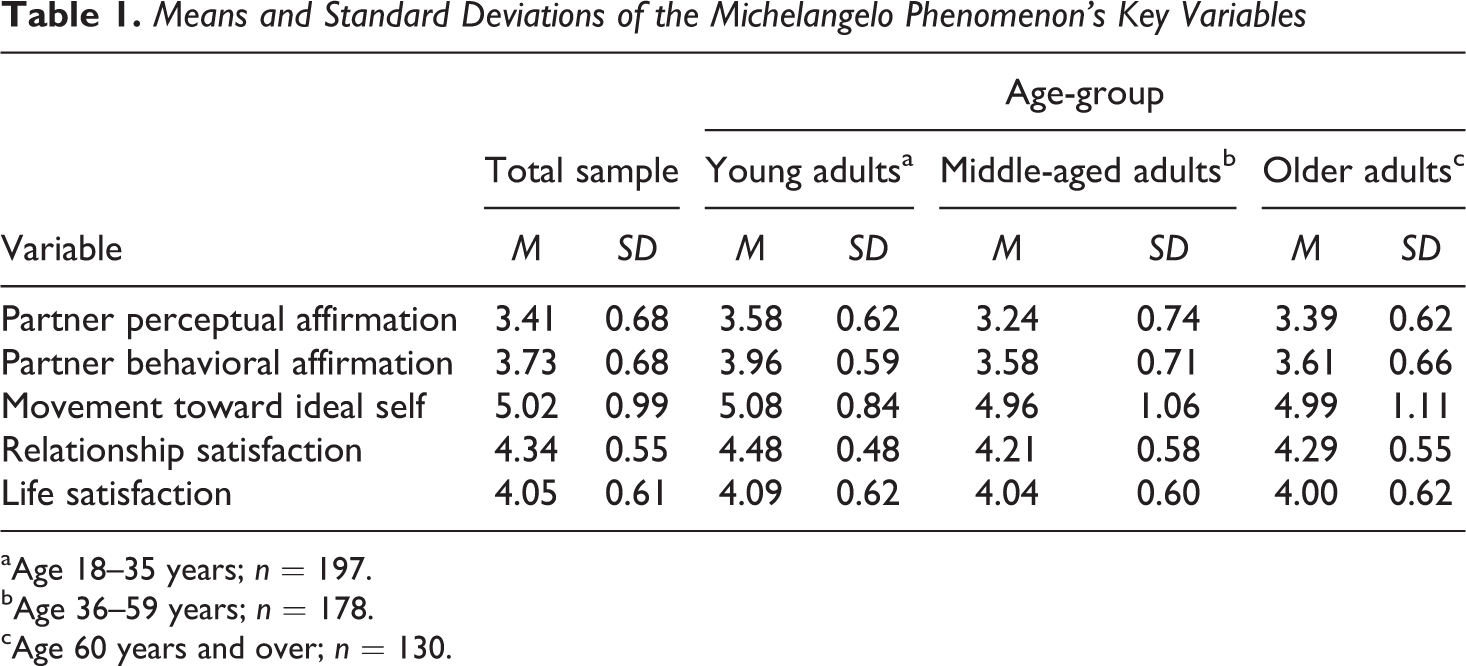
aAge 18–35 years; n = 197.
bAge 36–59 years; n = 178.
cAge 60 years and over; n = 130.
Associations between key components of the framework
Table 2 provides zero-order correlations between key variables of the Michelangelo phenomenon (see Figure 1: partner perceptual affirmation, partner behavioral affirmation, movement toward the ideal self, life satisfaction, and relationship satisfaction), age, and relationship duration. Key variables of the framework related to one another in predicted ways. Partner perceptual affirmation was positively linked to partner behavioral affirmation (i.e., partner-affirmation hypothesis), both of which were positively associated with movement toward the ideal self (i.e., movement-toward-ideal hypothesis). Affirmation indices and movement toward the ideal self showed positive associations with life and relationship satisfaction (i.e., well-being hypothesis). Additionally, affirmation indices were negatively linked to age and relationship duration; movement toward the ideal self showed no associations with age or relationship duration. Age and relationship duration were positively correlated with each other. Relationship satisfaction was negatively associated with both age and relationship duration, whereas no associations with age and relationship duration emerged for life satisfaction. The two satisfaction indices correlated positively with each other. The results suggest applicability of the framework to an age-heterogeneous sample. To more thoroughly illuminate the influence of age on the framework, we tested for age as a predictor on the key variables of the framework and for age as moderator on the main associations of the framework. In both analyses, we also accounted for the parallel argument and tested for relationship–duration effects.
Pearson correlations between key variables of the Michelangelo phenomenon (variables 1–5), age, and relationship duration.
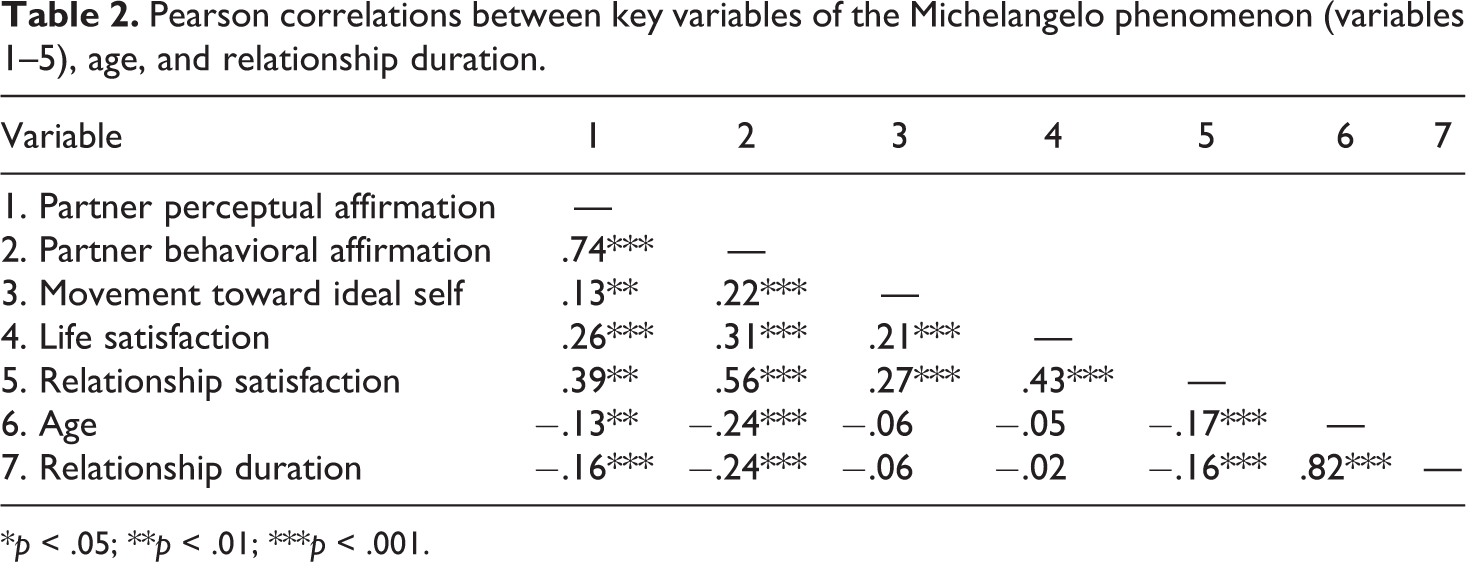
*p < .05; **p < .01; ***p < .001.
Age and relationship duration as predictors on key variables of the framework
The left side of Table 3 displays the regression effects with age as predictor on the framework’s key variables. Results reveal three significant age effects. Age was negatively associated with partner perceptual affirmation and partner behavioral affirmation. With increasing age, participants reported receiving less partner perceptual and behavioral affirmation. Finally, relationship satisfaction was negatively linked to age. With increasing age, people were significantly less satisfied in their relationship.
Multilevel regression effects of age and relationship duration on the Michelangelo phenomenon’s key variables.
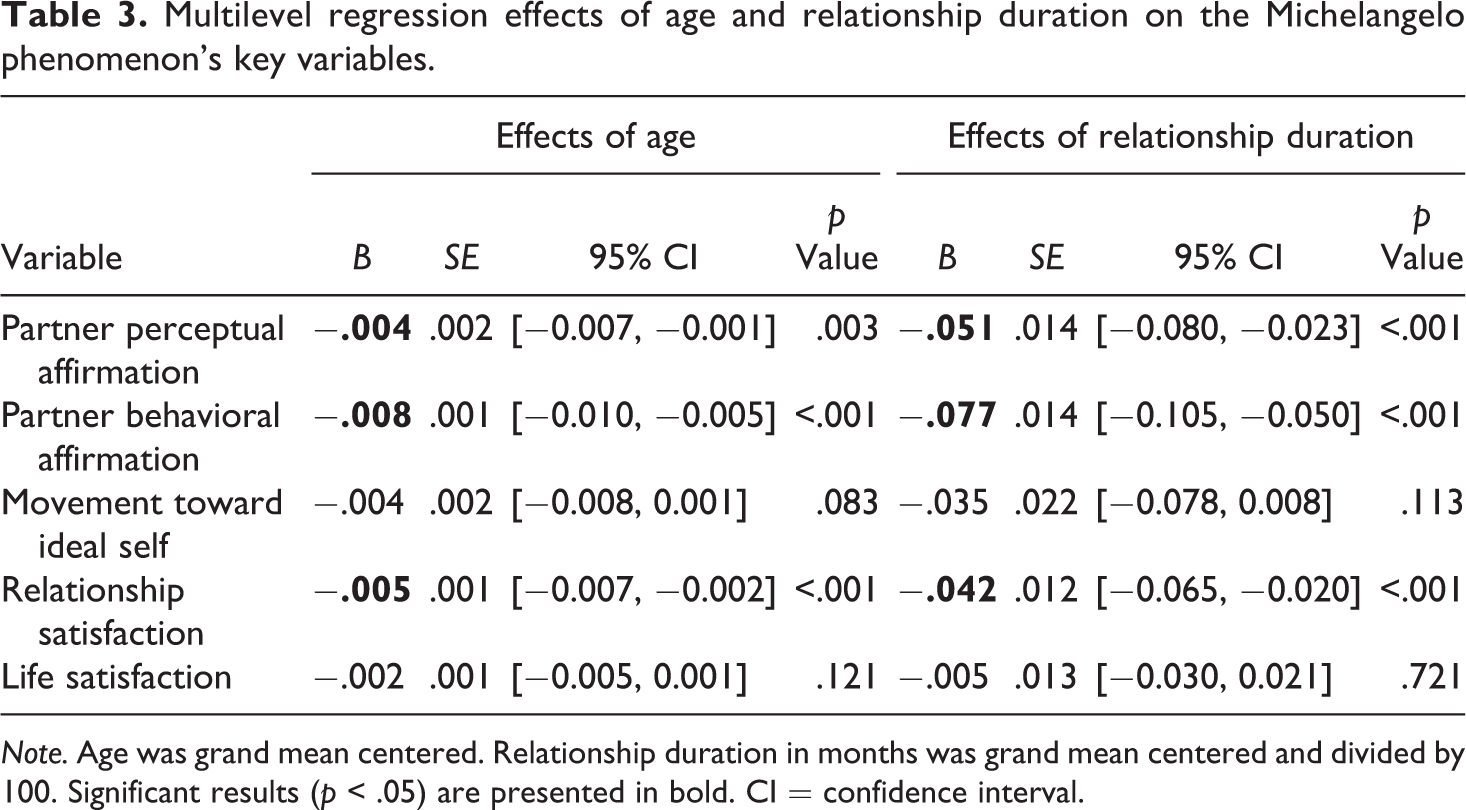
Note. Age was grand mean centered. Relationship duration in months was grand mean centered and divided by 100. Significant results (p < .05) are presented in bold. CI = confidence interval.
Given that age and relationship duration highly correlate with each other, we ran the same analyses with relationship duration as predictor variable. Similar to age, relationship duration served as a negative predictor for partner perceptual affirmation, partner behavioral affirmation, and relationship satisfaction (Table 3, right side). With increasing relationship duration, participants indicated lower scores on these variables. Next, to test how age and relationship duration affect the main associations within the framework, we tested age and relationship as moderator variables.
Age and relationship duration as moderators on main associations of the framework
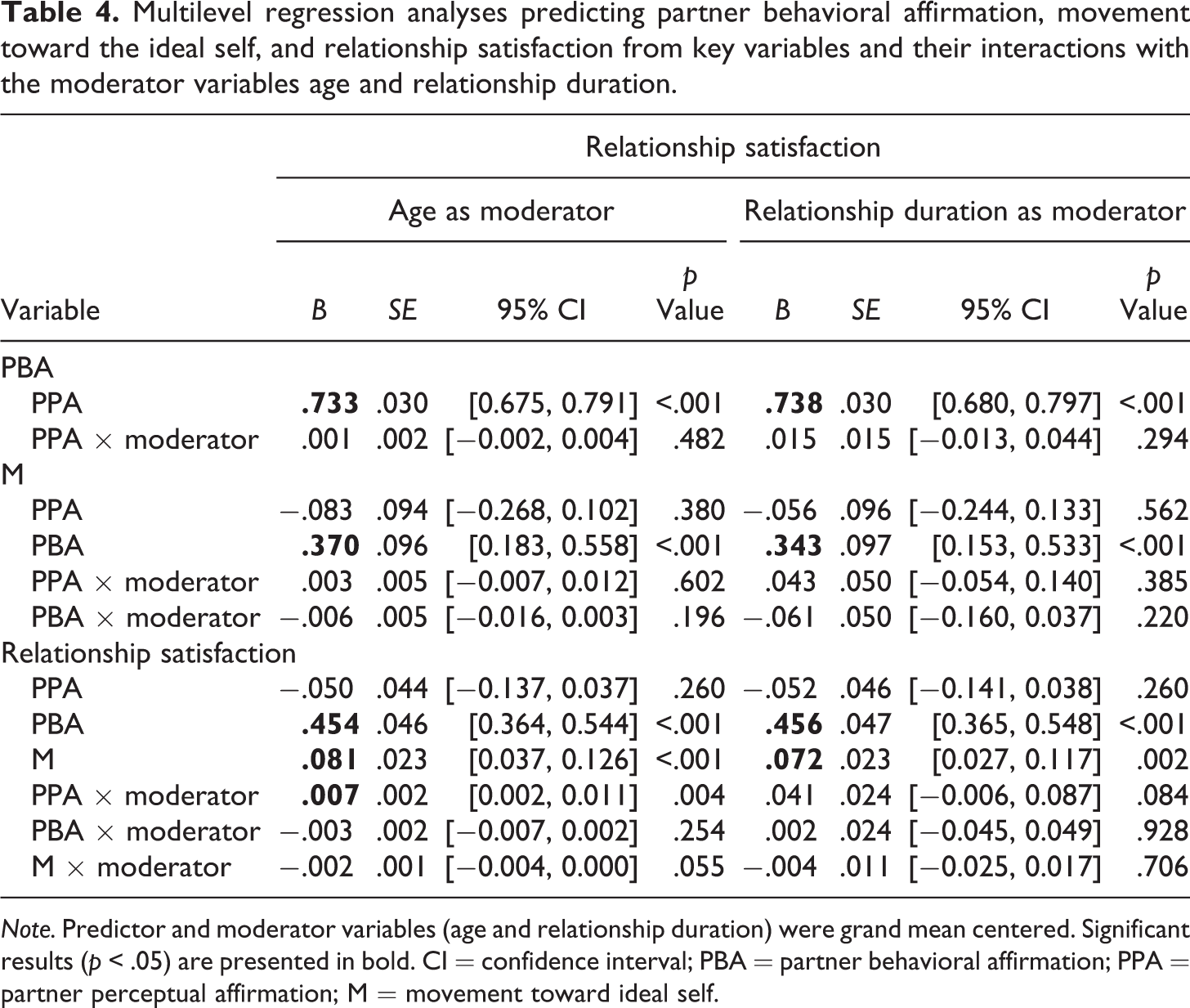
The Michelangelo phenomenon was tested stepwise in the sense that we examined whether each component of the framework was predicted by the preceding component (e.g., Does partner perceptual affirmation significantly predict partner behavioral affirmation?). Table 4 shows the results of the multilevel regression analyses with relationship satisfaction as outcome. First, we tested whether partner perceptual affirmation predicted partner behavioral affirmation and whether this association was moderated by age. Partner perceptual affirmation was a significant predictor of partner behavioral affirmation, but age did not moderate this effect. Second, we tested whether partner perceptual and behavioral affirmation predicted movement toward the ideal self. Partner behavioral affirmation showed a significant positive effect on movement. Age did not moderate the effect. No effect emerged for partner perceptual affirmation on movement. Finally, we analyzed whether partner perceptual affirmation, partner behavioral affirmation, and movement toward the ideal self predicted relationship satisfaction. Positive effects on relationship satisfaction emerged for partner behavioral affirmation and for movement toward the ideal self. Individuals who reported more partner behavioral affirmation and more movement toward the ideal self tended to be more satisfied with their relationship. Interaction effects of age and movement toward the ideal self slightly passed the significance threshold. No main effect emerged for partner perceptual affirmation. However, a significant interaction between partner perceptual affirmation and age was observed, indicating that the importance of partner perceptual affirmation for relationship satisfaction increased with age.
Multilevel regression analyses predicting partner behavioral affirmation, movement toward the ideal self, and relationship satisfaction from key variables and their interactions with the moderator variables age and relationship duration.
Note. Predictor and moderator variables (age and relationship duration) were grand mean centered. Significant results (p < .05) are presented in bold. CI = confidence interval; PBA = partner behavioral affirmation; PPA = partner perceptual affirmation; M = movement toward ideal self.
To account for the parallel argument, we tested the moderating effect of relationship duration on the main linkages of the Michelangelo phenomenon. Similar effects for partner behavioral affirmation and movement toward the ideal self were observed, but no significant interaction between partner perceptual affirmation and relationship duration emerged (Table 4, right side).
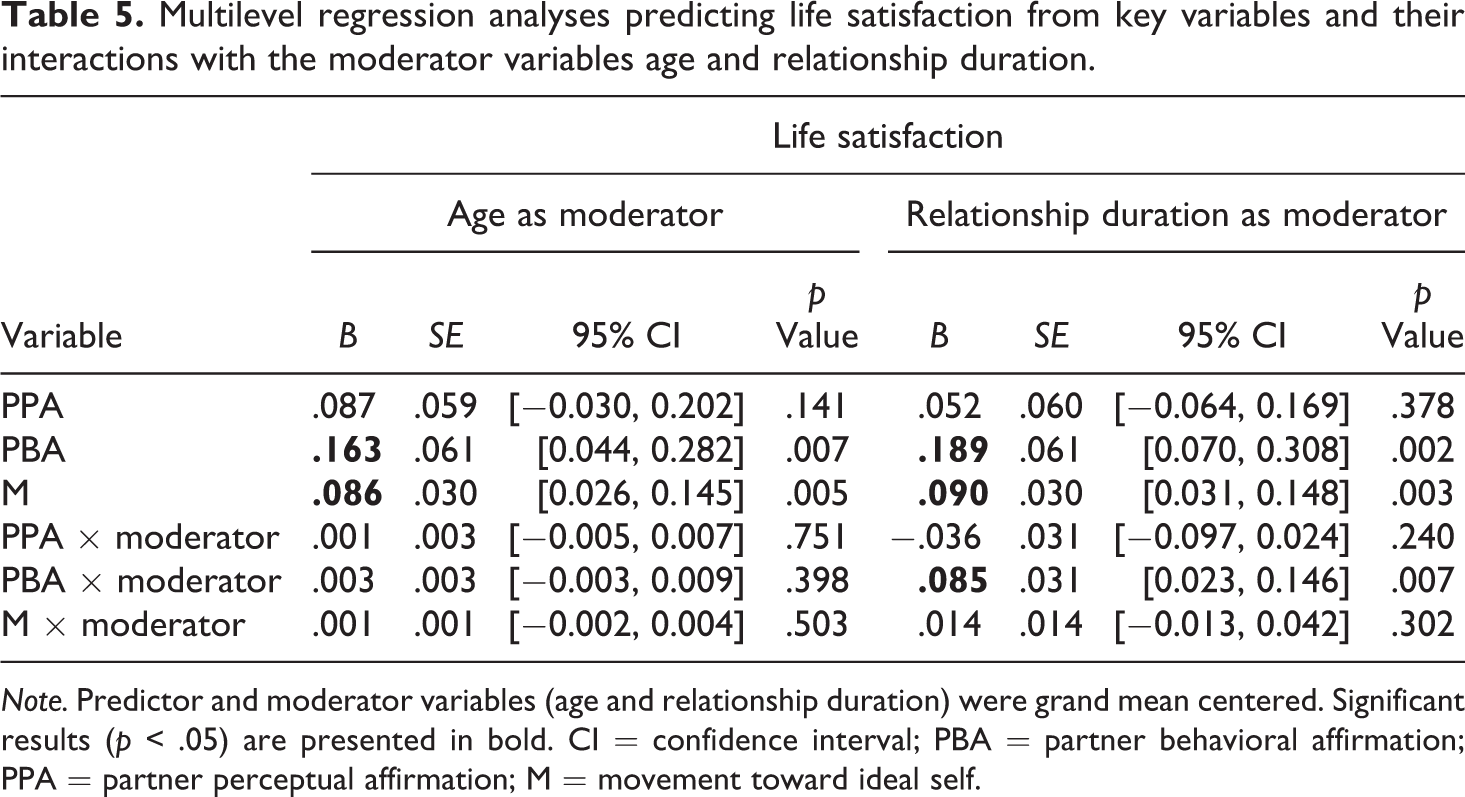
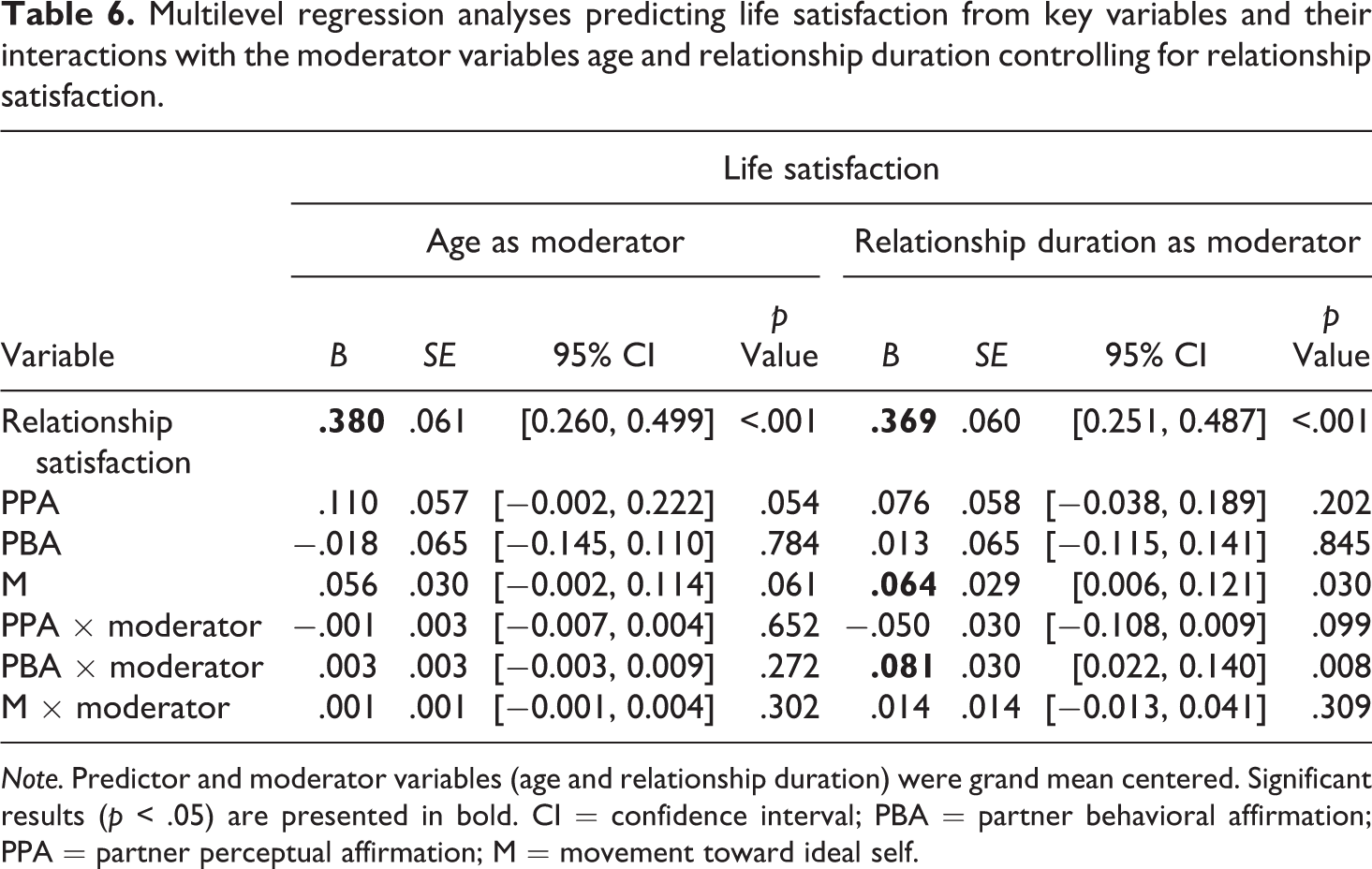
Table 5 shows the results of the multilevel regression analyses with life satisfaction as outcome. Given that the partner-affirmation hypothesis and the movement-toward-ideal hypothesis have already been tested and presented in Table 4, in Table 5 we present only the well-being hypothesis with life satisfaction as outcome variable. Similar to the effects for relationship satisfaction, partner behavioral affirmation and movement toward the ideal self positively predicted the outcome variable. No interaction with age emerged. When we controlled for relationship satisfaction, key variables of the Michelangelo phenomenon no longer predicted life satisfaction (Table 6).
Multilevel regression analyses predicting life satisfaction from key variables and their interactions with the moderator variables age and relationship duration.
Note. Predictor and moderator variables (age and relationship duration) were grand mean centered. Significant results (p < .05) are presented in bold. CI = confidence interval; PBA = partner behavioral affirmation; PPA = partner perceptual affirmation; M = movement toward ideal self.
Multilevel regression analyses predicting life satisfaction from key variables and their interactions with the moderator variables age and relationship duration controlling for relationship satisfaction.
Note. Predictor and moderator variables (age and relationship duration) were grand mean centered. Significant results (p < .05) are presented in bold. CI = confidence interval; PBA = partner behavioral affirmation; PPA = partner perceptual affirmation; M = movement toward ideal self.
To account for the parallel argument, we tested relationship duration as a moderating variable on the main associations of the framework (Table 5, right side). Similar to the results with age as moderator, partner behavioral affirmation and movement toward the ideal self positively predicted life satisfaction. Additionally, a significant interaction between relationship duration and partner behavioral affirmation was observed, which did not emerge in the analyses with age as a moderating variable. We found this interaction effect to be significant in analyses with and without controlling for relationship satisfaction (Table 6). For individuals with higher relationship duration, higher partner behavioral affirmation resulted in higher life satisfaction, whereas this was not the case for individuals who had lower relationship duration.
Discussion
People across the life span are driven to develop themselves (e.g., Deci & Ryan, 2000; Maslow, 1962; Rogers, 1961). In the present study, we explored one of the most prominent growth-striving frameworks in the context of romantic relationships (i.e., the Michelangelo phenomenon) across the adult life span. We tested the effect of age on the key variables and main associations of the Michelangelo phenomenon. Additionally, we took parallel explanations into consideration and tested for effects of relationship duration on the framework’s key components and main associations.
The Michelangelo phenomenon across adulthood
First, we investigated whether the Michelangelo phenomenon applies across adulthood. Findings of the present study support the main associations of the Michelangelo phenomenon (see Figure 1) in an age-heterogeneous sample: Partner perceptual affirmation was linked to partner behavioral affirmation, which was linked to movement toward the ideal self, with benefits for life and relationship satisfaction. Next, we more thoroughly tested the framework across the individual life span (i.e., effects of age) and across the relational life span (i.e., effects of relationship duration). Age and relationship duration affected the framework’s components partner perceptual affirmation, partner behavioral affirmation, and relationship satisfaction. With increasing age and relationship duration, individuals reported lower partner affirmation and lower relationship satisfaction. These effects can be interpreted in two ways. On the one hand, it can be argued that the partner might affirm less when age or relationship duration increases. On the other hand, one could argue that the target might be less perceptive or less accessible for affirmative acts of the partner when age or relationship duration increases. Future research is needed to more thoroughly investigate which of the two interpretations most likely applies.
Next, we tested whether age and relationship duration affect the main associations of the framework. Three findings are highlighted. First, irrespective of age and relationship duration, partner behavioral affirmation was a consistent predictor for relationship satisfaction. In other words, independent of how old individuals are or of how long they had been in their relationship, it is beneficial for relational well-being if the partner behaviorally affirms the target’s ideal self. Thus, perceiving the partner as acting toward the target in a way that helps elicit the target’s ideal self tends to resemble a prorelational virtue that does not lose its impact across adulthood or over the course of a relationship. Yet, partner behavioral affirmation might subsume other beneficial relationship processes, such as responsiveness or trust (e.g., Rusbult, Kumashiro, et al., 2009), and future research is needed to disentangle the particular benefits of partner behavioral affirmation from other behavioral, cognitive, or emotional relationship processes. Findings appeared slightly different when life satisfaction instead of relationship satisfaction was the outcome of interest. It was independent of age that partner behavioral affirmation yielded positive effects on life satisfaction but not independent of relationship duration. With increasing relationship duration, behavioral affirmation was beneficial for life satisfaction. Future research is needed to illuminate the processes underlying why relationship duration, but not age, moderates the effect of partner behavioral affirmation on life satisfaction.
The second finding that needs to be highlighted is that age moderated the effect of partner perceptual affirmation on relationship satisfaction, whereas relationship duration did not moderate this effect. These findings suggest that the beneficial effects of partner perceptual affirmation become more important with age but are not affected by relationship length. Thus, as people age, it seems to be more important for their relationship satisfaction to have a partner who perceptually affirms them in their ideal self. Instead of behavioral manifestations, it seems to be perceiving the intent (i.e., attribution that the partner is doing his or her best) that is crucial. It could be argued that perceiving sources of positive affirmation might decrease when people get older, which makes the value of partner perceptual affirmation even more significant for these adults.
Third, we refer to the core of the framework, which is movement toward the ideal self. Findings from the present study have shown that it was independent of age and relationship duration that people indicated movement toward the ideal self. Thus, the findings lead us to conclude that movement toward the ideal self happens across the adult life span and across the course of a romantic relationship. Although this finding is contrary to our hypothesis, it reveals that personal growth is not a characteristic that is reserved for the young but instead takes place throughout adulthood and into old age. Furthermore, moving toward the ideal self was positively linked to relationship and life satisfaction—irrespective of age and relationship duration. These findings add to theories of successful aging, indicating that continued growth—an important feature of psychological well-being—occurs across the life course (Erikson, 1959; Ryff, 1995). It was previously argued that older adults either have limited opportunities for continued growth or ascribe less importance to personal growth (Ryff, 1995). Our findings, however, show that older adults are still aspiring to grow personally, are moving toward their ideal self through their romantic relationship, and benefit from this movement. This also corresponds to findings showing that older adults report satisfaction and experience few negative interactions in their social relationships (e.g., Birditt & Fingerman, 2003; Luong, Charles, & Fingerman, 2011). We conclude that both young adults and older adults proactively maintain ties with those relationship partners that enable them to personally grow and help them to move toward their ideal self (Lang, 2004; Lerner et al., 2005). It seems that irrespective of age and independent of relationship duration, individuals move toward their ideal self and add positive, ideal-like content to their self-concept, which nourishes benefits for personal and interpersonal outcomes. Overall, the results of the present study suggest that personal growth occurs across the individual life span and across the life span of a romantic relationship.
Future research needs to address if personal growth in late adulthood is a particular characteristic of romantic relationships or if it happens in other life domains as well. Socioemotional selectivity theory (Carstensen, 1991, 1995) and related research (e.g., Fredrickson & Carsetensen, 1990) has shown that the perception of limited time leads to greater investment in close relationships. Thus, it could be that it is in close relationships that older adults experience the most powerful effects on their personal development, as this is the aspect of their life in which they invest the most. In the same sense, it has been argued that as people get older, their social network contracts, which makes their marriages become an even more important source of social support (Lang, 2000; Lang & Carstensen, 1994).
Strengths and limitations
A strength of the present study is the age-heterogeneous sample with 505 participants ranging in age from 18 to 90 years. Second, our participants were on average considerably older and had markedly longer relationship durations than U.S. samples that were previously used to study the Michelangelo phenomenon (e.g., Drigotas et al., 1999; Rusbult, Kumashiro, et al., 2009). Third, our sample was drawn from a college and community population outside the U.S. (i.e., Switzerland). As the issue of replication remains a current concern in psychological science (Open Science Collaboration, 2012), it is considered a strength that the present study tested and supported the Michelangelo phenomenon across cultures. Fourth, to the best of our knowledge, this study is the first that explicitly tested the Michelangelo phenomenon across the adult life span.
However, the results of this study should be interpreted with some caveats in mind. First, the components of the Michelangelo phenomenon were assessed at the same measurement occasion as the outcomes. Thus, no conclusions regarding causal links can be made. However, this weakness might be compensated for by findings of previous research, which supported the benefits of the Michelangelo phenomenon on outcomes in both concurrent and longitudinal investigations (Rusbult et al., 2005). Evidence on self-expansion has further shown that although self-expansion is positive and rewarding (Acevedo, Aron, Fisher, & Brown, 2011; Xu et al., 2011), self-expansion experiences precede positive affect (Graham, 2008), and the benefits of self-expansion remain after controlling for changes in positive mood (Aron, Paris, & Aron, 1995). Thus, the positive outcomes tend to be a result of personal growth rather than an explanatory mechanism. Nevertheless, future research would benefit from assessing the Michelangelo phenomenon and its outcomes separately over time. This approach would also allow for studying mutual cyclical growth, in which later variables in the chain influence earlier variables, for instance, investigating how movement toward the ideal self and partner perceptual affirmation mutually interact with each other over time (Drigotas et al., 1999). A second limitation concerns the issue that the present study included only individual data. For future research, it would be useful to study both couple members, revealing intra and interpersonal effects on personal growth across the adult life span. Third, taking into account ontogenetic and historical contextualism, we cannot preclude the existence of cohort effects, instead of age effects (Staudinger & Bluck, 2001). Fourth, partner perceptual affirmation and partner behavioral affirmation highly correlated with each other, suggesting issues of multicollinearity. Previous research on the Michelangelo phenomenon was also confronted with these issues of correlated constructs (e.g., r = .58 between perceptual affirmation and behavioral affirmation in Drigotas, 2002). Given that the correlation between partner perceptual and partner behavioral affirmation is higher in the present study than in previous studies (r = .75 in the present study), the effects of partner perceptual affirmation might have been underestimated in this study.
Future directions
The limitations of the current study might provide a springboard for future research. First, future research might benefit from more thoroughly investigating the type of ideal self that the target is aiming for. For instance, Molden, Lucas, Finkel, Kumashiro, and Rusbult (2009) differentiated the benefits of perceived support for promotion-focused and prevention-focused goals among individuals. Applied to the Michelangelo phenomenon, research might investigate the different roles of a promotion-focused (e.g., “becoming happier”) ideal self versus a prevention-focused (e.g., “becoming more responsible”) ideal self and their effects on outcomes. Second, in line with the two-dimensional model of relationship self-change (Mattingly et al., 2014), it might be worthwhile to differentiate the types of movement toward the ideal self along different dimensions, such as direction or valence: Whereas some individuals might increase the positive content in their ideal self, others might decrease the negative content. Although one could argue that movement toward the ideal self naturally implies an increase in positive content, little is known about the concrete valence of ideal selves, a topic for future research. Finally, Fivecoat et al. (2015) experimentally demonstrated that relationship satisfaction tends to increase more when individuals receive active, compared to passive, support for their self-expansion. These findings could be applied to research on the Michelangelo phenomenon through testing of the concrete behavioral affirmation that is enacted by the partner. As Fivecoat et al. (2015) found, movement is particularly likely to be beneficial for relationship satisfaction when partner affirmation is active rather than passive.
Conclusion
Although progress has been made in the study of personal growth in the context of romantic relationships, little attention has been paid to the effects of age in this growth process. The findings of the current study present useful avenues for understanding personal growth by providing evidence that the Michelangelo phenomenon applies across the adult life span. Individuals across the life span tend to pursue goals and build relationships that allow them to nurture their personal growth (Deci & Ryan, 2000). Thus, our findings add to theories of successful aging by underscoring the active role that partners take in the personal development of one another across adulthood.
Footnotes
Funding
The author(s) disclose receipt of the following financial support for the research, authorship, and/or publication of this article: The research was supported by personal grant P0BSP1_168915 (Grantee: Janina L. Bühler) from the Swiss National Science Foundation, by grant CRSI11_130432 (Principal Investigator: Alexander Grob) from the Swiss National Science Foundation, and by grant CRSII1_147614 (Principal Investigator: Alexander Grob) from the Swiss National Science Foundation.
Note
References
Supplementary Material
Please find the following supplemental material available below.
For Open Access articles published under a Creative Commons License, all supplemental material carries the same license as the article it is associated with.
For non-Open Access articles published, all supplemental material carries a non-exclusive license, and permission requests for re-use of supplemental material or any part of supplemental material shall be sent directly to the copyright owner as specified in the copyright notice associated with the article.
