




Abstract
The chronic experience and expression of negativity is associated with poorer personal and relationship outcomes. Unfortunately, compared to people with high self-esteem, those with low self-esteem (LSEs) are less motivated to repair their negative moods. The current research examined mood repair in a novel way: in a close relationship context, when mood repair centers on benefitting others. We hypothesized that LSEs are more motivated than usual to repair negative moods when doing so benefits close others and when high in agreeableness (a trait involving prosocial motivation). We found support for our hypothesis with self-report (Studies 1 and 2) and behavioral measures (Study 2) of mood repair motivation, through an experimental manipulation of relationship context (Study 1), when participants expected to communicate with their romantic partners (Study 2), and for both sad (Study 1) and angry (Study 2) moods. Agreeable LSEs were more motivated to repair their negative moods than were disagreeable LSEs.
We all vary in our emotions throughout life. Although experiencing negative emotions is adaptive in certain contexts, experiencing negative emotions frequently and indiscriminately has been associated with poorer personal and relationship well-being (e.g., Anderson, Keltner, & John, 2003; Gallo & Matthews, 2003). Unfortunately, some people are less motivated than others to repair their negative moods. Past work has found that people with low self-esteem (LSEs), those who hold relatively low regard for themselves, are less motivated to repair their negative moods than are people with high self-esteem (HSEs; Heimpel, Wood, Marshall, & Brown, 2002). Given the importance of repairing negative moods for people’s relationships and well-being, it is important to understand how LSEs may become more motivated to get out of their bad moods. In the current research, we investigated an unexplored question: Under what circumstances might LSEs be more motivated to repair their negative moods? We propose that the combination of the right context (a close relationship context) and a socially oriented personality trait (trait agreeableness) will increase LSEs’ motivation to repair their negative moods. We propose that agreeableness will influence mood repair because (a) agreeable people are motivated to maintain social harmony and (b) agreeable people have the self-regulation skills to work on feeling better. Next, we expand on our rationale for this hypothesis by reviewing relevant research on the effects of negative moods, self-esteem and mood repair motivation, and agreeableness.
Negative moods
Negative moods can be a detriment to people’s overall well-being. They interfere with people’s ability to effectively cope with stress (Cooper, Frone, Russell, & Mudar, 1995) and bias people’s memories in negative ways (Lyubomirsky, Caldwell, & Nolen-Hoeksema, 1998). People who are chronically sad are at a higher risk for cardiovascular problems (see Rozanski, Blumenthal, & Kaplan, 1999 for a review), coronary heart disease (e.g., Denollet & Brutsaert, 1998), and all-cause mortality (Wulsin, Vaillant, & Wells, 1999). Similar to sadness, anger and hostility also predict negative health outcomes, such as coronary heart disease, stroke, and all-cause mortality (see Gallo & Matthews, 2003 for a review).
Negative moods also affect people’s relationships in unfavorable ways. People who have chronic negative moods (depressed or high negative affect) are less well-liked (Sommers, 1984) and are more likely to experience marital distress than people who are happier (Gotlib & Hooley, 1988). Negative moods also predict maladaptive perceptions about relationship conflict, such as blaming the self and making internal/stable attributions for serious problems (Forgas, 1994). Further, people tend to “catch” their close others’ moods; when one partner is in a negative mood, the other partner may also be put into a negative mood (Anderson et al., 2003).
Self-esteem and mood repair
LSEs tend to experience negative moods more frequently and intensely than HSEs (Lorr & Wunderlich, 1988). LSEs’ negative moods likely contribute to the finding that they tend to have poorer quality romantic relationships than HSEs (Kille & Wood, 2012; Leary & MacDonald, 2003). Unfortunately, compared to their HSE counterparts, when LSEs are in a sad mood, they are less motivated to repair their sad mood (Heimpel et al., 2002). For instance, when feeling sad (after a mood induction procedure), LSEs report lower motivation to repair their moods than HSEs (Wood, Heimpel, Manwell, & Whittington, 2009). They are also less likely than HSEs to engage in behaviors that would improve their moods (Heimpel et al., 2002) and to engage in the cognitive strategies that HSEs may engage in to lift their spirits (e.g., focusing on their own strengths and recalling positive memories; Dodgson & Wood, 1998; Smith & Petty, 1995). Why are LSEs less motivated than HSEs to feel better? Research has suggested that negative moods feel familiar to LSEs, so there is less push to change them, and that LSEs feel they are less deserving of positive moods (Wood et al., 2009).
We propose that under the right conditions, LSEs can be as motivated as HSEs to repair their negative moods. Specifically, we propose that the combination of a close relationship context and the presence of a socially relevant personality trait will affect LSEs’ mood repair motivation. The relationship context is relevant because people can repair their moods not just for their own well-being but for the benefit of their close others. For instance, Tim may not care about getting out of his bad mood for his own well-being, but he may be more motivated to improve his mood if doing so made his spouse happy. Research to date examining mood repair among LSEs versus HSEs has examined mood repair only in a personal context (but see Erber, Wegner, & Therriault, 1996, for an exception). Participants have been induced into a sad mood (Heimpel et al., 2002; Smith & Petty, 1995; Wood et al., 2009) and they either reported how motivated they were to repair their negative mood (Wood et al., 2009) or engaged in a task designed to assess mood repair behaviorally (e.g., selecting from sad versus happy videos to watch; Heimpel et al., 2002). In these studies, participants probably saw no connection between repairing their moods and the effects on other people. However, if mood repair is situated within a relationship context—framed to benefit close others—perhaps mood repair motivation would increase among LSEs. The “deservingness” reason for not improving moods no longer applies in a relationship context—LSEs may feel they are undeserving of feeling happy, but they should not feel that others are undeserving of feeling happy. Therefore, when LSEs have the opportunity to repair their negative moods to benefit others, they may be more motivated to do so than when repairing their mood would affect only the self.
Yet, a relationship context alone may not be enough to show an improvement in LSEs’ mood repair motivation. Whether the context is social should matter only to people who care about others’ well-being. Thus, we predict that LSEs’ mood repair motivation in a relationship context will depend on the presence of a personality trait related to strong social motivations.
Agreeableness
What trait might capture social motivation (having the motivation to repair a negative mood for the benefit of others)? Trait agreeableness is a clear candidate. Highly agreeable people are intrinsically prosocially oriented and are highly motivated to achieve social harmony (e.g., Costa & McCrae, 1992; Graziano, Habashi, Sheese, & Tobin, 2007). Benevolent values are central to the identity of highly agreeable people (Parks & Guay, 2009; Roccas, Sagiv, Schwartz, & Knafo, 2002). They are warm, caring, empathic, kind, and behave in ways that reflect their prosocial orientations, by engaging in helping behavior and accommodative responding in dating relationships, for example (e.g., Graziano, Jensen-Campbell, & Hair, 1996). On the other end of the spectrum is disagreeableness. Disagreeable people tend to distrust others and are relatively uninterested in others’ lives and well-being (Costa & McCrae, 1992). They are cold, uncooperative, unhelpful, and quarrelsome (e.g., Graziano & Tobin, 2009).
In addition, agreeableness brings superior self-regulation skills, which is important for improving one’s mood (Muraven, Tice, & Baumeister, 1998; Wegner, Erber, & Zanakos, 1993). Agreeable people are better at controlling themselves than are disagreeable people (e.g., Graziano & Tobin, 2009). Agreeables’ higher self-regulation skills appear across many domains, such as dieting (Tangney, Baumeister, & Boone, 2004), but is particularly evident in the social domain (Cortes, Kammrath, Scholer, & Peetz, 2014). Compared to more disagreeable people, highly agreeable people automatically respond to hostile cues by activating prosocial thoughts (Meier, Robinson, & Wilkowski, 2006), regulate their emotions and behaviors to please and help others (Graziano & Habashi, 2010), and exert more effort in unpleasant, effortful tasks when doing so will benefit others compared to the self (Cortes et al., 2014).
Present research
Self-esteem and agreeableness are largely uncorrelated (e.g., Hair & Graziano, 2003); low and HSE can combine with low or high agreeableness and any point in between. We propose that because agreeableness has strong ties with both social motivations and social self-regulation, agreeableness will help LSEs repair their negative moods. Specifically, we predicted that in a relationship context in which mood repair benefits close others, agreeable LSEs would be more motivated to repair their negative moods than would disagreeable LSEs. In contrast, because HSEs are already motivated to repair their negative moods, we predicted that agreeableness would matter less for HSEs’ mood repair. We examined these predictions in two studies. In Study 1, some participants were primed to think about mood repair in a relationship context. Participants read a bogus article about how mood repair either (a) benefits other people or (b) increases liking from others (social control), or, in a third condition, they simply read a descriptive article unrelated to mood (control). We then induced participants into a sad mood and asked about their mood repair motivation. In Study 2, we recruited people in romantic relationships, induced them into an angry mood, told them they would be leaving a recorded message to their romantic partner that we would subsequently send to their partner (priming a social context), and assessed their mood repair motivation behaviorally.
Study 1
Study 1 examined whether priming participants to focus on how repairing a negative mood benefits others may increase mood repair motivation among highly agreeable LSEs compared to less agreeable LSEs. Participants first completed measures of self-esteem and agreeableness. They then read one of three bogus articles. In the first condition, participants read an article that emphasized the type of relationship context that we have been discussing: when repairing mood could benefit other people (“social benefit” condition). We predicted that agreeableness will help increase LSE people’s mood repair motivation because of agreeable people’s prosocial tendencies. Therefore, we predicted that the Agreeableness × Self-Esteem interaction would emerge only in a social context in which repairing mood benefits others. To rule out the possibility that any kind of social framing prime would improve mood repair among agreeable LSEs, even if it did not involve benefits to others, we also included a second social condition in which participants read an article that emphasized a more selfish social motive: to be liked by others (“social liking” condition). If the context is social, but framed to benefit the self, no Agreeableness × Self-Esteem interaction should emerge, because agreeableness should matter only for benevolent social motives, not for more self-centered motives (e.g., Jensen-Campbell & Graziano, 2001). Therefore, we predicted that agreeableness would interact with self-esteem to predict mood repair motivation in the social-benefit, but not the social-liking condition. In the third (control) condition, participants read an article unrelated to mood repair.
After reading an article, participants were induced into a sad mood by visualizing sad scenarios, while listening to sad music. Lastly, participants reported how motivated they were to repair their moods.
Method
Participants
We expected to observe a medium effect size based on effect sizes from prior work examining self-esteem and mood repair (Heimpel et al., 2002). A G*power analysis suggested a sample of approximately 70 participants, giving us .80 power to detect a medium effect (partial R 2 = .13). We aimed to obtain a minimum of 100 participants in both studies to give us adequate power. A total of 102 (77 females and 25 males) undergraduate students participated in this study in exchange for course credit. Participants were between 16 years and 35 years of age (mean (M) = 19.91, standard deviation (SD) = 2.97).
Procedure and measures
Participants first completed the Rosenberg Self-Esteem Scale (Rosenberg, 1965) to assess trait self-esteem. Using a 9-point scale (1 = very strongly disagree and 9 = very strongly agree), participants indicated their agreement with 10 items (e.g., “I feel that I have a number of good qualities”; α = .89). Participants then completed the agreeableness subset of the Big Five Personality Aspects Scale (DeYoung, Quilty, & Peterson, 2007). Using a 5-point scale (1 = strongly disagree and 5 = strongly agree), participants indicated their agreement with 20 items. Sample items included “I feel others’ emotions,” “I inquire about others’ well-being,” and “I rarely put people under pressure” (α = .86). Participants then completed a filler scale before proceeding to the manipulation (Regulatory Focus Questionnaire; Higgins et al., 2001) to obscure the emphasis on self-esteem and agreeableness.
Framing manipulation
Next, participants were told they would read a passage and answer questions about it. We told participants that we were interested in people’s evaluations of writing styles and that it was important that they read the passage carefully. This was used as a social framing manipulation. Participants were randomly assigned to read one of three passages. In the social-benefit condition, the passage emphasized how repairing one’s own negative mood benefits others. In the social-liking condition, the passage emphasized how repairing one’s own negative mood elicits liking from others. Participants in these two conditions read the following, with the wording for the social-benefit condition appearing in the first set of brackets and the wording for the social-liking condition in the second set of brackets for each sentence: Why is it good to feel good? Research suggests that being in a positive mood leads to [benefits for the people close to us] [being liked more by others]. According to Walters and Cooper (2012), when people are in good moods, they’re [more likely to do things for those they care about] [rated as more pleasant to be around by strangers, peers, and romantic partners]. This research found that people [do not treat others well enough when they are in negative moods – it’s positive people who offer the most benefits to relationships] [want to surround themselves with others who are in negative moods – it’s positive people who have the most secure relationships]. Consequently, [close others (e.g., friends, partners, family members) of people with positive moods report having better lives] [people find others who are in a good mood to be more desirable than people who are in a negative mood]. In short, be happy – [it offers plenty of benefits to the people you love] [it makes you more likable].
Sad mood induction
Next, participants were induced into a sad mood using a modified version of Heimpel, Wood, Marshall, and Brown’s (2002) sad mood induction procedure. Participants visualized a sequence of four sad images for a total of 2 min each, while listening to sad music: Prokofiev’s Russia Under the Mongolian Yoke, at half speed. Participants could not progress to the next sad scenario until the 2 min had passed. For example, one of the sad scenarios read: You are at the airport saying goodbye to your best friend who has just gotten married and is now moving far away from you. As the two of you say goodbye, you realize that this is the last time you will be together for a very long time.
Mood repair motivation
Participants indicated how motivated they were to repair their sad mood using a mood repair motivation questionnaire (Wood et al., 2009). On a 1 = strongly disagree to 7 = strongly agree point scale, participants responded to 5 items, including “I have little motivation to do anything about this mood,” “I want to feel better fast, so I’ll do something as soon as I can to improve my mood,” and “I’m not interested in trying to cheer up.” We created a composite so that higher numbers indicated greater mood repair motivation (α = .80). 1
Upon completion of the study, participants were given a mood boost (they visualized and wrote about a positive recent event), were probed for suspicion, and were fully debriefed.
Results and discussion
We first examined the descriptive statistics of the negative feelings index (mood check measure). Participants’ mean rating (M = 3.56, SD = .56) was significantly above the midpoint of the scale, with higher numbers indicating more negative mood, t(95) = 9.79, p < .001. 2
Next, we tested our primary prediction that agreeableness would interact with self-esteem and framing condition to predict mood repair motivation. We ran two hierarchical multiple regression analyses. In the first model, we included the social-benefit and social-liking conditions so that the comparison condition was the control. In the second model, we included the social-benefit and control conditions so that the comparison condition was social-liking.
First, we regressed trait self-esteem (standardized), agreeableness (standardized), the social-benefit condition (1 = social benefit, −1 = other), social-liking condition (1 = social liking, −1 = other), and their respective two- and three-way interactions on mood repair motivation. This model allowed us to compare the social-benefit and social-liking conditions to the control condition (R 2 for the overall model = .25). There was a main effect of trait agreeableness, β = .30, t(90) = 2.85, 95% confidence interval (CI) [.15, .45], p = .005, suggesting that compared to people lower in agreeableness, people high in agreeableness were generally more motivated to repair their moods. None of the other main effects were significant, βs < .19, ps > .10. See Online Supplemental Materials for regression statistics for all main effects, two-way interactions, and the other three-way interactions. Consistent with our hypothesis, there was a three-way interaction between self-esteem, agreeableness, and the social-benefit condition, β = −.41, t(83) = −2.58, 95% CI [−.65, −.17], p = .012, and no significant interaction between self-esteem, agreeableness, and the social-liking condition, β = .03, t(83) = .23, 95% CI [−.13, .19], p = .820.
We then ran the second model, swapping out the social-liking condition for the control condition, to examine condition effects compared to the social-liking condition, rather than to the control condition. Specifically, we were interested in the Self-Esteem × Agreeableness × Social-Benefit Condition interaction to examine whether it was significant when compared to the social-liking condition (R 2 = .25). Indeed, the three-way interaction of interest was significant, β = −.44, t(83) = −2.78, 95% CI [−.67, −.21], p = .007. See Online Supplemental Materials for regression statistics for all main effects and two-way interactions.
To further examine the Self-Esteem × Agreeableness patterns across condition, we conducted separate regression analyses within each condition. Consistent with our prediction, the Self-Esteem × Agreeableness interaction was significant in the social-benefit condition (R 2 = .52), β = −.54, t(23) = −3.26, 95% CI [−.85, −.23], p = .003 (see Figure 1), but not the social-liking (R 2 = .16), β = .17, t(32) = −1.01, 95% CI [−.12, .46], p = .322, or control condition (R 2 = .07), β = .21, t(28) = 1.09, 95% CI [.00, .41], p = .287. See Table 1 for regression statistics for the main effects in each condition.
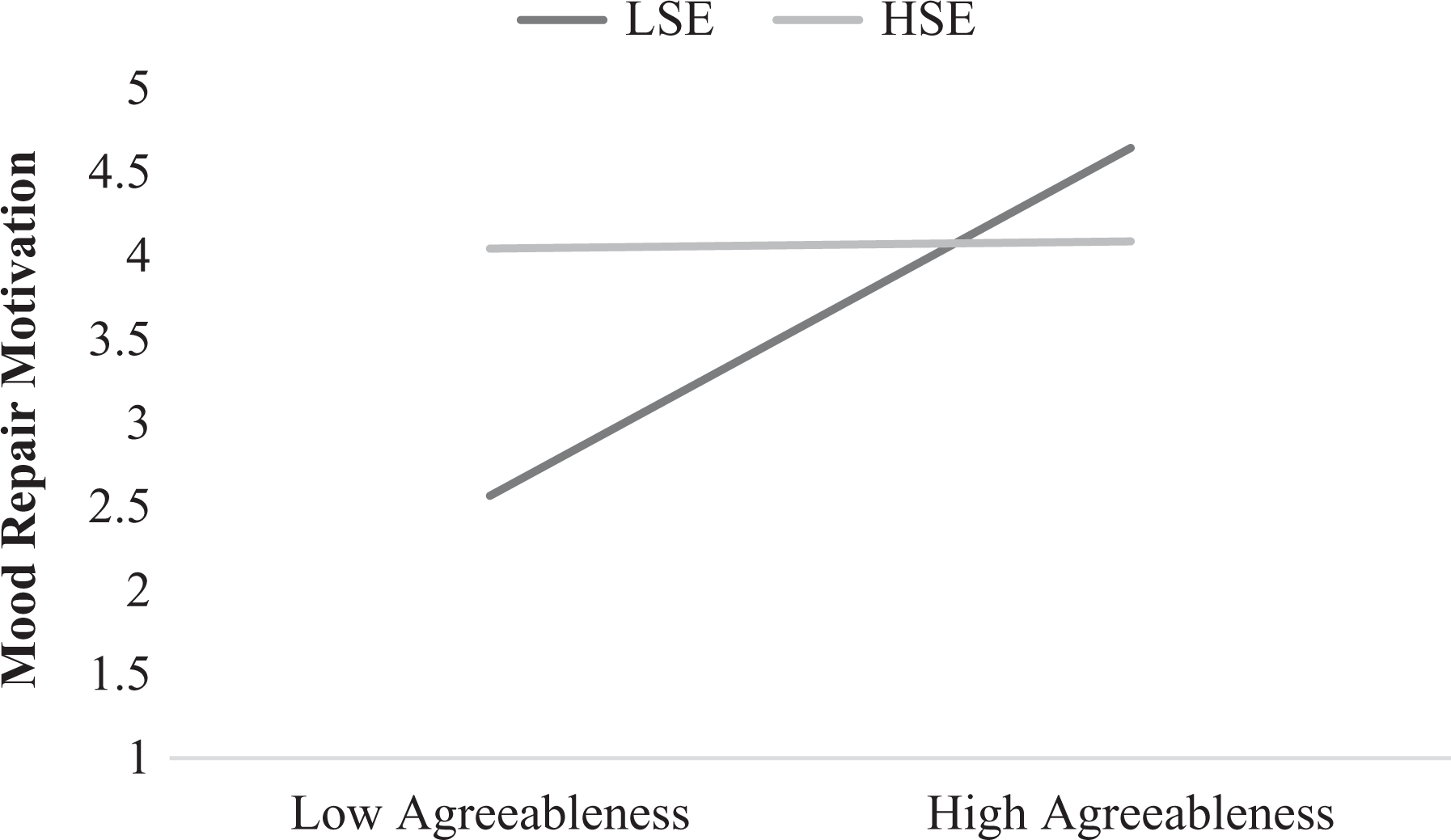
When given a social-benefit framing, people low (1 SD below the mean) in self-esteem were more motivated to repair their moods if they were high (1 SD above the mean) versus low (1 SD below the mean) in agreeableness (Study 1). SD: standard deviation.
Main effects from the multiple regression analysis across framing condition (Study 1).
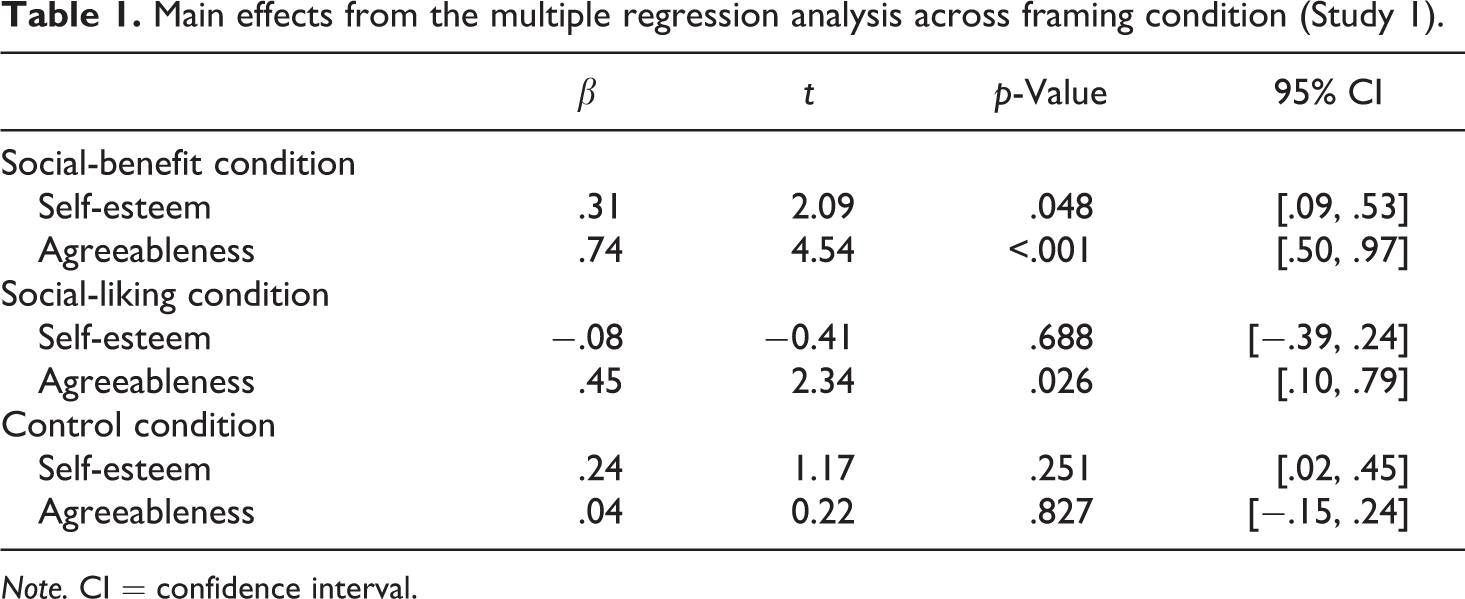
Note. CI = confidence interval.
We examined the simple slopes at 1 SD above and below the mean for trait self-esteem and agreeableness in the social-benefit condition. As predicted, mood repair motivation was higher for LSEs who were highly agreeable, compared to LSEs who were less agreeable, B = 1.99, t(23) = 4.45, 95% CI [1.07, 2.92], p < .001. In contrast, HSEs’ mood repair motivation was unassociated with their level of agreeableness, B = .04, t(23) = .14, 95% CI [−.54, .62], p = .888. In the social-liking and control conditions, LSEs’ mood repair motivation was unassociated with their levels of agreeableness, Bs < .29, ps > .187.
Results from this study suggest that LSEs can be motivated to repair their negative moods when they are also highly agreeable, and when given a relationship context that emphasizes how one’s own mood repair benefits others. Notably, it was not the case that any social context elicited the Self-Esteem × Agreeableness interaction when predicting mood repair motivation. Agreeableness did not interact with self-esteem when the emphasis was on how repairing mood could increase liking from others. Instead, agreeableness helped LSEs feel motivated to improve their moods when the emphasis was on how doing so could benefit others.
Study 2
Study 1 identified the relationship context under which agreeableness helps increase LSEs’ mood repair motivation—namely, the context must involve prosocial rather than self-centered goals. The purpose of Study 2 was to extend Study 1 in three ways. First, we examined mood repair motivation by examining behavior in addition to self-reports. Second, we examined that motivation within the context of close relationships—specifically, whether people would improve their mood for their romantic partner’s benefit. We created a relationship context simply by leading participants to anticipate talking to their romantic partner.
A third extension of Study 1 is that we examined angry moods, rather than sad moods. We sought not only to demonstrate the generalizability of the results to more than one type of negative mood but to examine the special case of anger. Reducing both anger and sadness predicts better outcomes for partners and the relationship as a whole (Ellis & Malamuth, 2000; Fletcher, Fitness, & Blampied, 1990), but anger may have even more detrimental consequences for relationships than sadness (Lemay, Overall, & Clark, 2012). Moreover, when anger arises from a conflict involving the partner, people may want to hold onto their anger rather than repair it. We expect our hypothesized pattern to unfold in the same way for anger as it does for sadness, because both are negative emotions that require motivation and effort to reduce or improve (e.g., Tice & Baumeister, 1993). We expected a Self-Esteem × Agreeableness interaction, such that LSEs would be more motivated to repair their anger when they are high in agreeableness than when low in agreeableness, because agreeables’ prosocial motivation would encourage them to mend their conflict with their partner and because people low in agreeableness tend to be angry and antagonistic (e.g., Moskowitz & Zuroff, 2004).
Participants in romantic relationships came to the lab, completed measures of self-esteem and agreeableness, and were induced into an angry mood. To prime a relationship context, participants were then told they would record a video message for their romantic partners. Participants were told they would discuss a topic related to an ordinary event/day with their partner (i.e., a situation that would not call for a hostile message). We reasoned that participants should regulate their angry moods so as to avoid sending a hostile message to their partner. Thus, regulating their angry moods would benefit their partners. Finally, we developed a behavioral measure to assess mood repair motivation by asking participants select an aromatherapy candle to burn in the room right before and during their creation of the video message. One of the three candles was labeled “relax and calm.” When participants chose that candle, we inferred that they were seeking to repair their angry mood.
Method
Participants
A total of 100 (86 females, 12 males, and 2 unknown) undergraduate students participated in this study in exchange for course credit. Participants were told they must be in a romantic relationship to participate in the study (Mlength = 21.81 months, SD = 21.07). 3 Participants were between 17 years and 35 years of age (M = 20.11, SD = 2.49). Eight participants were excluded from analyses—five did not agree to be videotaped and thus went straight to debriefing, two had completed a study with similar variables in the past, and one experienced computer problems. The final sample consisted of 92 participants (78 females, 12 males, and 2 unknown; M age = 20.14). 4
Procedure and measures
Participants arrived at the lab and began by completing personality and relationship measures on the computer. Participants completed the same self-esteem measure (α = .93) used in Study 1. Participants completed the same agreeableness measure as in Study 1, plus a second agreeableness scale. We included two highly reliable measures of agreeableness in order to increase our chances of detecting the predicted pattern. The second agreeableness scale was from the Big Five Inventory (John & Srivastava, 1999). Sample items included “I see myself as someone who is considerate and kind to almost anyone” and “I see myself as someone who is generally trusting” (1 = strongly disagree and 5 = strongly agree). The agreeableness scales were highly correlated (r = .68, p < .001), so we created an overall measure of agreeableness that included all items from both agreeableness scales (α = .87). The results with each scale separately are described. 5 Participants then completed filler scales (Regulatory Focus Questionnaire (RFQ); Higgins et al., 2001; Trait Self-Control scale; Tangney et al., 2004) to obscure the emphasis on self-esteem and agreeableness and measure about their relationship feelings and tendencies to express negativity. See Online Supplemental Material for details about these measures.
Next, participants reported their current mood state (adapted from Seimer, 2005). Mood items included focused, curious, distracted, irritated, productive, exhausted, excited, thoughtful, angry, sad, and frustrated (1 = not at all and 7 = maximum intensity). We reverse-scored the positively worded items and averaged the 11 items to serve as a baseline negative feelings index (premeasure of mood).
Mood induction
To induce an angry mood, we had participants complete two recall tasks. One task has been used by prior research to induce a negative mood (Seimer, 2005), and the other task involved recalling a partner-relevant negative issue. We included both tasks to induce an angry mood because we wanted to use a standardized method shown to induce an angry mood, but we also wanted participants to experience feelings of anger directed at their partner so that they would have partner-relevant anger to regulate for their upcoming communication task.
Participants were asked to think and write about an ongoing conflict with their partner. If they did not have an ongoing conflict, they were instructed to recall and write about a severe conflict they had with their partner in the past, that they still had feelings about. After writing about the conflict, participants answered questions about the conflict (e.g., when it occurred, how severe it was).
Next, using a standardized anger induction procedure modeled from Seimer, 2005, we had participants recall and write about a past event in which they experienced intense anger, which they still think of occasionally, and which still makes them angry. We specified that this event should not involve their romantic partner (since the previous event did). Participants indicated when the event occurred and how often they still thought about the event. Participants then reported their current mood state using the same mood scale that was used before the mood induction (postmeasure of mood).
Creating a relationship context
Next, participants were told that they would talk about a particular topic to their romantic partner while being videotaped and that the researcher would email the video clip to their partner to have their partner answer questions about it. A video camera was set up in the room and visible to participants. Participants were told that they should discuss a recent date they had with their partner that was very ordinary and/or uneventful.
Mood repair motivation
We then told participants that before they made the videotape, they would complete another survey. They were told that as they completed the survey and while they were videotaping, an aromatherapy candle would be burning in the room. Participants were given the choice of which candle to have burning in the room. They had a choice among three candles, each of which supposedly yielded a scent that was rated as highly pleasant by previous participants: “Relax and Calm,” “Invigorate and Fuel Up,” and “Everyday and Ordinary” (the order was counterbalanced). We assumed that people would choose the “Relax and Calm” candle if they intended to repair their angry mood. Feeling relaxed should help prevent people from sending angry or hostile messages to their partner. Thus, choosing the “Relax and Calm” candle over the other two candles (1 = relax and calm, 0 = other) served as the behavioral measure of mood repair motivation.
The experimenter then pretended to leave to obtain the candle, while the participant completed a few more questionnaires. Among these questionnaires was the self-report mood repair measure used in Study 1. The scale was virtually identical, with some items slightly modified to reflect differences in the type of negative mood induced. For example, we changed the item “I’m not interested in trying to cheer up” from Study 1 to “I’m not interested in trying to get in a better mood,” because cheering up is relevant for a sad mood but not an angry mood. The behavioral (“relax and calm” candle choice) and self-report mood repair motivation measures were correlated (r = .21, p = .044). In the questionnaire, participants were also asked how effective they thought the aromatherapy candles would be in altering mood (1 = not at all and 7 = extremely). Generally, participants thought the candles were moderately effective in altering mood (M = 4.01, SD = 1.63). 6 This mean was significantly above the low-end of the scale (1 = not at all effective), t(91) = 17.75, p < .001. Participants also indicated their desire to have each candle burning in the room (1 = very low and 7 = very high) and how they expected each candle to make them feel (1 = calm and 7 = aroused). As we intended, participants expected to feel calmer when they chose the “Relax and Calm” candle (M = 2.41, SD = 1.49) than when they chose the other candles (M = 4.44, SD = .91), t(92) = −10.41, p < .001. Participants never recorded a message to their partners and a candle never burned in the room. Participants were then given the same mood boost as in Study 1, probed for suspicion and fully debriefed.
Results
We fist examined how effective the mood induction was in altering people’s mood. Comparing pre- to post-mood induction feelings, people reported feeling significantly more negative after the mood induction (M = 4.03, SD = .93) than before (M = 2.83, SD = .80), t(91) = −13.06, p < .001. 7
A majority of participants chose the relax and calm candle over the other two candles (70 people, 77%). We investigated whether this choice was influenced by the predicted Self-Esteem × Agreeableness interaction. Because the dependent variable was dichotomous (1 = relax and calm, 0 = other), we ran a binary logistic regression with self-esteem and agreeableness (mean centered), and their interaction term as the predictor variables (R 2 = .16). The main effects of self-esteem, odds ratio (OR) = .74, p = .207, 95% CI [.47, 1.18], and agreeableness, OR = 2.49, p = .262, 95% CI [.51, 12.25], were nonsignificant. Consistent with our hypothesis, the Self-Esteem × Agreeableness interaction was significant, OR = .23, p = .015, 95% CI [.07, .75] (see Figure 2).
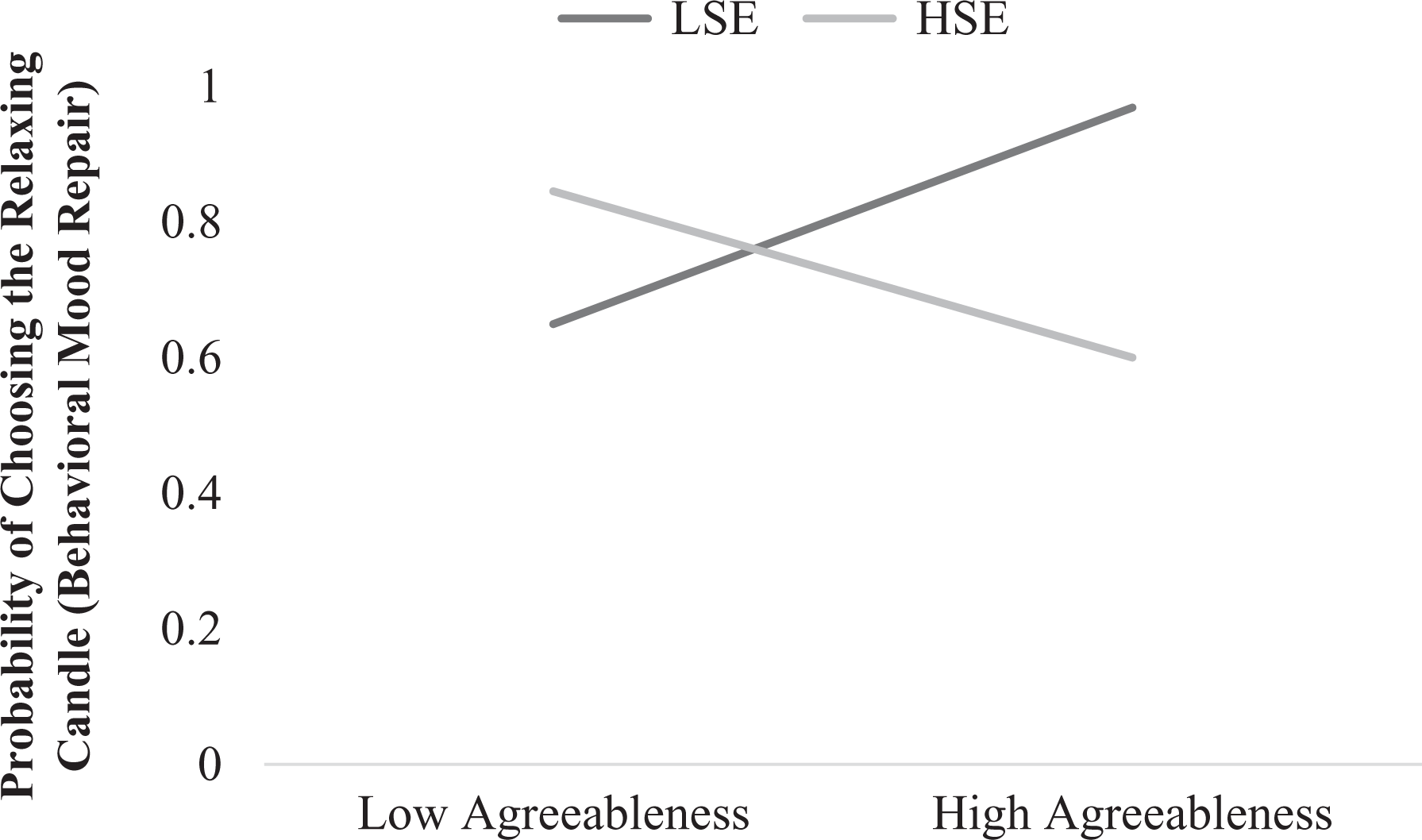
When anticipating an interaction with their partner, people low (1 SD below the mean) in self-esteem were more likely to choose a relaxing/calm candle over other candles if they were high (1 SD above the mean) versus low (1 SD below the mean) in agreeableness (Study 2). SD: standard deviation.
We examined the simple slopes at 1 SD above and below the mean for trait self-esteem and agreeableness. As predicted, LSEs who were highly agreeable, compared to LSEs who were less agreeable, were more likely to choose the “Relax and Calm” candle (suggesting behavioral intentions to repair mood), OR = 29.54, p = .027, 95% CI [1.48, 58.95]. In contrast, HSEs’ candle choice was unassociated with their level of agreeableness, OR = .21, p = .129, 95% CI [.03, 1.58].
Finally, we examined our predicted Self-Esteem × Agreeableness pattern with self-report mood repair as the dependent variable. In a multiple regression analysis, we regressed self-esteem, agreeableness, and their interaction (all standardized) onto self-reported mood repair motivation (R 2 = .05). Once again the main effects of self-esteem and agreeableness were nonsignificant, βs < .16, ps >.170. The predicted interaction was marginal in significance, β = −.21, t(88) = −1.76, 95% CI [−.32, −.10], p = .081. The hypothesized LSE simple slope was also marginal in significance, B = .29, t(88) = −1.91, 95% CI [−.01, .59], p = .059, indicating that highly agreeable LSEs reported feeling marginally more motivated to repair their moods than disagreeable LSEs. As expected, for HSEs, their level of agreeableness was not associated with mood repair motivation, B = −.14, t(88) = −.69, 95% CI [−.54, .26], p = .487 (see Figure 3).
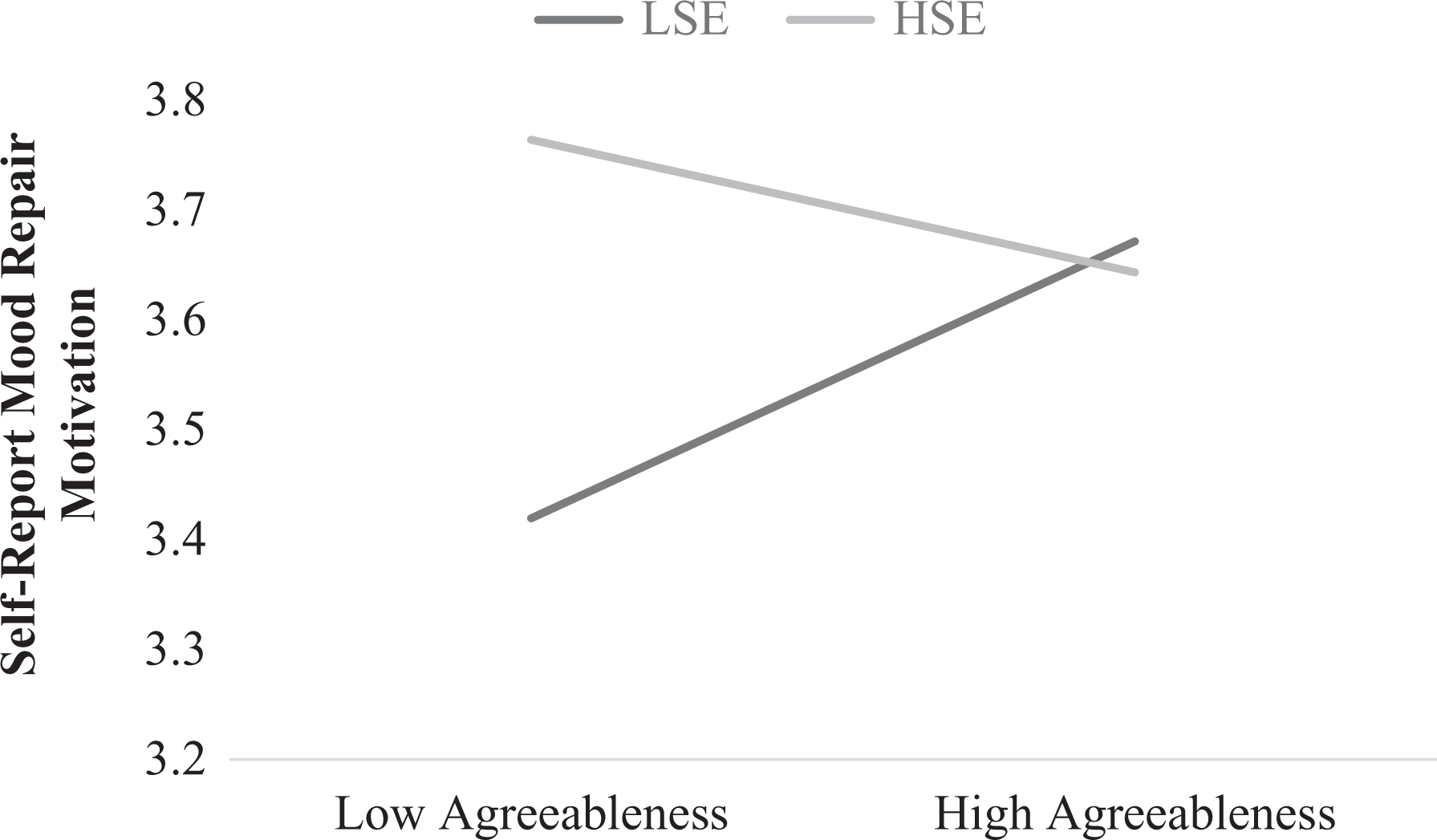
When anticipating an interaction with their partner, people low (1 SD below the mean) in self-esteem reported being marginally more motivated to repair their moods if they were high (1 SD above the mean) versus low (1 SD below the mean) in agreeableness (Study 2). SD: standard deviation.
Discussion
When using a behavioral measure of mood repair and assessing a relationship context in a more ecologically valid way, our prediction that greater agreeableness would promote mood repair among LSEs was supported. Compared to disagreeable LSEs, agreeable LSEs who were induced into an angry mood were more likely to choose a calming aromatherapy candle to burn in the room in anticipation of leaving a recorded message for their partner. These findings further corroborate the idea that LSEs can be motivated to repair their moods, when given the proper context (a social-benefitting context) and when they have the motivation and skills to improve their moods (high agreeableness).
General discussion
Getting out of a bad mood can be challenging (e.g., Aspinwall, 1998; Carver & Scheier, 1990). Previous research has examined mood repair largely in personal contexts, yet mood repair often matters in close relationship contexts. For instance, romantic partners may regulate their moods during disagreements to avoid behaving destructively and perpetuating hurt feelings. It may be important to dampen negative feelings from a bad day at work so that one does not spoil the evening with one’s family. The current research examined mood repair in a relationship context. We sought to test whether LSEs, who are typically less motivated to repair their negative moods than HSEs (Heimpel et al., 2002), could be as motivated as HSEs to repair their negative moods under the right conditions—when mood repair is situated within a relationship context and when they are highly agreeable.
Across two studies, using self-report and behavioral mood repair motivation measures, various relationship priming contexts, and different types of negative moods (anger, sadness), we obtained support for our hypotheses. Specifically, we found that LSEs can be highly motivated to repair their moods if mood repair is framed or situated within a context in which mood repair benefits close others, and if LSEs have the proper social motivation and self-regulation skills to feel better. Compared to disagreeable LSEs, agreeable LSEs reported feeling more motivated to repair their sad moods when primed with a social benefit framing (versus a social liking framing; Study 1). Further, when induced to feel angry and when anticipating communicating with their romantic partner, agreeable LSEs showed more intention to repair their mood than disagreeable LSEs, by being more likely to select a calm/relaxing aromatherapy candle to burn in the room (Study 2). In contrast, HSEs’ mood repair motivation was unrelated to their levels of agreeableness—HSEs were just as motivated to repair their negative moods whether they were low or high in agreeableness (Studies 1 and 2).
Implications for self-esteem and mood repair
The current research is important because it outlines conditions under which LSEs can be highly motivated to repair their negative moods. It is important to understand how to improve LSEs’ mood repair motivation because, compared to HSEs, LSEs tend to experience negative mood states more frequently and with greater ease (e.g., Brown & Dutton, 1995; Campbell, Chew, & Scratchley, 1991). LSEs’ experience and expression of negativity tends to hurt their relationships by eliciting less liking and responsiveness from others (Cortes & Wood, 2018; Forest & Wood, 2012). Further, when LSEs or people high in anxious attachment experience negative mood states, they also tend to recall negative memories (Cortes & Wilson, 2016; Smith & Petty, 1995), which could create the illusion that their relationships are doing poorly. Unsurprisingly, compared to HSEs, LSEs tend to have poorer relationships and romantic partners who are dissatisfied in the relationship (e.g., Leary & MacDonald, 2003; Wood et al., 2009). Given that LSEs’ negativity tends to predict poorer personal and relationship well-being, LSEs are especially likely to benefit from feeling better. Perhaps showing more initiative to improve their moods is one way LSEs can improve their lives and relationships. If LSEs are motivated to repair their negative moods and experience more positive moods as a result, perhaps their partners will be less annoyed with their chronic negativity (Forest & Wood, 2012).
The current research also sheds light on mood repair motivation in a novel way: in a relationship context. Doing so offers new insight into how mood repair can be more effective. Although some people are unmotivated to get out of their negative moods for themselves, our work shows that for some people, focusing on the benefits to others can be an effective way to motivate mood repair. Practically, it may be effective for some people to focus on how repairing their negative mood benefits others but ineffective to focus on how feeling better benefits themselves (especially if they feel undeserving). Past work has demonstrated the power of framing the same types of tasks or experiences in social versus personal ways. For instance, given identical tasks, some people (agreeable people) exert more effort on tasks when those tasks are framed to benefit others, whereas others exert more effort on tasks that are framed to benefit the self (conscientious people; Cortes et al., 2014). The current research is another example of how a social context can elicit different responses from different people for an important action: repairing one’s mood.
The role of trait agreeableness in close relationships
The current research also enhances understanding of trait agreeableness in close relationships. Although agreeableness is a socially relevant trait, surprisingly little research has examined its role in close relationships (but see Moskowitz, 2010). The current work suggests that agreeableness does matter in close relationships, particularly in situations when there is something to control: negative feelings. Agreeableness offers important tools when relationship situations call for considering the other person’s well-being and enhanced self-regulation. Future work could further examine how agreeableness interacts with other personality or situational variables to affect relationships in other control-relevant contexts (e.g., conflict, sacrifice).
Limitations and future research
Strengths of the current research include that we measured mood repair using self-report and behavioral measures, examined different types of negative moods (sadness, anger), and used both experimental design and a context involving actual romantic partners to test socially motivated mood repair. However, the current work has limitations. Although the general Self-Esteem × Agreeableness pattern predicting self-report mood repair motivation was consistent across the studies, the interaction was only marginally significant in Study 2. It is possible that the self-report measure in Study 2 was not tailored enough to the emotion of anger to best capture self-report motivation to repair an angry mood. We aimed to keep the self-report measures as consistent as possible across both studies, but given that repairing anger is more about calming down than “feeling better” or cheering up, items like “I want to feel better fast, so I’ll do something as soon as I can to improve my mood” may not be as reflective of a person’s motivation to repair an angry mood. Another possibility is that our study simply was not powered enough to detect the effect or that conscious reports of anger mood repair motivation are less sensitive to personality predictors. Another limitation is the use of our newly developed candle choice measure in Study 2. Although the measure significantly correlated with self-report mood repair motivation, the correlation was small. Future work could more rigorously validate the candle choice measure.
The exact mechanism accounting for why agreeableness interacts with self-esteem in predicting mood repair in a social context is unknown. Although we believe that both motivational and self-regulatory factors are at play, the current studies do not disentangle whether agreeableness functions through motivation, self-regulation, or both. Future studies could test these ideas by substituting trait agreeableness with variables that contain one feature, but not the other (e.g., effortful control to examine self-regulation skills, independent of social motivation, and trait empathy to examine social motivation, independent of self-regulation skills).
Future research could examine the downstream consequences of mood repair motivation. For instance, are agreeable LSEs’ mood repair efforts as effective as HSEs’ in improving mood? Would Study 2 participants have left nicer messages to their partners if they strived to feel better? Longitudinal designs could also reveal whether agreeable LSEs experience enhanced relationship well-being immediately and over time after working to improve their negative moods.
Conclusion
Getting out of a bad mood is important for one’s own health and the health of one’s relationships. Unfortunately, LSEs are less motivated than HSEs to repair their negative moods (Heimpel et al., 2002). The current research demonstrates that under the right conditions, LSEs can be motivated to repair their negative moods. Specifically, when feeling better benefits close others and when highly agreeable (i.e., socially motivated with superior self-regulation skills). This work demonstrates conditions that elicit relationship-enhancing behaviors from LSEs. The current research may take the field one step closer to understanding how to improve LSEs’ methods of dealing with negativity and ultimately how to improve their relationships.
Supplemental material
Supplemental Material, Methodology_File - Repairing one’s mood for the benefit of others: Agreeableness helps motivate low self-esteem people to feel better
Supplemental Material, Methodology_File for Repairing one’s mood for the benefit of others: Agreeableness helps motivate low self-esteem people to feel better by Kassandra Cortes, Joanne V. Wood and Jill Prince in Journal of Social and Personal Relationships
Supplemental material
Supplemental_material - Repairing one’s mood for the benefit of others: Agreeableness helps motivate low self-esteem people to feel better
Supplemental_material for Repairing one’s mood for the benefit of others: Agreeableness helps motivate low self-esteem people to feel better by Kassandra Cortes, Joanne V. Wood and Jill Prince in Journal of Social and Personal Relationships
Footnotes
Funding
The author(s) disclosed receipt of the following financial support for the research, authorship, and/or publication of this article: This research was supported by a Social Sciences and Humanities Research Council of Canada (SSHRC) Doctoral scholarship to Kassandra Cortes and a SSHRC research grant to Joanne V. Wood.

Open research statement
As part of IARR’s encouragement of open research practices, the authors have provided the following information: This research was not pre-registered. The data and materials used in the research are available upon request by emailing:
Supplemental material
Supplemental material for this article is available online.
Notes
References
Supplementary Material
Please find the following supplemental material available below.
For Open Access articles published under a Creative Commons License, all supplemental material carries the same license as the article it is associated with.
For non-Open Access articles published, all supplemental material carries a non-exclusive license, and permission requests for re-use of supplemental material or any part of supplemental material shall be sent directly to the copyright owner as specified in the copyright notice associated with the article.
