



Abstract
A rights-based approach calls for studies to explore further the extent to which rights’ fulfillment in residential care affects young people’s mental health. A focus on protective factors, such as supportive relations, can inform policies and practices in residential care which is critical for youths’ empowerment and adaptive outcomes. However, existing studies on social support are mainly descriptive and qualitative in nature or focus on the effect of support in mental health. This study builds upon and enhances existing knowledge by exploring the moderating role of social support from educators in residential care and the association between perceived rights and psychological difficulties. A sample of 366 adolescents (53% boys) in residential care (M age = 14.82; SD = 1.81) were included in this study and completed self-reported measures on perceived rights, support in residential care and psychological difficulties. Social support moderated the relationship between the perception of rights regarding respectful system practices, autonomy and contact with family, as well as psychological difficulties. When greater social support was perceived by the adolescents, higher perceptions of respectful system practices and lower perceptions of autonomy and contact with family were associated with lower levels of psychological difficulties. Results provide evidence for the positive role of rights’ fulfillment in psychological functioning in residential care, as well as the protective role of supportive educators.
Keywords
Exploring the role of young people’s rights and the association to psychological functioning is an increasingly pressing issue both with community samples (Casas et al., 2018) and with young people in residential care (RC) (Magalhães et al., 2016, 2018). This is consistent with a rights-based approach of young people’s functioning which explicitly explores the role of a system of ideas from treaties/legal documents, such as child rights on individual functioning (Chilton & Rose, 2009). A rights-based approach is needed in order to guarantee young people’s empowerment (Cornwall & Nyamu-Musembi, 2004) and well-being in RC (Magalhães et al., 2016, 2018). Generally, children and young people are considered a particularly vulnerable group when compared to adults (Daniel, 2010), children and youth who are being cared for in out-of-home services may have amplified risk factors, which may increase social services’ responsibility to protect them. Moreover, there is evidence that highlights the protective role of social support in RC (Erol et al., 2010; Fournier et al., 2014; Simsek et al., 2007). However, studies exploring social support in RC are qualitative in nature (Fournier et al., 2014) or just focus on the association between support and psychopathology (Erol et al., 2010; Simsek et al., 2007) and so there is a lack of research that specifically focuses on the moderating role of supportive relationships.
This paper, therefore, aims to provide evidence about the association between perceived rights and psychological difficulties in RC and the potential moderating role that educators’ supportive relationships can have on this association.
Young people’s rights and psychological functioning in residential care
Across decades, governmental and non-governmental efforts have been made to protect children’s rights in alternative care. The United Nations Guidelines for the Protection of Children without Parental Care aims to support the work with young people in RC, by guaranteeing them the most suitable alternative care considering their development needs and their return to a family. A further intention is to provide recommendations on policies and decisions concerning the child protection system (A/RES/64/142, 2009). In addition, the Council of Europe (REC/2005) has set out recommendations on the rights of children living in residential facilities, and a booklet addressed to young people in care has been disseminated (Council of Europe, 2009). This publication states that children living in RC hold specific rights, namely: identity, equal opportunities to maintain regular contact with relatives (just as their peers who are not in care), health care, education, participation and citizenship, and protection and privacy. Furthermore, European initiatives have been developed to improve the quality of life of children in care. For instance, the Qualiy4Children is a project that provides quality standards for professionals in care, namely those related to the right of participation of youth in decision-making processes while in care, as well as those related to the quality of care (e.g., Standard 10—The caregiver’s relationship with the child is based on understanding and respect) (Qualiy4Children, 2007). Paradoxically, it seems that children’s rights in RC are often disregarded (SOS Children’s Villages International, 2015).
Based on the need to ensure children’s rights in RC, promising efforts have been made in recent years (Magalhães & Calheiros, 2020; Magalhães et al., 2016, 2018) to explicitly explore young people’s perspectives on their rights in RC. According to the literature, different perspectives can be adopted to examine children’s well-being and psychological functioning, namely, philosophical, educational and geographical, besides a rights-based approach (Ben-Arieh et al., 2014). From a rights-based perspective, the fulfillment of children’s rights is a vital condition for their well-being and functioning (Doek, 2014; Kosher & Ben-Arieh, 2017) given that it allows them to develop their potential and capabilities (Doek, 2014). Bearing in mind that children and young people in RC have already been deprived of some of their rights, such as a family’s protection or living with a family and, therefore, assessing the current fulfillment of rights becomes even more critical (Peterson-Badali et al., 2008). Moreover, despite previous experience of abuse and neglect, young people in care tend to be focused more on rights related to their current activities and needs rather than on their previous experiences (Peterson-Badali et al., 2008). For this reason, it is important to understand how the current circumstances of rights’ fulfillment may contribute to these young people’s psychological functioning, beyond their previous risk factors.
Recent findings provide evidence for the negative effects of discrimination, professional non-collaborative behaviors, privacy disruption (Magalhães et al., 2018) and non-participation (Magalhães & Calheiros, 2020; Magalhães et al., 2016) on youth adjustment. Conversely, the literature clearly reveals the positive role of participatory processes in children’s psychological adjustment (Kutsar et al., 2019; Llosada-Gistau et al., 2017; Magalhães & Calheiros, 2020), and particularly the need to hear from young people in RC, empowering residents and promoting their citizenship and sense of responsibility (Calheiros et al., 2013; Carrà, 2014). Evidence from therapeutic residential care emphasizes the need to provide the necessary conditions so youth can have a voice and involvement in their own care, given that youth’s perception that professionals do not listen to their problems and concerns negatively impacts their treatment (Soenen et al., 2013).
Furthermore, studies with normative samples suggest that greater well-being is reported by youth who perceive that their rights are respected (Casas et al., 2018), and specifically the rights of protection, participation, and non-discrimination (Kutsar et al., 2019). It is expected that when young people feel that they are protected, cared about, listened to or treated fairly, their well-being is greater (Kutsar et al., 2019). Besides, safeguarding children’s rights, such as participation rights, fosters children’s development, abilities, self-worth, self-esteem and empowerment, and ultimately their well-being (Doek, 2014). Additionally, the protection of vulnerable people, including youth in RC, requires effort to understand how protective factors may mitigate the negative impact of non-fulfillment of rights on psychological functioning. A recent systematic review, focused on resilience processes in out-of-home care and suggested that protective factors included contextual or interpersonal variables (Lou et al., 2018). This review specifically identified the positive role of significant others (professionals and friends) in RC and highlighted this as a significant contributing factor that may foster youth resilience in care (Lou et al., 2018). Furthermore, findings obtained with adolescents in RC found that relationships with peers and professionals are meaningful sources of support, particularly when their rights are not fulfilled (Magalhães et al., 2018).
Social support and psychological functioning in residential care
Social support can be conceptualized as the availability of people we can turn to, who support and value us (Sarason et al., 1983). Social support is a multidimensional construct that includes emotional, informational or esteem dimensions (Cutrona & Russell, 1990; Tardy, 1985; Wills & Shinar, 2000). Supportive relations positively contribute to mental health, through direct and buffering effects (Cohen & Wills, 1985) and specifically, decreases internalizing and externalizing problems (Ritakallio et al., 2010; Weber et al., 2010).
Social support could be provided by relatives (informal support) or by significant others (formal support) in institutional services. This study focuses on formal support by educators in RC settings. Professionals who work in RC are all essential in providing support to young people (e.g., instrumental, informational, and emotional; Ferreira et al., 2020), but educators are the primary caregivers for child and youth in RC, meaning that they are more involved in young people’s different routines and needs. Moreover, the literature suggests that educators are recognized by youth in RC as important sources of trust and help (Bravo & Del Valle, 2003). Compared to other sources, young people in RC identify educators as the second most important source of support, only preceded by the maternal caregiver, indicating that educators are who they turn to, when they have a problem (Bravo & Del Valle, 2003).
The literature emphasizes the negative association of social support and emotional and behavioral problems of youth in RC (Erol et al., 2010; Simsek et al., 2007). Professionals’ support is particularly significant to the psychological functioning of young people in RC (Magalhães & Calheiros, 2017; Pinchover & Attar-Schwartz, 2014), by reducing post-traumatic stress disorder and suicidal ideation (Gearing et al., 2015), runaway behaviors (Attar-Schwartz, 2013), and promoting greater subjective well-being (Dinisman et al., 2013) or quality of life (Ferreira et al., 2020). These supportive relations may also enhance individual assets that foster better psychological, emotional, social (Fournier et al., 2014) and behavioral functioning (Erol et al., 2010). Moreover, a RC study that compared youth in different profiles of mental health outcomes revealed that adolescents from the complete mental health group (high well-being and low psychopathology) scored significantly higher than the troubled group (low well-being and high psychopathology) in emotional, informational and esteem support (Magalhães & Calheiros, 2017). In addition, this study found that vulnerable adolescents (low well-being and low psychopathology) also reported lower support from professionals in RC than the complete mental health group. This evidence highlights the need to promote supportive relationships in RC, even when adolescents do not show significant psychological problems. In sum, warm and supportive professionals’ practices may provide a context for fostering positive emotional and social development for youth in RC after experiencing traumatic and stressful events (Cameron & Maginn, 2011).
Current study
Considering the significant social and psychological vulnerability of young people in RC, supportive relationships are of great relevance (Bravo & Del Valle, 2003; Magalhães et al., 2018). These young people have to deal with different separations, (re)integrations and adaptation challenges to the residential facilities (Bravo & Del Valle, 2003; Magalhães et al., 2016; Martín & Dávila, 2008). In addition, there are young people in long-term care placements, with no prospect of family reunification, and for whom the quality relationships in RC is even more critical and protective. Considering the theoretical benefits of social support, the residential setting plays a vital role in providing social and supportive resources that enable young people to acquire coping strategies in the face of adverse life events.
This cross-sectional study enhances previous knowledge about the role of rights’ fulfillment in psychological functioning outcomes (Casas et al., 2018; Kutsar et al., 2019) in RC (Magalhães et al., 2018) by exploring the moderating role of supportive relationships and the association between rights’ fulfillment and youth psychological outcomes. This is a Portuguese based study, a context where the out-of-home care system is significantly different when compared to other European or US contexts (Del Valle & Bravo, 2013; ISS, 2019), as it is based mainly on RC. In 2018, a total of 7,032 children and adolescents were in out-of-home care, most of them were placed in RC (around 90%) with only around 3% placed in foster families. Eighty-seven percent of children and young people in RC are placed in general or non-specialized settings and most of them (70%) are 12 years old or older (ISS, 2019).
Based on the literature review, the research questions that guided this study were: What is the role of right’s fulfillment on the psychological difficulties of young people in RC? Does the social support of educators moderate the association between rights’ fulfillment and psychological difficulties? The following is specifically hypothesized: H1. Rights’ fulfillment will be negatively associated with psychological difficulties. H2. Rights’ fulfillment will be negatively associated with psychological difficulties, particularly for young people revealing greater social support (enhancing effect). H3. The non-fulfillment of rights will be positively associated with psychological difficulties, but this association will be weaker when young people reveal greater social support (buffering effect).
Method
Participants
A convenience sampling approach was adopted. A total of 366 Portuguese adolescents (53% boys) in RC settings (Age range = 11–18 years of age, M age = 14.82; SD = 1.81) agreed to participate in this study. In total, 58.8% of the sample had no previous experience in RC and on average, placement in a current residential setting was 39 months. These residential facilities receive children and young people placed in RC for protection reasons, such as having been abused or neglected. Settings were not specialized, therapeutic settings for young people with serious behavioral problems and autonomy apartments were excluded. A set of risk factors were identified in the family that may have influenced the out-of-home placement, namely, 66% neglect, 46% exposure to deviant behaviors, 21% psychological abuse, 19% abandonment, 18% deviant behaviors (e.g., substance use), 14% physical abuse, 5% sexual abuse, 3% was obliged to excessive activities that were detrimental to her/his development.
Measures
Rights perceptions scale
This scale included 20 items and assessed four dimensions of rights’ perceptions of youth in RC (Magalhães, 2015): 1) Participation and Protection (5 items, Cronbach’s Alpha = .73) tapped into youth’s perceptions about their involvement and free speech in care, together with protection and security feelings (e.g., “I feel free to say what I think in the institution”); 2) Respectful System Practices and Behaviors (7 items, Cronbach’s Alpha = .74) asked youth’s perceptions of the professional practices in the protection system, peer behaviors in care and perceived discriminatory behaviors associated with their placement in care (e.g., “I have been accused of something that I did not do through being in an institution”); 3) Autonomy and Contact with Family (5 items, Cronbach’s Alpha = .70) asked youth’s perceptions of opportunities to be autonomous and acquire skills for an independent life, as well as autonomy to contact their family (e.g., “I visit my family whenever I wish”); 4) Normalization (3 items, Cronbach’s Alpha = .67) tapped into youth’s perceptions focused on equal opportunities with their peers who are not in RC, which normalize their life conditions (e.g., “I feel that because I am in the institution I do not have the same life opportunities as the other kids of my age”). The items are answered in a 5-point Likert scale, from 1 (strongly disagree) to 5 (strongly agree), and higher mean scores indicated higher levels of rights’ perceptions (some items reversed).
Questionnaire of institutional support
A total of 20 items were used to assess social support (esteem, emotional/relational, and instrumental) in residential settings (Calheiros & Paulino, 2007; Calheiros et al., 2009) from educators as perceived by young people. Items (e.g., “To what extent do you think the educators are available to attend you?”) were answered on a scale from 1 (Never) to 5 (Ever). Analysis used a global dimension, and excellent internal reliability (α = .95) was identified with the current sample.
Reynolds adolescent adjustment screening inventory
A total of 22 items were used to assess youth’s psychological difficulties (antisocial behavior, anger control problems, emotional distress, difficulties of self-esteem and sociability) (Calheiros et al., 2009; Magalhães, 2015; Reynolds, 2001) as reported by young people. Items (e.g., “I felt very tense”) were answered on a 3-point scale, from 1 (Never or almost never), 2 (Sometimes) to 3 (Nearly all the time). Analysis used a global dimension of psychological difficulties derived from all items, and very good internal reliability (α = .82) was identified with the current sample.
Control variables
Considering the role of previous risk factors (Erol et al., 2010; Peterson-Badali et al., 2008; Simsek et al., 2007) and placement length to current mental health outcomes in RC (Attar-Schwartz, 2008; Magalhães & Calheiros, 2020), these variables were included as covariates in each model. Both variables were measured through a sociodemographic form, completed by a case worker in RC for each adolescent. Previous risk factors were measured through a checklist of eight reasons for being placed in RC (based on what the country’s law defines as criteria for considering a child at risk; Decree-Law no. 147/99), specifically, abandonment, exposure to deviant behaviors, psychological abuse, physical abuse, sexual abuse, neglect, young people’s deviant behaviors, and excessive activities that are detrimental to young people’s development. Based on previous literature exploring multiple lifetime stressful events (e.g., Plieger et al., 2015), we computed the total number of risk factors and obtained a continuous variable, which we then controlled for in the four models.
Data collection procedures
This cross-sectional study is part of a larger research project about mental health in Portuguese RC. The exclusion criteria in this study included a) adolescents who have previously participated in other studies from the larger project and b) adolescents revealing significant cognitive deficits. The exclusion of young people who had cognitive difficulties was made by the staff in each residential facility and was based on their knowledge of young people’s cognitive abilities and capacity to complete the questionnaires autonomously. Considering the particular vulnerability of adolescents in RC, data was gathered by the first author in all residential facilities, who presented the project’s objective, collected consent forms and provided support when filling in questionnaires. Youth were assured that participation in the current study had no implications for the RC they received. The research center’s Scientific Commission and the University Ethical Committee provided an ethical approval of the larger project. Informed consent was obtained from the adolescents and adults/directors of RC settings who are responsible for them.
Analytic approach
SPSS v.26 was used for all data analysis. Firstly, we conducted preliminary analyses to evaluate whether participants completed all measures, as well as to identify missing values. A total of 10 participants were not included in the analysis because they did not fill out at least one entire measure. Then, among the measures that were filled out, there were missing values in a few items, however, the percentage of missing values per item was very low (lower than 4%), and for that reason mean imputation was performed. Then, bivariate associations between the variables were examined. To analyze the moderating role of social support in the association between rights’ perceptions and adolescents’ psychological difficulties, SPSS PROCESS macro 3.4 (model 1) with bootstrapping (5000 samples) was used (Hayes, 2017). Four models were run, corresponding to the four factors of perceived rights: participation and protection (Model 1), respectful system practices and behaviors (Model 2), normalization (Model 3) and autonomy and contact with family (Model 4). For each model, the other rights’ dimensions, previous risk factors and the length of placement in RC were entered as controls. Moderating effects were plotted using the R software and ggplot2 (Wickham, 2016). Conditional effects plots were utilized instead of the pick-a-point approach because these plots allow us to view the conditional effect for all possible moderator’s values, and not only for three arbitrary groups.
Results
Intercorrelation between the variables
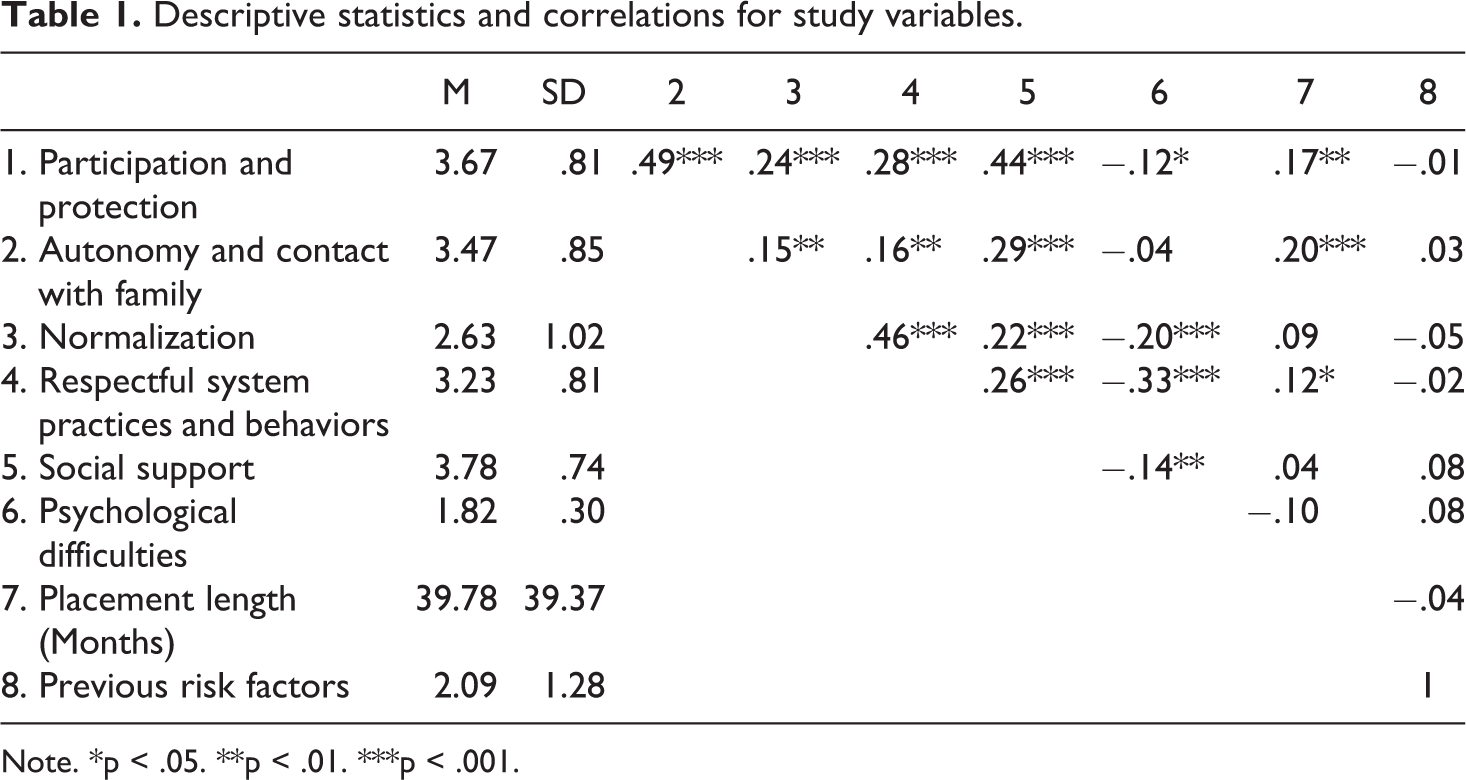
Statistically significant associations were found among rights’ perceptions (except autonomy and contact with family), social support and psychological difficulties. In line with what was initially hypothesized, greater rights’ perceptions were associated with lower psychological difficulties and greater support. Greater length of placement in the current residential setting was associated with greater rights’ perceptions (except normalization) (Table 1).
Descriptive statistics and correlations for study variables.
Note. *p < .05. **p < .01. ***p < .001.
The moderating role of social support from educators in residential care
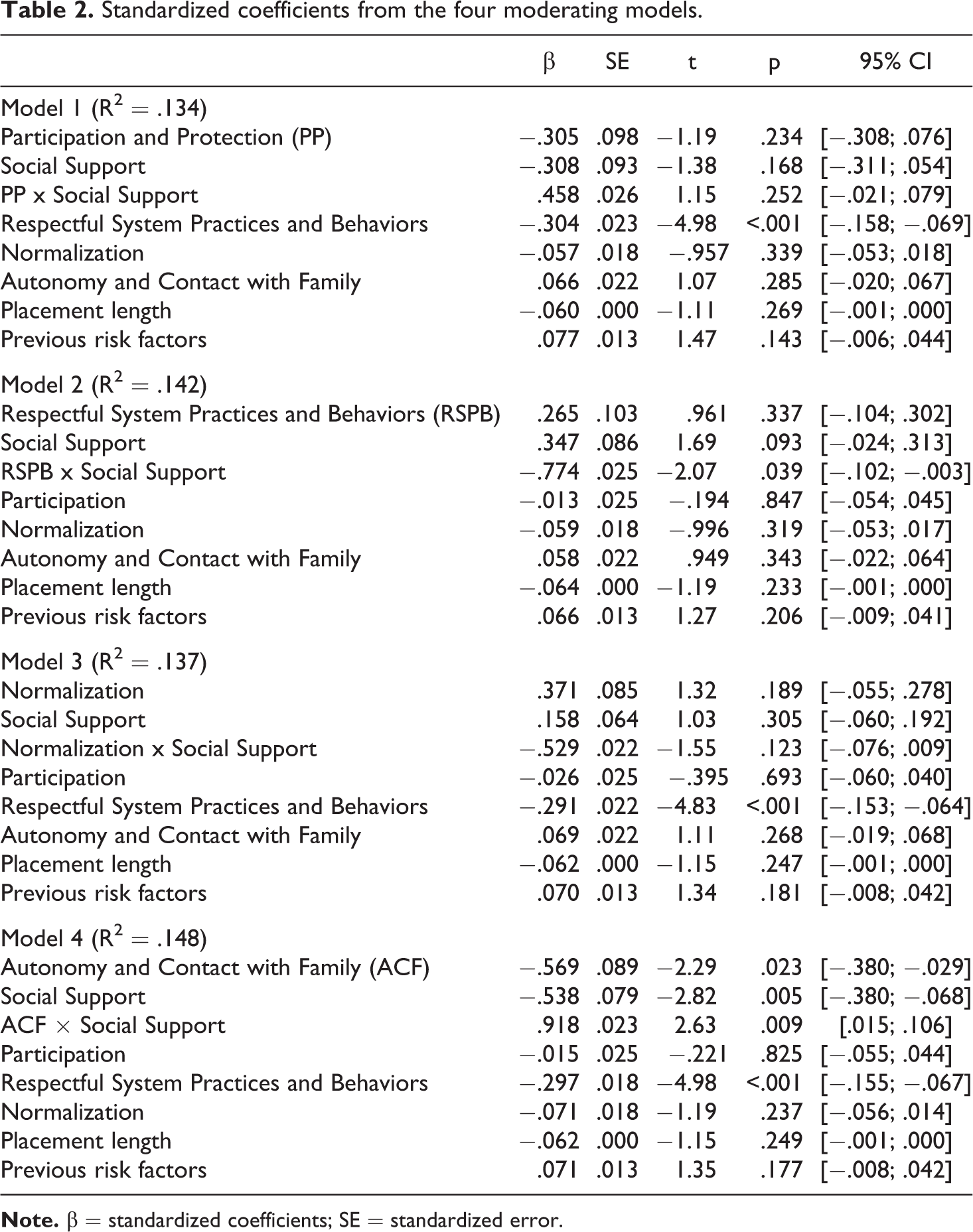
Results revealed direct effects of autonomy and contact with family (β = −.569, p = .023) and social support (β = −.538, p = .005) on psychological difficulties (Model 4, Table 2). Specifically, greater rights’ perceptions of autonomy and contact with family and of social support were associated with lower psychological difficulties. Furthermore, two significant moderating effects were found. Social support moderated the association between autonomy and contact with family and psychological difficulties (β = .918, p = .009). Specifically, the interaction effect of social support suggested that the effect of autonomy and contact with family on psychological difficulties was particularly noticeable when high social support was perceived. The plot (Figure 1) showed that the effect of autonomy and contact with family on psychological difficulties was not significant (the gray area includes the zero) for lower values of social support (the moderator) but association was positive and significant for higher values of social support. In other words, when young people perceive higher levels of support from educators, lower levels of psychological difficulties emerge for young people alongside lower perceptions of autonomy and contact with family (Figure 1).
Standardized coefficients from the four moderating models.
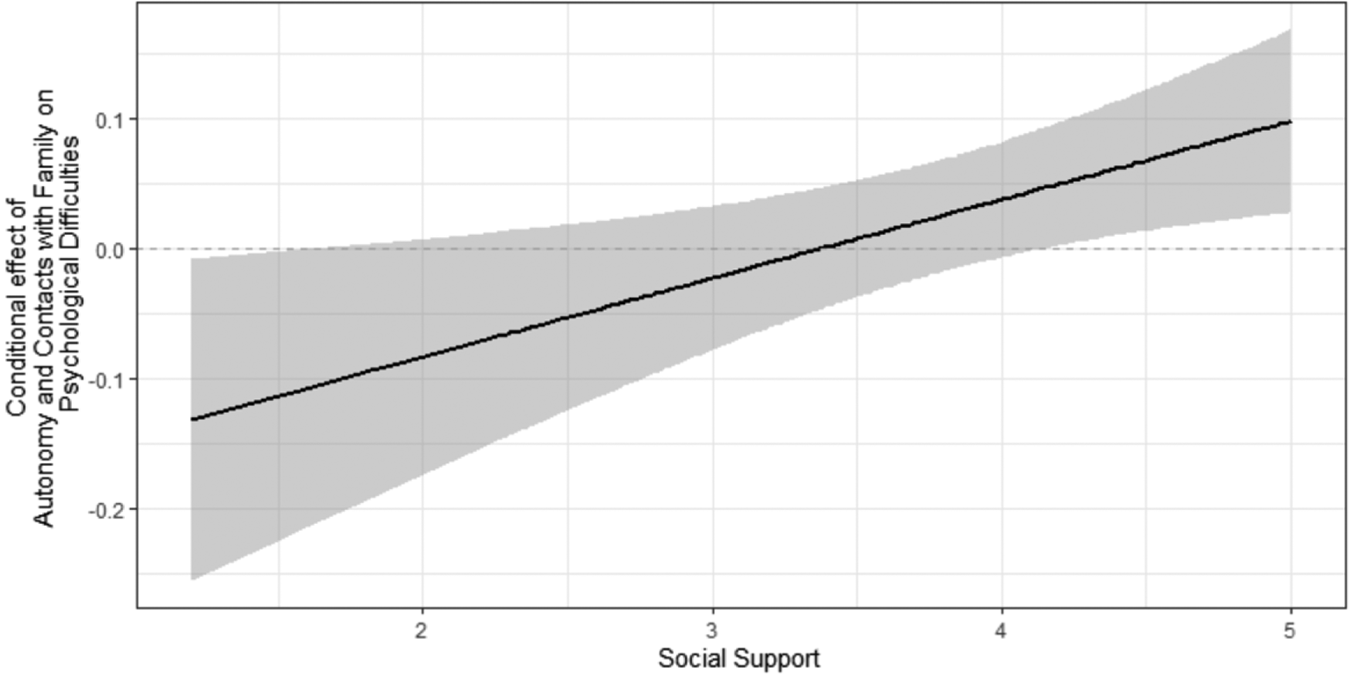
The moderating role of social support on the association between autonomy and contact with family and psychological difficulties.
Furthermore, results revealed that social support from educators moderated the association between respectful system practices and behaviors and psychological difficulties (β = −.774, p = .039). The plot (Figure 2) showed that the effect of respectful system practices and behaviors on psychological difficulties was not significant (the gray area includes the zero) for lower values of social support (the moderator) and was negative and significant for higher values of social support. In other words, higher perceptions of respectful system practices and behaviors were associated with lower levels of psychological difficulties only for youth who perceived higher support from educators (Figure 2).
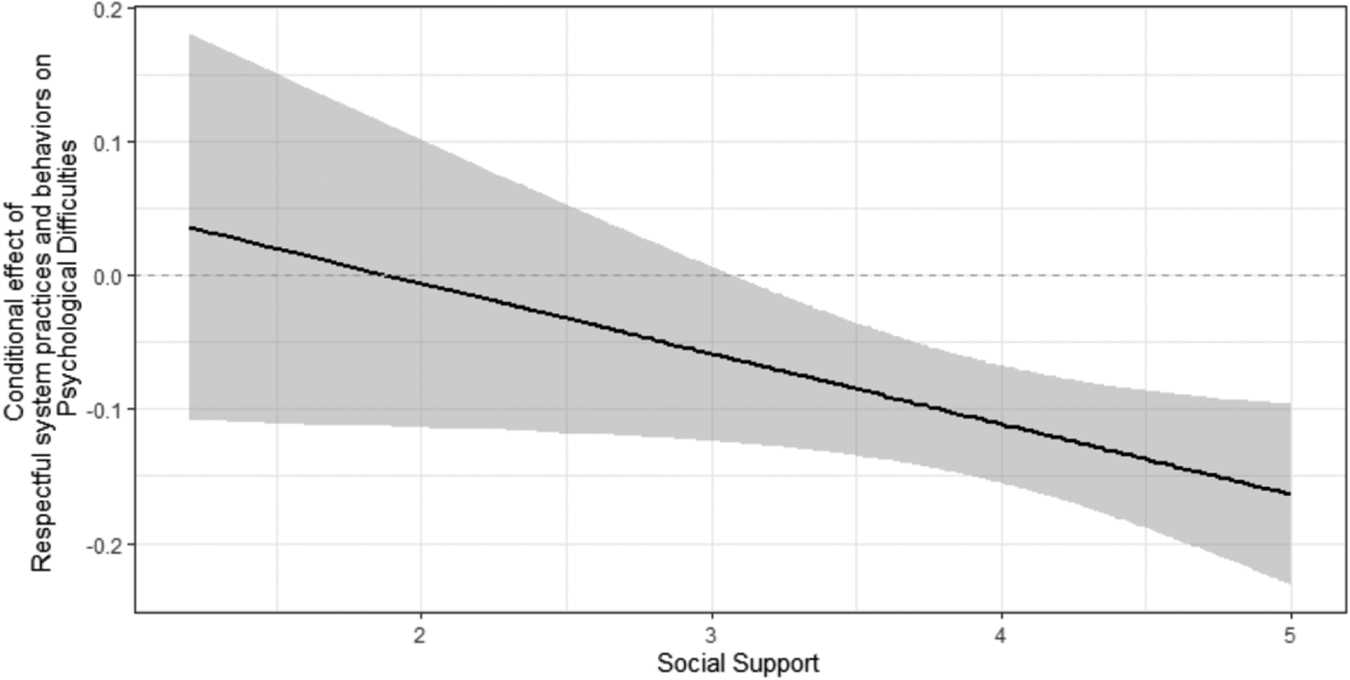
The moderating role of social support on the association between respectful system practices and behaviors and psychological difficulties.
Discussion
The present study aimed to explore the role of rights’ fulfillment and its association with young people’s psychological difficulties in RC, as well as the moderating role of social support from educators within that association. Findings suggest a negative association between young people’s perceptions of rights’ fulfillment and the psychological difficulties experienced. Specifically, greater perceptions of participation, normalization and respectful system practices were associated with lower psychological difficulties. These results underpin the assumption that safeguarding young people’s rights might foster their psychological adjustment (Doek, 2014). Furthermore, results on social support’s negative association with psychological difficulties and its moderating effect strengthen previous evidence on the vital role of supportive relationships in RC (Attar-Schwartz, 2013; Attar-Schwartz & Huri, 2019; Ferreira et al., 2020).
Overall, results suggest that social support can function either as an enhancer or a buffer, depending on the type of right considered. In particular, when young people perceive that their right of being respected in the child protection system is fulfilled and perceive high levels of support, they tend to show lower psychological difficulties (enhancement effect). That is, young people’s perception that they are respected and not discriminated against appears to have a positive direct effect on their adjustment, as they perceive themselves as valued, accepted and helped by educators in RC. Being loved, cared about, and accepted may prevent loneliness and emotional difficulties (Eldeleklioglu, 2006) given that these supportive relationships might model and foster emotional regulation (Raikes & Thompson, 2005). Moreover, supportive practices from the RC professionals may foster the young people’s individual sense that “they matter”, enhancing their self-esteem and preventing psychological difficulties (Thois, 2011).
When analyzing the relationship between autonomy and contact with family and psychological difficulties, a buffering effect of social support was identified. When young people perceive greater support and report fewer opportunities for autonomy and contact with their relatives, lower psychological difficulties were observed. As such, educators in RC may act as a compensatory factor that enables young people to function positively. This finding is consistent with past literature, which suggests that supportive professionals are important to youth’s successful outcomes in RC (Ferreira et al., 2020; Happer et al., 2006), strengthening the particular relevance of educators in RC as sources of help and trust support (Bravo & Del Valle, 2003). Despite the greater vulnerability of young people who do not have contact with their family and who have less opportunities for autonomy, when educators provide them with support, youth tend to show fewer psychological problems. For those without significant relationships with relatives, stable and secure relationships in RC may be even more important to their well-being (Del Valle et al., 2012; Petrie et al., 2006). In sum, rights’ fulfillment in RC was found to be negatively associated with young people’s psychological problems and social support was an additional condition shaping this association. Supportive relationships of educators in RC appears to be particularly relevant when analyzing rights related to youth’s integration in the out-of-home care system, specifically, contact with their family, respect by the professionals in the child protection system and non-discrimination for being in RC.
Important implications for practice, policy, and research are identified. Regarding the implications for practice, the results suggest that it is important to preserve the fundamental rights of young people in RC, as they are associated with better psychological outcomes. In particular, normalizing experiences, equal access to social and community resources and participation in decision-making processes should be guaranteed by the out-of-home system. Youth and their families should be respected by professionals in the child protection system, empowering these families and young people, and giving them a voice (Magalhães & Calheiros, 2020). In addition, results on the moderating role of social support point to the fact that a supportive climate in RC settings should be based on educators’ supportive practices. Affective and esteem behaviors may foster young people’s skills in dealing with emotional difficulties, given that valuing their positive achievements and revealing empathic concerns about their problems can positively contribute to lessening beliefs of failure or anxiety signs. Actively listening to young people’s worries and sharing comfort and warmth may reinforce their sense of self-worth, reducing psychological distress (Thois, 2011). Evaluative and informational support also provides accurate information that might be useful to help young people regulate and control their negative behaviors, reducing psychological difficulties. These important supportive behaviors underline the positive role of rights’ fulfillment, but they are also critical in counteracting the negative effects of the non-fulfillment of rights, such as not having the possibility to be in contact with relatives.
Considering the implications for policy, these results highlight some important issues regarding the promotion of children’s rights in RC and professionals’ recruitment, training and ongoing supervision of different skills to provide support in RC. On the one hand, it is important to ensure the implementation of young people’s rights in RC, either by evaluating the effective integration of policies and guidelines supporting their rights in the intervention models of the RC settings, or by supervising this implementation. On the other hand, recruitment processes should involve the clear definition of main educators’ skills, which go beyond basic care and must include the ability to establish supportive relationships with vulnerable young people. It is important to recruit and maintain educators who are highly engaged with young people’s well-being (Del Valle et al., 2012), and are able to provide affective relationships that may foster their adaptive and resilient outcomes. However, working with vulnerable young people in RC is exhausting and stressful (Del Valle et al., 2007). Thus, it is important to guarantee supportive services for the professionals in RC, allowing them to deal adaptively with these job demands. Regular supervision, training and support programs for RC professionals is important in assisting them to be available and supportive for young people.
Finally, regarding research implications, these results indicate that research on young people’s rights in RC association with their adjustment should continue to be explored, both by testing direct associations and by exploring conditions that affect this association. The results also suggest the importance of considering the multidimensionality of young people’s rights, since different moderating effects of social support arose depending on the type of right. Additionally, it is important to explore these associations using longitudinal designs and multiple informants (e.g., educators in RC).
Despite these significant implications, it is important to note some limitations. First, this study is based on self-reported measures, and for that reason, further evidence is required using dyadic approaches so social support can be measured from both young people and educators’ perspectives. Also, this is a cross-sectional study using a non-random sample, which calls for longitudinal evidence, as well as representative and random samples. Despite these limitations, results provide meaningful information about the protective role of educators in RC, highlighting that these professionals play a chief role in providing supportive care and help on issues related to young people’s lives and are a vital contribution to their well-functioning (Collins et al., 2010; Lemon et al., 2005).
Footnotes
Authors’ note
A preliminary draft of this manuscript was presented at the IX National Symposium of Research in Psychology [Simpósio Nacional de Investigação em Psicologia, 2016], Faro, Portugal.
Funding
The author(s) disclosed receipt of the following financial support for the research, authorship, and/or publication of this article: This work was funded by the Portuguese Foundation for Science and Technology (Grant Number SFRH/BD/77554/2011).

Open research statement
As part of IARR’s encouragement of open research practices, the author(s) have provided the following information: This research was not pre-registered. The data used in the research are available. The data can be obtained by emailing: