



Abstract
Past research has shown consistent benefits associated with and resulting from affectionate touch, though past research is based almost exclusively on highly satisfied and otherwise non-representative samples. The current research used two nationally representative samples to test correlates (Study 1) and anticipated consequences (Study 2) of affectionate touch in romantic relationships. In Study 1, greater kissing frequency was associated with greater individual well-being, and these links were especially pronounced in the most satisfying relationships. In Study 2, participants who were randomly assigned to imagine receiving affectionate touch from their spouse anticipated greater individual well-being (less stress and greater life satisfaction) and relational benefits (greater perceived partner affection, state security, cognitive interdependence, and relationship quality). These benefits were stronger among people with moderate or high relationship satisfaction but observed even for the subset of individuals (approximately one-third of the sample) who rated their relationships as “distressed.” Theoretical and practical implications are discussed.
Keywords
Affectionate touch (e.g., kissing, hugging, and holding hands) has wide-ranging and potent benefits for individuals and their close relationships (Jakubiak & Feeney, 2017). For example, receiving affectionate touch from a romantic partner predicts improved mood and increases in psychological well-being over time (Burleson et al., 2007; Debrot et al., 2013; Ditzen et al., 2008). Affectionate touch is also particularly effective to buffer stress and to facilitate recovery from stress (Coan et al., 2006, 2017; Ditzen et al., 2007; Graff et al., 2019; Holt-Lunstad et al., 2008; Jakubiak & Feeney, 2016a, 2019; Robinson et al., 2015). For example, an imagined affectionate touch intervention buffered physical and social-evaluative stress (Jakubiak & Feeney, 2016a); hand-holding mitigated self-reported, observer-coded, and physiological stress during couple conflict discussions (Conradi et al., 2020; Jakubiak & Feeney, 2019); and a 6-week intervention to increase kissing, a particularly intimate form of affectionate touch, reduced perceived stress (Floyd et al., 2009).
Affectionate touch also confers broad relationship benefits (Carmichael et al., 2021; Jakubiak & Feeney, 2018; Muise et al., 2014). For example, one recent diary study showed that receiving affectionate touch from one’s romantic partner predicted day-to-day increases in perceived partner responsiveness, closeness, relationship quality, and willingness to accommodate (Carmichael et al., 2021). Experimentally induced affectionate touch also enhances state security (i.e., feeling safe, cared for, and trusting) and cognitive interdependence (i.e., a sense of one-ness with one’s partner) (Jakubiak & Feeney, 2016b, 2019), promotes relationship intimacy in daily life (Durbin et al., 2021), and improves communication during conflict (Conradi et al., 2020; Jakubiak & Feeney, 2019).
Affectionate touch is theorized to produce these individual and relationship benefits because it is a perceived as a salient indication of the touch-provider’s genuine affection (love, care, and appreciation; Floyd, 2006) for the touch-recipient (Jakubiak & Feeney, 2017). According to affection exchange theory, humans have a foundational need for affection because affection enhances survival and reproduction (Floyd et al., 2017); thus, receiving affection in any form is immensely pleasurable and should enhance subjective well-being. Further, Jakubiak and Feeney (2017) argued that when people interpret touch as indicating affection, they feel secure (i.e., safe, cared for, and trusting) and connected to (i.e., one with) the touch-provider. These perceptions a) remind them that support is available, which promotes stress resilience and individual well-being, and b) allow them to deemphasize the risks of dependence to perceive their relationships positively and invest time and effort toward enhancing relationships.
Given these mechanisms, and in particular, the importance of inferring genuine affection to produce touch’s benefits, the consequences of affectionate touch may not be uniform. One critical factor that may moderate touch’s consequences is relationship satisfaction (also called relationship quality), a person’s subjective evaluation of their relationship, including how rewarding they view the relationship to be and how happy they are in the relationship (Fincham & Rogge, 2010; Funk & Rogge, 2007). Affectionate touch may be less beneficial in dissatisfying than satisfying relationships because people in strained relationships may interpret affectionate touch as controlling or contemptuous rather than as genuinely affectionate (as argued by Jakubiak & Feeney, 2017). Indeed, people in dissatisfying relationships make more negative attributions for partner behaviors in general (Fincham et al., 1987).
Alternatively, affectionate touch may be especially beneficial in dissatisfying relationships because dissatisfied couple-members are most in need of intervention (and have more room to benefit from any effective intervention; Umberson et al., 2006). Whereas affectionate touch may reinforce satisfied couples’ already positive perceptions for a slight benefit, affectionate touch may provide a major turning point for dissatisfied couples. People often remember the first expression of physical or verbal affection as a relationship turning point (King & Christensen, 1983); an affectionate touch in a dissatisfying relationship could similarly constitute an “olive branch” to restore connection and enhance individual well-being.
There is some indirect evidence that touch experiences covary with relationship satisfaction. People with higher relationship quality report greater desire for touch (especially intimate forms of touch), are more motivated to touch to approach positive outcomes, and are less motivated to touch to avoid negative outcomes than those with lower relationship quality (Jakubiak et al., 2021a, 2021b). Additionally, people with higher relationship quality report greater actual engagement in affectionate touch (Gulledge et al., 2003; Mackey et al., 2000).
There have also been attempts to assess whether affectionate touch’s impact differs based on relationship satisfaction, though nearly all of these attempts are limited by non-representative samples and include only moderately satisfied to extremely satisfied individuals. Triscoli et al. (2017) found that touch from one’s partner was especially pleasing and effective to decelerate heart rate for people with more (vs. less) satisfying relationships; however, the mean relationship satisfaction in the sample was 8.74 on a scale from 0 (“not at all satisfied”) to 10 (“really satisfied”), so even relatively less satisfying relationships were very satisfying. In another line of work, Coan et al. (2006) found that the effectiveness of partner hand-holding to mitigate neural threat reactivity was stronger for more (vs. less) satisfied wives. Only highly satisfied couples were eligible to participate so these results again only compare very satisfied and extremely satisfied people. Similarly, Jakubiak and Feeney (2019) found that affectionate touch reduced destructive conflict behaviors for people with low (but not high) relationship satisfaction, though they report that “even participants with relatively low (−1 SD) relationship quality rated their relationships above the scale midpoint” (Jakubiak & Feeney, 2019, p. 437). Each of these samples was also non-representative more broadly in that they were young, primarily in early-stage romantic relationships, predominantly white, and/or exclusively female.
Only one study (to our knowledge) intentionally sampled individuals in dissatisfying relationships and assessed consequences of affectionate touch: Johnson et al. (2013) recruited moderately dissatisfied couples and assessed the effectiveness of partner hand-holding to reduce wives’ neural threat reactivity prior to and following a therapeutic relationship intervention. After therapy, wives rated partner hand-holding less negatively, and partner hand-holding mitigated threat more strongly than prior to therapy, suggesting a stronger benefit of hand-holding as relationship quality improved. Although this study indicates that relationship quality moderates the impact of affectionate touch, this study assessed touch’s consequences during threat of shock (a situation that may not generalize to typical couple interactions), and it too was limited by a very small (24 couples), predominantly White, and exclusively female sample.
The predominance of satisfied individuals in past research is unsurprising, despite roughly one-third of people experiencing “distressed” (very dissatisfying) relationships (Whisman et al., 2009). People who volunteer for relationships research studies—especially dyadic studies in which both couple-members participate together—tend to be disproportionately satisfied with their relationships (Barton et al., 2020). However, this limitation presents a critical problem: the systematic exclusion of participants in distressed relationships limits our understanding of the consequences of affectionate touch for those who stand to benefit most from an effective intervention. The limited variability in age, relationship length, race, and sex also make is impossible to draw generalizable conclusions about the benefits associated with affectionate touch, even in satisfying relationships. Thus, although the extant research on affectionate touch suggests that touch may provide promise as an intervention to improve individual well-being and to promote desirable relationship outcomes, findings are limited by the restricted samples on which they have been based.
The current research addresses these limitations. In two pre-registered studies 1 designed to recruit nationally representative samples, I tested whether the links between affectionate touch and individual outcomes (Studies 1 and 2) and relationship outcomes (Study 2) are observed in more generalizable samples and whether these links are moderated by participants’ relationship satisfaction. I predicted that affectionate touch would predict better individual and relationship outcomes (H1) and that overall main effects of affectionate touch would be moderated by relationship satisfaction (H2). Given competing hypotheses (i.e., affectionate touch in distressed relationships could be attributed malevolently or could constitute a relational turning point), I did not make a priori predictions regarding the nature of this moderation. I also explored possible nonlinear interactions between affectionate touch and relationship satisfaction to test whether the consequences of touch are moderated by relationship satisfaction in a nonlinear manner (see Girme, 2020 for review).
Study 1 was a large-scale correlational study; I tested whether associations between affectionate touch (i.e., kissing frequency) and self-reported individual well-being outcomes are moderated by participants’ relationship satisfaction. Study 2 was an online population experiment in which participants were randomly assigned to visualize receiving affectionate touch or no affectionate touch from their spouses during either an imagined conflict or neutral discussion. I tested whether the effects of imagining affectionate touch on anticipated individual and relationship outcomes are moderated by participants’ relationship satisfaction.
Study 1
Method
All materials, data, codebooks, and analysis code for this study are available at https://osf.io/kzu4p/
Participants and procedure
Participants were originally recruited for the Midlife in the United States (MIDUS) Refresher sample (Ryff et al., 2017). This was a nationally representative sample of adults (N = 3577). Of this sample, 863 participants completed the MIDUS Refresher Biomarker Project (Weinstein et al., 2019) in which they completed psychosocial measures and critically, a measure of affectionate touch (i.e., kissing frequency). I analyzed data from participants who indicated that they were married or living with a partner (N = 560) because these participants were most likely to have engaged in kissing in the context of their relationship. A sensitivity power analysis indicated that we have 95% power to observe a very small effect (f 2 = .035, or a partial R2 of .034; Faul et al., 2007).
Participant characteristics (Study 1).
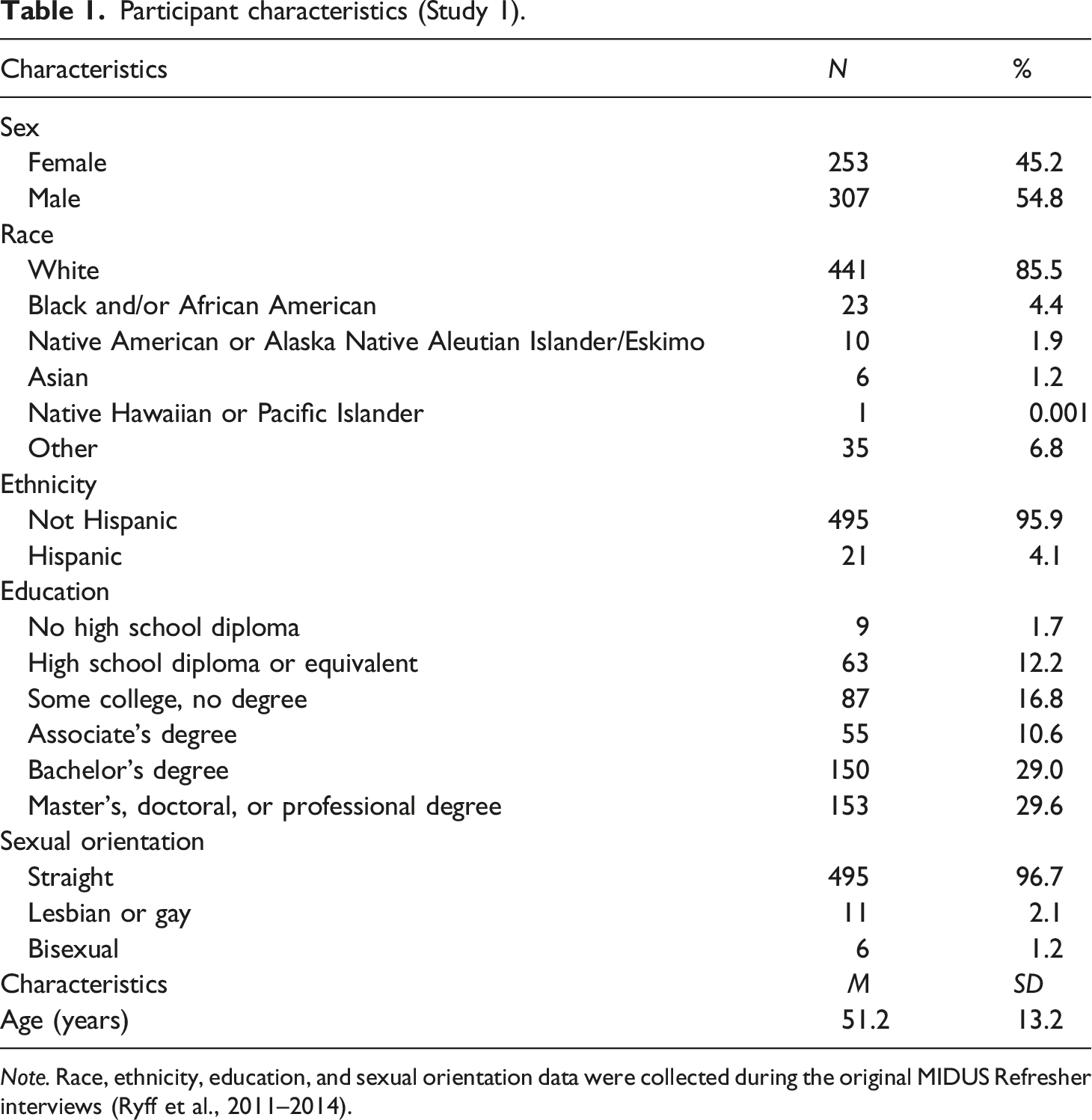
Note. Race, ethnicity, education, and sexual orientation data were collected during the original MIDUS Refresher interviews (Ryff et al., 2011–2014).
Measures
Affectionate touch
Participants completed a Positive Events Scale in which they rated the frequency of several positive events. One item, kissing frequency, was relevant to affectionate touch. Participants rated how often they spent time “kissing” over the past month on a scale with three response options: “Never” (endorsed by 10.6% of the sample), “1–6 times” (33.3%), and “7+ times” (56.1%). Although kissing is only one form of affectionate touch, kissing frequency correlates positively with other affectionate touch behaviors in other samples, suggesting that it may be appropriate to consider kissing a proxy for affectionate touch more broadly (see OSM).
Relationship satisfaction
As part of a support and strain measure (Whalen & Lachman, 2000), participants completed five items that directly or indirectly assessed their satisfaction with their romantic relationship (Schuster et al., 1990). 2 These items assessed caring for, understanding of, and appreciation of one’s partner as well as how frequently participants argue with and criticize their partner. Participants responded to each item on a scale with the following response options: 1(A lot), 2(Some), 3(A little), and 4(Not at all).
To calculate relationship satisfaction, I reverse-scored the items where appropriate so that higher responses indicate greater satisfaction and computed the mean. Given the limited response scale, there was substantial variability in relationship satisfaction (see Figure 1). For instance, participants who scored 1 SD below the mean on relationship satisfaction indicated that they care about, understand, and appreciate their partner “some.” Although that response is a “3” on the response scale, “some” indicates relatively low relationship satisfaction. On other validated relationship satisfaction measures, a “somewhat true” response to items such as “Our relationship is strong,” is a response below the scale midpoint (Funk & Rogge, 2007). Distribution of relationship satisfaction in the MIDUS sample (Study 1).
Individual well-being
Reliability estimates, descriptive statistics, and correlations between measures (Study 1).
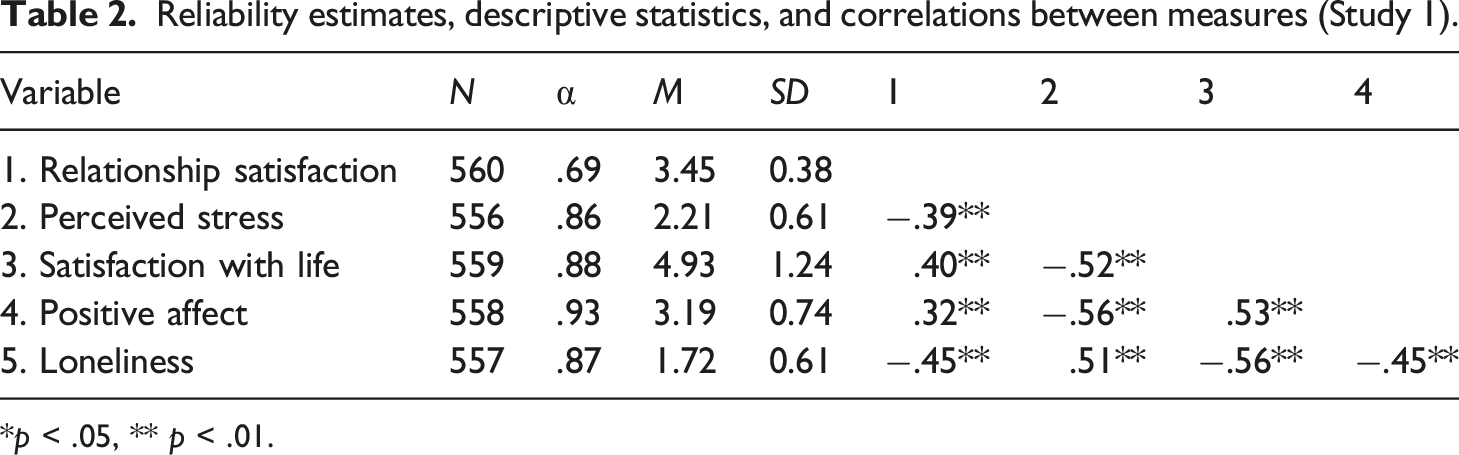
*p < .05, ** p < .01.
Participants rated their perceived stress over the past month using the Perceived Stress Scale (Cohen et al., 1983). They rated 10 items (e.g., “In the last month, how often have you felt nervous and stressed?”) from 1(Never) to 5(Very often). Participants also completed five items to assess their life satisfaction (a measure of psychological well-being) using the Satisfaction with Life Scale (Pavot & Diener, 1993; e.g., “In most ways my life is close to my ideal”). All items were rated from 1(Strongly disagree) to 7(Strongly agree). Participants also completed a 14-item subscale of the Mood and Symptom Questionnaire (Clark & Watson, 1991) in which they rated the extent to which they experienced positive affect (e.g., felt cheerful, optimistic, and hopeful) during the last week from 1(Not at all) to 5(Extremely). Finally, participants rated their loneliness by completing a 7-item version of the UCLA Loneliness Scale (Russell, 1996). They rated items like “I feel isolated from others” from 1(Never) to 4(Often).
Data analytic strategy
I used a series of multiple regression models in R to test whether kissing frequency (represented by two dummy codes), relationship satisfaction (standardized), and their interaction predicted each outcome. Missing data were handled with pairwise deletion. 3 Kissing frequency was treated as a categorical variable due to the limited response options. Outcome variables were standardized so that regression coefficients serve as a measure of effect size, comparable to Cohen’s d. I first tested kissing frequency alone to avoid controlling for relationship satisfaction, a variable that is strongly associated with kissing frequency. 4 Then, I tested moderation hypotheses in models that contained kissing frequency, relationship satisfaction, and their interaction. I probed significant interactions by testing simple effects of kissing frequency at relatively low (−1 SD) and relatively high (+1 SD) relationship satisfaction.
Results and discussion
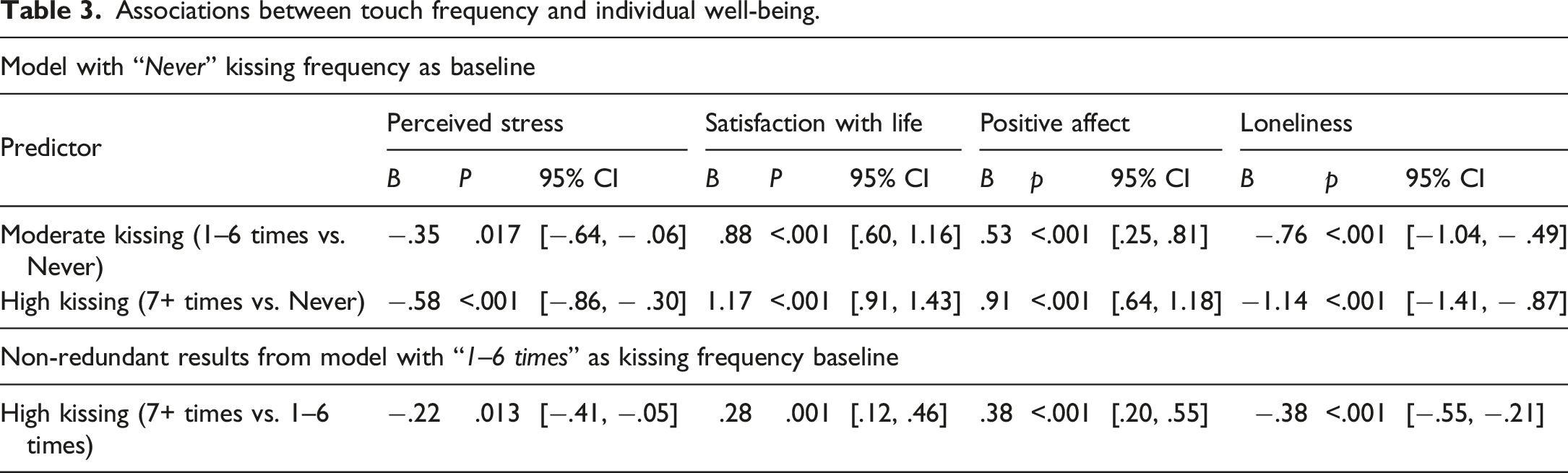
Associations between touch frequency and individual well-being.
Predicting perceived stress, satisfaction with life, positive affect, and loneliness from kissing frequency and relationship satisfaction.
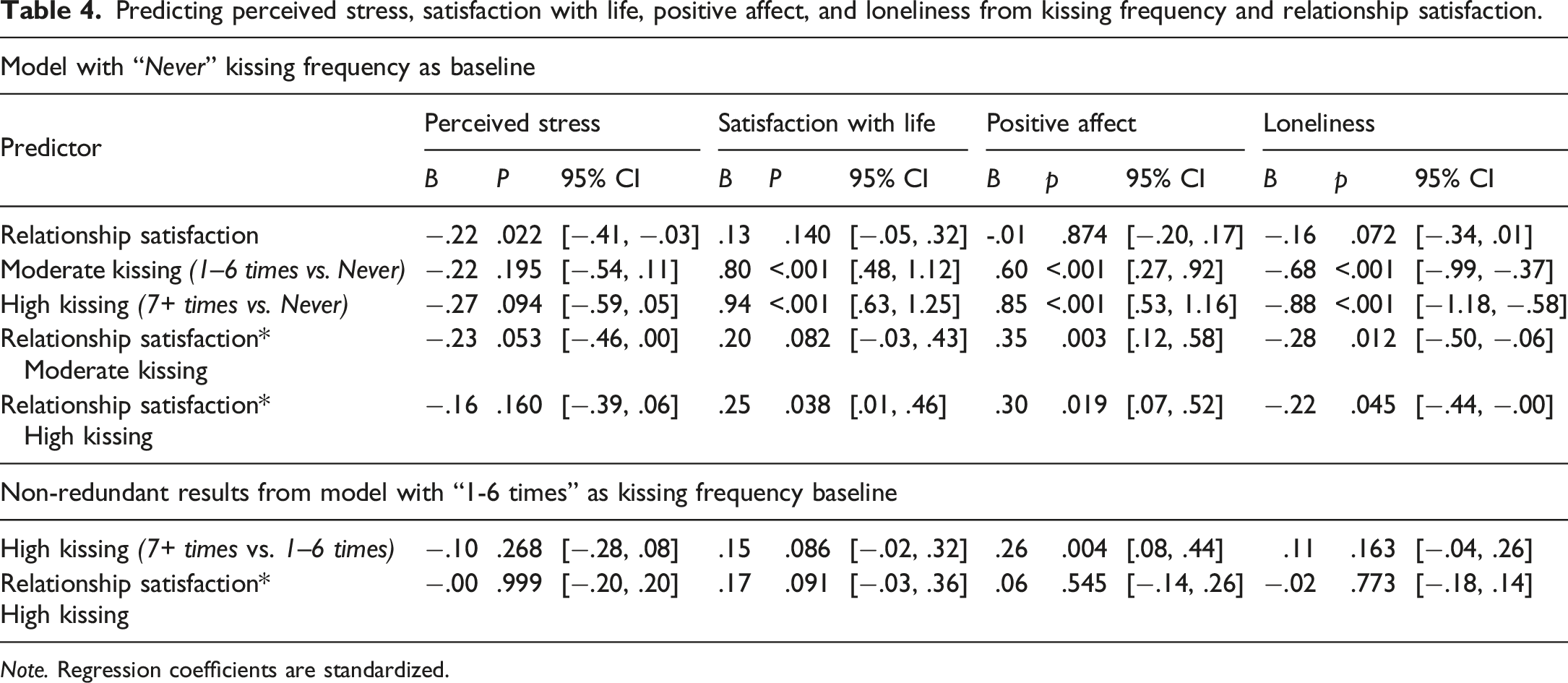
Note. Regression coefficients are standardized.
Simple effects tests (Study 1).
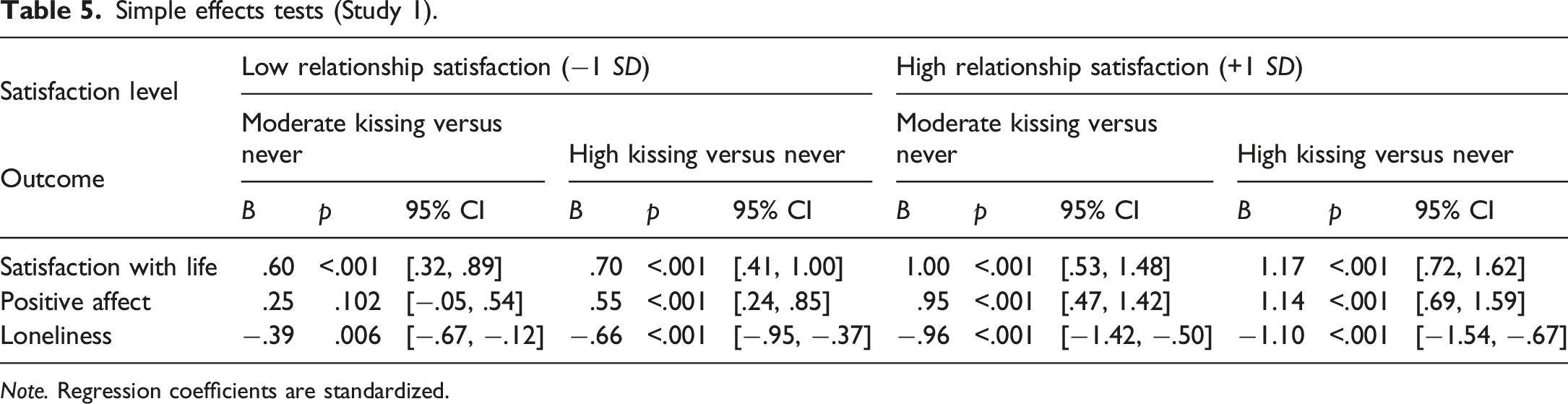
Note. Regression coefficients are standardized.
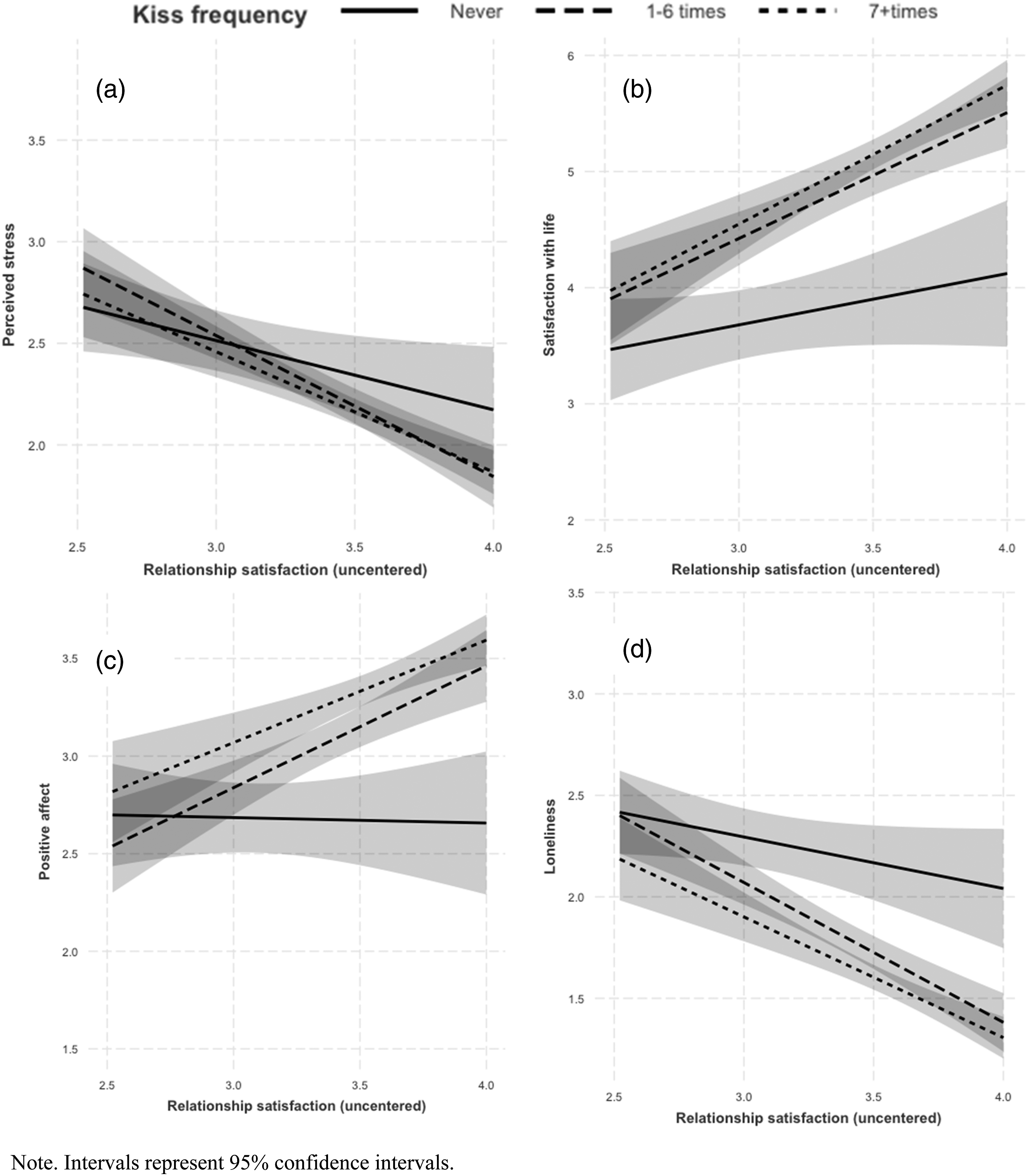
Interactions between kissing frequency and relationship satisfaction to predict A) perceived stress, B) satisfaction with life, C) positive affect, and D) loneliness.
Overall, these results in a large sample of men and women at various stages of adulthood are largely consistent with the hypothesis that people who engage in affectionate touch in their relationships experience greater individual well-being. The size of these associations varied across outcomes, with affectionate touch more closely linked to life satisfaction, loneliness, and positive affect than perceived stress. Additionally, these results suggest that the individual benefits associated with affectionate touch are more pronounced among people with greater relationship satisfaction though generally still present among people with lower satisfaction.
Although these findings offer initial evidence consistent with the idea that affectionate touch provides greater benefits in more satisfying than less satisfying relationships, these cross-sectional findings cannot support this causal interpretation. It is possible that a confounding variable may co-occur with kissing frequency or that these results may be due to reverse causation (i.e., well-being predicts kissing more strongly in more satisfying relationships). These findings are also limited by a coarse measure of relationship satisfaction that makes it difficult to identify people who meet the criteria for “distressed” relationships. Study 2 was designed to address these limitations.
Study 2
Study 2 was an online general population experiment that included a nationally representative sample of married adults. We selectively recruited married people because dissatisfaction is more common in marital relationships due to normative decreases in satisfaction over time and obstacles that prevent quick termination of dissatisfying marriages (Van Laningham et al., 2001). Participants reported their relationship satisfaction and completed a guided visualization in which they were randomly assigned to imagine receiving affectionate touch (vs. no touch) during a conflict discussion or a neutral discussion with their spouse. After the visualization, participants reported how they would be thinking and feeling if the interaction they imagined had just taken place. I assessed anticipated individual well-being (to replicate Study 1) as well as anticipated relationship outcomes (to extend Study 1). This experimental design employing imagined manipulations allows us to assess consequences of affectionate touch in a diverse sample because we did not need to recruit both partners. Recruiting both partners is a design feature that has been shown to systematically under-represent people with dissatisfying relationships (Barton et al., 2020).
Method
All materials, data, codebooks, and analysis code are available at https://osf.io/mkcdu/.
Participants
Participant characteristics (Study 2).

Procedure and measures
Reliability estimates, descriptive statistics, and correlations between measures (Study 2).
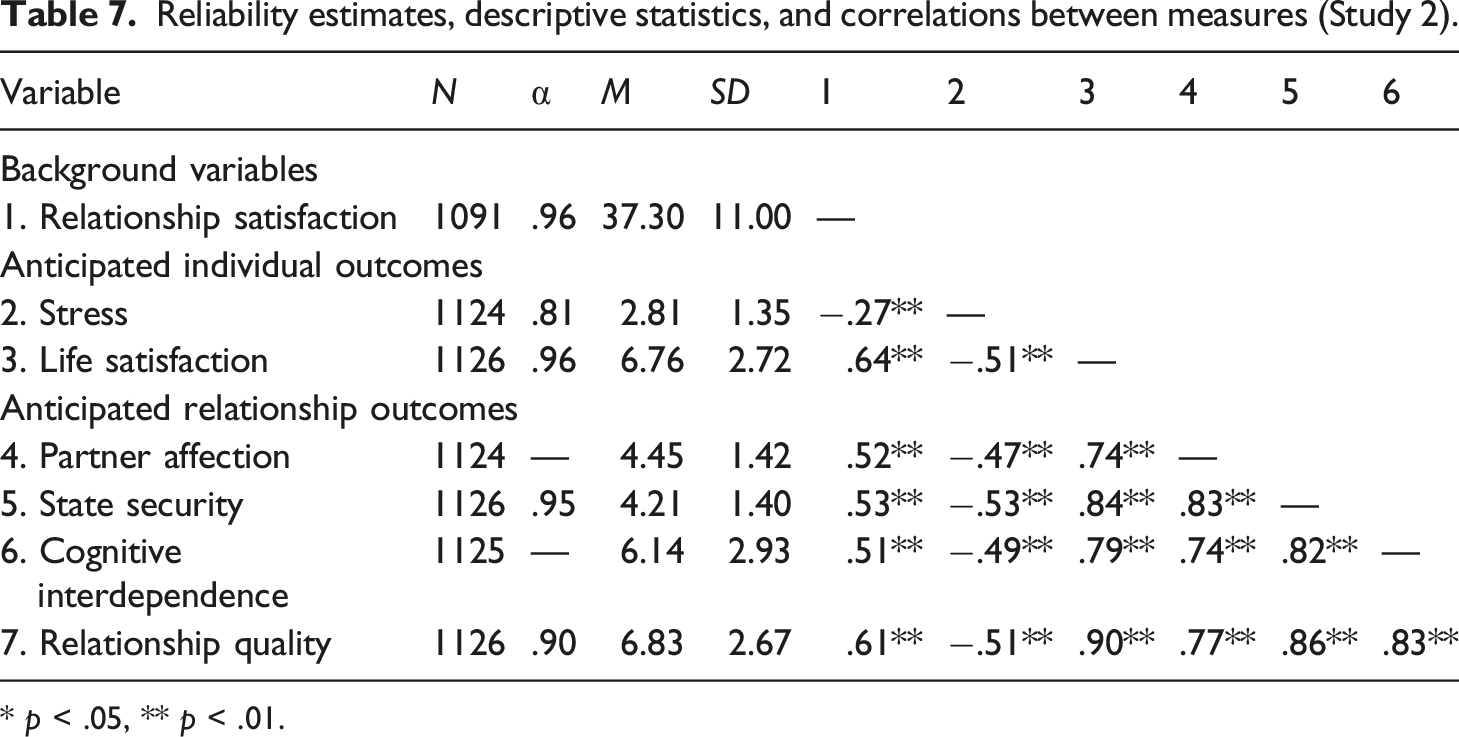
* p < .05, ** p < .01.
Relationship satisfaction
First, participants completed a modified version of the Couples Satisfaction Index (CSI; Funk and Rogge, 2007). The first four items were the 4-item version of the scale, which has established cutoffs to identify distressed relationships. Participants also completed six additional items from the longer version of the scale to allow for greater response variability.
6
The CSI is correlated with other prominent measures of relationship satisfaction but is more precise (Funk & Rogge, 2007; Snyder et al., 2009). The first item was rated on a scale from 0 to 6, and all subsequent items were rated on a scale from 0 to 5 (higher scores indicate greater relationship satisfaction). In this sample, participants reported substantial variability in relationship satisfaction (see Figure 3). Roughly one-third (32.4%, N = 365) of the sample reported levels of satisfaction that were low enough to be considered “distressed” based on established cutoffs for the 4-item CSI (Funk & Rogge, 2007). I computed the sum of all 10 CSI items to calculate total relationship satisfaction.
7
Distribution of relationship satisfaction in the AmeriSpeak sample (Study 2).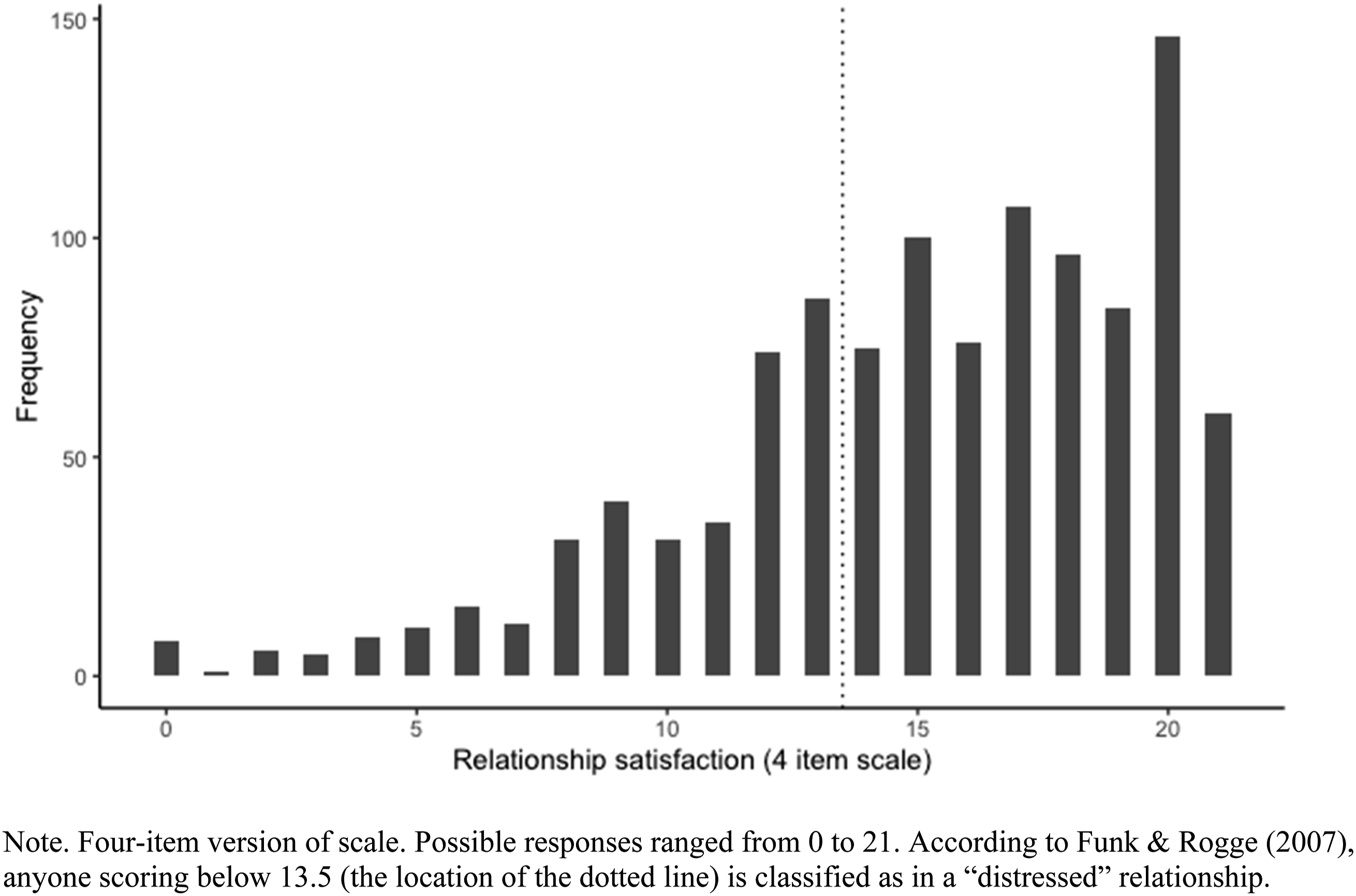
Manipulations of affectionate touch and context
Next, participants were randomly assigned to one of four brief, immersive visualization conditions, based on a 2(touch condition: touch vs. control) × 2(context: conflict discussion vs. neutral discussion) experimental design.
Conflict context
In the conflict context conditions, participants started by imagining that they were sitting next to their spouse on the sofa and discussing an area of ongoing disagreement in their relationship. Participants then identified and wrote down a topic that they often disagree and argue about with their spouse. Next, participants either imagined that their spouse provided an affectionate touch or not. In the touch condition, participants read: “Now, imagine that as you are talking, your spouse reaches out and touches you on the arm, strokes your arm gently, and then puts his/her arm around you. Your spouse leaves his/her arm around you as you are describing your point of view on this disagreement.”
In the control condition, participants instead read: “Now, imagine that as you are talking, your spouse leans back, crosses his/her legs, and listens quietly. Your spouse continues sitting quietly as you are describing your point of view on this disagreement.”
In both conditions, participants then read a brief relationship threat, consistent with past research, to prevent ceiling effects (Jakubiak & Feeney, 2019): “After a few minutes, your spouse interrupts you and says, ‘Yeah, I hear you. But I still don’t really know what you want from me. I’m really frustrated, and I’m not sure how to resolve this.’”
Finally, participants were instructed to take a moment visualizing this interaction and imagine what it would be like to experience it at home with their spouse.
Neutral context
In the neutral context conditions, participants instead started by imagining that they were sitting next to their spouse on the sofa talking casually about their day, and participants identified something they did or experienced today that they might share with their spouse. In the touch condition, participants then read: “Now, imagine that as you are talking, your spouse reaches out and touches you on the arm, strokes your arm gently, and then puts his/her arm around you. Your spouse leaves his/her arm around you as you are describing your day.”
In the control condition, participants instead read: Now, imagine that as you are talking, your spouse leans back, crosses his/her legs, and listens quietly. Your spouse continues sitting quietly as you are describing your day.
In both conditions, participants read a brief relationship threat to prevent ceiling effects: “After a few minutes, your spouse interrupts and says, ‘That’s nothing compared to what happened to me today’ and then starts telling you about a related experience that he/she had that day.”
As in the conflict context, participants spent a moment visualizing this interaction and imagining what it would be like to experience it at home with their spouse.
Dependent measures
Next, participants completed several brief measures (in the order they are described below). Each question assessed participants’ anticipated state perceptions if the interaction they imagined occurred. All outcomes were calculated as the mean across items; means were not calculated for participants missing data on the measure (see Table 7).
To assess anticipated partner affection, participants rated the extent to which they would be thinking that their partner has genuine affection for them (truly cares for them) from 1(not at all) to 6(very much). Next, participants rated the extent to which they would be feeling eight specific emotions, five of which assessed anticipated state security using a shortened version of the State Security Scale items (e.g., safe, loved; Luke et al., 2012), and three of which assessed anticipated stress (e.g., anxious) from 1(not at all) to 6(very much). I assessed anticipated cognitive interdependence by having participants rate the extent to which they would be feeling “a sense of ‘oneness’ or connection” with their spouse from 1(not at all) to 10 (extremely). Participants then rated their anticipated relationship quality by responding to two items that assessed the extent to which they would be feeling “happy in” their relationship and “optimistic about the future of” their relationship from 1(not at all) to 10(extremely). Finally, participants completed two questions from the Satisfaction with Life Scale (Diener et al., 1985) to assess their anticipated life satisfaction from 1(not at all true) to 10(extremely).8
Data analytic strategy
I conducted a series of multiple regression models in R in which touch condition (control = −.5, touch = .5), context (neutral = −.5, conflict = .5), and relationship satisfaction (standardized) were entered along with all possible interactions. Outcome variables were also standardized so regression coefficients are comparable to Cohen’s d. Simple effects tests were used to decompose significant interactions at low (−1 SD) and high (+1 SD) relationship satisfaction. Finally, I conducted exploratory analyses to test for nonlinear (i.e., quadratic) interactions between relationship satisfaction and touch to predict anticipated outcomes. The cell means and standard deviations for each outcome in this experiment are provided in the OSM.
Results and discussion
Anticipated individual outcomes
Results for anticipated individual outcomes.
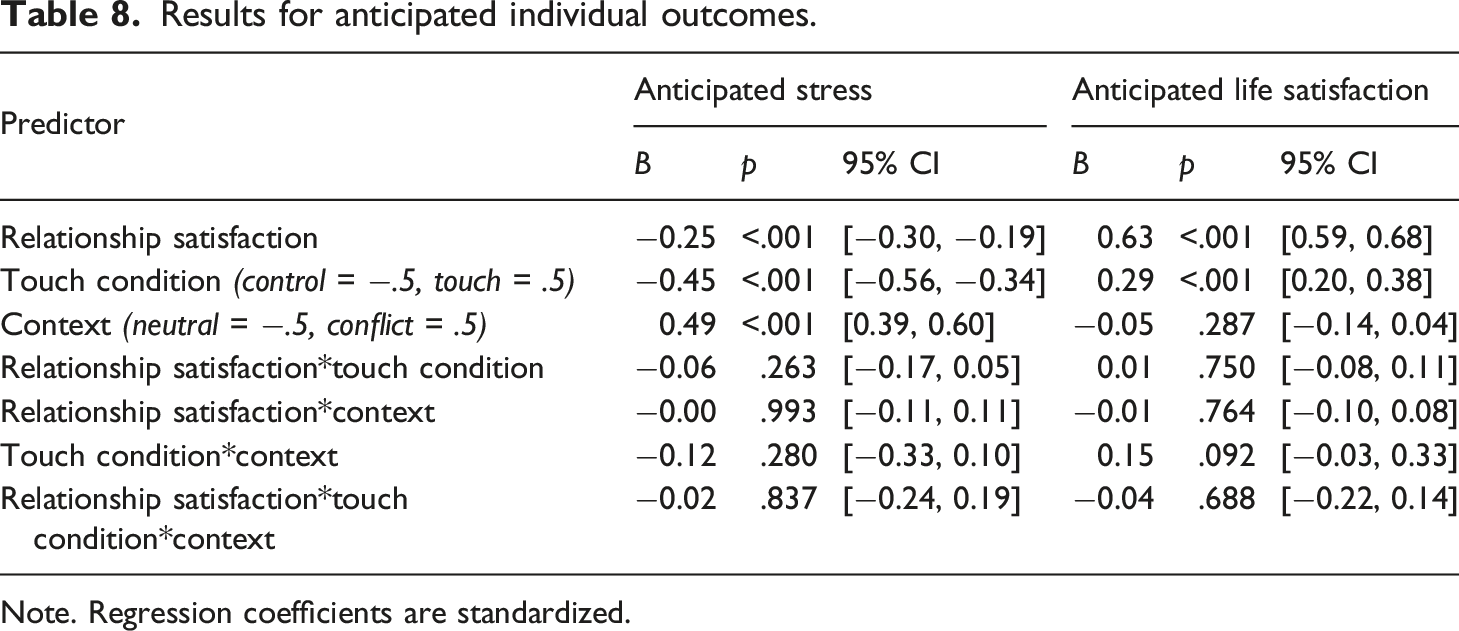
Note. Regression coefficients are standardized.
Exploratory nonlinear analyses revealed an interaction between touch condition and relationship satisfaction (linear effect) to predict anticipated stress (B = −.57, 95% CI [-1.10, −.04], p < .001) as well as a marginal interaction between touch condition and relationship satisfaction (curvilinear effect) to predict anticipated stress (B = .52, 95% CI [−.01, 1.05], p = .053). As shown in Figure 4, the contrast between the touch condition and control condition was stronger for people with moderate relationship satisfaction than for people with low or high relationship satisfaction. Simple effects tests revealed lower stress in the touch condition than the control condition at low relationship satisfaction (relationship satisfaction score = 26.3, B = −.48, 95% CI [−.66, −.31], p < .001), average relationship satisfaction (relationship satisfaction score = 37.3, B = −.45, 95% CI [−.55, −.34], p < .001), and at high relationship satisfaction (relationship satisfaction score = 48.3, B = −.41, 95% CI [−.59, −.23, p < .001). There were no similar nonlinear effects predicting anticipated life satisfaction (ps > .220). Nonlinear interaction between relationship satisfaction and condition to predict anticipated stress.
Anticipated relationship outcomes
Results for anticipated relational outcomes.
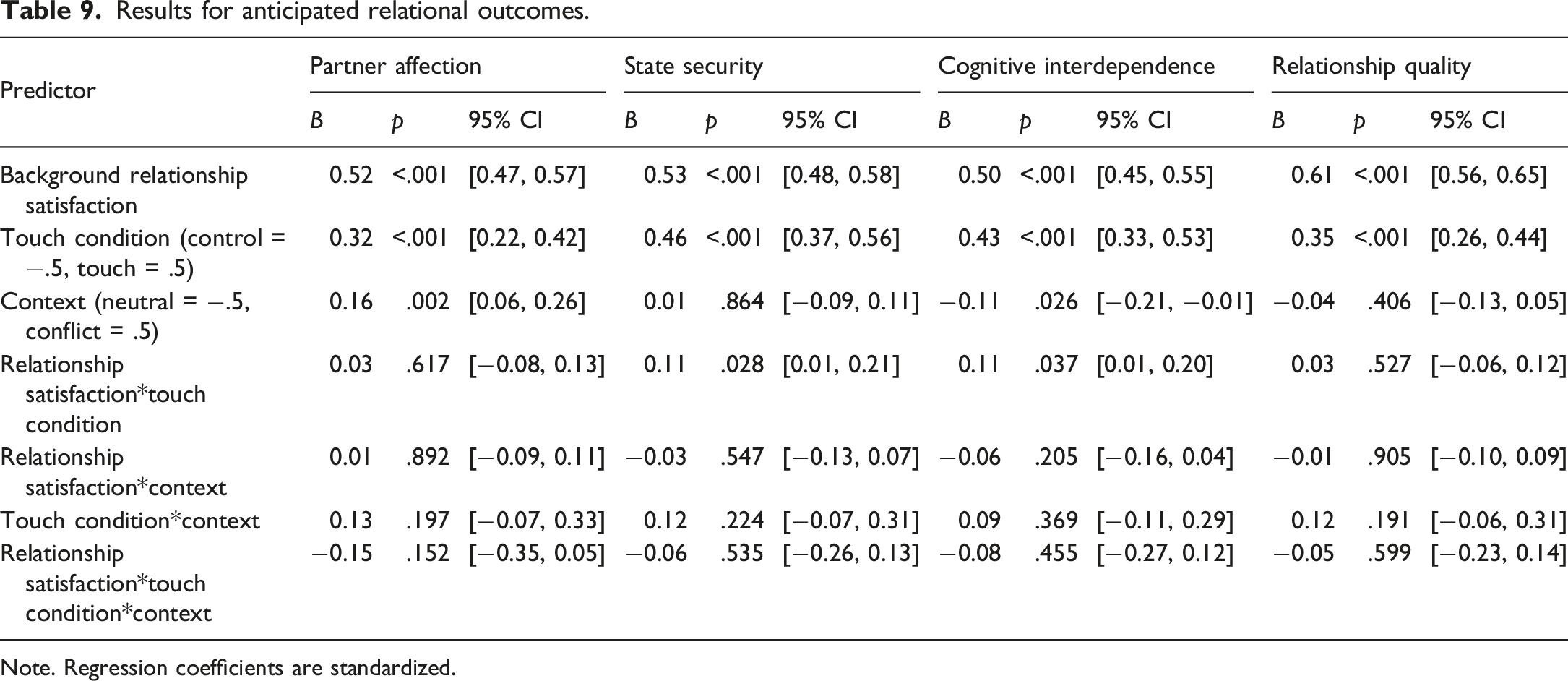
Note. Regression coefficients are standardized.
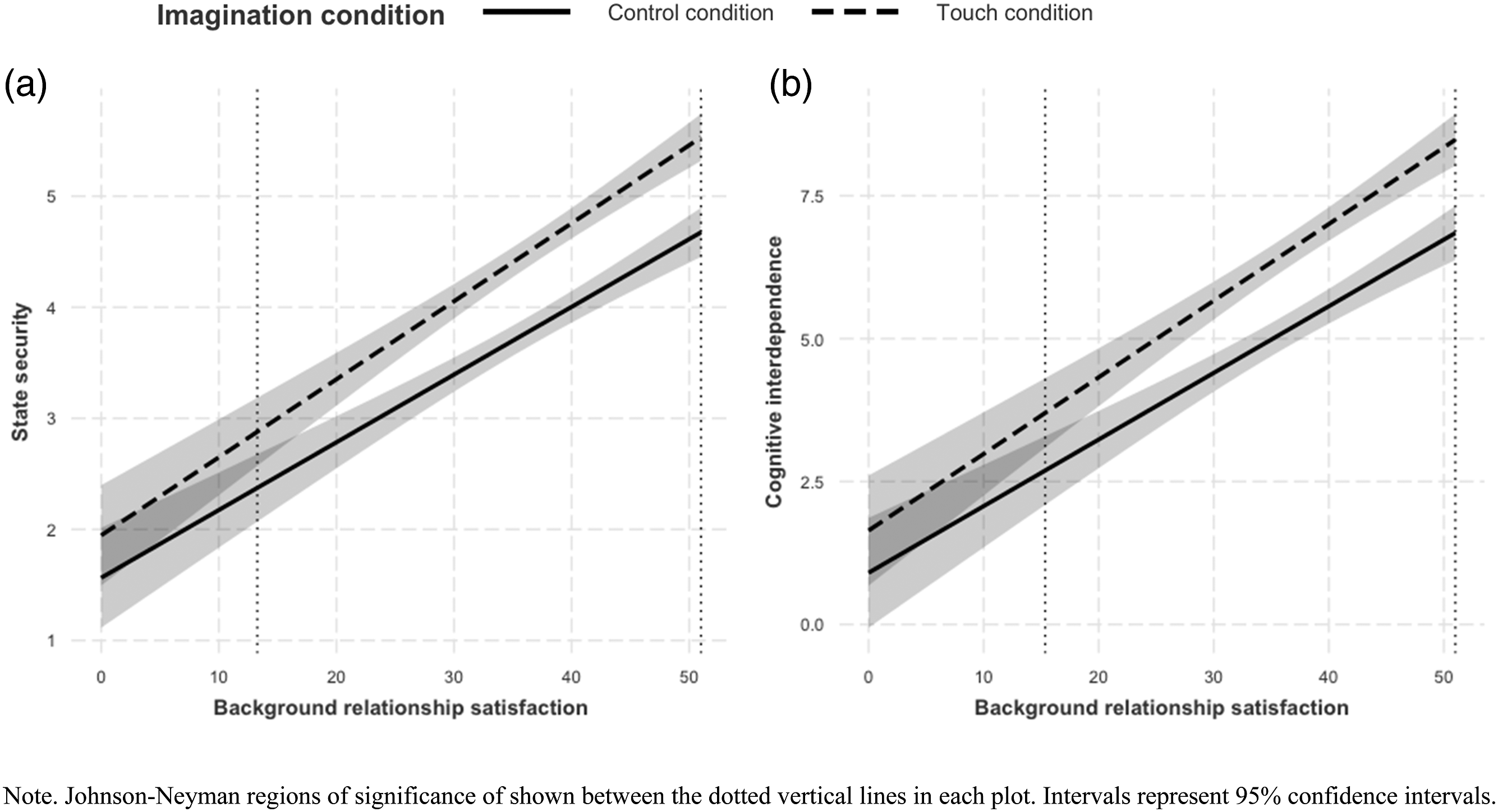
Interactions between imagination condition and relationship satisfaction to predict A) state security and B) cognitive interdependence. Note. Johnson-Neyman regions of significance of shown between the dotted vertical lines in each plot. Intervals represent 95% confidence intervals.
Simple effect tests comparing the touch versus control conditions at high and low relationship satisfaction (Study 2).
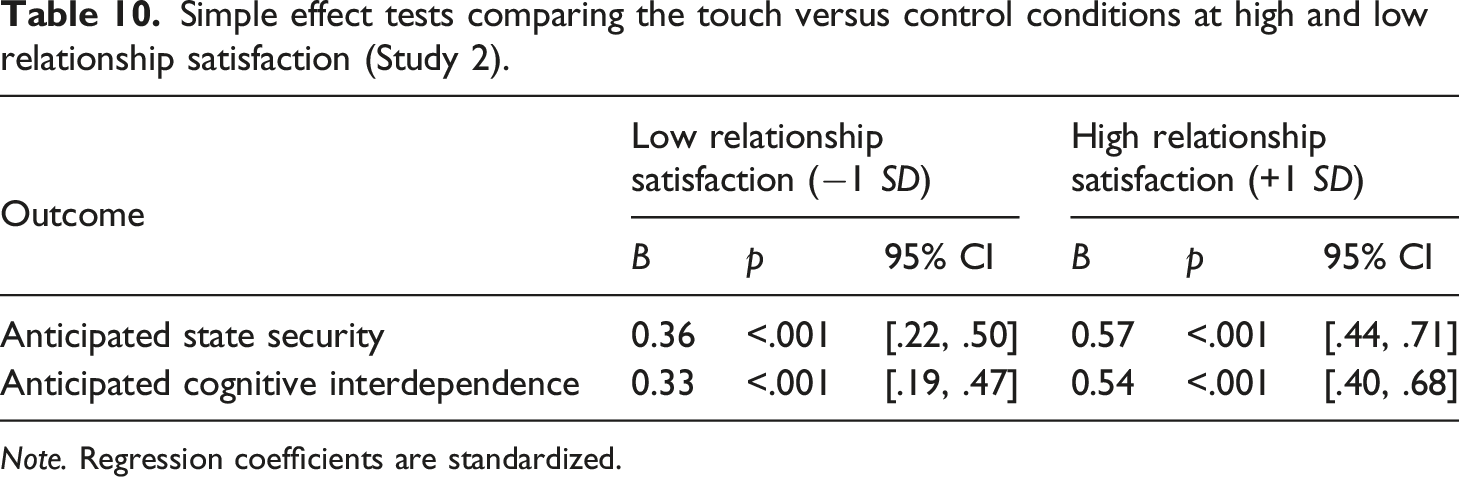
Note. Regression coefficients are standardized.
Although the effects of touch condition on anticipated partner affection and relationship quality were not moderated by relationship satisfaction, greater satisfaction did independently predict greater anticipated partner affection and relationship quality (see Table 9). There was also an effect of context on anticipated partner affection and cognitive interdependence such that participants who imagined discussing a disagreement with their partners anticipated perceiving greater genuine partner affection but less “oneness” with their partners.
Exploratory nonlinear analyses revealed an interaction between touch condition and relationship satisfaction (linear effect) to predict anticipated partner affection (B = .56, 95% CI [.05, 1.07], p = .034) as well as a significant interaction between touch condition and relationship satisfaction (curvilinear effect) to predict anticipated partner affection (B = −.53, 95% CI [−1.03, −.02], p = .040). As shown in Figure 6, the contrast between the touch and control conditions was stronger for people with moderate relationship satisfaction than for people with low or high relationship satisfaction. Simple effects tests revealed higher anticipated partner affection in the touch condition than the control condition at low relationship satisfaction (score = 26.3, B = .37, 95% CI [.21, .54], p < .001), average relationship satisfaction (score = 37.3, B = .32, 95% CI [.22, .42], p < .001), and at high relationship satisfaction (score = 48.3, B = .27, 95% CI [.10, .43], p = .002). There were no similar nonlinear effects predicting state security, cognitive interdependence, or relationship quality. Nonlinear interaction between relationship satisfaction and condition to predict partner affection. Note. Intervals represent 95% confidence intervals.
Distressed sub-sample
As a more stringent test of whether affectionate touch improves anticipated individual and relationship outcomes in dissatisfying relationships, I assessed condition differences in the subset of the sample who met the established “distressed” cutoff, based on the 4-item version of the scale (N = 365; Funk & Rogge, 2007). In this sub-sample, those who imagined receiving touch anticipated greater individual well-being (less stress and greater life satisfaction) and anticipated greater relationship benefits (greater partner affection, state security, cognitive interdependence, and relationship quality) than participants in the control condition (ps < .01; see OSM).
General discussion
Affectionate touch purportedly offers individual and relational benefits; yet, its consequences have primarily been assessed in samples with uniformly high relationship satisfaction and limited demographic variability. The current research instead assessed links between affectionate touch and individual and relationship outcomes in two nationally representative samples, diverse in terms of relationship satisfaction, age, sex, and education. Study 2 was particularly diverse with regard to relationship satisfaction in that approximately one-third of the sample could be classified as “distressed.” Results demonstrated that affectionate touch (kissing frequency) is associated with greater individual well-being (Study 1), and distressed and satisfied participants alike anticipated positive individual and relationship outcomes when they were assigned to imagine receiving affectionate touch from their spouse (Study 2). These findings are consistent with the idea that humans broadly (not just those who are satisfied in their relationships) have a foundational need for affection (Floyd et al., 2017).
In additional to these main effects, there was some evidence that affectionate touch’s benefits depend on relationship satisfaction. In Study 1, the associations between kissing frequency and individual well-being (i.e., satisfaction with life, positive affect, and loneliness) were stronger for people with higher relationship satisfaction than those with lower satisfaction. In Study 2, imagining affectionate touch receipt increased anticipated state security and cognitive interdependence more strongly for more satisfied (compared to less satisfied) individuals, and curvilinear models revealed maximal benefits of affectionate touch to mitigate stress and communicate genuine affection for people with moderately high relationship satisfaction. This pattern of results is consistent with the theory that more satisfied individuals make more favorable attributions for affectionate touch (and accordingly experience greater downstream benefits) than people with lower relationship satisfaction (Jakubiak & Feeney, 2017). People with moderately high satisfaction may especially benefit because they have less defined and stable perceptions of their relationships and are therefore receptive to new relational information.
As always, several limitations suggest opportunities for future research. First, the experimental results pertain to imagined rather than actual touch. Recruiting only one member of each dyad enabled us to assess participants in more distressed relationships (Barton et al., 2020), but this limitation leaves open the possibility that individuals may experience affectionate touch differently than they anticipate. Despite this limitation, there is reason to suspect that anticipated outcomes are representative of actual experiences. People in relationships have a great deal of experience with affectionate touch (e.g., Sorokowska et al., 2021), so they will likely be able to anticipate their experiences with some degree of accuracy. Additionally, anticipated reactions can contribute to actual experiences through self-fulfilling prophesies (e.g., Miller & Turnbull, 1986); if people expect to benefit from affectionate touch, they may interpret and respond to touch in ways that brings about the anticipated benefits. A second limitation is that these results may not generalize to non-US or non-Western samples. Past research has shown notable cross-cultural consistency in relational touch (Suvilehto et al., 2019), but the consequences of affectionate touch in dissatisfying relationships could potentially differ cross-culturally. Finally, we have no information about participants’ gender identities (only sex) or disability status; future research should collect these potentially informative participants characteristics.
Despite these limitations, the current research adds to a growing body of research on affectionate touch and has theoretical and practical implications. Theoretically, these results support Jakubiak and Feeney’s (2017) proposition that affectionate touch’s consequences vary based on the relational context. However, findings show that affectionate touch is consistently beneficial for people in satisfying and distressed relationship; it is the degree of touch’s benefit that varies (see also Wagner et al., 2020). Practically then, these findings suggest the potential for affectionate touch to be used as an intervention to prevent declines in relationship satisfaction and to repair dissatisfaction (e.g., Bradbury & Bodenmann, 2021). Distressed couples—who are most in need of interventions to promote individual and relationship well-being (Umberson et al., 2006)—may indeed benefit from affectionate touch, even if their benefit is to a slightly lesser degree. The effect sizes observed in Study 2 were promising despite minimal intervention, perhaps reflecting the power of touch as a form of communication. In sum, this research suggests that affectionate touch may provide individual and relationship benefits for widely varying couples and provides a foundation for intervention research to capitalize on touch’s benefits.
Supplemental Material
sj-pdf-1-spr-10.1177_02654075221077280 – Supplemental Material for Affectionate touch in satisfying and dissatisfying romantic relationships
Supplemental Material, sj-pdf-1-spr-10.1177_02654075221077280 for Affectionate touch in satisfying and dissatisfying romantic relationships by Brett K Jakubiak in Journal of Social and Personal Relationships
Footnotes
Funding
The author(s) disclosed receipt of the following financial support for the research, authorship, and/or publication of this article: This work was supported by the Time-Sharing Experiments for the Social Sciences.
Open research statement
As part of IARR’s encouragement of open research practices, the author(s) have provided the following information: This research was pre-registered. The aspects of the research that were pre-registered were the hypotheses and analysis plan prior to accessing the data (Study 1) and the hypotheses and analysis plan prior to collecting the data (Study 2). The registrations were submitted to OSF (Study 1 pre-registration link: https://osf.io/2p68x/?view_only=119fd7fe03d742fcbaaaab5520593b86; Study 2 pre-registration link:  ).
).
The data and materials used in the research are available and can be obtained at https://osf.io/kzu4p/?view_only=9ed348aff8a549598a94463c13c3fcb2 (Study 1) and (Study 2). The data and materials used in this research can also be obtained by emailing:
Supplemental material
Supplement material for this article is available in online.
Notes
References
Supplementary Material
Please find the following supplemental material available below.
For Open Access articles published under a Creative Commons License, all supplemental material carries the same license as the article it is associated with.
For non-Open Access articles published, all supplemental material carries a non-exclusive license, and permission requests for re-use of supplemental material or any part of supplemental material shall be sent directly to the copyright owner as specified in the copyright notice associated with the article.
