




Abstract
The present research proposes that dispositional mindfulness may play a key role in our understanding of romantic jealousy, conceptualized as a multidimensional construct consisting of three components: cognitive, emotional, and behavioral. All three components involve experiencing an outside threat, but diverse aspects of the experience are implied: cognitive jealousy entails thoughts and suspicions, emotional jealousy entails affective responses, and behavioral jealousy entails surveillance behaviors. Across five studies (N = 3275), using non-dyadic and dyadic data, different measurement scales for mindfulness, and different indicators of relationship functioning (couple satisfaction, relationship quality, occurrence of conflicts), we consistently found that mindfulness is negatively related to cognitive and behavioral jealousy. This is explained by increased self-esteem characterizing mindful individuals. In turn, decreased cognitive and behavioral jealousy resulted positively related to couple satisfaction and relationship quality, whereas negatively to occurrence of conflicts. We did not find significant relations between mindfulness, self-esteem, emotional jealousy, and relationship functioning. These results provided evidence, which was also confirmed by a mini meta-analysis, that mindfulness may constitute a protective factor against detrimental cognitive and behavioral (vs. emotional) romantic jealousy. We discuss how these results advance literature and open new research avenues for both theoretical and applied purposes.
Keywords
The emotion of jealousy, which is activated by the real or perceived danger of losing the exclusive possession of the partner (Bringle & Boebinger, 1990), is found in every culture and has been recorded as an integral component of romantic relationships (Weiner & Craighead, 2010). Although a little jealousy may be considered unproblematic, some people’s experience of jealousy can be toxic and become potentially dangerous. Jealousy can cause relationships to end and even lead to violent behavior like stalking, domestic violence, physical abuse, or – in extreme cases – homicide (e.g., Babcock et al., 2004; Harris & Darby, 2010; Wade & Walsh, 2008). One important driver of jealousy is the threat to self-esteem (DeSteno et al., 2006). Psychologists generally agree that jealousy is more about one’s sense of insecurity, self-doubt, and lack of self-confidence than about one’s partner’s actions. Jealousy emerges when people feel like nothing that they have is good enough and believe that their favored position in a romantic relationship could be taken by someone else (see Adams, 2012; Khanchandani & Durham, 2009). At the heart of romantic jealousy is the perception that another person, real or imaginary, is superior to the self (DeSteno & Salovey, 1996b). As an example, jealous people may tell themselves “My partner can find someone else more attractive and leave me”. It is this threat to self-esteem that results in jealousy (Farooq et al., 2020; Tesser, 1988). Given its prevalence and painfulness, understanding the psychological mechanisms for ameliorating self-esteem problems and related romantic jealousy is clinically and socially relevant. The present research proposes that dispositional mindfulness may contribute to the improvement of self-esteem and make thus romantic jealousy less likely to surface. The theoretical association between dispositional mindfulness and self-esteem is empirically supported. Rasmussen and Pidgeon (2011), for example, demonstrated that dispositional mindfulness is associated with high levels of self-esteem. Mindfulness, a quality of consciousness that entails an open, nonjudgmental awareness of what is occurring in the present (Brown & Ryan, 2003), leads to perceive events the way they are, making people less likely to endorse self-critical beliefs that represent low self-esteem (Bajaj et al., 2016). Mindfulness entails living fully in the moment, without engaging in social comparisons and without concern about being negatively evaluated (Carson & Langer, 2006). Accordingly, employing a mindful perspective allows people to embrace positive self-evaluation (Brown et al., 2007), self-confidence (Cayoun, 2015), and self-esteem (see Randal et al., 2015). Given that the relation between dispositional mindfulness and self-esteem has been well established, and self-esteem has been shown to negatively relate to romantic jealousy, we reason that dispositional mindfulness may be associated with decreased romantic jealousy through higher self-esteem. Our central point is that being mindful precludes worries about the possibility that other persons might be more attractive or intelligent than oneself, contributing thus to self-esteem. In turn, higher self-esteem should act as a cushion against experiencing romantic jealousy. Importantly, because the conceptualization of romantic jealousy as a unitary construct may not reflect people’s experience of jealousy accurately, we turned to a more detailed investigation of different jealousy manifestations: cognitive, emotional, and behavioral (Pfeiffer & Wong, 1989). Through this article, we hope to provide strong support for a new, integrative model of romantic jealousy and to contribute to our understanding of how romantic jealousy functions, what are its different manifestations and correlates.
Romantic jealousy
A century ago, Freud (1922) defined jealousy as a fundamental emotion of human social life. It is not surprising then that jealousy has become one of the most studied emotions during the past few decades (Bringle & Buunk, 2021). Within the context of romantic relationships, jealousy predicts negative outcomes such as relational uncertainty (Barelds & Barelds-Dijkstra, 2007; Theiss & Solomon, 2006), lower commitment (Dainton & Gross, 2008) and love (Russell & Harton, 2005). Jealous partners experience greater depression and anxiety (Puente & Cohen, 2003), which can result in relationship dissolution (Barelds & Barelds-Dijkstra, 2007), violence (Babcock et al., 2004), and verbal and physical aggression (Wigman et al., 2008). Despite the abundant research, however, empirical studies mostly relied on a unidimensional conceptualization of jealousy, neglecting a complex and multi-componential interpretation. Following Pfeiffer and Wong (1989), conceptualizing jealousy as a unitary construct masks three distinct components: cognitive, emotional, and behavioral. Each component entails a specific manifestation of the jealousy experience itself: cognitive jealousy is expressed through paranoid thoughts and worries, emotional jealousy through negative feelings such as fear and sadness, and behavioral jealousy through surveillance actions such as spying on one’s partner. Relative to the emotional component, the authors defined cognitive and behavioral components as more detrimental forms of jealousy. Indeed, individuals who are cognitively and behaviorally jealous are obsessed with the idea that their relationship is under threat; they are suspicious of their partner’s behaviors and engage in partner monitoring and surveillance actions (Pfeiffer & Wong, 1989). Consistent with this view, Dandurand and Lafontaine (2014) found that cognitive jealousy and behavioral jealousy undermine couple satisfaction, whereas emotional jealousy increases couple satisfaction (see also Barelds & Barelds-Dijkstra, 2007; Rydell & Bringle, 2007). Bevan (2008) and DiBello et al. (2015) confirmed the negative relation of cognitive jealousy and behavioral jealousy with couple satisfaction, whereas emotional jealousy is unrelated to couple satisfaction in their studies.
Relevant to our purposes, Chin et al. (2017) found that self-esteem may reduce cognitive and behavioral jealousy, but not emotional jealousy. That is, the authors found a negative association of self-esteem with cognitive and behavioral jealousy, whereas a lack of significant association between self-esteem and emotional jealousy. These results suggest that, relative to emotional jealousy, cognitive and behavioral jealousy are more sensitive to (lower) self-esteem. Self-esteem denotes a positive orientation toward the self (Bandura, 1977), which is associated with positive self-thoughts and higher ability to self-regulate or adapt personal behavior (Heatherton & Ambady, 1993; see also Crocker & Park, 2004; Elloy, 2005; Ford & Collins, 2013). As such, self-esteem is seen as more aligned with cognitive and behavioral jealousy, which focus on engaging in self-critical thoughts and maladaptive behaviors, compared to emotional jealousy, which focuses on being emotionally moved by fear and sadness. Furthermore, relative to emotional jealousy, cognitive and behavioral jealousy seem to be more likely reactions when people wish to preserve their self-esteem. In response to the threat to self-esteem, people start thinking about the state of their relationship and engage in surveillance behaviors upon their partner as effective means to eliminate the rival, prevent usurpation of their romantic relationship, and thus restore their self-esteem (see Bryson, 1991).
Based on the above-mentioned findings, we propose that dispositional mindfulness may be negatively associated with cognitive and behavioral (but not emotional) jealousy through higher self-esteem, and thus be beneficial for relationship functioning.
Mindfulness and romantic jealousy
The state of being attentive and aware of ongoing events has been described as mindfulness, which is a sustained consciousness of what is occurring in the present (Brown, 2004). People high in mindfulness are aware of their experiences in the context of an accepting stance toward these experiences (Cardaciotto et al., 2008). This mindful state can be reached via meditation or mindfulness training aimed at ameliorating people’s ability to “stay in touch” with what arises moment by moment (see Lutz et al., 2008). Alternatively, and as in the current article, this mindful state can be a dispositional trait that refers to people’s tendency to notice what occurs in their everyday life, and that can be measured via self-report scales (see Davidson & Kaszniak, 2015). Mindfulness implies a state of self-acceptance and contributes to a sustainable sense of self (see Carson & Langer, 2006). As defined by Brown and Ryan (2003), being mindful enables one to step out of autopilot and come back to the here-and-now. Here, people are less likely to ruminate (“My partner finds that person over there more attractive than me!”) and to imagine the worst-case scenario such as partner infidelity (Kircaburun et al., 2019). Because they observe events without comparing themselves to others (Grossman et al., 2004), mindful people are less likely to engage in self-doubt and criticism (Bajaj et al., 2016). When one is mindful, one recognizes that thoughts are events in the mind and not self-evident truths. Living mindfully is thus crucial to self-esteem: it means living fully in the present moment without pretense about oneself and without attempts to enhance one’s appearance (Randal et al., 2015).
In this research, we propose that mindful people, who are higher in self-esteem, may be less prone to experience romantic jealousy. Applying a framework of the multidimensional jealousy theory (Pfeiffer & Wong, 1989; see Chin et al., 2017), we specifically expect that mindful people may be less likely to experience the more detrimental manifestations of jealousy, namely cognitive and behavioral (vs. emotional) jealousy, through higher self-esteem. In fact, as defined, mindfulness involves present-centered attention to phenomena without the influence of cognitive distortions and automatic thoughts. Being mindful helps people to better understand their own mental processes, avoid cognitive bias, and act with conscious awareness (Kabat-Zinn, 2003). There is a growing body of literature supporting the efficacy of mindfulness-based interventions (e.g., Grossman et al., 2004; Hayes et al., 2006; Robins & Chapman, 2004) as an integral part of the cognitive-behavioral therapy (see Hayes, 2004 for a detailed discussion on the third wave of the cognitive-behavioral tradition). Among not-clinical populations, Lykins and Baer (2009) demonstrated that dispositional mindfulness increases the ability to self-regulate behavior regardless of emotional state (see also Shapiro et al., 2006; Vago & Silbersweig, 2012). More recently, Lundwall et al. (2019) investigated mechanisms explaining the beneficial effects of dispositional mindfulness for subjective well-being. Interestingly, the authors found that the beneficial effects of dispositional mindfulness are explained by improved behavioral self-regulation and reduced cognitive emotion dysregulation (i.e., cognitive strategies that allow one to manage one’s emotions such as distraction and catastrophizing; Garnefski & Kraaij, 2007). Therefore, because of its inherent incompatibility with maladaptive thoughts and behaviors (Brown & Rayan, 2003) and its associated higher self-esteem (Randal et al., 2015), we propose to examine whether dispositional mindfulness may have a potential for reducing cognitive and behavioral (rather than emotional) manifestations of romantic jealousy.
This new prediction was tested in Study 1 and Study 2 with different measurement scales for mindfulness to avoid reliance on a single operationalization of mindfulness. Then, in Study 3 and Study 4, we moved beyond by investigating whether decreased cognitive and behavioral (vs. emotional) jealousy derived from dispositional mindfulness may be beneficial for relationship functioning, operationalized as couple satisfaction, relationship quality, and occurrence of conflicts. Finally, in Study 5, we collected data from both members of romantic couples to investigate whether, besides being negatively related to one’s own cognitive and behavioral (vs. emotional) jealousy, dispositional mindfulness may be negatively related to cognitive and behavioral (vs. emotional) jealousy experienced by one’s partner. This is useful in the context of romantic relationships, where the way partners think about themselves, and frame daily events can determine how they view each other and whether their relationship continues or ends.
The needed sample size for these studies was established by performing a power analysis through an R application which entails a Monte Carlo simulation approach (Schoemann et al., 2017). We estimated statistical power for mediation models by setting a power threshold of .80 and effect sizes for the expected correlation of .20 among variables (Cohen, 1992). We opted for a large total number of power analysis replication (5000) and wide coefficient draws per replication (20,000). Analysis revealed that the needed sample size should be of 400 participants.
Study 1
Mindfulness is known to be positively related to self-esteem (see Randal et al., 2015). Also, Chin et al. (2017) showed that self-esteem is negatively related to cognitive and behavioral – but not emotional – jealousy. By integrating these parallel, but thus far, separate lines of research, we predicted that dispositional mindfulness would be negatively related to cognitive and behavioral jealousy through higher self-esteem (Hypothesis 1), whereas we did not expect to find significant relations between dispositional mindfulness, self-esteem, and emotional jealousy.
Method
Participants
722 participants were recruited online via social networks in Italy. 239 participants were excluded for being currently not involved in a romantic relationship, 45 for being non-heterosexual 1 , and 9 for being less than 18 years old. The final sample was composed by 429 heterosexual adults (65.5% female; age = 18–72 years, Mage = 30.35, SD = 14.68). Average relationship length was 92.31 months (SD = 132.73)2. The educational level varied from secondary school to PhD as follows: 4.9% secondary school, 76% high school, 7% bachelor’s degree, 7.2% master’s degree, 4.9% PhD.
Measures and procedure
Using the 15-item Mindful Attention Awareness Scale (Brown & Ryan, 2003), participants assessed their awareness of ongoing events and experiences (e.g., “I could be experiencing some emotion and not be conscious of it until time later”, “I find it difficult to stay focused on what’s happening in the present”). Items were rated on six-point scales (1 = almost always; 6 = almost never), with higher scores indicating greater mindful states (α = .82). Then, participants completed the 10-item Rosenberg Self-Esteem Scale (Rosenberg, 1979). Examples of items are: “On the whole, I am satisfied with myself”, “I feel that I have a number of good qualities”. Items were rated on five-point scales (1 = strongly disagree; 5 = strongly agree), with higher scores indicating greater self-esteem (α = .88). Finally, the 24-item Multidimensional Jealousy Scale (Pfeiffer & Wong, 1989) was used to tap individual differences in cognitive, emotional, and behavioral jealousy. Specifically, the 8-item cognitive jealousy subscale assesses how often participants have a set of thoughts (e.g., “I suspect that my partner may be attracted to someone else”) on seven-point scales (1 = never; 7 = always), with higher scores indicating greater cognitive jealousy (α = .87). The 8-item emotional jealousy subscale measures how participants would emotionally react to a set of situations (e.g., “My partner shows a great deal of interest or excitement in talking to someone of the opposite sex”) on seven-point scales (1 = very pleased; 7 = very upset), with higher scores indicating greater emotional jealousy (α = .89). The 8-item behavioral jealousy subscale measures how often participants engage in surveillance actions (e.g., “I look through my partner’s drawers, handbag, or pockets”) on seven-point scales (1 = never; 7 = always), with higher scores indicating greater behavioral jealousy (α = .80).
Results and discussion
Study 1 (N = 429) – Descriptive statistics and correlations.
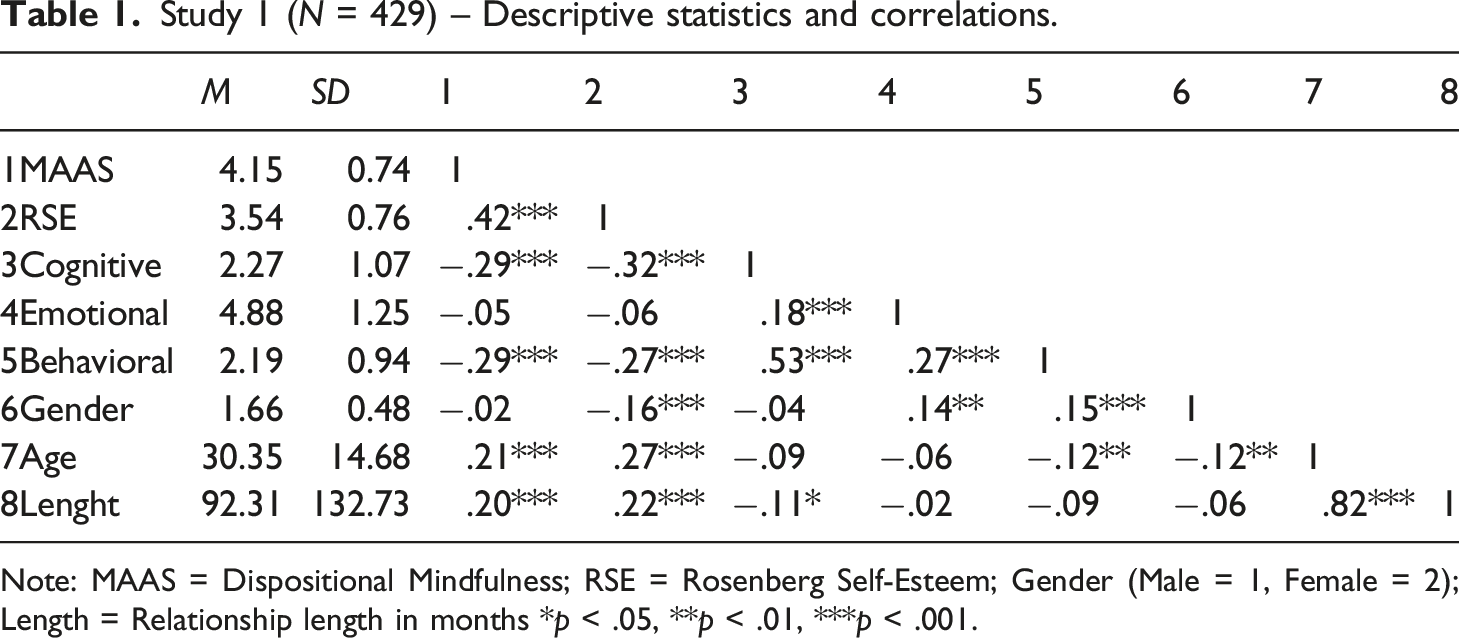
Note: MAAS = Dispositional Mindfulness; RSE = Rosenberg Self-Esteem; Gender (Male = 1, Female = 2); Length = Relationship length in months *p < .05, **p < .01, ***p < .001.
These results move beyond previous theorizing and research, but also confirm such work in two ways. Consistent with Randal et al. (2015), dispositional mindfulness was positively related to self-esteem. Consistent with Chin et al. (2017), self-esteem was negatively related to cognitive and behavioral jealousy, whereas unrelated to emotional jealousy. Study 2 aimed at replicating these results with a different measurement scale for mindfulness. This would broaden their generalizability as well as their theoretical and practical relevance.
Study 2
Method
Participants
399 Italian participants (44.1% female; age = 18–66 years, Mage = 28.52, SD = 9.07) were recruited online via Prolific. They declared to be heterosexual (86.5%) or primarily heterosexual (13.5%). Average relationship length was 42.08 months (SD = 29.01). 63.7% of participants did not live together, 23.8% lived together, 12% were married, 0.5% other. 2
Measures and procedure
The 20-item Philadelphia Mindfulness Scale (Cardaciotto et al., 2008) measures two key constituents of mindfulness, namely awareness and acceptance. Awareness captures individual differences in the tendency to monitor ongoing internal and external stimuli (e.g., “When I am startled, I notice what is going on inside my body”). Acceptance captures individual differences in the tendency to display a nonjudgmental stance toward one’s experience (e.g., “I try to stay busy to keep thoughts or feelings from coming to mind” (R). Responses were made on five-point scales (1 = never; 5 = very often), with higher scores indicating greater present-moment awareness (α = .81) and acceptance (α = .87). Next, participants completed the 10-item Rosenberg Self-Esteem Scale (α = .90), and the 24-item Multidimensional Jealousy Scale measuring their cognitive (α = .89), emotional (α = .87), and behavioral (α = .84) jealousy.
Results and discussion
Study 2 (N = 399) – Descriptive statistics and correlations.
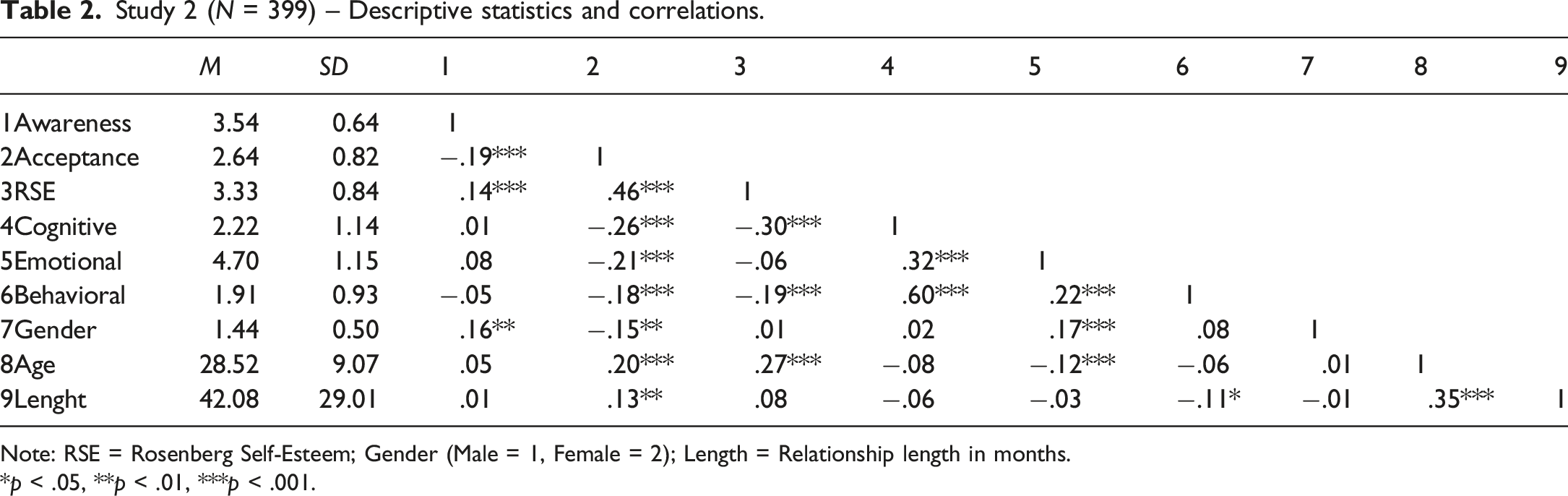
Note: RSE = Rosenberg Self-Esteem; Gender (Male = 1, Female = 2); Length = Relationship length in months.
*p < .05, **p < .01, ***p < .001.
Studies 1–2: Effects of dispositional mindfulness on self-esteem and jealousy.

Study 3
In line with results from Studies 1 and 2 and past findings that cognitive and behavioral (but not emotional) jealousy are negatively related to couple satisfaction (Bevan, 2008; Dandurand & Lafontaine, 2014; DiBello et al., 2015), in Study 3 we predicted that dispositional mindfulness would be positively related to couple satisfaction through lower cognitive and behavioral jealousy (Hypothesis 2). Instead, we did not expect a significant relationship between dispositional mindfulness, emotional jealousy, and couple satisfaction.
Method
Participants
1057 participants were recruited online via social networks and snowball sampling in Italy. 144 participants were excluded for being currently not involved in a romantic relationship, 73 for being non-heterosexual, and 4 for being less than 18 years old. The final sample was composed by 836 heterosexual adults (66.3% female; age = 18–82 years, Mage = 31.85, SD = 15.21). Average relationship length was 108.91 months (SD = 154.65).
Measures and procedure
In addition to the 15-item Mindful Attention Awareness Scale (α = .82) and the 24-item Multidimensional Jealousy Scale for assessing cognitive (α = .88), emotional (α = .91), and behavioral (α = .81) jealousy, we administrated the 10-item Dyadic Satisfaction Scale (Spanier, 1976) measuring the extent to which participants feel satisfied with their romantic relationship (e.g., “In general, how often do you think that things between you and your partner are going well?”). Items were rated on six-point scales (0 = almost never; 5 = almost always), with higher scores indicating greater couple satisfaction (α = .83).
Results and discussion
Study 3 (N = 836) – Descriptive statistics and correlations.

Note: MAAS = Dispositional Mindfulness; Gender (Male = 1, Female = 2); Length = Relationship length in months.
*p < .05, **p < .01, ***p < .001.
These results confirmed our hypothesis H2 that mindful people were more satisfied with their relationship through lower cognitive and behavioral (but not emotional) jealousy. Besides providing novel knowledge on jealousy, Study 3 highlights the importance of differentiating between cognitive, emotional, and behavioral components. In Study 4, we conducted a more robust test of H2 by including multiple indicators of relationship functioning.
Study 4
Study 4 investigated whether findings of Study 3 are replicated across several romantic outcomes such as couple satisfaction, relationship quality, and occurrence of conflicts. This enables a more comprehensive view of how the different manifestations of jealousy function in romantic relationships and what are their implications in terms of relationship functioning. In line with Study 3, we predicted that dispositional mindfulness would be negatively related to cognitive and behavioral (vs. emotional) jealousy. In turn, decreased cognitive and behavioral jealousy would be positively related to couple satisfaction and relationship quality, whereas negatively related to occurrence of conflicts.
Method
Participants
We recruited 301 heterosexual adults (71.4% female; age = 21–73 years, Mage = 40.61, SD = 12.25) via Prolific. Average relationship length was 175.51 months (SD = 285.32). All participants were British except one who was Russian. Also, 90% of participants were white Caucasian, 5.6% Asian, 2% Black, 2.3% other.
Measures and procedure
As in Study 3, we administrated the 15-item Mindful Attention Awareness Scale (α = .90), the 24-item Multidimensional Jealousy Scale assessing cognitive (α = .92), emotional (α = .91), and behavioral (α = .87) jealousy, and the 10-item Dyadic Satisfaction Scale (α = .88) assessing the extent to which participants feel satisfied with their relationship. Then, we administrated the 15-item Perceived Relationship Quality Components Inventory (Fletcher et al., 2000). This scale measures five relationship quality components, namely commitment (e.g., “How committed are you to your relationship?”; M = 6.49, SD = 0.91, α = .95), intimacy, (e.g., “How intimate is your relationship?”; M = 5.79, SD = 1.26, α = .87), trust (e.g., “How much do you trust your partner?”; M = 6.18, SD = 0.99, α = .87), passion, (e.g., “How passionate is your relationship?”; M = 4.40, SD = 1.79, α = .96), and love (e.g., “How much do you love your partner?”; M = 6.19, SD = 1.16, α = .94). Responses were made on seven-point scales (1 = not at all; 7 = extremely). A composite relationship quality score was computed (α = .95) so that higher values indicate greater quality. Finally, we measured occurrence of conflicts by asking participants to indicate the frequency of conflicts during the past 30 days they have had with their partner on a list of 8 conflict-prone topics (e.g., “financial resources”, “opinion and/or values”, “free time management”). Items were rated on seven-point scales (1 = almost never; 7 = almost always) with higher scores indicating greater occurrence of conflicts (α = .87). This measure is based on methodologies from past studies on conflict in romantic relationships (see Burk et al., 2009).
Results and discussion
Study 4 (N = 301) – Descriptive statistics and correlations.
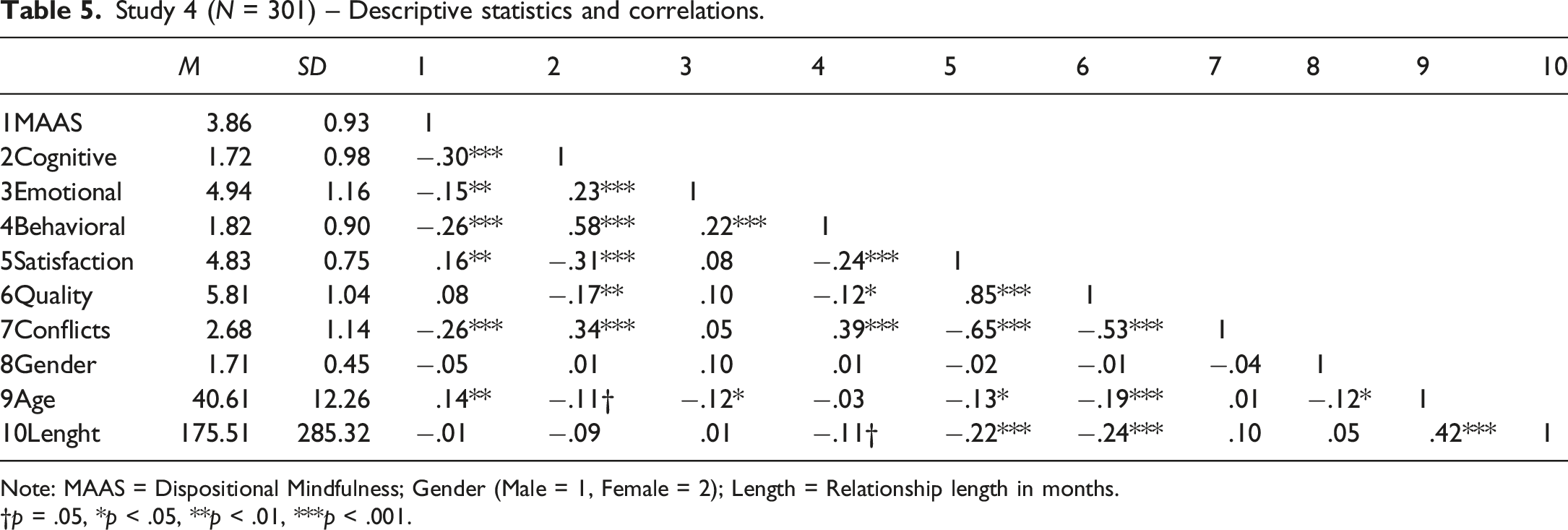
Note: MAAS = Dispositional Mindfulness; Gender (Male = 1, Female = 2); Length = Relationship length in months.
†p = .05, *p < .05, **p < .01, ***p < .001.
Studies 3–4: Effects of dispositional mindfulness on jealousy and relationship functioning.

Study 5
Study 5 collected data from both members of romantic couples, which allowed us to examine not only the relation between one’s own dispositional mindfulness and one’s own jealousy experience (i.e., actor effect) but also the relation between one’s own dispositional mindfulness and one’s partner’s jealousy experience (i.e., partner effect). The Actor-Partner Interdependence Model (APIM; Kenny et al., 2006) is a statistical method that accounts for the interdependence between partners. Past studies have used this method to examine the association of individual differences factors, such as narcissism (Wurst et al., 2017), playfulness (Proyer et al., 2019), and self-forgiveness (Pelucchi et al., 2013), with romantic outcomes. Yet, no APIM studies have investigated the relation between dispositional mindfulness and romantic jealousy. Study 5 aimed to provide a more robust understanding of the dispositional mindfulness-jealousy link intra-personally and inter-personally. In line with Studies 1–4, we predicted a negative relation of dispositional mindfulness with cognitive and behavioral jealousy, whereas we did not expect a significant relation between dispositional mindfulness and emotional jealousy.
Method
Participants
655 heterosexual couples (total N = 1310; female’s age = 15–85 years, Mage = 31.71, SD = 15.04; male’s age = 16–92 years, Mage = 33.90, SD = 15.86) participated in this study. Participants were recruited via e-mail, online social networks, and snowball sampling in Italy. Average relationship length was 11.93 months (SD = 13.22).
Measures and procedure
We administered the 15-item Mindful Attention Awareness Scale assessing mindful states displayed by male (α = .82) and female (α = .82). Also, the 24-item Multidimensional Jealousy Scale was used for measuring male’s cognitive (α = .87), emotional (α = .88), and behavioral (α = .81) jealousy as well as female’s cognitive (α = .87), emotional (α = .88), and behavioral (α = .81) jealousy. 3
Results and discussion
Study 5 (N = 1310) – Descriptive statistics and correlations.
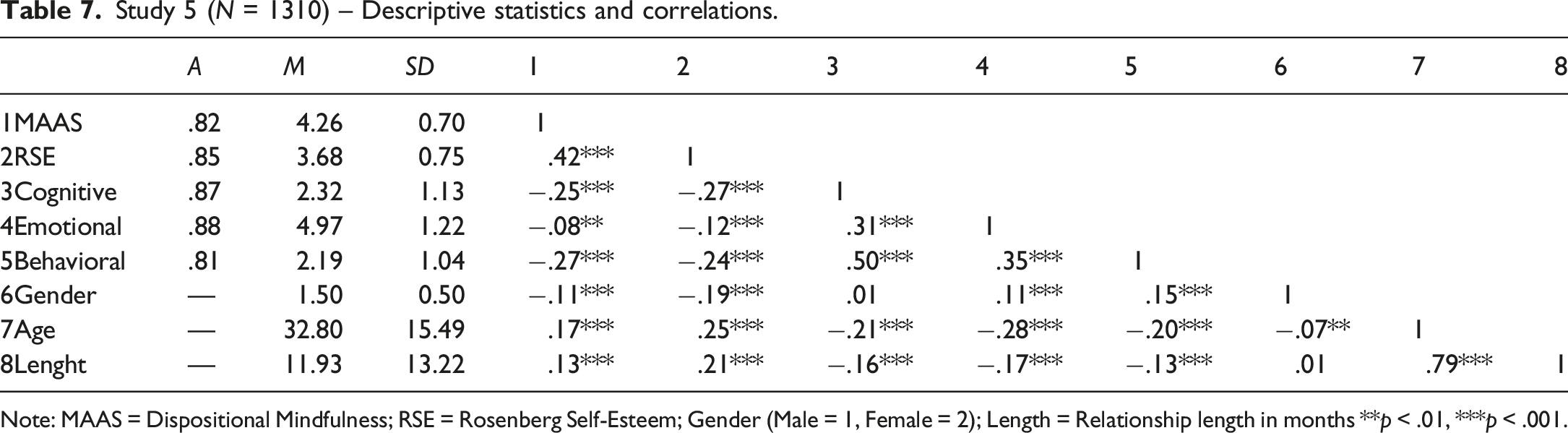
Note: MAAS = Dispositional Mindfulness; RSE = Rosenberg Self-Esteem; Gender (Male = 1, Female = 2); Length = Relationship length in months **p < .01, ***p < .001.
Goodness of fit indicators for cognitive jealousy.

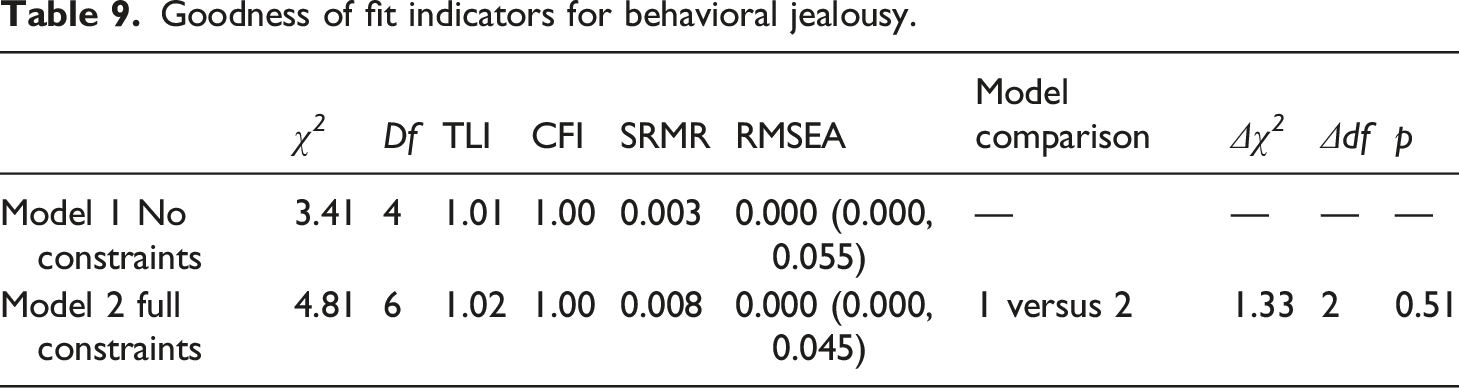
Goodness of fit indicators for behavioral jealousy.
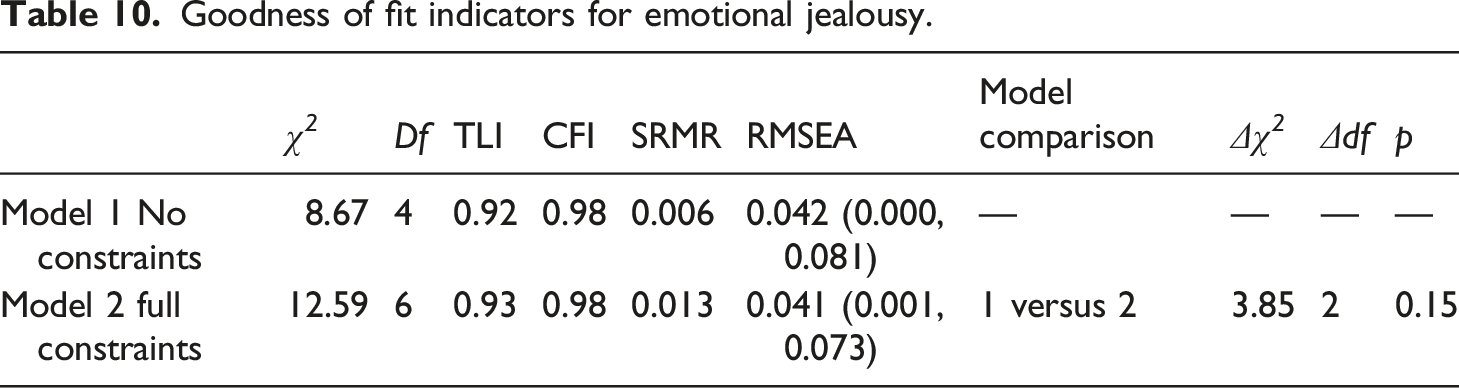
Goodness of fit indicators for emotional jealousy.
Dispositional mindfulness and cognitive jealousy: Actor and Partner effects.
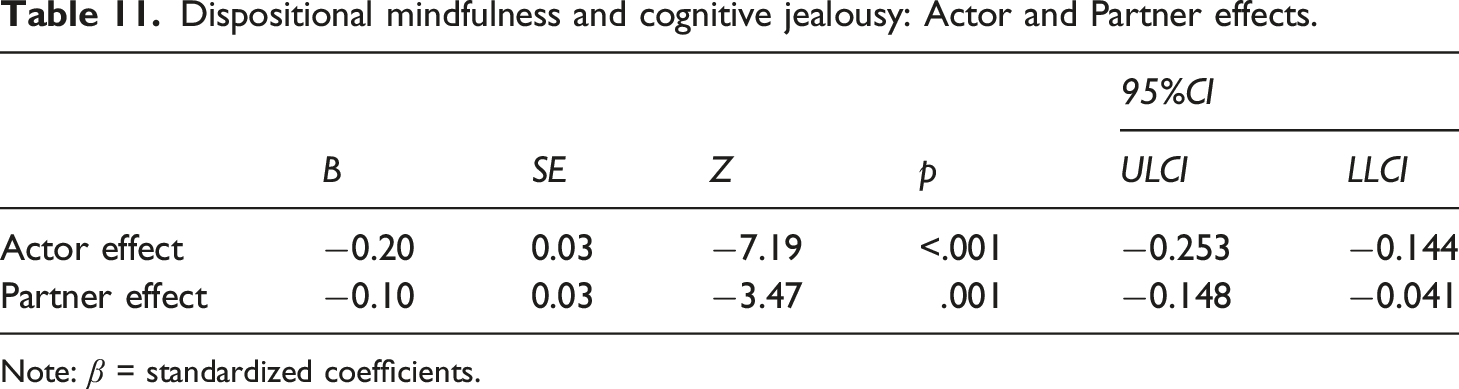
Note: β = standardized coefficients.
Dispositional mindfulness and behavioral jealousy: Actor and Partner effects.
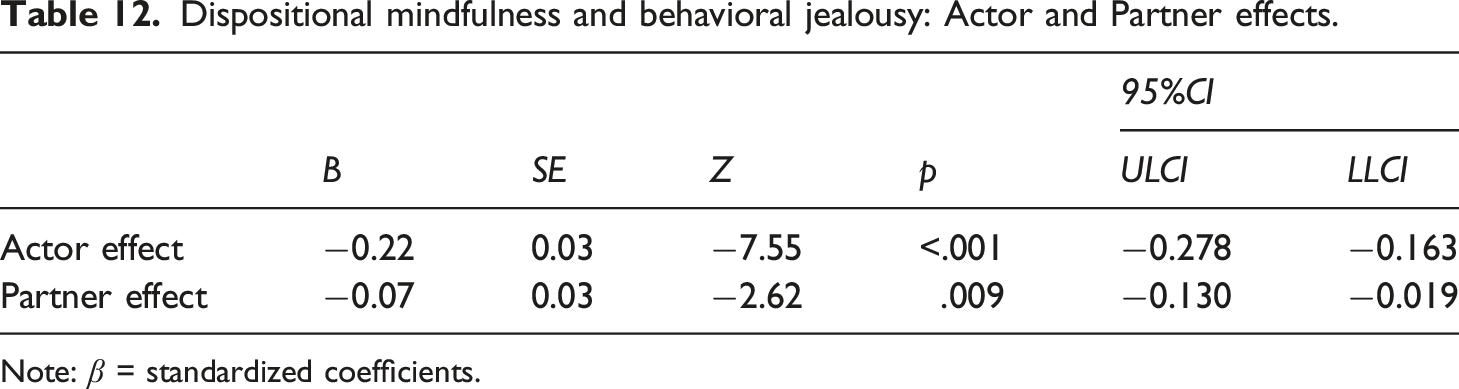
Note: β = standardized coefficients.
Dispositional mindfulness and emotional jealousy: Actor and Partner effects.
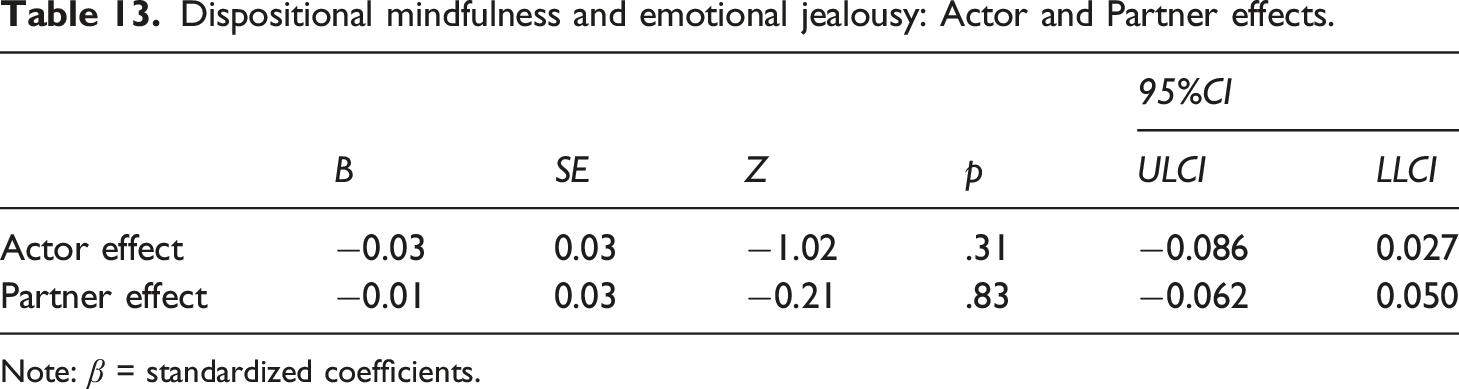
Note: β = standardized coefficients.
In line with Studies 1, 2, 3, and 4, we found significant actor effects, that is mindful individuals were less prone to experience cognitive and behavioral (but not emotional) jealousy in their relationship. Moreover, the dyadic nature of the present data allowed us to gain information about the link between individual’s dispositional mindfulness and his/her partner’s romantic jealousy. The APIMs results revealed significant partner effects, that is significant associations of individual’s dispositional mindfulness with his/her partner’s cognitive and behavioral jealousy, whereas individual’s dispositional mindfulness was unrelated to his/her partner’s emotional jealousy. This means that dispositional mindfulness is associated with decreased cognitive and behavioral (but not emotional) jealousy experienced by one’s partner: mindful people seem to be less likely to arouse cognitive and behavioral (but not emotional) jealousy in their partner. Several explanations might be advanced for these findings. For example, mindfulness researchers have proposed that receptive attention characterizing mindful individuals leads them to take more interest in their partner’s thoughts and emotions (Boorstein, 1996). Because of their sustained consciousness, mindful individuals are more willing to adopt adaptive interaction styles (Brown, 2004; Brown & Ryan, 2003; Salvati et al., 2020). As a result, their partner may be less motivated to display destructive responses such as cognitive and behavioral jealousy. Moreover, mindful people’s higher self-control suggests that they may be less inclined to commit infidelity within their relationship. This may make their partner less preoccupied with the idea that their relationship is under threat, hence less prone to engage in suspicious thoughts and surveillance behaviors. In support of this reasoning, past research showed that dispositional mindfulness and self-control were strongly related (Bowlin & Baer, 2012), and that self-control was negatively related to infidelity (McIntyre et al., 2015). Along these lines, another explanation could be attributable to the fact that increased self-esteem, which is a strong correlate of mindfulness, was found to be negatively associated with infidelity. Because of their self-confidence and ability to self-regulate behavior in socially acceptable ways, people with high self-esteem are less likely to engage in extramarital affairs (Whisman et al., 2007). Therefore, their partner may be less likely to become jealous. We see all these explanations as intriguing avenues for future theory development and empirical research.
Additional mini meta-analysis
Across five studies (N = 3275), this research consistently showed that dispositional mindfulness relates to decreased cognitive and behavioral (vs. emotional) jealousy. Before concluding this article, we conducted a mini meta-analysis to quantitatively synthesize these results and explore the consistency of the emerged effects. As illustrated in Figure 1, three distinct random effects confirmed that dispositional mindfulness plays a role in reducing cognitive and behavioral jealousy rather than emotional jealousy. Specifically, we found robust combined effect size for cognitive jealousy, r = −0.23, SE = 0.047, z = −4.99, p < .001, 95% CI [−0.323, −0.141], and behavioral jealousy, r = −0.22, SE = 0.035, z = −6.30, p < .001, 95% CI [−0.288, −0.151]. For emotional jealousy, analysis showed a weak association with dispositional mindfulness, r = −0.07, SE = 0.039, z = −1.88, p = .060, 95% CI [−0.150, 0.003]. Forest plots.
General discussion
Based on the three-dimensional jealousy structure (Pfeiffer & Wong, 1989), we investigated whether dispositional mindfulness was negatively related to cognitive and behavioral jealousy, and then was beneficial for relationship functioning. This was expected to be explained by increased self-esteem of mindful people (Randal et al., 2015), which has been shown to negatively relate to cognitive and behavioral jealousy (Chin et al., 2017). Instead, we did not expect significant relations between dispositional mindfulness, self-esteem, emotional jealousy, and relationship functioning. Results obtained from five studies (N = 3275), using non-dyadic and dyadic data, different measurement scales for mindfulness, and different indicators of relationship functioning (i.e., couple satisfaction, relationship quality, and occurrence of conflicts), supported our expectations.
Study 1 showed that dispositional mindfulness was negatively related to cognitive and behavioral jealousy through increased self-esteem, whereas no significant relationship between dispositional mindfulness, self-esteem, and emotional jealousy was found. Similar results were found with a different measurement scale for mindfulness in Study 2: both awareness and acceptance constituents of mindfulness were negatively related to cognitive and behavioral jealousy through increased self-esteem, whereas unrelated to emotional jealousy. These findings extend previous theory and research according to which being mindful, because of inherent self-acceptance, has a central function in promoting well-being (see Carson & Langer, 2006). According to Ryan and Deci (2000), mindfulness facilitates behavioral self-regulation, which is associated with well-being. Specifically, bringing awareness to the present moment leads individuals to behave consistently with their needs, values, and interests. Conversely, states of habitual or automatic functioning are more likely to preclude individuals from engaging in responses that would fulfill their basic needs. By the same token, mindfulness was found to positively relate to empathic concern (Berry et al., 2018) and positive views of one’s interpersonal relationship (Kozlowski, 2013), whereas negatively to ostracism (Ramsey & Jones, 2015), social dominance (De Cristofaro et al., 2021; 2022), and conflict (Hertz et al., 2015).
Studies 3 and 4 examined whether dispositional mindfulness was beneficial for relationship functioning through decreased cognitive and behavioral jealousy. We found that mindful individuals were more satisfied with their relationship, perceived higher relationship quality, and reported less occurrence of conflicts as their cognitive and behavioral jealousy decreased. Instead, we did not find significant relations between dispositional mindfulness, emotional jealousy, and relationship functioning. These results are consistent with theoretical assumptions and empirical findings that, relative to emotional jealousy, cognitive and behavioral jealousy are more detrimental forms of jealousy (Bevan, 2008; Dandurand & Lafontaine, 2014; DiBello et al., 2015). These results also highlight the importance of differentiating between cognitive, emotional, and behavioral jealousy. This is not only a theoretical concern – understanding how dispositional mindfulness relates to different jealousy manifestations, which are differently related to relationship functioning, has important practical consequences.
Finally, Study 5 investigated whether dispositional mindfulness was negatively related not only to one’s own cognitive and behavioral jealousy but also to one’s partner’s cognitive and behavioral jealousy. Results further substantiated findings from Studies 1–4 showing a negative relation of dispositional mindfulness with one’s own cognitive and behavioral jealousy, whereas a lack of significant relationship with one’s own emotional jealousy. Additionally, we found that dispositional mindfulness was negatively related to one’s partner’s cognitive and behavioral jealousy, whereas unrelated to one’s partner’s emotional jealousy. Knowing that cognitive and behavioral jealousy are negatively related not only to individual’s dispositional mindfulness but also to that of his/her partner enriches prior knowledge and stimulates new hypotheses.
Overall, the present studies provided evidence – which was also confirmed by a mini meta-analysis – that dispositional mindfulness may constitute a protective factor against cognitive and behavioral (vs. emotional) jealousy. Therefore, we interpret our results as offering a potential pathway to ameliorate the more detrimental manifestations of romantic jealousy.
Limitations and future directions
These results open new questions and avenues for future research. For example, because of the correlational nature of our studies, the causal direction of the emerged associations between mindfulness, self-esteem, romantic jealousy, and relationship functioning remains to be resolved. Thus, future studies manipulating mindfulness (e.g., via short mindfulness training) would help to define the predictive role of mindfulness. In doing so, we encourage future studies to assess attachment-styles differences, which are known to be related to romantic jealousy (see for example Guerrero, 1998; Karakurt, 2001), and were not considered in this article.
Future directions in this field could also assess longitudinal data on the benefits of being mindful. This would allow researchers to answer the question: “How does the impact of mindfulness change over time?”. The inclusion of longitudinal designs would enable to better examine how couple’s dynamics develop, change, and their consequences.
Another road for future research is to further develop our mediation model by investigating other pathways through which dispositional mindfulness relates to decreased cognitive and behavioral jealousy. In the present research, we focused on self-esteem because it has been recognized as one of the most important drivers of romantic jealousy (DeSteno et al., 2006). Because of its well-established relationship with mindfulness (see Randal et al., 2015), we investigated self-esteem as a primary mediator in the dispositional mindfulness-romantic jealousy link. However, the next steps could focus on diverse mediators. For example, it has been found that being mindful reduces rumination (Kircaburun et al., 2019; see also Giacomantonio et al., 2020), which positively relates to cognitive and behavioral (but not emotional) jealousy (Elphinston et al., 2013). Therefore, dispositional mindfulness may be negatively associated with cognitive and behavioral (vs. emotional) jealousy through a decreased tendency to ruminate.
Finally, although previous research showed that romantic jealousy is experienced regardless of marital status and sexual orientation (Bernhard, 1986), it would be interesting to examine whether our results hold among non-heterosexual individuals (see Salvati & Koc, 2022) and committed long-term couples with and without marriage. Future research would benefit from assessing the role of demographic and cultural factors, including gender identity, nationality, ethnicity, education, income, employment, physical disability, and pregnancy status. This would provide a more complete understanding of jealousy in the context of romantic relationships.
Conclusion
Romantic jealousy is a pervasive interpersonal phenomenon, which can have negative consequences on relationship functioning. Given that many negative relationship outcomes and aggressive behaviors involving intimate partners can be attributed to romantic jealousy, investigating its correlates is important, not only theoretically but also empirically. Across five studies (N = 3275), we consistently found negative associations of dispositional mindfulness with the more detrimental manifestations of romantic jealousy, that is cognitive and behavioral (vs. emotional) jealousy, through increased self-esteem. These associations resulted beneficial for relationship functioning, operationalized as higher couple satisfaction, higher relationship quality, and lower occurrence of conflicts. This set of studies opens new research avenues on the mindfulness-romantic jealousy link, for both theoretical and applied purposes. These results constitute indeed first evidence for the usefulness of mindfulness as a protective factor against detrimental romantic jealousy and as a constraint of its negative consequences.
Footnotes
Funding
The author(s) received no financial support for the research, authorship, and/or publication of this article.
