



Abstract
This article critically considers distinctions between, social enterprise and social entrepreneurship from a theoretical perspective. Using case study analysis of 10 non-governmental organisations the paper explores these concepts empirically. Findings on social enterprise reveal a focus on the purpose of social businesses, while findings on social entrepreneurship reveal an emphasis on the processes underlying innovative and entrepreneurial activity for social purposes. Discussion of these findings indicates important developments relevant to informing the growing area of social enterprise and social entrepreneurship research. Implications extend to understanding the need for action to achieve social change, and an acceptance of risk when existing actions fail to achieve their intended outcomes.
Introduction
The terms ‘social enterprise’ and ‘social entrepreneurship’ are often used interchangeably. However, the two concepts are distinct, as not every enterprise (social or otherwise) is entrepreneurial. While the differences between entrepreneurial and non-entrepreneurial activities have been observed within the private sector (Beaver, 2003; Carland et al., 1984) and public (Linden, 1990; Osborne and Gaebler, 1992; Ramamurti, 1986) we argue that a similar distinction is required for third sector organisations and that such a distinction will inform future research.
Clearly, social enterprises and social entrepreneurship share many commonalities: both blur the boundaries between for and not-for-profit activities and combine commercial activities with social objectives (Chell, 2007; Mair and Marti, 2006). However, important distinctions exist and require acknowledgement in order to avoid misguided recommendations (Peredo and McLean, 2006). The term ‘enterprise’ is associated with commercial business activity (Chell, 2007; Dart, 2004), indicating that social enterprises represent a form of social business or venture. The term ‘entrepreneurship’ is associated with opportunity identification, innovation and risk (Kirzner, 1979; Shane, 2003; Venkataraman and Sarasvathy, 2001), and the introduction of something new to the market (Davidsson, 2006). As such social entrepreneurship involves seizing opportunity for the market-changing innovation of a social purpose (Corner and Ho, 2010; Leadbeater, 1997).
The association between these concepts is attributed in part to each of them addressing a market gap (Chell, 2007; Nicholls, 2010a). Yet while the social enterprise sector represents an innovative response to a gap in the market left by public and private sectors, the question arises as to whether all social enterprises are necessarily entrepreneurial. This issue is considered in the context of one type of social enterprise: non-governmental organisations (NGOs) which seek to address poverty alleviation. Specifically, an examination of the activities of 10 NGOs operating micro-enterprise development programmes (MEPs) in Vietnam-was undertaken to consider how the concepts of social enterprise and social entrepreneurship might differ in practice. The research question addressed was: ‘What differences emerge between social enterprise and social entrepreneurship in the context of MEPs operating in Vietnam?’
This article continues by reviewing the literature on social enterprise and social entrepreneurship. A preliminary framework then is developed by comparing the two concepts, and considering each within the context of NGOs. Findings which reveal distinctions in terms of the “why’ and ‘how’ are then presented, and implications for future developments in both areas of research are suggested.
Literature review
While the literature on social enterprises and social entrepreneurship is relatively new, the foundations of each concept have an established history. The concept of a social enterprise dates back more than a century (Dart, 2004), similarly while research on social entrepreneurship emerged in the 1990s (Waddock and Post, 1991) the foundations of entrepreneurship literature dating back to the 1700s (Cantillon, (1954[1755]); Smith, 1904[1776]).
Social enterprise: a pathway for social change
Consistent with Barraket et al. (2010), we define a social enterprise as an organisation that exists for a social purpose and engages in trading to fulfil its mission, using market-based techniques to achieve social ends (Talbot et al., 2002). Emerging from a non-profit background, the social enterprise is a renewed, rather than new concept, involving ‘business as an instrument for social development’ (Dart, 2004: 421). Quasi-commercial business activity adopted by social enterprise reflects the balance between financial and social objectives (e.g. Emerson and Twersky’s 1996 double bottom line). Perhaps for this reason, social enterprises (and social entrepreneurship) have been framed as ‘a set of strategic responses to the challenges faced by non-profit organisations’ (Dart, 2004: 413). While this notion is broadly accepted, it is important to note that strategic activity – focusing on direction, change and purposeful action (Drucker, 1985; Mintzberg et al., 1998; Porter, 1996) – is not necessarily entrepreneurial.
Social enterprises differ from traditional non-profit organisations primarily because of their business-like approach to social issues. Emerging norms within the social enterprise sector include revenue generation, market, client and commercial focus, and at times self-funding operations (Dart, 2004). These approaches help establish both social and financial legitimacy and can be considered a form of new social management, just as business-like approaches in the public sector became recognised as new public management, focusing on efficiency and effectiveness (Hood, 1991; Osborne and Gaebler, 1992).
While references to frame-breaking and innovation (Drucker, 1985; Stopford and Baden-Fuller, 1994) in the entrepreneurship literature have been extended to the context of social enterprise (Dart, 2004; Emerson and Twersky, 1996), this association is more reflective of the general notion of applying business models to a sector historically served by not-for-profit organisations relying on grants and donations (Dart, 2004). However, at an organisational level, not all social enterprises are innovative or entrepreneurial – activity typically associated with risk (Kirzner, 1979) and creative destruction (Schumpeter, 1934). This focus on innovation at the activity level represents an important distinction between social enterprise and social entrepreneurship (Zahra et al., 2009).
Social entrepreneurship: changing how social needs are addressed
Social entrepreneurship has been defined as entrepreneurship with a social goal, and social entrepreneurs have been regarded as change agents (Dees, 1998a; Thompson, 2002). These concepts have been examined from various perspectives, including ‘heroic’ actors, new models for social change and new market opportunities (Nicholls, 2010b). The entrepreneurship literature in which social entrepreneurship is rooted emphasises opportunity identification (Shane, 2003), innovation (Burgelman, 1983; Drucker, 1985; Schumpeter, 1934; Sharma and Chrisman, 1999) and risk (Kirzner, 1979) as key dimensions, and indicates that entrepreneurship is legitimised when innovation creates effective outcomes. Drucker (1985) notes that innovation lies at the heart of entrepreneurship, irrespective of the context (i.e. public, private or third-sector organisations). As such, innovation is seen as fundamental to social entrepreneurship, defined here as entrepreneurial activity undertaken for a social purpose, changing the way that social needs are addressed. In contrast, social enterprise represents a business established for a social purpose, to create positive social change.
The potential benefits of entrepreneurship have been considered extensively, including business creation (Gartner, 1985), financial gain (Ireland et al., 2001), competitive advantage (Zahra, 1991) and national identity and economic growth (Reynolds et al., 2004). While social entrepreneurship is undertaken primarily for the purpose of positive social change entrepreneurship theory and the social entrepreneurship literature (Sen, 2007) suggest that there also may be rewards at the personal level in the form of growth (reflecting success), reputation and recognition (Drucker, 1985; McClelland, 1961, 1962; Shaw et al., 2011). However, there is little consideration of these personal benefits in the social enterprise literature, where the purpose of social entrepreneurship remains focused on social change and wider community benefits.
Ridley-Duff and Bull note that the term ‘social enterprise’ is used ‘by a growing number of activists, entrepreneurs organisations and government officials as an umbrella term for any form of organisation that innovates or trades for a social purpose’ (2011: 1). However, as detailed previously, the concepts of trade and innovation are distinct diffrenet. These issues are summarised in Table 1, which highlights the differences between non-profit organisations, social enterprise and social entrepreneurship.
From non-profit to social enterprise to social entrepreneurship.
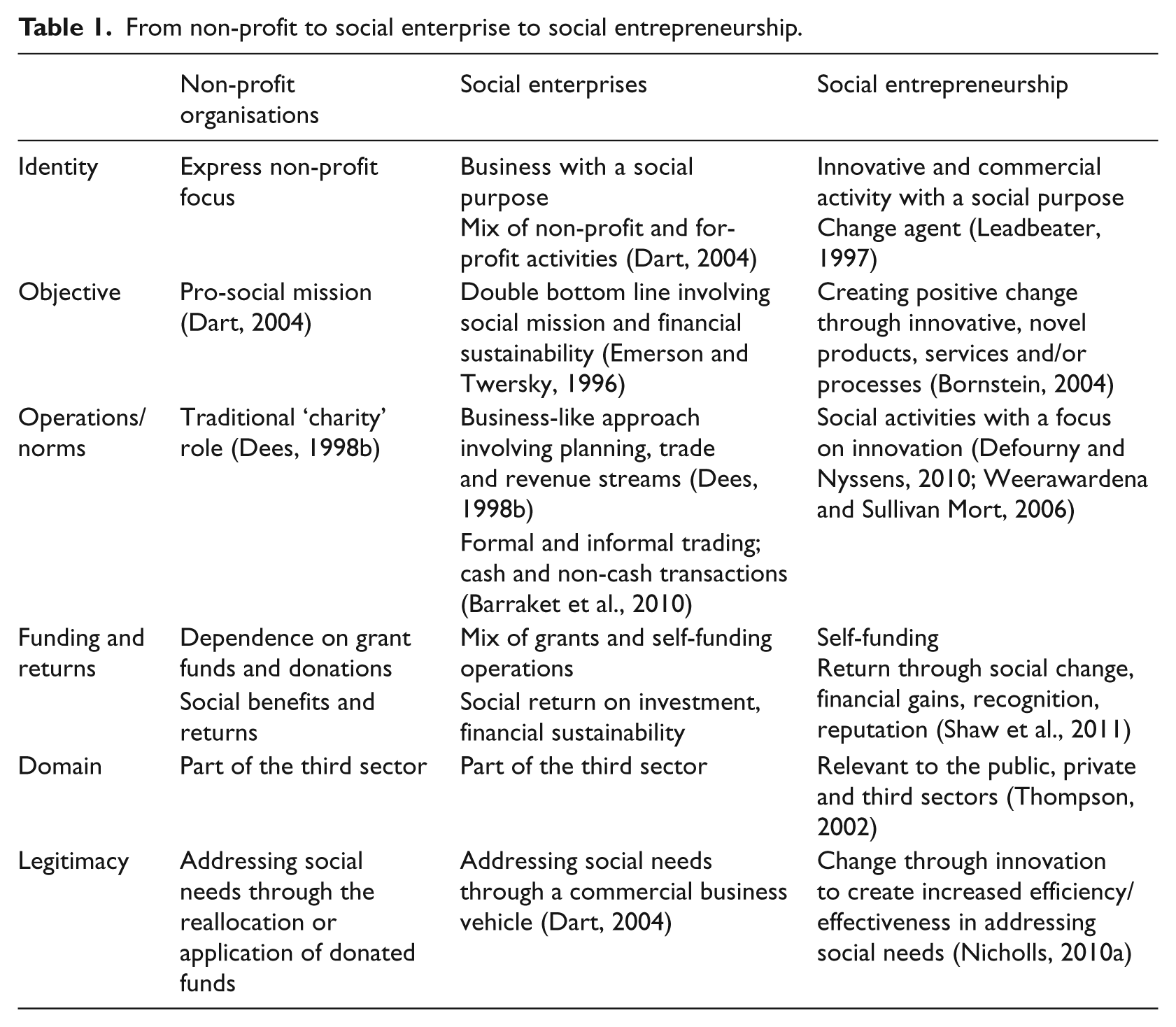
Essentially, social enterprises are viewed as effective models for addressing social needs (Dees, 1998a; Emerson and Twersky, 1996), which provide an alternative to non-profit, charitable and profit-maximising private enterprises (Ridley-Duff and Bull, 2011), while social entrepreneurship is regarded as a more innovative way of addressing social needs by developing new and creative solutions (Weerawardena and Sullivan Mort, 2006).
Non-governmental organisations as social businesses
NGOs involved in micro-enterprise development are an established and growing form of social business, operating with the clear social objective of poverty alleviation. NGOs’ operations encompass a range of activities (Siwale and Ritchie, 2011). However, micro-enterprise development programmes (MEPs) are one activity which typically involves trading (formal and informal, cash and non-cash transactions) in order to address poverty alleviation (Vargas, 2000) through the provision of training and credit to help the poor establish micro-enterprises and income streams.
Although MEPs have been recognised as a valuable approach to poverty alleviation (Strier, 2010), they have been criticised for their limited success with, at times, standardised operations (Hoque, 2004; Moyo, 2003). Particular criticisms include:
a focus on designing MEPs based on resources that are easily accessible to providers rather than the resources which are most valuable to the disadvantaged;
providing credit to as many poor people as possible without appropriate assessment of individual needs;
delivering standardised rather than tailored training adapted to the circumstances of the poor or local market demands; and
supporting the poor to produce goods without due regard for quality and accountability for actual sales (Tendler and Amorim, 1996).
Alternative approaches to MEPs have been promoted in the literature (e.g. tailored support, based on an assessment of the poor’s needs, market opportunities and constraints), and are summarised in Table 2. However, evidence of these approaches in practice remains scant.
Traditional and alternative approaches to MEPs.
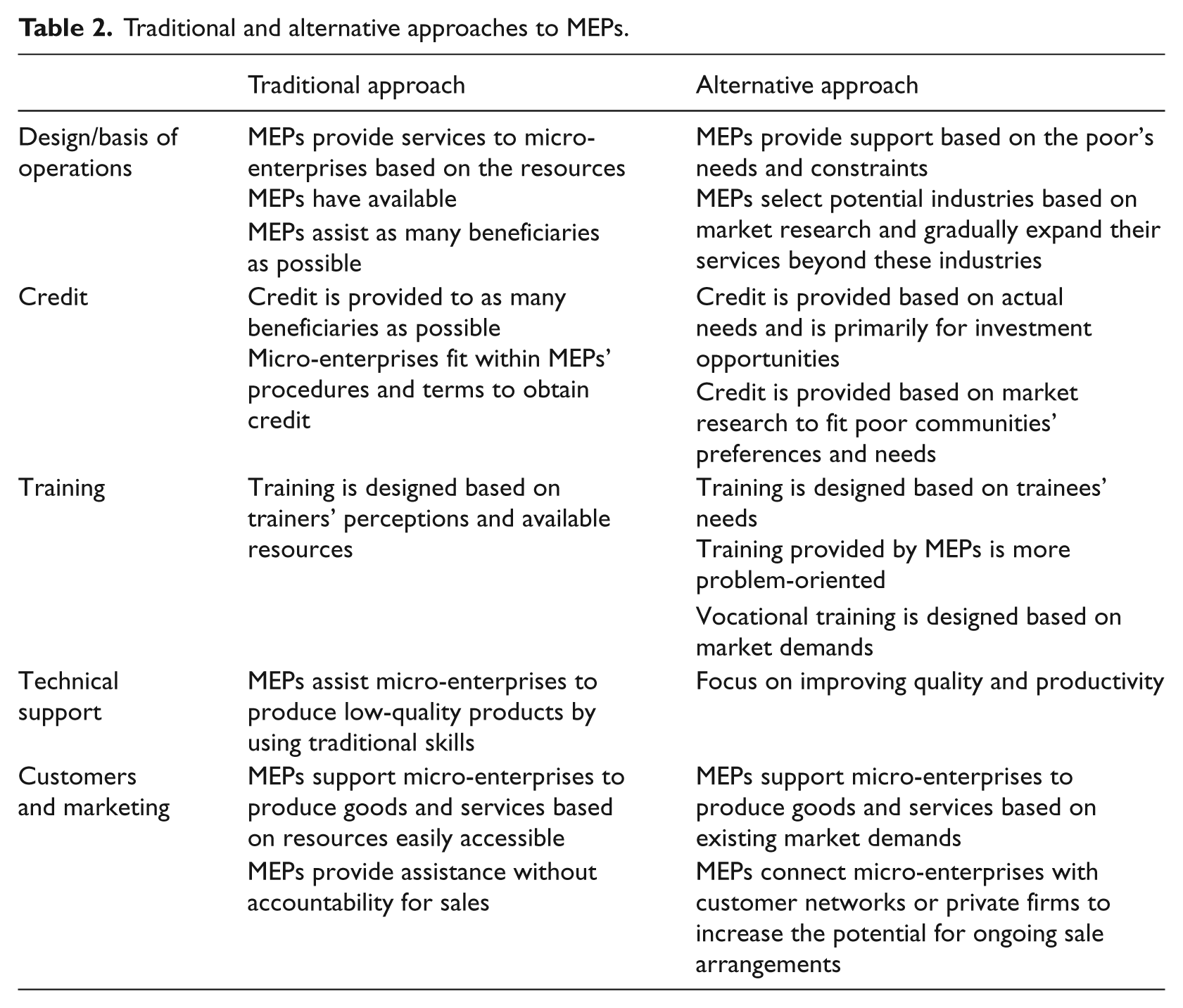
As such, NGOs operating MEPs provide a valuable context within which to examine the concepts of social enterprise and social entrepreneurship. In particular, examination of whether NGOs operate using traditional or alternative, potentially innovative and entrepreneurial approaches to address poverty alleviation, provide an opportunity to explore the similarities and differences between social enterprise and social entrepreneurship in practice.
Method
Research design
This research was undertaken on the basis that realities are multiple and constructed based on individuals’ social experiences (Creswell, 2009; Guba, 1990). Consistent with this ontology, the research method was designed to allow direct interaction with participants (Brower et al., 2000; Guba, 1990): namely, individuals managing MEPs. Combining interpretivist (Putnam, 1983) and functionalist approaches (Pittaway, 2005), the research sought to uncover participants’ realities in the local and specific context that had given them meaning (Guba, 1990; Liamputtong, 2009), and focused on the descriptive stage of theory development (Christensen, 2006; Schumpeter, 1954) through observation, categorisation and association.
In order to examine social enterprise and social entrepreneurship in practice, this study reviewed the activities of 10 NGOs operating MEPs in Vietnam. NGOs were deliberately chosen as they have been recognised as important social businesses aiming to address poverty alleviation, yet also have been criticised for their limited success with traditional and sometimes standardised operations (Hoque, 2004; Tendler and Amorim, 1996). Accordingly, NGOs’ approaches to helping poor communities engage in micro-enterprise development, and in supporting micro-enterprises to become financially sustainable, were reviewed to examine traditional versus potentially innovative approaches.
Research setting
Vietnam is a country which has been recognised for its success in poverty alleviation (United Nations, 2012) and macroeconomic stability since the economic renovation (Doi Moi) in 1986 (World Bank, 2007). Vietnam’s poverty rate fell from 58 percent in 1993 to 14.7 percent in 2007 (United Nations, 2012), and reached 10.6 percent in 2010 (NationMaster, 2011). While a range of poverty alleviation programmes has been undertaken in Vietnam to help poor households, MEPs were selected as a clear example of social business, given that their operations involve trade in some form and encourage income generation. Specifically, MEPs operated by international NGOs (INGOs) were selected, as local NGOs in Vietnam are subject to different regulatory frameworks and political influences.
Sample
Based on Vietnam’s International NGO (INGO) directory in 2010, 24 INGOs operating MEPs were identified. Each one was contacted and invited to participate in this study, with 10 INGOs agreeing to do so. Participating INGOs were located in rural and remote areas throughout Vietnam, and their activities involved working with poor communities to provide the skills (e.g. training on production and marketing techniques) and resources (e.g. access to credit and markets) necessary to establish small businesses (micro-enterprises). Additional activities were conducted by several NGOs including health, safety and education programmes.
Publicly available data including annual reports, project reports and profile information from each INGO’s website were collected to obtain background detail on INGOs and to assist in development of the interview protocol. In-depth interviews with a senior executive from each INGO were conducted in 2010. Table 3 presents a summary of participating INGOs’ size, profile and the organisational role of interviewees. Specifically, the study aimed to gain an in-depth understanding of the different approaches used by INGOs engaged in micro-enterprise development, based on examination from the outside and enquiry from the inside (Evered and Louis, 1981), with the opportunity to compare and verify data from each source.
Profile of participating INGOs.

Procedure and data analysis
Semi-structured interviews of approximately 1.5 hours focused on the nature of the activities undertaken by INGOs (e.g. provision of credit, training and technical support) and the approaches and processes underpinning these. In particular, interviews considered whether the organisation adopted a traditional approach to its social objective of micro-enterprise development (MED), or whether it adapted its business processes to incorporate innovative and entrepreneurial approaches to the objective of poverty alleviation (see Appendix). As such, case studies were developed based on INGOs’ activities within their MEPs as the unit of analysis (Yin, 2003) in order to consider examples of entrepreneurial activity in practice.
Four interviews were conducted in English, as these participants were expatriates based in Vietnam. The remaining six interviews were conducted in Vietnamese, the native language of the interviewees and one of the researchers. All interviews were recorded, translated (where necessary) and transcribed. Transcripts were sent to interviewees for review and approval prior to any formal data analysis. Transcripts and other secondary data were analysed with the assistance of NVivo, facilitating deconstruction and coding of the data, while preserving the integrity of full transcripts, thereby allowing for holistic analysis.
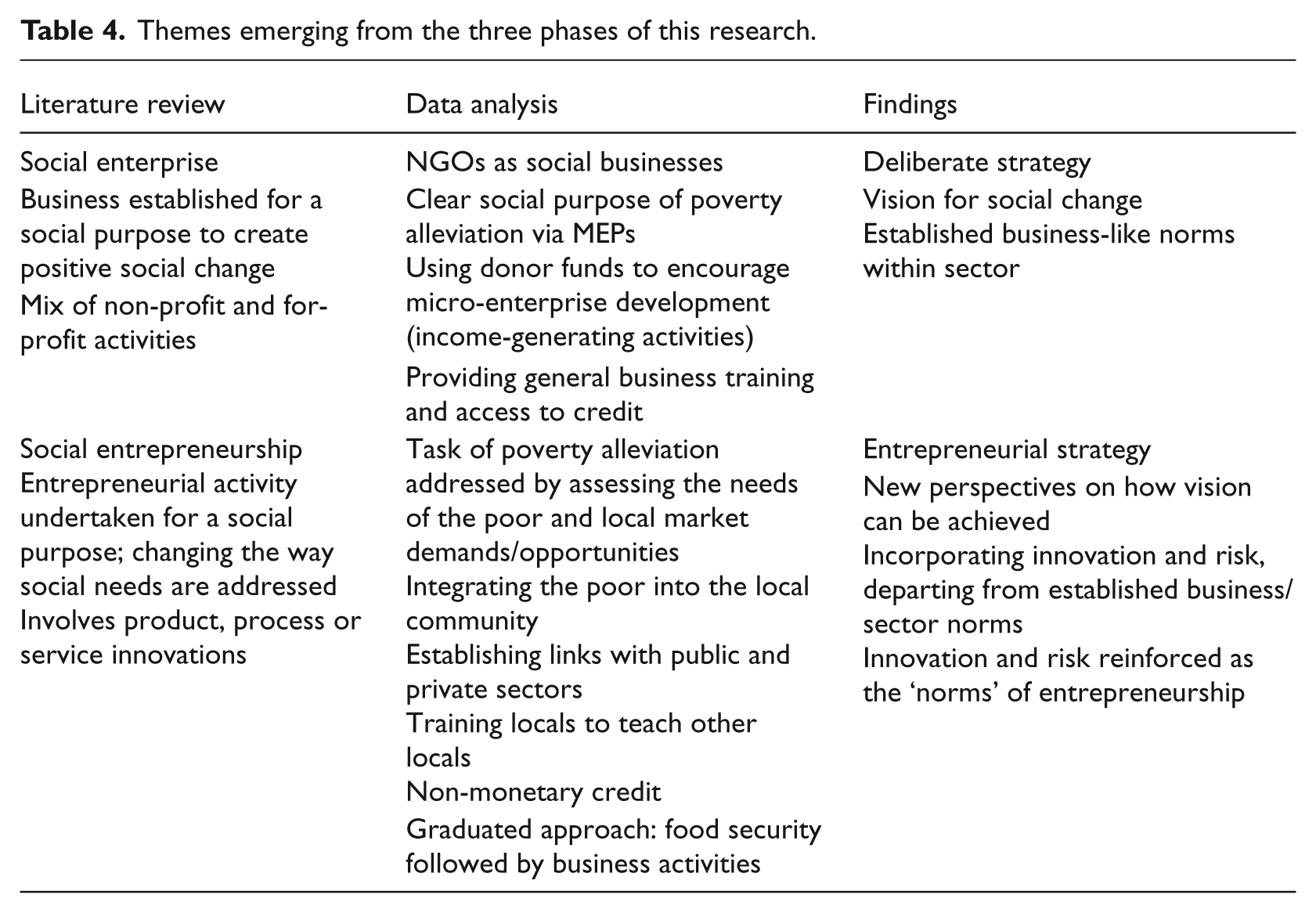
Themes emerging from a review of the existing literature on social enterprise and social entrepreneurship provided a preliminary framework for data analysis. An analysis of publicly available data on each INGO’s operations provided initial insights into the business activities within MEPs. The findings from the interview data revealed more detailed insights into INGOs adopting a range of traditional as well as more innovative and entrepreneurial approaches to alleviating poverty, through micro-enterprise development. Table 4 summarises the themes that emerged from the various phases of this research (literature review, data analysis and findings). The resulting findings illustrate the contrast between social enterprises and social entrepreneurship as distinct concepts, as well as providing new insights into the approaches that INGOs’ use when engaging in micro-enterprise development.
Themes emerging from the three phases of this research.
Findings
Examination of participating INGOs’ operations revealed a clear distinction between those applying traditional approaches to MED and those adopting innovative and entrepreneurial approaches to address growing social problem. At an organisational level, each INGO represents a social enterprise in that it operates with a clear social mission and trades (both formal and informal, cash and non-cash transactions) to fulfil that mission. However, examples of social entrepreneurship also emerge at an activity level in the context of strategic approach, group formation, networks, credit, training, technical and market support and supply chains – each of which is considered below.
Strategic approach
As mentioned previously, one of the key concerns regarding MEPs is that often their strategy and operations are designed based on resources that are readily available, rather than the actual needs of poor communities and existing market demands (Amha and Ageba, 2006). In this study, seven of the 10 INGOs focused on two central issues: the needs of the poor and market demand. This demand-driven approach represents an alternative strategy, focusing on customer needs and market opportunities: Our question is very simple, how to link [poor] farmers to markets. (Senior executive, INGO 6, 2010)
Group formation
While group formation is common in poverty alleviation programmes (Siwale and Ritchie, 2011), in order to build capacity, four INGOs established groups involving both poor and non-poor households in the region. This arrangement helped to develop valuable relationships and strengthened the development capacities of the group, appointing non-poor participants to leadership roles and supporting the development of the group as a whole: Being grouped, they can support each other by sharing experiences in doing business. They can observe and copy each other. (Senior executive, INGO 7, 2010) For the first time, the rich or medium-rich people would be group leaders … This was because of, first, their skills and, second, their reliability. This was also because the rich could think about why they had to be at the same level [working] with the poor. (Senior executive, INGO 5, 2010)
This approach is frame-breaking, given the very specific emphasis on the poor as part of poverty alleviation programmes and an associated criticism of ‘mission drift’: losing sight of the organisation’s purpose (Copestake, 2007; Mersland and Oystein Strom, 2010), where programmes target the non-poor. Yet in this context, the approach emerged as an innovative and effective solution to previous challenges, where groups comprised solely poor people who lacked capabilities, resulting in poor project outcomes. This emergent strategy was attributed to learning from past challenges and failures and is similar to effectuation processes within entrepreneurship (Corner and Ho, 2010; Sarasvathy, 2001): Previously, we ran groups including 10 poor households – we failed. This was because these poor households didn’t have enough information and had [a] low literacy background. (Senior executive, INGO 5, 2010) Because sometimes the leadership that you need here is absent … if you don’t have leadership, this is weak. (Senior executive, INGO 8, 2010)
Networks
Another strategy used by of several INGOs involved engaging local government authorities in the MED projects, which assisted in relationship building within and outside the groups and facilitated both bonding and bridging social capital (Putnam, 2000): The local authorities at the commune level and our staff were encouraging the poor by mentioning in group meetings the good things the poor did. This helped to build confidence for the poor. From this, they gained trust from the rich. (Senior executive, INGO 5, 2010)
This strategy reinforced the support for a mixed group approach (involving both poor and non-poor households) and facilitated access to local government resources, representing a form of process innovation.
Credit
Credit is one of the central forms of support provided by MEPs. Yet challenges regarding use of funds for the intended business purpose and timely repayment remain (Jain, 2009; Siwale and Ritchie, 2011). In view of these challenges, eight of the INGOs in this study provided credit in-kind for example, in the form of livestock for breeding and farming. The benefits of this approach included the opportunity to commence business activities immediately and avoid the risks and psychological burden of financial indebtedness. Repayment was arranged through the return of livestock or offspring, transferred to other poor households in the group: [P]rogrammes for cow rotation: we support them with some female cows, then those groups will together rear their cows. Once these cows produce calves, these calves then will be transferred to other households. (Senior executive, INGO 10, 2010) We started with microcredit programmes … from 1993 to 2001, and then we finish up. Why? Because microcredit is expensive for people and for the lenders. (Senior executive, INGO 8, 2010)
Again, this innovative approach – service innovation – breaks the frame of reference for traditional MEPs which provide money to the poor. Rather, the INGOs considered the reasons for poor households borrowing money, and provided alternatives including non-monetary aid from local government programmes, credit purchase arrangements from private sector organisations which participated in supply chains.
Training
Training is an important feature of MEPs, but is commonly a high-cost activity (Jones, 2000). Under a traditional approach it is typically standardised rather than tailored to actual needs, and is thus of limited value (Esim, 2001; Servon and Bates, 1998), often with little practical relevance to local market opportunities (Albu et al., 2003). The findings from this study reveal that seven INGOs adopted an alternative approach to training, where new methods of production were pilot-tested by farmers (typically a poor local farmer living in the community). Once the results were realised, INGOs used the services of the pilot farmer to train other locals. This approach helped INGOs engage with local communities and highlighted the accessibility of the projects. It also provided a valuable, cost-effective and sustainable local training resource: They [pilot farmers] are not so rich, not so good. If [they were rich and successful], they would do everything well. No need to ask that household to do demonstration. (Senior executive, INGO 6, 2010) People are far away, sometimes … one and a half hour to get there. [We] can’t go there every morning, so it’s important to have a good village base … Everybody knows in the village that [pilot farmers] have done it, so they become excellent village workers and they also have a proper psychological approach … They have a lot of compassion for the people in the same village. So it’s very effective and also very sustainable. (Senior executive, INGO 9, 2010)
Hence, this approach – teaching the poor to train the poor – breaks the frame of reference traditionally adopted by MEPs (i.e. using NGO staff to train the poor) through process innovation.
Technical and market support
Another concern regarding MEPs relates to market constraints, which often prevent micro-enterprises from surviving and growing (Dercon, 2002; McKenzie, 2009): this is one of the most challenging aspects for micro-enterprises (Mead and Liedholm, 1998; Shaw, 2004). Based on the findings this study, several INGOs adopted a very deliberate and gradual strategy, by:
helping the poor to produce sufficient quantities of produce for their own survival;
increasing the quantity and quality of the produce to satisfy local market demands; and
continuing to develop the quality and quantity of produce in order to access opportunities in regional markets.
This variation from the traditional approach (focusing on business development) gradually transformed the capacity of the poor and subsequently helped them to operate and survive in competitive markets. Further, this approach focused on developing long-term sustainable outcomes, avoiding the high failure rates of micro-enterprises referred to in the literature (McPherson, 1996; Midgley, 2008): With households whose production is too small, who do not use highly intensive cultivation, [we] don’t encourage them to become involved in production to supply to market … We have [a] priority to promote production using what the poor households have. (Senior executive, INGO 2, 2010)
Supply chains
As micro-enterprises’ developed, an output linkage approach was adopted involving local private sector firms to establish supply chains, building connections between groups of micro-enterprises with suppliers and traders: We work with those [private sector] companies to invest … we help companies develop their business. (Senior executive, INGO 7, 2010) Traders are happy to buy good-quality pigs from groups, and households which joined [these] groups are happy when there are traders buying pigs from them and suppliers selling foodstuff to them on credit. (Senior executive, INGO 6, 2010).
Households working in groups acted collectively and cooperatively, organising sales and purchases at more favourable prices (with the assistance of INGOs): They work in groups, they have agreements, they have volume, they have voice, they can transact. That is the key. They have power in groups, in numbers. (Senior executive, INGO 8, 2010)
As such, this alternative approach involved reflecting on past and less successful experiences to consider new innovative ways to address poverty alleviation. Further, four INGOs noted that groups had maintained their operations as financially independent cooperatives within their communities after the INGOs’ projects formally finished, successfully expanding their business activities: They [working groups] are far bigger than when we left them … they organise production, some of them have stores in the markets or operate businesses in Hanoi. (Senior executive, INGO 3, 2010)
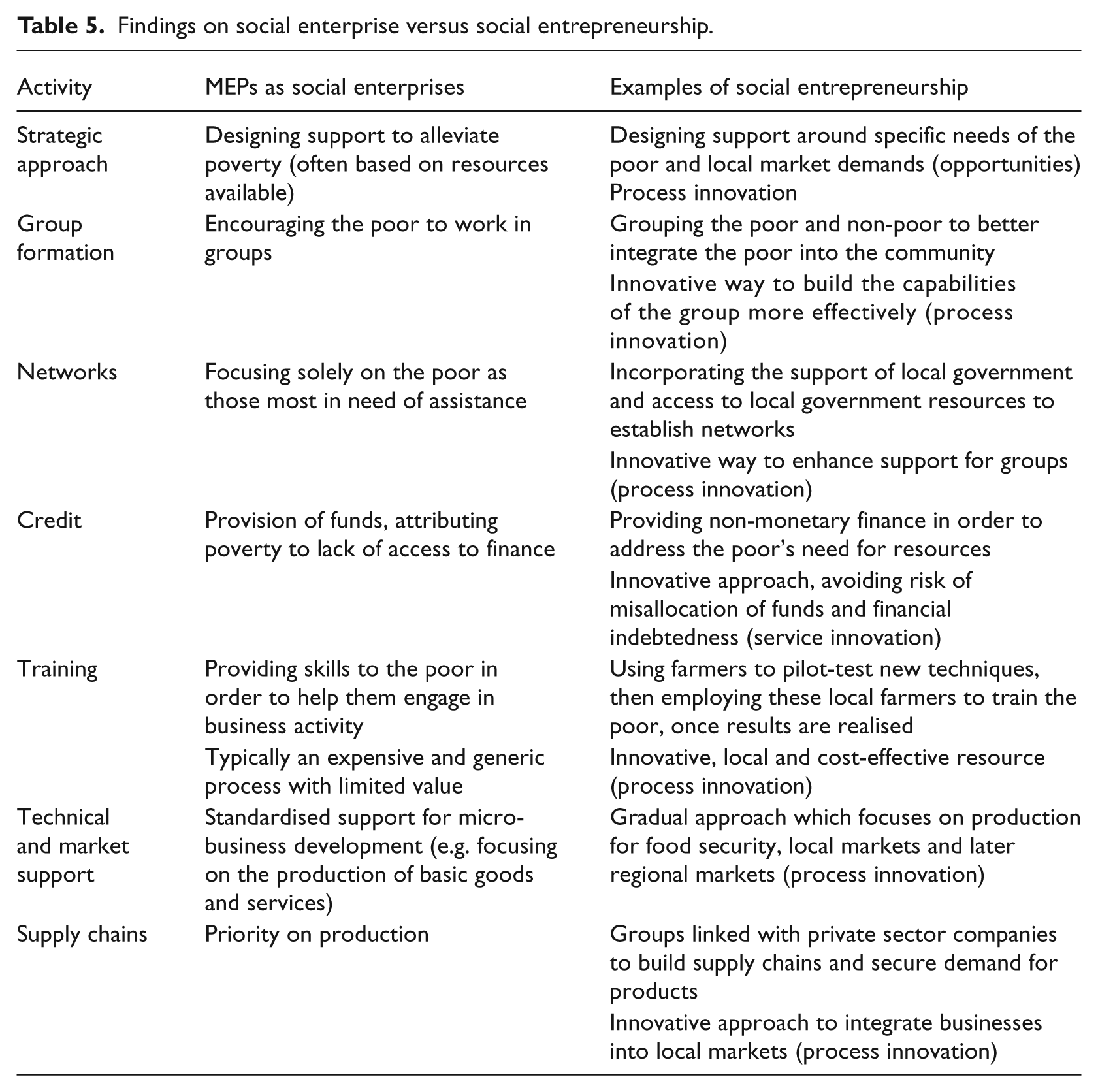
Hence, the findings on social enterprise provide insights into MEPs operating as social businesses, focusing on the purpose of their operations: the ‘why’, where norms involving the provision of training and credit are well established. Further, insights into activities within MEPs, which go beyond traditional approaches and depart from established norms to incorporate innovative and entrepreneurial ways to address poverty, highlight cases of social entrepreneurship: the ‘how’. These issues are summarised in Table 5.
Findings on social enterprise versus social entrepreneurship.
Discussion
From a theoretical perspective, the findings provide a valuable basis from which to understand and appreciate central differences between social enterprise and social entrepreneurship, based on innovative and entrepreneurial activity. Empirical evidence of this distinction emerges in the context of MEPs, whereby NGOs as social businesses aim to create social change through the provision of training and credit to the poor, reinforcing the notion of social enterprises as businesses that operate with a social purpose. Evidence of social entrepreneurship emerges from findings regarding how: where INGOs depart from established business practice, apply innovation and assume risk in order to achieve more effective outcomes. In terms of theory development, the resulting clarity provides important foundations to guide and refine future research in both areas. From a practical perspective, the findings provide important insights into new approaches to micro-enterprise development in countries such as Vietnam, where significant progress towards poverty alleviation has been made. Hence the contributions of this study extend to both theory and practice.
An appreciation of the why is important to develop a wider awareness of complex social problems such as poverty, to begin to understand the nature and scope of these problems and the need for action to address them. An appreciation of how this is being done is essential, as effective outcomes need to be understood in terms of the underlying processes (Wright and Marlow, 2011); ineffective outcomes require new and innovative approaches to better address complex social problems. As such, the how of innovation and entrepreneurship in a social context provides valuable guidance to others (including policymakers, donors and practitioners), seeking new ideas and ways to address longstanding social problems.
Contributions regarding social entrepreneurship extend to innovative approaches regarding how NGOs conduct their operations in terms of process and service innovation (Tushman and Nadler, 1986). Examples of process innovation (e.g. groups involving both poor and non-poor people within the community) highlight that innovation does not need to be radical or continuous (Dees, 1998a), but can emerge incrementally through reflection and learning. Similarly, examples of service innovation (e.g. providing in-kind versus cash advances) highlight the value of rethinking how change can be effectively addressed, seeing problems and identifying opportunities for solutions from new perspectives in order to change how things are done.
Perhaps it is not surprising that the positive change pursued by social enterprise and social entrepreneurship is promoted and at times idealised (Dacin et al., 2011). The opportunity to ‘change the world’ (Bornstein, 2004) for the better is of growing interest to entrepreneurial philanthropists (Shaw et al., 2011) and warrants analysis and understanding. However, if research becomes caught up in the rhetoric such that concepts are blurred, ultimately research agendas will lose conceptual clarity (Corbin and Strauss, 1990; cf. entrepreneurship, venture creation and small business research in the 1980s and 1990s). 1 Innovation and entrepreneurship are viewed positively in theory and practice, and where social businesses are not generating the intended outcomes, perhaps new ways of thinking are essential. However, there is also value in appreciating what does work in terms of social enterprises achieving the intended outcomes and replicating these strategies and activities. Innovation is necessary for creative, new approaches, but change for the sake of change is extraneous, risking the misallocation of limited, valuable resources (Weerawardena and Sullivan Mort, 2006).
Conclusion
Implications for policymakers and practice
What does this mean, then, for policymakers aiming to address complex social issues through initiatives such as social innovation funds? Arguably, for problems where new thinking is needed to achieve more effective outcomes, innovation is a necessary factor. However, equally important is an understanding or acceptance of risk and uncertainty as associated with entrepreneurship (Covin and Slevin, 1989), and hence a tolerance for failure. Similarly, where entrepreneurial approaches lead to effective outcomes (e.g. using pilot farmers to train the poor), innovation tends to lead to imitation (Schumpeter, 1934), such that social businesses can learn from and adopt these approaches. With respect to social enterprise, resources for social businesses that want to change society do not necessarily involve innovation at the organisational level. Hence, where existing business models are working effectively, replication and learning from these models may be a viable and valuable approach. In the context of social enterprises such as NGOs, these lessons are particularly relevant for businesses and donors with a preference for low risk.
Recommendations for future research
Taking stock, reflecting and assessing past research and current practice provides an opportunity to establish constructive research agendas for the future: for example, exploring strategy within social enterprise to consider opportunities for financial sustainability to address long-term, sustainable social change. Despite the limited number of cases involved, the contribution of this article lies in reconciling the notions of social enterprise and social entrepreneurship while drawing on their association with effectuation (Sarasvathy, 2001) and collaborative approaches, each of which are linked increasingly to both areas of research.
While the distinction between social enterprise and social entrepreneurship is blurred at times within the literature (Chell, 2007), re-examination reveals that much of the terminology involving ‘entrepreneurship’ in the context of social enterprise is actually referring to ‘strategic’. For example, Chell notes social businesses must be ‘thoroughly entrepreneurial’ in order to be financially sustainable; the enterprise team needs to be ‘entrepreneurially led’ (2007: 18) in using resources to achieve the intended outcomes. Essentially, the challenges of being financially sustainable and successful are strategic issues faced by all commercial organisations in the public, private and third sectors, and are explored in detail in the strategic management literature. Hence, conceptual clarity is imperative to the development of understanding in these research areas.
It is important to note that adopting a strategic approach to business is not a limitation, yet it is important also to clarify that strategies exist in various forms, only some of which are entrepreneurial. Further, entrepreneurial activity is only innovative and novel until it becomes copied and imitated such that it represents established business norms. This is essentially what makes strategy and entrepreneurship intriguing in the public, private and third sectors: understanding what works strategically to produce the intended outcomes, and identifying the next phase of creative destruction in the quest for more effective outcomes. The intrigue of social entrepreneurship specifically lies in the destruction of longstanding social problems which have not yet been resolved, and in creating the benefit of social change for all.
Footnotes
Appendix: Semi-structured interview protocol – approaches of MEPs
Check if there is anything the interviewee would like to add, conclude interview, thank them for their time.
Funding
This research received no specific grant from any funding agency in the public, commercial or not-for-profit sectors.