



Abstract
Rapid growth of online shopping activities in recent years has required careful identifications of key factors influencing consumers’ behaviors and attitudes toward online shopping. Identifying critical factors influencing online consumer behavior is very crucial for effective customer relationship management. It is very important that online sellers clearly understand critical factors influencing online customers’ shopping intention and take necessary actions accordingly. If identified and managed properly, those critical factors can provide competitive advantage to online sellers and also increase consumers’ satisfaction level and experiences with sellers’ website. This research investigated the attitudes toward online shopping of university students in Ankara, Turkey. Internet users’ interest, evaluation, trust, intention and concerns toward online shopping were assessed by conducting survey type research. Internet users’ concerns toward online shopping were assessed by considering financial issues, product quality issues, refund issues, product delivery issues, security issues and privacy issues. Findings of this study guide online retailers which factors to focus on in order to develop successful marketing strategies for online consumers.
Keywords
Security and privacy issues are among the major factors that negatively influence online shopping activity.
Introduction
Electronic commerce can be defined as conducting, transacting and facilitating business activities over computer networks. It is usually abbreviated as e-commerce or eCommerce. Electronic commerce plays a major role in the global economy and its scope is very broad. Online shopping, electronic payments, online ticketing, Internet banking are all different types of electronic commerce. It is not unusual to see private businesses, governmental bodies and individuals as participants in e-commerce transactions. One of the most common types of electronic commerce is Business-to-Consumer (B2C) e-commerce. Online shopping, which refers to buying and selling products over the Internet, is a type of B2C e-commerce. According to a recent survey online shopping is among the most common types of activities conducted over the Internet (Kristen, 2011).
In online shopping, buyers and seller are not affected by time, location or long distances. That is, in order to make purchases, buyers do not have to visit the seller’s physical store, which might be located in another city or country. Consumers save both time and traveling costs by making purchases over the Internet. When compared to traditional retailing, online shopping provides consumers with more control and bargaining power, as it is possible to obtain more information about available products and services via the Internet. Online shopping enables consumers to make the best choice among many available alternatives. Some online stores have intelligent recommender agents, which help consumers to find, compare and purchase products and services among so many alternatives. Further, online stores enable consumers to shop 24 hours a day. On the other hand, online sellers have an opportunity to reach customers worldwide with minimum costs. Sellers do not have to invest huge amounts of money in building physical stores to offer their products. Reduced costs on the seller side are in turn reflected to the consumers as discounted prices on offered products. These are just a few reasons why online shopping has become popular in a short period of time. The number and the variety of firms and organizations which set up new businesses on the Internet are constantly increasing. The global volume of e-commerce sales has been increasing every year and it is predicted to reach to US$ 1.8 trillion by the end of 2016 (eMarketer, 2013). Despite the convenience provided by e-commerce, there are many consumers unwilling to conduct transactions with online stores. There exist several barriers which have led to the unwillingness of these consumers. Some of those barriers are concerns related to privacy of personal information, security of financial transactions, refund process of online products, online product quality issues, etc. Understanding online consumers’ shopping behavior and factors influencing this behavior is important for increasing the volume of online shopping.
‘Online shopping attitude’ refers to consumers’ psychological state in terms of making purchases on the Internet, while ‘online shopping behavior’ refers to the process of purchasing products or services over the Internet (Li and Zhang, 2002). Consumers’ attitude towards online shopping is an important factor affecting actual shopping behavior (Shergill and Chen, 2005). According to the Theory of Planned Behavior (TPB), attitude toward behavior is one of the major factors which influences individuals’ behavioral intentions and actual behaviors (Azjen, 1991). The studies of Bhattacherjee (2000), Lin (2007),Yulihasri (2011) and Lim et al. (2011) showed that consumers’ favorable attitudes toward online shopping significantly influence their online shopping intention and behavior.
Extensive researches have been carried out by both scholars and practitioners in order to gain more knowledge about consumer behavior in e-commerce platforms. Consumer-oriented and technology-oriented studies tried to bring more insights about consumer behavior from various perspectives. Consumer-oriented studies assessed consumer shopping behavior from the perspective of consumer demographics (Brown et al., 2003; Alam et al., 2008), cultural factors (Ko et al., 2004), psychological factors (Lin, 2007; Lian and Lin, 2008), trust factors (Teo and Liu, 2007; Phung et al., 2009; Jemaa and Tournois, 2009), and perceived risk factors (Forsythe and Shi, 2003; Naiyi, 2004; Ghasemaghaei et al., 2011; Almousa, 2011). While no relationship was found between race and Internet shopping (Ko et al., 2004), Brown et al. (2008) showed that an individual’s gender, to a lesser extent, influences consumers’ intention to purchase via the Internet. Ko et al. (2004) carried out a cross-cultural study in order to see whether Internet users in different countries have similar degrees of perceived risk toward online shopping. Their study results showed the existence of cultural differences in response to the different risk factors such as social, financial, time, and psychological. Their study recommended that online retailers should address different risk factors in each country separately if they want to increase the effectiveness of their marketing plans. Studies have also shown that consumers’ trust in online retailers influences not only their attitudes toward online shopping (Teo and Liu, 2007), but also their online shopping intention (Phung et al., 2009).
On the other hand, technology-oriented studies have assessed consumer behavior from the perspective of privacy and security issues over the Internet (Ranganathan and Ganapathy, 2002; Lian and Lin, 2008; Udo, 2011; Liao and Cheung, 2011; Yulihasri et al., 2011) and technical specifications of online stores, such as design (Ranganathan and Ganapathy, 2002; Ko et al., 2004; Shergill and Chen, 2005; Nik Mat and Meor Ahmad, 2005), ease of navigation (Bellman et al., 1999; Ranganathan and Ganapathy, 2002) and information content (Ranganathan and Ganapathy, 2002; Phung et al., 2009). Other studies showed that privacy and security concerns of online consumers are the main factors that significantly influence their intention to shop online (Ranganathan and Ganapathy, 2002; Lian and Lin, 2008; Udo, 2011; Liao and Cheung, 2011; Yulihasri et al., 2011). Studies have also shown that design, reliability, information content, ease of use and navigation of an online shopping website are the main factors that significantly influence consumers’ perceptions about Internet shopping (Bellman et al., 1999; Ranganathan and Ganapathy, 2002; Ko et al., 2004; Shergill and Chen, 2005; Nik Mat and Meor Ahmad, 2005).
In order to develop successful marketing strategies to convert potential customers into active ones and at the same time retain existing ones, online retailers have to clearly determine and manage critical factors affecting consumers’ shopping behavior. Online retailers should also note that critical factors influencing online shopping behavior vary according to the individual characteristics, particular context and situation (Lin, 2007). If identified and managed correctly, those critical factors can provide competitive advantage to online sellers in their respective markets.
Methodology
The main objective of this study is to assess Internet users’ attitudes toward online shopping. Identification of those factors will guide online retailers how to increase the quality of their services and marketing strategies. By conducting survey research, this study aims to evaluate the following factors and concerns related to online shopping: Internet usage patterns, online shopping experience, interest in online shopping, online shopping evaluation, trust in online sellers, online searching effort, perceived financial risk, perceived refund risk, perceived product risk, perceived delivery risk, perceived security and privacy risk and intention to shop online.
In order to assess the above mentioned factors and concerns of potential respondents, a questionnaire was developed. Questionnaire items of the study were retrieved from relevant literature and adapted to this study. Items measuring interest in e-commerce, intention to shop online, external search effort, perceived benefits of searching and e-commerce evaluation were based on Teo (2002). Items measuring perceived financial risk, refund risk, delivery risk and product risk were based on Naiyi (2004), Swinyard and Smith (2003), Lewis (2006), Forsythe et al. (2006) and Masoud (2013). Finally, items measuring perceived security and privacy risks in the Internet were based on Smith et al. (1999) and O’Cass and Fenech (2003). For each questionnaire item, participants were asked to either provide relevant frequencies or indicate their opinions on a scale ranging between disagree (1) to agree (3), little (1) to much (3) and low (1) to high (3). The survey was conducted in the Turkish language. All survey items were translated from English to Turkish by two experts.
In this study, non-probability convenience sampling technique was utilized to access potential respondents. That is, respondents of the study were chosen based on their ease of access. All of the respondents were university students studying in the capital city of Turkey, Ankara. Students were invited to voluntarily participate in the survey. There were two independent samples in this study, one of which was the pilot sample and the other was the main study sample. The survey was initially pre-tested on a pilot sample which was comprised of 10 students. Necessary modifications were made to the survey based on obtained feedbacks from the pilot sample. Later, the final version of the survey was administered to the main study sample. The printed copies of the questionnaire were distributed to 208 students in various faculties of the university. During a two-week period, 195 usable responses were obtained, giving a response rate of 93.75 percent. Usable responses used in the data analysis were composed of surveys either totally completed or completed with just a few missing questions. Collected data were analyzed by descriptive statistics techniques and the results of the data analysis are presented and discussed in the following section.
Results
Validity and reliability of measurements
Validity refers to the appropriateness, correctness and meaningfulness of the inferences made by researcher, while reliability refers to the consistency of scores or answers from one administration of an instrument to another and from one set of items to another (Fraenkel et al., 2012). In order to ensure validity, the appropriateness and format of the questionnaire content were checked by two experts from the relevant field. Necessary modifications were made to the questionnaire items based on the expert reviews.
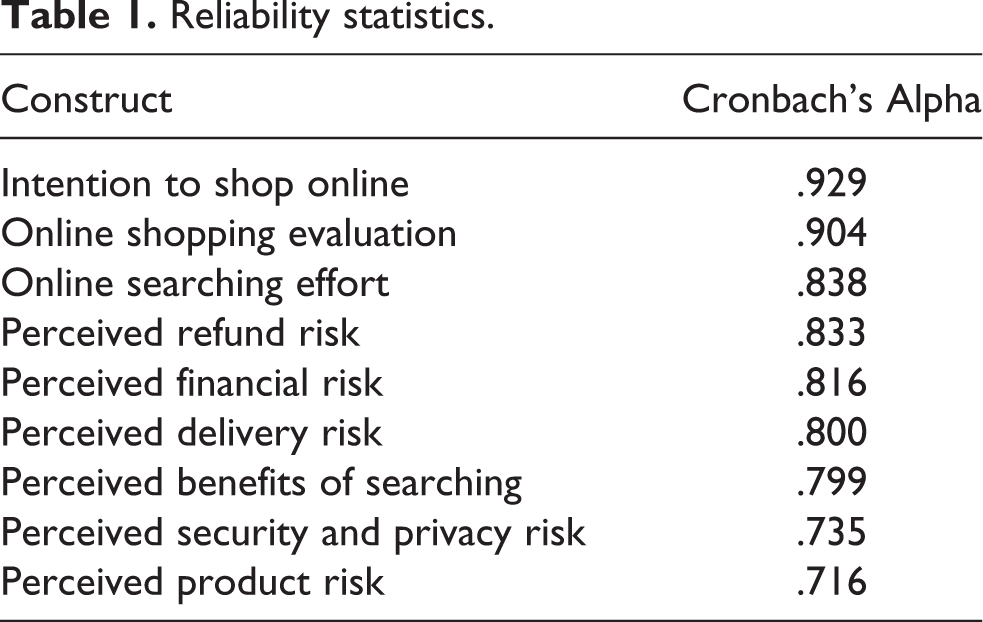
In order to test the internal consistency of the dataset Cronbach’s alpha coefficient was utilized. Cronbach’s alpha scores range between 0 and 1. The closer the coefficients are to 1, the greater are the internal consistency of the variables in the scale. Cronbach’s alpha coefficients of this study are given in Table 1. All of the coefficients are above an acceptable range of 0.70.
Reliability statistics.
Demographic profile of respondents
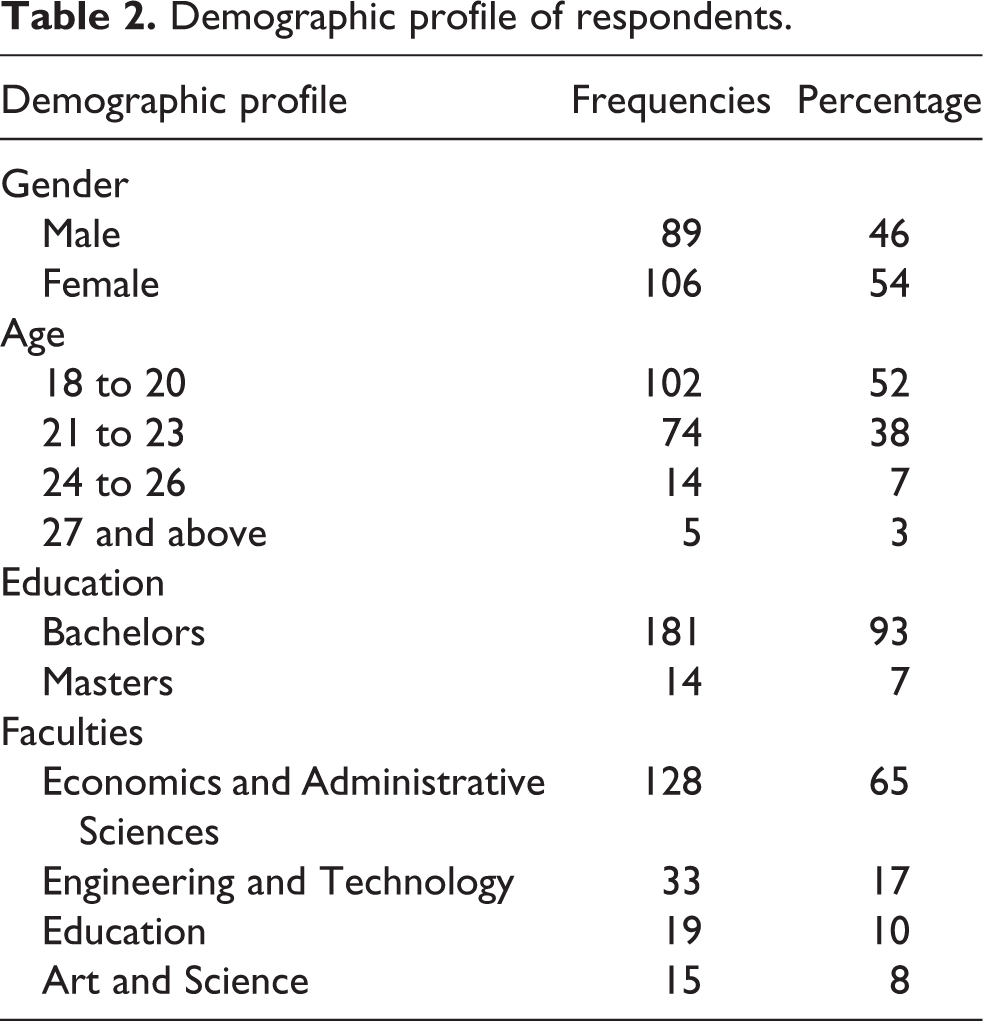
The demographic profile of the respondents, including gender, age, education and faculties is given in Table 2. Gender distribution shows that the majority of respondents were female (54 percent). Most of the respondents (52 percent) were between ages 18 and 20 and a majority of them were bachelor students (93 percent). The respondents were mainly from economics and administrative science faculties (43 percent), followed by engineering and technology (26 percent).
Demographic profile of respondents.
Internet usage patterns
Internet usage patterns of the study participants are given in Table 3. Questionnaire results show that the majority of the respondents (42.1 percent) spend less than 1 hour a day on a personal computer, followed by those (26.2 percent) who use a personal computer between 2 and 3 hours a day. As for daily Internet usage duration, the majority of the respondents use the Internet between 2 and 3 hours a day (37.4 percent), followed by those who use the Internet between 4 and 5 hours (21 percent), and those who use it for less than 1 hour (21 percent). Respondents access the Internet primarily from home (64.1 percent) and secondarily from outside (34.9 percent). Most of the respondents (57.4 percent) use their smartphones to access to the Internet, but 34.4 percent use personal computers and 7.2 percent use tablets to gain access to the Internet. Social networking (61.5 percent), watching movies and listening to music (48.2 percent), and reading daily news (45.6 percent) are the top three activities respondents carry out on the Internet most of the time. Privacy of individuals (52.3 percent), excessive advertisements (36.4 percent) and security of financial transactions (33.3 percent) are the top three major concerns of the respondents with using the Internet. Privacy and security issues were also found to be among major concerns of consumers in the studies of Udo (2011) and Teo (2002) which were conducted in USA and Singapore respectively.
Internet usage patterns of respondents.
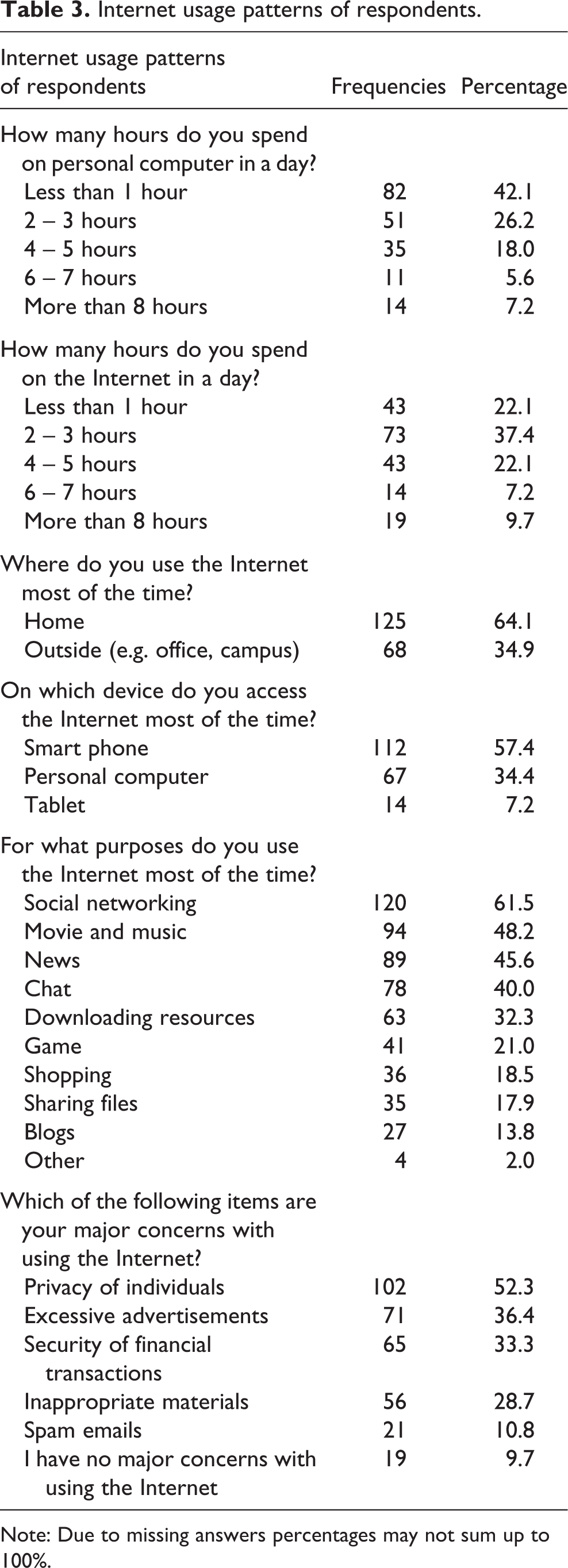
Note: Due to missing answers percentages may not sum up to 100%.
Online shopping experiences
Table 4 shows the e-commerce experience of respondents. When respondents were asked if they ever purchased anything from the Internet, 71.3 percent reported that they had shopped from the Internet, while 28.7 percent stated that they had never done so. Respondents who had online shopping experience stated that convenience and ease of use of online shopping (55.4 percent) were the main reason why they shopped online. A survey conducted in Pakistan also showed convenience as a main influencing factor for online shopping (Nazir et al., 2012). Other studies found that there is a positive association between consumers’ beliefs about ease of use of online shopping and their attitude towards online shopping (Brown et al., 2003; Yulihasri et al., 2011).
Online shopping experiences of respondents.
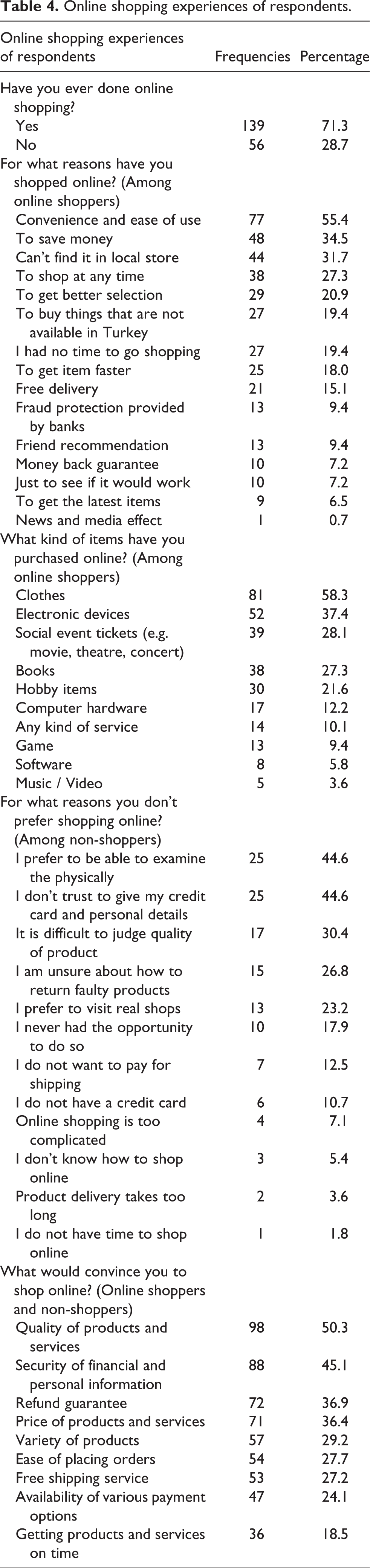
Saving money (34.5 percent), being unable to find intended products in local stores (31.7 percent), and being able to shop at any time (27.3 percent) are the other most common reasons why respondents shopped over the Internet. Survey results showed that clothes (58.3 percent), electronic devices (37.4 percent), social event tickets (28.1 percent) and books (27.3 percent) are the most common types of products that online consumers preferred to purchase over the Internet, while music and video (3.6 percent) are the least common.
Respondents with no online shopping experience stated that they prefer to be able to examine products physically (44.6 percent), they do not trust to give out their credit card and personal details (44.6 percent) and they found it difficult to judge the quality of online products (30.4 percent). When asked what would convince them to purchase something over the Internet, the top three factors stated by both online shoppers and non-shoppers were the quality of products and services (50.3 percent), the security of financial transactions and personal information (45.1 percent) and the refund guarantee of purchased products (36.9 percent).
Interest in online shopping
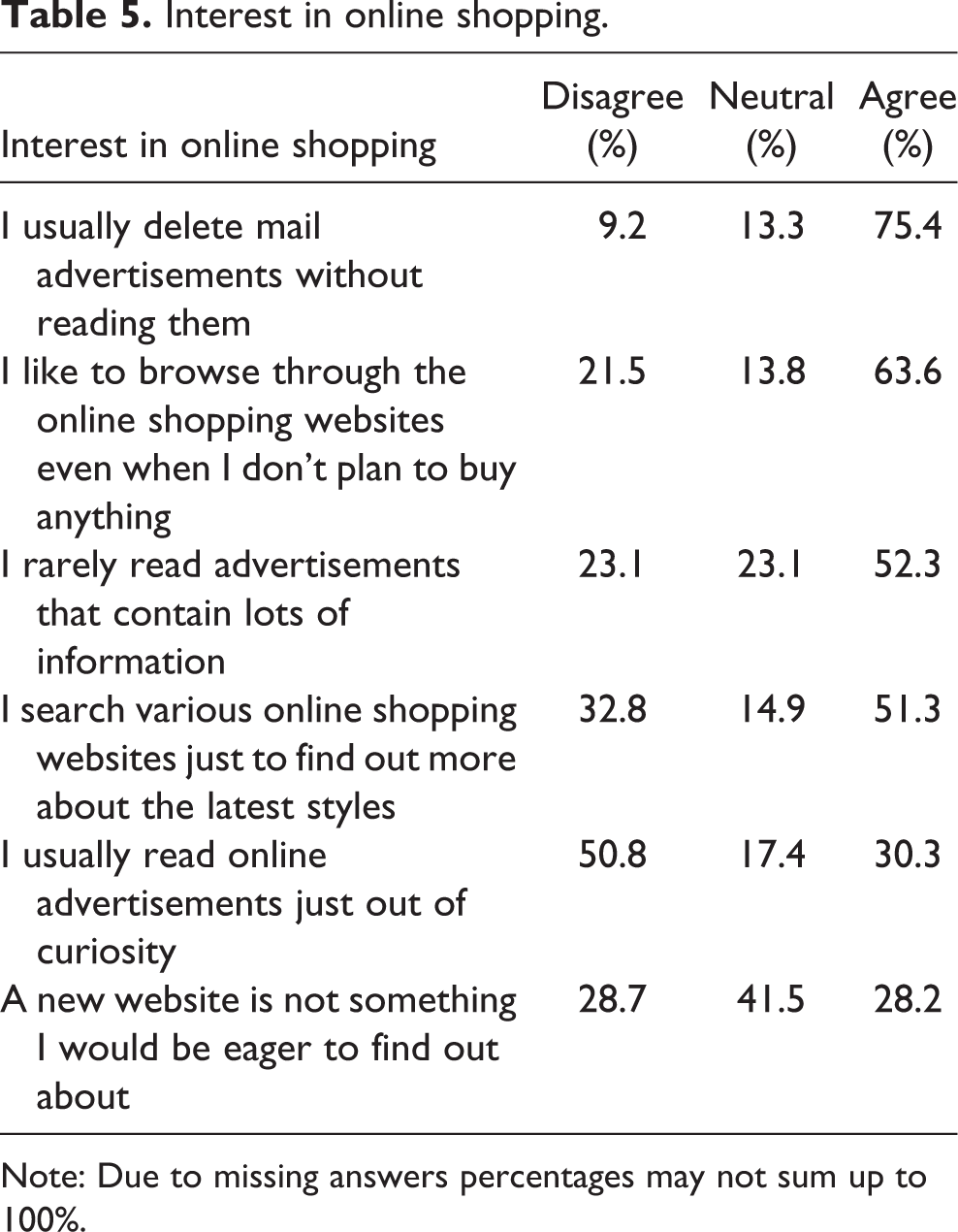
Internet users’ interest in online shopping was measured from various aspects such as degree of engagement with online shopping websites, reading various forms of online advertisements and finding about new websites (Table 5). The majority of respondents (63.6 percent) stated that they like browsing through online shopping websites even if they do not plan to purchase anything. Nearly half of the respondents (51.3 percent) search various online shopping websites just to find out latest trends and styles. However, the survey results showed that most of the Internet users are not positive about online advertisements. More than half of the respondents (52.3 percent) stated that they rarely read online advertisements that contain lots of information. The majority of respondents (75.4 percent) stated that they usually delete mail advertisements without reading them. Further, respondents (41.5 percent) tended to be neutral when it comes to learning about new websites.
Interest in online shopping.
Note: Due to missing answers percentages may not sum up to 100%.
Online shopping evaluation
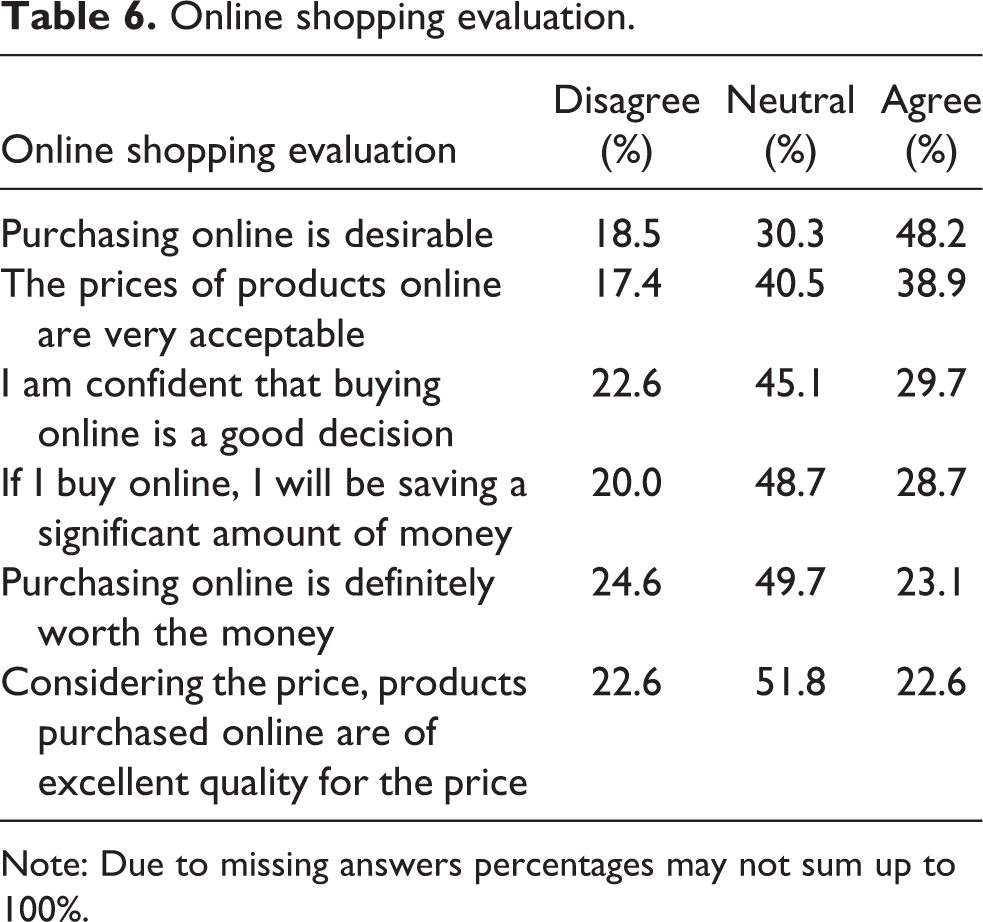
Table 6 provides a summary of the respondents’ evaluation of Internet shopping from various aspects. When asked whether online shopping is desirable, 48.2 percent of respondents agreed with the statement, while 30.3 percent tended to be neutral. Only 29.7 percent of respondents were confident that shopping over the Internet is a good decision, while the majority (45.1 percent) were unsure about it.
Online shopping evaluation.
Note: Due to missing answers percentages may not sum up to 100%.
Survey results also showed that respondents were unsure whether the prices of products offered over the Internet are reasonable. While 38.9 percent of respondents reported that online product prices are acceptable, 40.5 percent tended to be neutral. Only 28.7 percent of respondents reported that they would save a significant amount of money if they shopped over the Internet, while the majority (48.7 percent) tended to be neutral. While the majority of respondents tended to be neutral as to whether online shopping was worth the money (49.7 percent) and whether online products are of excellent quality for the price (51.8 percent), the proportions of respondents who agreed and disagreed with the given statements were almost equal and close to 23 percent.
Trust in online sellers
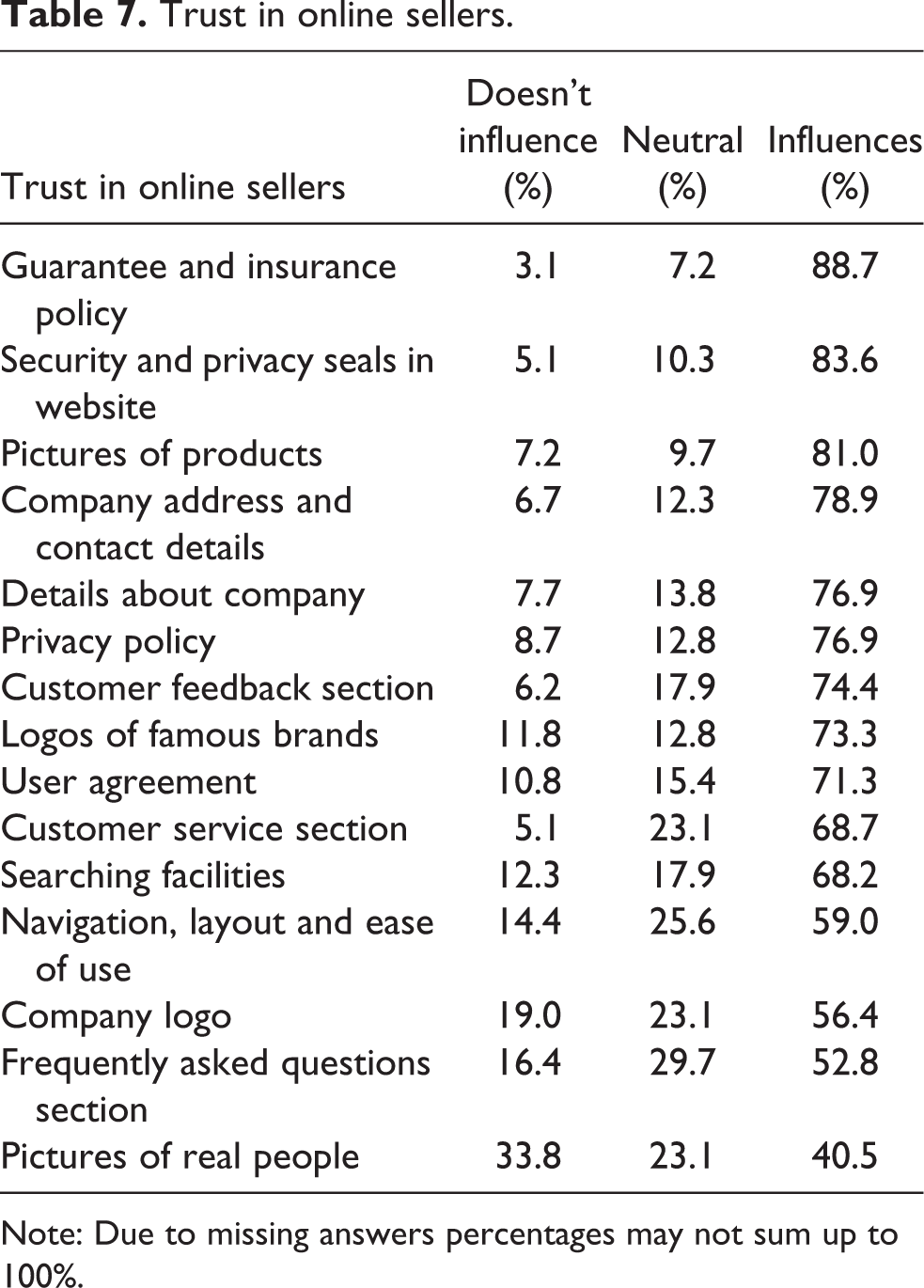
Consumer trust in online sellers has a significantly positive effect on their purchasing intention (Phung et al., 2009). Trust in online sellers helps to form positive attitudes toward online shopping (Jarvenpaa et al., 1999, 2000). In this study, respondents were asked what kind of factors in an online sellers’ website would increase the trustworthiness of the site and hence influence their intention to purchase products or services from the particular online seller. Table 7 shows a summary of the respondents’ evaluation of the factors that might influence their perceptions about trustworthiness of online sellers. Guarantees and insurance provided by online sellers against any kind of adverse situations were ranked as the most important factor (88.7 percent) that has an influence on respondents’ perceptions about trustworthiness of online sellers. The presence of security and privacy seals in online sellers’ websites was reported to be the second important factor, with 83.6 percent. From the online consumer’s point of view, the existence of security and privacy seals in a website is an indication that the website has taken the necessary measures to protect personal information and ensure the security of financial transactions of its customers. The presence of product pictures in an online seller’s website was found to be the third most important facto; 81 percent of respondents stated that they tend to trust online sellers which provide actual product images in their online stores. Accessibility to company address and contact information (78.9 percent) and necessary information about the company itself (76.9 percent) were also reported to be important factors that influence consumers’ trust in online sellers.
Trust in online sellers.
Note: Due to missing answers percentages may not sum up to 100%.
Online searching effort
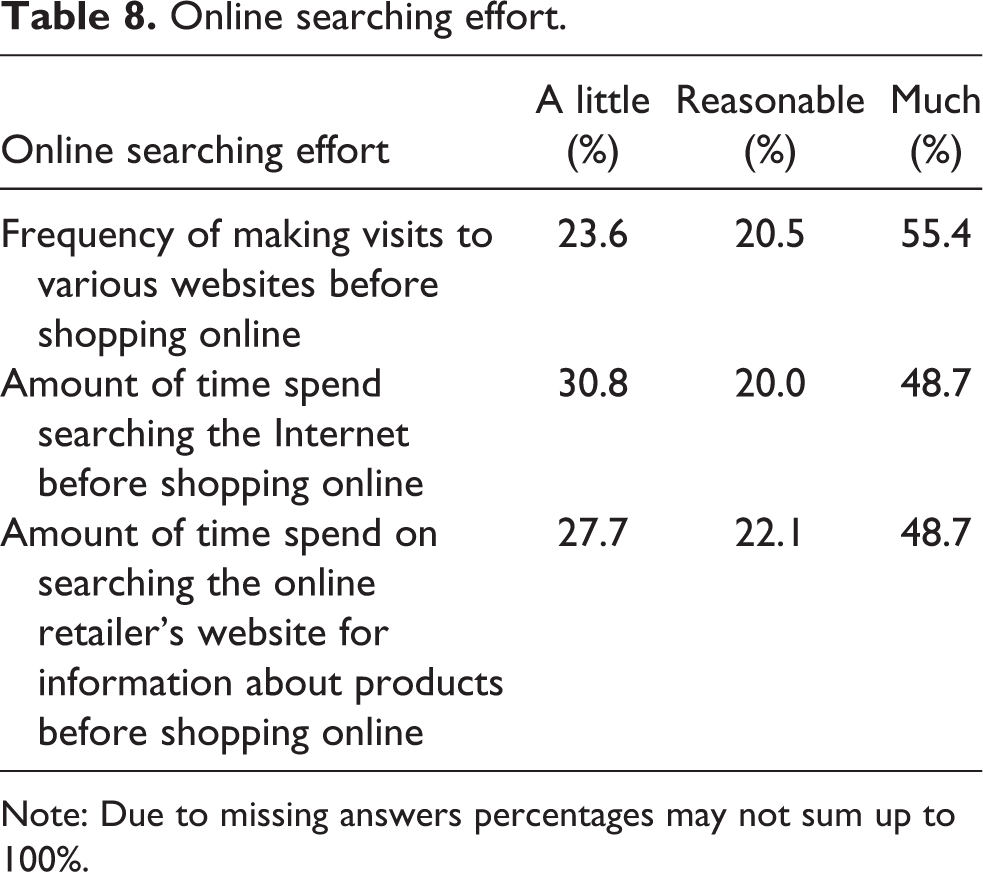
Searching effort refers to the extent to which respondents conduct a search about products or services from various sources before making a purchase from online stores. In online shopping activities consumers utilize the Internet not only for purchasing products but also for comparing prices and analyzing product specifications (Shergill and Chen, 2005). Table 8 shows that before shopping online, respondents make a reasonable number of visits, or many visits, to various websites to get more information about products they intend to purchase. Similarly, respondents reported that they spend reasonable amounts of time, or much time, on the Internet and in online retailers websites to get more information about products and services before shopping.
Online searching effort.
Note: Due to missing answers percentages may not sum up to 100%.
Respondents were asked whether they realized any benefits of conducting a search before shopping from online stores (Table 9). The majority (81.5 percent) stated that it pays to search various sources before purchasing online and by searching to get more information, nearly 79 percent of respondents learned about suitable products or services. Further, nearly 62 percent purchased exactly what they wanted by conducting enough search before rushing into online shopping. It was also largely agreed (74.9 percent) that in an online shopping environment, searching around various websites helped to find the lowest available price. In addition, about 71 percent stated that by searching for more information from various sources, they were certain of making the best buy. Nearly 68 percent of respondents believe that if one is going to rush into an online purchase, it is highly likely that he or she is going to miss good deals.
Perceived benefits of searching.

Note: Due to missing answers percentages may not sum up to 100%.
Perceived financial risk
Financial risk refers to potential loss of money. Fear of monetary loss was reported to have a negative influence on consumers’ attitudes toward shopping over the Internet (Forsythe and Shi, 2003; Masoud, 2013). On online shopping platforms, financial loss due to credit card fraud is one of the main concerns for many consumers (Almousa, 2011). Due to perceived financial risks, many consumers feel insecure while using their credit cards to shop over the Internet.
Table 10 shows the summary of respondents’ financial concerns related to online shopping. About 49 percent of respondents worried that their credit card details might not be secure and might be misused if they shop from online stores. Nearly 32 percent of the respondents stated that if they shop online they might get overcharged by online sellers, as sellers know their credit card details. The survey results also showed that consumers’ financial concerns in online shopping are not just limited to credit card frauds. About 35 percent of respondents reported that if they shop online, they might purchase something by accident, which might cause financial losses. Further, nearly 35 percent of respondents indicated that they might not even get the product they purchased over the Internet, which will cause them to lose money to the full amount of the wrongly purchased product.
Perceived financial risk.

Note: Due to missing answers percentages may not sum up to 100%.
Perceived refund risk
Perceived refund risk is defined as a situation in which certain conditions do not allow consumers to return or ask refund for a purchased product. In an online shopping environment many consumers are concerned about refund issues. Their concerns are mainly due to the fact that in an online environment, it is sometimes more difficult to judge the quality of certain products than in physical stores. This increases the possibility of receiving products of low quality for the given price. A recently conducted survey showed that 63 percent of online consumers look for the return policy before making a purchase and about two-thirds (62 percent) of consumers have returned a product purchased online (Kleinman, 2012).
In this survey, respondents were asked whether they consider return policy options before purchasing online (Table 11). The majority of the respondents (64.6 percent) stated that they will not consider online purchasing if there is no money back guarantee. More than half of the respondents (55.9 percent) indicated that unless free return shipment service is available, they will not consider shopping over the Internet.
Perceived refund risk.

Note: Due to missing answers percentages may not sum up to 100%.
Perceived product risk
Perceived product risk in online shopping refers to the situation in which purchased products either do not meet the expected quality or do not perform as expected. The online environment sometimes makes it very difficult to carefully inspect products’ features and quality before purchasing. One study showed that, among various kinds of potential risks in the online shopping environment, product performance risk was the one which made customers the most anxious (Forsythe and Shi, 2003). Similarly, in this study, respondents agreed (67.7 percent) that it is difficult to examine and judge the quality of products in an online shopping environment (Table 12). Further, the majority of respondents indicated that they might receive malfunctioning products (67.2 percent) or they might not even get what they actually ordered (61.0 percent) if they shop online.
Perceived product risks.
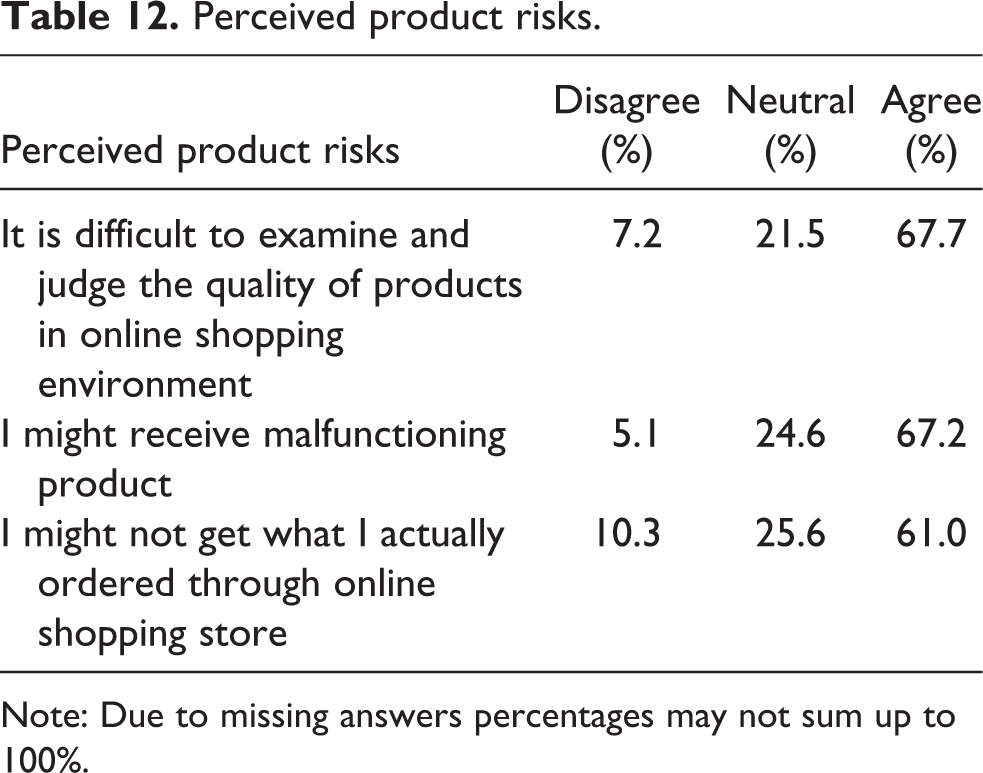
Note: Due to missing answers percentages may not sum up to 100%.
Perceived delivery risk
Perceived delivery risk refers to a situation in which online consumer worries that a purchased product might get lost, delayed, damaged during delivery or it might not even be shipped by the seller. Studies showed that perceived delivery risk negatively influences consumer attitude toward shopping over the Internet (Naiyi, 2004; Moshref Javadi et al., 2006). When compared with physical stores, in online purchases, consumers do not immediately possess the purchased product; that is, they have to wait a certain amount of time in order to receive the product. As shown in Table 13, a large number of respondents (61 percent) were concerned that products purchased online could be delivered very late. More than half of the respondents (56.4 percent) worried that purchased products could be damaged during delivery. The percentage of respondents who were concerned that products purchased online could be delivered to the wrong place, or lost during delivery, were 45.6 and 39.5 respectively.
Perceived delivery risk.

Note: Due to missing answers percentages may not sum up to 100%.
Perceived security and privacy risk
Security of financial transactions and privacy of personal information are among the major concerns of many Internet users. Due to security concerns, many Internet users are reluctant to make any kind of financial transactions over the Internet. Many others are also concerned about how their personal data is being protected and for what purposes it will be used by online businesses. Studies have shown that transaction security concerns significantly influence the shopping behavior of online consumers (Lian and Lin, 2008; Liao and Cheung, 2011). In their study, Ranganathan and Ganapathy (2002) identified security and privacy as key dimensions of online store design.
Table 14 shows respondents’ evaluation of security and privacy issues in an online shopping environment. It was largely agreed (77 percent) by respondents that online businesses should never sell the personal details of their customers to other companies. When asked whether they feel safe providing personal or financial information to online retailers, only 16.4 percent of the respondents agreed, while nearly half (49.7 percent) disagreed. While 10.3 percent of respondents find the Internet to be a safe environment to provide personal or financial details, nearly 57 percent of respondents found it unsafe.
Perceived security and privacy risk.

Note: Due to missing answers percentages may not sum up to 100%.
Intention to shop online
Intention to shop online refers to the likelihood that a consumer will consider shopping over the Internet in the future. Table 15 shows respondents’ self-reported intentions to shop over the Internet in the future. The survey results showed that respondents tended to be neutral about their online shopping intention. That is, a majority of the respondents were unsure whether they would consider buying something from online stores in the near future. However, the percentage of respondents who are more likely to engage in online shopping activity in the near future is slightly higher than the percentage who reported that their online shopping intention is low.
Intention to shop online.

Note: Due to missing answers percentages may not sum up to 100%.
Implications and conclusions
By analyzing various factors and concerns related to shopping over the Internet, this study tried to investigate Internet users’ attitudes toward shopping over the Internet. The study results contribute to the relevant literature by showing the respondents’ thoughts, views and feelings about critical factors whose significant influence on online consumer shopping behavior was shown in the relevant literature. Online retailers can utilize the findings of this study to improve their online business operations, customer support service and marketing strategies as well as online store design. Successful marketing strategies require clear understanding of consumers’ concerns, needs and requirements.
The survey results showed interesting and, at the same time, very important findings about the Internet users. As shown previously in Table 3, most of the Internet users use their smartphones to access the Internet. Smartphones provide more advanced computing capability and connectivity than typical mobile phones. However, when compared with personal computers, mobile devices are less powerful. Therefore, online sellers are recommended to optimize their online stores for mobile technology in order to decrease user frustration.
Lack of physical interaction is a main impediment to online retail sales. A large number of respondents stated that they have difficulties in examining product features and judging product quality in an online environment (Table 12). Further, the majority of respondents stated that the existence of product images and graphics in online stores significantly influences their trust level and shopping intention (Table 7). Holzwarth et al. (2006) conducted a study to deliver product information to potential customers by using animated graphical representations. The results showed that using animated graphical representations to deliver product information leads to higher level of satisfaction with online sellers, more positive attitude toward products and higher intention to make online purchase. By considering these findings, online retailers are recommended to provide necessary visual tools such as images, videos, graphical representations and animations in order to make it easy for customers to analyze product specifications and quality over the Internet.
Security and privacy issues are among the major factors that negatively influence online shopping activity (Ranganathan and Ganapathy, 2002; Liao and Cheung, 2011; Yulihasri et al., 2011). Studies conducted in the USA (Teo, 2002) and Singapore (Udo, 2011) showed that majority of consumers had concerns about abuse of their credit cards and other personal information when they conducted transactions with online stores. In this study also, respondents stated that privacy of personal information and security of financial transactions are their top concerns with using the Internet (Table 3). In addition, respondents who have never shopped online indicated that they do not trust to provide their financial and personal details over the Internet (Table 4). The majority of respondents also indicated that they will shop online if they are convinced that their privacy and security are ensured (Table 4). By considering these findings, online retailers are recommended to take all necessary measures to ensure that any kind of financial transactions carried out by customers over the Internet are secured, and that personal information of customers is not used for any other purposes. Online retailers should inform customers about how their security and privacy are being protected and they are also encouraged to place necessary security and privacy seals in their websites, as it is found that these increase consumers’ trust level (Table 7).
Consumers’ not shopping over the Internet is mainly due to the lack of trust, which is considered to be an important trigger under conditions of risk and uncertainty (Shergill and Chen, 2005). Phung et al. (2009) showed that the increase in trust of the consumers will directly and positively affect their online shopping intentions. Results of this study showed that Internet users consider several factors an indication of the trustworthiness of online sellers (Table 7). The top factors that increase consumer trust levels in online stores are guarantee and insurance policy, security and privacy seals, pictures of products, company address and contact details, necessary details about company and privacy policy. Online retailers are encouraged to consider those factors while building their online stores.
Internet users spend considerable amounts of time and effort in searching and analyzing products before purchasing (Table 8). Searching activities related to products are conducted either on retailers’ own websites or in external sources. In order to reduce the effort spent in searching for suitable products and at the same time improve the consumer decision-making process, online sellers are encouraged to integrate intelligent shopping agents to their websites. Intelligent shopping agents, also called recommender agents, are software which provides easily accessible, high-quality product recommendations for online consumers. Studies have shown that intelligent agents increase consumer decision quality and reduce searching effort in online shopping (Haubl and Trifts, 2000; Haubl and Murray, 2006; Huseynov et al., 2014)
In physical stores consumers can examine, try and seek advice from the sales representative before purchasing the product. However, in online stores consumers have a limited ability to examine offered products. They can examine products to a certain degree, which increases the level of product return requests. The survey results showed that the majority of respondents were concerned about refund issues in Internet shopping (Table 11). Study conducted by Ghasemaghaei et al. (2009) found that the possibility of returning damaged and disliked products significantly influences consumers’ behaviors toward online shopping. Consumers sometimes encounter difficulties in understanding the procedures required for returning purchased products. Therefore, online sellers are recommended to have easy-to-understand and smooth refund policies. Further, retailers should ensure that customers become familiar with their refund policy before purchasing products online.
Limitations and future research opportunities
While providing important insights into factors that influence online consumers’ shopping behaviors and attitudes, this research has some limitations. Firstly, respondents of the study were limited to the university students living in a single city area in a single country. Future studies are recommended to examine different populations with different demographic profiles in order to determine the generalizability of the findings to different countries and contexts. Secondly, this study utilized respondents’ self-reported data to assess their attitudes toward online shopping. Due to its nature, self-reported data sometimes does not reflect the respondents’ actual behaviors. If possible, future studies are recommended to utilize actual behavior data rather than self-reported data in order to assess online consumer behavior in Internet shopping.