




Abstract
The purpose of this article was to describe a group coaching model and present preliminary evidence of its impact on teachers’ implementation of Pyramid Model practices. In particular, we described coaching strategies used to support teachers in reflecting and problem solving on the implementation of the evidence-based strategies. Preliminary results of six pre-school teachers in an early childhood education program who participated in the group coaching were presented. The exploratory data provided findings of impact of the group coaching model and demonstrated that teachers’ implementation of the Pyramid Model practices increased after receiving group coaching. Implications for practice and future research were discussed.
Positive Behavior Intervention and Support (PBIS) is an evidence-based framework used in schools to create positive climate for learning and reducing challenging behaviors. Despite over two decades of research and policy behind PBIS, implementation remains a challenge. Challenging behavior is one of the leading requests for consultation in early childhood classrooms and is reported as contributing to teacher burnout and attrition in the field (Ingersoll & Smith, 2003; Kaiser & Cross, 2011). This lack of confidence and support around challenging behavior affects children directly: Pre-schoolers are expelled for behavior at rates 3 times higher than their school-age counterparts (Gilliam, 2005), and behavior has been used to justify placing young children in increasingly restrictive settings until they are socially “ready” for typical early childhood settings (Etscheidt, 2006). Fortunately, there is a great deal of evidence that PBIS can prevent such outcomes (e.g., Bradshaw, Mitchell, & Leaf, 2010; Horner et al., 2009), but extensive support is critical for full implementation (Cook & Odom, 2013).
The need for support is not surprising given the complexity of demands on teachers’ time and the difficulty of adopting new, multi-component frameworks such as PBIS. All successful PBIS frameworks share several core components: a shared commitment and philosophy around a positive approach to behavior, staff and family buy-in, a small number of shared expectations for behavior, intentional teaching of behavior expectations throughout the school or program, clear procedures for preventing and responding to behavioral challenges, intentional monitoring and data-based decision making, and ongoing professional development for staff (Fox & Hemmeter, 2009; Hemmeter et al., 2005; Horner et al., 2005). Each of these components can represent philosophical shifts for individuals within the program, and the daily implementation of these components requires intentional effort across an entire system. To ease these challenges, PBIS frameworks have been designed with implementation science at their cores (Cook & Odom, 2013). Despite coaching, technical assistance, leadership, and features of an effective workforce built into the model, there is a great deal of variability in how these efforts influence implementation. There is a great deal of interest in how coaching, in particular, can support implementation and in identifying the critical features of coaching that make coaching a “fit” for teachers and programs (Artman-Meeker, Fettig, Barton, Penney, & Zeng, 2015; Barton, Kinder, Casey, & Artman, 2011; Snyder et al., 2012). The purpose of this article is to describe group coaching as one promising approach to support PBIS implementation in early childhood settings. This article describes an application of group coaching to support implementation of the Pyramid Model (Fox & Hemmeter, 2009), a research-based framework for preventing and responding to challenging behavior. We will describe the literature supporting the Pyramid Model and group coaching.
The Pyramid Model
There is growing consensus that comprehensive prevention and intervention frameworks promote young children’s social-emotional competence and prevent challenging behavior (U.S. Department of Health and Human Services, 2015). Such frameworks must be age-appropriate and designed with attention to the systems-level supports that drive implementation. Fortunately, the field has collected a body of knowledge related to preventing and responding to challenging behavior in young children. The Pyramid Model (Fox & Hemmeter, 2009), a comprehensive framework for preventing and responding to challenging behavior, is rooted in PBIS models and recommended practices for young children. It has been extensively studied in early childhood and early childhood special education settings (Hemmeter, Snyder, Fox, & Algina, 2011).
The Pyramid Model clearly articulates teaching practices to support children at three levels: universal/primary strategies, targeted/secondary strategies, and individualized/tertiary strategies. Practices organized under the universal (primary prevention) level of the Pyramid focus on supporting all children’s social-emotional development and preventing challenging behaviors. These practices are associated with fostering nurturing relationships (e.g., Fullerton, Conroy, & Correa, 2009; Pianta, 1999) and creating supportive environments (e.g., Burchinal, Vandergrift, Pianta, & Mashburn, 2010; Chien et al., 2010; Sainato, Jung, Salmon, & Axe, 2008). Examples of research-based strategies that teachers would use at this level are supporting play, responding to children’s conversations, providing specific praise and encouragement, teaching rules, and ensuring adequate materials, balanced scheduling, and structured transitions. These strategies are designed to support children with and without disabilities. For example, in the universal level, teachers learn how to have supportive conversations with young children of all language abilities and how to make modifications to the environment to support all children (Milbourne & Campbell, 2007; Sandall & Schwartz, 2002).
Practices organized under the secondary level of the Pyramid focus on providing children with targeted social and emotional supports. These supports include teaching children how to solve problems, handle anger, make friends, and communicate emotions (Domitrovich, Cortes, & Greenberg, 2007; Kam, Greenberg, & Kusche, 2004; Vaughn et al., 2003; Webster-Stratton, Reid, & Stoolmiller, 2008). There is a specific emphasis on individualizing instruction to meet the needs of children with and without disabilities. Teachers may use visual supports to help a child enter play, or they may teach peer buddies to help facilitate the development of social skills in children with a range of abilities.
Finally, teachers provide more intensive, individualized interventions to the small number of children who do not respond to primary and secondary supports (Blair, Fox, & Lentini, 2010; McLaren & Nelson, 2009; Wood, Ferro, Umbreit, & Liaupsin, 2011). These interventions are developed following a thorough functional assessment and include prevention strategies, new skill-building, and responses to challenging behavior and new skills. The evidence-based strategies in the Pyramid Model aim to support all children, especially those with or at risk for disabilities by ensuring that environmental and relational supports are in place to foster children’s individual acquisition of social and emotional skills in place of challenging behaviors (Hemmeter et al., 2011).
Practice-Based Coaching and the Pyramid Model
Despite the amount of research done on the Pyramid Model and the widely available resources related to training and coaching (i.e., www.csefel.vanderbilt.edu; http://challengingbehavior.fmhi.usf.edu/communities/trainers.htm), several studies have found fidelity to the Pyramid Model to be relatively low in public pre-schools and Head Start settings (Artman-Meeker, Hemmeter, & Snyder, 2014; Hemmeter et al., 2011). When programs and teachers begin implementing the Pyramid Model, they typically attend a series of 3- to 4-daylong workshops aligned to each level of the Pyramid. Instructional strategies such as brief presentations, cooperative learning activities, discussion, video exemplars, and case studies are used during the workshops. Teachers also receive materials and implementation guides to support follow-up and implementation in the classroom. Systematic professional development and coaching on the Pyramid Model and PBIS frameworks have been associated with increased implementation of the model (Fox, Hemmeter, Snyder, Binder, & Clarke, 2011; Hemmeter, Hardy, Schnitz, Adams, & Kinder, 2015). One particular coaching model, practice-based coaching (Snyder, Hemmeter, & Fox, 2015), was designed to support teachers’ use of effective teaching practices like those associated with PBIS and the Pyramid Model. Practice-based coaching has been used to support teachers’ implementation of Pyramid Model practices (e.g., Artman-Meeker et al., 2014; Hemmeter et al., 2015) and broader applications of early childhood PBIS (e.g., Conroy, Sutherland, Vo, Carr, & Ogston, 2014). Three components of the practice-based coaching model are designed to support implementation of effective teaching practices: shared goals and action planning, focused observation, and reflection and feedback. All components are situated within a collaborative coaching partnership.
Just as relationships are the foundation of the Pyramid Model, collaborative coaching partnerships are the foundation of practice-based coaching (Snyder et al., 2015). Such partnerships are supportive, strengths-based, and non-evaluative. Coaches use their knowledge of adult learning to link coaching to teachers’ previous knowledge and experiences. They establish themselves as professional resources, and they acknowledge and celebrate teachers’ successes.
As the coaching partnership begins, teachers and coaches work together to establish shared goals for coaching. Teachers and coaches participate in a process of strengths and needs assessment to identify the specific teaching practices teachers would like to enact. In coaching around the Pyramid Model, coaches observe using the Teaching Pyramid Observation Tool (TPOT; Fox, Hemmeter, & Snyder, 2014) to identify potential goals for coaching. Teachers complete self-reflective needs assessments to identify their priorities. Together, the coaching partners establish a goal that is specific, measurable, and achievable within a clear time frame. They then identify the action steps that will contribute toward that goal, and they develop an action plan to guide coaching and implementation.
With the action plan in hand, a coach conducts a focused observation. The observation is considered focused when it is guided by the action plan and targeted toward specific, identified practices. For example, a coach may observe large group time to support teachers’ use of strategies that promote an individual child’s engagement (i.e., a mini-schedule or visual cues).
Finally, teachers and coaches engage in reflection and feedback on the observed practices. Coaches use open-ended questions to encourage teachers’ reflection on the practices. They provide supportive feedback in the form of specific, data-based information about a teachers’ use of practices. For example, a coach might say, “I observed you use the visual cue with Sophia 3 times this morning. Each time she smiled, turned towards you, and started participating in the activity.” Coaches also provide constructive feedback about additional suggestions or strategies for implementing the teaching practices identified on the action plan. For example, a coach might say, “It’s important to remember to get on Sophia’s eye level and make sure you have her attention before giving a direction.”
Practice-Based Coaching Delivery Options
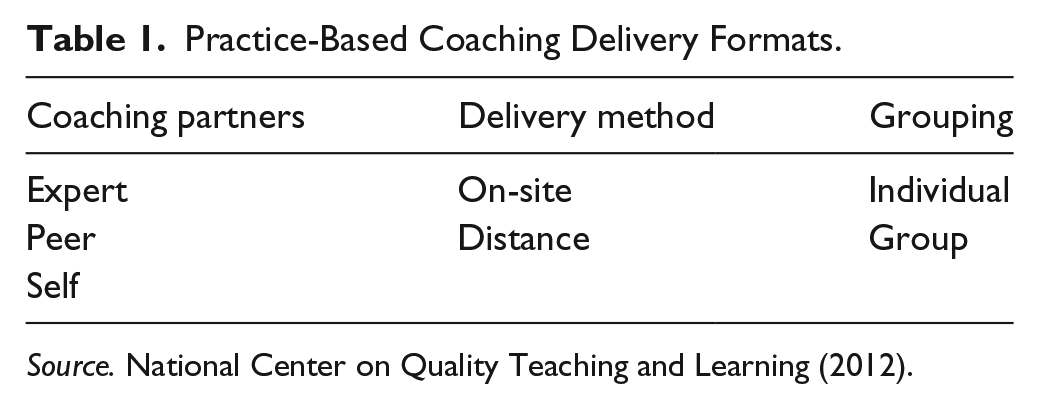
Given the wide range of programming options in early childhood (center-based, home-based) and the diverse settings in which early educators work (large multi-classroom centers vs. single classrooms in an elementary school), practice-based coaching provides a flexible tool for coaching in a wide range of contexts. Traditionally, practice-based coaching has been delivered on-site by an expert coach. A number of other options have been proposed, though, including group coaching (Snyder et al., 2015) and self-coaching (Bishop, Snyder, & Crow, 2015). In group coaching, an expert facilitator leads a group of 6 to 8 teachers as they use the practice-based coaching cycle to implement an identified set of teaching practices. The group coaching model typically involves two group meetings per month in which the facilitator leads a brief (20min) workshop on a set of teaching practices, and participants reflect on those practices in their classrooms. Between sessions, teachers conduct focused observations of their own practices, typically using videos. Another practice-based coaching option is self-coaching. In self-coaching, teachers set their own goals, observe their own practices through video observations or self-monitoring, and engage in reflection and feedback by analyzing their practice. They check in with a skilled facilitator as needed to ensure continued progress. See Table 1 for a summary of the practice-based coaching delivery options.
Practice-Based Coaching Delivery Formats.
Group Coaching to Support Implementation of the Pyramid Model
The practice-based coaching model is flexible and can be applied individually, in small groups, on-site, or at a distance via technology. This begs the question, “How can coaching be adapted to effectively support the practice of diverse teachers and programs?” Group coaching is one promising alternative to traditional, individual coaching (National Center on Quality Teaching and Learning [NCQTL], 2012). Group coaching provides several benefits: it can be an efficient use of coaching time and it promotes peer learning and support. Group coaching has been found to contribute to individual, team, and organizational improvements (Brown & Grant, 2010). There are several examples of group coaching in the school-age educational literature. For example, Sherin and colleagues have examined the effects of small group, facilitated “video clubs” on elementary teachers’ mathematics teaching. They found that teachers who participated in the clubs changed how they responded to student comments and work, probed students’ thinking, and helped students use multiple strategies to solve problems (Sherin & Han, 2004; van Es & Sherin, 2008). Others have used group approaches to support teachers’ mathematical (Kazemi & Franke, 2004) and scientific teaching practices (Windschitl, Thompson, & Braaten, 2011). In all studies, a skilled facilitator helped groups of teachers identify specific teaching practices and engage in systematic inquiry around those practices.
Despite the success of group coaching in school-age contexts, there have been relatively few reports of its use in early childhood settings and none around its use to support implementation of PBIS. Researchers have identified several benefits of group coaching that may be especially useful to early childhood and PBIS approaches. First, group coaching may provide a means for teachers within a program to develop shared engagement around effective teaching practices and to clearly name the practices they value in their program (Ball & Cohen, 1999; McLaughlin & Talbert, 2006). It may help teams build consensus around positive approaches to supporting children’s behavior and social-emotional development. Second, group coaching may increase collaboration and collegiality in programs (Darling-Hammond, Wei, Andree, Richardson, & Orphanos, 2009; Desimone, 2009; Garet, Porter, Desimone, Birman, & Yoon, 2001) as they adopt program-wide PBIS frameworks. Because relationships and teaming are foundational to effective PBIS implementation, this could be an important contribution of group coaching. Finally, group coaching may help teachers take risks, try new ideas, and implement more consistently with the encouragement of their peer group (McLaughlin & Talbert, 2006).
The purpose of this article is to describe a group coaching model and to present preliminary evidence of its impact on teachers’ implementation of Pyramid Model practices. This article presents a comprehensive description of a professional development program that used group coaching to support implementation of evidence-based strategies within the Pyramid Model for teachers in an early childhood program. The data provide exploratory findings of impact of the group coaching model.
Program Description of Group Coaching Model
Group coaching model protocols were developed, drawing from the components from the practice-based coaching framework. The program was developed to be implemented by an expert facilitator/coach with a small group of 5 to 7 teachers who were implementing the Pyramid Model strategies in their classrooms. The coach should be someone who had no evaluative role for the participating teachers. Ideally, this coach understands the philosophy of the education program and is knowledgeable of the Pyramid Model practices. The coach should also be someone who could establish herself or himself as a professional resource, be able to carefully maintain teachers’ confidentiality to promote a sense of safety within the sessions, and thus develop effective partnership with the teachers to provide support and resources.
Each group coaching session was designed to be collegial and strengths-based. Each group coaching session was designed for approximately 60 to 90 min and included the following components: Self-Reflection, Pyramid Model Inventory of Practice (PMIP) Summary Report, Discussion of Implementation Strength, Problem-Solving of Challenges to Improve Implementation, and Action Planning and Goal Setting. See Table 2 for descriptions of how the practice-based coaching components were expressed in the group coaching model.
Practice-Based Coaching and the Group Coaching Model Alignment.
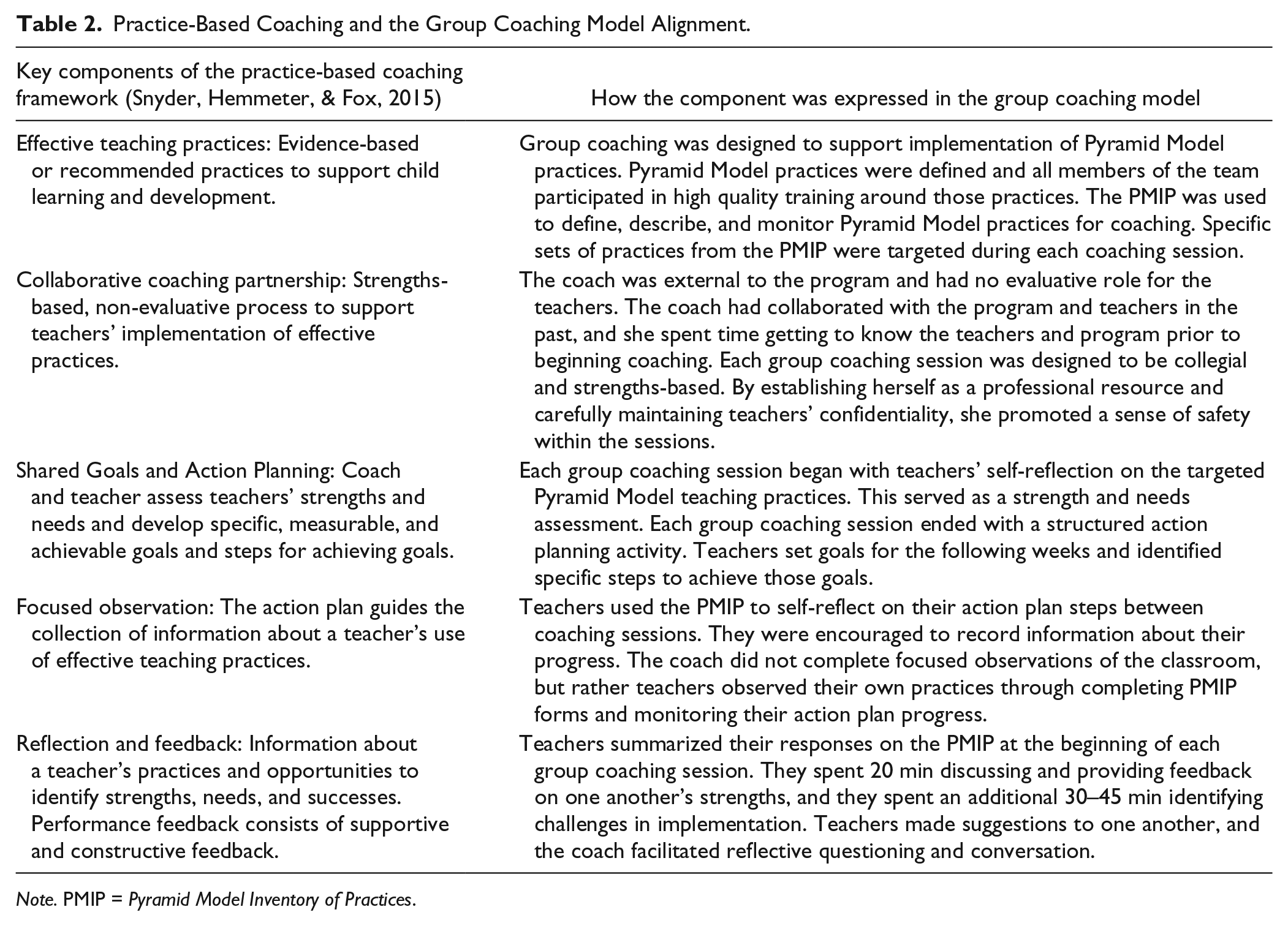
Note. PMIP = Pyramid Model Inventory of Practices.
Self-Reflection Using the PMIP
Each group coaching session started with the participants reflecting on the use of a set of evidence-based or recommended teaching practices to support child learning and development. Because of the focus of this group coaching program was to support the teachers’ implementation of Pyramid Model practices, these practices were the focus of the reflection. Teachers engaged in self-reflection by completing the PMIP (Center on the Social and Emotional Foundations for Early Learning [CSEFEL], 2006) self-reflection on the practices identified as the target focus (e.g., topic of a Pyramid Model training session). PMIP was adapted from the Inventory of Practices for Promoting Social Emotional Competence provided by the CSEFEL (2006). Teachers were provided a PMIP that included key practices to reflect on for that specific session. Teachers were asked to reflect and check off one of the following response options for each of the practices: I already do this, I want to do this more often in my classroom, I will need some help thinking about how to use this in my classroom, I don’t think this will work in my classroom, and If coaching were available on this strategy, I’d be interested. This served as a strength and needs assessment. This reflection process took approximately 10 min.
PMIP Summary Report
Following the self-reflection, each teacher summarized his or her responses on the PMIP. The teachers highlighted practices they already implement well and consistently in their classrooms as well as practices that were difficult to implement and would benefit from additional coaching and support. The coach summarized the overall observation of these strengths and challenges. For example, the coach might highlight that overall teachers felt that they consistently provide warnings prior to transition but felt that they need additional support in providing individualized transition warnings so all children understand them. The coach took notes of implementation strengths and challenges on chart paper and/or a computer screen to be used throughout the coaching session. This summary process took approximately 10 min of the group coaching session.
Discussion of Implementation Strengths
Following the PMIP summary process, teachers took turns sharing specific examples of implementation successes. For example, a teacher might share that he intentionally planned a 10-min interaction during free choice time with a specific child who engaged in persistent challenging behaviors and the impact of this interaction for the child throughout the day. The coach and the members of the group provided positive affirmations positive feedback and affirmations to celebrate the individual strengths and successes of implementing the Pyramid Model practices. Teachers took turns asking the teacher who shared the success questions during this process to clarify implementation process and identify resources needed to implement the specific interaction strategies identified. When necessary, the coach guided the teachers in examining the implementation process and resource identification using prompts and questions. For example, the coach might prompt the teachers by asking which routine or time of the day was he able to interact with the target child and what resources did he need to do so. Through this process, specific interaction strategies were then shared with teachers, including ways to initiate interaction, ways to engage in conversation that follows the child’s lead and interest, and intentionally plan this interaction within the lesson plan. This component of the coaching session took about 20 min.
Problem Solving of Challenges to Improve Implementation
Following the discussion on implementation strengths, each teacher took turns discussing practices that were challenging for him or her to implement in the classroom settings. Teachers were encouraged to be specific in identifying challenges that prevent them from using the specific strategies. For example, a teacher might share that transition strategies were very challenging because often times a specific strategy (e.g., putting on music to indicate that it was clean up time) would work for some children but not all. The coach used specific guiding strategies to prompt the teachers to reflect on specific indicators that a strategy was not effective for a specific child. Through the discussion process, teachers shared ideas and resources to help problem solve and identify better ways to effectively implement the strategy. The coach then used scenarios, role plays, and/or videos to illustrate effective implementation of target strategy. For example, the coach might use a video to demonstrate how a teacher individualized transition strategies for specific children in the classroom, provide resources on how the materials necessary for implementation could be created and identify group members (e.g., coach or a specific teacher who volunteered) who could create the material for everyone or provide a sample to share. This component of the coaching session typically lasted 35 to 40 min.
Action Planning and Goal Setting
The last 10 to 15 min of the coaching session focused on goal setting and identifying supports and resources teachers needed to implement the set of strategies discussed during the coaching session. Specifically, the teachers set specific goals to enhance or refine the implementation of strategies that are critical for the classroom or difficult to implement. For example, a teacher might indicate that he would intentionally provide five descriptive praises, contingent on effort, each day for a specific child who frequently engaged in challenging behaviors. Teachers also action planned around strategies that could be used to help track their own implementation. For example, one teacher might indicate that he would collect data on his use of descriptive praise statements by asking his paraprofessional in the classroom to tally the data for him. Teachers then set goals to implement strategies that were identified as challenging to implement in their classrooms. For example, a teacher might set a goal to create a visual chart that could be used as a transition warning system to provide specific warnings (e.g., 3 more minutes) to individual child(ren) prior to transition.
At the end of each coaching session, teachers documented their goals and action steps on an action planning form and were encouraged to use this action plan and the PMIP completed to self-evaluate and reflect on their own implementation of key practices in between group coaching sessions. This process aligned with the practice-based component of focused observation through self-data collection and self-coaching. At the beginning of the next group coaching session, action plans and previous reflections were revisited and discussed. Teachers reported on implementation accomplishments based on goals set from the previous session. The coach provided performance-based feedback through the discussion and reflection of data gathered by the teachers. When necessary, the group engaged in brief discussion (5–10 min) to problem-solve around challenges that arose during implementation. The group coaching process then began again for the next set of focused practices within the Pyramid Model.
Pilot Implementation and Preliminary Evidence of Program Effectiveness
Setting and Population
Six teachers from an early childhood education program, serving children in an urban low income setting in the Northeast U.S. participated in this 6-month training and group coaching program. The early childhood program consisted of three centers located in an urban city. Each center took an individualized, developmental approach, providing the children with quality early care and a play-based curriculum most likely to help them enter school with the skills that they need to be successful socially and academically. The centers were accredited by the National Association for the Education of Young Children (NAEYC) and had also adopted the Pyramid Model as a program-wide positive behavior support framework. Introductory Pyramid Model trainings were offered to all teachers who worked in the centers. The early childhood program served approximately 175 children ages 2 months through 5 years each day. All children served in the program were from families who live in extreme poverty and experience many risk factors and adverse experiences.
All participating teachers worked in classrooms that served children between 2 and 5 years of age. There was a range of education levels across the six participating teachers, with one teacher having an associate degree, three with bachelor’s degrees, and two with master’s degrees. Two of the teachers’ degrees were not in early childhood education or related field. All teachers had extensive experience in the early childhood education field, ranging from 7 to more than 25 years and had worked in this early childhood education program for between 1 and 8 years. Each classroom had up to 15 children and two to three teachers. Prior to participating in this pilot implementation, the participating teachers had attended a 1-hr session that introduced the purpose of the Pyramid Model framework as part of the onboarding process when they were hired to work at the early childhood program. This training was provided individually or in groups by the early childhood program depending on the number of teachers hired within a 3-month period.
Pyramid Model Trainings and Group Coaching
The six teachers participated in a series of six 2-hr training sessions on the Pyramid Model practices. Each training session had one topical focus. Topics included the following: (a) relationships with children, families, and colleagues; (b) classroom environment; (c) schedules and routines; (d) rules and expectations; (e) transitions; and (f) social and emotional teaching strategies. The training materials were adapted from those provided by the CSEFEL (n.d.). Because of the program’s need to emphasis the importance of the universal and secondary practices of the Pyramid Model and their benefits for all children in the classroom, trainings and coaching session did not focus on the Tier 3 of the Pyramid Model strategies (Intensive Individualized Interventions). A contracted licensed psychologist with extensive training experience on the Pyramid Model practices provided the training sessions. PowerPoints, videos, scenarios, and visual supports were used to facilitate these didactic training sessions. Training sessions were scheduled 2 to 3 weeks apart from each other.
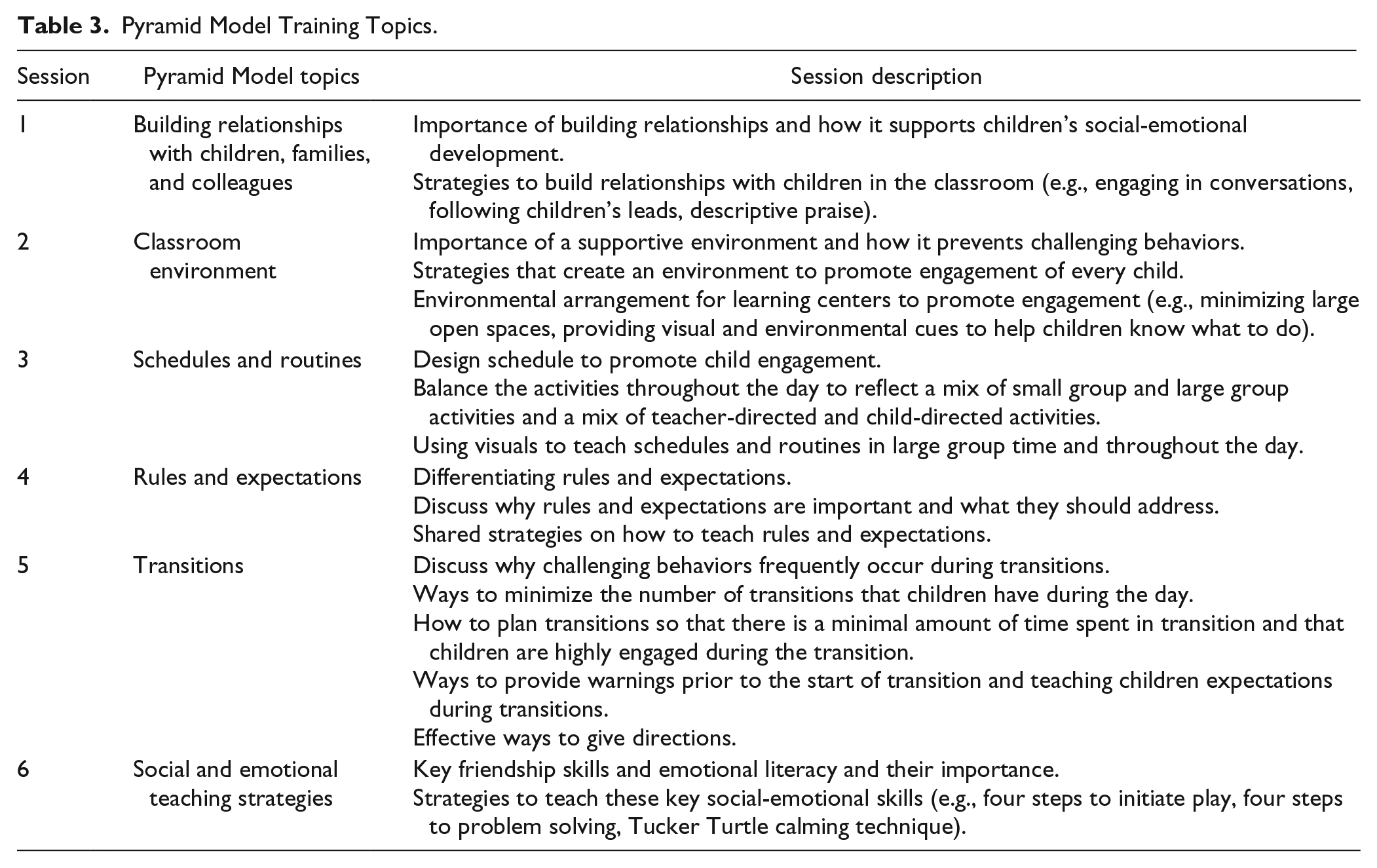
The first training session described the Pyramid Model framework and how it prevents and addresses challenging behaviors. It also focused discussion and information sharing on the importance of building relationships with children, families, and colleagues. Strategies on how to build relationships were also described and shared during the training. Sessions 2 to 5 focused on creating supportive environments in the classrooms. These sessions focused on strategies to create an environment that best supports children’s learning and social-emotional development and preventing challenging behaviors. Specifically, strategies on how to engage children throughout the day, create an effective schedule and routine, teach rules and expectations, and create effective transitions were demonstrated and shared. The last training session focused on specific social-emotional skills and competencies children develop and strategies for teaching these skills. See Table 3 for the topic and detailed description for each of the training sessions.
Pyramid Model Training Topics.
The group coaching sessions were scheduled following each of the Pyramid Model training and prior to the next scheduled training. Group coaching sessions were conducted in one of the early childhood education centers during the workday. Substitute teachers were placed in classrooms to allow participating teachers release time to attend the group coaching sessions. One coach facilitated all the group coaching sessions. The coach has a PhD in early childhood special education, and has extensive experience training and coaching early childhood professionals and families on the Pyramid Model practices. Each of the group coaching sessions focused on the topic addressed in the previous Pyramid Model training session. The coach followed a coaching protocol that was developed based on the coaching components described above. The sessions were about 90 min each.
Preliminary Evidence
The group coaching model was evaluated using three methods: (a) direct observation data on teachers’ implementation of Pyramid Model practices using the TPOT, (b) teacher self-report on the severity of challenging behavior in the classroom, and (c) teacher’s ratings and feedback on the acceptability and feasibility of the group coaching sessions.
The implementation of the Pyramid Model was measured using the TPOT (Fox et al., 2014). The TPOT is an implementation fidelity tool designed to measure teachers’ use of practices associated with the Pyramid Model intervention and is designed to examine classroom practices specifically related to promoting young children’s social-emotional competence and addressing challenging behavior in the pre-school classroom. Items on the TPOT checklist serve as indicators that teaching practices associated with each component of the intervention are in place. The TPOT is completed during a 2-hr observation of each of the teacher participants’ pre-school classroom and after an interview with the teacher. It provides detailed information about how well teachers are implementing 14 key teaching practices associated with the Pyramid Model. It includes information about “red flags” that require immediate support and information about how a teacher responds to challenging behavior. The tool has been widely researched and piloted with good results with interrater score reliability and agreement for TPOT of ≥ 0.89 for the Key Practices subscale and ≥ 0.84 for the Red Flags subscale (Fox et al., 2014).
TPOT was used as a pre- and post-assessment in this study. Two TPOT reliable assessors gathered the TPOT data in all six classrooms. Pre-assessment was gathered prior to the first Pyramid Model training session, and post-assessment was gathered after the completion of the last group coaching session. At pre-assessment, the average percentage of implementation of key pyramid practices was 42.8 (range: 21.5–63.8), and the average percentage of implementation was 62 (range: 32.2–86.4) at post-assessment. When the 14 key strategies were examined individually, Teachers Engage in Supportive Conversations With Children and Collaborative Teaming had the highest average implementation rate (66.7%) and Intervention for Children With Persistent Challenging Behavior had the lowest average implementation rate (10%) at pre-assessment. At post-assessment, Teachers Engage in Supportive Conversations With Children remained the highest implemented strategies (average = 85%) and Intervention for Children With Persistent Challenging Behavior remained the lowest implemented strategies (average = 30%). The Red Flag items percentage was 22.6 (range: 0–47.1) at pre-assessment, and it decreased to10.8 (range: 0–29.4). See Table 4 and Figure 1 for a summary of the TPOT scores.
Group Coaching Participants’ TPOT Score Descriptives.
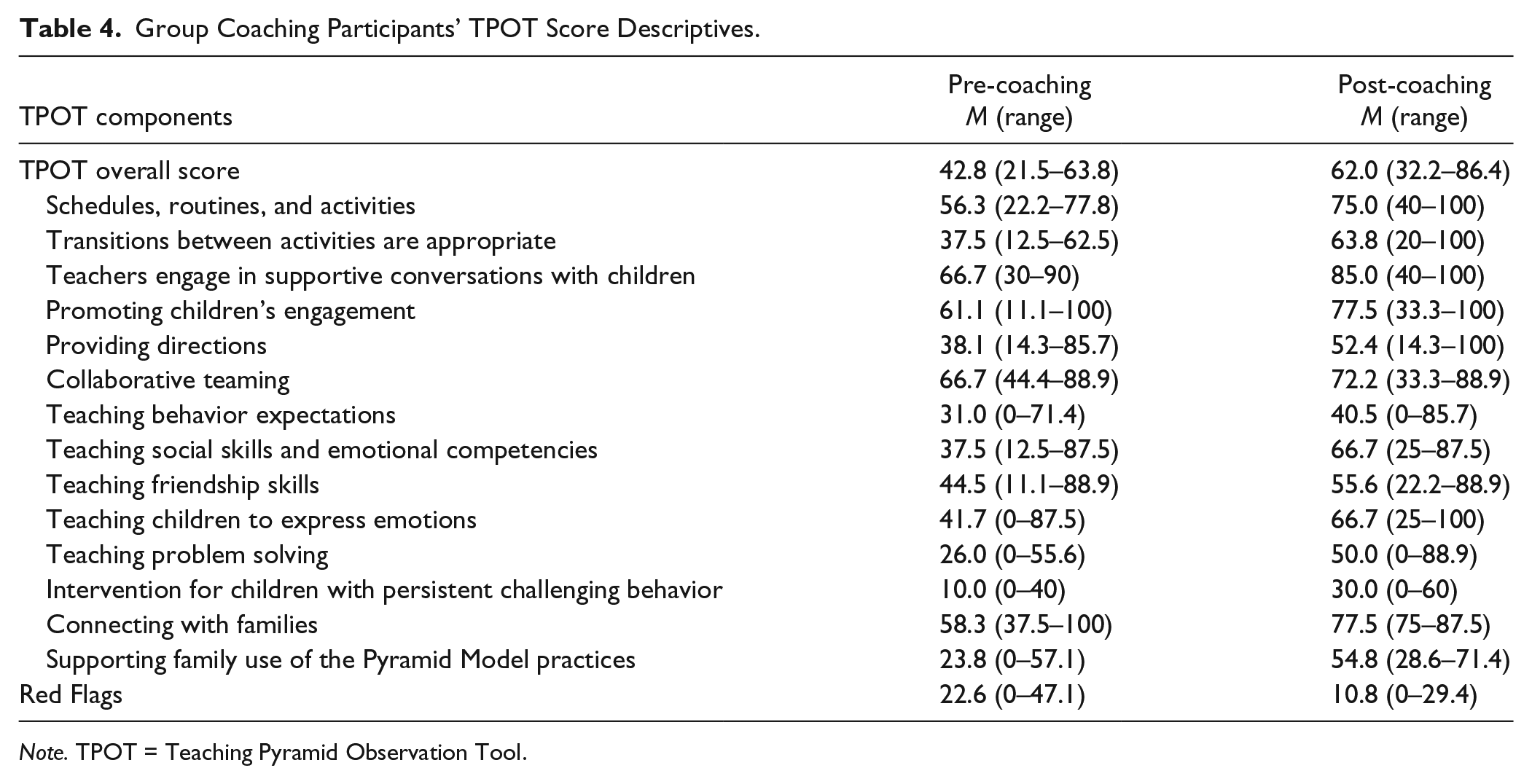
Note. TPOT = Teaching Pyramid Observation Tool.

Average percentage scores on TPOT key indicators.
Each teacher was also asked to estimate the number of children in their classrooms who engaged in persistent challenging behaviors and how much time they spent addressing these behaviors daily. Teachers made these estimates at the first group coaching session and after the completion of the TPOT post-assessment. At the beginning of the study, teachers reported an average of three children in their classrooms who engaged in persistent challenging behaviors (range = 0–6). One teacher reported spending less than 10% of the day addressing challenging behaviors, one reported 50% of the day, one reported 75% of the day, and three reported spending all day dealing with challenging behaviors. At post-assessment, teachers reported an average of less than two children in their classrooms engaged in persistent challenging behaviors. Teachers also reported a decrease in the amount of time spent addressing challenging behaviors with one reported less than 10% of the day, three reported 25%, and one reported 50%, and one reported 75% of the day.
Evaluation of the group coaching sessions was also gathered to assess teachers’ satisfaction with the group coaching process. The participating teachers provided anonymous ratings on the scale of 1 (negative) to 5 (positive) regarding overall helpfulness, whether the sessions supported their implementation of Pyramid Model practices, their confidence in supporting children’s social-emotional development and addressing challenging behaviors in their classrooms, and whether they will recommend these group coaching sessions to other educators they work with. Teachers also provided written comments on aspects of the coaching sessions that were most helpful and suggested changes to improve the sessions.
The average rating for overall helpfulness of the group coaching sessions was 4 and for the extent to which the sessions supported their implementation of the Pyramid Model practices was 4.1. Teachers rated an average of 4.7 on their confidence in supporting children’s social-emotional development and addressing challenging behaviors in their classrooms. Teachers rated an average of 4.7 for the likelihood that they would recommend the group coaching sessions to their colleagues. Teachers also reported that the most helpful components of the group coaching sessions were the peer-to-peer strategy sharing and support, group discussions and acknowledgements on implementation challenges, and the opportunity to problem solve with colleagues across the different early childhood centers within the program.
Discussion
This project provided preliminary evidence of the usefulness of group coaching for supporting program-wide PBIS initiatives such as the Pyramid Model. Overall, group training followed by group coaching was associated with an increase in average TPOT scores across six teachers. Changes were most notable across teachers in their use of predictable transition strategies, positive directions, and social-emotional teaching strategies. The occurrence of “red flags,” practices that are inconsistent with positive approaches to behavior, dropped on average. Taken together, these changes represent a substantive change in classroom practices associated with group coaching for the six teachers in this project. Teachers used more positive approaches, built stronger relationships, and nurtured children’s social development in measurable ways. They also used fewer punitive or punishment-based strategies over time.
Upon closer inspection of the TPOT data, it became clear that teachers had more success using universal Pyramid Model practices (building relationships and supportive environments). They had less success individualizing these practices for children who needed more support. This indicates that group coaching may be effective for helping teachers implement the basic elements of PBIS, but more intensive, individualized coaching may still be necessary to help teachers make modifications for individual children. It is possible that the group coaching format did not lend itself to discussions of individual supports such as visual schedules or scripted stories. It is also possible that there is a scope and sequence of teaching within the Pyramid Model, with some skills or strategies being easier to learn and use than others. Individualizing for specific children may require sophisticated knowledge of Pyramid Model practices and systematic instructional techniques. A 6-month coaching intervention may not be adequate to support the development and refinement of such complex teaching interventions.
The limited implementation of specific intervention strategies for children with persistent challenging behaviors observed at post-assessment was expected given that the group coaching sessions did not specifically focus on this component of the Pyramid Model. In addition, the early childhood program placed more emphasis on universal and secondary strategies within the classrooms, and the development and implementation of individualized behavior support plans were under the purview of behavior specialists and social workers in the program. This limited the teachers’ involvement and understanding of the individualized behavior support process.
The group coaching process in this study highlighted the flexibility of practice-based coaching strategies in supporting early childhood education programs in implementing evidence-based practices. This adds to the growing evidence supporting the use of practice-based coaching in early childhood programs (Snyder et al., 2015). Unlike previous research that used individual expert coaching (Hemmeter et al., 2015) and self-coaching (Bishop et al., 2015), this study used facilitated group coaching to support teachers’ use of effective practices. Group coaching presents a potentially efficient and effective alternative to more resource-intensive models of coaching. In recent studies by Hemmeter and colleagues (2016), coaches spent an average of 90 min per week in classrooms and 30 min per week debriefing with the teacher. Including travel and preparation, coaches dedicated nearly 3 hr per teacher per week to coaching. To coach six teachers about twice a month (as we did in the current study), a coach would need to dedicate 36 hr to coaching and teachers would need classroom coverage for 2 to 3 hr per month. This is a substantial investment of resources for many programs. In the current study, a coach spent approximately 90 min actively engaged with a group of six teachers twice per month, and teachers spent 2 to 3 hr per month out of the classroom. Between group coaching sessions, teachers used self-coaching to conduct focused observations. Although the out of classroom time for teachers may be higher in this model, this structure fit within the program’s ongoing professional development schedule. In this way, the time already allocated to group trainings in early childhood programs could be reallocated to allow for group coaching. Instead of didactic workshops, teams could participate in systematic examination of classroom practices, goal setting, and feedback. This may be a useful approach to fitting coaching into existing professional development resources.
Group coaching may be especially beneficial for program- or school-wide initiatives such as PBIS. PBIS requires buy-in from administrators, families, and teachers, and coaching has been a key feature of program-wide implementation across multiple initiatives (Fox & Hemmeter, 2009; Hemmeter, Fox, Jack, Broyles, & Doubet, 2007). Group coaching can be a way to communicate and reinforce a program’s values regarding PBIS. In this way, group coaching may provide many of the benefits of communities of practice: Group coaching may serve to build consensus around key practices and to build community norms around PBIS (Buysse, Sparkman, & Wesley, 2003). Teachers may have an opportunity to engage with ideas outside their own classrooms and discuss education on a broader intellectual scale (Ball & Cohen, 1999). Furthermore, group coaching may provide a natural professional network for teachers as they support the social and emotional needs of young children. Teachers can learn from one another and have discussions with others who understand their unique program characteristics, strengths, and challenges. Finally, group coaching may also provide a platform for a skilled facilitator to address common issues of implementation and to provide an outlet for teachers’ concerns and challenges. It also provides a natural venue for celebrating successes in a way that recognizes the effects that Pyramid Model practices can have on children’s outcomes.
Limitations
The implications for the preliminary evaluation of this group coaching model are limited due to the small sample size and methodology. This evaluation included only six teachers in one early childhood program. The results offer only promising evidence, and may not generalize to other teachers in other early childhood programs. The early childhood program in which the teachers worked had made a program-wide commitment to the Pyramid Model and was located in a state that had an established leadership team and dissemination plan for the Pyramid Model. In addition, teachers were provided released time during their workday to attend the group coaching sessions. Programs with less support may need additional resources and time to establish Pyramid Model practices in the classrooms. It is also noteworthy that the early childhood program in this study served an especially vulnerable population of children. The children and their families were highly transitory and affected by numerous socio-economic risk factors. Teachers reported feeling ill-equipped at times to support the physical, social, and mental health needs of the children and families; although the Pyramid Model was useful to these teachers and this program, it fit within a larger system of comprehensive supports. It is impossible to separate the effects of the Pyramid Model from the larger systemic structure of the program.
This article describes the features and preliminary effects of a group coaching intervention. Data were collected pre- and post-coaching on teachers’ use of Pyramid Model practices in the classroom, but the lack of a control group limits the interpretation of these data. Future research should use experimental methods to evaluate the effects of group coaching on teachers’ implementation of Pyramid Model practices. In addition, future studies should carefully examine the dosage and fidelity of group coaching interventions.
Conclusion
In conclusion, this program description offers an in-depth examination of one group coaching model to support early childhood educators’ use of PBIS and provides preliminary evidence of the effectiveness of a group training and group practice-based coaching on teachers’ use of Pyramid Model practices. The promising improvements in teachers’ TPOT scores after participating in group coaching should be investigated further using single-case or group experimental designs. Practice-based coaching provides a flexible way of helping teachers use effective practices in their classrooms. Through a systematic process of goal setting, focused observation, and reflection and feedback, one early childhood program found an efficient way to make classrooms more supportive and to promote young children’s social-emotional development.
Footnotes
Declaration of Conflicting Interests
The author(s) declared no potential conflicts of interest with respect to the research, authorship, and/or publication of this article.
Funding
The author(s) received no financial support for the research, authorship, and/or publication of this article.