




Abstract
We examined how educating paraprofessionals in preschool classrooms on dialogic reading (DR) affected their storybook reading and effects on children’s single word vocabulary. Through a single-case multiple-probe across participants design including four paraprofessionals and eight preschool children, we identified a functional relation between educating paraprofessionals in DR and implementation of the CROWD prompts; yet, no functional relation was observed for the implementation of the evaluate, expand, and repeat strategies. Data collected on children’s expressive near-transfer vocabulary showed all but one child made minimal gains from baseline to intervention, whereas receptive data remained stable for six participants. Results suggested that paraprofessionals implemented the strategies of DR with variable fidelity following a singular training and in-text supports. Additional supports may be necessary for all aspects of the intervention and generalization to be implemented with fidelity and for improvement to carryover to both receptive and expressive vocabulary skills for children.
Keywords
Language impairments in young children typically involve significant deficits in oral language skills, specifically receptive, expressive, and vocabulary skills, often leading to persistent deficits in reading and writing skills as they enter elementary school (National Institute of Child Health and Human Development [NICHD] Early Child Care Research Network, 2005). Oral language in combination with phonological skills in kindergarten account for more than half (54.5%) of the variance in reading comprehension in second grade and 49.2% in eighth grade (Catts, Fey, Weismer, & Bridges, 2014). Recent data indicate that approximately 37% of fourth-grade students are unable to achieve basic levels of reading proficiency (Lonigan & Shanahan, 2009).
Children with language impairments may require twice as many exposures to new words to comprehend them and twice as many opportunities to practice the new word to express it correctly (Gray, 2003). Targeting specific vocabulary words within storybooks and teaching those words through multiple exposures in close succession positively affect both receptive and expressive vocabulary (Roskos et al., 2008). Context for word learning is also important, with children with language impairments performing better in classroom-based interventions than in individual decontextualized therapy sessions (Wilcox, Kouri, & Caswell, 1991). The ability of the classroom teacher, and related personnel, to support language and early literacy skill development for children is crucial as they can mediate children’s experiences to promote learning (McDonnell et al., 2014; Odom & Wolery, 2003). Interventions such as enhanced milieu teaching (EMT) that incorporate teaching language by embedding opportunities through developmentally appropriate activities, such as book reading, and use questioning and modeling techniques to elicit desired productions, have been effective in increasing children’s spontaneous language use (Hancock, Ledbetter-Cho, Howell, & Lang, 2016).
Speech–language pathologists (SLPs) and early childhood special education (ECSE) teachers are the primary service providers to address the language and early literacy deficits present in preschool children with developmental disabilities. However, SLPs are at a critical shortage, particularly in schools (American Speech-Language Hearing Association [ASHA], 2014). In addition, the SLPs who are employed in school settings experience increased caseloads, excessive paperwork, and noncompetitive salaries making it difficult to meet their job responsibilities in an effective way (Hutchins, Howard, Prelock, & Belin, 2010). These shortages can impede the progress of children with disabilities to achieve their maximum potential, particularly in the area of language development (Schooling, 2003).
Providing paraprofessionals in preschool classrooms with additional educational opportunities may be a viable way to extend the services provided by SLPs and ECSE teachers. A paraprofessional is defined by Title I as “an employee of an LEA (local educational agency) who provides instructional support” (Department of Education, 2004). Paraprofessionals often educate children with disabilities without sufficient training, or with training, which is too general or not applicable on how to work with these students (Chopra et al., 2004). Paraprofessionals spend a significant amount of time interacting with children, yet, they often feel undervalued in their ability to contribute and require additional educational opportunities (Chopra et al., 2004).
Competencies related to service delivery were a high priority for paraprofessionals working in ECSE, with a specific need for professional development (PD) related to integrate effective therapeutic practices into learning environments (Killoran, Templeman, Peters, & Udell, 2001). Although research in this area is limited, paraprofessionals have been successfully educated to improve the use of environmental arrangement, a systematic prompting hierarchy, and praise for children with autism (Ledford, Zimmerman, Harbin, & Ward, 2018), teach young students with complex communication disorders to produce multisymbol messages on an augmentative/alternative communication system (Binger, Kent-Walsh, Ewing, & Taylor, 2010) and implement strategies such as peer facilitation, reading instruction, and behavioral strategies (Causton-Theoharis & Malmgren, 2005; Hall, Grundon, Pope, & Romero, 2010). Paraprofessionals in Canada have been offered a six-course series to earn a “Certificate of Competence in Language Stimulation,” extending SLP services to increasing populations, as well as those where services are scarce or nonexistent (Hus, 2014). It should be noted that paraprofessionals may require support to implement these strategies correctly (Hall et al., 2010).
Dialogic Reading (DR)
DR, a specific type of shared interactive reading, is an evidence-based practice with a strong research base and practical foundation in assisting children who are typically developing and those considered at-risk to increase their expressive vocabulary and oral language skills (e.g., Lonigan & Whitehurst, 1998; Mol, Bus, & de Jong, 2009). There is evidence for DR to provide both immediate gains for children’s language skills as well continued gains through the end of kindergarten (Whitehurst et al., 1999). DR has an emerging evidence base for use with children with disabilities (e.g., Fleury, Miramontez, Hudson, & Schwartz, 2013; Towson, Gallagher, & Bingham, 2016). The strategies employed during DR are based on those of shared interactive reading and EMT, with focus on engaging children through techniques such as child-centeredness, elaborations of children’s utterances, active responding, and evaluation of children’s responses (Hancock et al., 2016; Mol et al., 2009). Instead of simply reading the story while children inactively sit and listen, adults using a DR approach support children in taking an interactive role with the story through an intentional scaffolding instructional sequence that begins with the adult posing a question to the child (Lonigan & Whitehurst, 1998).
DR is a four-step instructional sequence that is represented by the acronym PEER. The role of the adult is to prompt the child using one of the five strategies (i.e., CROWD, see following) related to the book. Although the term prompt in the literature typically refers to the provision of information designed to help the child respond correctly (e.g., a phonemic cue), in DR, prompt refers specifically to the request of a response. Next, the adult evaluates what the child said, expands on that response, and then repeats the prompt to allow the child an opportunity to produce the expanded language (U.S. Department of Education, Institute of Education Sciences, National Center for Education Evaluation and Regional Assistance, What Works Clearinghouse, 2007; Zevenbergen, Whitehurst, & Zevenbergen, 2003). Within the “P” or prompting step of the sequence, the adult can select one of the five types of prompts (i.e., questions used to elicit a response), represented by the acronym CROWD. The first type is completion, where the adult provides a blank for the child to fill in at the end of a sentence. Recall involves asking questions about the events or main idea in the story. Next, adults can ask open-ended questions to encourage the child to describe what is happening in a picture. Adults can use wh-questions (e.g., what, where, why) to ask the child about pictures in the book. Finally, distancing engages the child in relating pictures and words in the book to their own experiences (U.S. Department of Education, Institute of Education Sciences, National Center for Education Evaluation and Regional Assistance, What Works Clearinghouse, 2007; Zevenbergen et al., 2003). DR aims to move the child beyond naming objects in the book to analyzing the content and relating it back to his or her own experiences (U.S. Department of Education, Institute of Education Sciences, National Center for Education Evaluation and Regional Assistance, What Works Clearinghouse, 2007).
DR has been investigated in a variety of settings and across different populations (Towson, Fettig, Fleury, & Abarca, 2017). The majority of research in DR has been implemented by parents, teachers, or a combination of the two, with many of the parents reported as having little to no college education. The most common setting for DR interventions is the home, followed closely by preschool classrooms (Towson et al., 2017). In classroom interventions, children with limited vocabularies were noted to make significant gains in language skills through DR in small groups (Hargrave & Senechal, 2000; Towson et al., 2016). Although DR has been noted to have a formulaic approach that is easily taught (Teale, 2003), only one third of studies claiming to use DR actually implemented all aspects of CROWD and PEER. Few of these studies have tracked implementation fidelity of the DR program, making conclusions about its feasibility to be effectively implemented questionable (Towson et al., 2017). Therefore, more research is necessary to determine if educators, including paraprofessionals, in authentic educational settings, can consistently implement DR with fidelity (Towson et al., 2017).
Purpose
The purpose of this study was to examine the effectiveness of educating paraprofessionals in preschool classrooms in the use of DR, as well as determine the effects of DR on student outcomes for preschool children with language impairments. Specifically, the following research questions were addressed:
Method
Recruitment Procedures
Participants were recruited through one large urban school district in the southeastern United States. Study information was sent through a central research office to all elementary school principals in the district. Six principals elected to participate and consent forms were distributed within eight classrooms, as two schools housed more than one preschool program. Of the eight paraprofessionals that consented to participate in the study, four participants were randomly selected. Consent forms were sent home to children identified as having a language impairment and who met predetermined participant criteria within the four classrooms. Nine children returned consent forms and were pretested; however, one child’s data were eliminated from this study as he withdrew from school following pretesting.
Participants
Adult participants
Results are presented for four paraprofessionals. These paraprofessionals were employed in self-contained (n = 2) or inclusive (n = 2) preschool classrooms and, therefore, were familiar with the child participants in the reading sessions. No paraprofessionals reported any prior experience with DR or shared interactive reading. See Table 1 for specific demographic information for adult participants.
Demographics for Paraprofessionals by Classroom.

Note. BA = bachelor of arts; CDA = Child Development Associate; AA = associate’s degree; VE = varying exceptionality Pre-K; V = vocational school; ASD = autism spectrum disorder pre-K.
Child participants
Eight preschool children participated in this study. To maintain generalizability, children were eligible for participation in this study if they met the following inclusion criteria: (a) enrolled in a preschool classroom for children with developmental disabilities, either inclusive or self-contained, (b) current Individualized Education Plan (IEP) with a documented delay in language skills as defined by state eligibility requirements, (c) age range between 3 years 0 months and 5 years 11 months at the beginning of the study, (d) English as primary language, (e) functional vocabulary of at least one word as determined by their classroom teacher, and (f) parent/guardian signed consent for participation. Children who were deaf and/or blind were excluded from this study. See Table 2 for specific demographic information for each student.
Demographics for Students.
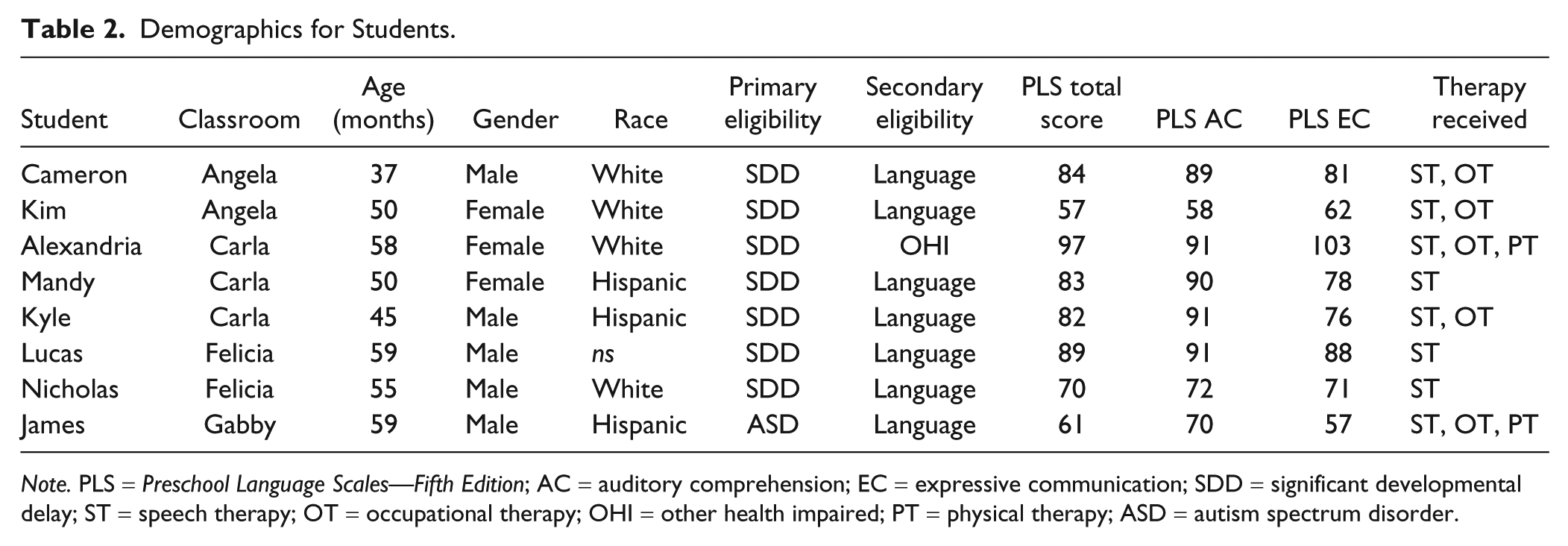
Note. PLS = Preschool Language Scales—Fifth Edition; AC = auditory comprehension; EC = expressive communication; SDD = significant developmental delay; ST = speech therapy; OT = occupational therapy; OHI = other health impaired; PT = physical therapy; ASD = autism spectrum disorder.
Setting
This study took place in four preschool classrooms located in two public schools and two charter schools. Paraprofessionals conducted the intervention in a relatively quiet area of the classroom or in a separate classroom during the normal school day. Small groups were determined by a subset of consented children enrolled in their existing preschool classroom. Although groups varied in size across the classrooms, with a range from one to three children, children remained in the same group for all reading sessions. Only children that consented to be in the study were present for readings.
Design
A single-case multiple-probe across participant design (Kennedy, 2005) was used to assess if there was a functional relation between providing paraprofessionals with education in DR and implementation of the DR strategies of CROWD and PEER, and to evaluate the impact on book-related vocabulary gained by the children. A multiple-probe single-case design requires two or more baselines, which are established concurrently, whereas the independent variable (i.e., PD on DR) is sequentially introduced across the baselines. For this study, an a priori rule was established for phase changes (i.e., minimum of three data points in baseline, six in intervention, and two in generalization regardless of stabilization or immediacy of effects) and the number of video recordings to be completed per week and phase, due to time constraints in the educational setting. Although paraprofessionals were instructed to and completed book readings across phases 3 times per week, data were collected on the paraprofessionals for two of the book readings per week, allowing for a minimum of two and a maximum of six data points per phase. The exceptions to this were for Angela in baseline, as three data points were needed for this phase and completed within 1 week, and for Gabby in generalization for the same reason.
Independent Variable
The independent variable (i.e., intervention) of the current study was the PD in DR for the paraprofessionals in combination with providing participants with books with scripted prompts (see “Materials” section for description of scripted books). The first author, using a PowerPoint presentation (PPT) to aid in systematization of material presented, conducted each 45-min educational session consisting of 10 steps. Participants were provided with the PPT and handouts following the session (see Supplemental Materials for specific steps). Training materials are available via email from the first author.
Training fidelity
Of the four training sessions (i.e., one for each paraprofessional), half of the sessions were analyzed to determine if all elements were present (see 10 elements of DR education described above). A research assistant (RA) independently viewed videos of the PD sessions and determined 90% fidelity using the formula (number of training elements present / [number of training elements present + number of training elements not present]) × 100.
Materials
Story books
Six books were selected for this study from the “Read Together, Talk Together” (Pearson Early Learning, 2006) program kit based on the following criteria (Fleury et al., 2013; Hargrave & Senechal, 2000; Towson et al., 2016): (a) colorful illustrations; (b) text limited by length, to increase adult–child interactions; (c) appropriate for preschool children; (d) potential of new noun vocabulary represented in both text and pictures; (e) not related to specific holidays or celebrations; and (f) low likelihood to have been read frequently to children in this study (i.e., published prior to 2008). Four books were provided with no alterations for the baseline phase. Three books were used during the intervention phase for all classrooms, with one of the three books duplicated from the baseline phase for Gabby, as she spent the longest time in baseline (i.e., 4 weeks). Each book used in intervention was prepared using typed notes taped to pages with 10 specific prompts to be asked during each book reading. Prompts were based on the RTTT teacher notes and were equally distributed across the CROWD strategies; one prompt for each of the CROWD types and five to target the near-transfer vocabulary. Although the prompts targeting vocabulary were also wh-questions, they were differentiated for the purposes of this study as the vocabulary word targeted had to be represented in multiple modalities (i.e., text and picture). In addition, stickers were placed in the inside cover of each book reviewing the PEER strategies of DR. For generalization, up to two additional books were provided to each classroom, with no modifications and no preselected near-transfer vocabulary. For three of the participants (Carla, Felicia, Gabby), one book from baseline was duplicated in generalization.
Near-transfer vocabulary
Within the six books, the first author and two trained graduate assistants identified a total of 65 nouns that were present both within the text and depicted within the pages of the books. The pictures had to be considered “good depictions” by at least two raters. Seven words were eliminated from the list as they were duplicated across two or more books. The first and second author reviewed the remaining 58 words and eliminated an additional 17 words due to level of complexity. The final list of 30 words (i.e., five different words for each of the six books) was selected from the remaining 41 by one third rater and was selected based on words, which were best represented in both text and pictures. All selected vocabulary words were Tier 1 basic words (see Supplemental Materials for vocabulary words per book).
Dependent Variables
Paraprofessionals
Paraprofessionals’ use of the DR strategies was collected via video recordings. Social validity questionnaires were completed following the generalization phase.
DR strategy use
A minimum of two book readings each week per paraprofessional were video recorded and coded to determine implementation fidelity related to the DR strategies (i.e., CROWD, PEER). During baseline, each question asked by the paraprofessional was coded according to the use of one of the CROWD prompts or as addressing a near-transfer vocabulary word (i.e., the prompt was a wh-question meant to elicit a specific word found both in text and represented pictorially). However, during intervention the paraprofessionals were provided with storybooks scripted with 10 prompts (i.e., five CROWD, five vocabulary), therefore, these prompts were coded according to these scripts (i.e., completion, recall, open-ended, wh-, distancing, vocabulary). Similarly, during generalization, because the paraprofessionals were instructed to create their own 10 prompts for each storybook, these questions were also coded according to the paraprofessionals’ scripted prompts. In addition to coding each book reading for use of prompting strategies, during all phases each question also was coded for the use of evaluation, expansion, and repeating of the prompt in a binary fashion, present or not present. Evaluation was defined as a verbal affirmation of the child’s response, expansion as a contingent elaboration of the child’s response or if no response was given an expansion of the targeted response, and repeating as the paraprofessional repeating the original prompt.
Interobserver Agreement
Two undergraduate RA who were trained by the first author, completed coding of all videos, with each RA responsible for coding half of the videos (i.e., RA1 coded videos for Angela and Carla, RA2 coded videos for Felicia and Gabby). The RAs were blind to condition for each video (i.e., baseline, intervention, generalization). Each RA completed a reliability check on 20% of the videos coded by the other RA. Videos for reliability were randomly selected across participants and were coded in entirety for use of CROWD prompt as well as use of evaluate, expand, and repeat. Interobserver agreement (IOA) was calculated as 82.91% across all participants by taking the total number of agreements and dividing it by the total number of agreements plus the total number of disagreements. IOA by participant was as follows: Angela = 80.67% (range = 68.8%–100%), Carla = 80.07% (range = 72.9%–88.1%), Felicia = 85.53% (range = 79.7%–89.4%), and Gabby = 84.36% (range = 76.25%–93.75%). IOA by condition was as follows: baseline = 86.59%, intervention = 84.20%, and generalization = 75.99%. IOA by condition was as follows: CROWD = 80.7%, evaluate = 90.3%, expand = 95.6%, and repeat = 93.9%. As IOA remained in the acceptable range, no retraining was necessary. The first author resolved discrepancies by viewing each disagreement and making a final judgment. The most common disagreements were on the type of CROWD prompt used, and of the use of evaluate and repeat.
Social Validity
Paraprofessionals’ perceptions of the intervention were assessed through an adapted version of the Intervention Rating Profile-15 (Witt & Elliott, 1985). Fifteen questions were presented in a survey using a 6-point Likert-type scale measured the acceptability, appropriateness, and effectiveness of the intervention (scale available from the first author).
Children
Children’s language skills were assessed before and after the study (prior to baseline and following generalization) using standardized assessments of single-word receptive and expressive vocabulary and weekly (following three reads of each storybook) across conditions using a researcher-developed near-transfer vocabulary task. Standardized assessment for receptive vocabulary was assessed on the PPVT-4 (Dunn & Dunn, 2007) and for expressive vocabulary using the EOWPVT-4 (Martin & Brownell, 2010). The weekly near-transfer assessment consisted of five different images (i.e., five words from each of the six books) scanned from each of the six storybooks. During the receptive task, each word was presented in a field of four choices to all participants. All words were presented in color-scanned images with three foils also taken from the same storybook, and directions standardized across items, stating, “Point to the picture of _______.” Following the presentation of each item, 5 s elapsed prior to recording a nonresponse and proceeding to the next item. Receptive data were recorded in the same fashion as the PPVT, with the examiner recording which response box the participant selected (1, 2, 3, or 4) and total correct responses were tabulated. Like the receptive version, the expressive near-transfer tasks consisted of five words (i.e., five from each storybook) made up of images scanned from each of the six storybooks. However, for this task, single pictures were presented, with directions standardized (i.e., “What is the name of this picture?”). Five seconds elapsed prior to recording a nonresponse and proceeding to the next picture. The child was given credit for a correct response if they named the target exactly, produced a diminutive of the target word (doggie/dog), a more semantically specific word (airplane/plane), or added an adjective to the target word (momma pig/pig). The child’s response was noted as incorrect if a semantically related response was given (duck/goose), if they attended to a specific feature of the item without naming the item in its entirety (house/city), or if they produced a superordinate label (shoes/sandal).
Interobserver Agreement
Scoring of the near-transfer receptive and expressive weekly vocabulary tests was completed as it occurred with the student. IOA data were collected for 25% of the expressive data (i.e., two participants) and was 100%. No IOA data were collected for the receptive portion.
Procedures
Following the consent process, all children were pretested using the Preschool Language Scale—Fifth Edition (PLS-5, Zimmerman, Steiner, & Pond, 2011), Expressive One-Word Picture Vocabulary Test—Fourth Edition (EOWPVT-4, Martin & Brownell, 2010), and Peabody Picture Vocabulary Test—Fourth Edition (PPVT-4, Dunn & Dunn, 2007). After pretesting, paraprofessionals were randomly selected to determine who would enter the intervention phase first, second, third, and fourth (Levin & Wampold, 1999). Each adult participant entered the baseline phase for at least three storybook sessions. Following the first three book readings, Angela was moved to the intervention phase regardless of data stabilization, due to a priori rules for phase changes. For the next 3 weeks, Carla, Felicia, and Gabby were moved subsequently into intervention. At the end of the baseline phase, participants were provided PD on DR and entered the intervention phase (i.e., DR with prescripted books). After each participant completed 3 weeks of book readings in the intervention phase (i.e., eight to nine book readings), the participants were subsequently moved to generalization. Angela, Carla, and Felicia completed 2 weeks of generalization (i.e., six book readings), with Gabby completing 1 week (i.e., three book readings).
Student data were collected weekly following storybook readings to determine how their book-related vocabulary for the book read that week was affected by the implementation of standard book readings and book readings with DR strategies implemented by the paraprofessional. In addition, following the study, all students were post tested on standardized measures of single-word receptive and expressive vocabulary. Social validity information was collected from the paraprofessional following the study.
Baseline
The baseline condition was initiated for all participants simultaneously and consisted of video-recorded observations of storybook readings by the paraprofessionals and their small group of children with no prior education given in DR. One book per week was provided to each participant (i.e., one book used for three readings) and the paraprofessionals were instructed to “read as you normally would.” A minimum of two videos per week were coded for frequency of the DR prompt types (i.e., CROWD) and rate of use of evaluation, expansion, and repetition (i.e., PEER). Student data were collected individually on near-transfer receptive and expressive vocabulary following the final book reading for the week, however, only the words targeted in the given book (i.e., five words per week) were assessed. Expressive vocabulary was always presented first to avoid carryover effects to receptive vocabulary.
Intervention
Following the PD in DR, each paraprofessional was provided with one scripted book per week (i.e., three books total) to be read 3 days during the week using the CROWD and PEER strategies. The targeted frequency of reading is consistent with prior literature for children with language delays engaging in shared interactive reading (Towson et al., 2017). The order of the three intervention books was randomized across groups. A minimum of two of the three weekly book readings were video recorded and analyzed for the frequency of the DR strategies (i.e., PEER, CROWD) used by the paraprofessional. During the intervention phase, student data for the near-transfer receptive and expressive vocabulary was collected individually following the third book reading in the same manner as baseline.
During intervention, paraprofessionals were instructed to ask all 10 prompts scripted within the book (i.e., five CROWD, five vocabulary) and use the PEER strategy. They were also instructed to use wait time, such that if the child(ren) did not respond within 3 s to a prompt, it was to be repeated. If child(ren) did not respond after the second presentation of a prompt, the paraprofessional was asked to model the appropriate response and ask the child(ren) to repeat the model. Paraprofessionals were instructed to point to the specific reference (picture) in the book when asking a question. No specific instructions were provided to the paraprofessionals related to how to distribute their attention or prompts among the small group of children nor on how to implement the evaluation and expansion strategies in the case that more than one child responded to a prompt.
Generalization
Following the intervention phase, each paraprofessional was provided with one book per week, a handout based on the CONNECT Handout 6.3 (Buysse et al., 2011) to develop 10 prompts (i.e., five prompts targeting vocabulary words, five prompts using CROWD prompts), and 10 3 × 3″ sticky notes to place the prompts in the book. During each book reading, paraprofessionals were instructed to provide 10 scripted prompts per book, implementing each with the PEER strategy. A minimum of two weekly book readings were video recorded and coded according to the frequency of DR strategies. Three of the participants (Angela, Carla, and Felicia) completed 2 weeks of readings (i.e., six readings, four coded) in this phase, whereas one participant (Gabby) completed only 1 week of readings (i.e., three readings, three coded) due to end of school timelines. Student vocabulary data were individually collected in the same way as the prior phases as research has shown students have made significant gains in vocabulary words both specifically and nonspecifically targeted through DR strategies (Towson et al., 2016).
Data Analysis
All CROWD prompts were totaled for frequency across each book reading, while the use of evaluation, expansion, and repetition of prompts was calculated as a frequency of the total number of prompts. Data for the total number of questions using the CROWD prompts, percentage use of evaluation, expansion, and repetition of prompts were graphed by classroom. A visual analysis of the graphed data were used to determine immediacy of effect, trend, and variability of the graphed data. A paired-samples t test was used to determine the effects of the DR intervention on standardized measures of the children’s single-word receptive and expressive vocabulary skills. Descriptive statistics were utilized to summarize the near-transfer receptive and expressive vocabulary data by child for each phases as well as social validity data collected from the paraprofessionals.
Results
For the first two research questions, data for the total number of questions using the CROWD prompts and for the percentage use of evaluation, expansion, and repetition of prompts were analyzed according to a visual analysis of all data exhibited on the multiple-probe across participants’ graphic display. The researchers looked for a functional relation between the independent and dependent variables, as well as a relation between the intervention and generalization phase. A functional relation was determined if the data demonstrated a change in the pattern of data, replicated at least 3 times (Kratochwill et al., 2013). In addition, the researchers analyzed to determine the level of the data, the trend of the data, variability of the data, as well as immediacy of effect (Kennedy, 2005).
Research Question 1: CROWD Prompt Results
Overall, all participants demonstrated a functional relation between baseline and intervention observed by increasing trends from baseline to intervention, which were replicated across the participants. Each participant demonstrated an immediacy of effect from baseline to intervention. The graphic displays, however, reflected a decreased trend from intervention to generalization for all participants (see Figure 1).
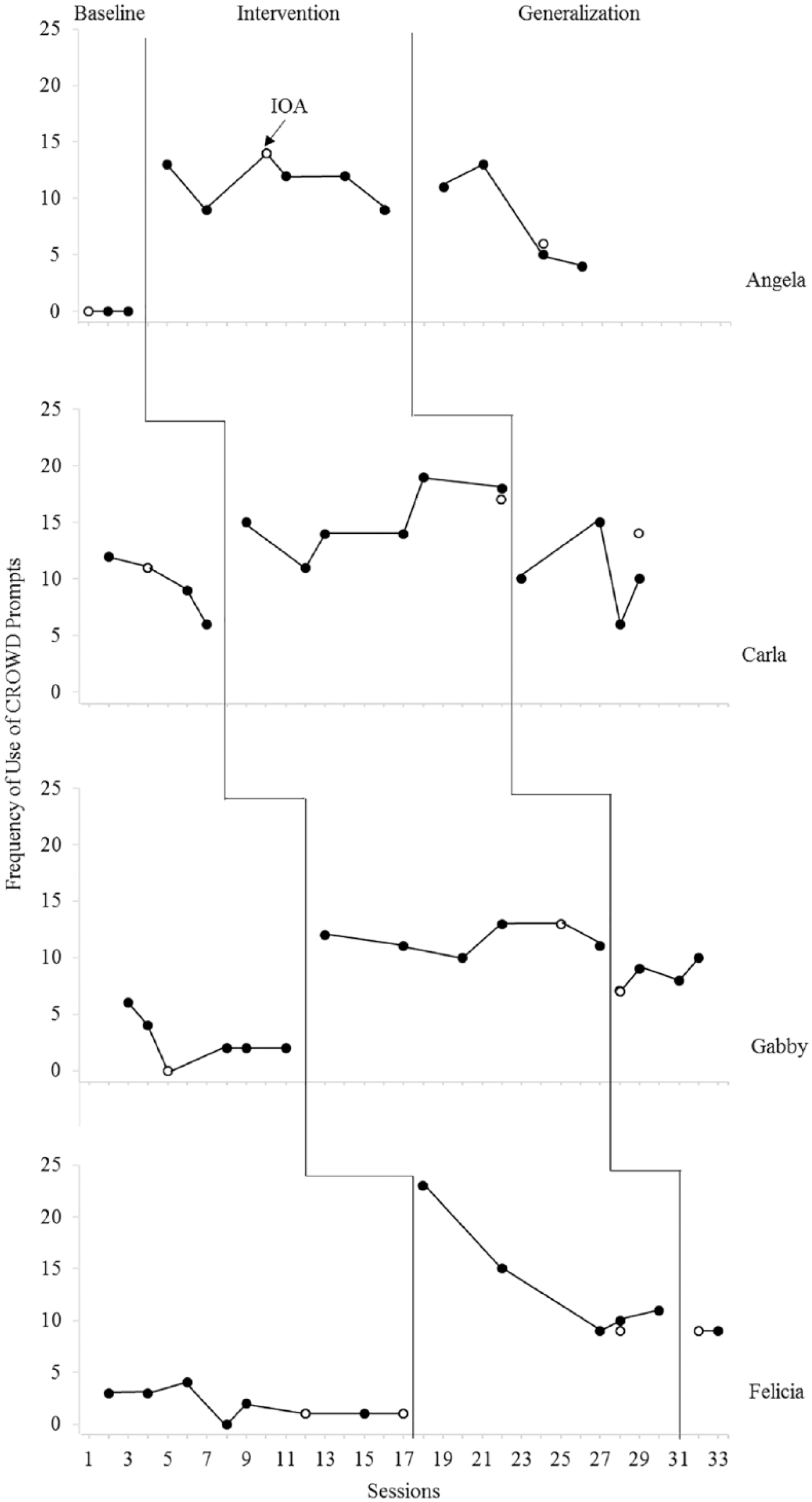
Prompt results with IOA data.
Research Question 2: Evaluate, Expand, and Repeat Results
For Research Question 2, visual analysis did not reveal a functional relation between the independent variable and dependent variable. Although there is some immediacy of change from baseline to intervention for all three strategies, data are inconsistent. In addition, a visual analysis revealed low to high variability and lack of data stability across phases for all strategies. Results of each of the strategies are described below (see Figures 2, 3, and 4).
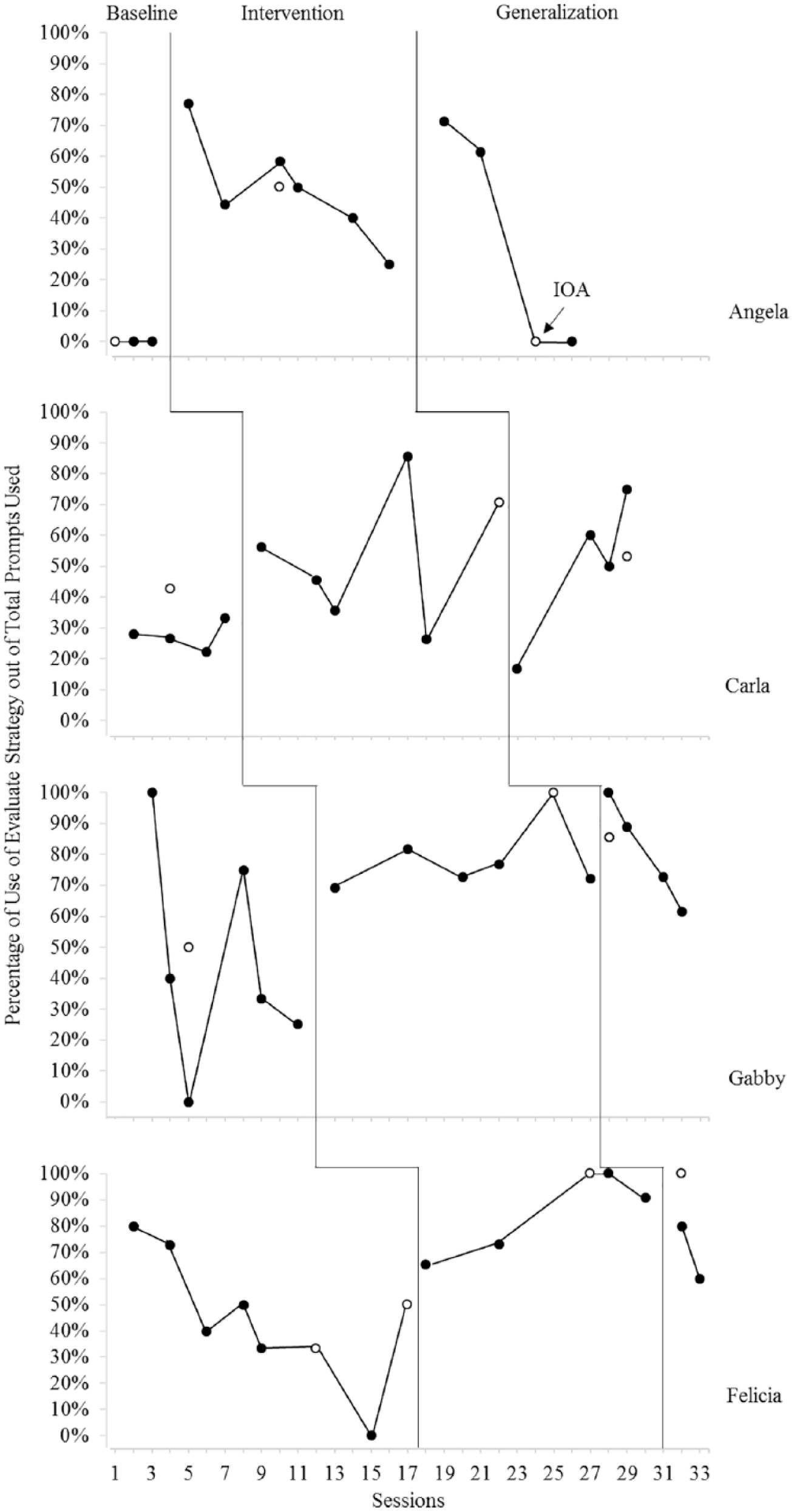
Evaluate results with IOA data.
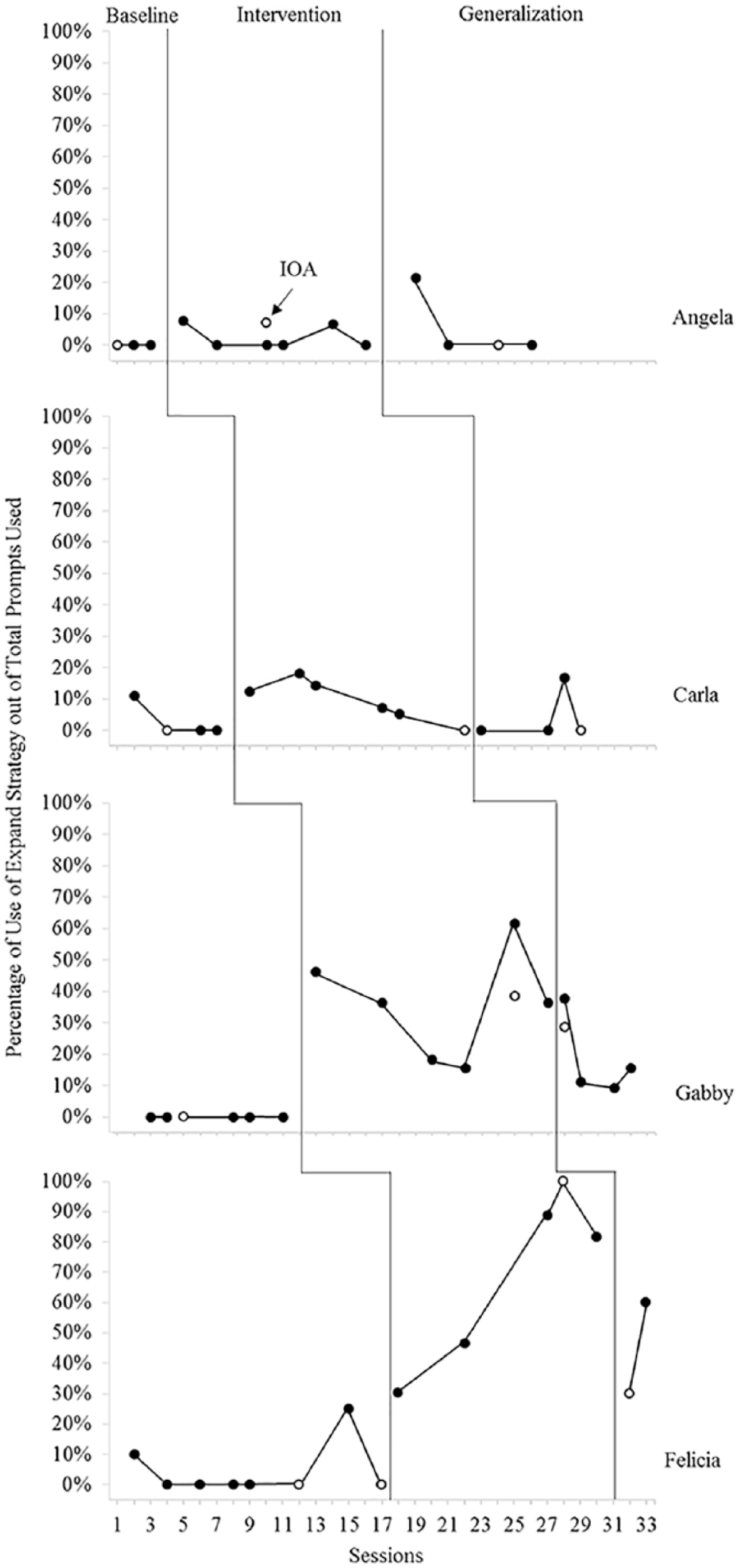
Expand results with IOA data.
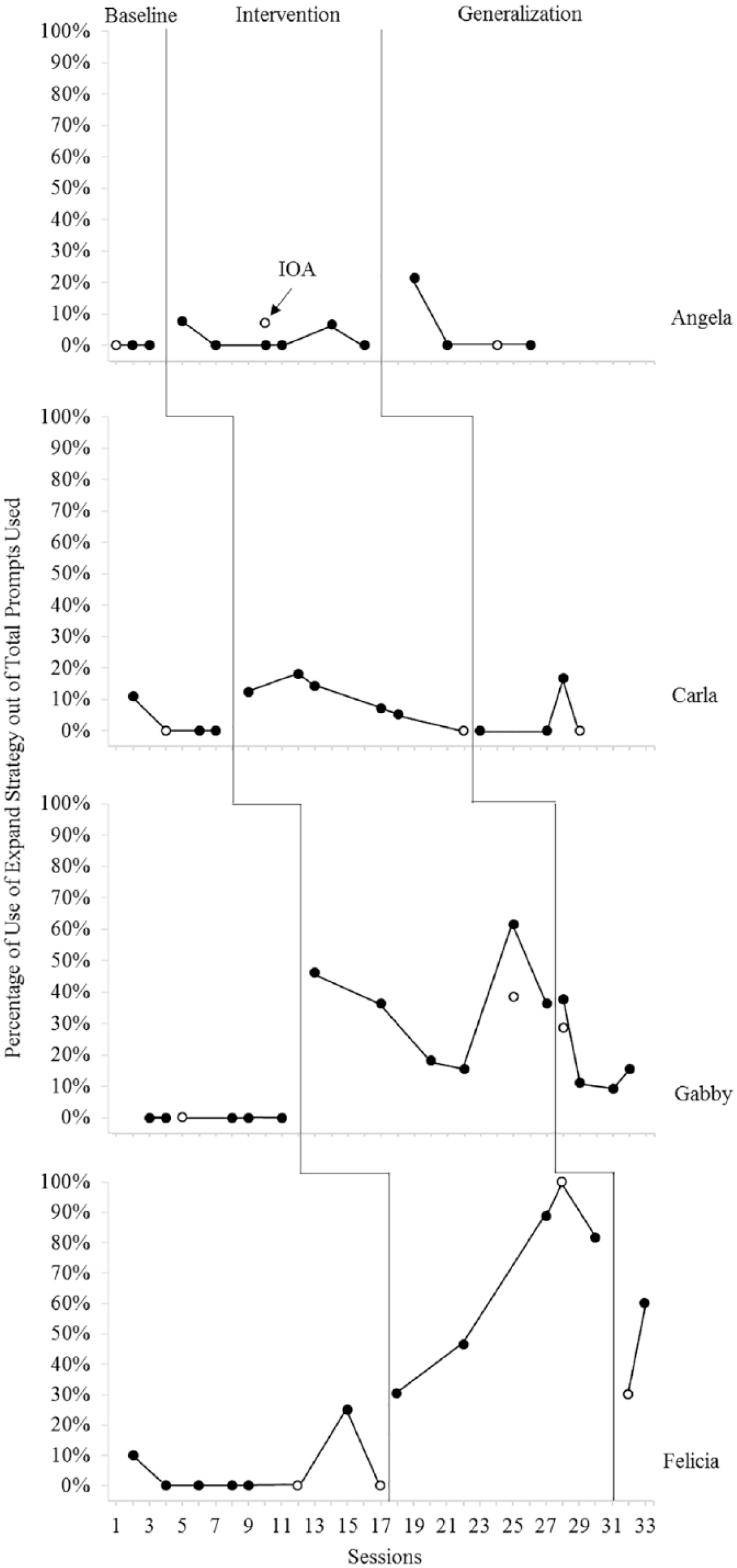
Repeat results with IOA data.
Evaluate prompt
There was not a functional relation between the independent variable and dependent variable for the evaluate strategy, due to inconsistent data from baseline to intervention. Data were characterized by variability within all three phases of baseline, intervention, and generalization. Thus, data were neither unstable nor inconsistent among phases or participants (see Figure 2).
Expand prompt
There was not a functional relation between the independent variable and the dependent variable for the expand strategy due to inconsistent data within the baseline and intervention phases. The level of percentage of use of the expand prompt was low in all three phases, and the trend of the intervention phase is inconsistent between participants. Although two participants had relatively stable data throughout all phases (i.e., Angela and Carla), two participants (i.e., Felicia and Gabby) experienced moderate to high variability within the intervention phase, resulting in inconsistent stability of data (see Figure 3).
Repeat prompt
Similar to the evaluate and expand prompts, there was not a functional relation between the independent variable and the dependent variable for the repeat strategy. The baseline levels for all participants were low at 0%, and stable with low variability. Each participant experienced an increase on the percentage of use of the repeat strategy in the intervention phase, yet only two participants experienced an upward trend within the intervention phase. In addition, there was some variability of data throughout the intervention phase for all participants. Generalization phase showed a downward trend for almost all participants (see Figure 4).
Single-Word Vocabulary Results
To determine the impact of the DR intervention on children’s single-word receptive and expressive vocabulary skills, both standardized and researcher-developed assessments were analyzed. No significant differences were noted on standardized measures administered pre- and postintervention as measured by paired-samples t tests. Means of near-transfer receptive, expressive, and total vocabulary for each condition were calculated per child. Expressive vocabulary scores improved minimally from baseline to intervention for all children but one, with receptive vocabulary remaining stable for six of the eight participants. Scores on these tasks were relatively high in baseline, particularly for the receptive portion. (see Table 3 for specific data per participant).
Average Number of Near-Transfer Vocabulary Learned Per Phase Per Student.

Note. Expressive range = 0–5; receptive range = 0–5; total range = 0–10.
Social Validity Results
To evaluate the paraprofessionals’ experiences related to the DR intervention, responses from the 15-item social validity survey were recorded individually by item, and averaged across the eight participants. Overall, the average ratings across participants for all 15 items was 5.46 (range = 5–6) on a Likert-type scale of 0 to 6. All individual ratings were noted as 4 or higher across all items (see Supplemental Materials for specific data by item). Responses from open-ended questions were recorded, and noted as positive supporting the intervention.
Discussion
There is limited evidence regarding if DR can be implemented with fidelity by a variety of stakeholders, including educators (Towson et al., 2017), with one study establishing its utility with paraprofessionals (Fleury & Schwartz, 2016). Limited data are also available as to the effectiveness of DR for children with language impairments (Towson et al., 2017), specifically related to dosage. Results of this study suggest that one training with the additional support of scripted books allowed paraprofessionals to implement the DR strategies inconsistently. Limited effects were noted for children’s single-word book-specific vocabulary.
The first two research questions focused on the functional relation between the independent variable (education in DR: CROWD and PEER accompanied by scripted books) and the paraprofessionals’ implementation of the prompts and supportive strategies. For implementation of the CROWD prompts, the results revealed a functional relation of the independent variable (i.e., DR education, scripted books) and the use of the CROWD prompts for all four paraprofessionals. Three of the paraprofessionals made significant changes in their storybook readings, from asking an average of zero to three questions per book reading across the baseline phase, to asking an average of 11 to 13 per book reading in the intervention phase. This suggests that when provided with a singular educational session and in-book supports (i.e., CROWD prompts provided within the book), paraprofessionals can successfully increase their use of DR prompts within readings. However, generalization data declined in all instances, suggesting that after providing paraprofessionals PD on the CROWD prompts, they are able to use the prompts during shared storybook readings when provided with the support of scripted books, but not when asked to develop their own scripts. It may be that with an additional “booster” session following the intervention phase, or fading of the supports in a more systematic way, the paraprofessionals would have better success in generalizing.
The second research question examined if there was functional relation between educating paraprofessionals in the strategies of DR and their implementation of the evaluate, expand, and repeat (i.e., PEER) strategies during storybook reading. After the educational session, a visual analysis revealed no functional relation between the independent variable and dependent variable. Therefore, while the training did provide the paraprofessionals with knowledge of the supportive strategies, the results had great variability and inconsistency.
The PEER portion of the DR program was less explicitly supported during the intervention phase, with only a reminder of these strategies placed in the front cover of each book, whereas the CROWD prompts were permanently placed on specific pages within the book. In addition, as all but one of the paraprofessionals were reading to a small group of children, they may have had difficulty managing the instances when more than one child responded to a question as no specific instructions were provided related to this. The lack of implementation of these strategies could also be related to the ability of the paraprofessionals to simultaneously implement multiple novel strategies. Future studies should examine both the provision of more concrete supports, as well as the presenting and teaching of a singular strategy to the level of mastery, prior to the introduction of a subsequent strategy. Similar to the CROWD prompts, the paraprofessionals use of PEER declined during the generalization phase, again suggesting that more systematic support is needed for the generalization of these strategies to novel books.
Next, the researchers investigated the impact of DR on the receptive and expressive single-word vocabulary skills for preschool children with language impairments. Similar to prior studies of DR for children with language impairments, no significant differences were noted on standardized measures of receptive and expressive single-word vocabulary (Towson et al., 2016). Although this is a common theme in DR studies, differences were not expected on standardized measures following a 3-week intervention. When examining results for the near-transfer vocabulary words, minimal changes were noted for either receptive or expressive tasks. Although the majority of children showed slight improvement in the expressive task, any increase could potentially be attributed to the repetitive exposure to the words across testing sessions. In addition, most children demonstrated at least partial knowledge of the words in baseline (all but one participant had a perfect score for the receptive task), suggesting that this targeted child outcome was not the most appropriate for demonstrating the effects of DR. Potentially these words were too basic for the children in the intervention and did not require additional practice with DR. In future studies, children’s pretest scores on vocabulary should drive the selection of words for the intervention. In addition, with only five items for both receptive and expressive vocabulary, there was little variability in the data generally, making it difficult to conclude how DR affect single-word book-related vocabulary. Given these results, it may be that either higher levels of fidelity of the evaluate, expand, and repeat strategies are needed to affect this skill or an increase in dosage of reading is necessary (i.e., more than three reads of the same book in 1 week or across weeks). To assess a true relationship between adults’ implementation of DR strategies and child outcomes, it would be helpful to examine the didactic nature of the exchanges between paraprofessionals and children, such as their rate and frequency of responses and initiations. The fact that children were read to in small groups (for all but one paraprofessional) could also have affected their opportunities to respond and receive specific feedback, as the participants were not given any guidance on how to present the prompts to the group or how to follow-up if more than one child responded. Although children who are typically developing may benefit from DR in small groups through both direct practice as well as observation of language skills, those with language impairments may require more opportunities and targeted scaffolding to achieve the same outcomes.
It is important to determine the acceptability of interventions provided to paraprofessionals to ensure that they are feasible and likely to be continued in the absence of research. On the social validity measure, the paraprofessionals ranked each of the 15 questions with an average of five to six points on the 6-point scale, implying that participants believed the intervention was appropriate and beneficial for children, and they would continue using DR in the future. Qualitative open-ended responses supported these numeric findings.
Limitations and Future Directions
This study presented preliminary evidence for the ability of paraprofessionals to implement an evidence-based practice such as DR with variable fidelity. However, several limitations are noted. This study utilized a single-case multiple-probe research design to determine specific aspects related to implementation fidelity. As future studies are designed, additional attention should be given to the level of training and support necessary for paraprofessionals to implement all aspects DR with fidelity and for their ability to generalize these skills to novel book readings. Although the paraprofessionals were provided guided practice with feedback during the educational session, no preset criterion was set to determine that the participant was ready to begin the intervention. In addition, neither booster nor ongoing coaching was provided to the participants in this study, which may have negatively affected their ability to implement multiple aspects of the DR intervention. It should also be noted that two of the books were used in both baseline and generalization phases for three participants and one was used in both baseline and intervention for one participant. This replication of book readings may have influenced the familiarity and comfort of a paraprofessional’s readings and potentially the ability for children to learn vocabulary.
There were a priori phase change decisions made prior to the beginning of the study. This was due to the timing of school year, for each paraprofessional to progress through each phase by the end of academic semester. These a priori phase change decisions are a threat to internal validity as the researchers were not able to allow for true stability in baseline, nor provide additional supports that may have been needed in the intervention phase. Specifically, within the participant results, for Research Question 2 (i.e., PEER), baseline data revealed an increasing trend for Carla in the Evaluate prompt, and a variability in the Evaluate prompt for Felicia and Gabby, as well as variability in the expand prompt for Carla and Gabby. This increase in trend, as well as variability in the baseline condition, is a threat to internal validity, and thus prevents a conclusion regarding the functional relation for Research Question 2. Finally, IOA data fell below 80% at least once across all participants; therefore, all results should be interpreted with caution. However, the main impact was on Carla’s evaluate and repeat data and results were interpreted taking IOA into consideration.
Conclusion
Overall, the results of this study suggest that paraprofessionals implemented both aspects of DR (i.e., CROWD, PEER) with variability, with better success of the CROWD prompts supported by scripts than PEER. Although DR was selected specifically due to its formulaic nature and ease of implementation, this study suggests that additional training and/or supports are necessary for implementation of the prompting hierarchy and carryover of all strategies to novel book readings. Based on the variable results of this and similar studies, paraprofessionals may be a viable source of expanding the direct instruction of evidence-based practices for young children with language impairments in preschool settings if provided with more consistent coaching and in-book supports. If these supports result in increased fidelity, DR implementation by paraprofessionals may be a promising method of improving children’s vocabulary skills.
Supplemental Material
Supplemental_Near-Transfer_Vocabulary – Supplemental material for Reading Beyond the Book: Educating Paraprofessionals to Implement Dialogic Reading for Preschool Children With Language Impairments
Supplemental material, Supplemental_Near-Transfer_Vocabulary for Reading Beyond the Book: Educating Paraprofessionals to Implement Dialogic Reading for Preschool Children With Language Impairments by Jacqueline A. Towson, Katherine B. Green and Diana L. Abarca in Topics in Early Childhood Special Education
Supplemental Material
Supplementary__DR_Training – Supplemental material for Reading Beyond the Book: Educating Paraprofessionals to Implement Dialogic Reading for Preschool Children With Language Impairments
Supplemental material, Supplementary__DR_Training for Reading Beyond the Book: Educating Paraprofessionals to Implement Dialogic Reading for Preschool Children With Language Impairments by Jacqueline A. Towson, Katherine B. Green and Diana L. Abarca in Topics in Early Childhood Special Education
Supplemental Material
Supplementary__IRP_Ratings – Supplemental material for Reading Beyond the Book: Educating Paraprofessionals to Implement Dialogic Reading for Preschool Children With Language Impairments
Supplemental material, Supplementary__IRP_Ratings for Reading Beyond the Book: Educating Paraprofessionals to Implement Dialogic Reading for Preschool Children With Language Impairments by Jacqueline A. Towson, Katherine B. Green and Diana L. Abarca in Topics in Early Childhood Special Education
Footnotes
Acknowledgements
The authors would like to thank the Orange County Public Schools and UCP of Central Florida and specifically the teachers, paraprofessionals, and students for participation in this study. Additional acknowledgment goes to Abigail Samperi, Zhana Petrova-Sabevska, and Alexis Burruano for their assistance on this project.
Declaration of Conflicting Interests
The author(s) declared no potential conflicts of interest with respect to the research, authorship, and/or publication of this article.
Funding
The author(s) disclosed receipt of the following financial support for the research, authorship, and/or publication of this article: This work was supported through the In-House Grant program from the Office of Research and Commercialization at the University of Central Florida (UCF). This work does not directly reflect the views of UCF.
Supplemental Material
Supplemental material for this article is available online.
References
Supplementary Material
Please find the following supplemental material available below.
For Open Access articles published under a Creative Commons License, all supplemental material carries the same license as the article it is associated with.
For non-Open Access articles published, all supplemental material carries a non-exclusive license, and permission requests for re-use of supplemental material or any part of supplemental material shall be sent directly to the copyright owner as specified in the copyright notice associated with the article.
