



Abstract
Language brokering is a common practice for Latino youth with immigrant parents. Yet little is known about how youth’s feelings about this responsibility contribute to the parent-adolescent relationship. In this study, we examined the longitudinal associations between language brokering attitudes and parent-adolescent closeness in a sample of Latino early adolescents (n = 813, Maget1 = 12.32, SDt1 = .59), while taking into account language brokering frequency and the possible moderating role of sex. Results suggested that sex of the adolescent was a moderator. Specifically, younger males who felt closer to their parents had more positive attitudes toward language brokering, which dissipated as they aged. Furthermore, language brokering frequency had a delayed positive contribution to language brokering attitudes and parent-adolescent closeness, which was stronger for males than females. Results are discussed in terms of how age and gender cultural norms contribute to the relation between language brokering and parent-adolescent closeness.
Keywords
In the past few decades, Latinos have had the highest rate of population increase of all racial and ethnic groups in the United States, and they now constitute 16% of the current U.S. population, surpassing African Americans (13%) as the largest minority group (Passel, Cohn, & Hugo Lopez, 2011). Figures indicate that immigration is a significant contributor for this population’s growth (Capps & Fortuny, 2006; U.S. Census Bureau, 2000, 2010). Latino youth with immigrant parents are quite diverse with respect to their countries of origin, circumstances of immigration, the socioeconomic classes to which they belong, and the generational statuses of family members (Rumbaut, 2004). Yet, many Latino youth in the United States share the common experience of serving as cultural brokers between their parents’ native culture and that of the mainstream. One important aspect of cultural brokering is language brokering, which involves children translating and interpreting for their parents, extended family, neighbors, teachers, and medical providers (Morales & Hanson, 2005). Language brokering fills an important need in Spanish-speaking families with monolingual or nearly monolingual parents.
Research on language brokering has noted both positive (Orellana, 2009) and negative outcomes (Kam, 2011; Weisskirch & Alva, 2002). Some have found that language brokering can increase code-switching abilities as well as cognitive and social skills (Gort, 2008). Others, on the other hand, argued that language brokering can place undue stress, especially on the parent-child relationship (Umaña-Taylor, 2003), which then would lead to undesirable outcomes (e.g., youth substance abuse; Shin & Hecht, 2012). Despite decades of research supporting the central role that parents play in adolescents’ lives (Steinberg, 2001) and how certain parent-adolescent relationship factors (e.g., communication) are embedded within the practice of language brokering, it is surprising that little empirical research exists examining the interrelation between language brokering and parent-adolescent relationship factors. Furthermore, the majority of work on language brokering experiences is based on cross-sectional studies, and little is known about how different aspects of this experience may affect, and be affected by other aspects of language brokers’ lives (e.g., aspects of the parent-adolescent relationship across time). In an effort to address this gap in the literature, we examined Latino early adolescents’ attitudes about language brokering in relation to the parent-adolescent relationship (i.e., closeness) from seventh to ninth grades, a particularly important developmental period for youth as they begin to transition into a more autonomous role within the family. Furthermore, we examined the role of frequency of language brokering and adolescent gender (i.e., male/female) in relation to the link between language brokering attitudes and adolescents’ relationships with their parents.
Language Brokering Attitudes
Instead of considering language brokering as a static cultural force (Love & Buriel, 2007), it is important to appreciate the potential role of developmental change and growth in relation to youth attitudes about language brokering, and how this practice is linked to other aspects of adolescents’ lives (e.g., the parent-child relationship). Although cross-sectional, studies on youth and language brokering point to potential differences in how language brokers are affected by the practice. For example, among fifth and sixth graders, language brokering tends to be associated with feelings of discomfort (Weisskirch & Alva, 2002), whereas positive effects of language brokering appear to accrue across adolescence, resulting in greater academic self-efficacy and bicultural identity in high school (Buriel, Perez, De Ment, Chavez, & Moran, 1998) and in college (Buriel, Love, & De Ment, 2006). In addition, by seventh and eighth grades, how males and females perceive the language brokering experience begins to diverge. Specifically, males begin to report less positive feelings about language brokering than females (Love & Buriel, 2007). In addition, other retrospective studies (e.g., De Ment, Buriel, & Villanueva, 2005) highlight that attitudes about language brokering vary across adolescence and their attitudes may be influenced by academic transitions (i.e., transition from elementary to middle school, middle school to high school or high school to college). For example, Sy (2006) found that Latina college students who more frequently language brokered for their parents reported higher levels of school stress. The transition from elementary school to middle school had been found to be a stressful period for adolescents (Elias, Gara, & Ubriaco, 1985), but little is understood about how language brokering attitudes develop in this age group. These findings point to the importance of age and gender as individual factors that must be incorporated into any model of language brokering experiences. The extant literature suggests that (a) changes in peer relationships and cognitive skills may account for the initial discomfort and later easing of the demands of speaking two languages, and (b) males’ linguistic skills develop later than females (Gleason & Ely, 2002), such that it may take males somewhat longer to benefit from the effects of language brokering.
In sum, youth may develop more positive language brokering attitudes as a function of their age, which serves as a broad index for other developmental changes. However, this developmental trend has only been suggested through cross-sectional studies; cohort effects and selection bias may account for the existing pattern of findings. The present study used a longitudinal design covering ages 11 to 16, which not only permitted an analysis of the temporal relations between language brokering attitudes and parent-adolescent closeness, but also the ability to determine if the effects vary as a function of adolescent age and gender.
Language Brokering Attitudes and Parent-Adolescent Closeness
As adolescents enter middle school, they experience a normative developmental shift toward seeking and receiving more support from peers rather than parents in certain areas of their lives (Arslan, 2009; Furman & Buhrmester, 2009) as well as changes in the parent-adolescent relationship such as increasing conflict (Bámaca-Colbert & Gayles, 2010). The experience of language brokering has also been posited to contribute to the quality of the parent-adolescent relationship. Specifically, scholars have posited that emotionally responsive caregiving may be disrupted by language brokering because the nature of the practice reverses the role between parent and child, such that the child cares for the parent (e.g., the child helps the parent navigate the public transportation system) rather than the parent caring for the child (Dorner, Orellana, & Jiménez, 2008; Martinez, McClure, & Eddy, 2009). This in turn may cause excessive stress and emotional responsibility, putting additional pressure on the parent-adolescent dyad (Umaña-Taylor, 2003). However, limited empirical work on this relation suggests that language brokering is linked to positive parent-child bonding (Love & Buriel, 2007; Santiago, 2003; Valdez, 2003) with only clinical case studies showing detrimental emotional consequences (Baptiste, 1993).
There is a dearth of longitudinal research in the empirical literature on language brokering and virtually no information on the association between youth’s attitudes toward language brokering and their relationship with their parents. It is therefore unclear how youth’s feelings about language brokering might influence the parent-adolescent relationship and vice versa. One possibility is that youth’s attitudes toward language brokering indirectly contribute to the quality of the parent-adolescent relationship. For example, if youth feel positive about language brokering because they are contributing to the family, they may decide to broker more for the family, giving them more opportunities to build a closer relationship with their parents. Alternatively, youth who have already developed a sense of closeness with their parents may readily accept and feel positive about assuming the role of language broker because it is their duty within the family. These two paths have yet to be empirically tested, but theoretical work provides the likely direction of this association.
The integrative model proposed by Garcia-Coll and colleagues (1996) posits that children’s developmental competencies (e.g., cognitive and emotional) are a direct function of individual characteristics, adaptive culture, and family processes. Thus, family processes, such as the quality of relationships with parents (e.g., parent-adolescent closeness), are likely to contribute to how youth feel about the practice of language brokering rather than feelings about the practice contributing to relationship quality. Based on this theoretical premise, we expected that parent-adolescent closeness would contribute to language brokering attitudes and not the reverse, but we tested this opposite direction as well. We also posited that the association between language brokering attitudes and adolescents’ relationship with their parents may change across developmental stage (early vs. middle adolescence). Specifically, we expected that the relation between parent-adolescent closeness and language brokering attitudes would be more salient in earlier development rather than later development because youth tend be influenced by the parents more in early adolescence compared with later adolescence (Arslan, 2009; Furman & Buhrmester, 2009) and attitudes may be more heavily influenced by peers as adolescents get older (Weisskirch & Alva, 2002).
Frequency of Language Brokering
How often children language broker for the parents has been found to be an important factor in predicting well-being of both the child and the family. For example, Martinez and colleagues (2009) found that after controlling for socioeconomic status (SES) and nativity, youth who brokered more frequently had lower homework quality, lower academic performance, more internalizing symptoms, lower sense of ethnic belonging, and were more likely to use alcohol or tobacco compared with youth who brokered less frequently. In addition, the parent dynamic seemed to be disrupted. Compared with fathers whose youth did not language broker often, fathers of high-frequency language brokerers were more likely to be depressed, experience immigration and occupational stress, and be less involved in their child’s life (Martinez et al., 2009). It should be noted, however, that this sample was drawn from an area in Oregon that had limited bilingual resources in the area. Thus, it is unclear how frequency of language brokering correlates with parent-adolescent relationship factors (such as parent-adolescent closeness) or with their general attitudes of the practice in a context where bilingual services are readily available. In a context with more resources, for example, children may be uncomfortable with the practice at first, but as time goes on they may feel more comfortable. Given that many studies have shown the benefits of language brokering, we examined whether the frequency of language brokering made a direct contribution to parent-adolescent closeness and language brokering attitudes.
Gender
Language brokering is an integral role within first-generation Latino families, and research on gender socialization has shown that family dynamics (e.g., parent-child closeness) are significantly linked to children’s socialization experiences to particular gender roles within the family (McHale, Crouter, & Whiteman, 2003). Understanding how gender may shape the association between language brokering and family dynamic is especially important during early adolescence because of gender intensification (Hill & Lynch, 1983). According to the gender intensification hypothesis, parents tend to socialize their children to specific gender roles more intensely as they develop secondary sex characteristics. Research on gender socialization finds that generally pre-pubescent children are not socialized to their specific gender roles except for the exposure to more sex-typed toys. As they enter puberty, however, adolescents tend to be socialized more to a specific gender role, demonstrating the importance of studying parent-child relationships in early adolescence (McHale et al., 2003). Furthermore, gender differences are important to study in immigrant Latino youth because studies have shown that first- and second-generation Latinos adhere to more differentiated gender-specific roles within the family when compared with their non-Latino counterparts (Raffaelli & Ontai, 2004). Yet, an extant gap in the literature leaves questions about the potential role that gender may play in the way language brokering and family processes are interconnected.
Although females have been shown to do language brokering more than their male counterparts (Tse, 1995), it is less understood how this role and its subsequent link to parent-child dynamics may be likely shaped by gender. Because language brokering is more frequently done by females, one could assume that this is a more female-specific gender role. Within the Latino gender-socialization literature, research reveals that males are typically entitled more freedom than females (Raffaelli & Ontai, 2004). Language brokering responsibilities, therefore, may constrict males’ social freedom by pulling them closer to the family and away from other activities to which they have been gender-socialized (e.g., going out with friends). Consequently, Latino males may have more negative attitudes toward language brokering than their female counterparts, as they may perceive more gender role strain from the activity given its potential hindrance to social freedom.
A stronger bond with their family, however, may attenuate males’ perceptions of gender role strain when engaged in language brokering, and be associated with more positive language brokering attitudes. In sum, gender role socialization experiences may contribute to Latino males being more sensitive about the practice, and as such, parent-adolescent closeness may have more influence on how males feel about language brokering compared with females. Given these potential differences, an important aim of the study was to clarify the way the relation between closeness with their parents and language brokering attitudes varies by gender of adolescent (i.e., male and female).
Covariates
Importantly, in recent decades, scholars (Rumbaut, 2004) have highlighted the diversity that exists among Latinos in terms of demographic characteristics such as nativity (i.e., country of birth) and SES. In light of this, taking into account the role that socio-demographic factors may have in the well-being of Latino adolescents is important. In particular, it has been suggested that the amount a family relies on an adolescent for translating (Martinez et al., 2009), and the adolescents’ ability to speak Spanish and English contribute to how youth adjust (Morales & Hanson, 2005). Both of these factors are influenced by the adolescents’ country of birth. That is, a first-generation family (i.e., immigrant child and immigrant parents) faces unique challenges that are likely to differ from a second-generation immigrant family (i.e., U.S.-born child and immigrant parents). Second-generation families have U.S.-born children who have had time to adapt, culturally and linguistically, to the United States. Parents with U.S.-born children may also be more familiar with resources in the community that can help decrease the reliance that parents may have on their children to translate for them. Thus, we controlled for nativity of the child.
In addition, lower SES has been linked to a myriad of negative outcomes, such as internalizing and externalizing problems in all youth (Wadsworth & Achenbach, 2005). More importantly, Latino adolescents who come from a lower SES family may experience more stressors including more language brokering than those from a higher SES background. For instance, low SES has been linked indirectly to adolescents perceiving more discrimination (Chen & Paterson, 2006). Thus, it is possible that Latino adolescents with lower SES may hold more negative attitudes toward language brokering because they may feel that the practice is demeaning and sets them apart from their mainstream peers. Because of this possibility, the present study used an SES proxy to adjust for SES status.
Finally, study participants were part of an intervention with components that may have influenced some of our main study variables. The intervention trained students in parent communication (which could influence closeness with parents), self-efficacy (which could influence attitudes around language brokering), and coping strategies for stress (which may influence how adolescents perceive cultural stressors such as time spent brokering). Therefore, we controlled for intervention status in all analyses.
The Current Study
We examined the temporal association between Latino youth’s attitudes toward language brokering and their relationship with their parents, specifically parent-adolescent closeness. In addition, we examined this process across time and how it varied by gender while accounting for salient contextual factors (i.e., frequency of language brokering). Hypotheses were as follows:
Method
Participants
The current sample is drawn from a larger longitudinal study that examined the effectiveness of a substance abuse prevention program in a high Latino immigrant area in the Southwest (Please refer to Hecht and colleagues’ work (Elek, Wagstaff, & Hecht, 2010; Hecht et al., 2008) for more information on the study and the Keepin’ it Real intervention [the supplementary file is available at jea.sagepub.com/supplemental]). Whereas this longitudinal study started in Grade 5, the present study used the data on language brokering, which was gathered in the fall of seventh grade (Time 1), the spring of seventh grade (Time 2) and the fall of ninth grade (Time 3). In addition, for the current study, only Latino participants (n = 813, 39% of the total sample) who indicated that they language brokered for their family were included. A description of the sample used for the present study follows.
Of the 813 Latino youth who participated in at least one time point in the three waves of data collection, 668 adolescents participated at T1, 643 participated at T2, and 643 at T3 (see Table 1). There was a relatively even balance between sexes (48% male), with a mean age of 12.3 years (range = 11-16, SD = 0.59) at T1. Because of our sampling strategy, we used grade to look across developmental changes. The majority of the sample identified as Mexican American (89%) and was born in the United States (73%), whereas only 20% of their mothers and 18% of their fathers were born in the United States. As compared with males, females were more likely to be born in the United States (p = .022) and to have mothers who were born in the United States (p = .013). The survey was offered in Spanish, but 97% of the students took the survey in English.
Descriptive Statistics.
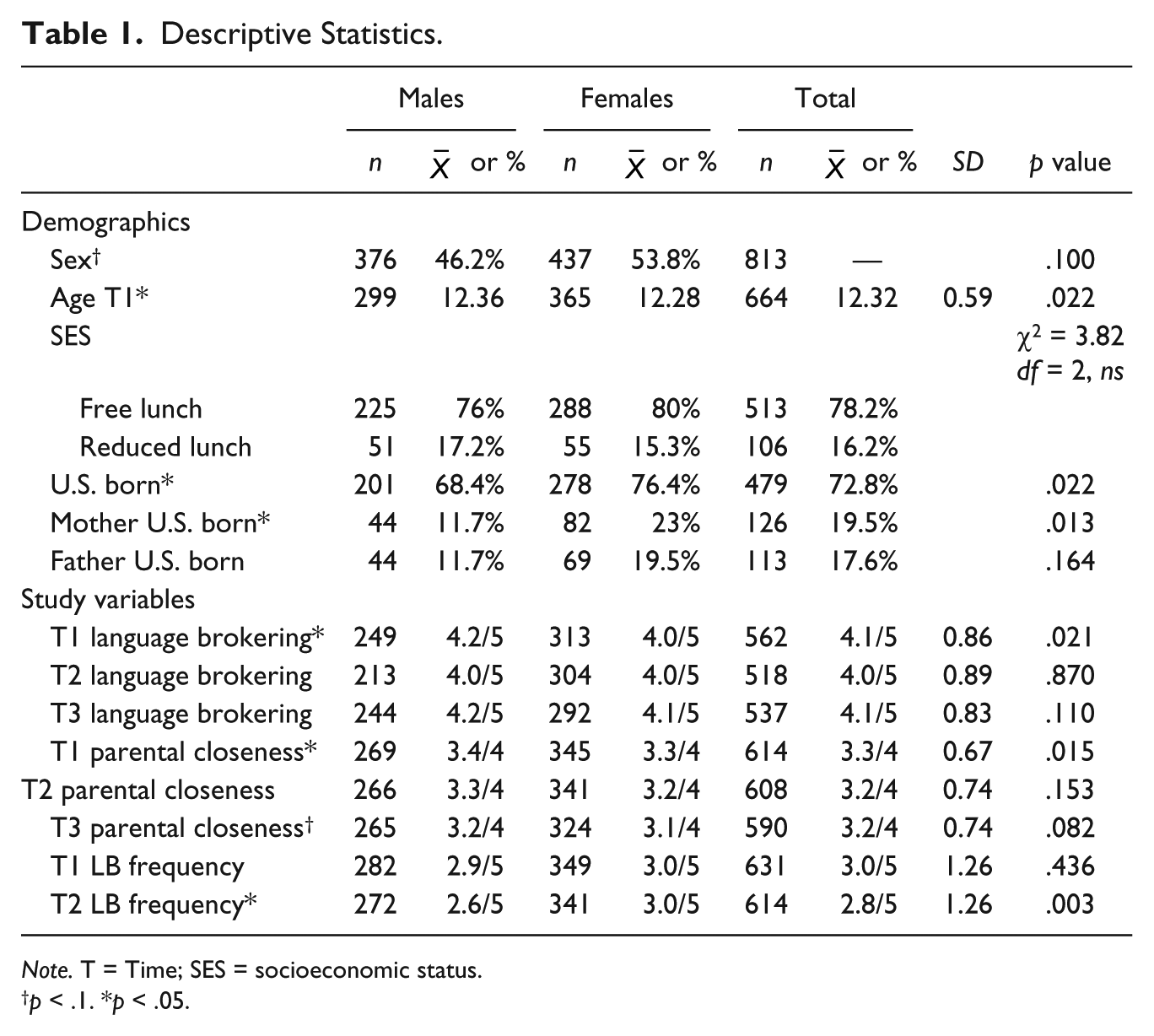
Note. T = Time; SES = socioeconomic status.
p < .1. *p < .05.
Procedures
Prior to the implementation of the study, researchers obtained approval from the human subjects institutional review board, parents provided informed consent, and students provided informed assent. During data collection, youth completed several self-reported questionnaires. Questionnaires took approximately 45 minutes to complete and were typically done in the homeroom, science, or health class.
Measures
Language brokering attitudes
An adapted four-item version of the Language Brokering Scale was used to assess attitudes about language brokering within the family context, which was originally found to have good predictive validity for biculturalism, self-efficacy, and academic performance (Buriel et al., 1998). Response choices ranged from 1 (never) to 5 (always), and the four items used were “I feel embarrassed when I translate for my family,” “I have to translate for my family even when I don’t want to,” “I feel good about myself when I translate for my family,” and “I feel nervous when I translate for my family.” The negatively worded items were reversed to be equivalent to the positively worded item. The Cronbach’s alpha obtained for the four items was quite low for this sample (α = .46, .44, and .47 for T1-T3, respectively). In examining specific item correlations, the “I feel good” item did not correlate well with the other items. When the positive-worded item was dropped, the internal consistency alpha increased substantially (α = .64, .61, and .64 for T1-T3, respectively). Thus, only the negatively worded items were used and reverse scored to create a mean language brokering attitudes score, with higher scores indicating more positive attitudes.
Parental closeness
A subset of five items was selected from the Parental Socio-emotional Support for Adolescents scale (Upchurch, Aneshensel, Sucoff, & Levy-Storms, 1999), which has shown high reliabilities and good predictive validity for risky behavior in Latino adolescent (Upchurch et al., 1999). Adolescents responded to “My mom and dad . . . (1) really understand me, (2) care about my feelings, (3) are there when I need help, (4) don’t give enough attention to me, and (5) let me know if he/she cares about me” (α = .78, 80, and .84 for T1-T3, respectively). Items were scored on a 4-point scale from 1 (strongly agree) to 4 (strongly disagree). The negatively worded item was reverse scored so that higher scores indicated greater parent-adolescent closeness. A mean parent-adolescent closeness score was calculated with a possible range of 1 to 4.
Frequency of language brokering
Frequency of brokering was measured by asking “How often do you translate for a family member(s)—for example, interpret a letter, bill, conversation, or phone call in English for a person who doesn’t speak English?” Response choices were 1 = “never,” 2 = “a little bit,” 3 = “undecided,” 4 = “a lot,” and 5= “always.”
Socioeconomic status
SES was measured by asking adolescents if they received free or reduced lunch, and this categorical variable was coded into 1 = “free lunch,” 2 = “reduced lunch,” and 3 = “neither.” The majority of participants reported receiving free (78.2%) or reduced lunch (16.2%). Over 94% of the sample reported receiving free or reduced lunch. Findings did not reveal any significant contribution of SES to the model, possibly due to a lack of statistical power that resulted from the lack of variability in our SES variable—eligibility for free or reduced lunch. Therefore, we use SES as a control variable and our findings are most generalizable to a lower-income Hispanic population. We dummy coded the two variables to account for differences between reduced and free lunches.
Nativity
Nativity was simply measured by asking adolescents’ country of birth, and 0 was coded for those born in the United States, while 1 indicated those born in Mexico or Latin America.
Intervention status
Participants were part of a six-armed intervention. As to control for intervention status, we dummy coded the six categorical variables for each intervention status and used these dummy codes in our analyses to control for any potential intervention effects. The intervention categories included the duration of the intervention and whether the adolescents received the culturally enhanced adaptation.
Preliminary Analysis
Table 2 summarizes the bivariate correlations between age, language brokering frequency, and attitudes at T1-T3, language brokering attitudes, and parent-adolescent closeness across T1-T3. Chi-square tests were used for nativity and SES. Important to note is that the chi-square difference test suggested that SES, nativity, and intervention status be considered as control variables (see Table 2). Specifically, age was significantly associated with language brokering attitudes and parent-adolescent closeness for males, but not for females. In addition, both male and female youth from Mexico were more likely to experience lower SES and higher amounts of brokering. Mexican females were more likely to report being closer to their parents and had more negative attitudes about the practice, where males did not feel as close to their parents. Furthermore, we examined differences across variables for those with complete data and those who had partially missing data and found no significant differences across groups on variables of interest.
Summary of Intercorrelations Between Variables.
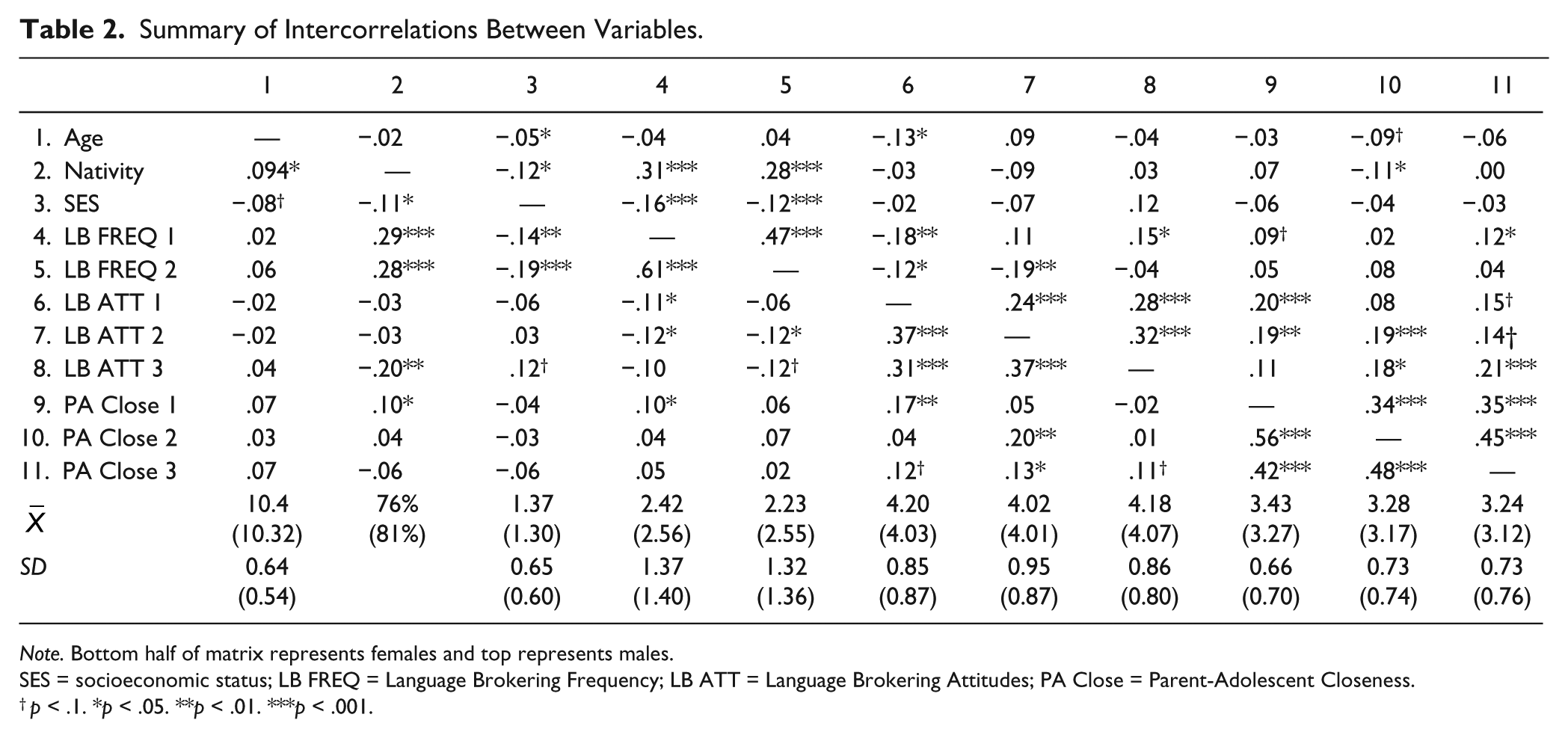
Note. Bottom half of matrix represents females and top represents males.
SES = socioeconomic status; LB FREQ = Language Brokering Frequency; LB ATT = Language Brokering Attitudes; PA Close = Parent-Adolescent Closeness.
p < .1. *p < .05. **p < .01. ***p < .001.
Primary Results
The goals of this study were threefold: (a) to determine whether parent-adolescent closeness prospectively predicted language brokering attitudes, (b) to explore language brokering frequency’s contribution to this relation, and (c) to examine whether this relation varied by gender and across time. We did not adjust for equal spacing between waves, but used autoreggression between variables between waves as to account for any previous levels of correlation between variables. Structural Equation Modeling (SEM) in AMOS 20.0 was utilized, and full information maximum likelihood (FIML) was used to account for missing data. We used FIML because the missingness pattern appeared to be random; sensitivity analyses yielded the same results. In addition, we used steps outlined by Lippold, Greenberg, Graham, and Feinberg (2013; that is, testing the two groups separately, tested for factor structure equivalence, and the specific model paths differed between groups) to test for moderation in the cross-lagged model. Lastly, it is important to note that although we hypothesized that parent-adolescent closeness would contribute to language brokering attitudes (i.e., closeness → attitudes) and not the opposite (i.e., attitudes → closeness), we accounted for the potential attitudes → closeness cross-path despite expectations that this path would not be statistically significant.
We used Multi-Group Confirmatory Factor Analysis (Cheung & Rensvold, 1999) to determine whether gender was a moderator. The following three broad steps were utilized: We tested for (a) global differences across gender, (b) specific hypothesized regression paths, and (c) path differences that we did not hypothesize to be variant across genders. The first step was to examine whether modeling the data separately for males and females fit the data better than combining these groups. Table 3 shows how the model that constrained the paths for males and females to be equal was significantly different from the fully saturated model (i.e., freely estimated paths), diff χ2(61) = 100.80, p ≤ .001, root mean square error of approximation (RMSEA) = .03, comparative fit index (CFI) = 96, Tucker-Lewis index (TLI) = .84, suggesting differences in certain paths across sex. Therefore, we further examined significant differences across the specific individual paths we hypothesized to be different and the paths we did not hypothesize to differ.
Invariance Testing Across Sex.
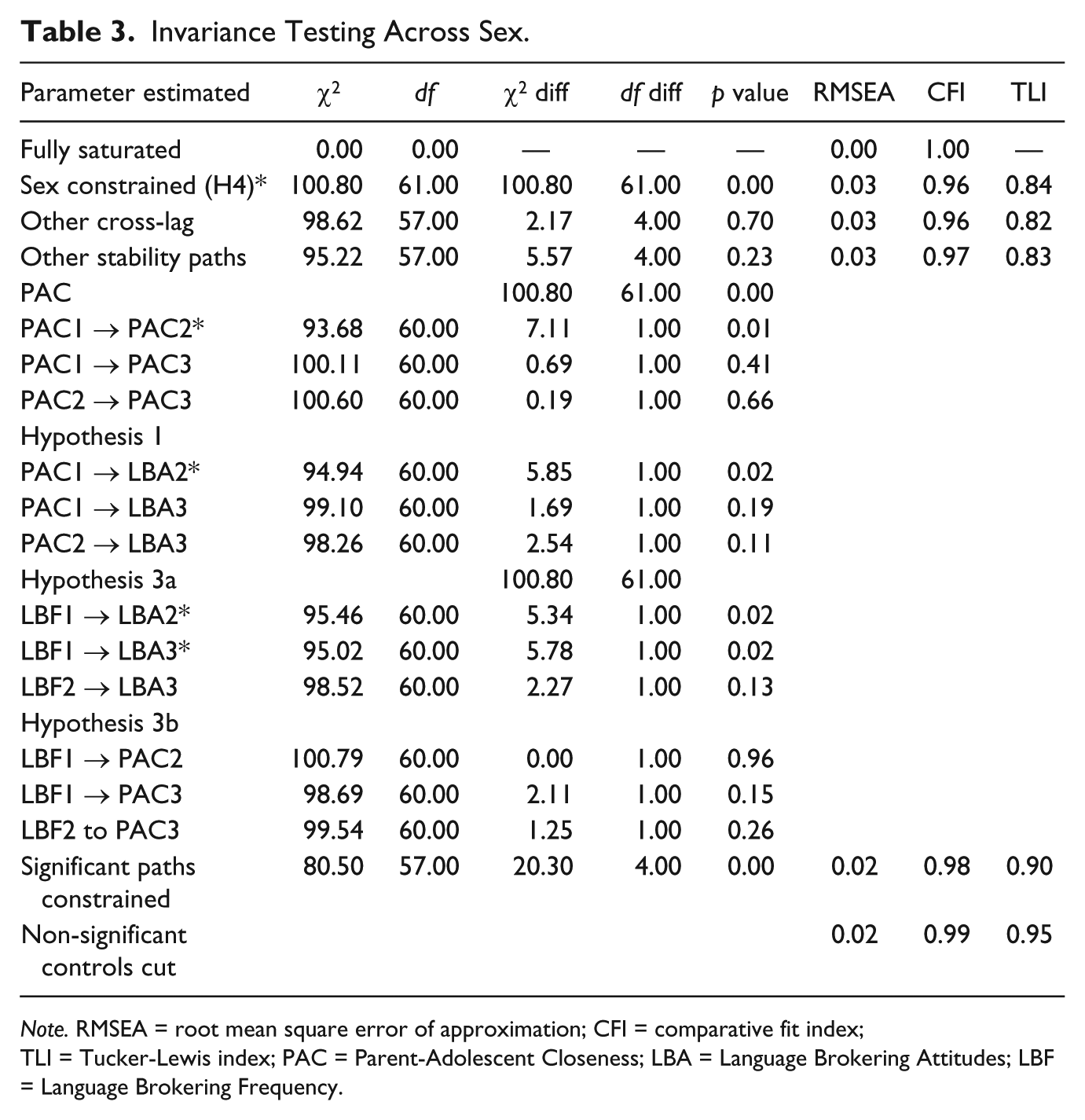
Note. RMSEA = root mean square error of approximation; CFI = comparative fit index; TLI = Tucker-Lewis index; PAC = Parent-Adolescent Closeness; LBA = Language Brokering Attitudes; LBF = Language Brokering Frequency.
To determine which paths to test individually, separate models for males and females were examined to see which paths were significant in one model, but not the other. Specifically, it was found that parent-adolescent closeness significantly predicted language brokering attitudes and language brokering frequency significantly predicted both language brokering attitudes and parent-adolescent closeness for males (see Figure 1). In contrast, no cross-lags associations were found for females (see Figure 2), suggesting that invariance across genders for these specific paths should be tested. Although not hypothesized, it was also found that parent-adolescent closeness at T1 (i.e., beginning of seventh grade) significantly predicted parent-adolescent closeness at T3 (i.e., ninth grade) for females and not males. Thus, instead of using the omnibus test to examine invariance across genders for the parent-adolescent closeness stability paths, each of these paths was examined individually. Specifically, separate models for each of the three individual stability coefficients were freely estimated and each of the freely estimated models was compared with their fully constrained model. Parent-adolescent closeness at T1 predicting parent-adolescent closeness at T2 (i.e., end of seventh grade) was the only path found to be significantly different across gender, diff χ2(1) = 7.11, p ≤ .001.
Fully saturated model of the cross-lagged associations of language brokering, parent-adolescent closeness, and language brokering frequency for males.
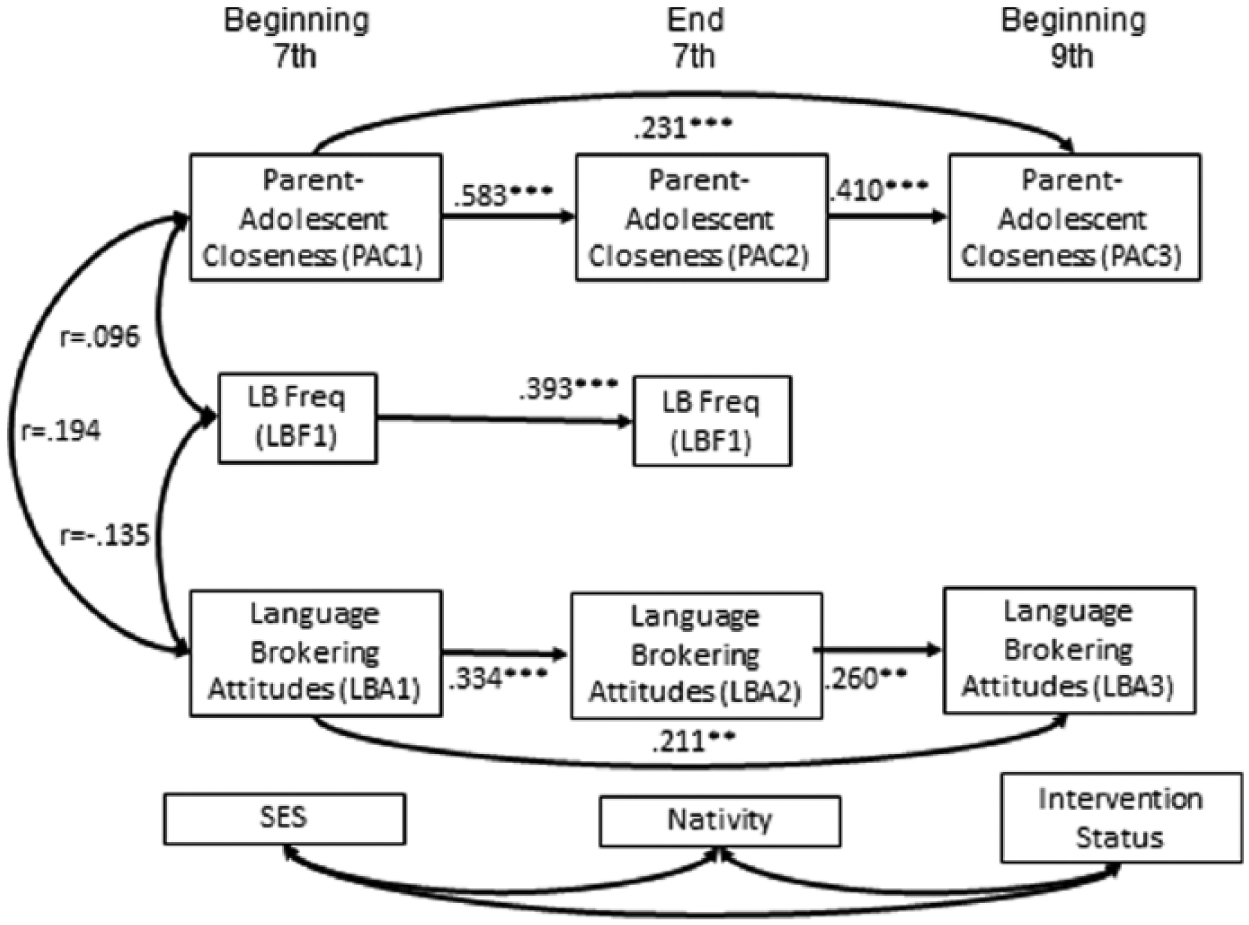
Fully saturated model of the cross-lagged associations of language brokering, parent-adolescent closeness, and language brokering frequency for females.
The second step (see Table 3) was to examine whether a priori hypothesized paths differed across males and females. Each hypothesized path was tested individually for invariance across groups with the same procedures outlined above (i.e., freely estimating the one path in one model and comparing it with the fully constrained model). Parent-adolescent closeness at T1 predicting language brokering attitudes at T2, diff χ2(1) = 5.85, p = .01, frequency of brokering at T1 predicting language brokering attitudes at T2, diff χ2(1) = 5.34, p = .02, and frequency of brokering at T1 predicting language brokering attitudes at T3, diff χ2(1) = 5.78, p = .02, were found to significantly vary across gender. It is to be noted that no significant cross-lag paths were found for language brokering predicting parent-adolescent closeness.
In the final step, the final multi-group model allowed the one significant non-hypothesized path (i.e., parent-adolescent closeness at T1 predicting parent-adolescent closeness at T2) and the three significant hypothesized paths to be freely estimated across males and females, with all the remaining paths to be constrained to be equal, χ2(57) = 80.50, RMSEA = .02, CFI = .98, TLI = .90. The TLI was below the recommended .95 threshold (Hu & Bentler, 1999), likely because this fit index rewards model parsimony, and by nature, the final model is accounting for all possible (significant and non-significant) contributions and looking at the significant pathways instead of reducing the model to the most parsimonious version. However, when the non-significant control paths are removed from the model, the TLI increases from .90 to .95 without any of the significant paths changing in the model, so the final model was judged to fit the data well.
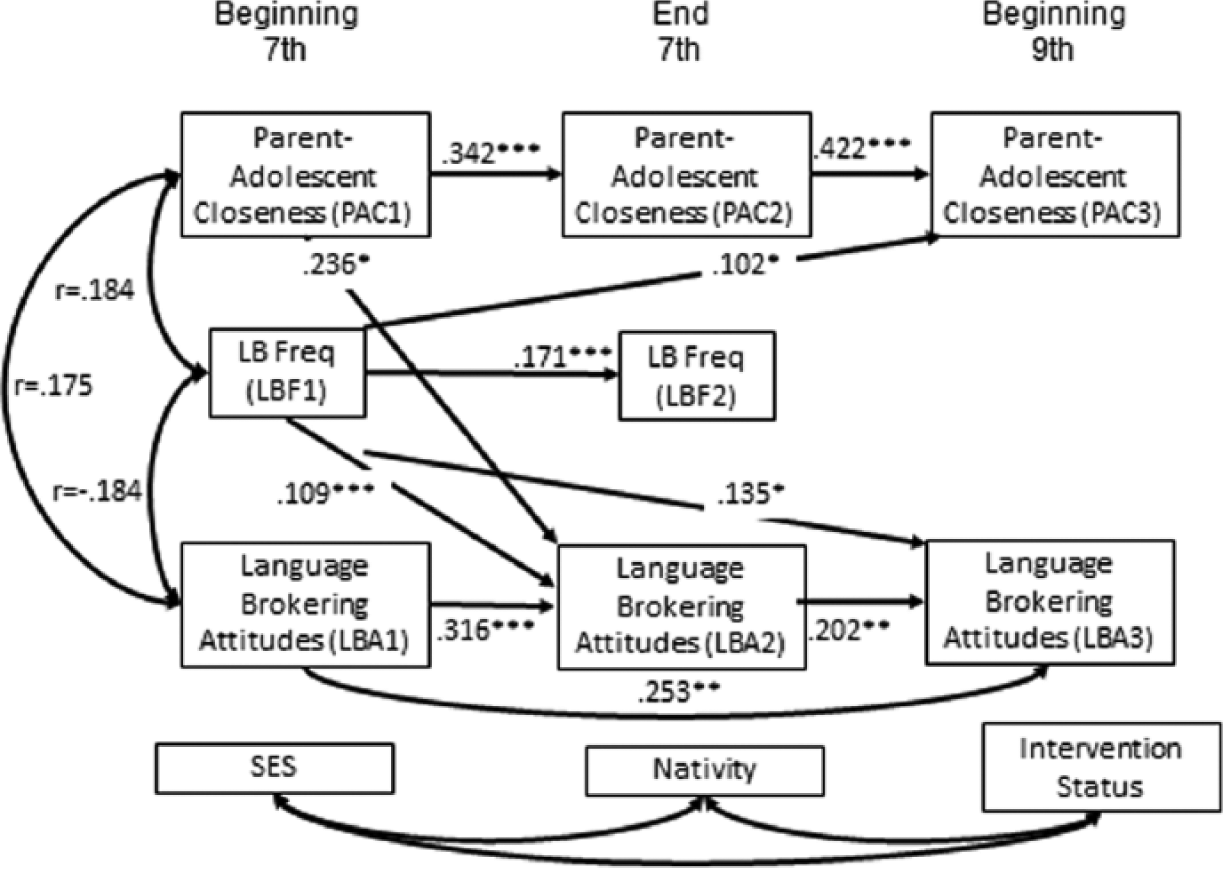
Figure 3 represents the final model (without the non-significant paths removed, but for the ease of viewing, all non-significant paths are not drawn), and the results suggest that for males and females, parent-adolescent closeness, language brokering frequency, and attitudes were stable across time after taking into account nativity, SES, and intervention status. Furthermore, females were significantly more likely to report a stable relationship with their parents from T1 to T2 (β = .572) as compared with males (β = .372). Also, males who felt closer to their parents had more positive attitudes toward language brokering prospectively (β = .236; H1). Conversely, there were no significant cross-lagged associations predicting language brokering attitudes from parent-adolescent closeness for females and there were significant differences between males and females for the hypothesized paths, which suggested that gender was indeed a moderator (H4). This set of findings suggests that when accounting for longitudinal associations across all variables, higher levels of parent-adolescent closeness at T1 contributed to more positive language brokering attitudes for males at T2, but not for females.
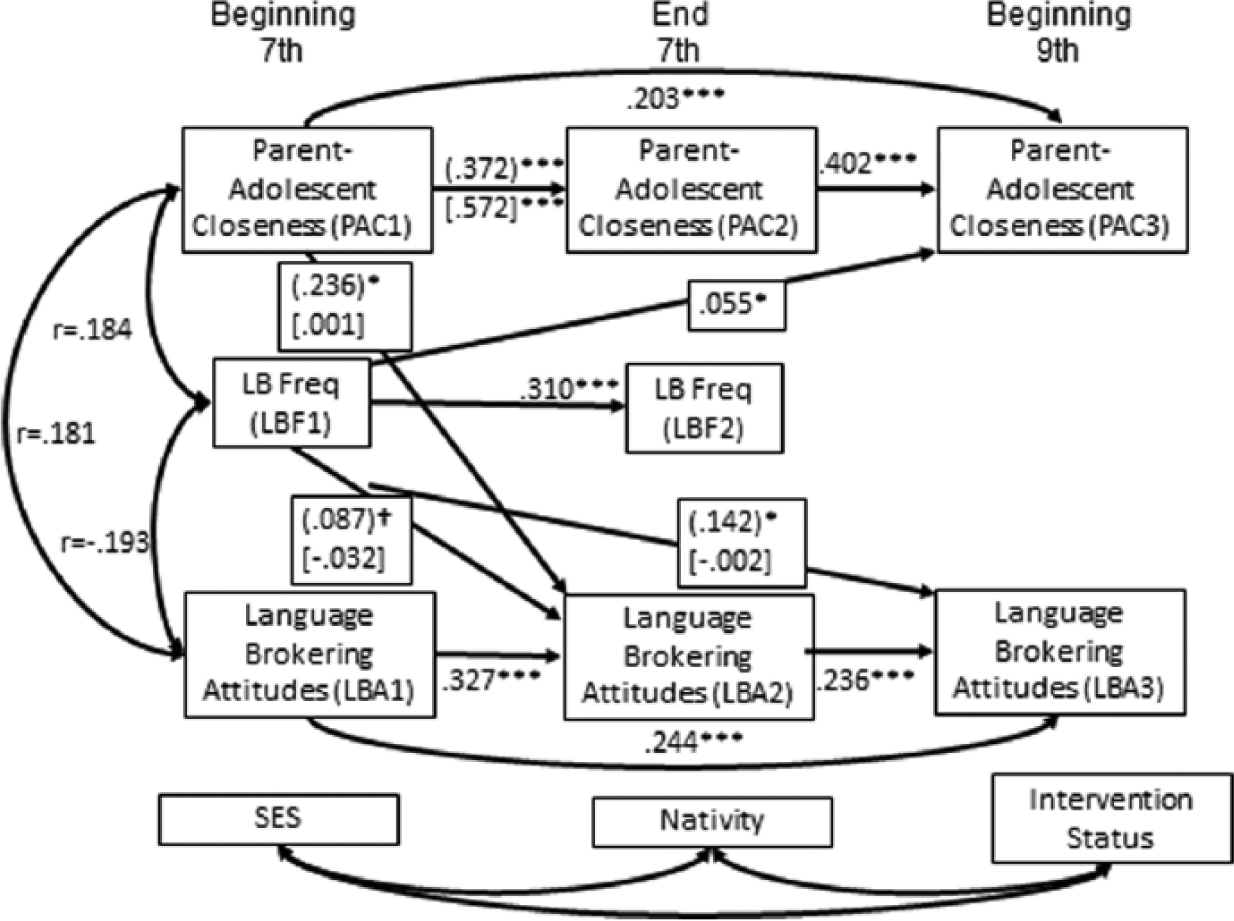
Cross-lagged prediction of language brokering and parent-adolescent closeness showing all significant paths.
In addition, results suggested that the relation between parent-adolescent closeness and language brokering attitudes was present when adolescents were younger, as there was a significant cross-lag association from T1 to T2, but there were no significant cross-lag associations as adolescents got older from T2 to T3 (H2). Furthermore, correlations of the seventh-grade variables are consistent with the preliminary analyses that showed parent-adolescent closeness to be positively correlated with language brokering attitudes (r = .18) and language brokering frequency (r = .18), but language brokering frequency was negatively correlated with language brokering attitudes (r = −.19).
Lastly, results failed to support the third hypothesis, which anticipated that frequency of language brokering would negatively predict language brokering attitudes and parent-adolescent closeness. In fact, results suggested that males’ language brokering frequency at T1 positively (β = .087), but marginally, predicted language brokering attitudes at T2. That is, it seems that more frequent brokering had a delayed benefit for language brokering attitudes going from T1 to T3, but only for males (β = .142). Similarly, for parent-adolescent closeness, results indicated that the frequency of language brokering had a statistically significant positive delayed effect for males and females (β = .055) showing that the more adolescents language brokered at T1, the closer they felt toward their parents at T3.
Discussion
This study aimed to build on previous cross-sectional work by using a longitudinal design to examine the interplay between how Latino early adolescents feel about language brokering for their parents and how the practice relates to the parent-adolescent relationship. Because data were collected from a drug prevention study, we controlled for intervention status. Overall, results provided partial support for some predictions, yielded one finding counter to prediction, and revealed that youth age (grade) and gender are important factors to consider in these processes. First, the parent-adolescent relationship positively and prospectively predicted language brokering attitudes, but only for younger males (i.e., males in seventh grade). Second, findings failed to support the hypothesis that language brokering frequency had a direct negative association with language brokering attitudes and parent-adolescent closeness. Rather, language brokering frequency at the beginning of the seventh grade was associated with better language brokering attitudes for males by the beginning of ninth grade and greater parent-adolescent closeness for males and females by the beginning of ninth grade. Finally, the relation between parent-adolescent closeness and language brokering attitudes from seventh to ninth grades was significantly present for males and not for females, and more salient when adolescents were younger. Specifically, the greater the sense of closeness Latino males reported at the beginning of seventh grade, the more positively they felt about language brokering by the end of the seventh grade. These findings are discussed further in detail in light of the existing literature, study limitations, and future directions.
The finding that parent-adolescent closeness positively and prospectively predicted language brokering attitudes for males suggests that closeness within the parent-child relationship is particularly salient for seventh-grade males feeling good about the practice and not as salient for females or older adolescents. In other words, parent-adolescent closeness did not predict better attitudes for language brokering above and beyond the previous association at a young age. Prior research has shown that when there is a good bond between parent and child, the child derives satisfaction from helping the family (Buriel et al., 2006; De Ment et al., 2005; Love & Buriel, 2007; Valdez, 2003). Why would this longitudinal association be only statistically present among males? Gender differences may not have been revealed in prior studies due to limited age range or the use of cross-sectional designs (e.g., Love & Buriel, 2007). Indeed, we found significant concurrent parent-adolescent closeness and language brokering attitudes for males and females. However, longitudinal analysis highlighted a gender difference for Latino youth, such that the language brokering attitudes of Latino males were influenced only by their prior perceptions of closeness with their parents. We interpret this finding based on existing Latino gender literature. Among Latino youth, male language brokers may not experience the same degree of gender role strain that has been suggested in the literature when they feel that they are close with their parents. That is, typically, across immigrant groups, language brokering has been found to be a duty largely specific to daughters or familial females (Tse, 1995; Valenzuela, 1999). Perhaps feelings of strong family affiliation may lead males to feel less inclined to perceive this as a female role or more inclined to accept the role even if it is regarded as a female role (Gallegos-Castillo, 2006), and thus perceive less gender role strain. The explanation will require further research but it follows that Latino youth with better family relationships should experience less gender role strain and more positive attitudes toward language brokering. When Latino males feel less gender role strain, they may be more likely to enjoy their roles as language brokers and derive satisfaction from the practice (Valdez, 2003), as reflected by more positive attitudes (Dorner et al., 2008).
More research on this topic is critical because replication would inform teachers and others who work with Latino adolescent males about the importance of family factors and perhaps prevent or remediate poorer language brokering attitudes that are known to be associated with negative outcomes such as depression (Céspedes & Huey, 2008). Language brokering attitudes could also account for relations between gender role strain and depression (Love & Buriel, 2007). Hence, future research should test language brokering as a potential mediator of associations between parent-adolescent relationship factors and negative outcomes in youth from families with limited English proficiency. Moreover, future research may include third variables that were not currently analyzed, such as perceived discrimination (Dorner et al., 2008), which could contribute to youth’s attitudes about translating for their parents. Despite the limitations of the present study, and the need for replication, its finding of a relation between prior perceived closeness to parents and later language brokering attitudes among Latino male youth is consistent with contemporary psychological views of minority children’s development (Garcia-Coll et al., 1996), that contend that familial factors predict developmental competencies.
The lack of significant prospective predictions between parent-adolescent closeness and language brokering attitudes among females was not unexpected. Moreover, even though parent-adolescent closeness was concurrently associated with language brokering attitudes for females, findings suggest that for Latina youth, earlier parent-adolescent closeness was not associated with language brokering attitudes at a later time. This may have been influenced, in part, by the fact that Latina youth had a more stable closeness in their relationships with their parents than their male counterparts, as shown by the stability coefficients. The absence of this relation for females could also be a function of Latino gender role expectations. Research has shown that females language broker more and are expected to language broker more than their male counterparts (Tse, 1995; Valenzuela, 1999). Latina youth may experience less choice about participating in this practice and accept it as a female role to take care of the family in this way (Gallegos-Castillo, 2006; Valenzuela, 1999). Thus, a stable sense of parent-adolescent closeness may be less of a factor in predicting attitudes about language brokering.
This study also provided partial support for the hypothesis that the relation between parent-adolescent closeness and language brokering attitudes would be more salient when youth were in seventh grade compared with later years. Specifically, this finding was found only for males; parent-adolescent closeness at the beginning of seventh grade predicted language brokering attitudes at the end of seventh, but not between the end of seventh grade and the beginning of ninth grade. This finding is consistent with the general literature on adolescence that shows parents’ influence on development changes across adolescence, and that parents’ influence is stronger in early adolescence than it is during middle or late adolescence (Arslan, 2009; Furman & Buhrmester, 2009). Because the design of the larger study from which this study was derived focused on the developmental period between seventh and ninth grades, it is unclear whether this pattern remains stable or if it occurs for females in a different age period. Females develop language skills earlier than males (Gleason & Ely, 2002) and as a result, influences of the parent-adolescent relationship on daughters’ language brokering attitudes may have occurred earlier than adolescence.
It is clear that differences in developmental pathways for males and females who language broker need to be studied further. The current findings suggest that for males, parental influence on language brokering may be more salient in early (seventh grade) than middle adolescence (ninth grade) whereas for girls, this difference was not present. This raises the question of whether early adolescence is a particularly sensitive period for males who language broker for Spanish-speaking family members. Studies should examine if the pattern shown here is stable across adolescence by looking at language brokering attitudes and parent-child relationships in middle and late childhood and adolescence for both males and females. Future studies should also continue to examine other factors that may be better predictors of language brokering attitudes among females. For instance, it is possible that autonomy expectations (e.g., wanting to start dating early) or gender role attitudes (e.g., egalitarian vs. traditional) are more salient contributors to females’ feelings about the practice than parent-child relationship domains. In addition, future studies should also explore important family dynamic variables that can shape the link between language brokering and the parent-child relationship. For example, studies should look at how the process differs depending on the language brokering dyad (i.e., father-son, mother-son, father-daughter, and mother-daughter).
The hypothesis that language brokering frequency would directly predict negative attitudes toward language brokering and less perceived closeness with parents was not supported. On the contrary, language brokering frequency was positively associated with language brokering attitudes, and this effect was moderated by gender and was a delayed effect (i.e., 2 year later). Specifically, the more males and females language brokered in the beginning of seventh grade, the closer they were with their parents in ninth grade. In addition, as males engaged more in language brokering in seventh grade, the better their attitudes were about the practice in ninth grade.
Although counter to prediction, these findings are consistent with evidence showing that the amount of brokering interacts with context such that youth have worse outcomes when they language broker often and in the absence of bilingual services (Martinez et al., 2009). The youth in the current study lived in an area where social supports were available at the time of the study; services that were developed in the course of the long history of Spanish speakers immigrating to Arizona (Capps & Fortuny, 2006). The availability of these services may change, however, as a result of anti-immigrant sentiments and banning of programs that have recently been implemented in several states, including Arizona.
The finding that the positive benefits of language brokering frequency on attitudes of the practice have a lagged effect is consistent with the literature showing that younger children have worse attitudes toward language brokering (Love & Buriel, 2007; Weisskirch & Alva, 2002), whereas adolescents appear to have better attitudes (Buriel et al., 2006; Buriel et al., 1998). This may be due to the fact that as youth get older, they become more aware of the sacrifices their parents make for them and youth may feel that they need to “repay” their parents for their sacrifices they have made (Suárez-Orozco, Suárez-Orozco, & Suárez-Orozco, 2009). Moreover, the 2-year lagged positive effect could also occur because parents may gain greater ability to assist their children in negotiating the English speaking community over time. Parents’ ability to aid the language brokering of their children may be a factor in youth development of bicultural competencies, much as suggested by the theory of scaffolding and the zone of proximal development (Vygotsky & Cole, 1978). The 2-year lagged benefit for these youth may indicate that youth who language broker often and successfully may develop cultural competencies and better familial relations (Orellana, 2009), both of which are important protective factors against negative youth outcomes (Buriel et al., 2006; Buriel et al., 1998; Lac et al., 2011; Weisskirch, 2005, 2007; Zayas, Bright, Álvarez-Sánchez, & Cabassa, 2009). This is consistent with the broader literature that has shown that for Latino youth, the frequency of a responsibility was associated with longitudinal increases in general social competence (Kuperminc, Wilkins, Jurkovic, & Perilla, 2013), supporting the theory that as youth have more time with a practice, they may become more comfortable with it, which in turn would increase the probability of them reaping the benefits of the practice.
Although the study’s findings clearly underscore the need for additional research and provide some interesting future questions, some limitations are worth noting. The present study was limited to a metropolitan area from a mostly Mexican-heritage population in a location that has a long history of migration by Spanish speakers. Further studies are needed to understand geographic contexts (e.g., rural vs. urban or type of immigration) and expand this population in terms of country of origin. In addition, this study focused on early- and mid-adolescence, and future studies should expand by examining other developmental time periods, especially to see whether parent-adolescent relationship factors have a larger impact when females are younger. Moreover, all the measures used for this study were based on adolescents’ perceptions and studies would benefit from a multiple informant data set. Cultural factors at the family level (such as filial piety, familism, and SES), and societal levels of acculturation stress and discrimination have been found to be important factors influencing the parent-adolescent dynamic in Latino families (Weisskirch & Alva, 2002) and future research is needed to understand how these factors influence language brokering. Furthermore, the current study was able to control for nativity, but was not able to discern second-generation youth from third-generation youth. The immigrant paradox has revealed remarkable differences between these two groups, and future research on family processes and language brokering would likely find key processes differences between them. Finally, the validity of only using the negative items on the language brokering attitudes scale has yet to be fully empirically supported. Nonetheless, it has been argued that positive and negative attitudes are two separate constructs (R. Weisskirch, personal communication, March 9, 2012). Continued research should look at both the validity of this construct as well as examine adolescent subjective measures (e.g., perceptions) with more objective variables of interest (e.g., actual time spent brokering).
Even with these limitations, this study provides empirical evidence for premises posed by theories on the development of minority youth. Specifically, these results highlight the importance of how being a female versus male in a family may contribute to developmental competencies like language brokering attitudes, which to date had not been tested empirically with longitudinal methods. Thus, our findings continue to build off theories showing the importance of understanding how attitudes vary by gender and adolescents’ relationship with their parents. In addition, this study is important because it suggests that parent-adolescent factors significantly contribute to youth’s language brokering attitudes, especially for younger males who seem to benefit from being close to their parents. Lastly, this work highlights how factors related to language brokering are not static and may occur at different times of development for males and females.
By better understanding the language brokering experience across time, study findings are able to inform policy about the positive outcomes associated with bilingual practices over time. For instance, for years, research showed that bilingual education had negative effects because younger children were falling behind in both English and Spanish proficiency (Rossell & Ross, 1986). Recommendations were formed out of this research to discourage families from raising their children bilingually. However, research using longitudinal approaches has shown that bilingual youth need on an average 4 to 7 years to reach the same level of English fluency as their peers (Hakuta, 2000). This is important to note because policies (such as Proposition 227 in California) posit that sheltered English immersion should occur for children during a transition period not to exceed over a year. Clearly, this is not giving enough credence to the long-term benefits of bilingualism and is a short-sided look at immediate outcomes. Similarly, in research on language brokering, researchers should be careful when immediately connecting cross-sectional studies to policy change. For example, currently, policy makers may have prematurely tried to ban language brokering practices (e.g., California attempting to prohibit using children as interpreters in medical settings; AB 775, 2005), without fully understanding of the complexity of the process and its potential long-term benefit. Clearly, policy makers would like to prevent negative outcomes for these youth, but the law may be focusing on aspects that would ultimately cause more stress for families. For example, research on child language brokers shows that they are integral parts of communities, with health care being a major component (Orellana, Dorner, & Pulido, 2003). Furthermore, banning these practices does not resolve the larger issue; that there are too few bilingual services available for Latino families (Capps & Fortuny, 2006). Thus, for meaningful interventions and laws to be enacted, it is paramount that research on language brokering examine the zone of proximal development of cultural competencies for youth that language broker longitudinally. The current study contributes to this very important gap in the existing literature.
Footnotes
Declaration of Conflicting Interests
The author(s) declared no potential conflicts of interest with respect to the research, authorship, and/or publication of this article
Funding
The author(s) disclosed receipt of the following financial support for the research, authorship, and/or publication of this article: This publication did not receive any direct funding for the authorship publication or for research aspect. However, indirect funding was received so that we can conduct research in general. That included the following: (NIDA grant numbers R01 DA005629 and R01 DA017902 09S1, and IES grant number R305B090007).