



Abstract
In the article, we propose a comprehensive model, which aims to enhance understanding of the contribution of sense of fear as a major response to continuous traumatic stress situations, and which addresses contextual factors as potential moderators of psychological distress and aggressive behavior. The research sample consisted of 1,290 children and adolescents living near a war zone, who filled out questionnaires relating to negative psychological consequences, as well as to the role of sense of fear, resilience resources, and sense of belonging to the school in mediating or moderating those consequences. The findings revealed that the direct effect of fear reactions on negative psychological consequences may vary with different levels of these moderators. The study highlights the role of the school as a substantial source of support for children and adolescents, which can lead to reduced levels of psychological distress and aggressive behavior.
There has been growing recognition that many people who are exposed to continuous violence cope successfully and even develop resilience, including in situations of war and terror (Bonanno, Romero, & Klein, 2015). Although the American Psychological Association (2014) defined resilience as “the process of adapting well in the face of adversity, trauma, tragedy, threats, or significant sources of stress,” there is a debate about whether resilience is an individual trait, or whether it goes beyond the level of the individual and is much more system-oriented. This conflict is usually accompanied by the question, “Is resilience a trait, an outcome or pattern of the life course, or a broad conceptual domain that encompasses all these ideas” (e.g., Masten, 2018, p. 14; Southwick, Douglas-Palumberi, & Pietrzak, 2014)?
General social ecological theories (Bronfenbrenner, 1979) and social ecological trauma and resilience theories (Harvey, 1996), as well as psychology of adolescent development approaches, argue that healthy development occurs in facilitating contexts, which are shaped by families and neighborhoods and by the wider political, social, and economic systems. This means that for individual children and adolescents, the resilience process and the capacity to cope well with adversity depends on the resources at their disposal as well as on their innate characteristics (Bottrell, 2009).
Resilience relates to individual processes that increase survival as well as to the protective processes initiated by larger systems that aim to provide opportunities for individuals to cope with stress (Lerner, 2006; Ungar, Ghazinour, & Richter, 2013; Ungar & Liebenberg, 2011; Zautra, Hall, & Murray, 2008). Regarding children, Masten and Narayan (2012) claimed that resilience is a dynamic and continuous process in which children living in a safe, stable, and loving environment that allows their natural protective system to emerge and fosters healthy development might show better (vs. worse) adaptation or recovery during or after a situation of adversity. To create such an environment, the family, schools, and communities need to provide a variety of resources. In Masten’s (2018) words, “the resilience of a child at a given point in time will depend on the resources and supports available to the child through many processes, both within the child and between the child and the many systems the child interacts with” (p. 16).
Following this approach, Ungar (2008) proposed a definition of resilience which focuses on the interaction between person and environment: The capacity of individuals to navigate their way to resources that sustain well-being; the capacity of individuals’ physical and social ecologies to provide those resources; and the capacity of individuals, their families, and communities to negotiate culturally meaningful ways for resources to be shared. (p. 225)
The definition reflects the ability of individuals and the dynamic system to provide essential resources, as well as the ability of the community and the individual to adapt successfully to traumatic events (Norris, Stevens, Pfefferbaum, Wyche, & Pfefferbaum, 2008; Ungar, 2008). In other words, resilience is “the process of effectively negotiating, adapting to, or managing significant sources of stress or trauma. Assets and resources within the individual, their life and environment facilitate the capacity for adaptation or bouncing back in the face of adversity” (Windle, Bennett, & Noyes, 2011, p. 163). “[Resilience is] a process which enables the individual to harness resources to sustain well-being” (Southwick, Bonanno, Masten, Panter-Brick, & Yehuda, 2014, p. 14).
These include individual resilience resources (i.e., personal skills, social skills, and peer support), relational resources (i.e., physical and psychological support from caregivers), and contextual resources (i.e., sense of belonging, educational adhesion, and spirituality; Liebenberg, Ungar, & Van de Vijver, 2012)—henceforth “resilience resources.”
As such, in this study resilience was defined as the capacity of children and adolescents to navigate their way to the resources they need during crises, as well as the ability to negotiate for these resources to be provided in meaningful ways (Ungar & Liebenberg, 2011). This definition is important to the current study, because it emphasizes interactional dimensions of resilience, and the potential role of resilience as a mediator between the adversity that children and adolescents confront, the fear responses aroused in them, and the care they receive in their educational environment, which can alleviate pathological emotional and behavioral outcomes that may develop. In this regard, resilience is not an outcome in itself, but rather a cluster of positive resources upon which youth can draw as they strive to reduce these negative outcomes.
When resilience is viewed from an ecological perspective, the educational environment can provide psychosocial, practical, and emotional resources that make it easier for children and adolescents cope with crises themselves, and these resources can mitigate risks (Ungar et al., 2013).
Few studies have addressed the issue of resilience among children and adolescents in the face of continuous exposure to the threat of political violence, war, and terror from an individual point of view and as a moderating factor. In those studies, numerous personality variables that moderate stress reactions have been reported. For example, a study of adolescents in the southern region of Israel (Sagy & Braun-Lewensohn, 2009) revealed that hope and a sense of coherence are resources that moderate the negative consequences of traumatic events. In another study, which was conducted among 1,078 adolescents aged 13 to 15 in the southern region of Israel during the Gaza war in 2014, Shoshani and Slone (2016) revealed that exposure to violence led to high levels of stress reactions, including psychiatric symptoms as reflected in Brief Symptom Inventory and the UCLA PTSD Index. They also found that stress reactions were moderated by characteristics such as interpersonal, temperance, intellectual, and transcendence strengths.
Findings of other studies conducted in Israel and in the Gaza area, which are exposed to a continuous security threat, have also shown that factors beyond the individual, such as the family and school systems, can be a potential buffer that helps reduce negative consequences such as military-connected risk behaviors among children and adolescents (Aitcheson, Abu-Bader, Howell, Khalil, & Elbedour, 2017; Alvord & Grados, 2005; Astor, De Pedro, Gilreath, Esqueda, & Benbenishty, 2013; Brookmeyer, Henrich, Cohen, & Shahar, 2011; Dekel & Solomon, 2016; Fang, Schiff, & Benbenishty, 2016). Other researchers have revealed gender differences, with girls reporting higher levels of distress responses than boys and boys reporting less depression and anxiety. In addition, girls have been found to engage in less violence, whereas boys have reported higher levels of aggression (Brookmeyer et al., 2011; Henrich & Shahar, 2013).
However, as far as we know, those studies did not take into account that, in cases of continuous exposure to a traumatic security situation, fear responses have a main effect on variety of negative consequences (Nuttman-Shwartz, 2014). Hence, it is important to explore the effect of fear reactions on posttraumatic stress, risk behaviors, and aggression, as well as their effect on resilience among children and adolescents at school who are exposed to continuous traumatic stress (CTS).
Furthermore, Allen, Vella-Brodrick, and Waters (2017) argued that school engagement and a sense of belonging are vital for their social and emotional well-being of children and adolescents. Ungar (2013) claimed that these factors might serve as a source of resilience, and others have stressed that school engagement and a sense of belonging are particularly important when children and adolescents are exposed to chronic trauma. Specifically, research findings have shown that posttraumatic stress is positively associated with risk behaviors and aggression, which are frequent among children and adolescents at school (Fang et al., 2016) and that social engagement and sense of belonging may increase their ability to benefit from social contacts and create a social network that can affect resilience (Feldman, Vengrober, Eidelman-Rothman, & Zagoory-Sharon, 2013).
This suggests that a sense of belonging to the school might serve as a moderator between exposure to a continuous security threat and behavioral responses such as psychological distress, as reflected in general stress reactions (GSI), and in aggressive behavior at school.
To fully comprehend the negative effect of exposure to a continuous security threat among children and adolescents, we proposed a comprehensive model that takes into account their continuous exposure to a security threat by relating to their sense of fear, and to contextual characteristics such as sense of belonging to the school as well as to the interactions of children and adolescents with their environment as reflected in the resilience resources measure. Based on that model, we examined whether fear reactions versus resilience resources and sense of belonging to the school mediate or moderate, respectively, the relationships between exposure to CTS and two types of responses among children and adolescents: behavioral responses, as reflected in aggressive behavior at school; and psychological distress resulting from exposure to the continuous security threat (i.e., the threat of missile attacks).
As such, the aims of the current study were twofold: (a) to examine psychological distress and aggressive behavior resulting from exposure to a continuous security threat among children and adolescents living in the shadow of missile attacks; and (b) to examine the contribution of emotional distress (fear reactions) and contextual resources (sense of belonging to the school and resilience resources) to the variance in psychological distress and aggressive behavior in the face of the continuous security threat.
Against this background, the following hypotheses were put forth (see Figure 1):
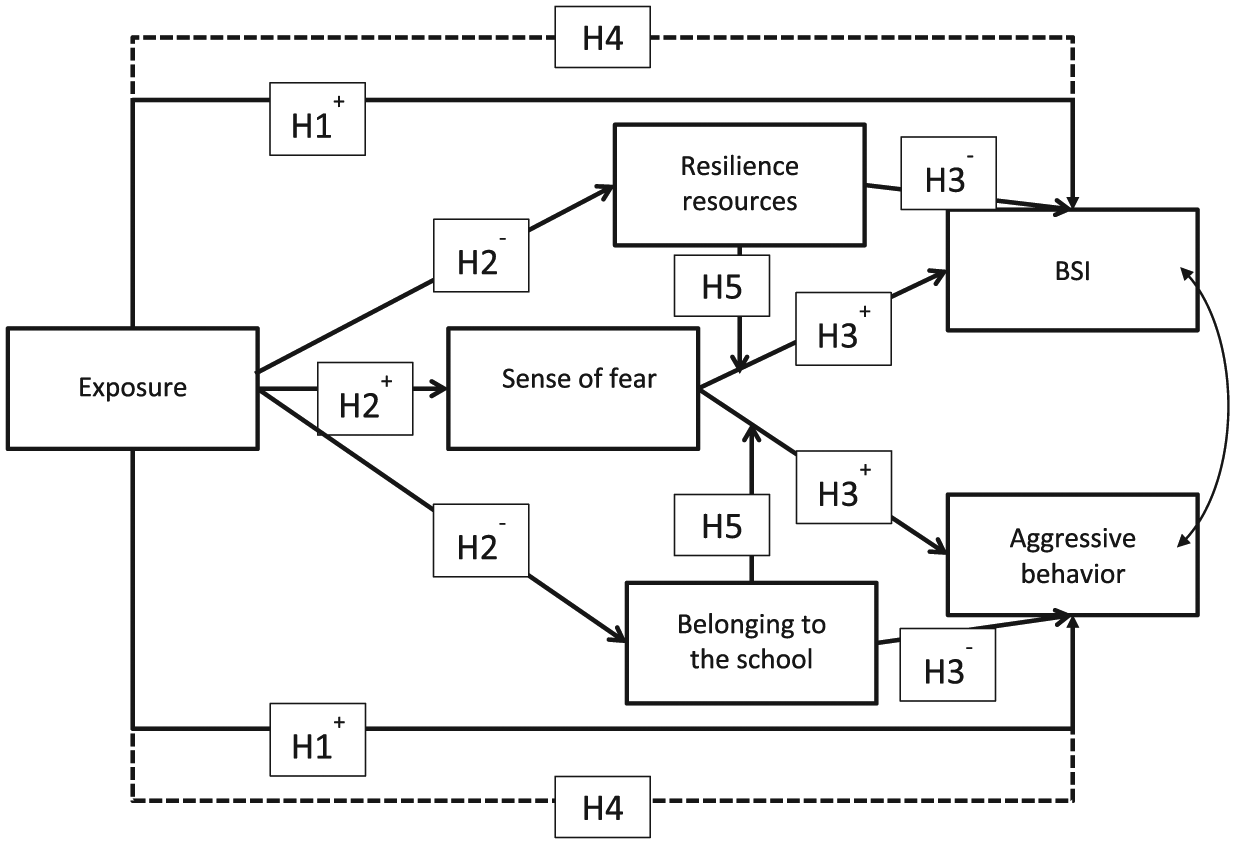
The comprehensive model.
Research Context
The study was conducted after 11 years of continuous exposure to missile attacks and three major military operations between Israel and Gaza, among a sample of children and adolescents residing in two types of communities in the southwestern region of Israel: a rural community (Otef Aza, the rural localities surrounding Gaza) and an urban community (the city of Sderot). Since 2001, 64 people have been killed in the region (including four children), and 1,971 people have been wounded by 15,028 missiles and mortar bombs fired into Israel. Over the years, the percentage of residents who reported posttraumatic stress symptoms increased to 43.5% (Berger, Gelkopf, & Heineberg, 2012; Pat-Horenczyk et al., 2012).
Method
Sample and Data Collection
The sample consisted of children and adolescents from eight public schools in the area, and totaled 1,290 Jewish children and adolescents in Grades 5 to 12 (10-18 years old) who lived near the Israeli border with Gaza. Of these children and adolescents, 83% (N = 1,054) completed questionnaires. The sample was divided into three subgroups according to grade level: elementary school—274 (26%), junior high school—666 (63.2%), and high school—114 (10.8%); 49.6% of the participants were girls, and 79.7% had married parents; 18.5% lived in the rural communities surrounding Gaza (Otef Aza), and the other 81.5% lived in the city of Sderot. Regarding religiosity, 38.3% were secular, 41.6% were traditional, and 20.1% were religious.
Procedure
The moderating role of resilience
Data were collected in 2012 from children and adolescents during the school day, at a time when residents of the area were the target of continuous missile attacks. The study was based on self-administered questionnaires distributed in the classroom by trained research assistants in the presence of the teacher. The study was approved by the Chief Scientist of the Ministry of Education in Israel (no. 10.31.62). Parents and participants were given the option of contacting the school psychological services in the area if they needed assistance. Responses were anonymous.
Instruments
Independent variables
Sociodemographic Questionnaire
Participants were asked to provide information on background variables such as age, gender, place of residence, and exposure to any traumatic events that were not related to the security situation.
Objective and Subjective Exposure Questionnaire
Participants were asked to indicate the extent of their exposure based on two scales: (a) the number of missile explosions they had been exposed to; and (b) their proximity to the missiles that had fallen. The number of events was scored on a 3-point Likert-type scale: 1 (1 missile explosion), 2 (fewer than 10 explosions), and 3 (10 or more explosions). In addition, participants were asked about how close they were to the explosions. Responses were based on a 4-point scale: 1 (a great distance away), 2 (in my place of residence, while I was there), 3 (in my neighborhood, while I was there), and 4 (in my building or a few meters away from me, while I was there).
Mediator and moderator variables
Sense of fear
This scale has been used in previous research among adolescents (e.g., Lavi, Green, & Dekel, 2013) and includes five statements that examine sense of fear in accordance with the A2 criteria for PTSD in the Diagnostic and Statistical Manual of Mental Disorders (4th ed., text rev.; DSM-IV-TR; American Psychiatric Association, 2000). Participants were asked to indicate the extent of danger they felt in each of the events (a total of five events), on a 5-point Likert-type scale ranging from 0 (hardly any danger) to 4 (extreme danger). The Cronbach’s alpha for this instrument in the current research was .90. The direct effect of the scale on the outcome variables was estimated, as well as the mediating effect of fear on the outcome variables.
Sense of belonging to the school
This variable was measured on the basis of the Sense of Belonging Scale developed by Itzhaky (1995), which was adapted to the context of school and has been used in previous research in the area (Nuttman-Shwartz & Dekel, 2009). It has been utilized to capture the experience of being part of a school community, which was defined as the extent of personal membership, respect, and support students feel in school (Hagborg, 1998). The sense of belonging to the school has been identified as a particularly relevant resilience factor for success at school among younger adolescents (Bornholt, 2000). The scale consisted of 10 items relating to the school. Participants were asked to indicate the extent to which they agreed with each statement, on a scale ranging from 1 (strongly disagree) to 4 (strongly agree). One overall score for sense of belonging to the school was derived by calculating the mean of the responses to the items for each participant. The Cronbach’s alpha reliability of the questionnaire used in the current study was .88. Beyond its potential effect on the outcome variables, sense of belonging was expected to moderate the relationship between fear and outcomes, so that the mediation effect may vary in accordance with changes in levels of sense of belonging.
Child and Youth Resilience Measure (CYRM-28)
The CYRM-28 (Ungar & Liebenberg, 2011) is a tool for exploring the resources (individual, relational, communal, and cultural) available to children and youth and has been used to measure the extent of child and youth resilience. The CYRM consists of 28 questions (e.g., “Do you need to cooperate with people around you if you want to succeed?” “Do you think it is important to serve your community?”). The questions related to three subscales, which ensure the individual, relationships with primary caregivers, and contextual factors that facilitate a sense of belonging to the school. The higher the score, the more the resilience resources components are present in the lives of participating adolescents. Responses were based on a 5-point Likert-type scale ranging from 1 (not at all) to 5 (a lot). The Cronbach’s alpha reliability of the questionnaire used in this study was .95. Similar to the sense of belonging hypothesis, we also expected resilience resources to function as a moderator.
Dependent variables
General stress reactions (GSI)
These reactions, which measured psychological distress, were assessed using a Hebrew version of the Brief Symptom Inventory (BSI; Derogatis, 1993). The questionnaire was adapted by Dekel, Ginsburg, and Hantman (2004). This is a self-report measure that inquires about the experience of 53 psychiatric symptoms during the 2 weeks preceding the assessment. The scale includes nine categories of symptoms. Each item on the BSI was rated on a 5-point scale of perceived distress ranging from 1 (not at all) to 5 (to a great extent). The scale has been used widely among various Israeli populations. The internal consistency (Cronbach’s alpha) of the questionnaire used among the current sample was .97.
Aggressive behavior
This variable was measured by the aggressor dimension of the School Violence Questionnaire developed by Schiff (2006). The original questions pertained to two dimensions of violence: being a victim; and being an aggressor. The second part of the questionnaire included nine items, which examined whether the students had perpetrated violent acts (e.g., “During school hours I threatened another student” or “I threw a chair at a teacher”). Participants were asked to indicate the number of violent events they had personally experienced during the previous month at school on a scale ranging from 0 to 2, as follows: 0 (never exposed to violent behavior), 1 (experienced one to three incidents of violent behavior), and 2 (experienced three or more incidents of violent behavior). The Cronbach’s alpha reliability of the measure used in the current study was .84.
Modeling Strategy
To test our hypotheses, we developed an integrative structural equation model that includes multiple dependent and independent variables along a theoretical path. In addition to examining direct effects, this integrative model tests for indirect effects, that is, the possible effects of an independent variable on a dependent variable through a moderating variable. Notably, the indirect effect can differ in accordance with various levels of potential moderating effects. The hypotheses of the present study were adjusted for possible indirect paths from background variables to psychological distress and aggression via sense of fear, in accordance with different levels of resilience resources and sense of belonging to the school.
Results
With respect to the security situation, 22.8% of the participants had been exposed to 10 or more missile explosions, 50.9% had been exposed to fewer than 10 missile explosions, and 26.4% reported being exposed only once; 31.3% had been exposed to a missile explosion in their immediate proximity, 43.2% had been exposed to an explosion at a small distance, 11.9% had been exposed at a greater distance, 5.6% had been exposed to missile explosions only at a very great distance, and 8.0% had been exposed when at home; 19.9% had received psychosocial assistance from social services in the region. Note that 32.8% reported exposure to a traumatic event unrelated to the security situation.
The overall mean for aggressive behavior was low (
Direct Effects Between the Research Variables
In Table 1, rows represent the independent variable, and columns represent the dependent variables. Table 2 shows the path model results. Model standardized estimates are provided to allow a comparison across direct effects.
Frequencies and Descriptive Statistics for Study Variables, Completed Questionnaire Data.
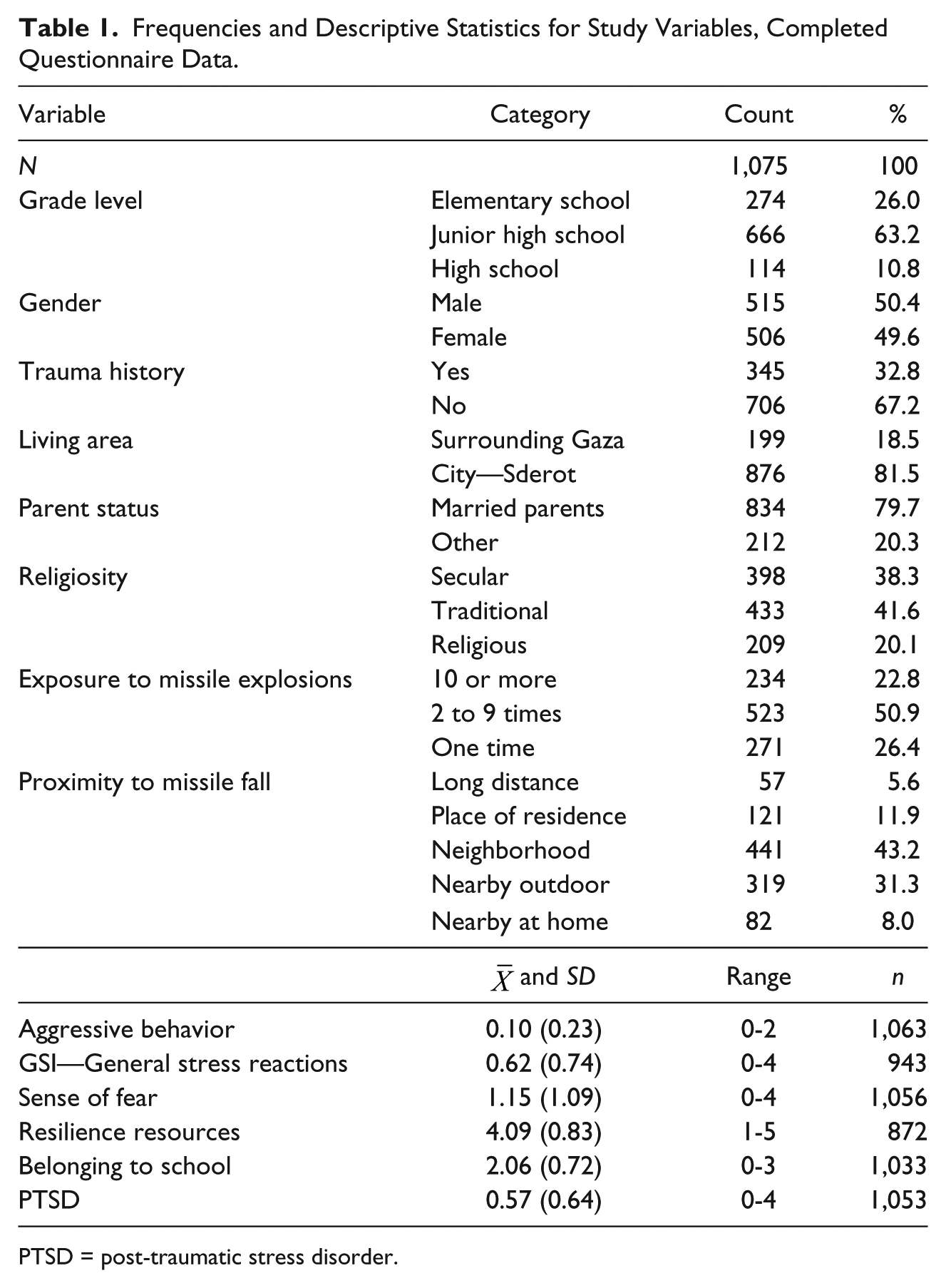
PTSD = post-traumatic stress disorder.
Path Analysis Results for Direct Effects, Standardized Estimates (N = 1,074).
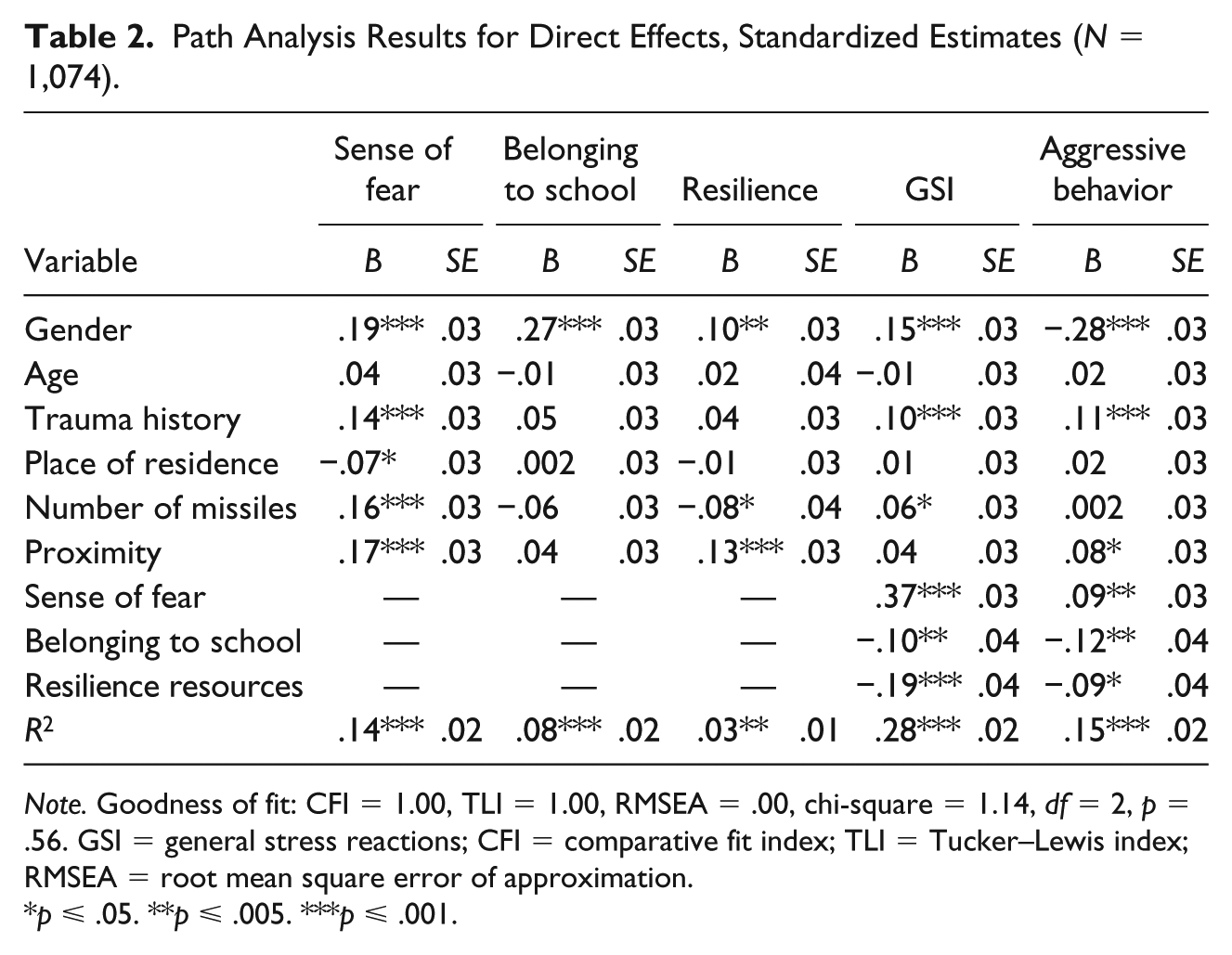
Note. Goodness of fit: CFI = 1.00, TLI = 1.00, RMSEA = .00, chi-square = 1.14, df = 2, p = .56. GSI = general stress reactions; CFI = comparative fit index; TLI = Tucker–Lewis index; RMSEA = root mean square error of approximation.
p ⩽ .05. **p ⩽ .005. ***p ⩽ .001.
The gender effect was found to be significant across all dependent variables. In comparison with the boys, the girls developed a higher sense of fear (β = .19, p < .001), a higher sense of belonging (β = .27, p < .001), higher resilience resources (β = .10, p < .01), and a higher level of distress (β = .15, p < .001). However, the level of aggressive behavior was lower for girls (β = −.28, p < .001). Age did not show an effect on any of the dependent variables. Children with unrelated trauma history showed a higher sense of fear (β =.14, p < .001), higher GSI (β =.10, p < .001), and higher aggressive behavior (β =.11, p < .001).
Place of residence
The children and adolescents from the city of Sderot reported a lower sense of fear than the children and adolescents from Otef Aza (β = −.07, p < .05).
Levels of exposure were positively associated with sense of fear (β = .16, p < .001) and with distress (β = .06, p < .05), but negatively associated with resilience resources (β = −.08, p < .05). Proximity was positively associated with sense of fear (β = .17, p < .001), resilience resources (β = .13, p < .001), and levels of aggressive behavior (β = .08, p < .05).
As for the intermediate variables, sense of fear was associated with psychological distress and aggression (β = .37, p < .001; β = .09, p < .01, respectively), and sense of belonging to the school was negatively associated with psychological distress and aggression (β = −.10, p < .01; β = −.12, p < .01, respectively). Similarly, resilience resources was found to be negatively associated with psychological distress and aggression (β = −.19, p < .001; β = −.09, p < .05, respectively).
Altogether, the model showed an acceptable fit (comparative fit index [CFI] = 1.00, Tucker–Lewis index [TLI] = 1.00, root mean square error of approximation [RMSEA] < .001, χ2 = 1.14, df = 2). The percentage of explained variance for each equation is shown in the R2 row. Although all of the values were significant, the resilience equations show low percentages of explained variance.
It is important to note that we added the trauma history variable as another exogenous indicator for developing fear and outcome variables. As expected, the children responded to higher levels of trauma history by developing higher fear, higher stress, and higher aggression, but this clear effect did not change the coefficient results of the more parsimonious model.
A complementary analysis of correlations among the independent variables shows that these variables correlated with each other to a certain extent, but the correlations were not too high to suggest potential multicollinearity problems. For the most part, the closer the children and adolescents were to the missile explosions, the more missile explosions they experienced; and the older they were, the closer they were to the missile explosions. Afterward, we measured the indirect effect regardless of possible moderation (for estimates of the indirect effects, see Table 3).
Indirect Effects, Standardized Coefficients.
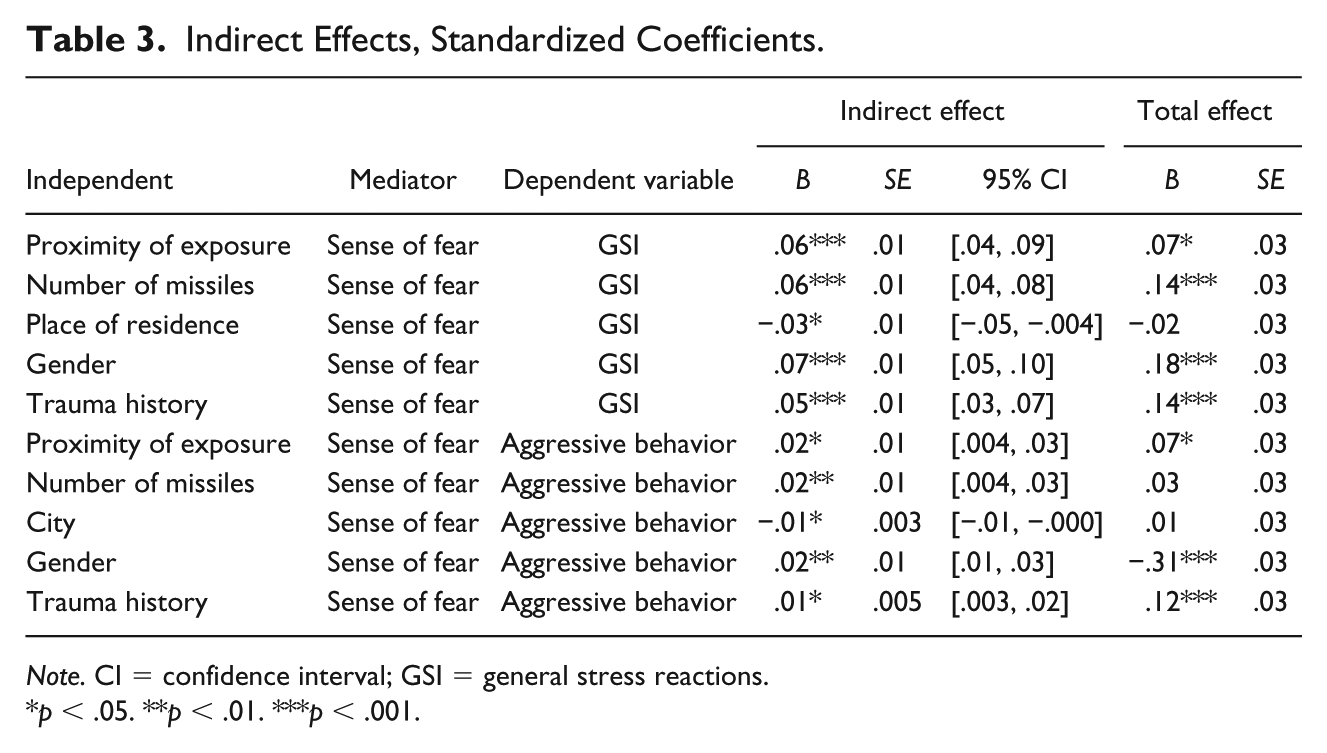
Note. CI = confidence interval; GSI = general stress reactions.
p < .05. **p < .01. ***p < .001.
Indirect Effects of the Research Variables in Relation to Sense of Fear
Table 3 includes only the indirect effects that were found to be significant (p < .05). The table presents the full indirect path of each indirect effect (for independent, mediator, and dependent variables), as well as the estimates of the path components and indirect effects (at a 95% confidence interval), and estimates of the total effects (direct and indirect).
The indirect effect on psychological distress
The proximity of exposure was found to affect distress indirectly through the development of sense of fear (indirect = .06, p < .001). This means that the closer the exposure was, the higher the levels of fear were, and higher levels of fear led to higher distress. This was considered a full indirect effect, because the direct effect was not significant.
The number of missiles had an effect on distress through sense of fear (indirect = .06, p < .001). This indirect effect was partial, because the direct effect of the number of missiles on distress was found to be significant. Place of residence had an effect on distress through sense of fear (indirect = −.03, p < .05): Children and adolescents from Sderot developed a lower sense of fear in comparison to others, which led to lower psychological distress. In contrast, gender had a direct effect on psychological distress as well as an indirect effect on psychological distress through fear (indirect = .07, p < .001). That is, girls showed higher distress than boys, both directly and indirectly. Similar indirect effects were found on aggression. In addition, previous unrelated trauma had a direct effect on psychological distress as well as an indirect effect through sense of fear (indirect = .05, p < .001). Similar direct and indirect effects were found on aggression.
The indirect effect on aggression
The indirect effect of proximity on aggression was partial (indirect = .02, p < .05), whereas the indirect effects of number of missiles and place of residence were found to fully affect aggression (indirect = .02, p < .01; indirect = −.01, p < .05, respectively). The effect of gender on aggression was partially indirect through fear (indirect = .02, p < .01), in addition to the direct effect: girls showed higher indirect aggression through fear than boys, although the levels of direct aggression were lower for girls than for boys. To determine the levels of aggression for girls versus boys, the total effect confirmed that girls are less aggressive. Previous unrelated trauma had a direct effect on aggression as well as an indirect effect through sense of fear (indirect = .01, p < .05).
Note that other possible indirect effects were not presented, although the inclusion of all indirect effects in an integrative model means that the total effects included the indirect effects that were presented as well as those that were not presented.
Conditional Indirect Effects of the Research Variables
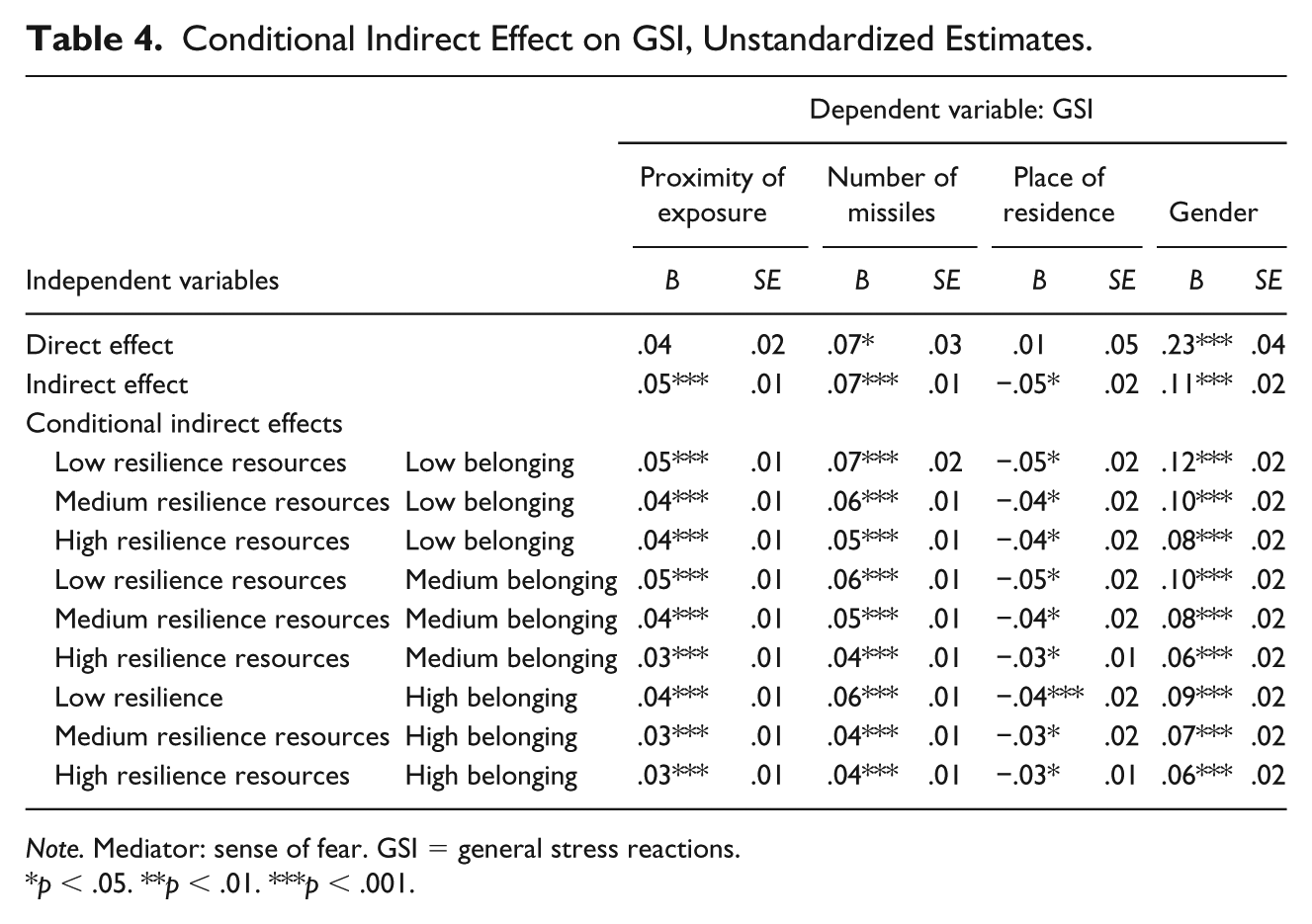
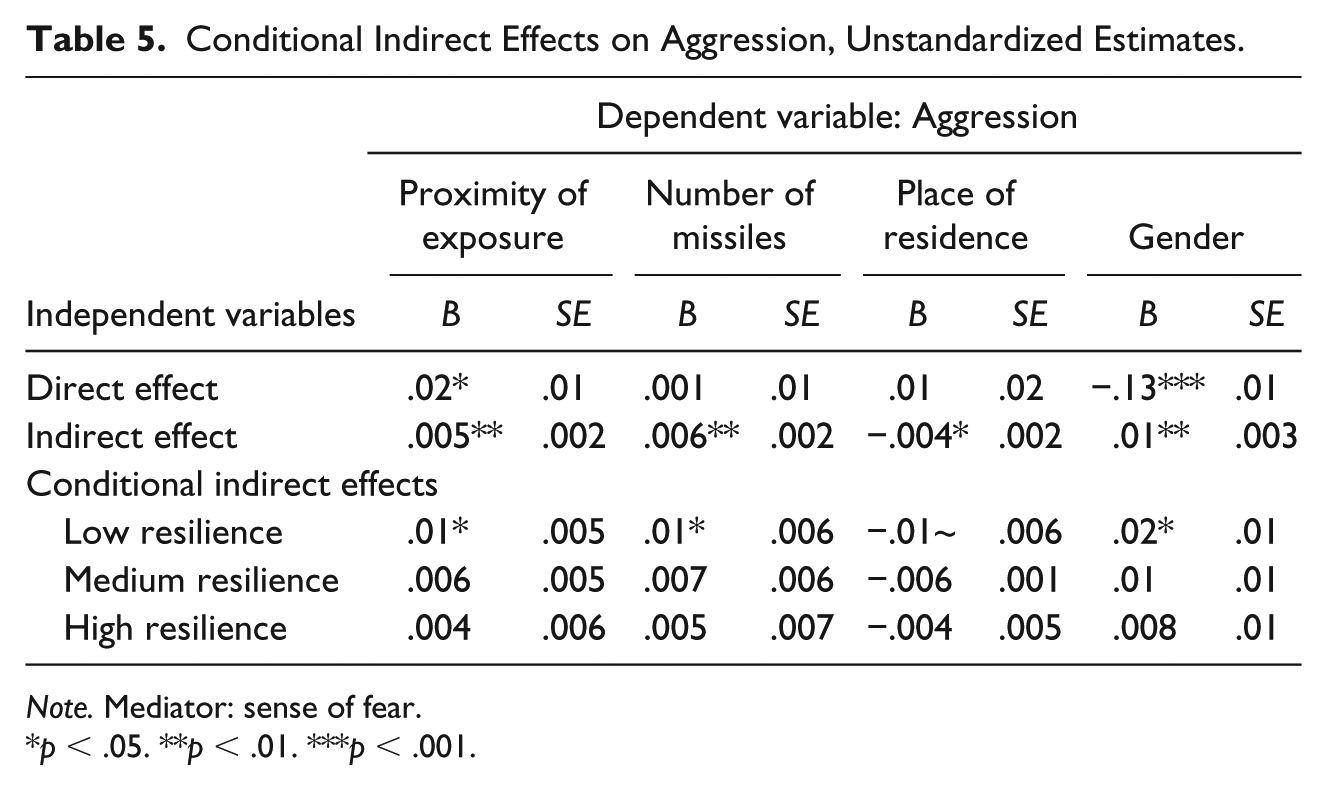
Another dimension of indirect effects was the moderating effect. As mentioned, the moderators (resilience resources and sense of belonging to the school) created varying conditions under which the same indirect effects were tested. Table 4 presents the conditional indirect effects of resilience resources and sense of belonging to the school in relation to sense of fear and psychological distress, whereas Table 4 presents the conditional indirect effects of these variables in relation to aggression.
Conditional Indirect Effect on GSI, Unstandardized Estimates.
Note. Mediator: sense of fear. GSI = general stress reactions.
p < .05. **p < .01. ***p < .001.
Three of the potential moderating effects were found to be significant: (a) Resilience resources moderated the effect of sense of fear on psychological distress (b = −.08, p < .01); (b) resilience resources moderated the effect of fear on aggression (b = −.03, p < .01); and (c) sense of belonging to the school moderated the effect of sense of fear on psychological distress (b = −.07, p < .05).
The breakdown of moderating variables indicates that the direct effect of sense of fear on psychological distress and aggression may change with respect to varying levels of the moderators. In the presence of an increased moderating effect of resilience resources (from low to high), the effect of sense of fear on distress was reduced (b = .42, p < .001; b = .36, p < .001; b = .33, p < .001, respectively), yet it remained significant.
Regarding the second moderating effect, when resilience resources increased, the positive effect of sense of fear on aggression was insignificant. That is, in the presence of low resilience resources, fear was positively associated with aggression (b = .05, p < .05), but the association was not positive in the presence of mid-level or high resilience resources.
Regarding the third moderating effect, the positive association between fear and psychological distress was reduced when sense of belonging to the school increased from low to high (b = .60, p < .001; b = .55, p < .001; and b = .54, p < .001, respectively). However, as in the first moderating effect, the three simple slopes were significantly different from zero.
Whereas the above analysis relates to moderated direct effects, the following analysis relates to moderated indirect effects. This means that we measured indirect effects subject to varying combinations of resilience resources and sense of belonging. Table 4 (dependent variable: GSI) and Table 5 (dependent variable: aggression) present the indirect estimation results, which were contingent on varying levels of resilience resources and sense of belonging when both moderators were found to be significant (Table 4), or varying levels of resilience resources when only the interaction with resilience resources was found to be significant (Table 5). Each column shows results for a different independent variable. The indirect effects of proximity of exposure, number of missiles, place of residence, and gender on levels of psychological distress were found to be significant (p < .05) across all value combinations of the two moderators. However, the effects were slightly lower when the levels of moderation increased. For example, the indirect effect of proximity of exposure was .05 (p < .001) for the lowest levels of moderation and .03 (p < .001) for the highest levels of moderation. This trend was even clearer for the indirect effect of gender on psychological distress: for low moderation, the indirect effect was .12 (p < .001), whereas for high moderation the indirect effect was .06 (p < .001). That is, the indirect effect of gender on psychological distress dropped from .13 to .06 as moderation increased. Complementing the findings for direct effects, this means that although girls showed higher overall levels of psychological distress, the moderating effect of gender was reduced with respect to increasing resilience.
Conditional Indirect Effects on Aggression, Unstandardized Estimates.
Note. Mediator: sense of fear.
p < .05. **p < .01. ***p < .001.
The indirect effects found earlier for aggression as the dependent variable, across all independent variables, were found to be significant only for low levels of resilience when the dependent variables were proximity of exposure (indirect = .01, p < .05), number of missiles (indirect = .01, p < .01), and gender (indirect = .02, p < .05).
Discussion
Our study findings support the first hypothesis that levels of exposure to threat will be related to levels of psychological distress and aggression. However, whereas the number of missiles was related to levels of psychological distress, proximity to the missile attack was related to levels of aggression. This suggests that psychological distress and aggression are not substantively different reactions—contrary to the relationship found between posttraumatic stress symptoms and aggression (Fang et al., 2016). In addition, when a person is in close proximity to the missile but there is no direct psychological damage (and no direct relationship with fear responses), the ability to continue behaving normally can be undermined, and there may be increased manifestations of aggression at school. Hence, it would be worthwhile to examine whether the experience of survival legitimizes shirking one’s obligation to adhere to normative frameworks and laws, and whether it legitimizes antisocial behavior among children and adolescents (Kruglanski et al., 2014).
The number and proximity of missiles were found to be related to fear responses (confirming Hypothesis 2). Thus, our study supports the assumption that CTS is mainly characterized by sense of fear. Specifically, number and proximity of missiles were both found to be positively associated with sense of fear, although only proximity was positively associated with resilience, whereas the association of number of missiles was with resilience was negative. This highlights the price of continuous exposure to adversity, which may reduce the children’s ability to cope and increase their sense of fatigue. It appears that the greater the intensity of exposure, the more resources are needed to cope. In addition, the fact that no correlation was found with sense of belonging to the school poses a challenge for dealing with the role of the school in helping children and adolescents cope with a continuous security threat, which we will elaborate on later.
In addition, although a negative correlation was found between place of residence and sense of fear, children living in the city of Sderot reported lower levels of fear than did children living in the Otef Aza area. This finding might be attributed to exposure to threat during the bus rides from the children’s residence to their school. It is also possible that preparations for emergency and for evacuation of the rural localities increased the children’s sense of fear, as can be expected in the face of a potential traumatic event (Bonanno, 2005). Moreover, fear might be a normative response, which reflects the individual’s legitimization of danger as well as the ability to identify danger and respond to it adequately (e.g., Feldner, Lewis, Leen-Feldner, Schnurr, & Zvolensky, 2006).
Regarding the third hypothesis, as expected, the results support the direct effect of each of the intermediate variables: Whereas sense of fear correlated positively with psychological distress and aggressive behavior, sense of belonging to the school and resilience resources correlated negatively with both pathological responses. Moreover, the relationship between sense of belonging to the school and levels of resilience resources indicate that the school, which is a natural environment for children and adolescents, can play a role in enhancing the capacity to harness resources that promote resilience, especially among girls, who showed a higher sense of belonging and higher resilience resources than boys. This finding highlights the importance of further examining the indirect effect of sense of belonging to the school on strengthening resilience resources and to understand processes underlying pathways as well as the relational and contextual resources that promote adaptive outcomes among children and youth living with CTS.
The fourth hypothesis (Table 3) stressed the mediating effect of fear responses which, as expected, were found to be the dominant responses in a situation of continuous exposure to threat. This finding is consistent with the review of the literature on CTS (Nuttman-Shwartz, 2014; Nuttman-Shwartz & Shuval-Zukerman, 2016). The results also showed that sense of fear plays a major role in explaining direct and indirect relationships between all of the research variables and both pathological responses: psychological distress and aggression at school.
Finally, regarding the research model as described in the fifth hypothesis, examination of the moderating variables shows that, as expected, the effect of fear reactions on psychological distress and aggression depends on levels of resilience resources and on the individual’s sense of belonging to the school.
Consistent with the hypothesized moderated-mediation pathways, our findings showed that both sense of belonging to the school and resilience resources moderated the relationship between sense of fear and psychological distress, whereas only resilience resources moderated the association between fear and aggression. These findings indicate that resilience resources play a critical role in moderating psychological distress and aggression in response to sense of fear. Resilience resources were also found to moderate the mediation effects of fear on the psychological outcomes. That is, mediation effects vary when resilience resources increases, especially among girls, who showed higher levels of resilience resources.
This finding highlights the importance of resilience resources in enabling children and adolescents to cope with social violence (Ungar, Ghazinour, & Richter, 2013), as well as with CTS as examined in the current study. In this context, it is noteworthy that resilience resources reflects a broad set of interactions between individuals and the family/community, which facilitate coping with fear reactions and reduce levels of psychological distress as well as aggression. These findings broaden our understanding of the resilience process pathways and the important role that school and community systems play in facilitating coping with exposure to a continuous security threat and moderating distress reactions, as described in ecological and trauma theories (Hobfoll, 2001; Liebenberg et al., 2012; Ungar, 2008, 2013).
Notwithstanding the above, it is important to take into account that when levels of resilience resources and sense of belonging to the school were low, the relationship between sense of fear and psychological distress was strong. Moreover, the relationship between fear and psychological distress was moderated only when levels of resilience resources and sense of belonging to the school were high. A similar trend was found with regard to aggression, although resilience was the only moderating factor. That is, when levels of resilience resources were high, fear reactions were not associated with aggressive behavior.
In addition, consistent with other research findings, the present study revealed that girls reported higher levels of vulnerability to the threat of terror than did boys (Solomon, Gelkopf, & Bleich, 2005), and that adolescents were more vulnerable to exposure and reported higher levels of psychological distress than younger children (Pat-Horenczyk et al., 2012).
Thus, an investment in developing services and making them accessible, as well as an investment in encouraging people to request assistance, can alleviate psychological distress within and outside of the school. However, conducting activities within the school that aim to increase children’s sense of belonging was found to contribute only to alleviating psychological distress but did not moderate aggressive behavior. These results highlight the need for further research aimed at finding a solution to the problem of school violence in light of the variety of the relationships between sense of belonging and resilience resources, as well as in light of gender differences.
Moreover, it is important to realize that 32.8% of the children had also been exposed to other traumatic events such as domestic violence and other childhood traumas that, as expected, were related to the development of higher fear, higher stress, and higher aggression. Unexpectedly, however, these trauma history events do not have a clear effect on the results because they were not found to be connected to resilience resources and sense of belonging to school. This result may indicate that fear reactions following current acute traumatic events, as well as fear of the potential traumatic events and the sense of fear caused by current danger are the dominant variables that affect the pathological emotional and behavioral responses in CTS (Bonanno et al., 2015; Nuttman-Shwartz, 2014). In light of this finding, it is important to examine the relationship of trauma history to sense of belonging to the school and resilience resources, as well as to examine the impact of trauma history on the ability to rely on environmental resources as reflected in the variables sense of belonging to the school and resilience resources.
Before concluding, several limitations of the study need to be mentioned. First, the cross-sectional design did not provide a baseline for measuring changes over time, which is especially important in CTS situations. In addition, the research was based on self-report questionnaires, which are known to have several disadvantages, including differential interpretations of the questions asked. In addition, the questionnaires included a large number of statements, which may have increased the response burden for the participants.
The last limitation is that the study only included Israeli children. Clearly, it would be worthwhile to conduct research among Palestinian children and adolescents who are also exposed to the security threat.
Despite these limitations, the findings support theories which argue that fear reactions mediate the associations of exposure with CTS and psychological distress and aggression among children and adolescents (e.g., Osei-Bonsu et al., 2012). In addition, the findings highlight the significance of social context for person–environment relationships, as reflected in the association of sense of belonging to the school and resilience resources with general stress reactions or aggressive behavior. As such, the findings of the study contribute substantially to knowledge about the role of contextual factors, as well as to knowledge about the complex role of sense of belonging and resilience in moderating common fear responses to CTS, and in reducing the negative effects of CTS as reflected in psychological distress and aggressive behavior.
Footnotes
Acknowledgements
The author’s special acknowledgment goes to Dr. Tamar Laviee, for her special contribution for this research.
Author’s Note
The study was approved by the Chief Scientist of the Ministry of Education in Israel (no. 10.31.62) and adhered to all of the ethical regulations and procedures required by the Ministry.
Declaration of Conflicting Interests
The author(s) declared no potential conflicts of interest with respect to the research, authorship, and/or publication of this article.
Funding
The author(s) disclosed receipt of the following financial support for the research, authorship, and/or publication of this article: The research was partially funded by Sderot Resilience Center.