



Abstract
The aim of our study was to examine early adolescents’ perspectives on and experiences of coping with the problems, difficult situations, and feelings that can arise in daily life in England. Our study draws on the first time point of semistructured interviews (N = 82) conducted with 9 to 12 year olds across six regions of England as part of HeadStart, a mental health and well-being program. Using thematic analysis, eight main themes were derived from the dataset relating to participants’ coping behavior: activities and strategies, disengaging from problems, standing up for yourself, acceptance of problems, social support, HeadStart support, other professional support, and hiding feelings or problems. The findings enhance our understanding of how early adolescents manage their problems outside of professional input, highlight where professional input could seek to influence or bolster early adolescents’ coping strategies, and could be used to inform existing taxonomies of coping behavior.
Early adolescence, defined as the period of life from approximately age 9 to 14, is a stage of development marked by major biological, psychological, and social changes; as puberty begins, peer relationships grow in importance, and new key life events occur, such as the transition from primary to secondary school (Oberle, 2018). As such, early adolescents must navigate and cope with a range of potentially stressful situations and difficult feelings and emotions, which, relative to childhood, can be challenging (e.g., Eccles et al., 1996; Larson & Ham, 1993). Yet, the experiences and stressors that young people face can vary substantially across contexts and cultures. For instance, young people in developed nations experience vastly different types and levels of stressors and everyday hassles to those in developing nations (Call et al., 2002; Gibson et al., 1991). Furthermore, the particular ways in which young people cope with difficult situations and emotions are embedded within their wider social and cultural ecologies (Call et al., 2002; Oláh, 1995; Ungar et al., 2008). Consequently, there is a need for research examining young people’s experiences within specific contexts, as findings are by nature grounded to the particular culture within which participants are located. Here, we focus on the experiences of early adolescents living in England.
In recent years, England has seen continued recession and economic crises, leading to policy and welfare changes that have substantially affected low-income families (Ridge, 2013). Consistent with research examining current global trends in mental health, there are indications of an increase in mental health difficulties among adolescents in England, particularly regarding symptoms of emotional difficulties among girls (Collishaw, Maughan, Natarajan, & Pickles, 2010; Fink et al., 2015; National Health Service [NHS] Digital, 2018). However, despite heightened national public and policy interest in adolescent mental health, recent years have seen substantial reductions in funding for child and adolescent mental health services (Doherty & Thornicroft, 2015). As a result, there have been recent calls for educational settings and staff to increase support for pupils’ mental health needs (Department of Health and Social Care & Department for Education, 2018).
It is generally agreed, in England and elsewhere, that the transition from a small primary school to a large secondary school with new academic and social demands can be a difficult period of adjustment for children (e.g., West, Sweeting, & Young, 2010; Zeedyk et al., 2003). Peer relationship concerns, such as maintaining existing friendships, making new friends, and avoiding being bullied, are particularly prominent for adolescents at this time (Pratt & George, 2005). Moreover, the frequency of parent-child conflict appears to rise in adolescence, presenting a challenge in the parent-child relationship during this period (e.g., Georgiou & Fanti, 2014; Steinberg & Morris, 2001). Previous research has also found that during early adolescence, young people can experience a downward shift in and greater instability of mood relative to late adolescence (Larson, Moneta, Richards, & Wilson, 2002). A recent survey of 30,843 11 to 14 year olds in England showed that around one in five reported experiencing emotional and behavioral problems (Deighton et al., 2018). Yet, evidence suggests that only a minority of young people in need will access treatment at formal mental health services (Merikangas et al., 2011). This raises questions around young people’s use of self-care strategies or self-initiated ways of coping, access to and use of informal support from family and friends, and access to and use of school- or community-based support around well-being and coping behavior, such as counseling or psychoeducation (Wolpert et al., 2017).
Coping can be broadly defined as the “constantly changing cognitive and behavioral efforts to manage specific external and/or internal demands that are appraised as taxing or exceeding the resources of the person” (Lazarus & Folkman, 1984, p. 141). Within this conceptualization, coping can be problem-focused, where the individual tries to resolve the stressor within their environment, or emotion-focused, where the individual tries to resolve the negative emotions associated with the stressor (Compas, Connor-Smith, Saltzman, Thomsen, & Wadsworth, 2001). Other researchers have categorized coping using alternative higher order categories (Evans, Martin, & Ivcevic, 2018). For example, Seiffge-Krenke (1995) distinguished between three types of coping behavior: active coping, defined as using strategies to directly tackle or approach the problem, such as seeking social support; internal coping, defined as using cognitive strategies to manage the problem, such as thinking about the problem, considering potential solutions, and searching for compromises; and withdrawal coping, defined as avoidance of the problem, such as through the use of drugs or alcohol, or seeking distraction (Eppelmann et al., 2016; Gelhaar et al., 2007).
Quantitative studies have shown that the types of coping strategies that children and adolescents use are associated with their mental health and well-being (e.g., Herman-Stahl et al., 1995; Holen et al., 2012). For example, lower use of withdrawal coping strategies has been found to increase levels of psychological well-being in adolescents (Cicognani, 2011). However, coping behavior has also been found to vary by age (e.g., Eschenbeck, Schmid, Schroder, Wasserfall, & Kohlman, 2018; Valiente, Eisenberg, Fabes, Spinrad, & Sulik, 2015). For instance, in a sample of children and adolescents aged 8 to 15, Eschenbeck et al. (2018) found that older participants reported greater use of problem-solving strategies and electronic media, and less use of social support-seeking and avoidant coping strategies (e.g., telling yourself that the problem does not matter), relative to younger participants. Research has also found evidence of gender differences in coping behavior, in that girls report greater use of problem-solving strategies and social support seeking, whereas boys report greater use of avoidant coping strategies and physical recreation (e.g., Eschenbeck, Kohlmann, & Lohaus, 2007; Frydenberg & Lewis, 1993).
While self-report measures offer a useful way to understand these types of broad-level patterns, they alone cannot elucidate the full domain of coping behavior (Compas et al., 2001; Steed, 1998). For example, measures of predefined coping strategies provide little scope to learn about previously unidentified coping behavior. From a review of coping measurement in adolescence research, Garcia (2010) concluded that conducting open-ended enquiries into adolescents’ perceptions and experiences could provide further insight into what coping strategies they use, why, and when, as well as confirm whether such strategies are adequately represented in existing measures. Indeed, there is a need to continuously update our understanding of the strategies that young people use, given ongoing generational and context-specific change and development in the options and resources available, such as digital media. An open-ended, qualitative exploration of how young people deal with problems and a range of difficult situations could seek to address this and potentially contribute to a more comprehensive understanding of coping within this population.
A small number of qualitative studies in this area have examined the experiences of children and adolescents of coping within particularly difficult situations and contexts, such as physical illness (e.g., Hema et al., 2009; Kyngas, 2004), homelessness (Kidd & Carroll, 2007), school-related stress (Wilhsson, Svedberg, Hogdin, & Nygren, 2017), and being bullied (e.g., Evans, Cotter, & Smokowski, 2017; Tenenbaum, Varjas, Meyers, & Parris, 2011). For example, Evans et al. (2017) found that crosscutting themes from their interviews with middle- and high-school victims of bullying in the United States included seeking support from parents and school staff, and verbally or physically fighting back against bullies. However, to our knowledge, there is no existing qualitative, open-ended exploration of how early adolescents cope with the range of issues and stresses that can arise more generally throughout daily life, including specifically in the context of England.
Consequently, the aim of our study was to examine early adolescents’ perspectives on and experiences of coping with the problems, difficult situations, and feelings that can arise in daily life in England, to delineate the types of strategies that early adolescents use and/or sources of support that they draw on, and why. While a range of taxonomies of coping behavior have been proposed in previous research, we sought to take an inductive perspective to elicit and capture early adolescents’ perspectives, without looking through the lens of any particular model or taxonomy.
Method
Setting for the Study
HeadStart is a 5-year program funded by The National Lottery Community Fund. At six local authority–led partnerships across England (Blackpool, Cornwall, Hull, Kent, Newham borough of London, and Wolverhampton), HeadStart aims to explore and test new ways to improve the mental health and well-being of children and adolescents aged 10 to 16 and prevent serious mental health issues from developing. As part of the qualitative evaluation of HeadStart, led by the Evidence Based Practice Unit (Anna Freud National Centre for Children and Families and University College London), a longitudinal study is being conducted. This consists of annual research interviews with the same small group of young people at each partnership over the 5-year period of HeadStart about their experiences of problems and difficulties, coping strategies, and engagement with formal and informal support.
An overview of the findings relating to these topics, derived from a subset of the interviews (N = 63) at the first time point of the longitudinal study across five of the HeadStart partnerships, has been published elsewhere by the first and last author (see Stapley & Deighton, 2018). This overview was published at the end of the first year of the HeadStart program, but prior to the completion of data collection for the first time point of the longitudinal study. Our study builds on and adds to Stapley and Deighton’s (2018) overview through its more in-depth exploration of and reflection on the findings specifically relating to early adolescents’ experiences of coping and accessing support, drawing on the entire sample of interviews with young people (N = 82) conducted at the first time point of the longitudinal study across all six partnerships.
Participants
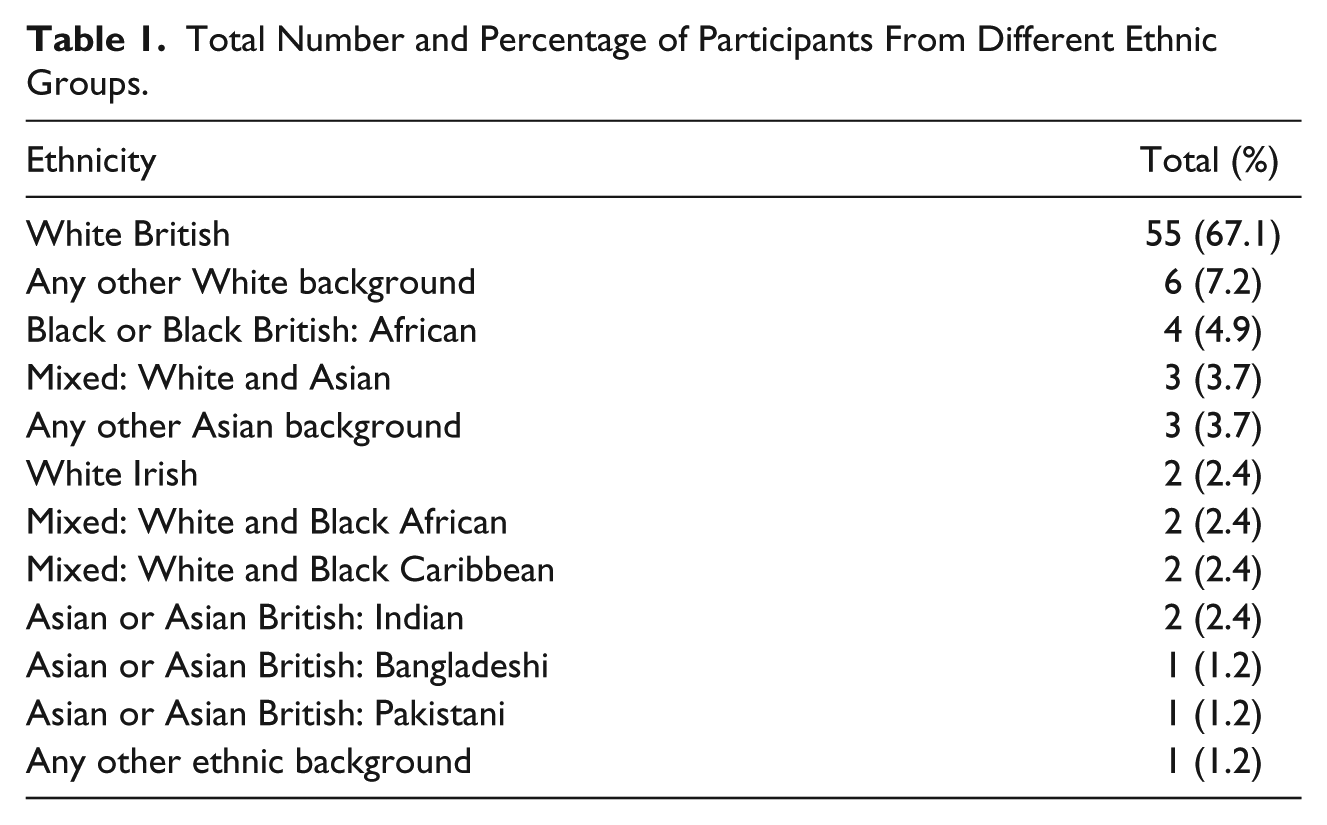
Interviews were conducted with 82 participants, ranging from 12 to 16 per HeadStart partnership, between May and July 2017 or March and July 2018, depending on the partnership’s HeadStart program delivery schedule. Participants were asked to self-report their age, gender, and ethnicity in a brief demographics questionnaire at the end of their interviews. Participants’ ages ranged from 9.10 to 12.9 years (
Total Number and Percentage of Participants From Different Ethnic Groups.
In total, 56 participants attended mainstream mixed-sex secondary schools, eight attended a mainstream secondary school for boys, six attended a mainstream secondary school for girls, and 12 attended a mainstream mixed-sex primary school. The number of schools involved in the study within each partnership ranged from one to three, with interviews conducted at 12 schools in total. Young people were invited to take part if they had already begun receiving support from HeadStart or if they were likely to receive support in future. This could be universal school-based support, such as whole-class psychoeducational lessons, or targeted school-based support, such as a group support intervention (e.g., for young people with anger or anxiety issues) or one-to-one counseling or mentoring (e.g., for young people exposed to a particular risk factor). School staff and/or HeadStart partnership staff identified young people within the study age range (age 9-10 in primary school and age 11-12 in secondary school) who were considered to meet this criterion and invited them to take part. During their interviews, a total of 60% of participants mentioned having received some form of HeadStart support.
Ethical Considerations
Ethics approval was granted by the University College London (UCL) Research Ethics Committee (ID Number: 7963/002). If the young people decided that they would like to take part in the study, informed consent was sought from their parent/carer(s). Assent to take part was also sought from the young people at the start of their interviews. Prior to giving consent/assent, parents and young people were asked to read an information sheet about the study. Parents and young people were informed that they could withdraw from the study at any point, without giving a reason, which would not affect any support that they were receiving from HeadStart or elsewhere. All audio recordings and transcripts have been kept confidential and only accessed by the research team. Transcripts have been anonymized, with overtly identifying details (e.g., names of people and places) removed.
Data Collection
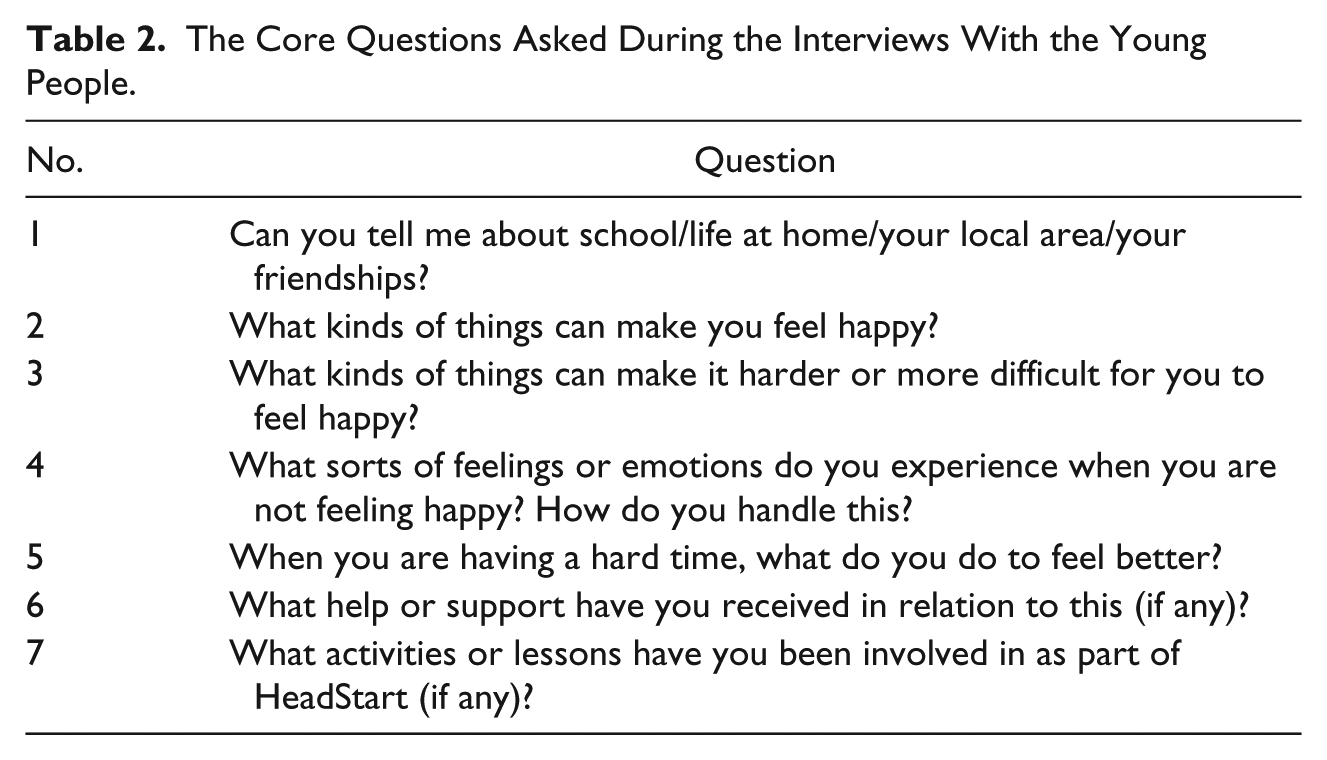
All interviews with participants were conducted by a member of the research team (the first, second, or third author) and took place in private rooms at the schools attended by participants. The interview schedule designed by the research team was semistructured and explored such topics as problems and difficulties experienced, coping strategies used, and sources of informal and formal support, including HeadStart, accessed (or not), in relation to such areas of life as school, home and family life, friendships, and feelings and emotions. The core questions in the interview schedule can be seen in Table 2.
The Core Questions Asked During the Interviews With the Young People.
Questions were not necessarily asked in the same order in each interview, as the semistructured interview format facilitated the exploration of specific topics by the interviewer, while at the same time allowing the conversation around these topics to be led by the participant. The interviews ranged from approximately 15 to 60 minutes in length (
Data Analysis
A thematic analysis was conducted by the first, second, and third authors to examine the themes within the dataset relating to the following research questions: How do early adolescents cope with problems, difficult situations, and feelings? What strategies do early adolescents use and/or sources of support do they draw on, and why? According to Braun and Clarke (2006), a theme “captures something important about the data in relation to the research question, and represents some level of patterned response or meaning within the dataset” (p. 82). Our analysis was conducted from a critical realist epistemological perspective. This perspective assumes that although the data can tell us about the real world, they do not mirror reality; rather, data represent participants’ perspectives and require interpretation by the researcher, who also has their own perspectives on the world, to understand it (Willig, 2012). Thus, inevitably, our analysis would have been influenced by our perspective as researchers in child and adolescent mental health. However, we had little prior knowledge about adolescent coping behavior prior to data collection and analysis, and we conducted our literature review after analysis to minimize its influence.
Drawing on Braun and Clarke’s (2006) methodology for thematic analysis, the first, second, and third authors initially familiarized themselves with the dataset by listening to the interview audio files while reading along with the transcripts, which were then uploaded into NVivo (version 11). Next, the first author generated initial codes from the dataset, which involved systematically labeling extracts from 75% of the transcripts in NVivo relating to the research questions. Coded extracts on similar topics were then collated by the first author using NVivo and grouped into a list of themes. This list of themes and its associated content, derived from 75% of the sample, was reported on in Stapley and Deighton’s (2018) initial overview of the findings. The current study provided an opportunity to revisit these themes and refine them based on further reflection and analysis with the second and third authors, this time drawing on the entire sample of interviews. As part of this process, the second and third authors coded the remaining 25% of the transcripts as a check on the fit of the themes with the entire dataset.
Through this process, we refined aspects of the original list of themes reported in Stapley and Deighton’s (2018) initial overview, with some themes being renamed, collapsed into each other, or split into additional subthemes. For example, an additional subtheme, “challenging unwanted behaviour,” was added to the main theme of “standing up for yourself” by the second author, as distinct from the existing subthemes originally derived by the first author of “physical or verbal retaliation” and “peace-keeping.” Moreover, the subtheme of “just getting on with life,” for instance, was reassigned in the present study from the “acceptance of problems” main theme to the “disengaging from problems” main theme, as in the context of the dataset as a whole, this subtheme was felt to fit better with the latter than with the former.
Results
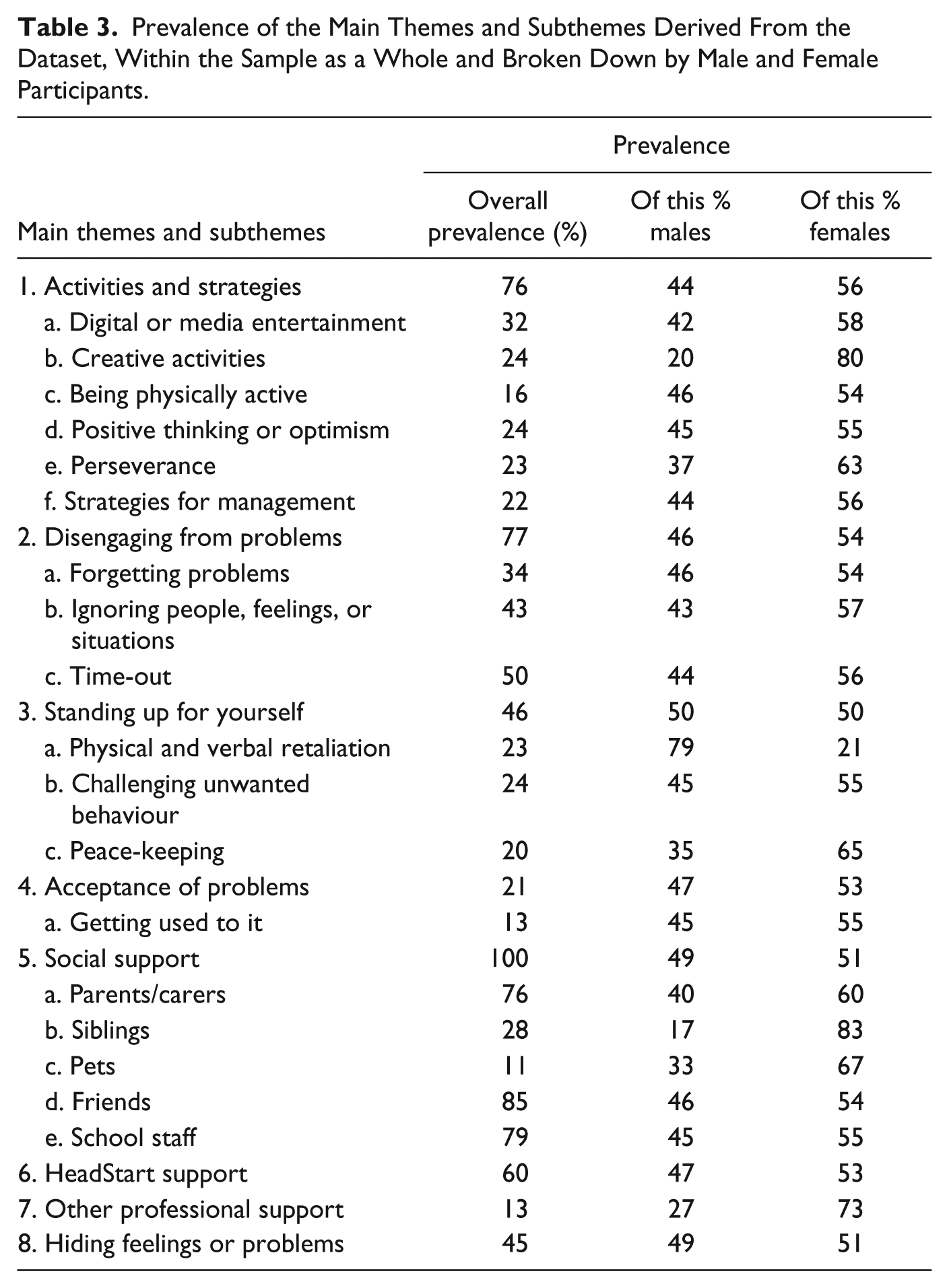
This section details the eight main themes (and associated subthemes), as summarized in Table 3, derived from the dataset: activities and strategies, disengaging from problems, standing up for yourself, acceptance of problems, social support, HeadStart support, other professional support, and hiding feelings or problems. Table 3 shows the prevalence of the themes, defined as the percentage of interviewees who referred to each theme.
Prevalence of the Main Themes and Subthemes Derived From the Dataset, Within the Sample as a Whole and Broken Down by Male and Female Participants.
Theme 1: Activities and Strategies
In total, 76% of participants spoke about the activities and strategies that they used to make themselves feel better when they were experiencing such emotions as sadness, worry, or anger, or when they were experiencing something (such as an event or situation) that they perceived as being difficult, problematic, or stressful. From participants’ perspectives, such activities functioned to cheer them up, distract them, or calm them down. The most frequently mentioned activity, described by 32% of the total sample, was engagement in some form of digital or media entertainment, such as using their mobile phone, computer or games console, watching television or YouTube videos, or listening to music: Usually, I calm down after five minutes of going upstairs, because I’m turning on my YouTube and then I’m watching that. (Male)
A total of 24% described engaging in various creative activities, such as reading books, drawing and coloring, acting or singing. Another 16% talked about the physical activities that they engaged in, including going for a bike ride or a walk, boxing, playing football, or dancing: Shadowboxing, I do it for discipline not—and I also do it to get all my rage out and all my anger out that I’ve had at school and that. (Male)
In total, 23% spoke about how persevering and not giving up was a way for them of trying to overcome primarily schoolwork-based difficulties. Moreover, actively engaging in positive thinking or being optimistic about the outcome of a difficult situation was mentioned by 24%. Some participants indicated that understanding why a particular situation was occurring could help them to stay positive.
A total of 22% described the strategies that they used principally to manage their emotions when they became difficult, most often feelings of anger and stress, including using deep breathing techniques and stress balls, often on the instruction of their parents or professionals. A small number of participants spoke about how they had used self-harm as a strategy for alleviating stress, until a parent, friend, or teacher had intervened: What purpose did the self-harm have do you think? It kind of helped get the stress out . . . Do you still get any of the stressed feelings now? Sometimes. Has the self-harm ever come back? No. What do you think has made that not come back? The fact that I finally managed to tell someone. (Female)
However, 15% of the total sample acknowledged the limitations of using particular strategies and activities, including finding that they were not necessarily effective for “big” problems, that they did not work “all the time,” and that it was not always possible to really believe in your own positive thinking.
Theme 2: Disengaging From Problems
A total of 77% of participants alluded to disengaging from problems, difficult situations, and feelings as a way of dealing with them. For 34% of the total sample, this was described as forgetting their problems. This could be achieved through distracting oneself using the activities detailed above or by having fun with family and friends, purposefully thinking about something else, or consciously deciding to forget about a problem and move on: When I’m reading, I forget about what’s going on in my life, and I just fall into the book and only when I stop reading, I still, I like forget what’s going on in my life and I feel a lot better. (Female)
A total of 43% also described ignoring the problem, stressful situation, or difficult feeling as a management strategy. Some participants alluded to this in the context of not letting it affect them, such as by just carrying on with life as normal, “I just get on with things.” Yet, most participants spoke about this as a coping strategy, often on the instruction of a parent or teacher, in the context of being bullied by peers at school or arguing with siblings at home. However, for some participants, ignoring the situation was insufficient to make the bullying cease, which left them feeling stuck in the situation.
In total, 50% spoke about how being alone when, for instance, they were feeling sad or angry, such as by being in their bedroom, and walking away or removing themselves from arguments with parents, peers, and siblings, could help them to calm down, have a time-out, and process their feelings: I just have a nice relaxing bath and lock the bathroom door and just sit there for usually an hour. (Male)
Theme 3: Standing Up for Yourself
A total of 46% of participants gave examples of times when they had stood up for themselves in confrontations with parents, peers, and siblings. Of the total sample, 23% described feeling the need to actively defend themselves in physical or verbal fights with peers and siblings: I know that I sh—I shouldn’t be doing it, but if I don’t, I’m going to get hurt. So it’s either kill or be killed really. (Male)
Yet, some participants also commented on how physically defending themselves could make matters worse if, for example, they then got into trouble at school or at home for fighting, acknowledging that fear of being punished could be a deterrent to using self-defense as a strategy. Indeed, 20% described how they preferred to resolve arguments peacefully, such as by apologizing to or reasoning with others. A total of 24% also described instances when, rather than retaliating, they had tried to calmly challenge unwanted behavior by others, such as by asking a peer or sibling to stop behaving in a particular way or to leave them alone: There has been some text messages, and I just . . . all I do is if they kick off, I just say “leave me alone” and block them. (Female)
Theme 4: Acceptance of Problems
In total, 21% of participants spoke about how accepting the problem, difficult situation, or feeling, such as through getting used to its existence or just waiting for it to pass, was a way for them of dealing with it. Specifically, 13% of the total sample described how, over time, they had just got used to being in or living with some difficult situations, such as starting a new school or their parents separating, which had then made such situations less problematic from their perspective: Obviously like it’s hard, like, when [your parents] first split up, but like, you get used to it, like . . . as it goes on. (Female)
A small number of participants also spoke about how they had accepted that some problems that they were experiencing were simply part of life, such as their own or their parents’ unhappiness or ill-health, or being bullied at school, which consequently you just had to live with: I’m always unwell . . . i—mentally and physically. Um . . . it’s just . . . mm . . . life’s life and sometimes you just have to continue in ways that you don’t like. (Male)
Theme 5: Social Support
All of the participants described how talking to trusted others and drawing on support from particular individuals could help them to cope with or resolve their problems, and deal with stressful situations and difficult feelings. Talking to and interacting with others, such as face-to-face or via mobile telephones or the Internet, was often seen as helpful by participants when a problem was perceived as being too “serious” or “overwhelming” for them to deal with by themselves. Of the total sample, 76% mentioned seeking and drawing on support from their parents/carers, primarily their mothers and fathers, but also sometimes stepparents and grandparents, 28% mentioned their siblings, 11% mentioned their pets, 85% mentioned their friends, and 79% mentioned school staff, primarily teachers, and pastoral care staff (e.g., school counselors and mentors).
Parents were often spoken about as being trustworthy individuals whom participants could talk to about problems related to home, friends, and school, and whom participants could receive advice and comfort from. Participants tended to see their parents as always being there for them as consistent figures of support or as the main person whom they could go to for help during a difficult time: My mum told me a quote, um, a problem shared is a problem halved. So like, if I kept them my—to myself, it might seem really big and it might like worry me all day, and like, I wouldn’t know how to deal with it, but like, if I told my mum, then my mum knows like, that it’s worrying me and she can like, tell me how to deal with it. (Female)
Indeed, participants generally felt that some issues, particularly those that they viewed as being more personal or sensitive, were better discussed with a parent than with others, such as friends, siblings, or school staff. For some, this was because they saw their parents as being less likely to break their confidence than their friends or siblings, while other participants felt that their family knew them or their situation best, as compared with others: I would tell, tell my mum before I told any of my other, other people because, like, Mum’s, like, my mum’s been there since I was one years old and, like, that’s probably the only person I really trust. (Male)
Nonetheless, participants also felt that their siblings were there for them to seek advice or comfort from and to talk to when they had problems or worries, and described their friends as being a relatable and easily accessible source of help, such as in relation to difficulties with peers, schoolwork, or family. Yet, participants most often referred to the supportive nature of their friends and siblings in the context of these individuals cheering them up or distracting them from their problems in person or over the telephone: What sorts of things do you like to do with your friends? Um, well like going like swimming or like going in park. Um . . . or like just like having a chat and like laughing just, like to take our minds off like the problems we have at home or at school. (Female)
Likewise, pets were described by participants as being a source of comfort, being a soothing or distracting presence, cheering them up, or providing company for them: Sometimes I’ll like think of my cat when I’m angry and I’ll just like imagine. I’ll just be like, ah I’m in . . . I’ll think like, ah I really want to stroke my cat now. I’ll just think about them. I think about her nice smooth fur and like her gentle like purring. (Male)
Participants described their parents as mediating in situations of conflict between them and their siblings, as well as directly intervening when they had fights with or were bullied by their peers. Similarly, participants referred to their friends and siblings as standing up for them in arguments with family or friends, and alluded to the utility of having a large group of friends to fall back on for company in the event of having an argument with one particular friend. Participants also frequently talked about their arguments with their peers at school being mediated and resolved by school staff who had the power to manage these situations, such as through being able to punish bullies or put in place preventive solutions. Often, school staff were referred to as being a source of help for primarily school-related problems, such as bullying or academic struggles, but at other times, school staff appeared to be a source of comfort if participants were feeling upset in general while at school: The teachers make me feel like really happy ’cause m—like whenever I have like bad times or whenever I’m sad or something, the teachers are like, here for me and my friends. (Female)
Participants described how their parents would tell their school on their behalf about particular difficulties that they were facing, such as incidents of bullying or anger issues, so that their school could then take the necessary steps to support them. Similarly, participants spoke about how their friends and siblings could recognize when they were in distress (including incidents of self-harm or bullying), and facilitate them in seeking help from appropriate adults, such as parents or teachers: I’ll just tell [my sister] what I need to tell her and, like she’ll try and sort it out. If it’s like too difficult for her, she’ll maybe get my mum and dad trying to solve it. (Female)
However, at the same time, some participants described finding it easier or more useful to speak to one of their parents, as compared with the other, about their problems, such as the parent with whom they felt that they could relate to more (for instance, if they were of the same gender), the parent with whom they felt that they had a better relationship, or the parent who was available more at home. Moreover, some participants described the issues that they perceived in relation to their siblings as a source of support, such as younger siblings being unable to fully understand their difficulties and older siblings being unavailable or disinterested.
In addition, 33% of the total sample acknowledged that school staff were not always able to provide effective support for them in times of need. Reasons for this given by participants included finding that teachers were not always able to successfully mitigate situations of bullying, teachers could sometimes be too busy to provide support, and support seeking could backfire when teachers took the other person’s side in an argument or when you were labeled as a “snitch” by peers. The latter could be a deterrent for participants to speaking with school staff about their problems.
Theme 6: HeadStart Support
A total of 60% of participants mentioned that they had received support or participated in activities as part of HeadStart, including peer mentoring programs, one-to-one support (e.g., having the opportunity to speak to an adult, such as a youth worker, once per week if they needed to), group psychoeducational or support programs (e.g., learning alongside peers about how to manage difficult emotions), and/or coproduction activities (e.g., working with peers to inform the development of their area’s HeadStart program). These activities tended to take place at school.
Participants talked about the strategies, advice, and information that they had been given through HeadStart to help them to deal with difficulties with schoolwork and exams, arguments with friends and being bullied, family problems, and different emotions such as sadness, anxiety, and anger. This included strategies such as using stress balls to deal with worry and using breathing techniques to manage anger, help with how to think positively, advice about who to talk to about problems, and HeadStart staff liaising with others, such as teachers, to help mitigate situations, such as bullying. Some participants also alluded to HeadStart settings or sessions as an “escape” or a safe space: [HeadStart is] like helping people with, like, emotions and like how to deal with things in the right way. And if you want to talk to people you can. (Female)
Participants also talked about how through HeadStart, they now felt that they had someone that they could talk to about their problems if they needed to, either in addition to or instead of such individuals as family, friends, and teachers. Participants described the HeadStart staff who delivered the one-to-one or group support sessions, psychoeducation lessons, and coproduction activities as being people with whom they felt that they could share their feelings if they needed to and discuss issues confidentially.
Participants involved in peer mentoring programs described finding it easy and helpful to talk about anything that they needed or wanted to with their peer mentor, who was an older student at their school. Participants viewed their peer mentors as being a trustworthy and relatable source of support, as they were closer to their age than the adults in their lives, yet able to offer a different kind of help or advice to that given by their peers: It was also good to speak to her, instead of speaking to my friends because she’s experienced in Year 7, being in Year 7. (Female)
Nonetheless, 17% of the total sample also alluded to factors that could perhaps limit the impact of HeadStart. For example, participants did not always perceive themselves as needing HeadStart support at the time of receiving it, participants did not always appear to understand nor remember the meaning or purpose of the activities that they had been doing as part of HeadStart, and participants were not always able to take part in HeadStart sessions if they took place during curriculum lesson times: Plus I was missing like my [Science] and all that, so, um, I had to like, my mum said, “Well you can come out of [HeadStart].” (Female)
Theme 7: Other Professional Support
A total of 13% of participants mentioned being offered or receiving support from professionals (e.g., counselors and doctors) outside of school at various points in their lives, such as in relation to their anxiety, anger, and family-related problems, including parental divorce. However, the majority of these participants alluded to their perceptions of the limitations of this support, for example, in terms of the degree to which the management strategies that they had been given by professionals had been successful: Sometimes like, ’cause I’m too like stressed and worried about something I forget to do all those things that he told me to do. (Female)
Theme 8: Hiding Feelings or Problems
In total, 45% of participants spoke about how, either in relation to some problems (such as more trivial issues) or as a rule in relation to all problems, at times they would hide their feelings or problems altogether from other people in general or from particular individuals, such as through not talking about problems nor expressing feelings: What is it that makes you want to not show other people how angry you are? I don’t know. I think I just don’t like other people knowing the bad side of me. (Female)
Reasons for this given by participants included feeling that their problems could not be helped by others, wanting to deal with issues themselves, not trusting other people to keep secrets (particularly friends or siblings); struggling to put their problems into words; not liking others knowing about their negative feelings or problems (e.g., out of a wish not to look “weak” or “bad”); not wanting to burden, worry, or hurt others (particularly parents); not wanting to get into trouble (such as with parents or teachers); and not wanting to blow a situation out of proportion or escalate a situation.
Discussion
The aim of our study was to examine early adolescents’ perspectives on and experiences of coping with the problems, difficult situations, and feelings that can arise in daily life in England, to delineate the types of strategies that young people use and/or sources of support that they draw on, and why. Eight main themes were derived from 82 interviews: activities and strategies, disengaging from problems, standing up for yourself, acceptance of problems, social support, HeadStart support, other professional support, and hiding feelings or problems. Participants were recruited from secondary schools in six areas across England, all of which were in the early stages of delivering different types of universal and targeted support around young people’s mental health and well-being, as part of a program called HeadStart. Our study extends Stapley and Deighton’s (2018) initial overview of the findings from a subset of the interviews (N = 63), through conducting a more in-depth exploration of the findings specifically relating to participants’ experiences of coping and accessing support, drawing on the full dataset. While no new overarching themes were derived in this analysis, some new subthemes were identified for example.
The most frequently mentioned ways of coping with difficulties in our study, referred to by 70% or more participants, were engaging in activities and strategies (notably, use of digital or media entertainment) to distract themselves, cheer themselves up or calm themselves down (76%); disengaging from problems, through forgetting or ignoring problems, or having a time-out (77%); and seeking or accessing social support (frequently from parents, friends, and school staff) to talk about problems, receive advice or comfort, or to elicit intervention or mediation between oneself and others, such as with regard to arguments with peers (100%). The coping strategies mentioned by participants were not mutually exclusive and often overlapped. For example, participants described using activities such as engaging in digital or media entertainment or reading books as ways that they had found of helping them to forget about their problems, as well as engaging in strategies for emotion management, such as use of a stress ball, that had been suggested to them by their parents or professionals.
Quantitative studies with general population samples have found that adolescents most frequently draw on active coping strategies, such as seeking information and advice from others, and internal, cognitive coping strategies, such as thinking about the problem and possible solutions (Cicognani, 2011; Gelhaar et al., 2007). By contrast, many of our participants reported using strategies to deal with problems that could be perceived as avoiding, withdrawing, or disengaging from the problem, rather than actively tackling it or seeking help, including forgetting or ignoring problems, hiding feelings, and distracting themselves. Perhaps this reflects the age of the adolescents in our sample, as studies have found that younger adolescents tend to use such strategies as not thinking about the problem, or telling themselves that the problem does not matter, more than older adolescents (Eschenbeck et al., 2018; Gelhaar et al., 2007). Previous research has also shown that at-risk populations of adolescents tend to report using more avoidant or withdrawal coping strategies, such as hiding problems from others, use of drugs or alcohol, or retreating from the problem because they feel unable to change it (Gould et al., 2004; Seiffge-Krenke, 1993).
However, participants in our study appeared to view such strategies as a productive way to manage and process the emotions associated with difficult situations (such as by having a time-out in their bedrooms), mitigate the impact of such situations (such as by ignoring bullies), and be able to get on with their lives. Indeed, it has been argued that coping strategies such as distraction, while a form of disengagement from a problem, are not necessarily avoidant if the individual acknowledges the stressor and then directs their attention toward something else (Compas et al., 2001). Moreover, although management of emotions was not the sole focus of our study, in a study of emotion regulation strategies used by early adolescents in response to negative mood, Wante, Van Beveren, Theuwis, and Braet (2018) found that the use of distraction had a significant positive impact on participants’ levels of positive affect and negative affect in the short term. Indeed, in our study, it may be that some of the strategies that participants described were used both to cope with a difficult situation and to regulate the emotions that arise as a result. This could be teased apart further in future research. Compas and colleagues have noted that, in general, there has been little cross talk between the research areas of emotion regulation and coping behavior, despite their close relationship (Compas, 2009; Compas et al., 2014).
Our finding that nearly a third of participants actively used digital or media entertainment as a form of distraction from problems or to calm down reflects similar findings across previous research examining adolescent media use (Lohaus, Ball, Klein-Hessling, & Wild, 2003; Radovic, Gmelin, Stein, & Miller, 2017). Some of our participants also described the benefit of being able to contact others for support as needed via their mobile telephone, the Internet, or social game playing with others on consoles. This could be to speak with friends during a difficult home situation or, conversely, to contact a parent for advice or support when away from home. This finding adds to the growing understanding that digital and social media may have both positive and negative uses for young people (Best, Manktelow, & Taylor, 2014; George & Odgers, 2015). Such findings also enhance our understanding of the ways that digital and social media can facilitate young people in accessing trusted others from their “offline network” as needed, as has been noted in previous research (e.g., Radovic et al., 2017; Reich, Subrahmanyam, & Espinoza, 2012).
All of the adolescents in our study talked about drawing on social support in various ways, and to varying extents, in times of difficulty. Studies exploring the relationship between social support, help-seeking, and psychosocial outcomes in adolescents have often focused on the role of family and peer support (Heerde & Hemphill, 2018). However, our participants identified a number of different sources of social support that they drew on, namely, parents, siblings, pets, friends, and school staff (both teaching and pastoral). This might imply that professional support provision for early adolescents around their mental health and well-being could usefully highlight, draw on, and bolster the help that early adolescents may already be receiving from others (Stapley & Deighton, 2018). Indeed, parents were seen by participants as being particularly trustworthy individuals whom they could talk to about problems and difficult things in their lives, as were the adults and peer mentors whom participants had met as part of receiving support from HeadStart.
Yet, almost half of our sample also explained that there were times when they hid their feelings and problems from others. Echoing our findings, in a systematic review of the literature relating to young people’s mental health help-seeking behavior, Gulliver, Griffiths, and Christensen (2010) identified concerns about trust and confidentiality and a preference for self-reliance as barriers to help-seeking behavior. Other barriers identified by Gulliver et al. (2010), such as perceived stigma around mental health and skepticism about mental health services, were not voiced by participants in our study, although some participants did allude to factors that could potentially limit the impact of the professional support that they had received. These included not always remembering to use particular coping strategies that had been suggested to them by professionals, or not necessarily perceiving the relevance or necessity of HeadStart support. From a randomized controlled trial of a universal school-based preventive intervention for depressive symptoms in early adolescents, Sawyer et al. (2010) concluded that the impact of the intervention could have been limited by the extent to which participants had felt ready to make the changes to their lifestyles and behavior that the intervention had suggested.
There were some notable gender differences in our findings. More girls (defined as a majority of 60% or more) than boys in our study described using the following coping strategies: engaging in creative activities; persevering or not giving up in the face of difficulty; and seeking support from parents/carers, siblings, and pets. Similarly, previous research has found that girls tend to report using problem-solving behavior and social support seeking as coping strategies more than boys (e.g., Eschenbeck et al., 2007; Frydenberg & Lewis, 1993). Yet, in our study, comparatively minimal gender differences were found in relation to participants’ use of digital or media entertainment, physical activities, or disengagement from or acceptance of problems as coping strategies. By contrast, earlier research, for example, has found that boys tend to engage in physical recreation as a coping strategy more than girls (Frydenberg & Lewis, 1993). Perhaps our findings indicate a shift in gender norms and gendered experiences in some areas, which are understood to contribute to observed differences in coping behaviors among adolescents and, indeed, throughout the lifespan (Washburn-Ormachea, Hillman, & Sawilowsky, 2004).
In line with our findings, in a qualitative study of coping with school-related stress, Wilhsson et al. (2017) found that both boys and girls described relaxing and having a time-out through engaging in physical activities and watching television series, using social media, or playing online games alone in their bedrooms. Yet, Wilhsson et al. (2017) also found that boys tended to consciously try and not think about school and the future more than girls. In our study, we found relatively comparable levels of boys and girls seeking to forget or ignore their problems. On the other hand, boys in our study did tend to describe feeling the need to actively defend themselves in physical or verbal fights with peers and siblings more than girls, who described trying to peacefully resolve such arguments more than boys, which may reflect more gendered expectations regarding responses to such situations. While we did not directly ask participants to discuss the role of gender norms, future research could seek to elicit young people’s perspectives on the role that gender and gendered expectations may play in determining their repertoire of coping strategies.
Limitations
The themes in our study were derived from 82 interviews with a specific sample of early adolescents in England aged 9 to 12 years. Given that 60% of our sample reported already receiving support from HeadStart by the time of their interviews, some of which, from participants’ perspectives, involved teaching them how to cope with problems or manage difficult emotions, it is important to bear in mind when considering our findings that the coping strategies reported by these participants may have been influenced by this support. Indeed, the transferability of our findings to other samples, including those from other cultures and settings, should be treated with caution.
Participants were not always asked to specify whether their use of particular coping strategies varied by the type of problem encountered, but previous studies have shown that coping behavior can vary as a result of this (e.g., Cicognani, 2011; Seiffge-Krenke, 1995). Moreover, our methodology only enabled us to explore the coping strategies that the young people used that were within their conscious awareness; however, previous research has distinguished between voluntary (conscious) and involuntary (sometimes unconscious) coping responses (Connor-Smith, Compas, Wadsworth, Thomsen, & Saltzman, 2000). It is also beyond the scope of our study to determine the efficacy, adaptiveness, or appropriateness of participants’ chosen coping strategies, although participants did comment on the limitations of using particular coping strategies. Future research could seek to further explore young people’s perceptions of the functional or dysfunctional nature of the coping strategies that they use.
The prevalence of the themes in our study cannot be taken as an objective measure of the extent to which participants employed particular coping strategies in their lives. Rather, the prevalence of the themes represents, for example, the extent to which participants were asked to, wanted to, or remembered to talk about particular issues during their interviews. Likewise, knowledge of participants’ experiences of HeadStart came solely from participants’ self-reports in their interviews, thus we cannot objectively state, for instance, how many of our participants had actually taken part in a HeadStart intervention.
Conclusion
Our study has added to previous research by taking an open-ended approach to explore how early adolescents cope with the stresses that can arise throughout daily life in England, to our knowledge, an underresearched area. Using a large sample of qualitative interviews, our study has illustrated the range of coping behaviors that early adolescents might employ, including use of self-care strategies, drawing on social support and support from professionals, and the mechanisms by which such strategies may exert their effects. In a context of ongoing economic and political uncertainty, increases in mental health difficulties among young people, and reductions in funding to child and adolescent mental health services, such a study in England is important and timely. The range of coping strategies and behaviors reported by the adolescents in our sample could be used to inform existing taxonomies of coping behavior and to confirm whether such strategies are adequately represented in existing measures of coping behavior (Garcia, 2010). Our findings also enhance our understanding of how early adolescents may manage their problems outside of professional input, an area for which the evidence base is currently lacking (Wolpert et al., 2019), and highlight where professional input could seek to influence or bolster early adolescents’ coping strategies.
Footnotes
Acknowledgements
All our thanks go to the young people who shared their views and experiences with us and to the schools and the HeadStart partnerships who facilitated this.
Declaration of Conflicting Interests
The author(s) declared no potential conflicts of interest with respect to the research, authorship, and/or publication of this article.
Funding
The author(s) disclosed receipt of the following financial support for the research, authorship, and/or publication of this article: The data used in this study were collected as part of HeadStart Learning Programme and supported by funding from The National Lottery Community Fund. The content is solely the responsibility of the authors and it does not necessarily reflect the views of The National Lottery Community Fund.
