




Abstract
This article uses critical race theory to examine the implementation of one of the first full-scale urban renewal rehabilitation projects in Baltimore, Maryland. Using a race-conscious lens, the tools of government (e.g., economic, institutional, personnel, and linguistic) are examined to contextualize how administrative decisions produced racially disproportionate outcomes for Black residents in the Harlem Park neighborhood.
Introduction
Baltimore, Maryland, like many central cities, have experienced the ebb and flow of investment and disinvestment, rehabilitation and deterioration, population change and residential migration in and out of the city. Baltimore’s evolution is representative of the successes and failures characteristic of 20th century urban redevelopment. In many circles, urban renewal was touted as a way to transform the social and economic landscape of struggling central cities (Hirsch, 1983). Public policies were developed and a myriad of tools were made available to local administrators responsible for reimagining the central city in ways that were not only aesthetically pleasing, but economically driven (Hirsch, 1983). The discretion offered to local administrators allowed them to dictate the patterns of investment, steer population movement, and allocate benefits and burdens to White and Black people, respectively, without much oversight. The social and political climate of the early 20th century was fraught with racial tension (e.g., Civil Rights and Voting Rights Movements, race riots, Jim Crow), so for politicians, the business elite, and the broader White public, racial justice was not deemed a priority when implementing urban renewal programs. In fact, urban blight and abandonment was approached with a race-neutral lens that focused on quantitative measures like effectiveness, efficiency, and economy. Fairness, justice, and equity were not considerations for Black residents in Baltimore, who were often characterized as being contributors to blight, abandonment, and dysfunction of cities, rather than victims of institutional racism and discriminatory practices (National Advisory Commission on Civil Disorders [NACCD], 1988).
In Baltimore specifically, but across the nation holistically, urban renewal illuminated how the economic incentives for rehabilitation superseded the needs and well-being of Black people in their respective communities. The overwhelming, disproportionate, and adverse effects of urban renewal as a public policy became known as “Negro removal” due to the formulaic way the program was implemented in city after city (Fullilove, 2005). Collectively, these actions established a protocol regarding the acceptable rules of engagement (or lack thereof) regarding the ways public and private entities, administrators, and politicians were allowed to interact with Black residents. This article uses critical race theory (CRT) to articulate how state sponsored oppression was facilitated by administrative decision-making in one of the nation’s first full-scale urban renewal projects—Harlem Park. The administrative actions in Baltimore caused deleterious effects on Black residents and communities, but established a roadmap for other cities to intentionally destroy Black neighborhoods, displace Black residents, and ultimately re-segregate them into second ghetto communities.
CRT: A Counter-Narrative to Administrative Neutrality
CRT examines systems, structures, and practices that reinforce and sustain marginalization for Black people. The analytical frame of CRT anchors race at the center of its work. Grounded in legal studies, CRT scholars acknowledge the persistence of racism is ordinary and not exceptional; the notion of traditional civil rights law being more valuable to White people than Black people; that liberalism needs to be critiqued; that context—specifically the details regarding the lives of people of color—is an important perspective in the development of a national civil rights strategy to move the nation forward (Delgado & Stefancic, 2000). Centering racial analysis to understand policy development and implementation contextualizes how the sociopolitical environment influences the way administrators have used their discretion to create divergent realities for Black and White people. Since normative public administration does not consider history or race within its ideology, theory, nor practice, the integration of CRT into the research, pedagogy, and praxis of public administration can facilitate a nuanced examination of the manifestations of injustice throughout society.
As a race-conscious framework, CRT extends analysis toward understanding the experiences of Black people based on a reinterpretation of the historical context and an examination of structural factors (e.g., intergovernment relationships and public–private partnerships) that contributed to residential dispossession and neighborhood destruction. Public administration, in research and practice, must acknowledge the embeddedness for which race has influenced the structure of its institutions, informed policy development and implementation, and how language instigates unjust practice across the U.S. context. To put it simply, race is embedded in every aspect of life in the United States—history, legal doctrine, public policies, economic mobility, health outcomes, and educational attainment, and so on (Crenshaw et al., 1995; Delgado & Stefancic, 2000). Therefore, CRT is a tool that can challenge the hegemony of objectivity, colorblindness, and merit as justifications for existing and persistent racial stratification. Yosso (2005) argued “CRT is a framework that can be used to theorize, examine and challenge the ways race and racism implicitly and explicitly impact social structures, practices, and discourses” (p. 70).
This study specifically reframes the successes of urban renewal and economic development to reflect the realities for Black families in Baltimore, Maryland. In other words, success is measured by the number of new buildings erected, the amount of investments secured or the efficiency for which projects are completed over time. However, CRT represents a counter-narrative by highlighting the ways that Black communities were systematically targeted and disproportionately burdened by urban renewal programs. CRT in public administration affords scholars and practitioners with a framework to challenge “… the universality of white experience/judgment as the authoritative standard that binds people of color and normatively measures, directs, controls, and regulates the terms of proper thought, expressions, presentation, and behavior” (Tate, 1997, pp. 196–197). Specifically, conscious decisions that justified the dispossession and re-segregation of Black individuals and families off valuable land and away from the central business district, downtown spaces, and waterfront properties.
Intergovernmental and cross-sectoral relationships have been complicit in institutionalizing injustice across any number of policy areas. These quasi-governmental relationships thrived in the urban environment where resources were met with opportunities. Whether the focus is housing segregation (Taylor, 2019), mass incarceration (Alexander, 2010; Hinton, 2016), voter disenfranchisement (Blessett, 2015, 2019), or school privatization (Benson, 2019), the benefactors of policy decisions and taxpayer investment are private industry, while the burdens of these interactions rest squarely on the shoulders of Black residents in urban communities. Understanding these nuances by using a race-conscious approach offers insight into how disparity is reproduced through the implementation of a formulaic process that was iterated in cities across the country. Unfortunately, the Black experience in Baltimore is not the exception, but rather the rule. In cities across the country, the inequities facilitated by the public–private partnership need to continuously be examined, challenged, and ultimately changed.
The Historical Sociopolitical Context of Urban Renewal
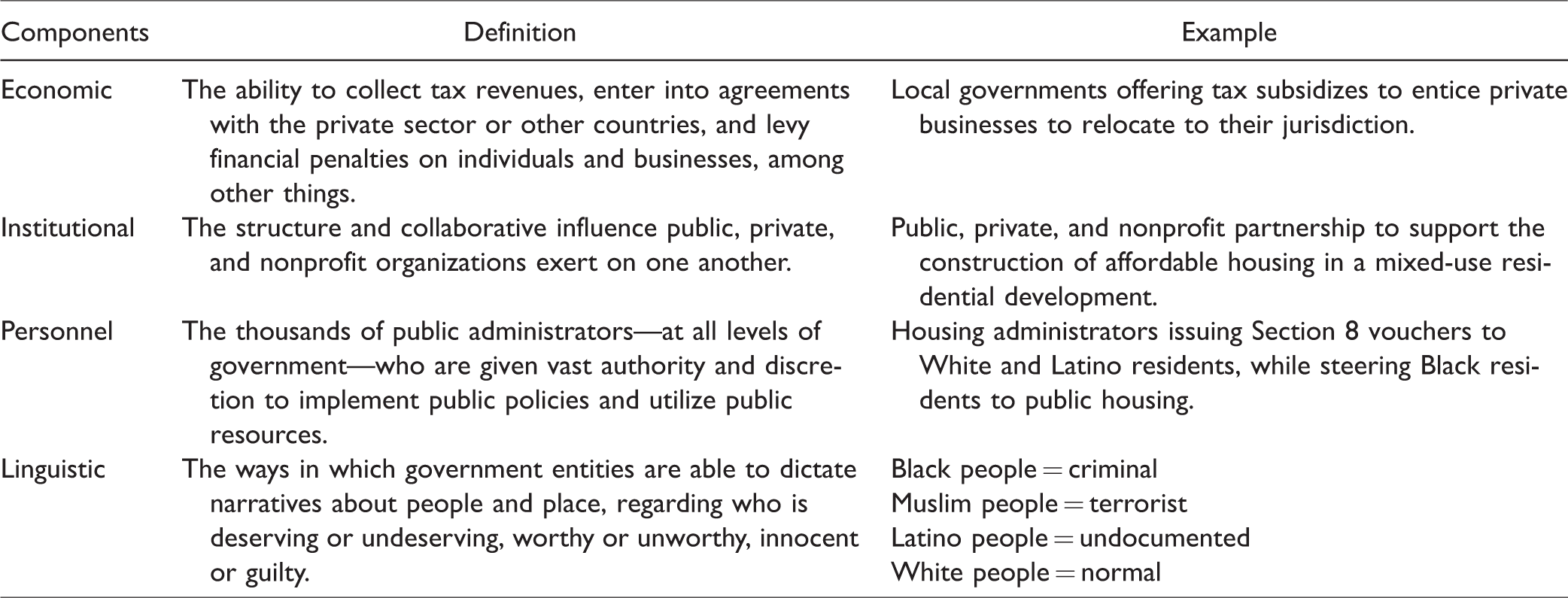
Tools of Government.
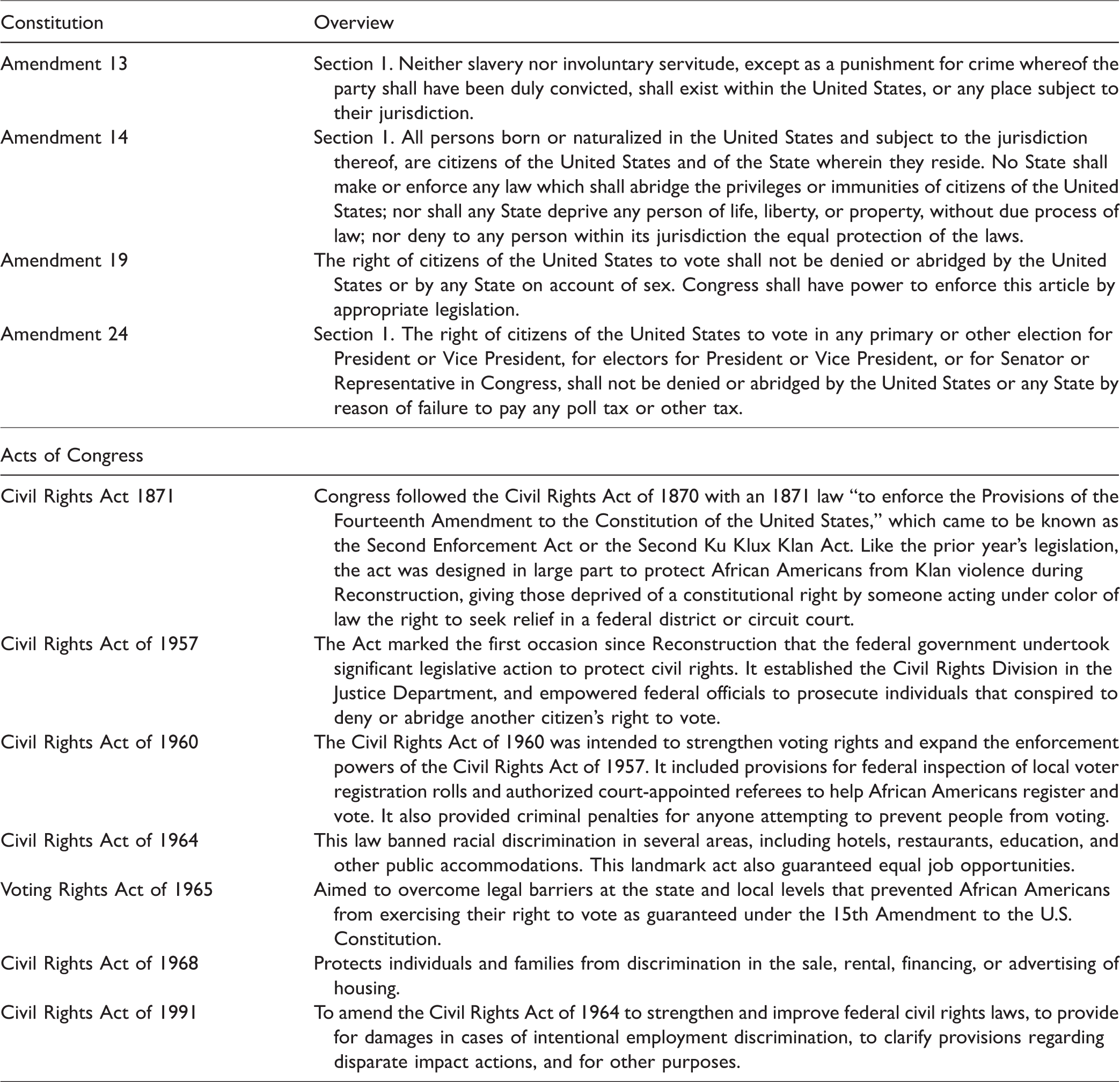
In the United States, the 19th and 20th century represented an ebb and flow of decline and progress, both economically and socially. At the federal level, efforts were enacted to bring about equality, justice, and security for Black people. Constitutional Amendments 13 (abolish slavery), 14 (persons born or naturalized should be considered citizens), and 15 (Black male suffrage) sought to influence the social order regarding the transition of Black people from being treated as chattel to full citizens. Culp (1994) argues The White men who adopted the Constitution refused to put “race,” “color,” or “slavery” anywhere in the text. The Constitution was thus formally “neutral” toward race, slavery, and color. This conscious decision to be colorblind, of course, did not prevent the creators of the American constitutional order from accepting the pernicious American form of slavery. (p. 171)
Federal Initiatives to Extend Equality to Black People.
Public Policy Development
Urban redevelopment was a collaborative effort by federal, state, and local governments to improve the aesthetic of urban communities. A variety of programs were initiated to improve housing conditions, rehabilitate deteriorating downtowns, construct a network of highways, and provide much needed employment (Jansson, 2004; Manza, 2000). Housing production and urban renewal are inextricably tied. The first set of urban redevelopment policies sought to make homeownership a reality for millions of White citizens, while also improving the housing options for Black people. Remaking the urban aesthetic was accomplished through an additional set of policies that focused on rehabilitation and development.
The Federal Home Loan Bank Act of 1932 was the first federal regulation of the savings and loan industry. It was designed to create a credit reserve to increase the supply of credit available for people to purchase and maintain their homes (Landsberg, 2004). The National Housing Act of 1934 was enacted to relieve unemployment and stimulate the release of private credit from banks and lending institutions for home repairs and construction (Office of Policy Development and Research, 2009). The Housing Act of 1937 was specifically designed to rectify the substandard housing available in urban communities. The first two laws were not applicable to Black people because de facto practices made them ineligible for mortgages, home improvement loans, and insurance. However, the Housing Act of 1937, was a one of kind program that was responsible for the widespread production of public housing. It also established the U.S. Public Housing Authority responsible for authorizing loans and providing technical assistance to public housing agencies for low-rent public housing construction (U.S. Department of Housing and Urban Development, 2007).
The Housing Act of 1949 was enacted to help reverse the signs of blight and urban abandonment (Hirsch, 1983; Mohl, 2003). Title I of the 1949 Housing Act provided local government officials with the authority to identify and clear slum areas through the use of eminent domain (Anderson, 1967). Eminent domain is defined as the use of government power to take property for public use (Levy, 2009). Title III stipulated the construction of 810,000 public housing units to address the overcrowded conditions, substandard residences, and deteriorated housing stock available to Black people. Each iteration of urban redevelopment policies passed more control to local authorities and dedicated significant resources for urban revitalization.
Public Policy Implementation and Administrative Discretion
The Housing Act of 1949 devolved discretion to local administrators empowering them to identify site locations for construction, determine occupancy requirements for public housing, specify the number of units to be built, and interject design preferences for development (Jenkins, 2001; Sasaki, 1993–1994). Subsequently, local housing authorities, city councils, and neighborhood associations prohibited Black people from entry into their communities based on the assumption of depreciated property values and neighborhood instability (Massey & Denton, 1993; Mohl, 1995; Sugure, 1996). Public housing became the only real housing option for displaced Black residents who were locked out of the private housing market and denied access into mixed-race or all-White communities. These actions initiated the making of the second ghetto and institutionalized racial segregation through public policy and administrative discretion. Although urban renewal was acknowledged as a great economic development tool, it was simultaneously responsible for the dispossession of many Black residents that were within proximity to revitalization areas.
Improved housing options were an important consideration given the material conditions of many Black neighborhoods. According to the Kerner Report in 1960, the average segregation index for 207 of the largest cities was 86.2, which means that more than 86% of all Black people would have had to change their place of residence to create an unsegregated population distribution. Between 2 and 2.5 million Black people (approximately 16%–20% of the Black population in all cities) lived in squalor in deprived ghetto neighborhoods, which resulted in poor health and sanitation, higher mortality rates, higher incidences of major diseases, and lower availability and utilization of medical services (NACCD, 1988). The substandard neighborhood conditions Black families were confined to were the direct result of disinvestment and discrimination.
The Housing Act of 1949 became known for large-scale public housing production and also revitalizing the urban core. The push and pull on communities in response to urban redevelopment is an important acknowledgment. For example, areas designated for redevelopment required all residents, institutions, and buildings be cleared before construction began. Regardless of the redevelopment project: residential, commercial, industrial, or mixed-use, the original population was forced out, and upon project completion, a new group of stakeholders were moved in. Urban renewal pushed Black people away from desirable real estate, while public housing pulled Black families into their confines due to limited real estate options. Therefore, attempts to obtain quality housing in the private market was a difficult endeavor due to institutionalized racism so public housing became the default due to its availability, accessibility, and affordability (Baltimore Urban Renewal and Housing Agency [BURHA], 1964).
Disproportionate Outcomes
By the mid-20th century, the ideology of capitalism manifested itself in a variety of ways to promote economic stability for entrepreneurs in urban areas. Gotham (2001) explains the effects of privatism as depoliticizing policymaking by systematically excluding the voices and interests that reject the sanctity of the free-market and the desire to maximize profits through the use of public policy and government subsidies. The negative social construction of Black people, along with their reduced economic and political capital, limited their collective capacity to rival the social, political, and economic interest of White entrepreneurs and residents. Paired with support from federal and local actors, the tools of government were used to further White preferences over the needs of Black residents and inclusive urban development. Consequently, the Housing Act of 1949 is one example of how policy decisions created divergent realities along the lines of race.
Regardless of intent, racially disproportionate outcomes were a reality given the embedded nature of racism within public policy during the early 20th century. Table 2 highlights federal level efforts to extend equity for over 100 years, but the manifestation of justice has not actualized for Black people or their communities. Although court decisions like 1948 Shelly v. Kraemer sought to prohibit the use racially restrictive covenants, realtors, homeowners, and financial agencies supported the informal use of such practices (Hirsch, 1983; Pietila, 2010; Samuels, 2008). Twenty years later, the enactment of the Fair Housing Act of 1968 did not prevent redlining, disinvestment, and predatory lending from continuing as standard practice. Moreover, the federal public housing program was in effect for at least five decades. Even with Constitutional amendments and policy decisions that sought to encourage fairness and promote equity of access, several notable public housing desegregation cases had come before U.S. Courts: Thompson v. Housing Authority of Miami, FL and Gautreaux v. Romney in Chicago, IL in 1966; Hicks v. Weaver in Bogalusa, LA in 1969; Shannon v. HUD in Philadelphia, PA in 1970; and Adker v. HUD and Miami-Dade County in 1999.
Even though most cases acknowledged discrimination, local housing authorities continued with to implement public housing policy in racially disproportionate ways. In both the Chicago and Miami cases, judges ordered consent decrees to be in-effect for approximately 10 years. Despite an acknowledgment of wrongdoing by federal and local authorities and a vow to correct behavior, public housing practices changed very little. Victories in the courtroom essentially did little to change the effects of long-standing and explicit practices that marginalized, disenfranchised, and isolated Black people into public housing facilities in impoverished neighborhoods.
Method
This study uses CRT to examine normative evaluations of public administration practices with respect to the effects of urban renewal on Black residents. The author situated Baltimore’s experience with urban renewal through a race-conscious lens to reexamine history and offer a different interpretation of policy decisions and administrative actions. After reviewing hundreds of local planning documents, research articles, archival data, and census data, this study offers an alternative understanding of the systems, processes, and practices that have been utilized consciously and unconsciously to subordinate Black residents and their communities. Marshall and Rossman argue “the review of documents is an unobtrusive method, rich in portraying the values and beliefs of participants in a setting. Meeting minutes, logs, announcements, formal policy statements, letters, and so on, are all useful in developing an understanding of the setting or group studied” (as cited in McNabb, 2010, p. 107). The review of original documentation allowed the researcher to reinterpret the federal, state, and local approaches by using a race-conscious lens to highlight the realities of Black people in Baltimore during the time of urban renewal.
Within a capitalist society, the environmental context (social, political, and economic) largely influences the ways that policies are developed and implemented. Therefore, the rhetoric of justice and fairness is reflected in the development of public policies that use race-neutral language and implemented using colorblind strategies. The reality, on the contrary, results in outcomes that produce divergent realities for Black and White residents in Baltimore. Administrative discretion is reflected in the authority to use government tools and resources (e.g., economic, institutional, personnel, and linguistic) to justify and maintain the existing racial hierarchy. Herd and Moynihan (2018) suggest partisan attitudes toward specific policies areas are revealing and predictive The preference of political actors—most prominently elected officials, but also stakeholders, political appointees, public managers, and street-level bureaucrats—will often translate into actions governing the nature of burden in that policy area: whether it should be created or reduced, and the balance of burden between the individual and the state. This claim fits comfortably with a model of politics in which actors design administrative structures to serve political ends, even if the outcomes are operationally dysfunctional. Policymakers can deliberately alter burdens to generate a behavioral response that aligns with their preferred policy outcome (Herd & Moynihan, 2018, pp. 35).
This study uses Baltimore to highlight how the environmental context (nationally and locally) informed the implementation of the one of the first full-scale urban renewal rehabilitation projects in Baltimore, Maryland—Harlem Park.
Baltimore: Urban Renewal and Ghetto Development
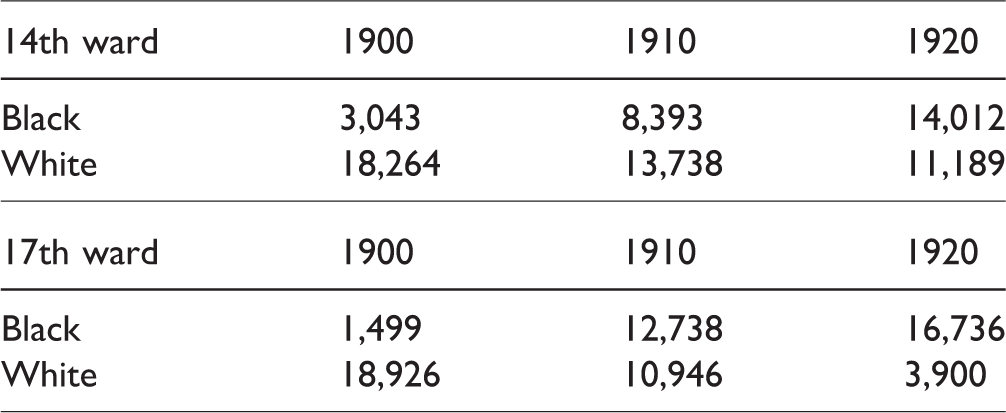
By the early 1900s, Baltimore’s location made it a prime spot for migrants and immigrants alike to settle into the city. Ethnic enclaves were quickly established and communities were divided by race. Many of the emerging neighborhoods were poor and great distinctions were made to highlight the destitute conditions of Black neighborhoods. Hayes, Baltimore’s Mayor at that time, described these neighborhoods as “… menacing to both health and morals. They are breeding spots from which issue the discontents and heartburnings that sometimes spread like a contagion through certain ranks of our laboring element” (Power, 1983, p. 294). Language remains an important factor in the social construction of people and places. The Mayor’s disparaging remarks reflect impressions that would guide the way government actors and private citizens would engage with Black people in the city moving forward. This rhetoric alone instigated the enactment of several disenfranchisement acts in 1905, 1909, and 1911 (Pietila, 2010). Simultaneously, the first ever segregation ordinance was signed in 1910, as “an experiment in apartheid,” but was ultimately was characterized as politically and legally deficient (Power, 1983, p. 300). A second and third segregation ordinance was adopted in April and May of 1911, each attempting to strengthen the law and correct previous deficits. Within a period of 6 years, public actors were implementing policies designed to marginalize the Black vote in Baltimore and prohibit the integration of neighborhoods respectively. The segregation ordinances were so effective, the “Baltimore idea” as it became known was implemented in local jurisdictions in North and South Carolina, Virginia, Georgia, Kentucky, Alabama, and Missouri soon thereafter (Power, 1983).
Neighborhood Transition in Baltimore, 1900–1920.
Urban Renewal: Rhetoric versus Reality
The Housing Act of 1949 was unique from its predecessor because of the amount of discretion offered to local officials to reimagine the central city. The policy was designed to address the following four overarching problems:
Eliminate substandard and other inadequate housing through clearance of slums and blighted areas. Stimulate housing production and community development sufficient to remedy the housing shortage. Realize the goal of a descent home and a suitable living environment for every American family. Permit the FHA to provide financing to rural homeowners (Anderson, 1967).
Despite its name, the Housing Act of 1949 made some provisions for housing, but it is known for its slum clearance initiatives. Through the use of eminent domain, local governments were able to obtain desirable property and transfer it to private entities for redevelopment and investment opportunities (Anderson, 1967). Moreover, the Housing Act of 1949 established a direct relationship between the federal and local governments, whereby power and funds surpassed the states and were funneled directly to city agencies (Lang & Sohmer, 2000).
Eminent domain became a powerful tool of the government to subjectively identify neighborhoods as slums and therefore eligible for razing. Under these conditions, public administrators were able to force residents off their land for the purposes of urban redevelopment based on a criterion of blight, decay, or overall instability. As Black people had so few housing options, their communities were often targeted for redevelopment due to its physical appearance. In reality, Black communities were not aesthetically appealing, but their networks, social, political, and human capital, as well as other support systems were completely destabilized when eminent domain bulldozed it way through. Administrative discretion and the use of eminent domain in Black neighborhoods is not just about how the physical space was destroyed, but just as important how the social fabric of a community was decimated.
Although the law requires market value payment to property owners affected by eminent domain, monetary settlement was typically not enough to maintain or upgrade living conditions for Black people. First, once eminent domain came into play, the property was worth so little because of its classification as “the slums.” Second, it was rare that Black families were property owners. Many of the government payouts went to the landlords of the affected properties, so Black people were often injured twice—having their communities destroyed and no recompense for relocating to a new area. This trend ultimately resulted in Black families being displaced to areas more impoverished and destitute than their original residences, hence the designation of second ghetto communities (Anderson, 1967; Bristol, 1991; Hirsch, 1983; Orfield, 1974–1975).
The tools of government were used to produced exorbitant financial gains for public officials and private actors. In his analysis of the urban renewal program, Anderson (1967) estimated that US$3 billion was used for urban renewal projects, of which 66.8% was used to purchase land and buildings, 19.5% for site improvement and support facilities, and 13.7% was used for planning, relocation, and rehabilitation. At least 45% of those funds were supplied to local governments by the federal governments as a cash grant. Once razed, the land was turned over to private developers at little or no costs (Anderson, 1967; Hirsch, 1983). With little seed money invested, compared with the federal government, the private sector was able to generate windfall profits through capital development and business expansion with their newly acquired land (Anderson, 1967). Local governments benefited because of the abundance of land that was available. An infusion of investments and numerous tax subsidies facilitated new and solidified old public–private relationships. In addition, the biggest perceived threat to economic development—Black people and their communities—were no longer within proximity to downtown or the central business district (Massey & Denton, 1993; Wilson, 2007).
Baltimore’s Harlem Park community
Baltimore was one of the first cities to take advantage of the Housing Act of 1937 to facilitate the production of public housing. By the time the Housing Act of 1949 was passed, officials in Baltimore were ready to take advantage of the resources available to transform the city landscape. The central business district, downtown, and waterfront properties were the first areas targeted for rehabilitation.
In 1941, downtown property in Baltimore lost US$53,000,000 or 30% of its US$175,000,000 assessed value (BURHA, 1959a). This reality spurred the impetus of local officials to upgrade and modify residential, commercial, and industrial areas throughout the city. Urban renewal and downtown revitalization were officially underway. All over the city, neighborhoods were touched by redevelopment in some capacity. Poor areas were susceptible to their entire communities being razed and residents relocated. Historic districts were threatened with the clearance of some buildings and spaces, but overall these areas were refurbished. The central business district experienced a complete overhaul to accommodate new buildings, parking lots, restaurants, and shops. Although each of the projects cosmetically enhanced the city, it deepened the gulf between affluent White and poor Black residents. Black identity was stigmatized in ways that associated their mere presence with the downward spiral of stable communities. As a result, administrative decisions consistently directed Black populations away from areas of future development. Redevelopment, on the other hand, became equated with new structures designed to attract future investors and middle-class White residents to the area.
The Housing Act of 1954 emphasized the importance of rehabilitating existing urban homes. Financial assistance was made available to localities to plan and execute projects, public improvements, and to upgrade structures and neighborhoods (BURHA, 1962). This policy specifically focused on rehabilitation instead of complete demolition like the urban renewal program. In response, Baltimore quickly identified an area that could benefit from government subsidies—Harlem Park. The community was chosen as an experiment to identify and remove roadblocks for other residential rehabilitation projects across the country—essentially becoming the model for national implementation. The Harlem Park ordinance was passed in 1960 and became Baltimore’s first full-scale rehabilitation area. Facilitated by joint partnerships with the Federal Housing Administration (FHA), the Urban Renewal Administration (URA), and the BURHA, this relationship reflected the direct connection between the federal and city governments. The collaboration was described as “… an intensive and cooperative application of attention and manpower, to come to grips with some of the most difficult and complex problems which residential rehabilitation presents and to develop effective procedures for dealing with them” (BURHA, 1962, p. 3).
Survey Data of the Harlem Park Community, 1959.

an area of lower income Negro residents, is probably at the lower end of the scale of neighborhoods susceptible to private rehabilitation. If rehabilitation can be made to succeed here, it can probably succeed in any other reasonably selected areas in the country. (p. 10)
Harlem Park I and II Redevelopment Projects.
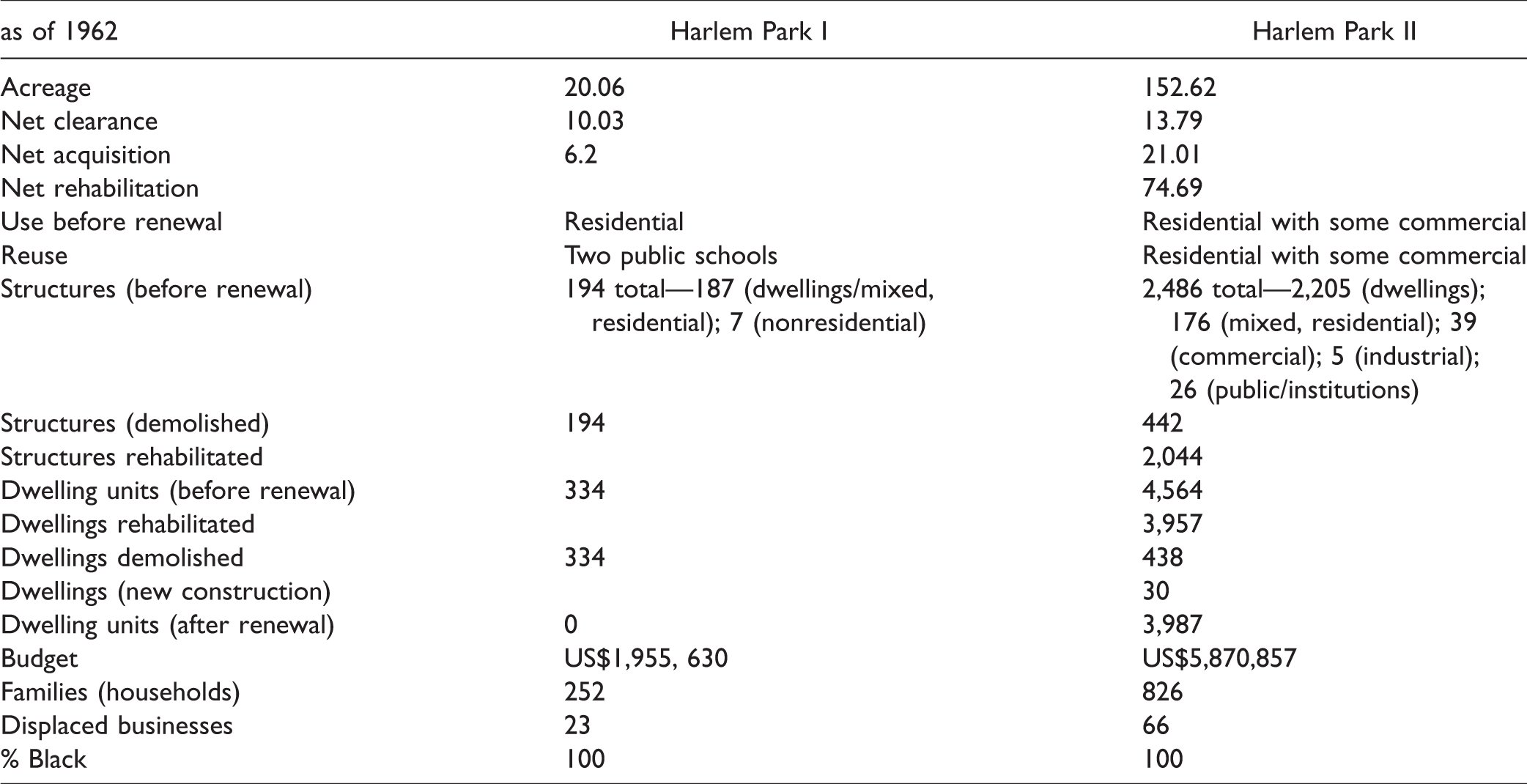
By September 1964, Harlem Park renovated 200-acres and more than 1,200 acres were designated for renewal in other communities across the city (BURHA, 1964). Collectively, these projects reflect more than US$7 million dollars of investment designed to rehabilitate the economic and physical infrastructure of Baltimore. As a result of these programs and numerous others throughout the city, more than 25,000 people were displaced by urban renewal, public housing, and school construction from 1950 to 1964—90% of those relocated were Black residents (Samuels, 2008). The outcome created two cities: one affluent, White, and business-oriented and the other poor, Black, and disenfranchised. Despite all the quantitative good that was occurring in the city (e.g., overall numbers of acres set for redevelopment, the building roads and homes, refurbishing historic areas), the quality of life (e.g., the racial and social tension) for Black residents continued to worsen.
Racially Disproportionate Outcomes
By 1967, Baltimore had more than a dozen urban renewal projects underway: Camden Industrial Park, Charles Center, Waverly, Shot Tower Industrial Park, Mount Royal Freemont-Plaza, Mount Royal Project II, Mount Royal Fremont—Madison Park North, Mount Royal Fremont—Madison Park South, University of Maryland Project I and II, among others. Each project had diverse objectives, served varying constituents, and attempted to rehabilitate the old of Baltimore. The consequences for Black residents hardly went unnoticed. The Human Renewal Program (HRP, 1964) Steering Committee for a Plan of Action issued a report and stated It wasn’t long after the physical renewal of Baltimore began that those responsible for its direction recognized that the “bricks and mortar” approach was only half the job. Unless an equal effort were made to deal with human problems, the essential nature of the City would not change. It was the analogy to physical renewal that led to the term “human renewal.” (p. 1)
Although White residents were not immune from the effects of eminent domain, Black residents in the city were hit the hardest. The subjective declaration that Black communities would be designated as slums and targeted for clearance became standard operating procedures. Urban renewal effectively revealed the vulnerability of Black residents. First, landlords did not maintain the best housing conditions and were rarely held accountable for code enforcement. Also, the scarcity of housing resulted in families staying in dilapidated conditions because there were so few options to begin with. So, the quality of the homes being occupied were deteriorating, thus defining the overall characteristic and aesthetic of the respective communities. Second, Black families were not compensated by eminent domain funds nor did they receive the same (if any) relocation assistance that was made available to their White counterparts. Third, Black people were widely restricted from homeownership due to mortgage and insurance discrimination, while redlining and racially restrictive covenants concentrated families into the communities characterized by blight, crime, and violence. Collectively, the displacement of Black residents, the destruction of their neighborhoods, and the re-segregation of Black families into second ghetto communities reflected the Black experience in urban communities across the country.
Dispossession was traumatizing for Black families and their communities. Fullilove (2005) documents the pervasiveness for which Black families were not only impacted, but their social ties and community networks were destroyed as a result Urban renewal is the butterfly in Beijing, the unseen actor who caused the tempest. The vigor of the civil rights movement led to the expectation that black Americans would be better off when segregation was defeated. In fact, by 1970, some were but many were not. Instead, the have-nots had tumbled deeper into poverty and dysfunction. The great epidemics of drug addiction, the collapse of the black family, and the rise in incarceration of black men—all of these catastrophes followed the civil rights movements, they did not precede it. Though there are a number of causes of this dysfunction that cannot be disputed—the loss of manufacturing jobs, in particular—the current situation of Black America cannot be understood without a full and complete accounting of the social, economic, cultural, political, and emotional losses that followed the bulldozing of 1,600 neighborhoods. (p. 20)
Discussion
Anchoring race as a focus point of the analysis offers a counternarrative to urban renewal in ways that have been largely described by policy and political actors as a successful and necessary program. CRT is used to juxtapose the rhetoric of urban renewal with its reality. As evidenced by public documents, reimaging a new urban landscape was prioritized over the needs of Black residents. While Harlem Park is one example presented here, Fullilove (2005) offers comprehensive documentation of the decision-making strategies designed to systematically exploit vulnerable Black residents. Far too often the voices and lived experiences of Black and other marginalized people are ignored because it opposes the hegemonic narrative of equality, fairness, and justice. Using a race conscious lens to understand urban renewal is important for public administration because it challenges normative public administration practices that prioritize effectiveness, efficiency, and economy over equity. Interrogating how the tools of government have been used to unevenly create benefits and burdens is a helpful critique of the manifestations of state-sponsored oppression, particularly because without such an awareness similar mistakes are likely to be repeated.
Gentrification is arguably—urban renewal 2.0—as the benefits of 21st century urban redevelopment is largely concentrated among White interests at the expense of people and communities of color. Redevelopment ideologically, rhetorically, and in practice often operates within a status quo environment. In other words, regardless of the social, economic, and infrastructure needs of the community, public policies are developed and implemented in ways that have not been fully inclusive, comprehensive, or beneficial for all residents. Moreover, the discretion afforded to administrators is particularly troubling if ethical and professional standards exist only in name, rather than practice. Unlike the blatant “Whites-Only” signs that littered public water fountains, parks, lunch counters, and swimming pools throughout the Jim Crow Era, colorblind racism have taken new forms to appear less racist, even if they produce disparate outcomes for Black individuals, families, and communities. As evidenced by the system of racial hierarchy in the United States, administrators using race-neutral approaches or the implementation of colorblind policies reflects a prioritization that maintains the existing conditions. Race-consciousness is necessary to upend traditional public administration practice, thus making it more accessible to a diverse citizenry and responsive to the complexity of our current environment.
Conclusion
Public administration as a discipline and profession must fully consider the long-term implications of reproducing disparity. This requires analysis of history, race, voice, and an appreciation of the varied interpretations of administrative decisions. It can and has been argued that urban renewal projects produce the greatest good for the greatest number; the revitalization of slum communities was better for its occupying residents anyway; and the collateral consequences of dispossession, displacement, and re-segregation for Black families were unintended (Hirsch, 1983; Rusk, 2003). However, despite evidence that “Negro removal” had economic, social, and psychological effects on Black families, 21st century development policies continue to model behaviors of the past. Such practices are grounded within the ideology that to attract affluent populations to the urban core redevelopment should not include its long-term Black residents. The historical evolution of urban revitalization is cyclical. The language used for its justification is steady and the complicity public administrators, as well as the broader society undermines the tenets of a democratic United States.
Integrating a race-conscious approach to public management and decision-making will help actualize social equity and work to eliminate racially disparate outcomes. Honestly, these actions will not produce immediate results, but a level of intentionality is needed to begin rectifying generations of wrongdoing—institutionally and professionally. The imperative moving forward is for public administrators to be knowledgeable about, considerate of, and responsive to the needs of all people, but especially those that have and continued to be marginalized by doing what has always been done.
Footnotes
Declaration of Conflicting Interests
The author(s) declared no potential conflicts of interest with respect to the research, authorship, and/or publication of this article.
Funding
The author(s) received no financial support for the research, authorship, and/or publication of this article.
