




Abstract
To understand the role of the market in the promotion of nationalism, this article focuses on Chinese popular music and examines how nationalism is promoted in China through patriotic songs. It applies Althusser's theory of “Ideological State Apparatus” and argues that China has a long history of nationalist mobilization through patriotic songs, which claims both Chinese artists and consumers as subjects of nationalism. As the Chinese popular music industry is now marketized, the market becomes the primary platform where the state, the artist, and the consumer interact, collaborate, and negotiate in the production and consumption of patriotic songs. In implementing their marketing strategies, artists help enhance the reach and effectiveness of Chinese patriotic education by tailoring their songs to well-defined, diverse market segments.
Introduction
Thomas Friedman (1999) once predicted that no two countries both having McDonald’s would fight a war against each other because people would rather happily participate in the global consumer culture than fight wars. Today McDonald's is available in many countries, yet we are also witnessing rising nationalism worldwide in a variety of forms—political, religious, ethnic, linguistic, economic, cultural, and military—which contributes to a significant level of geo-political instability. Nationalism as a fundamental force can affect marketing on four fronts, political, cultural, economic, and consumer rights (Gao 2012), while marketing sometimes mobilizes nationalism for economic gains (Cohen 2000; Moreno 2000). Therefore, it becomes critical to understand the role of the market in the promotion and consumption of nationalism as an ideology.
As an effort in this direction, this article focuses on Chinese popular music and examines how nationalism is promoted in China on the market through patriotic songs. As Smith (2001) points out, the spread of nationalism relies not on protests and armed resistance but on cultural activities. Popular music has been singled out by scholars as a potent agent of national identity construction (Biddle and Knights 2007; Regev 1997; Tuohy 2001) because nationalism is affective in essence and finds music the best tool for emotional agitation. Popular music involves the interaction of meaning, power, and cultural value (Hesmondhalgh and Negus 2000), and to study popular music is to “study struggle and competition between different producers, tastes, and money-makers” (Frith 1989, p. 3). In this light, popular music provides an appropriate, productive entry point to examining through a political-historical lens how nationalism is promoted on the market.
Chinese nationalism first emerged in the late nineteenth century, when China experienced humiliations at the hands of foreign powers, and has persisted as a major facet of Chinese national identity ever since (Zhao 2004). Scholars have documented the recent surge of both official and grassroots nationalism in China: while the Chinese government has regularly launched patriotic education campaigns (Brady 2010), Chinese grassroots nationalism now exists independent of the state and sometimes challenges China’s authoritarian politics (Gries 2004). However, media commercialization does not fundamentally diminish either Chinese nationalism or authoritarianism and, in fact, both have been strengthened through commercial entertainment delivered by the market (Bai 2012; Lagerkvist 2008; Stockmann 2013; Zhang 2008).
This article adopts Althusser's concept of “Ideological State Apparatus (ISA)” as its theoretical framework to approach the promotion of nationalism by Chinese popular music. According to Althusser (1971), state apparatuses can be categorized into two groups, repressive and ideological. The repressive state apparatus, such as the police and the army, belongs to the public domain and operates essentially by violence, while ISAs can be located either in the public or the private domain and operate primarily by ideology and secondarily by violence such as state censorship. A multitude of ISAs exist, including communications ISAs (radio, television, newspaper) and cultural ISAs (literature, arts, sports, entertainment) (Althusser 1971, 2014). ISAs are the tools for the ruling class to maintain power by propagating the ruling ideology. To Althusser (1971), ideology represents the imaginary relationship of individuals to their real conditions of existence and always exists in material apparatuses and practices, so that individuals are always-already subjects constantly interpellated through the rituals of ideological recognition. Responding to the criticism that he subscribes to rigid structural determinism, Althusser (2014) postulates that ISAs are very sensitive and vulnerable, containing constant grating caused by class conflicts, and that the propagation of the ruling ideology is not through simple repetition but through hegemonic struggle. Hence, individuals are both the subject of the ruling ideology but also the agent of resistance to it. Such a perspective introduces a flexible, non-determinist framework for the analysis of social formations and, more importantly, it complicates class relations by highlighting the various interconnections, collaborations, as well as contradictions between different social classes (Glucksmann 1974).
Applying Althusser's theory to Chinese popular music, this article argues that China has a long history of nationalist mobilization through patriotic songs, which claims both Chinese consumers and artists as subjects of nationalism. As the Chinese popular music industry is now commercialized, the market becomes the primary platform where the state, the artist, and the consumer collaborate and negotiate with each other in the promotion and consumption of nationalism through patriotic songs. More importantly, in implementing their marketing strategies, artists help enhance the reach and effectiveness of Chinese patriotic education by tailoring their songs to well-defined, diverse market segments. The same process equally applies to the marketing of other cultural products and the interpellation of other dominant ideologies and cultural values. Hence, it becomes necessary to treat the market as a key platform where ISAs interact and negotiate and where the economy and polity merge. Such a perspective opens up new space for critical macromarketing inquiries in the context of globalization.
The article is organized into three sections. It first reviews the Chinese history of patriotic songs during the twentieth century and argues that such a rich history interpellates Chinese consumers and artists as subjects of nationalism. The rest of the article focuses on the contemporary period: the second section examines how the Chinese government adapts to the market in its strengthened propaganda campaigns through patriotic songs and the third section investigates through four cases how artists tailor their own patriotic songs to diverse market segments and how the consumer responds to these patriotic songs. The data for the first and second sections are collected from secondary Chinese and English sources. The case studies in the third section employ textual and semiotic analysis, which will be elaborated in that section.
Hesmondhalgh and Negus (2000) argue that it is no longer possible to draw hard and fast distinctions between popular and traditional music, and between serious and popular music (p. 2). Therefore, this article adopts an eclectic view and treats all music consumed by people in their daily life as popular music.
Chinese Patriotic Songs in the 20th Century
Starting in 1842 China experienced its “century of humiliation” marked by foreign invasions and unfair treaties. The period also witnessed the birth and growth of Chinese nationalism (Fairbank and Goldman 2006). Inspired by how Japan used school songs for nation-building, Chinese intellectuals mobilized music to educate the populace (Dai 2002). Between 1903 and 1919 alone more than a thousand songs were published in progressive magazines (Fu 2006) advocating new values such as patriotism, gender equality, and physical exercise (Jin 2010). Some Chinese songwriters integrated Western melodies with Chinese lyrics, and some turned to Chinese folk music for inspiration (Fu 2006).
Numerous patriotic songs were written between 1931 and 1945 when China was invaded by Japan. An anthology published in Hong Kong records 3,621 such songs (Kan 2005). Of diverse styles, these songs were widely disseminated by intellectuals and students across the country during the Sino-Japanese War and helped strengthen a Chinese national consciousness (Wang 2008). Over the years some of these songs became standard fare for concerts that commemorated the anniversaries of the war, so that generations of people in both mainland China and Taiwan have been exposed to them. Some popular patriotic songs from the period have joined the canon of quintessential Chinese national-style songs because of their pleasing folk melodies and melancholy lyrics (Han 2012).
From very early on, the Chinese Communist Party (CCP) actively employed music to promote nationalism and its revolutionary cause. Consistent with its mass-line approach to mobilization, Communist cultural workers gathered folk songs from peasants, rewrote their lyrics, and then taught the new songs to soldiers and peasants (Ji 2004). After the CCP gained control of China in 1949, music continued to play an important role in the regime's campaigns for socialist transformation. Notably, the government established a national network of wired radio stations and by 1964 six million loudspeakers in China reached 95% of the population, including those in isolated places (Liu 1971). To implement its political propaganda through entertainment, the CCP made music programs a key component of Chinese broadcasting (Yu 1964). Movies were another effective tool to package political education as entertainment. Thanks to thousands of mobile film projection teams, Chinese peasants attended an average of three movies a year in 1962 (Liu 1971). Chinese movies produced between 1949 and 1966 were both of high artistic quality and very entertaining, and many included romantic plots accompanied by beautiful, memorable songs (Chan 2012; Wang 1997). Most of these movies were banned during the Cultural Revolution because they were considered too bourgeois. However, they made a strong comeback in the 1980s when television entered Chinese households.
Similar to Chinese revolutionary films, patriotic songs from the Mao period conveyed strong emotional appeals through the technique of what Wang (1997) calls aestheticized politics. The songs usually co-opted popular folk melodies, tapped into the audience’ love for their hometown and desire for a better life, and presented the CCP and Chairman Mao as the enabler for that life. To build a unified nation of diverse ethnic groups, many patriotic songs were written from the perspective of ethnic minority groups, yet with their lyrics in Mandarin, each with its distinctive ethnic style but uniform in its praise of the regime (Tuohy 2001). Today these songs continue to enjoy enormous popularity. One may argue that ethnic minority arts and artists serve as token symbols in the Chinese nation-building project and appeal to the Han majority for their exoticness (Clark 2012). However, the inclusion of ethnic minority music in the canon of patriotic songs has helped expand the aesthetic horizon of the Chinese populace. Songs from the Cultural Revolution period focus more on class struggle, with workers, peasants, and soldiers as their subjects of praise (Tuohy 2001), so they are less popular today, although they are often sung by Chinese protesters at their rallies against corrupted officials.
Between 1978 and 2000 China made tremendous progress economically, but maintained its authoritarian politics, even though the regime gradually loosened its control of the cultural sphere, so that Chinese society experienced gradual pluralization. To promote its economic programs and foster its political legitimacy, the government periodically launched campaigns of patriotic education (Brady 2010; Qian Wang 2012). Therefore, new patriotic songs were regularly promoted through television and radio programs, which were still tightly controlled by the government. As Baranovitch (2003) points out, official patriotic songs from this period follow a fixed formula. They employ the artistic folk or Western bel canto style to invoke authority and professionalism, are sung by a handful singers employed by state troupes, and do not include explicit references to the CCP, but employ general terms such as “nation,” “motherland,” or “hometown.” Some of these songs are still performed today but mostly at government-organized concerts. Their popularity is limited for a number of reasons. Unlike earlier folk and ethnic patriotic songs, they do not offer distinctive local flavors, are difficult for an average person to sing, and people now have more and better alternative songs from which to choose. New technologies, such as cassette, video recording, and Karaoke, which became available in China in the 1980s and 1990s, empowered consumers as tastemakers and favored music that can be easily learned and sung (Baranovitch 2003). The early 1990s also witnessed the revival of old revolutionary songs, which could be viewed as a critique of the ongoing economic reform that had led to serious corruption and social dissatisfaction (Bryant 2004). The revival, which featured songs from the Mao period to a modern disco and rock beat, was initially encouraged but later on banned by the government (Baranovitch 2003). Still, an album named The Red Sun sold seven million copies in 1993 and generated a large profit for its publisher, China Record (Shanghai), a state-owned company (Qian Wang 2012). In 1995 patriotic songs from the 1930s and 1940s experienced a major revival when China commemorated the 50th anniversary of the end of the Sino-Japanese War (Tuohy 2001).
Pop music from Hong Kong and Taiwan entered China through TV soap operas and audio cassettes in the 1980s and became very popular in the 1990s because of its focus on intimate emotions, which represented a sharp contrast to the official propaganda songs of the time. Hong Kong and Taiwanese pop artists also brought their own patriotic songs to the mainland to express their consciousness of their own Chinese identity (Ho 2006). As a response to the soft, refined style of Hong Kong and Taiwanese popular music, China developed its Northwest-Wind (xibei feng) style in the late 1980s, which combines a modern beat with a rough, primitive voice as well as primordial musical elements from northwestern China—the cradle of Chinese civilization, so that the style sounds very masculine (Baranovitch 2003). Chinese rock music experienced its birth and a mini-boom in the late 1980s and early 1990s. Works of Cui Jian, the best-known Chinese rock singer and songwriter, contain strong elements of individualism and rebellion, yet his songs also integrate explicit Chinese folk elements and frequent references to Chinese revolutionary songs (Mittler 2012). Songs from the first album of Tang Dynasty (1992; see Figure 1), a heavy metal rock band, question where China is heading: its song, “Dreaming of Returning to the Tang Dynasty (meng hui tangchao),” longs for a return to the heyday of Chinese civilization. Such rock songs closely reflect the ambivalence of Chinese nationalism in the early 1990s, when disillusion and cynicism overcame Chinese intellectuals and artists, who subsequently abandoned their cultural ideals to pursue profits (McGrath 2008).
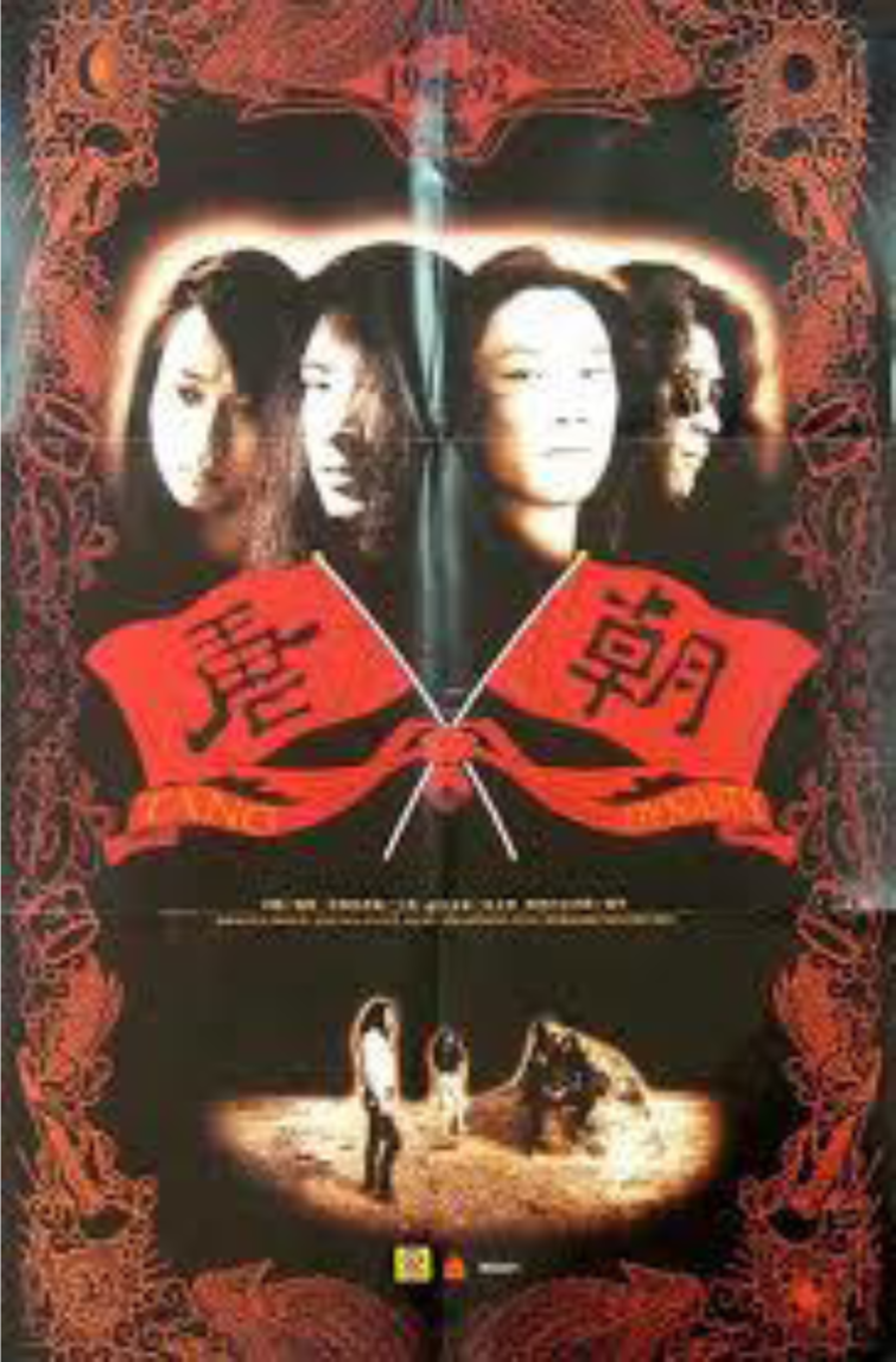
The cover of Tang Dynasty's first album, Dreaming of Returning to the Tang Dynasty (1992).
In summary, an integral part of the Chinese nationalist movement, patriotic songs from different historical periods vary in their origin, preoccupation, and style. Some have faded away, while others have survived the test of time, joined the canon of Chinese classic songs, and continue to be popular today. While propagandistic in nature, many of these songs subscribe to a Chinese national style of music and are aesthetically pleasing (Bryant 2004; Mittler 2012). More importantly, they are closely tied to the lives and identities of generations of Chinese who lived through Chinese history singing these songs to express their pain, excitement, hope, and belonging. Therefore, these songs inevitably interpellate the Chinese people—both listeners and artists—as subjects of Chinese nationalism.
The year of 2000 marked an important turning point in contemporary Chinese history. China joined the World Trade Organization in 2001, which forced the government to liberalize many of its industries, including the music industry. The Chinese economy became the second largest in the world in 2009, and more and more Chinese became better-off materially. China successfully hosted 2008 Beijing Olympic Games, which was a huge boost to the Chinese national pride. Meanwhile, the social space, which used to be controlled by the state, “has metamorphosed into a boisterous, disorienting social sphere underscored by carnivalesque consumer mass culture” (Zhang 2008, p. 2). On the other hand, rapid Western-style capitalist development, accompanied by many social problems, such as corruption, income inequality, environmental destruction, and declining morality, has produced a traumatizing effect on the Chinese psychology and creates a strong sense of rootlessness and emptiness (Zhang 2008). Many Chinese find life in cities—with its overwhelming individualism and consumerist modernity—smothering and debilitating, and many long for a strong collective identity (Hessler 2010; Loyalka 2012).
Along with these developments, Chinese nationalism has rapidly surged to become a powerful unifier of Chinese society as well as a paradoxical answer to its search for a spiritual home. As in the case of patriotic songs, this surge of Chinese nationalism is a reflexive process of both collaboration and negotiation between the state and the market, so that the ideology of Chinese nationalism is subject to reinterpretation while continuing to claim its subjects. The rest of the article will examine this reflective process by focusing first on how the government co-opts the market into its efforts and then on how artists and consumers participate in the process through their marketing and consumption practices.
Chinese Patriotic Songs Since 2000: The Official Line
Today the Chinese media largely rely on advertising for revenue, and new technologies and especially the Internet have led to the proliferation of new media outlets and consequently intense competition for audiences (Zhao 2008). Media fragmentation has a profound effect on China's popular music industry. As sales of physical albums have sharply declined over the years, artists and their management companies are increasingly relying on concerts and performances to make profits (Li 2014). Meanwhile, the online digital music segment is growing rapidly. In 2012 China had 575 online music service providers, most of them private enterprises (Ministry of Culture 2013). Internet users in China grew to 564 million in 2012, 75% of whom listened to music online. Music is the most popular online entertainment format—more popular than online videos, games, social networks, and shopping—although few users are willing to pay for online music services because a large percentage of listeners are either students or people of low or medium incomes (Ministry of Culture 2013). The Internet also provides a key platform for unknown artists to showcase their music and market themselves. In a number of cases a performer became famous overnight because a music video posted online had been viewed and liked by thousands. The Chinese consume music in other ways in their daily life. Ringback music is a popular paid service provided by Chinese mobile service providers and a major source of income for artists. Plaza dance (guangchang wu)—a form of low-intensity aerobics exercise that gets its name because dancers usually meet at public parks and plazas—is another way, and a small industry has developed to turn the newest music hits into dance routines. These diverse venues of music promotion and consumption noted, television remains the most effective platform for musicians to acquire national publicity, a large fan base, and consequently an income stream. Hence, both aspiring and established musicians find it necessary to make appearances on TV concerts and singing competition shows, or have their songs adopted by TV dramas or films as theme songs (Li 2014). In this context of tightly controlled television, the Chinese government still holds considerable leverage in negotiating which artist will be a market success.
Since 2000 the regime has enhanced its patriotic education through music on a few fronts. It continues to mobilize old patriotic films and songs in its propaganda campaigns (Qian Wang 2012). The CCP even published a list of one hundred patriotic songs in 2009, which includes songs from different historical periods but excludes songs that celebrate socialism and equality. It also sponsors new patriotic songs to propagandize its new political slogans. These new songs still follow the official style of the 1980s. For example, the official edition of the song, “Nation-Family (guojia),” employs Jackie Chan as one of the two singers and Lang Lang as the pianist, and it advocates the idea that the well-being of Chinese families depends on the stability and prosperity of the Chinese nation (Xinhuanet 2009; see Figure 2). Local governments launched their own sing-red-songs campaigns (Zhao 2012).
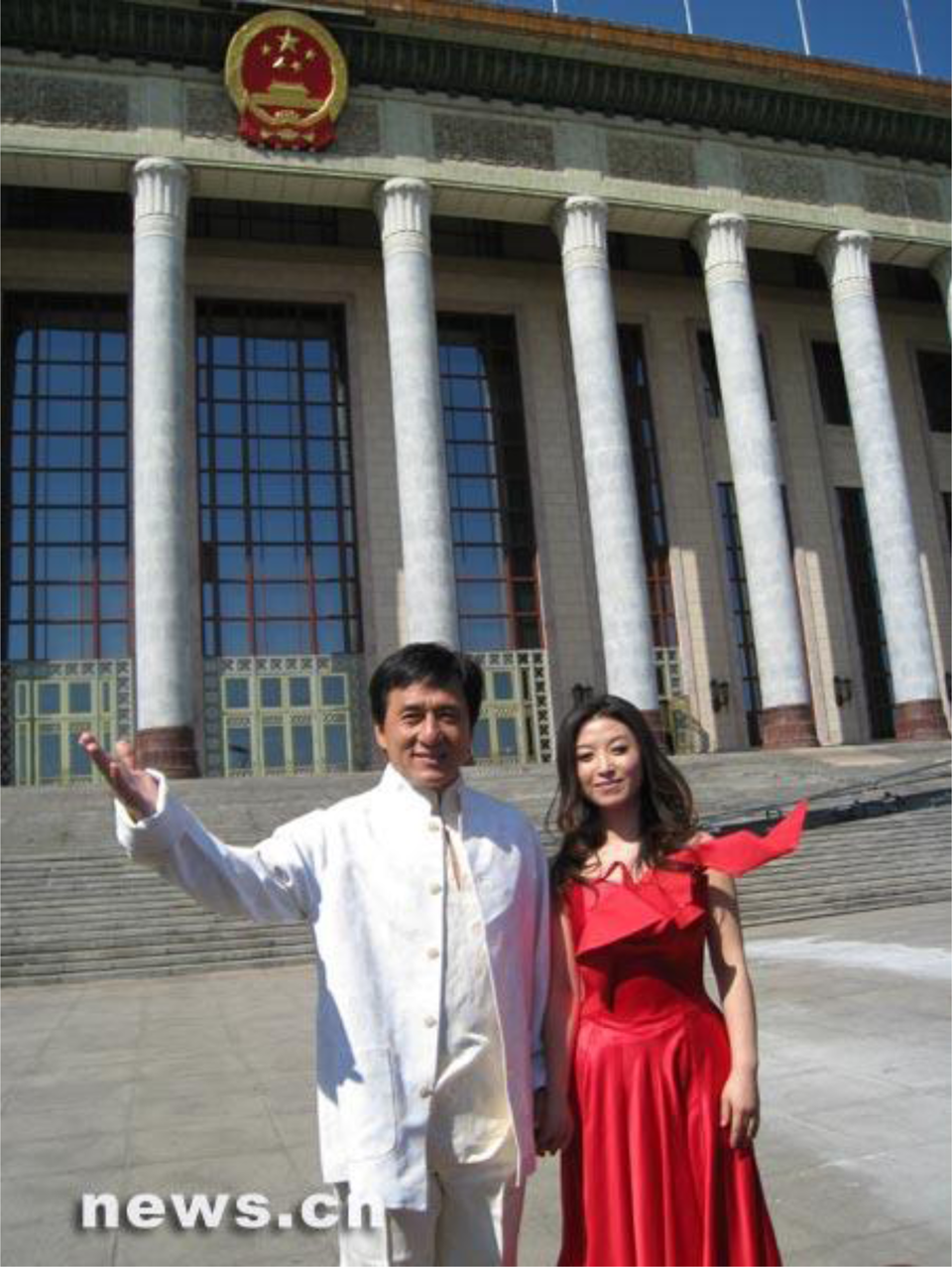
A scene from the official music video of “Nation-Family,” with Jackie Chan and Liu Yuan Yuan as singers (Xinhuanet 2009).
Meanwhile, the government deploys policy and regulatory instruments to guide the development of cultural product industries, including popular music. In 2006 it issued detailed plans to implement the goal of establishing an open, market-based cultural industry dominated by public enterprises and informed by Chinese culture (State Council 2006). The regime put forward the “cultural security” concept in 2007. According to Hu Jingtao, the chairman of the CCP at the time, Culture has become an increasingly important source of national cohesion and creative power, and has become an increasingly important factor in the competition for comprehensive national power; enriching spiritual and cultural life has become the earnest desire of our country's people. [We] must insist on the progressive orientation of socialist advanced culture, give rise to a new high tide in socialist cultural construction, stimulate the culturally creative vigor of the entire nation [minzu], [and] enhance the state's cultural soft power (quoted in Johnson 2012, p. 176).
In 2007 the government issued several ideological guidelines to regulate online video and audio content and required that new online video and audio sites must be either independently owned or majority-owned by the state (State Administration of Radio, Film and Television 2007). Before the regulation was issued, private ownership dominated Chinese Internet services; afterwards, existing private companies would not be affected but new start-ups would have to conform to the rule. Some policy measures involve direct interference with program content. As music is considered part of the publishing industry, music businesses must designate an editor to censor the content of music products (Fung 2006). According to Qian Wang (2012), the government requires that singing competition shows should have at least one third of the performance repertoire involving uplifting themes in order to stimulate positive emotions in the listener. In 2009 the government asked that the Super Girl show should include content to commemorate the 60th anniversary of the founding of the People's Republic of China (PRC). To accommodate this request, the program had all the contestants sing together “My Motherland” (wo de zuguo), a song from a 1956 film about the Korean War (Hunan TV 2009).
TV dramas are also important venues for the government to carry out its patriotic education (Liu 2010). TV drama series command high ratings among the Chinese audience, and dramas about wars and historical events in modern Chinese history are among the favorites. For example, during the first quarter of 2010 eight of the ten most watched TV dramas were broadcast on China Central Television (CCTV) channels, five of which dealt with China's revolutionary history (Charm Media Research 2010). China’s business community, including transnational corporations and joint ventures, often underwrote these popular dramas (Liu 2010). They also serve as effective vehicles to deliver both old and new patriotic songs.
The government encourages artists and enterprises to produce patriotic cultural products through annual awards and competitions. Starting in 1992, for example, the CCP's Propaganda Department has hosted the “Five-One Project” Award, which requires each of its provincial branches to select the best film, TV drama, radio drama, book, and song of patriotic themes that the branch has helped produce in the previous year, and then send the titles to Beijing as candidates for the award. The CCTV hosts an annual gala to showcase the awards and their winners. Not all of the 40 candidate songs from 2007 are about patriotism—some celebrate the Chinese people's improving life, and some advocate the spirit of optimism when an individual experiences hardship—nevertheless they all promote positive emotions (people.com.cn 2007). When associated with and promoted by well-known stars, some of these officially recognized “patriotic” songs became very popular. For example, the award-winning song in 2012, “Love is You and Me (ai shi ni wo),” which was published by Daolang (2006) several years earlier, has millions of hits on Chinese music websites. The song does not promote patriotism at all; it is more about how love can bring a person sunshine even in difficult times. A love song in essence, it does have the effect of pacifying disadvantaged Chinese whose frustration, if unchecked, can be a major threat to the regime's legitimacy. These examples indicate that the regime is sensitive to popular resistance to overt propaganda and is actively adjusting its definition of patriotism to guard its own legitimacy.
The government frequently sponsors concerts or TV programs of special themes to stage patriotic songs from the past. For example, the CCTV hosts a regular program Folk Songs of China (zhongguo minge), where artists of different ages and backgrounds perform many patriotic folk songs (CCTV 2014a). To celebrate the 60th anniversary of the PRC, it held a concert called Songs that Flew By in the Last 60 Years (gesheng piao guo 60 nian) (CCTV 2009a). The government provides generous subsidies for concerts and performances that offer cheap tickets to average-income Chinese, especially those living in small cities and in the countryside. There were 951,000 performances in the countryside in 2012, or 47.3% of the total performances in the country (China Association of Performing Arts 2013). It happens that patriotic and folk songs are more popular among the population living in small cities and the countryside (Liu 2010).
Finally, the government actively co-opts popular artists into its programs of patriotic education. The CCTV's annual Spring Festival Gala offers a good example. Even the former director of the CCTV admitted that the annual gala is an important propaganda tool packaged as entertainment (Peng 2013). For decades watching the show together has been a ritual for Chinese families to spend their Chinese New Year's eve, so it commands very high ratings, which makes it a big moneymaker for the CCTV. The advertising revenue for the four-hour gala amounted to 650 million yuan (about US$105 million) in 2010 (Jinghua Times 2010). To maintain its popularity, the program has replaced government-affiliated singers with the stars most talked about by the media and online communities at the time. For instance, all the songs from the 2014 gala were either patriotic songs or old Chinese folk songs, and their singers included Hong Kong and South Korean stars, peasant singers, and new winners of singing competitions (CCTV 2014b). Feng Xiaogang, the director of the 2014 gala, is a well-known film director responsible for many commercially successful Chinese films in recent years (Rosen 2012).
In summary, the Chinese government still holds several advantages in its patriotic education efforts. It controls television, a major component of the communications ISA and the primary entertainment platform to reach millions of people simultaneously, has access to enormous financial and organizational resources, and employs numerous artists within its system to write and sing patriotic songs. It has tightened its control of the Internet, another key component of the communications ISA, and deploys tools of the repressive state apparatus such as regulations and censorship whenever necessary to control ISAs. Meanwhile, considering social stability a paramount condition of maintaining its own rule, the CCP actively co-opts popular artists from outside the official system and adopts a flexible stance in its definition of patriotic songs to include those promoting social contentment and cohesiveness.
Unsurprisingly, artists outside the state system willingly participate in the regime's patriotic education initiatives. As interpellated subjects, they themselves may feel nostalgic about the period when they grew up, and some old patriotic songs may appeal to them aesthetically and match their singing style musically. More important, performances at major government-sponsored events offer them not only direct financial benefits, but also valuable opportunities of exposure to a large national audience. Even Jay Chou, the Taiwanese superstar, found government support critical to his commercial success in the mainland and, therefore, made frequent appearance on the CCTV's Spring Festival Galas (Wu, Borgerson, and Schroeder 2013). Similar reasons can also explain why numerous profit-driven singing competition TV shows can be platforms of patriotic education. Songs sung at these competitions cover a variety of styles and sources, ranging from Chinese folk ballads to Lady Gaga's hits, yet frequently some contestants choose to sing patriotic songs as a positioning strategy and as a way to garner audience votes. For example, the contestants of the 2006 Star Avenue (xingguang dadao) show included singers of diverse ages, occupations, ethnicities, and nationalities, and the second-place winner was a Libyan man who awed the audience with some old Chinese patriotic songs (CCTV 2006). Established singers from Greater China markets often serve as judges of such competitions as a way to boost their own publicity. This mix of known and unknown faces and the spontaneous, diverse nature of the shows make them effective venues to deliver patriotic songs.
Chinese Patriotic Songs Since 2000: The Unofficial Line
Official patriotic songs are written by a few government-affiliated songwriters and closely tied to the regime's propaganda rhetoric, aiming to legitimize the CCP's rule by promoting the idea of a “rich and strong China” (Brady 2010). Meanwhile, functioning outside the state system, many Chinese artists have produced their own patriotic songs. This section will study four cases—the Legend of Phoenix, Wang Feng, Wang Leehom, and Su Xing—to investigate how Chinese artists unaffiliated with the government promote nationalism through their songs and how the consuming audience responds to these songs.
Case study is an appropriate, effective research method for this project because the focus is on the relationship between contextual factors and the phenomenon being studied (Wu, Borgerson, and Schroeder 2013). Given the descriptive nature of this project, a multiple-case study design is employed (Mills, Eurepos, and Wiebe 2010), so that common patterns and variations between these cases can be fully interrogated to demonstrate how Althusser's theory applies to Chinese popular music. The four cases were selected because the artists all have patriotic songs in their repertoire yet they vary in their background, brand image, brand awareness, and target market, each representing a unique positioning strategy in the popular music market. The Legend of Phoenix appeals to a mass market of low economic and cultural capital, Wang Feng to the middle class, Wang Leehom to the Chinese global diaspora, and Su Xing to rebellious urban youth. Thus, the combination of these four cases provides a more thorough coverage of Chinese popular music and hence enhances the validity of the project.
The data for the project were collected over a period of two years from a variety of sources, most of which were in Chinese and accessed directly by the author, a native speaker of the language. The official websites, fan sites, audio recordings, music videos, performances on television programs by the artists, and consumers’ comments on the artists and their songs are treated as primary data. Such inclusiveness is necessary because popular music is a multi-textual, mediated cultural product (Hesmondhalgh and Negus 2000). Scholarly and journalistic works in both Chinese and English on the artists are treated as secondary data and mined to provide background information and to enrich the analysis.
Textual and semiotic analyses were conducted to process the data, which are considered the appropriate methods for interpretive studies of music (Yazicioglu 2010) and meaning-oriented marketing research (Mick et al. 2004), including studies of political ideology in marketing (Zhao and Belk 2008). These methods are also consistent with Althusser's structuralist theory (Glucksmann 1974). Several steps were taken to analyze the data. First, for each case, the author listened to each artist(s)’ albums, watched music videos, and read interviews and news coverage of the artist(s). Such immersion helped the author acquire a holistic picture of each artist(s)’ brand history, brand image, music style, target market, and marketing strategy. Next, songs of patriotic themes were identified and closely read to locate their codes and meanings, which in turn were linked to the overall brand image and marketing strategy. Third, the findings from the four cases were compared to identify their common patterns and variations. Finally, consumers’ comments on the artists and their songs were analyzed to evaluate the role of the consumer as the co-creator of meaning (Wu, Borgerson, and Schroeder 2013). In following these steps and resorting to thick description (Geertz 1973), this project aims to capture both the dominant patterns and the complexities that underline the relationship between Chinese popular music and the ideology of nationalism.
The Legend of Phoenix
The Legend of Phoenix (fenghuang chuanqi) is a vocal duet group: the female lead singer is ethnic Mongolian, and the male singer is Han Chinese (Peacock Records 2014). Without any formal musical training, the two singers started their singing career in a dance club in Shenzhen and acquired some fame in 2005 when they won the second place at the Star Avenue TV show. Promoting themselves online, they became increasingly famous over the years, and their performances appeared more than one hundred times on CCTV channels (Nanfang People 2014). The group can be heard on TV, radio, online as well as in public places such as stores and elevators (Peacock Records 2014). To increase its fan base and revenue, it continues with a strong online marketing program, but also promotes itself by advertising its songs as ringback music through mobile phone service companies. It even co-marketed one of its songs with a cellphone maker, who paid 220 million yuan (about US$ 35.5 million) to advertise the co-branded music cellphone together with the song. The co-marketing effort proved to be a big success and more than 10 million sets of the cellphone were sold in that year (Nanfang People 2014). It hired a professional choreographer to develop plaza dance routines for its songs in order to reach an even larger market (Chen 2012). The singers do not write their own songs, but hire songwriters. One of them, He Muyang, a CCP member and a free-lance songwriter, wrote several patriotic songs (Yang 2014) and aims to modernize Chinese folk melodies by mixing them with Western elements (Sohu Music 2013).
The group's songs combine traditional Chinese themes with cheerful lyrics and strong beats. Many of its songs are loud and very similar in melody and style. According to a detailed report by Nanfang People magazine (2014), some critics consider the group uncouth and untalented, while others praise it for delivering Chinese-style music enjoyed by the masses, which meets the CCP's criteria for “the people's arts.” Critics do agree that the group's success resides in its recipe of combining national cultural elements, humanistic themes, and Western music styles. It fills a large gap in the market by appealing to the segment of low income and/or low cultural capital, who do not like Western or Taiwanese popular music and who are equally resistant to the entertainment sent down by the government. The two singers are highly packaged to project a modern, urban yet conservative image (see Figure 3), and strict rules govern what the two singers can wear (Nanfang People 2014). Peacock Records, the publisher of the group's albums, has positioned some of its artists using the same strategy (2014). The record company, founded by a farmer who made his fortune in construction and who has no high school diploma or musical training, keeps a close eye on its bottom line and often chooses to compromise the quality of its albums in order to maximize its profits. To the founder of the record company, the target market of the Legend of Phoenix does not care that much about music quality (Nanfang People 2014).
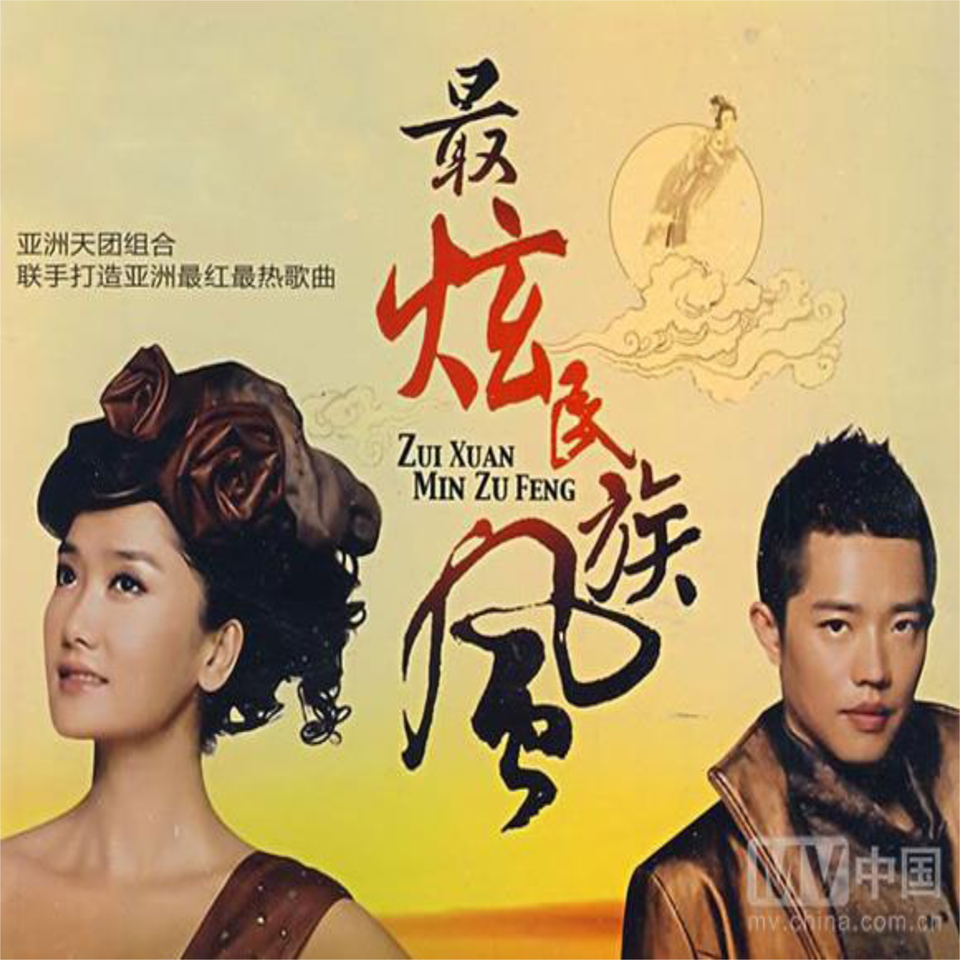
A promotion poster of the Legend of Phoenix’ song, “The Most Dazzling is the National Wind,” from MV China (2014).
A few songs by the Legend of Phoenix have a patriotic tone. An explicitly nationalistic song, “China, I Love You,” which is very similar to official patriotic songs in its style and lyrics, came out in 2009 to commemorate the 60th anniversary of the PRC, suggesting a calculated business move. However, the song did not gain much traction. Instead, its song, “The Most Dazzling is the National Wind (zui xuan minzu feng)” (Legend of Phoenix 2009), which came out in the same year, became a big hit and ranked the second most requested song of 2013 on the Internet (Nanfang People 2014). The song's lyrics are not well written and are full of ambiguities. For example, the Chinese phrase minzu can mean either national or ethnic. The music video of the song includes many cultural references such as Chinese painting, Chinese ethnic minorities, and local folk arts. So the main message of the song seems to be that Chinese national culture is the most exciting, and that the Chinese should freely express themselves as they like (Legend of Phoenix 2009). The song has a fast tempo and strong rhythm, easily taking the listener into a happy, dancing mood. Another song by the group, “Chinese Taste (zhongguo weidao),” celebrates China's rich food culture, focusing on how food brings happiness to people's life (Legend of Phoenix 2012).
It appears that the Legend of Phoenix has a big following in both China and overseas, although the two groups of listeners generate somewhat different discourses in their discussion of its song, “The Most Dazzling is the National Wind.” The domestic discussion exhibits a strong class consciousness, as many fans of the band proudly embrace the loudness and uncouthness of the song, preferring it to melancholy love songs favored by educated, refined professionals. Many listeners comment on how easy it is for the song to get stuck in one's head and how quickly it makes one feel high—one person jokes that the song deserves an excellent rating simply because it instills confidence and hope in people and make them love life, the people, and the party (douban.com 2014a). Some listeners defend the song as excellent Chinese national music and attack those who worship foreign singers (douban.com 2014a). In comparison, the discussion board of the song on youtube.com (2014a) offers many commentaries on the relationship between the mainland and Taiwan. In response to the criticism by a Taiwanese that mainland songs are all very vulgar, one listener writes that the song is written for ordinary folks such as migrant workers and hard-working farmers, who need their own pop music.
The Legend of Phoenix represents the mainland's participation in the “China Wind” phenomenon that first started in Taiwan and has swept Greater China in the last decade or so. “China Wind” songs tend to mobilize traditional Chinese legends and classics in their lyrics and juxtapose Chinese melodies or instruments with trendy global pop styles, particularly R&B and hip-hop (Chow and Kloet 2010). Over the years artists from Greater China markets have produced songs about a variety of Chinese cultural topics, including Chinese painting, calligraphy, tea, medicine, language, mountains, folk opera, terracotta soldiers, and food. If these songs can be considered as examples of surging cultural nationalism in China, their messages are often ambiguous and nostalgic in nature, offering themselves as a tentative gesture of resistance to the influence of a global consumer culture dominated by Western aesthetics. These songs avoid overt political messages and are ideologically safe. The best-known artist of the phenomenon is Jay Chou from Taiwan (Fung 2008; Wu, Borgerson, and Schroeder 2013). Delivering songs with easy-to-understand lyrics and in an unrestrained, primitive voice, the Legend of Phoenix contrasts itself with the soft, refined style of Taiwanese pop, thus intentionally appealing to mainlanders who find Taiwanese popular music too feminine and hard to understand. The fact that the female singer is Mongolian and some of the group's songs incorporate Mongolian musical elements echoes the tradition of Chinese official patriotic songs that co-opts ethnic minority singers and music. The group's upbeat style and cheerful lyrics fit the taste and mood of many ordinary Chinese who have witnessed rapid improvement of their material life.
Wang Feng
A rock songwriter and singer in his early 40s, Wang Feng was trained academically as a violinist at China's prestigious Central Conservatory of Music. He was assigned a job in the China Central Ballet Troupe Orchestra after graduation, but left later on to start his rock band (Ma 2011). He came to national fame in 2009 when two migrant workers were invited to sing his song, “In the Spring (chuntian li),” at the CCTV's Spring Festival Gala (2009b). He served as an advisor on the Voice of China TV show in 2012, where a candidate coached by him sang his song, “I Love You, China (wo ai ni, zhongguo),” to win the championship (Zhejiang TV 2012). During the 2013 and 2014 season he was a judge on the show (Zhejiang TV 2013, 2014). Today he is among the very few singers from the mainland who can attract thousands of fans to their concerts (China Association of Performing Arts 2012). Well-disciplined in daily life like a business executive, Wang projects an image of a serious intellectual rather than an unbridled rock star (Newsmaker 2013). Taking pride in the total quantity and the high quality of his songs, he defines his approach to songwriting as combining spiritual and emotional depth with smooth melody and simple music (Ma 2011), and he likes to use parallel structures and metaphors in his lyrics (Tao 2013).
Given that rock as a genre has been in decline in China since the late 1990s, many rock artists consider Wang Feng a traitor of rock because he is commercially very successful. He mingles with pop stars at government-sponsored concert venues, and some of his songs are co-opted by the government for the purpose of political propaganda (Ma 2011). To his critics, rock should exist as an alternative to both the state's propaganda music and commercial popular music, so that the genre shoulders the task of resisting both authoritarianism and consumerism (Zhang 2014). However, Wang Feng insists that there is no contradiction between rock music and commercial success and that the arts are in fact high-class business enterprises (X Wang 2011). He also believes that rock should not be just about releasing anger, but also should deal with all kinds of emotions, including happiness and love. He is outraged by artists who envy his success and point fingers at him (Tao 2013).
Citing Bob Dylan as his idol, Wang Feng frequently tackles spiritual and social issues in his songs. Inspired by Dylan's “Blowin’ in the Wind,” he produced an album entitled Belief is Flying in the Wind (xinyang zai kongzhong piaoyang) in 2009 (Wang 2009). A song from the album, “Lord-less City (wuzhu zhi cheng),” includes phrases such as “swindlers and fortune-tellers occupy the big building in the east; in the safe are hidden donated funds, passports and drugs; white-collar, blue-collar and black collars all crowd the bank.” The music video of his “Existence” is in black and white and starts with a homeless person searching for food in a garbage can while the voice-over recounts news headlines about mine accidents, food contamination, water pollution, and illegal selling of infant data. His songs are full of dark imagery and depressing words, but also struggle to overcome the darkness by talking about hope, light, and faith. He envisions an ideal society as one where everyone is relatively content with his/her life and where everyone respects others and is willing to help others (Tao 2013). His song, “Our Dream (women de meng)” (Wang 2005a) articulates this humanistic idea and was selected as one of the top ten Golden Songs of 2008 Beijing Olympic Games. To his critics, however, this serves as an example of his sell-out to authoritarianism (Ma 2011). In explaining the title of his 2011 album, Life Asks for Nothing (sheng wu suo qiu), he points out that both the very rich and the very poor in China already live in the state of “asking for nothing” because they have few wants. Yet the most tragic group is the huge middle classes who have many desires and complain about many things (Wang 2011). Wang Feng intentionally targets this growing middle class by spurring them to search for faith and meaning in life to combat the sense of nihilism and insecurity (Phoenix Entertainment 2010).
Given his strong disappointment with China's social reality, Wang Feng's patriotic song, “I Love You, China,” is significantly different from official patriotic songs in its tone (Wang 2005b). The song still deploys the “mother” trope: when I am in pain, confused, lonely, hapless, and lost, you—China—is like a mother there to hold me, comfort me, support me, and give me courage. The refrain goes: “I love you, China, dear mother; I cry for you, I am also proud of you.” This song exemplifies the “bitter love” complex of many Chinese, who are frustrated by China's economic, social, and political reality, but stubbornly hold on to a primordial form of nationalism. The same complex is also evident in the songs of other Chinese singers (Baranovitch 2003). In a China with a spiritual vacuum, this primordial nationalism has become a potent faith for many Chinese to fall back upon. The song's title is identical to an official patriotic song from the 1980s, which is in bel canto style and has a strong sublime message. Thus, by usurping the upbeat official song and by adopting a bitter tone, Wang's song presents a covert, ambivalent form of resistance to official nationalism, reflecting the dissatisfaction of China's middle-class with its position in the social hierarchy (Zhang 2008). For this reason, the song has been very popular among the Chinese. In questioning greed, selfishness, and inequality, Wang Feng also provides a critique of the government's economic policy. On the other hand, by evoking nationalistic sentiment, his song automatically becomes an accomplice of the government's propaganda machine. This is why he was invited to sing the song at the CCTV's 2013 Spring Festival Gala—again after the song became popular due to publicity generated by the Voice of China show (Zhengjiang TV 2012).
The listeners of Wang Feng's “I Love You, China” frequently describe a strong emotional experience when they listen to the song, and some talk about shedding tears during their listening. A comment by a blogger is representative: Two songs of the same title: those bel canto performers sing like reciting propaganda textbooks, while Wang Feng uses true emotions to move the listener—his voice comes around you, not brainwashing down from the above. When listening to this song, I sincerely wish that our motherland becomes stronger and better: who doesn’t have such a wish? (Kaka Featherless 2014).
Some listeners clarify which China they love: the 5000-year old one, not the 60-year old; some joke that the song can describe either the motherland or a lover, both being the softest part in one's heart; and some question whether Wang loves the country or the Party and whether he expresses patriotism or flirts with the government (douban.com 2014b). A music video of the song on youtube.com (2014b) was produced by Chinese students studying in the U.S. and features images of red-flag-waving Chinese on the streets of California. The Chinese diaspora community from different countries join the discussion of the music video and debate what it means to be patriotic, whether mainland China is getting better, and how China should progress toward democracy.
Wang Leehom
A dual citizen of the U.S. and Taiwan, Wang Leehom is a songwriter, singer, and actor in his late 30s. He was born in the U.S., went to study Jazz at Williams College and then to Berkelee College of Music for a master's degree (Small 2009). Although he did not learn Chinese until he was in college, he became a teen pop idol at 19 in Taiwan and has since released 15 albums (Wang 2014). He plays 15 different instruments, both Western and Chinese, and his music blends Chinese traditional cultural elements with hip-hop and R&B (Yu 2013). According to his Facebook profile, he toured in over 100 cities worldwide and has over 34 million followers on Sina Weibo, the leading micro-blogging platform in China (Wang 2014). Greater China markets and especially the mainland are his primary target, and to date he has not sold any album in English (CNN 2006).
As a physically attractive Chinese-American with a carefully crafted clean, sincere, hard-working image (Grace Wang 2012), Wang Leehom appeals to Chinese urban youth who aspire for a global cosmopolitan lifestyle. For this reason, he has been the spokesperson for numerous global and Chinese brands over the years (Makinen 2014; Small 2009). While most of his songs are love songs and he tries to stay out of politically controversial issues, he has frequently performed at official venues and participated in the government's propaganda initiatives. For example, he was a torchbearer for the 2008 Beijing Olympic Games, wrote songs for the event, and performed at the games’ closing ceremony. He performed at the CCTV Spring Festival Gala three years in a row from 2011 to 2013 and contributed to the production of several official patriotic songs.
Some of Wang Leehom's love songs belong to the “China Wind” in style, even though he insists on describing his music by the controversial phrase, “chinked-out.” He explains that the “chinked out” style is a school of hip hop, which incorporates Chinese elements and sounds that are beautiful and original to Chinese culture and that invigorate hip hop music, so that the derogatory word “chink” can be made cool (CNN 2006). For example, the music video of his song, “Heroes of the Earth (gaishi yingxiong)” (Wang 2005), juxtaposes symbols of American urban youth culture such as hoodies, break dance, and run-down buildings with Chinese cultural symbols such as Peking opera singers, dancing lions, and dragon-shaped neon lights. In the middle of a break dance contest between a white girl and a black man, the singer repeats the refrain: “Tonight my goal is clear: to bring the chink-out to the whole world. With Peking Opera and Kunqu added, hip-hop enters a new stage, new breakthrough, new style, and a new hero of the earth.” Huang (2010) suggests that Wang is eager to prove his Chineseness through deliberate and at times superficial use of traditional Chinese instruments exactly because of his lack of true connection to Chinese culture. Yet, the fragmented nature of Chinese cultural elements in Wang Leehom's music appeals to many Chinese diaspora whose connection to Chinese culture is confined to consumption of Chinese cultural fragments.
Wang Leehom wrote some explicitly nationalistic songs. One example is “Long Live Chinese People (Huaren Wansui),” written for the 2008 Olympic Games (Wang 2007). Mixing English with Chinese in its lyrics, the song talks about Chinese culture being the singer's pride and lists globally well-known contemporary Chinese in its ending, including Lang Lang, Jackie Chan, and Yo-yo Ma. He chose to use the term huaren rather than zhongguo ren in this song: while both mean Chinese in English, the former is much broader in its coverage and refers to all the people of Chinese descent regardless of their locality and citizenship, while the latter denotes a strong political identification and is closely associated with mainland China. By using huaren instead of zhongguo ren, Wang Leehom is marketing himself to a global network of Chinese diaspora marked by transnational mobility yet united by ancestry (Grace Wang 2012).
Wang Leehom (2000) adapted a classic Chinese patriotic song, “Descendants of the Dragon.” The song has a politically storied history. It was written by Hou Dejian, a Taiwan artist, and first sung by Lee Jianfu, an uncle of Wang Leehom, but it was banned in Taiwan for a period after Hou sought political asylum in the mainland (Jiang 2011). Wang Leehom first encountered the song in 1997 when his uncle sang to him at home (Makinen 2014). He changed the style and lyrics of the song in 2000 and has since made it a major piece of his repertoire. In the song he raps: “On a quiet night many years ago, my family arrived in New York; wild fire cannot burn out, day and night, the longing in our heart for home; I grew up on other people's land and became a descendant of the dragon.” Thus, by incorporating his family's migration experience, this new version specifically targets Chinese diaspora through the discourse of ethnic descent (Grace Wang 2012).
Wang Leehom's version of “Descendants of the Dragon” appears to be more popular overseas than in China. A music video of the song on youtube.com (2014c) has almost 400,000 views, and there are many English comments on its discussion board. One person writes in English: It's so wonderful to hear this new version of the song. This song was a big hit when it came out in the late 70's. It was very emotional being a Chinese and hear this beautiful lyrics. Now after some 30 years, this song is being revived with new energy and with a very fashionable touch. So the younger generation can enjoy it as much as we did those days… being the descendant of the Dragon wherever you are. Great work, BRAVO!!
Such strong pride in one's ethnic heritage permeates many comments, while the discussion also debates the connotation of Chineseness and the differences between the mainland and Taiwan. Hence, the song both unites and divides Chinese diaspora. On the mainland, music videos of the song are not very popular except in the case of his performance of the song accompanied by the renowned pianist, Li Yundi, at the 2012 CCTV Spring Festival Gala—on this occasion he did not include the part about his immigrant experience in the U.S. Positive comments on the video are usually about how cool and handsome the singer is, while negative ones talk about how badly he sings, how he has ruined the original song, and how he lacks true patriotism—there are more negative than positive comments (youku.com 2014a). One post on Sina.com.cn (2014) suggests that he went to New York with his family and now comes back to make money.
Wang Leehom's declared mission in life is to bring Chinese music and culture to an English-speaking audience (Wang 2014), which closely echoes the Chinese government's current cultural policy. However, his target market is essentially Chinese. His popularity in Greater Chinese markets is largely due to his Chinese-American status, which, together with his hip-hop music remix and physical attractiveness, makes him an accessible symbol of modernity and mobility for Chinese youth. In targeting Chinese in different international markets to maximize financial gains, he steers clear of politically sensitive topics and collaborates closely with both corporations and governments (Grace Wang 2012), who value him for the same reason: his ability to reach a global community of Chinese diaspora. For the Chinese government, Wang Leehom and his ethnic nationalism is also valuable to its domestic campaign for legitimacy because endorsement by overseas Chinese from their perceived position of privilege carries more credibility with the Chinese people.
Su Xing
Su Xing, who also goes by Allen Su, is a thirty-year-old singer and songwriter with a degree from SAE College in Sydney (Su 2014a). Like many other aspiring artists, he lives in Beijing, the center of China's popular music industry, trying to make it in the music scene while managing a bar on the side to subsidize his band. He first gained media notice after he won the second place of the 2007 Happy Male Voice singing competition (Hunan TV 2007). He was initially packaged as a good-looking youth idol singing sweet love songs. He did a few ads in 2008 and 2009 when he was at the height of his fame and participated in a few TV programs over the years. He also did his share singing and writing patriotic songs. His reinterpretation of “Nan Ni Wan,” a revolutionary song from the Yan’an period, continues to be among his most popular songs. He wrote “China China” in 2009, which is very similar to official patriotic songs and includes lyrics such as “Stand up, hold head high, the world is under our feet, say China China” (Su 2009). Having published four albums since 2007, he has almost three million followers on his social media site. He characterizes his music as R&B, hip hop, and rap, and his music idol is Craig David (Su 2014a). His most recent songs mix Chinese with English.
What is interesting about Su's case is his sudden awakening as a singer and songwriter since 2011—coincidentally his Chinese name literally means “awakening.” In 2011 he produced a song named “Split (fenlie),” which uses two voices, an older voice representing the establishment of the popular music industry and a younger voice his conscience or true self. The establishment tells him that the market does not care whether he wants to express his talent and ideas, and that sales of albums are everything; so, to make it, he must watch his words and acts, give up his independent thinking, go with the flow, and continue with singing love songs. His conscience tells him that he should be himself and make the kind of music he enjoys—to be a free, independent person instead of pretending to be someone else just for the sake of making money (Su 2011). In 2012 he produced another song, “A New World (xin shijie),” which provides a strong critique on the many dark sides of Chinese society and asks people to search inside their hearts for a new world where love and kindness prevail (Su 2012).
Su Xing ended his contract with Tianyu, a major Chinese talent management company, and became independent in 2013 (Xiao 2014). He also had a physical make-over, replacing long hair with buzz cut, which made him look bold and masculine. His 2014 rap song, “Beijing City,” satirizes his experience in Beijing's music circle, where money, power, fame, and sex mingle and trade with each other. While Beijing is a city that the singer loves and hates, the song nevertheless ends in a positive note: there are many people who are not swayed by money or power but persistently fighting for their ideals (Su 2014b).
On July 18, 2014 Su Xing (2014c) published his song “Foreign Goods (yanghuo)” online. Still in rap style and with Chinese mixed with English, the song first satirizes Chinese who lack national pride and blindly worship foreign consumer brands, and then takes a shot at the Chinese entertainment industry in general and criticizes Chinese who slavishly idolize artists from overseas. To this songwriter, artists from overseas—including those from Hong Kong and Taiwan—are in China only for the money. The Chinese have been trapped and deceived because of their inferiority complex. The song ends with a call on the Chinese to combat their own prejudice and inferiority. This song contains a strong nationalistic sentiment, but, unlike many other Chinese patriotic songs, the sentiment it embraces is not about loving one's country or heritage, but about resisting foreign influence and especially foreign consumer products. Contrary to ethnic nationalism which advocates the unity of all the Chinese worldwide, this song actually draws a line between the people of mainland China and Chinese diaspora and questions the latter's motives in coming to China. For these reasons, the song subverts official policies that advocate openness to the outside world and unity among ethnic Chinese. With its sharp satire, occasional curse words, and irreverent style (see Figure 4), the song is positioned to appeal to a niche market of rebellious urban young males, who find rap, a foreign music genre, the best vehicle to voice their rebellion. Compared to Wang Leehom's rap songs, this song does not include any Chinese cultural elements and is a more authentic imitation of American rap style, yet its sentiment is also authentically Chinese.
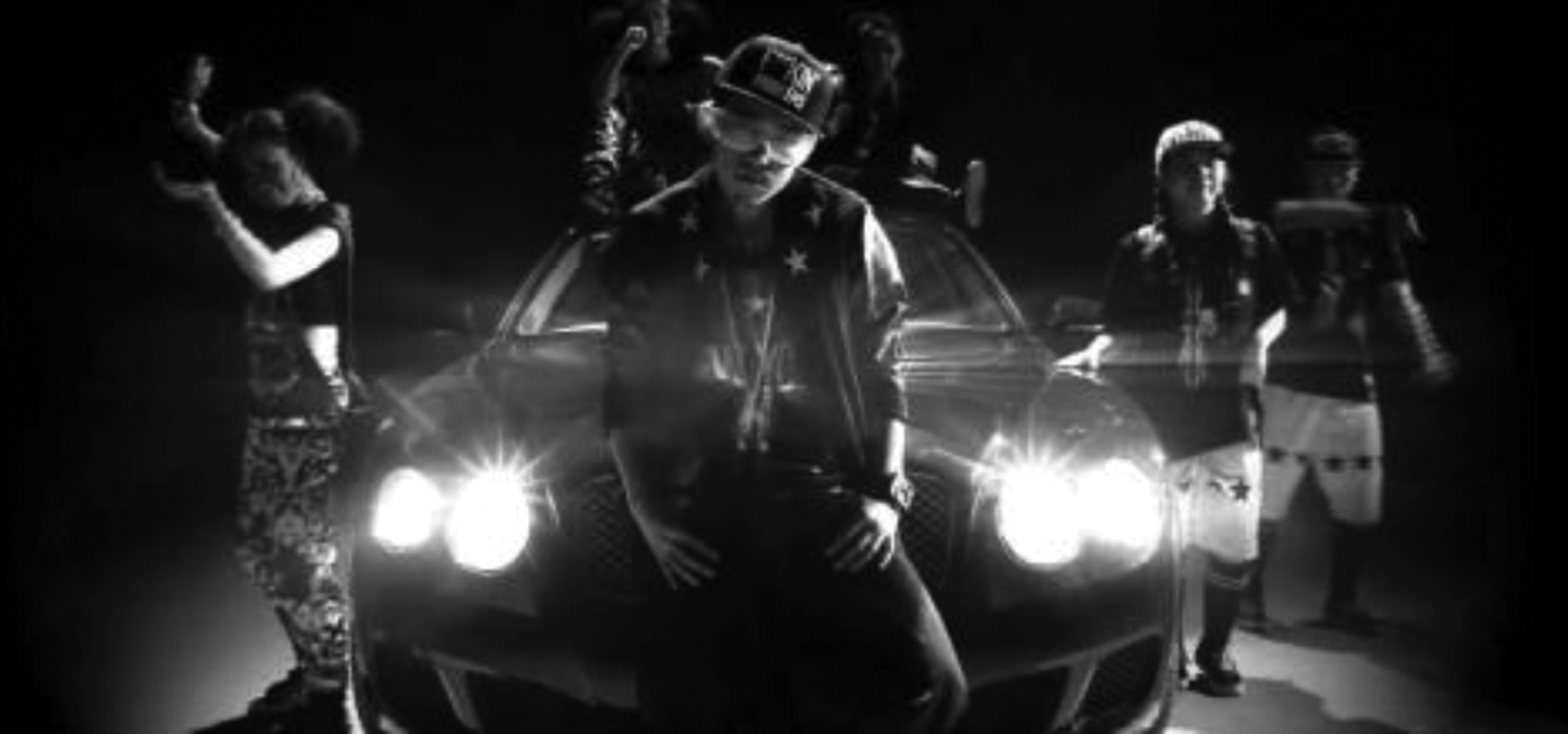
A scene from Su Xing's (2014c) music video of “Foreign Goods.”
“Foreign Goods” receives little attention on youtube.com. In China the song and the singer have a few million loyal followers, who admire him for being independent, unique, and outspoken. Many listeners fully endorse the song's view that the Chinese should stop worshiping foreign things. Some even relay information on how foreign brands charge Chinese consumers unfairly high prices and advocate for boycotting foreign products, and some challenge Su for wearing foreign brands and using English in his songs, calling him a hypocrite (qq.com 2014). Negative comments of the song are mostly about the low quality of the music video, the song's long, unrefined lyrics, and, for fans who miss his love songs and who do not appreciate rap, the loudness and angry tone of the song (youku.com 2014b).
In shifting from a packaged sweet youth idol to an independent artist offering sharp social commentary, Su Xing has experienced collaboration, frustration, and finally disillusion with the mainstream popular music industry. Therefore, his dramatic transformation is motivated by both genuine personal conviction and economic necessity. When a profitable mass market is out of reach, a niche market becomes both desirable and sustainable. In appealing to urban youth similarly frustrated in their lives, Su exerts his influence on a segment that has been a main force of China's grassroots nationalism (Zhao 2004).
In summary, the artists in the four cases have different backgrounds, styles, positioning strategies, and degrees of success. As subjects of nationalism, they incorporate different brands of nationalism into their music and readily collaborate with the state when necessary and profitable. Because of their varied target markets, their patriotic songs are able to reach a larger, more diverse population, subjecting their targets to the process of interpellation. However, these artists also actively negotiate the meaning of nationalism according to their marketing strategy. Meanwhile, as evidenced by consumer comments on fan sites and social media, the consumer also assumes the dual role of subject and agent in the promotion and consumption of nationalism.
Conclusion
An integral part of China's modern history, nationalism continuously interpellates Chinese intellectuals and populace as subjects through the production and consumption of patriotic songs. Between 1949 and 2000, the process of such interpellation was closely managed by the state and followed a top-down approach. After 2000, due to the marketization of Chinese popular music, the process has become more discursive and now involves ongoing collaboration and negotiation among the government, the artist, and the consumer. Because of the mediating effect of the market, patriotic education through music continues to claim its subjects in China. This conclusion is consistent with Stockmann's (2013) finding that marketized media are perceived as more trustworthy in the eyes of audiences, which helps soften the coerciveness of Chinese authoritarianism. Seen in this light, the market in itself does not possess the will or capability to resist authoritarianism; rather, it perpetuates and propels the self-feeding cycle of interpellation by Chinese nationalism.
The marketing of patriotic songs in China illustrates the dialectic relationship between the global consumer culture and local culture. In the process of globalization, cultural elements experience a dual process of deterritorialization and reterritorialization when they are commodified and subjected to the market mechanism and the profit imperative (McGrath 2008, p. 11). As Yazicioglu's (2010) study demonstrates, deterritorialized global rock culture is picked up and reproduced by Turkish artists in the local context through an appropriation process. The same process occurs in China in the case of unofficial patriotic songs, which appropriate global music genres such as rock, rap, and R&B and infuse them with local cultural elements, sensitivities, and emotions. The Western genres are symbols of modernity and cosmopolitanism, but tamed to serve both the market and Chinese nationalism. In this light, a specific music genre or cultural product form does not have an intrinsic quality of resistance to the dominant ideology, as it can be mobilized for diverse and sometimes contradictory agendas. The Chinese case further illustrates that the reterritorialization of the global consumer culture usually requires intellectuals and elites to serve as intermediaries between the global and the local, who are sometimes engaged in the paradoxical act of appropriating elements from global consumerism to resist Western cultural imperialism (Smith 2001). Market factors frequently determine which elements of the global consumer culture are selected and how they are reterritorialized.
This study validates the potency of Althusser's theory in analyzing the ideological trappings of consumer cultural products. The theory allows the discussion of structure and agency under one umbrella and hence provides a holistic framework to interrogate how ideological production and consumption are determined by both structure and agency. Althusser is criticized for being “unclear about the status of the economy” in his theory (Glucksmann 1974, p. 129). The findings of this project help resolve this issue by identifying the market as the key platform where the polity and the economy interact and negotiate, and where the producer and the consumer meet and collaborate in their dual role of subject and agent. Althusser argues that education functions as the key ISA in our contemporary society (1971). Given the findings of this project, it is necessary to elevate the market into a key force in shaping the process of ideological interpellation.
Surging nationalism is a global phenomenon and a direct reaction to globalization, which engenders large-scale migrations, homeless subjects, and subsequently earnest searches for a sense of rootedness (Papastergiadis 2000). As this article demonstrates, nationalist movements can be an on-going, discursive cultural project that involves the voluntary participation of the state, the marketer, and the consumer. Nationalism is an appealing ideology for many of its subjects because “its very vagueness and lack of programmatic content gives it a potentially universal support” (Hobsbawn 1992, p. 176). In mobilizing raw emotions, it is an irrational force capable of violence and destruction but incapable of providing real answers to issues such as social justice and equity (Smith 2001). On the contrary, in replacing class and other social identities with an all-consuming national consciousness, it can serve as a handy hegemonic tool of the state to diffuse class tensions. Given that nationalism and capitalism have been the two dominant forces that shape our modern society (Smith 1998), marketing scholars should devote more attention to how the two interact in local markets.
Footnotes
Acknowledgments
The author thanks the editor and three anonymous reviewers for their constructive comments.
Declaration of Conflicting Interest
The author(s) declared no conflicts of interest with respect to the authorship and/or publication of this article.
Funding
The author(s) received no financial support for the research, authorship, and/or publication of this article.