




Abstract
This article details and justifies Grounded Theory as a methodology for researching into significant and emerging macromarketing phenomena, through an exploration of its use to investigate the marketing dynamics of the Fairtrade Towns Movement. The paper describes the research journey undertaken from the initial consideration of Fairtrade Towns as an under-researched and challenging topic, through to the final production of new theory rooted in the reality of the research context. The philosophy and systematic processes that underpin Grounded Theory are explained, along with examples of how the key processes of data collection and analysis were undertaken. The insights generated in this paper demonstrate Grounded Theory as a suitable, yet underused, research approach available to macromarketers. It is revealed as a methodology that can bring rigor and confidence to research into emerging macromarketing themes, and the paper concludes by considering its potential for application in key spheres for future research.
Introduction: Grounded Theory, Underused in Macromarketing?
Grounded Theory (GT), developed in 1967 by Barney Glaser and Anselm Strauss, is a widely used qualitative research method (Bryant and Charmaz 2007; Strauss and Corbin 1998). Although initially intended specifically for sociologists, it is employed across various disciplines and is particularly strongly represented in health and nursing studies (e.g. Montgomery and Bailey 2007; Robrecht 1995) and psychology, and eventually became used in management fields (Goulding 1998). A central focus of GT is that it seeks to generate theory and ideas (Glaser 1978) from data that is “systematically collected and analyzed throughout the research process” (Strauss and Corbin 1998, p. 12). This interplay between data and analysis is central to GT (Charmaz 2006; Glaser 1978), making it particularly valuable in emerging areas of study that present limited opportunities to start from a given theoretical perspective. Strauss and Corbin (1998) argue that because GT formulates theory directly from the research data, it offers clarity of insight into new and only partially understood phenomena.
GT was originally developed as a specific and detailed methodology involving both an underlying philosophy and a distinct set of activities. How much of the philosophy and how many of the activities a given researcher applies, varies in practice. Some studies represent a formal or more textbook application of GT, while others only adopt certain elements to inform and enrich other types of enquiry. In this study our interest is in its application as a complete and coherent methodology.
Both in the broad field of marketing (Hunt 1994), and specifically in macromarketing (Dholakia and Nason 1984), discussions have addressed the need to embrace a wider range of methods and to generate new theories. GT appears to have the potential to address such a need. However, Goulding (1998) argues that in marketing scholarship GT is both misunderstood (particularly in terms of being considered atheoretical) and underused compared to other interpretive methodologies such as phenomenology, hermeneutics, and semiotics. The claim of underuse also appears to apply within macromarketing, and can be examined by a search for references to the methodology in past issues of the Journal of Macromarketing. Of the eleven articles referring to it, most do so only implicitly through a reference to a GT based source when discussing phenomenological research in general, with one (Harker and Harker 2000) describing the GT approach as just guiding the data analysis in the study. None approach a full and formal application of the methodology. This underuse is curious given the apparent suitability of GT for macromarketing topics, which concern the intersections among society and marketing and inevitably involve complex stakeholder relationships and the need to consider many variables simultaneously. This makes the type of model building and testing so popular within micromarketing research less useful in such contexts. Valor (2007), for example, in justifying the use of GT in studying consumer responses to ethical clothes trading, argues that the additional layer of complexity introduced by ethical dimensions of consumer behavior, plus the tendency of quantitative studies in the field to provide contradictory results, makes GT an ideal approach for understanding what is actually happening in such a research context.
Here, we demonstrate the suitability and potential of GT in macromarketing research contexts by reporting and discussing a research effort that applied GT as closely as possible to the spirit of Glaser and Strauss’s original vision, subject to circumstances and the specific procedural demands of undertaking doctoral research.
Study Context - Fairtrade Towns (FTT)
Fairtrade has been a key marketing success story of recent decades. Detailed analysis of its growth and the factors behind it have been provided by a number of scholars (see, e.g. Doherty, Davies, and Tranchell 2013; Moore, Gibbon, and Slack 2006; Nicholls and Opal 2005). Such contributions cover a wide range of micromarketing and macromarketing issues from the influence of producer branding and packaging strategies (Davies, Doherty, and Knox 2009), through to support for Fairtrade from the Vatican (Doran and Natale 2011). Since we focus on GT as a methodology rather than the phenomenon to which it has been applied, it suffices here to outline briefly the nature of Fairtrade and its relationship to macromarketing.
Fairtrade aims to address the limitations of neo-liberalism by developing a trading system that understands and supplies economic security, social welfare, and environmental knowledge to producer communities normally exploited through the practices of free trade. Retailers and consumers alike in the UK and elsewhere have embraced this cause (Doherty, Davies, and Tranchell 2013; Golding and Peattie 2005). The Fairtrade Movement progressed relatively rapidly from its early years as a fringe activity involving inferior products marketed to highly motivated consumers, often via obscure channels, on a solidarity basis (Golding and Peattie 2005). In 2003 UK sales were valued at less than £100 million, but in the past decade Fairtrade has become part of the market offerings of global brands such as Starbucks, Nestlé, and Cadburys (Doherty, Davies, and Tranchell 2013), achieving UK sales valued at £1.78 billion in 2013 (Fairtrade Facts and Figures 2014). It is also undeniably a macromarketing success story. Moore, Gibbon, and Slack (2006) theoretically frame the mainstreaming of Fairtrade as such, suggesting that macromarketing literature, with its emphasis on sustainable consumption, ecocentrism and a consequent need to change the dominant social paradigm, provides a sound framework for analyzing empirical studies of Fairtrade marketing and the mainstreaming of the movement.
Fairtrade strongly reflects each of Hunt’s (1981) core dimensions of macromarketing. It represents a
The strength of these linkages means that Fairtrade marketing scholarship could be viewed as inherently macromarketing in nature, and some of it has a strong macromarketing perspective without explicitly positioning itself as such (e.g. Jaffee 2007; Witkowski 2005). In relation to the Journal of Macromarketing, however, Fairtrade remains somewhat under-represented, with only three previous articles explicitly focused on it (Beji-Becheur, Pedregal, and Ozcaglar-Toulouse 2008; Geiger-Oneto and Arnould 2011; Golding 2009). Fairtrade research concerning macro issues tends to focus on producer communities, either in terms of marketing (Geiger-Oneto and Arnould 2011) or of economics and governance (Raynolds and Taylor 2004; Smith 2009). Consumption related research tends to focus on individual consumers and their response to Fairtrade offerings, and is dominated by micro-marketing perspectives, such as consumer willingness to pay any price premium involved (Wright and Heaton 2006), albeit in the context of ultimately addressing a set of macromarketing issues, such as social and economic justice for producers as market participants (Geiger-Oneto and Arnould 2011).
The Fairtrade Movement is over 40 years old. However, Fairtrade Towns (FTTs) only began in September 2001 with the accreditation of Garstang in the UK as the world’s first FTT. Within a year FTTs were being described as one of Britain’s most active grassroots movements (Kelly 2008), and by November 2013 the UK had 573 accredited FTTs (Fairtrade Towns 2013) that adhere to, and are audited upon, the following five requirements: The local council must pass a resolution supporting Fairtrade, and serve Fairtrade coffee and tea at its meetings and in offices and canteens. A range of Fairtrade products must be readily available in the town’s or city’s shops and served in local cafés and catering establishments (targets are set in relation to population). Fairtrade products must be used by a number of local work places (estate agents, hairdressers etc) and community organizations (churches, schools etc). The council must attract popular support for the campaign. A local Fairtrade steering group must be convened to ensure continued commitment to Fairtrade status (Fairtrade Towns 2013).
This accreditation ensures that the promotion of Fairtrade consumption through the mechanism of a Fairtrade Town represents a complex and multi-stakeholder marketing phenomenon. Despite their rapid growth, FTTs’ role in promoting and developing Fairtrade consumption remains under-researched. Although Nicholls and Opal (2005) provide a conceptual exploration of their nature, role, and potential value, empirical research is lacking. FTTs are also interesting from a macromarketing perspective because they involve commercial marketing and consumption operating at the level of a geographical community. Community-based consumption interests macromarketers as one level of study of marketing systems (Dholakia and Nason 1984; Layton and Grossbart 2006). However, although macromarketing research has investigated issues, such as community-based social marketing, or marketing to communities of interest, community-based marketing processes of the sort apparent within FTTs represent an under-researched topic within both macromarketing and micromarketing scholarship. Layton and Grossbart (2006) note several examples of local, market-based macromarketing studies, but they are few compared to studies of national markets or industry-wide systems. FTTs take us beyond micromarketing perspectives, and the conventional range of market actors, to include as active participants a range of stakeholders more normally thought of as elements of the marketing environment (e.g. churches or educational institutions).
This article reflects upon the methodology that underpinned a PhD research journey, embarked upon to understand the FTTs Movement from a marketing perspective, and undertaken at a time when little empirical research or data existed. Most available information derived from event promotion and public relations campaigns from the Fairtrade Foundation and early Fairtrade Town groups. An initial literature search revealed only two academic papers (Alexander and Nicholls 2006; Malpass et al. 2007), two book chapters (Barnett et al. 2011; Nicholls and Opal 2005), two consultation documents (Around 2006; Taplin 2009), and various newspaper / general publications (e.g. The Guardian 2007, 2008), specifically dedicated to FTTs. These publications generated empirical findings and conceptual renderings that viewed the Movement in several macromarketing contexts included mainstreaming alternative consumption, consumer-producer relationships and engagement, the dynamics of social movements, alliances and networks, globalized responsibility and ethical consumption.
FTTs were clearly an unsuitable subject for research using deductive methodologies, as there could be little confidence in the results of any hypothesis testing or deductions derived from such a limited knowledge base of mostly non-empirical findings. Nicholls and Opal (2005) identify FTTs as a distinctive form of marketing network, but without exploring how such networks operate. We addressed this research gap by seeking to explore the marketing dynamics of FTTs and their functioning. Given the absence of pre-existing “rich data” (Strauss and Corbin 1998) and empirical knowledge, GT was chosen as a suitable methodology. We followed the interpretivist belief that empirical knowledge from those directly involved held the epistemological key to understanding the FTTs Movement’s marketing dynamics. Therefore, our aim was to explore the social world of the Movement by exploring the activities and actions of FTT group members within their town to develop rich data from and about the key stakeholders – activists, schools, churches, public services, retailers and community groups – involved in its construction. This was achieved by capturing qualitative data from these insiders’ social situations, views, motives, interactions, interpretations and everyday actions (Blaikie 2000).
The insights generated shed light on FTTs as both a macromarketing success story and as a particular application of place-based marketing, and also on how they operate as marketing networks. However, those findings are not the focus here where we concentrates on the insights the research yielded about the suitability of GT’s theoretical perspective and methodological processes as an approach to understanding macromarketing phenomena. Although some of the findings about FTTs are inevitably highlighted by a discussion of the methodology, the nature, application and value of GT for macromarketing research are the focus, not the findings of the study itself or FTTs as a context.
GT: Context to Application
GT has been the focus of some controversy, particularly in relation to the analysis of data, resulting in an infamous split between the technique’s founders (Goulding 2002). This led to two schools of GT research: one associated with the early work of Glaser and Strauss (1967) and further developed by Glaser (1978, 1998) and therefore often termed “Glaserian” or “formal” and, alternatively, the “Straussian” approach, elaborated in the ideas of Strauss and Corbin (1998) who move GT away from a very exclusive focus on the data to develop more of a balance between data collection/analysis and formal theory building (Walker and Myrick 2006).
Researchers are typically instructed to choose between these two schools (Annells 1997), but more experienced analysts can recognize this as a false choice. Although there are technical differences relating to data collection and coding (Walker and Myrick 2006), many of the perceived differences reflect subtle nuances of language more than substantive differences in application. Despite GT’s highly specified processes, it can be more pragmatically used allowing the researcher to consider and choose the appropriate theoretical perspective, data collection techniques, coding paradigms, and theory development mechanisms to suit their research subject. Pragmatism and a hybrid approach also allow the researcher to cope with the constraints of time, resources and access to key individuals and organizations that are inevitable in real-life research situations, and which can make a very pure and formal application of Glaserian GT difficult.
One constant perspective across the two schools of GT thought is the necessity to view data collection and analysis as one and the same thing: “Both Glaser’s and Strauss’s versions of grounded theory use coding, the constant comparison, questions, theoretical sampling, and memos in the process of generating theory. Moreover, both versions adhere to the same basic research process; gather data, code, compare, categorise, theoretically sample, develop a core category, and generate a theory” (Walker and Myrick 2006, p. 550).
Pluralistic Methods: Ethnographic Participation and Semi-structured Interviews
GT, and its need to acquire rich data revealing participants’ views and actions (Charmaz 2006), comes with an acceptance that everything learned in the research field can be classified as data. This “extends the range of qualitative serviceable data” (Glaser and Strauss 1967, p. 161), offering researchers the opportunity to introduce flexibility (if necessary) and to use mixed data collection methods, as was the case here. Extending data collection beyond informants’ accounts marks one of the differences between GT and phenomenology (Goulding 1998).
Inductive qualitative researchers mostly rely on interviews and observation perceived as the key to understanding human interaction in a variety of contexts (Stern 2007). The GT literature takes this for granted, and its guidance and conceptualization generally refer to data derived from interviews (see, e.g. the practical “how to” publications of Charmaz 2006; Goulding 2002; and Strauss and Corbin 1998). Here, we followed a theoretical perspective of symbolic interactionism and the philosophy of Blumer (1969, p. 39), who suggests that the researcher participating in a social setting will have greater knowledge of it: “The task of scientific study is to lift the veils that cover the area of group life that one proposes to study. The veils are not lifted by substituting, in whatever degree, a pre-formed image for firsthand knowledge. The veils are lifted by getting close to the areaand by digging deep into it through careful study. Schemes of methodology that do not encourage or allow, betray the cardinal principals of respecting the nature of one’s empirical world.”
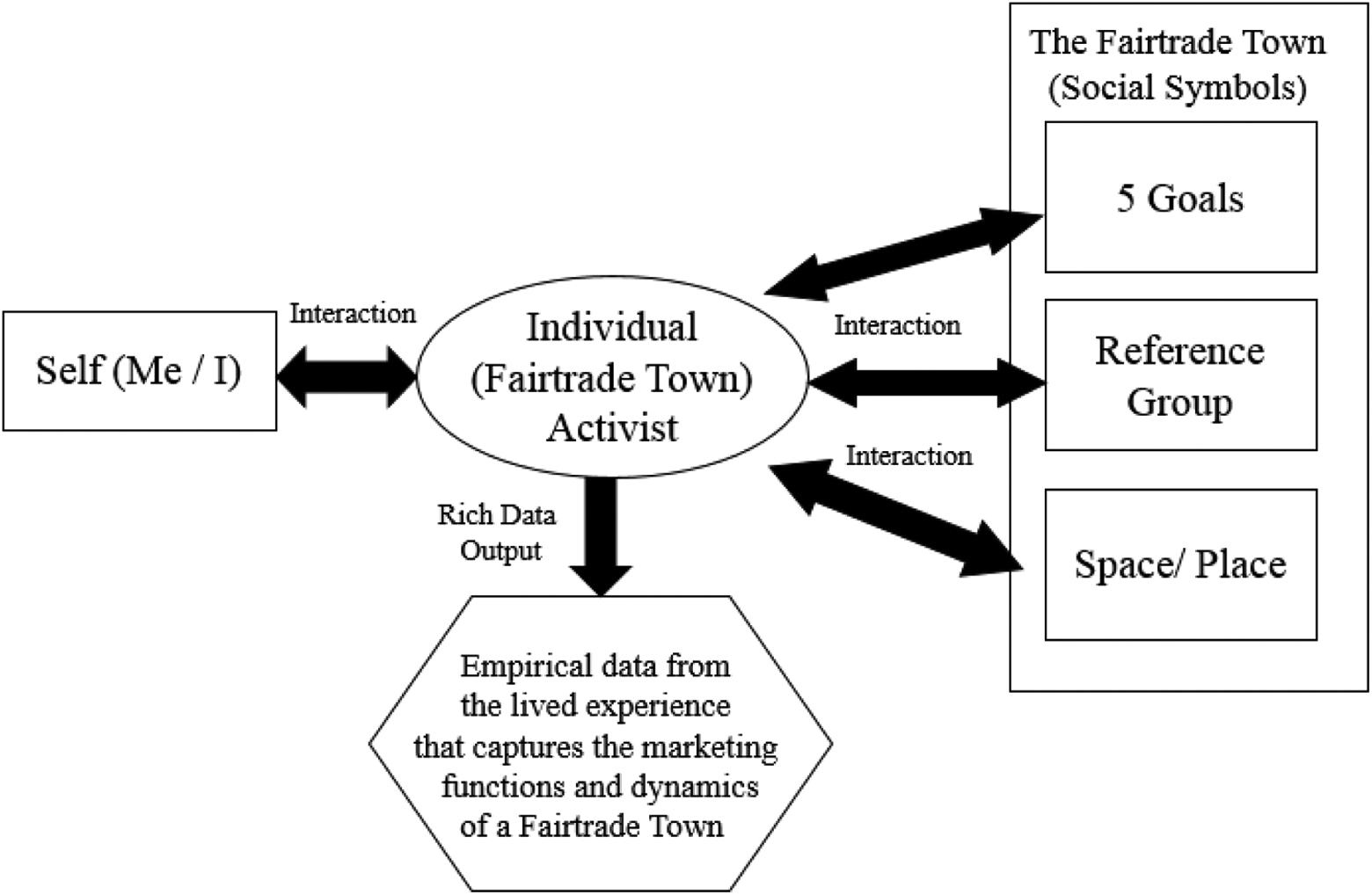
Fairtrade Towns a theoretical perspective: Symbolic interactionism.
Figure 2 illustrates the use of GT in this study and how data was acquired from several sources, all of which were significant in considering “what is happening here?” Although the main two sources were from ethnographic participation and semi-structured interviews, GT allows for other serendipitous moments of data collection (Glaser 1998). For example, the opportunity arose to spend three days in Garstang with the original founder of the FTTs Movement including interview and discussion opportunities and a narrated town tour, all providing a wealth of additional data. In total these activities generated 110,432 words for coding including the ethnographic reflective journal (13,352 words), sixteen semi-structured interviews (64,061 words), and the semi-structured Founder’s interviews and the record of narrated tour (33,019 words). Figure 2 illustrates the evolving methodological process and the different coding paradigms used at different stages.
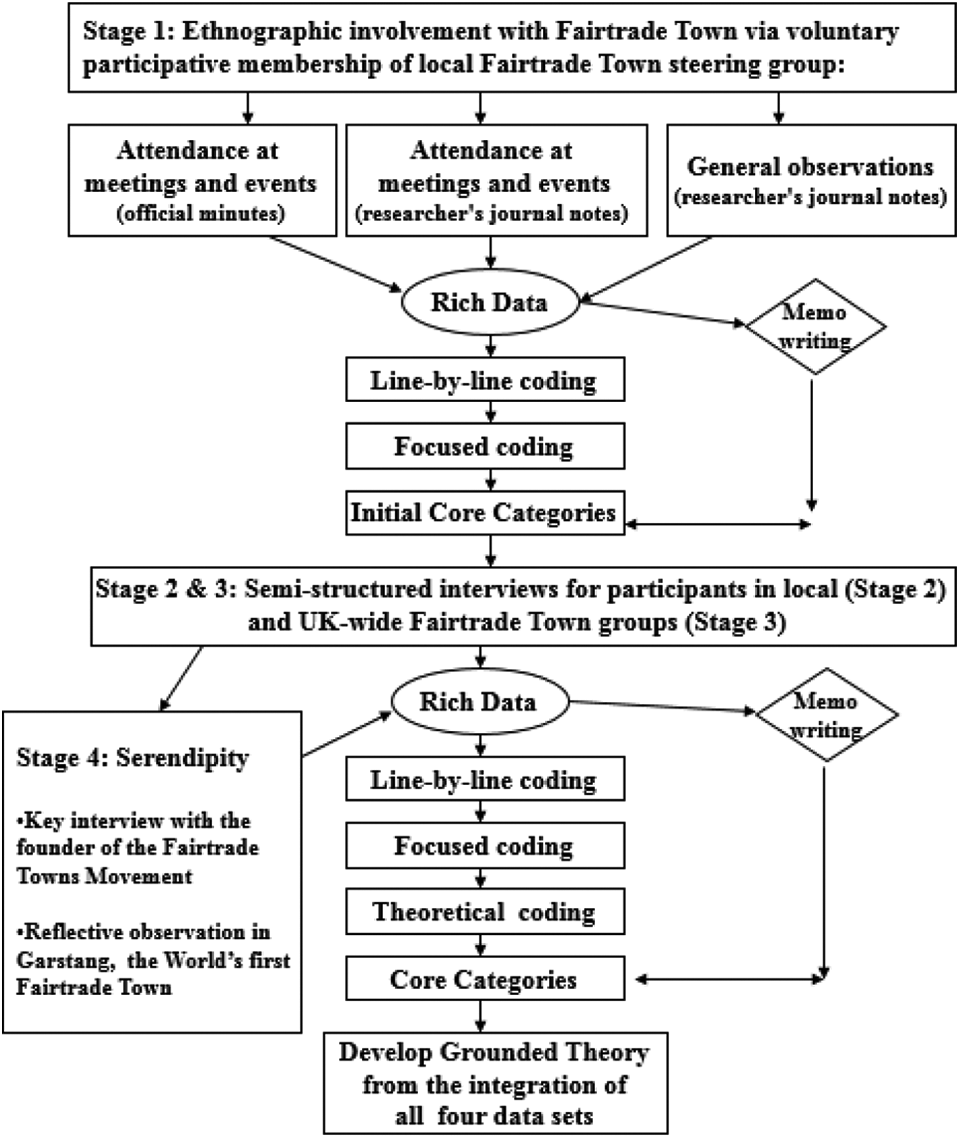
Fairtrade Towns: Using grounded theory. Source: Samuel (2011, p. 129).
Ethnographic Participation
The empirical research began with ethnographic participation in the Carmarthenshire Fairtrade Town Steering Group. This was chosen principally for convenience as the researcher’s local group, but later experience of other groups suggests it was representative. Although researchers may not readily associate GT with ethnography, it has ethnographic roots that lie in a 1965 study of death and dying undertaken by Glaser and Strauss (Morse 2009). Ethnography attempts to understand behavior from within its naturalistic habitat, helping to interpret how people give meaning to their experiences within society (Bray 2008). Since the marketing of Fairtrade products through a Fairtrade town involves a multiplicity of stakeholders, it is difficult to fully understand without becoming involved. Over three years (a time scale determined by the process of theoretical saturation as discussed later) the researcher became fully immersed in everything the group did, attending and participating in all meetings, contributing to strategy, and actively participating in all events and (with permission) recording its life through participation and observation (Charmaz 2006). This helped to generate a better understanding of the geographical and culturally bound research setting and aided “the art and science of describing a group” (Fetterman 1998, p. 1).
Participant observation is the main data-collection technique used in ethnographic research and requires the researcher’s involvement within the community’s natural environment over an extended time period (DeWalt and DeWalt 2002). The research process involves going native and positioning oneself within the social process of the group to view the empirical world from experience, as opposed to mere observation. Therefore, as Blumer (1969, p. 38) posits: “the empirical social world consists of ongoing group life and one has to get close to this life to know what is going on.” Researching people in their own space and time helps the researcher gain a close and intimate familiarity with the people involved and their functions and dynamics (Rainbow and Sullivan 1987). Ethnographic participation in a Fairtrade Town, therefore, helped to develop an understanding from within of how and why the people involved construct meaning and formulate actions to promote Fairtrade consumption.
A point of data capture, planning, and reflection for all activities was the Steering Group meetings, usually held bi-monthly. These meetings acted as the main source of data for the first part of this study, where a reflective journal was completed that aimed to document what was happening. This journal was augmented by analysis of documents produced by the group and observations and field notes taken when engaged in community events or other activities such as market research for the Group.
Whilst it would be wrong to suggest that the field notes collected at this stage show evidence of becoming progressively focused on key analytical ideas, data analysis through open coding did help to achieve this. Following the suggestion of Charmaz (2006, p. 25) the aim was to “seek data, describe observed events, answer fundamental questions about what is happening, then develop theoretical categories to understand it.” Whilst this process demonstrated its suitability to the research endeavor and to the methodology, limitations of such ethnography emerged during the three-year process. Firstly, the limited times and places available in which to immerse oneself in the activity (mostly confined to Steering Group meetings and events) resulted in data that was interpreted through one’s own lens and a single case study. The resulting indications suggested that the data was insufficient to help the researcher to see things clearly “from the perspective of others” (Crotty 1998, p. 76). As Vidich and Stanford (1998, p. 78) argue, ethnography risks becoming a “piece of writing” that struggles to truly present an “unfiltered record of immediate experience and an accurate portrait of the culture of the ‘other’.” Secondly, the fact that data codes were insufficient to justify a desired state of theoretical saturation meant the researcher needed to stay in the field and glean additional data taken directly from the perspective of others.
The ethnography helped to develop the initial codes (both line-by-line and focused) and core categories that were used to inform stages 2 and 3 of the investigation (as per Figure 2). It also avoided the risk of the researcher entering the interview stage with a poor understanding of participants’ frames of reference. Extended participation in the movement ensured an understanding of its cultural paradigms, language, and belief systems. This was valuable in informing both the question design (as recommended by Strauss and Corbin 1998) and analysis for the following stages of the research process. Ethnographic participation both helped to knit together the theoretical perspective of symbolic interactionism with the methodology of GT, and to allow enculturation into the FTTs Movement. Such enculturation is potentially valuable in macromarketing research, which often concerns the intersections between marketers and marketing and other social institutions or social systems (e.g. religious or political) and particular groups of people (Layton and Grossbart 2006). Ethnographic involvement with such institutions or groups can provide an understanding which more arm’s length or short-term interactions are unlikely to provide.
In addition to informing the questions to be asked in the later stages of the research, and assisting the hermeneutic analysis of the data generated, the ethnography allowed for the distillation of specific questions to guide the research. For example, two questions that emerged from the ethnography were: What influence did Fairtrade Town group members yield in their community and how did it manifest itself as a marketing dynamic used to promote Fairtrade consumption?
Semi-Structured Interviews
The second and third phases of the research involved open, semi-structured interviews that aimed to add depth to the ethnographic data. Interview participants were encouraged to talk freely about the relationships between the individual, the steering group, the Fairtrade Foundation, and their town as a place. Semi-structured interviews allowed respondents the freedom to contextualize their own experiences of the marketing of, and within, their Fairtrade Town, whilst keeping them focused and steering them away from considering their personal interaction with the broader Fair Trade Movement. The interviews used open-ended questions to draw out as much narrative as possible to “explore the interviewer’s topic and fit the participant’s experience” (Charmaz 2006, p. 29). Both Charmaz (2006) and Strauss and Corbin (1998) advocate the use of questions that create an unstructured interview and act only as general guidelines, suggesting the use of terms such as: “Tell me” (e.g. Tell me how your local community has responded to the actions and activities of the Fairtrade Towns movement); “What do you think” (e.g. What do you think have been the main challenges your Fairtrade Town has faced?); “Could you describe” (e.g. Could you describe a typical Fairtrade Town?); “How did/has” (e.g. How has your Fairtrade Town evolved in your time as a member?).
Questions designed in this way helped to ensure that data gathered built a rich picture of the “participant’s views, experienced events and actions” (Charmaz 2006, p. 29). Semi-structured interviews provided flexibility and allowed questions to be omitted, reordered, or followed up, and encouraged new questions to emerge in the form of further prompts (Duffy, Ferguson, and Watson 2002). For example, some interviewees wanted to communicate via short stories to describe their activities and to help express themselves. This was noted and so probing for more stories became part of the interview process, leading in turn to richer data being presented and to helping interviewees better express the perceived needs that FTTs addressed and the actions, perceptions, expectations, and attitudes of interviewees towards them. This process is in keeping with GT, which emphasizes that once concepts emerge, the researcher is responsible for probing them further. This ensures that specific areas identified as important when attempting to capture what is happening in a Fairtrade Town could be explored in more depth and thus took the research beyond superficial, under-saturated responses.
Theoretical Sampling and Saturation
GT calls for a different sampling approach to traditional qualitative research methodologies. It argues that data gathering should be driven by the evolving theory that results from constantly comparing data at each stage of collection (Draucker et al. 2007). In a spirit of “letting the data talk,” theoretical sampling was used here, to both guide the type of questions asked and inform the researcher of who to interview next. The research process used an inductive sampling technique capable of developing accurate emerging theories, demonstrated through a systemic confidence in from where and who to glean appropriate rich data (Strauss and Corbin 1998). Warren (2002, p. 87) identifies this as theoretical sampling carried out through the snowball process that locates one respondent who “fulfils the theoretical criteria,” and then helps the interviewer locate others. Figure 3 demonstrates how interview data informed the research process of where, or who, to go to next. Initial interviews were conducted in three key FTTs: Garstang as the World’s first Fairtrade Town, Cardiff, the city whose University was supporting the study, and Carmarthen where the research began with ethnographic participation. These interviews led to the application of theoretical sampling through the trajectory of how the research participants informed the research sample. For example, the Garstang group identified Keswick as a very pro-active Fairtrade Town and recommended interviewing a member of that town’s steering group, which was subsequently done as part of the theoretical sampling method. By using this process, the data becomes part of the sampling technique and, reflecting the true essence of GT, helps further validate any theory derived from it, as even the process of sampling is handed over to the participants of the Movement. Therefore, this study’s application of theoretical sampling additionally ensured that any resulting theory was grounded in the social context of the participants’ world (Blumer 1969).
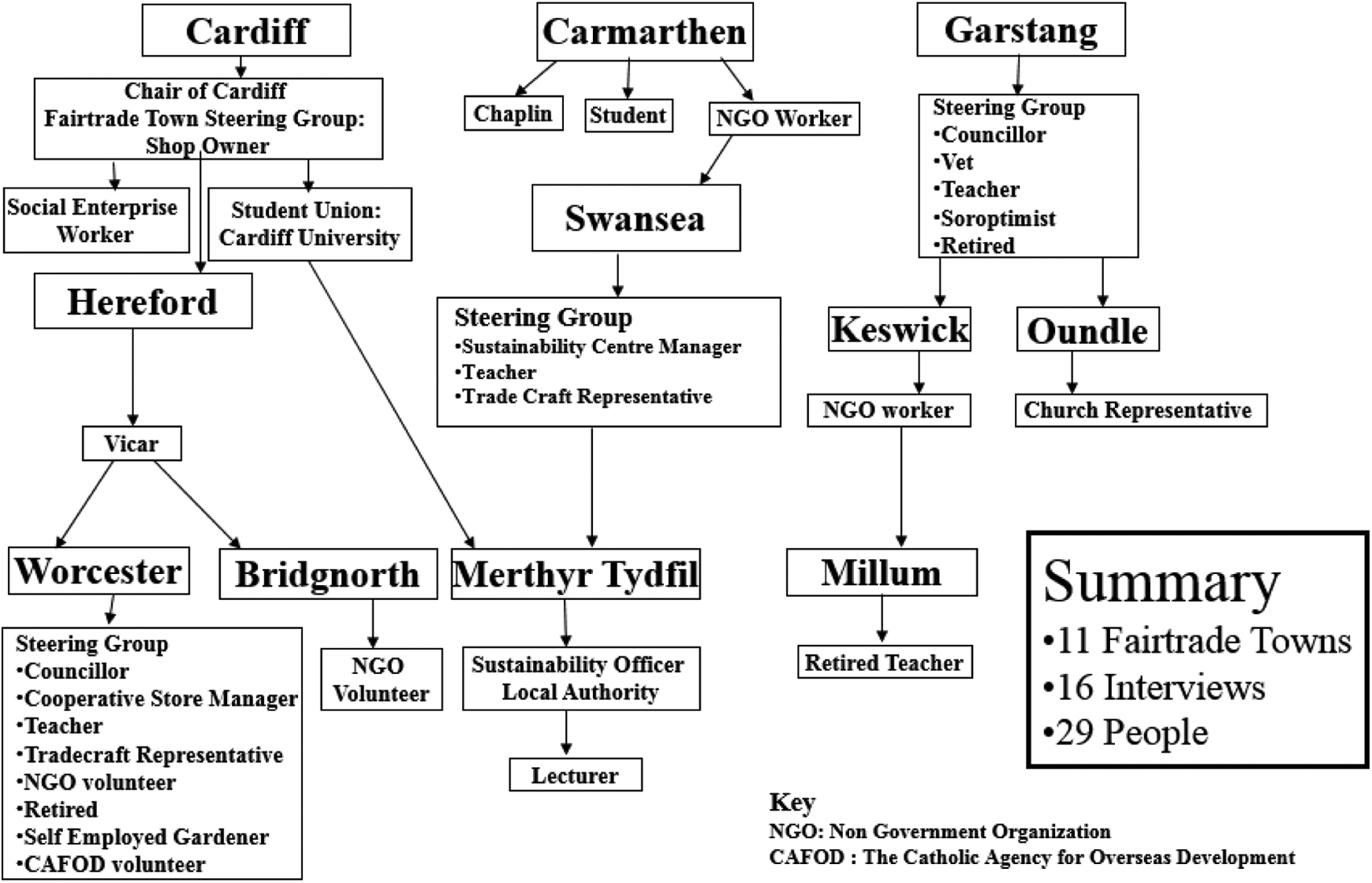
Theoretical sampling trajectory: People to place, people to people.
Data collection ends when no new information is being gleaned and no new core categories, or relationships between them and their context, are emerging (Locke 2001; Strauss and Corbin 1998). In GT this point is termed “theoretical saturation” (Strauss and Corbin 1998) and should inform the researcher when their fieldwork is complete. For this study, the research process attempted to stay close to Glaserian principles of GT, letting the data guide the research. The process of theoretical sampling played out, perhaps not in a strictly Glaserian format, but in the way interview questions in the second and third stage of this research were presented. The interviews created dialogue with respondents and captured the relationships between conditions, consequences, actions, and interactions in the process of establishing a Fairtrade Town. This dialogue became what Denzin (1989, p. 32) describes as “thick interpretations.” They provided rich biographical data that further augmented/eradicated or developed new codes and core categories for theory development. This enabled a systematic investigation of both the people and symbols that would come to represent theory when conceptualizing the marketing functions and dynamics of the FTTs Movement. Theoretical saturation for some aspects of the data started to occur early on. Line-by-line coding, constant comparison, and freestyle memo writing confirmed this, with full saturation for all questions becoming evident around the eleventh interview. At this stage the research process was witnessing similar answers over and over again, answers that were supported by the ethnography. For example, the importance of schools and young people was a constant, and the use of one’s own social capital and networks appeared to be a ubiquitous process in FTTs with everybody expressing this process directly or indirectly. These forms of qualitative saturation led to what Glaser and Strauss (1967, p. 61) interpret as an “empirical confidence,” the point at which the data allows the researcher to fully validate, explain, and conceptualize the core categories formed. Having the confidence to finish the data collection process did, however, prove to be unnerving in practice. The conventional research norm of identifying a certain sample size necessary to give clarity to the data, and the belief that each new interview will bring up new issues to explore, combined to prevent the researcher from taking a decision to finish. Three or four more interviews post-saturation were conducted, perhaps more due to researcher insecurity than to methodological necessity.
Data Coding and Analysis
In the true spirit of GT, attempting to stay as close to the data as possible was also demonstrated in the coding process. Despite the potential of software such as NVivo and MAXQDA to code and analyze qualitative data, a decision was made to complete the process in person and by hand as recommended by Glaser (1978, p. 59) who states “always code your own data.” Although software still requires researchers to code their data, the formatting and input requirements were felt to add an undesirable time lag between data collection and analysis here. Coding by hand enabled the researcher to code data immediately after transcription, simultaneously connecting data collection and analysis, a process Charmaz (2006, p. 48) suggests, “can help you go further and deeper into the research problem as well as engage in developing categories.” Coding by hand also reduced any temptation to force–fit data into preconceived categories of existing codes and avoided any need to reprogram software with new codes. Coding by hand added confidence to the process of data analysis, helping it to stay fluid and iterative to continually form, merge, and discard categories and codes upon which the GT for this study was built.
To reduce the risk of researcher bias, GT requires that researchers maintain an objective stance towards the data collected. Through the multiple viewpoints collected and the constant interplay between the researcher and FTTs the research process allowed the researcher to become immersed in the data. This required the researcher to think comparatively by examining data at a dimensional level through the process of constant comparison. This intertwining of data collection with data analysis results in the researcher being shaped by the data, prior to the data then being shaped by the researcher (Strauss and Corbin 1998). This process is evident in the coding practices used and the manner in which theoretical sampling was applied herein.
Coding for Theory
GT offers an array of data analysis procedures. Despite the highly specified procedures some authors advocate, this study took a more pragmatic route. Pragmatism allowed the researcher to consider and choose the appropriate coding paradigms and theory development mechanisms that was felt best suited the study.
Data analysis in GT involves a set of coding processes that begins with “open coding” (Goulding 2002; Walker and Myrick 2006). This allows concepts to be identified by breaking down data into distinct properties and dimensions (Strauss and Corbin 1998). Here open coding took the form of line-by-line coding, analyzing each line of data by asking the key GT question, “what is happening here?” in search of insight (Goulding 2002; Strauss and Corbin 1998). This process ensures a critical perspective on both data collection and analysis and avoids becoming too immersed in the respondents’ world so as to accept it without question Charmaz (2006). Such coding also helped to conceptualize and classify events, acts, and outcomes. The subsequent codes and categories that emerged could become the root and branch of the developed theory. As Strauss and Corbin (1998, p. 66) argue: “Doing line-by-line coding through which categories, their properties, and relationships emerge automatically, takes us beyond description and puts us into a conceptual mode of analysis.”
Focused Coding for Core Categories
The next step was “focused coding,” which condensed the data to understand it as a whole by constantly comparing experiences, actions, and interpretations across all the data sets collected (Charmaz 2006). Focused coding helped to conceptualize how previous line-by-line codes relate to each other (Charmaz 2006; Glaser 1978; Strauss and Corbin 1998). Figure 4 demonstrates how focused coding helped to determine relationships within line-by-line codes. It shows how several codes were identified as synergistically linked to the theme of social connections, although at first glance the line-by-line codes appear to be about lobbying individuals and organizations to consume and supply Fairtrade. Focused coding enabled further relationships in the data to emerge, and identified the use of individuals’ social connections as central to the process of lobbying. This focused coding allowed the research to reveal a broader concept that had general implications for the marketing success of FTTs.

The process of focused coding.
In addition to focused codes, the production of free flowing “memos,” as described by Glaser (1998), played a key role in facilitating the evolving process of data collection, analysis, and theory building. Memos captured thoughts, facilitated contrasts, and identified connections within the data (Charmaz 2006). Such memos, created after each stage of data collection and analysis, allowed the researcher to transform field notes and codes into theoretical accounts of what is going on (Montgomery and Bailey 2007). Memos became the bridge between data collection, analysis and draft writing and helped to initiate data analysis and coding throughout the research process (Charmaz 2006). For example, an extract from a memo produced for this study can be seen in Figure 5. It demonstrates analysis through free flow writing and presents an example of an early conceptualization of theory. Combining the coding process with memos, under the overarching principles of the constant comparative method of data analysis, also helped to provide validity in the conceptualization process.
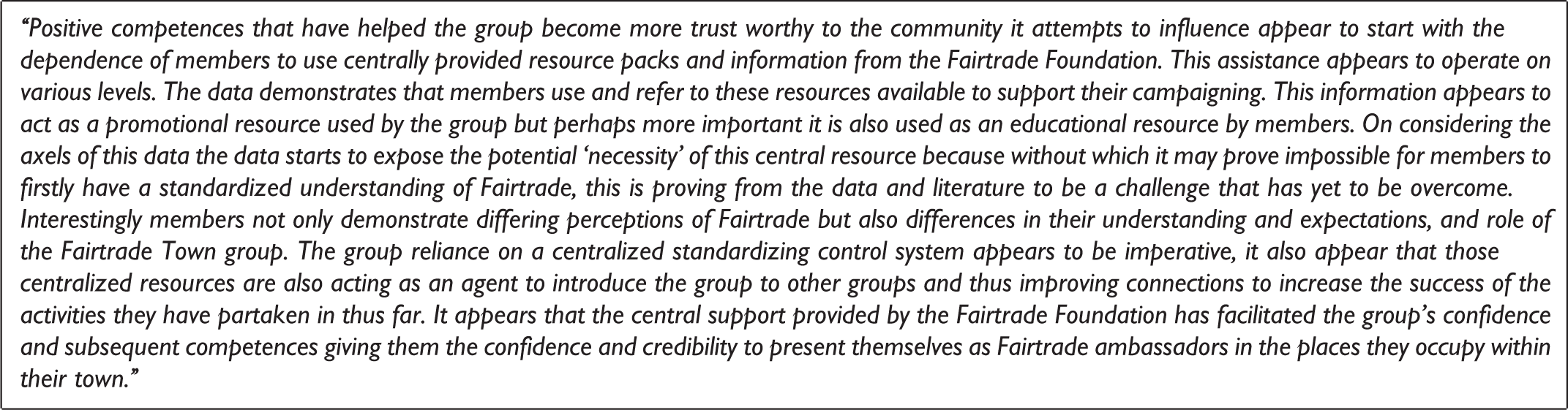
Memos: Free flow writing for theory.
Pulling together all the data strands (codes and memos) of the study gave depth to the research output and facilitated the production of accurate “core categories.” Glaser (1978) indicates that theory is generated around core categories whose primary function is to integrate theory and “render it dense and saturated” (Holton 2007, p. 279). Core categories conclude the process of data analysis by generating core variables (Holton 2007) upon which emergent GT can be inductively conceptualized with confidence (Dey 2007; Hallberg 2006). This process allowed for differing perspectives to emerge and, as new data was interpreted, it served to change, augment, or even discard previously constructed codes, core categories, and subsequent theory.
From this sequential and iterative process of collecting and coding different data sets, three core categories emerged, which among them (including their interplay) captured the marketing dynamics within FTTs:
The development of core categories requires the judgment of “the theorist,” in this case the researcher (Dey 2007, p. 111). This judgment was based on core categories being chosen for their credibility and ability to encapsulate the large variety and quantity of empirical data collected and analyzed during this study (Locke 2001). Therefore, each core category was conceptualized or named to represent, what Strauss and Corbin (1998, p. 121) outline as, “the variations in data by grouping similar items according to some defined properties.” The suitability and subsequent naming of each core category followed the recommendations of Dey (2007) who, based on Glaser (1978), suggests that core categories must be central, stable, complex, integrative, incisive, powerful, and highly variable. Dey’s suggestions can be seen in the conceptualization of core categories for this study that display evidence of: Conceptualizing the variations of data relationships and recurrent patterns under one statement, showing complexity and variable sensitivity in saturation; Being incisive when setting out the implications for developing theory; Being powerful enough to analyze and draw inclusive conclusions.
Figure 6 shows an example of how line-by-line and focused coding informed the development of an initial core category. The diagram demonstrates how constant comparison identified fifteen line-by-line codes that share a unifying similarity. These codes subsequently generated three focused codes that conceptualized relationships in the line-by-line codes. Both coding processes ultimately led to the conceptualization of the core category “Pressure and support.”
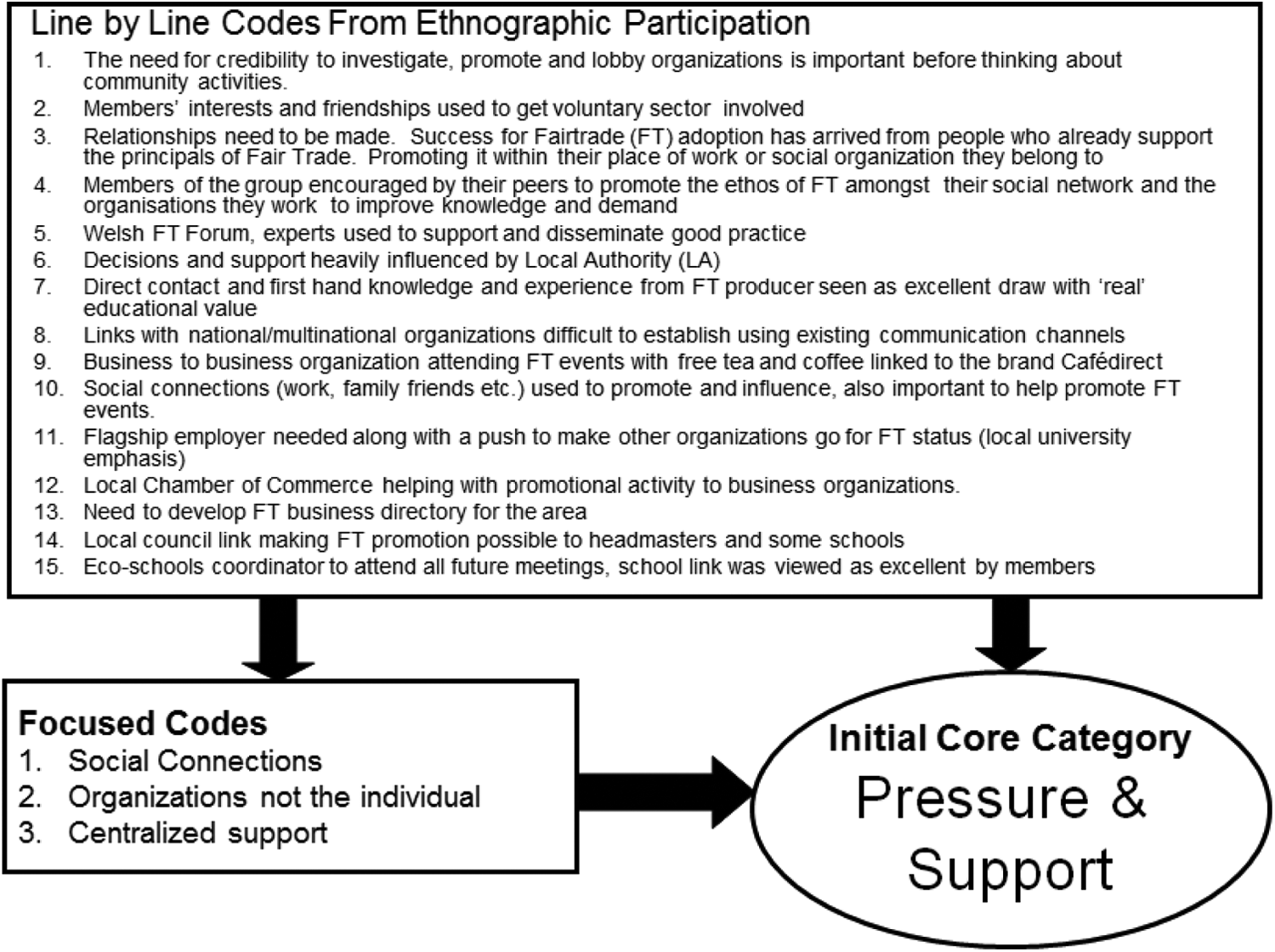
Coding for a core category.
Theoretical Coding
The additional step of theoretical coding was used despite Walker and Myrick’s (2006) suggestion that it can be difficult to follow. It was used to integrate fractured parts of the data to further conceptualize how line-by-line, codes, focused codes, and core categories relate to each other and can be integrated into theory (Glaser 1978). The process applied two “coding families” – “The Six Cs” and “Process” – taken from Glaser (1978, pp. 74-75). Line-by-line and theoretical codes were further analyzed to help build theorized writing capable of interpreting the data through the lens of the three core categories that emerged (Glaser 1978). Glaser (1978, p. 74) refers to the coding family of The Six Cs, standing for causes, context, contingencies, consequences, conveniences, and condition, as the “bread and butter theoretical code.” Its application in this study ensured that the emerging codes were further analyzed to look for consequences, dependent variables, causes, and their “process.” Process therefore became the second family of theoretical coding used as a way of “grouping together two sequencing parts to a phenomenon” that happened over a period of time (Glaser 1978, p. 74). This form of coding also demonstrated an ability to help further develop precision, clarity, coherence, and comprehension (Charmaz 2006) to the emerging core categories. Applying both coding families to theoretically code data helped to identify what happened over a period of time as a result of the causal consequences of the symbolic interactionism between the individual, their peers, and the place. An example of how Glaser’s six C’s were used to help build the core category “Validity” in this study can be seen in Table 1. Table 1 is included, not with the intention of discussing the elements combined within it, but to illustrate how the Six C framework helped the researchers consolidate their thinking by better understanding how previously derived codes related to one another. As Glaser (1978, p. 72) notes, theoretical codes help conceptualize how open codes and core categories relate to each other as “hypotheses to be integrated into a theory.” In this study the synthesizing process of theoretical coding added breadth and depth to the data (by identifying the significance of people and places) and contributed to a conceptual level of writing that fully justified and grounded the theory of FTTs’ “validity” (Holton 2007).
The Six Cs and Core Category of Validity.

Abbreviations: People (Pe), Places (Pl)), Fairtrade Towns (FTT).
Reflective Overview
This article has outlined the justification and use of GT as a valid, and ultimately valuable, methodology to explore the macromarketing phenomenon of the marketing dynamics of the FTTs Movement. The experience gained in applying the methodology highlights a number of issues relevant when considering the method’s suitability, application, and rigor within this field of research and across other spheres of macromarketing. A recurrent theme within these issues is confidence: the confidence that the methodology can generate for the researcher; the confidence needed to apply it, the confidence that can be placed in findings and theory generated by it, and the confidence with which it can be recommended for researching other macromarketing phenomena.
That GT both provides confidence for, and requires confidence in, a researcher was demonstrated in the early stages of this research. This study of FTTs started from a basis of little academic knowledge about a subject that was rapidly evolving as well as under-researched. This made planning an enquiry that asked the right questions of the right people, and reviewed the appropriate literature, challenging. With little pre-existing theory to build upon, even the theoretical framework for the study was itself inductively produced as part of the research methodology. Tackling research in this way can seem daunting, but GT not only copes with, but encourages such a clean slate mentality. As Glaser (1978, p. 2) frames it: “The first step in gaining theoretical sensitivity is to enter the research setting with as few predetermined ideas as possible, especially a logically deducted prior hypothesis.” GT provides guidance for the researcher in such uncharted waters by directing the research, helping to construct appropriate questions, and identifying who to interview and what bodies of literature to consult. Such situations will not be uncommon within macromarketing, which remains the primary pursuit of a relatively limited number of academics (Shapiro 2006). For macromarketers sufficient theory may not exist to allow them with any degree of confidence to follow their micromarketing peers in building and testing models of marketing processes. GT provides a methodology through which that initial theory can be generated in a rigorous way. The inductive ethos of GT and its ability to help critically analyze phenomena means that the methodology has the rigor to assist academic research in recognizing the complexity of the rapidly emerging social world(s) of macromarketing that remain(s) undefined by previous hypotheses (Pettigrew 2000).
That GT requires confidence in the researcher is partly reflected in the degree to which it departs from other methodologies (particularly in its purest forms) in the relationship between the research process and the scholarly literature. To enter into a field of research with little pre-existing dedicated literature and allow the fieldwork to dictate the literature considered (and not vice versa), particularly for doctoral research, requires confidence on the part of both the candidate and the supervisor. It also requires confidence to invest the time and effort in getting close enough to the social reality of the phenomenon in order to understand the experiences of those involved, which in this case represented a four-year period of fieldwork. Along the way the researcher also discovered that confidence was required to recognize the choice between the GT variants promoted by the disciples of each of Strauss and Glaser as a false one. Ultimately the research was best served through a compromise between purism and pragmatism when trying to establish what is happening in the towns being studied. Similarly confidence was required to decide the point at which saturation had occurred and to halt the fieldwork process. Although the ethos of GT provides confidence for the researcher, so too does the process the methodology follows. The ethos of GT is based on the assumption that theory is inductively produced from data and, as a result, when conceptualized, can portray a very accurate description of reality. This ideology and the process of coding provided the researcher with two key assurances of the validity of the resulting theory: The development of theory is embedded in the research process and can therefore be traced directly back to the data collected; Theory is not just presented as a personal interpretation of reality; it is socially constructed from the people and processes that have been investigated.
These assurances are significant when researching emerging disciplines, as research outputs generated under these circumstances need additional validation and demonstrable rigor to be academically accepted. This study into FTTs had limitations related to time, access to individuals and organizations, and the use of a single town for the in-depth ethnography. However, applying GT as rigorously as possible generated confidence that, despite such limitations, the findings and theory generated were robust. As with any interpretivist approach researcher bias is a risk since the results will potentially be colored by the researcher’s interpretation of the evidence. However, because GT ensures that the interpretation takes place whilst the data gathering is ongoing, it presents opportunities to reflect back interpretations to respondents in order to verify them.
Another aspect of GT that can inspire confidence (but also to an extent require it) is its flexibility and encouragement to include serendipitous moments of data collection. This played a part in this study by allowing the inclusion of key sets of data generated from unexpected opportunities that augmented the developing theory. When researching emerging disciplines, having a clear data collection research path at the start, although perhaps attractive, can potentially limit the investigation. GT in this case provided both direction and flexibility in data collection that helped to construct a saturated picture of what was happening. Such direction and flexibility in data collection may be invaluable when conducting research into embryonic and rapidly emerging phenomena, of the type common in macromarketing contexts. GT’s suitability for under-researched and complex multi-stakeholder phenomena explains part of its potential usefulness for macromarketing research.
However, other factors suggest a good potential match between the discipline and the method. Two of these relate to the “follow the data” philosophy and avoidance of pre-conceptions about the field of enquiry and its boundaries (Glaser 1978). A significant component of the macromarketing agenda concerns the unintended consequences of marketing systems (Layton and Grossbart 2006). Since they are unintended, they may occur in unexpected places and beyond the frame of reference of a study with a pre-determined scope. GT’s emphasis on following the data where it leads encourages the researcher to tease out and investigate stories participants want to tell, and treat whatever is found as data (Charmaz 2006), whether it was sought for or not. This improves the chances of identifying the type of unintended consequences that interest macromarketers. Similarly macromarketing research, in studying marketing systems (Hunt 1981), naturally poses questions for researchers about how those systems should be defined and delineated. A key contribution of macromarketing lies in its ability to aid our understanding of “system levels transcending the channel” (Dixon and Wilkinson 1989, p. 62), but once beyond the certainties of channel structure, macromarketing researchers may lack guidance on where to draw the system boundaries. GT does not require the researcher to pre-define the system in terms of structure, boundary conditions, scope, participants, cultural context, or any of the other aspects of marketing systems that interest macromarketers (see Layton and Grossbart 2006). Instead GT allows them to learn and build up an understanding through system participants and even through participation. In the present case, the range of stakeholders involved, and the varied and evolving roles that they played, emerged through the ethnographic participation and interviews. Some of the insights were surprising, such as when FTTs’ campaigning developed unexpected synergies with other social and political movements such as Amnesty International, The Slow Food Movement, Transition Towns and Friends of the Earth. Dowling (1983) suggests that marketing has had to take more account of external economic, social, political, and legal changes (i.e. more macro influences), so it has had to adopt a more open systems perspective. GT facilitates such an open systems perspective on marketing systems by avoiding the predetermination of system boundaries at the beginning of the study and allowing unforeseen or previously unexplored elements of, or influences on, the system to be identified and included in the research.
A final element of fit relates to the coding processes involved in GT. These involve constant comparisons and attempts to aggregate issues (including consequences) derived from discussing elements of a marketing system to generate focused codes and core categories. This helps the researcher to better understand the relationships between micromarketing processes within marketing systems and the macromarketing issues being researched. For example, Fairtrade producers were regularly invited over to FTTs to communicate their development story to existing and potential consumers. It emerged that micro level interactions between producer and consumer made the Fairtrade message more real and subsequently helped strengthen the perceived validity of Fairtrade’s macro level developmental goals.
Conclusions and Implications
The empirical study of FTTs that underpins this essay concerns itself with a macro analysis of consumption through determining the behaviors of, and influences on, ethical decisions that exist in the places and spaces of everyday life. Although focusing on ethical consumption, typically a micromarketing concern, it goes beyond the conventional depiction of the channel-based Fairtrade marketing system to include the range of stakeholders acting within communities promoting that system. As Dholakia and Nason (1984) argue, the same marketing system can be examined from a micro or a macro perspective. It is the consideration of the societal effects and/or the overall systemic characteristics of that system that help to distinguish research as macromarketing. A key benefit of GT is that it allows the understanding of a system’s structure, boundaries, operation, and effects to grow from the insights of its constituents. GT helps researchers to avoid adopting a view of a marketing system that is partial and over-simplified because it is inherited from a marketing literature frequently dominated by micro perspectives.
The approach to GT demonstrated here outlines the methodology’s suitability and practical application to researching and developing theory from what Holt (1997, p. 344) refers to as “the messy contextual details of consumer life.” However, it is reasonable to question the extent to which this means that it can be applied with equal confidence in other macromarketing contexts. In mapping out a future research agenda for macromarketing, Layton and Grossbart (2006) outline four broad sets of research challenges, each of which could potentially benefit from enquiries informed by the ethos and practices of GT.
The Market
Macromarketing seeks to better understand the relationships and systemic consequences of market interfaces among consumers, businesses, the economy, place and space, civic and civil society, social connections, and patterns of behavior (Layton and Grossbart 2006). It includes topics relating to the nature and roles of marketplaces, alternative marketplaces, and the links between markets, families, and households in relation to well-being and welfare. Researching the multifaceted systemic nature of marketplaces requires researchers to enter a complex social world interpreted variously by social actors whose actions, beliefs, interactions, and identities are understood to socially construct marketplaces (Berger and Luckmann 1966). Capturing and analyzing data from a diverse set of actors can prove daunting when attempting to develop a theory capable of explaining “what is actually happening’ from a variety of perspectives” (McCallin 2003, p. 203). This study of FTTs belongs primarily in this research category. It required an understanding of the stakeholders with a direct involvement in the marketing process including retailers, local government offices, NGO representatives, educational institutions, social enterprises, civic institutions, and consumers. This represents exactly the type of complex multi-stakeholder context that makes macromarketing phenomena challenging to research, and that makes GT an appropriate methodology (Valor 2007).
Marketing and Quality of Life
Macromarketing seeks to understand different perspectives on quality of life and the positive and negative roles that marketing plays in this field (Layton and Grossbart 2006). This study did not explicitly focus on quality of life, but the roots of GT and its application as a methodology emerged from a quality of life study. Glaser and Strauss’s (1965) seminal work The Awareness of Dying led to their 1967 book The Discovery of Grounded Theory. Perhaps not coincidentally quality of dying and death is something that Layton and Grossbart (2006) identify as one of the most neglected facets of quality of life research in macromarketing. Quality of life is challenging to research since it is a multidimensional and frequently contested concept to which marketing activities (both commercial and social) can both enhance and diminish (quite often simultaneously). The collection of studies edited by Strauss and Corbin (1997) contains examples of GT used in researching issues relevant to a holistic understanding of quality of life.
Marketing Ethics
Macromarketing is interested in discovering how integrity, trustworthiness, transparency, responsibility and fairness is understood, presented and applied to marketing by consumers, organizations, and other stakeholders (Murphy, Laczniack, and Prothero 2012). It studies the societal risks posed by marketing processes and the injustices that may develop from the pursuit of market efficiencies. A study concerning Fairtrade could also be viewed as an ethics-based study. Unusually, it goes beyond the narrow concept of consumer ethics to consider the ethically inspired involvement of a range of other stakeholders in promoting and facilitating the consumption of ethically produced and traded goods. The roots of GT in such an ethically charged field as a study of death and dying demonstrates that the method has great value in such contexts, and the studies brought together by Strauss and Corbin (1997) similarly reveal the use of GT across a range of ethically challenging research topics.
Marketing and Development
Macromarketers examine the complexities of marketing systems and how they interact with the economic, social, and political systems that affect both domestic and international development (Layton and Grossbart 2006). Fairtrade related studies have a developmental dimension (Geiger-Oneto and Arnould 2011; Raynolds and Taylor 2004; Witkowski 2005). The “Validity” core category described above partly reflected the contribution to development in producer communities that drives and validates any Fairtrade Town initiative. Although focused on consumer communities, the use of GT in this study explored the dynamics of interrelationships among governments, NGOs, communities, and marketing intermediaries. These types of relationships are also crucial in other macromarketing developmental contexts, and there seems no reason to suppose that GT would not be equally effective and helpful in understanding them.
Final Thoughts
We have outlined the suitability of GT for researching macromarketing phenomena and issues. As a methodology GT can be useful for marketing generally and macromarketing specifically. We have presented a detailed account of the application of the methodology and its coding paradigms in the context of understanding FTTs, a comparatively new phenomenon that has received little previous theorizing and empirical attention. The understanding that emerged from the literature review and empirical research extended beyond marketing scholarship and into topics more closely associated with social geography and the evolution of social movements. Dholakia and Nason (1984) recognize that macromarketing is a field that contributes to the advancement of knowledge through the integration of social sciences in a quest to present new ‘holistic perspectives’ integrating ideas from a number of disciplines including sociology, anthropology, economics, and psychology. GT encourages such an approach through an ontological belief that everything you learn in the research field is relevant data (Charmaz 2006), and that research conducted using GT is therefore not limited to specific data sets or disciplines. Theory developed using GT can enable multidisciplinary social science research to discover the links between micro, meso, and macro level activity and to present these findings as overarching concepts with general implications for the area being researched. GT’s use of theoretical sampling and insistence that data collection should be driven by the evolving theory (Draucker et al. 2007) helps inform the research process of where to go and what to look for next, thus letting the subjects whose experiences inform the research to further direct the search for the richest possible data. Macromarketing theory developed from such an approach will be able to confidently state that it is grounded in the social context of the participants’ worlds (Blumer 1969).
Its history, coding paradigms, qualitative rigor, theoretical sampling, inductive theory building, multidisciplinary integration, systematic data collection and analysis, and an ability to flourish in unknown and complex macro landscapes are all part of what makes GT a strong and rigorous methodology. It is highly capable of unearthing new and much needed macromarketing theories and in doing so help to answer Hunt’s (1994, p. 23) call for marketing to “adopt a tolerant, open posture towards new theories and methods.”
Footnotes
Acknowledgments
The authors would like to thank the Special Issue Editor Ben Wooliscroft and Editor-in-Chief Terrence Witkowski for their continual support and the three anonymous reviewers for their constructive comments and feedback.
Declaration of Conflicting Interests
The author(s) declared no potential conflicts of interest with respect to the research, authorship, and/or publication of this article.
Funding
The author(s) received no financial support for the research, authorship, and/or publication of this article.