



Abstract
How can brands adopt institutional work towards establishing themselves in a highly contested market? Defining contested markets as fields in which the plural logics of the market are in tension with each other and/or with societal level logics, our research explores the institutional work of one pioneer brand – MedMen – in the legal cannabis market in the United States. Analysis of MedMen's marketing communication campaigns and corporate press releases between 2018 and 2020 reveal vesting, mimicry, and constructing consumer identities as the main types of institutional work the brand has adopted. Our findings inform extant research on market dynamics by documenting the types of institutional work brands can strategically adopt to establish themselves in contested markets.
How can brands adopt institutional work towards establishing themselves in a highly contested market? In this study, we set out to explore this question by viewing brands as skilled institutional actors who are influential in transforming logics. Logics are symbolic and material organizing principles that direct and circumscribe thoughts, decisions, and behaviors of individuals and organizations via “socially constructed, historical pattern of material practices, assumptions, values, beliefs, and rules” (Thornton and Ocasio 1999, p. 804). While at times markets can be underlined by a dominant logic, oftentimes plural and competing logics prescribe appropriate behaviors, decisions, and practices of market actors (Ertimur and Coskuner-Balli 2015; Giesler 2008, 2012; Humphreys, Chaney and Slimane 2017). In such contested markets, the institutional logics can be in flux and challenged by market actors.
We define a contested market as one where the legal, cultural, and moral legitimacy of the plural logics are in flux and in tension and where market actors try to shape the market via adopting series of institutional work. To study how brands can navigate such contested markets, we specifically focus on the legal adult recreational cannabis market (as opposed to medical/medicinal uses) in the United States. Despite its legal status in eighteen states and Washington, D.C., as of 2021, recreational and medicinal cannabis consumption remains illegal at the federal level in the United States. Regardless of its partial-legal status, cannabis consumption is still considered by many a contested one.
Our goals in this article are (1) to document the type of institutional work brands can adopt to establish themselves in contested markets and (2) to tie institutional work and brand strategy in culturally complex environments. While previous research (e.g. Ertimur and Coskuner-Balli 2015; Giesler 2008, 2012) studied how markets are created through a process of legitimation and evolve with brands adopting distinct strategies to manage plural logics, they have not directly addressed the role pioneer brands play in establishing themselves in formerly illegal and still contested markets. Understanding how to navigate and shape logics in contested markets can help managers legitimate stigmatized consumption practices and build successful brands.
We start this article with the theoretical framework in which we position our study. Previous market research in institutional theory and the branding literature helps us navigate the theoretical terrain and identify the gap in the literature. The section on the history of the cannabis market presents a summary of the legal status of cannabis in the U.S. in the last 400 years. It contextualizes the empirical setting we study, which we describe in the data collection and analysis section. We used a mixed methodology collecting quantitative and qualitative data to uncover the types of institutional work MedMen, a pioneer brand in the cannabis market, has engaged in to establish itself in a newly legalized market. Our analysis of MedMen shows that brands can specifically do so by adopting a range of institutional work, most notable as our study reveals mimicry, vesting, educating, and constructing identities in the earlier stages of legitimacy.
Theoretical Background
Branding Strategies and the Institutional Work
Previous market research has documented the role of market actors such as managers, journalists, and brands in creating new markets (Humphreys 2010), new products (Giesler 2012), diffusion of new practices (Ertimur and Chen 2020), and in shaping the logics of markets (Ertimur and Coskuner-Balli 2015). Like individuals and organizations, brands exist within larger institutional environments that contain taken-for-granted social, cultural, and symbolic meaning systems that define their social reality. These cultural environments are subject to logics as previously defined. Past marketing research has keenly documented how institutional environments and the logics of the markets are central to understanding branding for many reasons.
First, Holt’s (2004) groundbreaking cultural branding model highlighted the limitations of the strategic brand management literature dominated by cognitive and emotional approaches to branding. He posited that brands derive their value from how well the myths they embody respond to tensions in the national culture. In this view, brands become icons not because they deliver distinctive benefits but because of their ability to deliver powerful myths. Accordingly, marketers' challenges are first to develop an understanding of cultural tensions and second, to reinvent the brand in the face of cultural disruptions. While Holt's theory noted the importance of the cultural legitimacy of the brand to be able to convincingly speak to the cultural tensions in the society and offer a symbolic solution, it did not necessarily provide a view on how these savvy brands can influence the way a contested practice may be viewed in the marketplace.
Second, situating brands in their cultural environments, Ertimur and Coskuner-Balli (2015) explored how brands can navigate institutionally complex markets. Studying the competing logics that permeate the yoga industry in the U.S., the authors observed that brands faced conflicting logics with managing to convey legitimacy in the marketplace. To gain legitimacy by demonstrating a social fit between their practices and a society's shared norms, specialist brands, the authors posit, should adopt an amplification strategy to strengthen associations between the brand offer and the cultural tensions. In comparison, generalist brands should consider the extension strategy and bring in logics from adjacent fields to craft the brand experience (i.e., brandscape, rules, scripts) and create new hybrid forms of practices. Their study offers important implications for how brands can influence the status of contested consumption practices because it documents the influence of skilled market actors and pioneer brands in shaping the logics of the markets. Furthermore, they note different strategies for managers to adopt that align with their brands' degree of strategic focus. However, the study's focus remains more on how brands should manage plural logics of the market rather than identifying the types of institutional work brands adopt to navigate the contested marketplace.
Third, in his study of the Botox brand, Giesler (2012, p. 56) shows that in new product markets, legitimization is a brand-mediated process where the market evolves through a “progressive sequence of contestations between the brand images promoted by the innovator and the doppelgänger brand images promoted by other stakeholders.” As Giesler illustrates, Botox Cosmetic encountered continuous problematizations in the face of the media that threatens the brand by drawing upon the romantic ideals of nature and the human body. To address these problematizations, Giesler (2012) prescribes a four-step managerial process for brand revitalization. Accordingly, brand managers must monitor, understand, and develop a new mythic storyline that resolves the tension between competing ideologies. Giesler's study is relevant because it keenly demonstrates an institutional actor and brands' centrality in the legitimacy process. However, its main focus is on how managers can navigate the doppelgänger brand image circulating in the media, rather than exploring how brands can use institutional work to establish their brand in a newly legalized market. Thus, while we remain sensitized to the insights from the past research, we use institutional theory and, specifically, institutional work to uncover brand strategies in dealing with contested consumption practices.
Institutional Work in Consumer and Marketing Research
In their influential chapter, Lawrence and Suddaby (2006, p. 215) define institutional work as “the purposive action of individuals and organizations aimed at creating, maintaining, and disrupting institutions.” They identify the types of work aimed at “creating institutions” (2005, p. 221) that include advocacy, defining, vesting, constructing identities, changing normative associations, constructing normative networks, mimicry, theorizing, and educating. “Vesting, defining, and advocacy are overtly political work through which actors reconstruct the rules, property rights, and boundaries that determine access to material resources. Constructing identities, changing norms, and constructing networks are seen as actions in which actors’ belief systems are reconfigured. Mimicry, theorizing, and educating involve actions designed to change the abstract categorizations upon which meaning systems depend.” (Gawer and Phillips 2013, p. 1039).
Research in organizational management has documented how skilled institutional actors can adopt institutional work towards transforming meanings of logics and strengthening boundaries of fields (Murray 2010). They can also import logics from other institutional fields (Oliver 1991). Smets and Jarzabkowski (2013) provide a relational model of institutional work as banking lawyers construct and resolve incompatible prescriptions from national laws, local rules, and international market expectations via mundane practices that they engage in every day. In their case study of Intel Corporation, Gawer and Phillips (2013) identify external institutional work that the company performs to develop and legitimize new practices and internal institutional work directed at resolving tensions within the organization as the computer industry shifts to a new platform logic from a supply chain logic. Intel innovated new practices externally and enrolled new members in the new practices while managing any tensions that emerged while doing so. For example, Intel shared beta versions of hardware among industry participants to stimulate ecosystem innovation. They developed a process by which it would systematically involve external organizations in developing interface standards, first in the small groups that they called Special Interest Groups, later to spin off the governance and the steering of these standards in autonomous groups outside Intel.
There has also been a growing interest in consumer and marketing research exploring the institutional work undertaken by market actors towards shaping markets. Most notably, in her seminal study of casino gambling, Humphreys (2010) documents how managers adopt a series of rhetorical strategies such as amplifying positive aspects of gambling, extending gambling to a larger group of interested stakeholders, and bridging to seemingly disparate issues such as employment and addiction towards gaining regulatory as well as cultural/cognitive legitimacy. Giesler's work on music file sharing (2008) illustrates how Apple created a new exchange structure in its iTunes platform, which blended the two opposing logics of social utilitarianism and possessive individualism and further made the contested consumption practice of music sharing illegitimate.
In the aforementioned study of the yoga market, Ertimur and Coskuner-Balli (2015) detail the distinct institutional works of actors with different cultural capital and interests amplify/repress distinct logics. Prior research has also documented the important role of consumers' institutional work in markets. For instance, in their study of plus-sized fashion, Scaraboto and Fischer (2013) portray how plus-sized consumers appeal to art and commerce logics to push the market to offer more plus-size choices. In addition, they also leveraged logics from adjacent fields (e.g. the logic of human rights) to lend support to the legitimacy of plus-size apparel. Dolbec and Fischer’s (2015) recent work in the fashion field highlight the unintentional nature of institutional work. As the authors illustrate, consumers increasingly participate in the work done by fashion stylists, fashion photographers, and fashion editors on online platforms. While not necessarily coordinated, engaged consumers' institutional work leads to important market-level changes in the institutional work that supports a market, creates new categories of actors within it, and influences the underlying logics that inform it.
Prior studies provide a framework for us to understand the institutional work undertaken by market actors like managers (e.g. casino managers), pioneer brands (e.g. Botox), generalist and specialist brands, farmers, and consumers towards the creation of new markets and shaping of market logics. Extending on this past research, our objective is firstly to document the institutional work of a pioneer brand as it attempts to establish itself in a market where the regulatory, normative, and cognitive-cultural legitimacy surrounding the consumption practice is being contested. While prior research has alluded to the ways in which, beyond the meanings of consumption practices, consumer identities can change and evolve (Thompson and Coskuner-Balli 2007), investigating brands' institutional work in contested markets has the potential to uncover how new consumer subjectivities can be created in the marketplace. Second, we would like to present a detailed account of how brands can respond to their institutional settings in contested markets. What types of institutional work has MedMen adopted over time to navigate this complex market?
A Brief History of the Cannabis Market in the United States
The history of cannabis in the Americas starts with its cultivation by the settlers for medicinal and other purposes. In the 1600s, several colonies required the cultivation of the plant, as it was easily grown and used for multiple purposes successfully (history.com Editors 2017). First known advertisement for a cannabis-infused product was featured in Vanity Fair in 1862 and featured a candy to treat anxiety and melancholy and was described as a “pleasurable and harmless stimulant” (Siff 2014).
While the use of hemp fiber and cannabis tinctures was common until its prohibition in 1937, attempts to regulate its cultivation, sale, and use started in the early 1900s. In 1906 the Pure Food and Drug Act, which constituted the basis of the current day FDA (Food and Drug Administration), required labeling any product containing cannabis to be labeled as addictive and dangerous but did not limit its sale or use otherwise. Later in 1912, the International Opium Convention limited its export and sale alongside other drugs like coca leaves and opium.
The negative symbolism was attached to cannabis in the 1930s through the initiatives of Harry Anslinger, the first commissioner of the U.S. Treasury Department's Federal Bureau of Narcotics, and with the support of the media publisher Hearst. The Mexican immigrants would smoke the plant and, according to Anslinger, would make them “…think they are as good as white men,” which he also dubbed as “temporary insanity.” In 1935 Anslinger, Hearst and Dupont proposed the Uniform State Narcotic Act and, in 1937, the Marijuana Tax Act, despite warnings and objections from Dr. William Woodward, on behalf of the American Medical Association (druglibrary.org).
From the 1930s onwards and increasingly during the Nixon presidency, the consumption of cannabis had become stigmatized. Rumors of people going mad and acting in normatively unacceptable ways had painted a picture in the minds of the average consumer that is akin to the portrayals in the now cult film Reefer Madness (Common Sense for Drug Policy n.d.). The cannabis market in the U.S. moved completely underground in 1937 when the Marijuana Tax Act effectively prohibited the sale and use of cannabis on a federal level.
While these regulations added to the cost of prescribing and purchasing the drug for medicinal purposes, the use of it was not limited until 1969, when Nixon signed the Controlled Substances Act, which exempted the alcohol and tobacco industries. The War on Drugs in the early 1970s became a political and social battle for the government. Despite Drug Enforcement Administration (DEA) administrative court judge Francis L. Young's determination that it is “…far safer than many foods we commonly consume in its natural form and one of the safest therapeutic devices known to man,” appeals petitions were not heard until the second half of the 1980s (druglibrary.org).
By 1977 perceptions against cannabis have softened, yet consumption was still attributed to ‘degenerates,’ despite then-president Jimmy Carter's public proclamation that prohibition of it caused more harm than the drug itself (Carter 1977) by creating and fueling illicit operations and increasing access to other psychoactive substances in the black market. During the Reagan years, another push in the War against Drugs was through social marketing campaigns such as “Just say no” or “This is your brain on drugs” (Siff 2014). Reported drug use declined during this period, yet the impact has not been directly attributed to these programs.
1996 constituted a turning point for medicinal cannabis in the U.S. when California became the first state to legally acknowledge that the composition of the plant may help certain patients as a medicinal supplement and decriminalized cannabis for medicinal purposes with the Compassionate Use Act. Since then, 36 states and the District of Columbia have legalized the use of cannabis for medicinal purposes. Recreational use of cannabis was legalized for the first time in 2012 in two states, Washington and Colorado. In 2021 in fourteen states and the District of Columbia, cannabis is legal at the state level. In 2014 Uruguay, then in 2018, Canada became the first major national economy to legalize the cultivation, sale, and use of the plant (Trumble 2017).
The legality of cannabis products ranges from completely illegal for every use to legal for medical use but illegal for recreational use, despite this distinction not having a scientific base. It is treated as a Schedule I drug in the same category as heroin and ecstasy at the federal state level. These changes in legal perspective have led to a more favorable view towards cannabis consumption amongst the general public over time. Presidents such as Bill Clinton and Barack Obama (Remnick 2014) admitted to having some form of experience with cannabis, so have many celebrities. According to a recent Gallup poll (McCarthy 2018), support for legalization has grown from 12% in 1969 to 64% in 2017. Discussion of its consumption has also become commonplace in mainstream media, while research into its medicinal use has also been revamped. The stigma associated with cannabis use and the stereotypical image of the “stoner” associated with cannabis consumers is being challenged in the new age of legal cannabis. In an effort to remove the stigma around cannabis consumption and its perception as an irresponsible behavior, the cannabis industry has been pushing the adoption of the word adult-use rather than using the term recreational cannabis (Substance 2015). Estimating the size of the cannabis market is not straightforward because of the illegal or semi-legal status. Recent figures from Marijuana Business Factbook show that the legal market is booming with $9 billion retail sales in 2018, estimated to increase 35% and surpassing $12 billion in 2019 and projected to reach $28 billion by 2023 (McVey 2019).
Data Collection and Analysis
Our data collection aimed first to gather an overview of the status of cannabis consumption in the United States and second to uncover the types of institutional work MedMen has engaged in to establish itself in a newly legalized market. We relied on secondary data based on industry and government reports, market research reports, online business articles as well as the academic literature on cannabis consumption to develop an understanding of the tensions around adult cannabis consumption. We chose MedMen's 2018–2019 marketing communication campaigns targeting the Southern California market. Additionally, we visited a MedMen store and also analyzed the company's online branding strategies. California was the first state to legalize medical marijuana in 1996, and later in 2018, it made cannabis legal both for medical and recreational use. California is not only the largest state economy in the U.S., but it is also the fifth largest in the world and the largest cannabis market in the world, with annual legal sales totaling approximately $2.8 billion in 2016 (Investing News Network 2018).
In 2018, Los Angeles-based MedMen Enterprises Inc. “became the first American cannabis company to be valued at over $1 billion, thus qualifying it for “unicorn” status” (Kaufman 2018). It became the largest U.S. cannabis company in the world after its $682 million acquisition of Chicago-based PharmaCann LLC. in 2018 (Derrick 2018). The same year MedMen announced its cross-border, joint-venture partnership with the Canadian company, Cronos Group, called MedMen Canada (Carreon 2018) and went public on the Canadian Securities Exchange (CSE). MedMen operates several facilities, including vertical operations from cultivation to manufacturing to retail in six states; Arizona, California, Florida, Illinois, Nevada, and New York (medmen.com n.d.). Besides their market share in the adult-use market, their focused institutionalized attempts at re-creating the user image through branding campaigns made MedMen the ideal brand to analyze. Most other retailers like Harvest have been striving to create their own institutional identities in contrast to MedMen, yet not with as much force and impact in the market as MedMen's campaigns to reconstruct the user identity.
We analyzed the corporate press releases published on behalf of MedMen LLC. to explore the various types of institutional work the company has engaged in since the legalization of adult recreational use. Two reviewers coded 124 press releases published between January 2018 and August 2020. The coding categories were based on the nine types of institutional work encountered when creating institutions, put forth by Lawrence and Suddaby (2006). Figure 1 shows the number of documents coded with the respective categories of MedMen's institutional work in creating institutions.
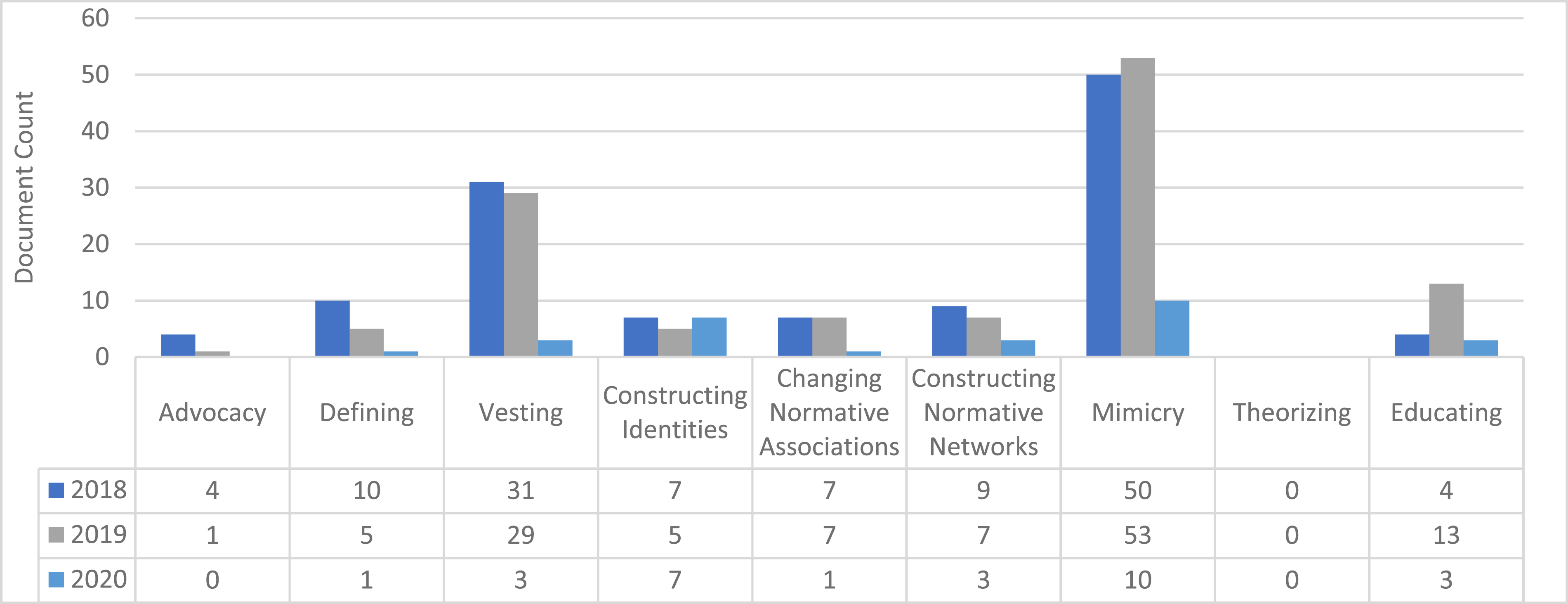
Number of documents coded with the respective categories of MedMen's institutional work between 2018 and 2020.
Coding structure allowed for overlapping categorizations. In other words, a press release can be coded with multiple different institutional work categories, given that some documents contained information and announcements on a variety of topics and events with different purposes.
Once the coding was complete, the press releases in each category were analyzed using a text analysis tool platform called Voyant Tools to determine common concepts and explore relationships between those concepts and the institutional work categories. A list of stop words was determined, and the words were removed in order to clean the data from irrelevant observations. In the analysis, we kept concepts and words that were commonly found in those templatized texts as well.
Inter-rater reliability was 93.5% between the two coders. Disagreements in coding were discussed for convergence, and the textual analysis was only done on the agreed-upon codes. The software we used for our text analysis provides a variety of analyses and visualizations for word frequencies and correlations as well as enables sentiment or cross-categorical analysis.
Medmen's Institutional Work
We explored MedMen's institutional work in the following different contexts: their press releases, advertisement campaigns, and retail stores. We identified three main institutional work types in the text analysis, one in advertisement campaigns and one in the retail aesthetic logic, all under the creating institutions category. In this section, we provide this analysis.
The frequency of documents categorized for types of work in creating institutions suggests that the brand engaged heavily in three types of institutional work: Mimicry, emulating other industries' institutional practices, vesting, allocating resources to construct institutional norms, and educating various stakeholders in the newly institutionalized market. The results of our text analysis of press releases can be found in Figure 1. Additionally, Appendix 1 includes the table that shows the top ten most frequent terms for each type. Appendix 2 includes excerpts from press releases that correspond to forms of institutional work to exemplify the coders' interpretation of the institutional work represented for each category.
An overwhelming majority of the documents showcased representations of mimicry. MedMen has been striving to adopt practices commonly observed in the technology startup space, therefore intentionally mimicking other startups that raise funds through venture capital in establishing their institutional operations. The second most common type represented in the press releases is MedMen's vesting work during the earlier part of their life cycle until August 2020. The company has been acquiring and redistributing resources as they engage in regular fundraising, acquisition of licenses, and retail spaces in multiple states. The third most frequent type of institutional work is educating, as twenty press releases contain announcements for information sessions with content related to the consumption as well as the investment potential of their offering. The next most frequent types, constructing identities and constructing normative networks, were encountered equally as much (See Figure 1 for all frequency distributions sorted by year.)
Some more interesting insights may also be derived through a comparative analysis of the text. Through a deeper dive into the text analysis, we determined collocated words/phrases for each category, revealing unique concepts that appear in several categories and highlighting the common threads. While at a lower count compared to the whole dataset, the greatest number of unique observations were found in the advocacy category. Themes formed around the concept of cannabis legalization and legislating bodies in specific markets (e.g., Nevada, California, etc.), as well as names of mayors, governors, and congresspeople. Most notably, in categories with the most data, such as vesting, the differential frequency of unique words provided insights into the corporate strategy over time. The company chose a different strategy of deepening their investment in their current markets rather than expanding into new markets in recent years, and phrases like “new market” were proportionally less common in 2020, while the frequency of the two largest (and earlier) markets for MedMen “Los Angeles” and “Las Vegas” was higher than other locations. The excerpts to exemplify these other types of institutional work can also be found in Appendix 2.
In the following section, we demonstrate how MedMen engaged in activities with the purpose of constructing identities through an analysis of four advertising campaigns the brand ran in 2018 and early 2019.
Constructing Consumer Identities
The construction of identities as a form of institutional work is central to creating institutions because identities describe the relationship between an actor and the field in which that actor operates (Bourdieu and Wacquant 1992 as cited in Lawrence and Suddaby 2006). We propose that MedMen constructs new consumer identities with its advertising campaign. The stereotypical image of a cannabis consumer portrayed by the media in television shows (e.g., Disjointed) and Hollywood movies (e.g., Harold and Kumar series, Pineapple Express) is one of a “stoner” staring with glassy eyes, unable to focus attention, disassociated from reality, famished after the “high,” and typically a young unemployed male spending his days on a couch (Miner & Co. Studio 2018; Richter 2018). One big problem with such Hollywood depictions of cannabis consumers as “stoners” or representations of any other people is that the general public perceives it as reality (Miner & Co. Studio 2018).
To change this image of the recreational cannabis consumers, MedMen ran four major promotion campaigns in Southern California, the home of its headquarters and the biggest cannabis market in the U.S. In 2018, the year recreational cannabis was legalized in California, an ad trio named “Faces,” “Forget Stoner,” and “Cannabis” was launched, followed by a fourth one that came out in February 2019 called “The New Normal.”
The first campaign, claimed to be the largest outdoor cannabis ad campaign in history by MedMen VP of corporate communications Daniel Yi (Handley 2018) with a $750,000 budget, ran with the taglines “Relax. It's Legal”, “Smile. It's Legal”, “Heal. It's Legal”, “Smoke. It's Legal” portraying real MedMen customers was intended to show the diversity of cannabis consumers and its uses (Hacienda 2018). However, due to strict ad regulations, people could not be shown using the products. At the introduction stage of the legal product, the campaign objective was to make cannabis relatable to people by restating the effects cannabis has and repositioning it from a drug that makes people “temporarily insane” to a supplement that relaxes and heals the consumer Image 1.
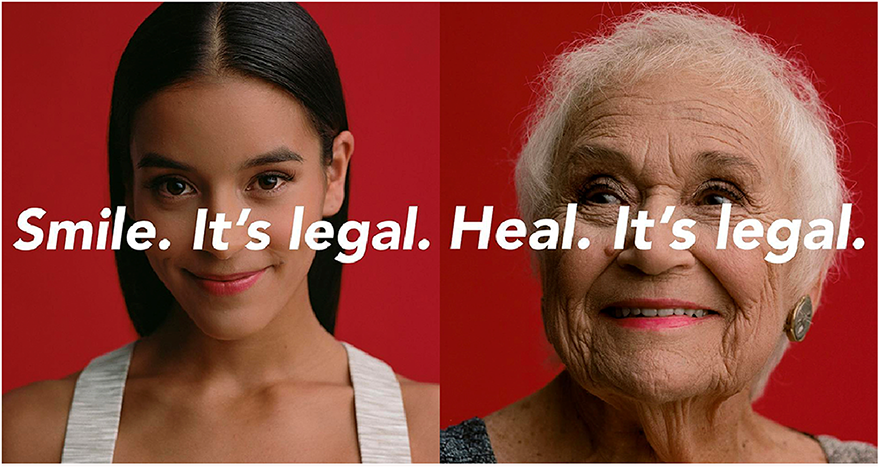
MedMen Campaign 1 “It's Legal”.
In April 2018, MedMen launched its second campaign in the series with the “Forget Stoner” slogan. In an Adweek interview, MedMen CMO Caretta stated that “[o]ur campaign is all about celebrating that diversity and broad level of interest. […] There is something for everyone, and it is time to move beyond dated labels that don't reflect the realities of today” (Stanley 2018). Again, the campaign objective was to normalize and change perceptions around cannabis use by featuring 12 consumers which included white-collar professionals and grandmothers. “The images used in the “Forget Stoner” series, advertised on L.A. highway billboards and Beverly Hills buildings, showcased people from all walks of life, all professions, to prove the point that the “stoner” stereotype has grown old” (Straining 2018). The campaign website (forgetstoner.com – no longer available) gave more in-depth information about each of these people who appear on the billboards. By clicking on the image of a gray-haired woman who looks like she is in her 80s, we found out that the grandma is “a Doctor with a PhD, professional meditation teacher, and avid hula hooper, Barbara enjoys swimming, reading, and connecting with close friends over a dish of edibles” (forgetstoner.com) Image 2.
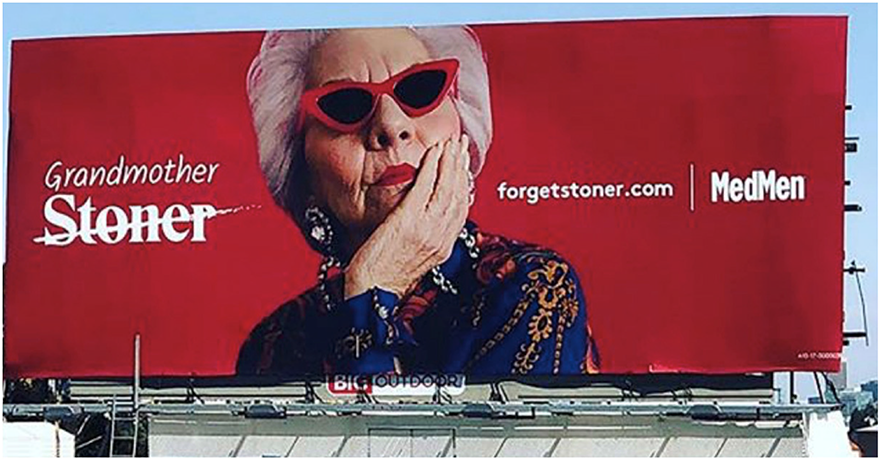
MedMen Campaign 2 “Forget Stoner”.
The final and largest of the campaign-trio of 2018, with a reported $4 million budget (Diaz 2018), was “Cannabis” that appeared in August. The “Cannabis” campaign launched under the new MedMen CMO David Dancer differed from the previous two, which showcased real cannabis consumers by depicting different “characters” against iconic L.A. backdrops. The characters' -a surfer, a roller skater, a body-builder- faces were deliberately left out of frame. “The strategy behind the new campaign is to allow ‘consumers to picture themselves in any of these stories,’” Dancer explains. It's also meant to highlight the fact that MedMen, which has been referred to as the ‘Starbucks’ or ‘Apple store’ for weed, isn't that seedy shop tucked away in the corner. Rather, it can be found in the area's iconic shopping districts, Dancer says. The ads also name the various locations of MedMen stores – including Beverly Hills, West L.A., LAX, and Abbot Kinney in Venice Beach. “We want it to be clear to our current and future customers that we are the best cannabis retailer, and we are located in the best neighborhoods. This is just another step in our mission to reframe the imagery and conversation surrounding cannabis culture.” (Diaz 2018) Image 3.

MedMen Campaign 3 “Cannabis”.
“The New Normal,” a two-minute video directed by famed director Spike Lee was launched in February 2019 as the first-ever consumer cannabis commercial after being rejected by select cable networks to which it was submitted (Sawyer 2019). It continues the brand's message of rethinking stereotypes. In this short film, MedMen goes further and shines a light on the history of cannabis in the U.S. as far back as George Washington's hemp farms. The camera moves from still-life vignettes, where historical moments in relation to cannabis are depicted, and a voice over guides the viewer as the film moves from scene to scene. After stating that the hemp farms during Colonial times were normal, the voice-over asks, “you know what's not normal?” to answer, “80 years of unjust prohibition, which hasn't made us any safer,” referring to the stop and frisk policies predominantly targeting non-white populations. There is also the mention of how a black-market product is now creating jobs in a global market. “The ad ends with an idyllic moment in a cookie-cutter suburban neighborhood, where a couple arrives home from a shopping trip, carrying along with their groceries MedMen's signature red bag. ‘The symbol of counter-culture is, at long last, just culture,’ reads the voice over. ‘It's normal again. Here's to the new normal.’” (Diaz 2019). The ad was shortlisted in the 2019 Clio Awards (Clio Awards 2019) and won the Webby Award for Advertising, Media, and P.R. Best Art Direction in the same year (Webby 2019). Image 4.
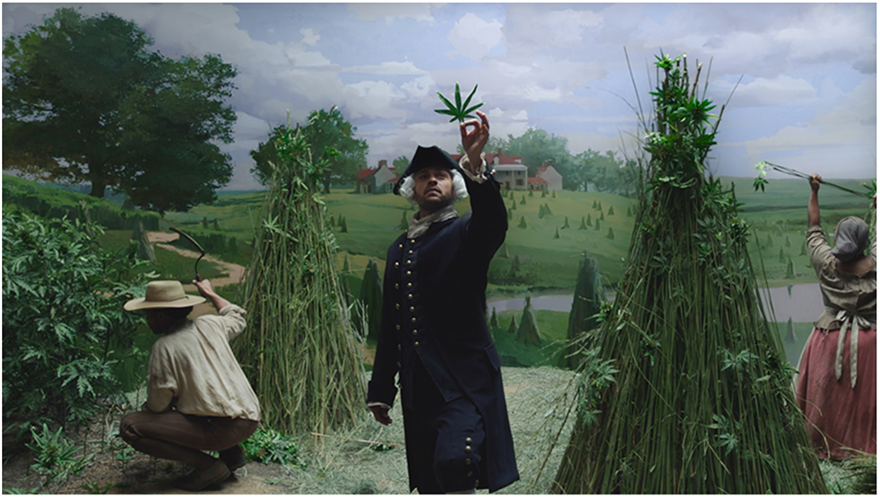
MedMen Campaign 4 “The New Normal”.
Mimicry of Market and Aesthetics Logics Through Retail Experience
Mimicry refers to associating new practices with existing sets of taken-for-granted practices, technologies, and rules in order to ease adoption (Lawrence and Suddaby 2006). Huff, Humphreys and Wilner (2021) document the role of sensory alignment of objects in attaining legitimacy of recreational cannabis consumption. As the authors show, products that visually mimic other legitimate products such as consumer packaged goods or pharmaceuticals support cultural cognitive legitimacy. In the case of MedMen, we observe two other forms of mimicry via which the pioneer brand aimed to attain legitimacy. First, akin to the material forms of objects, the spatial mimicry through the retailscape helped the brand convey cultural cognitive legitimacy. In its retail stores, MedMen has strategically mimicked the décor and atmosphere of Apple stores. In a 2018 Forbes interview, when Daniel Yi, Senior V.P. of Communications for MedMen, was asked to comment on the comparison of MedMen dispensaries to Apple stores, he stated: “It's not the fact that it reminds you of an Apple Store inside, it reminds you of any well-done retail store.” Yi then explained that a focus on the customers' experience in the retail design is what sets MedMen aside, just like Apple, MedMen allows people to interact with the products: “… you have Geniuses that go around explaining things, and that's the same concept. Let's explain to the consumer how this works. Let's cater to the consumer. That's how retail works — you make the consumer experience the focus.” He describes the customer experience intended in their retail locations: “You can browse at your own pace, ask a sales associate if you need help. The products are on shelves, the flowers are in this little case called BudCases that have a magnifying glass and a small vent so that you can examine the flower” (Kaufman 2018). By merely treating cannabis like any other product, Yi intends to maximize the retail experience and revenue (Kaufman 2018).
MedMen's CMO B. J. Caretta likened their retail experience to another well-established brand with a positive brand image “[i]f I were to actually compare it [to fashion retail], I would probably say from the volume we do, Nordstrom and Target. Target has amazing branding and amazing in-house brands that they sell, and the experience is great. It's not super down here. It's not super up here. It's accessible” (Bryant 2018).
During our visit to one of the eight Southern California MedMen dispensaries in December 2018 to experience the retail store first-hand, we were greeted with a store employee checking our I.D.s for age, for which one has to be 21 to consume cannabis in California legally. The store was laid out the way Yi described in his above-mentioned interview, with iPads, displaying product information on big glass-cased display units showcasing various cannabis products ranging from flowers to vapes, lotions, and edibles like gummies, mints, and even dog treats. A refrigerated storage unit stored perishable items like cannabis-infused chocolates, and a section of the dispensary had more expensive strains such as reserves. Employees with red and white logoed t-shirts with mini iPads attached to their wrists, akin to Apple store staff, were available to consult the customers who are asked to show their I.D.s for proof of age one more time prior to the purchase transaction as well.
Mohan (2018) reported on April 20th (4/20), a symbolically historic day, “Adam Bierman, the CEO of MedMen, is convinced his company can help sway the conversation by redefining the look and feel of a dispensary. ‘This is about mainstreaming marijuana and destigmatizing it,’ he told reporters at an event in MedMen's Manhattan location on Wednesday night, where state senators from New York and New Jersey were in attendance.”
Beyond spatial mimicry, Medmen also integrated aesthetic logics in its other consumer communication platforms, such as a lifestyle magazine and its social media. MedMen publishes a quarterly magazine called EMBER: A Journal of Cannabis and Culture, which is printed on high-quality paper resembling a fashion magazine and mostly serves as a catalog of products the company sells as well as incorporating articles and interviews with artists, musicians, and celebrities. The Holiday 2018 issue, which was available at MedMen dispensaries, includes an advice column titled “Dear Maryjane” and articles on fashion, travel, food, the economics of the cannabis industry, suggestions on how to prepare a cannabis-paired feast for a holiday party, and an eight-page fashion spread.
MedMen's social media accounts are a continuation of the brand identity. Facebook, Instagram, and Twitter pages use the red and white company colors and similar visual aesthetics. The Instagram page (@shopmedmen), mostly a platform to market its merchandise, has highly stylized images of people, including celebrities, grey-haired baby-boomers, and their campaigns mentioned above. In July 2019, MedMen started hiring fashion veterans to oversee and execute its brand strategy (Moore 2019). By recruiting employees who have formerly worked at luxury fashion brands such as Tory Burch and Prada, MedMen attempts to cultivate their sense of fashion and aesthetics towards creating more appreciation of its product offers.
Discussion
Our study highlights a megamarketing view, where brands can define the rules of the game that shape consumer perceptions and behaviors within the marketplace (Kotler 1986; Humphreys, Chaney and Slimane 2017). Prior research has keenly documented how market actors can adopt megamarketing strategies such as lobbying, negotiation, strategic partnering, legal action, and advertising to influence market dynamics (Kotler 1986). Both during new market creation and market evolution, market actors' strategic practices influence moral, cognitive, and legal legitimacy, all of which can be contested over time (Coskuner-Balli and Ertimur 2017; Giesler 2008, 2012; Humphreys 2010; Humphreys, Chaney and Slimane 2017). The theoretical addendum we make to this extant research is twofold: First, our study documents how brands can construct consumer identities towards attaining legitimacy for the stigmatized consumer practices. While prior studies on market creation have noted framing strategies that allowed market actors to align new practices with existing institutions (Coskuner-Balli and Ertimur 2017; Ertimur and Chen 2020; Ertimur and Coskuner-Balli 2015; Humphreys 2010), they have not directly explored how constructing consumers identities with a set of demographic, psychographic and moral characteristics can aid legitimation. In their study of the medical cannabis industry, Lashley and Pollock (2020) document how moral infusion and creating a clean image of marijuana producers were vital to the normalization of medical marijuana. Similarly, our analysis of MedMen's advertising documents the role of moral shaping of consumer identities and brands' potential part in it.
Second, extending prior research in marketing that examines the impact of the institutional environment on marketing initiatives and market dynamics, we provide an overlooked link between brand strategy and institutional strategy. In what follows, we discuss how institutional work as a branding strategy contributes to brand management literature.
Since the 1970s, the strategic brand management literature relied heavily on a cognitive, benefit-driven branding model that focused managers' attention on identifying and carving a simple yet distinctive position for the brand in the mind of the consumer and building brand equity (Aaker 1996; Keller 2003). The emotional branding model was developed in the 1990s to incorporate relational and emotional aspects of branding into the strategic management of brands and emphasized the importance of crafting emotionally-laden brand stories and forging affective relations with consumers (Gobe 2001). With some similarities to emotional branding (Thompson, Rindfleisch and Arsel 2006), Holt (2004) developed a cultural branding model that outlined strategic principles for building iconic brands. From an institutional theory perspective, however, building a brand strategy in culturally complex environments requires attention to the plural logics of the marketplace (Ertimur and Coskuner-Balli 2015). Therefore, brand managers need to focus on institutional environments and the tensions that might arise due to the contestations of logics and the legitimacy of consumption practices. We argue that in markets where regulative and cultural-cognitive legitimacy of consumption practices are contested, as is the case in markets such as natural health, raw milk, online gambling, music sharing, brands can adopt institutional work towards establishing legitimacy for the contested consumption practice. Our analysis of MedMen shows that brands can specifically do so by adopting vesting and mimicry work. As a vertically integrated company, MedMed has opportunities to expand its reach while at the same time establishing an institutionalized marketplace.
Identifying the institutional work of brands in contested markets is important for a number of reasons. First, while Holt (2002, p. 87) argues that consumers' acceptance of brands is based on the way they contribute to (presumably individual) identity projects, we know from prior research that brand legitimacy is not only or solely tied to consumers' individual identity projects. Kates' (2004, p. 462) ethnographic research amongst gay consumers, for instance, illustrates that the legitimacy of brands is “based on shared normative meanings associated with moral communities.” While his study unpacks the processes through which consumers negotiate shared meanings of brands, our study illustrates the ways in which a brand takes a pioneer role in mobilizing logics as cultural resources (Swidler 1986).
The task of managers/brands in institutional fields is not only to monitor the cultural disruptions and/or doppelgänger brand images that media and other activists circulate but also to introduce and contribute to changes in the marketplace. We observed in the case of MedMen that the brand was not only reacting to cultural changes and/or the doppelgänger brand images, but as it employed the institutional work of mimicry, constructing consumer identities, and vesting, it contributed to the legitimization of recreational cannabis consumption in the U.S. Huff, Humphreys and Wilner (2021, p. 32) find that “expressive capacities of objects such as visual appearance, scent, or taste enable products to take on favorable meanings by creating sensory links with legitimate products from adjacent market assemblages.” Our study reveals that not only through the objects, but such sensory alignments can be created through retail and social media strategies where brands can mimic well-established retail experiences and amplify aesthetic logics to enhance legitimacy.
Finally, we also extend on prior marketing studies that have documented institutional entrepreneurs' role in market transformations (Ertimur and Coskuner-Balli 2015; Giesler 2012; Humphreys 2010; Scaraboto and Fischer 2013). Our study shares with the past research documentation of the roles skilled market actors play to shape markets. These institutional entrepreneurs, managers, and brands can amplify logics in the market as well as bring other logics from adjacent fields. As our study reveals, the aesthetic logic was central to the institutional work of mimicking. The current study also extends the prior work by highlighting the institutional work of brands in constructing consumer identities. Select consumer research has keenly documented the role of brands in creating consumer subjectivities which has political and consumer well-being implications in other contested markets.
Conclusion and Future Research
This study examined the institutional work of MedMen between 2018 and 2020 as it was trying to establish itself in the contested legal cannabis market in the U.S. We illustrated the dynamics of this institutional work as it pertained to advertising, public relations, and retail strategy of the brand. Over the course of two years, we identified that MedMen especially relied on mimicry, vesting, and educating work in its public relations and used its advertising to construct consumer identities.
Our study offers managerial implications for market actors who operate in contested markets:
In markets where the regulatory, normative, and cultural/cognitive legitimacy are contested, such as the human organ transplant, psychedelics, genetically modified organisms, and personal data, market actors can establish themselves via strategic use of institutional work. Brands can adopt logics towards gaining legitimacy and acceptance by abiding by established norms and meanings (c.f. Kates 2004). As our findings suggest, mimicry through retail strategies helps tap into culturally shared meanings towards gaining more legitimacy. Brands can bring in logics from adjacent fields to gain legitimacy. Prior research on stigmatized consumers and practices has noted how consumers cull from logics from adjacent fields to change the stigmatized meanings. For example, Scaraboto and Fischer’s (2013) study in the fashion industry showed how the plus-sized consumers frustrated with lack of choices for their body types used the logic of human rights to create the plus-size fashion market. In another fashion-related context, the veiled consumers in Turkey who were previously stigmatized for their clothing practices employed the logics of modesty and virtue espoused by the Islamic faith to justify their choice (Sandikci and Ger 2010). In both instances, the consumers used the logics from adjacent fields to drive change. We find that MedMen relied on the aesthetics logic towards integrating the cannabis products with a higher taste lifestyle. Our study highlights the vitality of press releases in brands' potential institutional work. Targeted not necessarily to end consumers but to other stakeholders, press releases can be a key tool for vesting. Most importantly, our findings acknowledge brands as key actors in constructing consumer subjectivities and thereby invite brand managers to think beyond traditional segmentation strategies trying to identify existing clusters among their target demographics but rather think about the consumer identities as historically, culturally created positions that brands can help destigmatize and legitimate.
The legal adult-use cannabis market in the U.S. is still in its infancy, and we are yet to experience how it will evolve in the upcoming decades, especially in the changing political, legislative and cultural milieu. Building and maintaining institutional norms require different types of institutional work at different phases of an industry's life cycle. When it comes to the cannabis market, we observe some amount of institutional work that intends to maintain the institution. This could be explained by delineating between the newly forming adult retail use market and the medicinal market in various states that enabled parts of this industry to evolve before the retail component. Maintaining legitimacy in contested mature markets through discursive strategies has been demonstrated by Debenedetti (2021) in the French automotive industry in the context of corporate environmentalism. Their work shows that there are two main differences between the legitimation dynamics in mature markets from those in earlier stages of the market. In mature markets, “the organizations’ legitimation efforts are no longer primarily organized around products, services or major technologies, but that they are more prominently shaped by key issues that contribute to re-structuring the field” (p. 25), and organizational discourses are adapted based on the different expectations of the stakeholders (e.g. customers, employees, and shareholders). Even though, as we stated previously, MedMen is still at the early stages of the legal cannabis market and not in a mature contested market, they employ differentiated communication strategies with their various stakeholders. For example, their press releases targeting their shareholders emphasize the financial aspects of the company, whereas their promotion campaigns, retail spaces, website, and EMBER magazine/blog target the consumers and focus on the branding of the company. They adopt different institutional works for different constituents.
While we explored one brand's institutional work in the contested marketplace, we did not consider the competitive relations in this marketplace. A multi-brand analysis could reveal the market dynamics and the types of institutional work other brands adopt. Second, while we had secondary consumer data inferring the increasing acceptance of recreational cannabis consumption, we did not conduct primary interviews with cannabis consumers to assess their responses to MedMen's institutional work. Exploring customer sentiment would provide us with a better understanding of how institutionalization contributes to the legitimization of cannabis consumption. Third, we analyzed the brand's institutional work through press releases for a two-year period. Press releases are generally positioned to target shareholders; and therefore, heavily focus on financial practices about how the companies fulfill their duties to their shareholders. In additionally, the analysis of retail store choices and advertising campaigns inform the managerial choices companies make to (re)construct identities and change perceptions. Further research could look into how a brand's institutional work evolves over time and changes the perceptions towards contested markets, similar to the cannabis market.
Supplemental Material
sj-docx-1-jmmk-10.1177_02761467211029243 - Supplemental material for Institutional Work and Brand Strategy in the Contested Cannabis Market
Supplemental material, sj-docx-1-jmmk-10.1177_02761467211029243 for Institutional Work and Brand Strategy in the Contested Cannabis Market by Gökçen Coskuner-Balli, Ekin Pehlivan and Mine Üçok Hughes in Journal of Macromarketing
Supplemental Material
sj-docx-2-jmmk-10.1177_02761467211029243 - Supplemental material for Institutional Work and Brand Strategy in the Contested Cannabis Market
Supplemental material, sj-docx-2-jmmk-10.1177_02761467211029243 for Institutional Work and Brand Strategy in the Contested Cannabis Market by Gökçen Coskuner-Balli, Ekin Pehlivan and Mine Üçok Hughes in Journal of Macromarketing
Footnotes
Acknowledgments
The authors would like to acknowledge Matthew Macrini's contributions during the data collection and analysis process. As part of his directed studies towards his Bachelor of Science in Business from the Martin V. Smith School of Business and Economics at California State University Channel Islands, he served as one of two coders on this project.
Declaration of Conflicting Interests
The author(s) declared no potential conflicts of interest with respect to the research, authorship, and/or publication of this article.
Funding
The author(s) received no financial support for the research, authorship and/or publication of this article.

Supplemental Material
Supplemental material for this article is available online.
Author Biographies
References
Supplementary Material
Please find the following supplemental material available below.
For Open Access articles published under a Creative Commons License, all supplemental material carries the same license as the article it is associated with.
For non-Open Access articles published, all supplemental material carries a non-exclusive license, and permission requests for re-use of supplemental material or any part of supplemental material shall be sent directly to the copyright owner as specified in the copyright notice associated with the article.
