



Abstract
Anti-consumption is arguably the most impactful environmentally friendly behavior but can be very challenging for consumers and antithetical to marketing. However, it may be possible for brands to support consumers in difficult anti-consumption actions. This paper demonstrates that a conspicuous signal communicating environmental motives can encourage anti-consumption, particularly for consumers least likely to do so without it. Real social media behavioral data and two experiments show that willingness to engage in anti-consumption practices can be enhanced with use of conspicuous anti-consumption signals, specifically for consumers low-to-moderate on environmental concern and moderate-to-high on need for status, while increasing willingness-to-pay. This type of consumer is unlikely to be intrinsically motivated to reduce consumption and much more common than extremely green consumers, potentially resulting in very large positive impact. If more brands support reduced consumption, the dominant social paradigm around marketing and ever-increasing consumption could begin to shift for the good of the planet.
Keywords
Introduction
The current pace of consumption is unsustainable from a climate change perspective. For example, the average American is estimated to throw away and, presumably, replace 81 pounds of clothing a year (Gilmore 2018). The textile and fashion industries that support and encourage this pattern of overconsumption are some of the biggest contributors to climate change on the planet (House of Commons Environmental Audit Committee 2019). The United Nations recently stated in agreement with environmental activists that the basic nature of consumption must shift towards a circular system to reach climate goals (UN Climate Change News 2021). Circular consumption dictates that brands and consumers engage in traditional “green” actions, such as cleaner production and recycling, but also includes anti-consumption actions, such as refusal, reduction, repair, and reuse. In order to reach climate goals of zero emissions by mid-century set by the Intergovernmental Panel on Climate Change (IPCC 2018), it is imperative that consumption is reduced drastically, meaning increased consumer research into anti-consumption is critical (Lee, Cherrier and Belk 2013).
Marketing activities are generally focused on demand creation and driving consumption; however, this research explores for-profit brands’ role in reducing consumption by supporting anti-consumption behaviors. Anti-consumption refers to “reasons against” consumption and the resulting behaviors (Chatzidakis and Lee 2013) and covers a wide spectrum of motives, attitudes, lifestyles/practices, actions/behaviors, and inactions (Makri et al. 2020). In the narrowest sense, anti-consumption can be a refusal to buy (or inaction; Zavestoski 2002) but also includes reducing, repairing, and reusing existing goods so that the production of new material goods (and associated physical resource exploitation) can be minimized (García-de-Frutos, Ortega-Egea, and Martínez-del-Río, 2018).
Richer conceptualizations of anti-consumption add reclaiming and restricting to rejection actions (Lee et al. 2011). Lee et al. (2011) state that when complete cessation of consumption (rejection) is not possible, restriction actions (reducing consumption generally or within specific categories) and reclamation (diverting items out of the waste stream) exist within the anti-consumption ethos. Importantly, García-de-Frutos, Ortega-Egea and Martínez-del-Río (2018) define environmentally oriented anti-consumption (EOA) as volitional acts stemming from sustainability consideration and encompassing reduction, avoidance, and/or rejection. Therefore, actions like purchasing an item that is long-lasting and durable versus a single use disposable or a used item versus a comparable new item are anti-consumption actions that support general consumption reduction but still include consumption actions (purchase or acquisition).
In the dominant social paradigm (DSP), marketing is fundamentally connected to demand
creation which facilitates increased consumption and hence, increased production of goods. It can seem that brands and the protection of the planet through anti-consumption are fundamentally at odds. One can speculate that brands may shy away from anti-consumption initiatives despite being more impactful from an environmental perspective because they can be disruptive to individual consumption patterns and exist outside the growth imperative, particularly, if growth is defined solely in terms of ever-increasing units sold. However, is there a way to remain profitable in terms of revenues while reducing overall units produced? If a company can satisfy consumers’ needs without producing more physical goods, this may be possible. Satisfying functional needs often necessitates material goods. Strategies to produce these goods in more resource efficient manner through business model changes is a traditional route to mitigate climate change. However, it can be relatively easy for for-profit companies to satisfy symbolic needs without creating and selling more material goods and in the process grow brand equity and revenue potential. This paper is a part of our ongoing research efforts (Armstrong Soule and Sekhon, forthcoming; Sekhon and Armstrong Soule 2020) to explore ways in which for-profit brands can remain profitable and support reduced consumption (and production) at the category level. Russ Klein (2019), the CEO of the American Marketing Association, recently stated that considering social impact is a moral imperative, and a consideration of anti-consumption and changing profit motivations is a necessity for the marketing industry. In sum, though DSP can be changed radically if brands opt out of the growth imperative and just aim for financial viability, even redefining growth in terms of revenues rather than units sold can bring more for-profit brands on board and help create scalable change. Though a radical change in DSP (i.e., opting out of the growth imperative) is more desirable from a climate change mitigation perspective it might be less feasible in our hyper capitalistic society and political economy. On the other hand, a more incremental change in DSP (i.e., redefining growth in terms of revenues rather than producing and selling more units and/or financial viability) can be more feasible and motivating for for-profit brands.
Consider how brand-driven green versus anti-consumption initiatives can impact waste on a consumer level. Starbucks distributes 6 billion single use cups a year, which translates to over 16 million a day, or almost 200 per second (Starbucks n.d.). Starbucks has spent millions of dollars to design a better cup, one that is more easily compostable or recyclable. Starbucks promised that customers “will not see any noticeable difference from the current cup as Starbucks aims to create a seamless customer experience with the new cup” (Starbucks 2020). This statement highlights the notion that brands can help by providing consumers with greener options and can do so without asking the consumer to make a personal change or sacrifice. More recently, Starbucks is encouraging anti-consumption by introducing a system that incentivizes the use of reusable cups (Tyko 2021). Previous reuse initiatives have only been successful at boosting reuse from 2% to 6%, suggesting that encouraging consumers in anti-consumption is challenging (Starbucks 2018). Other brands like REI encouraging consumers to not shop on Black Friday and Patagonia urging consumers to repair rather than buy new items also support anti-consumption practices and have been more successful in a traditional marketing sense, realizing increased profits after campaigns focused on anti-consumption (Moss, 2018). Unpacking factors leading to successful brand supported anti-consumption initiatives can help scale anti-consumption beyond a small, fringe group of consumers to the masses which is necessary to mitigate climate change.
Refusing a single use cup is by definition an anti-consumption action, one that a very small percentage of the population is willing to do from some combination of environmental and financial motives as demonstrated by the Starbucks trial above. It can be assumed that this group is very strongly motivated by extreme attitudes (very high environmental concern or very financially motivated). But what about the other 94%? What does it take to get moderate consumers to engage in anti-consumption? Due to the need for large-scale behavioral change, this paper is focused on leveraging a more universally held consumption motivation, specifically need for status. This paper tests the possibility that status motives can be leveraged for the majority of consumers that hold low-to-moderate levels of environmental concern. Like traditional consumption, anti-consumption also serves self-expressive functions (e.g., Hogg et al. 2009), whereby consumers’ identities and values are communicated to others (Belk, Bahn and Mayer 1982). However, because this type of anti-consumption is often “unseen” (Chatzidakis and Lee 2013), it presents a reputational challenge for consumers. Purchasing products with known “green” qualities can pass on status perceptions (Griskevicius, Tybur and Van den Bergh 2010), but an anti-consumer's refusal to buy “stuff,” or physical goods, can rob them of the opportunity to communicate their environmental values and motives to others (Sekhon and Armstrong Soule 2020). Brand provided symbols, for example, like the “Worn Wear” patch Patagonia affixes to repaired items, may mitigate some of the barriers around anti-consumption actions. Conspicuous anti-consumption (Sekhon and Armstrong Soule 2020) refers to the practice by a brand, or a consumer, of making these impactful, yet sometimes painful, consumer actions visible to others. By making anti-consumption “seen” and understood via signals, these actions become more appealing to consumers, particularly those concerned with status.
This research addresses the dearth of research related to anti-consumption, in particular around a moderate, or “average,” consumer. The majority of research in anti-consumption neglects the role of marketing and for-profits brands and focuses on a fringe population. In order to drive impactful change, this research considers two traits—the more widely possessed need for status in tandem with environmental concern. It is possible that an effective means to combat overconsumption can be utilized by both brands and individual consumers - namely using a signal that leverages status motives.
Next, this article explores the constructive place that macromarketing holds in tackling climate change, followed by a discussion on the specific role that brands can play in encouraging anti-consumption through green demarketing strategies and actions. Then, a taxonomy of consumption behaviors is presented based on two distinct and measurable consumer characteristics (concern for the environment and need for status). By organizing consumption patterns based on these trait motivations, the taxonomy will provide guidance on scaling anti-consumption behaviors. Hypotheses are developed regarding how conspicuous anti-consumption signals can shift a large segment of moderate consumers away from the more prevalent “conventional,” “green,” and “luxury” consumption choices towards anti-consumption behaviors. To test these hypotheses, actual behavior via social media posts and data from two experiments are analyzed. The findings demonstrate that leveraging status motivation through conspicuous anti-consumption signals can nudge consumers with low-to-moderate environmental concern and moderate-to-high need for status to reduce consumption. This research contributes to theory in sustainability and macromarketing in terms of how brands can catalyze macro changes in consumer culture by scaling anti-consumption behaviors based on individual differences at a micro level. This research suggests that large scale industry change along these lines could shift the DSP in order to mitigate climate change. Finally, implications for brands, consumers, and the role of marketing in society are discussed.
Climate Change and Macromarketing
Researchers, scientists, environmental activists, as well as marketers (Diaz, 2021) are all continuing to recognize human role in the climate change during the Anthropocene. The relationship between environmentalism and overconsumption is particularly problematic in the battle to reduce climate change due to the historic trajectory and implications of the role of marketing in society. It can be compellingly argued that the current state of environmental degradation is a result of the consumer culture, one that believes that buying things leads to happiness and, hence, satisfaction is achieved by purchasing more and more (Featherstone 1990). Dominant social paradigm (DSP) is a sociological construct that refers to the prevailing cultural structure that describes how people perceive the world and act within it (Milbrath 1989). Mittelstaedt, Kilbourne and Shultz II (2015) define the DSP in Western societies as embedded in consumerism—that meaning and success in life is tightly tied to ever-increasing material wealth and the related patterns of overconsumption. The strong role of marketing in this relationship is evident, in that marketing historically is focused on demand creation and can be seen as, at best, exacerbating this problematic relationship.
Sustainability research in marketing must take a macromarketing perspective (Kilbourne, McDonagh and Prothero 1997) and support a flip in the relationship between marketing and sustainability. The research herein answers the calls of many (e.g., Armstrong Soule and Reich 2015; Fisk 2006; Hall 2018; Lee, Cherrier and Belk 2013; Little and Helm 2019; Mittlestaedt et al. 2014; Prothero et al. 2011; Sekhon and Armstrong Soule 2020; Zavestoski 2002) for actionable research that can lead to scalable results in this domain. Recent consumer research finds that anti-consumption is much more impactful in reducing environmental impact (Kropfeld, Nepomuceno and Dantas 2018) than other more conventional and widespread “green” consumption behaviors (such as recycling or cleaner sourcing). However, both consumers and brands may be attracted to shifting to green options as an easier path, despite that it does not shift the DSP and has more tempered impacts (Howard-Grenville et al. 2014).
Brands that can effectively embrace a shift away from increasing material consumption can reorient the relationship between marketing and society. We believe further the imperative from a macromarketing perspective is not to simply shift to greener versions/processes, but to reverse the push of consumerism and instead adopt an anti-consumption perspective. The next section reviews the connections between anti-consumption and brand level efforts related to anti-consumption.
Anti-Consumption and Green Demarketing
Scaling anti-consumption using a macromarketing perspective is a powerful means to reimagine and transform the relationship between marketing and society. Anti-consumption refers to both attitudes that stem from “resistance to, distaste of, or even resentment or rejection of, consumption more generally” (Zavestoski 2002, p. 121). Cherrier (2009) extends that anti-consumption can also refer to action or inaction that is driven from these attitudes. Further, these anti-consumption actions must be volitional or intentional, driven by reasoned motives to oppose consumption (Chatzidakis and Lee 2013).
There are many types of anti-consumption behaviors; for example, boycotts (Yuksel and Mryteza 2009), specific brand avoidance (Lee, Motion and Conroy 2009; Sandıkci and Ekici 2009), buycotts and carrot mobs (Hutter and Hoffmann 2013), voluntary simplicity or downshifting (Etzioni 1998; Shaw and Newholm 2002), culture jamming (Carducci 2006), and resisting disposal through lifespan extension (Scott and Weaver 2018). These actions can stem from many motivations (Chatzidakis and Lee 2013; Kozinets, Handelman and Lee 2010) such as resistance to consumerism (Dobscha 1998), slowing down (Grigsby 2004) or for social, ethical (Shaw and Newholm 2002), or environmental reasons (Black 2010; Black and Cherrier 2010). Most relevant to this research is environmentally oriented anti-consumption (EOA).
EOA is defined by García-de-Frutos et al. (2018) as acts aimed at protecting the environment via reduced, avoided, or rejected consumption. In their anti-consumption typology, Kozinets, Handelman and Lee (2010) would classify EOA actions as the “utopian” type, which refers to reduction of general consumption (vs. category or brand specific) from a moral/collective (vs. personal) motivation. Iyer and Muncy (2009) describe global impact consumers as those who reduce individual level consumption due to societal concerns, usually citing humans’ current levels of consumption resulting in irreparable damage to the planet. This position is counter-normative (Kozinets, Handelman and Lee 2010), challenges the DSP (Lee, Cherrier and Belk 2013), is antithetical to traditional marketing strategies (Armstrong Soule and Reich 2015), and difficult for consumers (Røpke 1999). Research in this area tends to focus on the “fringe” or extreme versus mainstream consumers (Lee, Fernandez and Hyman 2009).
From a brand perspective, anti-consumption actions are often viewed as a negative consumer attitude or behavior to be handled or contended with (e.g., Yuksel and Mryteza 2009). However, some recent research has explored the meaningful role that brands can play in assisting consumers’ anti-consumption practices via green demarketing (Armstrong Soule and Sekhon, forthcoming). Armstrong Soule and Reich (2015) define green demarketing as brand actions that allow and encourage reduced category consumption via purchase of the focal brand. Green demarketing refers to brand activities that support consumers in EOA; for example, a brand that creates a durable cleaning swab that once purchased allows the consumer to cease buying and trashing thousands of disposable swabs over their lifetimes. Armstrong Soule and Reich (2015) find that when consumers perceive a strong fit between the brand's environmental reputation and its demarketing messages, they are more positively received by consumers. In an advertising context, Reich and Armstrong Soule (2016) find that anti-consumption messages that are institutional (vs. product specific) are more positively received than a traditional “green” message, and an “amplifier” that reminds about the environmental impact of consumption makes these ads even more positively evaluated.
Following Chatzidakis and Lee (2013), Armstrong Soule and Sekhon (forthcoming) explore reasons for (functional, symbolic, and experiential benefits) and against (reactance, skepticism, confusion, and ideological opposition) for brand supported anti-consumption. They suggest that when a brand can encourage consumption of the focal brand in a manner that reduces category consumption, it can be considered green demarketing success. Sekhon and Armstrong Soule (2020) find that providing consumers with visible signals (termed conspicuous anti-consumption signals) that convey the anti-consumers’ green motivation can counteract some of the negative associations with anti-consumption. Specifically, observers perceive anti-consumption actions as driven by financial duress (and thereby not volitional), unless a meaningful signal alerts them to the environmental motives behind such actions, which in turn increases positive socioeconomic status evaluations of the anti-consumer.
Though Sekhon and Armstrong Soule (2020) took the perspective of observers to understand their inferences regarding anti-consumers and their actions in the presence (vs. absence) of conspicuous anti-consumption signals, the current research takes the perspective of actors and explores the effectiveness of such signals in encouraging anti-consumption, particularly amongst the consumers least likely to do so due to intrinsic motivations. The goal of this research is to move the needle on adoption of anti-consumption practices beyond the fringe of deeply committed environmentalists to mainstream consumers by leveraging the status motivation. Therefore, next, we explore how two important consumer traits of environmental concern and need for status motivate particular types of consumption.
Role of Environmental Concern in Consumption Choices
In marketing and consumer research, various descriptors are used to label a consumer's individual differences, motivations or trait measures of environmental concern in consumption choices such as environmental consciousness, environmental protection, pro-environmental orientation/attitudes, environmental altruism, conscious consumerism, green consumption values or consumerism, sustainable or responsible consumption, eco-friendliness, etc. Many such scales have been developed to measure this consumer trait and test its connection to behaviors in the marketplace. For example, the GREEN scale (Haws, Winterich and Naylor 2014) defines this construct as the tendency to express the personal value of environmental protection through purchase choices. Further, many studies (e.g., Koller, Floh and Zauner 2011) explore the motives for and against green behaviors beyond trait level concern for the environment such as green quality perceptions (Luchs et al. 2010), other personal values and individual differences, e.g., motivational orientations (de Groot and Steg 2010), monetary savings/cost (Luchs, Naylor, Irwin and Raghunathan 2010; Benveniste 2019), positive feelings (Chatelain et al. 2018) or altruism (Popp 2001) and status motives (Griskevicius, Tybur and Van den Bergh 2010). Despite a substantial amount of research in the area, the understanding of environmental concern and its connections to consumption and business strategies is somewhat cloudy and misunderstood in the marketing field (Connolly et al. 2007).
Despite the continuing research interest and increase in reported environmental concern in the marketplace (Jahns 2021), consumer green product choice remains marginal (White, Hardisty and Habib 2019). Carrington, Neville and Whitwell (2010) argue that ethical consumerism (which includes environmental concern) has steadily increased from fringe to mainstream culture in the early 2000s. At the same time, the researchers also state that ethical intentions rarely result in ethical purchases for many reasons such as measurement error related to social desirability, implementation intentions, actual behavioral control, and situational context. This attitude-behavior (or word-deed) gap is widely documented and studied in social psychology and consumer research (Bagozzi 1993). This research suggests that even when ethical (or environmental) motives are very strong, various contextual and internal factors can moderate the relationship between the ethical intentions and behavior (i.e., reduced consumption, in this case). It may be that attempting to increase environmental concern may not be the most effective lever to pull to change behaviors. In fact, when environmental concern does not translate into actions, it is often the result of competing motives. Recently, research in environmental concern has explored the interplay between environmental concern and social status (e.g., Berger 2019; Huddart, Baumann and Johnston 2019; Sun, Bellezza and Paharia 2021). This attention suggests that need for status is connected to environmental motives in an evolving manner. The following sections explore the interplay of status motivations in driving luxury, green, as well as sustainable luxury consumption.
Role of Need for Status in Consumption Choices
In society and the marketplace, it is often the case that two parties have asymmetric access to information when one person knows something that the other does not. For example, one knows his/her own identity, skills, and value and desires to accurately convey that information to another. When there is information asymmetry, individuals often use signals to convey information about themselves to others (Spence 2002). The signaler wants the receiver to understand a certain quality or aspect about their identity and so sends a signal which the receiver then must decode into a judgment about the individual (Connelly et al. 2011). In a consumption setting, signaling theory can be used to describe the manner in which brands use signals like product design (Lampel et al. 2000) and advertisements (Chung and Kalnins 2001) to tell consumers about their identities, but also can refer to how individuals share about themselves through their possessions (Belk 1988). Recent research suggests that consumers are motivated to use costly green signals when facing a state of social exclusion and further do so in public (vs. private) settings (Guo et al. 2020).
The human desire to convey status to others has been well documented through history and is identified by evolutionary psychologists as a basic human motivator (Cheng, Tracy and Henrich 2010). Over a century ago, Veblen (1899) asserted that status is conveyed through evidence of wealth rather than the actual accumulation of wealth. Eastman, Goldsmith and Flynn (1994) define consumers’ need for status as the tendency to purchase items due to the status or social prestige that is conferred on the owner. Traditionally, this is done through purchase and usage of expensive products that can be seen by others, termed conspicuous consumption (Veblen 1899). More contemporary consumer researchers have provided extensive evidence that people make inferences about others based on their possessions (e.g., Richins 1994) and that consumption choices can be motivated by a desire to convey a certain image (DeBono 1987), such as status (e.g., Wilcox, Kim and Sen 2009). Dubois and Duquesne (1993) find that high income is related to luxury spending.
Those products and brands that hold the highest price/quality ratios in the market can be labeled as luxury (McKinsey 1990). Historically, luxury and sustainability have been viewed as incompatible, and consumers can perceive luxury to be “superfluous” (Dubois and Laurent 1994). Luxury consumption has been entangled with excess and waste in direct opposition to green patterns. Davies, Lee and Ahonkhai (2012) find that luxury consumers are less likely to consider ethical implications of purchases. Green consumption is one component of ethical consumption. However, Hennings et al. (2013) report that this relationship has been shifting and explicates how luxury brands can integrate sustainability into practices and brand meanings. Griskevicius et al. (2010) suggest that green consumption can also confer status on a consumer due to its costly signaling. Selecting green products can be viewed as a costly personal choice that prioritizes social good due to the sustainability liability. Sustainability liability refers to the consumer bias that green alternatives to conventional products have lower quality and are more expensive, although, this is not always the case in the marketplace, and it can be mitigated with messaging (Luchs et al. 2010). Therefore, incurring personal costs for prosocial benefits through visible green choices is a means to signal status. Anderson, Hildreth and Howland (2015) report that status can be considered a basic human motivator, and it has been recently explored in relation to green luxury. Ali et al. (2019) present cross-cultural evidence that green luxury purchases (in this case, a car) can leverage social status motives through costly signaling. Often green products are more expensive and can provide status benefits to consumers (e.g., Sexton and Sexton 2014).
As described above, consumers use luxury and green products to signal identity and motives. However, when consumption is forgone through refusal, reuse, or repair, this often can be unseen because there is no new product associated with this (in)action. The result is that anti-consumption practices can be even more costly, in that not only is there a loss in functionality, but also a symbolic loss of status gains that could be associated with green consumption. Moreover, observers perceive anti-consumption, i.e., not consuming at the usual societal levels as driven by financial constraints, which leads to a status loss even as compared to conventional consumption (Sekhon and Armstrong Soule 2020). Losing physical items that signal identity, as well as being emotionally costly, adds to these costs (Cherrier and Murray 2007). This tension between the lack of products and the ability to use consumption activities to convey environmental motivation is a barrier to decreased consumption for the typical consumer. Next, a process by which these concerns may be mitigated is described, and the research question and hypotheses are presented.
Consumption Patterns Based on Environmental Concern and Need for Status
The authors suggest that rather than attempting to change preexisting attitudes and motivations that influence consumers’ intentions and behaviors, it may be more efficient and impactful to leverage the existing deep-seated status motive in the service of anti-consumption behaviors without necessarily changing attitudes towards anti-consumption. Research in resistance to consumption suggests that anti-consumption provides an opportunity for self-expression (Black and Cherrier 2010), but the segment of the population that identifies as anti-consumer is quite small, and the changes needed are enormous. Perhaps by using the status motivation and connecting it to anti-consumption behaviors, more impact can be wrought.
This research identifies the types of behaviors consumers are likely to engage in based on their mixed motivations and offers a strategy to nudge more consumers to engage in anti-consumption, specifically those who are not intrinsically motivated by strong environmental concern. We propose a taxonomy that organizes types of consumption into six categories based on two distinct and measurable motives discussed above: environmental concern and need for status. The taxonomy presented below organizes consumption patterns based on these two traits and suggests that conspicuous anti-consumption signals can encourage anti-consumption behavior amongst a majority of consumers – including those who are currently engaging in conventional, green, luxury and sustainable luxury consumption patterns. We are interested in the behavior (reducing consumption) and suggest this behavior is naturally performed by those who are low in need for status and high in environmental concern. Those who are low in need for status and low in environmental concern are most likely operating at a reduced consumption level and engaging in utilitarian consumption for functional purposes. Therefore, we suggest focusing on the other consumers may be a viable and impactful focus for brands rather than “preaching to the choir” of anti-consumers and moderate consumers who are very low on status and/or very high in environmental concern. Please refer to Figure 1.
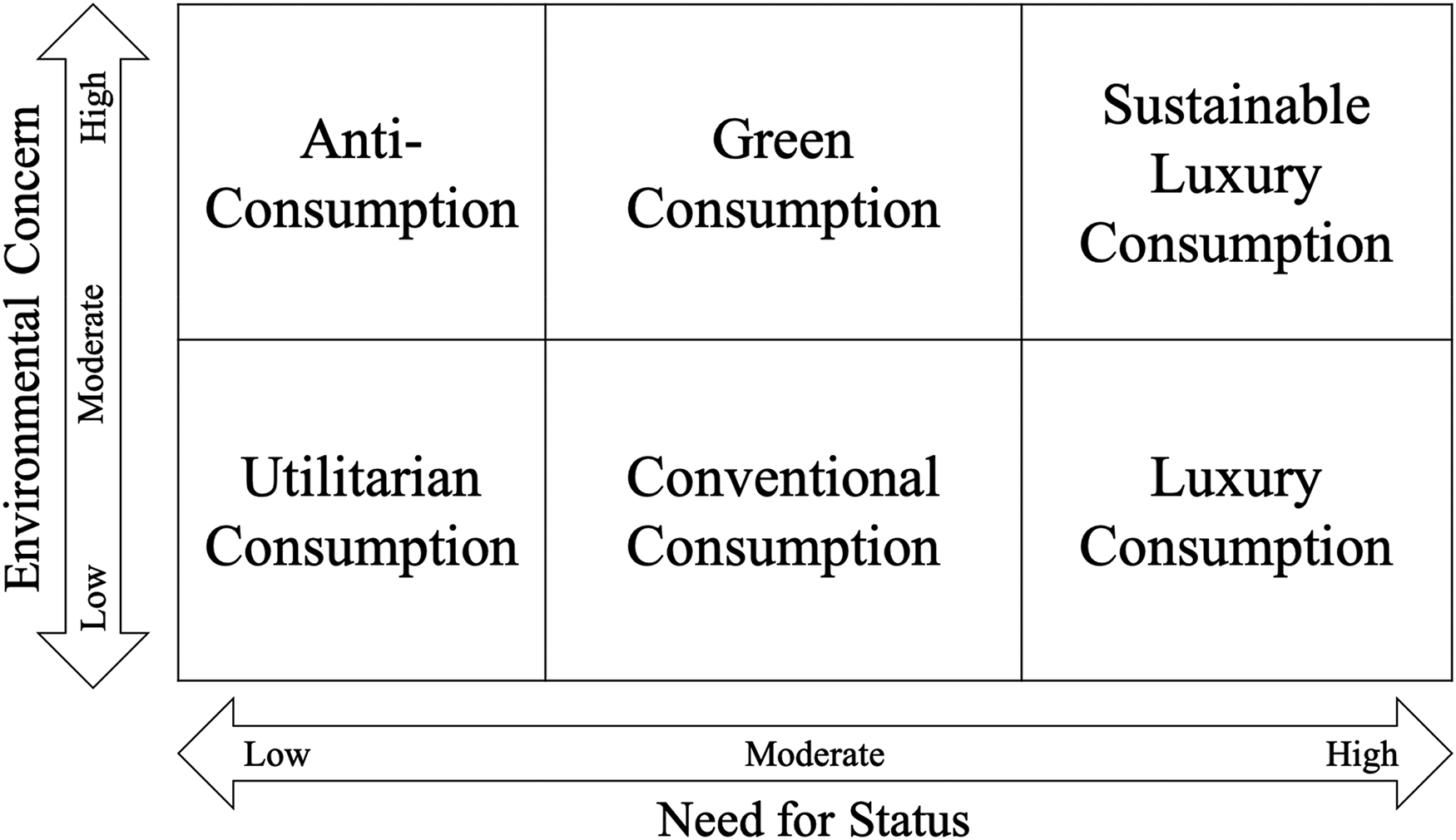
Taxonomy of behavior patterns based on need for status and environmental concern.
In summary, the taxonomy organizes typical consumption behaviors based on consumers’ environmental concern and need for status. An important insight from this taxonomy is understanding why consumers naturally engage in a variety of consumption behaviors that vary widely in terms of their impact on the environment. Because need for status is a widely held and deep-seated motivation that exists not just in humans but in animals as well (Sundie et al. 2011), we suggest that rather than focusing on shifting consumers’ attitudes and motives (for example to try to make consumers care more about the environment), finding marketing tools to leverage the inherent need for status to encourage anti-consumption may be easier and result in much greater societal impact, rather than attempting to shift motivations.
Amongst low need for status consumers, those very high on environmental concern are already primed to engage in anti-consumption practices for intrinsic reasons. They are happy to make monetary as well as lifestyle sacrifices for the sake of the environment, for example these consumers may decide not to buy or drive a car at all. However, those low in need for status and low-to-moderate on environmental concern as likely to engage in utilitarian consumption driven by functional needs (and avoid overconsumption) because they are not using consumption just as a mechanism to gain status in their social circle. They may buy a Kia that happens to have good gas milage or a hybrid if the price is lower than alternatives. On the other hand, consumers with moderate-to-high environmental concern as well as moderate-to-high need for status are likely to engage in green or sustainable luxury consumption, as these premium-priced offerings can offer high sustainability qualities as well (such as craftmanship, timelessness, and durability). This group cares about the environment but is also motivated by status that comes with consumption – for example, driving a Prius for moderate need for status versus a Tesla for high need for status. Further, those low in environmental concern and high in need for status are likely to engage in traditional luxury purchases because they really value the unambiguous status signaling potential of luxury products, to continue the car example, they may buy a Bugatti Chiron.
By far the largest group of consumers are those in the middle - who are low-to-moderate on environmental concern and moderate on need for status are likely to engage in conventional (over) consumption as they care about status or at the very least, they are concerned about losing status if observers associate their reduced consumption with financial constraints (Sekhon and Armstrong Soule 2020). Past research suggests that most “main street” consumers are preoccupied with bread-and-butter issues and might consider environmental concern as a luxury that only elites could afford (Holt 2014). In fact, any messaging focused on prosocial benefits of sacrificing one's consumption or lifestyle for the greater good might actually turn them off. These are the consumers buying the tens of millions of Toyota Camrys (Gale 2013). In order to shift behavioral patterns towards anti-consumption, one route would be to attempt to increase trait concern for the environment to extremely high levels as well as decreasing trait levels of need for status. This seems a very difficult path. The authors herein suggest that visible signals can make anti-consumption activities more appealing to those who are low to moderate in environmental concern but moderate to high in need for status, a combination which accounts for a large segment of consumers. The results of studies presented subsequently suggest individuals who would normally demonstrate each of these consumption patterns (conventional, green, luxury, and sustainable luxury) can be shifted towards anti-consumption by leveraging conspicuous anti-consumption signals that tap into the status motives. The next section introduces the hypotheses.
Conspicuous Anti-Consumption
A major barrier to anti-consumption is consumers’ need for status that both green as well as luxury products can satisfy. Green consumers can be seen as “elite” due to the high price tags associated with greener products (Brisman 2009). Work in costly signaling theory (Griskevicius et al. 2007) has provided evidence that prosocial and green behaviors that help “the greater good” convey status (e.g., Barclay and Willer 2007). Recent consumer research finds that anti-consumption is much more impactful in reducing environmental impact (Kropfeld, Nepomuceno and Dantas 2018) than other more conventional and widespread “green” consumption behaviors (such as recycling or cleaner sourcing). Although anti-consumption acts are the greenest, and thereby should get the most “credit” for contributing to the social good, they are often difficult to observe in the marketplace and can send negative signals of financial impoverishment even as compared to conventional consumption.
The products individuals consume provide widely understood signals into consumers’ identities (Belk 1988). Someone driving a Prius will be assumed by an observer to be more “green” than someone driving a Camry or a 4Runner. When those products are absent, for example, choosing to not buy a car but instead take public transportation, that (in)action lacks an easily decodable signal of environmental motive to observers. Sekhon and Armstrong Soule (2020) suggest that providing consumers with visible signals that clarify environment motives for reduced consumption can mitigate observers’ negative assumptions. For example, Patagonia provides a Worn Wear patch to affix to a repaired jacket, so that action (repair and the subsequent product lifespan extension) is now visible, and the motive can be understood by others. Specifically, Sekhon and Armstrong Soule (2020) find when an anti-consumer uses a clear green signal (a patch affixed to a coat that has been repaired), observers perceive higher socio-economic status and more environmental consciousness for the anti-consumer. The signal that clarifies the motive for anti-consumption actions boosts positive perceptions of the consumer and the associated brand. The research herein tests whether these signals can motivate consumer actions in the absence of strong environmental convictions. It is suspected that consumers will use signals to clarify the environmental motives for anti-consumption in order to reflect that the action is volitional and not due to financial constraint. Drawing on research in attitudes and motivations, it is likely that these signals can perform a social-adjustive function (DeBono 1987), meaning it would manage others’ impressions and project a particular image rather than through a value-expressive function or conveying a core identity. Our overarching research question is can a status motive be leveraged to encourage anti-consumption practices? Based on the theoretical framework, it is expected that visible signals will increase the attractiveness of anti-consumption actions by appealing to those who are motivated by a need for status.
Further, it is expected that consumers who are highly green are intrinsically motivated to de-escalate their consumption. However, doing so can be particularly difficult for those who usually engage in conventional (over) consumption because they are not particularly concerned about the environment. For such consumers, conspicuous anti-consumer signals, such as a hashtag, sticker, patch, or badge, become significant motivators to engage in anti-consumption despite their low-to-moderate levels of environmental concern. Stated formally:
Additionally, consumers who have a high need for status prefer high-status brands by definition, and this can result in luxury consumption. However, a conspicuous anti-consumption signal can provide an alternate pathway to signal and acquire status in the eyes of observers. Therefore, relatively lower status brands can improve attractiveness amongst status-seeking consumers by providing conspicuous anti-consumption signals.
This research question is explored and three hypotheses are tested empirically in the research presented below.
Study 1: Exploratory Analysis with Behavioral Social Media Data
The purpose of Study 1 was to explore the research question around status and conspicuous anti-consumption, specifically considering the relationship between signal usage and socioeconomic status. While anti-consumption may be assumed to stem from financial constraint (Sekhon and Armstrong Soule 2020), the recent developments in luxury and sustainability suggest that a tool to convey environmental motives may be appealing to high status individuals in the absence of consumption. The authors predict that when a visible signal is used, higher socioeconomic status individuals are more likely to engage in anti-consumption actions, and this was investigated by analyzing real consumer behavior observed on online.
Method
In order to understand the usage of a conspicuous anti-consumption signal, the #OptOutside hashtag was analyzed. #OptOutside is connected to a marketing campaign by outdoor gear retailer REI, which, beginning in 2015, annually closes its stores and website on Black Friday and encourages people to get outside rather than shop. In addition to signing a pledge on REI's website, customers are encouraged to post on social media about their outdoor adventures and to use the hashtag “#OptOutside” while doing so. This hashtag represents a conspicuous anti-consumption signal—one that clarifies the sender's environmental motivation for refraining from shopping on Black Friday and is provided by and imbued with cultural meaning by the brand. REI's customer base is assumed to be higher on environmental concern based on the reputation of the brand and its identity in the marketplace (Collings 2020).
Researchers partnered with an anonymous firm that works with Facebook and has access to aggregated data to collect anonymized user data during the two weeks before and on Black Friday in November, 2017. The posts scraped from Facebook resulted in approximately 145,000 posts, with almost 50,000 of those occurring on November 24, 2017.
Results and Discussion
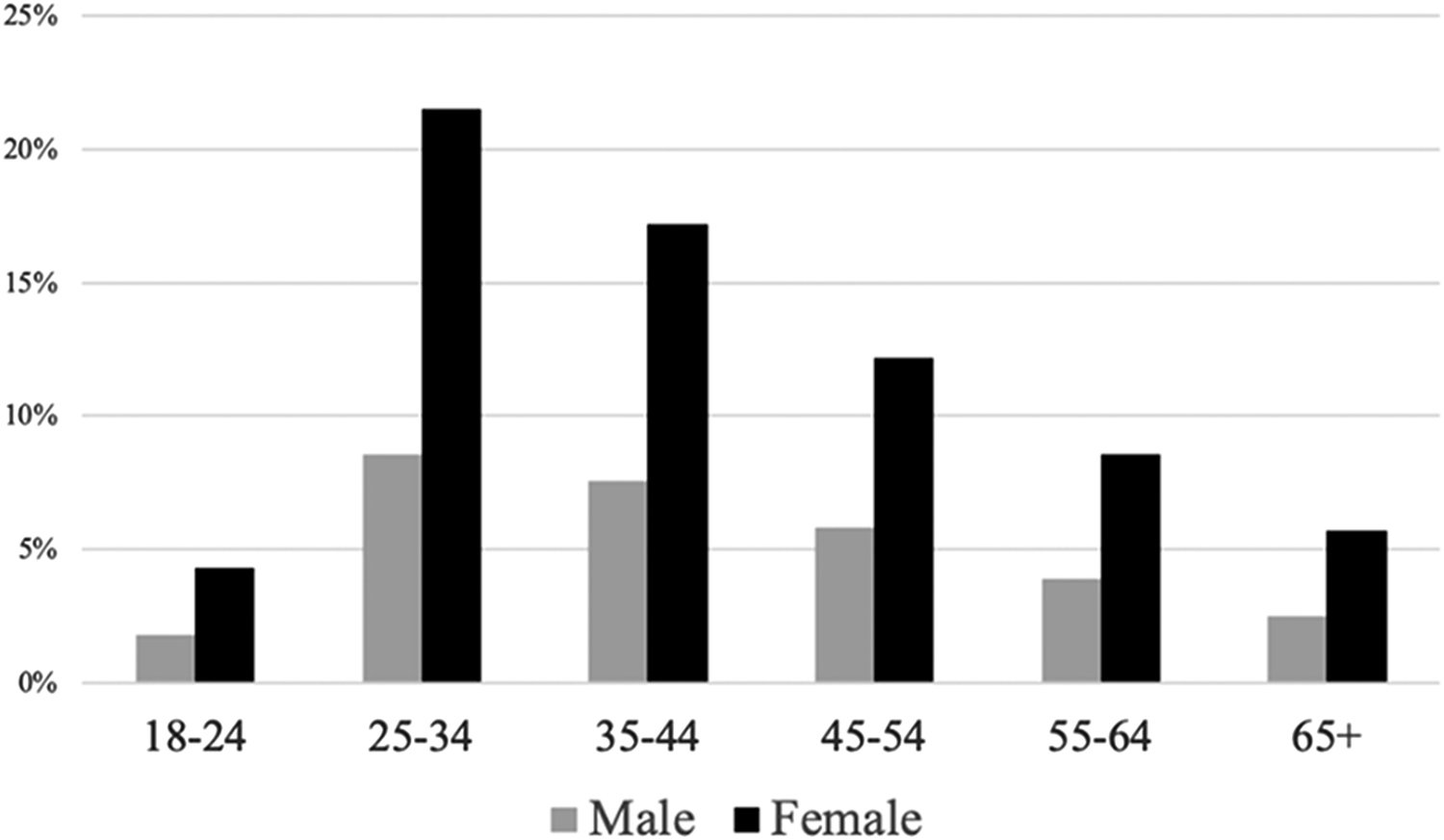
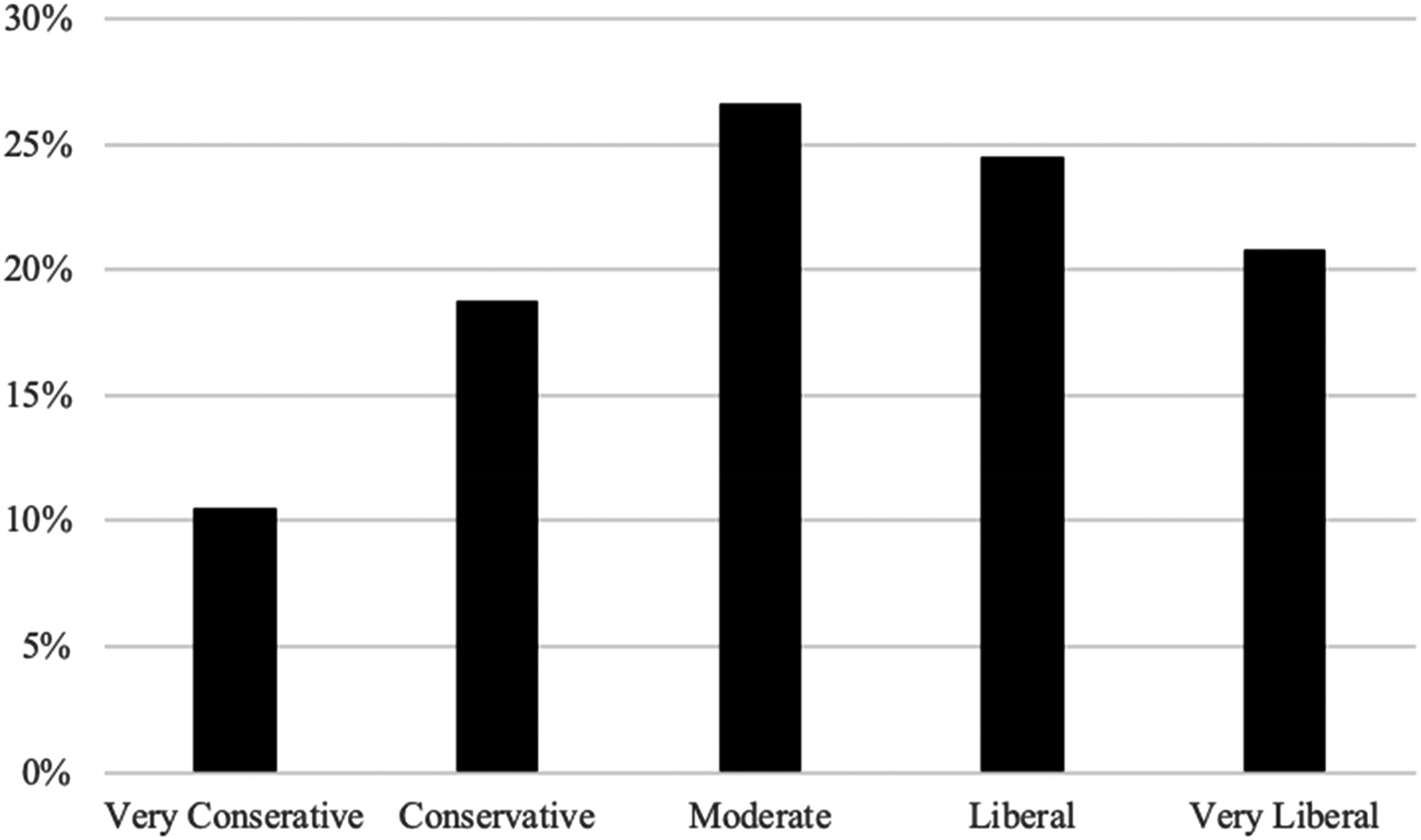
The goal of this study was to explore whether relatively higher SES consumers were engaging in anti-consumption actions and signaling them via use of the hashtag. To do so, we compared #OptOutside users to the general Facebook population. First, Tables 1 and 2 provide demographic information on the group of users who posted with the hashtag during this time period. It should be noted that this group is skewed female, relatively young, and liberal in their political beliefs.
Gender and Age of #OptOutside Users.

Political Ideology of #OptOutside Users.

The following is a comparison between the demographics and psychographics of users who posted #OptOutside (signalers) and those of the general Facebook user population. The metric used to compare these groups is “indexing,” which compares the percentages in each group (signaling group compared to the general Facebook population) to identify differences. Over-indexing means that a higher percentage of those in the signaling group had this quality than would be expected by considering the general population data. As shown in Table 3, those signaling their anti-consumption using #OptOutside over-indexed on college education by over 26 percent and graduate school by over 200 percent. This group under-index on high school only education level by 55 percent compared to the general Facebook population.
Education Levels by Group.


Audience Insights is an internal psychographic tool that Facebook uses to categorize users into 39 lifestyle groupings that act as proxies for socioeconomic status. Table 4 presents the indexing related to signalers and the general Facebook population for the top 4 SES groups in descending order.
Facebook's Top 4 SES Audience Insights Categories.

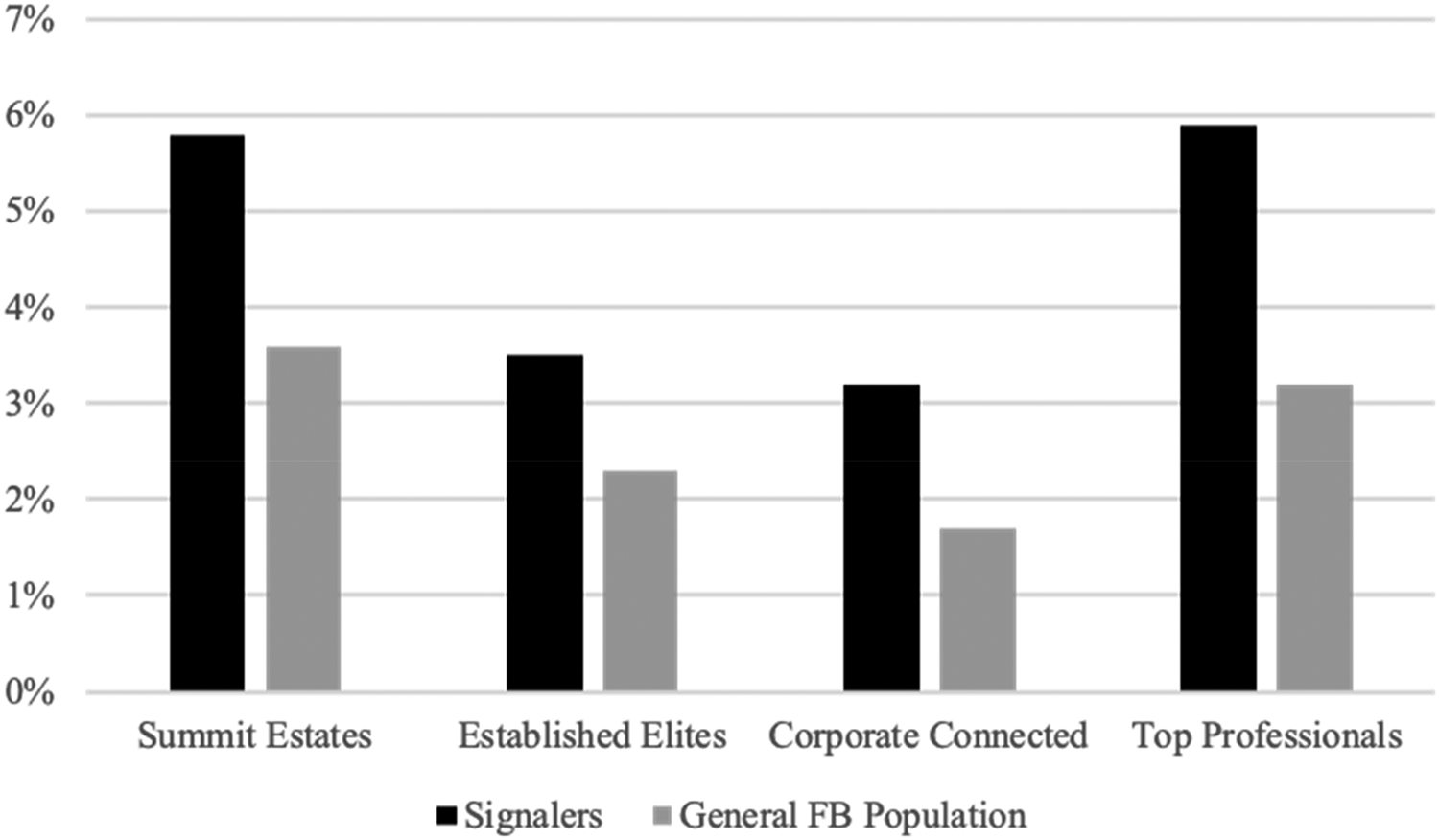
The top tier in this categorization system is “Summit Estates,” defined by Facebook as the wealthiest users—those who have “good life, luxury travel, entertainment, and consumption of every kind within easy reach.” Signalers using #OptOutside over-indexed on the Summit Estates category by 61 percent. Consumers using #OptOutside also over-indexed on the next three tiers of wealth-related lifestyle descriptions: Established Elites (52%), Corporate Connected (88%), and Top Professionals (84%). This correlational evidence suggested that consumers belonging to a high SES (based on proxy variables of lifestyle categories and education) are more likely to use conspicuous anti-consumption signals. This motivating data demonstrates that high SES individuals do engage in conspicuous anti-consumption, but the generalizability is limited. Next, two experimental studies were conducted to establish causality and the underlying mechanisms for this association.
Study 2: Commitment to Anti-Consumption for Moderate Consumers
The aim of Study 2 was to empirically demonstrate that a conspicuous anti-consumption signal (i.e., a meaningful signal that clarifies environmental motivation) influences consumers’ anti-consumption actions in a social marketing context testing H1. Importantly, the study also considers the impact on consumers with low-to-moderate levels on environmental concern in order to test H2.
Method
Study 2 adopted a three condition between-subjects design (control vs. signal vs. both signal + information). Respondents were students at a mid-sized western university who received course credit for their participation (n = 147, 45% female). All respondents were told about a fictitious “Blue Dot Initiative” that their university was about to launch to encourage reduced consumption. Along with some other filler details that remained constant across conditions, all respondents were told that everyone who enrolls in the program committing to reduce their own consumption will be given a thrifted, secondhand shirt. The use of the t-shirt program as context and stimuli was selected because it was realistic to the student population (schools and other organizations often provide t-shirts as incentives because they signal to others about the organization or program). Further, the use of secondhand shirts in all conditions is a clear example of anti-consumption via reusing versus “new” consumption. They were further informed that “the shirts will be distributed randomly, so you won't be able to pick your size or style. These shirts may not necessarily look nice or fit well but are part of our commitment to reduce consumption.” Then, they were shown a picture of four sample shirts—two men's shirts and two women's shirts. The shirts looked visibly old and out of style (please see Appendix A for detailed instructions and stimuli). In the control condition, the shirts did not have any signals. In the “signal only” condition, all four shirts in the image featured a large blue dot (tying back to the campaign name and the university color), and respondents were also told in the description text that all shirts would have a prominent blue dot. In the “both signal and information” condition, additional details of a Blue Dot Awareness Campaign were shared. Respondents read that the university would also launch a massive awareness campaign informing the campus community about the initiative and the Blue Dot shirts so that anybody who sees someone wearing the shirt could immediately recognize that they had committed to the Blue Dot Initiative. Respondents indicated their attitude towards the shirts ("dislike/like," “negative/positive,” and "unfavorable/favorable”; α = .93), attitude towards the initiative itself (same items as above; α = .97), and their likelihood of enrolling in the program on seven-point scales (1 = extremely unlikely and 7 = extremely likely), followed by demographic variables. Data on the respondents’ environmental concern was measured as part of a separate study where they responded to a short scale adapted from Schuhwerk and Lefkoff-Hagiuss (1995) environmental concern scale items: “I am concerned about the environment,” “The condition of the environment affects the quality of my life,” and “I am willing to make sacrifices to protect the environment” (1 = strongly disagree and 9 = strongly agree; α = .85).
Results
To test hypotheses 1 and 2, PROCESS model 1 in SPSS (Hayes 2017) was utilized to run moderated regressions; the results of which are shown in Table 5 and reported in detail.
Regression Coefficient Betas and Variance Explained by Dependent Variable.

Note: † p < .1, * p < .05, ** p < .01.
Regarding attitude toward the shirt, the predicted main effect of having both signal and information (β = 3.36, p = .02) was found, supporting H1. There was also a main effect of respondents’ levels of environmental concern (β = .38, p = .01) in that higher levels resulted in more positive attitudes about the shirts. Finally, there was a marginally significant interactive effect for the signal + information condition with respondents’ level of environmental concern (β = −.35, p = .07). As shown in Figure 2, the difference in attitude towards the shirts between the both (Signal + Info) condition and control condition was marginal for individuals at 50th (β = .65, p = .06) and not significant for individuals at 85th percentile of environmental concern (β = .18, p = .71). However, for those low in environmental concern (those at the 16th percentile), providing the signal + the information led to more positive attitudes (M = 3.78) as compared to the control condition (M = 2.42; p < .05). However, the difference in attitude towards the shirts was not significant between the signal only and the control condition at any level of environmental concern. To identify regions of significance of the effect of the signal + information condition as compared to the control condition across different levels of environmental concern, the Johnson-Neyman procedure was applied (Spiller et al. 2013). There was a significant effect having both signal and information on attitude towards the shirts for all levels of environmental concern below 7.50 (42.5% of the sample) on a 9-point scale (at 7.50: b = .35, SE = .18, t-value = 1.98, p = .05). Above the level of 7.50 on environmental concern scale, there were no differences between conditions in attitude towards the shirts.
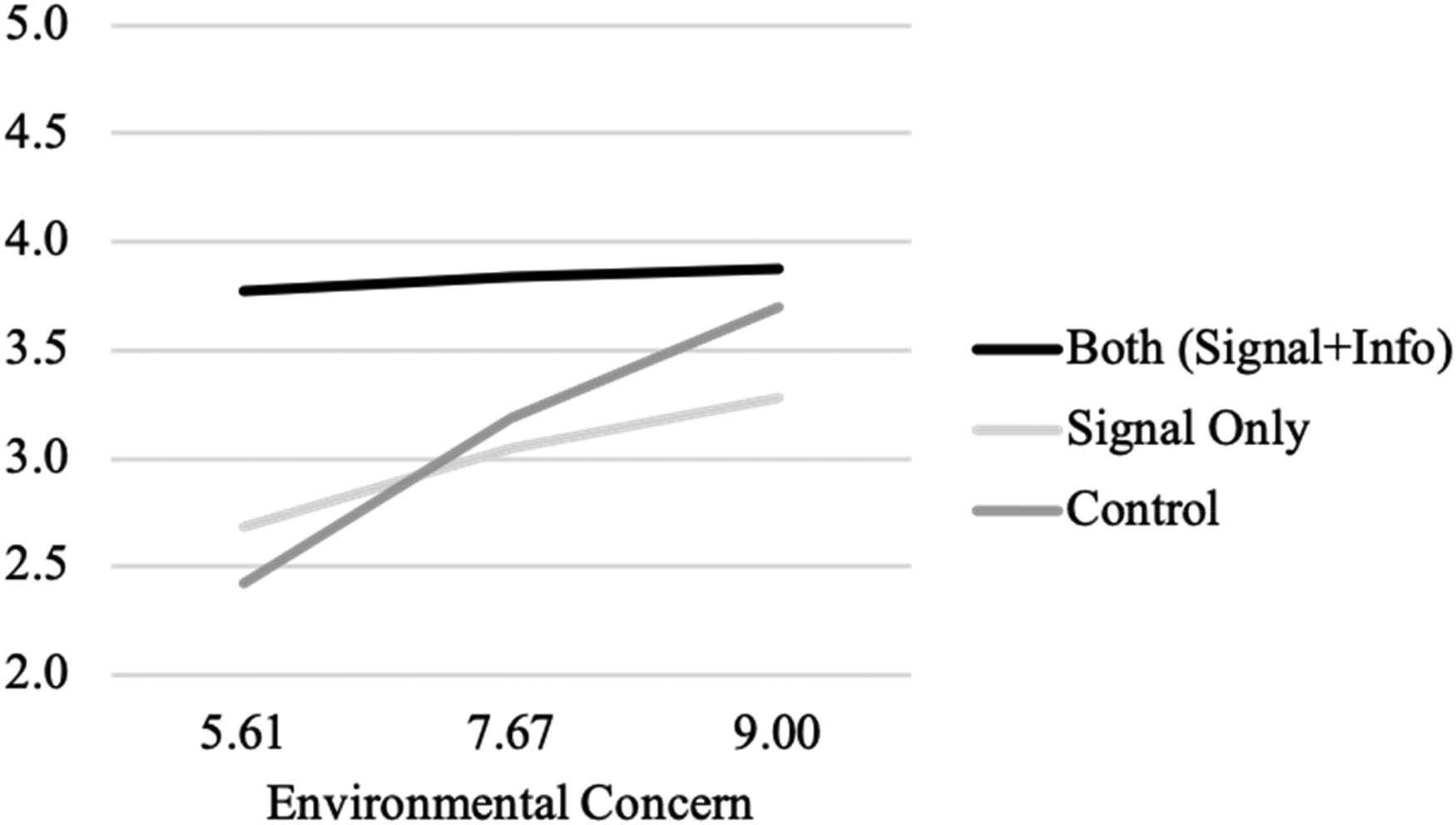
Attitude towards shirt by level of environmental concern.
Next, H2 was tested, related to likelihood to enroll in the anti-consumption program. Following the same pattern as attitude toward the shirt, there were main effects of Signal + Information (β = 4.08, p = .003) and respondents’ levels of environmental concern (β = .76, p = .000) on likelihood to enroll. Further, there was an interactive effect of signal + info with respondents’ environmental concern (β = − .48, p = .009) on likelihood to enroll. Similar to the product attitude findings reported above, likelihood of enrollment in the anti-consumption program was not different between the both (Signal + Info) and control conditions for individuals at 50th (β = .36, p = .27) or 85th percentile of environmental concern (β = − .29, p = .52; see Figure 3). However, for those low in environmental concern (those at the 16th percentile and below), the Signal + Info condition led to higher likelihood of enrollment (M = 3.41) as compared to the control condition (M = 2.09; p < .05) on a 7-point scale. However, the difference in likelihood of enrollment was not significant between the signal only and the control condition at any level of environmental concern. Applying the Johnson-Neyman procedure, there was a significant effect having both signal and information on likelihood of enrollment as compared to the control condition for all levels of environmental concern below 7.06 (39.8% of the sample) on a 9-point scale (at 7.06: b = .32, SE = .16, t-value = 1.98, p = .05). Above the level of 7.06 on environmental concern scale, there were no differences in likelihood of enrollment. The same regression equation was run using Process Model 1 for the attitude towards the Blue Dot Initiative program itself, and there was only a main effect of level of environmental concern on attitude towards the initiative (β = .29, p = .025). There was no other main or interaction effects. This finding demonstrates that the effects on likelihood to enroll do not operate by changing the attitude about the initiative.
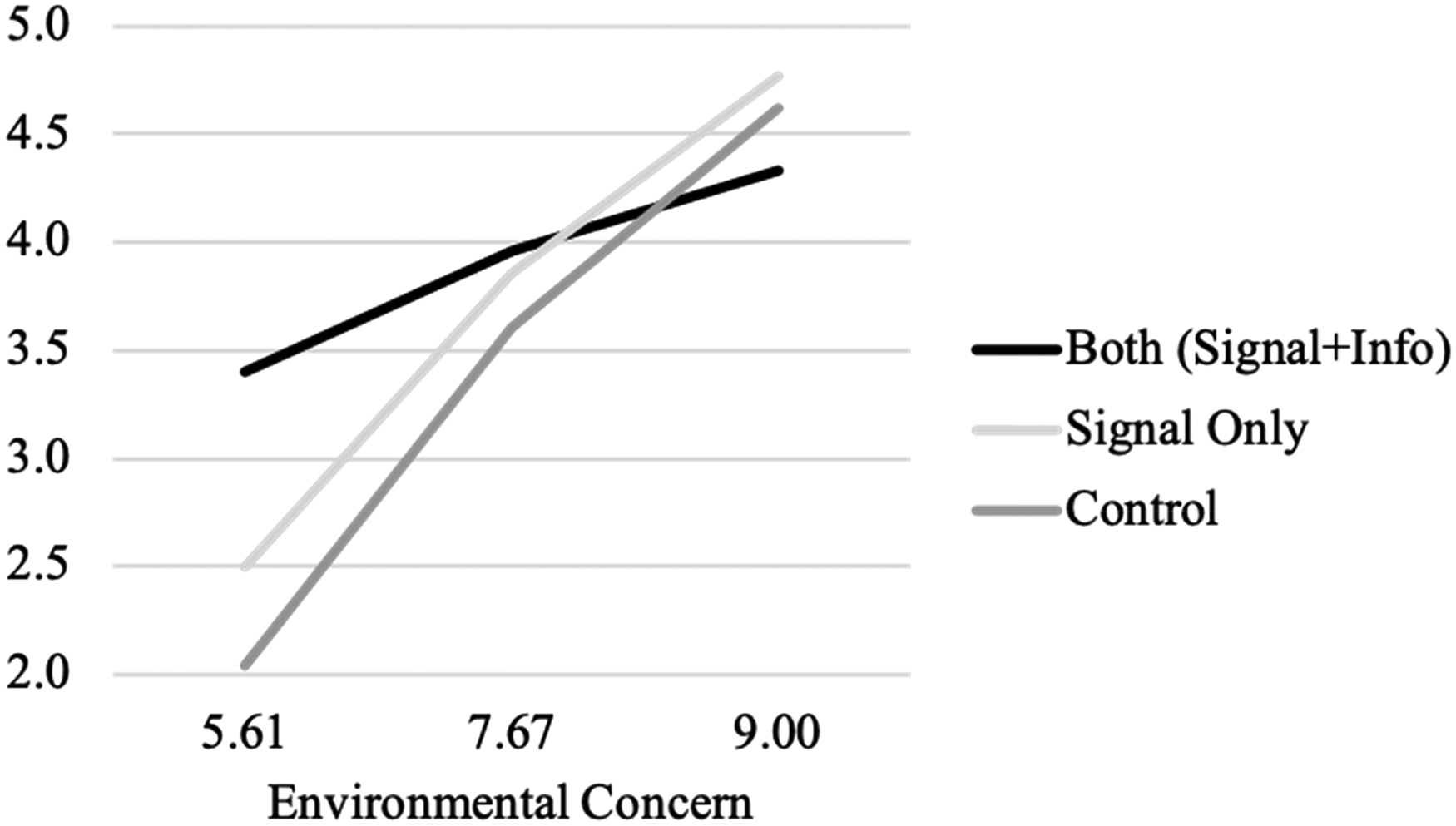
Likelihood of enrollment by level of environmental concern.
A limitation of this study is the information asymmetry in the both (signal + information) condition. However, the interactive effect of condition with environmental concern on both the DVs rules out any information asymmetry-based explanation and makes our results more interesting. Results show that only consumers with low-to-moderate environmental concern have a more positive attitude towards the shirts and a higher likelihood of enrollment. If the results were due to additional positive information in the both (signal + information) condition, the differences should be more pronounced for consumers high on environmental concern and not for those low on environmental concern.
Discussion
The findings from Study 2 support H1 and H2. In a social marketing context of a university based anti-consumption program, respondents reported higher intentions to enroll in the program when there was a visible and meaningful anti-consumption signal attached to their participation. Further, and importantly, these intentions were boosted for those low in environmental concern, which is a group that is less likely initially to participate and is not motivated through identity expression. Because those high in environmental concern already reported higher attitudes and intentions, this visible tool was effective in motivating those who might be less persuaded by green appeals.
Study 3: Need for Status and Anti-Consumption Actions
In Study 3, the role of status motives on anti-consumption actions in a for-profit marketing context is directly explored. This study expands on findings from Study 2 by testing a different anti-consumption action, using real brands with different status perceptions and considering individuals’ status motives.
Methods
The goal of Study 3 was to test if a conspicuous anti-consumption signal can make a low status product more attractive to consumers who seek status. This study had a 2 (presence vs. absence of a conspicuous anti-consumption signal) x 2 (status of the brand-low vs. high) between-subjects design with participants’ need for status as a measured variable. The product used was bottled water and based on a pretest, wherein MTurk respondents (n = 31) rated different bottled water brands on perceived status (1 = Not at all high status; 7 = very high status), familiarity (1 = Not at all familiar; 7 = Very familiar), and attitude (1 = Dislike very much; 7 = Like very much). ‘Nestle Pure Life’ was used as the relatively lower status brand and ‘Fiji’ as the higher status brand. Though there was no difference between the brands in terms of familiarity (MNestle = 5.23; MFiji = 5.45; t (30) = −.53; p = .6) or attitudes (MNestle = 4.48; MFiji = 4.97; t (30) = −1.31; p = .2), Fiji brand was seen as significantly higher status than the Nestle bottled water brand (MNestle = 3.06; MFiji = 5.13; t (30) = −6.12; p < .001). Four hundred and four Amazon Mechanical Turk respondents different from the pretest sample (45% female) read a scenario where they were asked to imagine coming across a stall selling bottled water on a hot summer day. Then, they were shown a picture of a disposable water bottle. Respondents randomly saw either the high status or low status brand with or without a sticker that read “I pledge to reuse.” This scenario was designed because it could incorporate known brands easily, and the visible signal was extremely clear to an observer. Further, extending the life of an item by keeping a water bottle rather than buying another water bottle is an anti-consumption behavior. Abstaining from purchase altogether is also anti-consumption, but in the scenario, the individual did not have water and was thirsty in a hot environment. Therefore, in this scenario, access to a wasteful product could be mitigated by having a signal that encouraged future reduced consumption. They were next asked to indicate their willingness to pay (WTP) for the bottle and their willingness to reuse (WTR) the bottle (1 = extremely unlikely, and 7 = extremely likely). Finally, they completed a need for status scale (Eastman, Goldsmith and Flynn 1999; α = .87), followed by demographic variables. Please see Appendix B for detailed instructions and pictures in the stimuli.
Results
Next, we report a complex pattern of main and interaction effects of the two main dependent variables (WTP and WTR); see means reported in Table 6.
Study 3 Means by Condition.

As expected, based on a moderated regression run using PROCESS model 1 in SPSS (Hayes 2017), there was a main effect of brand status (β = 0.74, t = 2.5, p = .01) in that respondents were willing to pay more for the high status brand. More importantly, a three-way interaction effect of presence of signal, status of the brand, and need for status of the participants (β = −0.29, t = −2.13, p = .03) on their WTP for the bottle while controlling for the participants’ income (β = 0.04, t = 2.37, p = .02). To examine the three-way interaction, the data was split into two groups based on brand status following Spiller et al. (2013). In the case of the high status brand, there was no main or interaction effects between presence of the signal and need for status. However, in the case of low status water brand, there was a significant interaction effect between presence of the signal and need for status (β = 0.19, t = 2.37, p = .02), while controlling for the participants’ income (β = 0.05, t = 2.73, p = .007). To identify the range of values of need for status for which the simple effect of signal was significant, the Johnson-Neyman technique was used (Spiller et al. 2013). As shown in Figure 4, this analysis revealed that there was a significant positive effect of presence of an anti-consumption signal on WTP for participants whose need for status was higher than 2.48 (43.84% of the sample scored above this value; bJN = .22, SE = .11, p = .05).
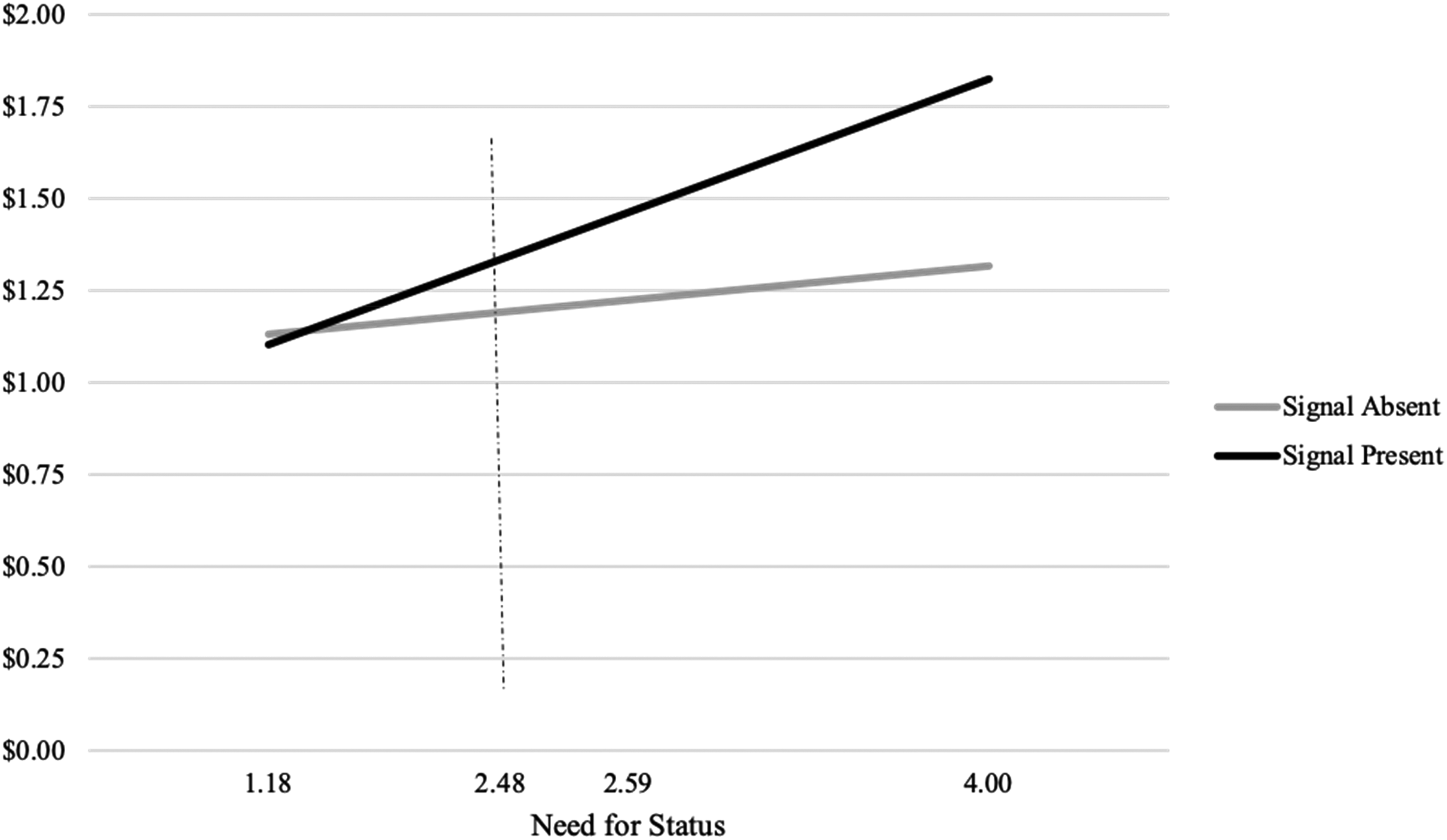
Willingness of pay for the low status brand by need for status.
Moreover, based on a moderated regression run using PROCESS model 1 in SPSS (Hayes 2017), there were main effects of presence of the signal (β = 1.69, t = 2.79, p = .006) and need for status (β = 0.40, t = 2.94, p = .004) on willingness to reuse the plastic bottle.
Discussion
The three-way interaction reported suggests that, when need for status is moderate to high, presence of an anti-consumption signal leads to higher WTP for a lower status product. Therefore, the results show that a conspicuous anti-consumption signal increases the attractiveness of a relatively lower status (or conventional mainstream brand) for consumers driven by a moderate or high need for status. In other words, a conspicuous anti-consumption signal can be an alternate pathway to acquire/signal status instead of buying high-status brands. Secondary findings also suggest that the presence of the visible signal (in the form of a sticker pledging to reuse) acts as a commitment device that translates into behavioral intentions. Also, a main effect of need for status on willingness to reuse further supports our assertion that consumers see conspicuous anti-consumption as a legitimate path to acquire/signal status.
General Discussion
Anti-consumption is a specifically painful type of behavior change because it goes against the “norm” and the dominant social paradigm, it can be stigmatizing, and it requires the consumer to forgo pleasure and lose functionality. However, getting consumers to reduce is an imperative to reverse the climate crisis. As such, it is critically important from a macromarketing perspective to study how to effectively change behaviors to avoid drastic climate outcomes. The research herein suggests a powerful route to behavior change lies not in an informational or affective appeal type focused on shifting attitudes, but rather in a focus on driving consumption reduction behaviors by leveraging preexisting and widely held motivations. Instead of social marketing that attempts to persuade consumers to truly become “greener” by caring more about the environment when making consumption choices and then to use those motives in changing their behavior, the authors suggest tapping into motives that are more widespread, namely, general impression management and status signaling motives (Table 7).
Overview of Studies and Findings.

The key takeaway from Study 1 is the suggestion that higher SES individuals are more likely to use brand-provided conspicuous anti-consumption signals that convey environmental motives. By considering real behavioral data in a natural social media setting, this analysis lends support to the effects outside of a lab. This group is important because lower SES consumers already, by necessity, consume less and have lower environmental footprints so focusing on shifting higher SES consumers to anti-consumption is novel, necessary, and impactful. The most important finding from Study 2 demonstrates that visible signals work effectively for consumers who are moderate (and low) in environmental concern to motivate anti-consumption practices. Tactics and methods that directly appeal to hardcore green consumers are preaching to the choir, so seeing change in those that are not particularly motivated by environmental concern is exciting. The final study's key finding indicates that signaling anti-consumption intentions can mitigate the negative implications of using a low status brand, providing evidence that these actions are attached to conveying positive status. Taken together, these studies suggest that leveraging existing and widely prevalent consumer motives and traits is an effective means that both social marketers and for-profit brands can utilize to address the climate crisis from a macromarketing perspective.
Theoretical Contributions and Managerial Implications
Theoretically, this work contributes to anti-consumption literature. Most prior research in this area has focused on anti-consumers - extreme consumers who are strongly motivated to engage in these behaviors. This research extends this knowledge by instead exploring the behaviors of more moderate/typical consumers who have lower environmental concern and moderate to higher need for status. Although higher status motives are often considered as barriers to reduced consumption, these studies suggest that may not be the case. We also extend the knowledge in green demarketing, offering evidence of a new mechanism which brands can viably leverage to move from demand creators to supporters of consumer level anti-consumption actions. This research answers recent calls in marketing and consumer behavior to explore activities and strategies outside the DSP, and conspicuous anti-consumption provides one path to rethinking the role of marketing in our society. Recent research in green consumption and status is extended to include signals that are not embedded in the brand or product itself but must be added or provided by an external source (the consumers themselves or a brand). This research extends signaling theory by demonstrates consumers will use signals decoupled from new products to communicate motives in an anti-consumption context.
Managerially, this work has implications for both social marketing and traditional for-profit brands. Behavioral change initiatives that aim to reduce consumption should provide and promote a means for consumers to signal to others about their (in)actions and motives. As demonstrated in S2, the signal is only effective if the general population is aware of its meaning. This research suggests that providing other reputational benefits to the consumer is possible in the absence of consumption/purchases. For brands that have a strong focus on environmentalism, providing anti-consumption signals (through stickers, patches, or promoted hashtags) can be an additional strategy to amplify brand actions while using a green demarketing strategy. From a macromarketing perspective, both nonprofit and for-profit brands adopting these activities begin to shift the dominant social paradigm away from overconsumption and protect (rather than continue to degrade) the environment. For marketers, there are targeting implications as well. This research suggests that these types of strategies could be more widely effective than more traditional green approaches and, thereby, more impactful.
We see our study data (generated in the lab and in the real-world) as a “proof-of-concept” that status can be de-linked from the material consumption itself and can be captured with a visible signal – patch, mark, hashtag, sticker, etc. Our studies show that once that signal is reliably coded into a hashtag or a sticker, it can motivate even those not very concerned about the environment to engage in a range of anti-consumption behaviors- refraining from shopping, enrolling in a consumption-reduction initiative, and reusing a disposable product. However, the actual form that a conspicuous anti-consumption signal takes will be category dependent and related to symbolic consumption which is a large percentage of purchases. People will always have some material needs that must be filled through consumption of physical goods. However, the link between needs (particularly higher order needs such as esteem and belonging) and consumption-oriented wants can be broken. Linking anti-consumption (instead of consumption) to esteem, belonging, and self-actualization needs is one way to encourage consumption reduction for people least likely to do that without external incentives and persuasion. One effective way to satisfy those higher order needs without physical consumption is through signs and symbols which can be created and imbued with meaning by brands. Brands themselves can become potent and effective symbols if linked to symbolic needs while allowing reduced consumption of physical products. This is one manner in which a hashtag or a sticker, or brand heritage like that of Patagonia can play a hugely important role in climate change mitigation.
Limitations and Future Research
There are limitations related to the findings reported herein. The social media data reported in S1 is meant only to provide initial support for the idea that high need for status individuals are more likely to use signals to communicate about their motives and anti-consumption practices. Because the population using it is constrained to REI customer-base, it is not representative of the more general population because these consumers are likely to have high incomes. However, in spite of that limitation, its usage does provide this support. Future research should endeavor to empirically test with real behavioral data the effect of need for status on anti-consumption practices in general and related to signaling, as S3 only reported intentions and evaluations in a hypothetical scenario.
It is also possible that anti-consumption actions may vary across product categories. For example, decisions in the context of a water bottle may be different than in a higher involvement decision such as an expensive jacket or even a car. In this research, the consumption context is always public, but future research should consider if these signals would be feasible and have the same effects for products consumed in a private setting. Because signaling depends on viewers to decode the signals, it is likely that to motivate changes on products privately consumed signals may not be effective. However, given the state of visibility of consumption via mass adoption of social media platforms like Facebook, YouTube, Instagram, Snapchat, TikTok, and more, it is arguable that formerly “private” products have more potential to be viewed by others.
Conclusion
One must accept that to achieve more than incremental change in societal consumption levels, norms must change. The DSP of ever-increasing consumption and marketers as the supplier and the driver of that consumption must change. And for this to happen, social marketing organizations and for-profit brands together must rethink and reimagine the role of marketers in society. This work provides further evidence of green demarketing practices’ value to brands, consumers, and society. If more for-profit brands step outside the DSP, and instead, measure success on metrics other than unit sales growth while remaining financially viable through support of anti-consumption, that change might occur. Marketing academics and practitioners know so much about increasing consumption, it is time to apply that knowledge to decrease consumption for the sake of us all.
Footnotes
Associate Editor
Sabrina Helm
Declaration of Conflicting Interests
The author(s) declared no potential conflicts of interest with respect to the research, authorship, and/or publication of this article.
Funding
The author(s) received no financial support for the research, authorship, and/or publication of this article.

Supplemental Material
Supplemental material for this article is available online.
Author Biographies
References
Supplementary Material
Please find the following supplemental material available below.
For Open Access articles published under a Creative Commons License, all supplemental material carries the same license as the article it is associated with.
For non-Open Access articles published, all supplemental material carries a non-exclusive license, and permission requests for re-use of supplemental material or any part of supplemental material shall be sent directly to the copyright owner as specified in the copyright notice associated with the article.
