



Abstract
The paper aims to investigate in detail the strategies and efforts of children consumer protection national policies in order to conduct a comprehensive review of ongoing practices. Through content analysis, the paper investigates four dimensions of national policies: general elements of children consumer protection policies, marketing communication restrictions, harmful product-specific restrictions, and empowerment and education in five different countries of diverse cultural dimensions: Germany, the USA, the UK, Spain, and Croatia. The paper fills an existing research gap by emphasizing practices of children consumer protection strategies that should be encouraged and those that should be avoided, thereby formulating the recommendations needed to prevent the negative consequences of marketing communication. The findings confirm that successful strategies have strong national legislations, market self-regulation, and education on media literacy. Advertisement for all potentially harmful product categories should be strictly regulated in order for children to be fully protected. According to the results, Germany and the UK are the most efficient in children consumer protection policies, followed by Spain, Croatia, and the USA.
Keywords
Introduction
Children cannot clearly distinguish between good and bad, which makes it rather easy to convince them into buying a product by using marketing propaganda. Marketing communication often persuades children that what they perceive as pleasant is also good and desirable. All implemented marketing strategies make children extremely vulnerable as they do not have the cognitive skills to understand the persuasive intent of advertising (Calvert 2008). Children would not be able to consider long-term effects and consequences of purchase even if they acquired the necessary cognitive skills (Moore 2014). Hence, national policies have to ensure children's protection against the negative influence of marketing propaganda.
Despite the importance of children consumer protection, interestingly, there is a dramatic drop in the extant literature on children consumer protection policies. The keyword “children as consumers,” according to Google Scholar, produced 1380 results in 2017 and “children advertising” had 726 results in 2017, with 113 results in 2021. “Children consumer protection” produced 9 results in 2017 and 4 in 2021. An explanation can be seen in the declining interest in the field from both authors and journals, or by the atmosphere of apathy surrounding the topic. Consumerist culture has infiltrated the everyday context, together with the eminent profitability protentional of vulnerable segments, children consumer protection is staying under the radar.
In order to bring this topic back into the limelight, this paper aims to investigate in detail the strategies and efforts of national policies toward children consumer protection. The overall review of children consumer protection policies will create a foundation for developing and implementing strong, standardized, and worldwide protection strategies for children as vulnerable consumers.
Therefore, the central research question of this paper is as follows:
What is the level of children consumer protection that national policies in diverse countries with different cultures offer?
The paper investigates four elements of national policies: general elements of children consumer protection policies, marketing communication restrictions, harmful product-specific restrictions, and empowerment and education. The in-depth analysis is carried out for 5 different countries that score differently in three selected elements of Hofstede's cultural dimensions. The content analysis in this study rests on the assumption that the analysed texts present rich data sources with great potential to reveal valuable information necessary to deepen our understanding of children consumer protection policy-making in different countries. Therefore, the purpose of the paper is to offer recommendations for children consumer protection strategies in order to prevent the negative consequences of marketing communication toward children.
Thus far, no known published research study investigated or created an overview, nor were there recommendations offered in the context of national policies toward children consumer protection strategies. Therefore, the paper fills this research gap by emphasizing the practices that should be encouraged as well as those to be avoided. It serves the children's best interest in the context of advertising and consumption, allowing for evasion of detrimental effects on their health and behaviour, and protects them from violations of their rights and abuses of their innocence and the lack of life experience and understanding. Finally, the prescribed recommendations could foster successful development and implementation of children consumer protection strategies and thus protect the children's interests on national and global levels.
Theoretical Background
Children's Vulnerability and the Need for Consumer Protection
Children are defined as consumers up to 18 years of age (De Cruz 2013; Smith, Sumar and Dixon 2014). They have a significant influence on their parents’ purchases and often have their own money at their disposal. Due to the increase in the disposable income of children, empowerment of their influence on the household purchase decision-making process, and growing media space for children, marketing aimed at children is increasing (Calvert 2008). Children as consumers make up a considerable part of overall household consumption, and as consumers, they are perceived as more and more knowledgeable and competent (Cook 2009). Through the process of socialization, children acquire the necessary skills, attitudes, knowledge, and behaviour, significant for decision-making on the market (Hayta 2008; Moschis and Churchill 1978). The concept of children's consumer socialization is defined as the process in which children become consumers and make purchase decisions. It consists of individual factors, social agents, such as family, friends, or peers, educational institutions, culture and mass media (Ironico 2012), as well as learning mechanisms (Hayta 2008). According to Tshikovhi and Shambare 2017, it is from middle to late childhood that children begin to understand marketing messages of certain types of products and brands.
Consumer vulnerability refers to consumers’ state of exposure to harmful influences due to limited access to resources and lack of control over their own activities, which reduces their ability to function in the market (Hill and Sharma 2020). As consumers, children are considered vulnerable as they cannot protect themselves from manipulative marketing communication and possible damaging effects on their health or behaviour (Potter 2010). They lack experience, have undeveloped self-control and risk perception, and reduced ability to understand the consequences of their actions, which makes them extremely vulnerable in the context of marketing communication and advertising (Moore 2014).
According to the Court of Justice of the European Union, the best interests of children as consumers and the protection of their rights are much more essential than public interest, free market, and free movement of products, persons, services, and capital (European Union Agency for Fundamental Rights EUAFR 2015). Considering every cognitive development stage (Calvert 2008; Moore 2014; Valkenburg and Cantor 2001), children present the most vulnerable consumers on the market who require protection in the context of marketing communication influence and product safety requirements as they cannot protect themselves and exercise their consumer rights independently. In order to induce and strengthen socially desirable social values, such as children consumer protection through the marketing process, all elements of marketing need to be harmonized (Livas 2021).
Children Consumer Protection Policy Framework
Consumer protection is defined as a comprehensive set of measures, standards, and criteria directed toward the protection of consumers’ best interests and rights in the context of consumption of products and services, and overall market activities (Carroll 1993; Mpaka 1992; Sigalingging 2018). The concept of consumer protection includes legislation and regulation frameworks, organizations that will ensure the preservation of consumer rights, fair trade and consumption, and the distribution of right information (Harvey 1978).
In the context of children, particular protection, support, and empowerment of children as consumers needs to be ensured (Baker, Gentry and Rittenburg 2005) and supplemented with information on how to make efficient purchase decisions (European Union Agency for Fundamental Rights EUAFR 2015) as children cannot yet protect themselves. However, thus far there has not been a known published consumer protection framework for children as consumers, nor a direction for an efficient children consumer protection policy. Therefore, all things considered, four categories can be put forward: general elements of children consumer protection policies, marketing communication restrictions, harmful product-specific restrictions, and empowerment and education.
General Elements of Children Consumer Protection Policies
With respect to modern economic theory, consumer protection needs to be focused on information circulation on the market, consumers’ beliefs, transaction costs in the context of consumption, and long-term market strategies (Hadfield, Howse and Trebilcock 1998). Therefore, national policy-makers should collaborate with educational institutions and marketers in order to preserve consumer rights and enhance their understanding of the decision-making process (Ringold 2005).
An efficient consumer protection policy should consider and evaluate the relative cost, effectiveness, flexibility, and precision of its mechanisms (Williamson 1994). Also, it should promote transparency and awareness in the context of products, services, marketplace competition, and consumers’ education, and prevent fraud and unfair practices (Fair Competition Commission FCC 2003). Therefore, consumer protection policies, in order to be comprehensive and successful, need to cover legislation and regulation strategies, as well as consumer empowerment efforts (Donoghue and De Klerk 2009; EPRS 2015; Garde 2011; Hogarth and English 2002).
Marketing Communication Regulations and Restrictions
Marketing communication addressed to children must be fair, trustworthy, understandable, and adjusted to children's cognitive skills (Kunkel et al. 2004). Children cannot be disturbed, forced, deceived by information, or influenced during the purchase decision-making process (Directive 2005/29/EC). Hence, it is crucial to understand each developmental stage of childhood and determine the ages at which children can understand advertising motives and messages in order to develop their advertising coping skills (Nairn and Fine 2006).
The legislation refers to directives, regulations, and laws strictly implemented on the national level. European Union legislation, by means of the directive on general product safety, regulates safety evaluation. Therefore, only safe and appropriate products can be offered to children as consumers (European Union Agency for Fundamental Rights EUAFR 2015).
The Agency for Electronic Media (AEM) and the UNICEF (2016) emphasized that electronic media, and television in particular, influences the quality of life of children, taking into account that they watch television for an average of three hours a day, mostly without adult supervision.
In order to protect children from increasing negative influences of the media and its categorized program content, it is essential to develop stricter regulations for electronic media and to raise the levels of children's media literacy (AEM 2015). Therefore, the Council of the European Union and the European Parliament implemented the Audiovisual Media Services Directive, together with recommendations to regulate audiovisual and online information services and to limit advertising aimed children (European Union Agency for Fundamental Rights EUAFR 2015). Also, it is very important to raise parental media literacy levels and encourage parents to choose media content for children carefully, to watch and to discuss it with their children, as well as to apply TV content rating system and suitability labels (UNICEF 2016).
Harmful Product-Specific Restrictions
Products from such categories as food, alcohol, tobacco, toys, video and online games, as well as gambling, could potentially harm children's health and affect their behaviour if used or communicated improperly. As children's consumer protection strategies are not standardized, mainly with limited implementation in the context of products categories, children's physical and psychological health could be easily damaged. Some countries completely ban advertising of tobacco for children, such as the USA and Germany (Germany Country Commercial Guide 2016; tobaccodocuments.org 2017), while on the other hand, certain countries like Spain (Volz, Handschuh and Poshtakova 2005) have lenient and liberal regulations in the context of marketing communication and advertising to children. And even though some countries introduced bans on television advertising, those do not cover digital media (Bach 2016; Saffer 2002). However, in the past few years, national policies have increasingly started regarding and emphasizing the importance of children's consumer protection, especially in the context of specified product categories and the digital environment (Children’s Advertising Review Unit, CARU, 2022; Children’s Food and Beverage Advertising Initiative, CFBAI, 2020; Zentralverband der Deutschen Werbewirtschaft, ZAW, 2021).
In relation to food, children are exposed to food advertisements from an early age, most of which promote high-fat, high-sugar, and salty foods (HFFS), not recommendable for sustaining a balanced diet and easily leading to health problems and obesity (Story and French 2004). Also, those advertisements affect the children's perception of food and nutrition (Ertz and Le Bouhart 2021). The Directive focused on food regulates special nutritional needs and the control of composition, ensuring the safety of specially produced food for infants and children under 12 months (European Union Agency for Fundamental Rights EUAFR 2015). Furthermore, against the obvious negative effects of alcohol on children's growth and cognition, advertising it can still stimulate positive emotions and associations among children (Nash, Pine and Messer 2009), which could then lead to actual drinking (Dunn and Yniguez 1999). On the other hand, as toys make up the majority of children's belongings, excessive possession and advertising could lead to materialistic values in friendships (Baker and Gentry 1996; Goldberg and Gorn 1978). Toys could also be potentially harmful to children's physical health. However, the safety of toys directive (Directive 2009/48/EC) determines safety and health standards to protect the children from adverse effects and health problems.
Advertising of video and online games needs to be strictly regulated as children cannot clearly distinguish between fiction and reality (Buijzen and Valkenburg 2000). Video games can contain details, such as violence, obscene vocabulary, fear, drugs, erotic scenes, or discrimination, not suitable for the corresponding stages of cognitive development of children. The protection of children is provided by the Pan-European Game Information (PEGI) mark, indicator of content suitability for specific age groups of children (Felini 2015). Furthermore, smoking, like alcohol, could cause serious addiction and health problems among children. Tobacco advertisements, if not regulated and banned for children, could encourage tobacco consumption among children and, consequently, among youth (DiFranza 1995). Finally, gambling could lead toward serious addiction and money loss. Such kind of entertainment advertisement could make gambling available, attractive, and desirable for children (Hastings et al. 2005), and compromise their values connected to money (Derevensky 2005). Therefore, specified product categories require significant efforts from all protection mechanisms in order to protect the children's health, rights, and overall interests.
Age-appropriate product labelling and brand labelling as children consumer protection strategies could help prevent the potentially harmful effects of specified product categories even before children come in contact with them (Bänsch 2019; EPRS 2015). Age-appropriate product labelling refers to manufacturers’ unambiguous and strict instructions for the suitability of the product for a specific age group (Waters 2003), especially for foods intended for infants (children under 12 months) (European Union Agency for Fundamental Rights EUAFR 2015), toys and their production safety (Directive 2009/48/EC; US Consumer Product Safety Commission - CPSC 2016), as well as video and online games, considering their content and their suitability for specific stages (Felini 2015; PEGI 2017). On the other hand, in the context of children consumer protection, brand labelling refers to manufacturers’ strategies focused on the fulfilment of government instructions and general moral codes through the creation of their own images (CPSC 2016; Public Health England 2019).
Empowerment and Education
In order to build the consumers’ competence on the market, national policies have to promote their education in the context of consumption (EPRS 2015; Schapiro 1999), employ internet training and national campaigns (Pessers 2012) as consumers’ abilities depend on their knowledge (Browne and Biksacky 2012). Consumer education is defined as the process of acquiring the knowledge, information, and skills required for managing personal resources, making consumer decisions, and performing overall purchase behaviour (Adler and David Pittle 1984; Bannister and Monsma 1980). According to Purutcuoglu and Bayraktar (2004), the concept of consumer education refers to consumers’ behaviour in the context of consumption and the levels of knowledge about their rights and responsibilities on the market.
Children have yet to acquire knowledge in the context of consumption and become media-literate, which is crucial for increasing their understanding of marketing communication and advertising, as well as for the development of critical thinking (Icen 2020; Potter 2010). As children cannot protect themselves from manipulative marketing communication and possible damaging effects on their health or behaviour, educational programs should help them avoid inappropriate content such as violence or sex (Potter and Christ 2007). Parents should participate in the education of their children on consumption and the media by means of active mediation, which relies on evaluative conversations about the media, by restrictive mediation, which focuses on setting rules in the context of television consumption, and by co-viewing, or watching television and making conversation (Nathanson 2001). Also, securing parental permission when children's actions are required helps clearly indicate advertising content and sales activities focused on children (Bandyopadhyay, Kindra and Sharp 2001).
Education on media literacy presents a solid foundation for future consumer attitudes, the ability to collect, analyse and understand media messages, and the participation in social activities on the market (Buckingham 2002). Media literacy education aims to compensate for and reduce the negative effects of the media, leading children toward rational perception and encouraging them to use media appropriately (Aufderheide 1993). The purpose of media literacy education lies in the formation of desirable opinions, attitudes, critical thinking, and media perception of the children (Petranová 2011). Efficient media literacy education for children needs to be designed according to their age (Livingstone et al. 2012; Schilder, Lockee and Patrick Saxon 2016), cognitive stages, physical and psychological abilities, and functions (Šupšáková 2016). It could be implemented as part of the school curriculum (Buckingham 2002) or provided on a voluntary basis (Aufderheide 1993; Kahne and Bowyer 2019). Education categories cover basic media environment orientation, distinguishing and decoding of media messages and understanding of their positive and negative effects, and the ability for responsible participation in media communication (Šupšáková 2016). Media literacy education could be provided by government institutions such as educational institutions, as part of national strategies, or by non-governmental organizations, institutions, associations, or companies (Aufderheide 1993; Hobbs and Jensen 2009; Stein and Prewett 2009). In order to be successful, media literacy education needs to be continuously controlled, monitored, and evaluated according to educational and consumer empowerment goals and curricular objectives (Brown 1998; Felini 2014).
Methodology
Our research goal was to develop a framework for comparing children consumer protection policies and to use it on a qualitative cross-cultural policy comparison by means of content analysis. Content analysis is defined as “a research technique for making replicable and valid interferences from data to their context” (Krippendorff 1989, p. 401). The study adopted an interpretative approach, found in relevant papers with similar methodology, to take account of the divergent nature of policy documents related to children consumer protection. Following the generally accepted procedure (Krippendorff 1989), the process went through the common stages: design, unitizing and sampling, coding, and validation.
Aspects to Compare and Coding Criteria
As there is a lack of published consumer protection evaluations or comparisons, we could not use an already published set of performance indicators as codes. Literature review resulted in a list of framework elements that were to be used for the comparison of children consumer protection policies, divided into four categories: general elements of children consumer protection policies, marketing communication restrictions, product-specific restrictions, and empowerment and education.
Firstly, the documents of one country were analysed by all authors in order to search for possible discrepancies and problem areas, as a pre-test. Results were then compared and discussed to resolve inconsistencies.
The final coding framework, presented in Table 1, included 15 variables drawn from the review of literature.
The Final Coding Framework.
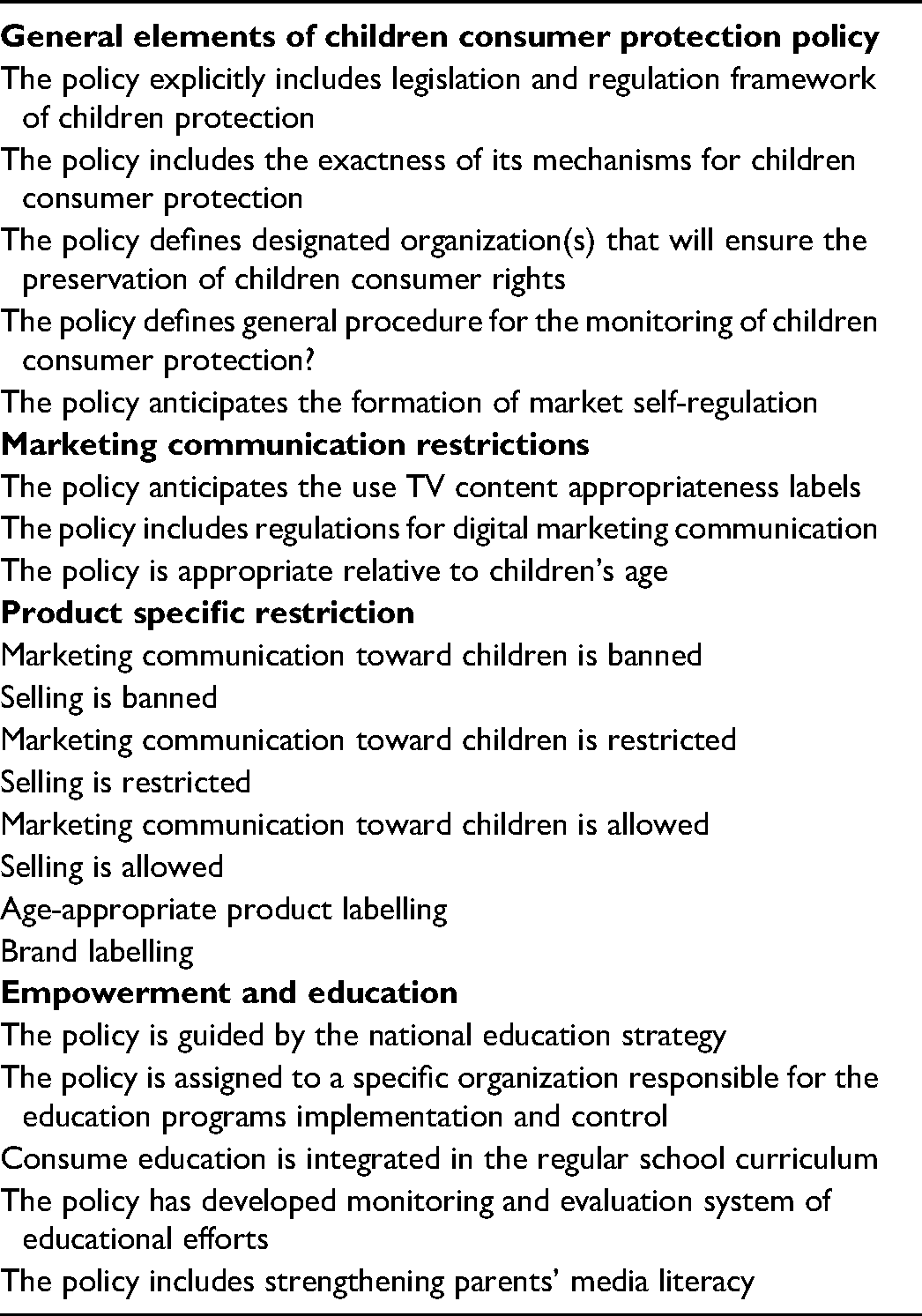
Conceptual analysis performed by identifying concepts according to the coding criteria protocol recommended by Stemler (2000); “Yes” and “No” were used to code the presence or absence of criteria.
Countries to Compare
The selected countries were intended to ensure a diversified sample based on the criteria of culture. Culture is an important element in marketing, assuring content analysis of policies from culturally diverse backgrounds and sensitivities. Cross-cultural differences were enabled through varied test scores on Hofstede's model of 5 dimensions of culture (De Mooij and Hofstede 2010; Hofstede 2001; Hofstede and Hofstede 2005), which has been used as a relevant cross-country comparison in other papers (De Mooij and Hofstede 2010). While selecting the countries that offer a diversified sample, we had to take into consideration the limitations that would arise in the understanding of languages of national policies that were subject to analysis. The final sample of countries includes Germany, Spain, the United Kingdom, the United States, and Croatia. Here is an overview of the dimensions in Figure 1, according to Hofstede Insights’ country comparison (2022).

Overview of hofstede cultural dimensions per country.
Three important elements were taken into consideration, which were subsequently connected to the concept of consumer protection. Power distance refers to the acceptance and expectance of power distribution inequality by members of society (De Mooij and Hofstede 2010). For Germany and the UK, power distance ranks low (at 35), the USA ranks at 40; middle values were scored for Spain (57); and high values for Croatia (73) (Hofstede Insights’ country comparison, 2022). Furthermore, individualism/collectivism is defined as a society's trait in the context of care of its members for themselves and for other members (De Mooij and Hofstede 2010; Hofstede 2001; Hofstede and Hofstede 2005). Furthermore, the USA (91) and the UK (89) scored highly for individualism; Germany (67) and Spain (51) had middle values; and Croatia had low values (33) (Hofstede Insights’ country comparison, 2022). Finally, long-term versus short-term orientation, defined as the society members’ perspective or focus toward the past or toward the future (De Mooij and Hofstede 2010), reveals the following: Germany is long-term oriented (83); Croatia (58), the UK (51), and Spain (48) score middle values; and the USA (26) demonstrates short-term orientation (Hofstede Insights’ country comparison, 2022).
Document Retrieval and Sample
Qualitative content analysis implies collecting data from published material, which is particularly suitable for analysing national policies as such data is available to the public (Custers et al. 2018). Policy documents are essential to this study as they represent formal communication that allows researchers to examine the intent of law and policy, and its implementation.
For each studied country, information collection was conducted upon desk research based on these aspects. The first approach used string search in Google and Google Scholar for each country, using the following phrases: “Children consumer protection,” “Children media literacy,” “Children consumer education,” and “Harmful products restrictions.” The search method did not produce valuable results as the authors had not collected relevant documents for analysis.
On that note, the authors began a systematic search of relevant documents, including an analysis of government websites, NGOs related to consumer protection, legislation and regulation interpretations, and reports from governmental and associated non-governmental bodies. Such an approach produced the desired results.
Relevant legislation and policy documents were first identified for each country and subsequently prepared for systematic analysis (Bowen 2009) in order to select the most consequential passages regarding children consumer protection policies, thereby ensuring the credibility of content analysis (Elo et al. 2014). Also, as Dependability was assured though
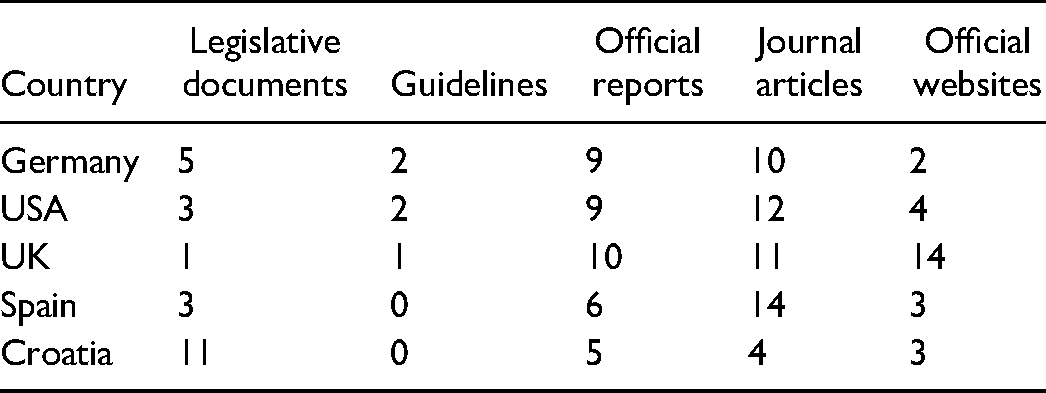
The total sample included 135 documents, comprising of 18 legal documents: laws, legislation acts, and directives. Furthermore, we included official reports from governmental and non-governmental organizations, in total 39. The sample also included relevant journal articles looking into children consumer protection policies in every country, in total 47 articles. We covered 26 official websites of governmental and non-governmental organizations, as well as 5 official guidelines. The diverse types of documents, related to the same topic ensure the stability of data that would be able to be replicated, hence dependability and transferability (Elo et al. 2014). The overall sample structure per country is presented in Table 2.
Overall Sample Structure Per Country.
To ensure further reliability of the instrument, all documents in the sample were divided between the authors, upon which each document was read, analysed, and coded by at least two authors.
However, it should be noted that there were procedural limitations to the qualitative content analysis that first and foremost arise from the fragmentation of different policy elements that are not to be found in one specific source. It was demanding to achieve a higher level of interpretation with diverse elements of laws, voluntary industry guidelines or institutional documents.
Results
The results present efforts of national policies in the context of four elements: general elements of children consumer protection policies, marketing communication restrictions, product-specific restrictions, and empowerment and education in Germany, the USA, the UK, Spain, and the Republic of Croatia.
Germany
General Elements of Children Consumer Protection Policy
There is strict implementation of EU legislation and regulation frameworks in Germany, with precise mechanisms. Furthermore, Germany's market self-regulation is highly developed, as is their monitoring and evaluation system implemented by the Federal Ministry of Justice and Consumer Protection and the Federal Ministry for Family Affairs, Senior Citizens, Women and Youth of Germany. In 2008, the German Act on Unfair Competition Law was amended with Unfair Commercial Practices Directive, which especially prohibits exploitation of children's innocence (Chiarella 2009).
Marketing Communication Restrictions
The Audiovisual Media Services Directive (AVMS Directive) prescribes regulation to ensure the protection of children in the context of television and on-demand services, based on the Federal Protection of Young Persons Act (JuSchG) and the Interstate Treaty on the Protection of Human Dignity and the Protection of Minors in Broadcasting and in Telemedia (Kommission für Jugendmedienschutz KJM 2022). Germany is the first world country to have implemented the UN requirements for children's rights in the digital environment, and through the Federal Ministry for Family Affairs (2021), it regulates child-friendly terms and conditions and safe default settings for using services that limit age-related risks. In 2021, The German Advertising Federation (ZAW) strengthened the voluntary regulation for manufacturers, retailers, and regulators, and extended them from the protection of children under 12 to those under 14 (ZAW 2021). Taken together, advertising regulation is a mixture of general rules and volunteer guidelines developed by big associations. The annual revenue of children in Germany (aged 6–13) amounts to €1.85 billion (27€/child on average) (Egmont MediaSolutions 2012), however, there is a lack of research studies focused on children.
Product-Specific Restrictions
Social surroundings, especially the family, have the strongest influence on childreńs food habits (Körtzinger, Neale and Tilston 1994). The Television Advertising Directive is strictly implemented (Schotthofer 2002). Furthermore, advertising regulation covers radio, print and digital communications, such as social media and video sharing platforms like YouTube and TikTok (ZAW 2021). Food industry participants who are members of the ZAW believe that advertising based on voluntary self-regulation shows their awareness of social responsibility (Deutscher Werberat 2009, 2015, 2017). Advertising for food products should not contain direct orders for purchase or consumption, use incentives for purchase, etc. Child health claims require case-by-case approval after submitting scientific documentation to the European Agency for Food Safety (EFSA) (Deutscher Werberat 2017). In order to promote sustainable food consumption (Bundesministerium für Ernährung und Landwirtschaft BMEL 2020), the ZAW restricted advertising of high-fat, high-sugar and salty foods (HFFS) to children by putting a stop to emphasizing their positive nutritional properties (ZAW 2021).
Most people in Germany consume alcoholic beverages responsibly, without causing harm to themselves or to others (Deutscher Werberat 2009). Since 1976, there has been a voluntary code of conduct for alcohol (Schotthofer 2002). Alcohol consumption has been falling for more than a decade, and is still in decline. Although advertising expenditures increased from 1990 to 2004, alcohol consumption decreased in the same period (Association of television and radio sales houses EGTA 2009). Internet advertising of alcohol should not be directed at or made particularly attractive to children, or display phrases such as “drink alcohol” (Deutscher Werberat 2015). Advertising in cinemas and at sports events is partially forbidden for brand names but there is no ban for TV programs and films (EGTA 2009).
Under German Youth Protection Law (2008), minors can consume and possess:
light alcoholic drinks accompanied by parents (14-year-olds), light alcoholic drinks without parental company (16-year-olds), and all alcoholic beverages (18-year-olds).
Tobacco and alcohol advertisements must not be displayed before 18:00.
Tobacco Advertising Directive 2014/40/EU prohibits advertising in print media, radio, and the internet, as well as sponsorship of cross-border events and activities. The sale and distribution of tobacco is forbidden to minors, and underage smoking is also prohibited in public places (Law on the Protection of Youth 2002 §10 (1)). Tobacco advertising on TV has been banned since the 1990s and is managed by the Audiovisual Media Services Directive but advertising in cinemas and merchandising is permitted (Germany Country Commercial Guide 2016). The Tobacco Advertising Directive has been transposed into the national legislation of the Member States, and since 2017 new legislation has included larger pictorial health warnings on both sides of cigarette packs.
In Germany, products should not be advertised directly to children, and this involves toys, too. EU Directive 2009/48/EC on toy safety is applicable to all toys for children under the age of 14. As manufacturers know their products in detail, they have to ensure that their toys meet all relevant safety requirements. Their products will then obtain the CE marking and must include the EC Declaration, which is not a sign of quality but rather provides free movement of products throughout the EU. Since 1995, the CE marking has served as a warning that a certain toy should not be given to children under the age of 3 (Giesberts 2013).
Germany has the strictest rules regarding the classification and sales of video and online games in the world (Wholegame 2017), and is the largest video game market in Europe (New Zoo 2014). According to German government's official website, the software for self-control of entertainment – USK – has been adopted and used. According to German law, producers of online and video games have voluntarily formed this non-profit association, which is officially recognized for issuing categorizations for online and computer games in Germany. Games targeted at adults meet no restrictions on the market, as they are not aimed at children. However, it is not unlikely that the children will like such games, too (Beckendorf 2016; Hofmann, Spitz and Maier 2016), sports betting being the most common example. Even though children do watch sports, advertisers argue that sports events are not usually aired before 18:00 (Sheldon 2016; Winterbauer 2017). Participating in games of chance is allowed because people have a “playing instinct that cannot be restrained,” because legitimate gambling generates revenue for the state, suppresses illegal gambling and because it is regulated by law – and the participants are therefore protected. Games of chance are almost completely regulated under the monopoly of the state, even though it is against EU directives (Beckendorf 2016; Meyer, Hayer and Griffiths 2009). About €69.9 million was spent on advertising the German lottery in 2010 (Statista 2017a). Games of chance are forbidden for minors without parental accompaniment, and casinos are permitted for those over 21 years of age. Children can participate in lotteries at fairs or amusement parks, when it comes to smaller cash prizes (Law on the Protection of Youth 2002 §6(1)(2); Meyer, Hayer and Griffiths 2009).
Empowerment and Education
Courts see advertising as misleading if 10–15% of the audience feels misled (Schotthofer 2002). The hard efforts of the national strategy in the context of media literacy among children are becoming increasingly recognized (Pfaff-Rüdiger, Riesmeyer and Kümpel 2012). Furthermore, media education and media literacy are integrated into school curricula, however, programmes vary from state to state. The implementation, monitoring, and evaluation of media literacy education is the responsibility of the federal state, and the Federal Ministry for Family Affairs, which also provides counsel and organizes activities for parents in order to help them advance their children's media literacy (European Commission 2022a).
USA
General Elements of Children Consumer Protection Policy
Children consumer protection policy and market self-regulation depend on the state. Those responsible for the regulation and supervision of children consumer protection are the Federal Trade Commission (FTC) and the Consumer Product Safety Commission (CPSC) (FTC 1997). Direct advertising to children is forbidden, and policy includes legislation and regulatory frameworks for children's protection. However, it is not strictly regulated as in the European Union, and its mechanisms lack precision.
Marketing Communication Restrictions
In the US, aggressive advertising to children has become common across many television channels (Story and French 2004) even though the Children's Television Act of 1990 prescribes restriction of advertising in children's programmes. The average American child watches between 25.000 and 40.000 television advertisements per year (Kunkel et al. 2004). This pays off because children influence the spending of their parents, which amounts to $130–670 billion annually (Shah 2010). In January 2022, the Children's Advertising Review Unit (CARU) established self-regulatory guidelines for children's advertising directed toward children under the age of 13 (CARU 2022), and together with the Children's Online Privacy Protection Rule (COPPA), committed to the online environment and the promotion of standard guidelines for advertising to children. New guidelines are focused on in-app and in-game advertising and purchases, negative social stereotyping, prejudice or discrimination, endorsements and influencer marketing, and the factors that determine when ads are targeted primarily at children.
Product-Specific Restrictions
Food advertising to children is very successful, but at the same time detrimental to their health and well-being, not only because it can cause high blood pressure, diabetes, and obesity, some of the leading causes of death in the US, but also because it bombards the children with ideals of beauty, which can consequently lead to anxiety, bulimia, and anorexia (Franck, Grandi and Eisenberg 2013; Shah 2010; Story and French 2004). The Federal Trade Commission (FTC) found that adolescent obesity has tripled in small children since 1980 (Harris, Brownell and Bargh 2009). In 2009, food firms allocated $1.79 billion for marketing directed to children between the ages of 2 and 17. Since 2006, advertisements have declined by 19.5%, the majority of which were diverted from television ads to more recent media, which has then increased by 50% (FTC 2012). Therefore, the Children's Food and Beverage Advertising Initiative (CFBAI) and the Children's Confection Advertising Initiative (CCAI) were created in order to monitor and control food advertising targeted at children under the age of 12 (CFBAI 2020).
The sale of alcohol is forbidden for persons under 21 years of age, but consumption regulation is not exactly harmonized in all federal states, as there exist certain exemptions for consumption (Alcohol Policy Information System 1 APIS 1 2017). Alcohol can only be advertised in the media where at least 70% of the audience are over 21. Also, advertisers need to be sure that certain media organizations will accept alcohol advertising, and that it will be decided favourably by their owners or directors (Davidson 2003; Jernigan and O'Hara 2004). Some people would want the legal age for alcohol consumption to be lowered to 18, because minors should be educated and acquainted with alcohol under controlled conditions. Acquiring alcohol for one's own children is legal in 31 states, while it is illegal in all 50 federal states to do the same for other people's children (Alcohol Policy Information System 2 APIS 2 2017).
It is illegal to sell tobacco to persons under the age of 18. Tobacco companies spend $9.1 billion a year on advertisements, many of which reach children directly (Bach 2016). Since 1971, tobacco advertisements have been banned (tobaccodocuments.org 2017), and since 2010, the Family Smoking Prevention and Tobacco Control prohibits tobacco marketers from sponsoring sports, music, and other cultural events. In addition, they are not allowed to display their logos or advertise products through clothing (Story and French 2004; U.S. Food and Drug Administration - FDA 2010). It is also forbidden to sell tobacco through vending machines. Tobacco is not to be exhibited in shops even though it is sold there (Herington 2010). Still, it is allowed for TV and movie characters to consume tobacco. Cigarette advertisers have found their niche on the internet, where advertising bans are not as strict as they are on television, so many websites show smoking as a popular activity (Bach 2016; Saffer 2002; World Health Organization WHO 2013).
From 2015 to 2016, sales of toys increased by 6%, exceeding $20 billion (Toy Association 2016). Certain chemicals and heavy metals are restricted in toy production, and toys containing small parts are not suitable for sale to children under the age of 3 because of the very common risk of choking. All toys produced on or before April 30, 2017 have to be tested and have to obtain the ASTM F963-16 certificate (CPSC 2016; Elite Electronic Engineering Inc. EEE 2017). There are several standards for different types of toys that responsible manufacturers have to meet. Since the standards are not universal, neither are the laws (CPSC 2016). Advertising of toys in the US has to be truthful, fair, and evidence-supported (FTC 15 U.S.C. § 45).
The video game market is estimated at about $1.3 billion (Statista 2017b). The ESRB is a US video game labelling system that categorizes video games and mobile applications by age and content, issues advertising and marketing guidelines for the video game industry, and helps companies provide suitable online and mobile content. ESRB categorization provides concise and objective information on the content of video games and applications so that consumers, and especially parents, can make informed shopping decisions (Felini 2015).
Gambling is forbidden for minors in most federal states. For years, the Gambling Advertising Laws have not been synchronized across the US, nor is the legal status of gambling. Each federal state has additional laws, and hence it might so happen that something is legal in one state, and illegal in another (Rose 1999). Gambling is developing further, but the Laws cannot keep up with the pace of its development (Sheldon 2016). The revenue from legal gambling for 2007 amounted to $92.27 billion, out of which $24.78 billion were spent on lotteries. The National Lottery is available in 44 out of 50 federal states (American Gaming Association AGA 2007). Advertisers are often threatened with lawsuits because gambling is widely interpreted as illegal, except for certain areas such as Las Vegas (Rose 1999).
Empowerment and Education
Even though education on media literacy among children is guided by the national education strategy, it may be implemented differently by each state (Media Literacy Now 2020). According to the Digital Citizenship and Media Literacy Act (2019), media literacy education depends largely on state legislators, who form school curricula, and the implementation and outcomes of education strategy.
United Kingdom
General Elements of Children Consumer Protection Policy
Children consumer protection policy in the UK has been successfully implemented and regulated by the Consumer Protection from Unfair Trading Regulations (CPR) since 2008. Its mechanisms provide precision through a set of rules and guidelines (Advertising Standards Authority ASA 2018). The Advertising Standards Authority (ASA) implements and supervises the rules of organizations, seeing that the policy is applied and filing complaints if they fail to do so (ASA 2017). ASA prohibits advertisements that show children in dangerous situations or encourage them to engage in risky behaviours. The organization also prevents advertisements that undermine parental authority or put pressure on children to buy specific products (ASA 2021; Conway 2021). In the UK, policy successfully combines legislation and self-regulation (Conway 2021), and direct advertising toward children is forbidden (GOV.UK 2017).
Marketing Communication Restrictions
Advertising in the UK must be accurately described, legal, decent, truthful, honest, and socially responsible (GOV.UK 2017). All advertisers must comply with the rules of non-broadcast and broadcast media (Committees of Advertising Practice CAP 2017a, b ). The UK regulatory system combines self-regulation for non-broadcast advertising and co-regulation for broadcast advertising on television or radio (Conway 2021). Advertising to children is considered unethical and it is believed that children should be educated about the media and advertising to be able to understand it in the context of their everyday lives (Clarke 2016). National policy is appropriate relative to children's age (GOV.UK 2021a; Instrument for Pre-accession Assistance IPA 2014). Therefore, children's age has to be considered with regard to the specific context in which advertisements are broadcast on television, so as to avoid unsuitable scheduling (Conway 2021). In the online environment, the CAP Code prescribes special guidance for enhanced disclosure to ensure recognition and protection of children under the age of 12 (CAP 2017d).
Product-Specific Restrictions
Obesity is at its highest in Europe, with more than 20% of the population being overweight. This is costing the economy over £3 billion a year (The Obesity Health Alliance 2017). A third of obese children become obese before they turn 11, and modern children's eating habits are extremely unhealthy (Körtzinger, Neale and Tilston 1994). The latest figures from Ofcom (2016) show that children between 5 and 15 years of age spend about 15 h a week online, more than they do watching television. Because of that, all media is equated with television, whose regulations prohibit the advertisement of HFSS (high fat, salt, and sugar) food products targeting children under 16 if children make up more than 25% of the programs’ audience. The government implemented restrictions for HFSS advertising on television and video-on-demand services from 21:00, as well as for online paid advertising at all times (GOV.UK 2021a). They also provide safeguarding and welfare guidelines for food safety, especially for children aged 5 and younger (GOV.UK 2021b). Finally, Public Health England (2019) presented recommendations for manufacturers in the context of food portion size and content, which could be an encouragement for manufacturers to reformulate their products, use less sugar and salt, and keep their costs down.
Alcohol and gambling cannot be advertised either because they are illegal for minors (CAP 2017a, b , c ). Every year, the UK loses 15.000 lives to alcohol. But the latest data shows that drinking is at its lowest ever. Only about 17% of children aged 8–15 admitted to having consumed alcohol at least once (Donnelly 2012; Gayle 2017a). Many organizations welcome the draft law to introduce a minimum price of alcoholic beverages in countries such as France, which would reduce drinking and cut costs for the state (Donnelly 2012). The Alcohol Health Alliance (AHA) suggests an extensive ban on alcohol, advertising that it would include a ban on sports sponsorships, advertising to minors in cinemas, and a ban on television advertising before 21:00 (AHA 2017a, b ; IPA 2014).
The UK currently has the lowest rates of tobacco and alcohol consumption ever recorded (Gayle 2017b). This may have to do with the fact that the price of tobacco is among the highest in the world, at approximately £6.90 (Woodhouse 2016). Smoking is also perceived as unpopular, and it is becoming more difficult for minors to buy tobacco. Less than 5% of children between 5 and 8 years of age have smoked cigarettes, which is ¾ less than in 2003 (Gayle 2017b). Thus, this generation of UK children lives the healthiest. In the previous decade, the state raised the statutory age for tobacco purchase from 16 to 18 years of age, prohibited smoking in indoor public spaces, introduced pictorial health warnings and banned public display of tobacco products in stores (Gayle 2017b; Wintour 2007).
Toy is a product intended for children (under the age of 14) to play with. Any toy advertising to children is prohibited, and toys must contain labels indicating age-appropriateness (Directive 2009/48/EC). Toys often contain age limits (up to 3 years), for the same reason as in the US. The British Toys and Hobby Association (BTHA) members advocate ethical and safe toy production and responsible marketing, ban counterfeit toys, etc. The lion mark represents safety and quality, and is exclusive to BTHA members. The approved lion dealer scheme unites the Toy Retailers Association (TRA) with BTHA. Sellers, who are members of the TRA, follow a strict string of rules and can display the symbol in their stores as a sign of compliance with the Toys Safety Directive (BTHA 2017; Directive 2009/48/EC).
The UK is the second-largest market in Europe, after Germany, and the fifth-largest video game market in the world (New Zoo 2014). In 2016, the market was worth £4.33 billion, which was an increase of 1.2% from 2015 (Metro 2017). Nearly £1 billion comes from mobile games sales (Ukie 2017). European countries use the PEGI system (Pan European Game Information) for the protection of children from aggressive and inappropriate games and their advertisements. Its labels indicating age groups appear on front and back of the packaging (PEGI 2017). Video games consoles market requires voluntary PEGI rating for games to be sold. Games for smartphones and tablets are categorized by individual platforms that offer them (Robertson 2015).
Gambling includes playrooms, bookmaking, bingo, casinos, races, and online gambling. It is illegal for minors, except for national lottery, football betting, and scratch games, for which the legal age is 16. Young people participate in all forms of gambling and the most common forms for teenagers (aged 11–16) are lotteries, scratch games, and slot machines (The Big Deal 2017). Gambling is regulated by the Gambling Commission, which operates under the Gambling Act (legislation.gov.uk 2005). With the exception of national lottery, bingo, and football betting, advertising after 21:00 is allowed for sports betting, online casinos, and poker. Online games are legally framed (Davies 2016). ASA occasionally prohibits gambling advertisements that violate their standards (Sheldon 2016).
Empowerment and Education
The UK is among countries that invest the most in media literacy among children and youth as part of their national education strategy, and media literacy is part of the curriculum (Bulger and Davison 2018). The UK media literacy education is implemented and monitored by the Department for Digital, Culture, Media, and Sport (DCMS) and Ofcom, serving as regulators of communication services in charge of promoting media literacy (legislation.gov.uk 2003). The UK Online Media Literacy Strategy also provides materials to parents and teachers in order to help facilitate learning for children and ensure age-appropriate content (Department for Digital, Culture, Media and Sport 2021).
Spain
General Elements of Children Consumer Protection Policy
Spain's policy complies with EU directives, and EU legislation forms the basis for monitoring and evaluation. However, since its implementation is more flexible than in Germany, policy mechanisms lack precision. Spain's Ministry of Consumer Affairs is in charge of policy implementation (Safe Food Advocacy Europe SAFE 2021). Market self-regulation is anticipated but depends on product category.
Marketing Communication Restrictions
In the context of television advertising, there is a rule that children's programs shorter than 30 min must not be interrupted by advertisements, and this ban on advertising products is considered undemocratic (Volz, Handschuh and Poshtakova 2005). In view of obesity issues among children, the Spanish Ministry of Consumer Affairs announced that they would ban advertising of unhealthy foods and drinks on TV, radio, social media, websites, applications, cinemas, and newspapers (SAFE 2021). However, the policy is not suitable for children's age considering that it is allowed to advertise to children directly. In the context of digital marketing, self-regulation covers advertising directed at children under 15 (World Health Organization Europe 2016), and the Code of Conduct on the Use of Influencers in Advertising includes a set of voluntary regulations for influencers as digital content creators (Policy Department for Economic, Scientific and Quality of Life Policies 2022).
Product-Specific Restrictions
Obesity is currently affecting 20% of Spanish children, which is among the highest rates in Europe (Franco et al. 2010). According to the Spanish Ministry of Consumption, 40.6% of children from ages 6 to 9 are overweight, and 17.3% of them are obese (Ministerio de Consumo 2019). Since 2005, the PAOS code has been supervising the creative design, characters, and truthfulness of messages addressed to children under 12. However, it does not:
ban children's exposure to advertising, limit advertising or the time when advertisements can be displayed to children, consider the nutritional value of the advertised products; recent results show little adherence (Romero-Fernandez, Royo-Bordonada and Rodríguez-Artalejo 2013).
Many associations link obesity to increased advertising of unhealthy foods on television. Advertisements often use celebrities from spheres of sports or music (Volz, Handschuh and Poshtakova 2005). Food advertisements during children's television programs are higher in frequency compared to usual programming. In order to reduce obesity, it is crucial to factor in food quality when considering advertising bans, as in the UK (Franco et al. 2010).
Alcohol consumption is a tradition typical of the Mediterranean, where alcohol is consumed daily with meals (Jürgen, Gmel and Antoni 2013). However, less than 1% of Spain's population are registered as alcoholics (Sanchez-Mellado 2015). The law prohibits advertising of beverages with more than 20% alcohol, advertising alcohol at places where its sale or consumption are prohibited, advertising to minors and the use of minors in advertisements of alcohol. Such advertising cannot be linked to education, sports, or health events (National Foundation for Alcohol Prevention in the Netherlands STAP 2007; Volz, Handschuh and Poshtakova 2005). Since 2009, the minimum legal drinking age has been raised from 16 to 18, although there is no law that protects minors against alcohol consumption. Only parents can buy alcohol for minors over 16, and the sale of alcohol is prohibited after 22:00 (Meneses 2016).
The sale of tobacco products to persons under the age of 16 is forbidden, as are direct and indirect tobacco advertisements on television. Tobacco advertising is also banned in places where consumption and sales are not allowed (STAP 2007; Volz, Handschuh and Poshtakova 2005). Cigarettes, according to Directive 2014/40/EU, must have standard warnings, but “light” and “mild” packaging label varieties are banned in Spain. Minors are banned from using vending machines that sell cigarettes. In Spain, boys smoke 11% more than do boys in high-income countries and girls smoke 16% more than do girls in high-income countries (Hammond 2013; The Tobacco Atlas 2013).
Toys are considered to be products for children under the age of 14 (STAP 2007). An example of toy regulation includes Royal Decree No. 880/1990, which approves toys safety regulations (Gutierrez and Buigas 2010), stating that commercial messages and all communication concerning toys may not contain inaccurate or misleading information on the safety of toys (Volz, Handschuh and Poshtakova 2005). Toys are also regulated by general rules contained in Royal Decree No. 1801/2003 and the Customer Protection Act (Gutierrez and Buigas 2010). Spain complies with Directive 2009/48/EC on toy safety in the EU.
Spain uses the European PEGI categorization system for video and online games (Teodoro, Galera and Casanovas 2010). Sales rose from €755-€791 million from 2014 to 2015, which is an increase of 4.77%. The €791 million came mostly from software, hardware, and end attachment sales (Statista 2017c,d). Due to market success among minors, most video game designers have adopted an ethical code of self-regulation to classify and advertise video and online games on the market using age groups common in movie classification (Ramos et al. 2013). However, video game designers in Spain are not obliged to follow any specific measures in the protection of minors.
Gambling regulation falls under local government rule, and some local governments have specific rules. When the scope of the game rises beyond the range of a local community, authority is given to a state body. In Spain, that which is not specifically approved is considered forbidden (Volz, Handschuh and Poshtakova 2005). The main goal of the Gaming Law, Ley 13/2011 de regulación del juego, is to coordinate and harmonize regulation of online gambling (Gisbert and Serebrianskaia 2016). Gambling advertisements are banned between 06:00 and 22:00, and the promotion of gaming services during programs is strictly forbidden (Sheldon 2016). Youth gambling has increased during recent years. Through advertising, online gambling businesses encourage potentially harmful engagement of vulnerable audiences. Therefore, the society needs to implement a legal framework to protect its minors from addictions (Buil, Solé Moratilla and Ruiz 2015).
Empowerment and Education
Finally, there are strong efforts in media literacy, such as promoting critical thinking and providing information about responsible and dangerous behaviours (Mutu 2021). Media literacy education is part of the school curriculum and national education strategy developed and monitored by the Information Literacy Working Group, the Institute of Technology and Professional Development (INTEF) or National Agency for Educational Technology and Teacher Development, funded by the Spanish Ministry of Education and Vocational Training, and the National Center for Curriculum Development in Non-Proprietary Systems. Parents and teachers work together on raising awareness in order to prevent the harmful effects of digital media advertising (European Commission 2022b).
Croatia
General Elements of Children Consumer Protection Policy
The European Union legislation and regulatory frameworks are implemented as part of children consumer protection policy in Croatia. However, considering its rather weak implementation, there is a lack of precision in its mechanisms. The Agency for Electronic Media (AEM) (2015) and the Ministry of Economy, Entrepreneurship and Crafts are responsible for ensuring children's consumer protection and for monitoring and evaluating the national strategy. Also, self-regulation of the market is extremely low.
Marketing Communication Restrictions
Children aged 4 to 8 mostly watch cartoons, whereas children from 9 to 12 watch movies (AEM 2021). In 2021, the Croatian Parliament passed a bill on electronic media that banned program disruptions by advertising or teleshopping for children's programs that lasted longer than 30 min. Also, the suitability of programming for children is clearly stated before broadcasting on television (Zakon o elektroničkim medijima NN 111/2021). The Agency for Electronic Media (AEM) (2015) issued regulations on the protection of minors in electronic media, by which children under ages of 12, 15, or 18 are not allowed to watch television programs according to levels of suitability (of age and content). Providers have to label programs which may impair physical, mental, or moral development of minors with graphic symbols (12, 15 or 18) (AEM 2015). Even though direct advertising aimed at children is forbidden, there is no common definition of potentially harmful content (Directive 2010/13/EU). Also, the legislative framework for digital marketing has yet to be developed. The existing guidelines are implemented voluntarily (UNICEF Croatia 2021b).
Product-Specific Restrictions
Croatia ranks 8th in obesity in the EU. The Obesity Prevention Association states that education starting from kindergarten, and lifelong exercise and physical activity, which may be somewhat underestimated nowadays, are the most important factors for preventing obesity (Hrvatska izvještajna novinska agencija 2016).
The older the children, the worse their eating habits. Treating obesity is a long and hard process, and prevention is key (Klinfo 2016). No research incentive in Croatia specifies which food products are the most advertised, but it is mostly HSFF foods. In 2021, the Croatian Parliament supported co-regulation and self-regulation in effective reduction of children's exposure to audiovisual commercial communication on HSFF foods (Zakon o elektroničkim medijima NN 111/2021).
Alcohol is the first and most common product that causes addiction among minors (Mihajlović 2010). As many as 86.6% (more girls than boys) of students think that they can easily acquire alcoholic drinks. From 2011 to 2015, there was a slight decrease in the availability of alcohol for minors in Croatia, from 89% to 87% (Eurostat 2016). From 1995–2015, the trend in the share of minors who drank alcohol at least from time to time was increasing, while ESPAD countries witnessed the opposite (Hrvatski zavod za javno zdravstvo HZJZ 2016). The availability of alcohol is still very high although it has been regulated, and now the sale of alcohol to minors is prohibited (Hospitality Act 2015). Advertising alcohol is forbidden in many ways, and it should not be aimed at minors, and it is especially forbidden to advertise minors while consuming alcohol (Zakon o elektroničkim medijima NN 111/2021). Beer advertising is allowed as long as it is not mixed with other alcoholic beverages (Food Act 2011; Minors Electronic Media Protection Code 2015).
Moreover, 45% of households allocate money for tobacco products. Most children come in contact with cigarettes through their families (HINA 2013). According to the Law on Restricting the Use of Tobacco Products (2013), the sale of tobacco to minors is forbidden, still many primary-school students smoke. The percentage of students who stated it would be (very) easy to obtain cigarettes equals 72.5%. From 1995 to 2015, Croatia recorded a declining trend in the share of students who smoked at least once (HZJZ 2016). Directive 2014/40/EU on tobacco and related products has been incorporated into national legislation, and since 2017 it has featured more pictorial health warnings on both sides of cigarette packs.
Although there are no specific laws on toys in Croatia, the implementation of Directive 2009/48/EC has laid down the conditions for toy safety that manufacturers need to comply with in order to be compatible with EU law. Toys must be designed and manufactured in such a way that they ensure the safety of both children and their supervisors. There are 55 substances prohibited by law, which may only be used in quantities smaller than 100 mg per kg, and under such conditions in which they could not have been avoided. Also, maximum permissible quantities of individual chemicals in toys are specified. In the context of advertising, children are protected from direct encouragement to buy (Zakon o elektroničkim medijima NN 111/2021).
Croatia de facto uses the PEGI system but lacks a specific legal basis or official support for video and online games advertising (Dokler 2016). The year-to-year video game revenue has been steadily rising by about 10.1%, predicting its market volume of $20 million in 2021. Estimated revenues amounted to $13 million in 2017, the majority of which came from downloaded games, approximately equally from online and mobile games.
Gambling advertisements may not be published in newspapers, radio, or television programs intended for minors. It is also forbidden to advertise foreign games of chance in Croatia (Games of Chance Act 2014). In Croatia, 66.5% of youth aged 15–24 participated in games of chance, while 3.2% thought they had a gambling problem at some point in their lives (Glavak Tkalić 2012). Although there are significant restrictions on alcohol and tobacco advertising to children (Electronic Media Act 2009), the same rules do not apply to gambling advertisements, which are allowed if companies’ headquarters are registered in Croatia and if they are not aimed directly at children (Games of Chance Act 2014). More stringent measures should be taken to protect children from gambling.
Empowerment and Education
Finally, media literacy is included in formal education as part of the curriculum, which recognizes its considerable efforts in the national education strategy (Petranová, Hossová and Velický 2017). Education on media literacy is implemented and monitored by the Agency for Electronic Media. Also, the Agency and the UNICEF have developed an educational online portal aimed at providing information and educating parents, guardians, educators, and teachers about media literacy (UNICEF Croatia 2021a).
Discussion
Four elements of national policies were investigated: general elements of children consumer protection policies, marketing communication restrictions, product-specific restrictions, and empowerment and education in Germany, the USA, the UK, Spain, and the Republic of Croatia. In the context of general elements of children consumer protection policies, the criteria covered the incorporation of legislation and regulatory frameworks for the protection of children, precise mechanisms, purposeful organization that ensures the preservation of children consumer rights, and general procedures for implementing and monitoring market self-regulation. Marketing communication restrictions cover the usage of TV content rating systems and their suitability labels, regulations for digital marketing communication, and suitability relative to children's age. Furthermore, product-specific restrictions include criteria of marketing communication toward children, selling, age-appropriate product labelling, and brand labelling per product category. Finally, empowerment and education criteria cover management of national education strategies, specific organizations responsible for implementation and control of education programs, regular school curricula, monitoring and evaluation systems, and strengthening of parents’ media literacy.
According to the results, Germany and the United Kingdom have fulfilled the most criteria in the context of general elements of children consumer protection policies, marketing communication restrictions, empowerment and education, and product-specific restrictions. Therefore, it could be concluded that the countries that regard children consumer protection as crucial and fundamental rights are also more successful in strategy implementation (European Union Agency for Fundamental Rights EUAFR 2015), which follows theoretical backgrounds and previous findings on how comprehensive and standardized efforts directly improve the quality of children's lives (AEM and UNICEF 2016) and protect their interests, since they cannot protect themselves (Potter and Christ 2007). On the other hand, countries with the lowest numbers of fulfilled criteria are the Unites States and Croatia. In the United States, laws and regulations mostly vary from state to state. Although Croatia does not have standardized or strict regulations or legislation, the government is still developing children consumer protection policy. What is more, Croatia is making significant efforts in the context of education on media literacy through the formal education curriculum, which is crucial for children consumer protection (Potter 2010). The overall review of fulfilled criteria per element for each country is presented in Figure 2.

The overall review of fulfilled criteria per element for each country.
According to the obtained results, it could be concluded that Germany and the UK, the most efficient countries in the context of children consumer protection policies, also have the highest scores in the power distance element of culture. In other words, Germany and the UK do not accept power distribution inequality and, therefore make efforts to protect the children as vulnerable consumers (Moore 2014; Potter 2010). On the other hand, the USA scored the highest for individualism, which indicates a substantial level of self-care and a low level of collective care. The is in accordance with their non-compliant implementation of children consumer protection policy since a successful policy has to be focused on the collective consumer empowerment (Donoghue and De Klerk 2009; EPRS 2015; Garde 2011; Hogarth and English 2002). It is interesting to note that the UK, even though it scored highly in individualism, implements its policy successfully by combining all the necessary elements: legislation regulation, self-regulation, and empowerment through media literacy education in order to achieve collective gains (Bulger and Davison 2018; Conway 2021). Finally, Germany displays a significant level of long-term orientation as an element of culture, which implies that it is focused on future outcomes, especially in the context of children as consumers (Chiarella 2009). On the other hand, short-term orientation is inherent to the USA, which corresponds to their non-standardized policy dependent on state autonomy (FTC 1997). Croatia, with medium scores in orientation, displays a tendency for long-term orientation, which is in accordance with its notable efforts in the context of empowerment of children as consumer (Petranová, Hossová and Velický 2017).
General Elements of Children Consumer Protection Policy
Considering the general elements of children consumer protection policies, Germany and the UK have the highest numbers of fulfilled criteria. In those countries, legislation and market self-regulation are strictly implemented, monitored, and evaluated. This is in accordance with the previous findings on efficient and successful consumer protection policies with precise mechanisms (Williamson 1994), promoting transparency and awareness among consumers through a regulatory framework (FCC 2003), and focussing on long-term results through monitoring and evaluation (Hadfield, Howse and Trebilcock 1998). On the other hand, the USA and Spain, even though their policies involve legislation and regulatory frameworks for children protection, do not meet the criteria on the precision of mechanisms, considering the national policy of the USA depends on the state and its compliant implementation in Spain. In addition, Croatia did not meet the market self-regulation criterion. These countries could potentially implement inefficient consumer protection practices considering their unstandardized and loose regulation (AEM 2015).
Marketing Communication Restrictions
In the context of marketing communication restrictions, Germany and the UK scored the highest in the number of fulfilled criteria, followed by Croatia, which did not fulfil the digital marketing communication criterion. These countries follow guidelines and adjust their regulations and legislation according to age and cognitive skills of the children (Directive 2005/29/EC; Kunkel et al. 2004; Nairn and Fine 2006) and the type of media influence (AEM 2015; AEM and UNICEF 2016), especially in the context of digital media exposure and increasing vulnerability of children (Children’s Advertising Review Unit 2022; Children’s Food and Beverage Advertising Initiative 2020; Zentralverband der deutschen Werbewirtschaft, ZAW 2021). However, Croatia needs to increase its efforts in digital environment. On the other hand, the USA and Spain only met one criterion, which is not sufficient for the implementation of a successful policy. According to previous findings, the protection of children from potentially harmful marketing communication on the national level through national strategies and policies proves to be substantial, as children cannot protect themselves (Calvert 2008; European Union Agency for Fundamental Rights EUAFR 2015; Moore 2014; Valkenburg and Cantor 2001).
Product-Specific Restriction
Considering product-specific restrictions, Germany, the UK, and Spain have fulfilled the largest number of criteria, followed by the USA, while Croatia scored the lowest. In the context of food, Germany and the UK have the strictest regulation, and marketing communication toward children is restricted. This approach may be considered the most appropriate as the promotion of HFSS foods could cause health problems and lead to obesity (Ertz and Le Bouhart 2021; Story and French 2004). Therefore, children's programs have to be monitored and adjusted. Furthermore, only in the UK is marketing communication toward children completely banned in the context of toys, while Germany and Croatia restrict it. According to relevant literature, toys could have a negative effect on children's perception (Baker and Gentry 1996; Goldberg and Gorn 1978), in addition to matters of safety (Directive 2009/48/EC), so the advertisement of toys should also be restricted. Marketing communication and sale of alcohol is mostly restricted in every country, while in the UK it is completely banned. Furthermore, marketing communication and sale of tobacco is also mostly banned. According to the negative effects of alcohol and tobacco (DiFranza 1995; Dunn and Yniguez 1999; Nash, Pine and Messer 2009), it could be concluded that higher restriction levels lead to more successful policies. Marketing communication and sale of video and online games and gambling to children is restricted in every country, which is in agreement with the literature that emphasizes their negative effects on the perception and mental health of children (Buijzen and Valkenburg 2000; Derevensky 2005; Felini 2015; Hastings et al. 2005). Finally, age-appropriate product brand labelling is found in all countries, either for all product categories or only a few. This strategy could help national policies protect children from potentially harmful products (Bänsch 2019; EPRS 2015) such as foods (European Union Agency for Fundamental Rights EUAFR 2015), toys (CPSC 2016; Directive 2009/48/EC), and video and online games (Felini 2015; PEGI 2017) which the children are able to purchase or consume despite sales restrictions.
Empowerment and Education
In the context of empowerment and education, the trend of strengthening consumer education, especially through empowering media literacy of children, was seen in every country except for the USA. Each country integrated media literacy into their national education strategies. However, empowerment and education might be considered successful in Germany, the UK, Spain, and Croatia, as their strategies defined specific organizations responsible for the implementation and control of education programs, included media literacy in their curricula, aimed to strengthen the parents’ media literacy, and implemented a system of monitoring and evaluation (Buckingham 2002; Felini 2014; Livingstone et al. 2012; Schilder, Lockee and Patrick Saxon 2016; Šupšáková 2016). According to relevant literature, consumer education empowers the children's competencies, skills, and knowledge (Browne and Biksacky 2012; Pessers 2012; Schapiro 1999), and media literacy presents the most significant tool for children as consumers (Buckingham 2002; Icen 2020; Potter 2010) to help protect themselves (Aufderheide 1993; Potter and Christ 2007). Therefore, it could be concluded that countries which met more criteria in the context of regulation and empowerment through education have more successful children protection policies, which is in line with previous research (Donoghue and De Klerk 2009; EPRS 2015; Garde 2011; Hogarth and English 2002; Schapiro 1999).
Conclusion
Children as consumers are the focus of modern marketing strategies, and they are more vulnerable than ever before (Calvert 2008; Guinard 2000). They are highly sensitive to stimuli from advertisements (Acuff 1997; Ganchrow, Steiner and Daher 1983; Siegler 1991) but they face problems separating fantasy from reality (Buijzen and Valkenburg 2000) and fully understanding marketing communication (Brahmbhatt 2015). Therefore, children consumer protection policies, restrictions in the context of marketing communication, and specific product categories, together with education, present a successful strategy for protecting the children's best interests. This could reduce the consumption of potentially harmful products (DiFranza 1995; Dunn and Yniguez 1999) and avoid the negative consequences, such as obesity, addiction, and deeper health and mental problems (Baker and Gentry 1996; Goldberg and Gorn 1978; Story and French 2004). Consequently, the children's best interests will be protected in the expansive online environment as well (Calvert 2008).
This research study aimed to investigate the strategies and efforts of national policies in children consumer protection. The findings bring new insights into children consumer protection, emphasizing best practices and thereby creating the foundation for successful strategies. The findings also confirm that successful strategies have strong national legislations, market self-regulation, and education on media literacy. Advertisements for potentially harmful product categories should be strictly regulated in order for children to be fully protected. According to the results, Germany and the UK have the most efficient children consumer protection policies, followed by Spain, Croatia, and the USA.
The findings and, consequently, the recommendations presented in this paper preserve the children's best interests, protect them from potentially harmful influences of marketing communication and improper use of products on their physical and mental health. Therefore, they offer new insights for policymakers that might ensure proper and effective development and implementation of legislative frameworks. Furthermore, by following the priority results, national strategies could use educational institutions to design successful educational programs empowering children as consumers on national and global levels. Finally, our results could provide a substantial foundation for the definition of children consumer protection policy and a valuable instrument for measuring countries’ policy efficiency.
The limitation of this study is its sample. Only 5 countries were investigated. To ensure intelligibility of national policies and related documents, authors could only analyse those countries whose native languages they are proficient at, at the same time ensuring a diversified cultural context. In future research, more countries should be taken into consideration based on their geographical location, level of development and cultural values. Furthermore, only 4 dimensions of national policies and 5 product categories were examined. Further research should take account of other variables such as parental intervention, peer influence and personal values of children. Successful protection of children as consumers cannot be based on outcomes of national policies alone.
In addition to advertising, research should focus on children's motivation for purchase and consumption of the stated categories of products, considering both rational and irrational factors. Finally, research should be extended into such areas as physical activity and sports, usage of illegal drugs, excessive use of internet and social networks, and curbing of materialistic values among children.
Supplemental Material
sj-docx-1-jmk-10.1177_02761467221111159 - Supplemental material for Critical Review of Children Consumer Protection National Policies
Supplemental material, sj-docx-1-jmk-10.1177_02761467221111159 for Critical Review of Children Consumer Protection National Policies by Andrea Lučić, Marija Uzelac and Nikolina Vidović in Journal of Macromarketing
Footnotes
Associate Editor
Wencke Gwozdz
Declaration of Conflicting Interests
The author(s) declared no potential conflicts of interest with respect to the research, authorship, and/or publication of this article.
Funding
The author(s) disclosed receipt of the following financial support for the research, authorship, and/or publication of this article: This work was supported by the Hrvatska Zaklada za Znanost, (grant number UIP-2019-04-3580 EfFICAcY - Empowering financial c).

Supplemental material
Supplemental material for this article is available online.
Author Biographies
References
Supplementary Material
Please find the following supplemental material available below.
For Open Access articles published under a Creative Commons License, all supplemental material carries the same license as the article it is associated with.
For non-Open Access articles published, all supplemental material carries a non-exclusive license, and permission requests for re-use of supplemental material or any part of supplemental material shall be sent directly to the copyright owner as specified in the copyright notice associated with the article.
