



Abstract
This article lays the foundations for an emerging research stream introducing a new framework: transformative luxury research (TLR). The framework conceptualizes the relationship between the luxury ecosystem and people's well-being, which is affected by the interaction between luxury production and consumption entities as well as macroenvironment elements. The TLR framework lies at the intersection of luxury research, macromarketing literature, and transformative consumer research. The framework focuses on the well-being of individuals and communities involved in the luxury field. TLR provides a holistic view of how interactions between the luxury consumption sphere, including different profiles of consumers, and the entities of the luxury production sphere (e.g., employees, suppliers, organizations, and communities), are shaped by macro-level luxury stakeholders. Among them are institutions, public policymakers, academics, and technology firms. How do they all affect the individual and collective well-being at the economic, cognitive, emotional, and social levels? This framework helps scholars embrace a transformative luxury research mindset to advance the literature examining the impact luxury has on people's well-being.
Keywords
Saved by luxury gastronomy! It's not a miracle, although I can say so. Michelin-star restaurants reconciled me with food pleasures while enhancing my food well-being.
—Wided Batat, an ethnographer of Michelin-starred restaurants: A journalist's interview
Introduction
More than in any other sector, luxury consumption responds to a search for emotions, pleasure, creativity, thoughtfulness, and the highest quality services. The consumer wants to live experiences in which he/she feels considered and is not just a purchaser of luxury goods or services (Batat 2019a). Although it is one of the most traditional industries, the luxury sector is very dynamic and changes rapidly under the influence of new consumption trends, social movements, technologies, and generations. Particularly, nowadays, businesses across different sectors, including luxury-oriented businesses, are increasingly considering corporate social responsibility (CSR) in their practices (Ajitha and Sivakumar 2017). Nonetheless, many scholars believe that luxury and sustainability are diametrically opposed to one another (Dean 2018). Whereas sustainability supports sobriety and simplicity, luxury refers to the image of abundance and complexity (Llamas and Thomsen 2016).
Nevertheless, recent works underscore the idea that luxury is not necessarily the opposite of sustainability and CSR (Batat 2019a; Athwal et al. 2019). Additionally, most existing works do not examine the relationship between luxury and well-being (Batat 2022a). As a result, in this article, we question the relationship between luxury and responsible business practices implemented to improve the well-being of people and communities. Drawing on a transformative consumer research logic (Mick 2006), we present an ideal opportunity to advance our current understanding of ethical practices to promote well-being outcomes from a transformative and macromarketing perspective (Sirgy 2021) in luxury. Indeed, the luxury ecosystem encompasses consumption and production entities whose interactions with each other can positively or negatively affect the well-being of individuals and communities.
This article highlights a research agenda to address key issues of luxury research, macromarketing literature, and the transformative consumer research area. Batat (2022a) defines this new emerging field of research, referred to as transformative luxury research (TLR), as a holistic and integrative comprehension of how the interaction between luxury and sustainable growth entities can advance well-being outcomes and therefore promote positive luxury. Numerous studies have examined how luxury affects society and the environment. However, most of these works are skeptical. They point out the (in)compatibility between luxury and sustainability (Davies, Lee, and Ahonkhai 2012). Many of the works also ignore the impact luxury has on the well-being of people and communities. Exceptions are some recent works that have investigated the relationship between luxury and well-being outcomes in the luxury gastronomy field (Batat 2021a, 2021b) from a transformative consumer research perspective. Therefore, there is a need for further work going beyond environmental and social issues (e.g., research by Osburg et al. 2020; Athwal et al. 2019) by investigating vulnerabilities in the luxury consumption and production spheres. How are they affected by macroenvironment elements? Moreover, what role does luxury play in terms of improving the well-being outcomes of individuals and communities.
The article begins by synthesizing the existing works that have examined the relationship between luxury and sustainable and ethical business practices, along with presenting the limits of this approach. A new perspective, TLR, is proposed to advance the debate in the field of sustainable and ethical luxury research. Following this logic, a discussion of the different articles presenting a transformative approach to luxury and well-being outcomes published in the special issue of the Journal of Macromarketing is introduced. Thereafter, we define the scope of TLR along with the framework linking the luxury ecosystem with well-being. This article examines four key spheres—luxury consumption, luxury production, macro-level luxury stakeholders, and luxury well-being outcomes. The spheres form the TLR framework and serve as a catalyst for future works investigating the transformative impact luxury products and services have on consumers, employees, and other market actors involved in the luxury industry. Finally, avenues for future research are proposed.
Beyond Sustainable and Ethical Luxury: A TLR Approach
Most prior marketing studies that have examined luxury in relation to sustainable/ethical business practices have been focused on the in(compatibilities) between luxury and sustainability (e.g., Osburg et al. 2020; Dean 2018; Davies, Lee, and Ahonkhai 2012). The results of these studies show that sustainable/ethical luxury can be perceived by consumers positively or negatively, depending on the type of luxury good or service and field (e.g., fashion, hospitality, jewelry) and the focus—i.e., ecological or social—of the ethical/sustainable strategy implemented by a luxury brand (Athwal et al. 2019; Janssen et al. 2014). More precisely, sustainable/ethical luxury research embodies a set of works that focus on the changes in luxury marketing and business practices aimed at protecting the environment (Janssen et al. 2014), preserving natural resources (Dean 2018), and practices related to the production and the consumption of luxury (Davies, Lee, and Ahonkhai 2012).
Although ethical/sustainable luxury is a well-established topic in marketing and consumer research, the aforementioned studies have mostly focused on the relationship between luxury and sustainable/ethical business practices, mainly at the environmental and social level issues (e.g., Osburg et al. 2020). The studies did not incorporate well-being outcomes that can be affected by different entities of the luxury ecosystem. However, recent developments in the luxury industry and the rise of social equality movements and inclusion point to a need for luxury brands to transform their business practices so as to integrate collective and individual well-being outcomes. Recently, Batat (2022a) has called for more research that utilizes a transformative consumer research approach (Mick 2006) to examine the relationship between luxury and well-being. Drawing on this logic, this article introduces the foundations of a new research stream: transformative luxury research (TLR). TLR incorporates well-being outcomes and allows researchers to address key issues that lie at the intersection of luxury research and the transformative consumer research area.
TLR goes beyond the conventional view of luxury research dominated by works focusing on status and performance goals, along with the questioning of luxury in(compatibility) with sustainability. Therefore, we define TLR as follows: The incorporation of luxury ecosystem entities— ranging from micro and meso to macro levels—and a transformative research approach, the main purpose of which is to generate positive changes and advances in the well-being of entities in consumption and production spheres that can be affected by macro-level elements involved in the luxury ecosystem. Drawing on the TLR logic, the special issue in the Journal of Macromarketing calls for further research examining the relationship between luxury and well-being across different fields and cultural settings (Batat and Manika 2020). The articles and commentaries published in the issue emphasize two main perspectives: (1) a conventional and good-centric approach to luxury focused on social and environmental well-being; and (2) a holistic and experience-centric view of the relationship between luxury and well-being. These two perspectives develop our understanding of how the well-being of individuals and communities can be affected by the luxury consumption and production spheres in the macroenvironment.
Regarding the first perspective, existing studies that have examined the impact of luxury consumption and production on society and the environment have shown mixed effects, both positive and negative (e.g., Dean 2018; Janssen et al. 2014). For instance, previous research has ignored how luxury goods can utilize sustainability as a strategy (Athwal et al. 2019) while preserving craftsmanship so as to contribute to people's well-being. In contrast, a study by Pai, Laverie, and Hass (2022) draws on Sirgy's (2021) call for further research focusing on social well-being. The idea is to examine how sustainable luxury consumption affects social-environmental well-being, which is defined as a subset of social well-being based on the “appraisal of one's circumstance and functioning in society” (Keyes 1998, p. 122).
Using a micro lens to capture the macro impact of sustainable luxury consumption and craftsmanship on social-environmental well-being, along with applying appraisal and self-esteem theories (e.g., Leary et al. 1995), the study's results validate the positive relationship between luxury and sustainability. The findings show that sustainability and craftsmanship for authentic luxury brands elevate social-environmental well-being. Whereas previous studies revealed tensions between luxury and sustainability, Pai et al.'s research provides empirical evidence that sustainable luxury is a critical market offering in society. In other words, sustainable luxury positively contributes to the social-environmental well-being of individuals, which refers to the assessment of the quality of life (Sirgy 2021) and a reflection of positive social functioning (Keyes 2002). This research aligns with prior works on the relationship between luxury and social well-being (Batat 2021a, 2021b; Hudders and Pandelaere 2012) and advances studies exploring the macro and societal effects of perceived sustainability and craftsmanship (Laverie and McDonald 2007).
In the same vein, the study by Chen and Petersen (2022) investigated consumers’ willingness to cooperate with luxury versus nonluxury hotels’ environmental protection programs. Drawing on the existing studies that focused on the profit motive of sustainability programs (e.g., Wang, Krishna, and McFerran 2017; Vlachos et al. 2009), the study's results showed that these two factors interact to predict consumers’ responses. Affective attitudes towards luxury brands also pose a boundary condition for this interactive effect. Chen and Petersen's (2022) research advances the sustainability literature in general by detecting a state in which the perceived profit motivation for sustainability programs does not necessarily harm consumers’ responses. In contrast, most prior research emphasized that the profit motive attribution of sustainability negatively affects consumers’ responses (e.g., Habel et al. 2016). Thus, Chen and Petersen's research reveals a new condition whereby luxury brands can benefit from sustainability programs, even when these programs are profit-driven. By demonstrating the willingness of consumers to cooperate with luxury hotels’ environmental protection programs, the research bridges potential benefits for consumers, the companies involved with these initiatives, the environment, and society overall. The research shows that implementing effective actions can enhance the social well-being of consumers and communities.
Considering the second perspective, which involves a holistic and experience-centric view of the relationship between luxury and well-being, Cristini, Kauppinen-Räisänen, and Woodside (2022) offer a critical perspective on luxury. The perspective is especially critical because it relates to COVID-19, climate change, and other health, economic, and environmental crises in Western European countries. This conceptual piece builds on the existing debates about luxury definitions and transformations (e.g., Donzé 2020; Batat 2019a) along with the current macromarketing well-being literature (Sirgy 2021). The piece also contributes to current research by redefining luxury in terms of today's pandemic context relative to societal and economic well-being. The authors argue that luxury has shifted from possession to the search for meaningfulness and personal experiences that can enhance one's well-being and “quality of life” (e.g., Lee and Sirgy 2004). Therefore, the analysis contributes to recent works questioning the meaning of luxury relative to well-being outcomes (e.g., Batat 2021a, 2021b; Batat and Manika 2020). The analysis does so by exploring how “place” continuously transforms from public to private to sharing with a sense of privacy (e.g., Wilkins 2008) and how quality is regenerating from excellence to mediocrity —before being forced into discovering excellence again (Hennigs et al. 2013). Moreover, the authors advance luxury research by discussing the role creativity plays. At the temporal level, the research also questions the current luxury timespan and its impact on well-being outcomes.
Aligned with a critical view of luxury, Kim, Park, and Shrum (2022) investigated the paradox of CSR implementation in the luxury sector and the impact of prosocial causes on societal well-being. This work draws on the transformative consumer research literature and supports a vision of a new sustainable and CSR-luxury implementation from a TLR perspective so as to increase well-being. Kim, Park, and Shrum (2022) argue that luxury consumption and the values associated with prosocial behaviors are viewed by many as conflicting and incompatible, which has resulted in the reluctance of some luxury brands to engage in CSR initiatives. This situation is created by tensions resulting from value conflicts, which can harm a brand's performance and participation in CSR and its potential positive effects on the well-being of society. Kim, Park, and Shrum (2022) research advances existing studies focusing on the in(compatibility) between luxury and sustainable initiatives (Dean 2018) by recommending certain types of CSR campaigns that may be more effective because they reduce the tensions created by the CSR-luxury paradox.
Drawing on a holistic approach to examine the relationship between luxury and well-being, Azzari, Dadzie, and Baker (2022) used ritual theory applied to marketing (e.g., Cross, Harrison, and Gilly 2017) to examine the role luxury plays in consumers’ rituals, along with luxury's transformative potential in terms of improving the individual and collective well-being of people. The authors examined cultural rituals, transformative luxury, and various factors that influence consumer decision making in this space. The contributions of the researchers’ conceptual commentary align with Cristini, Kauppinen-Räisänen, and Woodside (2022). Both contributions emphasize the importance of linking individual choices and practices to macro-level cultural influences and disruptions. Azzari, Dadzie, and Baker (2022) argue that researchers must understand luxury consumption in rituals and its impact on well-being at both the individual level of satisfaction and at the macro level of societal welfare (e.g., Sirgy 2021). Therefore, further research should examine how luxury goods and services are integrated into consumers’ rituals and, in turn, can affect the well-being of people and their communities.
To sum up, the aforementioned studies show that researchers need to shift to a more transformative research approach to luxury, which considers its impacts on well-being outcomes. Scholars need to embrace the TLR framework to capture the dynamics between luxury production and consumption spheres (which are shaped by macroenvironment elements) and how they can lead to positive or negative well-being outcomes at different levels.
Conceptualizing TLR: A Framework Linking Luxury with Well-Being Outcomes
This article introduces a framework to conceptualize the relationship between luxury business components and the well-being of individuals and communities. We identify four key spheres—luxury consumption, luxury production, macro-level luxury stakeholders, and luxury well-being outcomes. These spheres form the TLR framework and serve as a guide for further research examining the transformative impact luxury products and services can have on the well-being of consumers, employees, and other market actors involved in the luxury industry. The conceptual framework shown in Figure 1 describes micro- and macro-level synergies among consumption and production spheres. The figure also shows the market actors involved in the luxury macroenvironment and how the interactions between luxury production and consumption are shaped and can affect a broad spectrum of well-being outcomes.
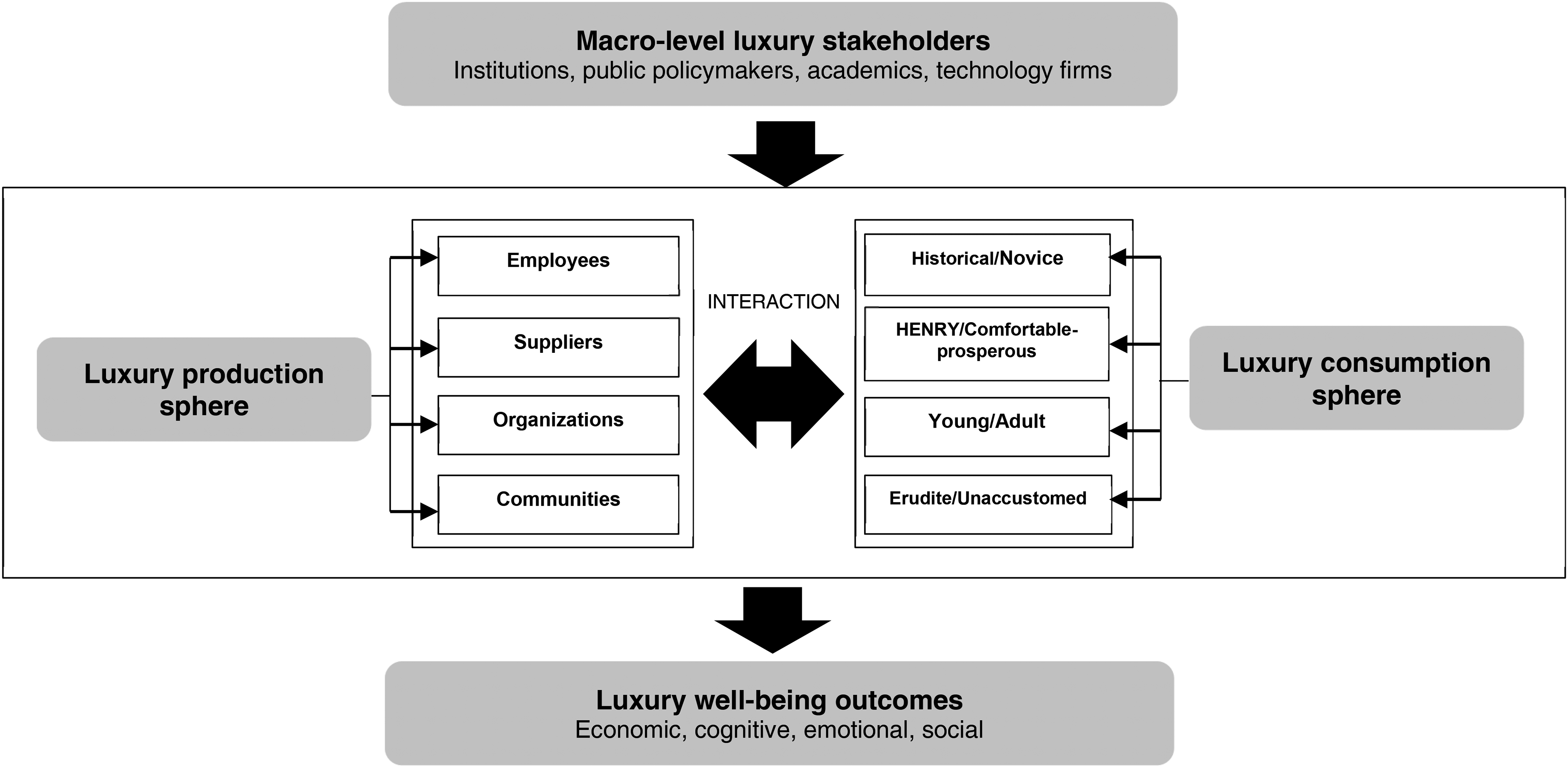
Transformative luxury research (TLR) framework.
In our conceptualization, TLR provides a comprehensive view of how the interaction between luxury consumption sphere entities, including different profiles of consumers and luxury production sphere entities (e.g., employees, suppliers, organizations, and communities), are shaped by macro-level luxury stakeholders. The stakeholders include institutions, public policymakers, academics, and technology firms. The main outcomes in terms of collective and individual well-being at the economic, cultural, emotional, and social level are also integrated. In doing so, TLR aims to advance luxury research by moving the field towards a more comprehensive and transformative perspective on luxury—one that should be viewed as a positive embodiment of luxury designed to enhance people's well-being. Therefore, it is our hope that the TLR framework can help researchers develop a refined understanding of the different spheres that comprise the luxury ecosystem and how the dynamics among entities in each sphere affect well-being outcomes. We define and discuss the luxury spheres and their entities, the stakeholders, and the related well-being outcomes in the sections that follow.
Luxury Consumption Sphere
As the TLR framework illustrates, the luxury consumption sphere encompasses four main luxury consumer profiles: historical versus novice, HENRY versus comfortable-prosperous, young versus adult, and erudite versus unaccustomed consumers. These coexisting profiles create tensions and thus affect well-being outcomes. The profiles also interact with each other and with the luxury production sphere within the macroenvironment, which can lead to the rise of new behaviors and consumption trends.
Consumers, as key actors who belong to the luxury consumption sphere, play a significant role in terms of defining luxury and its impact on their well-being. Although consumers consider luxury to be a driving force of positive emotions (Petersen, Dretsch, and Loureiro 2018), few works have examined the role luxury plays in promoting positive emotions among consumers and the types of luxury that can enhance their well-being. Most existing studies focus on luxury, especially luxury goods (e.g., luxury fashion and jewelry), and how they increase a consumer's social status (Han, Nunes, and Drèze 2010). The studies are mainly focused on the negative aspects of luxury consumption, such as materialism (Podoshen, Li, and Zhang 2011) or social discrimination (Wang 2022) due to the unaffordable nature of luxury goods, which are viewed as exclusive, expensive, and rare. However, recent works by Batat (2021a, 2021b, 2022a) have stressed the importance of focusing on the positive effects luxury consumption can have and how it can contribute to the collective and individual well-being of people. For instance, research shows that a luxury gastronomic experience in Michelin-starred restaurants can enhance and improve consumers’ food well-being (Batat 2021b).
Furthermore, the positive impact of a luxury experience depends on how consumers define luxury and their knowledge levels. For example, novice consumers tend to focus on tangible aspects alongside creativity and food quality when it comes to their high-end dining experiences. In contrast, advanced and confirmed consumers are interested in intangible and symbolic elements (i.e., the food's heritage, the chef's persona) and the food well-being aspects of luxury gastronomy (Batat 2021b). Thus, considering a subjective viewpoint, which depends on the profiles of consumers and the knowledge they have, luxury can affect a wide range of well-being outcomes. This statement aligns with recent works that have emphasized the importance of examining luxury meanings from a subjective perspective (Batat 2019a) in order to identify the types of luxuries that can positively or negatively affect people's well-being.
Undeniably, luxury is not static. It is an evolving construct that differs according to diverse factors, such as a person's age and lifecycle (e.g., Calvin Klein products can be perceived as luxuries in the adolescence stage and as nonluxuries by the same individual in the adult stage); culture and history (e.g., Asian consumers define luxury differently from French, Italian, and American consumers). Likewise, an increase in a person's income can change the perception of what luxury means, such as a shift from luxury logos to fine arts and tailormade luxury items. Therefore, scholars should first understand what luxury means from the perspectives of consumers to be able to explore its impact when it comes to well-being outcomes. What are the main luxury consumers’ profiles? And how does luxury affect their well-being? Our analysis of the existing literature revealed four key profiles of luxury consumers. They can be distinguished by a dichotomous perception and experience of luxury, which create tensions that can affect their overall well-being. Their profiles are as follows: (1) historical versus novice, (2) HENRY/HENRIETTA versus comfortable-prosperous, (3) young versus adult, and (4) erudite versus an unaccustomed consumer. The tensions existing among these profiles can affect well-being outcomes at different levels.
Considering tensions existing between historical consumers (old consumers of luxury, mainly European and American consumers) and novice consumers (nouveau-rich consumers in developing countries characterized by a recent access to luxury, for example, people who belong to Indian or Middle-Eastern cultures), research shows that historical consumers view luxury as intellectual and elite and feel they are entitled and legitimate actors in the luxury sphere (Batat and De Kerviler 2019). Thus, they expect luxury brands to recognize their superior status and treat them accordingly. For novice consumers, luxury is about recognizing and validating their economic power, which, per se, provides them with legitimate and superior statuses that should be similar to or higher than the ones held by historical consumers. Novice consumers focus on the tangible features of luxury products but have a limited amount of knowledge about the symbolic and discursive aspects of luxury items, such as their heritages, histories, codes, cultural norms, and protocols. As a result, luxury brands face tensions in the marketplace related to the encounter of the two profiles: Both feel entitled and believe they are legitimate actors with higher status; however, they do not have similar expectations when it comes to luxury consumption and interactions with luxury professionals.
This situation generates tensions in the luxury consumption sphere among different groups of consumers—tensions that can harm the well-being of both profiles, historical and novice. Therefore, luxury professionals should consider this issue in their offerings, communication strategies, and the training of their salespeople. The goal should be to help them navigate the situations and offer an enchanting luxury experience to both types of consumers so as to prevent any negative consequences on their well-being. Certainly, luxury professionals should create safe spaces where both types of consumers can fully express their views without feeling they are being judged. They should be treated respectfully and considered legitimate consumers with diverse expectations in terms of luxury offerings. In this sense, luxury professionals should be able to initiate novice consumers to luxury codes without stigmatizing them. The initiation process allows consumers to better appreciate their future luxury experiences, improve their well-being, and enhance their loyalty. Luxury professionals should also introduce these consumers to novel experiences and educate them without patronizing them while recognizing their legitimate status. Indeed, most luxury consumers have a great deal of economic power. Many come from countries that have accessed luxury very recently. These consumers should therefore be recognized and respected for their economic contributions to the luxury industry, which, in turn, will increase their self-esteem and thus positively contribute to their overall well-being. In contrast, when it comes to historical consumers, luxury professionals should focus on helping them elevate their “intellectual capital” while stimulating their senses, feelings, and emotions. This, in turn, will enhance their well-being because it will make them feel elevated and recognized for their longstanding loyalty to the luxury industry.
The second type of tension exists with regard to two other luxury profiles: comfortable-prosperous consumers and HENRY, which refers to “High Earner, Not Rich Yet,” and HENRIETTA, the female equivalent. The HENRY and HENRIETTA acronyms first appeared in Fortune magazine (Tully 2019). Comfortable-prosperous luxury consumers are wealthy high earners who are financially “set,” thanks to their strategic investments in stocks, real estate, bitcoins, and startups, among other investments. Based on Fortune's definition, HENRY/HENRIETTA consumers are ambitious, hardworking, and mostly comprise two-earner families. Generally, they are professional Caucasian males and females under the age of 55 who earn at least 100K USD. This profile is also becoming an attractive target for luxury brands. Consumers in this profile have a great hunger for luxury fashion, especially female consumers, although they face some challenges related to outlays for taxes and other costs (e.g., their mortgages and their children's college tuition). However, although these consumers can afford luxury goods, they have to make some financial effort to keep purchasing them and thus maintain their position as trendsetters. Because of this struggle, these consumers can face situations in which they feel vulnerable due to the pressures generated by regular assessments of different purchase situations. To put it another way, these people are, indeed, very rational in terms of their approaches to luxury; but at the same time, they need the emotional comfort luxury provides. Therefore, to help them achieve their well-being, luxury brands should focus more on the specificities and the emotional states of this profile of loyal and postmodern paradoxical consumers (Batat 2019a). For them, luxury is a mix of pleasure and pain.
When it comes to comfortable-prosperous consumers, their relationship with luxury is more about advancing their actual social and economic activities. Comfortable-prosperous consumers consider themselves to be key actors who can contribute to the luxury sector and beyond. As a result, these consumers can express frustration when they interact with luxury professionals who merely see them as people with purchasing needs. In this sense, frustrating experiences with luxury brands can affect their well-being because they feel they may be taken for granted by luxury professionals. Indeed, comfortable-prosperous consumers see their relationships with luxury professionals as being limited to the mercantile aspect. In other words, they are considered merely as shoppers who can have high expectations in terms of rarity and expect exclusive tailormade offerings. Consequently, for this profile of consumers, luxury brands should go beyond the logic of a regular customer profile and instead start by considering them to be “investors” and social actors. Because comfortable-prosperous consumers relish investment opportunities and philanthropic activities, they expect luxury brands to act as “connector agents” who help them bond with other market actors with similar interests. In doing so, these consumers will feel aligned with the values of luxury brands that know how to capture their values by, for instance, helping them support young fashion designers and engaging in social activities via charity initiatives and philanthropic projects.
The third type of profile refers to tensions that exist between young and adult consumers, which in the latter case refer to parents. For young people (especially digital natives) who are between the adonaissance and the adolescence stages (Batat 2021c), luxury brands act as a “rite of passage” and are an integral part of their youth identities and socialization. These young consumers are considered to be a vulnerable segment (Batat and Tanner 2019). They need emotional connections with luxury brands based on shared values (Khochman and Batat 2022). In this sense, luxury brands are central in a youth's life and socialization and thus can affect their well-being either positively or negatively. Mendini, Batat, and Paula C (2021) suggest that scholars should learn more about young people's motivations when it comes to luxury consumption and its relationship to their individual and collective well-being. In the same vein, Khochman and Batat (2022) examined the impact that secondhand or so-called “pre-loved” luxury brands have on the well-being of Gen Z consumers. Khochman and Batat's research showed that well-being among these young people could be generated by possessing and consuming secondhand luxury items. Doing so can contribute to four well-being domains: economic, cognitive, psychological/emotional, and social. Therefore, scholars need to adopt a TLR perspective when it comes to luxury consumption by focusing on the impact it has on different youth-vulnerable segments. The people in these segments are also luxury consumers, and luxury plays a crucial role in their personal and social identity construction processes.
Furthermore, young people learn to be future luxury consumers by virtue of their interactions with adults, especially their parents, which may generate conflicts that affect the well-being of the groups. For instance, many parents are facing situations in which their children are under the influence of social media and peer pressure to demand luxury brands, particularly luxury fashion brands (Silhouette-Dercourt and De Lassus 2016). This situation can leave parents who cannot afford the premium prices of luxury items feeling guilty (Batat and Tanner 2019). Thus, scholars should consider in their research the dynamics between parents and children when it comes to luxury consumption and how this may affect the overall well-being of both. Besides, researchers should investigate the impact of luxury brands targeting youth segments, for example, Gucci, a popular and loved luxury brand among millennials and postmillennials, on adult consumers’ perceptions of the brand's heritage and legitimacy.
The last profile refers to tensions existing among two opposed profiles of luxury consumers: erudite and unaccustomed. Recent studies show that unknowledgeable consumers approach luxury differently from knowledgeable ones (Batat 2021d). Thus, the level of knowledge and acquittance with a certain luxury field can affect consumers’ well-being. Erudite consumers are likely to feel confident in the luxury field they master. By contrast, unaccustomed luxury consumers can express anxiety because of their ignorance of the language and codes used in the field. Research in this area highlights the differences in luxury consumption as it relates to advanced versus novice consumers and the resulting impact on their well-being, especially in highly experiential luxury fields, such as the luxury foodservice industry (Batat 2021d). Moreover, prior studies focused on value-in-use in the luxury service field and identified escapism as a key value driver (Holmqvist et al. 2020) that can contribute to well-being. However, Batat (2021d) showed that value types depend on consumers’ knowledge levels, whether they are confirmed, advanced, or novice, and their past experiences in the field. These factors are critical in consumers’ appreciation of the lived luxury experience and the values they derive from it, which can affect their overall well-being.
Therefore, the differences between erudite and unaccustomed luxury consumers suggest that they each define luxury differently depending on a person's understanding and the degree of his or her past experiences in a specific luxury domain. In other words, consumers’ perceptions are multifaceted. They range from functional and social to emotional and cultural. Considering the knowledge perspective shows that luxury and its relationship to well-being is a subjective experience specific to each individual. Hence, a person's perspective is based on the individual's social and cognitive capital, education, personal story, culture in which the meaning of luxury is being shaped, and knowledge developed based on previous experiences (Batat and De Kerviler 2020). As a result, tensions can occur when the two profiles share a similar space (e.g., both are dining at the same gastronomic restaurant). Luxury professionals should therefore consider the level of knowledge of each profile in order to provide both types of customers with suitable experiences that elevate their cognitive capital while enhancing their overall well-being. For instance, whereas erudite luxury consumers seek meaning and elevation to feel valued and thus have positive experiences, unaccustomed luxury consumers can experience high levels of anxiety when they come in contact with luxury professionals. Therefore, these consumers seek external validation to feel better about and appreciate their experiences. Consequently, there is a need for more research exploring the relationship between luxury knowledge levels and their impact on the overall well-being of individuals.
Accordingly, the four profiles comprising the luxury consumption sphere, which refers to tensions between different luxury consumer segments, can lead to various vulnerabilities and thus affect the well-being outcomes of consumers at different levels, ranging from micro to macro. Moreover, in addition to the individual level, it is important to consider the community level, which includes different groups of luxury consumers, such as families or social and professional networks. Very different collective dynamics exist in these groups, thereby shaping luxury consumption and its impact on well-being outcomes in the broader ecosystem.
Luxury Production Sphere
The luxury production sphere includes multiple entities that interact with the consumption sphere and thus can affect the well-being of different profiles of consumers. As the TLR framework shows, from micro and meso to macro levels, the production sphere encompasses four key entities involved in the luxury field: employees, suppliers, organizations, and communities. Together they all play a vital role when it comes to well-being outcomes.
Employees play a critical role in the luxury sector because they have superior training and are expected to deliver the ultimate luxury experience to the different profiles of luxury consumers we mentioned earlier. Consumers have high expectations. Employees should meet them by developing emotional, cognitive, and creative skills to respond to unpredicted consumers’ expectations. In this sense, luxury companies should consider the well-being of their employees at the corporate level and in the marketplace, including those employees in direct contact with highly demanding luxury customers. Research shows that companies, especially in luxury sectors (Duma, Khalifa, and Schäfer 2022), along with experiential industries in which human capital is critical (for example, hospitality, services, and tourism industries), should focus on improving the employee experience by implementing employee-oriented actions. In this vein, Batat (2022b) argues that designing compelling employee experiences helps companies deliver positive customer experiences (Gentile, Spiller, and Noci 2007). This, in turn, helps the employees achieve their overall well-being.
Following this logic, an employee experience (EMX) framework conceptualizing the relationship between employee experience entities and employee well-being was proposed in a recent work by Batat (2022b). Batat urges scholars to embrace the positive effects of experiences designed by organizations, experiences whereby the employee's well-being is considered to be both a driving force and an outcome of the overall EMX framework. Drawing on the EMX framework, organizations should focus on three entities—personal, social, and cultural—which can positively or negatively affect employees’ well-being. Luxury companies should show their determination to help their employees achieve their well-being so as to ensure they can fulfill their personal and professional development with dignity.
For instance, Han, Lee, and Koo (2020) have examined the impact of physical evidence in luxury hospitality on the well-being of both customers and employees. Their results show that green indoor atmospherics in luxury hotels positively impact the mental well-being of employees, which, in turn, improves the customer/guest experience. Nevertheless, although employee well-being is a critical element of the “positive luxury” business model (Batat 2022a), research examining the construct in the luxury field is rare, if nonexistent. The exception is some recent work examining the well-being of employees in the luxury gastronomy sector, in particular among Michelin-starred restaurant employees. According to Batat (2021b), Michelin-starred chefs are highly concerned about the well-being of their employees because of the difficult working conditions they face. As a result, the chefs have started to rethink their management methods by focusing more on their employees’ work/life balances, along with their physical and mental well-being.
Another entity of the luxury production sphere, suppliers, play a critical role in the luxury industry. Their well-being can be affected while interacting with other production and consumption luxury entities at the macroenvironmental level. Indeed, luxury is a special sector in which raw-material supplies and highly experienced and elite suppliers lie at the heart of the luxury production process. Delivering luxury therefore depends on high-profile suppliers (e.g., Campos Franco, Hussain, and McColl 2019), who should be managed in a more centered way. Moreover, luxury production is also impacted by macro-level variables, including environmental and sustainability issues, especially when it comes to luxury fashion using rare resources (Karaosman et al. 2020). The luxury industry is nowadays facing increasing pressures from, such as changing regulations and the “clean label” trend (e.g., Winston 2016), which call for more sustainable luxury production practices. In this sense, luxury brands should be more selective, not only in terms of their knowhow and skills, but also in relation to the sustainable aspects of their partnerships with suppliers. It is vital for luxury firms to develop strong and long-term relationships by enhancing the fairness of the collaboration alongside the well-being of their suppliers.
Nevertheless, well-being is a critical topic, especially in the luxury industry. Suppliers face higher specifications for their merchandise and services and are required to be highly qualified (Batat 2019a). Notwithstanding, to our knowledge, no studies have examined the well-being of suppliers. An exception is a recent research that explored the role luxury gastronomy chefs play to support and improve the well-being of their suppliers (i.e., local producers and family businesses) by acting as defenders of their historical and artisanal knowhow and promoting them in their professional networks and among their customers. To improve suppliers’ well-being, the study highlighted the vital role Michelin-starred chefs play when it comes to advancing and sustaining their commercial partnerships with local suppliers and helping local family businesses grow and sustain their business activities while enhancing their reputations and images in the marketplace.
In the same vein, research on the COVID-19 pandemic's effect on the luxury gastronomy ecosystem (Batat 2021b), examined how the global lockdown impacted the well-being of different stakeholders in luxury gastronomy and the actions implemented by luxury restaurants to support their communities, including their suppliers. The study's results show that Michelin-starred chefs acted as social bricoleurs. They implemented different response strategies based on their resources and the capacity to support their suppliers, help them navigate the crisis, and thus improve their collective and individual well-being. Therefore, enhancing the well-being of one's suppliers is important for both luxury companies and customers who select luxury brands based on how fair they are towards their suppliers. Indeed, today's consumers are interested in the positive impact the brands they purchase can have and expect luxury firms to engage in win-win partnerships with their suppliers (Batat 2022a).
In the luxury production sphere, the organization refers to the luxury firm and its corporate culture and governance practices. It is also a critical entity that can affect or shape well-being outcomes. From an organizational perspective, embracing ethical operation and governance practices are vital in promoting positive well-being outcomes while responding to the calls for more ethical and moral practices (e.g., Sirgy 2021). Unethical practices within organizations across different sectors, including the luxury sector, have resulted in substantial concerns emphasizing the lack of ethical corporate governance (Ghafran and Yasmin 2020). Ethical governance is defined as the combination of moral codes and requests in a firm's management, governance, and control structures (Wieland 2001). In other words, corporate governance is a “map-reading instrument” that leads an organization to behave in the most ethical and socially acceptable way (Ghafran and Sofia 2020). By being run appropriately (Tricker 1984), businesses, in turn, enhance their legitimacy in the public eye (Kooiman 1999). An organization's legitimacy is acquired as a result of taking appropriate actions that fit with the social context and its moral norms and values (Suchman 1995).
Ethical governance is also related to an organization's ability to balance two opposite elements: running a profitable business and adhering to social priorities regarding well-being outcomes. The balance between the two is difficult to achieve in the luxury sector, especially luxury fashion. In this sector, tensions exist between earning a profit while engaging in ethical governance (Reid 2018). Therefore, luxury organizations should work towards this objective so as to develop a sustainable and profitable business model that positively contributes to well-being outcomes. Thus, ethics education is the key to increasing the trust among managers when it comes to embracing ethical practices and thus strengthening an organization's ethical governance. Doing so will, in turn, affect all business operations alongside well-being outcomes. This statement aligns with Batat's (2022a) research, which has shown that ethical governance is one of the pillars of a positive luxury business model. Ethical governance focuses on people's well-being while enhancing a company's profit and growth.
The last entity of the luxury production sphere refers to the community, which can play a vital role in terms of promoting well-being at a broader level that lies beyond the luxury sector. Indeed, luxury companies should focus more on the context in which they operate to evolve their practices and offerings based on social changes and external pressures from the media and other stakeholders. As a result, playing an active social role within one's community is important for luxury brands. Authors who have investigated the positive impact luxury brands can have when they target the well-being of communities emphasize two main points: (1) studies that have explored the role luxury brands play in terms of promoting values, such as the inclusion of different communities and ethnicities along with social justice (e.g., Kipnis et al. 2021; Cambrea et al. 2017); and (2) research examining charity and altruistic practices among luxury brands (e.g., De-Miguel-Molina et al. 2018; Boenigk, Silke, and Schuchardt 2015).
The integration of social justice is not a new topic, but it has become a core research area of business in recent years. In fact, it has become nearly a universal hot topic due to the rise of social movements (e.g., the Black Lives Matter movement) and pressures from society and consumers for more diversity and inclusion offerings and business practices. Nowadays, values such as diversity and inclusion are considered key pillars to the success of brands (Boenigk, Silke, and Schuchardt 2015). Although these values are being implemented through various actions in other sectors, their implementation in the luxury sector is very recent. Some recent examples show that a people-oriented luxury strategy includes actions such as giving back to a particular community of minorities or creating suitable all-inclusive brands and products targeting different ethnicities, among others. Therefore, luxury companies should make a more significant effort to incorporate and promote social justice and inclusiveness at all levels to improve well-being outcomes among communities. However, some studies show the apparent aspect of diversity and inclusion values in the luxury industry due to the lack of understanding of diversity, its drivers, and mechanisms (Ma 2020). Therefore, by understanding people-oriented actions (Batat 2022a) and implementing multilevel activities, luxury professionals can positively affect the collective well-being of different communities as well as mesh with emerging consumption trends. The goal is to become more inclusive and hear the voices of diverse consumer segments.
The second research stream that examined the positive impact luxury brands have on communities and their collective well-being refers to charity and altruistic practices, which are defined as an effort undertaken by an individual or organization to improve human welfare. For instance, when it comes to luxury hospitality, research shows that charity and altruistic practices can involve both employees and consumers, ranging from employees volunteering to customers making cash donations to charities (De-Miguel-Molina et al. 2018). Studies also show that beyond having an altruistic mindset and community well-being motivations, companies engage in goodwill so as to increase or improve their brand images and reputations (Tian, Wang, and Yang 2011). However, consumers are skeptical when it comes to charitable initiatives undertaken by luxury brands, especially donation strategies (Sengabira, Septianto, and Northey 2020). Therefore, there is a need for more research on consumers’ attitudes and perceptions of charitable activities conducted by luxury brands. The goal should be to implement the right strategies focused on well-being outcomes and thus generate positive effects within communities. For example, charity and altruistic practices, such as investing in cause-related marketing (Boenigk, Silke, and Schuchardt 2015) via cross-collaborations with nonprofit organizations (e.g., UNESCO), can positively affect the perceptions of a luxury brand's altruism (Boenigk, Silke, and Schuchardt 2015).
To sum up, the four entities composing the luxury production sphere are employees, suppliers, the organization, and its community. Each can affect well-being outcomes at different levels, from micro to macro. Moreover, the actions and strategies can be influenced by the macro-level stakeholders (e.g., governments) involved in the luxury industry. In turn, this can lead to positive or negative spillover effects on the well-being of people and communities.
Macro-Level Luxury Stakeholders
TLR, as an integrative and comprehensive research framework on luxury and well-being, must also recognize the roles various macro-level stakeholders involved in the luxury industry play. As shown in our framework, there are four main luxury stakeholders: institutions, public policymakers, academics, and technology firms in the macroenvironment. Each can impact the luxury industry differently and thus affect the well-being outcomes of entities in both luxury spheres (i.e., production and consumption). Therefore, macro-level stakeholders are more likely to impact a wide range of well-being outcomes. That is why scholars need to develop a better understanding of the different stakeholders involved in the luxury ecosystem and identify their effects on well-being. A stakeholder perspective (Freeman, Dmytriyev, and Phillips 2021) on luxury is then a suitable approach to evaluate any groups or individuals whose well-being can be affected by the decisions made by macro-level stakeholders. Certainly, macro-level luxury stakeholders vary according to cultural settings in which luxury is embedded and where its meanings are shaped. Yet, although other macro-level stakeholders should be considered, the most relevant for TLR are likely the four we identified because of their weight in the luxury industry and potential to influence production and consumption entities along with well-being outcomes.
In particular, institutions as macro-level luxury stakeholders safeguard and defend the heritage of luxury and thus, by definition, are involved in shaping the production and consumption spheres, which can then affect well-being outcomes. Consequently, institutions are critical in terms of making and preserving luxury industries, especially in a culture known for its leadership in a specific industry (i.e., haute couture in France and luxury watchmaking in Switzerland). These stakeholders should act in the best interest of the luxury industry to preserve it from growing threats, such as counterfeit luxury goods, which can harm the small businesses run by luxury artisans and thus affect their well-being outcomes. Additionally, institutions shaping the luxury market in France are different from those in Italy, for example. In France, the Comité Colbert (the Colbert committee) is an association that rigorously regulates the luxury sector and is comprised of 92 luxury houses. Along with 17 major French cultural organizations, they play an essential role in the French luxury industry (comitecolbert.com 2022). The committee's importance can be traced back since the rise of luxury under the reigns of royalty. France's minister of finance, Jean-Baptiste Colbert, formed the first committee to control the quality of France's luxury goods (e.g., silk, perfume, gloves, and food). This has preserved the French luxury and contributed to establishing it as a global reference across decades and cultures (Batat and De Kerviler 2020). Likewise, in Italy, Foundation Altagamma. (Fondazione Altagamma), created in 1992, is a very important trade association of Italian luxury goods producers. Its purpose is to identify and gather high-end cultural and creative manufacturers who are internationally acknowledged for their artisanal knowhow and are considered to be legitimate promotors of the Italian style (Foundation Altagamma 2022). The foundation also empowers its members and defends the interests of Italian luxury makers by raising awareness about the market and trends.
Public policymakers are another macro-level stakeholder involved in promoting and supporting the entities of the luxury production and consumption spheres. Similar to institutions, public policy programs and actions depend on the country in which luxury production and consumption takes place. Existing studies have emphasized the significant support of governments and policymakers when it comes to implementing programs, laws, and regulations favorable to luxury cultures and art industries in order to protect an area's heritage and cultural identity. Therefore, public policymakers can affect the well-being of people, often with unexpected consequences. For example, by protecting the luxury industry actors, public policy preserves the national heritage and its leading role, but at the same time, can create discrimination among young emerging designers, especially those from developing countries or other mainstream sectors that manufacture the same goods but are not labeled as luxury goods. Also, lobbying actions (McKay 2012) in the luxury industry can lead policymakers to change or adapt regulations and laws to support its interests but can also harm luxury consumers who, as a result, must accept the high, unregulated prices of luxury goods and services. We can then question if public policy actions should be involved in making luxury accessible and thus helping consumers who cannot afford it experience luxury for the first time. Doing so can enhance their emotional well-being. Indeed, existing studies have shown that luxury consumption has a positive impact on people's emotional well-being (Petersen, Dretsch, and Loureiro 2018).
In addition, academics are part of the luxury ecosystem and therefore should be considered key macro-level stakeholders when it comes to examining the impact luxury consumption and production have on people's well-being. Although researchers across different disciplines have examined luxury and its impact on environmental sustainability (e.g., Osburg et al. 2020; Athwal et al. 2019), studies focusing on the relationship between luxury and well-being are rare. The exceptions are the recent works by Batat (2019a, 2022a), who examined luxury production and consumption from both perspectives: consumers and companies that incorporate well-being outcomes. Therefore, academics are influential actors involved in shaping the present and the future of luxury research and practice and advancing our understating of well-being outcomes alongside environmental and social sustainability. Consequently, more studies should integrate the TLR framework to examine the effects of the different interactions between micro and macro luxury entities and how they affect the well-being of individuals and communities. Lastly, technology firms refer to digital players as key macro-level stakeholders involved in the luxury ecosystem—players who can affect well-being outcomes. Although most existing studies focus on well-established luxury brands such as big conglomerates (e.g., Kering, Richemont, LVMH), new and indirect competitors are entering the luxury industry, thus having a significant impact on the well-being of production and consumption entities. Hence, it is critical for scholars to consider these indirect macro-level stakeholders. They mainly belong to the digital sector and include Amazon, Meta, and Vestiaire Collective (a secondhand luxury e-commerce website), among others.
Luxury Well-Being Outcomes
At its core, TLR advocates concern for the well-being of individuals (e.g., consumers, employees, and suppliers) and communities at the local and global levels. All are affected by luxury firms’ actions and strategies. Therefore, topics such as consumers’ attitudes towards luxury goods and the relationship between the social statuses of people (Han et al. 2010), as well as the (in)compatibility between luxury and sustainability (Dean 2018), need to be examined. Scholars do not often incorporate the impact the luxury ecosystem has on the overall well-being of people and communities. Failing to do so does not allow us to examine issues fundamental to TLR. The concept of well-being has been examined across various disciplines. In marketing, well-being has been defined by Lee and Sirgy (2012) as the satisfaction of consumers with their possessions relative to their personal perceptions and personality traits. People's well-being as related to their possessions is measured by the satisfaction they get from their acquisitions, consumption, or living environments. The search for happiness and well-being is related to one's perceived life satisfaction, which describes the individual's feeling of happiness as a state of contentment and pleasure (Khochman and Batat 2022).
Although various well-being outcomes subsist, the framework emphasizes those that are most relevant to luxury researchers who can examine how luxury consumption and production entities influenced by macro-level stakeholders can affect different dimensions of the well-being of people and communities involved in the luxury industry and beyond. As the framework illustrates, there are four key luxury well-being outcomes: economic, cognitive, emotional, and social. The focus on these outcomes is consistent with Khochman and Batat (2022) recent examination of Gen Z consumers’ well-being regarding secondhand luxury consumption, which shows its positive impact on these four pillars. The four well-being outcomes that lie at the heart of the TLR framework and examine two types of happiness are: (1) eudaimonic happiness, which is attained via meaning and purpose (Ryff 1989), and (2) hedonic happiness, which results from experiences of pleasure and enjoyment (Batat and Addis 2021). Both improve the quality of life, which refers to the development of the individual's abilities and freedom (Sen 1999).
Economic well-being as an outcome of the TLR framework refers to the ability of people to access goods and services that satisfy both their tangible and intangible needs and thus improve their happiness (Mullis 1992). Economic well-being is measured by how financially safe and secure people and communities feel in the present and future. Therefore, economic well-being is more about people's feelings than actual statistics related to one's net worth or a nation's gross domestic product, which are often cited as the only indicators of economic well-being. As a result, people's luxury perceptions vary depending on their economic statuses. For instance, one group of consumers can perceive a $200 watch to be luxury, whereas another group might see it as nonluxury. Yet with new trends emerging, especially the rise of secondhand luxury, the access to highly expensive luxury brands is becoming more affordable for many consumer segments. This is especially true of Gen Z consumers, who make independent decisions based on their economic statuses and level of incomes. This statement aligns with Khochman and Batat (2022). They argue that for Gen Z consumers, purchasing secondhand luxury is like killing three birds with one stone: possessing a luxury item that otherwise would be unfordable for them, saving money, and engaging in sustainability. Thus, this generation feels like it can “outsmart” the luxury industry. Additionally, more high-income consumers are seeing luxury as an investment that can secure their economic well-being in the future. For instance, investing in a rare and expensive Hermes bag, the price of which may double in the years to come, is akin to investing in real estate or fine artwork.
Cognitive well-being is another outcome of the TLR framework. Cognitive well-being is related to people's feeling of being successful after accomplishing a specific objective. Kettlewell and colleagues define cognitive well-being as “a deliberate, goal-directed evaluation of one's life satisfaction—global or domain-specific” Kettlewell et al. (2020, p.2). Therefore, cognitive well-being requires a motivational backup, perseverance, and determination to understand how decisions are made. According to this logic, the cognitive aspect refers to the level of well-being individuals experience based on their thoughts, judgments, and feelings of their satisfaction with their lives—including their satisfaction with specific areas, such as their workplaces, relationships, health statuses, and recreation activities (Diener and Ryan 2009). In this sense, one's satisfaction with life is primarily a function of the comparison between the individual's life achievements and the personal standards of an individual (e.g., Sirgy 2002). When it comes to the relationship between luxury and cognitive well-being, studies show that the owners of luxury goods usually are better off than others, which gives them a more positive sense of well-being (Linssen et al. 2011). This is also usually associated with people who understand the symbolism behind luxury consumption. Especially for materialistic consumers, luxury consumption gives them an enhanced sense of cognitive well-being while increasing their life satisfaction (Hudders and Pandelaere 2012).
Emotional well-being as an expected outcome of the TLR framework refers to the mental health and states of individuals. A positive emotional well-being may increase one's life expectancy, enhance a person's emotional strength, improve his or her health, and even the health and well-being of those around the person. However, the impact of luxury consumption with regard to this aspect is somewhat complex because of its mixed effects, both positive and negative, on the emotional well-being of consumers (Scott et al. 2020). Some studies emphasize the negative impact luxury consumption has on people's emotional well-being as they strive to display unattainable lifestyles (Wu et al. 2015) to earn other people's validation and approval. Other studies show the positive impact luxury purchases can have on the emotional well-being of people by elevating a person's sense of self-worth and sense of security in as a result of feeling indulged. This statement aligns with Petersen et al.'s (2018) research, which refers to luxury as a source of positive emotions. Research has shown that luxury positively contributes to the emotional well-being of individuals by enhancing their moods. This, in turn, leads to reduced negative feelings and thus increases their emotional well-being and their satisfaction with their lives (Hudders and Pandelaere 2012).
Finally, social well-being is also another outcome that lies at the heart of the TLR framework. Social well-being is defined as the act of sharing and developing social bonds and significant relationships that give a person a sense of belonging to a community (Batat 2019a). Authors have distinguished between social and personal well-being as more related to an individual's psychological aspect, as stated by Keyes (2003): “whereas psychological well-being represents more private and personal criteria for the evaluation of functioning, social well-being epitomizes the more public and social criteria whereby people evaluate their functioning in life” (p. 300). Therefore, because luxury consumption is often driven by social needs, such as displaying one's social status (Dhaliwal et al. 2020), researchers need to examine how luxury can enhance social well-being among individuals and communities. This is especially the case among younger consumers and more vulnerable groups seeking social integration and validation so as to define their social status and achieve their overall well-being.
To sum up, scholars should embrace a transformative perspective on luxury consumption and production in the macroenvironment while examining its effects on various outcomes of well-being, including people's economic, cognitive, emotional, and social well-being. We identified four relevant outcomes of luxury well-being capital that should be studied in future research. Yet other potential outcomes can be considered depending on the luxury domain selected, the cultural context in which luxury meanings and consumption practices occur, and the way they are shaped relative to the segments of consumers studied.
TLR Directions for Future Research
Drawing on the transformative consumer research literature, this article identifies the emerging research fields of TLR, a new research stream. Also explored is a conceptual framework that can serve as an academic foundation for further research. The goal should be to explore the impact of luxury production and consumption (which is shaped by macro-level stakeholders) on the well-being of people, communities, and beyond. The framework depicts the interaction between the entities of luxury consumption with the luxury production sphere. Both are impacted by macroenvironment stakeholders, directly or indirectly, and are involved in the luxury ecosystem in which the occurring synergies affect well-being outcomes.
Therefore, TLR is an appropriate framework to examine the relationship between luxury and well-being outcomes because it bridges the gap in the literature by adopting a holistic and transformative perspective on luxury consumption and production entities in the macroenvironment. The goal is to assess the related effects on the collective and individual well-being of people. Thus, TLR, as a promising research stream, encourages future studies in many areas and across different luxury sectors, ranging from fashion and hospitality to luxury gastronomy and private banking. We identified six main research areas scholars can consider to examine the impact of luxury on well-being outcomes: (1) luxury among vulnerable consumer groups, (2) luxury in crises, (3) non-Western luxury/luxuries, (4) luxury and digital well-being, (5) luxury and heritage protection, and (6) alternative luxuries and well-being.
The first research area scholars should consider is related to the importance of examining luxury consumption among vulnerable consumer groups. As the TLR framework shows, different profiles of consumers, including those who can afford luxury items, face situations in which they feel vulnerable. These situations negatively affect their well-being at the emotional, cognitive, economic, and social levels. Moreover, these consumers can experience various types of vulnerabilities depending on their profiles. Prior works have identified young consumers, especially at-risk adolescent consumers, as well as other vulnerable groups (e.g., Batat and Tanner 2021) when it comes to luxury consumption. However, most studies focus on young consumers’ attitudes towards luxury brands. An exception is a recent study by Khochman and Batat (2022), which examined the relationship between pre-loved luxury brands and the well-being of Gen Z consumers. Therefore, future research can focus more on identifying vulnerable groups of consumers in and out of the luxury sector in order to generate valuable insights. These insights can help luxury brands implement strategies to prevent negative experiences on the part of consumers and thus improve their collective and individual well-being.
The second research path refers to examining luxury consumption and production in the context of crises, especially COVID-19, which affected the well-being of consumers and employees in many industries. Although some studies have examined the impact the pandemic had on the behaviors of consumers in the luxury sector, most of the works take a one-sided perspective (one market actor: consumers; or one type of impact, such as the impact on sales), thus ignoring other luxury stakeholders. Yet research by Batat (2021b) investigated how the pandemic has transformed luxury actors in the high-end gastronomy sector (i.e., Michelin-starred chefs) into social bricoleurs who can implement all-inclusive coping strategies to help improve the well-being of different market actors (e.g., consumers, communities, suppliers, and even their competitors) in the industry and beyond. Therefore, future studies should consider a stakeholder perspective when it comes to examining luxury consumption and production in the context of a crisis, whether it is economic, health, or ecological.
The third research area refers to works focusing on luxury, especially from a managerial and production perspective in emerging non-Western countries. This is a relevant topic for future research for two main reasons: First, most of the existing works include established Western luxury brands, and second, non-Western luxury brands, especially in Asia and Africa, are becoming a powerful force in terms of global fashion luxury. For instance, in Africa, Designers such as Christie Brown, Imane Ayissi, Ahluwalia, Orange Culture, and others are rising and will have massive potential in the future. It is therefore important for researchers to integrate them into their studies on non-Western luxury consumption and production. Why? Because the patterns, trends, behaviors, and the meanings of luxury are shaped by the historic-cultural context in which luxury emerges and evolves (Batat 2019a). Consequently, non-Western luxury consumption and production will differ from the Western approach.
The fourth research area includes studies focusing on the relationship between luxury and digital well-being. This is especially important because of the COVID-19 pandemic, which led to technology and digital overemployment, as well as growing interest in the impact social media platforms (e.g., TikTok, Instagram, and Snapchat) are having on the digital well-being of individuals. This trend has pushed many users, including celebrities, to “quit” social media platforms because they negatively impact their mental health. Some luxury brands have decided to support the quitting trends. The brands have erased their social media accounts to help users disconnect. For example, Bottega Veneta abandoned Instagram in 2021. Therefore, future works can examine the “digital-free” mindsets of luxury brands and explain their effects in terms of improving the digital well-being of people. The goal should be to assess the effectiveness of a brand's digital decisions and how they affect their businesses, along with well-being outcomes.
The fifth research area is related to studies focusing on luxury heritage protection, especially in the “phygital” ecosystem, mixing physical and digital settings (Batat 2019b). In the phygital era, luxury brands should think of their extension strategies and thus the protection of the heritage of their brands. An example is the case of an artist who designed MetaBirkins NFT (a nonfungible token), which was essentially a non-authorized NFT version of Hermes Birkins bags. Moreover, future studies should focus on luxury heritage from the artisanal perspective. At its core are elite artisans. But nowadays, the sector is facing a challenge when it comes to hiring and training craftspeople, especially young people, due to the arduous work and low pay in luxury craftmanship sectors. This missing vocational aspect is particularly challenging for a luxury brand so as to preserve its brand heritage, knowhow and perpetuate its spirit and traditions (Batat 2019a). Lastly, scholars should consider “alternative luxury” as an emerging area of research in order to examine the impact “rented luxury” has on the individual and collective well-being of consumers. Scholars can examine the drivers, features, and outcomes of other types of alternative luxuries that have emerged due the evolution of society and changing expectations towards luxury consumption. The trend is shifting to more “sharing” practices, such as renting luxury watches, jewelry, art, haute couture clothing, and luxury sports cars. For example, in 2019, the German luxury sports automaker Porsche launched its first short-term car leasing program implemented by a luxury brand “itself” in China.
Footnotes
Acknowledgement
This article is part of the special issue “Advancing Transformative Luxury Research: Contributions to Marketing Theory About Luxury, Ethics, and Well-Being.” Special thanks to Danae Manika (Brunel University London, UK) who contributed to the editorial review process of papers submitted and reviewed within this special issue in the Journal of Macromarketing.
Associate Editor
M. Joseph Sirgy
Declaration of Conflicting Interests
The author(s) declared no potential conflicts of interest with respect to the research, authorship, and/or publication of this article.
Funding
The author(s) received no financial support for the research, authorship, and/or publication of this article.
