



Abstract
This research explores the legitimation processes underpinning the implementation of specific urban policies in cities grappling with socio-economic challenges, such as in a post-industrial context. Focusing on Europe, where public authorities are seeking to enhance the socio-economic dynamics of post-industrial cities through cultural initiatives like branch museums, our research is based on a historical study of media relating to the establishment in 2012 of the Louvre-Lens museum in northern France. Within this framework, we reveal how institutional actors have performed strategies of legitimation to develop the Louvre-Lens. Our findings underscore the confluence of two primary strategies – economic and cultural –in an effort to navigate the complexities and tensions inherent in establishing a cultural offer in a disadvantaged post-industrial region. We conclude with a discussion about the broader implications of these strategies within the realm of macromarketing. We provide practical recommendations for practitioners and policy makers involved in the development of branch museums.
Introduction
This paper explores how the context of a disadvantaged post-industrial city influences the legitimation process of developing a branch museum. Specifically, it highlights that while the establishment of a branch museum can contribute to economic and socio-cultural dynamism in post-industrial cities (Gomez 1998), the legitimation process for such cultural infrastructure may encounter obstacles and tensions that institutional actors must navigate. Post-industrial cities often suffer from a lack of economic and socio-cultural dynamism. The decline of industries such as textiles and coal marked the fall of cities such as Liverpool in the UK (Couch and Denneman 2000) or Lens in France (Tobelem 2017) into states of disrepair (Couch, Sykes, and Börstingghaus 2011). We define post-industrial cities as those which have undergone socio-economic restructuring following deindustrialization, moving from an industrial to a service-based economy (Baum et al. 2002). In recent decades, urban policies have been introduced to improve residents’ standard of living and to revitalize the cities’ economies. These policies have been supported by various initiatives, especially in the socio-environmental and cultural sectors, such as participative democracy or ecological and cultural projects.
These cities have been converted into cultural spaces (e.g., the Zolleverein complex in Essen, Germany, which is now a UNESCO World Heritage Site). In the 1990s, the Blair government in the UK popularized the notion of creative industry and made it the basis of an urban revitalization program (Alexander 2019). This program has had consequences for the cultural sector, such as free entry to museums and an increase in the financial resources allocated to the cultural sector. Under this program, cultural and artistic actions became a vehicle for sustainable development in cities. Policy makers are seduced by post-industrial cities which have succeeded to improve the standard of living through urban policies. The popularization of creative industries in politics and academia (Caves 2000; Florida 2002) follows the marketization of the cultural sector (Ekström 2019). This marketization is well illustrated by the market orientation of museums adopting marketing tools from business (Alexander 2019). Some museums adopted a strategy of international development through the creation of branch museums.
A branch museum is defined as a museum resulting from a branding strategy initiated by a globally renowned museum (Vivant 2011). For example, the Guggenheim foundation opened several museums in different cities around the world, such as Bilbao in Spain. Through its contribution to the development of cultural offerings (e.g., cultural events and museums), the Guggenheim has been perceived as an economic success and a real driver of tourism attractiveness in Bilbao (Gomez 1998). Policy makers see this case as a model of economic revitalization.
Despite this success story, the application of such urban policies, including the development of a branch museum, is not always a simple path which all actors agree on and strive for. The literature demonstrates instances where certain branch museum projects have faced rejection from public authorities or the local community, exemplified by the Guggenheim museum proposals in Helsinki (Linko 2020), Tokyo and Salzburg (Mencarelli 2008). The creation of branch museums is sometimes perceived as excessively expensive or not aligned with local needs. In some cases, museums established for urban regeneration, such as the Imperial War Museum North in Salford-Manchester in the UK, the Museum of Contemporary Art KIASMA in Helsinki, or the Milwaukee Art Museum in the US, do not achieve the anticipated success (Plaza and Haarich 2009). These failures are often attributed to contextual factors, including the socio-economic, political or spatial environment in which the museum is situated. Additionally, the success or failure of a museum project can be linked to its management, such as a lack of consideration for the local population (Ponzini 2018).
One crucial determinant of a museum's success, particularly for a new establishment, is the design of its architecture as it significantly influences the museum's global visibility and identity (Ajana 2015). Furthermore, the engagement of celebrity architects is seen as part of an international development strategy, acknowledging that not all museums share the same international ambitions or goals. This importance is exemplified by museum projects for which renowned architects were hired like Frank Gehry for the Guggenheim museum in Bilbao (Plaza and Haarich 2009) or Jean Nouvel for the Louvre Abu Dhabi (Ajana 2015). However, recognizing that a museum's success is contingent on various contextual elements, it is evident that a museum's strategy cannot solely rely on architectural design.
This research explores the processes of legitimation orchestrated by institutional actors to facilitate the establishment of a branch museum in a post-industrial city. This entails close involvement of public authorities and transpires in a distinct context characterized by specific political objectives and local needs. To gain a more in-depth understanding of the formulation and progression of legitimation strategies, an examination of their historical construction is needed.
The focal point of our investigation is the Louvre-Lens museum, a case study of particular relevance for several compelling reasons. Situated in the post-industrial city of Lens, in northern France, this museum is a distinct branch of the renowned Louvre, officially inaugurated on December 4, 2012. The Louvre-Lens encapsulates the complexities and challenges inherent in cultural development within a context marked by post-industrial dynamics. After record attendance the year following its launch (1 million visitors), the Louvre-Lens now welcomes about 450,000 visitors each year. They enjoy free access to the permanent exhibition, called Time Gallery (Figure 1), which has a chronological display of historical objects and artworks representing the history of humanity. In addition, the Louvre-Lens organizes yearly temporary exhibitions on a specific artist, a civilization or a theme from art history.

Picture of the Time Gallery exhibition in the Louvre-Lens. (Jean-Pierre Dalbéra – CC-BY).
The museum is located in the second poorest region of France (INSEE 2021), with a poverty rate of 18% in 2018 (compared to a nationwide average of 15.1%, INSEE 2021). The Louvre-Lens was clearly intended as a way to re-dynamize the region. At the center of a political strategy initiated in the 2000s, it aims to improve the standard of living of isolated regions by emphasizing cultural democratization and social development policies. In France, the cultural sector is controlled and regulated by the Ministry of culture. Museums are public institutions and mainly funded by public authorities. Based on the social value of the cultural sector in the development of a society (Brunel 2012), the mission of cultural democratization has been a priority of this Ministry since its creation in 1959 (Gouchon 2022).
In the case of the Louvre Lens – and other museums: Guggenheim in Bilbao, Center Pompidou in Metz, the Tate in Liverpool – the development of a branch museum is based on an internationally renowned and well-established museum, the Louvre, and aims to generate economic development and urban regeneration. However, given its location in a post-industrial city in France, the Louvre-Lens has been established to support a national policy of cultural democratization. Thus, we ask the following question: How does the context of a post-industrial city influence the legitimation strategies of a branch museum's development?
Our research is grounded on a historical approach (Coraiola and Derry 2020; Karababa and Ger 2011; Wadhwani 2016), using media archives such as press articles, television reports and podcasts about the Louvre-Lens museum. We aim to understand the construction of the museum's legitimation strategies, deriving from discourses of institutional actors such as the city of Lens, the regional council (the elected and deliberative assembly of northern France), the French government and Minister of culture, the directors of both the Louvre museum in Paris and the Louvre-Lens, and other employes of the latter.
In the following sections, we first outline the current issues relating to urban policies and highlight the market orientation of the cultural sector. We then explore the advantages and limitations of developing branch museums. Next, we present the research methodology. Our findings focus on the strategies to legitimate the Louvre-Lens, especially how they are developed over time. This paper contributes to macromarketing research by studying the influence the macro-level context of post-industrialism can have on the legitimation process of a branch museum. We then provide insights into the management of legitimation strategies in the case of branch museums.
Urban Policies in Post-Industrial Cities
Economic, social and political systems considerably influence the evolution of cities (Roberts, Sykes, and Granger 2017) and can generate both challenges and opportunities for economic and social progress. These systems are the result of external influences (e.g., the decline of an industry) and a city's internal characteristics (e.g., the demographic characteristics of its population) (Roberts, Sykes, and Granger 2017). For example, the decline of the industrial sector can generate an increase in unemployment and poor living conditions for residents in industrial cities.
Urban policies aim to solve a city's problems or seize different opportunities in order to improve the living standards of residents (Leary and McCarthy 2013). They are seen as a response to the changes taking place in cities and can stem from political concerns, economic opportunity or social questioning. Changes in all cities need a specific response (Ramlee et al. 2015) adapted to their historical, socio-economic and cultural contexts (Couch, Sykes, and Börstingghaus 2011). Urban policies can lead to the physical redevelopment of places where people work and live, good environmental standards or the building of social and cultural facilities (Ramlee et al. 2015). Regarding the growing importance of the cultural sector in urban revitalization policies, our research focuses on urban policies that are implemented in the cultural sector and promote cultural activities.
Historically, post-industrial cities underwent comprehensive physical redevelopment to host industrial infrastructure (factories) and meet the corresponding demands (workers). However, innovations in different sectors like production, communication and transport led to the deindustrialization of cities as well as a boom in service industries (Grodach, Loukaitou-Sideris 2007). Consequently, the physical structure of these spaces became unsuitable for the new socio-economic system in Europe. These cities witnessed an increase in unemployment, a deterioration of buildings, and a lack of transport and infrastructure to reach employment centers (Couch, Sykes, and Börstingghaus 2011). As these socio-economic changes appeared, governments and policy makers pointed out the need for local initiatives to economically dynamize these cities (Grodach and Loukaitou-Sideris 2007). In the 1980s, cultural activities became an instrument to reach that goal (Florida 2002; Gomez 1998).
From a theoretical perspective, the cultural sector was traditionally defined by the diversity of its products, activities or organizations. In the 1990s, the notion of creative industries emerged (Caves 2000), linking the cultural sector and the market through the concept of creativity. It encompasses activities that include significant creative components such as design, fashion, or art. The objective is to foster innovation and bolster emerging, competitive markets by establishing interconnected networks between these creative endeavors. The term of creative industries leads to the concept of the creative city (Landry 2000), one that is committed to developing and maintaining these activities/industries. While creative cities and industries focus on creative and cultural activities, Florida (2002) proposes a creative class theory with a focus on creative and cultural workers. The economic success of a city depends on the presence of a creative class, usually composed of upper middle-class population segments, “defined as those whose occupations range from artists and software designers to management and legal experts” (Pratt 2008, p. 108) and responding to the interests of high-growth firms. In this way, creative cities are no longer just defined by the presence of creative industries. They are defined by the highest presence of or potential to attract the creative classes through social inclusion and a good quality of life (Florida 2002), which explains their success with policy makers. Nevertheless, Florida (2002) assertions have faced criticism for presenting a potentially inaccurate interpretation and explanation of the creative city. Scholars such as Shearmur (2007) and Scott (2006) argue that economic development acts as the driving force behind employment attractiveness, and so creative populations are not inherently mobile, driven solely by rational choices to reside in the “best” city. Rather, they contend that external and individual constraints significantly shape the choices of creative individuals, challenging the social logics advocated by Florida (Eckert, Grossetti, and Martin-Brelot 2012). However, despite debates about what underpins the development of creative cities, these authors maintain a correlation with economic development. A notable avenue of investment in cultural industries, often appealing to policy makers, due to its potential economic impact, is the establishment of branch museums. In the following section, we focus on the advantages and limitations of this particular approach.
Advantages and Limitations of Developing Branch Museums
The role of public authorities is essential in the development of a cultural offer such as a branch museum. As shown by the success of the Guggenheim museum in Bilbao, one key factor of a branch museum is the ability of public authorities to match the project with local actors like the local population or other private and public stakeholders (Vivant 2011). A branch museum is developed by a partnership between the main museum and the public authorities as it serves the objectives of each. Cities are willing to improve their image and draw in tourists, and therefore are increasingly inclined to invest in creative industries. Regarding the economic challenges and increased competition in the museum sector, the adoption of branding strategies and the establishment of branch museums are seen as avenues for museums to be economically viable (Belenioti, Tsourvakas, and Vassiliadis 2017). Through association with an established brand, a branch museum gains legitimacy in the museum sector without having to build it from scratch (Ajana 2015). Since it results from a branding strategy, a branch museum conveys a specific set of values related to a world-renowned brand and shared know-how recognized in the museum sector as legitimate (Mencarelli 2008). This legitimacy allows the branch museum to compete in the museum sector and convince policy makers and public authorities to invest. In his research, Mencarelli (2008) compares the international development of the Guggenheim foundation with a system of franchises. He showed how the Guggenheim foundation strategy is based on a strong collaboration with local authorities, whose involvement limits the financial risks for the Guggenheim foundation.
However, this branding strategy is not without risks and limitations. The creation of a branch museum is a challenging urban project in terms of the diversity of actors involved and their diverging interests (e.g., local vs national). The limitations presented in the literature focus on the cultural (Linko 2020; Rodner and Preece 2016), economic (Mencarelli 2008) and spatial (Bargenda 2018; Grodach 2010) dimensions of branch museums. These limitations are well illustrated by the Guggenheim brand.
First, the development of a cultural offer like a branch museum is influenced by state-level policies that work as guidelines. The instrumentalization of cultural activities by public authorities serves a purpose of nation branding that can diverge from the local artistic discourses (Rodner and Preece 2016). State support for art productions can be opposed to local art practices or consumption. For example, one of the reasons for the rejection of the Guggenheim museum project in Helsinki was that local cultural practices were more oriented toward urban events and festivals than museums (Linko 2020).
Second, while the branding strategy allows the museum to limit its financial risk, this is not the case for the public authorities that invest in it. In some cases, the development of a branch museum is too expensive for public authorities, as in Tokyo and Salzburg, who refused to host a Guggenheim museum (Mencarelli 2008).
Third, while the museum's architecture and its location are central elements in the creation of a branch museum, they can also be an obstacle. In the case of the Guggenheim museum project in Helsinki, the proposed location for the museum was perceived as a place with no need of urban regeneration and isolated from other cultural sites (Linko 2020). Moreover, space productions like architecture generate ideological meaning according to the cultural, social and historical contexts in which they are produced (Bargenda 2018). In her study of bank architecture, Bargenda (2018) shows how space productions interact with the macro-level context of the city and impact aesthetic, urban, social and ecological systems. The development of a branch museum in a city can generate spatial tensions, as exemplified by the phenomenon of gentrification (Grodach 2010). This is defined as a process of “rehabilitation of working-class and derelict housing and the consequent transformation of an area into a middle-class neighborhood” (Atkinson 2004, p. 108). However, it is important to clarify this statement. There are few elements in the literature that prove that culture and artists drive gentrification (Markusen 2014). Nevertheless, the literature denounces the phenomenon of gentrification when addressing the development of branch museums like the Guggenheim museum in Bilbao (Grodach 2010). Policy makers usually locate such infrastructure in inner cities to attract a new population segment, which reinforces social inequalities with the peripheral areas.
While developing branch museums is part of the strategy to improve the image and attractiveness of cities, it can suffer from limitations due to the local context in which they are established. Focusing on economic returns, policy makers tend to see successes such as Bilbao as a model to emulate. The application of this strategy results in the standardization of branch museum development, which tends to disconnect the cultural offer from the local identity and needs (Castilhos 2019).
In the literature on branch museums, various cases have been studied, each exhibiting both similarities and differences in comparison with the Louvre-Lens Museum. We present a summary of the specificities of four other branch museums in Table 1, highlighting how the Louvre-Lens stands out as a unique case for our research. The selection of these four museums is deliberate: the Guggenheim Bilbao because it is the most explored case in the literature; the Tate Liverpool due to its shared objectives with the Louvre-Lens, particularly in terms of embedding itself within the local culture; the Center Pompidou Metz as another French branch museum in a post-industrial city, established around the same period as the Louvre-Lens and sharing the same objective of cultural democratization; and finally, the Louvre-Abu Dhabi because, like the Louvre-Lens, it was initiated by the Louvre and the French government.
Comparison Between a Sample of Branch Museums.

The Louvre-Lens shares similarities with the other branch museums, especially those developed in post-industrial cities where the main objective is urban regeneration.
However, The Louvre-Lens is different in several respects. It was not part of a broader urban project like Bilbao or Liverpool. Moreover, there was no unity among political actors (unlike Bilbao) or the artistic community (unlike Liverpool) in support of the Louvre-Lens project, which created tensions. The city of Lens was not attractive for tourism in the way Metz or Abu Dhabi are, and the lack of this attractiveness, combined with its geographic proximity to tourist cities like Lille and Paris, has limited the impact of the Louvre-Lens on the development of the city's tourism (Boquet 2014). Finally, the Louvre-Lens and the Louvre-Abu Dhabi differ in several respects. While the Louvre-Lens is deeply rooted in European art and history, the Louvre-Abu Dhabi provides a cross-cultural perspective on East and West within a geopolitical context.
Legitimation Processes
We center our attention on the legitimation of the branch museum's development. The concept of legitimation provides a lens through which we can comprehend the dynamics and processes driving the evolution of organizations or consumption practices (Lawrence, Leca, and Zilber 2013). Legitimation, as a concept, is how an action, organization, or practice becomes naturalized and accepted by taking on meanings (Suchman 1995). It has proven instrumental in deciphering how certain organizations impart value to their existence and practices, particularly in situations where tensions or difficulties may arise in accepting a given circumstance, practice, or organization (Humphreys 2010; Press et al. 2014; Sandikci and Ger 2009).
The achievement of legitimation hinges on various strategies, including cognitive, moral and pragmatic approaches, as numerous studies have indicated. However, these strategies are most effective when attuned to the socio-cultural environment surrounding the specific situation, practice or organization. In essence, legitimation emerges as a co-creation process wherein the diverse actors involved – be it the organization, the consumers, or other stakeholders – wield influence over the trajectory of the legitimation or delegitimation process based on their respective interests (Humphreys 2014). For example, Ertimur and Coskuner-Balli (2015) revealed conflicting logics in the legitimation of the yoga market, showcasing how various stakeholders’ interests shape pluralistic market logics as the market develops. Multiple and often conflicting perspectives coexist, contributing to the intricate and changing landscape of the market.
Our focus in this study is not on the legitimation of the Louvre-Lens Museum in a broad sense, but rather on underscoring the specific dynamics of the museum's development policies.
The legitimation concept is a valuable tool in comprehending the significance of the particular post-industrial environment in shaping these policies. The shift from an industrial to a post-industrial setting brought about identity shifts within the local population, whose lives – encompassing work, place of residence, and recreation – were intrinsically connected to the mining industries prevalent in the region. This transition also exacerbated the socio-economic challenges facing the area, thereby establishing a unique backdrop that stakeholders must navigate in their efforts to legitimize the development of the Louvre-Lens.
Above, we have explored the goals and issues of urban policies, especially in the cultural sector, and the advantages and limitations of developing branch museums. However, the literature has not shown how the specificities of areas in difficulty – such as post-industrial cities – can complexify the implementation of cultural offers. In the next section, we introduce our research context, the Louvre-Lens museum, a branch museum established in a post-industrial city.
Context: Louvre-Lens Museum
In France, after World War II, the “right to culture” was enshrined in the preamble of the 1946 Constitution. In other words, access to and the practice of cultural activities such as theaters and museums were politically presented as a right for every French citizen. Since 1959, with the creation of the first Ministry of culture, the mission of cultural democratization has been one of the ministry's main objectives (Gouchon 2022). But in the 1970s, this mission was criticized for the elitist nature of the cultural activities promoted by the Ministry (Poirrier 2011). However, since the 1980s, the Ministry has expanded and diversified the cultural sector, which is seen as a path toward social integration and economic development. The mission of cultural democratization became popular again in the political sphere, and several major cultural projects were developed in the 2000s: two branch museum projects outside Paris emerged during this period: the Center Pompidou Metz, located in the city of Metz in eastern France, and the Louvre-Lens, located in the city of Lens in northern France. Our research focuses on the case of the Louvre-Lens because of its singular context, as we explain below.
The Louvre museum was inaugurated in 1793 in Paris. It is one of the most famous museums in the world, and the most visited one, welcoming around nine million visitors each year. The French government considers it as an ambassador of French culture and the “art of living”. In 2004, the Louvre and the French government decided to open a branch of the Louvre museum outside Paris. This initiative was meant to contribute to the national cultural democratization strategy. The government chose the city of Lens in the north of France to host the branch of the Louvre museum. While they include political objectives of urban democratization, such urban policies aim to economically and socially dynamize disadvantaged areas (Gomez 1998; Grodach and Loukaitou-Sideris 2007; Tobelem 2017).
As mentioned in the introduction, Lens is a post-industrial city which had gradually become poorer since the decline of industry. Lens is part of a historic mining basin once structured around this activity, as shown in Figure 2. The city has long been associated with a set of negative representations, built by policy makers, the media and citizens, among others, forming a collective memory that persists. Lens was an industrial city specialized in coal mining. Many artworks and stories have depicted the industrial cities in the north of France as dark, unhealthy or without any wildlife, an example being Germinal, written by Emile Zola in 1885, a depiction still anchored in the collective memory. Lens also suffers from social and economic precariousness. The city's poverty rate was 32% in 2018, compared to a national rate of 14.8% in the same year. Because of its industrial past, the people of Lens are mostly working class. From 1960, after the shutdown of the mines, national and local actors tried to revive the industrial activity, especially through the automotive sector. However, the new industrial activity was not able to counterbalance the massive job losses. From the 1990s, political actors began to realize that the mining basin's industrial heritage could be a strength, and so the political strategy turned toward promotion of the industrial past and heritage of Lens and the mining basin, which in 2012 was listed as a UNESCO world heritage site. This was recognition of the region's industrial heritage, but it was more about revalorizing the region's past than developing its cultural offer.
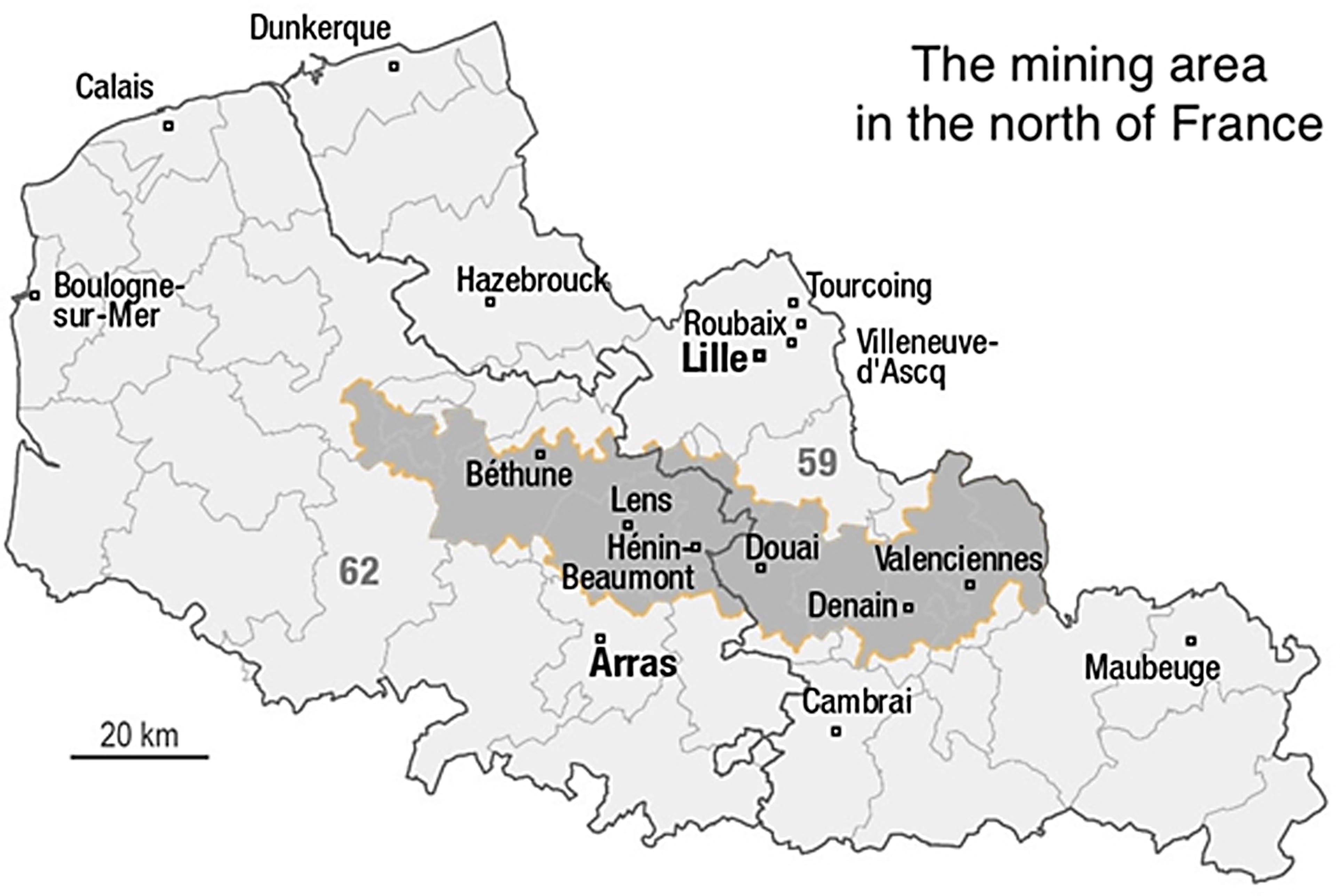
Map of the mining basin in the north of France. Source: Agence nationale de la cohésion des territoires (National Agency for Territorial Cohesion), 2018.
In order to justify the creation of the Louvre-Lens museum, political actors pointed out that Lens had no museum. This argument needs to be nuanced in the sense that there are museums and cultural organizations in the mining basin that extends beyond Lens. The city of Lens is very specific in terms of its cultural offerings. During the mining years, leisure in Lens was organized by the mining company, which favored team sports, especially football, and these still have a strong influence on leisure consumption in Lens today. Moreover, the high concentration of cultural facilities near Lens in bigger cities like Lille or Arras leaves little room for the development of cultural infrastructure in Lens.
The uniqueness of Lens, evident across its economic, social, historical, political, cultural and physical dimensions, makes it a relevant case for our research. The city's distinctive characteristics, coupled with the challenges it faces, underscore the significance of the macro-level context in shaping the development of a cultural offer, exemplified by this branch museum. Its managers and policy makers sought to root the Louvre-Lens in the city and “reach out to the population of Lens and the surrounding areas so that they appropriate the project, as Henri Loyrette [director of the Louvre in Paris] wishes” (La Voix du Nord, 17 March 2005). That is why the inauguration date (December, 4th) corresponded to the annual celebration paying tribute to mine workers. The locals’ desire for appropriation is evident from their participation in museum initiatives, which involve collaborating with local associations such as social centers and sports clubs. As an illustration, in the summer of 2022, “several athletes [from local sports clubs] agreed to share their passion for sport in the Louvre-Lens park” (La Voix du Nord, 3 August 2022).
Methodology
Studying the historical construction of the representations about the Louvre-Lens helps to understand the current issues and challenges that can harm its legitimation process. This research adopts a historical approach (Coraiola and Derry 2020; Wadhwani 2016) by collecting and analyzing media archives about the Louvre-Lens museum. Such an approach is useful to analyze a phenomenon in its context. Holt (2004) shows how this method can help understand a phenomenon's evolution while being attentive to social and cultural changes (Hill and Stephens 1997; Karababa and Ger 2011). In our case, it serves as a valuable tool for examining the construction of perspectives of the Louvre-Lens Museum and its resulting representations in a broad context.
We have structured our method in three steps. First, we established the research question introduced earlier: How does the context of a post-industrial city influence the legitimation strategies of a branch museum? Establishing a research question, although quite exploratory, is crucial in order to frame a historical period and the types of archives required for the historical research. Second, the historical approach requires the delimitation of a relevant historical period in which to collect primary sources. Primary sources are data created at the time of the studied event, unlike secondary sources which are created after the event (Wadhwani 2016). To collect all relevant data about the museum, we chose the period from 2004 to 2023 using secondary sources (Lipartito 2013). This period is relevant for our research for two reasons. First, it corresponds to the beginning of the media coverage surrounding the Louvre-Lens. Second, the beginning of the 2000s marked a political transition in the cultural sector with a redefinition of a museum's roles (Poirrier 2004). Indeed, the law concerning French museums implemented on January 4, 2002 aimed to redefine and standardize their objectives, placing particular emphasis on cultural democratization. Third, we identified and collected the data, in this case media archives about the Louvre-Lens museum (press articles, extracts from TV reports and podcasts). These give us a rich diversity of discourses from different actors with complementary data. We collected extracts or speeches from political actors, policy makers, managers and the local population. This diversity is accentuated by the many different media used. In the press, each newspaper has an ideological orientation, and treating them as a whole reduces this ideological bias. As Table 2 shows, we collected and analyzed a total of 908 national and regional press articles from 25 different newspapers via the Europress database, 15 extracts from TV reports via the National Audiovisual Institute (INA), and 4 podcasts from the radio channel France Culture. To select the archives on Europress, we first searched all press articles containing the keywords “Louvre + Lens”. The name “Louvre-Lens” was not official before 2005. After that date, we therefore searched for articles containing “Louvre-Lens”. For TV reports and podcasts, we used the keywords “Louvre + Lens”. In order to analyze video and audio material, we conducted a textual analysis of the transcripts provided by the websites (INA and France Culture). To enrich our data, we collected institutional archives such as economic and culture reports from French government, activity reports from the Louvre-Lens museum, and the scientific and cultural project of the Louvre-Lens museum.
Sources.

To analyze this data, we used a thematic approach (Braun and Clarke 2006). One of the main characteristics of our analysis is iteration (Thompson, Pollio, and Locander 1994). This means that the analysis evolved as the study progressed. In this study, we also paid attention to the key chronological elements to comprehend how strategies of legitimation were intricately woven into specific temporal contexts. Each dataset was first individually analyzed to identify the meaning of the discourse, followed by an overall analysis to identify similarities and differences. To encode the data, we established tables in which each analysis unit was associated with a code. For this research, the analysis unit can be defined from an entire article, a paragraph or a few lines. We then categorized every code that was associated with a specific discourse. Coding allowed us to identify the main discourses and the main representations associated with them. We formed themes that highlight the differences between the different representations we identified. All themes are based on archives with a large diversity of actors and newspapers. In the next section, we introduce our findings.
Findings
The Louvre-Lens museum is a specific tool with which to achieve the national policy of cultural democratization. Yet several institutional actors, mainly public institutions such as the city of Lens, the regional council, the French government and the Ministry of culture, the directors of both the Louvre museum in Paris and the Louvre-Lens, and other employes at the museum, have had to develop strategies to legitimate the creation of the Louvre-Lens museum. We define institutional actors as people or groups who attempt to change or influence the legitimacy or illegitimacy of specific practices (Becker 1995; Coskuner-Balli and Ertimur 2017; Scaraboto and Fischer 2013). Based on the analysis of our dataset, we have identified two main strategies developed by these institutional actors and deployed in parallel during the development of the Louvre-Lens museum. While we conducted a thematic analysis of the data, using the literature on legitimation, the emergence of these two strategies was an inductive process. Our approach was not to align these strategies with the institutional pillars – cognitive, structural, and normative. Instead, our focus was primarily on the legitimation of the museum's development rather than on the museum itself. Consequently, our objective was to pinpoint the primary arguments employed by the stakeholders engaged in the museum's development. Through data analysis, we identified these arguments, dividing them into two main categories – economic and cultural – which are elaborated upon below.
The first legitimation strategy highlights the profitability that the Louvre-Lens was expected to generate and how it could benefit the city of Lens and its inhabitants. The second strategy aims to romanticize the Louvre-Lens as a space and its cultural offer in order to create a link between the city's local identity and the museum. In other words, while one strategy focuses on the economic dimension of the Louvre-Lens, the other focuses on its cultural dimension. We trace these strategies back to a historical dataset starting in 2004, showing how they were developed over time. We have structured our findings with the key date of the museum's launch in 2012 in mind. This event made the museum more tangible, influencing the development of the strategies adopted. Both strategies can be seen as complementary for the museum's legitimation, but in some aspects, there can also be tensions between them. Moreover, while both strategies are used in parallel, they evolved differently and did not encounter the same difficulties. The city's economic challenges are such that the economic risk inherent in the cost of establishing the museum can be perceived as too high for the city and its inhabitants. Therefore, the strategy of economic legitimation has generated debates and tensions. In contrast, the strategy of cultural legitimation has been developed and reinforced without strong opposition. Table 3 emphasizes the main characteristics of these strategies.
The Legitimation Strategies of the Louvre-Lens Museum.

Economic Legitimation Strategy
2004–2012: The Louvre-Lens as Economic Savior
Since its early inception, the Louvre-Lens project has generated tensions, especially regarding its economic consequences. In response, institutional actors highlighted its economic potential and ability to meet the needs of the local population.
In France, as public institutions, museums are closely linked to the political sphere. Embedded in cultural policies, museums are a reflection of the prevailing political power and the cultural priorities of the French “welfare state”. Seen from this perspective, museums are political projects, and the Louvre-Lens is no exception (Molinié-Andlauer 2019). It is noteworthy that the State appropriated this project, guided the main strategic decisions and has always had the final word. However, despite its significant control over the Louvre-Lens project, the French government did not want to financially invest in it. From the initial decision to develop the Louvre-Lens museum, the government insisted that only the financial resources of local authorities, as well as European aid, would fund the new museum: The cost of this ‘Louvre bis’ is estimated by the region at 105 million euros. For this investment, we already know that the state will not put up a cent. If one of the five cities in the north of France was chosen, this choice would become the entire region's choice. Daniel Percheron [Chairman of the regional council] indicated that the regional council was ready to finance 60% of the investment, which represents the cost of two high schools. The expense would be spread over four years. The financing plan provides for a European contribution of 20% by the local authorities concerned (departmental council, agglomeration community, municipality, etc.). There remains the question of the functioning of this ‘Louvre bis’. Its cost is estimated at 12 million euros per year. Asking the municipality for more than 8% of the bill has been ruled out. But we do not know to what extent the state will participate in the funding. (La Voix du Nord, 18 July 2004)
But the primary fear that emerged was that the huge funding requirements would harm the proper functioning of the region and its inhabitants, already suffering from a lack of funding. The French communist and socialist parties, which have historically been quite active in the region and supported by the population, presented the absence of state intervention in the funding of the new museum as an injustice: The communist Maryse Roger-Coupin, mayor of Angres [a town next to Lens], is more direct: “(…) It is only fair that the Louvre should be located in our area, but I personally think that the cost should be borne entirely by the State because otherwise we will be asked to tighten our belts even more.” In Mazingarbe, Bernard Urbaniak, the socialist mayor, does not hide his skepticism. While he is convinced that “the Louvre bis will create direct and indirect employment and that the population will be able to culturally emancipate themselves”, he believes the question of the cost remains unresolved: “It seems that the Louvre bis will cost one million euros per month to operate. If the locals have to pay, it will be indirectly, the region will have to raise taxes. We must not let ourselves be fooled.” (La Voix du Nord, 22 January 2005)
The debate about the museum's funding is mainly based on differences in the representations of the project and its resources. On the one hand, the French government and the Louvre in Paris had a positive view of the financial resources of local authorities in that they believed they could handle the museum's construction and subsequent operations. On the other hand, local actors believed these resources to be insufficient to run both the new museum and local cultural projects considering the specific difficulties the region faced. It is not the intrinsic nature of the financial resources that was debated, but rather their usage and potential outcomes. This tension over funding also reinforced the opposition between “them” (national institutions), who decided to create the museum, and “us” (local politicians), who have to fund it. Even though there was a real desire to involve local actors in urban policies as part of multi-level governance, their role remained limited and interventions were structured by top-down hierarchies (Bache and Flinders 2004).
In order to ease local fears of increased taxes, institutional actors like the city of Lens and the French government pointed out that the new museum would generate economic development and create new jobs, presenting it as a source of “hope” (La Voix du Nord, 17 August 2004) or “rebirth” (Le Monde, 17 December 2004). The Louvre-Lens was represented as the savior of Lens and the wider region. Studying the marketization of regional film production, Blomgren (2019) described how the development of an economic rationale helps legitimate the development of a regional cultural offer among local politicians. The literature has revealed the importance of the economic dimension of museums (Aroles, Hassard, and Hyde 2021), especially in relation to management, which shares similarities with the entrepreneurial world (Aroles, Hassard, and Hyde 2021), but also their capacity to participate in the economic development of the city where they are located. However, due to the specific location of the Louvre-Lens – a post-industrial city enduring many difficulties for years –, the economic dimension was accentuated with an argument that it would ensure “economic survival” for the region (La Voix du Nord, 21 July 2004). The expectations in terms of economic development were really high and used to legitimate the museum and make it relevant in the eyes of the various actors. The museum is represented as a contributor to economic development in terms of creative industries (Caves 2000). As mentioned in the theoretical section, creative industries are thought to improve a city and generate economic returns. Institutional actors like the city of Lens and other politicians in favor of the museum's establishment did not argue with concrete economic expectations but rather highlighted the necessity for the region to host the Louvre-Lens through the prism of the city's socio-economic indicators: What will the Louvre II be used for? For everything, and much more than culture. First, to lower the unemployment rate, which stands at 23% in the region, [says] Guy Delcourt, mayor of Lens. (Libération, 25 December 2004)
Despite the lack of concrete economic expectations, the strategy of economic legitimation was reinforced by comparisons with the Guggenheim museum in Bilbao, which is considered a great success of urban revitalization in a post-industrial city. Through the Louvre-Lens museum, the French government and the city of Lens sought to generate “the Guggenheim effect” (La Voix du Nord, 17 October 2006). Comparisons with the Guggenheim in the media showed that the economic expectations and ambitions for the Louvre-Lens were linked to tourism and international development: 40 km from Lille, the dynamic northern capital, Lens, the former mining town which never recovered from the shutdown of the coal mines, hopes to benefit from a phenomenon comparable to that of the Guggenheim museum in Bilbao. The northern Spanish city was in such a disastrous economic situation when it opened in 1997. This museum has since attracted a lot of tourists and the number of hotels there has risen from 30 to 59, with nearly 5,000 jobs created. (AFP Infos économiques, 19 March 2011)
Tourism development requires the construction of an attractive environment for tourists including hotels and restaurants. Institutional actors emphasized the importance of building hotels in Lens to target high-end clients. Like Florida (2002) creative class, international tourists are seen as people more inclined to spend money on cultural activities and therefore contribute to the economic development of Lens. The desire to economically dynamize a city by attracting an external population is common when developing a cultural offer but falls under the criticism of gentrification (Lees 2008). Dynamizing a city through gentrification tends to shift the problem more than actually fix it. Moreover, to facilitate access to the museum for tourists, some spaces have to be located as close as possible to it, sometimes to the detriment of people living there. This is illustrated in the conversion of social housing into a high-end hotel, which resulted in the displacement of locals: They are not very big, but they were enough to raise often large families. Since the Louvre-Lens museum moved in, the Maisons et Cités [social housing] has renovated its façade: new joints between the bricks, new mailboxes. Such is the daily life of the inhabitants of Rue Paul-Bert, who have learned to live with the passing buses and tourists who press their faces to the windows to discover the interior of a typical house. Some have suddenly put-up curtains, others laugh at the situation. Everything would be fine if the tenants were not now being invited to pack their boxes and find other accommodation from the selection of social housing available. The younger ones have been there for a few years; for the old ones, it's been decades. If they have to leave their homes today, it is because Maisons et Cités has great hopes for this housing complex. Just imagine: transforming miners’ houses into four-star hotels. (La Voix du Nord, 23 January 2015)
The balance between local and international development is difficult to strike in the development of a branch museum. In the case of the Louvre-Lens project, the economic legitimation strategy led institutional actors in favor of the museum to highlight the tourism and international development inherent in the project. However, it also created issues regarding support for regional development.
2012–2023: Lowering Economic Expectations to Respond to the Difficulties of the Louvre-Lens in Keeping its Promises
In December 2012, the Louvre-Lens was inaugurated and the event was presented in the media as a success. However, there continued to be tensions over the museum's economic dimension. Its launch made the economic expectations measurable. We found assessments and testimonials by inhabitants in the media highlighting the economic failure or disappointment of the museum. One of the strongest criticisms, which was reprinted in several newspapers, was made by the social science researcher Jean-Michel Tobelem in Le Monde in 2016: If we refer to the purposes of the Louvre-Lens as identified by its promoters (the State and the northern region) – cultural democratization and local development – we can possibly say it has been a failure: attendance is decreasing despite free access to the permanent exhibition, the temporary exhibitions are attracting fewer and fewer people, the tourism strategy is still being developed, and the economic impact is disappointing. Regarding the – contested – establishment of the artwork reserve of the Louvre museum close to the Louvre-Lens location (which doesn’t have its own collections), it looks like a headlong rush (…) with sociological studies showing that the museum didn’t manage to attract visitors with a radically different profile from the usual public that visit museums and monuments (less than 3% laborers). (Le Monde, 21 August 2016)
The museum struggled to meet the economic expectations that were announced, as expressed by local shopkeepers in this press article from La Voix du Nord published on 2 January 2013: “In Rue de Paris (in Lens), many shopkeepers look unhappy. ‘We had just one foreign customer, from Japan’, says Kathy, a saleswoman from Chauss Star. ‘All the rest are our usual clientele’. Isabelle, a saleswoman at Devred, even says the store hasn’t seen ‘any knock-on benefits from the Louvre. We were expecting some, so we’re definitely disappointed.’”
After the launch, its internal actors such as the museum managers became prominent institutional actors. They tried to respond to these tensions and disappointments. First, they rationalized the economic expectations generated by the Louvre-Lens. They recognized that it and the Guggenheim in Bilbao were two different museum projects and, therefore, the Guggenheim effect could not be felt in Lens, as one Louvre-Lens employe explained to a newspaper, but arguing that it was not the museum's purpose: The local benefits are estimated at 20 million per year, and no one can any longer compare it to Bilbao, where the museum generates 485 million euros per year in positive impacts on the Spanish Basque region. Catherine Bertram defends the Louvre-Lens: “The rescue of the city center cannot come from the Louvre-Lens”. Above all, as museum employees we met in the Louvre-Lens park explained, the Guggenheim arrived in Bilbao as the icing on the cake, after major investments. The Louvre-Lens was the newcomer, the locomotive that was going to pull an entire region out of misery. A mission too big for it. (Liberation, 18 June 2019)
Once the economic expectations were rationalized, institutional actors shifted focus in their evaluation of the museum's success, no longer emphasizing the economic dimension but rather the cultural dimension and the museum's purpose of cultural democratization. This focus on the cultural dimension allows institutional actors to highlight the gradual impact of the Louvre-Lens in the city's transformation despite the tensions surrounding its economic development: Director [of the Louvre-Lens] Marie Lavandier highlights the success of a bold cultural bet: “We attract 70% local audiences. This museum is useful for the transformation of the territory at all levels.” The key to success? Adapting to the local area. In terms of exhibitions: Soleils Noirs [Black Suns], devoted to the masters of the black color in 2020, echoed the land of coal on which the museum was built. But also in efforts to raise public awareness. Every year, mediators organize events in a large shopping center not far from there. And since this autumn, an “Egyptobus”, allowing a first look at the temporary exhibition Champollion, has been crossing the Pas-de-Calais. (Ouest-France, 26 December 2022)
Thus, following the lack of economic development, institutional actors stopped defending the economic interest of the Louvre-Lens to promote its cultural dimension. This change of focus was facilitated by the development, in parallel, of another strategy of legitimation focusing on the museum's cultural dimension and its relationship with the local cultural identity.
Cultural Legitimation Strategy
2004–2012: The Louvre-Lens as a Bridge Between Past and Present
The development of a branch museum like the Louvre-Lens aims to transform the city's image. This quest can have bad consequences for the local population. Studying the production of space in urban areas, Castilhos (2019) has explored these consequences in what he calls “branded places”. He has observed that the standardization of these places, meant to improve their attractiveness, actually harms the local cultural identity and impedes appropriation by locals. Seen from this perspective, a disconnect between the Louvre-Lens and the local identity could lead to a failure of cultural democratization, thus undermining the legitimacy of the Louvre-Lens museum. This is why the French government, the Louvre, the city of Lens and the Louvre-Lens itself together developed a strategy to romanticize the local identity and history. Such romanticization is identified as a social practice aimed at enhancing the attractiveness of a particular element, such as the past. This practice is intended to evoke positive emotions and encourage specific consumption practices (Belk and Costa 1998; Brunk, Giesler, and Hartmann 2018). It is important to distinguish romanticization from nostalgia, which is more closely associated with the emotional dimension, defined as “the seeking of happiness relating to the past” (Balmer 2011, p. 1384). In the case of the Louvre-Lens, the romanticization is peculiar as it highlights a difficult and even dark past (Marcoux 2017). First, it focused on material elements, and later the launch of the Louvre-Lens allowed the museum to extend it to the museum's offer. A museum's offer is the various exhibitions and initiatives it develops, both within its physical premises and in external contexts.
Since the beginning of the Louvre-Lens project in 2004, the French government and the city of Lens have used the city's industrial past to legitimate the museum's creation. They presented the Louvre-Lens as a tool of restorative justice (Lebovits 2023; Simpson 2009) and “payback” (L’Humanité, 16 March 2005) for a city that had contributed to the wealth of the nation in the past and was now hit by economic and social deprivation. The concept of restorative justice, characterized by the sentiment that it “has suffered from a lack of sharing” (Guy Delcourt, mayor of Lens, in La Voix du Nord, 25 June 2004), found support among the local population. This perspective was echoed by one resident expressing their views on the implementation of the Louvre-Lens: I immediately thought that this opening would be likely to boost activity in the area, both economic and tourism-related. I saw it as a plus for an area which has suffered greatly from deindustrialization. A recognition of the efforts of everyone throughout history. (La Voix du Nord, 12 November 2012)
Using the city's past, this romanticization was associated with remembering (Petani and Mengis 2016). This strategy allows institutional actors to control the historical narratives relating to physical elements in order to legitimate a new space. In the case of the Louvre-Lens, the romanticization first related to the old industrial site in which the Louvre-Lens would be located. In the media, the choice of the museum's location and its proximity to other local spatial elements like slag heaps or the local football stadium are described as symbols reinforcing the idea of restorative justice: The Louvre splits in two in Lens in the spring of 2009. Not far from the center of the mining area, on the old pit of Fosse 9/9 bis and, to perfect the symbol, very close to the Bollaert stadium, with the two slag heaps of Loos-en-Gohelle in the background. For Guy Delcourt, socialist mayor of the city and vice-chairman of the General Council of Pas-de-Calais [local government], the choice of the government announced on November 29 by the Prime Minister during a visit to the city is justice for a region which has “always been forgotten by the roadside, including by our friends from the North [in reference to another administrative area near Lens]”. It is, he says, “payback” for a region that we thought was locked in its local fairs. (L’Humanité, 16 March 2005)
To decide on the museum's appearance, national and local political actors launched a call for tenders from several architectural agencies and asked for a unique vision of the Louvre-Lens museum. A jury with representatives from the city of Lens, members of the regional council, and experts like architects, chose the Japanese architectural agency SANAA to design the museum's architecture, shown in Table 1. SANAA is a world-renowned architectural agency responsible for important architectural projects like the New Museum in New York or, more recently, the Samaritaine in Paris. In all their projects, SANAA wants to create a link between the architecture and its environment without demarcations or visible hierarchy.
Once the museum had been constructed, observers of its architecture and the park's design could see the different elements intended to be a reminder of the industrial past of Lens such as the old mine shaft (Figure 3) or the traces of the old rails. These elements can help alleviate local concerns about a disconnect between the new museum and the preservation of the local history, as articulated by one student from Lens: Another fear, could there not be a gap between the memory of the mining past that the region maintains and the desire to start again on new foundations with the objective of revitalization? Will this work of remembering not be harmed by politicians, local or not, who, for profit, will use this museum to give the territory an image that it does not have, by forgetting a past to which the inhabitants are very attached? (La Voix du Nord, 12 March 2012)
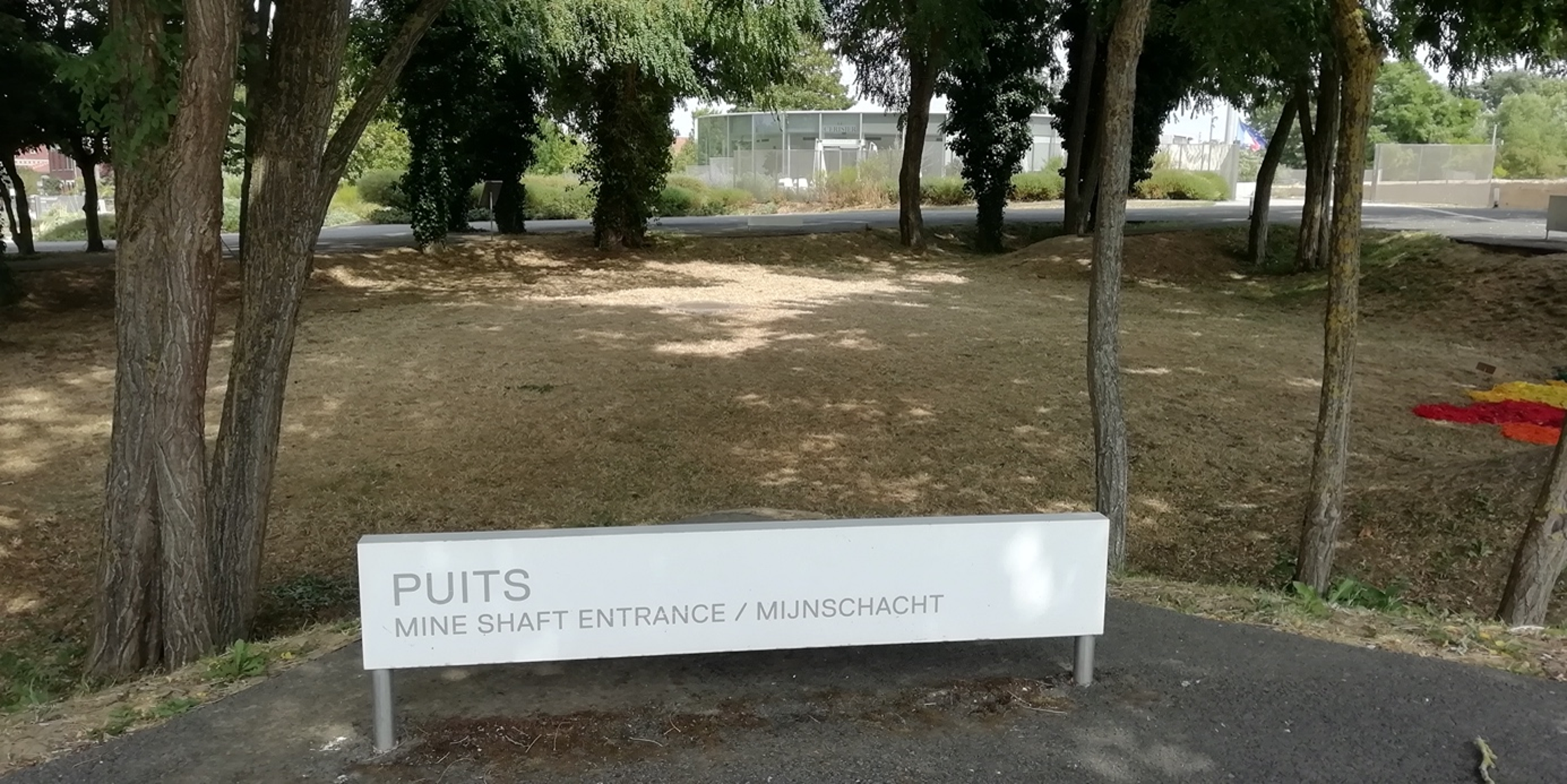
Picture of the old mine shaft entrance. Source: Author.
In addition to recalling the city's past, the museum's architecture is “respectful of the urban environment” (Scientific and cultural project of the Louvre-Lens, 2019) and embraces the city's landscape. According to the French government and the Louvre-Lens, the museum's architecture is designed to please the local inhabitants, especially those who are not accustomed to visiting museums. The idea here is to have an architectural style that is “very accessible” (AFP, 28 November 2012) and not spatially intimidating. The choice of the museum's architecture is thus influenced by the sociocultural and historical context of Lens: This association between contemporary architecture and very classical works is interesting, said Aurélie Filippetti [Minister of culture] at the end of the walk. There is nothing flashy, the building does not impose itself by an overly conspicuous aesthetic which could be indecent vis-à-vis the houses which surround it. Respectful of its territory, the museum is located in the heart of the mining area, in the heart of the world of work. Which is not really the case with Pompidou-Metz [another French subsidiary museum], located further away from the Lorraine mining area. (La Voix du Nord, 8 July 2012)
The link between the local identity and the museum before the launch was mainly based on material elements controlled by institutional actors such as politicians at local and national levels to romanticize the space and make it more accessible to the local population. The absence of decision-making power among this population reinforced the institutional actors’ control over the historical narratives (Cutcher et al. 2016) and thus over the legitimation process. However, we know from the literature that limited involvement of the local population in a cultural project like the Louvre-Lens museum can impede its success (Grodach 2010).
2012–2023: The Louvre-Lens Embedded in Local Culture
Following the museum's launch, the cultural legitimation strategy was mainly driven by its internal actors, who pursued the romanticization through the construction of the museum's offer. In 2016, the new director of the Louvre-Lens, Marie Lavandier, become the main protagonist in the development of this strategy. She publicly expressed her intention to develop the museum's offer to further encourage its appropriation by locals and thereby cultural democratization. The Louvre-Lens launched several temporary exhibitions related to the identity and history of Lens. One of these (RC Louvre) was about the local football team, while others addressed the region's industrial past like the Black Suns exhibition in reference to coal (Figure 4), the one on pictures of coal miners, or another about Poland in reference to the many Polish immigrants who moved to Lens as miners during the twentieth century: This museum will not succeed and achieve its goal if it is not deeply supported by the inhabitants and in particular by its neighbors. The RC Louvre exhibition, based on a collection from supporters of the Lens football team, is somewhat in line with this perspective. Concerning the exhibitions, I think that it is necessary to “mix” monographic approaches and more decompartmentalized, more thematic approaches: it can be the mine, the underground worlds… (from Marie Lavandier in AFP, 3 November 2016)

Picture of the Soleils Noirs (Black Suns) exhibition. (bpmm – CC-BY-NC-ND).
Certain residents embrace these initiatives, including those who may not typically visit museums, as exemplified by a statement from a fan of the local football team regarding the RC Louvre exhibition: It was a wonderful idea to bring football to the Louvre. Paninis [football stickers] and fan scarves attracted people who had never been to the museum. (…) The word [museum] is a little scary. But not in Lens, where things are accessible. (Le Figaro, 17 November 2017)
The museum performed its cultural legitimation strategy by creating collaboration between the museum and other public local infrastructure. The Louvre-Lens was represented as a space that brings together a broad diversity of local facilities. For example, the museum hosts other museum's collections and is therefore presented as a “showcase for neighboring collections” (Le Figaro, 17 November 2017). It also hosts popular organizations like sports clubs. This is illustrated by the event Parc en Fête, which is held every summer in the museum park and involves many activities more or less related to the museum's exhibition: Popular events such as Parc en fête, which has been held in the museum park for two summers, help attract new audiences and link the museum to the population of the mining area. We see RC Lens players playing football with the kids from the neighborhood. Similarly, in recent years, the number of activities for young parents and their babies, adults and grandparents has risen. (La Voix du Nord, 9 January 2020)
Certainly, the activity reports of the Louvre-Lens over the years underscore a notable increase in the proportion of visitors residing in the north of France, rising from 64% in 2016 (Louvre-Lens 2016) to 73% in 2022 (Louvre-Lens 2022). This strategic effort “to attract inhabitants, whoever they may be, is noticeable in the figures. The Louvre-Lens has a more demographically diverse attendance than its counterparts. One in five visitors to the Louvre-Lens, compared to an average of 14% in museums nationwide, is a blue-collar worker. Visitors not familiar with museums are also better represented: 17.6% have very low museum capital, compared to 11.4% elsewhere [other French museums].” (Le Figaro, 10 March 2022).
The idea of a museum collaborating with other local infrastructures was not limited to the museum's physical infrastructure. Various initiatives outside this infrastructure allowed the museum to be as close as possible to the local population, like shopping centers or local associations: Very early, the institution [Louvre-Lens] initiated partnerships with Pôle emploi [state job-hunting agency], the Ecole de la deuxième chance [professional training agency], the prison services and associations to put art in the service of integration. It [the Louvre-Lens] has moved to the shopping center or the Lens hospital to reach other audiences. Finally, its exhibitions resonate with the territory, from “Black Suns” which refers to the color of coal, to “Poland 1840–1918” which evokes the Polish migratory flow to Lens. (Les Echos, 2 December 2022)
We have seen that the economic legitimation strategy was developed in order to defend the economic appeal of the Louvre-Lens and to show how the city would benefit from it. As for the cultural legitimation strategy, the aim is to generate a sense of belonging to the Louvre-Lens and encourage its appropriation by locals. Unlike the economic legitimation strategy, this did not generate specific tensions, or at least not strong enough to call the strategy into question. On the contrary, the cultural legitimation strategy has been reinforced over time and allowed institutional actors to legitimate the Louvre-Lens beyond its economic concerns which seem to be the main source of tension. Figure 5 highlights the development of both strategies over time.

The development of the Louvre-Lens Museum legitimation strategies.
Discussion and Implications
In this research, we have identified the legitimation strategies developed by institutional actors to establish a branch museum in a post-industrial city through urban policies. We encourage a critical look at the use of urban policies in the cultural sector to help post-industrial cities with a difficult or challenging past. Our research echoes macromarketing and urban studies. We build on the work of Grodach (2010) and Ponzini and Rossi (2010) by highlighting the importance of a comprehensive perspective of the context in which a cultural offer is rolled out and the importance of multiple factors not only related to urban development. Following Grodach's (2010) study of three Californian cities highlighting the importance of policy makers looking beyond urban development, we argue that an understanding of a difficult past is necessary for successful legitimation processes in the case of branch museums. This understanding implies going beyond the standardization of urban policies and looking at factors other than urban development. We join Ponzini and Rossi (2010) in their critical analysis of the creative class theory regarding its application. Based on the case of Baltimore, they argue that this theory and its potential externalities (e.g., economic development or social inclusion) become a political argument for political actors and policy makers with uneven consequences depending on the actors. We saw in our data how the argument of the economic development of Lens was mobilized by institutional actors like the city's Mayor to reinforce the museum's legitimacy. However, our findings show that these consequences are not perceived as benefiting all actors. Indeed, as Ponzini and Rossi (2010) pointed out, the lower social classes are usually disadvantaged by a strategy that struggles to limit the city's gentrification and displacement of residents. This can create tensions and impede the legitimacy of the branch museum. But the literature makes little mention of the strategies of legitimation used in the case of branch museums in post-industrial cities, which is crucial to better understand how to dynamize forgotten or in decline areas.
Our findings show that the legitimation strategies developed by institutional actors for the Louvre-Lens can be understood in terms of two strategies, one of economic legitimation and one of cultural legitimation. We see from the media discourses that different institutional actors such as the city of Lens, the regional council, the French government and Ministry of culture, the directors of both the Louvre museum in Paris and the Louvre-Lens, other employes of the Louvre-Lens but also Lens’ inhabitants, performed both legitimation strategies by generating specific representations of the Louvre-Lens. We observe that, while both strategies evolved in parallel and were structured around the museum's launch in 2012, they evolved differently.
The economic legitimation strategy aimed to highlight the economic dynamization of the Louvre-Lens for the city and its inhabitants. However, it faced acute tensions from the beginning of the Louvre-Lens project in 2004. First, the funding for the museum generated strong opposition from local politicians like the French communist party, which feared increased taxes and a deterioration of the inhabitants’ living conditions. In response, institutional actors insisted on the need to host the Louvre-Lens, citing the city's economic difficulties and comparing the project with the Guggenheim museum in Bilbao. Then, after the launch of the Louvre-Lens in 2012, criticisms appeared in the media regarding the lack of economic development generated by the Louvre-Lens. Consequently, institutional actors rationalized the economic expectations associated with the museum and highlighted its cultural success.
In parallel, the cultural legitimation strategy aimed at encouraging appropriation of the Louvre-Lens by locals and cultural democratization for inhabitants. However, the main difficulty is that the local population are not accustomed to visiting museums, which make it difficult to attract them to the Louvre-Lens. First, institutional actors engaged in a process of remembering based on spatial elements like architecture, linking the Louvre-Lens to the city's past. They used the city's difficult industrial past to highlight the justice the Louvre-Lens would bring to the city. Then, after the launch of the Louvre-Lens in 2012, the museum organized exhibitions related to the local history and identity, and collaborated with local organizations in order to embed the museum's offer in local culture. Unlike the economic legitimation strategy, the cultural legitimation strategy did not run up against strong resistance even from locals, who increasingly visit the museum.
We believe that by identifying the legitimation strategies, institutional actors could more easily manage potential tensions and obstacles and facilitate the legitimation process, thereby improving the success of branch museums. We argue that when institutional actors try to economically and culturally legitimate the creation of a branch museum in a post-industrial city, the city's macro-level context (i.e., its cultural, economic, social, spatial, political and historical contexts) can create obstacles which challenge the branch museum's legitimacy.
Our research highlights the impact of the economic and cultural context on legitimation strategies and therefore on the development of branch museums. While the literature in macromarketing highlights the interrelation between a market and its environment (Hunt 1981; Layton 2007; Wooliscroft and Ganglmair-Wooliscroft 2018), we still lack sufficient insights regarding the specificities of post-industrial cities. The context of Lens accentuates the importance of the Louvre-Lens museum's economic dimension. The importance of this dimension tends to heighten economic expectations. Our data includes reports from inhabitants that the economic externalities were not as positive as those promised. Institutional actors like political actors and policy makers would benefit from better evaluating potential externalities in order to communicate credible expectations and thereby avoid a gap between local expectations and reality. First, we recommend that the temporality of externalities should be taken into account and communicated to the local population. There is ambiguity about when the forecast economic and social externalities will occur. For example, is it one, five or ten years after the museum's inauguration? Moreover, projects like the Louvre-Lens take time to develop and therefore require constant monitoring of the predicted externalities. Contextual changes like an economic crisis or a change in state policies can drastically change these predictions. Furthermore, the economic and social externalities do not affect all actors in the same way. Thus, we advise institutional actors to explicitly express how the forecast externalities will take form for all those concerned (e.g., local population, public associations, private firms, real estate investors, etc.) and for the geographical area (e.g., the museum's neighborhood, other towns in the mining basin, etc.).
In terms of the museum's cultural dimension, institutional actors were involved in a process of recollection and romanticization of the city's past, strategically leveraging these elements to culturally legitimate the Louvre-Lens. Usually, such remembering relates to positive feelings and nostalgia (Petani and Mengis 2016). However, in the case of the Louvre-Lens, it focused on the region's difficult history and negative elements like hard working conditions and the subsequent loss of the mining industry, which reinforced the idea of restorative justice. Striking a delicate balance between avoiding the risk of overly romanticizing experiences and environments that may trigger negative memories for inhabitants, on the one hand, and the need to proudly showcase the history of the region and its people, on the other, presents a challenging dilemma.
The architecture of branch museums plays an important role in the development of tourism and their international reputation. These architectural projects are criticized in the literature for the lack of local inhabitants’ involvement and the tensions this can create (Grodach 2010). Following Lefebvre's (1991) work on the production of space, branch museums’ architecture can be seen as a space conceived by a dominant group (political actors, architects) but experienced by a dominated one (inhabitants). Inhabitants experience the museum by visiting it but also in their daily routine as they live nearby. The Louvre-Lens can be seen as such a space because the architecture was designed by an international architect and because of the lack of involvement from inhabitants. However, through our analysis, we argue that its architecture is used to contribute to its legitimation. Indeed, institutional actors use spatial elements like the architecture in order to romanticize the industrial past of Lens and to anchor the museum in a shared history.
Branch museums are studied through their economic dimension and how they generate economic development in the cities where they are located. The literature on branch museums often presents them as part of an international development strategy, as in the case of the Guggenheim museum in Bilbao (Mencarelli 2008). The economic dimension of these branch museums is often at the center of this strategy, as it is an economic partnership between a brand and a city. Moreover, in the case of the Louvre Abu Dhabi, its international development is structured around the political dimension of the branch museum as it aims for cultural diplomacy (Chong 2019). This focus on international development in the literature tends to overlook the case of branch museums that are part of national development, like the Louvre-Lens, which seeks to reinforce the importance of the city's local context.
In this case, the branch museum is as much a tool of economic development as one of cultural democratization (Tobelem 2017). This has an influence on the legitimation strategies developed by the institutional actors. Since the Louvre-Lens is meant to democratize the practice of cultural activities, it needs to generate a sense of belonging among the local population.
This research has certain limitations that point to potential new research avenues. The data collection focused on media delivers a broad but at the same time partial picture of the representations of the Louvre-Lens. Therefore, it would be interesting to interview the local population to get their opinions about the museum's legitimacy in the region and the institutional actors’ discourses. Furthermore, the museum is a particular tool or object that already carries a lot of representations. Therefore, it would be worthwhile to compare the case of the museum against other cultural initiatives in post-industrial cities outside the museum sector, such as the opening of art workshops or exhibits, etc. to understand if the legitimation process is similarly influenced. Lastly, while our analysis allows us to study the different legitimation strategies adopted, we need further research to better understand how these different strategies can interact with and influence each other.
Supplemental Material
sj-docx-1-jmk-10.1177_02761467241241236 - Supplemental material for Legitimation Processes for a Branch Museum Development in a Post-Industrial City: The Louvre-Lens Museum in France
Supplemental material, sj-docx-1-jmk-10.1177_02761467241241236 for Legitimation Processes for a Branch Museum Development in a Post-Industrial City: The Louvre-Lens Museum in France by Melvin Grefils, Hélène Gorge and Nil Özçağlar-Toulouse in Journal of Macromarketing
Footnotes
Acknowledgments
We extend our gratitude to the editorial team for their constructive comments and to the Louvre-Lens Museum and the Federative Institute for Research on Territorial Renewal (IF2RT) for their support in the realization of this research.
Associate Editor
Terrence H. Witkowski
Declaration of Conflicting Interests
The authors declared no potential conflicts of interest with respect to the research, authorship, and/or publication of this article.
Funding
The authors received no financial support for the research, authorship, and/or publication of this article.

Supplemental Material
Supplemental material for this article is available online.
Author Biographies
References
Supplementary Material
Please find the following supplemental material available below.
For Open Access articles published under a Creative Commons License, all supplemental material carries the same license as the article it is associated with.
For non-Open Access articles published, all supplemental material carries a non-exclusive license, and permission requests for re-use of supplemental material or any part of supplemental material shall be sent directly to the copyright owner as specified in the copyright notice associated with the article.
